A Comprehensive Protocol and Strategy Guide for Photobiocatalytic H2 Production: From Fundamentals to Advanced Applications
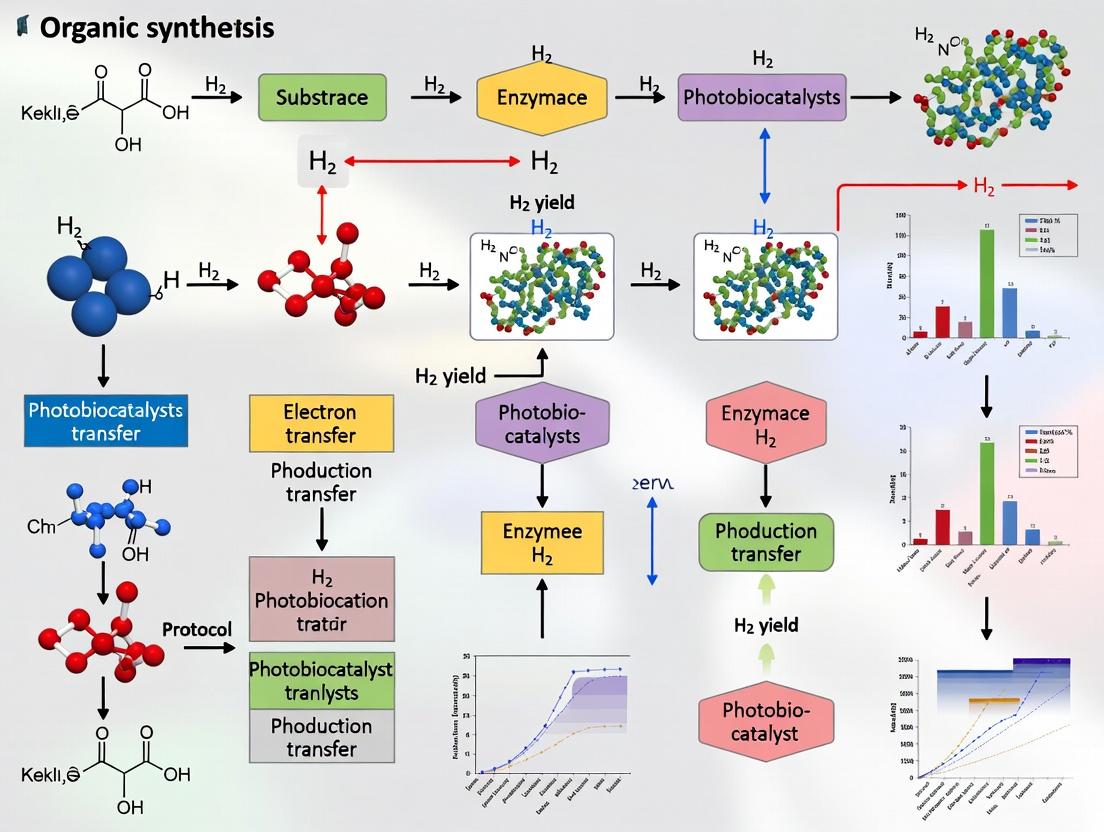
Photobiocatalytic systems, which merge the light-harvesting capabilities of photocatalysts with the specificity of biological enzymes or whole cells, represent a promising frontier for sustainable hydrogen (H2) production[citation:1][citation:5].
A Comprehensive Protocol and Strategy Guide for Photobiocatalytic H2 Production: From Fundamentals to Advanced Applications
Abstract
Photobiocatalytic systems, which merge the light-harvesting capabilities of photocatalysts with the specificity of biological enzymes or whole cells, represent a promising frontier for sustainable hydrogen (H2) production[citation:1][citation:5]. This article provides a detailed, actionable protocol and strategic framework tailored for researchers and scientists. It begins by establishing the foundational principles of photobiocatalysis, including the roles of key components like semiconductor photocatalysts (e.g., TiO2), electron mediators (e.g., methyl viologen), and whole-cell biocatalysts (e.g., recombinant E. coli)[citation:1]. A step-by-step methodological guide covers biocatalyst preparation, system assembly, and performance evaluation. Critical troubleshooting and optimization strategies are addressed, focusing on overcoming intrinsic barriers like inefficient electron transfer and charge recombination through advanced material design and system engineering[citation:1][citation:8]. Finally, the article validates approaches through comparative analysis of performance metrics, benchmarking against conventional technologies, and discussing future directions for integration into biomedical and energy research. The goal is to equip professionals with the knowledge to develop efficient, stable, and scalable photobiocatalytic H2 production systems.
Decoding the Photobiocatalytic Engine: Core Principles, Components, and Reaction Mechanisms for H2 Evolution
Application Notes: Photobiocatalytic Hydrogen Production
Photobiocatalysis merges the specificity of enzymes with the energy of light to drive chemical transformations. For H₂ production, this typically involves coupling a photoactive unit (e.g., a photosensitizer) with a hydrogen-evolving enzyme, such as a [FeFe]-hydrogenase or nitrogenase, within a defined system.
Key Advantages:
- Spatiotemporal Control: Light enables precise initiation and modulation of catalytic activity.
- Sustainability: Utilizes sunlight as a renewable energy input.
- Specificity & Efficiency: Enzymes offer high selectivity and turnover under mild conditions.
- Modularity: Photosensitizers, electron donors, and enzymes can be optimized independently.
Critical Challenges:
- Enzyme Stability: Many hydrogenases are oxygen-sensitive and can be inhibited by their own product (H₂).
- Electron Transfer Efficiency: The kinetics of electron transfer from the photosensitizer to the enzyme's active site is often a limiting factor.
- Photosensitizer Durability: Photobleaching and degradation of organic dyes or stability of semiconductor materials under operational conditions.
- System Integration: Engineering efficient interfaces between biological and non-biological components.
Recent Performance Data:
Table 1: Benchmark Systems for Photobiocatalytic H₂ Production
| System Components (Enzyme / Photosensitizer / Donor) | H₂ Production Rate (µmol H₂·mg enzyme⁻¹·h⁻¹) | Total Turnover Number (TTN) | Apparent Quantum Yield (AQY) | Key Reference (Current) |
|---|---|---|---|---|
| [FeFe]-Hydrogenase / CdS Nanorods / Ascorbate | 380 | 1,200,000 | 20.3% @ 405 nm | |
| [FeFe]-Hydrogenase / Eosin Y / EDTA | 85 | 50,000 | 2.1% @ 520 nm | |
| Nitrogenase (MoFe protein) / [Ru(bpy)₃]²⁺ / Dithionite | 15* | 5,000* | <0.1% @ 450 nm | |
| Hydrogenase-Mimetic Diiron Complex / Carbon Nitride (C₃N₄) / TEOA | N/A (Homogeneous) | 1,050 | 2.8% @ 420 nm |
*Rate and TTN given for electron flux through nitrogenase; actual ATP-dependent H₂ production is more complex.
Experimental Protocols
Protocol 1: In Vitro Photobiocatalytic H₂ Production Using a [FeFe]-Hydrogenase and an Organic Dye Photosensitizer
Principle: A reduced organic dye (e.g., Eosin Y), excited by visible light, transfers an electron to the hydrogenase, which reduces protons to molecular hydrogen.
Research Reagent Solutions & Essential Materials:
| Item | Function & Specification |
|---|---|
| Purified [FeFe]-hydrogenase (CpI, from C. pasteurianum) | Catalytic unit for proton reduction. Store anaerobically in Tris-HCl buffer, pH 7.4, at 4°C. |
| Eosin Y disodium salt | Organic photosensitizer. Absorbs green light (~520 nm). Prepare 10 mM stock in deionized water. |
| EDTA (Ethylenediaminetetraacetic acid), disodium salt | Sacrificial electron donor. Quenches the oxidized dye. Prepare 0.5 M stock, pH 8.0. |
| Tris-HCl Buffer (100 mM, pH 7.4) | Reaction buffer. Deoxygenate thoroughly before use. |
| Anaerobic Cuvette (glass or quartz, sealed with septum) | Reaction vessel to maintain anoxic conditions. |
| LED Light Source (520 ± 10 nm) | Provides monochromatic light for photosensitizer excitation. Calibrate intensity (e.g., 50 mW/cm²). |
| Gas Chromatograph (GC) with TCD detector | For quantifying H₂ in headspace. Use a Molecular Sieve 5Å column. |
| Anaerobic Chamber (Glove Box, N₂ atmosphere, O₂ < 2 ppm) | For preparation of all solutions and assembly of reactions under strict anoxia. |
Detailed Methodology:
- Preparation: Inside an anaerobic glove box, prepare 5 mL of deoxygenated Tris-HCl buffer (100 mM, pH 7.4) in a sealed vial.
- Reaction Assembly: In the glove box, add the following to a 3 mL anaerobic cuvette in order:
- 2.70 mL Tris-HCl buffer.
- 100 µL of 0.5 M EDTA stock (final conc. 20 mM).
- 100 µL of 10 mM Eosin Y stock (final conc. 0.4 mM).
- 100 µL of purified hydrogenase (final concentration 0.5-2 µM). Seal the cuvette tightly with a rubber septum.
- Pre-incubation: Equilibrate the assembled cuvette in the dark at 25°C for 5 minutes.
- Illumination: Place the cuvette in a temperature-controlled holder (25°C) and illuminate with the 520 nm LED light source. Start the timer.
- Sampling: At regular intervals (e.g., 0, 5, 15, 30, 60 min), use a gas-tight syringe to withdraw 100 µL of the headspace. Inject immediately into the GC for H₂ quantification.
- Control Experiments: Perform identical runs (a) in the dark, (b) without enzyme, (c) without photosensitizer, and (d) without electron donor.
- Data Analysis: Calculate H₂ production rates using a standard curve generated from known H₂ volumes. Normalize rates to enzyme concentration (µmol H₂·mg⁻¹·h⁻¹).
Protocol 2: Integrated Photobiocatalytic System Using Semiconductor Nanocrystals and Hydrogenase
Principle: Photoexcited electrons from a semiconductor nanoparticle (e.g., CdS nanorod) are transferred directly to the hydrogenase, minimizing reliance on diffusive mediators.
Detailed Methodology:
- CdS Nanorod Synthesis: Synthesize CdS nanorods (~50 nm length, 4 nm diameter) using a hot-injection method with cadmium oxide and elemental sulfur in phosphonic acid solvents.
- Enzyme-Nanoparticle Assembly: Under anaerobic conditions, mix purified hydrogenase (CpI) with an aqueous suspension of CdS nanorods in a 1:10 molar ratio (enzyme active site : nanocrystal) in 100 mM phosphate buffer, pH 7.0. Incubate on ice for 30 min to allow association.
- Reaction Setup: Transfer the CdS-hydrogenase mixture to a sealed, anaerobic reactor vessel. Add sodium ascorbate (final conc. 0.1 M) as a sacrificial electron donor. Sparge the solution with N₂ for 10 minutes.
- Illumination & Measurement: Illuminate the stirred suspension with a 405 nm LED light source. Monitor H₂ production in real-time using an online GC or via periodic headspace sampling as in Protocol 1.
- Quantum Yield Calculation: Measure the photon flux of the LED using a calibrated power meter. The Apparent Quantum Yield (AQY) is calculated as: AQY (%) = [2 * (moles of H₂ produced) / (moles of incident photons)] * 100.
Visualizations
Diagram Title: Photobiocatalytic H2 Production Mechanism
Diagram Title: Photobiocatalysis Experimental Workflow
Within the emerging paradigm of photobiocatalytic hydrogen (H2) production, the synergistic integration of light-harvesting materials, biological catalysts, and molecular redox mediators is critical. This protocol application note details the function, selection, and experimental handling of these three core components. The system's overarching principle involves a photocatalyst absorbing light to generate excited-state electrons, which are subsequently transferred via an electron shuttle to a biocatalyst (typically a hydrogenase or an engineered enzyme), where they are used to reduce protons to molecular H2. This approach merges the high quantum efficiency of synthetic photocatalysts with the specificity and mild-condition operation of biological catalysts, offering a promising route for sustainable energy research.
Component Specifications and Quantitative Data
Table 1: Comparative Analysis of Common Photocatalysts for H2Production
| Photocatalyst Type | Typical Material/Complex | Band Gap / Excitation (eV/nm) | Apparent Quantum Yield (AQY) for H2 (%) | Key Advantages | Stability Concerns |
|---|---|---|---|---|---|
| Inorganic Semiconductor | CdS Quantum Dots | 2.4 eV / 517 nm | 5-20% (under visible light) | Strong absorption, tunable via size | Photocorrosion, Cd leaching |
| Organic Polymer | Carbon Nitride (C3N4) | 2.7 eV / 460 nm | 1-7% (at 420 nm) | Metal-free, robust, inexpensive | Moderate charge recombination |
| Metal-Organic Framework (MOF) | Pt@UiO-66-NH2 | ~2.9 eV / 428 nm | 2.5-3.5% | High surface area, designable | Hydrolytic stability in water |
| Molecular Catalyst | [Ru(bpy)3]2+ | MLCT / 450 nm | <0.1% (requires sacrificial donor) | Well-defined redox, soluble | Photobleaching, cost |
Table 2: Key Biocatalysts (Hydrogenases) and Their Properties
| Hydrogenase Class | Metal Cofactor | Typical Source | H2 Evolution Turnover Frequency (s-1) | O2 Sensitivity | Optimal pH Range |
|---|---|---|---|---|---|
| [FeFe]-Hydrogenase | 2Fe, [4Fe-4S] | Clostridium pasteurianum | 6,000 - 9,000 | Highly sensitive | 6.0 - 8.5 |
| [NiFe]-Hydrogenase | Ni, Fe, [4Fe-4S] | Desulfovibrio gigas | 100 - 500 | Moderately sensitive | 7.0 - 9.0 |
| O2-Tolerant [NiFe] | Ni, Fe, [4Fe-4S] | Ralstonia eutropha | 50 - 200 | Tolerant | 6.0 - 8.0 |
| Engineered Hydrogenase | [FeFe] mimic | Synthetic biology | 10 - 500 (reported) | Tunable | Variable |
Table 3: Common Electron Shuttle (Mediator) Properties
| Mediator Name | Redox Potential (E°' vs. SHE, pH 7) | Molecular Weight (Da) | Function in Photobiocatalysis | Stability Notes |
|---|---|---|---|---|
| Methyl Viologen (MV2+) | -446 mV | 257.2 | Efficient electron carrier, widely used | Forms stable radical cation (MV•+) |
| Benzyl Viologen (BV2+) | -360 mV | 307.2 | Similar to MV, slightly higher potential | |
| Cytochrome c | +250 mV | ~12,400 | Physiological mediator, protein-based | Requires intact 3D structure |
| [Fe(EDTA)]2− | +120 mV | 340.0 (Fe-EDTA) | Small molecule, rapid kinetics | pH dependent, may degrade |
| Biological (e.g., FAD) | ~ -220 mV | 785.6 | Native cofactor, biocompatible | Photolabile |
Experimental Protocols
Protocol 3.1: Assembly of a Standard Photobiocatalytic H2Evolution System
Objective: To establish a functional, integrated system for light-driven H2 production using a semiconductor photocatalyst, an electron shuttle, and a purified hydrogenase.
Materials:
- Photocatalyst Suspension: 0.5 mg/mL CdS quantum dots (QDs) in 50 mM phosphate buffer (pH 7.0).
- Biocatalyst: Purified [FeFe]-hydrogenase (0.1 mg/mL, specific activity >5000 U/mg) in anaerobic buffer.
- Electron Shuttle: 10 mM Methyl Viologen (MV2+) stock in deionized water.
- Sacrificial Electron Donor: 1.0 M Sodium Ascorbate (pH-adjusted to 7.0).
- Buffer: 100 mM Potassium Phosphate Buffer, pH 7.0, deoxygenated.
- Reaction Vessel: 4 mL glass vial with a rubber septum.
- Light Source: LED array (λmax = 450 nm, intensity 100 mW/cm²).
- Gas Chromatograph (GC): Equipped with a TCD detector and a molecular sieve column for H2 quantification.
Procedure:
- Anaerobic Preparation: Inside an anaerobic chamber (N2 atmosphere, O2 < 2 ppm), prepare the reaction mixture in the sealed vial.
- Reaction Assembly: Sequentially add to the vial:
- 980 µL of deoxygenated phosphate buffer.
- 10 µL of Sodium Ascorbate stock (final conc. 10 mM).
- 5 µL of MV2+ stock (final conc. 50 µM).
- 5 µL of CdS QD suspension (final conc. 2.5 µg/mL). Mix gently.
- Biocatalyst Addition: Initiate the reaction by injecting 10 µL of the purified hydrogenase solution (final enzyme conc. ~1 µg/mL). Immediately replace the headspace with pure Argon.
- Illumination: Place the sealed vial under the LED light source. Maintain temperature at 25°C using a water bath.
- Sampling and Analysis: At defined time intervals (e.g., 0, 5, 15, 30, 60 min), withdraw 100 µL of the headspace gas using a gas-tight syringe and inject it into the GC for H2 quantification.
- Controls: Perform control experiments in the dark, without the photocatalyst, without the enzyme, and without the electron shuttle.
Protocol 3.2: Activity Assay for Hydrogenase with Mediator Reduction
Objective: To determine the specific H2 evolution activity of a hydrogenase using a chemically reduced electron mediator.
Materials:
- Assay Buffer: 50 mM Tris-HCl, pH 8.0, containing 100 mM NaCl.
- Hydrogenase: Purified enzyme at known concentration.
- Mediator: 100 mM Sodium Dithionite (Na2S2O4) in anaerobic buffer (freshly prepared).
- Electron Acceptor: 10 mM Methyl Viologen stock.
- H2 Detection: Clark-type hydrogen electrode or GC setup.
Procedure:
- Calibrate the hydrogen electrode according to manufacturer instructions.
- In the anaerobic chamber, add to the electrode cell: 1.9 mL assay buffer, 50 µL MV2+ stock (final 250 µM). Seal and purge with Ar.
- Initiate the reaction by adding 50 µL of dithionite stock (final 2.5 mM) to chemically reduce the MV2+ to MV•+ (observe color change to blue).
- Allow the baseline to stabilize. Then, inject 5-20 µL of the hydrogenase sample.
- Record the rate of H2 production (nmol H2 min-1). The specific activity is calculated as (rate of H2 production) / (mass of enzyme in assay).
System Diagrams and Workflows
Diagram 1: Photobiocatalytic H2 Production Workflow (76 chars)
Diagram 2: Research Reagent Solutions Table (76 chars)
The Scientist's Toolkit: Research Reagent Solutions
| Item/Category | Specific Example | Primary Function in System |
|---|---|---|
| Photocatalyst | CdS Quantum Dots (core/shell) | Absorbs visible light to generate excited-state electron-hole pairs. |
| Biocatalyst | Purified [FeFe]-Hydrogenase (CpI) | Catalyzes the specific reduction of protons to H2 with high turnover. |
| Electron Shuttle | Methyl Viologen (MV2+) | Diffusible redox mediator; carries electrons from photocatalyst to enzyme. |
| Sacrificial Donor | Sodium Ascorbate (pH 7.0) | Irreversibly donates electrons to the photocatalyst, regenerating its ground state. |
| Anaerobic Buffer | 100mM KPi, 2mM Dithiothreitol (DTT) | Maintains pH and a reducing environment, stabilizing O2-sensitive enzymes. |
| Detection Standard | Certified H2 in N2 gas mixture (e.g., 1000 ppm) | Calibration standard for quantitative GC analysis of product yield. |
Within the broader thesis on protocols for photobiocatalytic H₂ production, a fundamental hurdle is the efficient extracellular transfer of reducing equivalents (electrons) from a photosensitizer to intracellular hydrogenases. This process is governed by complex electron transfer (ET) kinetics and is severely impeded by the microbial cell envelope—a multi-layered barrier comprising the cytoplasmic membrane, peptidoglycan, and outer membrane in Gram-negative bacteria. This Application Note details protocols and analyses for quantifying these kinetic barriers and developing strategies to overcome them.
Key Quantitative Data in Electron Transfer Studies
Table 1: Reported Electron Transfer Rate Constants Across Biological Barriers
| System / Mediator | Rate Constant (k, s⁻¹) | Barrier Type | Measurement Method | Reference Year |
|---|---|---|---|---|
| Cytochrome c to bacterial RC | 10⁶ - 10⁷ | Outer Membrane (porins) | Laser Flash Photolysis | 2023 |
| Neutral Red to E. coli | ~10² | Full Cell Envelope | Chronoamperometry | 2022 |
| Methylene Blue to Shewanella oneidensis MR-1 | 10³ | Periplasm & OM | Protein Film Voltammetry | 2023 |
| Hydrated Electron to Lipid Bilayer | <10¹ | Cytoplasmic Membrane | Pulse Radiolysis | 2021 |
| Synthetic Molecular Wire (viologen-tether) | 10⁴ | Engineered Channel | SECM (Scanning Electrochem. Microscopy) | 2024 |
Table 2: Permeability Coefficients (P) of Cell Envelope Layers to Small Redox Mediators
| Envelope Layer | Approx. Thickness (nm) | P for Hydrophilic Mediator (cm s⁻¹) | P for Lipophilic Mediator (cm s⁻¹) |
|---|---|---|---|
| Outer Membrane (Gram-negative) | 7-8 | 10⁻⁷ - 10⁻⁹ (via porins) | 10⁻¹⁰ - 10⁻¹² |
| Peptidoglycan | 2-7 | 10⁻⁵ - 10⁻⁶ | ~10⁻⁵ |
| Cytoplasmic Membrane | 4-5 | <10⁻¹² | 10⁻⁶ - 10⁻⁸ |
Experimental Protocols
Protocol: Quantifying Apparent Electron Transfer Kinetics Using Chronoamperometry
Objective: To measure the bulk electron uptake rate of bacterial cells in suspension using an exogenous redox mediator.
Materials:
- Bacterial culture (e.g., E. coli or recombinant H₂-producing strain).
- Potentiostat/Galvanostat with three-electrode cell.
- Working Electrode: Glassy Carbon (3 mm diameter).
- Counter Electrode: Platinum wire.
- Reference Electrode: Ag/AgCl (3 M KCl).
- Anoxic electrolyte: 50 mM PBS, 100 mM KCl, pH 7.4, sparged with N₂/Ar.
- Redox Mediator: e.g., Neutral Red (E°' = -325 mV vs. SHE).
- Gas-tight electrochemical cell.
Procedure:
- Cell Preparation: Grow cells to mid-log phase. Harvest by centrifugation (5,000 x g, 10 min, 4°C). Wash twice in anoxic electrolyte. Resuspend to an OD₆₀₀ of 5.0 under anoxic conditions.
- Electrode Preparation: Polish glassy carbon electrode sequentially with 1.0, 0.3, and 0.05 µm alumina slurry. Sonicate in deionized water for 1 min.
- Baseline Measurement: Place 10 mL anoxic electrolyte in the cell. Add mediator to 50 µM final concentration. Apply a constant potential 100 mV more negative than the mediator's E°' for 300 s to pre-reduce the mediator. Switch the potential to a value 50 mV more positive than E°' and record the oxidation current until it decays to a steady baseline.
- Kinetic Measurement: Inject 500 µL of concentrated cell suspension into the electrochemical cell (final OD₆₀₀ ~0.25). Immediately repeat the potential step sequence from Step 3. The presence of cells will catalyze the re-reduction of the oxidized mediator, leading to a sustained increase in oxidative current.
- Data Analysis: The steady-state catalytic current (Icat) is proportional to the rate of extracellular electron transfer. Calculate the apparent electron transfer rate (vET) using: v_ET = I_cat / (nFA), where n=2 for H₂ production, F is Faraday's constant, and A is electrode area.
Protocol: Assessing Cell Envelope Permeability via Fluorophore Exclusion
Objective: To empirically determine the diffusion barrier posed by the cell envelope using fluorescence quenching.
Materials:
- Bacterial cells.
- Membrane-impermeant fluorescent dye (e.g., Calcein, 622 Da).
- Quencher (e.g., CoCl₂).
- Fluorescence spectrophotometer.
- Permeabilizing agent (e.g., polymyxin B nonapeptide, EDTA).
Procedure:
- Dye Loading: Incubate cells with 1 µM Calcein-AM (permeant ester form) for 30 min. Wash extensively to remove external dye. Intracellular esterases cleave AM group, trapping fluorescent Calcein inside.
- Baseline Fluorescence: Measure fluorescence intensity (λex ~494 nm, λem ~517 nm) of cell suspension.
- Quenching Assay: Add 1 mM CoCl₂ (a collisional quencher that cannot cross intact membranes). Record the immediate decrease in fluorescence. The fraction of fluorescence quenched corresponds to the fraction of dye molecules accessible to the quencher (i.e., located in the periplasm or leaked out).
- Permeabilization Control: Add a permeabilizing agent (e.g., 100 µg/mL polymyxin B nonapeptide) to disrupt the outer membrane. Repeat quenching measurement. A greater quench indicates increased accessibility.
- Calculation: Permeability index = (F₀ - Fq) / F₀, where F₀ is initial fluorescence and Fq is post-quench fluorescence. Compare indices before and after permeabilization.
Visualizations
Diagram: Electron Transfer Pathways Across the Gram-Negative Cell Envelope
Title: ET Pathways Across Gram-Negative Cell Envelope
Diagram: Workflow for Kinetic and Barrier Analysis
Title: Kinetic and Barrier Analysis Workflow
The Scientist's Toolkit: Key Research Reagent Solutions
Table 3: Essential Reagents for Studying ET and Envelope Barriers
| Reagent / Material | Primary Function | Key Consideration for H₂ Production Research |
|---|---|---|
| Neutral Red (E°' = -325 mV vs. SHE) | Soluble redox mediator for bulk ET assays. | Matches potential window of many hydrogenases. May require specific dehydrogenase activity for uptake. |
| Phenazine Ethosulfate (PES) | High-potential mediator for studying oxidative pathways. | Useful for probing reverse ET or reactive oxygen species generation. |
| Polymyxin B Nonapeptide | Outer membrane permeabilizer (disrupts LPS). | Allows controlled assessment of OM barrier without full cell lysis. |
| EDTA (Ethylenediaminetetraacetic acid) | Chelator that permeabilizes Gram-negative OM by removing stabilizing Ca²⁺/Mg²⁺. | Use in low concentrations to avoid complete membrane disintegration. |
| Dichlorophenol Indophenol (DCPIP) | Visual redox dye (blue oxidized, colorless reduced). | Quick, qualitative assay for cellular reductase activity. |
| Calcein-AM / Propidium Iodide | Fluorescent dye pair for viability/permeability assay. | Calcein (live/green), PI (dead/red). Distinguishes ET failure from cell death. |
| Liposome Kits (e.g., DOPC) | Model membrane systems. | Study mediator partition coefficients and bare bilayer ET rates in isolation. |
| Proteinase K / Lysozyme | Enzymatic barrier disruption. | Targets specific envelope components (proteins, peptidoglycan) to deconvolute their contribution. |
Application Notes
This protocol details the experimental workflow for investigating and optimizing photobiocatalytic hydrogen (H₂) production, integrating the thermodynamic and kinetic principles governing light absorption, charge separation, and catalytic proton reduction. The framework is designed for integration into a broader thesis on standardized methodologies for renewable H₂ generation research. Success hinges on precise control over photo-physical, electron transfer, and enzymatic steps.
Key Considerations:
- Thermodynamic Feasibility: The combined system (photosensitizer + catalyst) must provide a reducing potential more negative than the H⁺/H₂ redox couple (-0.41 V vs. SHE at pH 7). The excited state energy of the photosensitizer must be sufficient to drive electron transfer.
- Kinetic Optimization: Rates are limited by the slowest step: photon absorption, intersystem crossing, electron transfer to the catalyst, or the catalytic turnover itself. Minimizing recombination and back-electron transfer is critical.
- System Integration: Components (light harvester, electron donor, catalyst) must be compatible in terms of solubility, charge, and operating conditions (pH, ionic strength).
Quantitative Benchmarking Data (Representative Systems) Table 1: Performance Metrics of Selected Photobiocatalytic H₂ Production Systems
| System Components (Photosensitizer / Catalyst) | Optimal pH | Light Source (nm) | Max. Turnover Frequency (TOF) (h⁻¹) | Total Turnover Number (TTN) | Apparent Quantum Yield (AQY) | Reference Context |
|---|---|---|---|---|---|---|
| [Ru(bpy)₃]²⁺ / [FeFe]-Hydrogenase | 7.0 | 450 | ~900 | 50,000 | 0.12 | Standard noble-metal sensitizer with high-activity enzyme |
| Eosin Y / [NiFe]-Hydrogenase | 6.5 | 520 | ~150 | 9,000 | 0.04 | Organic dye with O₂-tolerant enzyme variant |
| CdS QDs / [FeFe]-Hydrogenase | 8.0 | 405 | ~1,200 | 25,000 | 0.09 | Semiconductor nanomaterial sensitizer |
| PSI / [FeFe]-Hydrogenase | 7.5 | 680 | ~400 | 100,000+ | 0.18 | Photosystem I hybrid system |
Table 2: Critical Thermodynamic and Kinetic Parameters for Analysis
| Parameter | Symbol | Typical Measurement Method | Target Range for Optimization |
|---|---|---|---|
| Excited State Lifetime | τ | Time-resolved fluorescence/absorption | >10 ns for triplet states |
| Electron Transfer Rate | k_ET | Transient absorption spectroscopy | >10⁸ s⁻¹ |
| Catalytic Turnover Frequency | TOF | H₂ quantification (GC) over initial period | System-dependent, maximize |
| System Half-Life | t₁/₂ | Time to 50% activity loss | >24 hours for practical use |
| Reduction Potential (E⁰) | E⁰(PS*/PS⁻) & E⁰(Cat) | Cyclic voltammetry | E⁰(PS*/PS⁻) < E⁰(Cat) by ≥100 mV |
Experimental Protocols
Protocol 1: Assembly and Evaluation of a Three-Component Photobiocatalytic System
Objective: To measure H₂ production activity of a system comprising an organic photosensitizer, a sacrificial electron donor, and an [FeFe]-hydrogenase.
Research Reagent Solutions & Essential Materials
| Item | Function/Explanation |
|---|---|
| Eosin Y (disodium salt) | Organic photosensitizer. Absorbs green light, generates long-lived triplet state for electron transfer. |
| [FeFe]-Hydrogenase (CpI from C. pasteurianum or recombinant) | Biocatalyst. Reduces protons to H₂ with high turnover frequency at low overpotential. |
| Triethanolamine (TEOA) | Sacrificial electron donor. Quenches the oxidized photosensitizer, regenerating the ground state. |
| Potassium Phosphate Buffer (100 mM, pH 7.0) | Maintains physiological pH and ionic strength for enzyme stability. |
| Anaerobic Sealed Vials (e.g., Serum Bottles) | Creates an O₂-free environment essential for anaerobic enzyme activity. |
| Gas Chromatograph (GC with TCD) | For quantitative, time-course measurement of H₂ production. |
| LED Light Source (520 ± 10 nm) | Provides monochromatic light matching the photosensitizer's absorption maximum. |
| Schlenk Line or Glovebox | For deoxygenating buffers and assembling reactions under an inert atmosphere (N₂/Ar). |
Procedure:
- Anaerobic Buffer Preparation: Degas 100 mL of 100 mM potassium phosphate buffer (pH 7.0) by sparging with high-purity argon for at least 45 minutes. Transfer to an anaerobic glovebox (O₂ < 1 ppm).
- Stock Solution Prep (in glovebox):
- Prepare 10 mM Eosin Y stock in degassed buffer.
- Prepare 1 M TEOA stock in degassed buffer.
- Dilute purified [FeFe]-hydrogenase to 0.1 mg/mL in degassed buffer (keep on ice).
- Reaction Assembly: In a 10 mL anaerobic serum vial, combine:
- 2.8 mL degassed buffer
- 100 µL Eosin Y stock (final: 0.35 mM)
- 100 µL TEOA stock (final: 35 mM)
- Initiation: Seal the vial with a butyl rubber septum and aluminum crimp. Remove from glovebox. Place vial in a temperature-controlled holder at 25°C. Initiate reaction by injecting 100 µL of the enzyme stock (final: ~5 µg/mL) through the septum using a gas-tight syringe.
- Illumination & Sampling: Immediately place the vial under the 520 nm LED lamp (fluence rate: ~20 mW/cm²). At regular intervals (e.g., 0, 5, 15, 30, 60 min), withdraw 250 µL of the headspace gas using a gas-tight syringe and inject into the GC for H₂ quantification.
- Controls: Perform identical reactions (a) in the dark, (b) without enzyme, (c) without photosensitizer, and (d) without electron donor.
Protocol 2: Time-Resolved Spectroscopic Analysis of Electron Transfer Kinetics
Objective: To measure the rate of electron transfer from the photosensitizer's excited state to the hydrogenase using transient absorption spectroscopy.
Procedure:
- Sample Preparation: Prepare an anaerobic, optically matched sample in a 1 cm pathlength cuvette fitted with a septum under Ar. Typical concentrations: 50 µM [Ru(bpy)₃]²⁺ (photosensitizer), 1 mM sodium ascorbate (donor), and 5 µM hydrogenase in 50 mM Tris-Cl buffer, pH 8.0.
- Laser Excitation: Use a pulsed laser source (e.g., 450 nm, 100 fs pulse width) to excite the photosensitizer.
- Probe Continuum: A white light continuum probe pulse is passed through the sample at variable time delays (from ps to ms).
- Detection: Measure differential absorption (ΔA) spectra using a CCD detector. Monitor the decay of the photosensitizer's excited state (e.g., [Ru(bpy)₃]²⁺ bleach at 450 nm) and the appearance of reduced species (e.g., enzyme intermediate absorption features).
- Global Analysis: Fit the time-dependent ΔA data to a kinetic model (e.g., consecutive or parallel reactions) to extract the electron transfer rate constant (k_ET).
Mandatory Visualizations
Title: Photobiocatalytic H2 Production Electron Pathways
Title: Experimental Protocol for H2 Activity Assay
A Step-by-Step Experimental Protocol: Assembling and Operating a Photobiocatalytic H2 Production System
This protocol constitutes Part 1 of a comprehensive thesis framework for establishing robust, reproducible research in photobiocatalytic hydrogen production. The overarching thesis posits that optimizing the initial biocatalyst state is the most critical determinant for the efficiency and stability of the subsequent photobiocatalytic process. This section details the foundational steps of selecting appropriate microbial strains, preparing them under defined conditions, and activating their inherent metabolic pathways to maximize hydrogenase activity and light-driven electron donation prior to their integration into photoreactor systems.
Research Reagent Solutions & Essential Materials Toolkit
The following table details key reagents, materials, and their specific functions in the selection, preparation, and activation of whole-cell biocatalysts for photobiocatalytic H2 production.
| Item Name | Function/Role in Protocol | Key Considerations |
|---|---|---|
| Anaerobic Chamber (Coy Type) | Provides an O2-free atmosphere (<1 ppm O2) for all manipulations of sensitive hydrogenases. | Maintain with 95% N2, 5% H2 gas mix; use palladium catalysts. |
| Defined Mineral Medium (e.g., BG-11 for cyanobacteria, Modified Sistrom's for purple bacteria) | Standardized, reproducible growth medium devoid of complex organics that can interfere with downstream activation. | Precise control of micronutrients (e.g., Ni, Fe, Mo) essential for hydrogenase synthesis. |
| Resazurin Reduction Indicator (0.001% w/v) | Visual redox indicator to confirm anaerobiosis in liquid cultures and media bottles. | Colorless (reduced) state confirms anoxic conditions. |
| Carbon Source (e.g., Sodium Lactate, Sodium Acetate, Glycerol) | Electron donor for heterotrophic or mixotrophic growth, influencing metabolic state and hydrogenase expression. | Concentration optimization is strain-specific to avoid catabolite repression. |
| Buffering Agent (e.g., HEPES, PIPES, 30 mM) | Maintains pH during growth and activation phases, critical for enzyme stability. | Choose buffer with pKa suitable for target pH (typically 7.0-7.5) and low metal binding. |
| Reducing Agent (e.g., Sodium Dithionite, 1-2 mM) | Chemical reductant used during activation phase to poise redox potential and reduce the hydrogenase active site. | Must be prepared fresh; handle in strict anaerobic conditions. |
| Chelated Iron Solution (e.g., Ferric Citrate, 10-20 µM) | Bioavailable iron source, a critical cofactor for [FeFe]- or [NiFe]-hydrogenase assembly and function. | Chelation prevents precipitation in aerobic stock preparation. |
| Gas-Tight Syringes (Hamilton, 1mL & 10mL) | For precise, anaerobic transfer of cultures, media, and reagents without O2 contamination. | Must be flushed with inert gas (Ar/N2) prior to use. |
| Spectrophotometer with Near-IR Capability | Optical density measurement for cell quantification; near-IR for bacteriochlorophyll assays in purple bacteria. | Use cuvettes suitable for anaerobic sampling. |
| Centrifuge with Anaerobic Tubes | Harvesting and washing of cell pellets under inert atmosphere. | Tubes must be sealed and flushed with N2/Ar before centrifugation. |
Detailed Experimental Protocols
Protocol A: Selection and Anaerobic Cultivation of Model Phototrophs
Objective: To aseptically cultivate candidate biocatalyst strains under defined, anaerobic, photoheterotrophic conditions to induce hydrogenase-related metabolism.
Candidate Strains:
- Purple Non-Sulfur Bacteria (PNSB): Rhodopseudomonas palustris CGA009, Rhodobacter capsulatus B10.
- Cyanobacteria: Synechocystis sp. PCC 6803 (uptake hydrogenase knockout mutants preferred).
Materials: Anaerobic chamber, defined mineral medium, carbon source stock (e.g., 1M sodium lactate), resazurin indicator, gas-tight bottles (serum bottles or Balch tubes), aluminum crimp seals, butyl rubber stoppers, crimper/decapper, sterile syringes & needles.
Method:
- Medium Preparation: In the anaerobic chamber, aliquot defined mineral medium into a sterile serum bottle. Add carbon source to final target concentration (e.g., 30 mM lactate). Add 1 mL/L of resazurin stock (0.1% w/v). Seal bottle with a butyl rubber stopper and aluminum crimp. Remove from chamber.
- Medium Reduction & Sterilization: Using a gas-tight syringe, sparge the headspace of the sealed bottle with high-purity argon (Ar) for 10 minutes via inlet and outlet needles. Subsequently, autoclave the bottle at 121°C for 20 minutes. Upon cooling, the reduced, sterile medium should be colorless.
- Inoculation: Inside the anaerobic chamber, use a gas-tight syringe to aseptically transfer a 1-5% (v/v) inoculum from a pre-grown, anaerobic starter culture into the sterile medium bottle.
- Incubation: Incubate cultures under continuous illumination (for PNSB: 100-200 µmol photons m-2 s-1 of white or near-IR light; for cyanobacteria: 50 µmol photons m-2 s-1 white light) at 30°C (±2°C) with gentle shaking (100-150 rpm) for 48-96 hours until late exponential/early stationary phase (OD660 ~1.0-1.5 for PNSB).
Protocol B: Harvesting and Preparation of Resting Cell Suspensions
Objective: To harvest cells anaerobically and resuspend them in a defined activation buffer, creating a standardized "resting cell" biocatalyst preparation.
Materials: Anaerobic centrifuge, sealed centrifuge tubes (flushed with Ar), activation buffer (30 mM HEPES-KOH, pH 7.4, 2 mM MgCl2, prepared anaerobically), gas-tight syringes.
Method:
- Transfer: Inside the anaerobic chamber, aseptically transfer the grown culture into pre-flushed, sealed centrifuge tubes. Seal tubes.
- Harvest: Centrifuge tubes at 6,000 x g for 10 minutes at 4°C.
- Wash: Carefully return tubes to the anaerobic chamber. Decant and discard the supernatant. Resuspend the pellet in 10 mL of anaerobic activation buffer using a pipette. Re-seal tube and centrifuge again as in step 2.
- Final Suspension: Repeat step 3 for a second wash. After the final centrifugation, resuspend the cell pellet in a defined volume of anaerobic activation buffer to achieve a target cell density (e.g., OD660 = 2.0, or 10 mg dry cell weight/mL). This is the Resting Cell Stock.
Protocol C: Chemical Activation of Hydrogenase Activity
Objective: To chemically reduce and "activate" the hydrogenases in the resting cell suspension, priming them for H2 production or consumption assays.
Materials: Resting Cell Stock (from Protocol B), anaerobic activation buffer, freshly prepared sodium dithionite solution (100 mM in anaerobic buffer), gas-tight syringes, small-volume (e.g., 5 mL) sealed serum vials with butyl rubber stoppers.
Method:
- Aliquot Cells: Inside the anaerobic chamber, aliquot 2.0 mL of the Resting Cell Stock into a 5 mL sealed serum vial.
- Reductant Addition: Using a gas-tight syringe, add freshly prepared anaerobic sodium dithionite solution to the cell suspension to a final concentration of 1-2 mM. Gently swirl to mix. Note: Dithionite is a strong reductant and may inhibit some photosynthetic complexes; incubation time must be optimized.
- Incubation: Incubate the activated cell suspension in the dark, at room temperature, for 30 minutes. This allows for the reduction of the hydrogenase active site without interference from photosynthetic electron flow.
- Immediate Use: The activated biocatalyst is now ready for immediate use in photobiocatalytic H2 production assays (see Thesis Part 2). Activity decays over hours; use within 60 minutes for optimal results.
Data Presentation: Key Quantitative Parameters for Biocatalyst Preparation
Table 1: Strain-Specific Cultivation Parameters for Common Phototrophs
| Strain | Optimal Medium | Carbon Source & Conc. | Light Intensity & Type | Temp. (°C) | Target Harvest Phase (OD) | Doubling Time (h) |
|---|---|---|---|---|---|---|
| Rhodopseudomonas palustris CGA009 | Modified Biebl & Pfennig | 30 mM Lactate | 100 µE m-2 s-1, Near-IR | 30 | 1.2 - 1.5 (660 nm) | ~6 |
| Rhodobacter capsulatus B10 | Modified Sistrom's Min A | 30 mM Succinate | 150 µE m-2 s-1, White | 32 | 1.0 - 1.3 (660 nm) | ~4 |
| Synechocystis sp. PCC 6803 ΔhoxYH | BG-11 | 5 mM Glucose (Mixotrophic) | 50 µE m-2 s-1, White | 30 | 0.8 - 1.0 (730 nm) | ~8 |
Table 2: Standardized Metrics for Prepared Resting Cell Suspensions
| Parameter | Target Value/Quality | Measurement Method | Purpose |
|---|---|---|---|
| Cell Density | 10 mg DCW/mL (±1 mg) | Optical Density (OD660) calibrated to Dry Cell Weight (DCW) | Ensures reproducible catalyst loading in assays. |
| Buffer Integrity | pH 7.4 (±0.1), 30 mM HEPES | pH meter (anaerobic micro-electrode) | Provides stable, non-inhibitory chemical environment. |
| Anaerobicity | Resazurin colorless | Visual inspection | Confirms absence of O2 which irreversibly inactivates most hydrogenases. |
| Metabolic State | Endogenous substrate depleted | Low endogenous H2 production in dark | Ensures measured H2 in assays is primarily from provided electron donors/light. |
Visualization Diagrams
Diagram Title: Workflow for Whole-Cell Biocatalyst Preparation
Diagram Title: Hydrogenase Activation and Priming for H2 Production
Application Notes
Optimization of the photocatalytic component and sacrificial reagent system is critical for enhancing electron transfer efficiency and overall hydrogen evolution rates (HER) in photobiocatalytic H2 production systems. This protocol focuses on the rational selection and combination of photosensitizers (PS), catalysts, and sacrificial electron donors (SED) to construct a robust light-driven system for fueling hydrogenases or other biocatalysts. Key performance indicators include HER (µmol H2·h⁻¹), apparent quantum yield (AQY), and system longevity (hours of sustained activity).
Experimental Protocols
Protocol 2.1: Screening of Photosensitizers and Electron Donors
Objective: To identify the most effective PS/SED pair for generating reducing equivalents under visible light. Materials: Tris-HCl buffer (50 mM, pH 7.5), [FeFe]-hydrogenase (or alternative biocatalyst), photosensitizers (e.g., Eosin Y, Ru(bpy)₃²⁺, Cyanine dyes), sacrificial donors (e.g., EDTA, TEOA, Ascorbate), and a platinum electrode or gas chromatograph for H2 detection. Procedure:
- Prepare anaerobic solutions of each photosensitizer (final concentration 50 µM) in separate vials containing buffer and SED (e.g., 100 mM TEOA).
- Add a standardized aliquot of the biocatalyst to each vial under an inert atmosphere.
- Seal vials and irradiate with a calibrated LED light source (λ = 520 nm for Eosin Y, 450 nm for Ru(bpy)₃²⁺, intensity = 10 mW·cm⁻²).
- Monitor H2 production headspace via gas chromatography every 15 minutes for 2 hours.
- Calculate initial HER for each PS/SED combination. The system yielding the highest sustained HER with minimal PS photobleaching is selected for further optimization.
Protocol 2.2: Titration of Sacrificial Donor Concentration
Objective: To determine the optimal concentration of SED that maximizes H2 production while minimizing inhibitory effects. Procedure:
- Using the optimal PS from Protocol 2.1, prepare a series of reactions with SED concentrations ranging from 0 to 200 mM.
- Keep PS concentration, biocatalyst loading, light intensity, and buffer conditions constant.
- Irradiate samples and measure HER as described in 2.1.
- Plot HER vs. [SED]. The optimal concentration is typically at the plateau region preceding any inhibition (often observed at very high SED concentrations due to viscosity changes or non-specific binding).
Protocol 2.3: Assessing System Longevity and Photostability
Objective: To evaluate the operational stability of the optimized photocatalytic component. Procedure:
- Set up a large-scale reaction (e.g., 10 mL) with the optimized concentrations of PS, SED, and biocatalyst.
- Continuously irradiate under optimal wavelength while stirring.
- Monitor H2 production over 12-24 hours.
- Periodically sample to assess PS degradation via UV-Vis spectroscopy (decrease in characteristic absorption peak).
Data Presentation
Table 1: Performance of Common Photosensitizer/Donor Pairs in a Model Photobiocatalytic H2 System
| Photosensitizer (50 µM) | Sacrificial Donor (100 mM) | Avg. HER (µmol H2·h⁻¹) | AQY (%) at λ (nm) | Observed Stability (h) |
|---|---|---|---|---|
| Eosin Y | TEOA | 1250 ± 85 | 12.5 ± 0.8 @ 520 | 8 ± 1.5 |
| [Ru(bpy)₃]Cl₂ | EDTA | 980 ± 65 | 9.1 ± 0.6 @ 450 | 12 ± 2 |
| Cy5 | Ascorbate | 760 ± 55 | 6.3 ± 0.5 @ 650 | 5 ± 1 |
| ZnTPP* | TEOA | 1520 ± 110 | 15.2 ± 1.1 @ 430 | 6 ± 1 |
*ZnTPP = Zinc meso-tetraphenylporphyrin.
Table 2: Optimal Sacrificial Donor Concentrations for Eosin Y/TEOA System
| [TEOA] (mM) | Initial HER (µmol H2·h⁻¹) | Time to 50% Activity Loss (h) |
|---|---|---|
| 10 | 250 ± 30 | 2.5 |
| 50 | 1020 ± 75 | 7.0 |
| 100 | 1250 ± 85 | 8.0 |
| 150 | 1270 ± 90 | 7.5 |
| 200 | 1150 ± 95 | 6.0 |
The Scientist's Toolkit: Research Reagent Solutions
| Item | Function in Optimization |
|---|---|
| Eosin Y Disodium Salt | Common xanthene dye photosensitizer; absorbs green light (~520 nm), undergoes reductive quenching to initiate electron transfer. |
| Tris(2,2'-bipyridyl)ruthenium(II) chloride ([Ru(bpy)₃]Cl₂) | Robust inorganic photosensitizer with long excited-state lifetime; absorbs blue light. |
| Triethanolamine (TEOA) | A widely used sacrificial electron donor; acts as a reductive quencher for the excited PS, becoming oxidized while supplying electrons. |
| Ethylenediaminetetraacetic Acid (EDTA) | Alternative sacrificial donor; can chelate metal ions, which may be beneficial or inhibitory depending on system composition. |
| Anaerobic Buffer (Tris-HCl or HEPES, pH 7.5) | Provides a stable, oxygen-free environment essential for both PS excited states and oxygen-sensitive hydrogenases. |
| Calibrated LED Light Source | Provides monochromatic, intensity-controlled illumination for precise and reproducible photoexcitation. |
Diagrams
Diagram 1: Electron Flow in a Photocatalytic-Sacrificial System (94 chars)
Diagram 2: Optimization Workflow for Photocatalytic Components (97 chars)
This document details the standardized procedures for establishing a photobiocatalytic hydrogen (H₂) production system. It forms a critical component of a thesis focused on developing reproducible, high-throughput protocols for photobiocatalysis research. The specific focus is the creation of a rigorously controlled, anaerobic reaction environment with a calibrated light source, essential for studying sensitive enzyme systems like hydrogenases and photosensitizers.
Research Reagent Solutions & Essential Materials
The following table lists the core reagents and materials required for a standard photobiocatalytic H₂ production assay.
| Item | Specification/Concentration | Function & Rationale |
|---|---|---|
| Reaction Buffer | 50-100 mM HEPES or MOPS, pH 7.0-7.5 | Maintains physiological pH, provides ionic strength, and offers good buffering capacity without metal chelation. |
| Electron Donor | 10-100 mM Sodium Dithionite (Na₂S₂O₄) or 5-20 mM Ascorbic Acid | Provides reducing equivalents to the photosensitizer or directly to the biocatalyst. Dithionite creates strong anaerobic conditions. |
| Photosensitizer | 10-500 µM [Ru(bpy)₃]²⁺, Eosin Y, or organic dyes (e.g., fluorescein) | Absorbs light energy and initiates electron transfer via reductive quenching or oxidative quenching cycles. |
| Biocatalyst | Purified hydrogenase (e.g., [FeFe]-hydrogenase) or whole-cell system (e.g., C. reinhardtii) | The enzyme that catalyzes the reduction of protons (H⁺) to molecular hydrogen (H₂). |
| Electron Mediator | 1-10 mM Methyl Viologen (MV²⁺) or similar redox dye | Optional. Shuttles electrons between the photosensitizer and the biocatalyst's active site. |
| Anaerobic Indicator | Resazurin (0.001% w/v) | Visual indicator of anaerobic conditions (pink when oxic, colorless when anoxic). |
| Septa & Vials | Butyl rubber septa, crimp-top glass vials (e.g., 5-10 mL) | Ensures a gas-tight seal to maintain an inert atmosphere and allows for headspace sampling. |
| Gas Supply | Ultra-high purity (UHP) Argon or Nitrogen (O₂ < 1 ppm) | Displaces oxygen to create an inert atmosphere, preventing enzyme inactivation and side-reactions. |
Protocol: Inert Atmosphere Creation via Schlenk Line / Glovebox
This protocol describes two standard methods for achieving and maintaining an oxygen-free environment.
Schlenk Line Technique (For Liquid Reactions)
Objective: To degas all solutions and maintain an Argon/N₂ atmosphere in sealed reaction vessels. Materials: Schlenk line (dual manifold), vacuum pump, UHP Argon/N₂ source, schlenk flasks or crimp vials, gastight syringes. Procedure:
- Setup: Connect the reaction vial (sealed with a septum) to the Schlenk manifold via a needle.
- Evacuation/Backfill: Close the argon line and open the vial to vacuum for 2-3 minutes. Close the vacuum line and slowly open the argon line to fill the vial with inert gas. Repeat this cycle at least three times.
- Liquid Transfer: Use gastight syringes, flushed with inert gas, to transfer degassed solutions through the septum.
- Quantitative Data: This method typically achieves dissolved O₂ levels < 0.1 ppm as verified by a Clarke-type oxygen electrode.
Glovebox Technique (For Solid/Liquid Assembly)
Objective: To assemble reaction components in a controlled, anaerobic atmosphere (<1 ppm O₂, <1 ppm H₂O). Materials: Anaerobic glovebox, oxygen scrubber/catalyst, gas analyzer, vials, septa. Procedure:
- Equilibration: Ensure the glovebox atmosphere has been maintained at spec (<1 ppm O₂) for >12 hours.
- Material Entry: Place all dry reagents, buffers, and empty vials in the antechamber. Cycle the antechamber (evacuate/backfill 3x) before bringing items into the main chamber.
- Assembly: Inside the box, prepare stock solutions using degassed, DI water. Pipette components directly into reaction vials.
- Sealing: Seal vials with pre-baked (to remove moisture) butyl rubber septa and aluminum crimps inside the box before removal.
Table: Comparison of Inert Atmosphere Methods
| Method | Typical [O₂] Achieved | Best For | Throughput | Cost |
|---|---|---|---|---|
| Schlenk Line | 0.1 - 1 ppm | Liquid-phase reactions, degassing solutions, time-course sampling. | Medium | Moderate |
| Glovebox | < 1 ppm | Handling oxygen-sensitive solids, enzyme preparation, long-term storage. | High | High |
| Sealed Vial + Dithionite | ~ 0 ppm (Chemical scrubbing) | Simple assay setups where a strong reductant is already a component. | Very High | Low |
Protocol: Light Source Configuration & Calibration
Objective: To deliver uniform, quantifiable, and consistent photon flux to the reaction mixture. Materials: LED array or lamp (specific wavelength), digital power supply, fiber optic spectrometer or silicon photodiode power sensor, magnetic stirrer, water bath or heat sink. Procedure:
- Source Selection: Choose a light source matching the photosensitizer's absorption maximum (e.g., 450 nm blue LED for [Ru(bpy)₃]²⁺, 520 nm green LED for Eosin Y). LED arrays are preferred for stability and monochromaticity.
- Calibration (Photon Flux): a. Position the sensor of a calibrated photodiode at the exact location where the reaction vial will be. b. Measure the incident irradiance (E) in W/m². c. Convert to photon flux (I₀) in µmol photons m⁻² s⁻¹ using the formula: I₀ = (E * λ) / (NA * h * c), where λ is wavelength (m), NA is Avogadro's number, h is Planck's constant, and c is the speed of light. Simplified: For λ in nm, I₀ ≈ E * λ * (0.00836). d. Record the driving current and voltage of the LED to ensure exact reproducibility.
- Reaction Illumination Setup: a. Place the sealed reaction vial in a fixed-position holder at a defined distance from the light source. b. Use a stirring plate with a magnetic stir bar inside the vial to ensure uniform light exposure and mixing. c. Employ a water bath or heat sink to maintain constant temperature (e.g., 25°C or 30°C), as LED emission can cause localized heating.
Table: Example Light Calibration Data for Common Photosensitizers
| Target Photosensitizer | Optimal λ (nm) | Target Photon Flux (µmol m⁻² s⁻¹) | Typical LED Power Setting (mA)* | Recommended Pathlength (mm) |
|---|---|---|---|---|
| [Ru(bpy)₃]²⁺ | 450 | 50 - 200 | 100 - 400 | 10 |
| Eosin Y | 520 | 100 - 300 | 150 - 500 | 10 |
| Fluorescein | 490 | 100 - 250 | 150 - 450 | 5 |
| Cyano-cobalamin | 550 | 50 - 150 | 100 - 300 | 20 |
*Values are illustrative and depend on specific LED diode and geometry.
Standardized Reaction Setup Workflow
The following diagram illustrates the integrated workflow for assembling a complete photobiocatalytic H₂ production experiment.
Diagram Title: Workflow for Photobiocatalytic H2 Reaction Setup
Pathway Diagram: Generalized Photobiocatalytic Electron Flow
The following diagram summarizes the core electron transfer pathways in a three-component (Photosensitizer-Mediator-Biocatalyst) system.
Diagram Title: Electron Transfer in a Three-Component Photobiocatalytic System
This protocol provides a standardized framework for the critical steps of reaction setup, anaerobic technique, and light calibration in photobiocatalytic H₂ production research. Adherence to these detailed procedures ensures experimental reproducibility, allows for accurate comparison between different catalytic systems, and forms the foundation for reliable kinetic and mechanistic studies as part of a comprehensive thesis on photobiocatalysis protocols.
This application note details experimental protocols for photobiocatalytic hydrogen (H₂) production, spanning systems from pure water splitting to the valorization of organic substrates derived from biomass. The shift from pure water to biomass feedstocks addresses key limitations in thermodynamic efficiency and electron supply, leveraging organic substrates as sacrificial electron donors. This work is framed within a broader thesis aiming to establish standardized, reproducible protocols for comparing photobiocatalyst performance across different reaction milieus.
Table 1: Comparison of Photobiocatalytic H₂ Production Systems
| System Type | Typical Catalyst | Substrate/Electron Source | Max Reported Rate (µmol H₂ g⁻¹ h⁻¹) | Apparent Quantum Yield (%) | Key Advantage | Major Limitation |
|---|---|---|---|---|---|---|
| Pure Water Splitting | Dye-sensitized TiO₂ with [FeFe]-hydrogenase mimic | H₂O (with sacrificial donor) | 10 - 50 | 0.05 - 0.3 | Clean, no carbon feedstock required | Low rates, requires high-energy input |
| Biomass Model Compounds | CdS Quantum Dots coupled with [NiFe]-hydrogenase | Lactic Acid, Glycerol | 150 - 800 | 1.2 - 5.5 | Higher efficiency, utilizes waste streams | Catalyst poisoning by impurities |
| Real Biomass Hydrolysate | Carbon Nitride (C₃N₄) with recombinant algal hydrogenase | Lignocellulosic Sugars (C5/C6) | 80 - 400 | 0.8 - 3.0 | Direct valorization of real-world feedstock | Complex matrix inhibits catalysis, fouling |
| Hybrid Photobiocatalytic | Ru-photosensitizer / E. coli whole-cell biocatalyst | Formate (from CO₂ reduction) | 200 - 1000 | 2.0 - 8.0 | Integrated CO₂ capture and H₂ production | System complexity, cost of components |
Data synthesized from recent literature (2023-2024). Rates normalized per gram of photocatalyst or major cost-driver component.
Detailed Experimental Protocols
Protocol 3.1: Pure Water Splitting Using a Hybrid Photobiocatalyst
Objective: To measure H₂ evolution from pure water using a semiconductor photosensitized with a synthetic hydrogenase mimic under simulated solar irradiation.
Materials:
- Photocatalyst: TiO₂ nanoparticles (P25, 50 mg) sensitized with erythrosin B dye.
- Biocatalyst Mimic: Di-iron dithiolate ([Fe₂(µ-S₂)(CO)₆]) complex (2 µmol).
- Sacrificial Electron Donor: Triethanolamine (TEOA, 0.1 M, required for system).
- Reaction Medium: 50 mM phosphate buffer (pH 7.0), deaerated.
- Light Source: 300 W Xe lamp with AM 1.5G filter.
- Detection: Gas Chromatograph (GC) with TCD detector.
Procedure:
- In an anaerobic glovebox, prepare a 10 mL solution containing 50 mg of dye-sensitized TiO₂, 2 µmol of the [FeFe]-mimic, and 0.1 M TEOA in phosphate buffer.
- Transfer the mixture to a double-walled, water-jacketed photoreactor sealed with a rubber septum.
- Sparge the solution with argon for 30 minutes to ensure anaerobiosis.
- Illuminate the reactor under constant stirring. Maintain temperature at 25°C using a circulating water bath.
- At 30-minute intervals, withdraw 100 µL of the headspace gas using a gas-tight syringe and inject into the GC for H₂ quantification.
- Calculate rates using a calibrated standard curve. Control experiments must be run in the dark and without catalyst.
Protocol 3.2: H₂ Production from Biomass-Derived Feedstock (Glycerol)
Objective: To valorize glycerol, a biodiesel byproduct, into H₂ using a quantum dot-biohybrid system.
Materials:
- Photocatalyst: Citrate-capped CdS Quantum Dots (QDs, λ_ex = 450 nm, 20 mg).
- Biocatalyst: Purified [NiFe]-hydrogenase from Aquifex aeolicus (0.5 mg).
- Substrate: Glycerol (100 mM) in 100 mM HEPES buffer (pH 6.8).
- Mediator: Methyl viologen (MV²⁺, 1 mM) as an electron shuttle.
- Light Source: 450 nm LED array (intensity: 50 mW cm⁻²).
- Detection: Microsensor (Unisense H₂ microsensor) for real-time monitoring.
Procedure:
- In a sealed, stirred bioreactor, combine CdS QDs, [NiFe]-hydrogenase, MV²⁺, and glycerol in HEPES buffer (total volume 20 mL).
- Purge the reactor with N₂ for 20 minutes to establish anaerobic conditions.
- Insert the H₂ microsensor through a sealed port for continuous measurement.
- Initiate irradiation with the 450 nm LED array. Record H₂ partial pressure data every second.
- Post-reaction, centrifuge the mixture (10,000 x g, 10 min) to recover QDs for recycling studies.
- Analyze liquid phase by HPLC to quantify glycerol consumption and organic acid byproducts (e.g., glycerate, formate).
Visualization of Workflows
Title: Generalized Photobiocatalytic H2 Production Workflow
Title: Decision Flow for Experimental Protocols
The Scientist's Toolkit: Research Reagent Solutions
Table 2: Essential Materials for Photobiocatalytic H₂ Research
| Item & Example Product | Function in Application |
|---|---|
| Sacrificial Electron Donors: Triethanolamine (TEOA), Ascorbate | Consumes photogenerated holes, preventing charge recombination and enabling sustained electron flow to the H₂-evolving catalyst in pure water systems. |
| Biomass-Derived Substrates: Glycerol, Lactic Acid, Cellobiose (Sigma-Aldrich) | Acts as a renewable, low-cost electron and proton source, improving thermodynamic feasibility and boosting H₂ evolution rates compared to water. |
| Photosensitizers: Erythrosin B, [Ru(bpy)₃]²⁺, CdS/ZnS Core/Shell QDs | Harvests visible light, generates excited states, and initiates electron transfer chains to the catalytic center. |
| Hydrogenase Enzymes/Mimics: Purified [NiFe]-hydrogenase, [FeFe]-hydrogenase mimics | The core biocatalyst that facilitates the multi-electron reduction of protons to molecular hydrogen with high turnover and often low overpotential. |
| Electron Mediators: Methyl viologen (MV²⁺), Cytochrome c | Shuttles electrons between the light harvester and the hydrogenase, especially when direct interfacing is inefficient. |
| Anaerobic Chamber (Coy Labs) | Provides an oxygen-free environment for preparing and handling oxygen-sensitive catalysts (e.g., hydrogenases) and reaction mixtures. |
| Photoreactor System (Peschl Labs) | A controlled, sealed vessel with defined light input, temperature control, and ports for sampling and sensor insertion, enabling reproducible kinetic studies. |
| H₂ Quantification: Gas Chromatograph with TCD, H₂ Microsensor (Unisense) | Essential analytical tools for sensitive, accurate, and real-time measurement of H₂ production rates and yields. |
Diagnosing and Enhancing System Performance: Solutions for Low Yield, Instability, and Efficiency Limits
Within the framework of a comprehensive thesis on photobiocatalytic hydrogen production protocols, a systematic diagnostic approach is critical. Low observed H2 evolution rates can stem from a cascade of interrelated issues. This application note provides structured methodologies to identify and troubleshoot these common pitfalls, spanning biological, photochemical, and electrochemical domains.
Common Pitfalls and Diagnostic Framework
Biological & Biochemical Pitfalls
- Photocatalyst Inactivation: Denaturation or degradation of the hydrogenase or photosystem components.
- Insufficient Electron Donor: Depletion or suboptimal concentration of the sacrificial electron donor (e.g., ascorbate, cysteine).
- Inhibitor Presence: Trace oxygen, residual solvents, or metal ions inhibiting enzyme activity.
- Cofactor Depletion: Exhaustion of essential cofactors (e.g., chlorophyll, Fe-S clusters, NAD(P)H).
Photochemical & Physical Pitfalls
- Suboptimal Illumination: Incorrect light wavelength, insufficient photon flux (intensity), or poor light distribution.
- Inner Filter Effect: High optical density of the reaction mixture leading to non-uniform light penetration.
- Component Instability: Photobleaching of sensitizers or degradation of mediators.
System-Level & Analytical Pitfalls
- Mass Transfer Limitations: Poor mixing leading to gas (H2) accumulation at the catalyst surface or insufficient substrate delivery.
- Leakage: Physical leaks in gas-tight reaction vessels or sampling systems.
- Analytical Error: Incorrect calibration of gas chromatographs (GC-TCD) or electrochemical sensors.
Diagnostic Checklists & Quantitative Benchmarks
Table 1: Diagnostic Checklist for Low H2Production
| Pitfall Category | Specific Check | Diagnostic Method | Expected/Healthy Range |
|---|---|---|---|
| Biological | Hydrogenase Activity | In vitro Clark-type assay | >300 µmol H2 mg-1 min-1 (for [FeFe]-hydrogenases) |
| Oxygen Sensitivity | Anaerobic chamber prep, O2 scavengers | [O2] < 0.01 ppm in solution | |
| Electron Donor Status | Spectrophotometric assay (e.g., DTNB for thiols) | [Ascorbate] > 5 mM during reaction | |
| Photochemical | Photon Flux | Calibrated light meter (PAR sensor) | 100-1000 µmol photons m-2 s-1 |
| Spectral Match | Spectroradiometer | Peak emission aligned with catalyst absorption (e.g., ~680 nm for PSII) | |
| Inner Filter Effect | Absorbance scan (400-750 nm) | A700 < 0.1 for non-absorbing reference | |
| Systematic | System Integrity | Pressure hold test (N2 atmosphere) | Pressure drop < 0.1 bar / 30 min |
| Mixing Efficiency | Dye visualization or Reynolds number calculation | Re > 2000 for turbulent flow | |
| GC Calibration | Standard gas injection (e.g., 1% H2 in N2) | Peak area CV < 2% over 5 injections |
Table 2: Reference Performance Metrics for Hybrid Systems
| System Type | Typical Catalyst | Electron Donor | Reported Max Rate | Key Limiting Factor |
|---|---|---|---|---|
| PSII-Hydrogenase Fusion | [FeFe]-Hydrogenase | Water (via PSII) | 50-100 µmol H2 mgChl-1 h-1 | Electron transfer efficiency |
| Dye-Sensitized Biocatalyst | [NiFe]-Hydrogenase | Ascorbate / EY | ~5000 µmol H2 mgenzyme-1 h-1 | Dye photostability |
| Semi-artificial Z-scheme | PSI + Hydrogenase | Water + Redox Mediator | 2200 µmol H2 m-2 h-1 | Charge recombination |
Detailed Experimental Protocols
Protocol 1: Diagnostic for Photocatalyst Integrity
Objective: Determine if low activity is due to hydrogenase/photosystem inactivation. Materials: Anaerobic chamber, Clark-type electrode (H2 sensor), reaction buffer (e.g., 50 mM HEPES, pH 7.4), sodium dithionite (Na2S2O4), methyl viologen. Procedure:
- Prepare anaerobic buffer in the chamber ([O2] < 0.1 ppm).
- In a sealed, stirred electrode cuvette, add 1.9 mL buffer and 50 µL of 200 mM Na2S2O4 (strong chemical reductant).
- Inject 50 µL of 10 mM methyl viologen (electron mediator).
- Baseline the H2 sensor.
- Initiate reaction by injecting purified hydrogenase (e.g., 0.1-1 µg).
- Measure initial linear rate of H2 production (µmol H2 min-1).
- Compare rate to a freshly purified/aliquot control. A >80% reduction indicates catalyst inactivation.
Protocol 2: Photon Flux Calibration & Uniformity Check
Objective: Verify correct and uniform illumination of the reaction vessel. Materials: Calibrated PAR (Photosynthetically Active Radiation) sensor, spectroradiometer, reaction vessel, light source. Procedure:
- Spectral Output: Use a spectroradiometer to verify the emission spectrum of the light source matches the absorption of the photobiocatalyst (e.g., peaks at 440 nm and 680 nm for chlorophyll-based systems).
- Intensity Calibration: a. Position the PAR sensor at the exact location where the reaction vessel would be. b. Measure photon flux (µmol photons m-2 s-1) across the entire vessel area. c. Adjust light source distance/power to achieve desired intensity (e.g., 200 µmol photons m-2 s-1).
- Uniformity Check: Map intensity at multiple points within the vessel's volume. Acceptable variation is <10%.
Protocol 3: System Leak Test and H2Quantification Standardization
Objective: Confirm gas-tight integrity and calibrate the analytical method. Materials: Sealed reactor, pressure sensor, gas-tight syringe, GC-TCD with molecular sieve column, standard gas (1% H2 in N2). Procedure for Leak Test:
- Purge and pressurize the empty, sealed reactor with N2 to 1.5 bar.
- Monitor pressure for 30-60 minutes using a calibrated sensor.
- A pressure drop >0.1 bar indicates a leak. Check seals, valves, and septa. Procedure for GC Calibration:
- Establish GC-TCD parameters: Injector 80°C, Column 50°C (isothermal), TCD 100°C.
- Inject 100 µL of ambient air to mark O2/N2 peaks.
- Make triplicate injections of 100 µL of the 1% H2 standard.
- Calculate the average peak area for H2. This response factor (area per µmol H2) is used to quantify unknown samples.
Visual Diagnostics
Troubleshooting Decision Tree for Low H2 Yield
Photobiocatalytic H2 Production Electron Pathway
The Scientist's Toolkit: Essential Research Reagents & Materials
| Item Name | Function & Role | Key Consideration for Diagnostics |
|---|---|---|
| Clark-type Electrode | Amperometric measurement of dissolved H2 or O2 concentration. | Critical for rapid, in-situ activity assays of catalyst integrity (Protocol 1). Must be re-calibrated daily. |
| Anaerobic Chamber | Provides O2-free environment (<0.1 ppm) for catalyst prep and sensitive assays. | Essential for handling oxygen-sensitive hydrogenases. Monitor atmosphere with O2 sensor. |
| PAR Sensor | Quantifies Photosynthetically Active Radiation (400-700 nm) flux. | Used in Protocol 2. Ensure sensor is calibrated annually against a standard. |
| Spectroradiometer | Measures spectral distribution (wavelength) of light sources. | Verifies spectral match between light source and catalyst absorption profile. |
| Methyl Viologen | Common redox mediator for shuttling electrons to hydrogenase. | Used in diagnostic assays. Caution: Highly toxic. Prepare anaerobic stocks. |
| Sodium Dithionite | Strong chemical reductant used to test maximal hydrogenase activity. | Freshly prepared anaerobic solution required daily due to rapid oxidation. |
| Gas Chromatograph (GC-TCD) | Gold-standard for precise, absolute quantification of gas-phase H2. | Regular calibration with standard gas mixes is mandatory (Protocol 3). Check for column degradation. |
| Gas-Tight Reactors | Sealed vials or vessels with septum ports for maintaining anaerobic headspace. | Perform pressure-hold leak tests (Protocol 3) before each experiment series. |
| O2 Scavenger System | Enzymatic (Glucose Oxidase/Catalase) or chemical to remove trace O2. | Used in long-term experiments to protect catalysts. Verify no side-reactions with system components. |
Application Notes
The efficient production of hydrogen (H2) via photobiocatalysis is critically limited by the kinetics of electron transfer from the photosensitizer to the catalytic active site of hydrogen-producing enzymes, such as [FeFe]-hydrogenases. A primary bottleneck is the poor permeability of the enzyme's protein shell to electrons and the suboptimal interaction with external redox mediators. This strategy focuses on protein engineering approaches to redesign the enzyme's outer surface and electron transfer pathways, thereby enhancing the rate of electron uptake from photoexcited catalysts or electrodes. Key applications include the integration of these engineered biocatalysts into semi-artificial photosynthetic systems and biohybrid devices for solar-driven H2 production.
Table 1: Comparative Performance of Engineered [FeFe]-Hydrogenases for Electron Uptake
| Engineering Target & Method | Host Organism | Reported Increase in H2 Production Rate (%) | Change in KM for Mediator (mV or µM) | Key Measurement Conditions | Citation (Type) |
|---|---|---|---|---|---|
| Surface Charge Modulation (Neg. to Pos. aa near FeS cluster) | Clostridium pasteurianum | ~220 | N/A | Methyl viologen assay, pH 6.0 | (Primary Research) |
| Fusion to Electron Carrier (Cytochrome c3 fusion) | Desulfovibrio vulgaris | ~180 | -150 mV (shift in redox potential) | Direct electron transfer from electrode | (Primary Research) |
| Rational Redox Partner Docking (Introducing tryptophan 'gate') | Chlamydomonas reinhardtii (HydA1) | ~300 | 2-fold decrease for flavin-based mediator | In vitro with [Ru(bpy)3]2+/Ascorbate | (Primary Research) |
| Directed Evolution for Mediator Affinity | Shewanella oneidensis Hydrogenase | ~400 | 5-fold lower KM for synthetic organometallic mediator | Photochemical system with Eosin Y | (Primary Research) |
Experimental Protocols
Protocol 1: Site-Directed Mutagenesis for Surface Charge Optimization
Objective: To introduce positively charged amino acids near the distal [4Fe-4S] cluster of a [FeFe]-hydrogenase to improve electrostatic guidance of anionic redox mediators.
Materials (Research Reagent Solutions):
- PfuUltra II Fusion HS DNA Polymerase: High-fidelity polymerase for mutagenic PCR.
- QuickChange Primer Design Tool (Agilent): For designing complementary mutagenic primers.
- DpnI Restriction Enzyme: Digests methylated parental DNA template.
- E. coli BL21(DE3) Competent Cells: Expression host for hydrogenase gene.
- Anaerobic Chamber (Coy Lab Products): Maintains <1 ppm O2 for protein purification and assays.
- Tris(2-carboxyethyl)phosphine (TCEP) Solution: Oxygen-scavenging reducing agent for enzyme handling.
| Research Reagent Solution | Function in Protocol |
|---|---|
| PfuUltra II Master Mix | Provides high-fidelity PCR amplification of plasmid with designed mutation. |
| DpnI Enzyme (20 U/µL) | Selectively digests the methylated parental plasmid template post-PCR. |
| Anaerobic Luria-Bertani (LB) Medium | Pre-reduced medium for growing hydrogenase-expressing E. coli under anaerobic conditions. |
| Tris-HCl Buffer (50 mM, pH 7.4) with 2 mM Na-Dithionite | Anaerobic storage and assay buffer, maintaining enzyme in reduced, active state. |
| Methyl Viologen (1,1'-Dimethyl-4,4'-bipyridinium dichloride) | Common redox mediator for in vitro hydrogenase activity assays. |
Methodology:
- Primer Design: Design forward and reverse primers (~25-45 bases) encoding the desired mutation (e.g., E to K) with 10-15 bases of correct sequence on both sides.
- Mutagenic PCR: Set up a 50 µL reaction with: 10 ng plasmid template, 125 ng of each primer, 1x PfuUltra II reaction buffer, 200 µM dNTPs, 2.5 U PfuUltra II polymerase. Cycle: 95°C/2min; 18 cycles of [95°C/30s, 55°C/1min, 68°C/6min/kb]; final 68°C/10min.
- Template Digestion: Add 1 µL of DpnI directly to PCR product. Incubate at 37°C for 1 hour to digest parental DNA.
- Transformation & Sequencing: Transform 2 µL of DpnI-treated DNA into competent E. coli. Plate on selective agar. Isolate plasmid from colonies and validate by Sanger sequencing.
- Protein Expression & Purification: Express recombinant hydrogenase in BL21(DE3) under anaerobic induction. Purify via affinity chromatography inside an anaerobic chamber.
- Activity Assay: In anaerobic cuvette, mix 100 nM purified enzyme in assay buffer. Add 10 mM sodium dithionite to reduce 1 mM methyl viologen (MV2+). Monitor H2 production in real-time via a reducing electrode or gas chromatography. Compare initial rates (µmol H2 min-1 mg-1) of mutant vs. wild-type.
Protocol 2: Photobiocatalytic H2 Production Assay with Engineered Biocatalyst
Objective: To quantitatively assess the performance of an engineered hydrogenase in a light-driven system using a photosensitizer and sacrificial electron donor.
Methodology:
- Reaction Setup: In a sealed, anaerobic glass vial (within an anaerobic chamber), combine:
- 100 mM Tris-HCl buffer (pH 7.0)
- 50 µM photosensitizer (e.g., Eosin Y or [Ru(bpy)3]2+)
- 100 mM sacrificial electron donor (e.g., ascorbate or TEOA)
- 1 mM redox mediator (e.g., methyl viologen or a synthetic organometallic complex)
- 50 nM purified wild-type or engineered hydrogenase
- Illumination: Place vials in a temperature-controlled photoreactor (e.g., 25°C) equipped with a white LED array (λ > 420 nm, light intensity 100 mW cm-2). Illuminate with constant stirring.
- Gas Sampling & Quantification: At regular intervals (e.g., 0, 5, 15, 30, 60 min), withdraw 100 µL of headspace gas using a gas-tight syringe.
- Analysis: Inject the sample into a Gas Chromatograph (GC) equipped with a molecular sieve column and a Thermal Conductivity Detector (TCD). Use N2 as carrier gas and a standard H2 calibration curve for quantification.
- Data Calculation: Plot cumulative H2 production (µmol) versus time. The initial slope gives the photobiocatalytic activity (µmol H2 min-1). Report as a percentage increase relative to the wild-type enzyme control.
Diagrams
Title: Electron Flow in Engineered Photobiocatalytic H2 Production
Title: Workflow for Engineering & Testing Enhanced Hydrogenases
Application Notes
This protocol details the synthesis and characterization of advanced photocatalysts for application in photobiocatalytic hydrogen (H₂) production systems. The design focuses on three core strategies: constructing heterojunctions, introducing dopants, and loading co-catalysts. These modifications aim to enhance light absorption, improve charge carrier separation, and provide active surface sites for proton reduction, thereby increasing the overall efficiency of the integrated photobiocatalytic process.
Key Objectives:
- Extend the photocatalyst's absorption spectrum into the visible light range.
- Minimize the recombination of photogenerated electrons and holes.
- Facilitate efficient electron transfer to the biocatalytic component (e.g., hydrogenase or whole-cell systems).
Table 1: Quantitative Comparison of Photocatalyst Modification Strategies
| Strategy | Typical Materials (Example) | Key Performance Metrics (Reported Ranges) | Primary Function in Photobiocatalysis |
|---|---|---|---|
| Heterojunction | TiO₂/g-C₃N₄, CdS/ZIF-8, BiVO₄/Co₃O₄ | H₂ Evolution Rate: 10–500 μmol h⁻¹ g⁻¹; Apparent Quantum Yield (AQY): 1–15% @ 420 nm | Spatial separation of electrons/holes; Enhanced stability of light-absorber |
| Doping | N-doped TiO₂, S-doped BiOBr, Metal-doped (Fe, Co) SrTiO₃ | Bandgap Reduction: 0.2–1.0 eV; Increased Visible Light Absorption: λ > 420 nm | Tailors band structure for visible light; Creates charge carrier traps |
| Co-catalyst | Pt, Ni, Ni₂P, MoS₂ on host semiconductor | H₂ Evolution Rate Enhancement: 2x to 50x; Turnover Frequency (TOF): Varies widely with material | Lowers H₂ evolution overpotential; Provides active surface sites for proton reduction |
Experimental Protocols
Protocol 1: Synthesis of a Type-II Heterojunction Photocatalyst (e.g., g-C₃N₄/TiO₂)
Objective: To fabricate a composite photocatalyst with staggered band alignment for improved charge separation.
Materials: Urea, Titanium(IV) isopropoxide (TTIP), Ethanol (anhydrous).
Procedure:
- Synthesis of g-C₃N₄: Place 10 g of urea in a covered alumina crucible. Heat in a muffle furnace at 550°C for 3 hours (ramp rate: 5°C/min). Allow to cool naturally. Grind the resulting yellow agglomerate into a fine powder.
- Synthesis of g-C₃N₄/TiO₂ Heterojunction: Dissolve 1.0 g of the as-prepared g-C₃N₄ in 100 mL of ethanol and sonicate for 1 hour. Under vigorous stirring, add a calculated volume of TTIP (e.g., to yield 20 wt% TiO₂). Continue stirring for 2 hours. Transfer the suspension to a Teflon-lined autoclave and heat at 120°C for 12 hours. Centrifuge the product, wash with ethanol and water three times each, and dry at 60°C overnight. Finally, anneal the powder at 350°C for 2 hours in air.
Protocol 2: Metal-Ion Doping via Hydrothermal Method (e.g., Fe-doped TiO₂)
Objective: To introduce iron cations into the TiO₂ lattice to create impurity energy levels and enhance visible-light response.
Materials: Titanium(IV) butoxide, Iron(III) nitrate nonahydrate, Nitric acid, Ethanol.
Procedure:
- Add 10 mL of titanium(IV) butoxide to 50 mL of ethanol (Solution A).
- Dissolve a stoichiometric amount of Iron(III) nitrate nonahydrate (e.g., for 1 at% Fe) in 20 mL of deionized water acidified with 1 mL of concentrated HNO₃ (Solution B).
- Slowly add Solution B dropwise into Solution A under continuous stirring. A precipitate will form.
- Stir the mixture for 12 hours, then transfer to an autoclave. Heat at 180°C for 24 hours.
- Cool, centrifuge, wash thoroughly with deionized water and ethanol, and dry at 80°C. Calcine at 450°C for 2 hours.
Protocol 3: Photodeposition of a Co-catalyst (e.g., Pt on SrTiO₃)
Objective: To load metallic platinum nanoparticles as reduction co-catalysts onto a semiconductor surface.
Materials: Pre-synthesized SrTiO₃ powder, Chloroplatinic acid hexahydrate (H₂PtCl₆·6H₂O), Methanol (sacrificial donor), Water.
Procedure:
- Disperse 0.2 g of SrTiO₃ powder in an aqueous methanol solution (80 mL water + 20 mL methanol) in a quartz reactor.
- Add an aqueous solution of H₂PtCl₆ to achieve a nominal Pt loading of 1 wt%.
- Purge the suspension with Argon for 30 minutes to remove dissolved oxygen.
- Irradiate the well-stirred suspension with a 300 W Xenon lamp (or simulated solar light) for 1 hour. Metallic Pt will deposit on the semiconductor surface.
- Recover the powder by centrifugation, wash with water, and dry in a vacuum.
Protocol 4: Standardized Photocatalytic H₂ Evolution Test (Pre-Biocatalyst Integration)
Objective: To evaluate the baseline performance of the synthesized photocatalyst using a sacrificial electron donor.
Materials: Photocatalyst (50 mg), Lactic Acid (or Triethanolamine) aqueous solution (10 vol%, 100 mL), Reaction cell with quartz window, Gas-tight septum, 300W Xe lamp with AM 1.5G filter, Gas Chromatograph (GC) with TCD.
Procedure:
- Add the photocatalyst to the sacrificial donor solution in the reactor.
- Seal the reactor and purge with Argon for 20+ minutes to achieve an anaerobic environment.
- Turn on the lamp and begin magnetic stirring. Maintain reactor temperature at 25±2°C using a water bath.
- At fixed time intervals (e.g., every 30 min), withdraw 0.5 mL of the headspace gas using a gas-tight syringe.
- Inject the sample into the GC to quantify the H₂ concentration. Calibrate using standard gas mixtures.
- Calculate the H₂ evolution rate (μmol h⁻¹) and normalize by catalyst mass (μmol h⁻¹ g⁻¹).
Diagrams
Diagram 1: Workflow for Developing Photocatalysts for Photobiocatalysis
Diagram 2: Charge Transfer in a Modified Photocatalyst for Biocatalysis
The Scientist's Toolkit
Table 2: Essential Research Reagent Solutions for Photocatalyst Development
| Item | Function & Rationale |
|---|---|
| Titanium(IV) Isopropoxide (TTIP) | Common Ti-precursor for sol-gel and hydrothermal synthesis of TiO₂-based photocatalysts. |
| Graphitic Carbon Nitride (g-C₃N₄) precursor (Urea or Melamine) | Source for polymer-derived, visible-light-responsive semiconductor. |
| Chloroplatinic Acid (H₂PtCl₆) | Standard Pt precursor for photodeposition of metallic co-catalyst nanoparticles. |
| Triethanolamine (TEOA) or Lactic Acid | Sacrificial electron donor for hole scavenging in standardized photocatalytic H₂ evolution tests. |
| Nitric Acid (HNO₃) | Used in synthesis to control hydrolysis rates and pH, and to prevent premature precipitation. |
| AM 1.5G Filter | Standard filter for solar simulators to match the solar spectrum at Earth's surface for realistic testing. |
| Argon (Ar) Gas Cylinder | For creating an inert, oxygen-free atmosphere in photocatalytic reaction vessels, crucial for H₂ detection. |
| Calomel or Ag/AgCl Reference Electrode | For conducting Mott-Schottky analysis to determine semiconductor flat-band potential and band structure. |
1. Introduction Within a photobiocatalytic H₂ production research protocol, optimization of light energy conversion is paramount. This strategy focuses on two synergistic approaches: utilizing the photothermal effect to elevate local reaction temperature, thereby enhancing enzymatic kinetics, and precisely manipulating the reaction microenvironment (e.g., via reverse micelles or hydrogel matrices) to stabilize the biocatalyst and improve substrate/product mass transfer. This document provides detailed application notes and experimental protocols for implementing this strategy.
2. Core Principles & Quantitative Data Summary
Table 1: Impact of Photothermal Nanomaterials on Photobiocatalytic H₂ Production
| Nanomaterial (Citation) | Biocatalyst | Light Source | Local Temp. Increase (°C) | H₂ Production Rate Enhancement (vs. control) | Key Mechanism |
|---|---|---|---|---|---|
| Gold Nanoparticles (AuNPs) [8] | [FeFe]-Hydrogenase | 530 nm LED (100 mW/cm²) | ~15 | 3.2-fold | Plasmonic heating, Förster Resonance Energy Transfer (FRET) |
| Polydopamine Nanoshells | Hydrogenase/Photosystem I | White light, simulated solar (AM 1.5G) | ~20 | 4.5-fold | Broadband light absorption, efficient photothermal conversion |
| Carbon Quantum Dots (CQDs) | [NiFe]-Hydrogenase | 450 nm LED | ~10 | 2.8-fold | Photothermal effect & electron shuttling |
Table 2: Reaction Environment Manipulation Strategies
| Environment System | Matrix Description | Primary Benefit | Reported Stability Increase | Key Consideration |
|---|---|---|---|---|
| Reverse Micelles | AOT/Isooctane/Water | Enzyme shielding from gas bubbles, substrate enrichment | 5x operational half-life | Water pool size (w₀) critical for activity. |
| Synthetic Hydrogel | Polyvinyl Alcohol (PVA) / Alginate | Physical immobilization, diffusion control, thermal stability | >10 cycles reuse | Mesh size affects mass transfer of H₂. |
| Bio-Hybrid Scaffold | Bacteriophage M13 matrix | Precise co-localization of photosensitizer & enzyme | 300% activity retention | Genetically tunable for specific binding. |
3. Detailed Experimental Protocols
Protocol 3.1: Integration of Photothermal AuNPs with [FeFe]-Hydrogenase in a Reverse Micelle System Objective: To construct a photobiocatalytic assembly where AuNPs provide localized heating within a controlled reverse micelle environment.
Materials & Reagents:
- Citrate-capped AuNPs (20 nm diameter)
- Purified [FeFe]-Hydrogenase (or hydrogenase-mimetic complex)
- Sodium bis(2-ethylhexyl) sulfosuccinate (AOT)
- Isooctane (anhydrous)
- Methyl viologen (MV²⁺) as electron mediator
- Sodium dithionite as sacrificial electron donor
- TRIS or HEPES buffer
Procedure:
- Reverse Micelle Preparation: In an anaerobic chamber, prepare a 100 mM AOT solution in isooctane. Inject a calculated volume of aqueous phase (50 mM TRIS, pH 7.5) to achieve a desired water-to-surfactant molar ratio (w₀ = 10-20). Vortex until optically clear.
- Enzyme Loading: Add the purified [FeFe]-hydrogenase to the aqueous phase prior to injection (Step 1) for encapsulation. Final enzyme concentration in the water pool should be 5-10 µM.
- AuNP Incorporation: Add citrate-capped AuNPs directly to the formed reverse micelle solution. Final AuNP concentration should be ~1 nM. The nanoparticles will reside in the organic phase or at the micellar interface.
- Reaction Initiation: To the assembled system, add methyl viologen (5 mM final) and sodium dithionite (20 mM final) from concentrated anaerobic stocks.
- Irradiation & Measurement: Seal the reaction vial anaerobically. Irradiate with a 530 nm LED (100 mW/cm²). Use a thermographic camera to monitor bulk solution temperature. Measure H₂ production via gas chromatography (GC-TCD) at regular intervals.
Protocol 3.2: Immobilization in a Photothermal PVA-Alginate Hydrogel Bead Objective: To co-immobilize a photoenzyme system within a hydrogel bead that incorporates photothermal CQDs.
Materials & Reagents:
- Polyvinyl Alcohol (PVA, Mw 89,000-98,000)
- Sodium Alginate
- Carbon Quantum Dots (CQDs, carboxylated)
- Photobiocatalytic assembly (e.g., photosensitizer and hydrogenase)
- Calcium Chloride (CaCl₂) solution (2% w/v)
- Boric Acid solution (3% w/v)
Procedure:
- Hydrogel Precursor Solution: Dissolve PVA (8% w/v) and sodium alginate (2% w/v) in hot (90°C) deionized water under stirring. Cool to room temperature.
- Active Component Loading: To the cooled solution, add CQDs (0.1 mg/mL) and the purified photobiocatalytic assembly. Mix gently but thoroughly.
- Bead Formation: Using a syringe pump, drip the mixture into a gently stirred cold 2% CaCl₂ solution (4°C). The alginate will cross-link, forming beads. Soak beads for 30 min for complete gelation.
- Secondary Cross-linking: Transfer beads to a 3% boric acid solution and soak for 1 hour to further cross-link the PVA. Wash beads with reaction buffer.
- Reaction & Analysis: Transfer beads to an anaerobic reaction vial containing electron donor solution. Irradiate with blue light (450 nm). H₂ in the headspace can be sampled periodically for GC analysis. Beads can be recovered by filtration for reuse studies.
4. The Scientist's Toolkit: Research Reagent Solutions
| Item | Function & Rationale |
|---|---|
| Citrate-capped Gold Nanoparticles (20nm) | Well-characterized photothermal agent; surface plasmon resonance tunable by size/shape; citrate coating allows for easy functionalization. |
| AOT (Surfactant) | Forms stable, monodisperse reverse micelles in isooctane; allows precise control of the water pool's size and properties. |
| Methyl Viologen (Paraquat) | Common redox mediator with a well-defined potential; accepts electrons from photosensitizers or dithionite and donates to hydrogenase. |
| Sodium Dithionite | Strong sacrificial electron donor; maintains reduced state of mediators in anaerobic photobiocatalysis. |
| Carboxylated Carbon Quantum Dots | Photothermal agent with potential electron shuttle capabilities; carboxyl groups facilitate integration into hydrogel matrices. |
| PVA-Alginate Blend | Forms a robust, biocompatible hydrogel; alginate allows rapid ionic gelation, PVA provides mechanical strength and thermal stability. |
| Anaerobic Chamber (Glove Box) | Essential for handling oxygen-sensitive hydrogenases and maintaining anoxic conditions during sample preparation. |
5. Visualized Workflows & Pathways
Title: Photothermal & Environmental Synergy for H₂ Production
Title: Reverse Micelle Photothermal Assembly Protocol
Benchmarking and Validation: Performance Metrics, Comparative Analysis, and Scalability Assessment
This application note details standardized protocols for the determination of three critical Key Performance Indicators (KPIs)—Turnover Frequency (TOF), Solar-to-Hydrogen (STH) Efficiency, and Stability—in photobiocatalytic hydrogen (H₂) production research. These KPIs are essential for benchmarking photocatalysts, biocatalysts (e.g., hydrogenases, nitrogenases), and hybrid photobiocatalytic systems, enabling quantitative comparison and guiding the development of scalable technologies.
KPI Definitions and Quantitative Benchmarks
The target KPIs for viable photobiocatalytic H₂ production systems are summarized in Table 1.
Table 1: Target KPIs for Photobiocatalytic H₂ Production
| KPI | Definition | Target Value for Practical Application | Typical Current Range (Literature) |
|---|---|---|---|
| Turnover Frequency (TOF) | Number of H₂ molecules produced per catalytic site per unit time (s⁻¹). | > 100 s⁻¹ | Enzymatic: 10³ - 10⁴ s⁻¹; Hybrid systems: 10⁻³ - 10² s⁻¹ |
| Solar-to-H₂ (STH) Efficiency | Energy content of H₂ produced / Energy of incident solar radiation. | > 10% (minimum for economic viability) | 0.1% - 5% (for lab-scale systems) |
| Stability (Operational Half-life, t₁/₂) | Time required for H₂ production rate to drop to 50% of its initial value. | > 1000 hours | Several hours to ~100 hours |
Detailed Experimental Protocols
Protocol 3.1: Measurement of Turnover Frequency (TOF)
Objective: Determine the intrinsic activity of the catalytic site under defined conditions.
Materials:
- Photobiocatalyst (purified enzyme, cell lysate, or whole-cell system)
- Substrate solution (e.g., sacrificial electron donor like ascorbate, buffer)
- Light source (calibrated LED or solar simulator)
- Gas-tight reaction vial with septum
- Gas chromatograph (GC) with Thermal Conductivity Detector (TCD)
Procedure:
- Reaction Setup: In an anaerobic chamber, prepare a 5 mL reaction mixture containing photobiocatalyst (with known molar concentration of active sites, [Cat]) and necessary substrates in appropriate buffer (e.g., 50 mM phosphate, pH 7.0).
- Degassing: Seal vial and degas solution by sparging with inert gas (Ar or N₂) for 20 minutes.
- Initiation & Illumination: Place vial in a temperature-controlled holder (e.g., 25°C). Illuminate with a light source of defined intensity (e.g., 100 mW cm⁻², AM 1.5G spectrum). Start timer.
- Initial Rate Measurement: At short, regular intervals (e.g., every 30 seconds for the first 5 minutes), withdraw 100 µL of headspace gas using a gas-tight syringe and inject into GC for H₂ quantification.
- Calculation:
- Plot moles of H₂ produced vs. time.
- Determine the slope of the linear initial region (≤ 5% substrate conversion) as the initial rate of H₂ production, rH₂ (mol s⁻¹).
- Calculate TOF using: TOF (s⁻¹) = rH₂ / [Cat], where [Cat] is in moles of active sites.
Protocol 3.2: Measurement of Solar-to-H₂ (STH) Efficiency
Objective: Quantify the energy conversion efficiency of the entire system under simulated solar illumination.
Materials:
- Complete photobiocatalytic system (catalyst, substrates, reactor)
- Solar simulator with AM 1.5G filter and calibrated radiometer
- Water-cooled or temperature-controlled sample stage
- Spectrometer/Actinometer for incident photon flux verification
- Gas chromatograph (GC)
Procedure:
- System Assembly: Assemble the photobiocatalytic reaction system in a reactor with a known, clear illumination area (A in m²).
- Light Calibration: Using a calibrated radiometer, measure and set the incident irradiance (P_incident) at the reactor window to the standard 1000 W m⁻² (1 Sun, AM 1.5G).
- Reaction Execution: Perform the H₂ production experiment as in Protocol 3.1, ensuring temperature is controlled (e.g., 25°C) to avoid thermal contributions.
- Rate Measurement: Measure the steady-state volumetric H₂ production rate, R_H₂ (mol s⁻¹).
- Calculation:
- Lower Heating Value (LHV) of H₂ = 242 kJ mol⁻¹.
- Power output as H₂: Pout = RH₂ × 242,000 J mol⁻¹.
- Power input from light: Pin = Pincident × A.
- STH (%) = (Pout / Pin) × 100.
Protocol 3.3: Assessment of Operational Stability (t₁/₂)
Objective: Determine the longevity of the photobiocatalyst under operational conditions.
Materials:
- Continuous or semi-batch photobiocatalytic reactor system
- Peristaltic pump for substrate feeding (if continuous)
- Long-term, stable light source (LED array)
- Online or frequent offline GC measurement system
- Data logger
Procedure:
- Long-Term Setup: Initiate the photobiocatalytic reaction under standard conditions (as per TOF/STH protocols) in a configuration allowing sustained operation (e.g., with substrate replenishment).
- Monitoring: Continuously or at frequent intervals (e.g., hourly), measure and record the H₂ production rate.
- Data Analysis: Plot H₂ production rate vs. time.
- Determination of t₁/₂: Identify the time point at which the production rate decays to 50% of its initial maximum value. This is the operational half-life (t₁/₂). Report conditions (light intensity, temperature, media composition).
Visualization of Experimental Workflows
Diagram 1: TOF Measurement Workflow
Diagram 2: STH Efficiency Measurement Workflow
Diagram 3: Interrelationship of Core KPIs
The Scientist's Toolkit: Essential Research Reagents & Materials
Table 2: Key Reagents and Materials for KPI Measurement
| Item | Function / Relevance | Example Product / Specification |
|---|---|---|
| Calibrated Solar Simulator | Provides standardized, reproducible AM 1.5G solar spectrum for STH measurements. | Newport Oriel Sol3A Class AAA, with AM 1.5G filter. |
| Gas Chromatograph (GC) with TCD | Quantitative detection and measurement of H₂ gas in headspace samples. | Agilent 8890 GC with Molsieve 5Å column, Ar/CH₄ carrier gas. |
| Anaerobic Chamber/Glovebox | Enables preparation and handling of oxygen-sensitive biocatalysts and substrates. | Coy Laboratory Products Vinyl Anaerobic Chamber (N₂/H₂ mix). |
| Sacrificial Electron Donor | Provides electrons for the photocatalytic reaction in model systems. | Sodium ascorbate (0.1 M), Triethanolamine (TEOA, 10% v/v). |
| Photosensitizer | Absorbs light and initiates electron transfer in hybrid systems. | [Ru(bpy)₃]Cl₂, Eosin Y, or semiconductor nanoparticles (CdS). |
| Purified Hydrogenase/Enzyme | High-activity biocatalyst for establishing baseline TOF and stability. | [NiFe]-hydrogenase from Desulfovibrio vulgaris (Hildenborough). |
| Calibrated Radiometer / Power Meter | Measures absolute light intensity incident on the reactor for STH calculation. | Thorlabs PM100D with S314C thermal sensor. |
| Gas-Tight Reactors | Sealed vials or cells for containing reactions and allowing headspace sampling. | Chemglass Vial (20 mL) with Butyl Rubber/PTFE Septum. |
Application Notes
This analysis, within a thesis on photobiocatalytic H₂ production, evaluates major biocatalytic platforms. The selection of an optimal host system balances factors like catalytic efficiency, inherent metabolic pathways, energy source, scalability, and genetic tractability.
1. Recombinant E. coli:
- Advantages: Unmatched genetic toolbox, rapid growth, high heterologous protein expression yields, and well-established fermentation protocols. Ideal for expressing and optimizing complex, multi-subunit hydrogenases (e.g., [FeFe]-hydrogenases) in a controlled, anaerobic environment.
- Limitations: Lacks inherent photoautotrophic capability. Requires external organic carbon feedstocks (non-renewable), making the process less sustainable. H₂ production is typically dependent on substrate (e.g., formate, glucose) consumption.
2. Cyanobacterial Systems (e.g., Synechocystis sp. PCC 6803, Synechococcus sp. PCC 7942):
- Advantages: Photoautotrophic; use water as an electron donor and sunlight as an energy source, aligning with sustainable H₂ production goals. Endogenous photosystems (PSI & PSII) provide reducing power. Capable of direct or indirect biophotolysis.
- Limitations: Slower growth than E. coli. Genetic manipulation is more complex. Oxygen sensitivity of hydrogenases is a major challenge, requiring sophisticated metabolic engineering to create anaerobic niches or express O₂-tolerant enzymes.
3. Other Biocatalytic Platforms:
- Purified Enzymatic Systems: Maximum activity control and minimal background. Useful for mechanistic studies but lack co-factor regeneration and are not scalable for continuous production.
- Cell-Free Systems: Flexibility in pathway design and tolerance to toxic intermediates. However, they are costly, unstable for long-term reactions, and suffer from co-factor depletion.
- Other Recombinant Bacteria (e.g., Rhodobacter): Perform photoheterotrophic H₂ production, utilizing organic acids and light. Offer an intermediate model but often have less developed genetic tools than E. coli.
Quantitative Comparison of Biocatalytic Platforms for H₂ Production
Table 1: Key Performance and Characteristics
| Platform | Typical H₂ Production Rate (μmol H₂/mg Chl·h or /mg protein·h) | Energy Source | Carbon Source | Genetic Tractability | Key Challenge |
|---|---|---|---|---|---|
| Recombinant E. coli | 10 - 100 (for formate-driven) | Chemical (Organic Substrate) | Organic (e.g., Glucose) | Excellent | Sustainability of feedstock |
| Cyanobacteria | 0.5 - 5 (whole-cell, direct biophotolysis) | Light (Photosynthesis) | CO₂ (Inorganic) | Moderate | Oxygen sensitivity of hydrogenases |
| Purified Enzymes | 100 - 1000 (Theoretical maximum) | Chemical (e.g., Reducing Agent) | N/A | N/A | Cofactor regeneration & stability |
| Cell-Free Systems | 50 - 200 | Chemical / Light (if coupled) | Varied | N/A | High cost, instability |
| Rhodobacter spp. | 10 - 50 | Light (Photosynthesis) | Organic Acids | Moderate | Limited substrate range |
Experimental Protocols
Protocol 1: Anaerobic Photobiocatalytic H₂ Production Assay in Recombinant E. coli Expressing [FeFe]-Hydrogenase Objective: To measure H₂ evolution from engineered E. coli using formate as an electron donor. Materials: Anaerobic chamber, sealed serum vials, gas-tight syringes, GC-TCD, recombinant E. coli strain, M9 + formate (50 mM) medium, resazurin (redox indicator). Procedure:
- Grow recombinant E. coli aerobically in LB with antibiotic to mid-log phase.
- Under anaerobic chamber (N₂ atmosphere), harvest cells and resuspend in anaerobic M9 medium containing 50 mM sodium formate and 1 mg/L resazurin.
- Dispense cell suspension into pre-evacuated serum vials. Seal vials with butyl rubber stoppers and crimp.
- Remove vials from chamber. Incubate at 37°C with shaking in the dark.
- At time intervals (0, 30, 60, 120 min), sample 100 µL of headspace using a gas-tight syringe.
- Inject sample into Gas Chromatograph with Thermal Conductivity Detector (GC-TCD) for H₂ quantification. Compare to standard curve.
Protocol 2: Direct Biophotolytic H₂ Production in Cyanobacteria Objective: To measure H₂ production from cyanobacteria using water as the electron donor under light. Materials: Photobioreactor or multi-well plates with gas-tight seals, LED light source, GC-TCD, oxygen sensor, cyanobacterial culture in BG-11 medium, argon gas. Procedure:
- Grow cyanobacterial culture under standard conditions to mid-exponential phase (OD₇₃₀ ~0.8).
- Harvest cells, wash, and resuspend in fresh BG-11 medium to a standardized chlorophyll a concentration.
- Transfer suspension to a sealed, transparent photobioreactor. Sparge with argon for 30 min to create an anaerobic atmosphere and remove dissolved O₂.
- Illuminate with constant light (e.g., 50 µE/m²/s white LED). Maintain constant temperature.
- Continuously monitor dissolved O₂. Periodically sample the headspace using a gas-tight syringe.
- Analyze H₂ content via GC-TCD. Express rate as µmol H₂/mg Chl a/h.
The Scientist's Toolkit: Research Reagent Solutions
Table 2: Essential Materials for Photobiocatalytic H₂ Research
| Item | Function | Example / Specification |
|---|---|---|
| Anaerobic Chamber | Provides O₂-free environment for working with oxygen-sensitive hydrogenases and assays. | Coy Lab Products, with N₂/H₂ mix. |
| Gas-Tight Syringe | For accurate sampling of headspace gases without contamination. | Hamilton, 100 µL - 1 mL volume. |
| Butyl Rubber Stoppers | Create gas-tight seals on culture vials for anaerobic incubation. | Chemglass, autoclaveable. |
| GC-TCD System | Gold-standard for quantifying H₂ and other gases in headspace samples. | Agilent, ShinCarbon ST column. |
| LED Photobioreactor | Provides controlled, uniform light intensity for photosynthetic cultures. | LAMBDA, tunable wavelength. |
| Resazurin Sodium Salt | Redox indicator; pink=oxic, colorless=anoxic. Confirms anaerobic conditions. | Sigma-Aldrich, cell culture tested. |
| Chlorophyll a Extraction Kit | For standardizing cyanobacterial cell density based on photosynthetic pigment. | Sigma-Aldrich MAK143. |
| Oxygen Sensor Spot & Meter | Real-time, non-invasive monitoring of dissolved O₂ in cultures. | PreSens, Fibox 4 trace. |
Visualizations
Title: Electron Flow in H2 Production Systems
Title: Biocatalytic Platform Selection Logic
Application Notes & Comparative Analysis
The selection of a hydrogen production technology depends on the specific research goals, available resources, and desired metrics. For photobiocatalytic H2 production research, these competing abiotic technologies serve as critical benchmarks for efficiency, stability, and cost.
Core Technology Principles & Application Contexts
Photocatalysis (PC): Relies on a light-absorbing semiconductor material (e.g., TiO2, CdS) to generate electron-hole pairs upon illumination. These charge carriers drive water reduction and oxidation at the catalyst surface. Best suited for testing simple, particulate systems under direct solar or simulated light. It provides a baseline for assessing the inherent activity of a light harvester.
Electrolysis (EL): Uses electrical energy to drive the hydrogen evolution reaction (HER) and oxygen evolution reaction (OER) at separate electrodes (e.g., Pt cathode, IrO2 anode). It is the industrial benchmark for pure, high-rate H2 production. In a research context, it is used to calibrate setups, test electrode materials, and establish maximum thermodynamic efficiencies.
Photoelectrochemical Cells (PEC): Integrates light absorption and electrochemical processes in a photoelectrode (e.g., BiVO4, Fe2O3 for photoanodes). The semiconductor/electrolyte junction separates charges, applying a portion of the needed voltage photoelectrochemically. This system is the most relevant abiotic analog to photobiocatalysis, as it combines photonic and (bio)chemical processes, allowing for the study of interfacial charge transfer kinetics.
Quantitative Benchmarking Data (Current State-of-the-Art)
Table 1: Performance Metrics of Abiotic H2 Production Technologies
| Metric | Photocatalysis (Particulate) | Electrolysis (Alkaline) | Photoelectrochemical Cell | Notes / Conditions |
|---|---|---|---|---|
| Solar-to-Hydrogen (STH) Efficiency (%) | 0.5 - 1.5 | 60 - 70 (system, grid) | 10 - 20 (lab-scale) | PC: Best reported for powdered suspension systems. EL: Based on commercial systems. PEC: Champion devices under 1-sun illumination. |
| H2 Production Rate | µmol h⁻¹ g⁻¹_{cat} | Nm³ h⁻¹ m⁻² (electrode) | mA cm⁻² (photocurrent) | PC: Mass-normalized. EL: Area-normalized. PEC: Photocurrent density of 10 mA cm⁻² ≈ 12.3% STH. |
| Typical Catalysts | Pt/TiO2, CdS-based | Ni-Mo, Pt/C (cathode) | Si, GaInP2, BiVO4 | PC: Co-catalysts often required. EL: OER catalysts critical for efficiency. PEC: Often requires protection layers. |
| Stability (Continuous Operation) | Hours to days | > 50,000 hours | 100 - 1000 hours | PC: Photocorrosion is a major issue. EL: Industry standard. PEC: Degradation at semiconductor-liquid interface. |
| Approx. Cost of H2 (USD/kg) | >10 (projected) | 4 - 6 (current) | >8 (projected) | EL cost is highly dependent on electricity source. PC/PEC costs are research projections. |
| Key Advantage | Simplicity, no wires | High efficiency, maturity | Direct solar energy conversion | |
| Key Disadvantage | Low efficiency, gas separation | Grid-dependent, high capex | Material instability, complexity |
Table 2: Suitability for Photobiocatalytic Research Benchmarking
| Research Phase | Recommended Benchmark Technology | Primary Benchmarking Purpose |
|---|---|---|
| Catalyst Component Testing | Photocatalysis | Intrinsic activity of biological/synthetic light harvester or H2 catalyst in isolation. |
| Electron Delivery Analysis | Electrolysis | Quantifying Faradaic efficiency & kinetics of isolated hydrogenase or synthetic biocatalyst. |
| Integrated System Prototyping | Photoelectrochemical Cell | Studying integrated light capture & charge transfer to a biological catalyst on an electrode. |
| Full System Efficiency | All Three | Establishing an absolute efficiency baseline (STH) vs. abiotic state-of-the-art. |
Experimental Protocols for Benchmarking
Protocol: Benchmarking Photocatalytic H2 Production
Title: Quantifying Activity of Particulate Photocatalysts for Baseline Comparison.
Objective: To determine the apparent quantum yield (AQY) and H2 production rate of a particulate photocatalyst under controlled illumination.
Materials: Reaction vessel (e.g., Pyrex top-irradiation cell), light source (300W Xe lamp with AM 1.5G filter), cold trap, gas chromatograph (GC-TCD), vacuum line, magnetic stirrer, photocatalyst powder (e.g., 50 mg Pt/TiO2), sacrificial donor (e.g., 10 vol% methanol in water).
Procedure:
- Suspension Preparation: Disperse 50 mg of photocatalyst powder in 100 mL of an aqueous solution containing the sacrificial electron donor (e.g., 10% methanol).
- Degassing: Load the suspension into the reaction vessel. Seal the system and evacuate using a vacuum line for at least 30 minutes to remove dissolved air (primarily O2).
- Illumination & Sampling: Turn on the light source. Maintain constant stirring and temperature (e.g., 25°C using a water jacket). At regular intervals (e.g., every 30 min), withdraw a 500 µL gas sample from the headspace using a gas-tight syringe.
- GC Analysis: Inject the gas sample into the GC-TCD. Quantify H2 concentration using a pre-calibrated standard curve.
- Calculation: Plot cumulative H2 production vs. time. Calculate the average rate (µmol h⁻¹). For AQY, use a bandpass filter and measure incident photon flux with a calibrated photodiode. Apply the formula: AQY (%) = [ (2 × number of evolved H2 molecules) / (number of incident photons) ] × 100.
Protocol: Benchmarking Electrolytic H2 Production
Title: Calibrating H2 Production Setup via Controlled Potential Electrolysis (CPE).
Objective: To establish a reference Faradaic efficiency and validate the H2 detection apparatus using a well-defined electrochemical reaction.
Materials: Potentiostat/Galvanostat, standard 3-electrode H-cell with Nafion membrane, working electrode (e.g., Pt mesh, 1 cm²), counter electrode (Pt wire), reference electrode (e.g., Ag/AgCl in 3M KCl), electrolyte (e.g., 0.5 M H2SO4 for acidic or 1.0 M KOH for alkaline), gas-tight tubing, GC-TCD.
Procedure:
- Cell Assembly: Fill both compartments of the H-cell with electrolyte. Assemble electrodes, ensuring the working and counter compartments are separated by the ion-exchange membrane. Connect to potentiostat.
- Headspace Purging: Sparge the working electrode compartment headspace with an inert gas (e.g., N2 or Ar) for 20 minutes to remove O2.
- Controlled Potential Electrolysis: Apply a constant potential sufficiently negative to drive the HER (e.g., -0.8 V vs. Ag/AgCl in acid). Record the current over time.
- Gas Collection & Analysis: The evolved H2 is carried by the inert gas flow (or accumulates in a sealed system) to the GC sampling loop. Analyze gas composition at regular intervals.
- Calculation: Integrate the current-time curve to obtain the total charge passed (Q in Coulombs). The theoretical H2 yield is Q/(2F), where F is Faraday's constant. Compare to the measured H2 from GC. Faradaic Efficiency (%) = (Measured H2 / Theoretical H2) × 100. This should approach 100% for a clean Pt electrode.
Protocol: Benchmarking PEC H2 Production
Title: Measuring Solar-to-Hydrogen Efficiency of a Photoelectrode.
Objective: To characterize the performance of a semiconductor photoelectrode under simulated sunlight in a 3-electrode PEC cell.
Materials: Potentiostat, solar simulator (Class AAA, AM 1.5G, 100 mW cm⁻²), calibrated reference cell, PEC cell with optical window, photoelectrode (e.g., coated FTO or metal substrate), Pt counter electrode, reference electrode, electrolyte (pH-matched to photoelectrode), light intensity meter, GC-TCD.
Procedure:
- Setup & Alignment: Mount the photoelectrode in the cell. Align the solar simulator beam to illuminate the entire active area uniformly. Measure and confirm light intensity at the electrode position.
- J-V Characterization: In the dark, perform a linear sweep voltammetry scan. Repeat under illumination to obtain the current density-potential (J-V) curve. Identify the photocurrent onset potential and saturation current.
- Chronoamperometry for STH: Apply a two-electrode bias (photoelectrode vs. counter) or a potential vs. RHE that yields a stable photocurrent. Perform chronoamperometry for 1 hour under continuous illumination.
- Product Quantification: Use an online GC or a sealed cell with headspace sampling to quantify evolved H2 and O2 (if using a non-sacrificial electrolyte).
- STH Calculation: Calculate STH (%) using: STH = [ (1.23 V × Javg) / Plight ] × 100, where Javg is the average photocurrent density (A cm⁻²) and Plight is the incident illumination power density (W cm⁻²). For a more accurate value, use the measured H2 production rate: STH = [ (rH2 × ΔG) / (A × Plight) ] × 100, where r_H2 is the production rate (mol s⁻¹), ΔG is the Gibbs free energy change for water splitting (237 kJ mol⁻¹), A is the illuminated area (m²).
Visualizations
Title: Technology Selection Logic for Benchmarking
Title: PEC Cell Benchmarking Workflow
The Scientist's Toolkit: Research Reagent Solutions
Table 3: Essential Materials for H2 Production Benchmarking Experiments
| Item | Function / Purpose | Example Products / Specifications |
|---|---|---|
| Calibrated Solar Simulator | Provides standardized, reproducible artificial sunlight (AM 1.5G spectrum) for PC & PEC experiments. | Newport Oriel Sol3A Class AAA, Abet Technologies Sun 2000. |
| Potentiostat/Galvanostat | Applies precise potentials/currents and measures electrochemical response for EL & PEC. | Biologic SP-300, Metrohm Autolab PGSTAT, GAMRY Interface 1010E. |
| Gas Chromatograph with TCD | Quantifies hydrogen (and oxygen) gas concentration in headspace or flow streams. | Agilent 8890 GC, Shimadzu Nexis GC-2030 equipped with Molsieve 5Å column. |
| Water Jacketed Reaction Cell | Maintains constant temperature during photocatalytic or PEC reactions to ensure kinetic consistency. | Pyrex glass cells from PerfectLight Labs, Pine Research PEC cell. |
| Bandpass Filters (Set) | Isolate specific wavelength ranges for measuring action spectra and calculating AQY in PC. | Newport FSQ series, Edmund Optics 10 nm FWHM filters. |
| Calibrated Photodiode / Power Meter | Measures absolute photon flux or light power density incident on the sample. | Newport 1918-R optical power meter, Thorlabs PM100D with S302C sensor. |
| Reference Electrodes | Provides a stable, known potential reference in electrochemical cells. | Saturated Calomel Electrode (SCE), Ag/AgCl (3M KCl), Reversible Hydrogen Electrode (RHE). |
| High-Purity Electrolytes & Sacrificial Agents | Ensures reproducible ionic conductivity and eliminates unwanted side reactions. | Sigma-Aldrich TraceSELECT acids/bases, methanol for hole scavengers. |
| Ion-Exchange Membrane | Separates electrode compartments in H-cells to prevent product crossover. | Nafion 117 membrane (for acidic), Selemion AMV (for alkaline). |
| Gas-tight Syringes & Septa | Allows for reliable sampling of reaction headspace without contamination from air. | Hamilton Gastight syringes (500 µL, 1 mL), PTFE/silicone septa. |
This application note is a component of a comprehensive thesis protocol for photobiocatalytic H₂ production research. It addresses the critical transition phase where a validated laboratory-scale photobiocatalytic process (e.g., using hydrogenase or nitrogenase enzymes coupled with photosensitizers) must be engineered into a functional pilot-scale system. The "valley of death" between lab-scale proof-of-concept and pre-commercial piloting is fraught with technical challenges that directly impact catalytic efficiency, hydrogen yield, and economic feasibility.
Key Scaling Challenges and Quantitative Data
The primary challenges in scaling photobiocatalytic H₂ production systems stem from nonlinear changes in physical and biochemical parameters. The following table summarizes core scaling factors and their impacts.
Table 1: Key Scaling Challenges from Lab (0.1-1 L) to Pilot (100-1000 L) Scale
| Scaling Factor | Laboratory Scale Characteristics | Pilot-Scale Challenges & Impact | Quantitative Scaling Consideration |
|---|---|---|---|
| Photonic Efficiency | Uniform, high-intensity illumination (LED arrays). | Light penetration decreases, creating dark zones. Photon flux density becomes heterogeneous. | >80% reduction in effective photon capture in dense cultures. Requires internal light guides or novel reactor geometry. |
| Mass Transfer (Gas-Liquid) | High surface area-to-volume ratio; efficient H₂ gas removal. | Decreased SA:V ratio leads to H₂ product inhibition & O₂ (in water-splitting) toxicity. | Volumetric mass transfer coefficient (kLa) for O₂ can drop by 50-70%, critically inhibiting oxygen-sensitive hydrogenases. |
| Mixing & Shear | Perfect mixing in small vessels; low shear on catalysts. | Gradients in pH, nutrients, and light form. High shear from mixing damages biocatalysts (whole cells/enzymes). | Reynolds number shifts from laminar to turbulent; shear stress can reduce enzyme half-life by >40%. |
| Catalyst & Substrate Distribution | Homogeneous dispersion of immobilized enzymes/cells and electron donors (e.g., ascorbate). | Settling, channelling, and uneven distribution of solid-phase catalysts or insoluble substrates. | Mixing power per unit volume (W/m³) often must increase non-linearly (scale-up factor ~1.5-2.0) to maintain homogeneity. |
| Temperature Control | Easy thermostating in water baths. | Exothermic reactions and non-uniform light absorption cause hot spots. | Cooling capacity must scale disproportionately; heat removal can become rate-limiting. |
| Process Monitoring & Control | Manual sampling, offline analysis of H₂ (GC), pH, dissolved O₂. | Need for robust, in-line, real-time sensors for key parameters (H₂, O₂, pH, biomass) to maintain biocatalytic stability. | Implementation of PAT (Process Analytical Technology) is mandatory; sensor costs and reliability are major hurdles. |
Experimental Protocols for Scaling Assessment
Protocol 1: Determination of Photon Flux Density Gradient in a Pilot-Scale Photobioreactor Objective: Quantify the spatial distribution of usable photons within a pilot-scale reactor to identify dark zones. Materials: Pilot-scale photobioreactor (e.g., 500 L tubular or flat-panel), scalar irradiance microsensor or calibrated PAR (Photosynthetically Active Radiation) sensor, 3D positioning system, data logger. Procedure:
- Fill the reactor with water or a non-absorbing mock medium.
- Illuminate the reactor with the intended pilot-scale light source (e.g., solar simulator or high-power LEDs).
- Systematically move the irradiance sensor to predefined 3D coordinates within the reactor volume.
- Record the photon flux density (μmol photons m⁻² s⁻¹) at each point.
- Create a 3D contour map of light distribution. Calculate the coefficient of variation (CV) of photon flux across the reactor volume.
- Repeat with the actual photobiocatalytic culture medium to assess self-shading.
Protocol 2: Assessing Volumetric Mass Transfer Coefficient (kLa) Under Scaling Conditions Objective: Measure the efficiency of gas (H₂, O₂) exchange in the scaled system. Materials: Pilot-scale reactor, dissolved oxygen probe, nitrogen and air spargers, data acquisition system. Procedure (Dynamic Gassing-Out Method for O₂ kLa):
- Deoxygenate the reactor medium by sparging with N₂ until dissolved O₂ (DO) is zero.
- Switch the gas supply to air at the intended pilot-scale flow rate and mixing speed.
- Continuously record the increase in DO concentration over time until saturation.
- Plot ln[(C* – C)/C] versus time (t), where C is DO at time t and C is the saturation DO.
- The slope of the linear region of this plot is the kLa (min⁻¹).
- Compare to lab-scale kLa. A decline >50% signals a critical scaling issue for O₂-sensitive systems.
Protocol 3: Biocatalyst Stability Test Under Simulated Pilot-Scale Shear Stress Objective: Evaluate the impact of increased shear from larger-scale impellers or pumps on enzyme/whole-cell catalyst integrity. Materials: Lab-scale bioreactor with variable-speed agitator, purified hydrogenase enzyme or whole-cell biocatalyst (e.g., Rhodobacter capsulatus), H₂ production assay kit (GC or amperometric sensor). Procedure:
- Prepare a standardized suspension of the biocatalyst.
- Subject aliquots to controlled shear stress in the lab reactor by varying agitation speed (rpm) over a range simulating calculated shear rates at pilot scale.
- Expose samples for a duration equivalent to intended batch/retention time (e.g., 24-72 hours).
- Periodically withdraw samples and assay for specific H₂ production activity under standard lab conditions.
- Plot relative activity (%) vs. shear exposure (time x agitation rate). Determine the half-life of the catalyst under target pilot conditions.
Visualization: Scaling Workflow and Challenges
Title: Scaling Assessment Workflow for Photobiocatalysis
Title: Key Physical Scaling Effects on Photobiocatalytic Performance
The Scientist's Toolkit: Research Reagent & Material Solutions
Table 2: Essential Materials for Photobiocatalytic Scaling Experiments
| Item | Function in Scaling Assessment |
|---|---|
| Scalar Irradiance Microsensor | Precisely measures photon flux density (μmol m⁻² s⁻¹) at a point in 3D space within a culture to map light gradients. |
| Dissolved Hydrogen & Oxygen Probes (In-line) | Real-time, in-situ monitoring of dissolved product (H₂) and inhibitor (O₂) concentrations critical for PAT. |
| Shear-Sensitive Model Particle Suspension | Micron-sized fluorescent particles used to quantify shear stress distribution and mixing dead zones in reactor mock-ups. |
| Immobilized Enzyme Beads (Model Catalyst) | Robust, standardized particles with encapsulated hydrogenase to test catalyst integrity and longevity under shear. |
| Computational Fluid Dynamics (CFD) Software | To model light distribution, fluid flow, and gas-liquid mass transfer before costly pilot reactor construction. |
| Solar Simulator with Adjustable Spectrum | Provides reproducible, scalable light conditions mimicking natural solar flux for outdoor pilot system design. |
| High-Durability Peristaltic or Diaphragm Pumps | For gentle recirculation of shear-sensitive whole-cell biocatalysts in continuous or semi-batch pilot systems. |
Conclusion
Photobiocatalytic H2 production is a maturing field that offers a unique, sustainable pathway for energy conversion by synergistically combining abiotic and biological components. This guide has synthesized a complete protocol, from foundational mechanisms to advanced troubleshooting, emphasizing that system efficiency hinges on optimizing the critical interface between photocatalyst-generated electrons and the biocatalyst[citation:1]. The future of this technology lies in integrated strategies: the rational design of Z-scheme heterojunctions to maximize redox power and light use[citation:8], the application of synthetic biology to create more robust and efficient engineered enzymes or microbial chassis[citation:1], and the holistic design of scalable photoreactor systems that leverage photothermal effects[citation:3][citation:8]. For biomedical and clinical research, beyond clean energy, the principles of targeted electron delivery and light-driven enzymatic catalysis explored here could inspire novel approaches in targeted drug activation, biocatalytic therapy, or the sustainable synthesis of pharmaceutical intermediates[citation:2]. Success will require continued interdisciplinary collaboration between material scientists, biochemists, and chemical engineers to translate these promising laboratory protocols into practical, impactful technologies.