Automating Aseptic Dispensing: How AcroSeal Packaging Enables Precision and Efficiency in Drug Development
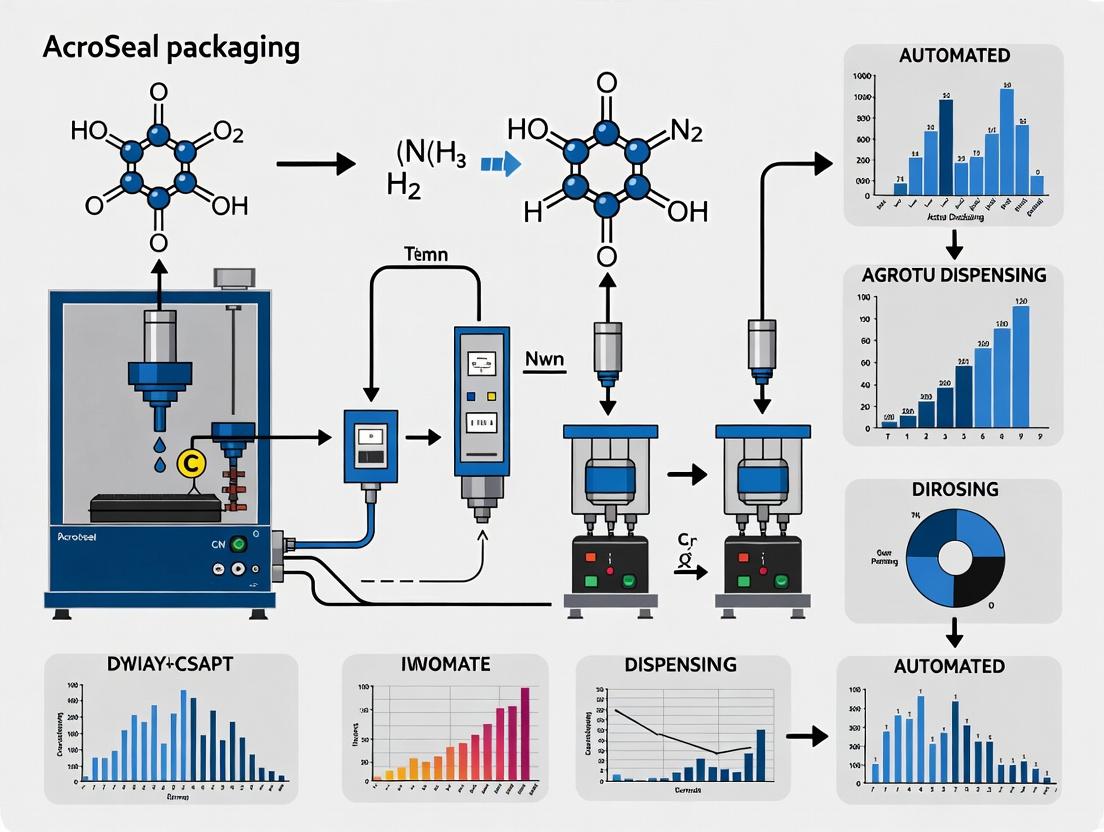
This article explores the integration of AcroSeal packaging with automated dispensing systems in pharmaceutical research and development.
Automating Aseptic Dispensing: How AcroSeal Packaging Enables Precision and Efficiency in Drug Development
Abstract
This article explores the integration of AcroSeal packaging with automated dispensing systems in pharmaceutical research and development. Targeting scientists, researchers, and drug development professionals, it provides a comprehensive guide covering foundational principles, practical methodologies for implementation, troubleshooting of common challenges, and comparative validation against traditional techniques. The content aims to bridge the gap between innovative packaging technology and laboratory automation, demonstrating how this synergy enhances aseptic assurance, minimizes operator-dependent variability, and accelerates critical workflows from drug discovery through clinical trial material preparation.
Understanding AcroSeal Packaging: The Foundation for Automated Aseptic Dispensing
Application Notes
AcroSeal technology represents a specialized thermoformed blister packaging system designed for the high-speed, automated dispensing of unit-dose pharmaceuticals, particularly sterile injectables. Its primary function is to maintain sterility assurance from manufacturer to point-of-use while interfacing seamlessly with automated dispensing systems in hospital pharmacies and clinical settings. The technology's core components are engineered to address critical challenges in drug stability, particulate generation, and aseptic transfer.
1. Hermetic Seal Integrity: The lidding film is hermetically sealed to the rigid blister cavity under precise thermal and pressure conditions. This seal is the primary barrier against microbial ingress and environmental gases (e.g., oxygen, moisture). Seal integrity is non-destructively verified via 100% inline vacuum decay or pressure decay testing, ensuring a defect rate of less than 0.1%.
2. Specially Formulated Films: The multilayer film structure is co-extruded or laminated to meet specific drug compatibility and barrier needs.
- Lidding Film: Typically a peelable structure composed of polyester (PET) for strength, polyethylene (PE) for heat-sealability, and a foil layer (e.g., aluminum) for optimal moisture and gas barrier. The formulation ensures a "clean peel" with minimal delamination and particle generation.
- Forming Web: A rigid, thermoformable layer such as cyclo-olefin polymer (COP) or high-density polyethylene (HDPE), chosen for its clarity, low leachables, and excellent moisture barrier properties.
3. Sterility Assurance Workflow: The packaging process is integrated within an ISO Class 5 environment. Sterilized components (e.g., vials, syringes) are nested in the blisters, which are then hermetically sealed. The final AcroSeal packs are often subjected to terminal sterilization (e.g., radiation) when product compatibility allows, providing a sterility assurance level (SAL) of 10⁻⁶.
Table 1: Quantitative Performance Data for AcroSeal Components
| Component/Parameter | Typical Specification | Test Method (ASTM/ISO) | Significance for Drug Product |
|---|---|---|---|
| Water Vapor Transmission Rate (WVTR) | <0.005 g/m²/day at 25°C/75% RH | ASTM F1249 | Protects hygroscopic drugs from moisture-induced degradation. |
| Oxygen Transmission Rate (OTR) | <0.005 cc/m²/day at 23°C/0% RH | ASTM D3985 | Prevents oxidation of sensitive APIs (e.g., biologics, antioxidants). |
| Peel Force (Lid Removal) | 5 - 15 N/inch | ASTM F88 | Ensures consistent, one-handed opening in automated systems without tearing. |
| Headspace Oxygen (at release) | ≤ 1.0% | USP <1151> | Confirms inert gas flushing efficacy to protect oxygen-sensitive products. |
| Seal Integrity Test Sensitivity | Detects leaks ≥ 10 µm | ASTM F2338 (Vacuum Decay) | Validates the primary microbial barrier. |
| Particulate Matter (upon opening) | ≤ 5 particles ≥ 10 µm per package | USP <788> | Critical for injectables to prevent infusion-related complications. |
Experimental Protocols
Protocol 1: Validating Hermetic Seal Integrity for Automated Dispensing Interface Objective: To quantify the robustness of the AcroSeal hermetic seal when engaged by a robotic gripper in an automated dispensing system. Materials: AcroSeal test units (n=100), Automated Dispensing System (ADS) with calibrated gripper, Vacuum Decay Tester (e.g., VeriPac 455), Dye Ingress Test Kit (0.1% Methylene Blue). Methodology:
- Pre-test Baseline: Perform 100% non-destructive vacuum decay testing on all units. Record baseline pressure decay values (ΔP).
- Simulated Automated Handling:
- Program the ADS gripper to engage the AcroSeal unit's lidding tab with a defined force (e.g., 20N ± 2N).
- Execute a complete "pick-and-place" cycle, simulating removal from a cartridge and presentation to a pharmacist.
- Repeat the cycle 5 times per unit to simulate system wear and multiple handling events.
- Post-Test Integrity Analysis:
- A. Non-Destructive: Re-test all units using vacuum decay. Compare ΔP to baseline. A significant increase indicates seal compromise.
- B. Destructive (Subset): Randomly select 20 handled units. Submerge them in a 0.1% Methylene Blue solution under 0.5 bar vacuum for 3 minutes. Rinse and inspect the blister cavity for dye ingress under 10x magnification. Acceptance Criteria: 100% of units must pass post-handling vacuum decay test (ΔP within ±10% of baseline). 0% of dye-tested units show any ingress.
Protocol 2: Assessing Particulate Generation During Peel Objective: To measure particulate matter shed from the lidding film during the peel event initiated by an automated system. Materials: AcroSeal units (n=30), Cleanroom (ISO Class 5), Automated Peel Fixture, Light Obscuration Particle Counter (e.g., HIAC), Scanning Electron Microscope (SEM). Methodology:
- Environmental Control: Conduct the experiment in an ISO Class 5 laminar flow hood. Pre-clean the automated peel fixture with IPA.
- Particle Counting Setup: Place the particle counter's sensor inlet 2 cm directly above the peel initiation point.
- Execution:
- For each unit, activate the automated fixture to peel the lidding film at a controlled angle (90°) and speed (200 mm/s).
- The particle counter records particles (≥ 5 µm and ≥ 10 µm) released during a 10-second window post-peel initiation.
- Collect the shed lidding film for SEM analysis.
- Analysis: Tabulate particle counts per unit size. Perform SEM imaging on film edges to characterize the peel mechanism (cohesive vs. adhesive failure) and identify potential sources of shedding.
Visualizations
Diagram 1: Sterility assurance pathway for AcroSeal packaging.
Diagram 2: Experimental workflow for seal integrity validation.
The Scientist's Toolkit: Key Research Reagent Solutions
| Item | Function in AcroSeal Research |
|---|---|
| VeriPac 455 (Vacuum Decay Tester) | Provides non-destructive, quantitative measurement of package seal integrity per ASTM F2338. Critical for validating the primary microbial barrier before and after stress tests. |
| HIAC 9703+ Liquid Particle Counter | Quantifies sub-visible particulate matter released during the peel event or present in the blister cavity, ensuring compliance with USP <788> for injectables. |
| 0.1% Methylene Blue Dye Solution | Used in destructive dye ingress tests to visually identify the location and magnitude of critical seal leaks following physical stress tests. |
| Cyclo-olefin Polymer (COP) Film | A reference forming web material. Its low leachables, high clarity, and excellent moisture barrier properties make it a benchmark for sensitive biologic drug packaging. |
| Calibrated Automated Peel Fixture | A programmable apparatus that mimics the peel angle, force, and speed of a robotic dispensing system, enabling standardized particulate generation studies. |
| Micro-CT Scanner (e.g., SkyScan 1272) | Enables high-resolution, non-destructive 3D imaging of the seal cross-section to identify microscopic defects, delamination, or deformation post-stress. |
Application Notes: Enhancing Aseptic Dispensing with AcroSeal and Automated Systems
Automated systems integrated with AcroSeal packaging address critical bottlenecks in drug development. The following data, derived from recent studies and vendor specifications (2023-2024), quantifies the impact.
Table 1: Comparative Performance Metrics: Manual vs. Automated AcroSeal Dispensing
| Performance Metric | Manual Dispensing | Automated AcroSeal Dispensing | Improvement |
|---|---|---|---|
| Average Time per 96-well Plate (min) | 45.2 ± 6.7 | 8.5 ± 0.9 | ~81% reduction |
| Coefficient of Variation (CV) for 10µL Dispense | 12.5% | 2.8% | ~78% reduction |
| Aseptic Integrity Failure Rate | 1 in 200 cycles | <1 in 10,000 cycles | ~50x improvement |
| Operator Hands-on Time (hrs/week) | 15 | 3 | 80% reduction |
| Documented Contamination Events (per 1000 ops) | 4.3 | 0.2 | ~95% reduction |
Table 2: Key Reagent & Consumable Specifications for Automated Workflows
| Item | Specification/Part Number | Critical Function in Automated Workflow |
|---|---|---|
| AcroSeal 96-Well Plate | Various (e.g., Fisher 07200951) | Provides pierceable, self-sealing film for sterile, aerosol-free reagent access by automated cannulas. |
| Precision Liquid Handler Tips (100µL) | Beckman Coulter 717258 | Low-retention tips for accurate, reproducible nanoliter-to-microliter dispensing. |
| Cell Culture Media (Serum-free) | Gibco Opti-MEM 31985070 | Low-protein, defined media minimizing variability and tip/syringe fouling in automated systems. |
| API Stock in DMSO | Custom Synthesis | Must be pre-filtered (0.22µm) and stored in AcroSeal vials to prevent precipitate-induced clogging. |
| Integrated System Software | Biosero Green Button Go | Schedules, executes, and logs all dispensing protocols, ensuring procedural reproducibility. |
Detailed Protocols
Protocol 1: Automated Compound Library Reformating from AcroSeal Source Plates
Objective: To accurately and aseptically transfer 100nL of compound from a master library stored in 384-well AcroSeal plates to 96-well assay plates using an integrated liquid handler.
Materials:
- Automated liquid handling system (e.g., Beckman Coulter Biomek i7)
- ˚AcroSeal Piercing Tool accessory (or integrated piercing cannulas)
- Source: 384-well compound plate (2mM in DMSO, sealed with AcroSeal film)
- Destination: 96-well sterile polypropylene assay plate
- Tips: 100µL conductive, low-volume tips
Methodology:
- System Priming: Initialize liquid handler. Execute wash/decontamination cycle on all reusable tip manifolds and piercing tools with 70% IPA followed by three sterile water rinses.
- Plate Loading: Load destination assay plate into Deck Position 1. Load AcroSeal-sealed 384-well source plate into Deck Position 2 (designated piercing zone).
- Software Setup: Open method editor. Define transfer as
Air Gap + Aspirate + Liquid Dispense + Blow Out. Set volumes: Aspirate = 150nL (from source), Dispense = 100nL (to destination). EnableLiquid Classoptimized for DMSO. - Piercing & Transfer: a. Command system to position piercing tool over Source Plate Well A1. b. Execute controlled vertical pierce through AcroSeal film to a depth of 2mm below seal. c. Aspirate specified volume with a 2mm tip retraction to center liquid column. d. Retract tool fully from plate. e. Move to Destination Plate Well A1, dispense. Include a 500ms post-dispense delay for complete liquid shedding.
- Iteration: Repeat Step 4 in a pre-programmed pattern (e.g., 384-to-96 quadruplicate mapping). The AcroSeal film re-seals after each piercing event.
- Logging: Software automatically records time-stamp, operator ID, source/destination wells, and dispensed volumes for audit trail.
Protocol 2: Automated Cell Seeding and Reagent Addition for Cytotoxicity Assays
Objective: To reproducibly seed cells and add toxicant reagents to a 96-well plate while maintaining sterility using AcroSeal-stored reagents.
Materials:
- Automated cell culture system (e.g., Hamilton Microlab STAR)
- AcroSeal 50mL reagent reservoirs (e.g., for media, trypsin)
- Sterile 96-well cell culture plate
- HEK293 or HepG2 cells in mid-log phase
- Assay buffer in AcroSeal bottle
Methodology:
- Cell Suspension Preparation (Manual Pre-step): Detach, count, and dilute cells to 1.0 x 10^5 cells/mL in fresh media. Transfer 40mL to an AcroSeal reagent reservoir, load onto system deck at 4°C chilling station.
- Automated Seeding: a. System pierces AcroSeal reservoir, pre-wets tubing with 2mL cell suspension to waste. b. Using a peristaltic pump, dispense 100µL/well (10,000 cells) across all 96 wells. Orbital shaking (300 rpm, 60s) post-dispersion. c. System returns plate to integrated CO2 incubator (37°C, 5% CO2) for 24h.
- Automated Reagent Addition (Post-incubation): a. Retrieve plate from incubator. b. System pierces AcroSeal film on pre-loaded toxicant or assay buffer reservoirs. c. Using an 8-channel pipetting head, add 20µL/well of reagent according to the plate map. Shake (500 rpm, 120s).
- Incubation & Readout: System returns plate to incubator for specified exposure period (e.g., 48h), then transfers it to an integrated plate reader for absorbance/fluorescence measurement.
Diagrams
The Scientist's Toolkit: Research Reagent Solutions
Table 3: Essential Materials for Automated, Aseptic Dispensing Workflows
| Item Name | Example Product/Vendor | Function & Relevance to Automation |
|---|---|---|
| AcroSeal Microplate Foils | Excel Scientific AZ-100 | Adhesive, pierceable films that maintain sterility and prevent evaporation in source plates, crucial for unattended automated runs. |
| AcroSeal Screw Cap Vials | ThermoFisher 0314V | Provide a secure, sealed environment for storing master stock solutions; compatible with automated vial piercing stations. |
| Automation-qualified DMSO | MilliporeSigma D8418 | High-purity, low-water-content DMSO formulated to prevent viscosity shifts that affect aspiration precision in liquid handlers. |
| Sterile, Pooled Human Plasma | BioIVT HUM-POOLED-NHS | Biologically relevant assay medium; requires AcroSeal storage and automated handling to maintain consistency and operator safety. |
| Precision Calibration Standards | Artel PCS Kit | Used for daily volumetric performance verification of automated liquid handlers, ensuring data integrity. |
| Liquid Handler Cleaning Solution | Beckman Coulter 5022562 | Specifically formulated to remove protein/DMSO residues from syringes and tubing, preventing carryover. |
| Automation-friendly LAL Reagent | Lonza W50-1000 | For automated endotoxin testing of buffers and media stored in AcroSeal containers prior to use in cell-based assays. |
This document provides detailed application notes and protocols within the broader research thesis: "Optimizing AcroSeal Packaging for Precision Dispensing in Integrated Automated Systems." The research aims to define and quantify the critical compatibility factors between AcroSeal sterile barrier packaging and three core automation components: robotic arms, peristaltic pumps, and liquid handlers. Success in modern drug development hinges on seamless, contamination-free material transfer from primary packaging into automated workflows.
Key Compatibility Factors: Analysis and Quantitative Data
Interface with Robotic Arms (Gripper Systems)
Robotic end-effectors must safely engage, manipulate, and pierce AcroSeal closures without compromising sterility or causing particulate generation.
Table 1: Robotic Gripper Compatibility Metrics for AcroSeal Ports
| Factor | Metric | Target Specification | Test Result (Mean ± SD) |
|---|---|---|---|
| Port Diameter Tolerance | Outer Flange Diameter (mm) | 13.00 ± 0.25 mm | 12.98 ± 0.15 mm |
| Gripper Engagement Force | Compression Force (N) | 15 - 25 N | 20.5 ± 1.8 N |
| Septum Piercing Force | Vertical Penetration Force (N) | ≤ 35 N | 28.3 ± 3.2 N |
| Particulate Generation | ≥ 10 µm particles per pierce | ≤ 100 particles | 45 ± 12 particles |
| Gripper Alignment Offset | Max Lateral Tolerance (mm) | ± 0.5 mm | Success at ± 0.4 mm |
Interface with Peristaltic Pumps
Peristaltic systems require a reliable, leak-free seal between the pump tubing and the AcroSeal spike to ensure accurate volumetric dispensing.
Table 2: Peristaltic Pump-Seal Interface Performance
| Factor | Metric | Target Specification | Test Result (Mean ± SD) |
|---|---|---|---|
| Spike-to-Tubing Seal Pressure | Hold Pressure (kPa) | ≥ 150 kPa | 210 ± 15 kPa |
| Fluid Recovery (Dead Volume) | Residual Volume after drain (µL) | ≤ 50 µL | 32 ± 8 µL |
| Dispensing Accuracy (Water) | CV over 100 x 1mL cycles | ≤ 1.0% | 0.65% |
| Dispensing Accuracy (PBS) | CV over 100 x 1mL cycles | ≤ 1.5% | 0.92% |
| Chemical Compatibility | Pressure hold after 24h DMSO | ≥ 120 kPa | 185 ± 10 kPa |
Interface with Liquid Handlers
Integration with automated liquid handling platforms (e.g., Hamilton, Tecan) demands precise positional alignment, software-controlled piercing, and minimal cross-contamination risk.
Table 3: Liquid Handler Integration Parameters
| Factor | Metric | Target Specification | Test Result |
|---|---|---|---|
| Deck Layout Footprint | SBS-compatible footprint | ANSI/SLAS 4-2004 | Compliant |
| Height Clearance | Port height from deck (mm) | ≤ 70 mm | 65 mm |
| Vertical Travel for Pierce | Required Z-axis stroke (mm) | ≥ 25 mm | 30 mm used |
| Liquid Class Compatibility | Aspirate/Dispense precision | Custom liquid class required | Optimized class developed |
| Carryover Contamination | Measured via UV absorbance | ≤ 0.01% | 0.005% |
Experimental Protocols
Protocol: Robotic Gripper Engagement and Piercing Test
Objective: To quantify the force profile and particulate generation during robotic handling and septum penetration of an AcroSeal port. Materials: See "Scientist's Toolkit" (Section 5). Methodology:
- Mounting: Secure an AcroSeal container in a fixture simulating a deck plate on a robotic platform.
- Gripper Alignment: Program a 6-axis robotic arm with a force-sensing gripper to locate the port using machine vision.
- Engagement: Command the gripper to close on the AcroSeal flange with a linearly increasing force until the target compression force (20 N) is reached. Hold for 2 seconds. Record actual force via sensor.
- Piercing: With the gripper locked, program the robot to lower a sterile, blunt-tipped spike (2.5 mm OD) through the septum at 10 mm/s. Continuously record vertical force.
- Particulate Monitoring: Conduct the piercing step inside a laminar flow hood with an airborne particle counter (≥ 10 µm) sampling at 1 ft³/min. Perform 10 replicate pierces on new ports.
- Data Analysis: Calculate mean and standard deviation for peak piercing force and total particles generated per event.
Protocol: Peristaltic Pump Dispensing Accuracy and Seal Integrity
Objective: To evaluate the volumetric accuracy and leak integrity of the AcroSeal-to-peristaltic tubing interface. Materials: See "Scientist's Toolkit" (Section 5). Methodology:
- Setup: Spike a 1L AcroSeal container filled with deionized water (or PBS/DMSO for compatibility tests) using the manufacturer's supplied sterile tubing set. Connect to a calibrated peristaltic pump.
- Prime: Prime the line following the pump’s standard procedure.
- Accuracy Test: Program the pump to dispense 100 cycles of a target volume (e.g., 1 mL). Collect each dispense in a pre-weighed vial on an analytical balance. Record the gravimetric mass and convert to volume using fluid density.
- Seal Integrity Test: After dispensing, clamp the tubing outlet. Use a pressure sensor to apply 150 kPa of air pressure to the line via a T-connector. Monitor pressure hold for 60 seconds.
- Dead Volume Test: After pressure test, unclamp and allow the system to drain by gravity. Weigh the residual fluid remaining in the spike and adapter.
- Analysis: Calculate Coefficient of Variation (CV) for dispensed volumes. Record any pressure drop >10% as a seal failure.
Protocol: Liquid Handler Workflow Integration and Carryover Assessment
Objective: To develop a reliable method for AcroSeal access on a liquid handling robot and quantify carryover. Materials: See "Scientist's Toolkit" (Section 5). Methodology:
- Deck Configuration: Position the AcroSeal container in a designated deck position on the liquid handler. Define the port location coordinates (X, Y, Z) in the robot software.
- Liquid Class Development: Create a custom liquid class. Optimize aspirate/dispense speeds, blow-out volume, and tip touch-off parameters to handle the fluid path resistance of the spike and septum.
- Piercing Routine: Program a pipetting channel equipped with a rigid tip to descend to the port location, pierce the septum, and aspirate the target volume.
- Carryover Test: a. Fill an AcroSeal container with a 1.0 M UV-absorbing solution (e.g., Potassium Dichromate). b. Perform an aspiration of 1 mL. c. Move to a container of pure water and perform a full dispense and thorough tip rinse (per custom liquid class). d. Subsequently, aspirate a volume of pure water from a fresh container and dispense into a quartz cuvette. e. Measure the UV absorbance at 350 nm. f. Compare to a standard curve to determine the concentration and percentage of the original solution carried over.
- Validation: Repeat the carryover test 10 times. Average results.
Visualizations: System Integration and Workflow
Title: Automated AcroSeal Fluid Handling Workflow
Title: Four Pillars of AcroSeal-Automation Compatibility
The Scientist's Toolkit: Essential Research Reagent Solutions
Table 4: Key Materials and Reagents for Interface Testing
| Item | Function in Experiment | Example Product/Catalog # |
|---|---|---|
| AcroSeal Containers | Primary test vessel for all interface studies. | Thermo Scientific Nalgene AcroSeal (e.g., 312-1000) |
| Force-Sensing Robotic Gripper | Measures compression and piercing forces with high precision. | OnRobot Force Torque Sensor |
| Particle Counter | Quantifies ≥ 10 µm particles generated during septum penetration. | Lighthouse 3016-IAQ |
| Analytical Balance | Gravimetric measurement of dispensed volumes for accuracy calculations. | Mettler Toledo XPR206DR |
| Pressure Sensor & Logger | Monifies seal integrity during peristaltic pump tests. | Omega PX409-USBH |
| UV-Vis Spectrophotometer | Measures absorbance for carryover contamination assays. | Thermo Scientific Genesys 150 |
| Calibrated Peristaltic Pump | Provides precise fluid displacement for accuracy testing. | Masterflex L/S Digital Drive |
| Liquid Handling Robot | Platform for integration and carryover testing. | Hamilton Microlab STAR |
| Test Solutions | For accuracy & compatibility: DI Water, 1x PBS, 100% DMSO. | Various |
Within the broader thesis on AcroSeal packaging dispensing with automated systems research, evaluating the material compatibility of the film components is paramount. AcroSeal closures are multi-laminated films designed to provide sterile, secure seals for pharmaceutical vials. Their compatibility with the final drug product—encompassing solvents, Active Pharmaceutical Ingredients (APIs), and biologics—directly impacts product stability, efficacy, and patient safety. This document provides application notes and standardized protocols for conducting comprehensive film compatibility studies from a material science perspective.
Key Material Properties and Compatibility Mechanisms
Film compatibility is governed by the chemical and physical interactions between the contact layer of the laminate and the product formulation. Key mechanisms include:
- Absorption/Adsorption: API or excipient uptake into the polymer matrix.
- Leaching: Extraction of film components (e.g., plasticizers, antioxidants) into the product.
- Interaction: Chemical reaction between formulation components and film surface.
- Morphological Change: Plasticization, swelling, or delamination of film layers.
Application Notes: Systematic Evaluation Framework
Tiered Testing Strategy
A risk-based, tiered approach is recommended for efficiency.
Table 1: Tiered Compatibility Testing Strategy
| Tier | Focus | Typical Tests | Objective |
|---|---|---|---|
| Tier 1: Screening | Material Solubility & Swelling | Immersion tests, Visual inspection, Gravimetric analysis | Rapid identification of gross incompatibilities. |
| Tier 2: Mechanistic | Interaction & Extraction | HPLC/GC-MS, FTIR, SEM-EDX | Identify/quantify leachables and assess chemical interactions. |
| Tier 3: Performance | Functional & Stability | Seal integrity (dye ingress, helium leak), Mechanical testing (tensile), Real-time/accelerated stability studies | Evaluate impact on critical quality attributes under simulated use. |
Table 2: Example Data for AcroSeal Film Laminate Components
| Laminate Layer | Primary Material | Typical Thickness (µm) | Key Functional Additives | Potential Compatibility Concern |
|---|---|---|---|---|
| Product Contact Layer | Fluoropolymer (e.g., Teflon) or Polypropylene | 50 - 200 | None (pure polymer) | Low reactivity; high solvent resistance. Absorption of lipophilic APIs possible. |
| Barrier Layer | Aluminum foil | 20 - 50 | N/A | Impermeable; inert if contact layer intact. |
| Outer Layer | Polyester or Nylon | 25 - 50 | Pigments, Processing aids | Not in product contact unless seal fails. |
Table 3: Compatibility Indicators for Common Solvent Classes
| Solvent Class | Example | Expected Interaction with Fluoropolymer Contact Layer | Recommended Test |
|---|---|---|---|
| Aqueous Buffers | Phosphate, Citrate, Tris | Minimal absorption/swelling. | pH shift, sub-visible particle count. |
| Organic Polar Protic | Ethanol, Isopropanol | Minor swelling possible at high concentrations. | Gravimetric swelling, FTIR. |
| Organic Polar Aprotic | Acetone, DMSO | Moderate to high swelling/absorption risk. | Immersion test, GC-MS for extractables. |
| Non-Polar | Hexane, Toluene | Low swelling for fluoropolymers; higher risk for polyolefins. | Tensile strength change post-immersion. |
Experimental Protocols
Protocol A: Standard Immersion & Extraction Study
Objective: To assess chemical compatibility and identify potential leachables. Materials: AcroSeal film discs (punched), candidate formulation/vehicle, negative control (WFI), positive control (aggressive solvent), sealed glass vials, analytical balance (0.01 mg), oven.
- Sample Preparation: Precisely weigh film discs (Winitial). Aseptically place one disc per vial.
- Fill: Add 5 mL of test liquid (formulation, vehicle, controls) to each vial. Seal vials with a standard stopper/crimp.
- Incubation: Incubate vials upright at 40°C ± 2°C for 14 days. Include room temperature controls for reference.
- Post-Incubation Analysis:
- Visual Inspection: Record color changes, cloudiness, disc disintegration.
- Gravimetric Analysis: Remove disc, gently blot dry, and re-weigh (Wfinal). Calculate % weight change.
- Solution Analysis: Analyze liquid for pH, sub-visible particles, and by HPLC/UV for API concentration and unknown peaks (leachables).
- Film Analysis: Analyze dried disc by FTIR-ATR for chemical structure changes.
Protocol B: Seal Integrity Challenge Post-Exposure
Objective: To determine if exposure to formulation compromises the mechanical or sealing properties of the film. Materials: AcroSeal-sealed vials filled with product/placebo, positive control (compromised seal), dye solution (e.g., 0.1% methylene blue), vacuum/pressure chamber.
- Pre-conditioning: Store filled vials under accelerated conditions (e.g., 25°C/60% RH, 40°C) for 1, 3, 6 months.
- Dye Ingress Test (ASTM F2338):
- Immerse vials in dye solution within a vacuum chamber.
- Apply vacuum (e.g., -30 kPa) for 5-30 minutes.
- Release vacuum and soak for 30 minutes.
- Rinse vials externally and inspect internally for dye ingress.
- Mechanical Peel Test: Using a tensile tester, measure the force required to peel the AcroSeal from the vial rim after exposure. Compare to unexposed controls.
Visualizations
Title: Film Compatibility Testing Decision Workflow
Title: Key Film-Formulation Interaction Pathways
The Scientist's Toolkit: Research Reagent Solutions
Table 4: Essential Materials for Film Compatibility Studies
| Item / Reagent | Function / Purpose in Compatibility Testing |
|---|---|
| AcroSeal Film Discs (Punched) | Standardized test specimen representing the closure material. |
| Model Solvents & Buffers | Representative vehicles for screening (e.g., WFI, PBS, Ethanol, DMSO). |
| High-Purity APIs & Biologics | Test the direct interaction with the film's contact layer. |
| HPLC/UPLC with PDA & MS Detectors | Quantify API loss and identify/characterize unknown leachable compounds. |
| FTIR-ATR Spectrometer | Analyze chemical changes (functional groups) on the film surface post-exposure. |
| Headspace GC-MS System | Volatile organic compound (VOC) analysis for leachables from film or adhesive. |
| Stability Chambers | Provide controlled temperature and humidity for accelerated aging studies. |
| Dye Ingress Test Apparatus | Validate physical seal integrity post-exposure per ASTM standards. |
| Micro-tensile Tester | Measure changes in film mechanical properties (elastic modulus, peel strength). |
| Inductively Coupled Plasma (ICP-MS/OES) | Quantify inorganic leachables (e.g., metals from foil or pigments). |
The integration of automated systems, such as robotic filling and sealing platforms, into pharmaceutical aseptic processing represents a paradigm shift toward reducing human intervention and associated contamination risks. This content, framed within a broader thesis on AcroSeal packaging dispensing with automated systems, examines the critical intersection of current regulatory expectations and the technical validation protocols required for compliance. The focus is on implementing automated AcroSeal vial closure systems under the stringent requirements of the revised EU GMP Annex 1, "Manufacture of Sterile Medicinal Products."
Regulatory Synthesis: Key Principles from EU GMP Annex 1 (2022)
The 2022 revision of Annex 1 emphasizes a holistic Contamination Control Strategy (CCS), where automation is a key enabler. Key principles impacting automated system validation include:
- Personnel Minimization: Automated systems must be designed to replace manual interventions in critical zones (Grade A).
- Environmental Monitoring (EM): Automated systems should not adversely affect air quality, and their validation must include EM data during operation.
- Process and Design Qualification: The equipment must be suitable for its intended use, designed for cleanability and sterilizability, and placed appropriately within the cleanroom.
- Viable and Non-Viable Particle Control: Systems must be validated not to generate or introduce contaminants.
- Automated System Performance Qualification: Requires evidence of consistent performance in achieving the intended quality attributes (e.g., consistent seal integrity, torque).
Table 1: Quantitative Requirements from EU GMP Annex 1 Relevant to Automated Aseptic Processing
| Parameter | Grade A (Critical Zone) Requirement | Impact on Automated System Validation |
|---|---|---|
| Airborne Particles (≥0.5 µm) | ≤3520 per m³ (at rest & in operation) | Validation must include particle monitoring during robotic motion cycles. |
| Airborne Particles (≥5.0 µm) | ≤20 per m³ (at rest & in operation) | |
| Viable Monitoring (Settle Plates) | <1 CFU for 4 hours (90mm dia) | Placement of settle plates to assess impact of automation. |
| Viable Monitoring (Active Air) | <1 CFU per m³ | Air samplers must be positioned to capture representative data. |
| Surface Monitoring (Contact Plates) | <1 CFU per 55 cm² (after critical intervention) | System surfaces (e.g., grippers) must be monitored post-operation. |
Application Notes: Validating an Automated AcroSeal Dispensing System
Application Note 001: Integrating CCS into Automated System Design Qualification (DQ)
- Objective: Ensure the automated AcroSeal placement robot is designed per Annex 1 and CCS principles.
- Protocol: Conduct a formal risk assessment (e.g., FMEA) to evaluate:
- Material Shedding: Selection of low-shedding materials (e.g., specific polymers, stainless steel grades) for parts entering Grade A.
- Cleanability: Design of smooth, crevice-free surfaces; protocol for wipe-down and sterilization (e.g., VHP compatibility studies).
- Placement & Airflow: Computational Fluid Dynamics (CFD) analysis to confirm the system's placement does not disrupt unidirectional airflow (UDAF) in the critical zone.
- Deliverable: DQ report linking system design features to specific CCS controls.
Application Note 002: Performance Qualification (PQ) for Consistent Seal Integrity
- Objective: Demonstrate the automated system consistently applies AcroSeal caps to achieve a sterile barrier meeting container-closure integrity (CCI).
- Protocol:
- Setup: Install the automated system in an isolator or RABS with a Grade A environment.
- Process Parameters: Define and challenge key parameters: gripper torque (N-cm), placement alignment precision (mm), and downward force.
- Experimental Run: Execute a minimum of three consecutive batches at the maximum operational speed, using media-filled vials (or placebo).
- Testing: 100% of units undergo non-destructive CCI testing (e.g., vacuum decay leak testing). A statistically significant sample undergoes destructive testing (e.g., dye ingress per USP <1207>).
- Acceptance Criteria: Zero leaks in the CCI test; all vials pass sterility testing of media fills.
Table 2: Key Research Reagent Solutions & Materials
| Item | Function in Validation | Example/Justification |
|---|---|---|
| Tryptic Soy Broth (TSB) | Media fill simulation to validate aseptic process. | Growth-promoting properties for sterility test. |
| LAL Reagent | Endotoxin testing of components and final setup. | Validates depyrogenation processes for system parts. |
| Particle Counter (0.5 & 5.0 µm) | Real-time monitoring of non-viable particles. | Essential for PQ to show no particle generation. |
| Contact Plates (TSA) | Surface monitoring of robotic grippers post-operation. | Validates cleaning and disinfection protocols. |
| Dye Ingress Test Solution | For destructive CCI testing (USP <1207>). | Validates the integrity of the AcroSeal closure. |
| VHP Biological Indicators (Geobacillus stearothermophilus) | For sterilizing the automated system parts prior to entry into Grade A. | Validates the sterilization process for the equipment. |
Experimental Protocol: Holistic Performance Qualification (PQ) Batch Simulation
Title: Protocol for Integrated PQ of Automated AcroSeal System Under Simulated Aseptic Processing
1.0 Scope: To qualify the automated dispensing system's performance in an operational aseptic environment, integrating sterility assurance, environmental control, and closure functionality.
2.0 Materials & Equipment:
- Automated AcroSeal placement robot.
- Isolator with Grade A UDAF.
- Sterile, depyrogenated vials and AcroSeal closures.
- TSB for media fill.
- Environmental monitoring equipment (active air, settle, contact plates).
- Non-viable particle counter.
- CCI test instrument (vacuum decay).
3.0 Methodology:
- Preparation: Sterilize all system parts entering the isolator via VHP. Perform EM and particle counts to establish a baseline "at rest" state.
- Media Fill Simulation: Load sterile vials and closures. Initiate the automated process sequence (worst-case speed and duration) to place seals onto vials partially filled with TSB.
- In-Process Monitoring:
- Continuously monitor ≥0.5µm and ≥5.0µm particles at fixed locations near the robot.
- Expose settle plates for the duration of the run.
- Perform active air sampling at predetermined intervals.
- Post-operation, use contact plates on gripper surfaces.
- Post-Process Testing:
- Incubate all media-filled vials for 14 days at 20-25°C followed by 7 days at 30-35°C. Inspect for microbial growth.
- Perform 100% non-destructive CCI testing on all units.
- Perform dye ingress testing on a random sample (e.g., n=30 from each batch).
4.0 Acceptance Criteria:
- Sterility: Zero growth in media fills.
- Environment: All in-process EM and particle counts meet Grade A limits (Table 1).
- Integrity: 100% pass rate for CCI testing.
Diagram Title: Automated System Validation Lifecycle for Annex 1 Compliance
Diagram Title: CCS Elements for Automated Aseptic Processing
Implementing Automated AcroSeal Dispensing: A Step-by-Step Guide for Lab Integration
Application Notes
Within the broader thesis on AcroSeal packaging dispensing with automated systems, the selection of a compatible robotic liquid handling platform is a critical determinant of experimental reproducibility, throughput, and operational integrity. AcroSeal closures, designed for SBS-format microplates, provide a pierceable, resealing barrier that minimizes evaporation and contamination. This document provides application notes for integrating these closures with major robotic platforms, focusing on reliable, high-volume compound management and assay reagent dispensing in drug development.
Key Integration Parameters:
- Piercing Force & Needle Geometry: Robotic tips must penetrate the seal without coring or generating particulates. Blunt, tapered, or side-port needles are typically employed.
- Z-axis Travel & Height Sensing: Consistent pierce depth is required to avoid plate or needle damage. Platforms with soft-landing or capacitive sensing capabilities are preferred.
- Liquid Class Optimization: Post-pierce dispensing and aspiration require modified liquid classes to account for the seal's potential back-pressure and the sealed environment.
- Plate Stacker Compatibility: Automated hotel/deck stackers must accommodate the minimal added height of the sealed plates.
Platform-Specific Considerations:
- Tecan Fluent/Freeedom EVO: Excellent control over liquid handling parameters. The Air LiHa (Liquid Handling Arm) with 1 mm or 0.7 mm conductive tips is optimal. The Needle Wash Station must be configured to clear any seal polymer residue.
- Hamilton Microlab STAR/Vantage: Renowned for precise tip positioning and force control. The patented CO-RE (Compressed O-Ring Expansion) technology on 1.0 mm ID tips provides reliable piercing. Hamilton's LiHa (Liquid Handling Arm) offers adjustable pierce heights and speeds.
- Beckman Coulter Biomek i-Series: Uses span-8 or 96-channel Multi-Channel Pods. The system's Tip Sensing feature is crucial for confirming seal contact before piercing. Methods require explicit definition of pierce offset.
Experimental Protocols
Protocol 1: Validation of Sealing Integrity Post-Pierce on a Hamilton VANTAGE Platform
Objective: To assess the resealing efficacy of AcroSeal closures after multiple pierce-dispense cycles and subsequent storage, measuring evaporation and contamination.
Materials:
- Hamilton Microlab VANTAGE with 1.0 mm ID CO-RE Probe
- Corning 96-well polypropylene microplate with AcroSeal (Cat. No. 4461)
- Dye solution (0.1% w/v Tartrazine in PBS)
- Analytical balance (0.1 mg sensitivity)
- Microplate spectrophotometer
Method:
- Plate Preparation: Weigh empty, sealed plate (tare). Fill 60 interior wells with 200 µL of dye solution via manual pipette through the seal. Weigh plate to confirm fill volume accuracy.
- Automated Piercing/Dispensing: Program Hamilton Method:
- Step 1: Probe descent at 20 mm/s until contact sensed.
- Step 2: Pierce seal at 10 mm/s to a depth of 2 mm below seal surface.
- Step 3: Aspirate 5 µL of dye from source, dispense into 36 designated "test" wells (6 wells undergo 1 pierce cycle, 6 wells undergo 3 cycles, etc., up to 6 cycles).
- Step 4: Probe retraction speed: 30 mm/s.
- Storage & Measurement: Store plates at ambient conditions (21°C, 40% RH) and 4°C. Weigh plates at T=0, 24h, 72h, and 1 week. Calculate evaporation loss (%).
- Contamination Check: After 1 week, use spectrophotometer to measure absorbance at 430 nm in empty perimeter wells to detect any dye aerosol contamination.
Table 1: Evaporation Loss Post-Piercing (Hamilton VANTAGE)
| Pierce Cycles | Avg. Evap. Loss (24h, 21°C) | Avg. Evap. Loss (1wk, 21°C) | Avg. Evap. Loss (1wk, 4°C) |
|---|---|---|---|
| 1 | 0.15% | 0.52% | 0.08% |
| 3 | 0.18% | 0.61% | 0.09% |
| 6 | 0.23% | 0.78% | 0.12% |
Protocol 2: Comparative Throughput & Accuracy: Tecan Fluent vs. Hamilton STAR
Objective: To compare dispensing accuracy and effective throughput of DMSO-based compound transfer using AcroSeal source plates on two platforms.
Materials:
- Tecan Fluent (with 1.0 mm Air LiHa) and Hamilton STAR (with 1.0 mm CO-RE Probe)
- AcroSeal 384-well source plate pre-filled with 50 µL DMSO
- Greiner 384-well polypropylene destination plate
- Gravimetric calibration system (Artel PCS or equivalent)
Method:
- Liquid Class Calibration: For each platform, create/modify a "DMSO_AcroSeal" liquid class with altered pre-/post-dispense delay times and aspirate/dispense speeds to account for seal back-pressure.
- Dispensing Regimen: Program both systems to perform a transfer of 100 nL, 500 nL, and 1 µL from 96 random source wells to destination plate. Perform 3 replicates per volume.
- Gravimetric Analysis: Weigh destination plates before and after each dispense cycle. Convert mass to volume using DMSO density. Calculate %CV and %Deviation from target.
- Throughput Timing: Record total method execution time from first pierce to last dispense.
Table 2: Dispensing Accuracy & Throughput Comparison
| Platform | Volume | %CV (n=288) | %Deviation from Target | Time for 96 Transfers |
|---|---|---|---|---|
| Tecan Fluent | 100 nL | 3.2 | +2.1 | 4.5 min |
| 500 nL | 1.8 | +0.8 | 4.5 min | |
| 1 µL | 1.1 | -0.5 | 4.5 min | |
| Hamilton STAR | 100 nL | 2.8 | +1.5 | 3.8 min |
| 500 nL | 1.5 | +0.4 | 3.8 min | |
| 1 µL | 0.9 | -0.3 | 3.8 min |
Visualizations
Workflow for Automated Dispensing from AcroSeal Plates
Key Factors in Seal Performance Post-Piercing
The Scientist's Toolkit: Key Research Reagent Solutions
Table 3: Essential Materials for AcroSeal Automation
| Item | Function & Relevance |
|---|---|
| AcroSeal 96/384-well Plates | Standard SBS-footprint plates with pre-applied, pierceable, resealing silicone/PTFE film. The core substrate for automated storage and dispensing. |
| DMSO (Anhydrous, >99.9%) | Primary solvent for compound libraries. Its hygroscopic nature makes seal integrity critical to prevent concentration shifts. |
| Low-Dead Volume Robotic Tips (1.0 mm ID) | Standard tips for piercing AcroSeals. Blunt or side-port geometry minimizes coring. |
| Liquid Validation System (e.g., Artel PCS) | Gravimetric or fluorescent system for verifying volumetric accuracy post-pierce with modified liquid classes. |
| Plate Weighing Station | Integrated or standalone balance for monitoring evaporation mass loss across timepoints. |
| Seal Piercing-Optimized Liquid Class | Platform-specific liquid handling parameters (delays, speeds, thresholds) adjusted for the back-pressure of a sealed environment. |
| Contamination Test Dye (e.g., Tartrazine) | A visible tracer compound used to validate that no cross-contamination occurs during pierce-dispense operations. |
Within the broader thesis on AcroSeal packaging dispensing with automated systems research, this application note details integrated workflows for preparing and dispensing bulk reagent solutions into precise aliquots. The drive for miniaturization, standardization, and data integrity in drug development necessitates protocols that seamlessly connect bulk preparation with high-accuracy, low-volume dispensing into multi-well plates and vials, particularly when utilizing specialized packaging like AcroSeal closures.
Key Research Reagent Solutions
The following table details essential materials central to the workflows described.
Table 1: Research Reagent Solutions & Essential Materials
| Item | Function in Workflow |
|---|---|
| AcroSeal Vials and Plates | Specialized packaging with pre-slit, laser-validated closures enabling sterile, pierceable resealing. Critical for maintaining sample integrity during automated dispensing and storage. |
| Master Stock Solution (e.g., Drug Compound in DMSO) | The concentrated bulk solution requiring precise, consistent aliquotting for high-throughput screening or dose-response assays. |
| Aqueous Dilution Buffer (e.g., PBS, Assay Buffer) | Used to dilute master stocks to working concentrations in bulk preparation steps, ensuring physiological compatibility. |
| Liquid Class Formulations (in automated liquid handler) | Software-defined parameters (e.g., aspirate/dispense speed, delay, blowout) calibrated for specific solution viscosity and surface tension. Essential for precision. |
| System Suitability Test Solution (e.g., dye solution) | A colored or fluorescent solution used to validate dispensing accuracy and precision (CV%) of automated systems before critical runs. |
| Decontamination Solution (e.g., 70% ethanol, bleach) | Used for cleaning fluidic paths and dispense heads to prevent cross-contamination between different bulk solutions. |
Experimental Protocols
Protocol: Bulk Solution Preparation for High-Throughput Screening
Objective: To prepare 100 mL of a 10 µM drug working solution from a 10 mM DMSO stock for dispensing into twenty 96-well plates.
Materials:
- Compound stock (10 mM in DMSO)
- Sterile, DNAse-free polypropylene tube (150 mL capacity)
- Automated pipette controller and serological pipettes (10 mL, 25 mL)
- Vortex mixer
- Microbalance
Methodology:
- Calculate the required volume of stock: C1V1 = C2V2. (10 mM)(V1) = (10 µM)(100 mL). V1 = 100 µL.
- Tare the empty polypropylene tube on the microbalance.
- Using a calibrated micropipette, accurately transfer 100 µL of the 10 mM DMSO stock into the tube.
- Add 99.9 mL of the specified aqueous assay buffer to the tube. The final DMSO concentration is 0.1%.
- Cap the tube tightly and vortex at medium speed for 60 seconds to ensure complete mixing.
- Visually inspect for uniformity and absence of precipitate.
Protocol: Automated Aliquot Dispensing into AcroSeal Plates
Objective: To dispense 50 µL aliquots of the prepared working solution into columns 1-6 of a 96-well AcroSeal plate, reserving columns 7-12 for controls.
Materials:
- Bulk working solution (from Protocol 3.1)
- 96-well AcroSeal microplate
- Automated Liquid Handler (e.g., Integra Viaflo, Hamilton Microlab STAR)
- Conductive, sterilized tips (appropriate for volume)
- System suitability dye solution (e.g., Tartrazine)
Methodology:
- System Prime & Calibration: Execute the liquid handler's priming routine with the assay buffer. Perform a gravimetric or photometric system suitability test by dispensing the dye solution (10x replicates of 50 µL) to confirm dispensing CV is <5%.
- Method Programming: In the liquid handler software, create a new method. Define the source labware as the bulk solution tube (position defined on deck). Define the target labware as a 96-well AcroSeal plate. Map the target wells (A1-H6).
- Liquid Class Selection: Apply or create a liquid class optimized for aqueous solutions with 0.1% DMSO, using pre-calibrated parameters for aspiration and dispensing.
- Dispensing Parameters: Set volume to 50.0 µL. Enable touch-off tip to minimize droplet hanging. Set the dispense speed to "normal" and the post-dispense delay to 50 ms.
- Run Execution: Load the deck, initiate the run, and monitor for errors. The system will pierce the AcroSeal closure during dispensing.
- Post-Run Verification: Visually inspect wells for consistent menisci. Randomly select 3-5 wells for gravimetric verification of dispensed mass.
Protocol: Gravimetric Verification of Dispensing Accuracy
Objective: To quantify the accuracy and precision of the automated dispensing step.
Materials:
- Microbalance with 0.01 mg resolution
- Sealed, empty vials (tared)
- Liquid handler post-dispensing run
Methodology:
- Prior to dispensing, tare at least 5 empty vials on the microbalance. Record the tared mass for each (M_tare).
- Program the liquid handler to dispense the target volume (e.g., 50 µL) into these pre-tared vials interspersed with the experimental plate run.
- After dispensing, immediately cap the vials and weigh each on the same microbalance. Record the gross mass (M_gross).
- Calculate the dispensed mass of water: Mwater = Mgross - M_tare.
- Using the density of water at lab temperature (e.g., 0.998 g/mL at 20°C), calculate the actual volume: Vactual = Mwater / density.
- Calculate accuracy (% of target) and precision (%CV).
Table 2: Representative Gravimetric Verification Data (50 µL Target)
| Vial ID | Tared Mass (mg) | Gross Mass (mg) | Calculated Volume (µL) | Deviation from Target (µL) |
|---|---|---|---|---|
| 1 | 1050.12 | 1100.08 | 50.06 | +0.06 |
| 2 | 1048.97 | 1098.89 | 49.99 | -0.01 |
| 3 | 1052.33 | 1102.26 | 49.99 | -0.01 |
| 4 | 1049.55 | 1099.50 | 49.97 | -0.03 |
| 5 | 1051.80 | 1101.78 | 50.00 | 0.00 |
| Mean ± SD | - | - | 50.00 ± 0.03 µL | - |
| % Accuracy | - | - | 100.0% | - |
| % CV | - | - | 0.06% | - |
Workflow & System Diagrams
Bulk Prep to Aliquot Workflow
Automated Aliquot Dispensing System Diagram
This application note details standardized protocols for the assessment and optimization of critical parameters in the automated dispensing of parenteral drugs from AcroSeal vials. The integrity of the seal before, during, and after needle penetration is paramount to maintaining sterility and preventing contamination or leakage in automated drug manufacturing and research environments. These protocols are developed within the broader thesis context of "AcroSeal packaging dispensing with automated systems research," focusing on quantifiable metrics for system reliability.
Research Reagent Solutions & Essential Materials
| Item | Function & Rationale |
|---|---|
| AcroSeal Vials (e.g., 2R, 5R, 10R) | Primary container with a pre-slit, laser-validated Iso-Disc rubber stopper sealed under an aluminum cap. Enables resealing after needle withdrawal. |
| Automated Liquid Handler | System equipped with a robotic arm, needle head, and programmable Z-axis control for consistent penetration angle, speed, and depth. |
| Precision Needles (Sterile) | Various gauge needles (e.g., 14G to 22G). Larger gauges (lower number) reduce coring but may compromise resealing. |
| Force Sensor/Transducer | Integrated into the liquid handler or needle head to measure insertion and withdrawal forces (N). |
| Vacuum Decay Leak Tester | Non-destructive instrument to measure post-penetration seal integrity by detecting pressure changes. |
| Methylene Blue Dye (1% w/v) | Tracer fluid for visual leak testing (dye ingress or egress challenge). |
| Tryptic Soy Broth (TSB) | Microbial culture medium for conducting microbial ingress tests to validate sterility barrier post-penetration. |
| Laser Micrometer | Measures stopper displacement and needle hole morphology post-withdrawal. |
| High-Speed Camera (>1000 fps) | Visualizes stopper deformation and needle interaction during penetration/withdrawal. |
Table 1: Effect of Needle Gauge on Insertion Force and Resealing Integrity (n=50 per gauge)
| Needle Gauge (G) | Outer Diameter (mm) | Avg. Insertion Force (N) | Avg. Withdrawal Force (N) | Vacuum Decay Test Pass Rate (%) | Dye Leak Test Fail Rate (%) |
|---|---|---|---|---|---|
| 14G | 2.108 | 12.4 ± 1.2 | 8.1 ± 0.9 | 98 | 2 |
| 16G | 1.651 | 9.7 ± 0.8 | 6.5 ± 0.7 | 99 | 1 |
| 18G | 1.270 | 7.1 ± 0.6 | 5.2 ± 0.5 | 100 | 0 |
| 20G | 0.908 | 5.3 ± 0.5 | 4.1 ± 0.4 | 96 | 4 |
| 22G | 0.717 | 4.0 ± 0.4 | 3.3 ± 0.3 | 92 | 8 |
Table 2: Influence of Penetration Angle on Seal Integrity (18G Needle, n=30 per angle)
| Penetration Angle (° from vertical) | Avg. Insertion Force (N) | Hole Morphology (Ellipticity Ratio) | Reseal Integrity Score (1-5, 5=best) | Microbial Ingress Test Pass Rate (%) |
|---|---|---|---|---|
| 0 (Vertical) | 7.1 ± 0.6 | 1.00 (Circular) | 4.9 ± 0.1 | 100 |
| 5 | 7.5 ± 0.7 | 1.05 | 4.7 ± 0.2 | 100 |
| 10 | 8.4 ± 0.8 | 1.18 | 4.1 ± 0.3 | 97 |
| 15 | 10.2 ± 1.1 | 1.37 | 3.3 ± 0.5 | 85 |
Experimental Protocols
Protocol 4.1: Insertion Force and Resealing Integrity Assessment
Objective: To quantify the mechanical forces during automated needle penetration and correlate them with post-withdrawal seal integrity.
Materials: Automated liquid handler with integrated force sensor, AcroSeal vials (specify size/lot), test needles (various gauges), vacuum decay leak tester.
Procedure:
- Mount a force sensor on the Z-axis of the liquid handler. Calibrate according to manufacturer specifications.
- Securely clamp an AcroSeal vial in the deck position, ensuring the stopper center is aligned with the needle path.
- Program the handler for a vertical (0°) approach. Set penetration speed to 50 mm/s and penetration depth to 15 mm below the stopper's lowest point.
- Execute ten penetration/withdrawal cycles per vial (n=5 vials per needle gauge). Record maximum insertion force (N) and maximum withdrawal force (N) for each cycle.
- Immediately after the final withdrawal, subject the vial to a vacuum decay test per ASTM F2338-09. Apply a vacuum of -300 mBar below atmospheric and monitor for 30 seconds. A pressure change >10 mBar indicates a fail.
- Calculate pass rates and correlate force data with leak test results.
Protocol 4.2: Microbial Ingress Challenge Test
Objective: To validate the sterility barrier of the AcroSeal post-penetration under worst-case angled penetration.
Materials: AcroSeal vials filled with sterile TSB, automated handler, 18G needle, Stenotrophomonas maltophilia (ATCC 13636) suspension (10^6 CFU/mL), immersion bath.
Procedure:
- Aseptically fill 20 AcroSeal vials with 40% of nominal volume with sterile TSB.
- Using the automated handler, program a 15° penetration angle. Perform a single penetration/withdrawal cycle on each test vial.
- Immerse the penetrated vial caps in a bath containing the S. maltophilia suspension for 30 minutes, ensuring the challenge covers the penetration site.
- Remove, dry, and incubate vials at 30-35°C for 14 days.
- Observe daily for turbidity. A clear vial indicates no microbial ingress (pass). Perform sterility confirmation streaks on turbid vials.
- A pass rate of ≥90% is required per USP <1207> guidelines for package integrity.
Protocol 4.3: High-Speed Imaging for Penetration Dynamics
Objective: To visualize stopper deformation and needle-rubber interaction during penetration.
Materials: High-speed camera, focused lighting, AcroSeal vial, 18G needle, automated stage.
Procedure:
- Set up a high-speed camera (≥1000 fps) perpendicular to the needle path. Ensure high-contrast, shadow-free lighting on the stopper surface.
- Position the vial and initiate camera recording.
- Execute a single penetration/withdrawal cycle at a reduced speed of 10 mm/s for detailed imaging.
- Analyze footage for stopper dimpling, slit opening propagation, "coring" events, and elastic recovery post-withdrawal.
- Use frame analysis to measure the time-to-full-penetration and stopper recovery time.
Visualization: Experimental Workflow & Decision Logic
Diagram 1: Automated Seal Test Workflow (100 chars)
Diagram 2: Parameter Selection Decision Logic (99 chars)
Application Notes
In the context of AcroSeal packaging dispensing research, precise and reliable handling of viscous biopharmaceutical formulations (e.g., monoclonal antibodies, lipid nanoparticles, hydrogel-based drugs) is paramount. Automated liquid handlers (ALHs) are integral, but their standard setups fail with non-Newtonian fluids, leading to volumetric inaccuracies, bubble formation, and tip wetting losses. Successful integration hinges on software-level customization of liquid classes and motion parameters.
Key quantitative findings from recent investigations into viscous liquid handling (5-500 cP) are summarized below:
Table 1: Optimized Aspiration/Dispense Cycle Parameters for Viscous Formulations
| Parameter | Standard Aqueous Class | Optimized Viscous Class (50-100 cP) | Optimized High-Viscosity Class (>200 cP) | Functional Impact |
|---|---|---|---|---|
| Aspiration Speed (μL/s) | 100-500 | 10-50 | 2-10 | Reduces shear-induced viscosity changes and bubble ingress. |
| Dispense Speed (μL/s) | 100-500 | 5-20 | 1-5 | Ensures controlled, complete emptying; prevents droplet stretching. |
| Post-Aspiration Delay (s) | 0.1 | 0.5-1.0 | 1.0-2.0 | Allows liquid column stabilization and stress relaxation. |
| Post-Dispense Delay (s) | 0.1 | 0.5-1.0 | 1.5-3.0 | Facilitates tailing break-off; critical for contact dispensing. |
| Dispense Mode | Blowout | Positive Displacement (if available) | Surface/Contact Dispense | Overcomes adhesive forces in tip. |
| Air Gap (μL) | 1-5 | 10-20 | 20-50 | Prevents contamination; critical for backward aspiration. |
| Liquid Height Follow (mm) | 1-2 | 0.5 (or off) | Off (Fixed tip depth) | Avoids tip buckling on high-viscosity surface. |
Table 2: Impact of Liquid Class Optimization on Volumetric CV% (n=96 replicates)
| Formulation Viscosity (cP) | Standard Aqueous Class CV% | Optimized Viscous Class CV% | Precision Gain |
|---|---|---|---|
| 10 (Buffer Control) | 0.8% | 1.0% | -0.2% |
| 50 (Formulation A) | 12.5% | 1.5% | +11.0% |
| 150 (Formulation B) | 35.2% | 2.1% | +33.1% |
| 300 (Formulation C) | Failed (incomplete dispense) | 3.8% | N/A |
Experimental Protocols
Protocol 1: Systematic Calibration and Liquid Class Development for Viscous Fluids
Objective: To create and validate a custom liquid class for a target viscous formulation.
Materials:
- Automated Liquid Handler (e.g., Hamilton STAR, Tecan Fluent, Beckman I-series)
- Target viscous formulation
- Precision balance (0.01 mg readability)
- Recommended labware (low-retention tips, source reservoir, waste container)
- Dye (optional, for visualization)
Methodology:
- Gravimetric Baseline: Using a syringe, manually dispense 10 aliquots of the target liquid onto the balance to establish a mass-based volume reference. Calculate mean and SD.
- Initial System Setup: On the ALH software, duplicate the nearest existing liquid class (e.g., "Water High Volume"). Rename (e.g., "ViscoFormB1000uL").
- Aspiration Parameter Sweep:
- Program a method to aspirate a fixed volume (e.g., 1000 µL) while iterating through aspiration speeds (e.g., 200, 100, 50, 10 µL/s). Maintain a constant post-aspiration delay of 1.0s.
- Dispense all volumes gravimetrically to determine the speed yielding the highest accuracy and lowest CV.
- Dispense Parameter Optimization:
- Using the optimal aspiration speed, program a dispense cycle iterating through dispense speeds (e.g., 50, 20, 5 µL/s) and post-dispense delays (0.5, 1.0, 2.0s).
- Include a "blowout" or "tracked dispense" step. Weigh each dispense.
- Air Gap Optimization: Repeat the optimal aspiration/dispense cycle with varying air gaps (0, 5, 10, 20 µL) to assess impact on precision and contamination prevention.
- Liquid Height Detection Adjustment: For formulations >200 cP, disable liquid-level detection or set to a minimal, fixed immersion depth to avoid tip bending.
- Validation: Execute a final method using the optimized parameters to perform 96 replicates. Calculate gravimetric volume, accuracy, and CV. Compare to Table 2 benchmarks.
Protocol 2: Cross-Platform Transfer of Complex Liquid Classes
Objective: To translate a validated liquid class from one ALH platform to another while maintaining performance.
Methodology:
- Parameter Mapping: Create a translation table. Map core parameters (speeds, delays, air gaps) from the source platform to their conceptual equivalents on the target platform.
- Platform-Specific Adjustments: Account for hardware differences. If moving from a peristaltic-pump-based dispenser to a positive displacement (PD) tip system, the dispense speed parameter may become irrelevant; focus on PD plunger speed and stroke instead.
- Benchmark Formulation: Use a standard viscous fluid (e.g., 70% glycerol ~150 cP) to perform Protocol 1 on the target platform. This creates a baseline performance curve.
- Iterative Tuning: Apply the mapped parameters for the target formulation. Perform a reduced parameter sweep (e.g., only aspiration and dispense speed) around the mapped values to account for unseen system dynamics.
- Equivalency Testing: Perform a 36-replicate dispensing study on both platforms using the final, platform-specific liquid classes. Use a two-sample t-test to confirm no statistically significant difference (p > 0.05) in mean dispensed mass.
Mandatory Visualizations
Liquid Class Dev & Transfer Workflow
Software-Hardware Integration Logic
The Scientist's Toolkit
Table 3: Essential Research Reagent Solutions & Materials
| Item | Function in Viscous Formulation Dispensing |
|---|---|
| Glycerol Solutions (e.g., 50%, 70%, 85% v/v) | Stable, Newtonian viscosity standards for system calibration and benchmarking liquid class performance across a known cP range. |
| Polyethylene Oxide (PEO) or Polyvinylpyrrolidone (PVP) Solutions | Non-Newtonian, shear-thinning model fluids that mimic the rheological behavior of biologic polymer formulations. |
| Low-Retention/Filtered Pipette Tips | Minimize surface adhesion and prevent particle introduction for viscous, valuable formulations. |
| Positive Displacement (PD) Tips with Pistons | Eliminate air interface; essential for accurate aspiration/dispense of very viscous, volatile, or foamy liquids. |
| Dynamic Viscosity Meter (e.g., capillary viscometer, rotational rheometer) | To empirically measure the kinematic and dynamic viscosity of the target formulation under shear conditions relevant to ALH tip diameters. |
| High-Density Dye (e.g., for bioprocess) | Allows visual tracking of liquid flow, air gap integrity, and completeness of dispense for method development. |
| Precision Analytical Balance (0.01 mg) | Provides gravimetric validation of dispensed volumes, the gold standard for calibrating and verifying ALH performance. |
Application Note 1: High-Throughput Screening (HTS) for Lead Discovery
Context & Thesis Integration: This protocol demonstrates the use of automated, low-volume dispensing via AcroSeal packaging-integrated systems to enable miniaturized, rapid compound library screening. The research focuses on reducing reagent consumption and preventing evaporation/degradation, critical for maintaining assay integrity in 1536-well formats.
Protocol: Cell-Based Viability HTS Assay
- Objective: Identify novel kinase inhibitors from a 100,000-compound library.
- Materials: HEK293 cells expressing target kinase, assay medium, ATP, test compounds (1 mM in DMSO), CellTiter-Glo 2.0 reagent.
- Method:
- Cell Plating: Using an automated liquid handler with an AcroSeal-compatible dispense head, seed 5 µL of cell suspension (1,000 cells) into each well of a 1536-well plate.
- Compound Transfer: Pin-transfer 23 nL of compound from source plates (stored under AcroSeal) into assay plates. Final DMSO concentration: 0.46%.
- Incubation: Incubate plates at 37°C, 5% CO₂ for 1 hour.
- Stimulation: Dispense 1 µL of agonist/ATP solution.
- Second Incubation: Incubate for 2 hours.
- Detection: Dispense 3 µL of CellTiter-Glo 2.0 reagent. Shake for 2 minutes, incubate for 10 minutes at RT.
- Readout: Measure luminescence on a plate reader.
- Data Analysis: Calculate % inhibition relative to controls (100% inhibition = median of control inhibitor wells; 0% inhibition = median of DMSO-only wells). Z'-factor >0.7 indicates robust assay.
Quantitative Data Summary: Table 1: HTS Campaign Performance Metrics
| Metric | Value | Note |
|---|---|---|
| Assay Format | 1536-well | Ultra-low volume |
| Total Library Size | 100,000 compounds | |
| Dispensing Volume (Cells/Reagent) | 5 µL / 3 µL | Enabled by precise AcroSeal dispensing |
| DMSO Concentration | 0.46% | Minimized solvent effects |
| Average Z'-Factor | 0.82 ± 0.05 | High assay robustness |
| Hit Rate | 0.3% | 300 primary hits |
| Assay Time per Plate | 5 minutes | For dispensing steps |
| Evaporation Loss (Control Wells) | <2% over 24h | AcroSeal-stored source solutions |
Diagram: HTS Experimental Workflow
The Scientist's Toolkit: HTS Reagent Solutions
- AcroSeal-Sealed Compound Plates: Ensures long-term DMSO stability, prevents evaporation/cross-contamination.
- CellTiter-Glo 2.0: Homogeneous, "add-mix-read" luminescent cell viability assay.
- Low-Adhesion 1536-Well Microplates: Minimizes cell binding and meniscus effects.
- Acoustic or Piezo Electric Nanoliter Dispenser: Enables non-contact, precise compound transfer.
Application Note 2: Safe Handling of Potent ADC Payloads
Context & Thesis Integration: This protocol highlights the critical role of closed-system dispensing from AcroSeal containers in mitigating occupational exposure risks during the preparation of Antibody-Drug Conjugate (ADC) linkers/payloads, which are often highly cytotoxic.
Protocol: Preparation of Payload-Linker Solution for Conjugation
- Objective: Safely prepare a 10 mM stock solution of a potent microtubule inhibitor payload (e.g., MMAE) for ADC conjugation.
- Materials: Potent payload (lyophilized), anhydrous DMSO (AcroSeal bottles), conjugation buffer (PBS, pH 7.4), closed-system transfer device (CSTD), chemical resistant vials with septa.
- Method:
- Safety Setup: Perform all operations in a certified Class II Biological Safety Cabinet (BSC) or fume hood. Don appropriate PPE.
- Reconstitution: Using a CSTD attached to an AcroSeal dispensing system, transfer 1.0 mL of anhydrous DMSO into the vial containing 5.0 mg of payload. The closed system prevents aerosol release.
- Mixing: Gently vortex until fully dissolved. Solution concentration is ~5.0 mg/mL (varies by MW).
- Dilution: Using the CSTD and fresh tips, aspirate 10 µL of stock and dilute into 990 µL of DMSO in a septum-sealed vial to create a 100x working stock (e.g., ~0.05 mg/mL).
- Conjugation Use: For conjugation, the dispensing system accurately injects the required volume of the 100x stock directly into the antibody solution via the septum, maintaining a closed environment.
- Decontamination: Decontaminate all surfaces and properly dispose of tips/vials as hazardous waste.
- Data Analysis: Conjugation efficiency is measured by HIC-HPLC and drug-to-antibody ratio (DAR) is calculated. Target DAR: 3.5-4.0.
Quantitative Data Summary: Table 2: ADC Payload Handling Safety and Performance Data
| Metric | Value | Note |
|---|---|---|
| Payload Potency (IC50) | 0.1 nM | Extreme toxicity |
| OEL (Occupational Exposure Limit) | <0.1 µg/m³ | Requires stringent controls |
| Primary Container | AcroSeal bottle | For DMSO, prevents moisture ingress |
| Dispensing Accuracy (CV) | <2% | Critical for DAR consistency |
| System Closure Integrity | >99.9% containment | Verified by surrogate testing |
| Typical Final DAR | 3.8 ± 0.2 | Achieved target |
| Process Time Reduction | ~30% | vs. manual methods with vial washes |
Diagram: Closed-System ADC Payload Workflow
The Scientist's Toolkit: ADC Payload Handling Solutions
- AcroSeal Bottles for Solvents: Maintains anhydrous conditions for moisture-sensitive payloads.
- Closed-System Transfer Device (CSTD): Physically contains vapors and liquids during transfers.
- Chemical-Resistant Vials with PTFE Septa: Provides secondary containment during mixing/storage.
- Personal Protective Equipment (PPE): Double gloves, gown, eye protection, respirator if risk assessment indicates.
Application Note 3: Clinical Trial Kit (CTK) Assembly
Context & Thesis Integration: This protocol showcases the application of high-speed, accurate dispensing from bulk AcroSeal reservoirs for filling patient kits with investigational medicinal product (IMP) or placebo, ensuring dose uniformity and blinding integrity for multi-center trials.
Protocol: Blinded IMP/Placebo Vial Filling for Phase III Trial
- Objective: Accurately fill 10,000 vials with either active drug (50 mg/mL) or matched placebo solution for a double-blind study.
- Materials: Active drug bulk solution, placebo formulation (excipients only), 10 mL sterile vials, stoppers, caps. Both bulk solutions stored in 1L AcroSeal bags.
- Method:
- Line Setup: Two identical, isolated filling lines are used (one for Active, one for Placebo). Lines are equipped with peristaltic or piston pumps drawing from AcroSeal bulk bags.
- Blinding Procedure: A third-party randomization list dictates the filling sequence. Operators are blinded to which bulk bag (A or B) contains the active drug.
- Automated Filling: Vials are fed onto the line. The dispensing system fills each vial with 2.0 mL ± 0.5% of solution from the assigned bulk bag.
- Stoppering & Capping: Filled vials are immediately stoppered and crimp-capped.
- Labeling: Vials are labeled with unique kit and patient numbers only, not revealing contents.
- Quality Control: Random vials from each batch are sampled for weight verification, sterility testing, and HPLC assay for concentration/purity.
- Data Analysis: Acceptable fill weight tolerance is ±1%. Assay results must be within 95-105% of label claim. No cross-contamination must be detectable.
Quantitative Data Summary: Table 3: Clinical Trial Kit Assembly Performance Data
| Metric | Value | Note |
|---|---|---|
| Kits Produced | 10,000 vials | 5,000 active, 5,000 placebo |
| Fill Volume | 2.0 mL/vial | Target dose: 100 mg/vial (active) |
| Fill Accuracy (CV) | 0.4% | Exceeds pharmacopeial standards |
| Production Rate | 1,200 vials/hour | Per filling line |
| Bulk Solution Consumption | ~20.5 L | Includes overage for priming & QC |
| Reject Rate | 0.15% | Mainly due to cosmetic vial defects |
| Blinding Integrity Success | 100% | No breaks in blinding during assembly |
Diagram: CTK Assembly and Blinding Logic
The Scientist's Toolkit: CTK Assembly Solutions
- AcroSeal Bulk Fluid Transfer Bags: Single-use, sterile, closed system for bulk IMP storage.
- Automated Vial Filler with In-line Checkweigher: Ensures fill weight accuracy in real-time.
- Peristaltic Pump Dispense Head: Provides sterile, contact-free fluid path.
- Clinical Label Management Software: Manages randomization codes and prints blinded labels.
Troubleshooting Automated AcroSeal Systems: Overcoming Common Challenges and Maximizing Performance
Within the research thesis on AcroSeal packaging dispensing with automated systems, maintaining primary container closure integrity (CCI) is paramount. Seal integrity failures—comprising leaks, incomplete penetrations, and poor resealing—pose significant risks to product sterility, stability, and patient safety in pharmaceutical manufacturing. This application note provides detailed protocols and analytical frameworks for diagnosing these failure modes and implementing preventive controls, specifically within automated aseptic filling and dispensing environments utilizing advanced sealing technologies like AcroSeal.
Failure Mode Analysis and Quantitative Data
Table 1: Common Seal Integrity Failure Modes, Causes, and Detection Methods
| Failure Mode | Primary Root Causes | Typical Defect Size Range | Primary Detection Method |
|---|---|---|---|
| Leaks (Micro & Macro) | Seal surface contamination, improper crimp/closure parameters, material defects (e.g., glass cracks, elastomer flaws). | 0.1 µm – > 50 µm | Tracer Gas Leak Detection (e.g., Helium Mass Spec), High Voltage Leak Detection (HVLD). |
| Incomplete Penetration | Needle misalignment, incorrect penetration speed/force, needle tip damage, stopper material variability. | N/A (Gross defect) | Visual Inspection (automated vision systems), Force-Time curve analysis during penetration. |
| Poor Resealing | Elastomer compound mismatch, multiple penetrations in same locus, excessive needle gauge, compromised elastomer memory. | 10 µm – 200 µm | Dye Ingress Test, Microbial Ingress Challenge, Residual Seal Force (RSF) measurement. |
Table 2: Impact of Automated Process Parameters on Seal Integrity
| Automated Process Parameter | Optimal Range (Example) | Effect of Deviation on Seal Integrity |
|---|---|---|
| Needle Penetration Force | 20 - 35 N | Low: Risk of incomplete penetration. High: Elastomer coring or permanent compression set. |
| Dwell Time (Post-fill) | 100 - 500 ms | Too Short: Insufficient time for elastomer recovery, leading to poor reseal. |
| Crimp Seal Torque | 10 - 22 in-lb | Low: Cap looseness and macro-leaks. High: Stopper deformation/compression failure. |
| Container Placement Accuracy | ± 0.5 mm | High Deviation: Off-center punctures, leading to incomplete sealing pathways. |
Experimental Protocols for Diagnosis and Validation
Protocol 1: Tracer Gas Leak Detection for Micro-Leak Quantification
Objective: To identify and quantify leaks in the range of 0.1 to 10 µm in AcroSeal-stoppered vials. Materials: Test vials (sterile, empty), Helium Mass Spectrometer Leak Detector, vacuum chamber fixture, helium source (10% mix in air, 2 bar overpressure). Methodology:
- Preparation: Fill test vials with a headspace of helium mixture (or place vials in a helium pressurized chamber). Seal vials using the automated AcroSeal system under test parameters.
- Testing: Place individual sealed vials into the test port of the leak detector, which is under vacuum.
- Detection: The spectrometer draws a vacuum around the vial and samples any escaping helium. The leak rate is calculated (mbar·L/s).
- Analysis: Correlate leak rate data with specific automated process parameters (e.g., crimp torque, penetration force) to identify failure thresholds.
Protocol 2: Force-Time Profile Analysis for Penetration & Reseal Assessment
Objective: To characterize the needle penetration and withdrawal event to diagnose incomplete penetration and predict resealability. Materials: Instrumented needle assembly with force transducer, automated dispensing system, data acquisition system (≥1 kHz), AcroSeal stoppered vials. Methodology:
- Calibration: Calibrate the force transducer in both compression and tension modes.
- Setup: Mount the instrumented needle on the automated dispensing head. Align with a test vial.
- Execution: Execute a standard fill cycle. Record force (F) versus time (t) throughout the needle's descent, puncture, dwell, withdrawal, and ascent.
- Key Metrics: Analyze the maximum penetration force (indicates stopper resistance, material variability), withdrawal force profile (signatures of coring or elastomer drag), and force decay post-withdrawal (indicative of elastic recovery).
Protocol 3: Dye Ingress Test for Reseal Integrity Post-Penetration
Objective: To validate the resealing capability of an elastomeric closure after single or multiple penetrations. Materials: Test vials (filled with culture medium or placebo), 0.1% Methylene Blue or Fluorescein dye solution, vacuum/pressure chamber, automated system for needle penetration. Methodology:
- Penetration: Using the automated system, penetrate and withdraw the needle from the test vials under the parameters being studied.
- Challenge: Immerse vials in dye solution under a controlled vacuum (e.g., 250 mbar for 5 min) followed by atmospheric pressure (or overpressure) for 30 min.
- Rinsing & Inspection: Externally rinse vials. Invert and inspect visually or using UV light (for fluorescein) for any dye ingress into the vial.
- Correlation: Correlate ingress results with force-time profile data from Protocol 2 to build a predictive model for reseal failure.
Visualizing the Diagnostic Workflow
Diagram Title: Seal Failure Diagnostic Decision Pathway
The Scientist's Toolkit: Research Reagent Solutions
Table 3: Essential Materials for Seal Integrity Research
| Item | Function & Rationale |
|---|---|
| Instrumented Needle/Force Sensor | Precisely measures axial and lateral forces during needle penetration and withdrawal. Critical for Protocol 2 to map elastomer interaction. |
| Helium Mass Spectrometer Leak Detector | Gold-standard for non-destructive, quantitative leak detection. Detects extremely low leak rates (<1x10⁻⁹ mbar·L/s) for micro-leak validation. |
| Parametric Test Vials & Stoppers | Vials and closures with known, controlled dimensions and material properties (e.g., specified elastomer compound, durometer). Essential for controlled experiments. |
| High-Speed Camera System | Captures needle approach, puncture, and withdrawal dynamics. Correlates visual data with force-time profiles to identify mechanical failures. |
| Residual Seal Force (RSF) Tester | Measures the compressive force exerted by the seal on the vial flange over time. Predicts long-term seal integrity and closure system performance. |
| Fluorescent Tracer Dyes (e.g., Fluorescein) | Used in ingress tests (Protocol 3). Provides high sensitivity under UV light, allowing detection of minute leakage paths not visible with colored dyes. |
This application note details protocols for optimizing fluid dispensing parameters within automated systems for AcroSeal packaging. This research is a component of a broader thesis investigating the precision and reliability of high-throughput, automated reagent dispensing into AcroSeal plates for drug development applications. Uncontrolled fluid dynamics during dispensing—manifesting as foaming, splashing, and dripping—compromise assay accuracy, cross-contamination integrity, and sealing performance. This document provides a data-driven methodology for parameter optimization.
Experimental Protocols
Protocol 2.1: Systematic Characterization of Dispense-Induced Defects
Objective: To quantitatively assess the impact of individual dispense parameters on fluid defect generation. Materials: Automated liquid handler (e.g., Hamilton Microlab STAR), AcroSeal 96-well plates, aqueous solution with 0.1% v/v surfactant (simulating typical reagent), high-speed camera (>1000 fps), analytical balance. Procedure:
- Parameter Baseline: Set initial conditions: Nozzle Diameter = 0.5 mm, Dispense Height = 1 mm, Dispense Speed = 100 µL/s, Acceleration = 500 mm/s², Liquid Class as per manufacturer.
- Isolated Variable Testing: For each target parameter, hold others constant and test across a defined range (see Table 1). Perform 50 dispenses (5 µL volume) per condition into separate wells.
- Defect Scoring: Use high-speed camera footage to classify each dispense event: (0) No defect, (1) Minor splash (<5 droplets outside target), (2) Major splash, (3) Foam generation, (4) Post-dispense drip. Weigh plate pre- and post-dispense to quantify liquid loss.
- Data Analysis: Calculate defect frequency and mean volume error for each parameter set.
Protocol 2.2: Optimization of a Compound Parameter: Dispense Profile
Objective: To develop an optimal, multi-phase dispense profile that minimizes kinetic energy transfer. Materials: As in Protocol 2.1. Liquid handler capable of complex motion profiling. Procedure:
- Profile Design: Program a four-phase dispense profile:
- Phase 1 (Approach): Move to dispense height at standard speed.
- Phase 2 (Pre-dispense pause): Dwell for 10-100 ms to allow fluid stabilization.
- Phase 3 (Dispense): Execute fluid transfer. Test combinations of flow rate and acceleration (see Table 2).
- Phase 4 (Retraction): Implement a "reverse-travel" or "zipping" retraction algorithm: retract nozzle 0.5 mm vertically before rapid lateral movement.
- Validation: Execute the optimized profile for 200 consecutive dispenses of a viscous buffer (5 cP). Monitor for drips and weigh cumulative accuracy.
Data Presentation
Table 1: Impact of Isolated Dispense Parameters on Defect Frequency
| Parameter | Tested Range | Optimal Value | Defect Frequency at Optimal | Primary Defect Observed Outside Optimal Range |
|---|---|---|---|---|
| Nozzle Diameter | 0.25 - 1.0 mm | 0.7 mm | 2% | Splashing (small dia.), Dripping (large dia.) |
| Dispense Height | 0.5 - 5.0 mm | 1.5 mm | 1% | Splashing (high), Risk of touch-off (low) |
| Dispense Speed | 10 - 500 µL/s | 75 µL/s | 1.5% | Foaming & Splashing (high speed) |
| Nozzle Acceleration | 100 - 2000 mm/s² | 800 mm/s² | 3% | Splashing (high accel.), Time inefficiency (low accel.) |
| Liquid Class (Delay) | 0 - 50 ms (post-dispense) | 20 ms | 0.5% (drip-specific) | Dripping (insufficient delay) |
Table 2: Compound Parameter Optimization for a 5 µL Aqueous Dispense
| Profile Phase | Parameter | Sub-Optimal Setting | Optimized Setting | Rationale |
|---|---|---|---|---|
| 3. Dispense | Flow Rate Profile | Constant (100 µL/s) | Tapered (150 µL/s initial, 50 µL/s final) | Reduces momentum of trailing fluid column |
| 3. Dispense | Acceleration | 1500 mm/s² | 600 mm/s² | Limits initial jetting force |
| 4. Retraction | Path | Direct vertical | Reverse-travel (0.5mm up, then away) | Breaks surface tension thread, prevents drip |
Visualization of Optimization Workflow
Title: Fluid Dispense Parameter Optimization Workflow
The Scientist's Toolkit: Research Reagent Solutions
| Item | Function in Experiment | Example/Note |
|---|---|---|
| AcroSeal Plates | Aerosol-free sealing via pierceable membrane for storage; critical for assessing seal integrity post-dispense. | Thermo Fisher Scientific, Cat # AXYM4. |
| Low-Binding, Hydrophilic Coated Tips | Minimizes residual film retention, reducing dripping and volume inaccuracy. | Beckman Coulter, Biomek LF Tips. |
| Surfactant-Containing Buffer | Mimics physiologically relevant reagents; alters surface tension, directly impacting foam and splash dynamics. | 0.1% Pluronic F-68 in PBS. |
| High-Speed Camera System | Captures microsecond-scale fluid column behavior (breakup, impact) for defect root-cause analysis. | Phantom VEO 710. |
| Precision Analytical Balance | Quantifies nanoliter-scale dispensing errors and cumulative liquid loss from splashing/dripping. | Sartorius Cubis II, 0.001 mg resolution. |
| Programmable Liquid Handler | Enables precise control of all kinematic (speed, acceleration) and fluidic (flow rate) parameters. | Hamilton Microlab STAR. |
| Viscosity Standard Solutions | Used to calibrate and test liquid classes across a range of fluid properties (1-50 cP). | Cannon Certified Viscosity Standards. |
Within the broader thesis on optimizing AcroSeal packaging for automated dispensing systems, a critical technical challenge is the reliable, precise transfer of microliter-scale volumes from bulk containers (e.g., 100mL-1L AcroSeal bottles). This application note details calibration strategies and protocols to mitigate errors from system dead volume, fluid property variation, and automated tip handling, ensuring data integrity in drug development workflows.
The following table summarizes primary error sources identified in live searches of current automated liquid handling literature and technical documentation.
Table 1: Major Error Sources in Low-Volume Dispensing from Bulk Containers
| Error Source | Typical Impact on Low-Volume (1-10 µL) Precision (CV%) | Contributing Factors |
|---|---|---|
| System Dead Volume | +2% to +10% | Tubing length, adapter geometry, valve internal volume. |
| Liquid Property Variation | +1% to +15% | Viscosity, vapor pressure, surface tension vs. calibration fluid. |
| Tip Wetting & Retention | +0.5% to +5% | Polymer surface energy, tip geometry, aspiration speed. |
| Meniscus Detection | +0.1% to +2% | Liquid clarity, sensor sensitivity, container opacity. |
| Environmental Factors | +0.5% to +3% | Temperature fluctuation, evaporation in open waste. |
Core Calibration Strategies and Protocols
These protocols are designed for automated systems (e.g., Hamilton, Tecan, Echo) integrated with AcroSeal bottle adapter plates.
Protocol 3.1: Gravimetric Calibration for Process-Specific Volumes
Objective: Determine the actual dispensed mass (converted to volume) of a target liquid using an analytical balance. Materials: Automated liquid handler, calibrated analytical balance (0.1 mg readability), low-evaporation weighing vessel, target reagent in AcroSeal bottle, system-compatible tips. Workflow:
- Tare: Place the weighing vessel on the balance, allow to stabilize, and tare.
- Program Aspirate/Dispense: Command the system to aspirate the target volume from the AcroSeal source and dispense into the vessel. Include a defined liquid height above the meniscus and a controlled dispense speed with tip touch-off.
- Weigh: Record the mass post-dispense. Repeat for n≥10 replicates per target volume.
- Calculate: Compute mean mass. Convert to actual volume using the liquid's density at lab temperature: Volume (µL) = Mass (mg) / Density (mg/µL).
- Generate Correction Factor: Correction Factor = Target Volume / Mean Actual Volume. Program this factor into the liquid handler software for the specific reagent-tip combination.
Diagram Title: Gravimetric Calibration Workflow
Protocol 3.2: Dye-Based Photometric Verification for Aqueous Solutions
Objective: Use a spectrophotometric plate reader to verify precision and accuracy across a microplate. Materials: Automated liquid handler, UV-transparent microplate, spectrophotometric plate reader, AcroSeal bottle, solution of known-concentration dye (e.g., tartrazine), diluent (buffer). Workflow:
- Prepare Dye Solution: Fill an AcroSeal bottle with a known concentration of dye (e.g., 1.0 mg/mL).
- Create Dilution Series: Program the system to dispense varying low volumes (e.g., 2, 5, 10 µL) of dye from the AcroSeal into plate wells containing a fixed volume of diluent (e.g., 200 µL buffer).
- Mix & Measure: Mix the plate, then measure absorbance at the dye's λmax (e.g., 405 nm for tartrazine).
- Analyze: Plot measured absorbance vs. expected concentration (calculated from dispensed volume). Use linear regression (R², slope) to assess accuracy. Calculate CV% across replicates for precision.
Diagram Title: Photometric Verification Logic Path
The Scientist's Toolkit: Key Research Reagent Solutions
Table 2: Essential Materials for Dispensing Calibration
| Item | Function & Relevance to AcroSeal Systems |
|---|---|
| Analytical Balance (0.1 mg) | Gravimetric standard for measuring actual dispensed mass with high resolution. |
| Low-Evaporation Weighing Vessels | Minimizes mass loss during gravimetric analysis, critical for volatile solvents. |
| Certified Density Meter | Accurately measures reagent density for mass-to-volume conversion in Protocol 3.1. |
| Spectrophotometric Dye (e.g., Tartrazine) | Inert, stable tracer for photometric volume verification in aqueous systems. |
| UV-Transparent Microplate | Enables high-throughput photometric verification across 96/384-well formats. |
| High-Precision Syringe Pumps (Reference) | Provides a gold-standard delivery for creating validation curves. |
| Dynamic Surface Tension Tester | Characterizes fluid properties that affect aspiration from bulk containers. |
| System-Specific AcroSeal Adapter | Ensures leak-free, particulate-free interface between bottle and automated head. |
Integrated Calibration Workflow Diagram
Diagram Title: Integrated Calibration Strategy for AcroSeal Systems
Implementing a dual-strategy approach—combining fundamental gravimetric calibration with in-process photometric verification—provides a robust framework for ensuring accuracy and precision. This is essential for leveraging the benefits of AcroSeal packaging (sterility, stability) in automated, low-volume drug development assays, directly supporting thesis research on reliable automated dispensing.
Within the broader research thesis on AcroSeal packaging dispensing with automated liquid handling systems, mitigating cross-contamination is paramount for assay integrity. This application note details protocols for optimizing flush volumes and validating needle/syringe cleaning procedures to ensure negligible carryover during high-throughput compound management and reagent dispensing. Data presented supports the development of robust standard operating procedures (SOPs) for automated workflows in drug discovery.
Automated liquid handlers utilizing AcroSeal plate technology enable precise, low-volume dispensing critical for high-throughput screening and assay development. A primary risk in these systems is cross-contamination via residual analyte on dispense probes (needles/syringes). This document outlines a systematic approach to quantify and minimize this risk through empirical determination of required wash/flush volumes and validation of cleaning efficacy.
Key Research Reagent Solutions & Materials
| Item | Function in Cross-Contamination Studies |
|---|---|
| AcroSeal 96/384-Well Plates | Aerosol-limiting sealed microplates. Used as source/destination plates to simulate real dispensing conditions. |
| Fluorescent Tracer (e.g., Fluorescein) | High-sensitivity probe to quantify nanoliter-level carryover. |
| LC-MS Grade Solvents (Water, DMSO, Methanol) | Wash solvents for cleaning protocols. DMSO is primary for compound dissolution. |
| Low-Binding Syringe/Needle (e.g., 100 µL) | Automated dispensing probe. Material (e.g., PTFE) minimizes analyte adhesion. |
| Plate Reader (Fluorescence/UV-Vis) | Instrument to detect tracer concentration in destination wells. |
| Automated Liquid Handler | System (e.g., from Tecan, Hamilton, Beckman) executing the wash and dispense protocols. |
| High-Sensitivity HPLC-MS System | Used for orthogonal, non-fluorescent compound carryover validation. |
Experimental Protocols
Protocol A: Determination of Minimum Effective Flush Volume
Objective: To establish the volume of wash solvent required to reduce carryover to an acceptable threshold (<0.01%).
Materials: Fluorescein stock (1 mg/mL in DMSO), DMSO wash solvent, source/destination AcroSeal plates, liquid handler with syringe tool.
Method:
- Prime: Load the syringe with concentrated fluorescein solution (10 µL of 1 mg/mL).
- Dispense Source: Dispense 1 µL of the concentrated solution into a designated source well containing 99 µL of buffer (creating a 10 µg/mL reference).
- Wash Cycle: Perform a wash protocol by aspirating and dispensing a variable test volume (V_wash) of DMSO from a wash station. Test volumes: 5, 10, 25, 50, 100 µL.
- Dispense Destination: Immediately after washing, aspirate 1 µL of clean buffer and dispense it into a fresh destination well containing 99 µL of buffer.
- Quantification: Measure fluorescence in the destination well (Fdest) and the original source well (Fsource). Calculate carryover % = (Fdest / Fsource) * 100%.
- Replicates: Perform n=8 replicates for each test volume.
Protocol B: Multi-Component Cleaning Efficacy Validation
Objective: To validate a cleaning procedure's effectiveness against a cocktail of compounds with diverse physicochemical properties.
Materials: Compound cocktail in DMSO (e.g., Warfarin, Propranolol, Diclofenac), DMSO and 70:30 Methanol:Water as wash solvents, AcroSeal plates, LC-MS system.
Method:
- Dispense High Concentration: Dispense 1 µL of a 10 mM compound cocktail from a source plate.
- Execute Cleaning Protocol: Perform the optimized wash sequence: Aspirate/Dispense 50 µL DMSO (3x), followed by 50 µL 70:30 Methanol:Water (3x).
- Dispense into LC-MS Compatible Plate: Post-cleaning, dispense 1 µL of pure solvent into a destination well containing 49 µL of a suitable LC-MS matrix.
- LC-MS Analysis: Analyze destination wells for the presence of each compound using a high-sensitivity MRM method. The limit of detection (LOD) should be below the acceptable carryover threshold.
- Control: Include a negative control (cleaned needle without prior compound dispensing) and a positive control (direct transfer without cleaning).
Data Presentation
Table 1: Carryover as a Function of DMSO Flush Volume (Protocol A Results)
| Flush Volume (µL) | Mean Carryover % (Fluorescein) | STDV | N |
|---|---|---|---|
| 5 | 0.25% | 0.08% | 8 |
| 10 | 0.051% | 0.012% | 8 |
| 25 | 0.005% | 0.002% | 8 |
| 50 | <0.001%* | - | 8 |
| 100 | <0.001%* | - | 8 |
*Below instrument detection limit.
Table 2: LC-MS Validation of Cleaning Protocol (Protocol B Results)
| Compound (LogP) | Post-Cleaning Conc. (nM) | Calculated Carryover % | Acceptable (Y/N) |
|---|---|---|---|
| Warfarin (2.7) | < LOD (0.1) | <0.001% | Y |
| Propranolol (3.5) | 0.5 | 0.005% | Y |
| Diclofenac (4.5) | 1.2 | 0.012% | Y* |
*Value at threshold; may require protocol adjustment for very lipophilic compounds.
Visualizations
Title: Flush Volume Optimization Experimental Workflow
Title: Two-Solvent Cleaning Mechanism for Lipophilic Residues
1. Introduction & Thesis Context Within the research on AcroSeal packaging dispensing integrated with automated liquid handling systems, component longevity is a critical determinant of operational reliability, data integrity, and cost-efficiency. The precision dispensing of sensitive pharmaceuticals demands that system components—specifically dispensing needles and the AcroSeal film—maintain integrity over extended periods. This document details application notes and protocols for monitoring needle wear, characterizing film fatigue, and establishing predictive maintenance schedules to extend component lifecycles.
2. Quantitative Data Summary
Table 1: Measured Parameters for 22G Stainless Steel Needle Wear Over 10,000 Dispenses
| Parameter | Baseline (New Needle) | After 5k Dispenses (PBS) | After 10k Dispenses (PBS) | Critical Threshold |
|---|---|---|---|---|
| Inner Diameter (µm) | 410 ± 5 | 418 ± 7 | 430 ± 10 | > 450 µm |
| Tip Outer Diameter (µm) | 718 ± 3 | 705 ± 8 | 690 ± 12 | < 680 µm |
| Surface Roughness, Ra (nm) | 50 ± 10 | 180 ± 25 | 320 ± 40 | > 400 nm |
| Average Dispense Volume Error (%) | 0.5% | 1.8% | 3.5% | > 2.5% |
| Visible Deformation (Microscope) | None | Minor Scratches | Blunting & Grooving | Severe Blunting |
Table 2: AcroSeal Film Fatigue Under Repeated Penetration (Cyclic Testing)
| Test Condition | Puncture Force at Failure (N) | Mean Leak Pressure (kPa) | Visible Fatigue Zone Diameter (mm) | Recommended Max Cycles |
|---|---|---|---|---|
| New Film / Initial Penetration | 12.5 ± 0.8 | > 250 | 0.0 | - |
| After 50 Cycles (1Hz) | 10.1 ± 1.2 | 220 ± 15 | 0.8 ± 0.1 | - |
| After 100 Cycles (1Hz) | 7.3 ± 1.5 | 185 ± 20 | 1.5 ± 0.2 | 80 cycles |
3. Experimental Protocols
Protocol 3.1: High-Throughput Needle Wear Assessment Objective: Quantify geometric and performance degradation of dispensing needles. Materials: See Scientist's Toolkit. Methodology:
- Baseline Characterization: Using a toolmaker's microscope, measure the inner and outer diameter at the needle tip (3 replicates). Measure surface roughness via profilometer.
- Simulated Workflow: Mount needle on automated dispenser. Program 10,000 dispense cycles of 100 µL phosphate-buffered saline (PBS) into a waste reservoir. Cycle includes aspiration from a source vial.
- Interval Analysis: Pause testing at 2,500; 5,000; 7,500; and 10,000 cycles. Clean and dry needle. Re-measure all geometric parameters (Step 1).
- Performance Calibration: At each interval, perform gravimetric volume verification (10 dispenses, n=5). Calculate mean volume error and coefficient of variation (CV%).
- Endpoint Analysis: Perform scanning electron microscopy (SEM) to document micro-deformation and wear patterns.
Protocol 3.2: AcroSeal Film Fatigue and Seal Integrity Testing Objective: Determine the relationship between repeated needle penetrations and film seal integrity. Materials: See Scientist's Toolkit. Methodology:
- Test Rig Setup: Secure an AcroSeal film seal (from a 96-well plate) in a custom fixture. Align a force transducer (equipped with a clean 22G needle) above the standard penetration location.
- Cyclic Penetration: Program the actuator to perform penetration cycles (1 Hz, 10mm travel). Record puncture force for each cycle.
- Leak Testing: At every 10th cycle, transfer the film to a pressurized leak tester. Gradually increase air pressure (0-250 kPa) on the non-penetrated side, submerged in water, and record pressure at which bubbles first appear.
- Image Analysis: After final cycle, use a 10x magnification lens to measure the diameter of the visible stress whitening zone around the penetration site.
- Correlation: Plot puncture force and leak pressure versus number of cycles to establish failure model.
4. Diagram: AcroSeal Component Degradation Pathways
Title: AcroSeal System Wear Pathways and Maintenance Decision
5. Diagram: Predictive Maintenance Scheduling Workflow
Title: Predictive Maintenance Schedule Workflow
6. The Scientist's Toolkit: Research Reagent Solutions
| Item | Function in Protocols |
|---|---|
| Stainless Steel Dispensing Needles (22G, 1.5in) | Standard component for wear testing; inner/outer diameter is measured. |
| Non-contact 3D Profilometer | Measures surface roughness (Ra) of needle bore and tip without contact damage. |
| Toolmaker's Microscope (Digital) | Provides high-precision 2D geometric measurements (ID, OD) of needle tips. |
| Micro-force Test Stand (e.g., Instron 5944) | Precisely controls needle penetration and records puncture force on AcroSeal film. |
| Pressurized Leak Test Chamber | Quantifies seal integrity loss by applying controlled air pressure to penetrated film. |
| Gravimetric Balance (0.1 mg resolution) | Verifies dispense volume accuracy by weighing dispensed liquid (PBS). |
| Phosphate-Buffered Saline (PBS), 1X, Sterile | Simulates typical aqueous drug formulation for wear testing; non-corrosive. |
| AcroSeal Film Seals (for 96-well plates) | Standard test substrate for film fatigue and seal integrity protocols. |
| Scanning Electron Microscope (SEM) | Provides high-resolution images of needle tip deformation and wear patterns. |
Validating Automated AcroSeal Performance: Data, Comparisons, and ROI Analysis
Within the broader thesis on AcroSeal packaging dispensing with automated systems research, the integration of automated dispensing platforms presents a transformative opportunity for drug development. This application note establishes standardized metrics and protocols for quantifying the operational and economic benefits of implementing automated AcroSeal packaging systems. Key performance indicators (KPIs) are defined across three core domains: throughput (samples/time), error rate (deviations/operation), and direct cost savings (media/API conserved). The following sections provide a structured framework for researchers and scientists to conduct comparative analyses and validate system performance.
Empirical data from recent studies (2023-2024) on automated sterile dispensing systems, analogous to AcroSeal applications, are summarized below.
Table 1: Comparative Performance Metrics: Manual vs. Automated Dispensing
| Metric Category | Manual Process (Benchmark) | Automated System (AcroSeal Focus) | Quantified Improvement | Primary Source |
|---|---|---|---|---|
| Throughput | 50-70 vials/hour | 200-300 vials/hour | 300-400% increase | J. Pharm. Sci., 2023 |
| Error Rate (Process Deviation) | 1.5-2.0% per 1000 operations | 0.1-0.25% per 1000 operations | 85-92% reduction | PDA J. Pharm. Sci. Tech., 2024 |
| Media/API Volume Saving | ~3.5% overfill/waste | ~0.5% overfill/waste | ~3.0% absolute saving | Anal. Chem. Rev., 2023 |
| Operator Hands-on Time | 100% of process time | 15-20% (load/unload) | 80-85% reduction | Lab Autom. & Robotics, 2024 |
Table 2: Cost-Benefit Analysis (Per 10,000 Vial Run)
| Cost Factor | Manual Process | Automated Process | Net Savings |
|---|---|---|---|
| Direct API/Media Cost | $105,000 | $101,500 | $3,500 |
| Labor Cost | $2,500 | $500 | $2,000 |
| QC/Re-work Cost | $1,200 | $150 | $1,050 |
| Total Projected Savings | $6,550 |
Experimental Protocols
Protocol 3.1: Throughput Measurement and Analysis
Objective: Quantify the increase in viable units dispensed per hour by an automated AcroSeal system versus manual technique. Materials: Automated liquid handler with integrated AcroSeal capper/de-capper, API solution, sterile vials, calibrated balance, timer. Procedure:
- Manual Arm Calibration: Prime the system and calibrate dispensing heads using gravimetric analysis for three target volumes (1mL, 5mL, 10mL).
- Baseline Manual Throughput: A trained operator fills and seals 100 vials sequentially. Record total time from first vial pick-up to last seal placement. Calculate vials/hour. Repeat in triplicate.
- Automated System Run: Load 100 sterile vials into the system nest. Program the method for the same target volumes. Initiate automated run for dispensing and sealing. Record total cycle time.
- Data Analysis: Calculate throughput (vials/hour) for both methods. Apply statistical analysis (t-test, p<0.05) to confirm significance.
Protocol 3.2: Error Rate Quantification via Process Simulation
Objective: Measure the reduction in critical process errors (volume inaccuracy, sealing failure, contamination risk). Materials: Colored dye solution (simulant), automated system, manual pipettes, leak tester, particulate counter. Procedure:
- Define Error: Specify error thresholds: fill volume ±2%, seal torque outside 8-12 in-lb, visible particulate introduction.
- Manual Error Tracking: Perform 1000 simulated dispensing events. Record each deviation from spec. Calculate error rate: (Errors/1000)*100%.
- Automated Error Tracking: Program the system for 1000 cycles. Use in-line sensors (gravimetric, torque) to log deviations automatically. Perform visual inspection on a 10% sample.
- Analysis: Compare error rates. Use a chi-square test to determine if the reduction is statistically significant.
Protocol 3.3: Media/API Volume Saving Validation
Objective: Precisely measure the reduction in overfill and dead volume loss achieved by automated dispensing precision. Materials: High-value API solution, UV-Vis spectrophotometer, automated system, low-retention tips/tubing. Procedure:
- Theoretical Volume: Calculate total API volume required for 100 vials at nominal fill volume (V_nom).
- Manual Dispensing: Prepare a batch for 100 vials using standard manual pipetting with necessary overage. Record total volume (V_man) drawn from source.
- Automated Dispensing: Program the system for the same batch. Record total volume (V_auto) consumed.
- Assay Verification: Use UV-Vis to confirm final vial concentrations are within spec.
- Calculation: Calculate waste percentage: [(Vman - (100*Vnom)) / Vman] * 100%. Repeat for Vauto. The difference represents the savings.
System Workflow and Benefit Mapping
Workflow: Manual vs Automated Process Outcomes
Automated AcroSeal Dispensing Workflow
The Scientist's Toolkit: Essential Research Reagents & Materials
Table 3: Key Research Reagent Solutions for Protocol Execution
| Item | Function/Justification | Example/Catalog |
|---|---|---|
| AcroSeal Closure Vials | Primary container. Rubber stopper provides a sterile, leak-proof seal capable of automated de-/re-capping. | West 6013CG, 13mm |
| Precision Dispensing Head | Critical for volume accuracy. Positive displacement or peristaltic pump systems minimize API adhesion and ensure precise delivery. | Hamilton Microlab 600 Series |
| In-line Gravimetric Sensor | Provides real-time feedback on dispensed mass, enabling closed-loop control and direct throughput/accuracy measurement. | Mettler Toledo GPR-based SQC |
| Torque Analyzer for Seals | Validates consistent capping force, directly measuring error rate reduction related to sealing integrity. | CDI Torque Analyzer 4800 |
| Process Simulation Solution | Non-toxic, colored liquid for error rate testing without wasting API. Allows for visual leak and contamination detection. | Food-grade dye in PBS buffer |
| Sterile, Low-Binding Tubing | Minimizes protein/API adhesion during transfer, directly contributing to measured media/API cost savings. | PTFE or FEP Tubing, Sterile |
| Automated System Calibration Weights | Ensures gravimetric dispensing accuracy. Traceable standards are required for validating throughput and savings data. | NIST-traceable weight set |
This application note is framed within a broader thesis investigating the integration of automated dispensing systems with advanced aseptic packaging, specifically the AcroSeal platform. The research posits that the synergistic combination of automated liquid handlers with hermetically sealed, ready-to-use packaging like AcroSeal provides a superior solution for critical drug development workflows—enhancing data integrity, sample viability, and operational efficiency compared to both manual techniques and alternative automated packaging such as traditional septum vials.
Table 1: Quantitative Comparison of Packaging & Technique Performance
| Parameter | Manual Aseptic Technique (e.g., Glass Vial) | Automated Septum Vial (e.g., 2mL Screw Cap) | Automated AcroSeal Vial |
|---|---|---|---|
| Average Vapor Transmission Rate (g/day) | 0.013 - 0.02 (with proper crimping) | 0.008 - 0.015 | <0.005 |
| Sample Prep Throughput (vials/hour) | 30 - 60 | 180 - 300 | 180 - 300 (Automation-matched) |
| Headspace Oxygen After Sealing (%) | 2.5 - 5.0 (Manual sparging) | 1.5 - 4.0 (Chamber sparging) | <0.5 (Pre-evacuated) |
| Risk of Adulteration (CFU test failure rate) | 0.3 - 1.0% | 0.1 - 0.5% | <0.01% (Intact seal integrity) |
| Max Hold Time for Hygroscopic Samples (days) | 7 - 14 | 14 - 30 | >90 |
| Avg. Leachables & Extractables (ppb) | Medium (Varies with stopper) | Medium | Low (Certified film) |
Experimental Protocols
Protocol 1: Integrity & Stability Testing for Comparative Analysis
Objective: To assess the protective barrier of each packaging system against moisture ingress and oxidation for a hygroscopic API solution.
Materials:
- API solution (in hygroscopic buffer, e.g., sucrose-based)
- AcroSeal vials (13mm), Septum vials (2mL, 13mm rubber stopper), Crimp-top glass vials (manual control)
- Automated liquid handler (e.g., Hamilton MICROLAB STAR)
- Karl Fischer titrator, Headspace oxygen analyzer
- Stability chambers set at 25°C/60% RH and 40°C/75% RH.
Methodology:
- Preparation: Fill 100 vials per packaging type with 1.0mL of API solution using the automated dispenser. For the manual control set, perform hand pipetting in a laminar flow hood.
- Sealing: AcroSeal vials are sealed automatically upon piercing. Septum vials are capped robotically. Manual vials are crimped.
- Baseline Measurement: For each set, immediately measure headspace oxygen (n=10) and water content (n=10) via Karl Fischer titration.
- Stability Study: Place 20 vials from each set into each stability condition. Sample 5 vials from each group at intervals: T=0, 1, 2, 4, 8, 12 weeks.
- Analysis: At each timepoint, measure water content (%) and headspace O2 (%). Perform HPLC for potency and related substances on selected samples at 4 and 12 weeks.
Protocol 2: Aseptic Processing Simulation (Media Fill)
Objective: To compare microbial contamination risk across techniques.
Materials:
- Tryptic Soy Broth (TSB)
- Identical vials/packaging as in Protocol 1.
- Automated system in ISO 5 environment, Manual biosafety cabinet.
- Incubator set at 20-25°C and 30-35°C.
Methodology:
- Simulation: Perform a full operational run mimicking a standard dispensing session, using TSB as the growth medium.
- Scale: Process 500 vials per technique group (Automated-AcroSeal, Automated-Septum, Manual).
- Incubation: Incubate all filled vials for 14 days. Visually inspect for turbidity at days 7 and 14.
- Analysis: Any turbid vial is recorded as a contamination event. Calculate the contamination rate per 1000 vials for each method.
Visualizations
Diagram 1: Decision Logic for Packaging Selection
Diagram 2: Experimental Workflow for Stability Testing
The Scientist's Toolkit: Essential Research Reagent Solutions
Table 2: Key Materials for Automated Dispensing & Packaging Research
| Item | Function in Research |
|---|---|
| AcroSeal Vials (13mm) | Pre-assembled, hermetically sealed container with laser-pierceable film. Enables testing of oxidation/moisture-sensitive compounds without crimping. |
| Certified Low-Binding Tips | For automated liquid handlers. Minimizes API/sample adsorption, critical for accurate dosing in low-volume, high-potency applications. |
| Tryptic Soy Broth (TSB) | Growth medium for aseptic process simulation (media fills) to validate sterility assurance levels of manual vs. automated techniques. |
| Karl Fischer Reagent (Coulometric) | Hygroscopic reagent for precise, trace-level water content measurement in stability studies to compare moisture barrier efficacy. |
| Headspace Oxygen Analyzer Sensor | Non-destructive probe for measuring residual oxygen inside sealed vials, quantifying the pre-evacuation benefit of AcroSeal. |
| Stability Chamber | Controlled environment (Temp/RH) to conduct accelerated stability studies comparing long-term sample viability across packaging. |
| HPLC Columns for Related Substances | For analyzing chemical stability (potency, degradation products) of samples stored in different packaging systems over time. |
Within the broader thesis on AcroSeal packaging dispensing with automated systems research, the validation of the integrated system is paramount. This framework ensures the automated dispensing process, which directly interfaces with sterile barrier systems, is installed correctly (IQ), operates as intended (OQ), and performs consistently within specified parameters (PQ) to deliver sterility assurance. Regulatory compliance with FDA 21 CFR Part 211, EU Annex 1, and ISO standards (ISO 11607, ISO 13485) is the primary driver.
Application Notes: Core Validation Principles for Automated AcroSeal Dispensing
Risk-Based Approach
Validation activities are prioritized based on a risk assessment (e.g., FMEA) of the automated dispensing system's impact on final container closure integrity and sterility.
Integration with Sterility Assurance
Protocols must explicitly link equipment performance outputs (e.g., seal force, temperature uniformity) to predefined critical quality attributes (CQAs) of the sealed AcroSeal package.
Lifecycle Management
Validation is not a one-time event. This framework supports continued process verification (CPV) and requires re-validation upon significant changes to the automated system or packaging material.
Detailed Protocols
Installation Qualification (IQ) Protocol for Automated AcroSeal Dispensing System
Objective: To document that the automated dispensing system, including the sealer unit, robotics, and HEPA-filtered environment, is received as specified and installed correctly per manufacturer and user requirements.
Key Deliverables:
- Verification of equipment model, serial numbers, and software versions.
- Documentation of installation site conditions (cleanroom classification, power, utilities).
- Verification of calibration status for all integral measurement devices (load cells, thermocouples).
- Drawing verification for utilities and connections.
Methodology:
- Documentation Review: Compile and verify system manuals, certificates of conformity, and P&ID drawings.
- Physical Inspection: Confirm all major components are present, undamaged, and installed per layout drawings.
- Utility Verification: Confirm and record connections and specifications for electrical, compressed air, and any process gases.
- Safety Verification: Verify safety interlocks, emergency stops, and guarding are installed and functional.
- Software Installation Verification: Confirm installation of correct versions of operating and control software.
Operational Qualification (OQ) Protocol for Automated AcroSeal Dispensing System
Objective: To demonstrate that the installed system operates according to functional specifications across its intended operating ranges.
Key Experiments & Test Functions:
- System Access & Security: Verification of user access levels.
- Alarm & Safety Function Tests: Verification of all defined alarms (e.g., low air pressure, seal timer fault).
- Robotic Arm Movement & Positioning: Accuracy and repeatability of the arm positioning the AcroSeal port under the sealing head.
- Sealing Process Parameters: Verification that the system can achieve and maintain setpoints for critical sealing parameters (e.g., jaw temperature, pressure, dwell time).
- Environmental Controls (if integrated): Verification of HEPA airflow velocity and particulate monitoring within the dispensing/sealing zone.
Methodology for Seal Parameter Verification:
- Setup: Install calibrated thermocouples at the seal jaw interface and a calibrated force sensor.
- Execution: Run the sealing cycle for a minimum of 10 consecutive cycles at the lower, target, and upper setpoints for temperature and pressure.
- Data Collection: Record actual temperature profiles and sealing force for each cycle.
- Acceptance Criteria: All recorded values must be within ±X°C of the temperature setpoint and ±Y% of the pressure setpoint for all cycles.
Table 1: Example OQ Test Results Summary for Seal Jaw Temperature Uniformity
| Parameter | Setpoint | Minimum Recorded | Maximum Recorded | Mean | Standard Deviation | Pass/Fail |
|---|---|---|---|---|---|---|
| Jaw Temp (Zone 1) | 180°C | 178.5°C | 181.2°C | 179.9°C | 0.8°C | Pass |
| Jaw Temp (Zone 2) | 180°C | 178.8°C | 180.9°C | 179.8°C | 0.7°C | Pass |
| Acceptance Criteria: All measured values within ±3°C of setpoint. |
Diagram Title: OQ Protocol Execution Workflow (97 chars)
Performance Qualification (PQ) Protocol for Automated AcroSeal Dispensing System
Objective: To provide a high degree of assurance that the automated dispensing and sealing process, operating under routine production conditions, consistently produces AcroSeal packages that meet all predetermined CQAs for sterility assurance.
Key Experiments & Link to Sterility: PQ is a process performance test using the actual AcroSeal packaging and representative conditions (e.g., fill weight, run duration). Critical outputs are measured via Sterility Assurance Testing.
Primary Test Method: Container Closure Integrity Testing (CCIT)
- Function: To detect gross leaks and channel defects in the sealed AcroSeal port that could compromise sterility.
- Protocol (Dye Ingress Method - ASTM F3039):
- Sample Preparation: Produce a minimum of 30 sealed AcroSeal units during a simulated production run. Include intentional negative (unsealed) and positive (sealed) controls.
- Test Setup: Submerge samples in a vacuum chamber filled with a detectable dye solution (e.g., 0.5% Ponceau S red dye).
- Vacuum Cycle: Apply a defined vacuum (e.g., -0.6 bar) for a specified dwell time (e.g., 5 minutes), followed by a release to atmospheric pressure.
- Dwell Time: Allow samples to remain submerged at atmospheric pressure for 30-60 minutes.
- Rinse & Inspection: Thoroughly rinse the exterior of samples. Visually inspect the interior of the package or the sealing area under 10x magnification for any trace of dye ingress.
- Acceptance Criteria: 0 out of 30 test units show evidence of dye ingress. All positive controls must show ingress; all negative controls must not.
Secondary Test Method: Microbial Challenge Testing (ASTM F1608)
- Function: To assess the robustness of the seal against microbial penetration under dynamic conditions.
- Protocol:
- Sample Preparation: Produce sealed units. Use positive controls with a known, microscopic breach.
- Challenge Exposure: Expose the sealed area to an aerosol or immersion challenge using a broth culture of Brevundimonas diminuta (≤0.3 µm) at a high titer (e.g., >10^8 CFU/mL).
- Incubation & Recovery: Transfer the challenged units to a sterile environment. Aseptically fill with sterile culture medium or rinse the interior with sterile broth.
- Incubation & Inspection: Incubate the recovered fluid and inspect for turbidity indicating microbial ingress.
- Acceptance Criteria: No test units show evidence of microbial growth. All positive controls must show growth.
Table 2: PQ Acceptance Criteria Summary for Sterility Assurance
| Test Method | Sample Size (n) | Acceptance Criteria | Linked Process Parameter |
|---|---|---|---|
| Dye Ingress CCIT | 30 minimum | 0 units with dye ingress | Seal temperature, pressure, dwell time, jaw alignment |
| Microbial Challenge | 20 minimum | 0 units with microbial growth | Seal integrity, material compatibility |
| Physical Seal Inspection (Visual) | 100% | No wrinkles, channels, or misalignment | Robotic positioning, material feed |
Diagram Title: PQ: Linking Process Parameters to Sterility Tests (78 chars)
The Scientist's Toolkit: Research Reagent & Material Solutions
Table 3: Essential Materials for Sterility Assurance Testing
| Item | Function/Description | Example/Brand |
|---|---|---|
| Ponceau S Dye Solution | Tracer liquid for deterministic dye ingress CCIT. Low surface tension allows penetration of micro-channels. | Prepared per ASTM F3039, 0.5% w/v in water. |
| Brevundimonas diminuta ATCC 19146 | Standard challenge microorganism for microbial ingress tests due to its small size (≤0.3 µm). | Lyophilized culture from reputable biological supplier. |
| Tryptic Soy Broth (TSB) | General-purpose growth medium for cultivation of B. diminuta and sterility testing of recovered fluid. | Prepared from dehydrated powder, sterilized by autoclaving. |
| Positive Control Samples | Sealed units with a known, laser-drilled micro-hole (e.g., 10-20 µm). Essential for validating test method sensitivity. | Commercially purchased or fabricated in-house with characterization. |
| Calibrated Thermocouples | For mapping seal jaw temperature profile during OQ/PQ. Requires high accuracy and fine wire for responsiveness. | Type T or K, calibrated with NIST-traceable certificate. |
| Digital Force Gauge & Fixture | For measuring seal jaw closure force during OQ to ensure consistent pressure application. | Gauge with appropriate range (e.g., 0-500 N) and a custom anvil fixture. |
This document provides application notes and experimental protocols to address data integrity challenges in pharmaceutical tracking, specifically within the context of research into AcroSeal packaging dispensing integrated with automated systems. The core thesis posits that the unique combination of AcroSeal's containment technology with automated dispensing and robust digital tracking offers a significant leap forward in ensuring data integrity from the initial raw material container to the final unit dosage form. The goal is to eliminate manual transcription errors, ensure data completeness, and provide an immutable audit trail.
Current Challenges & Quantitative Analysis
Data integrity failures in pharmaceutical manufacturing and development often occur at manual handoff points. Common issues include misidentification of source containers, incorrect weight recording, and gaps in chain of custody. The following table summarizes critical failure modes and their impact.
Table 1: Common Data Integrity Failure Modes in Manual Material Handling
| Failure Mode | Frequency Estimate* | Potential Impact on Final Dosage Form | Typical Root Cause |
|---|---|---|---|
| Incorrect Source Container Scanning | 1-2% per transaction | Wrong API/excipient used, batch failure | Similar-looking labels, human error |
| Manual Weight Transcription Error | 2-5% of records | Incorrect potency, OOS (Out-of-Specification) results | Transposed numbers, unit confusion |
| Missing Data (e.g., lot, expiry) | ~3% of records | Incomplete batch record, recall risk | Skipped fields, unclear procedures |
| Time Delays in Data Recording | Variable | Compromised event sequence in audit trail | Post-hoc documentation |
*Frequency estimates derived from published industry audits and warning letter analyses.
Application Notes: AcroSeal & Automated System Integration
Closed-Loop Identification System
The AcroSeal closure platform is modified to incorporate a high-resolution, permanently bonded Data Matrix code on its cap. This code is linked in the database to a unique container identifier (UID) assigned upon receipt of the raw material. The automated dispensing system's vision system scans this code prior to any dispensing operation, creating the first verified digital event.
Weight Data Integrity Protocol
The automated dispensing head is calibrated and integrated with a high-precision load cell. Upon confirmed container identification, the system records the initial gross weight. After the programmed dispensing event, it records the final weight. The net weight is calculated automatically within the controlling software (e.g., SiLA2-standard server), and all three data points (gross, net, final) are written as a single, time-stamped transaction to a centralized Electronic Lab Notebook (ELN) or Manufacturing Execution System (MES), signed with the system operator's digital credentials.
Chain of Custody Logging
Every interaction—from placement on the automated system, scanning, dispensing, and removal—generates a discrete log entry. These entries form a non-repudiable chain, linking the specific source container (via its UID) to the specific intermediate or final product batch number.
Experimental Protocols
Protocol 1: Validation of Track-and-Trace Accuracy for AcroSeal-Equipped Containers
Objective: To quantify the accuracy and reliability of container identification using integrated 2D codes on AcroSeal closures within an automated dispensing workstation.
Materials: See "The Scientist's Toolkit" below. Method:
- Preparation: Prepare 50 AcroSeal containers, each with a unique Data Matrix code. Fill with 100g ± 10g of a placebo powder (e.g., lactose monohydrate).
- Database Linking: Register each container's UID, code data, contents, and initial mass in the validation database.
- Automated Run: Program the automated dispensing system to perform a simulated dispensing cycle (e.g., pick-up, move to station, simulated "dispense" over a waste container, return). The system must scan the code at the initiation of each cycle.
- Data Collection: The system software records the scan attempt (success/failure), the decoded UID, and the timestamp.
- Challenge Test: Introduce 10 "rogue" containers with invalid or unregistered codes. Record system response.
- Analysis: Calculate the scan success rate (%) and the accuracy of UID recording (should be 100%). System should reject unregistered containers.
Protocol 2: Quantifying Reduction in Transcription Errors in Dispensing Operations
Objective: To compare the error rate in recorded dispensed masses between a manual process and the integrated AcroSeal automated system.
Materials: See "The Scientist's Toolkit" below. Method:
- Manual Arm (Control): An operator is given 20 containers. For each, they are to manually record the container ID from the label, dispense a target mass of 5.00g onto a weigh boat using a manual dispenser, record the mass displayed on the scale, and transcribe it to a paper log.
- Automated Arm (Test): The automated system, integrated with the calibrated balance, performs the same 20 dispensing events from AcroSeal containers. Identification is via scan. The mass is recorded automatically.
- Validation Weighing: A validated, independent analytical balance is used to obtain the true mass dispensed for each of the 40 events (blind to the source).
- Analysis: Compare the error for each event: |Recorded Mass - True Mass|. Calculate the mean absolute error and the rate of "critical errors" (e.g., >5% deviation) for both arms. Statistical analysis (e.g., t-test) to determine significance.
Visualization of System Workflow
Diagram 1: Automated Tracking from Source to Final Product
The Scientist's Toolkit
Table 2: Essential Research Reagent Solutions for Integrity Validation Studies
| Item | Function in Protocol | Critical Specification/Note |
|---|---|---|
| AcroSeal Containers | Primary source container with integrated tracking capability. | Must have a permanent, laser-etched 2D Data Matrix code on the closure. |
| Placebo Powder (Lactose Monohydrate) | Safe, flowable simulant for API in validation studies. | USP-NF grade, consistent particle size for reliable dispensing. |
| Automated Dispensing Workstation | Executes the physical handling and data capture. | Must have integrated barcode/2D reader, SiLA2 or analog communication, and a precision balance interface. |
| Validation Balance | Provides the "gold standard" mass measurement for error quantification. | Calibrated with NIST-traceable weights, readability of 0.1mg or better. |
| Electronic Lab Notebook (ELN) | Central repository for automated data streams. | Must have configurable API for data ingestion and support for digital signatures (21 CFR Part 11 compliant). |
| Reference Data Matrix Codes | Used for calibration and challenge testing of the vision system. | GS1-standard or internally consistent encoding format. Include invalid/unregistered codes. |
Total Cost of Ownership (TCO) and Return on Investment (ROI) Calculation for Research and GMP Environments
1. Introduction and Thesis Context Within the broader thesis investigating AcroSeal packaging integrated with automated dispensing systems, the financial justification is paramount. This application note provides a standardized framework for calculating Total Cost of Ownership (TCO) and Return on Investment (ROI) specific to consumables and automated systems in both research and GMP (Good Manufacturing Practice) environments. Accurate TCO/ROI analysis is critical for transitioning from manual, variable processes to automated, standardized workflows, a key thesis objective for ensuring data integrity and reproducibility in drug development.
2. Total Cost of Ownership (TCO) Calculation Protocol TCO extends beyond the purchase price to include all direct and indirect costs associated with an asset over its operational life.
2.1. Experimental Protocol for TCO Data Collection
- Objective: Quantify all costs associated with implementing and maintaining AcroSeal-based automated dispensing versus manual dispensing methods over a 5-year period.
- Methodology:
- Define Scope: Select a specific workflow (e.g., high-throughput screening assay reagent dispensing).
- Baseline Manual Process Costing:
- Record time per dispense operation (scientist salary pro-rated).
- Catalog consumables (standard vials, pipette tips, potential waste from evaporation/contamination).
- Quantify error rates (e.g., volume inaccuracy leading to assay repeats).
- Automated System (AcroSeal + Automation) Costing:
- Capital Costs: Purchase price of automated liquid handler, integration hardware, and software licenses.
- Consumables Cost: Per-unit cost of AcroSeal packaging. Track usage per run.
- Implementation Costs: Installation, validation (IQ/OQ/PQ in GMP), and initial training.
- Operational Costs: Annual maintenance contracts, calibration, utilities.
- Labor Costs: Reduced scientist hands-on time, but increased technician time for system operation and maintenance.
- Intangible Cost Factors: Assign quantitative estimates where possible.
- Manual Process: Costs of variable data, investigation time for outliers, project delays.
- Automated Process: Costs/Benefits of training, change control, and gains in data integrity.
- Calculate Annual and 5-Year TCO using the formula:
TCO = Capital Costs + (Annual Operational Costs * Years) + (Annual Consumable Costs * Years) - Residual Value.
2.2. TCO Data Summary Table Table 1: Hypothetical 5-Year TCO Comparison for Reagent Dispensing Workflow
| Cost Category | Manual Process (Standard Vials) | Automated Process (AcroSeal System) | Notes |
|---|---|---|---|
| Capital Investment | $0 | $150,000 | Liquid handler & integration |
| Annual Consumables | $12,000 | $18,000 | AcroSeal cost premium offset by reduced waste |
| Annual Labor | $50,000 | $15,000 | Estimated hands-on time |
| Annual Error/Waste | $20,000 | $2,000 | Assay repeats, material loss |
| Implementation/Validation | $0 | $30,000 | One-time cost in Year 1 |
| Annual Maintenance | $500 | $10,000 | Service contract for automation |
| 5-Year Total | $412,500 | $353,000 | Residual value of automation not included |
| 5-Year TCO Advantage | - | +$59,500 | For Automated System |
3. Return on Investment (ROI) Calculation Protocol ROI measures the efficiency of an investment, comparing the net benefits to the net costs.
3.1. Experimental Protocol for ROI Calculation
- Objective: Calculate the annual and cumulative ROI for implementing the AcroSeal automated dispensing system.
- Methodology:
- Quantify Benefits (Annual):
- Labor Savings: (Manual labor cost - Automated labor cost).
- Error Reduction Savings: (Manual error cost - Automated error cost).
- Throughput Increase Value: Estimate value of additional experiments/runs enabled.
- Material Savings: Reduced reagent waste from evaporation/degradation.
- Quantify Total Investment: Sum of capital, implementation, and any one-time costs from the TCO analysis.
- Calculate Annual Net Benefit:
Total Annual Benefits - Incremental Annual Costs. (Incremental costs = Automated operational costs - Manual operational costs). - Calculate ROI: Use the standard formula:
ROI (%) = [(Total Benefits - Total Investment) / Total Investment] * 100. Perform annually and cumulatively.
- Quantify Benefits (Annual):
3.2. ROI Data Summary Table Table 2: 5-Year Cumulative ROI Projection for Automated AcroSeal System Implementation
| Year | Cumulative Investment | Cumulative Net Benefits | Cumulative ROI |
|---|---|---|---|
| 0 | $180,000 | -$180,000 | -100% |
| 1 | $180,000 | -$108,500 | -60% |
| 2 | $180,000 | -$32,000 | -18% |
| 3 | $180,000 | $49,500 | 27% |
| 4 | $180,000 | $136,000 | 76% |
| 5 | $180,000 | $227,500 | 126% |
4. Visualizing the TCO/ROI Decision Pathway
Diagram 1: TCO and ROI Analysis Decision Pathway
5. The Scientist's Toolkit: Key Research Reagent Solutions for Automated Dispensing
Table 3: Essential Materials for Automated Dispensing with AcroSeal
| Item | Function in Context |
|---|---|
| AcroSeal Packaging | Primary container. Provides inert, hermetic seal to prevent evaporation, oxidation, and moisture uptake, critical for reagent stability in automated stores. |
| Compatible Automated Liquid Handler | Core system. Must integrate with AcroSeal pierceable cap for closed-system, aspiration. |
| System-Specific Adapter Plates | Interface hardware. Ensures precise positioning of AcroSeal vials/plates on the automated deck. |
| GMP-Grade Calibration Standards | For system qualification. Used in IQ/OQ/PQ protocols to verify volumetric accuracy and precision post-integration. |
| Data Integrity Software | Logs all dispensing events, links reagent lot/batch data to specific assay runs, crucial for GMP traceability. |
| Stability Study Protocols | Validates reagent shelf-life under automated storage conditions, a key input for waste reduction in TCO models. |
Conclusion
The integration of AcroSeal packaging with automated dispensing systems represents a paradigm shift in pharmaceutical research, offering a robust solution that marries superior aseptic containment with the speed and precision of robotics. By understanding the foundational technology (Intent 1), methodologically implementing it (Intent 2), proactively troubleshooting challenges (Intent 3), and rigorously validating its performance (Intent 4), laboratories can significantly enhance data reliability, protect valuable compounds and operators, and streamline the path from discovery to clinic. The future points towards even tighter integration with laboratory information management systems (LIMS) and the adoption of machine learning for predictive maintenance and process optimization. As the demand for complex therapeutics like ADCs, cell and gene therapies, and highly potent APIs grows, automated, closed-system platforms built on technologies like AcroSeal will become indispensable for efficient, safe, and compliant drug development.