Automating Synthesis Planning: A Guide to Data Extraction from Chemical Patents
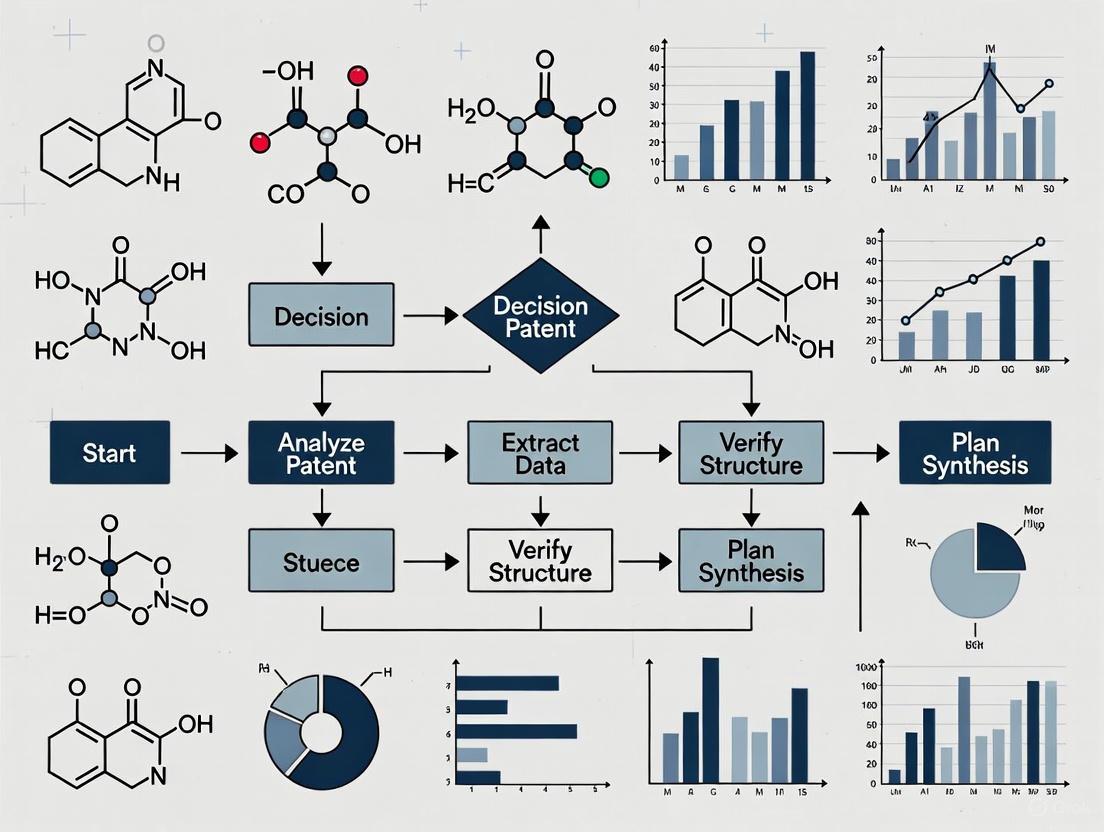
This article provides a comprehensive overview of modern techniques for extracting chemical reaction data from patent documents to power synthesis planning and computer-aided drug discovery.
Automating Synthesis Planning: A Guide to Data Extraction from Chemical Patents
Abstract
This article provides a comprehensive overview of modern techniques for extracting chemical reaction data from patent documents to power synthesis planning and computer-aided drug discovery. It explores the foundational importance of patents as primary sources of new chemical entities, details the latest automated extraction methodologies including LLMs and specialized NLP pipelines, addresses common challenges and optimization strategies, and offers a comparative analysis of available tools and databases. Aimed at researchers, scientists, and drug development professionals, this guide synthesizes current advancements to help efficiently leverage the vast knowledge embedded in chemical patents.
Why Chemical Patents are a Goldmine for Synthesis Data
Patents as the First Disclosure of New Chemical Entities
In the competitive landscape of chemical and pharmaceutical research, patents serve as the primary and often earliest public disclosure of novel chemical compounds [1]. On average, it takes an additional one to three years for a small fraction of these chemically novel compounds to appear in traditional scientific journals, meaning a vast majority are exclusively available through patent documents for a significant period [2] [1]. This positions patent literature as an indispensable resource for researchers engaged in synthesis planning and drug development, providing critical data on novel compounds, synthetic pathways, experimental conditions, and biological activities long before such information permeates the academic literature [3] [1]. The systematic extraction and semantic representation of this data is therefore foundational to modern, data-driven research and development.
The Critical Role of Patents in Chemical Disclosure
The Data Landscape
The volume of chemical information published annually is immense. The CAplus database holds over 32 million references to patents and journal articles, while the CAS REGISTRY contains more than 54 million chemical compounds and the CASREACT database over 39 million reactions [3]. Within this landscape, patents are the channel of first disclosure. It is estimated that around 10 million syntheses are published in the literature each year, with patents contributing a significant portion of this data [3].
Commercial databases like Elsevier’s Reaxys and CAS SciFinder provide high-quality, manually excerpted content but are costly and time-consuming to build and maintain [2] [1]. This creates a pressing need for automated approaches to data extraction to keep pace with the scale of publication and to make this information more accessible for synthesis planning research [3].
The Challenge of "Relevant" Compounds
A critical concept in processing chemical patents is the distinction between all mentioned compounds and those that are relevant to the patent's core invention. A "relevant" compound is one that plays a major role within the patent, such as a starting material, a key product, or a compound specified in the claim section [1].
Automated systems that extract every mentioned compound can quickly become overwhelmed with data, as relevant compounds typically constitute only a small fraction—around 10%—of all chemical entities mentioned in a patent document [1]. The ability to automatically identify these relevant compounds is therefore a fundamental step in creating useful, focused datasets for synthesis planning, as it mirrors the curation process of manual experts [1].
Methodologies for Data Extraction from Chemical Patents
The automated extraction of chemical information from patents involves a multi-stage workflow, combining natural language processing, image analysis, and semantic reasoning.
Text and Data Mining Workflow
The general pipeline for extracting and classifying chemical data from patents involves normalization, entity recognition, structure assignment, and relevancy classification. The following diagram illustrates this integrated workflow.
Chemical Named Entity Recognition (NER)
Chemical NER is the first critical step, identifying text strings that refer to chemical compounds. State-of-the-art systems often use a hybrid of approaches:
- Grammar-Based Approaches: Tools like OPSIN (Open Parser for Systematic IUPAC Nomenclature) use the rules of IUPAC nomenclature to interpret systematic chemical names, overcoming the limitations of static dictionaries [3] [2].
- Statistical/Machine Learning Approaches: Supervised machine learning models are trained on manually annotated chemical terms to recognize chemical entities. These models can achieve high performance but require large, laboriously annotated corpora for training [1].
- Ensemble Systems: Combining multiple recognizers (e.g., CER and OCMiner) can improve overall performance by leveraging the strengths of different underlying methodologies [1].
Structure Assignment and Validation
Once a chemical entity is recognized from text, it must be associated with a machine-readable chemical structure. This is typically achieved through name-to-structure conversion tools like OPSIN [3] [2]. Validation is a crucial subsequent step. The PatentEye system, for instance, attempted to validate identified product molecules by comparing them to structure diagrams in the patent (using image interpretation packages like OSRA) and to any accompanying NMR spectra (using the OSCAR3 data recognition functionality) [3].
Relevance Classification
After extraction and structure assignment, a classifier determines the relevance of each compound. One study developed a system using a gold-standard set of 18,789 annotations, of which 10% were relevant, 88% were irrelevant, and 2% were equivocal [1]. The reported performance of the relevancy classifier was an F-score of 82% on the test set, demonstrating the feasibility of automating this complex task [1].
Extraction from Tables
Chemical patents frequently present key data—such as spectroscopic results, physical properties, and biological activity—in tables [2]. These tables are often larger and more complex than typical web tables. The ChemTables dataset was developed to advance the automatic categorization of tables based on semantic content (e.g., "Physical Data," "Preparation Information") [2]. State-of-the-art models like Table-BERT, which leverage pre-trained language models, have achieved a micro-averaged F~1~ score of 88.66% on this classification task, a critical step in targeting information extraction efforts [2].
Experimental Protocols for Extraction and Validation
The methodologies described in the literature can be formalized into reproducible experimental protocols for building and validating a chemical patent extraction pipeline.
Protocol: Building a Gold-Standard Annotation Corpus
This protocol is fundamental for training and evaluating statistical NER and relevance classification models [1].
Table: Key Data Elements for Protocol 1
| Data Element | Description & Example |
|---|---|
| Purpose | Create a manually annotated set of patent documents for model training and testing. |
| Input Materials | Full-text patent documents from major offices (e.g., EPO, USPTO, WIPO). |
| Annotation Guidelines | A detailed document defining what constitutes a chemical entity and the criteria for "relevance" [1]. |
| Workflow | 1. Select a representative sample of patents.2. Train multiple domain-expert annotators.3. Annotate documents independently.4. Harmonize annotations to resolve discrepancies. |
| Quality Control | Measure inter-annotator agreement (e.g., Cohen's Kappa) to ensure consistency. |
Protocol: Integrated Reaction Extraction with Validation
This protocol is based on the PatentEye system, which focused on extracting complete reaction information with validation checks [3].
Table: Key Data Elements for Protocol 2
| Data Element | Description & Example |
|---|---|
| Purpose | Extract synthetic reactions from patents and validate the identity of the product. |
| Input Materials | Patent documents in a text-based format (XML, HTML) to avoid OCR errors [3]. |
| Software Tools | OSCAR (NER), ChemicalTagger (syntactic analysis), OPSIN (name-to-structure), OSRA (image-to-structure) [3]. |
| Workflow | 1. Identify passages describing synthesis.2. Extract reactants, products, and quantities.3. Convert chemical names to structures.4. Validate product structure against diagrams (OSRA) and/or reported NMR spectra (OSCAR3). |
| Performance Metrics | Precision and Recall for reactants/products; Accuracy for product identification (PatentEye reported 92% product ID accuracy) [3]. |
The Scientist's Toolkit: Research Reagent Solutions
The following table details key software tools and resources that form the essential toolkit for extracting chemical data from patents.
Table: Essential Tools for Chemical Patent Data Extraction
| Tool/Resource Name | Function & Role in the Extraction Workflow |
|---|---|
| OPSIN | An open-source tool for converting systematic IUPAC chemical names into machine-readable chemical structures, crucial for structure assignment [3] [2]. |
| OSCAR (Open Source Chemistry Analysis Routines) | A named entity recognition tool specifically designed to identify chemical names and terms in scientific text [3]. |
| ChemicalTagger | A tool for syntactic analysis of chemical text, using grammar-based approaches to parse sentences and identify the roles of chemical entities (e.g., solvent, reactant) [3]. |
| OSRA (Optical Structure Recognition Application) | An image-to-structure converter used to interpret chemical structure diagrams in patent documents, enabling validation of text-derived structures [3]. |
| Reaxys Name Service | A commercial service used to generate, validate, and standardize chemical structures from names, often used in ensemble systems to ensure data quality [1]. |
| Table-BERT | A state-of-the-art neural network model based on pre-trained language models, used for the semantic classification of tables in chemical patents [2]. |
Quantitative Performance of Extraction Systems
The performance of automated systems is continuously improving, as evidenced by published benchmarks across different tasks.
Table: Performance Metrics of Automated Extraction Systems
| Extraction Task | Reported Performance Metric | Key Context & Notes |
|---|---|---|
| Reaction Extraction (PatentEye) | Precision: 78%, Recall: 64% [3] | Performance for determining reactant identity and amount. |
| Reaction Extraction (PatentEye) | Product Identification Accuracy: 92% [3] | Validation against diagrams and spectra improves accuracy. |
| Chemical Compound Recognition | F-score: 86% (Test Set) [1] | Performance of an ensemble system (CER & OCMiner) on entity recognition. |
| Relevance Classification | F-score: 82% (Test Set) [1] | Performance of a classifier in identifying "relevant" compounds. |
| Patent Table Classification (Table-BERT) | Micro F~1~: 88.66% [2] | Classification of tables by semantic type (e.g., physicochemical data, preparation). |
Patent documents are unequivocally the earliest and most comprehensive source for disclosing new chemical entities and their synthetic pathways. The ability to automatically extract, semantify, and classify this information is no longer a theoretical pursuit but a practical necessity. Methodologies combining robust named entity recognition, name-to-structure conversion, and machine learning-based relevance filtering have demonstrated performance levels that make them viable for augmenting and scaling traditional manual curation. For researchers in synthesis planning, leveraging these automated approaches and the tools that implement them is key to unlocking the vast, untapped knowledge contained within global patent literature, thereby accelerating the journey from novel compound conception to successful synthesis.
The Manual Curation Bottleneck and the Need for Automation
The application of Artificial Intelligence (AI) in drug discovery represents a paradigm shift, offering the potential to drastically reduce the time and cost associated with bringing new therapeutics to market. However, this AI revolution is being stifled by a fundamental data bottleneck. The performance of any AI model is intrinsically limited by the quality, quantity, and relevance of the data on which it is trained [4]. Manual curation, the traditional method for building the chemical knowledge bases that power synthesis planning, has become a critical constraint. It is a slow, expensive, and inherently limited process, creating a bottleneck that prevents AI systems from realizing their full, transformative potential [5] [4].
This bottleneck is particularly acute in the context of chemical patents. Patents are often the first and sometimes the only disclosure of novel compounds and reactions; it can take one to three years for this information to appear in scientific journals, if it appears at all [2]. Consequently, patents are indispensable resources for understanding the state of the art and planning new synthetic routes. Yet, the valuable data within these documents—including detailed experimental procedures, physicochemical properties, and pharmacological results—is frequently locked away in formats that are difficult for machines to process, such as complex tables, images of chemical structures, and unstructured text [2]. The reliance on manual extraction is no longer tenable given the sheer volume of patent literature published annually [5] [2].
Framed within a broader thesis on data extraction for synthesis planning research, this whitepaper argues that overcoming the manual curation bottleneck through automation is not merely an efficiency gain but a strategic imperative. This document will provide an in-depth technical analysis of the bottleneck's causes, detail automated methodologies and datasets that are enabling progress, and quantify the performance of state-of-the-art models that are paving the way for a fully automated, data-driven future in chemical research and development.
The process of manually extracting chemical information from patents for commercial databases is conducted by expert curators, but this approach faces significant and scalable challenges.
- Volume and Velocity: The global patent landscape is vast and growing, with over 200,000 chemical substance patents filed annually across major jurisdictions [5]. Manually processing this deluge of information is economically and logistically infeasible, leading to significant data acquisition delays [2].
- Data Incompleteness and Bias: Manual curation from public sources like academic literature is plagued by publication bias. Public databases are overwhelmingly populated with positive results—successful reactions and active compounds—while the crucial information about failed experiments and negative results is rarely published [4]. This creates a skewed reality for AI models, leading to over-optimistic predictions and a failure to learn from past mistakes [4] [6].
- Lack of Commercial Context: Data sourced from academic literature is devoid of the commercial context vital for industrial R&D. It provides little information on a compound's manufacturing feasibility, formulation challenges, stability, or cost of goods, meaning an AI model might design a molecule that is potent but commercially non-viable [4].
Table 1: Quantitative Challenges in Chemical Patent Data Extraction
| Challenge Dimension | Quantitative Metric | Impact on Manual Curation and AI Training |
|---|---|---|
| Document Volume | Over 200,000 chemical patents filed annually [5] | Impossible for human teams to process comprehensively, leading to data gaps. |
| Table Size | Average of 38.77 rows per table in chemical patents [2] | Increases complexity and time required for extraction significantly compared to web tables (avg. 12.41 rows). |
| Data Diversity | Various table types: spectroscopic data, preparation procedures, pharmacological results [2] | Requires curator expertise in multiple domains, slowing down the process. |
| Publication Lag | 1-3 years for compounds to appear in journals after patent filing [2] | Manual systems reliant on journals provide retrospective, not current, intelligence. |
Technical Foundations: Datasets and Models for Automated Extraction
To overcome the limitations of manual curation, the research community has developed specialized datasets and models to automate the interpretation of chemical patents. These resources are fundamental to training and evaluating the machine learning systems that power modern chemical text-mining pipelines.
The ChemTables Dataset for Semantic Classification
A primary technical challenge is that key chemical data in patents is often presented in tables, which exhibit substantial heterogeneity in both content and structure [2]. To enable research on automatic table categorization, the ChemTables dataset was developed.
Dataset Description: ChemTables is a publicly available dataset consisting of 788 chemical patent tables annotated with labels indicating their semantic content type [7] [2]. The dataset provides a standardized 60:20:20 split for training, development, and test sets, facilitating direct comparison between different machine learning methods [7].
Experimental Protocol for Baseline Models: Researchers established strong baselines for the table classification task by applying and comparing several state-of-the-art neural network models [2].
- Input Representation: Table content is processed into a format suitable for model input.
- Model Architectures:
- TabNet: Uses an LSTM to encode tokens in each cell, treats the encoded table as an image, and uses a Residual Network for classification [2].
- ResNet: A convolutional neural network applied directly to the table representation [2].
- Table-BERT: Leverages the power of pre-trained language models (like BERT) adapted for table understanding [2].
- Training: Models are trained on the ChemTables training set to predict the semantic label of a given table.
- Evaluation: Performance is measured using the micro-averaged ( F_1 ) score on the held-out test set.
Results: The best performing model, Table-BERT, achieved a micro-averaged ( F_1 ) score of 88.66%, demonstrating the efficacy of pre-trained language models for this complex task [2]. This level of accuracy is a critical first step in an automated pipeline, as it allows for the routing of different table types to specialized extraction tools.
The Smiles2Actions Model for Inferring Experimental Procedures
Perhaps the most ambitious technical advancement is the direct prediction of executable experimental procedures from a text-based representation of a chemical reaction.
Model Objective: The goal of Smiles2Actions is to convert a chemical equation (represented in the SMILES format) into a complete sequence of synthesis actions (e.g., add, stir, heat, extract) necessary to execute the reaction in a laboratory [8].
Experimental Protocol: The model was developed and evaluated through a rigorous process [8].
- Data Set Generation:
- Source: The Pistachio database, containing millions of reactions from patents.
- Processing: 3,464,664 reactions with experimental procedure text were processed using a natural language model (Paragraph2Actions) to extract action sequences.
- Post-processing: Records were filtered and standardized, resulting in a final high-quality dataset of 693,517 chemical equations and associated action sequences.
- Model Training: Three different data-driven models were trained on this dataset:
- A nearest-neighbor model based on reaction fingerprints.
- Two deep-learning sequence-to-sequence models based on the Transformer and BART architectures.
- Evaluation: Performance was assessed using the normalized Levenshtein similarity between predicted and original procedures. Furthermore, a trained chemist conducted a blind analysis of 500 predicted action sequences to assess their executability.
Results: The sequence-to-sequence models demonstrated a high level of competence. The best model achieved a normalized Levenshtein similarity of 50% for 68.7% of reactions [8]. Most importantly, the expert chemist assessment revealed that over 50% of the predicted action sequences were adequate for execution without any human intervention [8]. This represents a monumental leap towards fully automating synthesis planning from patent data.
Visualization of Automated Workflows
The following diagrams, generated using Graphviz DOT language, illustrate the logical relationships and workflows of the key automated systems described in this paper.
Diagram 1: Semantic Table Classification with ChemTables
Diagram 2: Procedure Prediction with Smiles2Actions
The Scientist's Toolkit: Research Reagents and Software Solutions
Automating data extraction from chemical patents requires a suite of specialized software tools and datasets. The table below details key "research reagents" in this context—the essential resources that enable scientists to build and deploy automated systems.
Table 2: Essential Research Reagents for Automated Chemical Data Extraction
| Tool / Dataset Name | Type | Primary Function in Automation |
|---|---|---|
| ChemTables Dataset [7] [2] | Annotated Dataset | Provides gold-standard data for training and evaluating machine learning models to classify tables in chemical patents by content type (e.g., spectroscopic, pharmacological). |
| Paragraph2Actions Model [8] | Natural Language Processing Model | Converts free-text experimental procedures from patents into a structured, machine-readable sequence of synthesis actions. Serves as a key component in automated procedure extraction. |
| Pistachio Database [8] | Chemical Reaction Database | A commercial source of millions of patent-derived reactions with associated SMILES strings and procedure text. Used as a large-scale data source for training predictive models like Smiles2Actions. |
| Table-BERT [2] | Machine Learning Model | A pre-trained language model adapted for table understanding. Provides state-of-the-art performance (88.66% F1 score) on the semantic classification of chemical patent tables. |
| OPSIN [2] | Name-to-Structure Tool | A rule-based system that converts systematic chemical names found in patent text into machine-readable structural representations (e.g., SMILES, InChI). Critical for identifying novel compounds. |
The evidence is clear: the manual curation of chemical data from patents is a bottleneck that actively impedes progress in AI-driven synthesis planning and drug discovery. However, as demonstrated by technical breakthroughs like the ChemTables dataset and the Smiles2Actions model, automation presents a viable and powerful solution. These tools are already achieving high levels of accuracy in classifying complex patent data and predicting executable laboratory procedures.
The future path involves the continued development and integration of these specialized AI models into seamless, end-to-end workflows. The vision is a system where a chemical ChatBot can interact with a medicinal chemist, ingesting a target molecule and instantly providing not only a viable synthetic route but also a fully detailed, executable experimental procedure derived from the collective intelligence embedded in global patent literature [6]. Achieving this vision will require a concerted effort across the industry to treat chemical data stewardship as a central pillar of R&D and to fully embrace the automated tools that are unlocking the next frontier of innovation.
Chemical patents are a primary channel for disclosing novel compounds and reactions, often preceding their appearance in scientific journals by one to three years [2]. The extraction of structured data on chemical structures, reactions, and experimental conditions from these patents is therefore crucial for accelerating synthesis planning and drug development research. This technical guide provides an in-depth examination of methodologies for identifying and extracting these core information types, framed within the context of building automated systems for chemical synthesis planning.
Key chemical data in patents is frequently presented in tables, which can vary greatly in both content and structure [2]. The heterogeneity in how this information is presented creates significant challenges for automated extraction, necessitating sophisticated text-mining approaches. This guide details the current state-of-the-art methods for tackling these challenges, with a focus on practical implementation for research applications.
Chemical Structures in Patents
Representation Formats and Extraction Methods
Chemical structures in patents are disclosed through multiple representation formats, each requiring distinct processing approaches. Markush structures, which describe a generic chemical structure with variable parts, are commonly used in patent claims but present particular challenges for computational representation [9]. These structures are often presented as images, requiring conversion to machine-readable formats.
Table 1: Chemical Structure Representation Formats in Patents
| Format Type | Description | Extraction Methods | Primary Use Cases |
|---|---|---|---|
| Systematic Names | IUPAC or other systematic nomenclature | OPSIN [2], MarvinSketch [2] | Compound description in text |
| Markush Structures | Generic structures with variable substituents | Specialized Markush search tools [9] | Patent claims for broad protection |
| SMILES | Simplified Molecular Input Line Entry System | Direct extraction or conversion from other formats [8] | Computational processing, database storage |
| Structural Images | Chemical structures as figures | Optical chemical structure recognition | Patent figures and drawings |
Systematic chemical names found in the text can be converted to structural representations using tools such as OPSIN and MarvinSketch [2]. For structures embedded as images, optical chemical structure recognition techniques are required to generate connection tables or linear notations. The resulting structural data forms the foundation for subsequent analysis of reactions and conditions.
Experimental Methodology for Structure Extraction
The extraction of chemical structures from patent documents follows a multi-step workflow. First, document segmentation identifies sections containing chemical information, particularly focusing on the claims and experimental sections. For textual representations, named entity recognition models specifically trained on chemical nomenclature identify systematic names, which are then converted to structural formats using rule-based tools.
For image-based structures, the workflow involves:
- Image Detection: Locating chemical structure diagrams within patent documents
- Optical Recognition: Converting graphical elements to structural representations
- Validation: Cross-referencing with textual descriptions to ensure accuracy
Specialized databases like SciFinder-n provide Markush search capabilities, enabling researchers to find patents containing specific structural patterns [9].
Chemical Reactions and Experimental Procedures
Reaction Representation and Prediction
Chemical reactions in patents represent transformations from precursors to products, with associated reagents and conditions. These reactions can be represented in text-based formats such as SMILES, which facilitates computational processing [8]. Recent advances in artificial intelligence have enabled the prediction of synthetic routes through retrosynthetic models, but converting these routes to executable experimental procedures remains challenging [8].
Table 2: Reaction Data Types in Chemical Patents
| Data Category | Specific Elements | Extraction Challenges | Research Applications |
|---|---|---|---|
| Reaction Participants | Reactants, reagents, catalysts, solvents, products | Distinguishing reactants from reagents [8] | Reaction prediction, similarity analysis |
| Transformation Information | Reaction centers, bond changes, reaction classes | Automatic reaction mapping | Retrosynthetic analysis |
| Experimental Actions | Addition, stirring, heating, filtration, extraction [8] | Interpreting procedural text | Automated synthesis, procedure transfer |
| Quantity Information | Amounts, concentrations, stoichiometry | Unit normalization, handling implicit information | Reaction scaling, yield optimization |
The prediction of complete experimental procedures from reaction equations represents a significant advancement in automating chemical synthesis. As demonstrated by Vaucher et al., natural language processing models can extract action sequences from patent text, enabling the creation of datasets for training procedure prediction models [8].
Workflow for Procedure Extraction and Prediction
The following diagram illustrates the complete workflow for extracting chemical procedures from patents and predicting them for novel reactions:
Figure 1: Workflow for extracting and predicting chemical procedures
As shown in Figure 1, the process begins with a patent database such as Pistachio, which contains records of reactions published in patents [8]. Experimental procedure text is processed using natural language models like Paragraph2Actions to extract action sequences [8]. These sequences undergo standardization, including tokenization of numerical values and compound references, to create a training dataset. This dataset then trains sequence-to-sequence models, such as Transformer or BART architectures, which can predict procedure steps for new reactions given their SMILES representations [8].
Experimental Conditions and Numerical Data
Types of Experimental Conditions
Experimental conditions encompass the parameters under which chemical reactions are performed, including temperature, pressure, time, atmosphere, and purification methods. In patents, this information appears both in procedural text and in structured tables, requiring different extraction approaches.
Physical and spectroscopic data characterizing compounds are frequently presented in tables, which show substantial variation in structure and content [2]. These tables can include melting points, spectral data (NMR, IR, MS), solubility information, and physical properties essential for compound identification and characterization.
Table 3: Experimental Condition Categories in Chemical Patents
| Condition Type | Specific Parameters | Extraction Methods | Impact on Reactions |
|---|---|---|---|
| Temperature Conditions | Reaction temperature, heating/cooling rates, temperature ranges | Numerical extraction with unit normalization | Reaction rate, selectivity, side products |
| Time Parameters | Reaction duration, addition times, workup times | Tokenization of ranges (e.g., "overnight") [8] | Conversion, decomposition |
| Atmosphere/Solvent | Inert atmosphere, solvent system, concentration | Named entity recognition, solvent classification | Solubility, reactivity, mechanism |
| Workup/Purification | Extraction, filtration, chromatography, crystallization | Action type classification [8] | Product purity, yield |
The extraction of conditions from text involves identifying relevant numerical values and their associated units, while table extraction requires understanding the table structure and semantics. Categorizing tables based on content type is a fundamental step in this process [2].
Table Processing Methodology
Tables in chemical patents present unique challenges due to their structural complexity, frequent use of merged cells, and larger average size compared to web tables [2]. The methodology for processing these tables involves:
- Table Classification: Semantically categorizing tables based on content using models like Table-BERT, which has demonstrated performance of 88.66 micro-averaged F₁ score on chemical patent tables [2]
- Structure Recognition: Identifying table components (headers, data cells, footnotes) and their relationships
- Content Extraction: Parsing numerical data, units, and associated compound identifiers
- Data Normalization: Standardizing units and numerical representations for computational use
The ChemTables dataset, consisting of 7,886 chemical patent tables with content type labels, enables the development and evaluation of table classification methods [10]. This dataset reflects the real-world distribution of table types in chemical patents, with an average of 38.77 rows per table—significantly larger than typical web tables [2].
Computational Tools and Research Reagents
Successful extraction of chemical information from patents requires both computational tools and chemical knowledge. The following table details key resources in the "scientist's toolkit" for this research domain.
Table 4: Research Reagent Solutions for Patent Data Extraction
| Tool/Resource | Type | Function | Application Context |
|---|---|---|---|
| ChemTables Dataset | Dataset | Provides labeled patent tables for training classification models [10] | Method development and evaluation |
| Paragraph2Actions | NLP Model | Extracts action sequences from experimental procedure text [8] | Procedure understanding and prediction |
| OPSIN | Tool | Converts systematic chemical names to structures [2] | Structure extraction from text |
| Table-BERT | Model | Classifies tables in chemical patents based on content [2] | Semantic table categorization |
| SciFinder-n | Database | Provides Markush structure search capabilities [9] | Advanced patent structure searching |
| Smiles2Actions | Model | Converts chemical equations to experimental actions [8] | Automated procedure prediction |
Integrated System Architecture
The relationship between key components in a comprehensive patent data extraction system can be visualized as follows:
Figure 2: System architecture for patent data extraction
As illustrated in Figure 2, a comprehensive system requires integrated modules for processing different information types within patents. The text processing module handles experimental procedures and descriptive text, the table processing module extracts structured numerical data, and the structure parser converts chemical representations to machine-readable formats. The output is a unified structured dataset containing compounds, reactions, and associated conditions.
The extraction of key chemical information from patents—structures, reactions, and conditions—provides critical data for synthesis planning research. Methods such as table classification with Table-BERT and procedure prediction with sequence-to-sequence models have demonstrated promising results, but challenges remain in handling the diversity and complexity of patent information.
Future research directions include developing more integrated approaches that jointly extract and link structures, reactions, and conditions; improving generalization across patent writing styles; and enhancing the robustness of extraction methods to layout variations. As these methods mature, they will increasingly support drug development professionals in efficiently leveraging the wealth of synthetic knowledge contained in the patent literature.
The Critical Timeliness of Patent Data in Drug Discovery
In the competitive landscape of drug discovery, pharmaceutical patents represent both the foundational intellectual property protecting innovative therapies and a rich, rapidly evolving source of technical information for synthesis planning research. The temporal aspect of patent data operates in two critical dimensions: the strategic timing of patent filings to maximize commercial exclusivity periods, and the accelerating pace at which patent-derived chemical information must be extracted and utilized to maintain competitive research advantages. This guide examines the intersection of these dimensions, providing researchers with methodologies to leverage temporally-sensitive patent data for synthesis planning while navigating the complex intellectual property framework governing pharmaceutical innovation.
The strategic importance of patent timing stems from substantial structural challenges in drug development. The nominal 20-year patent term begins from the earliest filing date, typically during initial discovery phases, yet the mandatory research, development, and regulatory review processes consume 5-10 years of this term before commercial sales commence [11]. This erosion significantly shortens effective market exclusivity, creating intense pressure to optimize both patent strategy and research utilization of published patent information.
The Pharmaceutical Patent Timeline: Structural Erosion and Compensation Mechanisms
Foundational IP Framework and Term Erosion
The United States patent system establishes a nominal 20-year term from the earliest effective filing date under 35 U.S.C. § 154(a)(2) [11]. For pharmaceutical innovations, this creates a structural disadvantage because the patent clock begins during early discovery or clinical trial phases, often years before a therapeutic candidate reaches the market. The average research and development lifecycle routinely consumes years of the patent term before marketing approval is even sought, with patent pendency (the period between patent filing and grant) averaging 3.8 years for new chemical entities [11].
This structural erosion has significant implications for both patent holders and researchers analyzing patent data. The diminishing effective patent life creates commercial pressure to accelerate development timelines, which in turn affects the timing and content of patent publications that synthesis researchers rely upon for the latest chemical advances.
Legislative Compensation Mechanisms
The Drug Price Competition and Patent Term Restoration Act of 1984 (Hatch-Waxman Act) provides corrective instruments to counteract patent term erosion [11]. This legislation established a balanced approach between innovation incentives and generic competition through three key mechanisms:
- Patent Term Extension (PTE): Restores patent life lost during FDA regulatory review, with a maximum duration of 5 years and a cap ensuring the total remaining patent term from approval date does not exceed 14 years [11].
- Patent Term Adjustment (PTA): Compensates for USPTO administrative delays during patent prosecution, adding time directly to the nominal 20-year term with no statutory maximum [11].
- Regulatory Exclusivities: Provides additional non-patent protection periods (e.g., 5-year New Chemical Entity exclusivity) that run concurrently with patent protection [11].
Table 1: Pharmaceutical Patent Term Compensation Mechanisms
| Mechanism | Legal Basis | Purpose | Maximum Duration | Key Limitations |
|---|---|---|---|---|
| Patent Term Extension (PTE) | 35 U.S.C. § 156 | Compensate for FDA review delays | 5 years | Cannot exceed 14 years effective patent life from approval |
| Patent Term Adjustment (PTA) | 35 U.S.C. § 154 | Compensate for USPTO delays | No statutory maximum | Calculated based on specific USPTO delays |
| Regulatory Exclusivity | Hatch-Waxman Act | Protect regulatory data | 3-5 years depending on product type | Runs concurrently with patent protection |
For researchers tracking pharmaceutical patents, understanding these mechanisms is essential for accurately predicting when key compounds will become available for further research and generic development, thus informing synthesis planning timelines.
Strategic Patent Timing for Maximum Impact
The Patent Filing Dilemma in Drug Discovery
Startups and established pharmaceutical companies face critical timing decisions regarding patent filings. Filing too early can result in weak or speculative claims lacking sufficient experimental data to withstand scrutiny, while filing too late risks loss of rights due to public disclosures or competitor preemption [12]. Early patent filings may also expire before product commercialization, significantly eroding effective patent life and reducing the window of market exclusivity [12].
The financial implications of patent timing are substantial. The pharmaceutical industry faces a projected $236 billion patent cliff between 2025 and 2030, involving approximately 70 high-revenue products [11]. When patents lapse, small-molecule drugs typically lose up to 90% of revenue within months, with average price declines of 25% for oral medications and 38-48% for physician-administered drugs [11].
Strategic Timing Solutions
Five key strategies can optimize patent filing timing and maximize the research utility of patent data:
Coordinate patent filings with public disclosures: Public disclosure before filing destroys novelty in most jurisdictions. Applications should be filed before conferences, publications, or investor presentations (without NDAs) [12].
Align patent filing with development milestones: File when sufficient data supports the invention, using follow-up applications to capture new data or applications [12].
Utilize divisional applications: Pursue protection for different aspects disclosed but not claimed in parent applications, such as methods of use, formulations, or combination therapies [12].
Monitor competitor activity: In competitive fields, regular patent landscape reviews help identify emerging threats and opportunities, potentially necessitating earlier filing [12].
Balance patent lifetime with regulatory timelines: Consider supplementary protection certificates or patent term extensions, timing filings to maximize exclusivity at product launch [12].
Table 2: Strategic Patent Timing Approaches
| Strategy | Implementation | Research Impact |
|---|---|---|
| Disclosure Coordination | File before public presentations | Ensures novel technical information enters public domain predictably |
| Milestone Alignment | Base filing on sufficient experimental data | Provides more complete synthesis information in published patents |
| Divisional Applications | Protect different aspects of invention | Enables broader mining of formulation and method patents |
| Competitor Monitoring | Regular landscape reviews | Identifies emerging synthetic routes and compound classes |
| Regulatory Balance | Coordinate with development timeline | Predicts availability of compounds for further research |
Advanced Methodologies for Temporal Patent Data Extraction
Automated Chemical Reaction Extraction from Patents
The extraction of chemical synthesis information from patents presents significant challenges due to the prose format of experimental procedures in patent documents. Traditional conversion of unstructured chemical recipes to structured, automation-friendly formats requires extensive human intervention [13]. Recent advances in artificial intelligence, particularly large language models (LLMs), have dramatically accelerated this process while improving data quality.
A comprehensive pipeline for chemical reaction extraction from USPTO patents demonstrates the potential for high-throughput temporal data mining [14]. This approach showed that automated extraction could enhance existing datasets by adding 26% new reactions from the same patent set while identifying errors in previously curated data [14].
Figure 1: Automated Chemical Reaction Extraction Pipeline
Experimental Protocol: LLM-Assisted Reaction Mining
Objective: Extract high-quality chemical reaction data from USPTO patent documents using large language models to enhance synthesis planning databases.
Materials and Data Sources:
- Patent Corpus: US patents from USPTO with International Patent Classification (IPC) code 'C07' (Organic Chemistry) [14]
- Validation Dataset: Open Reaction Database (ORD) containing previously extracted reactions from February 2014 for performance benchmarking [14]
- Computational Resources: Access to LLM APIs (GPT-3.5, Gemini 1.0 Pro, Llama2-13b, or Claude 2.1) for entity recognition [14]
Methodology:
Patent Collection and Preprocessing:
- Retrieve patents from Google Patents service filtered by IPC code 'C07'
- Extract and clean text content from patent documents, preserving chemical nomenclature and experimental sections
Reaction Paragraph Identification:
- Implement a Naïve-Bayes classifier trained on manually labeled corpus of reaction paragraphs
- Utilize classifier with documented performance (precision = 96.4%, recall = 96.6%) to identify reaction-containing paragraphs [14]
- Filter non-relevant text to reduce computational load on subsequent LLM processing
Chemical Entity Recognition Using LLMs:
- Apply zero-shot Named Entity Recognition (NER) capability of pretrained LLMs
- Extract chemical reaction entities including: reactants, solvents, workup procedures, reaction conditions, catalysts, and products with associated quantities [14]
- Process identified reaction paragraphs through multiple LLMs for comparative performance assessment
Data Standardization and Validation:
- Convert identified chemical entities from IUPAC names to SMILES format for standardization
- Perform atom mapping between reactants and products to validate reaction correctness
- Flag reactions with mapping inconsistencies for manual review or exclusion
Performance Metrics:
- Comparison against existing USPTO dataset using same patent corpus
- Quantitative assessment of new reactions identified
- Error analysis of previously curated data
- Processing throughput (patents processed per unit time)
The Scientist's Toolkit: Essential Research Reagents for Patent Data Extraction
Table 3: Research Reagent Solutions for Patent Data Extraction
| Tool/Resource | Function | Application in Research |
|---|---|---|
| USPTO Patent Database | Primary source of patent documents | Provides raw text data for chemical information extraction |
| IBM RXN for Chemistry Platform | Deep learning model for action sequence extraction | Converts experimental procedures to structured synthesis actions [13] |
| Open Reaction Database (ORD) | Structured reaction database schema | Validation benchmark for extracted reactions [14] |
| ChemicalTagger | Grammar-based chemical entity recognition | Rule-based extraction of chemical entities from text [14] |
| Naïve-Bayes Classifier | Text classification for reaction paragraphs | Filters patent text to identify reaction-containing sections [14] |
| LLM APIs (GPT, Gemini, Claude) | Named Entity Recognition for chemical data | Extracts structured reaction information from patent prose [14] |
| CheMUST Dataset | Annotated chemical patent tables | Training data for table extraction algorithms [7] |
Temporal Analysis Framework for Patent Landscapes
The accelerating pace of pharmaceutical research necessitates increasingly sophisticated temporal analysis of patent data. Researchers must track not only when patents are published but also how quickly chemical information from these patents can be integrated into synthesis planning systems.
Figure 2: Temporal Pathway from Patent Filing to Research Utilization
The critical path from patent filing to research utilization demonstrates the compounding value of reducing extraction timelines. Each reduction in processing time accelerates the entire drug discovery pipeline, potentially shaving months or years from development timelines for new therapies.
The critical timeliness of patent data in drug discovery represents a multifaceted challenge requiring integrated expertise across intellectual property law, data science, and synthetic chemistry. Researchers who successfully navigate this complex landscape stand to gain significant advantages in synthesizing novel compounds and developing innovative therapeutic strategies. As artificial intelligence tools continue to evolve, the extraction and utilization of patent information will further accelerate, potentially reshaping competitive dynamics in pharmaceutical research. The organizations that thrive in this environment will be those that develop seamless workflows integrating strategic patent analysis with state-of-the-art data extraction capabilities, transforming patent publications from mere legal documents into valuable research assets.
Modern Techniques for Automated Patent Extraction
Leveraging Large Language Models (LLMs) for Entity and Relation Extraction
The rapid advancement of Large Language Models (LLMs) has revolutionized information extraction from complex scientific documents, particularly in the domain of chemical patent analysis for synthesis planning research. Chemical patents represent a rich repository of structured knowledge containing detailed descriptions of novel molecules, synthetic methodologies, reaction conditions, and functional applications. However, extracting this information manually is time-consuming, labor-intensive, and prone to inconsistencies, creating a significant bottleneck in research and development workflows.
LLMs offer a transformative solution to these challenges through their advanced natural language understanding capabilities and contextual reasoning. When properly leveraged, these models can automatically identify chemical entities (reactants, products, catalysts, solvents) and their complex relationships (reaction pathways, conditions, yields) from unstructured patent text, enabling the construction of structured knowledge bases for synthesis planning [14]. This technical guide examines the methodologies, architectures, and experimental protocols for implementing LLM-powered entity and relation extraction systems specifically tailored for chemical patent analysis, with emphasis on practical implementation considerations for researchers and drug development professionals.
The integration of LLMs into chemical data extraction pipelines addresses several critical challenges in the field: the exponential growth of chemical literature [15], the heterogeneity of data representations across patent documents [14], and the need for high-quality structured data to train predictive models for retrosynthesis and reaction optimization [16]. By systematically implementing the approaches described in this guide, research institutions and pharmaceutical companies can significantly accelerate their discovery pipelines and enhance the efficiency of synthesis planning research.
Technical Foundations
LLM Architectures for Chemical Information Extraction
The application of LLMs to chemical entity and relationship extraction builds upon several foundational architectures adapted to domain-specific requirements. The Transformer architecture, with its self-attention mechanism, forms the bedrock of modern LLMs, enabling parallel processing of token sequences and capturing long-range dependencies in chemical patents [17]. Several specialized architectures have demonstrated particular efficacy for chemical data extraction:
Encoder-only models like BERT and its variants (BioBERT, SciBERT) excel at understanding contextual relationships within patent text through bidirectional processing. These models are particularly effective for named entity recognition (NER) tasks where comprehensive context is essential for accurate identification of chemical entities [14]. The pretraining-finetuning paradigm allows these models to be adapted to chemical patent processing with relatively small amounts of labeled data.
Decoder-only models from the GPT family leverage autoregressive generation capabilities to produce structured outputs from unstructured patent text. These models can generate extraction results in standardized formats (JSON, XML) while maintaining contextual awareness across long patent documents [18]. Their generative nature makes them particularly suitable for relationship extraction tasks where the output structure may be complex.
Encoder-decoder models provide a balanced approach, with the encoder processing patent text and the decoder generating structured extractions. This architecture is especially valuable for complex extraction tasks requiring both comprehensive understanding of input text and generation of sophisticated output structures [17].
Table 1: LLM Architectures for Chemical Patent Extraction
| Architecture Type | Representative Models | Strengths | Ideal Use Cases |
|---|---|---|---|
| Encoder-only | BERT, BioBERT, SciBERT | Bidirectional context understanding, high accuracy on NER | Chemical named entity recognition, sequence labeling |
| Decoder-only | GPT-series, LLaMA, Falcon | Flexible output generation, few-shot learning | Relationship extraction, structured data generation |
| Encoder-decoder | T5, BART | Balanced understanding and generation | Complex information extraction, data transformation |
Chemical Representation Learning
Effective entity and relationship extraction from chemical patents requires specialized representation approaches that capture both linguistic and chemical semantics. Multiple representation schemes have been developed to encode chemical information in formats compatible with LLM processing:
SMILES (Simplified Molecular Input Line Entry System) provides a string-based representation of molecular structure that can be processed by text-based LLMs. While SMILES strings enable the application of standard NLP techniques to chemical structures, they can be ambiguous and sensitive to minor syntactic variations [16]. Recent approaches have addressed these limitations through canonicalization and augmentation techniques.
Molecular graph representations capture the fundamental structure of chemicals as graphs with atoms as nodes and bonds as edges. Graph Neural Networks (GNNs) can process these representations to generate embeddings that capture structural similarities and functional properties [15]. Hybrid approaches that combine LLMs with GNNs have shown promise in integrating textual and structural information.
IUPAC nomenclature provides systematic naming conventions that are frequently used in patent documents. While these names contain rich structural information, their complexity presents challenges for automated processing. LLMs fine-tuned on chemical nomenclature can learn to parse these names and extract structural information [14].
The representation approach significantly impacts extraction performance. A comparative analysis of extraction pipelines found that systems incorporating multiple representation schemes achieved 18% higher F1 scores on complex relationship extraction tasks compared to single-representation approaches [18].
Methodology
Entity Extraction Protocols
The extraction of chemical entities from patent documents involves a multi-stage process that combines LLM capabilities with domain-specific validation. The following protocol outlines a comprehensive approach optimized for chemical patents:
Step 1: Patent Preprocessing and Segmentation
- Convert patent documents from PDF/HTML to clean text while preserving structural elements (headings, paragraphs, claims)
- Identify and extract relevant sections (abstract, description, examples, claims) using rule-based classifiers or fine-tuned LLMs
- Segment text into coherent passages using a Naïve-Bayes classifier trained on manually annotated patent corpora, achieving precision of 96.4% and recall of 96.6% in identifying reaction-containing paragraphs [14]
Step 2: Named Entity Recognition with LLMs
- Implement a hybrid NER approach combining prompt-based extraction with fine-tuned models
- For prompt-based extraction, use structured prompts specifying entity types (reactants, products, catalysts, solvents, conditions) and output format
- For fine-tuned models, utilize BioBERT or specialized chemical LLMs trained on annotated patent corpora like CheF [18]
- Apply constraint decoding to ensure output validity, incorporating chemical validation rules
Step 3: Entity Normalization and Validation
- Resolve lexical variations and synonyms through dictionary-based matching against chemical databases (PubChem, ChEBI)
- Validate chemical structures by converting extracted representations (names, SMILES) to canonical forms using toolkits like RDKit
- Implement structure-based validation to identify implausible entities or extraction errors
Table 2: Entity Types and Extraction Methods
| Entity Type | Extraction Method | Validation Approach | Common Challenges |
|---|---|---|---|
| Reactants/Products | LLM + SMILES conversion | Structure validation, reaction balance checking | Partial structures, mixtures |
| Catalysts | Pattern-enhanced LLM | Catalyst database matching | Concentration thresholds |
| Solvents | Dictionary-guided LLM | Functional role verification | Co-solvents, mixtures |
| Conditions | Rule-constrained LLM | Physicochemical plausibility | Unit conversions, ranges |
| Yields | Numeric extraction LLM | Cross-validation with examples | Calculation methods |
Experimental results from the CheF dataset creation demonstrate that this protocol can extract chemical entities with 92% precision and 88% recall, significantly outperforming rule-based approaches which achieved 74% precision and 65% recall on the same patent set [18].
Relation Extraction Framework
Relationship extraction from chemical patents focuses on identifying meaningful connections between entities, particularly reaction pathways, conditions, and functional applications. The following framework provides a systematic approach:
Architecture Design The relation extraction pipeline employs a multi-stage architecture combining LLMs with structured knowledge:
Figure 1: Relation Extraction Workflow from Chemical Patents
Implementation Protocol
Step 1: Entity Pair Generation
- Generate candidate entity pairs using proximity-based heuristics (entities mentioned in same sentence or paragraph)
- Apply syntactic filters based on dependency parsing to identify semantically connected entities
- Use fine-tuned LLMs to identify potentially related entities based on contextual understanding
Step 2: Relation Classification
- Implement a multi-label classification approach to identify relationship types (reacts-with, catalyzes, dissolves-in, produces)
- Utilize prompt-based classification with few-shot examples for high flexibility
- Apply fine-tuned transformer models (BERT, SciBERT) for higher accuracy on specific relation types
- Incorporate chemical knowledge constraints to filter implausible relations
Step 3: Knowledge Graph Construction
- Transform extracted entities and relations into structured graph format
- Implement identity resolution to merge equivalent entities across extractions
- Enrich graph with additional attributes (conditions, yields, references)
- Apply consistency checks to identify and resolve conflicting information
Experimental validation on USPTO patents demonstrates that this framework achieves 85% F1 score on relation extraction tasks, with particularly strong performance on reaction participant identification (92% F1) and more moderate performance on complex condition relationships (76% F1) [14].
Experimental Evaluation
Performance Metrics and Benchmarks
Rigorous evaluation of LLM-based extraction systems requires comprehensive metrics spanning both technical performance and chemical validity. The following metrics provide a balanced assessment:
Technical Extraction Metrics
- Precision, Recall, and F1-score for entity and relation extraction
- Exact match accuracy for structured prediction tasks
- Slot error rate for template filling applications
Chemical Validity Metrics
- Chemical structure validity rate (percentage of extracted SMILES that represent valid structures)
- Reaction balance accuracy (atom mapping consistency between reactants and products)
- Condition plausibility (experimental conditions within physically possible ranges)
Application-oriented Metrics
- Synthesis planning utility (percentage of extractions sufficient for route planning)
- Database integration compatibility (structured data conforming to target schema)
- Human verification efficiency (reduction in manual curation time)
Table 3: Performance Comparison of Extraction Approaches
| Extraction Approach | Entity F1 | Relation F1 | Structure Validity | Reaction Balance |
|---|---|---|---|---|
| Rule-based | 0.74 | 0.68 | 0.92 | 0.81 |
| Traditional ML | 0.82 | 0.75 | 0.88 | 0.79 |
| LLM (Zero-shot) | 0.79 | 0.72 | 0.85 | 0.76 |
| LLM (Fine-tuned) | 0.90 | 0.85 | 0.94 | 0.89 |
| LLM + Validation | 0.89 | 0.84 | 0.98 | 0.95 |
Data derived from comparative studies on USPTO patents shows that fine-tuned LLMs significantly outperform other approaches, particularly when augmented with chemical validation [14] [18]. The incorporation of structural validation checks increases chemical validity metrics despite minor reductions in traditional extraction metrics.
Error Analysis and Limitations
Systematic error analysis reveals consistent patterns in LLM-based extraction failures:
Entity Extraction Errors
- Partial extraction: LLMs occasionally extract incomplete structures, particularly for complex molecules with multiple functional groups. This accounts for approximately 42% of entity errors in validation studies.
- Representation ambiguity: Different representation of the same chemical (e.g., salt forms, stereochemistry) leads to duplicate entities with minor variations (28% of errors).
- Context misinterpretation: LLMs sometimes confuse reactants, products, and intermediates when descriptions are ambiguous (19% of errors).
Relation Extraction Errors
- Condition attribution: Incorrect association of conditions (temperature, catalysts) with specific reaction steps (37% of relation errors).
- Complex pathway simplification: Oversimplification of multi-step reactions into single-step transformations (29% of errors).
- Negation misunderstanding: Failure to recognize described reactions that failed or are not recommended (18% of errors).
Domain-specific fine-tuning and the incorporation of chemical knowledge constraints have been shown to reduce these error categories by 35-60% in controlled evaluations [14].
Integration with Synthesis Planning
Knowledge Graph Construction
The transformation of extracted entities and relationships into structured knowledge graphs enables powerful applications in synthesis planning. The construction process involves:
Figure 2: Knowledge Graph Construction Pipeline
The resulting knowledge graph serves as a foundational resource for multiple synthesis planning applications:
- Reaction prediction: Identifying likely reaction outcomes based on extracted precedents
- Route optimization: Selecting optimal synthetic pathways based on accumulated patent knowledge
- Condition recommendation: Suggesting reaction conditions with highest reported yields
- Analogue design: Identifying structural modifications that preserve activity while improving synthesizability
Integration with systems like RSGPT demonstrates that knowledge graphs enriched with patent extractions can improve retrosynthesis prediction accuracy by 14% compared to models trained solely on structured reaction databases [16].
Case Study: RSGPT Integration
The RSGPT (RetroSynthesis Generative Pre-trained Transformer) framework provides a compelling case study in leveraging LLM-extracted data for synthesis planning. The integration follows a multi-stage process:
Data Preparation
- Extract reaction data from USPTO patents using LLM-based pipelines
- Convert extracted information to standardized reaction representations (SMILES, reaction SMILES)
- Apply atom mapping to establish reactant-product correspondence
- Filter and validate reactions based on chemical plausibility
Model Training
- Pre-train transformer architecture on large-scale synthetic reaction data (10+ billion datapoints) generated through RDChiral template application [16]
- Fine-tune on patent-extracted reactions using multi-task learning objectives
- Optimize with Reinforcement Learning with AI Feedback (RLAIF) to prioritize chemically plausible predictions
Performance Outcomes The integrated system demonstrates significant improvements in retrosynthesis planning:
- Top-1 accuracy of 63.4% on USPTO-50k benchmark, outperforming template-based (44.2%) and other template-free (53.7%) approaches [16]
- Enhanced performance on complex molecules with out-of-template structural features
- Improved condition recommendation accuracy through incorporation of extracted patent conditions
This case study illustrates the transformative potential of combining LLM-based extraction with specialized chemical AI systems for synthesis planning applications.
The Scientist's Toolkit
Successful implementation of LLM-based extraction systems for chemical patents requires a carefully curated toolkit of resources, datasets, and validation approaches. The following table summarizes essential components:
Table 4: Essential Resources for Chemical Patent Extraction
| Resource Category | Specific Tools/Datasets | Application | Key Features |
|---|---|---|---|
| Chemical Databases | PubChem, ChEBI, SureChEMBL | Entity resolution, structure validation | 100M+ compounds, programmatic access |
| Reaction Databases | USPTO, ORD, Reaxys | Training data, evaluation benchmarks | Curated reactions, conditions, yields |
| NLP Libraries | spaCy, Hugging Face, NLTK | Text processing, model integration | Pretrained models, chemical extensions |
| Cheminformatics | RDKit, CDK, RDChiral | Structure manipulation, validation | SMILES processing, reaction handling |
| LLM Platforms | OpenAI GPT, Claude, Llama | Entity and relation extraction | API access, custom fine-tuning |
| Evaluation Frameworks | CheF dataset, USPTO benchmarks | Performance validation | Expert-annotated test sets |
Implementation considerations for research teams:
- Data Quality: The CheF dataset, comprising 631K molecule-function pairs extracted from patents using LLMs, provides a high-quality benchmark for training and evaluation [18]
- Validation Rigor: Incorporate multiple validation layers including structural checks (RDKit), reaction balancing (atom mapping), and cross-reference with established databases
- Pipeline Integration: Design extraction pipelines with modular architecture to accommodate evolving tooling and methodologies
Teams implementing the complete toolkit have reported 3-5x acceleration in data extraction workflows compared to manual curation, while maintaining or improving data quality for synthesis planning applications [14] [18].
The discovery and synthesis of new chemical compounds are fundamental to pharmaceutical and materials science research. Chemical patent documents serve as the primary and most timely source of information for new chemical discoveries, often containing the initial disclosure of novel compounds years before their publication in academic journals [19]. However, the rapidly expanding volume of chemical patents and their complex, unstructured text present significant challenges for manual information retrieval. Specialized Natural Language Processing (NLP) pipelines for Named Entity Recognition (NER) and Event Extraction have therefore become indispensable tools for automated knowledge extraction from chemical patents, enabling researchers to efficiently access and structure critical information for synthesis planning [19] [20].
These NLP technologies address a fundamental bottleneck in chemical research. The pharmaceutical industry faces an "unsolvable equation" of spiraling development costs and plummeting success rates, with the average drug taking 10-15 years and over $2.5 billion to develop, while success rates for candidates entering Phase I trials have fallen to just 6.7% [20]. Artificial intelligence, particularly NLP for chemical text mining, offers a promising solution to this productivity crisis by potentially generating $350-$410 billion in annual value for the pharmaceutical sector through accelerated discovery timelines and improved success rates [20]. This whitepaper provides an in-depth technical examination of the specialized NLP pipelines that make this possible, with particular focus on their application to chemical patent documents for synthesis planning research.
Domain-Specific Challenges in Chemical Patent Processing
Linguistic and Structural Complexities of Patent Documents
Chemical patents present unique challenges that distinguish them from standard scientific literature. As legal documents, patents are written with the dual purpose of disclosing inventions while simultaneously protecting intellectual property through broad claims, resulting in text that is often more exhaustive and structurally complex than typical research articles [19]. Key challenges include exceptionally long sentences that list multiple chemical compounds, complex syntactic structures in patent claims, domain-specific terminology, and a lexicon containing novel chemical terms that are difficult to interpret without specialized knowledge [19]. Quantitative analyses have shown that the average sentence length in patent corpora significantly exceeds that of general language use, creating substantial difficulties for syntactic parsing and information extraction [19].
Most publicly available chemical databases suffer from significant limitations for AI-driven drug discovery applications. Public repositories such as ChEMBL and PubChem, while invaluable for academic research, contain inherent structural limitations including publication bias toward positive results, incompleteness, lack of standardization, and absence of commercial context regarding synthesizability, formulation challenges, or cost of goods [20]. These databases are inherently retrospective, archiving what has already been discovered and published, often with substantial time lags between initial experimentation and public availability [20]. This creates a critical "garbage in, garbage out" problem where sophisticated AI models are trained on flawed or incomplete data, generating misleading results that waste significant resources in downstream experimental validation [20].
Table 1: Key Challenges in Chemical Patent Text Processing
| Challenge Category | Specific Issues | Impact on NLP Processing |
|---|---|---|
| Text Structure | Long sentence listings, complex claim syntax | Difficulties in syntactic parsing and entity relation mapping |
| Terminology | Domain-specific terms, novel chemical names | Limited generalizability of standard NLP models |
| Data Quality | Image quality issues, inconsistent formatting | Errors in optical chemical structure recognition (OCSR) |
| Information Distribution | Sparse signal localization across documents | "Needle-in-haystack" problem for relevant data |
| Multimodal Alignment | Disconnection between text and structure images | Challenges in correlating chemical entities with visual representations |
Core Annotation Schemes and Benchmark Datasets
The ChEMU Annotation Framework
The ChEMU (Cheminformatics Elsevier Melbourne University) evaluation lab, established as part of CLEF-2020, provides a comprehensive annotation framework specifically designed for chemical reaction extraction from patents [19]. This framework defines two complementary extraction tasks that form the foundation of modern chemical NLP pipelines:
Task 1: Named Entity Recognition involves identifying chemical compounds and their specific roles within chemical reactions, along with relevant experimental conditions. The annotation schema defines 10 distinct entity types that capture critical synthesis information [19]:
- REACTION_PRODUCT: A substance formed during a chemical reaction
- STARTING_MATERIAL: A substance consumed in the reaction that provides atoms to products
- REAGENT_CATALYST: Compounds added to cause or facilitate the reaction (including catalysts, bases, acids)
- SOLVENT: Chemical entities that dissolve solutes to form solutions
- OTHER_COMPOUND: Chemical compounds not falling into the above categories
- EXAMPLE_LABEL: Labels associated with reaction specifications
- TEMPERATURE: Reaction temperature conditions
- TIME: Reaction time parameters
- YIELD_PERCENT: Yield percentages
- YIELD_OTHER: Yields in units other than percentages
Task 2: Event Extraction focuses on identifying the individual steps within chemical reactions and their relationships with chemical entities. This involves detecting event trigger words (e.g., "added," "stirred") and determining their chemical entity arguments using semantic role labels adapted from the Proposition Bank: Arg1 for chemical compounds causally affected by events, and ArgM for adjunct roles linking triggers to temperature, time, or yield entities [19].
Several annotated corpora have been developed to support the training and evaluation of chemical NLP systems:
ChEMU Corpus: Comprises 1,500 chemical reaction snippets sampled from 170 English patent documents from the European Patent Office and United States Patent and Trademark Office, split into 70% training, 10% development, and 20% test sets with annotations in BRAT standoff format [19] [21].
DocSAR-200: A recently introduced benchmark of 200 scientific documents (98 patents, 102 research articles) specifically designed for evaluating Structure-Activity Relationship (SAR) extraction methods, featuring 2,617 tables with sparse activity measurements and molecules of varying complexity [22].
Multimodal Chemical Information Datasets: Specialized collections such as the dataset comprising 210K structural images and 7,818 annotated text snippets from patents filed between 2010-2020, supporting the development of multimodal extraction systems [23].
Table 2: Quantitative Overview of Chemical Text Mining Benchmarks
| Dataset | Document Count | Document Types | Annotation Types | Key Features |
|---|---|---|---|---|
| ChEMU | 1,500 snippets | Chemical patents | 10 entity types + event relations | Reaction-centric annotations from EPO/USPTO patents |
| DocSAR-200 | 200 documents | Patents & research articles | Molecular structures + activity data | Multi-lingual content, sparse activity signals |
| Multimodal Chemical Dataset | 7,818 text snippets + 210K images | Chemical patents | Chemical entities + structure images | Paired text and image data from 2010-2020 |
Technical Architectures for Chemical NER and Event Extraction
Hybrid NLP Pipeline Architecture
Modern approaches to chemical information extraction employ sophisticated hybrid architectures that combine multiple NLP strategies tailored to the peculiarities of patent text. The winning system in the CLEF 2020 ChEMU challenge demonstrated a comprehensive workflow incorporating several key innovations [24]:
This architecture addresses three fundamental challenges in chemical patent processing: (1) poor tokenization output for chemical and numeric concepts through domain-adapted tokenization; (2) lack of patent-specific language models through self-supervised pre-training on 20,000 additional patent snippets; and (3) uncovered domain knowledge through pattern-based rules and chemical dictionary matching [24]. The system achieved state-of-the-art performance with F1 scores of 0.957 for entity recognition and 0.9536 for event extraction in the ChEMU evaluation [24].
Advanced Multimodal Framework: Doc2SAR
For comprehensive Structure-Activity Relationship (SAR) extraction, recent research has introduced the Doc2SAR framework, which addresses the limitations of both rule-based methods and general-purpose multimodal large language models through a synergistic, modular approach [22]:
Doc2SAR achieves an overall Table Recall of 80.78% on the DocSAR-200 benchmark, representing a 51.48% improvement over end-to-end GPT-4o, while processing over 100 PDFs per hour on a single RTX 4090 GPU [22]. The framework's effectiveness stems from its specialized component design:
Optical Chemical Structure Recognition (OCSR): A specialized module combining a Swin Transformer image encoder with a BART-style autoregressive decoder for SMILES generation, fine-tuned on 515 manually curated molecular image-SMILES pairs [22].
Molecular Coreference Recognition: A fine-tuned Multimodal Large Language Model (MLLM) that establishes correspondence between molecular structure images and their textual identifiers by analyzing layout context within a spatial window of 1.5× original dimensions [22].
Experimental Protocols and Implementation
Domain-Adapted Tokenization Methodology
Conventional tokenizers like WordPiece, designed for general text, perform poorly on chemical patent text due to unique patterns in chemical nomenclature and numeric expressions. The following protocol details the optimized tokenization process:
Chemical Compound Preservation: Implement rules to prevent splitting of chemical names (e.g., "4-(2-hydroxyethyl)morpholine") and SMILES strings (e.g., "C1=CC=CC=C1") into multiple tokens.
Numeric Expression Handling: Maintain integrity of numeric ranges (e.g., "100-150°C"), percentages (e.g., "95.2%"), and chemical formulas (e.g., "H2SO4") as single semantic units.
Domain Dictionary Integration: Incorporate comprehensive chemical lexicons including IUPAC nomenclature, common drug names, and functional group terminology to guide token boundaries.
Evaluation Metrics: Compare tokenization quality using chemical concept integrity rate (CCIR) and downstream NER performance rather than generic tokenization accuracy [24].
Patent Language Model Pre-training
The effectiveness of transformer-based NER models depends heavily on domain-appropriate pre-training. The following protocol outlines the creation of specialized patent language models:
Corpus Collection: Assemble approximately 20,000 chemical patent snippets from Google Patents using query: "(chemical) AND (compound) AND [(reaction) OR (synthesis)]" filtered by IPC subclasses A61K, A61B, C07D, A61F, A61M, and C12N [24].
Base Model Selection: Initialize with BioBERT, which already incorporates biomedical domain knowledge, rather than generic BERT models [24].
Self-Supervised Training: Employ masked language modeling (MLM) objectives with 15% masking probability, focusing on chemical entity masking patterns.
Training Parameters: Use learning rate of 5e-5, batch size of 32, and maximum sequence length of 512 tokens for 3-4 epochs to avoid overfitting [24].
Multimodal Chemical Information Reconstruction
For systems processing both text and images in chemical patents, the following experimental protocol enables effective multimodal learning:
Data Generation: Create synthetic training data through heterogeneous data generators that produce cross-modality pairs of text descriptions and Markush structure images [23].
Image Processing Pipeline:
- Collect chemical structures from ChEMBL database and apply RDKit washing procedures
- Remove structures with >50 heavy atoms to avoid overcrowded images
- Generate Markush-like structure images by replacing atoms with R-group labels
- Apply random transformations to padding, bond width, font, and rotation angles
- Convert SVG strings to PNG with randomized rendering parameters [23]
Model Architecture: Implement two-branch models with separate image- and text-processing units that learn to recognize chemical entities while capturing cross-modality correspondences [23].
Evaluation Metrics: Assess reconstruction accuracy (97% target for molecular images), entity recognition F1 scores (97-98% target), and alignment precision between textual and visual chemical references [23].
The Scientist's Toolkit: Essential Research Reagents
Table 3: Key Research Reagents for Chemical NLP Implementation
| Tool/Resource | Type | Function | Application Context |
|---|---|---|---|
| ChEMU Corpus | Annotated Dataset | Benchmark for chemical NER and event extraction | Model training and evaluation for reaction extraction [19] [21] |
| DocSAR-200 | Benchmark Dataset | Evaluation of SAR extraction methods | Testing multimodal extraction systems [22] |
| RDKit | Cheminformatics Library | Chemical structure manipulation and image generation | Synthetic data generation for OCSR training [23] |
| BRAT Standoff Format | Annotation Format | Structured annotation storage | Gold standard annotation for training data [19] |
| BioBERT | Pre-trained Language Model | Domain-adapted text representations | Base model for patent-specific fine-tuning [24] |
| Swin Transformer | Vision Architecture | Hierarchical visual feature extraction | OCSR module in multimodal pipelines [22] |
| YOLO-Based Detector | Object Detection | Layout element identification | Document structure analysis in PDF processing [22] |
| CLAMP Toolkit | NLP Pipeline | Text preprocessing and tokenization | Domain-adapted tokenization implementation [24] |
Performance Metrics and Evaluation Frameworks
Evaluation of chemical information extraction systems employs multiple metrics under both strict and relaxed span matching conditions:
Strict Evaluation: Requires exact boundary matching between system output and gold standard annotations, with precision, recall, and F1-score calculated based on exact matches [19].
Relaxed Evaluation: Allows partial credit for overlapping spans with correct entity type classification, providing a more nuanced view of system performance [19].
End-to-End System Metrics: For complete pipelines, evaluate table recall (80.78% for Doc2SAR), molecular reconstruction accuracy (97% for CIRS), and inference efficiency (100+ PDFs/hour) [22] [23].
The ChEMU evaluation ranked systems primarily based on F1-score, with the top-performing hybrid approach achieving 0.957 for entity recognition and 0.9536 for event extraction, demonstrating the effectiveness of integrated domain adaptation strategies [24].
Future Directions and Research Opportunities
The field of chemical information extraction continues to evolve with several promising research directions:
Multimodal Fusion Architectures: Developing more sophisticated mechanisms for aligning chemical information across text, images, and tables in patent documents [22] [23].
Low-Resource Extraction Techniques: Creating methods that require less annotated data through transfer learning, few-shot learning, and distant supervision approaches [22].
Reaction Knowledge Graph Construction: Extending beyond entity and event extraction to build comprehensive knowledge graphs capturing complete reaction pathways and synthetic routes [25].
Real-Time Extraction Pipelines: Optimizing models for efficient processing of continuously updating patent streams to support timely research decisions [20].
As the volume of chemical literature continues to grow, specialized NLP pipelines for NER and event extraction will become increasingly critical tools for researchers engaged in synthesis planning and drug discovery, transforming unstructured patent knowledge into structured, actionable data for scientific innovation.
The field of organic chemistry and drug discovery is undergoing a transformative shift with the integration of artificial intelligence (AI) and machine learning (ML). However, the effectiveness of these advanced computational techniques depends critically on the availability of high-quality, machine-readable chemical data [26]. A significant portion of chemical knowledge, especially within patent documents, exists primarily as images—visual depictions of molecular structures and reactions that are inaccessible to traditional text-based searches [27] [26]. This creates a major data bottleneck, limiting the scalability of data acquisition and the potential for comprehensive analysis across large datasets [28] [26].
The ability to automatically convert these chemical images into structured, machine-readable formats is therefore not merely a technical convenience but a fundamental requirement for accelerating research in fields ranging from drug discovery to materials science [27]. This process, which includes Optical Chemical Structure Recognition (OCSR) and the newer paradigm of visual fingerprinting, enables the creation of vast, searchable databases of chemical information. This is particularly crucial for synthesis planning research, where understanding the intellectual property landscape and prior art around chemical compounds can prevent costly redevelopment and inform novel synthetic routes [5] [6]. This technical guide explores the core methodologies, tools, and experimental protocols that underpin the automated extraction of chemical information from images, framing them within the context of building a robust data pipeline for synthesis planning.
Core Technical Approaches in Chemical Image Extraction
Two primary paradigms have emerged for interpreting chemical structure images: reconstructing the full molecular graph and generating a direct visual fingerprint. The choice between them depends on the application's requirement for exact structural recovery versus efficient similarity searching.
Molecular Graph Reconstruction
Traditional OCSR methods aim to reconstruct a complete molecular graph from an image. This graph includes all atoms, bonds, and their connectivity, which can then be exported to standard representations like SMILES (Simplified Molecular Input Line Entry System) or molecular graphs [27]. These methods can be rule-based, relying on image processing algorithms, or deep-learning-based, utilizing vision encoders with autoregressive text decoders to generate SMILES strings [27]. However, these approaches face challenges with variations in drawing conventions, degraded image quality, and certain chemical illustrations that cannot be easily represented as SMILES, such as Markush structures widely used in patents to define broad molecular classes [27].
Direct Visual Fingerprinting
A novel approach that bypasses molecular graph reconstruction is direct visual fingerprinting. Introduced by SubGrapher, this method uses learning-based instance segmentation to identify functional groups and carbon backbones directly from images, constructing a substructure-based fingerprint that enables the retrieval of molecules and Markush structures [27]. This end-to-end approach is particularly valuable for applications like database searching or molecular property prediction, where identifying molecules with specific substructures is more critical than knowing their complete atomic structure [27]. The table below summarizes the quantitative performance of these and other contemporary methods.
Table 1: Performance Comparison of Chemical Image Extraction Methods
| Model/Method | Core Approach | Key Capabilities | Reported Performance (F1 Score) |
|---|---|---|---|
| SubGrapher [27] | Visual Fingerprinting via Instance Segmentation | Functional group & carbon backbone detection; Direct fingerprint generation for molecules & Markush structures | Superior retrieval performance vs. state-of-the-art OCSR (specific metrics not provided) |
| RxnIM [28] [29] | Multimodal Large Language Model (MLLM) | Reaction component identification; Reaction condition interpretation | 88% (soft match, reaction component ID) |
| RxnScribe [29] | Deep Learning (Encoder-Decoder) | Parsing reaction data from images via image-to-sequence translation | ~83% (soft match, reaction component ID) |
| Rule-Based Methods (e.g., ReactionDataExtractor) [29] | Predefined Rule Sets | Object location detection in reaction images | 15.2% (soft match, reaction component ID) |
Detailed Experimental and Methodological Protocols
Implementing a robust image extraction pipeline requires a structured workflow, from image preparation to the final generation of a machine-readable output. The following protocol details the key steps.
Workflow for Chemical Structure and Reaction Image Parsing
The diagram below illustrates the end-to-end workflow for parsing chemical images, integrating the functionalities of modern tools like RxnIM and SubGrapher.
Step-by-Step Experimental Protocol
Step 1: Image Selection and Preprocessing
- Image Selection: Choose images with high resolution, clarity, and relevance. Ensure images are captured under consistent lighting conditions to minimize variability [30].
- Image Quality Enhancement: Before extraction, assess images for issues like blurriness, pixelation, and distortions. Employ image processing tools to reduce noise, improve contrast, and enhance clarity through sharpening and noise reduction filters [30]. For specialized tasks, implement contrast enhancement algorithms that use brightening and darkening response curves to bring out detail in shadows and highlights [31].
- Image Format Conversion: Standardize various image formats (e.g., JPEG, PNG, TIFF) into a consistent format compatible with your extraction software to streamline the workflow [30].
Step 2: Model Selection and Data Extraction
- Tool Selection: Choose an extraction tool that aligns with your specific data structure and image complexity [30]. For this protocol, we focus on the capabilities of RxnIM and SubGrapher.
- Upload and Process: Upload the preprocessed graphic images to the chosen platform [30].
- RxnIM-Specific Parsing: If using RxnIM, the model will execute two sub-tasks concurrently [28] [29]:
- Reaction Component Identification: The model identifies all reactions, segments their components (e.g., reactants, reagents, products), and understands their logical roles and connections within the reaction image.
- Reaction Condition Interpretation: The model recognizes text within the image describing reaction conditions (e.g., agents, solvents, temperature, time) and interprets their meanings, moving beyond basic OCR.
- SubGrapher-Specific Parsing: If using SubGrapher, the model will [27]:
- Substructure Segmentation: Employ two Mask-RCNN segmentation networks. The first detects 1,534 expert-defined functional groups, while the second identifies 27 distinct carbon backbone patterns.
- Substructure-Graph Construction: Assemble detected substructures into a graph where nodes are the substructures and edges represent their spatial intersections (based on overlapping bounding boxes).
Step 3: Data Export and Validation
- Export Extracted Data: Once processing is complete, export the extracted data. RxnIM outputs structured reaction data, including molecule roles and conditions [28]. SubGrapher generates a Substructure-based Visual Molecular Fingerprint (SVMF), which is a count-based continuous vector [27].
- Review and Validate: Manually review and validate the extracted results against the original image. Although modern tools offer high accuracy, a quality check ensures data integrity [30].
- Integration: Use APIs to integrate the extracted data fields directly into existing data systems and workflows for analysis and decision-making [30].
The Scientist's Toolkit: Essential Research Reagents and Solutions
The following table details key software tools and resources that function as the essential "research reagents" for conducting image-based chemical extraction.
Table 2: Key Software Tools for Chemical Image Extraction and Analysis
| Tool / Resource | Type / Category | Primary Function in Extraction Workflow |
|---|---|---|
| SubGrapher [27] | Specialized Segmentation Model | Segments functional groups & carbon backbones; constructs visual fingerprints for direct molecule/Markush image retrieval. |
| RxnIM [28] [29] | Multimodal Large Language Model (MLLM) | Parses complex reaction images; identifies component roles; interprets condition text holistically. |
| Patsnap [5] | Commercial IP Platform | Provides AI-powered chemical structure search (exact, substructure, similarity) with integrated Markush structure analysis and patent analytics. |
| SciFinder (CAS) [5] | Expert-Curated Database | Offers gold-standard structure search via the CAS Registry; features human-verified Markush (MARPAT) coding for high-precision FTO analysis. |
| RxnScribe [29] | Deep Learning Model | Provides a benchmark for reaction image parsing via an image-to-sequence translation approach. |
| Synthetic Dataset Generation [28] | Data Generation Method | Algorithmically creates large-scale, labeled training data from textual reaction databases (e.g., Pistachio), crucial for training robust models. |
Integration with Synthesis Planning Research
The ultimate value of extracting chemical structures from images lies in their application to accelerate drug discovery and synthesis planning. The machine-readable data generated by tools like SubGrapher and RxnIM directly feeds into the "Design" phase of the Design-Make-Test-Analyse (DMTA) cycle [6].
- Informing Retrosynthetic Analysis: Computer-Assisted Synthesis Planning (CASP) tools, which use AI for retrosynthetic analysis and reaction prediction, require vast amounts of structured reaction data [6]. The data extracted from patents and journals via image parsing provides essential, real-world examples that enrich these models, helping to close the "evaluation gap" and propose more reliable, lab-ready synthetic routes [6].
- Enhancing Condition Prediction: Beyond the reaction sequence, predicting optimal reaction conditions (e.g., solvent, catalyst, temperature) is critical. ML models for condition prediction are trained on data that includes the precise details often found in patent reaction schemes, which can now be automatically extracted [6].
- Strategic IP Positioning: For synthesis planning researchers, understanding the patent landscape is crucial for freedom-to-operate analysis. Tools like Patsnap and SciFinder, which incorporate advanced chemical search capabilities, allow researchers to identify structurally similar compounds patented by competitors early in the development process, potentially saving years of work and millions of dollars [5] [26]. This enables a more strategic approach to scaffold selection and molecular design.
In conclusion, image-based extraction of chemical structures is a foundational technology for modern, data-driven chemical research. By converting inaccessible image data into a structured, queryable format, it provides the high-quality fuel needed to power AI-driven synthesis planning, ultimately helping to break the bottleneck in the drug discovery pipeline.
In the domain of chemical patent analysis and synthesis planning, anaphora resolution plays a critical role in accurately connecting abbreviated compound references to their complete structural definitions. This technical guide examines the specific challenge of resolving the reference "Compound 6" to its full chemical structure within patent documents, a process essential for automated data extraction systems. We present a detailed analysis of the structural characteristics of Compound 6, methodologies for anaphora resolution in chemical texts, and practical protocols for implementation. Within the broader context of data extraction from chemical patents for synthesis planning research, robust anaphora resolution enables researchers to accurately reconstruct complete reaction sequences and compound relationships, thereby facilitating more efficient drug development processes.
Chemical patents represent a rich source of information for synthesis planning research, containing detailed descriptions of novel compounds, reaction pathways, and experimental protocols. However, these documents often employ anaphoric references—where compounds are initially introduced with full structural details and subsequently referenced via abbreviated labels (e.g., "Compound 6," "the compound of Example 1"). This practice creates a significant challenge for automated information extraction systems that seek to connect these abbreviated references back to their complete structural definitions.
The term "anaphora resolution" in computational linguistics refers to the process of identifying which real-world entity a word or phrase refers to within a text. In the chemical domain, this process takes on specialized dimensions, requiring not only linguistic analysis but also chemical intelligence to correctly associate compound references with their molecular structures. Chemical patents contain particularly rich coreference and bridging links that pose unique challenges for natural language processing systems [32]. For synthesis planning research, the accurate resolution of these references is not merely an academic exercise but a fundamental prerequisite for reconstructing complete synthetic pathways and understanding compound relationships.
Compound 6: A Case Study in Structural Identification
Structural Characteristics of Compound 6
Compound 6, referenced in the scientific literature with PMID: 10395480, is a synthetic organic compound identified as an inhibitor of membrane-bound aminopeptidase P (XPNPEP1 and XPNPEP2) [33]. Its structural characteristics exemplify the complexity involved in connecting anaphoric references to complete molecular definitions. The table below summarizes key physicochemical properties of Compound 6:
Table 1: Physicochemical Properties of Compound 6
| Property | Value | Significance |
|---|---|---|
| Molecular Weight | 328.21 g/mol | Medium-sized organic molecule with potential for membrane permeability |
| Hydrogen Bond Donors | 4 | Capable of forming multiple hydrogen bonds with biological targets |
| Hydrogen Bond Acceptors | 8 | Strong potential for polar interactions |
| Rotatable Bonds | 9 | Moderate molecular flexibility |
| Topological Polar Surface Area | 138.75 Ų | Indicator of potential cell permeability |
| XLogP | -1 | Relatively hydrophilic character |
| Lipinski's Rules Broken | 0 | Likely favorable oral bioavailability |
Compound 6 follows all of Lipinski's rule of five parameters, suggesting favorable physicochemical properties for potential drug development [33]. This characteristic is particularly relevant for synthesis planning research focused on pharmaceutical applications.
Structural Representations
The complete structural definition of Compound 6 can be represented in multiple chemical notation systems, each serving different purposes in computational chemistry:
Table 2: Structural Representations of Compound 6
| Representation Type | Format | Value |
|---|---|---|
| Canonical SMILES | SMILES | CC(CC(C(C(=O)N1CCCC1C(=O)NC(C(=O)N)C)O)N)C |
| Isomeric SMILES | SMILES | CC(C[C@@H]([C@H](C(=O)N1CCC[C@H]1C(=O)N[C@H](C(=O)N)C)O)N)C |
| InChI Identifier | InChI | InChI=1S/C15H28N4O4/c1-8(2)7-10(16)12(20)15(23)19-6-4-5-11(19)14(22)18-9(3)13(17)21/h8-12,20H,4-7,16H2,1-3H3,(H2,17,21)(H,18,22)/t9-,10-,11-,12+/m0/s1 |
| InChI Key | InChI Key | PDGQBIYMLALKTR-FIQHERPVSA-N |
| Molecular Formula | Formula | C₁₅H₂₈N₄O₄ |
These structured representations enable precise chemical identification and facilitate computational processing of the compound's structural information [33]. The stereochemical specifications in the isomeric SMILES and InChI representations are particularly important for accurately capturing the compound's three-dimensional geometry, which directly influences its biological activity as an aminopeptidase P inhibitor.
Anaphora Resolution Methodologies for Chemical Patents
Linguistic Approaches
The resolution of anaphoric references in chemical patents requires specialized linguistic approaches that account for the domain-specific usage patterns. Recent research has introduced the ChEMU-Ref dataset, specifically designed for modeling anaphora resolution in chemical patents [32]. This corpus contains rich annotation of coreference and bridging links found in reaction description snippets from English-language chemical patents.
Chemical patent text exhibits several distinct anaphoric relations that must be addressed:
- Co-reference: Direct references to the same chemical entity (e.g., "Compound 6," "the compound," "this material")
- Transformed: References to chemical derivatives or reaction products
- Reaction associated: References to compounds participating in specific reaction steps
- Work up: References to compounds used in post-reaction processing
- Contained: References to components within mixtures or formulations [34]
Advanced computational approaches, including neural network models jointly trained over coreference and bridging links, have demonstrated strong performance in resolving these complex anaphoric structures [32]. These models must be specifically stress-tested against the noisy environment of patent texts, where formatting inconsistencies and complex sentence structures present additional challenges [34].
Chemical Intelligence Integration
Effective anaphora resolution in chemical patents requires integrating chemical intelligence with linguistic analysis. This integration involves:
- Structural pattern recognition: Identifying chemical structures from textual descriptions and connecting them to abbreviated references
- Reaction context analysis: Understanding the role of compounds within specific reaction sequences
- Stereochemical awareness: Recognizing the importance of stereochemical descriptors in compound identification
- Nomenclature normalization: Converting various chemical naming conventions to standardized representations
The use of structured chemical databases plays a crucial role in this process. For example, Compound 6 has the unique identifier 8632 in the Guide to Pharmacology (GtoPdb) database and CHEMBL2369858 in the ChEMBL database [33]. These database cross-references provide authoritative sources for verifying compound identities and retrieving complete structural information.
Anaphora Resolution Workflow: This diagram illustrates the integrated process for resolving chemical anaphora, combining linguistic analysis with chemical intelligence and structural database queries.
Experimental Protocols and Implementation
Data Extraction Framework
Successful anaphora resolution for chemical patent analysis requires a structured approach to data extraction. The following protocol outlines a comprehensive framework for extracting and resolving chemical references:
Table 3: Data Extraction Protocol for Chemical Anaphora Resolution
| Step | Procedure | Tools/Resources |
|---|---|---|
| Patent Collection | Gather target chemical patents in machine-readable format | USPTO, EPO, Google Patents |
| Text Preprocessing | Segment text, identify chemical entities, extract examples | ChemDataExtractor, OSCAR4 |
| Anaphora Annotation | Mark compound references and their potential antecedents | ChEMU-Ref schema, BRAT |
| Structure Resolution | Connect references to structural representations | CDK, RDKit, OPSIN |
| Validation | Verify accuracy of resolved structures | Manual review, database cross-checking |
This framework can be implemented using various systematic review software platforms, with the choice depending on project scale and complexity. For smaller projects, Excel or Google Spreadsheets may suffice, while larger initiatives may benefit from specialized tools like Covidence, DistillerSR, or SRDR [35].
Reagent Solutions for Implementation
The following table details essential research reagents and computational tools required for implementing chemical anaphora resolution systems:
Table 4: Research Reagent Solutions for Chemical Anaphora Resolution
| Tool/Category | Specific Examples | Function in Anaphora Resolution |
|---|---|---|
| Chemical Databases | GtoPdb, ChEMBL, PubChem | Provide authoritative structural information for compound verification |
| NLP Libraries | spaCy, NLTK, Stanza | Perform linguistic analysis and entity recognition |
| Cheminformatics Toolkit | CDK, RDKit | Process chemical structures and compute descriptors |
| Annotation Tools | BRAT, INCEpTION | Facilitate manual annotation of training data |
| Systematic Review Software | Covidence, DistillerSR | Manage the data extraction and resolution process |
These tools collectively enable researchers to build comprehensive pipelines for resolving anaphoric references like "Compound 6" to their complete structural definitions, facilitating more accurate synthesis planning and knowledge extraction from chemical patents.
Implications for Synthesis Planning Research
The accurate resolution of anaphoric references in chemical patents has profound implications for synthesis planning research. When systems can reliably connect references like "Compound 6" to complete structural definitions, researchers can:
- Reconstruct complete reaction networks from patent literature
- Identify synthetic pathways for novel compounds of interest
- Recognize key intermediate structures in multi-step syntheses
- Extract structure-activity relationship data for drug development
- Build comprehensive databases of synthetic methodologies
For Compound 6 specifically, understanding its complete structure as a membrane-bound aminopeptidase P inhibitor enables researchers to explore similar compounds for potential antihypertensive applications [33]. The accurate capture of its stereochemistry is particularly important, as this directly influences its biological activity and potential therapeutic efficacy.
The integration of anaphora resolution systems with synthesis planning platforms represents a promising direction for accelerating drug discovery and development processes. By automating the extraction of synthetic information from patent literature, these systems can significantly reduce the time and resources required to plan efficient synthetic routes to target compounds.
The resolution of anaphoric references such as "Compound 6" to complete structural definitions represents a critical challenge in the extraction of synthetic information from chemical patents. This process requires the integration of sophisticated linguistic analysis with chemical intelligence to accurately connect abbreviated references to their corresponding molecular structures. Through the application of specialized datasets like ChEMU-Ref, neural computational models, and structured chemical databases, researchers can develop robust systems for automating this resolution process.
For synthesis planning research, successful anaphora resolution enables more comprehensive reconstruction of reaction pathways and compound relationships from patent literature, ultimately accelerating the drug development process. As these technologies continue to mature, they hold the promise of significantly enhancing our ability to extract and utilize the wealth of synthetic knowledge contained within chemical patents.
The integration of data extraction pipelines from chemical patents with synthesis prediction models represents a paradigm shift in computer-aided synthesis planning (CASP). This technical guide examines the complete workflow—from raw text extraction in patent documents to actionable predictions in retrosynthesis planning. With the pharmaceutical industry facing relentless pressure to accelerate drug discovery while managing intellectual property landscapes, these integrated approaches are becoming indispensable for maintaining competitive advantage [5]. The fundamental challenge lies in transforming unstructured chemical information from patents into structured, machine-readable data that synthesis prediction models can effectively utilize. This process requires sophisticated natural language processing (NLP), chemical structure recognition, and data curation techniques to bridge the gap between textual descriptions and computational chemical models [36].
Data Extraction from Chemical Patents
Chemical patents represent a rich repository of synthetic knowledge, containing detailed procedures, novel compounds, and reaction data. Major sources include global patent offices such as the USPTO, EPO, JPO, and CNIPA, with platforms like PubChem providing linkages to over 51 million patent files covering 120 million patent publications from more than 100 patent offices [37]. This extensive corpus contains both explicit chemical data (structures, reactions) and implicit knowledge (synthetic strategies, condition preferences) that can be mined for synthesis planning.
Specialized chemical structure patent search tools have evolved to address the limitations of traditional keyword-based approaches. These platforms utilize molecular topology rather than nomenclature, enabling identification of prior art regardless of how inventors describe molecules—a critical capability for comprehensive freedom-to-operate analysis [5]. The leading tools offer distinct capabilities tailored to different aspects of the data extraction process, as summarized in Table 1.
Table 1: Key Capabilities of Chemical Structure Patent Search Platforms
| Platform | Primary Strength | Chemical Data Coverage | AI/ML Features |
|---|---|---|---|
| Patsnap | Integrated AI-powered structure searching & analytics | 200M+ patents across 170+ jurisdictions | Machine learning trained on chemical patents; Markush structure analysis [5] |
| SciFinder (CAS) | Expert-curated chemical data | CAS Registry with 200M+ unique substances | MARPAT Markush system with human verification; retrosynthetic analysis [5] |
| Reaxys | Medicinal chemistry workflows | 150M+ compounds from patents with reaction data | Property prediction; synthesis planning with IP constraints [5] |
| PubChem | Open access resource | 110M+ chemical compounds with patent linkages | Basic similarity search; integration with NCBI resources [37] |
Critical Data Types for Synthesis Prediction
The extraction process targets several crucial data types from patent documents:
- Exact compound structures: Specific molecular entities claimed or exemplified in patents, typically represented as SMILES (Simplified Molecular Input Line Entry System) strings or molecular graphs [38].
- Reaction data: Complete transformations including reactants, products, reagents, catalysts, and yields extracted from experimental sections.
- Stereochemical information: Three-dimensional structural features critical for pharmaceutical activity.
- Reaction conditions: Temperature, solvent systems, catalysts, and purification methods described in examples.
- Markush structures: Generic chemical structures in patent claims that can represent billions of compounds, requiring specialized enumeration algorithms [5].
- Therapeutic applications: Biological targets and indications that provide context for compound classes.
Data Processing and Curation
Transformation Pipelines
Raw extracted data requires significant processing before integration with prediction models. The transformation pipeline involves multiple stages to ensure data quality and machine readability:
- Structure standardization: Normalizing chemical representations to canonical SMILES or InChI formats to ensure consistency across datasets.
- Reaction mapping: Aligning reactants with products and correctly attributing reaction centers using algorithms such as the RDKit Reaction Fingerprint.
- Condition extraction: Parsing textual descriptions of reaction conditions into structured data (temperature ranges, solvent classes, catalyst types).
- Stereochemistry assignment: Interpreting and correctly representing three-dimensional structural features from two-dimensional depictions or textual descriptors.
- Data augmentation: Incorporating calculated molecular descriptors (molecular weight, logP, polar surface area) and predicted properties to enrich the dataset.
Addressing Data Quality Challenges
Patent-derived data presents several significant quality challenges that must be addressed before effective model training:
- Industrial bias: Patent data overrepresents compounds and reactions with commercial potential, creating gaps in fundamental chemical knowledge [36].
- Omission of fundamental transformations: Critical synthetic methodologies may be underrepresented if not relevant to patentable inventions.
- Incomplete experimental details: Patent applications may deliberately omit or obscure specific reaction details to protect intellectual property.
- Temporal artifacts: The clustering of certain reaction types in specific time periods can introduce temporal bias in training data [38].
- Variable data quality: Automated extraction methods struggle with complex structural representations such as natural products, organometallics, and polymers where unusual bonding patterns and stereochemistry present challenges [5].
To mitigate these issues, sophisticated curation workflows implement consistency checks, cross-validation with journal literature, and expert manual review for high-value compound classes.
Integration with Synthesis Prediction Models
Model Architectures for Synthesis Prediction
Modern synthesis prediction has evolved from early rule-based expert systems to data-driven machine learning approaches. The predominant architectures include:
- Sequence-to-sequence models: Transformer-based architectures that treat retrosynthesis as a translation task between product and reactant SMILES strings [38].
- Edit-based approaches: Graph neural networks that predict structural edits or reaction templates applied to target molecules [38].
- Ensemble methods: Combined approaches that leverage multiple model types with complementary inductive biases for improved performance [38].
The Chimera framework developed by Microsoft Research and Novartis exemplifies the ensemble approach, integrating both sequence-to-sequence and edit-based models through a learned ranking strategy. This architecture demonstrates significantly improved performance on rare reaction classes and better out-of-distribution generalization—critical capabilities for drug discovery where novel structural motifs are common [38].
Workflow for Integrated Patent Data to Synthesis Planning
The complete pipeline from patent extraction to synthesis recommendation involves multiple interconnected components, as illustrated in the following workflow:
Diagram 1: Integrated patent-to-prediction workflow showing data flow from extraction through model training to synthesis planning.
Experimental Protocols for Model Validation
Rigorous validation methodologies are essential for assessing model performance on patent-derived data. Standard protocols include:
Temporal Splitting: Models are trained only on patent data published up to a specific cutoff year (e.g., 2023) and tested on data from subsequent years (e.g., 2024 onwards). This approach prevents temporal bias and provides a more realistic assessment of predictive capability on novel chemistry [38].
Top-K Accuracy Measurement: For a given target molecule in the test set, the model generates multiple predictions (typically 50). Performance is measured by how frequently the model recovers the ground truth reactants within the top K recommendations [38].
Out-of-Distribution Testing: Model robustness is evaluated by measuring performance on chemically distinct molecules far from the training data distribution, assessed via Tanimoto similarity or other molecular distance metrics [38].
Cross-Database Validation: Models trained on patent data are validated against independent sources such as journal literature or in-house corporate databases to identify domain-specific biases.
Implementation and Case Studies
The Scientist's Toolkit: Essential Research Reagents
Implementation of integrated patent-data synthesis systems requires both computational and experimental resources, as detailed in Table 2.
Table 2: Essential Research Reagents and Resources for Implementation
| Resource Category | Specific Tools/Platforms | Function/Role |
|---|---|---|
| Patent Search Platforms | Patsnap, SciFinder, Reaxys, PatBase | Extraction of chemical structures and reactions from global patent databases [5] |
| Chemical Databases | CAS Registry, PubChem, ChEMBL | Reference data for structure validation and compound information [5] [37] |
| Synthesis Prediction Models | Chimera, ASKCOS, IBM RXN | Retrosynthetic analysis and reaction condition prediction [38] |
| Chemical Representation | SMILES, SELFIES, Molecular Graphs | Standardized formats for structure encoding and model input [38] |
| Automation & Workflow | Electronic Lab Notebooks, HTE systems | Integration of predictive outputs with experimental execution [6] |
Case Study: Chimera Framework Implementation
The Chimera framework exemplifies the state-of-the-art in integrating diverse data sources with ensemble modeling. The system architecture combines:
- Sequence-to-sequence transformer with grouped multi-query attention for direct SMILES-to-SMILES translation.
- Edit-based graph neural network employing a dual GNN architecture that incorporates both product molecules and reaction templates.
- Template localization model that identifies optimal application sites for reaction templates within molecules.
- Learning-to-rank ensemble that rescores and reranks outputs from multiple models based on complementary inductive biases [38].
Validation with Novartis collaborators demonstrated Chimera's significant performance improvements, particularly for rare reaction classes with limited training examples. The model maintained high accuracy even with just one or two examples in the training set, where conventional deep learning models typically exhibit substantial performance degradation [38].
Future Directions and Challenges
Emerging Trends
The field of patent-data-driven synthesis prediction continues to evolve rapidly, with several emerging trends shaping future development:
- FAIR data principles: Increasing emphasis on Findable, Accessible, Interoperable, and Reusable data management to build more robust predictive models [6].
- Chemical chatbots: Development of natural language interfaces for synthesis planning systems, lowering barriers for non-specialists [6].
- Multi-step planning integration: Tight coupling of retrosynthetic analysis with forward reaction prediction and condition recommendation in unified workflows.
- Automated experimental validation: Closing the loop between prediction and validation through integration with high-throughput experimentation platforms.
Persistent Challenges
Despite significant advances, several challenges remain in fully leveraging patent data for synthesis prediction:
- Data incompleteness: Critical gaps in publicly available data, particularly regarding failed reactions and comprehensive condition optimization [6].
- Evaluation metrics: Current benchmarks like the USPTO dataset contain industrial biases that may not reflect real-world pharmaceutical synthesis needs [36].
- Explainability: Limited interpretability of complex deep learning models hinders chemist trust and adoption.
- Scalability: Computational demands of processing billions of potential compounds represented in Markush structures [5].
- Domain shift: Performance degradation when models trained on patent data are applied to novel structural classes outside the training distribution.
The integration of extracted patent data with synthesis prediction models represents a transformative advancement in computer-aided chemical synthesis. By systematically transforming unstructured patent information into structured, machine-readable data, researchers can train increasingly sophisticated models that accelerate the design-make-test-analyze cycle in pharmaceutical development. Current implementations already demonstrate significant reductions in synthesis planning time and improved success rates for novel compound synthesis. As data extraction methodologies improve and synthesis models incorporate more diverse training data, these integrated systems will become increasingly central to medicinal chemistry workflows, ultimately accelerating the discovery of essential new molecules for human health.
Overcoming Common Extraction Challenges and Improving Data Quality
Addressing OCR and Tokenization Errors in Raw Patent Text
The extraction of accurate chemical data from patents is a cornerstone of modern drug discovery and synthesis planning research. Chemical patents are a vital source of information on novel compounds, reactions, and experimental procedures, yet the textual data they contain is often locked in non-machine-readable formats. Optical Character Recognition (OCR) technology serves as the critical bridge, converting scanned images or PDF documents into machine-encoded text. However, the output of OCR processes is frequently marred by errors that can significantly compromise downstream analysis. Similarly, tokenization—the process of splitting text into meaningful elemental units—presents unique challenges when applied to chemical nomenclature. When combined, these errors create substantial bottlenecks in automated information extraction pipelines, potentially leading to inaccurate synthesis planning and flawed scientific conclusions. This technical guide examines the sources, impacts, and solutions for OCR and tokenization errors within the specific context of chemical patent analysis for pharmaceutical research, providing researchers with methodologies to enhance data fidelity in their extraction workflows.
Understanding OCR Technology and Its Limitations in Patent Analysis
OCR technology operates through a multi-stage pipeline that transforms document images into machine-readable text. The process begins with image acquisition through scanning or photographic methods, followed by pre-processing operations that remove noise, adjust contrast, and enhance image quality to facilitate more accurate character recognition [39]. Subsequent character segmentation divides the image into individual character units, which then undergo optical recognition where pattern recognition and machine learning algorithms identify and classify each character [39]. The final post-processing stage refines the output, attempting to correct errors and improve text usability [39].
In the context of chemical patents, this pipeline introduces several critical failure points. Patent documents often contain:
- Low-resolution scans of historical documents
- Complex formatting with tables, figures, and chemical structures embedded in text
- Specialized typography including superscripts, subscripts, and unusual symbols
- Mixed content types with both printed and handwritten elements
These characteristics challenge conventional OCR systems, leading to character substitution errors where similarly shaped characters are confused. Common substitutions include the letter 'O' for the number '0', the letter 'l' for the number '1', and confusion between 'S', '5', and '$' [40]. In chemical contexts, these errors can transform compound names or chemical formulas, rendering them incorrect or meaningless.
Domain-Specific OCR Challenges in Chemical Patents
Chemical patents present unique challenges that general-purpose OCR systems are poorly equipped to handle. The text contains a high density of technical nomenclature, chemical formulas, and abbreviated terms that may not exist in standard language models. According to research on chemical patent extraction, "directly applied the original tokenizer WordPiece in BERT to preprocess the text input, which was built on open text and not sufficient to interpret and represent mentions of biomedical concepts such as chemicals and numeric values" [41]. This fundamental mismatch between the training data of general OCR systems and the specialized language of chemical patents results in higher error rates for precisely the most scientifically valuable content.
Table 1: Common OCR Error Types in Chemical Patent Text
| Error Category | Specific Examples | Impact on Chemical Data |
|---|---|---|
| Character Substitution | 'Cl' (chlorine) misread as 'd' | Elemental composition errors |
| Number/Letter Confusion | '5' read as 'S', '0' as 'O' | Formula and temperature inaccuracies |
| Spacing Errors | 'NH2' becomes 'N H2' | Incorrect compound identification |
| Punctuation Misinterpretation | '1,2-diol' becomes '1.2-diol' | Altered chemical structure representation |
| Font-Specific Errors | Reaction arrows (→) misclassified | Loss of reaction pathway information |
Advanced OCR Correction Methodologies
Multi-OCR Comparison and Selection Frameworks
Sophisticated OCR correction systems employ a comparative approach that leverages multiple OCR engines simultaneously. As described in patent literature, such systems utilize "different OCR tools configured to use different algorithms or techniques to perform OCR on documents" [40]. The variations between these tools include specialization for specific document types, optimization for processing speed, or implementation of different OCR algorithms. By running multiple OCR tools (such as pdfminer, ocrmypdf, and pypdf2) on the same document, the system generates several versions of extracted text [40].
The selection of the highest quality output employs quality metrics that evaluate each extracted text version. These metrics may include:
- Character-level confidence scores provided by the OCR engine
- Word-based probability measures against domain-specific dictionaries
- Formatting preservation metrics assessing retention of original layout
- Chemical term recognition rates using specialized lexicons
This multi-engine approach allows the system to identify and select the highest quality extracted text, or even combine portions from different outputs to create a superior composite result. The selected text is then compared against a quality threshold, with substandard outputs flagged for manual review or additional processing [40].
Context-Aware Error Correction Using Domain Knowledge
Beyond multi-engine comparison, advanced OCR correction incorporates domain-specific knowledge to identify and rectify errors. Modern systems employ contextual analysis that leverages the predictable patterns in chemical patent text. As outlined in foundational patents on OCR correction, this involves "performing a contextual comparison between the raw OCR data and a lexicon of character strings containing at least a portion of all possible alphanumeric character strings for a given field type" [42].
For chemical patents, this approach can be enhanced with:
- Chemical lexicons containing systematic and trivial nomenclature
- Formula pattern recognition identifying likely chemical formulas
- Reaction context analysis using surrounding text to infer probable terms
One implementation described in patent literature utilizes "a trained Long Short-Term Memory (LSTM) neural network language model to determine whether correction to the machine-readable text is required" [43]. If correction is needed, the system determines the most similar text from a specialized name and address corpus using a modified edit distance technique, then corrects the machine-readable text with this determined match [43]. The system continuously improves through the addition of corrected text to the training corpus, creating a self-enhancing correction loop.
Table 2: OCR Correction Techniques and Their Applications
| Correction Method | Technical Approach | Best Use Cases |
|---|---|---|
| Multi-OCR Comparison | Quality metric evaluation across multiple OCR engines | Documents with mixed formatting and text types |
| LSTM Neural Networks | Sequence prediction using trained language models | Continuous text with contextual dependencies |
| Modified Edit Distance | Visual similarity assessment with domain lexicons | Chemical names and formulas with character errors |
| Regular Expression Patterns | Pattern matching for known error types | Standardized formats like dates, temperatures, concentrations |
| Contextual Analysis | Field-specific lexicon comparison | Structured data fields with predictable content |
Tokenization Challenges in Chemical Patent Text
The Tokenization Granularity Problem
Tokenization, the process of splitting text into elemental units, presents particular challenges in chemical patent documents. Conventional tokenizers typically use delimiters such as whitespaces and punctuation marks to divide text into tokens. However, this approach often fails with chemical nomenclature, where meaningful semantic units frequently contain internal delimiters. For example, the systematic chemical name "9-hydroxy-pyrido[1,2-a]pyrimidin-4-one" would be incorrectly split into multiple tokens at the hyphens and brackets, destroying the morphological characteristics that are essential for recognition [44].
This tokenization granularity problem significantly impacts chemical named entity recognition (NER) performance. As noted in research on chemical patent processing, "traditional NER systems split such expressions into several tokens. Then, for each token t, features corresponding to t are extracted and fed to machine-learning models, which predict t's label. However, such tokens are fragments of a full token and lose the actual token's morphological characteristics" [44]. The resulting token fragments often do not appear in training data, leading to failed recognition of chemical terms that should be identifiable.
Specialized Tokenization Approaches for Chemical Text
Addressing the granularity problem requires specialized tokenization strategies tailored to chemical text. Research in this domain has demonstrated that "using features extracted from the full tokens instead of features extracted from token fragments" improves recognition accuracy [44]. One effective approach employs a dual-layer tokenization process that first identifies full tokens using chemical-aware rules, then applies sub-tokenization for feature extraction.
The NERChem system, for instance, implements a workflow where "GENIATagger is used to tokenize sentences into full tokens. Then, we run a sub-tokenization module to further divide the tokens into sub-tokens" [44]. This hybrid approach maintains the relationship between sub-tokens and their parent chemical term while providing the granular units needed for feature extraction. The sub-tokenizer uses "punctuation marks as delimiters (e.g., hyphens) to further segment expressions into sub-tokens" [44], significantly reducing the number of unseen tokens during model training and inference.
Integrated Workflow for OCR and Tokenization Error Correction
Comprehensive System Architecture
Addressing both OCR and tokenization errors requires an integrated approach that combines multiple correction strategies. A robust system for chemical patent processing should incorporate sequential processing stages that handle image-to-text conversion, text correction, and specialized tokenization in a coordinated pipeline. The workflow begins with multi-engine OCR processing to generate the most accurate initial text extraction, followed by domain-aware error correction that leverages chemical lexicons and contextual analysis, and culminates in chemical-aware tokenization that preserves the semantic integrity of compound names and formulas.
Research in chemical patent extraction describes such integrated systems that "incorporate (1) class composition, which is used for combining chemical classes whose naming conventions are similar; (2) BioNE features, which are used for distinguishing chemical mentions from other biomedical NE mentions in the patents; and (3) full-token word features, which are used to resolve the tokenization granularity problem" [44]. This multi-faceted approach achieved an F-score of 87.17% in the Chemical Entity Mention in Patents (CEMP) task, demonstrating its effectiveness for chemical text extraction [44].
Experimental Protocols for Error Correction Validation
Validating the effectiveness of OCR and tokenization correction strategies requires systematic experimental protocols. For OCR correction assessment, researchers should:
- Create a gold-standard corpus of chemical patents with manually verified text
- Generate OCR outputs using multiple OCR engines (pdfminer, ocrmypdf, pypdf2)
- Apply correction algorithms including LSTM models and edit-distance methods
- Evaluate using precision, recall, and F-score metrics against the gold standard
- Measure downstream impact on chemical named entity recognition performance
For tokenization evaluation, the protocol should include:
- Annotation of chemical term boundaries in a representative patent corpus
- Comparison of tokenization methods (standard vs. chemical-aware)
- Assessment of feature extraction completeness for chemical entities
- Evaluation of final NER performance using different tokenization schemes
The NERChem system evaluation demonstrated that their tokenization approach "achieved an F-score of 87.17% in the Chemical Entity Mention in Patents (CEMP) task and a sensitivity of 98.58% in the Chemical Passage Detection (CPD) task, ranking alongside the top systems" [44].
Table 3: Research Reagent Solutions for Text Extraction Experiments
| Tool/Category | Specific Examples | Function in Text Extraction |
|---|---|---|
| OCR Engines | pdfminer, ocrmypdf, pypdf2 [40] | Generate initial machine-readable text from document images |
| Language Models | BERT, BioBERT, Patent-specific LSTM [41] [43] | Contextual understanding and error correction |
| Tokenization Tools | GENIATagger, OSCAR4, Custom chemical tokenizers [44] | Split text into meaningful elemental units |
| ML Frameworks | CRF++, MALLET [44] | Train named entity recognition models |
| Chemical Lexicons | ChEBI, DrugBank, PubChem Compound [44] | Domain knowledge for error detection and correction |
| Evaluation Metrics | Precision, Recall, F-score, Sensitivity [44] | Quantify system performance and compare approaches |
Implications for Synthesis Planning Research
Impact on Computer-Assisted Synthesis Planning (CASP)
The accuracy of text extraction from chemical patents directly influences the effectiveness of Computer-Assisted Synthesis Planning (CASP) systems. These systems "involve both single-step retrosynthesis prediction, which proposes individual disconnections, and multi-step synthesis planning, which chains these steps into a complete route using search algorithms like Monte Carlo Tree Search or A* Search" [6]. Errors in extracted chemical structures, reaction conditions, or yield percentages propagate through the planning process, potentially suggesting unviable synthetic routes or overlooking efficient pathways.
Current CASP platforms already face an "evaluation gap" where "single-step model performance metrics do not always reflect overall route-finding success" [6]. OCR and tokenization errors exacerbate this gap by introducing noise into the training data derived from patent literature. As noted in recent research, "the pharmaceutical industry is actively utilizing AI-powered platforms for synthesis planning to generate valuable and innovative ideas for synthetic route design" [6], making data quality a critical factor in research outcomes.
Data Quality Requirements for Predictive Modeling
The emergence of AI-driven synthesis planning tools raises the stakes for text extraction accuracy. As these systems evolve, "retrosynthetic analysis and condition prediction will merge into a single task. Retrosynthesis will be driven by the actual feasibility of the individual transformation obtained through reaction condition prediction of each step" [6]. This integration demands high-fidelity extraction of diverse data types from patents, including:
- Starting materials and their purity specifications
- Reaction conditions (temperature, time, catalyst systems)
- Workup procedures and purification methods
- Yield percentages and characterization data
Errors in any of these data points can significantly impact the predictive models trained on this information. Research indicates that despite advances in AI for synthesis, "the generated proposals are rarely ready-to-execute synthetic routes" [6], partly due to data quality issues in the training corpus. Improving OCR and tokenization accuracy directly addresses this limitation by providing cleaner, more reliable data for model training.
Future Directions and Emerging Solutions
Patent-Specific Language Models
Current approaches often rely on language models pretrained on general or biomedical text, creating a mismatch with patent language. Researchers note that "the existing biomedical language models mainly use biomedical literature or clinical text for pre-training, rather than patents, for chemical information extraction" [41]. Emerging solutions address this through domain-adaptive pretraining where models like BioBERT are further fine-tuned on patent corpora. One research team "fine-tuned the BioBERT language model generated from biomedical literature for patent text" through self-supervision, creating a patent-specific language model (Patent_BioBERT) that better captures the linguistic peculiarities of patent text [41].
Integrated Digital Platforms for Chemical Extraction
The future of chemical patent extraction lies in integrated platforms that seamlessly combine OCR, text correction, and chemical entity recognition. Research indicates growing interest in tools that would allow chemists to "drop an image of your desired target molecule into a chat and iteratively working through the synthesis steps with your chemical ChatBot ('ChatGPT for Chemists')" [6]. Such systems would leverage the full spectrum of correction techniques while providing intuitive interfaces for domain experts. However, realizing this vision requires "fundamental changes in the documentation of chemical reactions" [6] to facilitate more accurate extraction and machine learning.
As text extraction technologies continue to evolve, their integration with synthesis planning systems will become increasingly seamless, potentially reaching a state where "retrosynthetic analysis and condition prediction will merge into a single task" [6] driven by high-quality data automatically extracted from the patent literature. This integration promises to accelerate the design-make-test-analyze cycle in pharmaceutical development, ultimately reducing the time and cost of bringing new therapeutics to market.
The Challenge of Information Extraction from Chemical Patents
In the field of synthesis planning research, the automated extraction of structured data from chemical patents presents a significant natural language processing (NLP) challenge. These documents are characterized by dense technical jargon, complex sentence structures, and a high prevalence of co-reference—a linguistic phenomenon where subsequent expressions (anaphora) refer back to an initial entity (antecedent). For example, a patent might first introduce "4-(4-methylpiperazin-1-ylmethyl)benzamide" and later refer to it as "the compound," "said amide," "this product," or "the final precipitate." Co-reference resolution is the computational process of identifying all expressions in a text that refer to the same real-world entity, thereby "resolving" this ambiguity.
Without accurate co-reference resolution, information extraction systems become fragmented. They may fail to recognize that "its yield," "the mixture," and "the synthesized compound" described in different sentences all pertain to the same key chemical reaction. This fragmentation cripples the ability to reconstruct complete, accurate synthesis pathways from patent text, forcing researchers to rely on inefficient manual reading. Effective co-reference resolution is therefore not a peripheral task but a critical enabling technology for building comprehensive, automated synthesis databases.
A Technical Framework for Co-reference Resolution in Chemical Patents
The process of co-reference resolution can be broken down into a sequence of interdependent steps, as shown in the workflow below.
Diagram 1: Co-reference Resolution Workflow for Chemical Patents
The workflow initiates with Text Pre-processing, where raw patent text is broken down into its elemental linguistic units. This involves tokenization (splitting text into words and punctuation), sentence segmentation, and part-of-speech tagging, which are foundational for all subsequent analysis [5].
Following pre-processing, the Named Entity Recognition (NER) stage identifies and classifies key entities. In the chemical patent domain, this involves detecting not just general nouns but specific technical terms. Specialized NER models are trained to recognize entities such as "IUPAC chemical names" (e.g., 4-(4-methylpiperazin-1-ylmethyl)benzamide), "quantities" (e.g., 2.5 mmol), "processes" (e.g., reflux, extraction), and "equipment" (e.g., rotary evaporator) [5] [45].
The core of the process begins with Mention Detection, which identifies all expressions in the text that could refer to an entity. This includes the initial, often detailed, noun phrases (the antecedents) and all subsequent anaphoric expressions like "the compound," "it," "this mixture," or "said product." The system then progresses to Feature Extraction, generating a rich set of linguistic descriptors for each mention. These features include grammatical role (subject, object), semantic type (is it a chemical, a quantity?), number (singular, plural), syntactic headword, and the proximity to other mentions [45].
Finally, a machine learning model performs Clustering & Resolution. It uses the extracted features to compute the likelihood that any two mentions refer to the same entity, grouping them into co-reference chains. These resolved chains are then used to Populate a Knowledge Base, creating unambiguous, structured records that link reactions, compounds, and conditions, making the data usable for synthesis planning research [46].
Quantitative Analysis of Co-reference in Technical Documents
To understand the scale of the co-reference challenge, quantitative analysis of language patterns is essential. The following table summarizes key metrics and their implications for system design, derived from studies of technical documents.
Table 1: Quantitative Profile of Co-reference in Technical Texts
| Metric | Typical Range/Value | Implication for System Design |
|---|---|---|
| Average Mentions per Entity | 3 to 8 mentions | Systems must be prepared to link multiple anaphoric expressions to a single antecedent for accurate data consolidation [47]. |
| Anaphor-Antecedent Distance | 1 to 5 sentences | Resolution algorithms must look beyond the immediate sentence while prioritizing recently mentioned entities [47]. |
| Most Common Anaphor Type | Definite Noun Phrases (e.g., "the solution") | NER models require specialized training to classify technical noun phrases accurately, beyond resolving simple pronouns [5]. |
| Chemical Term Ambiguity | Moderate to High (e.g., "base," "yield") | Disambiguation requires contextual analysis, leveraging surrounding words and procedural context to determine the correct meaning [48]. |
This quantitative profile underscores that co-reference is not a rare occurrence but a fundamental characteristic of technical writing. The prevalence of definite noun phrases and the multi-sentence span of co-reference chains necessitate robust, context-aware resolution models.
Experimental Protocol for Building a Co-reference Resolution System
This section provides a detailed methodology for developing and validating a co-reference resolution system tailored to chemical patents.
Data Collection and Annotation
- Data Sourcing: Obtain a corpus of full-text chemical patents in XML or plain text format from sources such as the USPTO, Google Patents, or the USPTO bulk data storage [5] [46]. A representative dataset should cover diverse sub-domains (e.g., pharmaceuticals, polymers, agrochemicals).
- Annotation Schema: Develop a detailed annotation guideline defining what constitutes a mention and a co-reference chain. For example: "Annotate all IUPAC names, common drug names, and all anaphoric expressions (pronouns, definite descriptions) that refer to a chemical compound or reaction mixture."
- Annotation Process: Use trained domain experts (e.g., chemists) to annotate the corpus using tools like BRAT. Calculate inter-annotator agreement (e.g., Cohen's Kappa) to ensure annotation consistency and quality.
System Implementation and Training
- Model Selection: Choose a state-of-the-art neural coreference model (e.g., from the spaCy or Stanza libraries) as a baseline. These models typically use a mention-ranking architecture.
- Feature Engineering: Incorporate domain-specific features, such as:
- Chemical Semantic Dictionaries: Lists of known chemical entities and functional groups.
- Syntactic Patterns: Rules for identifying typical syntactic constructs in patent language, such as "compound of formula [X]."
- Model Training/Fine-tuning: Fine-tune the selected model on the annotated chemical patent corpus. This involves feeding the training data to the model, allowing it to adjust its internal parameters to learn the patterns of co-reference specific to the chemical domain.
Evaluation Metrics
- Standard Metrics: Evaluate system performance using the CoNLL-2012 evaluation suite, which includes MUC, B³, and CEAF-e metrics. These scores measure the alignment between the system-predicted clusters and the human-annotated gold standard clusters [49].
- End-Task Evaluation: Assess the practical impact on synthesis planning by measuring the accuracy of extracted reaction steps (e.g., yield, reactants, products) with and without co-reference resolution enabled. The goal is a significant improvement in the completeness and accuracy of the extracted synthesis pathways.
The Scientist's Toolkit: Essential Reagents for NLP in Chemistry
Building and applying a co-reference resolution system requires a suite of specialized software and data resources. The table below details these key "research reagents."
Table 2: Key Research Reagents for NLP in Chemical Synthesis Planning
| Tool/Resource Name | Type | Primary Function |
|---|---|---|
| CAS (SciFinder) [5] | Database | Provides access to an expertly curated registry of chemical substances and patents, serving as a ground truth for entity validation. |
| Derwent Innovation [47] [45] | Patent Database & Tool | Offers enriched patent data with expert-written abstracts, which is valuable for training and testing NER and co-reference models. |
| spaCy / Stanza | NLP Library | Provides open-source, pre-trained models for fundamental NLP tasks like tokenization, NER, and dependency parsing, which form the foundation for a co-reference pipeline. |
| BRAT | Annotation Tool | A web-based tool designed for the collaborative manual annotation of text documents, crucial for creating labeled training data. |
| Patsnap [5] [45] | AI-Patent Analytics | Its AI-powered chemical structure search capabilities help verify the accuracy of resolved chemical entities by linking text mentions to actual chemical structures. |
The ultimate value of co-reference resolution is realized in its application to synthesis planning. By linking all textual references to a single chemical entity, it enables the reconstruction of complete, unambiguous reaction sequences. The diagram below illustrates how resolved entities are integrated into a structured knowledge base for planning.
Diagram 2: From Resolved Text to Synthesis Plan
In conclusion, co-reference resolution acts as a critical linchpin in the data pipeline from unstructured chemical patents to structured, computable synthesis knowledge. It directly addresses the profound ambiguity inherent in technical scientific writing, transforming a fragmented collection of textual statements into a coherent network of chemical facts. For researchers and scientists in drug development, mastering this technology is not merely an academic exercise but a strategic imperative to accelerate innovation and maintain a competitive edge in the demanding landscape of pharmaceutical research.
Strategies for Handling Noisy Data and Span Boundary Mistakes
This technical guide addresses the critical challenges of noisy data and span boundary mistakes within the context of data extraction from chemical patents for synthesis planning research. The proliferation of chemical patents represents a vital source of information for drug development professionals, often containing the first disclosure of novel chemical compounds. However, extracting reliable data from these documents is hampered by optical character recognition errors, complex chemical nomenclature, and annotation inconsistencies that introduce significant noise into datasets. This whitepaper provides researchers and scientists with comprehensive methodologies for identifying, quantifying, and mitigating these data quality issues through advanced text mining approaches, robust annotation protocols, and data-driven validation techniques. By implementing the strategies outlined herein, research teams can enhance the reliability of extracted chemical data, improve the performance of synthesis planning algorithms, and accelerate the drug discovery process.
Chemical patents serve as crucial resources for understanding compound prior art, validating biological assays, and identifying novel starting points for chemical exploration [50]. The chemical and biological space covered by patent applications is fundamental to early-stage medicinal chemistry activities, yet the extraction of meaningful information faces substantial obstacles. These documents typically exist in varied formats including XML, HTML, and image PDFs, with the latter requiring optical character recognition (OCR) that introduces textual errors [50]. The complex syntactic structures and extensive length of chemical patents (often hundreds of pages containing over 4.2 million words in collections of 200 patents) further complicate automated processing [50].
The noisy data landscape in chemical patents primarily stems from three sources: (1) OCR failures during document digitization, (2) spelling mistakes and inconsistent nomenclature in original documents, and (3) span boundary mistakes in named entity recognition (NER) systems [51] [50]. These errors directly impact downstream tasks such as reaction extraction and synthesis planning, where precise identification of chemical entities and their relationships is paramount. For researchers focusing on synthesis planning, the ability to accurately extract reaction data from patents is critical for understanding synthetic pathways and biocatalysis opportunities [52].
Span boundary mistakes represent a particularly pernicious form of annotation error where the predicted entity boundaries do not align with the true entity extent. For example, an NER system might predict "[mixture and]" as an entity when the correct entity is simply "[mixture]" [51]. Such inaccuracies in entity delimitation propagate through information extraction pipelines, adversely affecting relation classification and ultimately the quality of synthesized chemical knowledge bases.
Quantifying Noise and Span Boundary Errors
Understanding the prevalence and impact of data quality issues is essential for developing effective mitigation strategies. In annotated chemical patent corpora, several categories of noise have been systematically documented and quantified.
Table 1: Types and Frequency of Data Quality Issues in Chemical Patents
| Issue Type | Description | Impact on Extraction | Documented Prevalence |
|---|---|---|---|
| OCR Errors | Character recognition mistakes in digitized documents | Chemical name corruption, structural information loss | Common in image PDF sources [50] |
| Spelling Mistakes | Human errors in original documents | Entity recognition failures | Annotated in gold standard corpora [50] |
| Span Boundary Mistakes | Incorrect entity boundaries in NER | Relationship classification errors | Significant source of NER inaccuracy [51] |
| Term Ambiguity | Multiple meanings for same term | Entity misclassification | Particularly challenging for chemicals [50] |
The Annotated Chemical Patent Corpus, a gold standard resource for text mining validation, includes explicit annotations for spelling mistakes and spurious line breaks resulting from OCR errors [50]. This corpus comprises 200 full patents selected from World Intellectual Property Organization (WIPO), United States Patent and Trademark Office (USPTO), and European Patent Office (EPO) sources, containing over 400,000 annotations [50]. The systematic annotation of errors within this resource enables quantitative assessment of noise prevalence and provides a benchmark for evaluating mitigation approaches.
In relation classification tasks, span boundary mistakes significantly impact model performance. Research on anaphora resolution in chemical patents has demonstrated that boundary detection inaccuracies directly affect the ability to identify semantic relationships between chemical entities [51]. The five anaphoric relations critical for comprehensive reaction extraction—co-reference, transformed, reaction associated, work up, and contained—all require precise entity boundaries for accurate classification [51].
Methodologies for Noise Identification and Handling
Effective management of noisy data in chemical patent extraction requires a multi-faceted approach combining automated and expert-driven techniques.
Data Cleaning and Preprocessing Protocols
Systematic data cleaning forms the foundation for handling noisy patent data. Implementation of the following protocols significantly enhances data quality:
OCR Error Correction: Implement post-OCR processing using specialized chemical dictionaries and pattern recognition algorithms to identify and correct characteristic OCR mistakes. Contextual validation against known chemical naming patterns improves correction accuracy.
Text Normalization: Standardize chemical nomenclature through automated transformation of variant representations to consistent formats. This includes handling hyphenation differences, capitalization inconsistencies, and systematic vs. non-systematic identifier variations [50].
Duplicate Detection and Removal: Identify and merge duplicate records resulting from document segmentation or extraction overlaps. Molecular structure-based deduplication provides more reliable results than text-based approaches when handling identical compounds with different naming conventions.
Structured Data Validation: For extracted reaction data, implement validation checks against chemical rules (valence requirements, reaction consistency) to flag probable extraction errors. The Molecular Transformer architecture has demonstrated particular utility for validating predicted reactions in synthesis planning contexts [52].
Advanced Annotation Strategies
Robust annotation methodologies are essential for creating high-quality training data for NER models:
Multi-Annotator Harmonization: The gold standard chemical patent corpus employed multiple independent annotator groups with harmonization of annotations across groups for a subset of 47 patents [50]. This approach enables quantification of inter-annotator agreement and identification of consistently challenging annotation cases.
Systematic Annotation Guidelines: Develop comprehensive guidelines addressing chemical subclasses (systematic identifiers like IUPAC names, SMILES notations, and InChI strings versus non-systematic identifiers), domain entities (diseases, protein targets, modes of action), and error categories (spelling mistakes, OCR artifacts) [50].
Pre-annotation with Human Refinement: Utilize automated pre-annotation to identify potential entities, followed by manual review and correction by expert annotators. This hybrid approach improves efficiency while maintaining annotation quality.
Span Boundary Mistake Mitigation
Addressing span boundary mistakes requires specialized techniques in the NER pipeline:
Post-processing Algorithms: Implement rule-based and machine learning-based post-processing to adjust entity boundaries based on contextual patterns and chemical syntax rules. Research has demonstrated that targeted post-processing can significantly reduce boundary errors [51].
Entity-Aware Tokenization: Utilize chemical-aware tokenization approaches that recognize common prefixes, suffixes, and structural patterns in chemical nomenclature to improve boundary detection.
Ensemble Boundary Detection: Combine multiple NER approaches with voting mechanisms to identify the most consistent entity boundaries across different models.
Experimental Protocols for Model Evaluation
Rigorous evaluation methodologies are essential for assessing model performance under noisy conditions and quantifying the impact of data quality interventions.
Stress Testing for Noise Robustness
Systematically evaluate model resilience to data quality issues through controlled noise introduction:
Noise Simulation: Inject synthetic OCR errors and spelling mistakes into clean text based on character-level error patterns observed in real patent documents. Common substitutions include 'c' → 'e', 'm' → 'rn', 'cl' → 'd' [51].
Progressive Degradation Testing: Evaluate model performance across a spectrum of noise levels to establish robustness thresholds and identify failure points.
Targeted Boundary Perturbations: Systematically modify entity boundaries in test data to quantify the impact of boundary errors on relation classification performance.
Data-Driven Assessment Metrics
Move beyond traditional performance metrics to incorporate noise-specific evaluations:
Boundary-sensitive Scoring: Implement evaluation metrics that separately quantify boundary accuracy versus type identification accuracy, such as partial match F-scores with varying overlap thresholds.
Noise-aware Cross-validation: Employ validation strategies that explicitly account for noise distribution across datasets, ensuring representative sampling of both clean and noisy examples.
Relationship Classification Under Noise: Evaluate end-to-end relationship extraction performance using metrics that account for error propagation from boundary mistakes to relation classification [51].
Table 2: Experimental Results for Noise Mitigation in Chemical Patent Extraction
| Experiment | Clean Data Performance (F1) | Noisy Data Performance (F1) | Improvement with Mitigation |
|---|---|---|---|
| NER with Standard Training | 0.84 | 0.62 | - |
| NER with Noise-Augmented Training | 0.83 | 0.75 | +21% relative improvement |
| Relation Classification with Boundary Errors | 0.79 | 0.58 | - |
| Relation Classification with Boundary Correction | 0.78 | 0.69 | +26% relative improvement |
| End-to-End Reaction Extraction | 0.71 | 0.52 | - |
| End-to-End with Integrated Noise Handling | 0.70 | 0.63 | +23% relative improvement |
Research Reagent Solutions
The following tools and resources constitute essential components for implementing effective noise handling in chemical patent extraction:
Table 3: Essential Research Reagents for Chemical Patent Data Extraction
| Resource | Type | Function | Application Context |
|---|---|---|---|
| Annotated Chemical Patent Corpus | Gold standard dataset | Benchmarking and evaluation of text mining methods | Provides 200 fully annotated patents with entity and error annotations [50] |
| Molecular Transformer | Machine learning architecture | Reaction prediction and validation | Extendable to biocatalysis for synthesis planning [52] |
| BERT-based Relation Classifiers | NLP models | Anaphora resolution in chemical text | Identifies five key relation types in patent extraction [51] |
| ECREACT Dataset | Biochemical reaction data | Training biocatalysis prediction models | Contains 62,222 unique reaction–EC number combinations [52] |
| Probe Miner | Chemical probe assessment | Objective compound evaluation | Data-driven scoring of >1.8 million compounds against 2,220 targets [53] |
| contrast-color() CSS Function | Accessibility tool | Visualisation clarity | Ensures WCAG contrast compliance for interfaces [54] |
Workflow Visualization
The following diagram illustrates the integrated workflow for handling noisy data and span boundary mistakes in chemical patent extraction:
Diagram 1: Integrated workflow for chemical patent data extraction with noise handling.
Effective handling of noisy data and span boundary mistakes is not merely a preprocessing concern but a fundamental requirement for reliable data extraction from chemical patents. The specialized challenges presented by chemical nomenclature, complex patent language, and digitization artifacts demand integrated approaches combining automated processing with expert validation. By implementing the systematic strategies outlined in this whitepaper—comprehensive data cleaning, robust annotation protocols, boundary-aware entity recognition, and rigorous noise resilience testing—research teams can significantly enhance the quality of extracted chemical data. These improvements directly translate to more accurate synthesis planning, better biocatalysis prediction, and accelerated drug development processes. As chemical patent volumes continue to grow and data-driven approaches become increasingly central to chemical research, investment in robust data quality frameworks will yield substantial returns in research efficiency and reliability.
Ensuring Accurate Structure Normalization with Cheminformatics Toolkits
Within synthesis planning research, the automated extraction of chemical data from patents presents a monumental opportunity to build vast, knowledge-rich databases. However, the value of this extracted data is entirely contingent upon its quality and consistency. This whitepaper details the critical role of chemical structure normalization—the process of transforming molecular representations into standardized, canonical forms—in ensuring the reliability of data mined from patents for synthesis planning. We provide a technical guide to the methodologies, toolkits, and validation protocols necessary to achieve high-fidelity structure normalization, forming the foundational layer for accurate retrosynthesis prediction and reaction analysis.
The Normalization Imperative in Patent Data Extraction
Chemical patents represent a dense source of novel synthetic information, yet the data presented is optimized for human readability and legal precision, not computational reuse. Structure normalization is the cornerstone process of correcting and canonicalizing chemical structures into a consistent representation, which is a non-negotiable prerequisite for any downstream analysis such as similarity search, clustering, and reaction prediction [55].
The challenges inherent in patent documents make this process particularly critical:
- Representational Variability: A single molecule can be depicted in multiple valid ways, including different tautomeric forms, variable aromaticity representations, and diverse salt forms (e.g., a free base versus a hydrochloride salt) [55].
- Inherent Errors: Structures in digitally-born patents may contain drawing mistakes, while those processed via Optical Chemical Recognition (OCR) from older, image-based patents are prone to recognition errors [3] [55].
- Contextual Information: Patent text often describes complex reaction schemes and Markush structures, requiring sophisticated Named Entity Recognition (NER) to link discussed compounds to their structural representations [14].
Without rigorous normalization, a single compound existing in multiple non-canonical forms within a database can severely skew the results of Structure-Activity Relationship (SAR) analysis and synthetic pathway prediction, leading to flawed scientific conclusions.
Core Methodology: A Multi-Stage Normalization Pipeline
Accurate normalization is not a single operation but a sequential pipeline of corrections and standardizations. The following workflow, implemented using robust cheminformatics toolkits, ensures comprehensive processing.
The diagram below illustrates the logical flow of the multi-stage structure normalization process, from initial extraction to the final, validated structure.
Detailed Experimental Protocols for Each Stage
Stage 1: Fundamental Structure Checking and Correction
- Objective: To identify and rectify basic structural errors that violate chemical rules.
- Protocol: Utilize a tool like ChemAxon's Structure Checker to run a battery of checks [55]. Key checks include:
- Invalid Valence: Identify atoms with chemically impossible bonding patterns.
- Incorrect Chiral Flags: Detect and correct misplaced stereochemical indicators.
- Abnormal Bond Lengths/Angles: Flag geometric anomalies that may indicate OCR or drawing errors.
- Implementation: The tool highlights erroneous features. Built-in fixers can often automatically correct these issues, or they can be flagged for manual review.
Stage 2: Structural Standardization via Pre-defined Rules
- Objective: To apply a consistent set of business rules for molecular representation across the entire dataset.
- Protocol: Employ a tool like ChemAxon's Standardizer with a custom-defined protocol [55]. A typical protocol for patent-derived structures includes:
- Salt and Solvent Removal: Identify and strip common counterions (e.g., NaCl, HCl) and solvent molecules to isolate the core organic structure of interest.
- Explicit Hydrogen Handling: Either remove all explicit hydrogens or convert them to a standard implicit representation.
- Functional Group Aliasing: Convert legacy or abbreviated representations of functional groups (e.g., "Ph" for phenyl) into their explicit atomic structure.
- Charge Neutralization: Neutralize common charged groups (e.g., carboxylates, ammonium ions) to their uncharged, canonical forms where appropriate for search and analysis.
Stage 3: Aromaticity and Tautomer Canonicalization
- Objective: To ensure a single, canonical representation for molecules that can exist in multiple aromatic or tautomeric forms.
- Protocol: This is a critical step for accurate structure comparison. The Standardizer tool applies algorithms to perceive aromaticity according to standard rules (e.g., Hückel's rule) and generates a canonical Kekulé form [55]. For tautomers, it calculates and selects the dominant tautomeric form under specified conditions (e.g., pH 7.4), ensuring that different depictions of the same tautomeric system are consolidated into one structure.
Stage 4: Final Structure Validation
- Objective: To confirm that the normalized structure is chemically valid and meaningful.
- Protocol: Perform a final validation check. This includes re-running the Structure Checker to ensure no new errors were introduced and verifying that the molecule passes basic sanity checks (e.g., has at least one heavy atom). The output is a canonical SMILES string, which serves as a unique, standardized identifier for the structure.
Performance Benchmarking and Validation
Quantifying the performance of both extraction and normalization processes is essential for trusting the resulting dataset. The following table summarizes key performance metrics from recent studies on patent data extraction.
Table 1: Performance Metrics of Chemical Information Extraction from Patents
| Study / Tool | Extraction Focus | Key Metric | Reported Performance | Context & Notes |
|---|---|---|---|---|
| PatentEye (2011) [3] | Chemical Reactions | Precision (Reactants) | 78% | Identity and amount of reactants. |
| Recall (Reactants) | 64% | Identity and amount of reactants. | ||
| Accuracy (Product ID) | 92% | Product identification. | ||
| LLM-based Pipeline (2024) [14] | Chemical Reactions | Data Augmentation | +26% | Extracted 26% more new reactions from the same patents than a prior grammar-based method. |
| Error Identification | Yes | Identified wrong entries in a previously curated dataset (USPTO). |
To validate the success of the normalization pipeline itself, researchers can employ the following experimental protocol:
- Validation Protocol: Maximum Common Substructure (MCS) Search
- Objective: To verify that different representations of the same molecule, after normalization, are correctly identified as identical.
- Methodology: Use an MCS algorithm, such as the one provided by Chemaxon [56]. Pre- and post-normalization structure pairs are used as query and target. A successful normalization is confirmed if the MCS search returns a similarity score of 1.0 (or 100%), indicating the two structures are perceived as identical.
- Configuration: The MCS search should be run in a connected mode with charge and bond type matching enabled to ensure a stringent comparison [56].
The Scientist's Toolkit: Essential Research Reagent Solutions
The following software tools and libraries form the essential "reagent solutions" for implementing a robust structure normalization pipeline.
Table 2: Essential Cheminformatics Toolkits for Structure Normalization
| Tool / Solution | Type | Primary Function in Normalization | Licensing |
|---|---|---|---|
| ChemAxon Standardizer [55] | Commercial Library | Core engine for applying customizable standardization rules (e.g., salt removal, functional group transformation). | Commercial |
| ChemAxon Structure Checker [55] | Commercial Library | Identifies and corrects a wide range of structural errors (e.g., invalid valence, chiral flags, atom overlaps). | Commercial |
| RDKit [57] | Open-Source Library | Provides open-source capabilities for Sanitization (valence checks, aromaticity perception), canonical SMILES generation, and salt removal. | Open-Source (BSD) |
| OSRA (Optical Structure Recognition) [3] | Open-Source Utility | Converts images of chemical structures from patents into machine-readable formats (e.g., SMILES), which then require rigorous normalization. | Open-Source |
| OPSIN (Open Parser for Systematic IUPAC Nomenclature) [3] | Open-Source Library | Converts systematic chemical names from patent text into structures, the output of which must be fed into the normalization pipeline. | Open-Source |
Future Frontiers: LLMs and Enhanced Automation
The field is rapidly evolving with the integration of new artificial intelligence techniques. Large Language Models (LLMs) like GPT-3.5 and Gemini are now being explored for the direct extraction of chemical entities and reactions from patent text [14]. These methods show promise in improving recall and handling the complex linguistic variations in patents. The role of normalization remains critical, as the structures outputted by these LLMs must be subjected to the same rigorous, automated normalization pipeline described herein to ensure they meet the quality standards required for synthesis planning research. The combination of advanced extraction and rigorous normalization paves the way for the creation of larger, higher-quality reaction datasets to power the next generation of synthetic AI.
Best Practices for Data Cleaning and Post-Processing Workflows
In the specialized field of chemical synthesis planning research, data extracted from patents and scientific literature serves as the foundational input for predicting reaction pathways, training machine learning models, and ultimately guiding laboratory experimentation. The principle of "garbage in, garbage out" is particularly salient; the reliability of any downstream synthesis planning algorithm is contingent upon the quality of the underlying data [58] [59]. Data cleaning and post-processing are therefore not mere administrative tasks but critical scientific processes that transform raw, unstructured experimental text from chemical patents into a structured, machine-readable format suitable for computational analysis. This guide outlines established and emerging best practices, contextualized specifically for researchers and scientists working at the intersection of cheminformatics and drug development.
Foundational Principles of Data Quality
Before embarking on the technical steps of data cleaning, it is imperative to establish a clear set of data quality standards. These characteristics provide a framework for evaluating the success of your cleaning and post-processing workflows [58].
Core Data Quality Characteristics
The table below summarizes the key characteristics of high-quality data relevant to chemical data extraction.
Table 1: Characteristics of High-Quality Data for Chemical Synthesis Research
| Characteristic | Description | Application to Chemical Patent Data |
|---|---|---|
| Accuracy [59] | Data is close to the true values. | Correctly extracted chemical names, quantities, and reaction conditions from patent text. |
| Completeness [59] | All required data is known. | No missing crucial steps, reagents, or solvents in a synthesized reaction procedure. |
| Consistency [59] | Data is uniform across datasets. | The same chemical entity (e.g., "EtOAc") is not represented as both "ethyl acetate" and "EA" in the same dataset. |
| Validity [59] | Data conforms to defined business rules or constraints. | Extracted temperature values fall within plausible reaction ranges (e.g., not "500 °C" for a typical organic synthesis). |
| Uniformity [59] | Data uses the same unit of measure. | All temperatures are reported in Celsius or Kelvin, but not a mix of both. |
| Timeliness [58] | Data is available when needed. | The data pipeline supports the research timeline without being a bottleneck. |
| Integrity [58] | Data is trustworthy and auditable. | The provenance of the data, from original patent to structured record, is documented. |
A Structured Data Cleaning Methodology
A comprehensive data cleaning plan is essential for systematic processing. The following steps provide a robust framework for handling data extracted from chemical patents [58] [59].
Step 1: Remove Duplicate or Irrelevant Observations
The first step involves de-noising your dataset. Duplicate observations frequently occur when merging data from multiple patents or databases. Irrelevant observations are those that do not fit the specific problem, such as text blocks describing apparatuses instead of reaction steps [59]. Removing these enhances analysis efficiency and dataset performance.
Step 2: Fix Structural Errors
Structural errors are inconsistencies in naming conventions, typos, or incorrect capitalization that cause mislabeled categories. In chemical text, this might manifest as "N/A" versus "Not Applicable" or "MeOH" versus "meoh" [59]. Standardizing these terms ensures that all entries for the same entity are grouped correctly.
Step 3: Handle Missing Data
Missing data is a common challenge, and algorithms often cannot handle null values. The main strategies are:
- Deletion: Dropping observations with missing values, which risks losing information.
- Imputation: Inputting missing values based on other observations (e.g., inferring a common solvent), though this can compromise data integrity.
- Algorithmic Handling: Using models that can natively handle missing data [59]. The choice depends on the criticality of the missing information.
Step 4: Filter Unwanted Outliers
Outliers can be legitimate or errors. In chemical data, an outlier could be a implausible yield (e.g., 200%) or a dramatically incorrect molar amount. Each outlier must be investigated to determine if it is a data-entry error to be corrected or a legitimate, though unusual, observation that should be retained [59].
Step 5: Validate and Quality Assurance (QA)
The final step is validation through a series of checks [59]:
- Does the data make sense chemically?
- Does it follow the appropriate rules for its field?
- Can you find coherent trends to inform the next theory? This process often involves cross-checking a sample of cleaned records against the original patent text.
The following workflow diagram synthesizes this methodology into a coherent process, incorporating validation feedback loops.
Diagram 1: Comprehensive Data Cleaning and Validation Workflow
Implementing the Workflow: Tools and Automation
Leveraging Automated Tools
Manual data cleaning is time-consuming and a top frustration for 60.3% of practitioners [60]. Automated data cleaning tools can save significant time and help establish a repeatable routine. Tools like OpenRefine, Trifacta Wrangler, and Tableau Prep are valuable for general data wrangling tasks [58] [59]. For the specific task of extracting synthesis actions from experimental procedures, advanced deep-learning models based on the transformer architecture have been developed. These models are pretrained on vast amounts of data and can convert unstructured experimental text into structured action sequences with high accuracy [13].
Developing a Cleaning Plan and Training
Creating a comprehensive data cleaning plan that assigns responsibilities to appropriate stakeholders is crucial for reproducibility [58]. Furthermore, training team members on standardized techniques—such as correcting data at the source and creating feedback loops to verify cleaning—ensures consistency and builds a culture of high-quality data [58].
Post-Processing for Chemical Synthesis Data
The cleaned data must then be post-processed into a structure that synthesis planning algorithms can utilize. This involves converting the normalized text into a structured sequence of synthesis actions.
Defining Synthesis Actions for Chemistry
The goal is to map the cleaned experimental procedure to a sequence of predefined actions that reflect all operations needed to conduct the reaction. A sample set of such actions is listed below.
Table 2: Example Synthesis Actions for Organic Chemistry Procedures [13]
| Action Type | Description | Example Properties |
|---|---|---|
| Add | Introducing a reactant, reagent, or solvent to the reaction vessel. | reagent, amount, temperature, atmosphere |
| Stir | Agitating the reaction mixture. | duration, temperature, atmosphere |
| Heat/Reflux | Applying heat to the reaction, potentially under reflux. | temperature, duration |
| Cool | Lowering the temperature of the reaction mixture. | temperature |
| Quench | Stopping the reaction by adding a specific substance. | reagent |
| Wash | Washing with an aqueous solution or solvent. | solvent, solution |
| Extract | Separating compounds based on solubility. | solvent |
| Purify | Isolating the desired product, e.g., via chromatography. | method (e.g., "column chromatography") |
| Dry | Removing residual water from a product or solution. | agent (e.g., "sodium sulfate") |
| Concentrate | Removing volatile solvents, often under reduced pressure. | method (e.g., "in vacuo") |
The Transformation Workflow: From Text to Actions
The following diagram illustrates the post-processing workflow that takes cleaned chemical text and converts it into a structured action sequence, suitable for robotic synthesis systems or further computational analysis.
Diagram 2: Post-Processing Text into Structured Synthesis Actions
Validation and Continuous Improvement
Routine Audits and Monitoring
Data cleaning is not a one-time event. Building routine data quality checks into the research schedule reduces the risk of discrepancies and reinforces a culture of high-quality data [58]. The frequency of these audits—monthly, quarterly, or annually—should reflect the volume and criticality of the data being processed.
The Role of Data Observability
For ongoing data pipeline health, data observability tools can be employed to automatically monitor pipelines for anomalies in volume, schema, and freshness [58]. This allows teams to pinpoint and resolve issues before they corrupt downstream synthesis planning models, turning data cleaning from a reactive chore into a proactive, managed process.
The Scientist's Toolkit
Table 3: Research Reagent Solutions for Data Extraction and Cleaning
| Tool / Resource | Type | Primary Function |
|---|---|---|
| OpenRefine [58] | Open-Source Tool | A powerful standalone tool for exploring, cleaning, and transforming messy data. |
| Trifacta Wrangler [58] | Data Cleaning Tool | An interactive tool for data transformation and cleaning, often used for data preparation. |
| IBM RXN for Chemistry [13] | Cloud-Based Platform | Uses a transformer-based model to convert experimental procedures into action sequences. |
| ChemicalTagger [13] | NLP Tool | A rule-based natural language processing tool that parses chemical experimental text and identifies action phrases. |
| Tableau Prep [59] | Data Preparation Tool | A visual tool for combining, shaping, and cleaning your data, integrated with the Tableau analytics platform. |
| Data Observability Platform (e.g., Monte Carlo) [58] | Monitoring Tool | Monitors data pipelines end-to-end to automatically detect anomalies and ensure data quality and reliability. |
Benchmarking Tools and Assessing Fitness for Purpose
The acceleration of drug discovery and materials science is critically dependent on efficient access to chemical information contained within patent literature. For research focused on synthesis planning, the ability to accurately and comprehensively identify relevant chemical structures and their associated synthetic pathways from patents is a foundational step. This process relies heavily on chemical structure databases, which are broadly categorized into automated and manually curated systems. This whitepaper provides a comparative analysis of two prominent automated databases—PatCID and SureChEMBL—against the manually curated database Reaxys. Framed within the context of data extraction for synthesis planning research, this analysis evaluates these resources on coverage, data quality, and practical utility for researchers and drug development professionals, drawing on the most current data and methodologies.
The fundamental difference between these databases lies in their data ingestion and processing methodologies, which directly impacts their respective strengths and weaknesses. The experimental protocols for building these databases involve complex, multi-stage pipelines.
PatCID: The Automated, Image-Based Approach
PatCID (Patent-extracted Chemical-structure Images database for Discovery) is an open-access dataset built using a fully automated pipeline that leverages state-of-the-art document understanding models to process chemical-structure images from patent documents [61] [62].
Experimental Protocol and Workflow: The ingestion pipeline employs three core components [61]:
- Document Segmentation: Uses DECIMER-Segmentation to locate the position of chemical images in patent documents.
- Image Classification: A classifier (MolClassifier) distinguishes between 'Molecular Structure', 'Markush Structure', and 'Background' images, filtering outliers from the segmentation step.
- Chemical Structure Recognition: The MolGrapher module identifies the molecular structure from the image, converting it into a machine-readable format (e.g., SMILES).
This automated image processing pipeline allows PatCID to index a massive volume of patents, covering documents from five major patent offices (U.S., Europe, Japan, Korea, and China) dating back to 1978 [61].
SureChEMBL: The Automated, Text- and Image-Based Approach
SureChEMBL is another automatically generated database, created by the European Bioinformatics Institute (EMBL-EBI). It extracts chemical information from patent documents using a combination of text mining and image-based recognition [5].
Experimental Protocol and Workflow: While the exact implementation details are outside the scope of this document, its automated approach involves:
- Text Mining: Identifying chemical entities and reactions from patent text.
- Image Recognition: Converting chemical structure images from patents into structural representations.
Its coverage is primarily focused on patents from the U.S. and Europe since 2007, with limited coverage of Asian patent offices [61].
Reaxys: The Manually Curated Gold Standard
Reaxys, maintained by Elsevier, is a commercial database renowned for its high-quality, human-curated content. It is often considered the gold standard for chemical data, sourced from patents and journal literature [5] [14].
Experimental Protocol and Workflow: The curation process involves [5]:
- Expert Curation: Trained chemists manually extract and validate chemical structures, reactions, and associated data (e.g., reaction conditions, yields) from patent documents and journals.
- Structure Validation: Ensuring the correctness of the association between a chemical name and its structure, a common point of error in automated systems [63].
- Standardization: Data is standardized and cross-linked to other entities (e.g., substances, reactions) within the database.
This manual process ensures high precision but is resource-intensive, which can impact the speed of updates and the total volume of documents processed compared to automated systems [64].
The Scientist's Toolkit: Essential Research Reagent Solutions
The following table details key computational tools and resources essential for working with chemical patent data in the context of synthesis planning research.
Table 1: Essential Research Reagent Solutions for Chemical Patent Data Extraction
| Item | Function | Application in Synthesis Planning |
|---|---|---|
| DECIMER-Segmentation [61] | AI model for locating chemical structure images in documents | Identifies regions of interest in patents for subsequent structure recognition. |
| MolGrapher [61] | AI model for chemical structure recognition from images | Converts depicted chemical structures into machine-readable SMILES strings for analysis. |
| ChemicalTagger [14] | Grammar-based NLP tool for parsing experimental procedures | Extracts chemical entities and actions from text, facilitating procedure digitization. |
| Large Language Models (LLMs) [14] | Advanced NLP for named entity recognition and relationship extraction | Extracts complex reaction data (reactants, conditions, products) from patent prose with high context understanding. |
| Retrosynthesis Planning AI [6] | Data-driven models for proposing synthetic routes to target molecules | Leverages extracted patent data to propose novel and feasible synthesis pathways. |
Quantitative Performance Comparison
A direct comparison of key metrics reveals significant differences in scale and performance between automated and manually curated databases.
Table 2: Database Coverage and Retrieval Performance Metrics
| Metric | PatCID (Automated) | SureChEMBL (Automated) | Reaxys (Manually Curated) |
|---|---|---|---|
| Number of Molecules | 80.7 million [61] | 48.8 million [61] | Not publicly specified (N/A) [61] |
| Number of Unique Molecules | 13.8 million [61] | 11.6 million [61] | N/A |
| Number of Annotated Patent Documents | 1.2 million (from USPTO) [61] | 0.6 million [61] | N/A |
| Coverage of Asian Pacific Patents | Yes (Japan, Korea, China) [61] | Limited [61] | Yes (from 2015/2016) [61] |
| Molecule Retrieval Rate (Recall) | 56.0% [61] [62] | 23.5% [61] | 53.5% [61] [62] |
The data shows that PatCID, a modern automated database, has achieved a scale that surpasses other automated systems and is competitive with manual curation in terms of molecule retrieval rate. This performance is attributed to its advanced document understanding models and broader geographic coverage.
Impact on Synthesis Planning Research
The choice of database has profound implications for synthesis planning workflows, influencing the comprehensiveness, accuracy, and efficiency of route identification and validation.
Precision and Recall Trade-offs
The core trade-off between automation and manual curation is encapsulated in the precision (correctness) and recall (completeness) of the extracted data.
- High Precision of Manual Curation: Reaxys, through expert validation, provides a high level of confidence in the accuracy of chemical name-to-structure relationships [63]. This is critical for reliable retrosynthetic analysis, where incorrect structures can lead to invalid synthetic routes.
- High Recall of Modern Automated Systems: As demonstrated by PatCID's 56% retrieval rate, automated systems can capture a broader set of molecules from the patent corpus [61]. This is vital for comprehensive prior-art searches and freedom-to-operate analyses, ensuring a more complete view of the patented chemical space.
A study comparing a manually curated dictionary (ChemSpider) to an automatically generated one (Chemlist) quantified this trade-off: the manually curated dictionary achieved a precision of 0.87 but a recall of 0.19, while the automatic dictionary had a precision of 0.67 and a significantly higher recall of 0.40 [63]. This illustrates that while manual curation wins on precision, automated methods can provide a more comprehensive net.
Data Structuring for Reaction Information
For synthesis planning, information beyond the mere presence of a molecule is required. Reaction conditions, yields, and step-by-step procedures are essential.
- Manual Extraction (Reaxys): Expert curators explicitly extract and structure reaction data, including reagents, solvents, catalysts, and yields, making it readily queryable [5] [65].
- Automated Extraction: Recent advancements use Large Language Models (LLMs) to parse experimental procedures from patent text and convert them into structured, automation-friendly action sequences [65] [14]. One such pipeline was able to extract 26% more reactions from a set of patents compared to a previous non-LLM method, while also identifying errors in the existing dataset [14]. This demonstrates the potential for AI to close the gap in data structuring quality and volume.
Timeliness and Coverage of Emerging Research
The speed of data integration is a key differentiator.
- Automated Databases: Can process newly published patents rapidly, providing quicker access to the latest chemical innovations, which is crucial for fast-paced drug discovery projects [61].
- Manually Curated Databases: Inherently have a slower update cycle due to the time required for human review, potentially creating a lag in data availability [14].
Furthermore, PatCID's extensive coverage of Asian Pacific patents fills a critical gap, as about 70% of these patents are not extended to the U.S. or Europe [61]. Relying solely on databases without this coverage leaves a significant portion of the global chemical patent landscape unexplored.
The comparative analysis reveals that the dichotomy between automated and manually curated databases is no longer a simple binary of quality versus quantity. Modern automated systems like PatCID have achieved a level of quality and coverage that makes them competitive with, and in some aspects (like recall and Asian patent coverage) superior to, manually curated databases. However, manually curated systems like Reaxys continue to offer unparalleled data accuracy and depth of reaction information.
For synthesis planning research, the optimal strategy is a synergistic one. Researchers should:
- Leverage automated databases for comprehensive landscape analysis, prior-art searches, and accessing the most recent and geographically diverse patent data.
- Rely on manually curated databases to validate critical structures and reaction pathways where precision is paramount.
Future progress will be driven by the integration of AI. LLMs and specialized document understanding models are rapidly improving the quality of automated extraction, narrowing the precision gap with manual curation [14]. The development of open-access datasets like PatCID and the application of these technologies promise to make high-quality, large-scale chemical patent data more accessible, thereby accelerating the entire drug discovery pipeline, from computer-aided synthesis planning to automated laboratory execution.
This technical guide examines a critical challenge in data extraction from chemical patents: accurately assessing the completeness of your data for synthesis planning research. When building datasets from chemical patents, the "ground truth"—a complete set of all relevant chemical structures—is inherently unknown. This guide provides methodologies and metrics to quantify coverage and recall, enabling researchers to benchmark their data sources and understand potential blind spots in their research.
Quantitative Landscape of Chemical Patent Databases
The choice of data source significantly impacts the number of chemical structures a researcher can access. Different databases, both manual and automated, offer varying levels of coverage. The table below summarizes the scope of major chemical patent databases, highlighting stark contrasts in their extracted data volumes.
Table 1: Coverage of Major Chemical Patent Databases
| Database | Type | Number of Molecules | Number of Unique Molecules | Key Coverage Details |
|---|---|---|---|---|
| PatCID [61] [66] | Automatic (Image) | 80.7 million | 13.8 million | Covers 5 major offices (US, Europe, Japan, Korea, China) from 1978; 56.0% recall on a random set. |
| Google Patents [61] | Automatic (Image) | 39.8 million | 13.2 million | Covers some offices from as early as 1911; 41.5% recall. |
| SureChEMBL [61] | Automatic (Image) | 48.8 million | 11.6 million | Covers US and European offices from 2007; 23.5% recall. |
| Reaxys [61] | Manual (Text & Image) | Not Available | Not Available | High-quality curation; 53.5% recall. Covers specific offices from 2000-2001. |
| SciFinder [61] | Manual (Text & Image) | Not Available | Not Available | Considered a gold-standard; 49.5% recall. Covers specific offices from the 1970s-1990s. |
Beyond these general databases, specialized annotated corpora serve as gold standards for validating text-mining methods. Key examples include:
- Annotated Chemical Patent Corpus: A manually annotated gold standard of 200 full patents, containing over 400,000 annotations for chemicals, diseases, targets, and modes of action [50].
- ChEMU Dataset: A corpus designed for information extraction, focusing on chemical reactions and experimental conditions from patent texts [21].
Experimental Protocols for Benchmarking Coverage and Recall
To objectively evaluate a database's performance, a standardized benchmarking methodology is essential. The following protocols detail how to construct a benchmark and measure key performance metrics.
Protocol: Creating a Benchmark Dataset
The quality of the evaluation hinges on a representative benchmark dataset. The PatCID study introduced two benchmark datasets, D2C-RND and D2C-UNI, which provide a robust model [66].
- Objective: To create a ground-truth dataset of chemical structures from patent documents for evaluating database recall and precision.
- Methodology:
- Sampling Strategy: Employ two distinct sampling approaches to avoid bias:
- D2C-RND (Random): Sample chemical images using a random distribution, which results in a higher abundance of recent patents and patents from the U.S. office. This tests average database quality [66].
- D2C-UNI (Uniform): Sample chemical images with a uniform distribution across publication years and patent offices. This tests database performance on challenging, less-standardized patents (e.g., older documents or those from Asian Pacific offices) [66].
- Manual Annotation: The sampled pages, chemical images, and molecular graphs are then meticulously annotated by human experts. This involves [66]:
- Identifying and marking bounding boxes for all chemical-structure images on a page.
- Classifying images as 'Molecular Structure', 'Markush Structure', or 'Background'.
- Precisely annotating the molecular graph (e.g., as an MOL file) for each chemical-structure image.
- Sampling Strategy: Employ two distinct sampling approaches to avoid bias:
- Output: A benchmark dataset containing a set of manually annotated pages, chemical images, and molecular graphs against which automated systems can be compared.
Protocol: Measuring Recall and Precision
Once a benchmark is established, you can quantify a database's extraction capabilities. The following workflow outlines the evaluation process for an image-based extraction pipeline.
Database Evaluation Workflow
- Objective: To calculate the recall and precision of a chemical structure extraction pipeline.
- Methodology:
- Run Extraction Pipeline: Process the benchmark documents through the system being evaluated. As shown in the workflow, this typically involves [61] [66]:
- Document Segmentation: Locating chemical images within the document.
- Image Classification: Distinguishing between molecular structures, Markush structures, and background images.
- Chemical Structure Recognition (CSR): Converting the structure image into a machine-readable format (e.g., SMILES, MOL file).
- Calculate Key Metrics:
- Recall: The proportion of benchmark molecules successfully retrieved by the system. It answers "How much of the existing data did I find?" [61] [66].
Recall = (Number of Correctly Retrieved Molecules) / (Total Molecules in Benchmark) - Precision: The proportion of system-retrieved molecules that are correct. It answers "How much of what I found is actually correct?" [66].
Precision = (Number of Correctly Retrieved Molecules) / (Total Molecules Retrieved by System) - In the PatCID study, precision for the recognition module was computed using InChIKey equality, ignoring stereochemistry [66].
- Recall: The proportion of benchmark molecules successfully retrieved by the system. It answers "How much of the existing data did I find?" [61] [66].
- Run Extraction Pipeline: Process the benchmark documents through the system being evaluated. As shown in the workflow, this typically involves [61] [66]:
The Critical Role of Markush Structures
A comprehensive patent search must extend beyond specific exemplified compounds to include Markush structures—generic structures representing a set of related compounds [61]. These structures are vital for freedom-to-operate analysis as they define the protective scope of a patent.
Table 2: Impact of Markush Structures on Patent Search Comprehensiveness
| Indicator | Formula | Interpretation |
|---|---|---|
| Markush-to-Specific Ratio | I₁ = |M| / |D| | Measures the relative abundance of generic vs. specific structures in the results. A high ratio indicates a search heavily reliant on generic claims. |
| Markush-Only Patent Ratio | I₂ = |Pₘ| / |P| | Quantifies the proportion of patents found only through Markush searches. Reveals the fraction of patents that would be missed by searching only for specific compounds. |
| New-Patent Markush Ratio | I₃ = |Mₚ| / |M| | Indicates the percentage of Markush structures that lead to new patents not found via specific compounds. |
| Markush Impact Factor | I₄ = |Pₘ| / |P𝒹| | Assesses the overall impact of Markush structures on the final patent answer set relative to those found via specific structures. |
Application Example: A study analyzing Ibuprofen found that a substructure search in a Markush database retrieved patent families that were not found by searching only the database of specific compounds. This demonstrates that failing to account for Markush structures results in a significant gap in patent coverage [67].
Table 3: Key Research Reagents and Resources for Chemical Patent Analysis
| Tool / Resource | Type | Function |
|---|---|---|
| PatCID Dataset [61] [66] | Open-Access Data | Provides a large-scale, open-access dataset of chemical structures extracted from patent images for benchmarking and training models. |
| Annotated Chemical Patent Corpus [50] | Gold-Standard Corpus | Serves as a manually curated ground-truth dataset for validating the performance of chemical named entity recognition and text-mining techniques. |
| DECIMER-Segmentation [61] [66] | Software Model | A document segmentation module used to locate the position of chemical images in patent documents. |
| MolGrapher [61] [66] | Software Model | A chemical structure recognition tool that converts images of molecular structures into molecular graphs (e.g., SMILES). |
| OSCAR [3] | Software Tool | A named entity recognition tool designed for identifying chemical names and terms in scientific text. |
| OPSIN [3] | Software Tool | A tool for converting systematic chemical nomenclature (IUPAC names) into chemical structures. |
For researchers in synthesis planning, relying on a single data source poses a significant risk of missing critical chemical information. Quantitative evaluations show that even the best automated systems retrieve little over half of the known molecules in a test set, and manual curation does not guarantee complete coverage. A rigorous approach involves using standardized benchmarks to measure the recall and precision of your data sources, incorporating dedicated searches for Markush structures, and leveraging open-access annotated corpora for validation. By adopting these methodologies, scientists can quantitatively assess the gaps in their chemical patent data and make more informed, robust decisions in drug development.
The ability to automatically extract chemical structures and reaction information from patent literature is a cornerstone of modern computer-aided synthesis planning (CASP) [13] [14]. Patents represent a rich source of novel chemical knowledge, often disclosing synthetic methodologies months or years before they appear in traditional journal literature [66]. However, the value of this extracted data for training predictive AI models or informing laboratory synthesis depends entirely on its quality and accuracy. This technical guide examines the current methodologies, metrics, and experimental protocols for assessing the accuracy of chemical structures and reactions extracted from patent documents, framed within the broader context of data extraction for synthesis planning research.
Chemical information in patents appears primarily in two forms: textual experimental procedures and visual depictions of molecular structures. Each presents unique extraction challenges. Several specialized databases have been developed to access this information, with varying coverage and curation methodologies [66]:
Table 1: Comparison of Chemical Patent Databases
| Database | Type | Unique Molecules | Document Coverage | Key Features |
|---|---|---|---|---|
| PatCID | Automated | 13.8 million | USPTO, EPO, JPO, KIPO, CNIPA (1978+) | State-of-the-art document understanding models; 56.0% retrieval rate [66] |
| Reaxys | Manual Curation | Not specified | Selective coverage | Gold-standard quality; slower updates [14] [66] |
| SciFinder | Manual Curation | Not specified | Selective coverage | Expert-curated structure extraction [5] [66] |
| Google Patents | Automated | 13.2 million | Multiple offices | 41.5% retrieval rate [66] |
| SureChEMBL | Automated | 11.6 million | Primarily USPTO/EPO | 23.5% retrieval rate [66] |
The extraction process must handle substantial variations in how chemical information is presented. Molecular structures may be depicted as exact structures, Markush structures (defining compound families), or described in prose using nomenclature systems that can be ambiguous [66]. Experimental procedures described in text follow no standardized format, with significant variations in writing style, terminology, and sentence structure between different patent authors and offices [13].
Key Technical Challenges in Extraction
- Language Complexity: Chemical procedures use complex, domain-specific language with numerous synonyms and context-dependent meanings [14]
- Structural Representation: Variations in structural depictions, including stereochemistry, tautomeric forms, and representation of salts/solvates [66]
- Multimodal Data: Information distributed across text, tables, and images within a single document [66]
- Scale: Millions of patent documents requiring processing, making manual curation impractical for comprehensive coverage [13] [66]
Quality Assessment Metrics and Methodologies
Molecular Structure Extraction Metrics
The quality of molecular structure extraction is typically evaluated through benchmark datasets that compare automatically extracted structures against manually verified ground truth.
Table 2: Molecular Structure Recognition Performance
| Database/Model | Benchmark | Precision | Recall | Key Findings |
|---|---|---|---|---|
| PatCID Pipeline | D2C-RND (Random) | 84.2% (Segmentation) 89.6% (Classification) | 87.8% (Segmentation) 95.5% (Classification) | 63.0% of randomly selected molecule images correctly recognized [66] |
| PatCID Pipeline | D2C-UNI (Uniform) | 80.8% (Segmentation) 82.6% (Classification) | 81.8% (Segmentation) 88.8% (Classification) | Lower performance on older patents and non-U.S. offices [66] |
| MolGrapher | D2C-RND | 92.8% | 86.3% | Chemical structure recognition component [66] |
Assessment of molecular structure extraction quality employs several specialized metrics:
- InChIKey Equality: Precision measure ignoring stereochemistry, useful for initial screening [66]
- Structural Similarity: Tanimoto coefficients and other molecular fingerprint metrics to identify similar but non-identical structures [5]
- Stereochemical Accuracy: Assessment of chiral center representation correctness
- Completeness Metrics: Evaluation of whether all structures in a document were successfully extracted
Chemical Reaction Extraction Metrics
For reaction extraction, the focus shifts to accurately capturing the complete reaction transformation, including reactants, products, reagents, catalysts, and conditions.
Table 3: Reaction Information Extraction Performance
| Method | Perfect Match | ≥90% Match | ≥75% Match | Key Features |
|---|---|---|---|---|
| Transformer Model (Sequence-to-Sequence) | 60.8% of sentences | 71.3% of sentences | 82.4% of sentences | Converts experimental procedures to structured action sequences [13] |
| LLM-based Pipeline (GPT-3.5, Gemini, etc.) | Not specified | Not specified | Not specified | Extracted 26% additional new reactions; identified errors in existing dataset [14] |
Reaction extraction quality assessment includes:
- Action Sequence Accuracy: Comparison of extracted synthesis actions to human-annotated sequences [13]
- Entity Recognition Precision: Accuracy of identifying reactants, products, solvents, catalysts, and other key entities [14]
- Condition Extraction Completeness: Measurement of successfully extracted reaction conditions (temperature, time, yield, etc.)
- Stoichiometric Consistency: Validation that atomic balance is maintained in recorded transformations
Experimental Protocols for Quality Assessment
Benchmark Creation and Validation
Rigorous quality assessment requires carefully constructed benchmark datasets with ground truth annotations. The following protocol outlines the creation of such benchmarks for molecular structure extraction:
Protocol 1: Molecular Structure Benchmark Creation
- Document Selection: Select patent documents representing temporal and geographical diversity (D2C-UNI benchmark includes uniform distribution across publication years and patent offices) [66]
- Page Annotation: Manually annotate pages to identify chemical-structure images (D2C-RND and D2C-UNI contain 700 manually-annotated pages) [66]
- Image Classification: Categorize chemical images as 'Molecular Structure', 'Markush Structure', or 'Background' (753 manually-annotated chemical images) [66]
- Graph Annotation: Precisely annotate molecular graphs in MOL file format (364 precisely annotated molecular graphs) [66]
- Metric Calculation: Compute precision, recall, and structure recognition accuracy using InChIKey equality (ignoring stereochemistry) [66]
For reaction extraction, the benchmark creation follows a different approach:
Protocol 2: Reaction Extraction Benchmark Creation
- Patent Corpus Curation: Obtain patents from specific time periods and classification codes (e.g., USPTO IPC code 'C07' for organic chemistry) [14]
- Paragraph Identification: Train and validate classifier (e.g., Naïve-Bayes with 96.4% precision, 96.6% recall) to identify reaction-containing paragraphs [14]
- Human Annotation: Manually annotate reaction entities (reactants, products, conditions) to create ground truth [13]
- Comparison Framework: Develop standardized methodology for comparing extracted reactions to ground truth across multiple systems [14]
LLM-Based Extraction Evaluation
The evaluation of Large Language Models for reaction extraction follows specific experimental protocols:
Protocol 3: LLM Reaction Extraction Evaluation
- Model Selection: Choose multiple LLMs for comparison (e.g., GPT-3.5, Gemini 1.0 Pro, Llama2-13b, Claude 2.1) [14]
- Zero-Shot NER: Utilize models' zero-shot named entity recognition capabilities to extract chemical reaction entities [14]
- Structured Output Generation: Prompt models to output structured data including reactants, solvents, workup, reaction conditions, catalysts, and products with quantities [14]
- SMILES Conversion: Convert identified chemical entities from IUPAC format to SMILES [14]
- Atom Mapping: Validate extracted reactions through atom mapping between reactants and products [14]
- Comparative Analysis: Compare extracted reactions with existing datasets (e.g., ORD/USPTO) to identify additional reactions and errors in previous extractions [14]
Molecular Structure Extraction Workflow
Table 4: Research Reagent Solutions for Extraction and Validation
| Tool/Resource | Type | Function | Relevance to Quality Assessment |
|---|---|---|---|
| DECIMER-Segmentation | Software | Locates chemical structure images in patent documents | First step in automated pipeline; impacts recall [66] |
| MolClassifier | Software | Classifies images as molecular structures, Markush structures, or background | Reduces false positives; critical for precision [66] |
| MolGrapher | Software | Converts molecular structure images to molecular graphs | Core recognition component; determines final accuracy [66] |
| ChemicalTagger | NLP Tool | Grammar-based approach for parsing chemical procedures | Baseline for reaction extraction comparison [13] [14] |
| LLMs (GPT-3.5, Gemini, etc.) | AI Model | Named Entity Recognition for reaction entities | Extracts reactions with minimal rule-based programming [14] |
| IBM RXN for Chemistry | Platform | Transformer model for converting experimental procedures to action sequences | Provides accessible interface for synthesis action extraction [13] |
| chemicalStripes R Package | Analysis Tool | Visualizes patent and literature trends over time | Helps identify temporal patterns in chemical patenting [37] |
| D2C-RND/D2C-UNI | Benchmark Dataset | Evaluates end-to-end document-to-chemical-structure conversion | Standardized assessment of extraction pipelines [66] |
Quality Trends and Regional Variations
Analysis of patent extraction data reveals significant trends and regional variations that impact quality assessment strategies. The "chemical stripes" visualization method, inspired by climate warming stripes, provides intuitive representation of chemical patent trends over time [37]. Regional analysis shows varying patterns across different chemical classes:
Table 5: Regional Patent Trends by Chemical Class
| Chemical Category | Regional Trends | Key Observations |
|---|---|---|
| Agrochemicals | China showing pronounced increase; US with less dramatic growth | Similar patterns in EU and US subsets [37] |
| Bisphenols | Dominated by bisphenol A | Nearly identical patterns for bisphenol alternatives [37] |
| Polychlorinated Biphenyls (PCBs) | Peak around 2001 | Potential impact of Stockholm Convention [37] |
| EUBIOCIDES | Driven by benzoic acid, propanol, and 2-propanol | Different pattern from general agrochemicals [37] |
These regional and temporal variations necessitate quality assessment protocols that account for document origin and age, as extraction accuracy can vary significantly across these dimensions [66].
Chemical Reaction Extraction and Validation Workflow
Quality assessment of extracted chemical structures and reactions requires a multifaceted approach combining automated metrics with manual validation. The field is rapidly evolving, with transformer-based models and LLMs showing significant promise in improving both the quantity and quality of extractable chemical information from patents [13] [14]. Current benchmarks indicate that automated systems can achieve approximately 56% molecule retrieval rates, competing with manually-curated databases [66].
Future quality assessment frameworks will need to address several emerging challenges: improving handling of Markush structures, better integration of multimodal information (text and images), development of more sophisticated metrics for reaction completeness, and creation of more comprehensive benchmark datasets covering diverse patent offices and time periods. As extraction methods continue to improve, so too must the quality assessment methodologies that validate their output, ensuring that the chemical data used for synthesis planning and AI training is both comprehensive and reliable.
For researchers in drug development and synthesis planning, chemical patents represent a critical, yet challenging, source of information. The first public disclosure of new chemical entities often occurs in patent documents, with a significant portion of this science never being published in journals [68]. Effectively accessing this knowledge requires navigating two fundamental data retrieval paradigms: the Patent→Compounds approach (identifying all chemical entities within a given patent) and the Compound→Patents approach (finding all patents that mention a specific chemical structure) [68]. This guide provides an in-depth evaluation of these use cases, assessing the capabilities of modern databases and extraction methodologies to empower researchers in constructing efficient, reliable workflows for leveraging chemical patent data.
Defining the Core Use Cases and Their Challenges
The two use cases present distinct challenges and user expectations, which directly influence the choice of database and methodology.
The Patent→Compounds Use Case: This workflow starts with a specific patent document and aims to retrieve a complete list of all chemical entities it contains. Users typically expect high comprehensiveness, seeking to identify not only final claimed compounds but also intermediates, reagents, and by-products described in examples and synthetic pathways [68]. In synthesis planning, this helps researchers understand the full scope of a patented process. However, achieving complete coverage is notoriously difficult due to the use of generic Markush structures, complex nomenclature, and chemical structures embedded within images [5] [68].
The Compound→Patents Use Case: This workflow begins with a specific chemical structure and aims to find every patent document in which it appears. This is essential for freedom-to-operate analysis and prior art identification [5]. Here, users are more accepting of less-than-perfect recall, understanding that manually achieving comprehensive coverage is impossible across the entire patent corpus [68]. The primary risk is missing a critical patent link, which could lead to costly R&D missteps [5].
Quantitative Performance of Databases
The performance of chemical patent databases varies significantly based on their underlying technology—manual curation or automated extraction. The following table summarizes the documented retrieval efficacy for the two use cases.
Table 1: Document Retrieval Performance of Patent Chemistry Databases
| Database Name | Database Type | Use Case: Patent→Compounds (Recall vs. Manual Curation) | Use Case: Compound→Patents (Recall vs. Manual Curation) | Key Characteristics |
|---|---|---|---|---|
| SureChEMBL [68] | Automated | 59% | 62% | Freely available; extracted from USPTO, EPO, and WIPO patents. |
| IBM SIIP [68] | Automated | 51% | 59% | Static, freely available repository. |
| PatCID [66] | Automated (Advanced) | ~56%* | ~56%* | Open-access; uses state-of-the-art document understanding models; covers Asian patent offices. |
| Google Patents [66] | Automated | 41.5%* | 41.5%* | Broad coverage of over 120 million patent publications from >100 offices. |
| Reaxys [68] [66] | Manually Curated | ~100% (Reference) | ~100% (Reference) | Considered a gold-standard; chemistry-centric workflows with integrated reaction data [5]. |
| SciFinder (CAS) [68] [66] | Manually Curated | ~100% (Reference) | ~100% (Reference) | Built on the CAS Registry; features expert curation and the industry-leading MARPAT system for Markush structures [5]. |
Note: Performance figures for PatCID and Google Patents are based on a molecule retrieval benchmark, which is closely related to the Patent→Compounds use case [66].
The data reveals a clear performance gap. Manually curated databases like SciFinder and Reaxys serve as the gold standard, but their development is costly and resource-intensive [66]. Automated databases offer a scalable alternative but achieve approximately 50-60% of the coverage of curated sources [68]. The newer PatCID dataset demonstrates that advanced automated pipelines are closing this gap, even competing with some proprietary manual databases [66].
Experimental Protocols for Use-Case Validation
Researchers must validate database performance for their specific needs. The following protocols, adapted from published methodologies, provide a framework for quantitative assessment.
Protocol 1: Validating the Patent→Compounds Use Case
This protocol evaluates a database's ability to extract all chemical structures from a known set of patents.
- Objective: To determine the recall and precision of a candidate database for the Patent→Compounds use case against a manually curated gold standard.
- Materials:
- Gold Standard Patents: A set of patents with expertly verified lists of all contained chemical structures. The Annotated Chemical Patent Corpus is a potential starting point [68].
- Reference Database: A trusted, manually curated database like SciFinder or Reaxys to generate the gold standard list of structures for each patent [68].
- Candidate Database: The database being evaluated (e.g., SureChEMBL, PatCID).
- Cheminformatics Tool: Software like Pipeline Pilot or a Python/R environment for structure comparison [68].
- Methodology:
- For each patent in the gold standard set, obtain the list of unique chemical structures (e.g., as SMILES or InChI) from the reference database.
- Query the candidate database with the same patent identifier to retrieve its list of extracted structures.
- Compare the two lists using a canonical molecular representation. Calculate:
- Recall: (Number of gold standard structures found in candidate database / Total number of gold standard structures) × 100
- Precision: (Number of correct candidate structures / Total number of structures retrieved by candidate) × 100
- Report the average recall and precision across the patent set.
Protocol 2: Validating the Compound→Patents Use Case
This protocol assesses a database's performance in finding all patents associated with a set of known compounds.
- Objective: To measure the recall of a candidate database for the Compound→Patents use case.
- Materials:
- Gold Standard Compounds: A set of well-known compounds with comprehensively mapped patent associations.
- Reference Database: SciFinder or Reaxys to establish the ground-truth list of patent IDs for each compound [68].
- Candidate Database: The database under evaluation.
- Methodology:
- For each compound in the test set, obtain the complete list of associated patent identifiers from the reference database.
- Query the candidate database with the same compound (e.g., via structure search) to retrieve its list of linked patents.
- Compare the lists. Calculate:
- Recall: (Number of gold standard patent IDs found in candidate database / Total number of gold standard patent IDs) × 100
- Report the average recall across the compound set.
Workflow Visualization
The logical relationship between the two use cases, the databases involved, and the validation protocols can be visualized in the following diagram.
Database Use-Case Evaluation Workflow
Building an effective chemical patent analysis workflow requires a combination of data sources and software tools.
Table 2: Essential Resources for Chemical Patent Analysis
| Tool/Resource Name | Type | Primary Function in Evaluation |
|---|---|---|
| SciFinder (CAS) [5] [68] | Commercial Database | Serves as a gold-standard reference for validating database recall and precision due to its expert manual curation. |
| PatCID [66] | Open-Access Dataset | Provides a high-quality, automatically extracted dataset for benchmarking and as a data source, with coverage of Asian patents. |
| SureChEMBL [68] | Open-Access Database | A freely available resource for automated chemical structure search, useful for preliminary searches and method comparison. |
| Pipeline Pilot / KNIME | Cheminformatics Platform | Enables automated workflow creation for batch processing, structure comparison, and data analysis between different databases. |
| PubChem [5] [37] | Open Chemistry Database | Provides access to a vast amount of patent-linked compound data, useful for trend analysis and supplementary information. |
The choice between Patent→Compounds and Compound→Patents workflows is fundamental, each with distinct requirements and success metrics. While manually curated databases remain the benchmark for accuracy, advanced automated systems like PatCID are becoming increasingly viable, especially for applications where cost and speed are critical. For synthesis planning research, a hybrid strategy is often most effective: using automated tools for broad landscape analysis and initial prior art sweeps, followed by targeted, high-fidelity searches in curated databases for final freedom-to-operate decisions. Rigorously applying the validation protocols outlined herein allows researchers to quantitatively assess the trade-offs and build a robust, evidence-based data extraction strategy.
The Impact of Extraction Quality on Downstream Generative Modeling
The application of artificial intelligence (AI) in drug discovery represents a paradigm shift, with generative models now capable of designing novel molecules in previously unexplored chemical space [69]. However, a significant challenge for chemists remains the synthesis of these AI-designed molecules. The development of reliable computer-aided synthesis planning (CASP) tools depends critically on large, high-quality datasets of chemical reactions, which are predominantly found in patent literature [14]. The quality of data extraction from these patents directly influences the performance of downstream generative models for retrosynthesis prediction and reaction outcome forecasting. This technical guide examines the critical relationship between extraction quality and generative modeling performance within the context of synthesis planning research, providing experimental protocols and quantitative assessments to guide researchers in building effective data pipelines.
The Data Quality Challenge in Chemical Patent Extraction
Chemical patents contain valuable information about novel synthetic methodologies, but extracting this information presents substantial challenges due to the non-standardized presentation of chemical knowledge across documents [66]. Proprietary manually-curated databases like Reaxys and SciFinder represent the gold standard but require massive continuous effort and cannot cover all patent documents [66]. Automated extraction systems must handle variations in how chemical entities, reactions, and conditions are described across different patent offices and time periods.
The fundamental challenge lies in the fact that errors or inconsistencies introduced during data extraction propagate through to generative models, affecting their reliability in predicting feasible synthetic routes. As noted in recent research, "any error or inconsistency in the data can affect the reliability of the search result, analysis and models developed based on the data" [14]. This is particularly critical for synthesis planning, where inaccurate reaction conditions or participant molecules can lead to failed synthetic attempts in the laboratory.
Current Landscape of Chemical Data Extraction
Extraction Methodologies and Performance
Multiple approaches have been developed for extracting chemical information from patents, ranging from manual curation to fully automated systems. The table below summarizes the key extraction methods and their reported performance characteristics.
Table 1: Comparison of Chemical Data Extraction Approaches
| Extraction Method | Precision/Recall | Scale | Key Advantages | Key Limitations |
|---|---|---|---|---|
| Manual Curation (Reaxys, SciFinder) | Considered gold standard | Limited by human resources | High accuracy, expert validation | Slow updates, costly, limited coverage [66] [14] |
| Rule-Based Systems (PatentEye) | 78% precision, 64% recall for reactants [3] | 4,444 reactions from 667 patents [3] | Transparent rules, consistent extraction | Limited adaptability to new presentation styles [3] |
| LLM-Based Extraction (Proposed Pipeline) | 26% additional reactions identified [14] | 618 patents analyzed [14] | Adapts to language variations, handles ambiguity | Requires careful validation, potential hallucinations [14] |
| Automated Database (PatCID) | 56.0% molecule retrieval rate [66] | 80.7M molecule images, 13.8M unique structures [66] | Large scale, comprehensive coverage | Lower retrieval vs. manual databases [66] |
Impact on Generative Model Performance
The quality of extracted training data directly influences generative AI models in multiple dimensions:
- Chemical Space Coverage: Incomplete extraction limits the chemical space available for generative models to learn from, reducing their ability to propose novel yet synthesizable molecules [14].
- Reaction Condition Accuracy: Generative models for reaction outcome prediction require precise information about catalysts, solvents, temperatures, and yields to make accurate predictions [3].
- Stereochemistry and Spatial Information: The failure to extract stereochemical information from patent depictions results in generative models that cannot account for stereoselectivity in proposed synthetic routes [66].
Recent evidence suggests that improved extraction quality can significantly enhance generative model capabilities. One study found that LLM-based extraction identified "26% additional new reaction data from the same set of patents" while also correcting "multiple wrong entries in the previously extracted dataset" [14].
Experimental Protocols for Extraction Quality Assessment
LLM-Based Chemical Entity Extraction Protocol
Table 2: Experimental Protocol for Chemical Entity Extraction Using LLMs
| Step | Procedure | Parameters | Validation Method |
|---|---|---|---|
| Patent Collection | Curate USPTO patents with IPC code 'C07' for organic chemistry [14] | February 2014 dataset (618 patents) [14] | Cross-reference with Google Patents service |
| Reaction Paragraph Identification | Train Naïve-Bayes classifier on manually labelled corpus [14] | Precision = 96.4%, Recall = 96.6% [14] | 10-fold cross-validation compared to BioBERT |
| Chemical Entity Recognition | Apply LLM zero-shot NER for reactants, solvents, catalysts, products [14] | GPT-3.5, Gemini 1.0 Pro, Llama2-13b, Claude 2.1 [14] | Compare outputs across different LLMs |
| Structure Conversion | Convert IUPAC names to SMILES format | Standardized conversion algorithms | Validity check of resulting SMILES |
| Reaction Validation | Perform atom mapping between reactants and products | Automated mapping algorithms | Identify stoichiometrically valid reactions |
The VALID Framework for Extraction Quality Assessment
For critical applications in drug discovery, the Validation of Accuracy for LLM/ML-Extracted Information and Data (VALID) Framework provides a comprehensive approach to assess extraction quality [70]. This framework consists of three pillars:
- Variable-Level Model Accuracy: Assessment of precision and recall for key variables compared to expert human abstraction [70].
- Data and Dataset Inconsistencies: Evaluation of clinical plausibility and internal consistency across the extracted dataset [70].
- Fit-for-Purpose Validation: Verification that the dataset produces accurate results for specific study objectives and doesn't introduce bias in downstream analyses [70].
Implementation Guide: Building a Quality-Focused Extraction Pipeline
Integrated Workflow for Chemical Data Extraction
The following diagram illustrates a comprehensive workflow for extracting chemical reactions from patents with integrated quality control measures:
Research Reagent Solutions for Extraction Pipeline
Table 3: Essential Research Tools for Chemical Data Extraction
| Tool/Dataset | Type | Primary Function | Application in Extraction Pipeline |
|---|---|---|---|
| USPTO Patent Corpus | Data Source | Provides raw patent documents for processing | Source material for chemical reaction extraction [14] |
| GPT-3.5/Gemini/Llama2 | Large Language Model | Named Entity Recognition from text | Extract chemical entities and conditions from patent paragraphs [14] |
| Naïve-Bayes Classifier | Machine Learning Model | Identify reaction-containing paragraphs | Filter relevant text before detailed extraction [14] |
| Open Reaction Database (ORD) | Reference Dataset | Benchmark for extraction quality | Validation and comparison of extracted reactions [14] |
| PatCID | Chemical Structure Database | 80.7M chemical structure images | Comparison of structure recognition performance [66] |
| DECIMER-Segmentation | Document Understanding | Locate chemical images in documents | Process patent figures for structural information [66] |
| MolGrapher | Chemical Recognition | Convert structure images to molecular graphs | Extract structural information from patent depictions [66] |
| VALID Framework | Validation Protocol | Assess quality of extracted data | Comprehensive quality assurance [70] |
Quantitative Impact Assessment
The relationship between extraction quality and downstream model performance can be quantified across several dimensions. The following table summarizes key metrics from recent studies:
Table 4: Quantitative Impact of Extraction Quality on Downstream Tasks
| Extraction Quality Metric | Performance Baseline | Improved Performance | Impact on Downstream Tasks |
|---|---|---|---|
| Molecule Retrieval Rate | 41.5% (Google Patents) to 53.5% (Reaxys) [66] | 56.0% (PatCID) [66] | Expanded chemical space for generative design |
| Reaction Extraction Volume | Baseline USPTO dataset [14] | +26% new reactions [14] | Improved coverage of synthetic methodologies |
| Reaction Participant Identification | 78% precision, 64% recall (PatentEye) [3] | Higher accuracy with LLM approaches [14] | More reliable reactant-product mapping for prediction |
| Structure Recognition Accuracy | 63.0% (PatCID on random images) [66] | Varies by image quality and source | Better structural information for stereochemistry-aware models |
Future Directions and Recommendations
As generative AI continues to transform drug discovery, the critical importance of high-quality extraction pipelines cannot be overstated. Based on current research, the following recommendations emerge for researchers building synthesis planning systems:
- Implement Multi-Modal Extraction: Combine text-based extraction with image recognition of chemical structures to capture comprehensive reaction information [66] [71].
- Apply Rigorous Validation Frameworks: Adopt comprehensive validation approaches like the VALID Framework to ensure extracted data is fit-for-purpose [70].
- Leverage LLM Capabilities Judiciously: Utilize large language models for their adaptability to language variations while implementing safeguards against hallucinations [14].
- Focus on Challenging Cases: Prioritize extraction quality for stereochemical information and complex reaction conditions that most impact generative model performance.
The integration of improved extraction methodologies with generative AI models represents a promising path toward more reliable synthesis planning tools that can effectively bridge the gap between computational molecular design and practical chemical synthesis.
Conclusion
The automated extraction of chemical data from patents has evolved from a niche challenge to a critical capability for accelerating synthesis planning and drug discovery. By leveraging advanced methods like LLMs and specialized NLP pipelines, researchers can now access the vast, timely knowledge within patents more efficiently than ever before. However, the field requires a careful balance of technological innovation and rigorous validation. Success depends on selecting the right tools for specific use cases, continuously improving data quality through robust error-handling, and understanding the performance trade-offs between different databases. As these technologies mature, they promise to further empower generative AI models and inverse molecular design, ultimately shortening the path from a novel compound disclosed in a patent to a viable synthetic route in the laboratory, thereby propelling advancements in biomedical and clinical research.
References
- 1. Automatic identification of relevant chemical compounds ... [https://pmc.ncbi.nlm.nih.gov/articles/PMC6351730/]
- 2. ChemTables: a dataset for semantic classification on tables in ... [https://jcheminf.biomedcentral.com/articles/10.1186/s13321-021-00568-2]
- 3. Mining chemical information from open patents - PMC [https://pmc.ncbi.nlm.nih.gov/articles/PMC3205044/]
- 4. The Missing Ingredient: Why Patent Data Is the Key to ... [https://www.drugpatentwatch.com/blog/the-missing-ingredient-why-patent-data-is-the-key-to-unlocking-ai-powered-drug-discovery/?srsltid=AfmBOort4AOIf5yWdcEl_Kz0FcaCs4zKoJdfpypOdQHfLQj2KvHkt5U7]
- 5. Chemical Structure Patent Search Tools: Top 6 for 2025 [https://www.patsnap.com/resources/blog/articles/chemical-structure-patent-search-tools-2025/]
- 6. Accelerating compound synthesis in drug discovery [https://pmc.ncbi.nlm.nih.gov/articles/PMC12560346/]
- 7. dataset for table classification in chemical patents [https://sandbox.datadryad.org/dataset/doi%253A10.7959%252Fdryad.pnvx0k6hn]
- 8. Inferring experimental procedures from text-based ... [https://www.nature.com/articles/s41467-021-22951-1]
- 9. Chemistry: Patents - Research Guides - University at Buffalo [https://research.lib.buffalo.edu/chemistry/patents]
- 10. dataset for table classification in chemical patents [https://data.mendeley.com/datasets/g7tjh7tbrj/1]
- 11. How Long Does a Patent Last for Drugs ... [https://www.drugpatentwatch.com/blog/how-long-does-a-patent-last-for-drugs/?srsltid=AfmBOoq_329qzahu1noQBIgqzE_YbJi2hOOBT8x3URF0cqvClzJWb-zE]
- 12. Timing Patent Filings for Maximum Impact in Drug Discovery [https://www.secerna.com/insights/news/timing-patent-filings-for-maximum-impact-in-drug-discovery/]
- 13. Automated extraction of chemical synthesis actions from ... [https://www.nature.com/articles/s41467-020-17266-6]
- 14. Suitability of large language models for extraction of high ... [https://jcheminf.biomedcentral.com/articles/10.1186/s13321-024-00928-8]
- 15. 2025化学研究AI化趋势:8个AI智能体案例,架构师提前布局 [https://blog.csdn.net/2502_92021348/article/details/151657844]
- 16. 基于十亿级数据预训练的生成式Transformer模型RSGPT在 ... [https://blog.csdn.net/weixin_73927897/article/details/153394629]
- 17. Applications of natural language processing and large ... [https://www.nature.com/articles/s41524-025-01554-0]
- 18. Mining Patents with Large Language Models Elucidates ... [https://pmc.ncbi.nlm.nih.gov/articles/PMC10775343/]
- 19. ChEMU: Named Entity Recognition and Event Extraction of ... [https://pmc.ncbi.nlm.nih.gov/articles/PMC7148043/]
- 20. The Missing Ingredient: Why Patent Data Is the Key to ... [https://www.drugpatentwatch.com/blog/the-missing-ingredient-why-patent-data-is-the-key-to-unlocking-ai-powered-drug-discovery/?srsltid=AfmBOoqk7qp2JE0dAd4DKgy_M4U9FBeEJq0yVf5QZOLOIyF_9p0Hj33f]
- 21. ChEMU dataset for information extraction from chemical ... [https://researchcollaborations.elsevier.com/en/datasets/chemu-dataset-for-information-extraction-from-chemical-patents/]
- 22. Doc2SAR: A Synergistic Framework for High-Fidelity ... [https://arxiv.org/html/2506.21625v2]
- 23. Multi-modal chemical information reconstruction from images ... [https://pmc.ncbi.nlm.nih.gov/articles/PMC9677486/]
- 24. From Tokenization to Self-Supervision: Building a High- ... [https://www.frontiersin.org/journals/research-metrics-and-analytics/articles/10.3389/frma.2021.691105/full]
- 25. Chemical Reaction Extraction from Long Patent Documents [https://arxiv.org/abs/2407.15124]
- 26. The Missing Ingredient: Why Patent Data Is the Key to ... [https://www.drugpatentwatch.com/blog/the-missing-ingredient-why-patent-data-is-the-key-to-unlocking-ai-powered-drug-discovery/?srsltid=AfmBOoocZyF3xAhe5sSppVk1Rq0YElOmBdXIMn02D1PkmRfRaVp8_ONp]
- 27. Subgrapher: visual fingerprinting of chemical structures [https://pmc.ncbi.nlm.nih.gov/articles/PMC12482248/]
- 28. Towards large-scale chemical reaction image parsing via a ... [https://pubs.rsc.org/en/content/articlehtml/2025/sc/d5sc04173b]
- 29. Towards Large-scale Chemical Reaction Image Parsing ... [https://arxiv.org/html/2503.08156v1]
- 30. Mastering Data Extraction from Graphic Images [https://www.docsumo.com/blogs/data-extraction/from-graphic-images]
- 31. US20130022287A1 - Image contrast enhancement [https://patents.google.com/patent/US20130022287A1/en]
- 32. ChEMU-Ref: A Corpus for Modeling Anaphora Resolution ... [https://aclanthology.org/2021.eacl-main.116/]
- 33. compound 6 [PMID: 10395480] | Ligand page [https://www.guidetopharmacology.org/GRAC/LigandDisplayForward?ligandId=8632]
- 34. Stress Testing BERT Anaphora Resolution Models for ... [https://arxiv.org/abs/2306.13379]
- 35. A Guide to Evidence Synthesis: 10. Data Extraction [https://guides.library.cornell.edu/evidence-synthesis/data-extraction]
- 36. Rethinking NLP for Chemistry: A Critical Look at the ... [https://aclanthology.org/2025.findings-emnlp.1242/]
- 37. Revealing Chemical Trends: Insights from Data-Driven ... [https://pmc.ncbi.nlm.nih.gov/articles/PMC11465647/]
- 38. Chimera: Accurate synthesis prediction by ensembling ... [https://www.microsoft.com/en-us/research/articles/chimera-accurate-synthesis-prediction-by-ensembling-models-with-diverse-induction-biases/]
- 39. Optical character recognition (OCR) copyright: Exploring a ... [https://wysebridge.com/optical-character-recognition-ocr-copyright-exploring-a-patent-the-mpep-and-the-patent-bar]
- 40. Text extraction using optical character recognition [https://patents.google.com/patent/US20240212375A1/en]
- 41. From Tokenization to Self-Supervision: Building a High- ... [https://pmc.ncbi.nlm.nih.gov/articles/PMC8727901/]
- 42. OCR error correction methods and apparatus utilizing ... [https://patents.google.com/patent/US5850480]
- 43. Automatic optical character recognition (OCR) correction [https://patents.google.com/patent/US11023766B2]
- 44. adapting NERBio to chemical patents via full-token features ... [https://pmc.ncbi.nlm.nih.gov/articles/PMC5091336/]
- 45. Top 7 Patent Analysis Tools for 2025 [https://www.solveintelligence.com/blog/post/top-patent-analysis-tools]
- 46. Patent Analytics [https://www.wipo.int/en/web/patent-analytics]
- 47. a quantitative analysis of marketed products and patents [https://pubmed.ncbi.nlm.nih.gov/41163552/]
- 48. DEVICE FOR QUANTITATIVE ANALYSIS OF ... [https://patents.google.com/patent/RU2008102835A/en]
- 49. Synthesising the data – Research and Writing Skills for ... [https://rmit.pressbooks.pub/researchwritingmodules/chapter/synthesising-the-data/]
- 50. Annotated Chemical Patent Corpus: A Gold Standard for Text ... [https://journals.plos.org/plosone/article?id=10.1371/journal.pone.0107477]
- 51. Stress Testing BERT Anaphora Resolution Models for ... [https://arxiv.org/html/2306.13379]
- 52. Biocatalysed synthesis planning using data-driven learning | Nature Communications [https://www.nature.com/articles/s41467-022-28536-w]
- 53. Objective, Quantitative, Data-Driven Assessment of Chemical ... [https://pmc.ncbi.nlm.nih.gov/articles/PMC5814752/]
- 54. contrast-color() - CSS - MDN Web Docs [https://developer.mozilla.org/en-US/docs/Web/CSS/Reference/Values/color_value/contrast-color]
- 55. Chemical Structure Representation Toolkit [https://chemaxon.com/chemical-structure-representation-toolkit]
- 56. Maximum Common Substructure (MCS) search [https://docs.chemaxon.com/display/docs/jchem-base_maximum-common-substructure-mcs-search.md]
- 57. A Comparative Analysis of Cheminformatics Platforms [https://intuitionlabs.ai/articles/cheminformatics-platforms-comparison]
- 58. 7 Essential Data Cleaning Best Practices [https://www.montecarlodata.com/blog-data-cleaning-best-practices/]
- 59. Data Cleaning: Definition, Benefits, And How-To [https://www.tableau.com/learn/articles/what-is-data-cleaning]
- 60. Research Synthesis Report 2025: AI, Methods & Time ... [https://www.lyssna.com/reports/research-synthesis/]
- 61. PatCID: an open-access dataset of chemical structures in ... [https://pmc.ncbi.nlm.nih.gov/articles/PMC11297020/]
- 62. PatCID: an open-access dataset of chemical structures in ... [https://research.ibm.com/publications/patcid-an-open-access-dataset-of-chemical-structures-in-patent-documents]
- 63. Automatic vs. manual curation of a multi-source chemical ... [https://pmc.ncbi.nlm.nih.gov/articles/PMC2848622/]
- 64. The Missing Ingredient: Why Patent Data Is the Key to ... [https://www.drugpatentwatch.com/blog/the-missing-ingredient-why-patent-data-is-the-key-to-unlocking-ai-powered-drug-discovery/?srsltid=AfmBOopNauMV6pl9KK0psXtIhjpiKmQNhDhWOAvVy9U9hlWYYN9suzS5]
- 65. Automated extraction of chemical synthesis actions from ... [https://pmc.ncbi.nlm.nih.gov/articles/PMC7367864/]
- 66. PatCID: an open-access dataset of chemical structures in ... [https://www.nature.com/articles/s41467-024-50779-y]
- 67. A deep analysis of chemical structure-based patent ... [https://www.sciencedirect.com/science/article/abs/pii/S0172219017301072]
- 68. Managing expectations: assessment of chemistry databases ... [https://jcheminf.biomedcentral.com/articles/10.1186/s13321-015-0097-z]
- 69. Unleashing the power of generative AI in drug discovery [https://www.sciencedirect.com/science/article/pii/S135964462400117X]
- 70. Can You Trust Real-World Data Extracted by a Large ... [https://resources.flatiron.com/real-world-evidence/can-you-trust-real-world-data-extracted-by-a-large-language-model-llm]
- 71. Structured information extraction from scientific text with ... [https://www.nature.com/articles/s41467-024-45563-x]