Breaking Through the Bottleneck: Strategies and Frontiers in Overcoming Mass Transfer Limitations for Efficient Photobiocatalysis
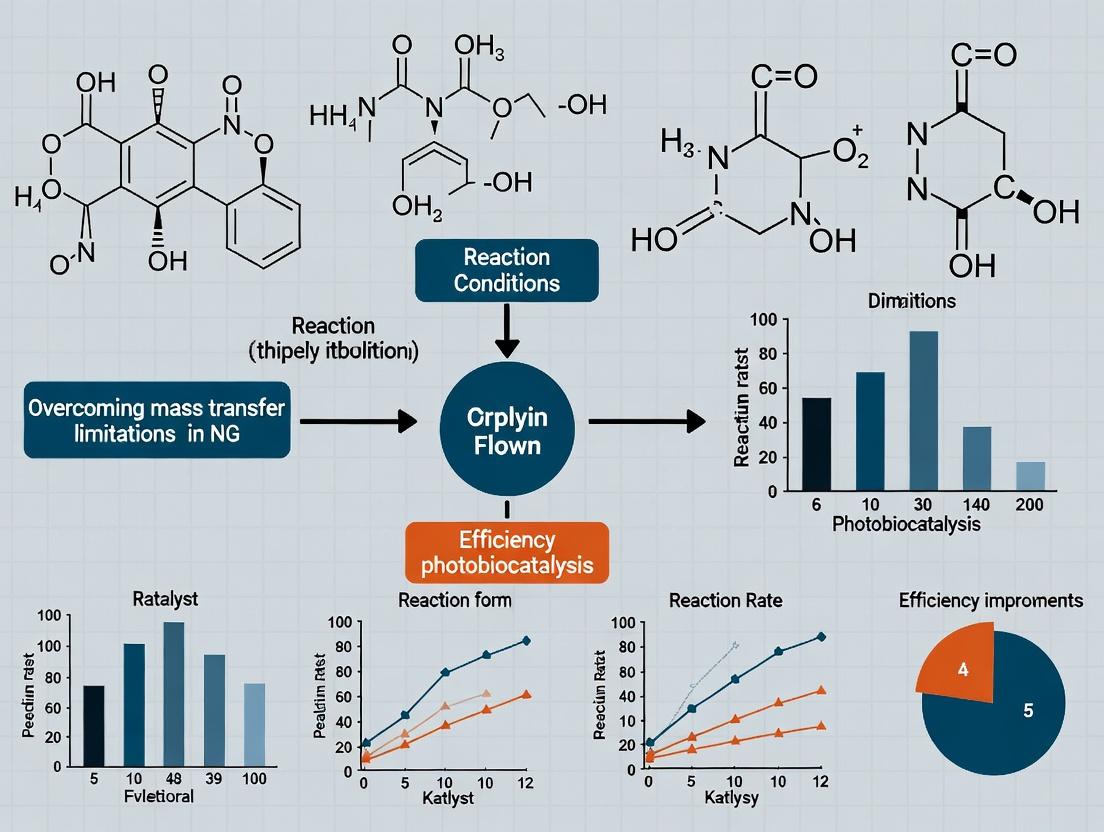
Photobiocatalysis merges the selectivity of enzymes with the unique reactivity unlocked by light, offering a sustainable pathway for synthesizing high-value compounds, including pharmaceutical intermediates.
Breaking Through the Bottleneck: Strategies and Frontiers in Overcoming Mass Transfer Limitations for Efficient Photobiocatalysis
Abstract
Photobiocatalysis merges the selectivity of enzymes with the unique reactivity unlocked by light, offering a sustainable pathway for synthesizing high-value compounds, including pharmaceutical intermediates. However, its efficiency is critically hampered by mass transfer limitations arising from the interplay of light penetration, substrate diffusion to catalyst sites, and product removal. This article provides a comprehensive analysis for researchers and development professionals. It first establishes the fundamental principles of mass and photon transfer in heterogeneous photobiocatalytic systems. It then explores modern methodological solutions, such as continuous flow reactors and immobilized catalyst designs, that directly address these bottlenecks. Practical troubleshooting and optimization strategies, including computational modeling and reactor engineering, are discussed to enhance performance. Finally, the review presents a comparative framework for validating system efficiency using key metrics like space-time yield, offering a critical perspective on scaling photobiocatalysis from laboratory curiosity to practical biomedical application.
Understanding the Core Challenge: The Interplay of Mass and Photon Transfer in Photobiocatalytic Systems
Defining Mass Transfer Limitations in a Photobiocatalytic Context
Technical Support Center
FAQs & Troubleshooting Guides
Q1: How can I tell if my photobiocatalytic reaction is mass transfer-limited versus kinetically limited? A: A hallmark sign is a plateau in reaction rate despite increasing enzyme concentration or light intensity. Perform a diagnostic experiment: vary the stirring rate or agitation speed. If the observed reaction rate increases significantly with increased agitation, mass transfer is likely limiting. For a quantitative assessment, measure the Damköhler number (Da). If Da >> 1, the reaction is mass transfer-limited.
Q2: My immobilized photocatalyst/enzyme system shows poor productivity. How do I optimize substrate diffusion into the carrier? A: This is a common issue with heterogeneous photobiocatalysis. Key parameters to optimize:
- Carrier Porosity & Pore Size: Ensure pore diameter is significantly larger than the substrate molecule.
- Carrier Geometry: Use thin films, micro-spheres, or 3D-printed lattices to reduce diffusion path length.
- Hydrophilicity/Hydrophobicity: Match the carrier's surface properties to your substrate.
- Experimental Protocol for Testing Diffusion: Conduct uptake experiments without light/enzyme. Immerse the loaded carrier in a substrate solution, agitate, and measure supernatant concentration over time. Fit the data to a diffusion model (e.g., Fick's law) to determine effective diffusivity (D_e).
Q3: In a two-phase (aqueous-organic) photobiocatalytic system, how do I improve interfacial mass transfer? A: Interfacial area is critical.
- Increase Dispersion: Use high-shear mixers, ultrasonic emulsification, or membrane contactors to create smaller droplets.
- Use Surfactants or Phase-Transfer Agents: Carefully select biocompatible surfactants (e.g., Tween 80, Tergitol) that do not deactivate the biocatalyst.
- Protocol for Measuring Interfacial Area: Perform a control experiment with the two phases (no catalyst). Measure the rate of a fast, interfacial-transfer-limited chemical reaction (e.g., a hydrolysis) to back-calculate the available interfacial area.
Q4: Oxygen mass transfer is often limiting in photo(enzyme)-driven oxidations. How can I enhance O2 supply? A: Oxygen has low aqueous solubility.
- Use Oxygen-Vectors: Add perfluorocarbons or silicone oil to act as oxygen reservoirs.
- Pressurized Systems: Operate the reactor under mild oxygen pressure.
- Membrane Aeration: Use gas-permeable membranes (e.g., silicone tubing) for efficient, shear-minimized O2 delivery.
- Monitor Dissolved Oxygen (DO): Always use a DO probe. The rate of DO consumption vs. depletion indicates limitation.
Q5: How does light penetration depth relate to mass transfer in dense, photosynthetic cultures or biofilms? A: They create coupled limitations. Light attenuates exponentially, creating a "lit zone." Cells/catalysts in dark zones consume substrates and produce products, creating concentration gradients. This is a photon-mass transfer problem.
- Solution: Reduce optical density via dilution, use internal light sources (fiber optics), or design annular reactor geometries to minimize dark volumes.
Table 1: Key Dimensionless Numbers for Diagnosing Mass Transfer Limitations
| Number | Formula | Interpretation | Threshold for Limitation |
|---|---|---|---|
| Damköhler (Da II) | (Max Reaction Rate) / (Max Mass Transfer Rate) | Reaction rate vs. Diffusion rate | Da >> 1 |
| Sherwood (Sh) | (Mass Transfer Coef. * Length) / Diffusivity | Convective vs. Diffusive Transfer | System dependent |
| Thiele Modulus (φ) | Length * sqrt(Reaction Rate/Diffusivity) | Internal diffusion vs. Reaction in a pellet | φ > 1 |
Table 2: Effective Diffusivity (D_e) in Common Immobilization Carriers
| Carrier Material | Average Pore Size (nm) | Model Substrate | De / Daq (Relative) | Notes |
|---|---|---|---|---|
| Alginate Gel (2%) | 5-10 | Glucose | 0.25 - 0.4 | Highly dependent on cross-link density. |
| Mesoporous Silica | 10-15 | Caffeine | 0.6 - 0.8 | Ordered pores reduce tortuosity. |
| Macroporous Acrylic | 100-500 | Bovine Serum Albumin | 0.7 - 0.95 | Large pores minimize hindrance. |
Experimental Protocols
Protocol 1: Determining the External Mass Transfer Coefficient (k_L) Objective: To quantify the liquid-side mass transfer coefficient in a stirred photobiocatalytic reactor.
- Set up reactor with known geometry, filled with buffer. Control temperature.
- Saturate the system with an inert gas (N2) to strip O2. Insert calibrated DO probe.
- Switch gas supply to air or oxygen. Begin vigorous stirring at a fixed rate (RPM1).
- Record the increase in dissolved oxygen concentration [C] over time (t).
- The data follows: dC/dt = kL * a * (C* - C). Plot ln[(C* - C)/C*] vs. time. The slope is -kL * a.
- Repeat for different stirring speeds (RPM2, RPM3). Use to correlate k_L with agitation power input.
Protocol 2: Assessing Internal Diffusion Limitation in Immobilized Beads Objective: To calculate the effectiveness factor (η) of an immobilized photocatalyst bead.
- Immobilize your photocatalyst/enzyme in spherical beads (e.g., alginate, silica gel) of uniform radius R.
- Run the reaction under standard conditions with the immobilized catalyst. Measure the observed reaction rate, r_obs.
- Run the identical reaction with the same amount of free (unimmobilized) catalyst under perfectly mixed conditions to avoid external limitation. Measure the intrinsic kinetic rate, r_int.
- Calculate the effectiveness factor: η = robs / rint. If η < 1, internal diffusion is limiting.
- Estimate the Thiele modulus (φ) for a first-order reaction: η = (3/φ^2) * (φ * coth(φ) - 1).
Diagrams
Diagram 1: Coupled Photon & Substrate Transfer in a Biofilm
Diagram 2: Workflow for Diagnosing Mass Transfer Limitations
The Scientist's Toolkit: Key Research Reagent Solutions
Table 3: Essential Materials for Investigating Mass Transfer
| Item | Function/Application |
|---|---|
| Dissolved Oxygen Probe | Critical for real-time monitoring of O2 concentration in photo-oxidations. |
| Fluorescent Microsphere Tracers | For visualizing fluid flow and mixing patterns in custom reactor geometries. |
| Silicone Oil (or Perfluorocarbon) | Oxygen vectors to enhance O2 solubility and supply in aqueous media. |
| Biocompatible Surfactants (Tween 80, Tergitol) | To stabilize emulsions in biphasic systems without deactivating enzymes. |
| Mesoporous/Macroporous Silica Beads | Well-defined carriers for immobilization to study pore diffusion effects. |
| Alginate (Low & High Viscosity) | For forming gel beads/immobilization matrices with tunable density. |
| Clark-Type Electrode | For precise, small-volume measurement of oxygen uptake rates. |
| Optical Fiber Light Source | To provide internal illumination and decouple light penetration from mixing. |
| Particle Size Analyzer | To characterize droplet size in emulsions or particle size of immobilized catalysts. |
Troubleshooting Guides & FAQs
FAQ 1: My photobiocatalytic system shows a sharp decline in reaction rate after initial illumination. What could be the cause? Answer: This is a classic symptom of a mass transfer limitation overwhelming photon absorption efficiency. The initial rate is driven by substrate at the catalyst surface, which is rapidly depleted. Check:
- Substrate Concentration Gradient: Increase mixing speed (if using a stirred reactor) or flow rate (in a packed-bed or microfluidic system). Quantitative data below shows typical improvements.
- Catalyst Immobilization Density: Overly dense biofilms or catalyst layers can create diffusion barriers. Optimize loading.
- Local pH/Temperature Shifts: High local reaction rates can create microenvironments that deactivate the biocatalyst. Implement better buffering or thermal control.
FAQ 2: How can I determine if my system is limited by substrate diffusion or photon absorption? Answer: Perform a Light Intensity vs. Reaction Rate assay. Illuminate at varying intensities (e.g., using neutral density filters) while keeping substrate saturation high. Then, perform a Substrate Concentration vs. Reaction Rate assay at saturating light intensity. Plot the data. If the rate plateaus with increasing light but not substrate, you are photon-limited. If it plateaus with substrate but not light, you are mass transfer limited. See protocols below.
FAQ 3: My immobilized enzyme/whole-cell catalyst shows poor performance under light, even with high substrate flow. What should I troubleshoot? Answer: This points to a photon delivery issue. Verify:
- Light Penetration: The immobilization matrix (alginate, silica gel, polymer film) may scatter or absorb the activating light. Use a thinner layer or a more transparent support.
- Wavelength Mismatch: Ensure your light source's emission spectrum overlaps strongly with the photocatalyst's absorption (e.g., chlorophyll, flavin, synthetic dye). Use a spectrometer.
- Photobleaching: The photosensitizer or catalytic cofactor may degrade. Monitor system performance over time under constant illumination and consider adding oxygen scavengers or using pulsed light.
FAQ 4: How do I scale up a photobiocatalytic reaction without losing efficiency? Answer: Scaling requires maintaining both photon flux per catalyst unit and substrate diffusion rate. Strategies include:
- Use a Panel Reactor: Increases illuminated surface area relative to volume.
- Implement Internal Light Guides: Such as optical fibers or LED arrays immersed in the reactor.
- Adopt a Tubular or Microchannel Reactor: Provides a high surface-area-to-volume ratio for both light delivery and substrate exchange.
Table 1: Impact of Mixing Speed on Apparent Reaction Rate in a Stirred-Tank Photobioreactor
| Agitation Rate (rpm) | Apparent Reaction Rate (μmol/gcat/min) | Observed Thiele Modulus (Φ) | Primary Limitation Identified |
|---|---|---|---|
| 100 | 12.5 ± 1.2 | 2.8 | Severe Internal Diffusion |
| 250 | 18.7 ± 1.5 | 1.5 | Mixed Internal/External Diffusion |
| 500 | 24.3 ± 1.0 | 0.9 | Photon Absorption (Kinetic Control) |
| 750 | 24.1 ± 1.3 | 0.9 | Photon Absorption (Kinetic Control) |
Table 2: Effect of Light Intensity on Rate for Diffusion-Optimized vs. Standard Systems
| Incident Photon Flux (μmol/m²/s) | Reaction Rate - Optimized Reactor* (μmol/L/min) | Reaction Rate - Standard Batch* (μmol/L/min) |
|---|---|---|
| 50 | 15.1 ± 0.8 | 4.2 ± 0.5 |
| 100 | 29.5 ± 1.1 | 8.1 ± 0.7 |
| 200 | 58.3 ± 2.3 | 15.9 ± 1.2 |
| 400 | 85.7 ± 3.5 | 22.4 ± 1.8 |
*Optimized reactor uses a microfluidic channel (200μm depth). Standard batch uses a 1cm path-length cuvette with stirring.
Experimental Protocols
Protocol 1: Differentiating Diffusion from Photon Limitation
- Prepare your photobiocatalyst in a well-mixed, temperature-controlled reactor.
- Vary Light Intensity: Keep substrate concentration at saturating levels (>10x Km). Use a calibrated LED source with neutral density filters to expose samples to at least 5 different photon fluxes. Measure initial reaction rates.
- Vary Substrate Concentration: Set light intensity to maximum, saturating value. For each run, vary substrate concentration from 0.1x Km to 10x Km. Measure initial rates.
- Analyze: Plot rate vs. light intensity and rate vs. [Substrate]. Fit the latter with Michaelis-Menten kinetics. A plateau in the light curve but not the substrate curve indicates photon limitation. The reverse indicates mass transfer limitation.
Protocol 2: Determining the Effectiveness Factor (η) for an Immobilized Photocatalyst
- Measure Observed Rate: Under defined light and substrate conditions, measure the reaction rate for your immobilized catalyst system (robs).
- Measure Kinetic Rate: Homogenize the immobilized catalyst (e.g., crush the beads, dissolve the film) to eliminate all internal diffusion barriers. Measure the reaction rate under identical bulk conditions (rkin).
- Calculate: Effectiveness Factor, η = robs / rkin. An η << 1 indicates significant internal diffusion limitations.
System Analysis & Workflow Diagrams
Title: Photon vs. Diffusion Limitation Diagnostic Flow
Title: Coupled Mass & Photon Transfer Pathway
The Scientist's Toolkit: Research Reagent Solutions
Table 3: Essential Materials for Photobiocatalysis Experiments
| Item | Function | Example/Typical Specification |
|---|---|---|
| Calibrated LED Array | Provides precise, tunable photon flux at specific wavelengths. Crucial for light-dependent kinetics. | Collimated LED, 450nm or 630nm, with radiometer for μmol/m²/s measurement. |
| Neutral Density Filters | Attenuates light intensity without changing spectral quality for light saturation experiments. | Optical density filters (OD 0.3 to 1.5) matching LED wavelength. |
| Transparent Immobilization Matrix | Supports biocatalyst while minimizing light scattering/absorption. | Low-autofluorescence agarose, mesoporous silica, or polyethylene glycol (PEG) hydrogels. |
| Oxygen Scavenging System | Mitigates photobleaching and oxidative damage to biocatalysts during long illuminations. | Glucose oxidase/catalase system or sodium ascorbate. |
| Inline/Flow-Through Spectrophotometer | Enables real-time monitoring of substrate depletion or product formation in flow reactors. | UV-Vis flow cell coupled to a spectrometer. |
| Microfluidic Reactor Chip | Maximizes surface-area-to-volume ratio, coupling efficient mass transfer with short light penetration paths. | PDMS or glass chip with integrated light guides, channel depth 100-500μm. |
| Clark-Type Oxygen Electrode | Measures dissolved O₂, critical for photoredox or oxygen-dependent photobiocatalysis. | Miniaturized electrode for small reaction volumes. |
Technical Support Center: Troubleshooting Mass Transfer in Photobiocatalysis
Frequently Asked Questions (FAQs)
Q1: Our photobioreactor shows a steep decline in reaction rate after initial substrate loading, despite constant light intensity. Is this a catalyst deactivation issue? A: Not necessarily. A rapid decline often indicates depletion of substrate at the catalyst surface due to bulk fluid gradient formation. Before assuming deactivation, measure substrate concentration at both the reactor inlet and a point near the immobilized catalyst. A significant gradient confirms a mass transfer limitation. Implement enhanced mixing (e.g., switching from magnetic stirring to baffled impeller stirring) or consider pulsed substrate feeding to maintain a more uniform bulk concentration.
Q2: How can I distinguish between film diffusion limitation and intrinsic kinetic limitation in my immobilized enzyme photobiocatalysis system? A: Perform a Weisz-Prater criterion analysis for internal diffusion or a Damköhler number analysis for external film diffusion.
- Experimental Protocol: Conduct the reaction at constant conditions while varying catalyst particle size. If the observed rate increases with decreased particle size, internal diffusion (a form of catalyst accessibility limitation) is significant. If the rate remains unchanged, film diffusion is likely the bottleneck. For film diffusion, vary the fluid velocity (agitation rate). An increase in observed rate with increased agitation indicates external film diffusion limitation.
Q3: Our enzyme is immobilized on a porous support for reuse, but productivity is much lower than the free enzyme. How can we improve catalyst accessibility? A: This is a classic catalyst accessibility bottleneck. The issue may be related to support pore size, immobilization density, or substrate size.
- Troubleshooting Guide:
- Characterize Support: Measure BET surface area and pore size distribution. Compare the hydrodynamic radius of your substrate to the average pore diameter.
- Optimize Immobilization: Reduce the enzyme loading density. Over-crowding within pores can block access. Perform a loading density vs. activity profile experiment.
- Consider Alternative Support: Switch to a non-porous or macroporous support (pore diameters > 50 nm) to minimize diffusion path lengths, especially for larger substrates common in drug development.
Q4: In a continuous-flow photobioreactor, we observe a gradient of product concentration along the flow path. Is this problematic? A: A gradient is expected, but its steepness is key. A severe gradient indicates inefficient mass transfer, leading to under-utilization of catalyst in the upstream zone and potential product inhibition downstream.
- Solution: Incorporate static mixer elements within the flow path to periodically re-homogenize the bulk fluid. Alternatively, segment the flow with gas or an immiscible liquid to create Taylor or segmented flow, which enhances radial mixing and reduces axial dispersion.
Table 1: Typical Ranges for Key Mass Transfer Coefficients in Photobiocatalytic Systems
| Parameter | Symbol | Typical Range | Unit | Notes |
|---|---|---|---|---|
| Bulk Fluid Mixing Time | θ_mix | 1 - 100 | s | Depends on reactor geometry & agitator. Aim for < 10s. |
| Film Mass Transfer Coefficient | k_L | 10^-5 - 10^-3 | m/s | Increases with turbulence. Lower for viscous fluids. |
| Effective Diffusivity in Catalyst | D_eff | 10^-12 - 10^-10 | m²/s | ~10-50% of bulk diffusivity. Pore size & loading critical. |
| Damköhler Number (Type II) | Da | < 0.1 (Kinetic limit) > 10 (Diffusion limit) | - | Ratio of reaction rate to film diffusion rate. |
| Weisz-Prater Modulus | Φ | < 0.3 (No pore diffusion) > 0.3 (Significant pore diffusion) | - | Assesses internal diffusion vs. reaction rate. |
Table 2: Impact of Common Interventions on Bottleneck Parameters
| Intervention | Target Bottleneck | Expected Effect on kL or Deff | Potential Drawback |
|---|---|---|---|
| Increased Agitation Speed | Bulk Gradient / Film Diffusion | Increase k_L by up to 10x | Shear stress on biocatalyst/ cells. |
| Reduced Catalyst Particle Size | Catalyst Accessibility | Increase effective D_eff (shorter path) | Increased pressure drop in packed beds. |
| Use of Mesoporous Supports | Catalyst Accessibility | Increase D_eff by 1-2 orders of magnitude | May reduce total immobilization capacity. |
| Substrate Co-solvents | Film Diffusion / Accessibility | Increase substrate solubility & diffusivity | May denature enzyme or alter kinetics. |
Detailed Experimental Protocols
Protocol 1: Determining the External Film Diffusion Limitation (Agitation Rate Study) Objective: To quantify the impact of external mass transfer on observed reaction rate. Methodology:
- Set up your photobioreactor with immobilized catalyst under standard reaction conditions (pH, T, light intensity).
- Begin the reaction at a low agitation speed (e.g., 100 rpm). Measure the initial reaction rate.
- Repeat the experiment, incrementally increasing the agitation speed (e.g., 200, 400, 600, 800 rpm), ensuring all other conditions are identical.
- Plot Observed Reaction Rate vs. Agitation Speed. Interpretation: If the rate increases with speed and then plateaus, the flat region represents the intrinsic kinetic rate (film limitation minimized). The increasing region is dominated by film diffusion.
Protocol 2: Assessing Internal Diffusion (Particle Size Variation Study) Objective: To evaluate pore diffusion limitations within immobilized catalyst particles. Methodology:
- Prepare or obtain your immobilized catalyst on a porous support.
- Sieve the catalyst into several distinct, narrow particle size ranges (e.g., 100-200 μm, 200-300 μm, 300-450 μm).
- Perform the photobiocatalysis reaction under identical, well-mixed conditions for each particle size fraction. Use the same catalyst mass (not particle count).
- Measure the initial reaction rate for each fraction.
- Plot Observed Reaction Rate (or Effectiveness Factor) vs. Particle Diameter. Interpretation: A decreasing rate with increasing particle size is a clear indicator of internal diffusion limitations, as larger particles have longer average diffusion paths to active sites.
Visualizations
The Scientist's Toolkit: Research Reagent Solutions
Table 3: Essential Materials for Overcoming Mass Transfer Bottlenecks
| Item | Function & Rationale | Example/Chemical Focus |
|---|---|---|
| Controlled-Pore Glass (CPG) / Silica | Immobilization support with defined, uniform pore sizes (e.g., 10nm, 30nm, 100nm). Enables systematic study of pore diffusion vs. size. | Amino- or epoxy-functionalized CPG beads. |
| Fluorescent Substrate Probes (Dextrans) | Polymer probes of defined molecular weight (e.g., FITC-Dextran 20kDa). Used to visualize and quantify penetration depth into catalyst supports via confocal microscopy. | FITC- or TRITC-labeled dextrans. |
| Non-ionic Surfactants (e.g., Triton X-100) | Reduce interfacial tension, improve wetting of hydrophobic supports, and can enhance substrate solubility in aqueous buffers, aiding film and pore diffusion. | Polysorbates (Tween series), Triton series. |
| Oxygen Probes (Clark-type/ Optodes) | Critical for photobiocatalytic reactions involving O2 as reactant or product (e.g., oxidations, photosystem II). Measures dissolved O2 gradients in real-time. | Microsensor tips for in-reactor profiling. |
| Cryogenic Grinding Mill | To uniformly reduce the particle size of immobilized catalyst pellets for particle-size effect studies without chemically altering the catalyst. | Ball mills with cryo-chamber. |
| Computational Fluid Dynamics (CFD) Software | To model fluid flow, shear stress, and concentration gradients in custom photoreactor geometries for rational design and scaling. | COMSOL Multiphysics, ANSYS Fluent. |
The Critical Role of Reactor Hydrodynamics and Mixing Regimes
Technical Support Center: Troubleshooting Mass Transfer in Photobiocatalysis
This support center provides guidance for researchers encountering mass transfer limitations in photobiocatalysis experiments, a critical barrier addressed in the broader thesis on advancing this field. Efficient reactor hydrodynamics and mixing are paramount for achieving high reaction yields.
FAQs & Troubleshooting Guides
Q1: Our whole-cell photobiocatalysis reaction yield has plateaued despite increasing light intensity. What could be the issue? A: This is a classic symptom of a mass transfer limitation, likely gas-liquid transfer of your substrate (e.g., CO₂, O₂, or a gaseous alkane). Light intensity increases only drive the enzymatic kinetics until substrate availability becomes the rate-limiting step.
- Check: Measure dissolved oxygen/substrate concentration in the bulk liquid over time.
- Solution: Improve gas-liquid mass transfer by:
- Increasing the agitation rate (RPM) to reduce bubble size and increase interfacial area.
- Modifying the impeller design (e.g., switch to a Rushton turbine for better gas dispersion).
- Introducing porous spargers to create finer gas bubbles.
Q2: We observe pronounced concentration gradients (e.g., pH, substrate) in our flat-panel photobioreactor. How can we achieve more uniform mixing? A: Flat-panel reactors are prone to stratification, especially under high cell densities.
- Check: Use tracer studies or computational fluid dynamics (CFD) simulations to identify dead zones.
- Solution: Implement a pulsed-flow regime or install static mixers/baffles within the panel. Consider switching to a coiled flow inverter reactor design, which enhances radial mixing via periodic flow inversion.
Q3: Our immobilized enzyme photobiocatalyst shows decreasing activity over time, but assays confirm the enzyme is still active. What's wrong? A: The issue is likely internal (intraparticle) mass transfer limitation within the immobilization matrix (e.g., hydrogel, porous bead).
- Check: Perform a Thiele modulus analysis. If >>1, internal diffusion is limiting.
- Solution: Reduce biocatalyst particle size or use a more porous support matrix to decrease the diffusion path length. Ensure the pore size is significantly larger than the substrate molecule.
Q4: How do we choose between stirred-tank, packed-bed, and airlift reactors for a continuous photobiocatalytic process? A: The choice depends on the primary limiting phase. Refer to the table below.
Table 1: Reactor Selection Based on Mass Transfer Limitation
| Reactor Type | Best for Limitation in... | Mixing Regime & Hydrodynamic Feature | Key Trade-off |
|---|---|---|---|
| Stirred-Tank (CSTR) | Gas-Liquid & Liquid-Solid | High-shear, turbulent flow; controllable RPM. | High shear can damage cells/immobilizates. |
| Packed-Bed (PBR) | Liquid-Solid (with immobilized catalyst) | Plug-flow; minimal back-mixing; high catalyst load. | Poor gas-liquid mixing; potential for channeling. |
| Airlift / Bubble Column | Gas-Liquid | Low-shear, mixing driven by gas sparging. | Less control over liquid-side mixing intensity. |
Experimental Protocols
Protocol 1: Determining Volumetric Mass Transfer Coefficient (kLa) for Gas-Liquid Systems Objective: Quantify the gas-liquid mass transfer capacity of your reactor setup. Method (Dynamic Gassing-Out Method):
- Deoxygenate the reactor liquid (buffer or media) by sparging with N₂.
- Monitor dissolved oxygen (DO) with a sterilizable probe until it reaches zero.
- Switch the gas supply to air or your reaction gas at a fixed flow rate and agitation speed.
- Record the increase in DO (%) over time until saturation.
- Plot
ln(1 - (C/C*))versus timet, where C is DO at time t and C* is saturation DO. The slope of the linear region is-kLa. - Repeat at different agitation speeds and gas flow rates to model your system's performance.
Protocol 2: Assessing External (Film) Diffusion Limitation for Immobilized Biocatalysts Objective: Test if reaction rate is limited by substrate diffusion through the stagnant liquid film surrounding catalyst particles. Method (Agitation Rate Variation):
- Conduct your photobiocatalytic reaction under standard conditions with immobilized catalyst particles.
- Measure the initial reaction rate.
- Repeat the experiment, systematically increasing the agitation speed (RPM) while keeping all other parameters (light, catalyst mass, substrate conc.) constant.
- Plot Reaction Rate vs. Agitation Speed. If the rate increases with higher RPM, external diffusion is a limiting factor. A plateau indicates the limitation has been overcome, and kinetics are now intrinsic or internal diffusion-limited.
Visualization: Experimental Workflow & Reactor Decision Logic
Diagram Title: Diagnostic Workflow for Mass Transfer Limitations
The Scientist's Toolkit: Key Research Reagent Solutions
Table 2: Essential Materials for Photobiocatalysis Hydrodynamics Studies
| Item | Function & Rationale |
|---|---|
| Non-invasive DO Probe | For real-time, sterile monitoring of dissolved oxygen (kLa experiments) without reactor intrusion. |
| Tracer Dyes (e.g., fluorescein) | To visualize flow patterns, identify dead zones, and quantify mixing times via pulse-response tests. |
| Porous Spargers (Fritted Glass/Stainless Steel) | Generate fine gas bubbles to maximize gas-liquid interfacial area (a) for improved kLa. |
| Immobilization Matrices (e.g., Alginate, Lentikats, Porous Silica) | Provides solid support for enzyme/cell encapsulation; varying porosity controls internal diffusion. |
| Computational Fluid Dynamics (CFD) Software | Simulate fluid flow, shear stress, and concentration gradients to optimize reactor design in silico. |
| Inline pH & Redox Sensors | Monitor bulk liquid conditions to detect gradients caused by poor mixing and mass transfer. |
How Catalyst Loading and Light Intensity Create or Alleviate Transport Barriers
Technical Support Center: Troubleshooting Mass Transfer Limitations in Photobiocatalysis
FAQs & Troubleshooting Guides
Q1: In my flow photoreactor, product yield plateaus despite increasing light intensity. What is the cause and solution? A: This indicates a transport barrier, likely substrate mass transfer limitation. At high light intensities, the reaction at the catalyst surface becomes faster than the rate at which substrate can diffuse from the bulk liquid. The system is now kinetically limited by transport, not photon flux.
- Diagnosis: Measure the initial reaction rate versus light intensity. A shift from linear to zero-order dependence suggests this limitation.
- Solution: Increase turbulent flow or mixing speed to enhance bulk-to-surface transport. Consider reducing catalyst particle size if using immobilized systems.
Q2: High catalyst loading in my slurry reactor leads to lower-than-expected quantum efficiency. Why? A: This is a classic internal shading or optical limitation. Excessive catalyst particles create a "dark zone" where particles shield others from light, effectively reducing the active photocatalyst fraction.
- Diagnosis: Measure reaction rate per gram of catalyst across a loading range. A maximum peak followed by a decrease confirms this.
- Solution: Optimize loading to balance light penetration and active sites. Use the data from the table below to find the optimal range for your reactor geometry. Ensure strong axial mixing.
Q3: I observe a drop in selectivity at elevated light intensities. How is this related to transport? A: This can stem from product overflow or localized concentration gradients. Fast kinetics can lead to accumulation of reactive intermediates (e.g., radicals) at the catalyst surface. If these cannot diffuse away, they may undergo undesirable secondary reactions.
- Diagnosis: Monitor selectivity (e.g., by HPLC) across a light intensity gradient.
- Solution: Modulate light intensity to match the diffusion rate of key intermediates. Enhance convective flow to sweep products away from the catalytic site.
Q4: How can I experimentally distinguish between a mass transfer barrier and a kinetic limitation? A: Perform a Weisz-Prater Criterion analysis for photochemical systems (modified).
- Protocol: Run the reaction at constant light intensity while varying agitation speed (for external diffusion) or catalyst particle size (for internal diffusion). If the observed rate increases with agitation or decreases with larger particles, mass transfer is limiting. If no change, the system is kinetically limited.
Table 1: Impact of Catalyst Loading and Light Intensity on Observed Rate and Limitations
| Catalyst Loading (g/L) | Light Intensity (mW/cm²) | Observed Rate (µmol/g·h) | Dominating Limitation | Evidence |
|---|---|---|---|---|
| 0.1 | 50 | 150 | Photon / Kinetic | Rate linear with intensity. |
| 0.1 | 200 | 580 | Photon / Kinetic | Rate linear with intensity. |
| 1.0 | 50 | 220 | Kinetic | Rate independent of mixing. |
| 1.0 | 200 | 720 | External Mass Transfer | Rate increases with agitation speed. |
| 5.0 | 50 | 180 | Internal Shading | Rate per gram lower than at 1.0 g/L. |
| 5.0 | 200 | 400 | Combined Shading & Transport | Low rate per gram; agitation has minor effect. |
Table 2: Protocol Summary for Diagnosing Transport Barriers
| Experiment | Key Parameter Varied | Constant Parameters | Diagnostic Output |
|---|---|---|---|
| External MT Diagnosis | Agitation Speed / Flow Rate | Light Intensity, [Substrate], Loading | Rate increase confirms external MT limit. |
| Internal MT / Shading | Catalyst Loading | Light Intensity, [Substrate], Mixing | Rate per gram peaks then falls. |
| Photon Limitation | Light Intensity | [Substrate], Loading, Mixing | Rate linear with intensity. |
| Kinetic Regime | Substrate Concentration | Light Intensity, Loading, Mixing | Follows Michaelis-Menten kinetics. |
Detailed Experimental Protocols
Protocol 1: Determining the Optimal Catalyst Loading
- Objective: Identify the loading that maximizes volumetric productivity without creating internal shading.
- Method: 1. Prepare a stock substrate solution at target concentration. 2. In identical reactor vessels, prepare suspensions with catalyst loadings from 0.1 to 10 g/L. 3. Maintain constant light intensity, temperature, and agitation speed. 4. Initiate reactions simultaneously. 5. Sample at regular intervals to determine initial reaction rate (µmol/L·h). 6. Calculate rate per gram of catalyst and volumetric rate.
- Analysis: Plot both rates vs. loading. The optimal loading for efficiency is at the peak of rate per gram. The optimal for throughput is where volumetric rate plateaus.
Protocol 2: Mapping the Light Intensity-Kinetic-Transport Relationship
- Objective: Construct an operational diagram to identify process windows.
- Method: 1. At a fixed, optimized catalyst loading, perform reactions across a broad light intensity range (e.g., 10-500 mW/cm²). 2. Repeat each intensity at two drastically different agitation speeds (e.g., 200 rpm vs. 1000 rpm). 3. Measure initial rates.
- Analysis: Plot rate vs. intensity for both agitation speeds. The convergence of the two curves at low intensity indicates a photon-limited regime. Divergence at high intensity indicates an agitation-dependent, external mass transfer-limited regime.
Visualizations
Diagram Title: Root Cause Analysis of Transport Barriers
Diagram Title: Diagnostic Flowchart for Photobiocatalysis Limitations
The Scientist's Toolkit: Research Reagent Solutions
| Item / Reagent | Function in Context of Transport Barriers |
|---|---|
| Immobilized Photocatalyst Beads (e.g., TiO2 on silica) | Allows separation of internal diffusion & shading effects from external mixing by controlling particle size. |
| Chemical Actinometer (e.g., Potassium Ferrioxalate) | Quantifies actual photon flux inside the reactor, crucial for defining true light-limited regimes. |
| Tracer Dyes (e.g., Fluorescein, Rhodamine B) | Visualizes flow patterns and dead zones in photoreactors to optimize mixing for transport. |
| Dissolved Oxygen Probe (Fiber-optic or Clark-type) | Monitors a key substrate (O2) concentration gradient in real-time, indicating mass transfer rates. |
| Quantum Yield Reference Catalyst (e.g., [Ru(bpy)3]²⁺) | Benchmarks system performance, helping distinguish between catalyst inefficiency and transport loss. |
| Turbidity Meter | Quantifies suspension density to correlate catalyst loading with light penetration depth. |
| Computational Fluid Dynamics (CFD) Software | Models light distribution, fluid flow, and species concentration to predict and diagnose barriers. |
Engineered Solutions: Reactor Designs and Immobilization Strategies to Enhance Transport
Troubleshooting Guide & FAQ
Q1: Our continuous flow photobioreactor (CF-PBR) is showing a significant drop in biocatalyst productivity after 48 hours of operation. What could be the cause? A: A sudden drop in productivity often indicates mass transfer limitations or biocatalyst degradation. First, verify the gas-liquid mass transfer coefficient (kLa) using the gassing-out method. Ensure your CO₂ supplementation rate (typically 1-5% v/v of total gas flow) matches the consumption rate of your culture. Check for biofilm formation on the internal light guides, which reduces photon flux density (PFD). Clean with a 0.5M nitric acid solution, followed by thorough rinsing with sterile media.
Q2: How do we prevent channeling or uneven flow distribution in the packed-bed module of our CF-PBR? A: Channeling is typically a packing issue. Repack the column using a slurry method to ensure uniform bed density. Use calibrated microcarriers or immobilized enzyme beads with a tight size distribution (e.g., 300-500 µm diameter). Monitor the pressure drop (ΔP) across the bed; a sudden decrease indicates channel formation. For recalcitrant issues, consider integrating a periodic flow reversal sequence (e.g., reverse flow for 30 seconds every 2 hours) to redistribute the flow.
Q3: We are experiencing photoinhibition in our cyanobacterial culture despite maintaining "optimal" light intensity. What parameters should we adjust? A: Photoinhibition in CF-PBRs is often due to poor light integration with turbulent flow, causing cells to experience light/dark cycles that are too rapid or too slow. Measure the light-dark cycle frequency, which should be on the order of 10-100 Hz for optimal photosynthesis. Adjust the impeller speed or gas sparging rate to alter turbulence. Consider implementing a light gradient design, where light intensity is gradually increased along the reactor length, rather than a uniform field.
Q4: Our system is prone to contamination during long-term runs (>2 weeks). What are the best sterile maintenance practices? A: CF-PBRs require closed-loop aseptic operation. Implement a double mechanical seal on all agitator shafts with sterile condensate lubrication. All media inlet and product outlet lines should be equipped with sterile, in-line 0.2 µm hydrophobic vent filters. Perform weekly steam-in-place (SIP) cycles at 121°C for 30 minutes. For sensitive biocatalysts, a continuous, low-dose antibiotic like spectinomycin (50 µg/mL) in the feed can be used, but validate it doesn't inhibit your strain.
Q5: How do we accurately scale-up a photobiocatalytic reaction from a lab-scale (1L) to a pilot-scale (50L) CF-PBR while maintaining performance? A: Scale-up must maintain constant key parameters. Prioritize constant volumetric power input (P/V) for mixing and constant kLa for gas transfer. Most critically, maintain the same light integration factor (Light Input per Unit Volume x Mixing Rate). Use the following scaling table as a guide:
Table 1: Key Scaling Parameters for CF-PBRs
| Parameter | Lab Scale (1L) | Pilot Scale (50L) | Scaling Principle |
|---|---|---|---|
| Volumetric Power Input (P/V) | 100 W/m³ | 100 W/m³ | Constant |
| kLa for CO₂ | 20 h⁻¹ | 20 h⁻¹ | Constant |
| Superficial Gas Velocity | 0.5 cm/s | 1.0 cm/s | Increased to maintain kLa |
| Light Path Length | 5 cm | 10 cm | Increased geometrically |
| Total Photon Flux | 200 µmol/s | 10,000 µmol/s | Scale with volume |
| Dilution Rate (D) | 0.05 h⁻¹ | 0.05 h⁻¹ | Constant |
Experimental Protocols
Protocol 1: Determination of Mass Transfer Coefficient (kLa) in a CF-PBR Objective: To quantify the gas-liquid mass transfer capacity for O₂ or CO₂.
- Setup: Fill the reactor with sterile culture medium. Turn off gas supply and sparge with nitrogen until dissolved oxygen (DO) reaches zero.
- Measurement: Initiate air sparging and agitation at your set operational parameters. Record the increase in DO concentration (%) over time using a calibrated DO probe.
- Calculation: Plot ln(1 - (C/C)) versus time (t), where C is DO at time t and C is the saturated DO concentration. The slope of the linear region is the kLa (h⁻¹).
- Validation: Repeat at different agitation speeds and gas flow rates to establish operational limits.
Protocol 2: Immobilization of Photobiocatalyst on Microcarriers for CF-PBR Objective: To create robust, reusable catalyst beads.
- Material: Sodium alginate (3% w/v), calcium chloride (100 mM), cell or enzyme slurry.
- Method: Mix the biocatalyst slurry with sodium alginate solution. Using a peristaltic pump and droplet generator, drip the mixture into the gently stirred CaCl₂ solution. Beads will form instantaneously.
- Curing: Allow beads to cure in the CaCl₂ solution for 60 minutes at 4°C.
- Loading: Transfer beads to the packed-bed module of the CF-PBR. Condition by flowing reaction buffer for 12 hours before introducing substrates.
Visualizations
The Scientist's Toolkit: Key Research Reagent Solutions
Table 2: Essential Materials for CF-PBR Experiments
| Item | Function & Rationale |
|---|---|
| Hydrophobic PTFE Vent Filters (0.2 µm) | Maintains aseptic conditions by allowing gas exchange while preventing microbial ingress into headspace. |
| Calibrated Dissolved O₂/CO₂ Probes | Essential for real-time monitoring of gas transfer rates and metabolic activity. |
| Sodium Alginate / Chitosan | Polymers for entrapping sensitive whole-cell biocatalysts, providing mechanical stability in flow. |
| Silanized Glass or PMMA Microcarriers | Provide high-surface-area, inert supports for covalent enzyme immobilization in packed beds. |
| LED Arrays with Programmable Intensity & Cycles | Enable precise control of photon flux density and photoperiod to optimize photosynthesis. |
| In-line Spectrophotometer / Fluorometer | Allows continuous, non-destructive monitoring of biomass density (OD750) or product formation. |
| Peristaltic Pumps with Bio-inert Tubing | Provide pulseless, sterile fluid handling for consistent feed and harvest streams. |
Troubleshooting Guides & FAQs
Q1: Why is my immobilized photobiocatalyst showing significantly reduced reaction rates compared to the free enzyme in preliminary screening? A: This is a classic symptom of mass transfer limitation. The substrate must diffuse into the support matrix (e.g., agarose, silica, polymer) to reach the active site. This diffusion adds resistance, slowing the apparent kinetics. Verify by:
- Increasing stirring or agitation speed. A marked increase in rate suggests external diffusion limitation.
- Reducing particle size of the immobilized catalyst. If rate improves, internal diffusion is a key factor.
- Comparing the observed rate to theoretical calculations factoring in the Thiele modulus.
Q2: My immobilized system allows perfect catalyst recovery, but yield is low over multiple batches. What's wrong? A: Catalyst leaching is the most probable issue. The biocatalyst is not firmly attached and is slowly lost during reaction or recovery cycles.
- Troubleshoot: Assay the reaction supernatant after catalyst filtration for activity. Confirm leaching by analyzing the support post-reaction for residual protein/enzyme.
- Solution: Re-optimize immobilization chemistry (e.g., cross-linker concentration, multipoint attachment strategies). Consider a different support matrix with more suitable functional groups.
Q3: How can I tell if my photobiocatalytic system is limited by light penetration or substrate diffusion? A: Conduct a light gradient analysis.
- Place the reaction vessel under your light source and measure the rate at different distances (intensities).
- For the homogeneous system, rate should correlate linearly with light intensity in the limiting region.
- For the immobilized system, if rate plateaus despite increased light intensity, internal mass transfer is likely the dominant limitation, as substrates cannot reach photo-activated sites fast enough.
Q4: I'm experiencing photo-bleaching of the cofactor in my homogeneous system. Would immobilization help? A: Possibly. Confining the biocatalyst and its cofactor within a porous matrix can create a locally high concentration microenvironment and potentially shield sensitive molecules. However, it introduces new challenges:
- Ensure your immobilization matrix is transparent to the required light wavelength.
- The cofactor must also be immobilized or regenerated in situ; otherwise, it will diffuse out. Consider co-immobilizing a cofactor regeneration system (e.g., a second enzyme).
Q5: My reaction works homogeneously but fails entirely upon immobilization. Where do I start? A: Systematic deconstruction is needed.
- Check enzyme activity post-immobilization: Use a standard activity assay directly on the immobilized particles.
- Verify light access: Ensure the support material is not optically dense or reflective at the operational wavelength.
- Assess conformational change: Immobilization chemistry may alter the enzyme's active site. Try a different immobilization approach (e.g., affinity binding vs. covalent attachment).
- Test pore accessibility: The substrate may be sterically hindered from entering pores. Use a smaller, tracer substrate to test.
Key Comparative Data
Table 1: Performance Comparison of Homogeneous vs. Immobilized Photobiocatalyst Systems
| Parameter | Homogeneous System | Immobilized System (Porous Silica) | Notes |
|---|---|---|---|
| Apparent Activity (U/mg) | 5.2 ± 0.3 | 1.8 ± 0.2 | Loss due to mass transfer & non-optimal orientation. |
| Catalyst Recovery Yield (%) | <5 (via ultrafiltration) | >95 (via simple filtration) | Primary advantage of immobilization. |
| Operational Stability (t½, cycles) | 1 cycle (inactivation) | 8 cycles | Stabilization via multipoint attachment. |
| Time to 90% Conversion (min) | 45 | 120 | Direct evidence of mass transfer limitation. |
| Light Utilization Efficiency | High | Moderate | Scattering/absorption by support reduces photon flux. |
| Required Stirring Rate (rpm) | 200 | >500 | High shear needed to overcome external diffusion. |
Table 2: Troubleshooting Matrix: Symptoms and Likely Causes
| Symptom | Likely Cause (Homogeneous) | Likely Cause (Immobilized) | Diagnostic Experiment |
|---|---|---|---|
| Low Reaction Rate | Low [Catalyst], Poor light penetration | Mass Transfer Limitation (Diffusion) | Vary stirring speed & particle size. |
| Rate Decays Rapidly | Enzyme/Photocatalyst Inactivation | Leaching or Fouling of Support | Analyze supernatant for catalyst. |
| No Reaction | Incorrect light wavelength, Cofactor missing | Enzyme denaturation during immobilization, Pore blockage | Perform activity assay on beads post-immobilization. |
| Batch-to-Batch Inconsistency | Variable light source output | Inconsistent immobilization protocol | Standardize immobilization time, washing steps. |
Experimental Protocols
Protocol 1: Diagnostic Test for External Mass Transfer Limitation Objective: Determine if substrate diffusion from bulk solution to the catalyst surface is rate-limiting.
- Set up your standard immobilized catalyst reaction in a stirred batch reactor.
- Run the reaction under identical conditions but at incrementally increasing agitation speeds (e.g., 200, 400, 600, 800 rpm).
- Measure initial reaction rates at each speed.
- Interpretation: If the reaction rate increases significantly with increased agitation, external mass transfer is a contributing limiting factor. The rate becomes independent of speed once the limitation is overcome.
Protocol 2: Assessing Catalyst Leaching Objective: Quantify loss of active catalyst from the support into solution.
- After a standard reaction cycle, rapidly separate the immobilized catalyst from the reaction mixture via filtration or centrifugation.
- Take a sample of the clear reaction supernatant.
- Assay this supernatant for catalytic activity using your standard assay under homogeneous conditions.
- Additionally, assay a fresh batch of supernatant mixed with new substrate without any catalyst to check for activity.
- Interpretation: Any activity detected in the supernatant indicates leaching. The percentage of total activity found in the supernatant quantifies the leaching loss.
Visualizations
Title: The Core Trade-off in Photobiocatalyst System Design
Title: Troubleshooting Workflow for Mass Transfer Limitations
The Scientist's Toolkit: Research Reagent Solutions
| Item | Function in Photobiocatalysis Research |
|---|---|
| Agarose / Chitosan Beads | Common polymeric supports for gentle physical adsorption or covalent enzyme immobilization. |
| Functionalized Silica (e.g., Amino-, Epoxy-) | Rigid inorganic support for stable covalent immobilization; pore size controls diffusion. |
| Magnetic Nanoparticles (Fe₃O₄ w/ coating) | Enable immobilized catalyst recovery using a simple magnet, simplifying batch operations. |
| Covalent Cross-linkers (Glutaraldehyde, EDC/NHS) | Create stable bonds between enzyme functional groups (-NH₂, -COOH) and the support matrix. |
| Optical Fiber Reactors | Deliver light directly into the reaction mixture or immobilized catalyst bed, improving photon transfer. |
| Oxygen/Soluble Gas Probes | Monitor concentration gradients of gaseous substrates (e.g., O₂) to quantify mass transfer rates. |
| UV-Vis Spectrophotometer w/ Integrating Sphere | Quantify light absorption and scattering properties of immobilized catalyst particles. |
| Cofactor Regeneration Kit (e.g., GDH/Glucose) | Essential for sustaining reactions requiring expensive cofactors (NAD(P)H, ATP). |
Microreactor and Structured Reactor Designs for Maximizing Surface-to-Volume Ratio
Technical Support Center: Troubleshooting & FAQs
Thesis Context: This support content is designed for research focused on overcoming mass and photon transfer limitations in photobiocatalysis (e.g., for fine chemical or drug precursor synthesis) through advanced reactor engineering.
Frequently Asked Questions (FAQs)
Q1: We observe inconsistent product yields in our packed-bed microreactor for a continuous photobiocatalytic reaction. What could be causing this? A: Inconsistent yields often stem from channeling or uneven light distribution. In packed-bed designs, poor particle packing creates preferential flow paths, leading to residence time distribution and uneven illumination. Ensure uniform catalyst particle size (e.g., immobilized enzyme on silica beads) and use a diffuser plate at the inlet. For light-dependent reactions, consider transparent reactor walls and ensure the light source (LED array) is parallel to the flow direction.
Q2: Our 3D-printed structured reactor (e.g., lattice) shows excellent initial activity but rapid catalyst deactivation. How can we mitigate this? A: Rapid deactivation in high surface-area reactors often indicates local hotspot formation or fouling. The enhanced mass transfer can lead to excessive local substrate concentration. Implement operational protocols: 1) Start with lower substrate concentration and flow rate, then ramp up. 2) Introduce periodic "washing" cycles with buffer between experimental runs. 3) Monitor temperature closely; even mild exothermic reactions can create hotspots in microstructures.
Q3: How do we choose between a serpentine microchannel reactor and a falling film reactor for a gas-liquid photobiocatalysis? A: The choice hinges on the limiting phase. Use this decision guide:
- Serpentine Microchannel (Taylor/C segmented flow): Superior for reactions where gas-liquid mass transfer is the primary limitation. It creates regular, recirculating segments. Best for slow intrinsic kinetics.
- Falling Film Reactor: Ideal when photon transfer is co-limiting. The thin, wavy film ensures short light penetration depth and good illumination of the biocatalyst-coated surface. Best for very fast kinetics.
Q4: We are getting low catalyst loading on our additively manufactured metal reactor's internal structures. What surface treatment is recommended? A: Low loading is common on smooth metallic surfaces. A two-step surface functionalization protocol is required:
- Surface Activation: Clean with Piranha solution (Caution: Extremely corrosive) or plasma treatment to create hydroxyl groups.
- Silane Coupling: Immerse reactor in a (3-Aminopropyl)triethoxysilane (APTES) solution (2% v/v in toluene) for 2 hours. Rinse. This creates an amine-terminated layer for covalent immobilization of biocatalysts via glutaraldehyde linking.
Troubleshooting Guide: Common Experimental Issues
| Symptom | Possible Cause | Diagnostic Test | Corrective Action |
|---|---|---|---|
| Pressure drop increasing over time | Biofouling or particle clogging in microchannels. | Measure pressure at inlet and outlet over time at constant flow. | Introduce inline filters (2µm) before reactor. Perform a clean-in-place (CIP) cycle with 0.1M NaOH solution. |
| Gradient in product concentration along light path | Insufficient light penetration; photons absorbed near the reactor wall. | Measure product yield in effluent samples taken at different distances from the light source. | Use a lower catalyst loading density or a reactor design with integrated light guides/mixing elements to redistribute light. |
| Poor reproducibility between reactor units | Manufacturing tolerances affecting channel dimensions or surface roughness. | Perform a residence time distribution (RTD) test using a dye tracer. | Characterize each reactor's RTD before catalyst loading. Adjust flow rates to achieve equivalent space-time based on RTD, not geometric volume. |
| Loss of enzyme activity upon immobilization in monolith | Denaturation during immobilization or diffusion limitation within pores. | Compare activity of free vs. immobilized enzyme using a small, soluble substrate in a batch test. | Optimize immobilization pH and time. Use a hierarchically porous monolith where macropores (>50 nm) reduce diffusion resistance to the active sites. |
Table 1: Comparison of Reactor Geometries for Photobiocatalysis
| Reactor Type | Typical Surface-to-Volume Ratio (m²/m³) | Light Penetration Efficiency | Key Advantage | Primary Limitation |
|---|---|---|---|---|
| Batch Stirred-Tank | 10 - 100 | Poor (Shading) | Simplicity, Easy Scale-up | Severe Mass & Photon Transfer Limits |
| Packed Bed Reactor | 500 - 1,500 | Moderate | High Catalyst Density | Pressure Drop, Channeling |
| Serpentine Microchannel | 5,000 - 25,000 | Good (if transparent) | Excellent Laminar Flow Control | Fouling, Scalability |
| 3D-Printed Lattice | 2,000 - 10,000 | Variable (Geometry Dependent) | Tunable Hydrodynamics | Complex Manufacturing |
| Falling Film Microreactor | 500 - 5,000 | Excellent (Thin Film) | Optimal Gas-Light-Biocatalyst Contact | Liquid Distribution Challenges |
Table 2: Impact of Reactor Design on Photobiocatalytic Performance Metrics
| Performance Metric | Conventional Batch | Micro-packed Bed | Structured Foam Reactor | % Improvement (vs. Batch) |
|---|---|---|---|---|
| Space-Time Yield (g·L⁻¹·h⁻¹) | 0.5 | 4.2 | 8.7 | +1640% |
| Apparent Quantum Yield (Φ) | 0.05 | 0.18 | 0.31 | +520% |
| Catalyst Stability (t½, hours) | 24 | 72 | 140 | +483% |
| Mass Transfer Coefficient, kLa (s⁻¹) | 0.005 | 0.15 | 0.08 | +2900% |
Experimental Protocols
Protocol 1: Immobilization of Photoenzyme (e.g., PETase variant) on a 3D-Printed PLA Reactor
- Surface Pretreatment: Flush the reactor with 1M NaOH for 30 minutes, then rinse with deionized water until neutral pH.
- Activation: Circulate a 5% (v/v) glutaraldehyde solution in 0.1M phosphate buffer (pH 7.0) through the reactor at 0.1 mL/min for 2 hours at 25°C.
- Enzyme Loading: Flush with buffer to remove excess crosslinker. Circulate the enzyme solution (2 mg/mL in phosphate buffer, pH 7.5) overnight at 4°C.
- Quenching & Storage: Flush with 1M ethanolamine solution (pH 8.0) for 1 hour to block unreacted sites. Rinse with storage buffer and store at 4°C.
Protocol 2: Residence Time Distribution (RTD) Analysis for Microreactor Characterization
- Tracer Pulse: At reactor inlet, inject a sharp pulse of a non-reactive tracer (e.g., 10 µL of 1M NaCl solution).
- Detection: Use an inline conductivity cell at the outlet to record the conductivity change over time at high frequency (10 Hz).
- Data Analysis: Plot normalized conductivity (C(t)/∫C(t)dt) vs. time. Calculate the mean residence time (τ = ∫tE(t)dt) and variance (σ² = ∫(t-τ)²E(t)dt). The dimensionless variance (σθ² = σ²/τ²) indicates flow pattern deviation from ideal plug flow (0).
Diagrams
Title: Photobiocatalysis Reactor Selection Logic
Title: Immobilization & Reaction Workflow
The Scientist's Toolkit: Research Reagent Solutions
| Item | Function in Experiment | Key Consideration |
|---|---|---|
| (3-Aminopropyl)triethoxysilane (APTES) | Creates an amine-functionalized surface on glass/silica/metal oxides for covalent enzyme attachment. | Use anhydrous toluene as solvent for monolayer formation; avoid moisture. |
| Glutaraldehyde (25% solution) | Bifunctional crosslinker to form Schiff bases between surface amines and enzyme lysine residues. | Purify by charcoal filtration before use to remove polymers; concentration controls crosslinking density. |
| Plasma Cleaner (O₂ or Ar plasma) | Increases surface energy and creates reactive -OH groups on polymer (e.g., PLA, PDMS) reactor surfaces. | Optimal time is reactor-material specific; over-treatment can cause etching or cracking. |
| Cyanobacteria whole cells (e.g., Synechocystis sp.) | Self-renewing photobiocatalysts expressing heterologous enzymes; used in biofilm reactors. | Requires controlled light cycles and CO₂ supplementation in continuous flow. |
| Immobilized Chloroperoxidase (CPO) on mesoporous silica | Benchmark haloperoxidase enzyme for photobiocatalytic oxidation reactions. | Check for leaching under reaction conditions via protein assay in effluent. |
| Blue LED Array (450 nm) | Provides high-intensity, cool light source for photoenzyme activation (e.g., flavin-dependent enzymes). | Calibrate light intensity (PAR meter) at the reactor surface; ensure uniform irradiance. |
Troubleshooting Guide & FAQ
Q1: During flow-through membrane reactor operation, we observe a rapid decline in photobiocatalytic conversion efficiency after only a few hours. What could be causing this, and how can we address it?
A: This is a classic symptom of membrane fouling and/or catalyst deactivation, exacerbated by mass transfer limitations. Common causes and solutions are:
- Biofilm Formation: Microbial contaminants in the feed stream can colonize the membrane surface. Implement stricter sterile filtration (0.2 µm) of all inlet streams and consider periodic in-situ sterilization with a mild chemical oxidant (e.g., 0.1% H₂O₂ flush for 30 minutes, followed by thorough buffer rinse).
- Catalyst Leaching/Deactivation: Physically adsorbed photocatalysts or enzymes can detach or degrade under flow. Ensure proper immobilization via covalent binding. Monitor the permeate stream for catalyst activity/particles. Optimize light intensity to prevent photobleaching of sensitive biocatalysts.
- Concentration Polarization: Substrate accumulates at the membrane surface, creating a stagnant layer. Increase the cross-flow velocity or introduce pulsatile flow to enhance shear and disrupt the boundary layer.
Q2: Our spinning-disk reactor (SDR) achieves excellent initial mixing, but the product yield for our light-dependent biotransformation is lower than in batch systems. How can we improve photon delivery?
A: This issue highlights the integration of mass transfer (SDR strength) with photon transfer (common limitation). Solutions focus on the reactor's optical engineering:
- Disk Material & Transparency: Ensure the disk material (often glass, quartz, or transparent polymer) has high transmissivity at the required wavelength (e.g., >90% for 450 nm blue light for many photocatalysts). Quartz is superior for UV light.
- Light Source Configuration: A single top-mounted light source may not penetrate the wavy film effectively. Implement a dual-sided illumination setup with LEDs both above and below the disk. Ensure the disk housing has optically clear windows.
- Film Thickness: Although SDRs create thin films, verify the optimized film thickness for your specific reaction kinetics. Too thin a film may have insufficient catalyst concentration; too thick a film leads to light gradient. Adjust rotational speed (RPM) to control film thickness.
Q3: We encounter unstable temperature control in our flow-through membrane system during prolonged irradiation, leading to enzyme denaturation. How can we better manage thermal effects?
A: Photon absorption often converts to heat. Precise thermal management is critical for labile biocatalysts.
- Integrated Cooling Jackets: Use membrane modules or holding loops equipped with Peltier or circulating water jackets. Set the coolant temperature 5-10°C below the target reaction temperature to compensate for localized heating.
- Material Selection: Replace standard PVC or silicone tubing with high-thermal-conductivity materials like stainless steel or copper for pre- and post-membrane lines, especially near the light source.
- In-line Temperature Monitoring: Install micro-thermocouples immediately before and after the irradiated membrane cell and in the product reservoir for real-time feedback to the cooling system.
Q4: In the spinning-disk reactor, how do we accurately sample the reacting thin film for real-time analysis without stopping the process or disturbing the flow?
A: Non-invasive or minimally invasive sampling is key for process analytical technology (PAT).
- Use of an In-line Spectrophotometer/Flow Cell: Divert a small, representative side stream from the product collection weir at the reactor periphery through a flow cell connected to a UV-Vis or fluorescence spectrometer. This allows for continuous monitoring.
- Attenuated Total Reflection (ATR) Probe: Install an ATR probe (e.g., diamond crystal) directly into the reactor housing, positioned so it contacts the liquid film on the spinning disk. This enables real-time FTIR monitoring of reaction progress.
- High-Speed Imaging: For physical characterization (film uniformity, wave patterns), a high-speed camera through a viewing port can be used without process interruption.
Key Experimental Protocols
Protocol 1: Immobilization of Photobiocatalyst on a Ceramic Flow-Through Membrane Objective: To create a stable, heterogeneous photobiocatalyst system for continuous flow reactions.
- Membrane Pretreatment: Activate a cylindrical α-Al₂O₃ membrane (pore size 0.2 µm, 10 cm length) by immersion in 2M HNO₃ for 1 hour, followed by rinsing with deionized water and drying at 80°C.
- Silanization: Circulate a 5% (v/v) solution of (3-aminopropyl)triethoxysilane (APTES) in anhydrous toluene through the membrane pores at 0.5 mL/min for 4 hours at 70°C. Rinse with toluene and ethanol, then cure at 110°C for 1 hour.
- Cross-linking: Prepare a 2.5% glutaraldehyde solution in 0.1M phosphate buffer (pH 7.0). Recirculate through the membrane for 2 hours at room temperature.
- Catalyst Immobilization: Recirculate a solution containing your purified enzyme (2 mg/mL) and photocatalytic cofactor (e.g., 0.1 mM chlorophyllin) in phosphate buffer through the membrane for 12 hours at 4°C.
- Quenching & Storage: Flush the membrane with a 1M ethanolamine solution (pH 8.5) for 1 hour to block unreacted groups. Rinse with storage buffer and store at 4°C protected from light.
Protocol 2: Evaluating Mass Transfer Enhancement in a Spinning-Disk Reactor Objective: To quantify the volumetric mass transfer coefficient (kLa) and compare it with traditional stirred-tank reactors.
- Setup: Equip the SDR with a dissolved oxygen (DO) probe at the outlet weir. Use a 0.1M sodium sulfite solution with 0.001M Co²⁺ catalyst to create an oxygen-free environment.
- Decxygenation: Start disk rotation at the test speed (e.g., 300 RPM) with the sulfite solution flowing. Allow the DO reading to stabilize near zero.
- Re-oxygenation: Switch the feed to air-saturated water (DO = 100%) at the same flow rate and rotation speed. Record the DO concentration at the outlet over time until saturation.
- Data Analysis: Plot ln[(DO* - DO)/(DO)] vs. time (t), where DO is the saturation concentration. The slope of the linear region is the kLa value.
- Comparison: Repeat the experiment at different rotational speeds (100, 300, 500 RPM) and liquid flow rates. Perform the same kLa measurement in a stirred-tank reactor under matched conditions.
Table 1: Performance Comparison of Reactor Configurations for a Model Photobioreduction
| Reactor Type | Volumetric Productivity (mmol L⁻¹ h⁻¹) | Space-Time Yield (kg m⁻³ day⁻¹) | Catalyst Stability (t½, hours) | Energy Input (kW per m³ of product) | Key Limitation Addressed |
|---|---|---|---|---|---|
| Batch Stirred-Tank | 4.2 ± 0.3 | 1.8 | 24 | 15.5 | Photon & substrate transfer |
| Packed-Bed Reactor | 12.5 ± 1.1 | 5.4 | 120 | 8.2 | Catalyst reusability |
| Flow-Through Membrane | 28.7 ± 2.4 | 12.4 | >200 | 5.5 | Product inhibition, catalyst separation |
| Spinning-Disk Reactor | 35.1 ± 3.0 | 15.1 | 48 (homogeneous) | 18.1 | Mixing & photon transfer at gas-liquid interface |
Table 2: Troubleshooting Summary: Symptoms, Causes, and Actions
| Symptom | Likely Cause | Immediate Diagnostic Action | Corrective Measure |
|---|---|---|---|
| Pressure drop increase (Membrane) | Fouling/clogging | Measure flux decline rate. Inspect feed for particulates. | Backflush with cleaning agent. Increase pre-filtration. |
| Low enantioselectivity (SDR) | Inadequate mixing or film channelling | Use high-speed camera to visualize film dynamics. | Increase rotational speed. Redesign disk surface texture. |
| Drop in quantum yield | Light screening or thermal decay | Measure light intensity at catalyst surface with micro-sensor. | Optimize catalyst loading. Improve cooling/light distribution. |
| Unstable product stream | Fluctuations in flow or light source | Monitor flow rate and irradiance with data logger. | Install mass flow controllers and constant-current LED drivers. |
Diagrams
Experimental Workflow for Photobiocatalytic Reactor Evaluation
Overcoming Mass Transfer Limitations in Photobiocatalysis
The Scientist's Toolkit: Research Reagent Solutions
| Item | Function & Rationale | Example Product/Catalog Number (Typical) |
|---|---|---|
| Functionalized Ceramic Membranes | Provide high-surface-area, chemically modifiable support for stable catalyst immobilization. Pore size dictates flux and loading capacity. | Sterlitech α-Al₂O₃ Tubes, 0.2 µm pore, 3-Aminopropyltrimethoxysilane (APTES) coated. |
| High-Intensity LED Arrays | Deliver tunable, collimated light with low thermal output (cold light) crucial for photoreactions and preventing enzyme denaturation. | Thorlabs Solis Series, 450 nm (for chlorophyll) or 365 nm (for UV photocatalysts), with constant current driver. |
| Optically Transparent Disks/Windows | Enable photon penetration into the reacting thin film. Material must match wavelength (Quartz for UV, Borosilicate for visible). | McMaster-Carr Precision-Bore Quartz Glass Tubing or Polycarbonate/Methylpentene copolymer sheets. |
| Precision Syringe Pumps | Ensure accurate, pulseless delivery of substrate solutions and reagents at low flow rates (µL/min to mL/min) for reproducible residence times. | Chemyx Fusion 6000 or Cole-Parmer OEM syringe pumps. |
| In-line Micro Flow Cells | Allow real-time UV-Vis or fluorescence spectroscopic monitoring of reaction progress without manual sampling. | Hellma Analytics 138-QS or Ocean Insight CUV-UV miniature flow cells. |
| Oxygen/Temperature Microsensors | Provide simultaneous, real-time monitoring of dissolved oxygen (key in oxidations) and temperature within the reactor. | PreSens Microx TX3 or Unisense OX-MR microsensors. |
| Bio-Inert Tubing & Fittings | Minimize adsorption of sensitive substrates/products and prevent leaching of contaminants into the reaction stream. | IDEX Health & Science PEEK, PTFE tubing, and Swagelok VCO fittings. |
Technical Support Center: Troubleshooting Guides & FAQs
Troubleshooting Guide: Common Experimental Issues
Issue 1: Poor Photobiocatalyst Activity After Additive Introduction Symptoms: Significant drop in reaction rate or enantioselectivity when using cosolvents/surfactants/ILs. Diagnosis Steps:
- Check enzyme activity assay in pure buffer (control).
- Measure reaction rate with incremental additive concentration (0-30% v/v or 0-200 mM).
- Perform circular dichroism (CD) spectroscopy to check for structural denaturation. Solutions:
- For cosolvents: Reduce concentration below 20% v/v for DMSO, below 15% for acetone. Consider switching to more biocompatible options (e.g., glycerol, ethylene glycol).
- For surfactants: Ensure concentration is below critical micelle concentration (CMC). Use non-ionic surfactants (Tween-20, Triton X-100) over ionic ones.
- For ILs: Use kosmotropic anions (e.g., [CH₃COO]⁻) and chaotropic cations (e.g., [EMIM]⁺). Keep concentration <1.0 M.
Issue 2: Precipitation at the Aqueous-Organic Interface Symptoms: Cloudy solution, visible droplets, or solid precipitate forming upon mixing. Diagnosis Steps:
- Verify substrate solubility in pure additive before aqueous mixing.
- Check log P of substrate: if log P > 4, surfactant systems are preferable.
- Measure interfacial tension using a tensiometer. Solutions:
- Implement slow additive addition with vigorous stirring (≥800 rpm).
- For surfactants, pre-form micelles by dissolving in buffer before adding substrate.
- For ILs, use hydrophobic-likeness (HL) score <12 to maintain monophasic system.
Issue 3: Light Scattering/Attenuation in Photobiocatalysis Symptoms: Reduced light penetration, uneven illumination, lower quantum yield. Diagnosis Steps:
- Measure optical density at reaction wavelength (typically 350-500 nm for photobiocatalysts).
- Check for Tyndall effect indicating colloidal dispersion. Solutions:
- Use surfactants below CMC to maintain optical clarity.
- For cosolvents, ensure refractive index match with water (nD ≈ 1.33). DMSO (nD=1.48) scatters more than methanol (n_D=1.33).
- Consider ultrasonic dispersion for 5-10 minutes before irradiation.
Frequently Asked Questions (FAQs)
Q1: What is the maximum cosolvent concentration I can use without complete enzyme deactivation? A: Maximum tolerable concentrations vary by enzyme class and cosolvent:
- Oxidoreductases (e.g., P450s): ≤25% DMSO, ≤20% methanol, ≤30% glycerol.
- Ketoreductases (KREDs): ≤15% acetone, ≤20% isopropanol, ≤25% acetonitrile.
- Transaminases: ≤10% for most organic solvents; use surfactant systems instead. Always perform initial activity screening at 5% increments.
Q2: How do I choose between surfactants, cosolvents, and ionic liquids for my hydrophobic substrate? A: Decision based on substrate log P and enzyme tolerance:
- log P < 2: Cosolvents (5-20% v/v)
- log P 2-4: Surfactants at 0.5-2× CMC
- log P > 4: Ionic liquids (0.1-1.0 M) or surfactant/substrate complexes Reference: See Table 1 for selection matrix.
Q3: My ionic liquid is inhibiting the photoenzyme's excited state. What alternatives exist? A: Certain IL cations (e.g., [BMIM]⁺) can quench excited states. Use:
- Anion engineering: Replace [PF₆]⁻ with [Tf₂N]⁻ for reduced quenching.
- Dilute systems: <0.1 M IL concentration with increased enzyme loading (2-5 mg/mL).
- Task-specific ILs: Design with non-coordinating anions and minimal aromaticity.
Q4: How do I quantify mass transfer enhancement from these additives in photobiocatalysis? A: Measure:
- Apparent solubility (C*_app): Via HPLC after saturation.
- Mass transfer coefficient (k_L): Using initial rate method with varying agitation.
- Interfacial area (a): Using light scattering probes. Protocol provided in Experimental Protocol 2.
Q5: Can I combine different additive classes (e.g., cosolvent + surfactant)? A: Yes, but with caution:
- Synergistic systems: 5-10% DMSO + 0.5× CMC Tween-80 often improves solubility without denaturation.
- Antagonistic systems: ILs + surfactants often form viscous gels.
- Recommended screening: 3×3 matrix at low concentrations first.
Data Tables
Table 1: Additive Selection Matrix for Hydrophobic Substrates in Photobiocatalysis
| Substrate Log P | Recommended Additive | Optimal Concentration Range | Typical Mass Transfer Enhancement (k_La increase) | Enzyme Activity Retention |
|---|---|---|---|---|
| 0-1.5 | Methanol | 10-20% v/v | 1.2-1.5x | 85-95% |
| 1.5-2.5 | DMSO | 5-15% v/v | 1.5-2.0x | 70-90% |
| 2.5-3.5 | Triton X-100 | 0.3-0.8× CMC (0.05-0.15 mM) | 2.0-3.5x | 80-95% |
| 3.5-4.5 | Tween-80 | 0.5-1.5× CMC (0.01-0.03 mM) | 3.0-4.5x | 75-90% |
| >4.5 | [EMIM][OAc] | 50-200 mM | 2.5-4.0x | 60-85% |
| >4.5 | [Ch][Ger] (NADES) | 10-30% w/w | 3.5-5.0x | 85-98% |
Table 2: Troubleshooting Metrics for Additive Performance
| Problem Indicator | Acceptable Range | Critical Range | Corrective Action |
|---|---|---|---|
| Enzyme Activity Loss | <15% reduction | >40% reduction | Reduce additive concentration by 50% |
| Light Transmission (450 nm) | >80% | <60% | Switch to optically clear additive or dilute |
| Interfacial Tension | <40 mN/m | >50 mN/m | Increase surfactant to 0.8× CMC |
| Solution Viscosity | <1.5 cP | >3.0 cP | Dilute system or switch additive class |
| Induction Time | <5 minutes | >20 minutes | Pre-incubate substrate with additive |
Experimental Protocols
Protocol 1: Screening Additives for Substrate Solubility Enhancement Objective: Determine optimal additive and concentration for maximizing apparent substrate solubility (C*_app) while maintaining >80% enzyme activity.
Materials:
- Hydrophobic substrate stock (100 mM in pure additive)
- Photobiocatalyst stock (10 mg/mL in assay buffer)
- Additive library: DMSO, methanol, acetonitrile, Tween-80, Triton X-100, [EMIM][OAc]
- Potassium phosphate buffer (50 mM, pH 7.4)
- 96-well deep well plates
Procedure:
- Prepare additive solutions in buffer across concentration ranges:
- Cosolvents: 5, 10, 15, 20, 25% v/v
- Surfactants: 0.1, 0.3, 0.5, 0.8, 1.0, 1.5× CMC
- ILs: 10, 50, 100, 200, 500 mM
- Add 100 μL of each solution to wells in triplicate.
- Sparge with argon for 5 minutes.
- Add hydrophobic substrate to achieve 2× desired final concentration (typically 1-10 mM).
- Seal plate and agitate at 1000 rpm, 25°C for 2 hours.
- Centrifuge at 3000×g for 10 minutes to separate any undissolved substrate.
- Analyze supernatant by HPLC to determine C*_app.
- In separate wells, add photobiocatalyst (final 0.5 mg/mL) and measure initial activity using standard assay.
Calculation: Enhancement Factor (EF) = C_app (with additive) / C_app (buffer only) Select condition where EF > 2.0 and relative activity > 80%.
Protocol 2: Measuring Mass Transfer Coefficients in Photobiocatalytic Systems Objective: Quantify the volumetric mass transfer coefficient (k_La) in the presence of solubility-enhancing additives.
Materials:
- Oxygen electrode or optical oxygen sensor
- Stirred tank reactor (10-50 mL working volume)
- Data acquisition system
- Nitrogen gas supply
Procedure:
- Calibrate oxygen sensor in air-saturated buffer and nitrogen-sparged buffer.
- Fill reactor with buffer containing selected additive at optimal concentration.
- Sparge solution with nitrogen until dissolved oxygen (DO) reaches <5% saturation.
- Start agitation at defined speed (typically 400-1000 rpm) and begin aeration.
- Record DO increase over time until >90% saturation.
- Fit data to the equation: dC/dt = k_La(C* - C) where C* is saturated DO concentration, C is measured DO.
- Repeat with varying additive concentrations and agitation speeds.
- Perform experiment in dark and under irradiation (λ = 450 nm, 10 mW/cm²) to assess photochemical effects.
Diagrams
Diagram 1: Additive Screening Workflow for Photobiocatalysis
Diagram 2: Overcoming Mass Transfer Limitations in Photobiocatalysis
The Scientist's Toolkit: Research Reagent Solutions
| Reagent/Material | Function in Overcoming Solubility | Key Considerations |
|---|---|---|
| DMSO (Dimethyl sulfoxide) | Polar aprotic cosolvent; increases solubility of aromatic and heterocyclic substrates | Use ≤20% v/v to prevent enzyme denaturation; optically transparent at 450 nm |
| Tween-80 (Polysorbate 80) | Non-ionic surfactant; forms micelles that solubilize highly hydrophobic compounds (log P > 3.5) | Use near CMC (0.01-0.03 mM); maintains enzyme activity better than ionic surfactants |
| [EMIM][OAc] (1-Ethyl-3-methylimidazolium acetate) | Hydrophilic ionic liquid; disrupts water structure to enhance solubility while stabilizing enzymes | Optimal at 50-200 mM; superior to [BMIM] variants for photoenzyme compatibility |
| Methyl-β-cyclodextrin | Molecular encapsulation agent; forms inclusion complexes with hydrophobic substrates | Use at 1-10 mM; particularly effective for sterically bulky substrates |
| NADES (Natural Deep Eutectic Solvents) | e.g., Choline chloride-Geranic acid (Ch-Ger); biodegradable, enzyme-compatible solvents | 10-30% w/w in buffer; excellent for sensitive oxidoreductases and photobiocatalysts |
| Triton X-100 | Non-ionic surfactant with aromatic moiety; good for planar polycyclic substrates | Use at 0.05-0.15 mM (0.3-0.8× CMC); may interfere with UV detection |
| Glycerol | Biocompatible cosolvent; protein stabilizer with moderate solubility enhancement | Use at 20-30% v/v; high viscosity requires increased agitation for mass transfer |
| PFC (Perfluorocarbon) droplets | Oxygen vectors that also enhance hydrophobic substrate partitioning | 10-20% v/v; dramatically increases O₂ supply for photobiocatalytic oxidations |
| Silica nanoparticles (functionalized) | Solid carriers for substrate adsorption and controlled release in aqueous media | 0.1-1.0 mg/mL; amine-functionalized for acidic substrates, octyl for hydrophobic |
| PEG (Polyethylene glycol) | Crowding agent that enhances solubility of nonpolar compounds via excluded volume effect | 5-15% w/v; MW 400-1000 Da optimal; maintains enzyme hydration shell |
Optimization and Diagnostics: Practical Approaches to Identify and Resolve Transport Barriers
Technical Support Center
FAQs & Troubleshooting Guides
Q1: How can I determine if my observed reaction rate is limited by mass transfer of the gaseous substrate (e.g., O₂, CO₂, H₂) rather than by the intrinsic enzyme kinetics? A: Perform a varying agitation speed experiment while keeping all other parameters (catalyst loading, light intensity, substrate concentration) constant.
- Symptom: The observed reaction rate increases significantly with increased agitation speed (e.g., from 200 rpm to 1000 rpm).
- Diagnosis: This is a primary indicator of external liquid-phase mass transfer limitation. If the rate plateaus at high agitation, the limitation may be overcome, shifting control to kinetics or other steps.
- Protocol:
- Set up identical photobiocatalytic reactions in a parallel bioreactor system with controlled stirring.
- Run experiments at agitation speeds: 200, 400, 600, 800, and 1000 rpm.
- Measure initial reaction rates for each condition.
- Plot reaction rate vs. agitation speed.
Q2: My reaction uses a light-dependent enzyme (e.g., PETase, P450). How do I differentiate between mass transfer and photon transfer limitations? A: Conduct a light intensity gradient experiment coupled with the agitation test.
- Symptom: Increasing light intensity increases the rate, but at a given high intensity, increasing agitation also increases the rate.
- Diagnosis: Co-limitation by both photon flux and substrate mass transfer. A true kinetic regime is only achieved when increases in neither light nor agitation increase the rate.
- Protocol:
- At a fixed, moderate agitation speed (600 rpm), measure rates at varying light intensities (e.g., 10, 50, 100 mW/cm²).
- Repeat the intensity series at a very high agitation speed (e.g., 1200 rpm) to minimize external mass transfer.
- Compare the two plots. If curves converge at high light intensity, kinetic control is achieved. If they remain separate, mass transfer limits even at high photon flux.
Q3: What experiment can confirm internal mass transfer limitations within immobilized enzyme beads or biofilms? A: Perform a catalyst particle size variation study.
- Symptom: The specific activity (rate per mg of enzyme) decreases with increasing particle or aggregate size, even under high agitation.
- Diagnosis: Internal (intra-particle) diffusion limitation. Substrate cannot penetrate fast enough to the active sites within the particle.
- Protocol:
- Immobilize your biocatalyst on/within support beads of defined diameters (e.g., 50 μm, 200 μm, 500 μm). Alternatively, sieve free cell aggregates.
- Perform reactions under conditions that eliminate external transfer (very high agitation).
- Measure rate per unit mass of enzyme for each size fraction.
- Plot normalized activity vs. particle diameter.
Q4: How do I quantitatively analyze data to calculate mass transfer coefficients and effectiveness factors? A: Use data from the agitation speed experiment to apply a Damköhler number (Da) analysis.
- Procedure:
- From your agitation plot, identify the maximum rate at high agitation (robs,max) as an approximation of the kinetic rate (rkin).
- The effectiveness factor (η) is η = robs / rkin, where robs is the rate at a given agitation speed.
- The Damköhler number (Da) compares kinetic rate to mass transfer rate: Da = rkin / (kL a * C), where kL a is the volumetric mass transfer coefficient and C is the bulk liquid saturation concentration.
- For a first-order reaction, η = 1 / (1 + Da). Fitting your data allows estimation of k_L a.
Quantitative Data Summary
Table 1: Typical Volumetric Mass Transfer Coefficients (k_L a) for O₂ in Bioreactors
| System & Agitation Condition | k_L a (h⁻¹) | Typical Use Case |
|---|---|---|
| Shake Flask (250 rpm) | 10 - 100 | Preliminary screening |
| Stirred Tank (low agitation) | 50 - 200 | Shear-sensitive cells |
| Stirred Tank (high agitation) | 200 - 500 | Microbial fermentation |
| Stirred Tank (with sintered sparger) | 500 - 1000+ | Demanding aerobic processes |
| Bubble Column (low gas flow) | 50 - 150 | Algal photobioreactors |
Table 2: Diagnostic Experimental Outcomes for Control Analysis
| Experiment | Observation | Likely Controlling Regime |
|---|---|---|
| Vary Agitation Speed | Rate increases linearly | External Mass Transfer Limitation |
| Vary Agitation Speed | Rate is independent | External Mass Transfer NOT limiting |
| Vary Catalyst Particle Size | Activity decreases with size | Internal Mass Transfer Limitation |
| Vary Light Intensity | Rate saturates at high intensity | Photon Transfer Limitation (at lower intensities) |
| Vary Substrate Concentration | Rate follows Michaelis-Menten | Intrinsic Kinetic Control (if mass transfer eliminated) |
Experimental Protocols
Protocol 1: Determination of O₂ Mass Transfer Coefficient (k_L a) via Dynamic Gassing-Out Method Principle: Monitor the increase in dissolved oxygen (DO) concentration after a step change from nitrogen to air sparging. Materials: Bioreactor with DO probe, agitator, N₂ and air supply, data recorder. Steps:
- Equilibrate the reactor filled with buffer or medium by sparging with N₂ until DO = 0%.
- Switch the gas supply to air at a fixed flow rate and start agitation at a defined speed (e.g., 600 rpm).
- Record the DO (%) as a function of time until saturation (~100%).
- Plot ln[(DO* - DO(t)) / DO] vs. time t, where DO is the saturation DO.
- The slope of the linear region is equal to -k_L a.
Protocol 2: Systematic Diagnosis of Limiting Regimes in Photobiocatalysis Objective: To disentangle photon, mass transfer, and kinetic controls in a single experimental framework. Workflow Diagram:
Title: Photobiocatalysis Limitation Diagnosis Workflow
The Scientist's Toolkit
Table 3: Key Research Reagent Solutions & Materials
| Item | Function in Diagnosis |
|---|---|
| Clark-type Dissolved Oxygen (DO) Electrode | Essential for direct, real-time measurement of dissolved O₂ concentration for k_L a determination. |
| Rushton Impellers or High-Efficiency Agitators | Provide well-defined, powerful agitation to manipulate the liquid-side boundary layer and k_L a. |
| Sintered Spargers (Fritted Glass/Metal) | Generate small gas bubbles, increasing the interfacial area (a) for gas-liquid mass transfer. |
| Immobilization Matrix (e.g., Alginate, Chitosan beads) | Allows creation of controlled-size particles for internal diffusion studies. |
| LED Array with Adjustable Intensity & Spectrum | Enables precise variation of photon flux to separate light and substrate dependencies. |
| Online Mass Spectrometer (MIMS) | Membrane Inlet MS allows direct, simultaneous quantification of multiple dissolved gases (O₂, H₂, CO₂). |
| Viscosity Modifiers (e.g., Glycerol, Xanthan Gum) | Used to systematically study the effect of liquid viscosity on mass transfer rates. |
Computational Fluid Dynamics (CFD) for Modeling Flow and Radiation Profiles
FAQs & Troubleshooting Guides
Q1: Our CFD simulation of a photobioreactor shows unrealistic fluid velocity spikes near the light source. What could be the cause? A: This is often due to an uncoupled simulation of flow and radiation. Intense localized radiation can create temperature gradients, driving buoyancy forces (natural convection) not accounted for in a forced-flow-only model. Solution: Implement a coupled Conjugate Heat Transfer (CHT) model. Ensure your radiation profile (e.g., from LEDs or solar simulation) is accurately defined as a volumetric heat source in the fluid domain, and enable a buoyancy model (like Boussinesq approximation) in your solver settings.
Q2: How can I validate my CFD-predicted light intensity distribution within a dense, absorbing cell culture? A: Direct measurement inside a dense culture is challenging. Use a scalable validation protocol:
- Simulate light penetration in a cuvette with a defined medium (e.g., water with a known dye like Acid Yellow 17 as a photon absorber).
- Measure experimentally using a miniature spherical micro-light sensor (e.g., from PreSens) or a spectroradiometer at multiple points along the path.
- Compare the measured attenuation profile (Beer-Lambert law) with your CFD-calculated radiation profile. Adjust the absorption/scattering coefficients in the model until they match within 5-10%.
Q3: My species transport model for oxygen in a photobiocatalytic reactor shows minimal mass transfer limitation, but experimental results indicate severe limitation. What's wrong? A: The discrepancy likely stems from an oversimplified biochemical source term. You may be modeling oxygen consumption as a constant rate, whereas in photobiocatalysis, it is directly linked to the local light intensity (Photon Flux Density). Solution: Implement a light-dependent kinetic model (e.g., a Monod-type term where the rate is a function of PFD) as a User-Defined Function (UDF) or expression in your species transport equation. This couples radiation profiles directly to mass transfer.
Q4: What is the optimal meshing strategy for a cylindrical photoreactor with an internal LED array? A: A hybrid mesh is typically required. Use a fine, structured hexahedral mesh in the thin boundary layer near the walls and around each LED (critical for capturing heat and mass transfer gradients). The bulk fluid can be filled with adaptive polyhedral cells for better convergence. Implement mesh refinement zones along the light paths to accurately resolve radiation intensity gradients.
Q5: How do I choose between Discrete Ordinates (DO) and Monte Carlo (MC) radiation models for simulating light in a complex, multi-phase flow? A: See the comparison table below.
| Parameter | Discrete Ordinates (DO) Model | Monte Carlo (MC) Ray Tracing Model |
|---|---|---|
| Computational Cost | Moderate to High | Very High |
| Solution Method | Solves radiative transfer equation (RTE) for discrete angular directions. | Tracks statistical bundles of photon rays. |
| Best For | Semi-transparent media, participating fluids (e.g., dye solutions). | Complex geometries with opaque/transparent surfaces, collimated light sources. |
| Accuracy with Particles | Limited; requires simplifying assumptions for scattering. | High; can directly model scattering from suspended catalyst/cell particles. |
| Recommendation | Use for initial design and rapid iteration on fluid dynamics. | Use for final validation of radiation profiles in particle-laden flows. |
Experimental Protocols
Protocol 1: Coupled CFD-Radiation Model Setup for a Stirred Tank Photobioreactor
Objective: To simulate the interplay between fluid flow, light distribution, and oxygen mass transfer.
- Geometry & Mesh: Create a 3D CAD model of the reactor, impeller, and light source(s). Generate a hybrid mesh with boundary layer refinement at walls and impeller surfaces. Ensure mesh quality (skewness < 0.85, aspect ratio < 100).
- Physics Setup:
- Turbulence: Use the Realizable k-ε model with Enhanced Wall Treatment.
- Multiphase (if needed): Use the Eulerian model for gas sparging.
- Radiation: Activate the Discrete Ordinates (DO) model. Define the lamp or LED array as a collimated or diffuse source with the appropriate spectral power distribution. Set absorption coefficients of the medium based on experimental measurement.
- Species Transport: Enable species transport for O₂ and CO₂. Define liquid-phase diffusivities.
- Reactions: Incorporate light-dependent consumption/production rates via UDFs.
- Boundary Conditions: Set inlet/outlet for flow, no-slip walls, and specify shear conditions at rotating impeller surfaces. Define radiation boundaries (semi-transparent walls, opaque reflectors).
- Solution: Use a pressure-based coupled solver. Solve flow field first, then introduce radiation and species transport in a sequential manner until full coupling is achieved. Monitor residuals (< 10⁻⁶).
Protocol 2: Experimental Validation of Simulated Light Profiles
Objective: To calibrate and validate the radiation component of a CFD model.
- Construct a Calibration Vessel: Use a rectangular acrylic vessel with known dimensions.
- Prepare Absorbing Media: Create solutions of a non-reactive dye (e.g., Acid Yellow 17) at varying concentrations (e.g., 5, 10, 20 mg/L) to mimic different cell densities.
- Measure Intensity: Position a calibrated planar irradiance sensor or a micro-probe sensor at fixed intervals (e.g., every 5 mm) along the path from the light source.
- Data Acquisition: Record photon flux density (PFD in μmol m⁻² s⁻¹) at each point for each dye concentration.
- Model Calibration: In your CFD software, set up a 2D model of the calibration vessel. Iteratively adjust the absorption coefficient of the fluid until the simulated light attenuation curve matches the experimental data with an R² > 0.95.
The Scientist's Toolkit: Key Research Reagent Solutions
| Item | Function in Photobiocatalysis CFD Research |
|---|---|
| Non-Reactive Dye (Acid Yellow 17) | Used as a chemical analog for microbial or algal cells to calibrate light absorption coefficients in validation experiments without biological variability. |
| Miniature Spherical Micro-Light Sensor | Measures scalar irradiance (4π) within cultures without significant shading, providing ground-truth data for radiation model validation. |
| Tracer Particles (e.g., Polystyrene Microbeads) | Used in Particle Image Velocimetry (PIV) experiments to obtain experimental flow field data for CFD validation. |
| Dissolved Oxygen Microsensor | Provides high-resolution, local O₂ concentration measurements to validate species transport predictions in stagnant zones. |
| Computational UDF Library | Pre-written User-Defined Functions for common photobiokinetic models (e.g., light-dependent growth, H₂ production) to seamlessly integrate into CFD solvers. |
Diagrams
CFD Workflow for Photobiocatalytic Reactor Design
Coupling of Physics in Photobiocatalysis CFD
Addressing Photostability and Deactivation of Biocatalysts Under Illumination
Technical Support Center
Frequently Asked Questions (FAQs) & Troubleshooting Guides
FAQ 1: My photobiocatalytic reaction rate declines sharply after 30 minutes of illumination. What are the most likely causes? Answer: Rapid deactivation under illumination typically indicates photochemical damage. The primary culprits are: 1) Photo-induced ROS Generation: Light excites photosensitizers (e.g., flavins in enzymes) or reaction intermediates, generating reactive oxygen species (ROS) like singlet oxygen (¹O₂), superoxide (O₂⁻•), and hydroxyl radicals (•OH) that oxidize amino acid residues (Trp, Tyr, Met, Cys). 2) Direct Photocleavage of Cofactors: Prolonged blue/UV light can degrade essential cofactors like flavin adenine dinucleotide (FAD). 3) Localized Overheating: IR radiation from the light source causes thermal denaturation. To diagnose, run control experiments in the dark and with radical scavengers.
FAQ 2: How can I distinguish between mass transfer limitations and genuine photodeactivation? Answer: Perform a light intensity gradient experiment. Genuine photodeactivation shows a non-linear, saturating decrease in total turnover number (TTN) with increasing photon flux, as damage mechanisms dominate. Mass transfer limitations typically show a linear increase in initial rate with light intensity until a plateau. See the diagnostic table below.
Table 1: Diagnostic Tests for Deactivation vs. Mass Transfer
| Test | Procedure | Observation Indicating Photodeactivation | Observation Indicating Mass Transfer |
|---|---|---|---|
| Light Intensity | Vary irradiance (mW/cm²) | TTN decreases at higher irradiance | Initial rate plateaus, TTN remains stable |
| Enzyme Concentration | Increase [E] at fixed light | Rate/TTN does not scale linearly with [E] | Rate scales linearly until a plateau |
| O₂ Sparging | Increase O₂ supply | No significant improvement in TTN | Significant rate/TTN improvement |
| Radical Scavenger | Add 5-10mM Sodium Azide | TTN increases significantly | No change in TTN |
FAQ 3: What are the most effective experimental strategies to enhance photostability? Answer: Implement a multi-pronged approach:
- Engineering the Reaction Medium: Add ROS scavengers (e.g., ascorbate, catalase), use deuterated solvents to extend ¹O₂ lifetime away from the enzyme, and maintain anaerobic conditions using gloveboxes or glucose/glucose oxidase systems.
- Spectral Management: Use bandpass filters to exclude UV light (<400 nm) and IR radiation. Employ LED arrays with cooling jackets to maintain constant temperature.
- Enzyme Engineering & Immobilization: Utilize rational design or directed evolution to replace photosensitive residues (e.g., Trp→Phe). Immobilize enzymes on light-scattering supports like TiO₂ or within porous matrices (e.g., cross-linked enzyme aggregates, CLEAs) to shield from direct illumination.
Experimental Protocol: Quantifying Photodeactivation Kinetics
Objective: To measure the photodeactivation rate constant (k_deact) of a flavin-dependent ene-reductase under operational conditions.
Materials:
- Purified enzyme (e.g., Old Yellow Enzyme, OYE1)
- Substrate (e.g., (R)-carvone)
- Co-factor (NADPH)
- Phosphate buffer (50 mM, pH 7.0)
- LED light source (450 nm, calibrated irradiance)
- Photoreactor with temperature control (20°C)
- HPLC with UV-detector
- Sodium azide (50 mM stock)
Procedure:
- Prepare reaction mix in amber vials: 100 µM substrate, 0.1 µM enzyme, 200 µM NADPH in 1 mL buffer.
- Pre-incubate the reaction mix in the dark at 20°C for 5 min.
- Initiate reaction by starting illumination (e.g., 10 mW/cm²). Take 100 µL aliquots at t = 0, 2, 5, 10, 15, 30, 45, 60 min.
- Immediately quench each aliquot with 100 µL acetonitrile, vortex, and centrifuge. Analyze supernatant via HPLC to determine conversion.
- Repeat experiment in parallel: (A) under dark conditions, (B) with 5 mM sodium azide added, (C) with sparged N₂ atmosphere.
- Data Analysis: Plot % conversion vs. time. Fit the initial linear rate (vi). The deactivation is often modeled as first-order decay of active enzyme. Plot log(vt) vs. time, where vt is the instantaneous rate. The slope provides an apparent kdeact.
Visualization: Experimental Workflow & Key Pathways
Diagram Title: Photodeactivation Diagnosis Workflow
Diagram Title: Key Photodeactivation Pathways
The Scientist's Toolkit: Research Reagent Solutions
Table 2: Essential Materials for Photostability Studies
| Item | Function & Rationale |
|---|---|
| Bandpass Filter (e.g., 400-500 nm) | Selects activating wavelengths while excluding high-energy UV (damaging) and IR (heating). |
| Cooled LED Photoreactor | Provides precise, tunable irradiance with Peltier cooling to decouple photochemical from thermal effects. |
| Sodium Azide (NaN₃) | A potent physical quencher of singlet oxygen (¹O₂). Used to diagnose ¹O₂-mediated damage. |
| Superoxide Dismutase (SOD) / Catalase | Enzymatic scavengers for superoxide (O₂⁻•) and hydrogen peroxide (H₂O₂), respectively. |
| Deuterated Solvent (e.g., D₂O) | Extends ¹O₂ lifetime ~10x, allowing it to diffuse away from the enzyme active site before decay. |
| Glucose Oxidase / Catalase System | Enzymatic oxygen scavenging system to create and maintain anaerobic conditions. |
| UV-Vis Spectrophotometer | Monitors cofactor integrity (e.g., flavin absorption at 450 nm) for signs of photobleaching. |
| Porous Silica or TiO₂ Beads | Solid supports for enzyme immobilization, providing physical shielding from light. |
Using Dimensionless Numbers and Graphical Tools for Reactor Design
Technical Support Center: Troubleshooting & FAQs for Photobioreactor Mass Transfer Experiments
Thesis Context: This support content is developed to assist researchers in overcoming mass transfer limitations in photobiocatalysis, a critical hurdle for scaling enzyme-photo-coupled systems for pharmaceutical synthesis.
Frequently Asked Questions (FAQs)
Q1: During my batch photobioreactor runs, I observe a plateau in product yield despite continuous light irradiation. Is this a mass transfer limitation, and how can I diagnose it?
A: A yield plateau is a classic symptom of mass transfer limitation, likely of your gaseous substrate (e.g., O₂, CO₂) or a limiting liquid-phase nutrient. Perform the following diagnostic:
- Calculate the Damköhler Number (Da II) for your reaction. This dimensionless number compares the reaction rate to the mass transfer rate.
- Da II = (Maximum Reaction Rate) / (Maximum Mass Transfer Rate)
- If Da II >> 1, the process is mass transfer limited. If Da II << 1, it is kinetically limited.
- Experimentally, increase agitation speed or gas sparging rate by 50%. If the initial reaction rate increases significantly, mass transfer is limiting.
- Measure dissolved oxygen (DO) or other substrate concentrations in situ during the reaction. A near-zero concentration at the catalyst surface indicates depletion due to slow transfer.
Q2: How do I select the optimal impeller type and agitation speed for my flat-panel photobioreactor to balance mass transfer with light exposure and cell/enzyme shear stress?
A: This is a tri-objective optimization problem. Use the following dimensionless analysis protocol:
- Determine the primary goal: Is it gas-liquid transfer (e.g., aeration) or liquid-solid transfer (e.g., to immobilized enzyme beads)?
- Reference the Power (P) and Reynolds (Re) Number Correlations: The power number (Np) relates to agitation intensity and shear.
- P = Np * ρ * N³ * D⁵, where ρ=density, N=impeller speed, D=impeller diameter.
- Use the Sherwood (Sh) Number: It correlates the mass transfer coefficient. For gas-liquid: Sh = kL * L / D = f(Re, Sc), where Sc is the Schmidt number.
- Graphical Tool: Create a plot with Re on the x-axis and two y-axes: one for kLa (volumetric mass transfer coefficient) and one for P/V (power per unit volume). The optimal point is where kLa begins to plateau while P/V starts increasing sharply, indicating diminishing returns. Test at different scales using geometrically similar reactors.
Q3: My computational fluid dynamics (CFD) simulation for reactor scaling shows good velocity profiles, but how do I incorporate photobiocatalytic kinetics and mass transfer to predict realistic yields?
A: You need to couple CFD with kinetic-mass transfer models. Follow this workflow:
- Run your base CFD simulation to obtain the flow field and turbulence parameters (e.g., eddy dissipation rate, ε).
- In post-processing, use the Higbie Penetration Theory or Kolmogorov's Theory of Micro-mixing to estimate local mass transfer coefficients (kL) from CFD outputs (e.g., kL ∝ (D * ε/ν)^(1/2) where ν is kinematic viscosity).
- Implement this spatially variable kL into a reaction engineering model that includes:
- Your measured enzyme/photosystem kinetics (e.g., Michaelis-Menten with light-dependent terms).
- A Diffusion-Reaction Equation for your catalyst particle or cell clump.
- Solve the coupled system numerically to yield spatial and temporal concentration profiles, identifying dead zones or mass transfer barriers.
Experimental Protocols for Key Diagnostics
Protocol 1: Determining the Volumetric Mass Transfer Coefficient (kLa) via the Dynamic Gassing-Out Method
- Objective: Measure the gas-liquid mass transfer capability of your photobioreactor setup.
- Materials: Photobioreactor, DO probe, data logger, nitrogen gas, air or oxygen gas, sparger.
- Method:
- Saturate the liquid medium in the reactor with N₂ to deplete DO. Set agitation and lighting to operational levels.
- Switch the gas supply from N₂ to air/O₂ at a constant flow rate.
- Record the increase in DO concentration (C) over time (t) until saturation (C).
- Fit the data to the equation: dC/dt = kLa (C – C).
- The slope of a plot of ln[(C* – C₀)/(C* – C)] vs. time gives kLa.
Protocol 2: Determining the Effectiveness Factor (η) for Immobilized Photobiocatalysts
- Objective: Quantify the internal mass transfer limitation within a catalyst bead or support.
- Materials: Immobilized catalyst beads, free catalyst, substrate, assay kit, well-mixed batch reactor.
- Method:
- Conduct two identical kinetic experiments under the same conditions (substrate concentration, light intensity, temperature): one with free catalyst and one with immobilized catalyst.
- Measure the initial reaction rates: robs (immobilized) and rmax (free, with no diffusion limitation).
- Calculate the Effectiveness Factor: η = robs / rmax.
- Interpretation: An η << 1 indicates severe pore diffusion limitations. Use the Thiele Modulus (φ) graphical solutions to relate η to φ for your catalyst geometry (sphere, slab, cylinder).
Data Presentation
Table 1: Dimensionless Numbers for Diagnosing Mass Transfer Limitations in Photobioreactors
| Dimensionless Number | Formula | Interpretation | Typical Target Range (Kinetic Control) |
|---|---|---|---|
| Damköhler II (Da II) | (rmax * L) / (kL * Cbulk) | Reaction rate / Mass transfer rate | < 0.1 |
| Thiele Modulus (φ) | L * sqrt(rmax / (Deff * C_surface)) | Internal diffusion rate / Reaction rate | < 0.4 (for η > 0.9) |
| Sherwood (Sh) | kL * L / D_AB | Convective mass transfer / Diffusive mass transfer | System-dependent; higher is better for transfer. |
| Hatta Number (Ha) | sqrt( (D_AB * k * C) ) / kL | Reaction rate in film / Diffusion rate through film | Ha < 0.3: Slow reaction in bulk; Ha > 3: Fast reaction in film. |
Table 2: Key Research Reagent Solutions for Photobiocatalysis Mass Transfer Studies
| Reagent / Material | Function / Purpose | Critical Consideration for Mass Transfer |
|---|---|---|
| Sodium Sulfite (Na₂SO₃) with Cobalt Catalyst | Chemical method for rapid determination of kLa (oxidation reaction). | Provides a high, zero-order reaction rate to isolate physical mass transfer. |
| Fluorescent Dissolved Oxygen Probes (e.g., Ruthenium-based) | Non-consumptive, real-time DO monitoring at micro-scale. | Enables mapping of DO gradients without disturbing the system. |
| Polysaccharide Beads (Alginate, κ-Carrageenan) | Common matrix for immobilizing enzymes or whole-cell biocatalysts. | Pore size and density directly control effective diffusivity (D_eff) of substrates. |
| Micro-/Nanobubble Generators | Produce bubbles with high surface-area-to-volume ratio and long residence time. | Can significantly enhance gas-liquid interfacial area (a) in kLa. |
| Tracer Dyes (e.g., Methylene Blue, Fluorescein) | Visualization and quantification of mixing times and flow patterns. | Identifies dead zones and validates CFD models for reactor hydrodynamics. |
Diagrams & Visualizations
Title: Diagnostic Workflow for Photobioreactor Mass Transfer
Title: Multiphase Mass Transfer Pathway with Photon Flux
Benchmarking Performance: Metrics and Comparative Analysis for Scalable Photobiocatalysis
Technical Support & Troubleshooting Center
FAQ 1: My Space-Time Yield (STY) values are significantly lower than literature benchmarks. What are the primary factors to investigate?
- Answer: Low STY typically indicates a mass transfer limitation or suboptimal biocatalyst concentration. First, verify your photon flux density (PFD) at the reaction vessel surface matches your protocol. Then, systematically check:
- Light Penetration: Is your reaction mixture optically dense? High cell density or substrate/product absorbance can create a "dark zone."
- Mixing Efficiency: In photobiocatalysis, poor mixing creates stagnant zones with depleted substrate and local light shielding. Increase agitation speed or consider a more efficient impeller design.
- Catalyst Loading: Ensure your whole-cell or enzyme loading is sufficient for the target reaction rate. Refer to the 'Research Reagent Solutions' table for catalyst immobilization supports that can enhance local concentration.
FAQ 2: I am observing a rapid decline in Total Turnover Number (TTN) over repeated cycles. How can I improve biocatalyst stability?
- Answer: A declining TTN points to photobiocatalyst deactivation. Troubleshoot using this checklist:
- ROS Damage: Photoreactions often generate reactive oxygen species (ROS). Add ROS scavengers (e.g., catalase, ascorbate) to your buffer system.
- Local Overheating: IR from light sources can cause local heating. Use a temperature-controlled vessel with a water filter or IR-cutoff filter in your light path.
- Substrate/Product Toxicity: Evaluate toxicity in control experiments. Consider in situ product removal (ISPR) strategies or two-phase systems.
- Physical Leaching: If using an immobilized enzyme, confirm binding stability under reaction conditions with a protein assay of the supernatant.
FAQ 3: How should I calculate Photonic Space-Time Yield (PSTY), and what does a low value specifically tell me?
- Answer: PSTY = (STY / Total Photon Flux Input). It is the ultimate KPI linking yield to energy input. Calculate total photon flux using a calibrated PAR (Photosynthetically Active Radiation) sensor or chemical actinometry (e.g., ferrioxalate). A low PSTY, despite decent STY, indicates poor photonic efficiency. The issue is likely ineffective photon utilization by the photocatalyst/biocatalyst system. Focus on optimizing the spectral match between your light source and the catalyst's absorption profile, and minimizing competing light-absorbing species.
Data Presentation Tables
Table 1: Benchmark KPI Values for Representative Photobiocatalytic Reactions
| Reaction Type | Typical STY Range (g L⁻¹ d⁻¹) | Typical TTN Range | PSTY Target (g einstein⁻¹) | Primary Limitation |
|---|---|---|---|---|
| Whole-cell C=C bond reduction | 5 - 50 | 10³ - 10⁵ | 0.5 - 5.0 | Substrate diffusion into cell |
| Immobilized enzyme (CO₂ fixation) | 0.1 - 10 | 10⁴ - 10⁶ | 0.1 - 2.0 | CO₂ mass transfer & local pH shift |
| Cofactor-regenerating oxidase | 20 - 200 | 10⁵ - 10⁷ | 2.0 - 20.0 | Cofactor recycling rate & O₂ supply |
Table 2: Troubleshooting Guide for KPI Optimization
| Symptom | Low STY | Low TTN | Low PSTY |
|---|---|---|---|
| Check Mixing Rate | Primary | Secondary | - |
| Check Photon Flux | Secondary | - | Primary |
| Assess ROS Scavenging | - | Primary | Secondary |
| Optimize Wavelength | - | Secondary | Primary |
Experimental Protocols
Protocol 1: Determination of Total Photon Flux via Chemical Actinometry (Ferrioxalate Method)
- Purpose: Accurately measure photon input for PSTY calculation.
- Method:
- Prepare 0.006 M potassium ferrioxalate solution in 0.05 M H₂SO₄ (light-sensitive, prepare in dim light).
- Fill the same reaction vessel used in your biocatalysis with 3.0 mL of the actinometer solution. Seal and place in the exact reactor position.
- Irradiate for a precisely timed interval (t, 30-300 s).
- Mix 1.0 mL of irradiated solution with 1.0 mL of 0.1% 1,10-phenanthroline in 25 mM FeSO₄. Dilute with 8 mL H₂O.
- Incubate for 1 h in the dark, measure absorbance at 510 nm (A).
- Calculate photon flux:
q (einstein s⁻¹) = [(ΔA * Vtot) / (φ * l * ε * Vs * t)], where φ=1.21 (quantum yield), l=pathlength (cm), ε=1.11×10⁴ M⁻¹cm⁻¹, Vs=sample volume, Vtot=final analyzed volume.
Protocol 2: Assessing Mass Transfer Limitation via Agitation Rate Variation
- Purpose: Diagnose if reaction is limited by physical mass transfer.
- Method:
- Set up identical photobiocatalytic reactions with all parameters constant (catalyst, light, substrate).
- Vary the agitation speed across a series (e.g., 200, 400, 600, 800 rpm).
- Measure initial reaction rates (v₀) for each condition over the first 10% conversion.
- Plot v₀ vs. agitation speed. If the rate increases significantly with speed, the system is under mass transfer limitation. The plateau indicates transition to kinetic control.
Diagrams
Title: Photobiocatalysis KPI Troubleshooting Workflow
Title: Key Limitations in a Coupled Photobiocatalytic Pathway
The Scientist's Toolkit: Research Reagent Solutions
| Item & Example | Function in Overcoming Mass Transfer/Stability Limits |
|---|---|
| SiO₂ or Polymer Beads (e.g., EziG, Amberlite) | Immobilization Support: Provides high-surface-area solid support for enzyme binding, increasing local catalyst concentration and facilitating reuse (boosts TTN). |
| Oxygen-Scarce Vials/Septums | Headspace Control: Minimizes oxidative deactivation pathways for O₂-sensitive enzymes and photoredox catalysts. |
| ROS Scavengers (e.g., Catalase, Sodium Ascorbate) | Stability Agents: Quench reactive oxygen species generated by photocatalysis, protecting enzyme active sites (preserves TTN). |
| Chemical Actinometry Kit (e.g., Potassium Ferrioxalate) | Photon Flux Quantification: Essential for accurate calculation of the photonic efficiency KPI (PSTY). |
| Dual-Phase Reactors (with biocompatible solvents like n-dodecane) | In Situ Product Removal (ISPR): Continuously extracts inhibitory product from aqueous phase, driving equilibrium and reducing catalyst inhibition. |
| Calibrated PAR Sensor | Light Measurement: Precisely measures Photosynthetically Active Radiation (400-700 nm) at the reactor surface for process reproducibility and PSTY calculation. |
Technical Support Center
Troubleshooting Guides & FAQs
Q1: In my photobiocatalytic batch reactor, I observe a sharp drop in reaction rate after the first hour, despite continuous illumination. What is the primary cause? A1: This is a classic symptom of mass transfer limitation coupled with photoinhibition or substrate depletion. In batch systems, oxygen (a common substrate in oxidations) is depleted, and products/inhibitors accumulate. Ensure vigorous mixing (>300 rpm) and consider sparging with oxygen-enriched air. Monitor dissolved oxygen (DO) with a probe. If DO falls below 20% saturation, increase agitation or gas flow rate.
Q2: My flow-through reactor shows poor biocatalyst conversion efficiency compared to batch. Is this expected? A2: Not necessarily. Poor conversion in flow-through systems often stems from an incorrectly calculated residence time or channeling. The catalyst must be optimally immobilized. Troubleshooting Protocol: 1. Calculate theoretical residence time: τ = V_reactor / Flow Rate. 2. Measure conversion at multiple, slower flow rates. If conversion improves significantly, your original τ was too short for the reaction kinetics. 3. Perform a tracer study (e.g., with a colored dye) to check for uneven flow paths or dead zones within the packed catalyst bed.
Q3: I'm trying to scale a photobiocatalytic reaction from batch to flow-along (e.g., coiled tube reactor). How do I maintain equivalent light exposure? A3: Scaling light delivery is critical. Maintain the same Photonic Flux Density (PFD in µmol m⁻² s⁻¹) at the catalyst surface. Protocol for Scaling: 1. Measure the illuminated surface area-to-volume ratio (S/V) of your successful batch system. 2. Design your flow-along reactor (e.g., tube diameter) to achieve a similar S/V. 3. Use a quantum sensor to measure PFD at the reactor surface. For immersed catalysts, account for light attenuation through the medium. 4. Utilize thin-film or micro-capillary reactors to achieve high S/V and mitigate mass transfer limits.
Q4: In a packed-bed flow-through reactor, pressure is building up rapidly. What should I do? A4: This indicates clogging or excessive compression of the immobilized enzyme/cell support. Mitigation Steps: 1. Immediately reduce the flow rate to prevent bed collapse. 2. Install an in-line filter (e.g., 10-20 µm) before the reactor to remove particulates. 3. Consider using larger, more rigid support beads (e.g., controlled-pore glass vs. agarose). 4. If using cells, ensure they are firmly immobilized to prevent shedding.
Q5: How do I choose between a flow-along and flow-through configuration for my new photobiocatalyst? A5: The choice hinges on catalyst stability and the need for catalyst separation. Use this decision pathway:
Diagram Title: Reactor Selection Decision Pathway
Quantitative Comparison of Reactor Types
Table 1: Operational Characteristics and Performance Parameters
| Parameter | Batch Reactor | Flow-Along (CSTR with Light) | Flow-Through (Packed Bed) |
|---|---|---|---|
| Catalyst State | Suspended | Suspended or Immobilized | Immobilized |
| Typical Light Path | 1-10 cm | <1 cm (microtube) / 5-15 cm (CSTR) | <0.5 cm (microchannel) |
| Surface/Volume Ratio (m⁻¹) | 10-100 | 50-1000 (micro) | 200-5000 |
| Residence Time Control | Fixed by reaction time | Precisely controlled by flow rate | Precisely controlled by flow rate |
| Productivity (g L⁻¹ h⁻¹)* | 0.1 - 5 | 1 - 50 | 10 - 200 |
| Overcoming Gas Mass Transfer | Difficult (requires sparging/agitation) | Good (thin film enhances gas permeation) | Excellent (high pressure feasible) |
| Catalyst Reusability | Poor (requires separation) | Good (retained in vessel) | Excellent (immobilized in bed) |
| Scale-up Potential | Low (light penetration limit) | Moderate to High | High |
*Productivity range is illustrative for photobiocatalytic oxidations.
Experimental Protocols
Protocol 1: Determining Mass Transfer Coefficient (kLa) in a Photobiocatalytic Batch Reactor Objective: Quantify gas-liquid oxygen transfer to identify limitation. Materials: Reactor vessel, DO probe, data logger, oxygen sensor, stir plate. Steps: 1. Deoxygenate the reaction medium by sparging with N₂ until DO ~0%. 2. Start agitation and illumination at desired setpoints. 3. Switch gas supply to air or O₂ and begin recording DO over time. 4. Fit the DO time-course data to the exponential model: dC/dt = kLa(C - C)*. 5. A low kLa (<0.01 s⁻¹) confirms severe mass transfer limitation.
Protocol 2: Immobilizing Photobiocatalyst for Flow-Through Reactor Objective: Covalently immobilize enzyme on silica beads. Materials: Silica beads (500µm), (3-aminopropyl)triethoxysilane (APTES), glutaraldehyde, enzyme solution, phosphate buffer. Steps: 1. Silanize beads in 2% APTES solution (pH 5.0, 70°C, 4h). Wash. 2. Activate with 2.5% glutaraldehyde in buffer (pH 7.0, 25°C, 2h). Wash. 3. Incubate with enzyme solution (4°C, 12-16h). 4. Wash thoroughly with buffer to remove unbound enzyme. Store at 4°C.
The Scientist's Toolkit
Table 2: Key Research Reagent Solutions for Photobiocatalysis
| Item | Function & Rationale |
|---|---|
| Dissolved Oxygen Probe | Critical for real-time monitoring of O₂ levels to diagnose mass transfer limits. |
| Quantum Sensor (PAR Meter) | Measures Photosynthetically Active Radiation (400-700 nm) to standardize light delivery across experiments. |
| LED Array (Custom Wavelength) | Provides precise, cool illumination at specific wavelengths (e.g., 450 nm for flavin-dependent enzymes). |
| Peristaltic or Syringe Pump | For precise control of liquid flow rates in continuous systems. |
| Immobilization Resin (e.g., EziG) | Controlled-pore glass beads with designed surface chemistry for robust, high-loading enzyme immobilization. |
| In-line UV-Vis Flow Cell | Allows real-time monitoring of reactant/product concentrations in flow systems. |
| Static Mixer (for flow-along) | Enhances mixing of gas and liquid phases in tubular reactors, improving mass transfer. |
Technical Support Center: Troubleshooting Mass Transfer in Photobiocatalysis Experiments
This support center provides targeted guidance for researchers working on photobiocatalysis systems, specifically within the context of a thesis focused on overcoming mass transfer limitations. The following FAQs address common experimental challenges.
FAQ & Troubleshooting Guides
Q1: During continuous-flow photobioreactor operation, we observe a significant drop in biocatalyst conversion efficiency after 48 hours. What could be the cause and how can we diagnose it? A: This is a classic symptom of mass transfer limitation compounded by photocatalyst deactivation.
- Diagnostic Protocol:
- Sample the immobilized enzyme/catalyst bed at the inlet, center, and outlet zones. Perform specific activity assays (e.g., NAD(P)H consumption rate for reductases) in the absence of light to isolate biocatalytic function from photochemical steps.
- Measure dissolved oxygen (DO) and substrate concentration at the same three points using microsensors. A steep gradient from inlet to outlet indicates inadequate bulk fluid mixing.
- Perform UV-Vis spectroscopy on the sampled photocatalyst (e.g., CdS quantum dots, organic dyes) to check for bleaching or aggregation.
- Solution: Implement periodic flow reversal (every 12 hours) to redistribute substrate exposure. Consider incorporating a sacrificial electron donor (e.g., formate, TEOA) to reduce oxidative photocatalyst degradation.
Q2: Our gas-liquid phase photobiocatalytic CO₂ reduction system shows poor formate yield. How do we determine if the limitation is due to CO₂ mass transfer or enzymatic kinetics? A: A two-tier experimental protocol can isolate the variables.
- Experimental Protocol: Kinetic vs. Mass Transfer Assessment
- Phase I (Kinetic Control): Operate the reactor under sparging with 100% CO₂ at a high flow rate (e.g., 2 VVM). Measure the formate production rate (Robshigh).
- Phase II (Transfer Control): Reduce the CO₂ partial pressure by switching to a 10% CO₂/N₂ mix or drastically lower the gas flow rate (e.g., 0.2 VVM). Measure the new formate rate (Robslow).
- Analysis: Calculate the Mass Transfer Coefficient (kLa) for CO₂ using the sulfite oxidation method in your reactor geometry under identical mixing and light conditions. If Robslow is significantly lower than Robshigh and correlates with a low calculated kLa, mass transfer is the primary bottleneck.
Q3: Light penetration depth seems insufficient in our dense, whole-cell photobiocatalytic slurry. How can we quantify this and modify the system? A: Light attenuation creates a "dark zone" where mass transfer is irrelevant because the photoreaction cannot initiate.
- Quantification Protocol:
- Use a calibrated PAR (Photosynthetically Active Radiation) sensor or a laser/photodiode setup.
- Measure light intensity (I) at increasing distances from the light source inside the reactor vessel filled with your culture at standard operational cell density (OD750).
- Plot Ln(I) vs. path length. The slope is the attenuation coefficient (μ).
- Solution Strategies: Based on the calculated μ:
- If μ is high (>0.05 mm⁻¹), reduce cell density or consider cell immobilization in thin biofilms.
- Redesign reactor geometry to a thin-film or annular configuration.
- Use internal light guides or distributive LED arrays.
Q4: How can we economically assess the scalability of our optimized photobiocatalytic process? A: A simplified techno-economic analysis (TEA) focusing on mass transfer-related costs is essential. Key parameters to quantify are in the table below.
Table 1: Key Economic and Environmental Parameters for Scalability Assessment
| Parameter | Description & Measurement Protocol | Target for Feasibility |
|---|---|---|
| Space-Time Yield (STY) | Mass of product (g) per reactor volume (L) per day (h). Protocol: Run continuous process at steady-state for 5 residence times. | >2 g L⁻¹ day⁻¹ for fine chemicals |
| Photonic Efficiency (ζ) | Moles of product formed per total moles of incident photons. Protocol: Use an integrated sphere radiometer to measure total photon flux into reactor. | >1% (Significantly improves economics) |
| Energy Input per Mass Product | Total energy (kWh) for mixing, pumping, and lighting per kg product. Protocol: Meter electricity to all reactors systems and lights over a production run. | Minimize; target <500 kWh/kg |
| Catalyst Productivity (g product / g catalyst) | Total product mass divided by total catalyst mass loaded over its lifetime. | Enzymatic: >10⁴; Photocatalyst: >10³ |
| E-Factor (Environmental Factor) | Mass of total waste (kg) per kg of product. Include solvent, buffers, and catalyst support waste. | Aim for <50 for pharmaceutical applications |
Research Reagent Solutions Toolkit
Table 2: Essential Materials for Overcoming Mass Transfer Limits
| Item | Function in Photobiocatalysis |
|---|---|
| Silicone-based O₂ Scavengers | Reduces O₂ inhibition of anaerobic enzymes (e.g., hydrogenases, CO₂-reducing formate dehydrogenases) by enhancing O₂ mass transfer out of the reaction medium. |
| Immobilization Matrices (e.g., EziG, chitosan beads) | Provides high-surface-area support for enzyme/cell co-localization with photocatalysts, reducing diffusion distances. |
| Microsensor Probes (pH, O₂, substrate) | Enables real-time, spatially-resolved measurement of concentration gradients within the reactor to identify mass transfer limitations. |
| Optical Fibers with Immobilized Photocatalyst | Serves as both a light guide and catalyst support, improving light distribution and creating defined reaction zones. |
| Perfluorocarbon (PFC) Nano-droplets | Acts as an oxygen or gas-substrate (e.g., CO₂, CH₄) carrier, dramatically increasing gas solubility and availability in the aqueous phase. |
| Magnetic Nanoparticles (for enzyme immobilization) | Facilitates easy catalyst recovery and can be used to create dynamic mixing (via rotating magnetic fields) at the micro-scale to enhance boundary layer mass transfer. |
Experimental Workflow Diagrams
Title: Systematic Troubleshooting Workflow for Reactor Performance
Title: Key Metrics for Economic & Environmental Assessment
The Role of Machine Learning and Transfer Learning in System Optimization
Technical Support Center: Troubleshooting Photobiocatalytic Systems
Context: This support content is designed for researchers working to overcome mass transfer limitations in photobiocatalysis (e.g., for pharmaceutical synthesis). It integrates ML and transfer learning as tools to optimize reactor conditions, enzyme stability, and light distribution.
FAQs & Troubleshooting Guides
Q1: My photobiocatalytic reaction yield has plateaued despite varying physical parameters (light intensity, flow rate). How can ML help diagnose if this is a mass transfer limitation?
A: A supervised ML model (e.g., Gradient Boosting Regressor) can be trained on your experimental data to identify the limiting factor. The key is to include features that differentiate between kinetic and transport limitations.
Experimental Protocol for Data Collection:
- Design a factorial experiment measuring yield/output against: light intensity (μmol photons m⁻² s⁻¹), catalyst concentration (g L⁻¹), substrate flow rate (mL min⁻¹), mixing speed (RPM), and reactor geometry (e.g., path length, mm).
- Perform the experiments in a controlled, stirred-tank or microfluidic photoreactor.
- Record the real-time dissolved oxygen (if O₂ is a reactant) or substrate concentration using inline probes.
- Crucial Step: Calculate the Damköhler number (Da) for each run (Reaction Rate / Mass Transfer Rate). Estimate the reaction rate from initial kinetics in a well-mixed, non-mass-transfer-limited regime. Estimate mass transfer coefficient (kₗa) using standard engineering correlations for your reactor.
- Label each data point as "Mass-Transfer-Limited" (Da >> 1) or "Kinetically-Limited" (Da << 1).
ML Implementation:
- Train a classifier using the experimental parameters and calculated Da as features.
- The model will identify which parameter combinations push the system into the mass-transfer-limited regime.
- Use SHAP (SHapley Additive exPlanations) analysis to interpret the model and find the most impactful parameters causing the limitation.
Q2: I have a small, high-quality dataset from my expensive photobiocatalysis experiments. How can I use transfer learning to build a robust optimization model?
A: Use Transfer Learning (TL) to leverage pre-trained models from larger, related chemical or biochemical datasets.
- Experimental Protocol for TL:
- Source Model Selection: Choose a publicly available pre-trained model on a large biochemical dataset (e.g., catalysis condition prediction from the Open Reaction Database, or enzyme stability prediction from UniProt/BRENDA).
- Feature Alignment: Map your photobiocatalysis features (e.g., solvent polarity, enzyme family, light wavelength) to the feature space of the source model. This may require dimensionality reduction (PCA) or feature embedding.
- Model Retraining: Freeze the initial layers of the source model (which capture general biochemical patterns). Replace and retrain the final layers on your small, specific photobiocatalysis dataset (focusing on yield, selectivity, or stability under illumination).
- This approach significantly reduces the need for vast experimental data from your specific system.
Q3: My computational fluid dynamics (CFD) simulations of light and substrate distribution in my photoreactor are too slow for real-time optimization. Can ML accelerate this?
A: Yes. Train a surrogate model (a fast ML approximation) to replace the slow CFD simulations.
- Experimental/Simulation Protocol:
- Run a limited set of high-fidelity CFD simulations covering your parameter space (reactor geometry, inlet flow rates, light source positions).
- From these simulations, extract key target outputs:
Local Light Intensity Map,Substrate Concentration Gradient,Shear Stress Map. - Train a Convolutional Neural Network (CNN) or a Physics-Informed Neural Network (PINN) using the reactor design parameters as input and the CFD output maps as the training labels.
- Once trained, the surrogate model can predict the complex 3D distribution maps in milliseconds, enabling rapid iterative optimization of reactor design for enhanced mass transfer.
Table 1: Comparison of ML Models for Photobiocatalysis Parameter Optimization
| Model Type | Best For | Data Requirement | Advantage for Mass Transfer Studies | Key Hyperparameter to Tune |
|---|---|---|---|---|
| Random Forest | Feature importance analysis | Medium (100-1000 pts) | Identifies critical parameters causing transport limits (e.g., mixing > light) | Max tree depth, n_estimators |
| Gaussian Process | Safe Bayesian optimization | Small (<100 pts) | Efficiently finds optimal reactor conditions with uncertainty quantification | Kernel (e.g., Matern) |
| CNN (Surrogate) | Replacing CFD simulations | Large (1000+ images/maps) | Predicts local concentration fields from reactor geometry | Number of convolutional layers |
| Transfer Learning | Small experimental datasets | Very Small (10-100 pts) | Leverages knowledge from related (non-photo) biocatalysis systems | Number of frozen vs. trainable layers |
Table 2: Essential Research Reagent Solutions & Materials
| Item | Function in Photobiocatalysis Research | Example/Specification |
|---|---|---|
| Immobilized Photocatalyst/Enzyme | Enables catalyst reuse, protects from shear/light damage, can enhance local concentration. | TiO₂ nanoparticles coated with cross-linked enzyme aggregates (CLEAs). |
| Oxygen/Substrate Probes | Real-time monitoring of reactant concentrations to calculate mass transfer rates (kLa). | Fluorescent-based dissolved O₂ probe (e.g., PreSens Fibox 4). |
| Tunable LED Array | Provides precise, adjustable wavelength and intensity for kinetic vs. transport studies. | Cooled LED reactor with PAR spectrum adjustment (400-700nm). |
| Computational Fluid Dynamics (CFD) Software | Models fluid flow, substrate diffusion, and light penetration in complex reactors. | ANSYS Fluent or COMSOL Multiphysics with Radiation and Transport modules. |
| ML Framework | Implements optimization, classification, and surrogate models. | Python with scikit-learn, TensorFlow/PyTorch, and SHAP library. |
Visualizations
Title: ML Workflow for Diagnosing Reaction Limits
Title: Transfer Learning Protocol for Small Datasets
Troubleshooting Guides & FAQs
Frequently Asked Questions
Q1: During the photobiocatalytic hydroxylation of my substrate, I observe a significant drop in reaction rate after the first hour, despite constant light intensity. What could be the cause? A1: This is a classic symptom of oxygen mass transfer limitation, especially common when scaling from model to industrially relevant substrate concentrations. The initial dissolved oxygen (DO) is rapidly consumed, and the gas-liquid transfer rate cannot keep up with the enzymatic demand. Monitor DO levels with a probe. Solutions include: increasing agitation speed, using a reactor with a higher surface-area-to-volume ratio (e.g., a tube reactor vs. a batch flask), employing an oxygen-permeable membrane, or introducing oxygen-enriched gas.
Q2: My engineered cytochrome P450 photocatalyst shows excellent selectivity in small-scale vials but poor performance when I move to my 1L stirred-tank reactor. Why? A2: This discrepancy often stems from differences in light distribution (photon mass transfer) and mixing efficiency. In a larger vessel, self-shading by the catalyst or dense cell suspension creates dark zones. Inefficient mixing prevents cells/catalysts from cycling through the illuminated zone. Quantify light intensity at various reactor points. Implement internal light sources or optimize reactor geometry. Ensure your agitation provides homogeneous mixing without causing shear damage to the biocatalyst.
Q3: I am trying to scale the synthesis of the chiral lactone intermediate for statin drugs. The reaction stalls at ~50% conversion. Analysis shows no enzyme deactivation. What should I check? A3: Focus on product or by-product inhibition. At higher substrate loadings aimed for synthesis, the accumulating product may inhibit the enzyme. Perform a batch experiment with added product to confirm. Implement a continuous or semi-batch process with in-situ product removal (ISPR), such as coupling with an adsorbent resin or liquid-liquid extraction, to maintain low product concentration in the reaction phase.
Q4: In my system using a photoactivated decarboxylase, I notice the formation of unexpected by-products not seen in the model reaction under LED panels. What might have changed? A4: This likely indicates localized "hot spots" of excessive light intensity, causing non-enzymatic radical side reactions or overheating. The light source in the scaled setup (e.g., a single high-power lamp vs. uniform LED array) may have a different spectral output or generate significant heat. Measure temperature gradients and ensure effective cooling. Use a light-diffusing element or adjust the light distance/intensity to ensure uniform, mild illumination.
Q5: The cofactor recycling efficiency in my system is lower than reported in literature for the model system. How can I improve it? A5: Cofactor recycling often depends on efficient coupling between enzyme cascades, which is highly sensitive to mass transfer of intermediates. In a scaled, dense reaction mixture, diffusion of the recycled cofactor back to the active site is slowed. Consider: (1) Co-immobilizing the enzymes to create a nanoscale pathway. (2) Using a fused enzyme system to ensure proximity. (3) Optimizing the ratio of recycling enzyme to main catalyst, as the optimal ratio can shift with scale.
Key Experimental Protocols
Protocol 1: Assessing Oxygen Mass Transfer Limitation in a Photobiocatalytic Hydroxylation
Objective: To determine if the reaction rate is limited by the oxygen supply (kLa). Method:
- Set up the reaction in a benchtop stirred-tank reactor with a calibrated dissolved oxygen (DO) probe.
- Initiate the reaction with light on. Record the DO concentration and substrate conversion over time.
- Once the DO drops to near zero and the reaction rate slows, briefly turn off the light while maintaining agitation. Observe the DO recovery rate.
- Turn the light back on and observe the rapid DO drop again. Interpretation: If the reaction rate directly correlates with DO concentration and the rate of DO consumption when light is on far exceeds the physical re-oxygenation rate (observed when light is off), the system is mass transfer limited. The volumetric mass transfer coefficient (kLa) needs to be increased.
Protocol 2: Scaling a Photo-decarboxylation for Intermediate Synthesis with In-situ Product Removal (ISPR)
Objective: To achieve high conversion in the synthesis of a pharmaceutical intermediate by mitigating product inhibition. Materials: Photobiocatalyst (whole cells or purified enzyme), substrate, buffer, LED array (450nm), stirred-tank reactor, and XAD-16HP adsorbent resin. Method:
- In the reactor, combine buffer, biocatalyst, and substrate at the target concentration (e.g., 100 mM).
- Add 20% (w/v) of pre-equilibrated XAD-16HP resin to the reaction mixture.
- Illuminate with constant light intensity (measured with a radiometer) at a controlled temperature.
- Agitate sufficiently to keep the resin suspended and ensure light penetration.
- Monitor substrate conversion by HPLC. At completion, separate the resin by filtration.
- Elute the product from the resin with an organic solvent (e.g., methanol) for high recovery and purity.
Table 1: Impact of Mass Transfer Strategies on Photobiocatalytic Synthesis Performance
| Strategy | Model Reaction Yield (%) | Scaled Synthesis Yield (%) (1L) | Key Performance Parameter Improved |
|---|---|---|---|
| Standard Stirred Flask | 95 | 42 | Baseline |
| Increased Agitation (RPM) | 95 | 58 | Volumetric Mass Transfer Coeff. (kLa) |
| Oxygen-Sparged System | 92* | 75 | Dissolved Oxygen Concentration |
| Tube Reactor (High S/V) | 90 | 81 | Surface-to-Volume Ratio & Illumination |
| With In-situ Product Removal | 96 | 88 | Product Concentration in Reactor |
| Immobilized Catalyst System | 88 | 85 | Catalyst Stability & Reusability |
Note: Slight yield reduction in model due to potential oxidative damage at high O₂.
Table 2: Reagent Kit for Photobiocatalytic Intermediate Synthesis
| Reagent / Material | Function & Rationale | Example/Catalog |
|---|---|---|
| Engineered P450 (CYP) | The core biocatalyst, engineered for thermostability, light-harvesting, and activity on non-natural substrates. | CYPBM3 variant, expressed in E. coli. |
| Deazaflavin Photocatalyst | A small-molecule organic photocatalyst that acts as a redox mediator under blue light, facilitating cofactor recycling or direct substrate activation. | 5-Deazaflavin (5-DAF) or 8-Hydroxy-5-deazaflavin (F₀). |
| NADPH Regeneration System | Regenerates the essential reduced cofactor (NADPH) using a sacrificial electron donor, making the process catalytic in cofactor. | Glucose-6-Phosphate/Glucose-6-Phosphate Dehydrogenase (G6PDH) or Isopropanol. |
| O₂-Sensitive Fluorophore | A chemical probe to visually map oxygen gradients and identify dead zones in the reactor setup. | Tris(2,2'-bipyridyl)dichlororuthenium(II) hexahydrate (Ru(bpy)₃²⁺). |
| Oxygen-Permeable Membrane | Used in reactor design to provide a high-surface-area, low-shear method for oxygen delivery, overcoming gas-liquid transfer limits. | Silicone or Teflon AF-2400 tubing in a loop or membrane reactor configuration. |
| Quencher for ROS | Scavenges reactive oxygen species (ROS) generated by side reactions, protecting enzyme activity and improving selectivity. | Catalase, Superoxide Dismutase (SOD), or chemical quenchers like sodium ascorbate. |
Visualizations
Title: Photobiocatalysis with Mass Transfer & Inhibition
Title: Workflow: Model Reaction to Scaled Synthesis
Conclusion
Overcoming mass transfer limitations is not merely an engineering hurdle but a fundamental requirement for realizing the transformative potential of photobiocatalysis in biomedical research and drug development. The strategies explored—from adopting continuous flow microreactors and optimized immobilization supports to employing advanced CFD modeling and standardized performance metrics—provide a robust toolkit for researchers. The field is progressing from fascinating proof-of-concept reactions to systems evaluated for practical scalability and environmental impact[citation:4]. Future success hinges on interdisciplinary efforts that integrate reactor engineering, protein science, and computational design to create intensified, efficient processes. Mastering mass and photon transfer will ultimately enable the scalable, sustainable synthesis of complex chiral molecules, opening new avenues for green pharmaceutical manufacturing and accelerating the translation of photobiocatalytic discoveries from the lab bench to clinical applications.