Combating Catalyst Deactivation: Mechanisms, Monitoring, and Mitigation Strategies for Biomedical Applications
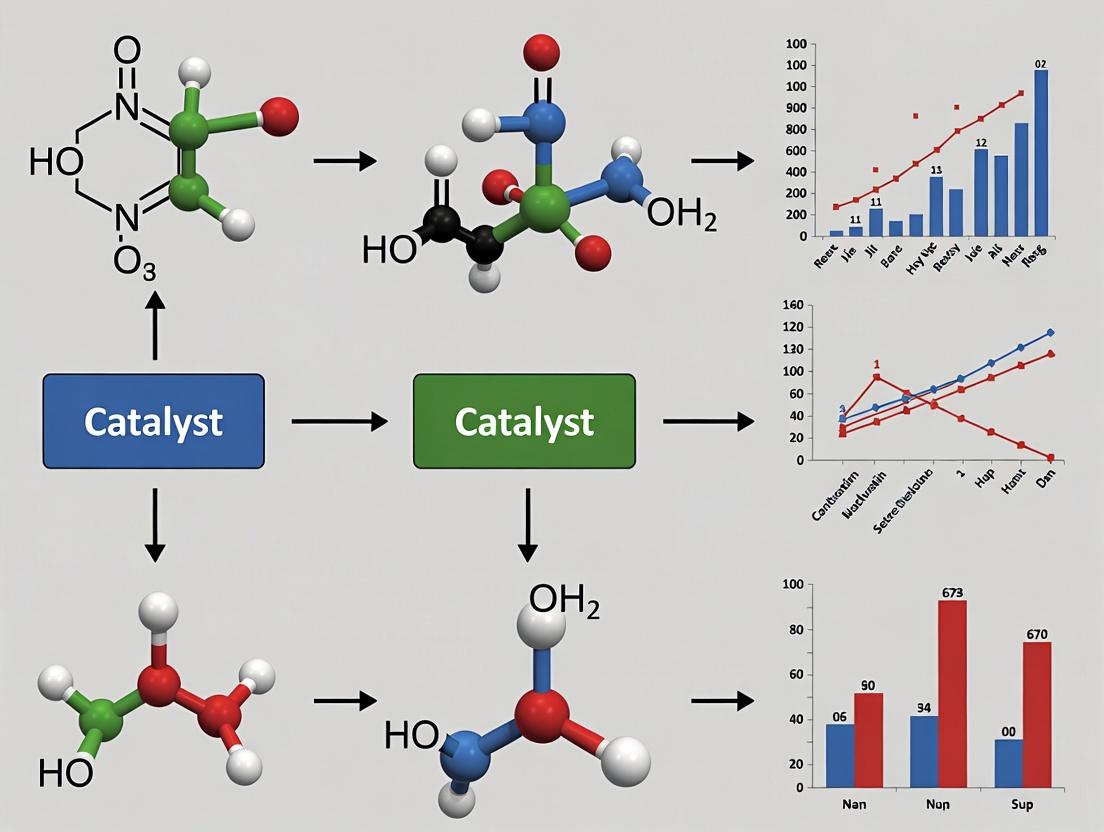
This article provides a comprehensive analysis of catalyst deactivation, a critical challenge that compromises the efficiency, selectivity, and cost-effectiveness of catalytic processes central to pharmaceutical synthesis and biomedical research.
Combating Catalyst Deactivation: Mechanisms, Monitoring, and Mitigation Strategies for Biomedical Applications
Abstract
This article provides a comprehensive analysis of catalyst deactivation, a critical challenge that compromises the efficiency, selectivity, and cost-effectiveness of catalytic processes central to pharmaceutical synthesis and biomedical research. We systematically explore the root causes of deactivation—including poisoning, sintering, and fouling—and detail advanced characterization techniques for diagnostics. The review further presents practical mitigation and regeneration strategies, evaluates methods for validating catalyst stability, and concludes with future directions for designing next-generation, robust catalytic systems to accelerate drug development and sustainable chemistry.
Understanding the Enemy: Core Mechanisms and Root Causes of Catalyst Deactivation
Technical Support Center: Troubleshooting Catalyst Deactivation
Troubleshooting Guides
Guide 1: Diagnosing Rapid Activity Loss in Heterogeneous Catalysis
Observed Issue: A sharp, unexpected decline in conversion rate within the first few reaction cycles.
Step-by-Step Diagnosis:
- Check for Fouling/Coking: Perform Temperature-Programmed Oxidation (TPO) on the spent catalyst. A significant CO₂ evolution peak between 300-600°C confirms carbonaceous deposits.
- Assess Sintering: Obtain fresh and spent catalyst XRD patterns. An increase in crystalline domain size (>20% growth) and a decrease in peak broadening indicate metal particle sintering.
- Test for Poisoning: Conduct XPS or ICP-MS on the spent catalyst to detect trace elements (e.g., S, Cl, Pb, As) not present in the feed. Concentrations >0.1 wt% on the catalyst surface are typically problematic.
- Rule out Mechanical Loss: Filter and weigh the catalyst post-reaction. A mass loss >2% suggests physical attrition or washout.
Protocol: Temperature-Programmed Oxidation (TPO) for Coke Quantification
- Materials: Spent catalyst (50-100 mg), 5% O₂/He gas mixture, mass spectrometer or TCD.
- Procedure:
- Load spent catalyst into a quartz U-tube reactor.
- Purge with inert gas (He) at 30 mL/min, ramp to 150°C, hold for 30 min to remove physisorbed species.
- Cool to 50°C under He.
- Switch to 5% O₂/He at 30 mL/min.
- Heat from 50°C to 800°C at a rate of 10°C/min.
- Monitor m/z=44 (CO₂) signal continuously via MS.
- Data Analysis: Integrate the CO₂ evolution peak. Calibrate with a known CO₂ pulse to quantify total coke mass.
Guide 2: Addressing Selectivity Loss in Sequential Reactions
Observed Issue: The desired product selectivity decreases over time, while side products increase.
Step-by-Step Diagnosis:
- Map Selectivity vs. Conversion: Plot product distribution at different conversion levels (achieved by varying space velocity or time-on-stream). A fundamental shift in the selectivity-conversion trajectory indicates active site modification, not merely activity loss.
- Analyze for Site Blockage: Use chemisorption (e.g., CO, H₂) on fresh and spent catalysts. A disproportionate loss in chemisorption capacity for one probe molecule over another suggests selective site poisoning.
- Investigate Pore Blockage: Perform N₂ physisorption. A significant reduction in pore volume, especially in the mesopore range (2-50 nm), combined with a shift to larger average pore size, indicates pore mouth blocking.
Protocol: Pulse Chemisorption for Active Site Counting
- Materials: Reduced catalyst sample (50 mg), 10% CO/He pulses, TCD detector.
- Procedure:
- Pre-treat catalyst in H₂ at reduction temperature (e.g., 400°C) for 1 hour, then cool in He to 35°C.
- Inject calibrated pulses (e.g., 0.1 mL) of 10% CO/He into a He carrier stream flowing over the catalyst.
- Monitor the TCD signal until consecutive pulses give identical peak areas (saturation).
- Calculate total CO uptake from the sum of adsorbed pulses.
- Data Analysis: Metal dispersion (%) = (Total moles CO adsorbed * Stoichiometry factor) / Total moles of metal loaded * 100.
Frequently Asked Questions (FAQs)
Q1: What is the definitive difference between catalyst deactivation and inactivation? A: In rigorous thesis context, deactivation refers to the kinetic process of active site loss over time, described by deactivation rate constants. Inactivation is the final state where the catalyst is no longer functional for its intended purpose, often defined by falling below a threshold conversion (e.g., <50% of initial) or selectivity.
Q2: How do I distinguish thermal sintering from chemical sintering (Ostwald ripening) experimentally? A: You must perform complementary characterization:
- Ex-Situ STEM: Provides direct particle size distribution (PSD). A shift in the entire PSD to larger sizes suggests particle migration and coalescence (thermal). The disappearance of small particles and growth of large ones suggests atomic migration (Ostwald ripening).
- In-Situ/Operando XAFS: Monitor changes in coordination number under reaction conditions. A steady increase points to Ostwald ripening as the dominant mechanism during operation.
Q3: Our catalyst loses selectivity before activity. What does this imply about the deactivation mechanism? A: This is a classic signature of site-specific poisoning or surface reconstruction. It implies that the active sites responsible for the desired selective pathway (often requiring specific ensembles or oxidation states) are more susceptible to the deactivating agent or condition than sites responsible for the main conversion. Investigate using surface-sensitive techniques (DRIFTS, XPS) to look for changes in the oxidation state or adsorbate coverage of promoter elements.
Q4: What are the best practices for reporting catalyst stability in a publication? A: The field now demands quantitative stability metrics. Report:
- Absolute Activity/Selectivity vs. Time on Stream (TOS).
- Deactivation Rate Constant (k_d): Fit decay to an appropriate model (e.g., separable kinetics:
r(t) = r_0 * exp(-k_d * t)). - Half-life (t_1/2): Time for activity/selectivity to reach 50% of initial.
- Final State Analysis: Full characterization (XRD, BET, STEM, XPS) of the spent catalyst compared to the fresh.
Table 1: Common Catalyst Deactivation Mechanisms & Diagnostic Signatures
| Mechanism | Primary Cause | Key Diagnostic Technique | Quantitative Indicator |
|---|---|---|---|
| Poisoning | Strong chemisorption of impurities | XPS, ICP-MS | Surface impurity > 0.1 monolayer |
| Fouling/Coking | Carbon deposition from side reactions | TPO, TGA | Coke load > 5% wt. |
| Sintering | High T, oxidative/reductive env. | STEM, XRD, Chemisorption | Particle size increase > 20% |
| Attrition | Mechanical stress, fluid flow | Sieve analysis, PSD | Fines generation > 2% wt./h |
| Phase Change | Reaction with support/feed | XRD, Raman | New crystalline phase detection |
Table 2: Stability Metrics for Representative Catalytic Systems (Hypothetical Data)
| Catalyst System | Reaction | Initial Rate (mol/g·h) | k_d (h⁻¹) | t_1/2 (h) | Primary Deactivation Mode |
|---|---|---|---|---|---|
| Pt/Al₂O₃ | CO Oxidation | 1.50 | 0.05 | 13.9 | Sintering (wet air) |
| Cu/ZnO/Al₂O₃ | Methanol Synthesis | 0.15 | 0.01 | 69.3 | Sintering & Loss of ZnOₓ synergy |
| Zeolite H-ZSM-5 | Methanol-to-Hydrocarbons | 0.80 | 0.15 | 4.6 | Coking (pore blockage) |
| Pd/C (Heterogeneous) | Suzuki Coupling | 2.20 | 0.50 | 1.4 | Pd leaching & Aggregation |
Visualizations
Title: Catalyst Deactivation Pathways Map
Title: Catalyst Deactivation Diagnosis Workflow
The Scientist's Toolkit: Research Reagent Solutions
Table 3: Essential Materials for Deactivation Studies
| Item | Function & Relevance to Deactivation Research |
|---|---|
| Fixed-Bed Microreactor System | Provides precise control over T, P, and feed for collecting time-on-stream (TOS) deactivation data. Essential for measuring k_d. |
| Temperature-Programmed Oxidation (TPO) Setup | Quantifies and characterizes carbonaceous deposits (coke) on spent catalysts via controlled combustion. |
| Pulse Chemisorption Analyzer | Measures active metal surface area and dispersion in fresh vs. spent catalysts to quantify sintering. |
| In-Situ/Operando Cell (for XRD, DRIFTS, XAFS) | Allows real-time observation of structural, compositional, and adsorbate changes under reaction conditions. |
| High-Resolution STEM with EDS | Directly images nanoparticle size/shape changes and maps elemental distribution to diagnose sintering, poisoning, or segregation. |
| Inductively Coupled Plasma Mass Spectrometry (ICP-MS) | Detects trace levels (ppb) of leached metals or poisons in reaction streams or on catalyst surfaces. |
| Model Poison Compounds (e.g., Thiophene, CS₂, PbEt₄) | Used in controlled doping experiments to study poisoning mechanisms and resistance. |
| Thermogravimetric Analyzer (TGA) | Measures weight changes (e.g., coke burn-off, oxidation, reduction) as a function of temperature. |
Troubleshooting Guide & FAQs
Q1: During our hydrogenation reaction using a Pd/C catalyst, we observe a sudden and severe drop in conversion rate. What is the most likely cause related to feed contaminants?
A1: This is a classic symptom of catalyst poisoning by sulfur compounds. Common impurities like thiophene or hydrogen sulfide (H₂S) in the feed can irreversibly adsorb onto the palladium active sites, forming strong Pd-S bonds that block reactant access. Even ppm-level concentrations can be detrimental. To troubleshoot, analyze your feedstock for sulfur content using GC-SCD (Gas Chromatography with Sulfur Chemiluminescence Detection). Immediately switch to a fresh batch of purified feed to confirm. For palladium systems, consider pre-treatment with a guard bed of zinc oxide to remove sulfur contaminants.
Q2: Our enzymatic catalysis for API synthesis is showing reduced enantioselectivity. Could trace metals be the culprit?
A2: Yes. Trace metal ions (e.g., Pb²⁺, Hg²⁺, Cd²⁺) from process equipment or reagents can deactivate enzymes by binding to critical amino acid residues in the active site, distorting its structure. This often manifests as a loss of both activity and selectivity. Perform an ICP-MS (Inductively Coupled Plasma Mass Spectrometry) analysis of your reaction buffer and enzyme preparation. Chelating agents like EDTA can be introduced to sequester metals, but ensure they do not strip essential cofactors from your enzyme.
Q3: We suspect our heterogeneous catalyst is deactivating due to chlorides. What is the mechanism and how can we diagnose it?
A3: Chloride ions (Cl⁻) poison acid and metal catalysts by: 1) Strong, irreversible adsorption on metal sites (e.g., Pt, Ru), and 2) Accelerating sintering of metal nanoparticles at high temperatures, leading to loss of surface area. Diagnosis involves testing the chloride content of your feed via ion chromatography. A post-reaction XPS (X-ray Photoelectron Spectroscopy) analysis of the spent catalyst surface will show a distinct Cl 2p peak, confirming poisoning.
Q4: How can we distinguish between reversible adsorption (coking) and irreversible poisoning by impurities?
A4: Perform a standard regeneration protocol (e.g., calcination in air at 500°C for coke burn-off). If activity is not restored, the deactivation is likely due to irreversible poisoning. Advanced characterization is key: TPO (Temperature Programmed Oxidation) will show a coke oxidation peak (~300-400°C), while XPS or EXAFS can identify persistent heteroatoms (S, Cl, P) from impurities on the regenerated catalyst.
Experimental Protocol: Assessing Catalyst Poisoning by Sulfur
Objective: To quantify the deactivating effect of a sulfur-containing contaminant (e.g., thiophene) on a model metal catalyst.
Materials:
- Fixed-bed reactor system with gas feed controls
- Reference catalyst (e.g., 5% Pt/Al₂O₃)
- Ultra-high purity H₂ and reactant gas (e.g., n-hexane for isomerization)
- Certified gas blend with 50 ppm thiophene in H₂
- Online GC for product analysis
Methodology:
- Activation: Reduce the catalyst in-situ under pure H₂ flow (50 mL/min) at 400°C for 2 hours.
- Baseline Activity: Set reactor temperature to 300°C. Introduce the pure reactant feed (e.g., n-hexane in H₂) and measure the steady-state conversion every 15 minutes for 2 hours. Calculate average baseline conversion.
- Poisoning Phase: Introduce the contaminated feed stream (containing 50 ppm thiophene) under otherwise identical conditions. Monitor conversion continuously.
- Post-Poisoning Test: Revert to the pure feed. Measure if any activity recovery occurs, indicating reversible adsorption.
- Characterization: Analyze the spent catalyst using XPS to confirm sulfur presence on the metal surface.
Data Presentation: Impact of Common Poisons on Industrial Catalysts
| Poison Type | Example Contaminants | Typical Source | Primary Catalyst Affected | Mechanism of Poisoning | Reversibility |
|---|---|---|---|---|---|
| Sulfur Compounds | H₂S, Thiophene, CS₂ | Crude feedstocks, natural gas | Ni, Pt, Pd, Co (Hydrotreating, Hydrogenation) | Strong chemisorption, metal sulfide formation | Mostly Irreversible |
| Chlorides | HCl, Organic Chlorides | Feed impurities, catalyst precursor residues | Noble metals, Acid catalysts (Zeolites) | Site blocking, enhances metal sintering | Often Irreversible |
| Metals (Heavy) | Pb, Hg, As, Cd | Contaminated reagents, leaching from equipment | Enzymes, homogeneous metal complexes | Binding to active site residues or metal centers | Irreversible |
| Alkali & Alkaline Earth Metals | Na⁺, K⁺, Ca²⁺ | Water treatment additives, carrier dust | Solid acid catalysts (e.g., FCC catalysts) | Neutralization of acid sites | Partially Reversible |
| Oxygenates | CO, H₂O, O₂ | Incomplete purification, air leaks | Metal catalysts for hydrogenation | Competitive adsorption on active sites | Usually Reversible |
The Scientist's Toolkit: Key Research Reagent Solutions
| Item | Function in Poisoning Studies | Example Product/Catalog # |
|---|---|---|
| Certified Poison Gas Blends | Provide precise, trace-level impurities (e.g., 100 ppm H₂S in H₂) for controlled poisoning experiments. | Scott Specialty Gases, Custom Mixtures |
| High-Purity Guard Bed Media | Remove specific contaminants from feeds to establish a clean baseline (e.g., ZnO for H₂S, molecular sieves for H₂O). | Sigma-Aldrich, Zinc Oxide (<100 nm powder) |
| ICP-MS Standard Solutions | Quantify trace metal contaminants in liquid feeds or leachates from spent catalysts. | Inorganic Ventures, Custom Multi-Element Standards |
| Surface Science Calibration Standards | Calibrate XPS, AES for accurate identification of poison elements on catalyst surfaces. | Thermo Scientific, Au, Ag, Cu foils for XPS |
| Chelating Resins/Agents | Test metal poisoning hypotheses by selectively removing ions from solutions (e.g., EDTA, Chelex 100). | Bio-Rad, Chelex 100 Resin |
Visualization: Catalyst Poisoning Diagnosis Workflow
Visualization: Common Poison-Metal Binding Interactions
Technical Support & Troubleshooting Center
FAQs & Troubleshooting Guides
Q1: During the high-temperature testing of our supported metal catalyst, we observe a rapid, irreversible drop in activity. What is the most likely primary mechanism, and how can we confirm it? A: The most likely primary mechanism is metal nanoparticle sintering. This is the coalescence of small, active metal particles into larger, less active ones, drastically reducing the active surface area. To confirm:
- Perform ex-situ TEM/STEM analysis on fresh and spent catalysts. Measure and compare particle size distributions.
- Conduct chemisorption experiments (e.g., H₂ or CO pulse chemisorption) to quantify the loss of active metal sites.
- Use in-situ X-ray Absorption Spectroscopy (XAS) to monitor changes in coordination number, which indicates particle growth.
Q2: Our mixed-oxide catalyst loses its desired crystal phase after prolonged operation at elevated temperature. What can we do to stabilize it? A: This indicates a thermally-induced phase change. Stabilization strategies include:
- Introducing structural promoters: Dope the oxide lattice with ions of a different valence or size to create point defects that pin the structure.
- Applying a protective porous coating: Use atomic layer deposition (ALD) to apply a thin, conformal layer of a stable oxide (e.g., Al₂O₃) that can suppress reconstruction.
- Optimizing the calcination protocol: A higher calcination temperature during synthesis may pre-form a more thermodynamically stable phase for your operating conditions.
Q3: We suspect our high-surface-area catalyst support (e.g., γ-Al₂O₃) is undergoing pore collapse. What techniques can diagnose this, and can it be reversed? A: Structural collapse of the support leads to loss of porosity and surface area, trapping active sites. Diagnosis is straightforward, but reversal is typically impossible.
- Diagnosis: Perform N₂ physisorption (BET) on fresh and spent catalysts. A significant decrease in total pore volume and a shift in the pore size distribution (especially for mesoporous materials) confirms collapse. In-situ SAXS/WAXS can provide real-time data.
- Mitigation: This is an irreversible process. Focus on prevention by using a more thermally stable support (e.g., switching from γ-Al₂O₃ to θ- or α-Al₂O₃, using SiO₂, or stabilized ZrO₂) or by operating below its phase transition temperature.
Q4: For my experiment, I need to distinguish between metal sintering and the formation of an inactive surface compound (poisoning). What is a key experimental differentiator? A: A temperature-programmed oxidation/reduction (TPO/TPR) experiment is a key differentiator.
- Sintering: The reducibility profile (TPR) of the spent catalyst will be similar to the fresh one, but the peak area (H₂ consumption) will be smaller due to lost accessible metal. No new chemical species peaks appear.
- Surface Compound Formation: The TPR or TPO profile will show new, distinct peaks corresponding to the reduction or oxidation of the newly formed inactive surface phase (e.g., a metal aluminate, silicate, or sulfide).
Q5: Are there standard experimental protocols to accelerate thermal degradation studies in a controlled manner? A: Yes, controlled accelerated aging tests are standard. A common protocol is:
- Subject the catalyst to a series of fixed temperature holds (e.g., 50-100°C above intended operating temperature) in the relevant atmosphere (air for oxidation, H₂ for reduction, inert).
- After each hold (e.g., 2, 4, 8, 16 hours), cool the sample rapidly.
- Characterize the sample's activity in a standard microreactor test and its physicochemical properties (e.g., via XRD, chemisorption).
- Plot activity/area vs. cumulative aging time to model deactivation kinetics.
Experimental Protocols
Protocol 1: Quantifying Metal Dispersion Loss via Chemisorption Objective: To measure the loss of accessible metal surface area due to sintering. Methodology:
- Sample Preparation: Pre-reduce catalyst samples (fresh and thermally aged) in a 5% H₂/Ar flow at relevant temperature (e.g., 500°C) for 1 hour. Purge with inert gas and cool to adsorption temperature (typically 40°C for H₂).
- Pulse Chemisorption: Use an automated chemisorption analyzer. Introduce calibrated pulses of H₂ (or CO) gas into the carrier stream flowing over the catalyst sample.
- Detection: A thermal conductivity detector (TCD) measures the H₂ not adsorbed by the catalyst.
- Calculation: The metal dispersion (%D) is calculated from the total volume of chemisorbed gas, assuming a stoichiometry (e.g., H:Metalsurface = 1:1 or CO:Metalsurface = 1:1).
- Data Analysis: Compare %D and average particle size (d = k/%D, where k is a shape factor) between fresh and spent samples.
Protocol 2: In-situ XRD for Monitoring Phase Changes Objective: To identify crystalline phase transformations in real-time under controlled atmospheres. Methodology:
- Setup: Load powder catalyst into a high-temperature in-situ XRD stage (e.g., Anton Paar XRK900). Ensure gas-tight connections.
- Atmosphere Control: Flow desired gas (air, N₂, 5% H₂/Ar) through the chamber at a steady rate (e.g., 20 mL/min).
- Temperature Program: Ramp temperature at a constant rate (e.g., 10°C/min) to the target (e.g., 900°C), with optional isothermal holds.
- Data Acquisition: Continuously collect XRD patterns (e.g., 2θ = 20-80°) at set temperature intervals (e.g., every 50°C or every 5 minutes during a hold).
- Analysis: Use profile fitting or Rietveld refinement software to identify phase compositions at each step and pinpoint the onset temperature of phase transitions.
Protocol 3: Accelerated Thermal Aging for Deactivation Kinetics Objective: To model the long-term thermal deactivation of a catalyst in a short laboratory time frame. Methodology:
- Baseline Activity: Determine the initial catalytic activity (e.g., conversion, turnover frequency) under standard test conditions (Tstd, Pstd).
- Aging Series: Prepare multiple identical samples. Treat each in a furnace under the reaction atmosphere (or a harsher one) at an elevated temperature (Tage > Tstd) for different durations (t_age = 2, 4, 8, 16, 32 h).
- Post-Aging Activity Test: Cool each aged sample. Test its activity again under the identical standard test conditions from step 1.
- Kinetic Modeling: Plot relative activity (A/A₀) vs. aging time. Fit to a deactivation model (e.g., exponential decay, power law) to extrapolate to operating conditions.
Table 1: Common Catalyst Supports and Their Thermal Stability Limits
| Support Material | Typical High-SA Phase | Approx. Phase Transition Temp. (°C) | Stable Phase After Collapse | Key Characterization Technique |
|---|---|---|---|---|
| Alumina (Al₂O₃) | γ, η | ~800 - 1100 | α-Al₂O₃ (corundum) | XRD, BET Surface Area |
| Titania (TiO₂) | Anatase | ~500 - 700 | Rutile | XRD, Raman Spectroscopy |
| Ceria (CeO₂) | Fluorite | >1000 (sintering) | Larger fluorite grains | XRD, TEM, OSC Measurement |
| Silica (SiO₂) | Amorphous | ~900 - 1100 (sintering) | Dense quartz/ cristobalite | BET Pore Volume, XRD |
| Zirconia (ZrO₂) | Tetragonal | ~400 - 600 | Monoclinic | XRD, Raman Spectroscopy |
Table 2: Diagnostic Techniques for Thermal Deactivation Mechanisms
| Mechanism | Primary Diagnostic Technique | Key Observable | Supporting Techniques |
|---|---|---|---|
| Sintering | TEM / STEM | Increased average particle size, shifted size distribution. | Chemisorption (↓ dispersion), XAS (↑ coordination number). |
| Phase Change | In-situ XRD | Appearance/disappearance of diffraction peaks. | Raman Spectroscopy, In-situ XAS. |
| Structural Collapse | N₂ Physisorption | Decrease in BET surface area & total pore volume. | SAXS, SEM. |
| Compound Formation | TPR / TPO | New reduction/oxidation peaks at specific temperatures. | XPS, EDS/EELS-STEM. |
The Scientist's Toolkit: Research Reagent Solutions
Table 3: Essential Materials for Thermal Stability Studies
| Item | Function & Relevance |
|---|---|
| High-Temperature In-situ Cell | Allows XRD, XAS, or Raman characterization under controlled temperature and gas atmosphere to observe real-time degradation. |
| Reference Catalysts (e.g., EUROCAT) | Provide benchmark materials with known properties for validating deactivation protocols and analytical techniques. |
| Thermal Conductivity Detector (TCD) | The core detector in chemisorption analyzers for quantifying gas uptake (H₂, CO, O₂) to measure active site density. |
| Calibrated Gas Mixtures | Essential for precise pulse chemisorption, TPR/TPO experiments, and creating controlled aging atmospheres. |
| Certified Standard Reference Materials (e.g., NIST LaB₆) | Used for instrument calibration (e.g., XRD line broadening) to ensure accurate particle size and crystallite size analysis. |
| Porous Support Materials (Al₂O₃, SiO₂, ZrO₂) | Used as controls or for preparing model catalysts to study support-specific degradation behavior. |
Diagrams
Title: Atomic Pathways Leading to Catalyst Sintering
Title: Diagnostic Flowchart for Thermal Degradation
Title: Accelerated Aging Experimental Workflow
Technical Support Center: Troubleshooting Catalyst Inactivation in Heterogeneous Catalysis
Welcome, researchers. This support center is part of a broader thesis initiative to systematize the diagnosis and mitigation of catalyst inactivation mechanisms. The following guides address common experimental challenges related to physical deactivation.
FAQs & Troubleshooting Guides
Q1: During my fixed-bed reactor run, I observe a rapid, then stabilized, pressure drop increase. My catalyst activity also drops quickly. What is the likely mechanism, and how can I confirm it? A: This pattern is characteristic of Fouling by external deposits (e.g., polymers, inorganic salts, dust). The rapid initial pressure increase points to pore mouth or interparticle blockage.
- Troubleshooting Steps:
- Visual Inspection: Examine catalyst pellets post-run for visible crust or color change on the exterior.
- Porosimetry: Perform comparative BET surface area and mercury intrusion porosimetry (MIP) on fresh vs. spent catalyst. Fouling primarily reduces pore volume in larger mesopores/macropores.
- Elemental Analysis (EA): Use EA or XRF on the outer vs. crushed interior of spent pellets. A higher concentration of heteroatoms (e.g., S, Si, Ca) on the exterior confirms foulant deposition.
- Protocol for MIP Analysis:
- Sample Prep: Dry spent catalyst at 150°C under vacuum for 2 hours.
- Instrument: Use a mercury porosimeter with pressure range 0.1–60,000 psi.
- Procedure: Place sample in penetrometer, evacuate to <50 μm Hg, then intrude mercury. Measure volume intruded vs. applied pressure.
- Data Analysis: Use Washburn equation. Plot log differential intrusion vs. pore diameter. A loss in the 50-1000 nm diameter region indicates fouling.
Q2: My catalyst shows a steady, long-term activity decline with increased selectivity to light hydrocarbons. What points to coking, and how do I quantify it? A: A gradual deactivation with a shift to lighter products is typical of Coking (carbonaceous deposit formation).
- Troubleshooting Steps:
- Thermogravimetric Analysis (TGA): The standard method to quantify coke burn-off.
- Temperature-Programmed Oxidation (TPO): To characterize coke reactivity and type.
- Spectroscopy: Use Raman spectroscopy to identify the structure of carbon deposits (D/G band ratio for graphitic vs. amorphous coke).
- Protocol for TPO:
- Setup: Load 50 mg spent catalyst in a quartz microreactor.
- Gas Flow: 5% O₂ in He, total flow 30 mL/min.
- Temperature Program: Heat from 50°C to 800°C at 10°C/min.
- Detection: Monitor CO₂ production with an online mass spectrometer (m/z=44) or NDIR detector.
- Analysis: Peaks below 400°C indicate reactive, amorphous coke. Peaks above 600°C indicate graphitic, less-reactive coke.
Q3: I suspect my microporous catalyst (e.g., zeolite) is experiencing pore blockage. What analyses definitively distinguish this from general coking? A: Pore blockage specifically affects micropores (<2 nm). Confirmation requires probing the micropore structure.
- Troubleshooting Steps:
- BET with t-plot or α-s-plot Analysis: A significant loss in micropore volume with relative preservation of external surface area.
- Argon Physisorption at 87K: Provides higher resolution for micropore size distribution than N₂.
- Pulsed Chemisorption: A reduction in active site accessibility, despite maintained total metal loading (from ICP-MS), indicates blocked pores.
- Protocol for Argon Physisorption at 87K:
- Sample Prep: Degas sample at 300°C for 12 hours under vacuum.
- Analysis: Perform adsorption-desorption isotherm using a liquid Ar bath.
- Modeling: Apply Density Functional Theory (DFT) or Horvath-Kawazoe method to the low-pressure region of the isotherm (<0.01 P/P₀) to calculate micropore size distribution loss.
Quantitative Data Summary
Table 1: Diagnostic Signatures of Physical Deactivation Mechanisms
| Mechanism | Primary Effect on Surface Area | Primary Effect on Pore Volume | Key Analytical Technique | Typical Burn-off Temp (TPO) | Pressure Drop Trend |
|---|---|---|---|---|---|
| Fouling | Moderate decrease | Severe decrease in macropores | Mercury Porosimetry | Varies (inorganics) | Rapid initial increase |
| Coking | Severe decrease | Decrease across all pores | TGA/TPO | 300-600°C | Gradual increase |
| Pore Blockage | Severe micropore loss | Severe micropore loss | Ar Physisorption / t-plot | Aligns with coke type | Minimal change |
Table 2: Research Reagent Solutions Toolkit
| Reagent / Material | Function in Diagnosis | Key Application |
|---|---|---|
| High-Purity Calibration Gases (5% O₂/He, 10% H₂/Ar) | For TPO and chemisorption experiments. | Determining coke reactivity and active site accessibility. |
| Liquid Argon & Nitrogen | Cryogens for physisorption analysis. | Probing pore size distribution and surface area. |
| High-Purity Mercury (for porosimetry) | Non-wetting fluid for intrusion. | Measuring macropore and large mesopore volume. |
| Zeolite Standard (e.g., NIST RM 8850) | Reference material for BET surface area calibration. | Ensuring accuracy in porosity measurements. |
| Quartz Wool & Microreactor Tubes | Inert sample packing for flow-through experiments. | Conducting in-situ deactivation or TPO studies. |
Diagnostic Workflow & Pathway Diagrams
Title: Diagnostic Pathway for Physical Deactivation
Title: Catalyst Transformation by Deactivation Type
Technical Support Center
Troubleshooting Guides & FAQs
Q1: Our heterogeneous catalyst system shows a rapid 40% drop in conversion yield within the first three reaction cycles, despite normal operating parameters. What are the primary diagnostic steps?
A: Follow this systematic diagnostic protocol:
- Physical Loss Analysis: Filter the reaction mixture and measure catalyst mass recovery. Loss >5% suggests inadequate immobilization or mechanical degradation.
- Surface Analysis (BET/Porosity): A >15% decrease in surface area indicates pore blockage or sintering.
- Leaching Test: Analyze the post-reaction filtrate via ICP-MS for active metal species. Concentrations >50 ppb suggest significant leaching.
- Thermogravimetric Analysis (TGA): A weight loss >2% in an air atmosphere between 200-500°C points to coke deposition.
Q2: During a continuous flow hydrogenation, we observe a steady pressure increase (ΔP > 5 bar) across the fixed-bed reactor over 72 hours. How should we respond?
A: This signals catalyst bed fouling. Execute the following:
- Immediate Action: Reduce feed flow rate by 50% to manage ΔP while planning shutdown.
- In-Situ Regeneration Attempt: If compatible with the catalyst, initiate a controlled hydrogen purge at elevated temperature (protocol below).
- Post-Shutdown Analysis: Perform a focused ion beam scanning electron microscopy (FIB-SEM) on catalyst pellets from the reactor inlet to confirm pore plugging by oligomers or inorganic salts.
Q3: What is a validated protocol for the in-situ regeneration of a coked palladium-on-carbon (Pd/C) catalyst?
A: Regeneration Protocol for Coke Removal from Pd/C Catalysts
- Objective: Oxidatively remove amorphous carbon deposits without sintering Pd nanoparticles.
- Materials: Controlled atmosphere oven, 5% O₂ in N₂ gas cylinder.
- Procedure:
- After reaction, wash catalyst thoroughly with an appropriate solvent (e.g., acetone) under nitrogen to remove residual organics.
- Transfer the wet catalyst to a quartz boat in a tube furnace.
- Under a continuous flow of 5% O₂ in N₂ (100 mL/min), ramp temperature at 2°C/min to 300°C.
- Hold at 300°C for 4 hours.
- Cool to room temperature under the same gas flow.
- Re-activate under H₂ flow (50 mL/min) at 150°C for 1 hour before next use.
- Success Metric: >80% recovery of original surface area and >90% recovery of original catalytic activity in a standardized test reaction.
Q4: Our homogeneous catalyst ligand is degrading, leading to metal precipitation. How can we monitor ligand integrity in real-time?
A: Implement online or at-line LC-MS.
- Sample Preparation: Dilute a 10 µL aliquot of reaction slurry in 1 mL of methanol, centrifuge, and filter (0.2 µm PTFE).
- LC Method: C18 column, gradient from 5% to 95% acetonitrile in water (0.1% formic acid) over 10 min.
- Monitoring: Track the parent ligand peak ([M+H]⁺). A >10% decrease relative to an internal standard (e.g., triphenylphosphine oxide) per cycle indicates degradation. Consider adding a stabilizing co-ligand if degradation is confirmed.
Key Quantitative Data on Downtime & Replacement
Table 1: Cost Breakdown of Catalyst Downtime in a Pilot-Scale Continuous Pharmaceutical Process
| Cost Component | Estimated Cost (USD per incident) | Notes |
|---|---|---|
| Lost Product Revenue | $25,000 - $75,000 | Based on 24-72 hrs downtime, product value $1,000/kg |
| Catalyst Replacement | $5,000 - $20,000 | Varies with metal (Pd, Pt, Ir) & ligand complexity |
| Process Re-Validation | $10,000 - $15,000 | Analytical & QA/QC costs post-regeneration/replacement |
| Labor for Emergency Troubleshooting | $5,000 | Engineering & scientist teams (100 person-hours) |
| Total Estimated Range | $45,000 - $115,000 | Per unplanned deactivation event |
Table 2: Performance Comparison: Regeneration vs. Fresh Catalyst
| Metric | Fresh Catalyst | Thermally Regenerated Catalyst | Chemically Washed Catalyst |
|---|---|---|---|
| Initial Conversion Yield | 99% | 95% | 92% |
| Yield at Cycle 10 | 85% | 82% | 80% |
| Total Lifetime (cycles) | 50 | 35 | 25 |
| Metal Leaching per Cycle | <0.1% | 0.5% | 0.8% |
| Cost per Cycle (USD) | $200 | $85 | $120 |
Experimental Protocols
Protocol 1: Accelerated Deactivation Testing for Catalyst Screening
- Purpose: To rapidly rank catalyst formulations by their susceptibility to common deactivation modes.
- Method:
- Run the standard catalytic reaction in a high-throughput parallel pressure reactor array.
- After initial activity measurement, spike the feed with a known poison (e.g., 100 ppm of sulfur-containing species for metal catalysts) or run at an elevated temperature (50°C above optimal) to accelerate sintering.
- Run for 24 hours under accelerated stress conditions.
- Return to standard conditions and measure activity loss.
- Analysis: Catalysts showing <20% activity loss under stress are tagged for further development.
Protocol 2: Post-Mortem Analysis of a Spent Catalyst Pellet
- Purpose: To determine the root cause of deactivation in a fixed-bed reactor.
- Method:
- Sectioning: Carefully remove the catalyst bed. Divide pellets into three zones: inlet, middle, outlet.
- Imaging: Analyze pellets from each zone via SEM-EDS for morphological changes and elemental mapping of contaminants.
- Surface Chemistry: Use X-ray photoelectron spectroscopy (XPS) on crushed pellets to identify oxidation states and surface species.
- Porosity: Perform mercury intrusion porosimetry on separate samples to assess pore volume distribution changes.
Visualizations
Deactivation Causes & Cost Impacts
Catalyst Deactivation Root Cause Analysis
The Scientist's Toolkit: Research Reagent Solutions
Table 3: Essential Materials for Catalyst Deactivation Studies
| Item | Function | Example (Supplier) |
|---|---|---|
| ICP-MS Standard Solutions | Quantifying trace metal leaching (Pd, Pt, Ni) from catalyst into solution. | Certipur Multi-Element Standard IV (Merck) |
| Thermogravimetric Analysis (TGA) Crucibles | Measuring weight loss (e.g., coke burn-off) or gain (oxidation) of spent catalysts. | Platinum crucibles (TA Instruments) |
| Porosity/Physisorption Standards | Calibrating surface area (BET) and pore size analyzers for accurate measurement. | Alumina oxide powder standard (Micromeritics) |
| XPS Calibration Reference Foils | Referencing binding energy scales for accurate surface chemical state analysis. | Gold, Silver, Copper foils (Thermo Fisher) |
| Stabilizing Ligand Libraries | Screening additives to suppress metal leaching or sintering in homogeneous catalysis. | Phosphine & N-heterocyclic carbene (NHC) ligand kits (Sigma-Aldrich, Strem) |
| Catalytic Poison Spikes | For accelerated stress testing of catalyst robustness. | Thiophene (S-poison), Carbon monoxide, Mercury salts. |
Diagnostic Tools and Proactive Management: Characterization and Monitoring Techniques
The Critical Role of Catalyst Characterization in Root Cause Analysis
Introduction Within catalyst deactivation research, systematic root cause analysis (RCA) is paramount. This technical support center provides targeted troubleshooting guides and FAQs to enable researchers to diagnose catalyst inactivation through rigorous characterization. The protocols and data herein are framed to support a thesis focused on elucidating and mitigating deactivation mechanisms in heterogeneous catalysis.
Troubleshooting Guides & FAQs
Q1: Our catalytic reactor shows a rapid, unexpected drop in conversion. What are the first characterization steps to distinguish between poisoning and sintering?
A: Initiate a phased characterization workflow to differentiate between surface blockage (poisoning) and active site loss (sintering).
- Initial Non-invasive Check: Perform in-situ reactant flow analysis via mass spectrometry to rule out feed contamination or system leaks.
- BET Surface Area Analysis: Measure the fresh and spent catalyst. A significant decrease (>20%) in surface area strongly suggests sintering or pore collapse.
- Temperature-Programmed Reduction/Oxidation (TPR/TPO): Assess the reducibility/oxidation state of the active metal. A shift in reduction temperature can indicate metal-support interaction changes from sintering or compound formation.
- Chemisorption: Perform pulsed CO or H₂ chemisorption. A disproportionate loss in active surface area relative to BET surface area loss indicates poisoning (blocked sites).
- High-Resolution TEM/STEM: Visually confirm particle size distribution. An increase in average particle size and a narrower distribution confirm sintering.
Experimental Protocol for Pulse Chemisorption:
- Apparatus: Automated chemisorption analyzer with thermal conductivity detector (TCD).
- Sample Prep: Reduce 0.1 g catalyst under 5% H₂/Ar at relevant temperature (e.g., 350°C) for 1 hour, then purge with Ar.
- Analysis: Cool to 50°C. Inject calibrated pulses of CO (or H₂) in a carrier gas until saturation (consecutive peak areas are constant).
- Calculation: Active metal dispersion (%) = (Total moles of chemisorbed gas * Stoichiometry factor * Atomic weight of metal) / (Mass of catalyst * Metal loading) * 100.
Q2: XPS shows carbon buildup on our spent catalyst. How do we determine if it's inert coke or a polymeric "active" carbon that is the primary deactivation cause?
A: The nature of carbonaceous deposits is critical. Use thermal and spectroscopic techniques in tandem.
- Temperature-Programmed Oxidation (TPO): This is the primary tool. Inert graphitic coke oxidizes at high temperatures (>500°C), while more reactive, hydrogen-deficient polymeric carbon oxidizes at lower temperatures (300-450°C).
- Raman Spectroscopy: Analyze the D-band (~1350 cm⁻¹) and G-band (~1580 cm⁻¹) ratio (ID/IG). A higher ratio indicates more disordered, potentially active carbon, while a lower ratio suggests ordered, graphitic coke.
- Combine Data: Correlate TPO peak temperatures with the quantity of CO₂ released (via mass spec) and the Raman ID/IG ratio for a definitive diagnosis.
Experimental Protocol for TPO:
- Apparatus: Micromeritics AutoChem II or equivalent, coupled with a mass spectrometer.
- Procedure: Load ~50 mg spent catalyst. Heat at 10°C/min to 800°C under 5% O₂/He (30 mL/min). Monitor m/z=44 (CO₂) and m/z=32 (O₂) signals.
- Analysis: Quantify carbon from integrated CO₂ peak. Deconvolution of multiple CO₂ evolution peaks indicates different carbon types.
Q3: How can we quantify the relative contribution of different deactivation mechanisms (e.g., poisoning vs. sintering) in a real-world catalyst?
A: Employ a combination of characterization data in a semi-quantitative model. The table below outlines key metrics and their diagnostic significance.
Table 1: Quantitative Metrics for Deactivation Mechanism Diagnosis
| Characterization Technique | Primary Metric | Poisoning Indicator | Sintering Indicator | Fouling (Coke) Indicator |
|---|---|---|---|---|
| N₂ Physisorption (BET) | Surface Area (m²/g) | Minimal Change | Decrease >20% | Decrease (pore blocking) |
| H₂/CO Chemisorption | Active Metal Surface Area | Large Decrease | Decrease | May decrease if pores blocked |
| X-ray Diffraction (XRD) | Crystallite Size (Scherrer) | No Change | Significant Increase | No direct change |
| Temperature-Programmed Oxidation (TPO) | CO₂ Evolution Temp. & Mass | N/A | N/A | Low-T Peak (<450°C): Active Carbon; High-T Peak: Graphitic Coke |
| Inductively Coupled Plasma (ICP) | Leached Metal Concentration | N/A | Possible if re-deposition occurs | N/A |
Visualization of Workflows
Title: Catalyst Deactivation Diagnostic Workflow
Title: Deactivation Pathways at Active Site
The Scientist's Toolkit: Research Reagent Solutions
Table 2: Essential Materials for Catalyst Characterization in RCA
| Reagent / Material | Function in Characterization |
|---|---|
| 5% H₂/Ar & 5% O₂/He Gas Mixtures | Standard reducing and oxidizing atmospheres for pre-treatment (chemisorption) and Temperature-Programmed (TPR/TPO) experiments. |
| Carbon Monoxide (CO), Ultra High Purity | Probe molecule for titrating surface metal atoms in pulse chemisorption to determine active metal dispersion. |
| KBr (Potassium Bromide), FT-IR Grade | Used to prepare translucent pellets for Fourier-Transform Infrared (FT-IR) spectroscopy to study surface functional groups and adsorbed species. |
| ICP-MS Standard Solutions (e.g., 1000 ppm Pt, Pd) | Calibration standards for quantifying metal content and leaching via Inductively Coupled Plasma Mass Spectrometry (ICP-MS). |
| Alumina Crucibles (High-Temperature) | Inert sample holders for thermal analysis techniques like TGA/DSC and TPO. |
| ISOTHERM Programmed Heating Software | Controls and analyzes data from automated chemisorption/TPD/TPR/TPO instruments, enabling precise temperature ramps and gas switches. |
Technical Support Center: Troubleshooting Guides & FAQs
BET Surface Area Analysis
Q1: My BET isotherm shows a negative intercept in the linear region, leading to an incorrect or negative surface area. What causes this? A: A negative intercept often indicates microporosity in the sample, causing deviation from standard BET theory (applicable for relative pressures P/P₀ of 0.05-0.30). It can also be caused by:
- Sample Degassing Issues: Incomplete removal of contaminants (water, solvents) or decomposition during degassing. Ensure your degas temperature and time are appropriate and do not exceed the sample's thermal stability.
- Very High Surface Area: For materials with extremely high surface areas (>1000 m²/g), the BET plot may curve, making linear region selection critical.
- Protocol: Re-degas the sample using a more conservative temperature profile. Re-analyze using a narrower P/P₀ range (e.g., 0.05-0.20) for the BET transform. For microporous materials, consider applying t-plot or DFT methods for more accurate surface area and pore size distribution.
Q2: My BET results show poor reproducibility between replicates. What should I check? A: Poor reproducibility typically stems from sample preparation or instrument leaks.
- Protocol: 1) Ensure precise, consistent sample mass (use a high-precision balance). 2) Verify the sample tube is sealed correctly with no leaks. Apply high-vacuum grease uniformly on the taper. 3) Standardize the degassing protocol exactly (rate, temperature, time, gas flow). 4) Check for system leaks by performing an empty tube analysis. 5) Use a fresh batch of liquid nitrogen for each analysis to ensure consistent bath temperature.
X-Ray Diffraction (XRD)
Q3: My XRD pattern for a supposedly crystalline catalyst shows a very high background and broad, weak peaks. What does this mean? A: This indicates low crystallinity or the presence of very small crystallite sizes (nanocrystalline or amorphous phases). In catalyst deactivation studies, this can signal structural collapse or the formation of an amorphous poisoning layer (e.g., coke or silica deposition).
- Protocol: 1) Increase the counting time per step to improve signal-to-noise. 2) Use a slower scan speed (e.g., 0.5°/min). 3) Confirm sample preparation: ensure a flat, smooth surface for packed samples; avoid preferred orientation. 4) Apply Scherrer's equation to the peak broadening to estimate crystallite size. If crystallite size is <5 nm, peaks will be significantly broadened.
Q4: How do I distinguish between a solid solution and a physical mixture using XRD? A: A physical mixture will show diffraction peaks of all individual phases. A solid solution will show peak shifts relative to the parent phases due to lattice parameter changes from guest atom incorporation, without new peaks for the separate phase.
- Protocol: 1) Collect high-resolution XRD patterns of the fresh catalyst, the potential dopant material, and the synthesized material. 2) Precisely calibrate the instrument with a standard (e.g., Si). 3) Perform careful peak fitting to determine the exact 2θ position of major peaks. 4) Apply Vegard's law for substitutional solid solutions: a linear relationship between lattice parameter and composition suggests solid solution formation.
X-ray Photoelectron Spectroscopy (XPS)
Q5: My XPS survey shows a very large carbon 1s peak, overshadowing other elements. How do I mitigate this? A: A dominant C 1s peak is often from adventitious carbon contamination (hydrocarbons from air exposure). While always present, it can be minimized.
- Protocol: 1) In-situ Cleaning: If the instrument has an argon ion sputtering gun, use a low-energy (e.g., 500 eV), short-duration (30-60 sec) sputter to lightly clean the surface, followed by immediate analysis. Caution: This can reduce some surface species. 2) Ex-situ Treatment: Gently pre-treat the sample in a flow of inert gas (Ar, N₂) at a mild temperature (e.g., 150°C) in a transfer vessel to desorb volatile contaminants. 3) Always reference the adventitious C 1s peak to 284.8 eV for charge correction, and report this practice.
Q6: How can I quantify the relative amount of different chemical states (e.g., Ce³⁺ vs. Ce⁴⁺) from overlapping XPS peaks? A: This requires spectral deconvolution (curve fitting).
- Protocol: 1) Collect high-resolution spectra with sufficient counts and a narrow energy step (e.g., 0.1 eV). 2) Subtract a Shirley or Tougaard background. 3) Use known binding energy values for the states (e.g., Ce³⁺ 3d₅/₂ ~885-886 eV; Ce⁴⁺ 3d₅/₂ ~881-882 eV). 4) Constrain the fit using spin-orbit splitting (Δ for Ce 3d is ~18.5 eV) and area ratios (3d₅/₂ : 3d₃/₂ = 3:2). 5) The relative concentration is the ratio of the integrated area under each component's peaks to the total area. Report full fitting parameters (peak position, FWHM, constraints).
Diffuse Reflectance Infrared Fourier Transform Spectroscopy (DRIFTS)
Q7: My DRIFTS spectra have a sloping or curved baseline, especially in the OH-stretch region. How can I correct this? A: A sloping baseline is common and caused by scattering from irregularly shaped particles. It must be corrected for accurate qualitative and quantitative analysis.
- Protocol: 1) Collect a background spectrum using a non-absorbing reference (e.g., KBr, dried KCl) that has been packed similarly to your sample. 2) For in-situ/operando cells, collect the background with the clean, empty cell at the same temperature and gas atmosphere as your experiment. 3) Use the software's baseline correction function (e.g., concave rubberband correction, polynomial fit) only after the background scan has been applied. Avoid over-correction.
Q8: How do I set up a proper DRIFTS experiment for monitoring catalyst surface reactions in-situ? A:
- Protocol: 1) Sample Prep: Dilute the catalyst powder in an IR-transparent matrix (e.g., KBr, diamond powder) to ~5-10% wt. to minimize total absorption. 2) Background: Load the diluted sample, pre-treat it in the cell under desired conditions (e.g., heat in O₂/He, then purge with He), cool to analysis temperature, and collect the single-beam background spectrum. 3) Experiment: Switch to the reaction gas mixture (e.g., CO/He for probing metal sites, pyridine for acidity) and collect time-resolved spectra. 4) Data: Always present spectra as absorbance or Kubelka-Munk units. Note temperature, gas flow rates, and time on stream.
Table 1: Common Issues and Diagnostic Checks for BET Analysis
| Issue | Possible Cause | Diagnostic Check | Corrective Action |
|---|---|---|---|
| Negative BET C constant | Microporosity, low degas temp | t-plot analysis, check degas T | Use NLDFT method, increase degas T |
| Hysteresis loop at high P/P₀ | Macropore/slit-shaped pores | BJH pore size distribution | Identify pore type, report accordingly |
| No N₂ uptake | Non-porous/low SA, incomplete degassing | Check sample mass, degas log | Increase sample mass, re-degas |
Table 2: XPS Binding Energy Reference for Common Catalyst Elements
| Element & State | Core Level | Approx. BE (eV) | Context in Catalysis |
|---|---|---|---|
| Al³⁺ (Al₂O₃) | Al 2p | 74.0 - 74.5 | Support material |
| Si⁴⁺ (SiO₂) | Si 2p | 103.3 - 103.8 | Support, poisoning layer |
| Ti⁴⁺ (TiO₂) | Ti 2p₃/₂ | 458.5 - 459.0 | Photocatalyst support |
| Ce³⁺ (Ce₂O₃) | Ce 3d₅/₂ (v⁰) | 885.0 - 886.0 | Oxygen storage component |
| Ce⁴⁺ (CeO₂) | Ce 3d₅/₂ (v) | 881.0 - 882.0 | Oxidized state |
| C-C/C-H (Adv.) | C 1s | 284.8 | Charge reference |
| Coke/Polymeric C | C 1s | 284.4 - 284.6 | Deactivation species |
| Carbidic C | C 1s | 282.0 - 283.5 | Active phase or intermediate |
Research Reagent Solutions & Essential Materials
Table 3: Key Materials for Surface & Structural Analysis
| Item | Function & Application |
|---|---|
| Micromeritics ASAP 2060 | Physisorption analyzer for BET surface area, pore volume, and pore size distribution. |
| PANalytical X'Pert Pro | X-ray diffractometer for phase identification, crystallite size, and lattice parameter analysis. |
| Kratos Axis Supra | XPS system for elemental composition, chemical state, and mapping of catalyst surfaces. |
| Thermo Fisher Nicolet iS50 | FTIR spectrometer with DRIFTS accessory for in-situ monitoring of surface species and reactions. |
| Hiden CATLAB μ-Reactor | Bench-top reactor system coupled to MS/GC, ideal for correlating catalytic performance with characterization data. |
| Pfeiffer Vacuum PrismaPlus | Mass spectrometer for gas analysis during TPD, TPR, TPO, and operando studies. |
| Inert Atmosphere Glovebox | For sample preparation and transfer of air-sensitive materials (e.g., reduced catalysts) to analysis equipment. |
| Silicon Wafer (Zero Background) | XRD sample holder for analyzing very small sample quantities or for obtaining a flat, low-background substrate. |
| High-Purity Gases (He, N₂, 5% H₂/Ar, 10% O₂/He) | For degassing, carrier gas, in-situ pretreatment (reduction, oxidation), and probe molecules. |
| Powdered KBr (FTIR Grade) | IR-transparent diluent for DRIFTS measurements to reduce absorption and light scattering. |
Experimental Protocols
Protocol 1: Comprehensive Analysis of a Deactivated Catalyst Objective: Determine the physicochemical causes of catalyst deactivation (e.g., sintering, coking, poisoning).
- BET: Measure surface area and pore volume of fresh and spent catalyst. A significant drop suggests pore blocking or sintering.
- XRD: Identify crystalline phases. Loss of crystallinity, appearance of new phases (e.g., carbides, sulfates), or peak sharpening (crystallite growth) indicate structural changes.
- XPS: Analyze surface composition and chemistry. Calculate surface concentration ratios (e.g., C/Metal, Poison/Metal). Identify chemical states of key elements (oxidized, reduced, carbidic, graphitic).
- DRIFTS (ex-situ): Characterize surface functional groups on the spent catalyst. Look for specific coke types (polyaromatic vs. aliphatic via C-H stretches), carbonate species, or adsorbed poisons (e.g., sulfates, nitrates).
Protocol 2: In-situ DRIFTS for Probing Active Sites Objective: Identify the nature of active sites (acidic vs. metallic) and adsorbed intermediates.
- Load diluted catalyst into the DRIFTS cell with ZnSe windows.
- Pre-treat under 20 mL/min O₂ at 400°C for 1h, then purge with He.
- Cool to 150°C and collect background spectrum in He.
- For Acidity: Introduce pyridine-saturated He flow for 15 min, then switch to pure He to purge physisorbed pyridine. Collect spectra. Brønsted acid sites show bands ~1540 cm⁻¹, Lewis sites ~1450 cm⁻¹.
- For Metallic Sites: Switch to 5% CO/He flow at 50°C. Collect spectra. Linear CO on metals appears ~2000-2070 cm⁻¹, bridged CO ~1800-1900 cm⁻¹.
Visualizations
Workflow for Diagnosing Catalyst Deactivation
DRIFTS Experimental Workflow for Surface Site Analysis
Technical Support Center: Troubleshooting & FAQs
Thesis Context: This support center is designed to assist researchers investigating catalyst inactivation mechanisms. Temperature-programmed techniques (TPD, TPO) are critical for characterizing active sites, adsorbed species, and surface composition changes leading to deactivation.
Frequently Asked Questions (FAQs) & Troubleshooting
Q1: During a TPD experiment, we observe a very broad and poorly resolved desorption peak. What could be the cause and how can we fix it?
A: Broad peaks often indicate a non-uniform heating rate or sample heterogeneity.
- Troubleshooting Steps:
- Verify Heating Rate: Calibrate the furnace/heater with a separate thermocouple. Ensure the programmed linear rate matches the actual sample temperature increase. A common standard is 10 K/min.
- Check Sample Preparation: Ensure the catalyst powder is finely dispersed and evenly packed in the microreactor to avoid channeling and thermal gradients.
- Reduce Sample Mass: Excessive sample can create internal temperature gradients. Reduce mass to 20-50 mg.
- Confirm Gas Flow: Ensure carrier gas (He, Ar) flow is stable and properly controlled by mass flow controllers (MFCs). Typical flow is 20-40 mL/min.
Q2: In TPO, our baseline signal drifts significantly as temperature increases, obscuring the oxidation peaks. How do we stabilize it?
A: Baseline drift is typically due to thermal expansion of gases or changes in detector sensitivity.
- Troubleshooting Steps:
- Use a Reference Arm: Employ a TCD detector in a differential configuration with a reference flow of pure carrier gas.
- Thermostat the Detector: Ensure the thermal conductivity detector (TCD) block is at a constant, high temperature.
- Pre-condition the Reactor: Run a blank TPO (empty reactor or inert material) under identical conditions and subtract this background from your sample data.
- Ensure Gas Purity: Use high-purity gases (e.g., 5% O₂ in He for TPO) with gas filters to remove trace contaminants like moisture.
Q3: We suspect our catalyst is sintering during a TPD/TPO experiment. How can we confirm this and prevent it from interfering with adsorption measurements?
A: Sintering alters the active surface area, skewing quantitative analysis.
- Diagnostic & Protocol:
- Ex-Situ BET: Measure BET surface area before and after the TPD/TPO run. A decrease confirms sintering.
- Use a Lower Final Temperature: If the reaction of interest occurs at lower temperatures, limit the maximum temperature of the program to the minimum necessary.
- Post-Experiment Calibration: After the TPD/TPO run, cool the sample in inert gas and perform a pulse chemisorption (e.g., CO, H₂) to quantify remaining active sites. Compare to a fresh sample.
Q4: How do we differentiate between desorption from the active metal sites and the catalyst support in a TPD profile?
A: This requires careful experimental design.
- Recommended Comparative Protocol:
- Perform Support-Only Experiment: Run an identical TPD experiment on the bare support material (e.g., Al₂O₃, SiO₂) after the same pretreatment.
- Subtract Signals: Subtract the support's TPD profile from the full catalyst's profile to isolate desorption from metal sites.
- Use Selective Probe Molecules: Use probe molecules that adsorb specifically on metal sites (e.g., CO on metals, not on pure alumina) when possible.
Experimental Protocols
Protocol 1: Standard TPD of Ammonia (NH₃-TPD) for Acidity Measurement
- Purpose: Quantify the number and strength of acid sites on a solid catalyst, a key factor in coke formation and inactivation.
- Materials: Microreactor, MFCs, He carrier, 5% NH₃/He mixture, TCD, cold trap (dry ice/acetone).
- Procedure:
- Pretreatment: Load 100 mg catalyst. Heat to 500°C (10°C/min) in He flow (30 mL/min) for 1 hour. Cool to 100°C.
- Adsorption: Expose to 5% NH₃/He for 30 minutes at 100°C. Flush with He for 1-2 hours at 100°C to remove physisorbed NH₃.
- Desorption: Heat from 100°C to 600°C at 10°C/min in He flow (30 mL/min). Record the TCD signal.
- Calibration: Inject known volumes of NH₃/He pulses for quantitative analysis.
Protocol 2: TPO for Coke Characterization on Deactivated Catalysts
- Purpose: Determine the amount and reactivity (burn-off temperature) of carbonaceous deposits causing catalyst deactivation.
- Materials: Microreactor, MFCs, 5% O₂/He mixture, TCD, optional MS for CO₂ detection.
- Procedure:
- Load Deactivated Catalyst: Carefully load ~50 mg of spent catalyst from a reactor trial.
- Stabilization: Purge with He at 100°C for 30 min.
- Oxidation: Switch to 5% O₂/He flow (25 mL/min). Heat from 100°C to 800°C at 10°C/min. Monitor TCD (consumption of O₂) and/or MS (m/z=44 for CO₂).
- Quantification: Calibrate the CO₂ signal with known amounts of a standard (e.g., oxalic acid) decomposed in the same setup.
Data Presentation
Table 1: Common TPD/TPO Peak Temperatures and Their Interpretation
| Probe Molecule / Technique | Typical Peak Temperature Range (°C) | Common Interpretation in Deactivation Context |
|---|---|---|
| NH₃-TPD (Weak Acid Sites) | 150 - 250 | Weak acid sites may facilitate light coke precursor formation. |
| NH₃-TPD (Strong Acid Sites) | 350 - 550 | Strong acid sites are often linked to heavy coke formation and pore blocking. |
| CO₂-TPD (Weak Basic Sites) | 100 - 200 | Can adsorb acidic poisons or CO₂, affecting active sites. |
| CO₂-TPD (Strong Basic Sites) | > 400 | May promote undesired side reactions or sintering. |
| H₂-TPR (Metal Oxide Reduction) | Variable by oxide | Determines reduction temperature, informing regeneration conditions. |
| TPO of Coke (Reactive Coke) | 300 - 450 | Less graphitic, more hydrogenated carbon. Often from metal sites. |
| TPO of Coke (Refractory Coke) | 500 - 700 | Highly graphitic, aromatic coke. Often from strong acid sites. |
Note: Exact temperatures are material-dependent. These ranges are for qualitative comparison.
Table 2: Key Operational Parameters for Reproducible TPD/TPO
| Parameter | Typical Optimal Range | Impact of Deviation |
|---|---|---|
| Sample Mass | 20 - 100 mg | Too high: thermal gradients, broad peaks. Too low: weak signal. |
| Heating Rate (β) | 5 - 20 K/min | Faster rates shift peaks higher, reduce resolution. Slower rates improve resolution but increase experiment time. |
| Carrier Gas Flow Rate | 20 - 40 mL/min (STP) | Too high: lowers detector sensitivity. Too low: causes tailing and slow response. |
| Particle Size | 150 - 250 μm | Too fine: high pressure drop. Too coarse: poor heat/mass transfer. |
| Adsorption Temperature | Specific to probe | Must be high enough to avoid physisorption, low enough for chemisorption. |
The Scientist's Toolkit: Research Reagent Solutions
| Item | Function & Relevance to Catalyst Deactivation |
|---|---|
| 5% NH₃ in He/Ar | Probe for acid site strength/distribution. Strong acid sites correlate with coking rates. |
| 5% O₂ in He/Ar | Oxidizing mixture for TPO to quantify and characterize carbonaceous deposits (coke). |
| 5% H₂ in Ar | Reducing mixture for TPR to study reducibility of metal oxides, key for regeneration. |
| High-Purity He / Ar | Inert carrier gas for pretreatment, purging, and TPD. Must be dry and oxygen-free. |
| Calibration Gas Mixtures | (e.g., known CO₂ in He, H₂ in Ar) for quantitative analysis of desorbed/consumed gases. |
| Pulse Chemisorption Kit | (with loop, valves) for calibrating active site counts before/after deactivation experiments. |
| Thermocouples (K-type) | Accurate temperature measurement of the catalyst bed, not just the furnace. |
| Microreactor (Quartz/U-tube) | Holds catalyst sample, allows even gas flow and heating. Quartz is inert for most reactions. |
Experimental Workflow & Logical Diagrams
Title: Standard TPD Experiment Workflow
Title: Multi-Technique Approach to Catalyst Deactivation
In Situ and Operando Characterization for Real-Time Deactivation Insights
Technical Support Center: Troubleshooting & FAQs
FAQ Context: This support center is designed to assist researchers working within a thesis framework focused on elucidating and mitigating catalyst deactivation mechanisms. The following guides address common experimental challenges in in situ and operando characterization.
Frequently Asked Questions (FAQs)
Q1: During operando XRD (X-ray Diffraction) monitoring of my heterogeneous catalyst, I observe a significant loss in signal-to-noise ratio over time. What could be causing this, and how can I mitigate it? A1: Signal degradation in operando XRD often stems from two primary issues:
- Carbon Deposition (Coking): Hydrocarbon feedstocks can decompose, forming amorphous carbon that coats catalyst particles, attenuating X-rays.
- Reactor Cell Window Fouling: Condensation or deposition of reaction by-products on the X-ray transparent windows (e.g., Be, diamond, amorphous carbon) of your operando cell.
- Troubleshooting Steps:
- Pre-Treatment: Ensure a rigorous catalyst pre-reduction/activation step in an inert or reducing atmosphere before introducing reactants.
- Window Management: Incorporate a pre-heating zone for the reactant gas stream before it contacts the catalyst bed to prevent cold-spot condensation on windows.
- Post-Run Analysis: Perform a Temperature-Programmed Oxidation (TPO) on the spent catalyst to quantify coke formation. Clean or replace reactor cell windows according to manufacturer guidelines.
- Troubleshooting Steps:
Q2: My in situ XPS (X-Ray Photoelectron Spectroscopy) data shows unexpected peak shifts and broadening when I switch from UHV to near-ambient pressure conditions with reactive gases. Is this an artifact or real chemical information? A2: This can be both. Peak shifts can indicate real changes in oxidation state (chemical information), but broadening and shifting can also be artifacts. * Troubleshooting Guide: 1. Check for Charging: Even at mbar pressures, insulating samples can charge. Use a low-energy electron flood gun for charge compensation and monitor the adventitious C 1s peak position (typically 284.8 eV) as a reference. 2. Gas Phase Contributions: The reactive gas atmosphere can contribute to the background signal and may cause weakly adsorbed species to appear. Always collect a background spectrum with the gas over an inert substrate (e.g., gold foil) for subtraction. 3. Sample Degradation: Verify that the intense X-ray beam is not photochemically reducing your catalyst. Use a defocused beam, reduce flux if possible, and take rapid, time-resolved scans to monitor for beam-induced effects.
Q3: When performing operando Raman spectroscopy on a catalytic reaction at high temperature (>400°C), I get intense fluorescence background that obscures the Raman bands. How can I resolve this? A3: High-temperature fluorescence often arises from coke precursors or the formation of polyaromatic hydrocarbons. * Solutions: * Use a Longer Wavelength Laser: Switch from a visible laser (e.g., 532 nm) to a near-infrared laser (e.g., 785 nm or 830 nm) to dramatically reduce fluorescence excitation. * Spectral Processing: Apply a modified polynomial baseline subtraction algorithm to your spectral series. Be cautious not to subtract real, broad catalyst bands. * Quenching Experiment: Temporarily switch the feed to an inert gas while maintaining temperature. If the fluorescence drops rapidly, it is likely from gas-phase or weakly adsorbed fluorescent species rather than the catalyst itself.
Q4: The mass spectrometry (MS) data from my operando setup shows a time lag and significant damping of concentration changes compared to the reaction conditions I input. How do I synchronize data and improve temporal resolution? A4: This is a common issue caused by gas transport delays and dead volumes in the capillary line connecting the reactor to the MS. * Protocol for System Diagnosis & Calibration: 1. Measure System Response Time: Perform a step-change experiment using an inert gas (e.g., switch Ar to He) at the reactor inlet and record the MS response. The time to reach 90% of the new steady-state signal is your system's characteristic response time ((\tau)). 2. Minimize Dead Volume: Use short, narrow-bore capillaries (e.g., 100 µm ID) and heat the entire transfer line to prevent condensation. 3. Data Deconvolution: Use the measured (\tau) to apply a first-order lag deconvolution to your MS data, aligning it with the instantaneous conditions at the reactor. This is crucial for accurate kinetic analysis.
Experimental Protocols from Key Literature
Protocol 1: Operando TEM-EELS for Coke Formation Tracking (Adapted from recent studies) Objective: To visualize and chemically map carbonaceous deposit formation on a metal nanoparticle catalyst in real-time under a gaseous reactant environment.
- Setup: Use a MEMS-based gas cell holder within an aberration-corrected Transmission Electron Microscope (TEM) equipped with Electron Energy Loss Spectroscopy (EELS).
- Procedure:
- Load catalyst nanoparticles (e.g., Pt/SiO₂) onto the MEMS chip’s electron-transparent windows.
- Evacuate the cell and introduce 1 bar of reactive gas (e.g., 10% C₂H₄/H₂).
- Heat the cell to the target reaction temperature (e.g., 400°C) using integrated heaters.
- Acquire high-resolution TEM images and EELS spectral maps at the carbon K-edge (~284 eV) at regular time intervals (e.g., every 30 seconds).
- Analyze the spatial evolution of the sp² (graphitic coke) and sp³ (amorphous carbon) signature peaks in the EELS spectra.
- Key Parameters: Electron dose must be minimized (<100 e⁻/Ų) to avoid beam-induced artifacts. Use a direct electron detector for fast, low-dose imaging.
Protocol 2: In Situ XAS (XANES/EXAFS) for Tracking Sintering & Alloy Segregation Objective: To quantify the change in oxidation state, coordination number, and particle size of bimetallic nanoparticles during deactivation.
- Setup: Operando X-ray Absorption Spectroscopy cell with capillary reactor, positioned at the beamline.
- Procedure:
- Pack the catalyst powder into a quartz capillary (1-2 mm ID). Place thermocouple in direct contact with the bed.
- Align the capillary in the X-ray beam and calibrate energy using a metal foil reference.
- Under inert flow, collect a reference spectrum of the fresh catalyst.
- Switch to reaction mixture (e.g., CO oxidation mix: 5% CO, 10% O₂, balance He) at desired flow rate.
- Heat to reaction temperature (e.g., 300°C) and collect consecutive Quick-XANES and/or EXAFS scans (1-2 minutes per scan) for several hours.
- Use linear combination fitting (LCF) of XANES spectra against model compounds to extract oxidation state percentages. Fit EXAFS spectra to obtain coordination numbers, which correlate with particle size via established models.
- Key Parameters: Maintain uniform temperature profile. Use ionization chambers optimized for the energy range of your metal's absorption edge (e.g., Pt L₃-edge at 11564 eV).
Table 1: Common Catalyst Deactivation Mechanisms & Diagnostic Signatures
| Deactivation Mechanism | Primary Operando Technique | Key Quantitative Signature | Typical Time Scale |
|---|---|---|---|
| Sintering | X-ray Absorption Spectroscopy (EXAFS) | Decrease in coordination number (CN) by 20-50% | Hours to Days |
| Coking | Raman Spectroscopy | Increase in D/G band ratio (ID/IG) from ~0.8 to >1.5 | Minutes to Hours |
| Poisoning | Near-Ambient Pressure XPS (NAP-XPS) | Increase in surface poison concentration (e.g., S, Cl) to >10 at.% | Seconds to Minutes |
| Phase Change | X-ray Diffraction (XRD) | Emergence of new diffraction peaks; FWHM change >0.1° 2θ | Minutes to Hours |
| Active Site Loss | IR Spectroscopy of Probe Molecules | Decrease in integrated area of specific chemisorption band by >30% | Variable |
Table 2: Comparison of Temporal & Spatial Resolution of Key Operando Techniques
| Technique | Best Temporal Resolution | Best Spatial Resolution | Pressure Range | Key Limitation for Deactivation Studies |
|---|---|---|---|---|
| Quick-XAS | ~1 second | ~1 µm (beam size) | UHV - 30 bar | Bulk-sensitive, limited surface information |
| Operando TEM | ~10 ms | <0.1 nm | UHV - 1 bar | Electron beam can induce reactions |
| NAP-XPS | ~1 minute | ~10 µm | UHV - 25 mbar | Limited to near-surface; requires thin films |
| Operando Raman | ~1 second | ~1 µm | UHV - 100 bar | Fluorescence interference at high T |
| Modulated DRIFTS | ~100 ms | N/A (bulk powder) | UHV - 10 bar | Complex data analysis for kinetics |
Visualizations
Diagram Title: Operando Insights Guide Deactivation Mitigation Thesis
Diagram Title: XRD Workflow for Tracking Catalyst Sintering
The Scientist's Toolkit: Research Reagent Solutions
Table 3: Essential Materials for Operando Catalyst Deactivation Experiments
| Item | Function in Experiment | Key Consideration for Deactivation Studies |
|---|---|---|
| MEMS-based TEM Gas Cell | Enables high-resolution imaging and spectroscopy under controlled gas and temperature. | Window material (SiN_x) must be chemically inert and stable under reducing/oxidizing atmospheres. |
| Capillary Micro-Reactor | Minimizes dead volume for rapid gas switching; used in XRD/XAS. | Material (quartz, alumina) must not react with feed or catalyst at high T. |
| Calibration Gas Mixtures | For quantitative MS response and kinetic modeling. | Must include expected products and potential poisoning agents (e.g., H₂S, HCl at ppm levels) for accurate calibration. |
| Reference Catalyst Standards | Certified materials for benchmarking instrument response (e.g., particle size, acidity). | Essential for validating quantitative results from EXAFS (coordination #) or IR (acid site count). |
| High-Temperature Optical Cell | For operando Raman/IR, with controlled atmosphere and heating. | Windows (CaF₂, sapphire) must be transparent to laser/IR and non-catalytic. |
| Isotopically Labeled Reactants (e.g., ¹³CO, D₂) | To track reaction pathways and distinguish surface intermediates from deposits. | Crucial for identifying the molecular origin of carbonaceous deactivating species. |
From Diagnosis to Solution: Prevention, Regeneration, and Lifecycle Management
Technical Support Center
Troubleshooting Guides & FAQs
FAQ 1: Why is my catalyst activity declining faster than expected despite using a purified feedstock?
- Answer: Rapid deactivation often indicates the presence of trace, non-standard contaminants not removed by your primary purification steps. These could include:
- Metal Ions (e.g., Fe, Cu, Ni): Even at ppm levels, these can poison active sites via chemisorption or promote side reactions.
- Oxygenates or Peroxides: In hydrocarbon streams, these can lead to coke formation or undesirable oxidation of the catalyst.
- High Molecular Weight Species: Oligomers or polymers can physically block pore access.
- Action: Implement a guard bed with a high-capacity, disposable, or regenerable adsorbent (e.g., alumina, activated carbon, specialized molecular sieve) upstream of your main reactor. Perform elemental analysis (ICP-MS) and GC-MS on your feedstock after primary purification to identify specific contaminants.
FAQ 2: How do I choose between a disposable and a regenerable guard bed system?
- Answer: The choice depends on scale, cost, and process continuity. See the decision table below.
Table 1: Guard Bed System Selection Criteria
| Criterion | Disposable Guard Bed | Regenerable Guard Bed |
|---|---|---|
| Best For | Lab-scale experiments, low-volume/high-value feeds, one-off campaigns. | Pilot & production scale, continuous processes, high feedstock volumes. |
| Complexity | Low (simple cartridge or fixed bed). | High (requires regeneration system, valves, controls). |
| Operational Cost | Higher media replacement cost. | Lower per-batch cost, but higher capital investment. |
| Downtime | Requires process stop for media changeout. | Can be designed for continuous operation with switching beds. |
| Common Media | Activated carbon, silica gel, mixed adsorbents. | Molecular sieves, alumina, reversible chemisorbents. |
FAQ 3: What is the recommended protocol for evaluating guard bed efficacy?
- Answer: Follow this comparative experiment to quantify protection.
- Objective: Quantify the protective effect of a guard bed on main catalyst lifetime.
- Materials: Two identical reactor setups, main catalyst, candidate guard bed media, purified feedstock (spiked with a known contaminant if needed).
- Protocol:
- Setup A (Unprotected): Load main catalyst. Feed purified feedstock directly.
- Setup B (Protected): Load guard bed media in a preceding column, then main catalyst. Feed the identical feedstock.
- Process: Run both systems under identical conditions (T, P, WHSV).
- Monitoring: Track main catalyst activity (e.g., conversion of key reactant) over time or total feedstock processed.
- Analysis: Plot conversion vs. time for both setups. The area between the curves represents the activity preserved by the guard bed. Analyze spent catalyst from both reactors via TGA (coke) or XPS (surface poisoning) to confirm reduction in deactivation.
FAQ 4: How frequently should guard bed media be replaced or regenerated?
- Answer: Replacement is based on breakthrough capacity. Perform this test:
- Protocol: Pass your actual feedstock through a small guard bed column at process conditions.
- Monitoring: Analyze the effluent stream for your target contaminant(s) (e.g., by UV-Vis, GC, ICP).
- Endpoint: The point where contaminant concentration in the effluent reaches 5-10% of its inlet concentration is the breakthrough point.
- Calculation: The mass of contaminant adsorbed up to breakthrough determines the bed's capacity. Scale this to your full system to schedule changes. For critical applications, use two beds in series; when the first shows breakthrough, replace it and move the second bed to the primary position.
The Scientist's Toolkit: Research Reagent Solutions
Table 2: Essential Materials for Feedstock Protection Studies
| Item | Function & Explanation |
|---|---|
| Activated Alumina (Acidic/Basic/Neutral) | Versatile adsorbent for removing polar impurities, fluorides, chlorides, and peroxides from organic feedstocks. Choice of pH tailors selectivity. |
| Molecular Sieves (3Å, 4Å, 13X) | Zeolites with uniform pores for selective adsorption based on molecular size (e.g., 3Å removes water). Crucial for protecting water-sensitive catalysts. |
| High-Capacity Activated Carbon | Removes trace organic impurities, color bodies, odor, and chlorine via high surface area and porosity. Often used as a first-stage guard. |
| Chelating Resins (e.g., Iminodiacetate type) | Selectively bind and remove specific metal cations (Fe²⁺, Cu²⁺, Ni²⁺) from aqueous or organic streams to prevent metal poisoning. |
| On-Line ICP-MS or ICP-OES | Provides real-time or periodic quantitative data on trace metal contamination in feedstock and effluent, essential for guard bed performance monitoring. |
| Disposable In-Line Filter Cartridges (0.2 μm) | Provides mechanical removal of particulate matter that could foul downstream guard beds or reactor beds. A prerequisite physical protection step. |
Experimental Workflow & Logical Diagrams
Diagram 1: Feedstock Protection and Catalyst Life Workflow
Diagram 2: Inactivation Mechanisms and Prevention Strategy
Technical Support Center: Troubleshooting Catalyst Inactivation in Reactor Systems
This support center provides targeted guidance for researchers addressing catalyst deactivation within the framework of process optimization for temperature, pressure, and feed composition control. The following FAQs and protocols are designed to support your experimental investigations.
Frequently Asked Questions (FAQs)
Q1: During our fixed-bed reactor experiment, we observed a rapid, unexpected decline in conversion despite maintaining constant temperature and pressure. What is the most likely cause? A1: A sudden drop in conversion is often indicative of catalyst poisoning from feed impurities. Even trace amounts of sulfur, chlorine, or metal ions in your feedstock can irreversibly bind to active sites. Immediately check your feed composition analytics and the integrity of your feedstock purification traps (e.g., adsorbent beds). Perform an EDX or XPS analysis on a spent catalyst sample to confirm the presence of foreign elements.
Q2: We are optimizing feed composition to suppress coking. How do we differentiate thermal sintering from coking as the primary deactivation mode? A2: Characterize a deactivated catalyst sample. Coking typically shows mass gain in TGA, distinct carbonaceous peaks in Raman spectroscopy, and retained surface area but blocked pores. Sintering is evidenced by a permanent loss of surface area (BET), increased crystalline size (XRD), and agglomerated metal particles (TEM). A Temperature-Programmed Oxidation (TPO) experiment will burn off coke, allowing you to quantify its mass and burning temperature profile.
Q3: Our high-pressure reaction shows initial high activity, but it decays over 24 hours. Temperature control seems stable. What pressure-related issues should we investigate? A3: At high pressures, consider:
- Physical Crushing: Verify the catalyst mechanical strength is rated for your operating pressure. Particle fragmentation can increase pressure drop and block flow.
- Condensation/Flooding: Ensure your operating pressure is not above the dew point of reactant mixtures, causing liquid condensation in the catalyst bed which blocks reactant access.
- Pressure Fluctuations: Review controller logs. Cyclic pressure swings can accelerate mechanical fatigue and, in some cases, promote phase changes in supported metal catalysts.
Q4: When testing a new feed composition to reduce byproducts, how do we determine if observed deactivation is due to chemical fouling or a simple shift in the reaction equilibrium? A4: Conduct a step-change test. Return to the original, baseline feed composition after activity loss. If activity recovers (even partially), the issue is likely a reversible adsorbate (fouling) or equilibrium shift. If activity does not recover, the new feed has caused permanent chemical degradation (e.g., phase segregation, acidic site leaching).
Experimental Protocols for Deactivation Diagnosis
Protocol 1: Temperature-Programmed Oxidation (TPO) for Coke Quantification
- Objective: Quantify and characterize carbonaceous deposits on spent catalysts.
- Methodology:
- Load 50-100 mg of spent catalyst into a quartz U-tube reactor.
- Purge with an inert gas (He, 30 mL/min) while heating to 150°C for 30 minutes to remove physisorbed species.
- Cool to 50°C. Switch the feed to 5% O₂ in He (30 mL/min).
- Heat the reactor at a ramp rate of 10°C/min up to 800°C.
- Monitor CO₂ production using a mass spectrometer (m/z=44) or an NDIR detector.
- Data Analysis: The temperature of the CO₂ peak indicates coke type (amorphous vs. graphitic). The peak area, calibrated against a standard, quantifies the coke mass.
Protocol 2: In Situ XRD under Process Conditions to Monitor Sintering
- Objective: Observe crystallographic changes of the active phase in real-time under controlled temperature and gas feed.
- Methodology:
- Place catalyst powder in a high-temperature, atmospheric-pressure in situ XRD reaction cell.
- Set the initial conditions (e.g., temperature: 200°C, feed: 5% H₂/He).
- Collect baseline XRD patterns.
- Systematically vary one parameter (e.g., raise temperature to 500°C in H₂, or switch to a reactive feed like CO/H₂).
- Collect XRD scans at regular intervals (e.g., every 30 minutes) for 6-12 hours.
- Data Analysis: Use the Scherrer equation on specific metal phase peaks (e.g., Ni(111), Pt(220)) to calculate crystallite size over time, directly correlating growth with process conditions.
Data Presentation
Table 1: Common Catalyst Deactivation Modes & Diagnostic Signatures
| Deactivation Mode | Primary Process Parameters Influencing It | Key Diagnostic Technique | Quantitative Indicator |
|---|---|---|---|
| Sintering | High Temperature (>Tammann Temp.), Oxidizing/Reducing Cycles | BET Surface Area Analysis, TEM, XRD | >20% loss in surface area; Crystallite size increase >50% |
| Coking/Fouling | Low H₂:Hydrocarbon Ratio, High Temperature, Acidic Sites | Temperature-Programmed Oxidation (TPO), Raman Spectroscopy | Coke burn-off temperature range (Low: ~300°C, Graphitic: >600°C); Carbon wt.% |
| Poisoning | Impurity in Feed (ppb-ppm level) | X-ray Photoelectron Spectroscopy (XPS), Inductively Coupled Plasma (ICP) | Surface atomic % of poison (S, Cl, etc.) > monolayer equivalent |
| Attrition/Crushing | High Pressure Drop, Gas Velocity, Mechanical Stress | Sieve Analysis, Pressure Drop Monitoring | Fines generation (<10μm); >15% increase in bed pressure drop |
Mandatory Visualizations
Diagram Title: Process Parameters Linked to Catalyst Deactivation Pathways
Diagram Title: Catalyst Deactivation Diagnosis and Mitigation Workflow
The Scientist's Toolkit: Research Reagent Solutions
| Item | Function in Catalyst Deactivation Research |
|---|---|
| High-Purity Calibration Gas Mixtures | Provide impurity-free reactive streams (H₂, CO, O₂) with known dopants (e.g., 100 ppm H₂S in H₂) for controlled poisoning studies. |
| In Situ/Operando Cell (XRD, IR) | Allows real-time characterization of catalyst structure and surface species under operating temperature, pressure, and feed. |
| Thermogravimetric Analysis (TGA) System | Precisely measures weight changes (coke deposition, oxidation, reduction) of a catalyst sample as a function of temperature and gas environment. |
| Mechanical Strength Tester | Quantifies crush strength of catalyst pellets or extrudates to assess suitability for high-pressure operations. |
| Porous Adsorbent Materials | Used in guard beds (e.g., ZnO for sulfur, alumina for chlorides) to purify feedstock and study protection of the main catalyst. |
| Certified Reference Catalysts | Well-characterized materials (e.g., EUROPT-1 Pt/SiO₂) used as benchmarks for comparing deactivation rates across different labs and conditions. |
Technical Support Center: Troubleshooting & FAQs
Q1: During oxidative regeneration of a coked Pt/Al₂O₃ catalyst, my catalyst activity only recovers to 75% of its fresh state. What could be the cause and how can I troubleshoot this?
A: Incomplete activity recovery after oxidative treatment is a common issue. The primary cause is often sintering of the active metal due to localized exotherms during coke burn-off. Troubleshoot using this protocol:
- Pre-Treatment Analysis: Perform Temperature-Programmed Oxidation (TPO) to determine the precise coke burn-off temperature profile. This prevents runaway exotherms.
- Controlled Regeneration: Implement a stepped temperature program. For Pt/Al₂O₃, hold at 350°C in 2% O₂/N₂ for 2 hours to remove labile coke, then slowly ramp to 450°C (not exceeding 500°C).
- Post-Regeneration Analysis: Use CO chemisorption to measure Pt dispersion. A drop >15% confirms sintering. If sintering is detected, a low-temperature reductive treatment (H₂ at 300°C for 1 hr) may help redistribute Pt, but prevention via controlled oxidation is key.
Q2: After reductive regeneration of a sulfide-poisoned Pd catalyst, residual activity remains low. What are the next steps?
A: Reductive regeneration (e.g., H₂ at high T) may convert surface Pd sulfides to H₂S, but it often leaves behind metallic Pd aggregates or does not remove all sulfur. Follow this guide:
- Verify Sulfur Removal: Use XPS surface analysis post-regeneration. If sulfur peaks persist, consider a two-step protocol.
- Chemical Cleaning Protocol: First, treat with a mild oxidizing flow (1% O₂ in N₂ at 400°C) to convert residual sulfides to SO₂ (monitor with MS). Then, follow with a low-temperature reductive step (5% H₂/Ar at 250°C) to reduce any re-oxidized Pd.
- Alternative: For bulk sulfides, a chemical cleaning step with a chelating agent (e.g., oxalic acid solution, 0.1M, 60°C for 30 min) may be necessary before the reductive step to dissolve species not accessible to gas-phase H₂.
Q3: When employing chemical cleaning with oxalic acid for a fouled catalyst, how do I prevent damage to the catalyst support (e.g., γ-Al₂O₃)?
A: Acid leaching can attack alumina, leading to loss of surface area and structural integrity. Use this controlled methodology:
- pH and Concentration Control: Prepare a 0.05M oxalic acid solution and adjust pH to 3.5 using dilute NH₄OH. This minimizes Al₂O₃ dissolution.
- Controlled Contact Time: Use a slurry reactor at 50°C with constant stirring. Limit the leaching time to 20 minutes. Immediate filtration and washing with deionized water (5 x bed volume) is crucial.
- Post-Cleaning Stabilization: Dry at 110°C for 2 hours and then calcine in static air at 450°C for 2 hours to restore the oxide structure. Always compare BET surface area pre- and post-treatment; a loss >10% indicates support damage.
Experimental Protocols
Protocol 1: Temperature-Programmed Oxidation (TPO) for Coke Quantification Objective: To determine the amount and burn-off temperature of carbonaceous deposits.
- Load 100 mg of spent catalyst into a quartz U-tube reactor.
- Purge with inert gas (He/Ar, 30 mL/min) at 150°C for 30 min to remove volatiles.
- Cool to 50°C, then switch gas to 5% O₂/He (30 mL/min).
- Heat from 50°C to 800°C at a ramp rate of 10°C/min.
- Monitor effluent gases with a Mass Spectrometer (MS) for m/z=44 (CO₂) and m/z=18 (H₂O).
- Quantify coke by integrating the CO₂ signal and calibrating with a known standard.
Protocol 2: Controlled Oxidative Regeneration of Coked Catalysts Objective: To restore activity while minimizing metal sintering.
- Place deactivated catalyst in a fixed-bed reactor.
- Under N₂ flow (50 mL/min), heat to 200°C, hold for 30 min.
- Introduce a dilute O₂ stream (2% O₂ in N₂) at 50 mL/min.
- Ramp temperature slowly to 350°C at 2°C/min, hold for 2 hours.
- Ramp to a final temperature (catalyst-specific, typically 450-500°C) at 1°C/min, hold for 4 hours.
- Cool under N₂ to below 100°C before exposure to air or subsequent treatment.
Protocol 3: Integrated Chemical-Reductive Cleaning for Sulfur-Poisoned Catalysts Objective: To remove refractory sulfur compounds.
- Oxidative Step: Treat catalyst with 1% O₂/N₂ at 400°C for 1 hour. Vent effluent to scrubber.
- Cool & Transfer: Cool to room temperature under N₂. For wet chemical step, transfer to a batch reactor.
- Chemical Leaching: Add 0.1M ammonium citrate solution (10 mL/g catalyst). Stir at 70°C for 1 hour.
- Wash: Filter and wash thoroughly with DI water and ethanol.
- Dry & Reduce: Dry at 100°C overnight. Finally, reduce in flowing 5% H₂/Ar at 300°C for 2 hours.
Table 1: Comparative Efficacy of Regeneration Protocols on a Model Pt/Al₂O₃ Catalyst
| Deactivation Mode | Regeneration Protocol | Key Conditions | Activity Recovery (%) | Metal Dispersion Change (%) | BET SA Change (%) |
|---|---|---|---|---|---|
| Coke Deposition | Oxidative (Air) | 500°C, 4 hr | 78 ± 5 | -22 ± 3 | -5 ± 2 |
| Coke Deposition | Oxidative (2% O₂) | 450°C, 6 hr | 92 ± 3 | -8 ± 2 | -3 ± 1 |
| Sulfur Poisoning | Reductive (H₂) | 400°C, 3 hr | 65 ± 7 | -15 ± 4 | 0 ± 1 |
| Sulfur Poisoning | Chemical-Reductive | Citrate + H₂, 300°C | 88 ± 4 | -5 ± 3 | -2 ± 1 |
| Metal Fouling (Pd) | Chemical (Oxalic Acid) | 0.1M, 60°C, 0.5 hr | 85 ± 6 | +2 ± 1* | -12 ± 3 |
| Metal Fouling (Pd) | Chemical (Citric Acid) | 0.1M, 70°C, 1 hr | 90 ± 4 | +1 ± 1* | -5 ± 2 |
*Positive change indicates possible redispersion or cleaning of metal surface.
Visualization: Regeneration Decision Pathway
Title: Catalyst Regeneration Decision Pathway
The Scientist's Toolkit: Key Research Reagent Solutions
| Reagent/Material | Function in Regeneration | Key Consideration |
|---|---|---|
| 5% O₂/He or N₂ Mixture | Controlled oxidative medium for coke burn-off. Prevents runaway exotherms vs. air. | Use mass flow controllers for precise concentration. |
| 10% H₂/Ar Mixture | Reductive medium for reducing oxidized metal sites or removing labile sulfur. | Always use with proper safety protocols (leak detection, ventilation). |
| Oxalic Acid (C₂H₂O₄) | Chelating agent for dissolving metal oxides (e.g., Fe, Ni foulants) or some sulfides. | Can attack Al₂O₃ supports; pH and concentration control are critical. |
| Ammonium Citrate | Mild chelating agent for removing sulfur and metal poisons. Less corrosive than oxalic acid. | Effective at near-neutral pH, minimizing support damage. |
| Temperature-Programmed Reaction (TPR/TPO) System | Quantifies reducible species or coke burn-off profiles. Essential for protocol design. | Requires calibration with standards (e.g., CuO for TPR) for quantitative data. |
| Dilute Nitric Acid (1-3% v/v) | Chemical cleaning for inorganic scale (e.g., phosphates, carbonates). | Short contact times (minutes) required to prevent support dealumination. |
Technical Support Center: Troubleshooting Catalyst Deactivation in Advanced Formulations
Context: This support center provides guidance for researchers working within the broader thesis of addressing catalyst inactivation through advanced material design and resistant formulations. The following FAQs and protocols address common experimental challenges.
Frequently Asked Questions (FAQs)
Q1: Our heterogeneous catalyst shows a rapid 40% drop in conversion within the first 5 reaction cycles, despite using a doped oxide support. What are the most probable causes and initial diagnostics?
A1: Rapid initial deactivation often points to structural collapse or poisoning. Follow this diagnostic workflow:
- Check for Leaching: Perform ICP-MS analysis on the post-reaction solution. Metal leaching >2% of total loading indicates weak active site anchoring.
- Analyze Surface Carbon: Run TGA-MS on the spent catalyst. A weight loss of >15% below 400°C suggests coking from side reactions.
- Image Morphology: Use TEM to compare fresh and spent catalyst. Sintering is confirmed if average nanoparticle size increases by >30%.
Q2: When formulating an immobilized enzyme catalyst, we observe a loss of enantioselectivity over time, not just activity. What formulation factors should we investigate?
A2: Loss of selectivity indicates distortion of the active site's micro-environment. Key factors are:
- Support Surface Polarity: Hydrophobic supports can cause non-productive enzyme conformations. Measure the support's water contact angle; an optimal range is often 20°-40° for biocatalysis.
- Cross-linker Density: Excessive multi-point covalent attachment can rigidify and distort the protein. Reduce cross-linker concentration by 0.05 M increments and test.
- Local pH Shift: The matrix may create a local pH different from the bulk. Use fluorescent pH probe dyes immobilized near the enzyme to confirm.
Q3: For a proposed core-shell catalyst design, our synthesis consistently yields incomplete or porous shells. How can we optimize the coating procedure?
A3: Incomplete shells are typically a kinetic control issue. Implement this protocol:
- Slow Precursor Addition: Use a syringe pump to add the shell precursor at a rate ≤ 0.5 mL/min under vigorous stirring (≥ 800 rpm).
- Control Hydrolysis Rate: For metal oxide shells, use a hydrolyzing agent (e.g., urea) to slow reaction kinetics, promoting uniform deposition.
- Characterize: Use STEM-EDX line scans to quantify shell thickness uniformity. Target a standard deviation of <10% across 10 random particles.
Detailed Experimental Protocols
Protocol 1: Assessing & Mitigating Thermal Sintering in Nanoparticle Catalysts
- Objective: Quantify sintering resistance and formulate a stabilization strategy.
- Materials: As per "Research Reagent Solutions" table below.
- Method:
- Accelerated Aging: Treat catalyst (100 mg) in a tubular furnace under inert gas (N₂) at 600°C (50°C above intended operating temperature) for 24 hours.
- TEM Image Analysis: Disperse fresh and aged samples in ethanol. Image ≥ 200 particles per sample using TEM. Use ImageJ software to measure particle diameters.
- Calculation: Determine the percentage increase in median particle size (D50). Formulate with a mesoporous silica shell if D50 increase is >20%.
- Stabilization Synthesis: Re-suspend nanoparticles in a solution of CTAB (0.1 M) and tetraethyl orthosilicate (TEOS, 5 mL). Stir for 24h at 60°C to form a protective silica shell. Calcine at 450°C to remove surfactant.
Protocol 2: Evaluating & Formulating Against Heteroatom Poisoning (e.g., S, N)
- Objective: Test the resistance of designed catalyst formulations to feed stream impurities.
- Method:
- Poisoning Simulation: In a fixed-bed reactor, introduce a model poison (e.g., thiophene at 100 ppm) into the standard feed stream at T=250°C, P=1 atm.
- Activity Monitoring: Track key reaction metrics (e.g., conversion, selectivity) every 30 minutes for 10 hours.
- Post-mortem XPS Analysis: Compare the S 2p peak intensity on the spent catalyst surface vs. a control. A >5 at% S indicates significant chemisorption.
- Formulation Solution: Incorporate sacrificial "getter" materials into the catalyst bed formulation (e.g., ZnO nanoparticles upstream) that preferentially adsorb the poison.
Table 1: Comparative Performance of Stabilization Strategies for Pd Catalysts in Cross-Coupling
| Stabilization Strategy | Support/Matrix | Avg. Particle Size Growth After 50 Cycles | Residual Activity (%) | Primary Deactivation Mode Addressed |
|---|---|---|---|---|
| Ionic Liquid Encapsulation | Silica Gel | 15% | 85 | Leaching & Aggregation |
| N-doped Carbon Coating | None (Free NPs) | 8% | 92 | Sintering |
| Metal-Organic Framework (UiO-66) Encapsulation | Zr-based MOF | 2% | 98 | Leaching & Poisoning |
| Polymer Microgel Entrapment | Poly(N-vinylcaprolactam) | 22% | 78 | Aggregation |
Table 2: Troubleshooting Guide: Symptoms vs. Probable Causes & Analytical Tests
| Observed Symptom | Probable Formulation/Material Issue | Recommended Confirmatory Test |
|---|---|---|
| Steady, linear activity decline | Pore blockage (fouling) | N₂ Physisorption: >20% drop in pore volume |
| Sudden, sharp activity drop | Structural collapse or shell fracture | XRD: Loss of crystallinity; SEM: Visual cracks |
| Selectivity shift over time | Leaching of selective modifier | AAS/ICP-MS of reaction filtrate |
| Initial high activity, then rapid plateau | Weak active site anchoring (leaching) | In situ XAS during reaction startup |
Diagrams
Catalyst Deactivation Diagnostic & Design Flowchart
Workflow for Synthesizing Stabilized Catalyst Formulations
The Scientist's Toolkit: Research Reagent Solutions
| Reagent/Material | Primary Function in Stability Design | Key Consideration for Formulation |
|---|---|---|
| Tetraethyl Orthosilicate (TEOS) | Precursor for creating protective, inert silica shells or coatings around nanoparticles to prevent sintering and leaching. | Hydrolysis rate controlled by water/ethanol ratio and pH (ammonia). |
| 1-Butyl-3-methylimidazolium Hexafluorophosphate ([BMIM][PF₆]) | Ionic liquid used for surface coating or as a reaction medium. Stabilizes active species, suppresses sintering, and can modulate selectivity. | Hydrophobic; can be viscous. Ensure high purity to avoid trace water/acid causing decomposition. |
| Zirconium(IV) Propoxide | Metal precursor for constructing Metal-Organic Framework (MOF) shells (e.g., UiO-66) for molecular-scale encapsulation of catalysts. | Extremely moisture-sensitive. Requires synthesis under inert, anhydrous conditions (Schlenk line). |
| Poly(N-vinylcaprolactam) Microgel | Thermoresponsive polymer used for entrapment of catalysts. Swelling/deswelling can modulate substrate access, offering physical protection. | Lower Critical Solution Temperature (LCST ~32°C) allows switchable activity/protection. |
| Cerium(IV) Oxide (Ceria) Nanopowder | Redox-active support or dopant. Provides oxygen mobility, mitigates coking by gasifying carbon deposits, and stabilizes metal dispersion. | Efficacy depends on Ce³⁺/Ce⁴⁺ ratio. Use doping (e.g., with Zr) to enhance oxygen storage capacity. |
| Thiophene (Reagent Grade) | Model poison molecule used in accelerated aging experiments to test catalyst resistance to sulfur poisoning in feed streams. | Use in ppm-level concentrations (50-500 ppm) in model feed to simulate real-world impurity levels. |
Technical Support Center
Troubleshooting Guide & FAQs
Q1: During our catalyst lifetime experiment, the monitoring system shows a sudden, sustained drop in product yield. What are the primary diagnostic steps? A: First, isolate the issue component.
- Verify Feedstock: Immediately sample and analyze the reactant stream via inline FTIR or GC-MS to rule out upstream contamination or concentration drift.
- Check Physical Parameters: Confirm reactor temperature (thermocouple), pressure (transducer), and flow rate (mass flow controller) against setpoints. A ±2°C drift can indicate heater failure or fouling.
- Perform a Catalyst Pulse Test: Inject a known standard reactant directly upstream of the reactor bed. If yield recovers temporarily, the issue is likely feedstock-related. If not, proceed to in-situ characterization.
- Review Partner Data: Cross-reference with your catalyst synthesis partner's latest quality control report (see Table 1) for potential batch inconsistencies.
Q2: Our automated high-throughput screening (HTS) scheduler is failing to prioritize experiments effectively, delaying deactivation studies. How can we optimize it? A: This indicates a need to refine the scheduling algorithm's weighting parameters. Implement the following protocol:
- Protocol for Scheduler Calibration:
- Define Deactivation Metrics: Assign each experimental condition a predicted "Deactivation Risk Score" (DRS) based on known catalyst poisons (e.g., sulfur content > 50 ppm, temperature > 300°C).
- Integrate Real-Time Monitoring: Feed live conversion rate data (from online GC) into the scheduler. If conversion drops below 85% of baseline, the experiment's priority should be automatically elevated for diagnostic analysis.
- Re-calibrate Weights: Adjust the scheduler's objective function to balance between exploring new conditions and replicating high-DRS conditions for robustness. A sample configuration is shown in Table 2.
Q3: How do we evaluate and select a new partner for supplying specialized in-situ characterization (e.g., TEM, XAS) during operando studies? A: Partner selection must be based on technical, data integrity, and integration criteria. Use the following decision matrix:
- Evaluation Protocol:
- Request a Pilot Study: Provide the candidate partner with a standardized, partially deactivated catalyst sample. Require them to perform a specific analysis (e.g., quantify carbon deposit thickness via TEM on 50 individual particles).
- Assess Data Pipeline: Ensure their data delivery format (e.g., .dxf for spectra, .tif with scale bars for images) is compatible with your Laboratory Information Management System (LIMS).
- Validate Metadata Standards: Require complete experimental metadata (beam energy, detector settings, calibration standards used) for every dataset. Compare turnaround time and data completeness against your thresholds (see Table 3).
Data Presentation
Table 1: Catalyst Batch QC Report Cross-Reference
| QC Parameter | Specification | Batch A Result | Batch B Result | Diagnostic Action if Out of Spec |
|---|---|---|---|---|
| BET Surface Area | 150±5 m²/g | 152 m²/g | 143 m²/g | Flag: Possible sintering during synthesis. Request TEM. |
| Active Metal Loading | 2.0±0.1 wt% | 2.05 wt% | 1.92 wt% | Hold: Suspend HTS testing until ICP-OES verification. |
| Chloride Content | < 0.05 wt% | 0.03 wt% | 0.08 wt% | Reject: High Cl- is a known poison; can accelerate sintering. |
Table 2: HTS Scheduler Weighting Parameters for Deactivation Studies
| Parameter | Symbol | Default Weight | Optimized Weight for Stability | Function |
|---|---|---|---|---|
| Exploration (New Conditions) | W_e | 0.7 | 0.4 | Promotes discovery of new catalysts. |
| Exploitation (High-DRS Conditions) | W_d | 0.2 | 0.5 | Focuses on stability edge cases. |
| Real-Time Yield Feedback | W_y | 0.1 | 0.1 | Adjusts priority based on live data. |
Table 3: Partner Selection Evaluation Matrix
| Selection Criterion | Weight | Partner X Score (1-5) | Partner Y Score (1-5) | Notes |
|---|---|---|---|---|
| Data Completeness | 30% | 5 | 3 | Partner Y omits beam current metadata. |
| Turnaround Time | 25% | 3 | 5 | Partner X: 72h avg.; Partner Y: 24h avg. |
| LIMS Integration | 25% | 4 | 2 | Partner Y uses proprietary file formats. |
| Cost per Analysis | 20% | 3 | 4 | - |
| Weighted Total | 100% | 3.85 | 3.45 | Partner X selected for superior data quality. |
Experimental Protocols
Protocol 1: In-situ DRIFTS-MS for Monitoring Surface Intermediates During Deactivation. Purpose: To identify the formation of poisoning adsorbates or coke precursors on catalyst surfaces in real-time. Methodology:
- Setup: Load 50 mg of powdered catalyst into a high-temperature DRIFTS cell with ZnSe windows. Connect cell outlet directly to a mass spectrometer (MS).
- Pre-treatment: In a flow of 20% O₂/He (30 mL/min), heat to 400°C (10°C/min) and hold for 1 hour. Cool to reaction temperature (e.g., 250°C) under He.
- Reaction & Monitoring: Switch to reactant flow (e.g., 5% CO, 10% H₂ in He). Simultaneously:
- Collect IR spectra (4 cm⁻¹ resolution) every 2 minutes.
- Monitor MS signals for m/z = 15 (CH₄), 18 (H₂O), 28 (CO, N₂), 44 (CO₂).
- Data Analysis: Track the growth of IR bands in the 2800-3000 cm⁻¹ region (aliphatic C-H) and 1400-1600 cm⁻¹ region (carbonaceous species). Correlate with a drop in MS signal for desired products.
Protocol 2: Accelerated Aging Test with Periodic Pulse Chemisorption. Purpose: To quantify the loss of active sites over time under simulated cycling conditions. Methodology:
- Aging Cycle: Subject catalyst to repeated 1-hour cycles at 300°C: 45 minutes under reactive flow, 15 minutes under 5% O₂ for regeneration.
- Active Site Quantification: After every 10 cycles, cool reactor to 50°C under He.
- Inject calibrated pulses of a probe molecule (e.g., CO for metal sites, NH₃ for acid sites) into the He carrier stream.
- Use a downstream TCD detector to measure the volume of chemisorbed gas per gram of catalyst.
- Calculation: The active site density, N (sites/g), is calculated via: N = (V_{ads} * N_A) / (V_m * m), where V_{ads} is adsorbed volume, N_A is Avogadro's number, V_m is molar volume, and m is catalyst mass. Plot N vs. cycle number.
Mandatory Visualization
Diagram Title: Catalyst Deactivation Pathways and Monitoring Trigger
Diagram Title: Holistic System Management Workflow
The Scientist's Toolkit
Research Reagent & Solutions for Catalyst Deactivation Studies
| Item | Function & Relevance to Deactivation |
|---|---|
| Carbon Monoxide (CO), 5% in He | Probe molecule for pulse chemisorption to quantify active metal sites; tracking its declining uptake measures site loss. |
| Ammonia (NH₃), 1% in He | Probe molecule for temperature-programmed desorption (TPD) to quantify acid site density and strength, linked to coking. |
| Thermogravimetric Analysis (TGA) Standard | Certified reference material (e.g., calcium oxalate) to calibrate TGA instruments for accurate coke burn-off quantification. |
| In-situ Cell with ZnSe Windows | Allows IR beam passage for DRIFTS under reaction conditions to identify surface species causing poisoning or blocking. |
| Calibrated Sulfur Solution (as (NH₄)₂SO₄) | Used to deliberately poison catalysts in controlled amounts to establish tolerance thresholds and study poisoning kinetics. |
| Quantitative Image Analysis Software | Essential for analyzing particle size distributions from partner TEM images to quantify sintering over time. |
Ensuring Real-World Relevance: Stability Testing, Model Validation, and Comparative Analysis
The Challenge of Simulating Long-Term Deactivation in the Lab
Technical Support Center
Troubleshooting Guides & FAQs
FAQ 1: Our accelerated aging tests do not correlate with real-time deactivation data. What are we missing?
- Answer: A common pitfall is focusing solely on one stressor (e.g., thermal stress) and overlooking synergistic effects. Long-term deactivation in catalysts, especially in pharmaceutical synthesis, often results from a combination of chemical poisoning, thermal sintering, and mechanical attrition. Your protocol should implement a multi-pronged stress test. For example, cycle your catalyst between the target reaction and a simulated "poisoning" phase (e.g., exposure to a known impurity like a sulfur-containing compound at low concentration) under thermal cycling. This better mimics the complex environment of a long-running batch process.
FAQ 2: How can we reliably measure very low levels of active site loss over simulated long periods?
- Answer: Employ a combination of in-situ and ex-situ characterization. Use a highly sensitive quantitative analytical technique like CO chemisorption or a tailored reactive titration (e.g., using a selective inhibitor molecule) at regular intervals during your accelerated aging protocol. This provides a direct measure of active site concentration. Correlate this data with periodic ex-situ surface area analysis (BET) and microscopy (TEM) to distinguish between pore blockage, site poisoning, and particle coalescence.
FAQ 3: Our flow reactor setup for deactivation studies shows inconsistent pressure drops, skewing activity data.
- Answer: Inconsistent pressure drop is a classic sign of catalyst bed degradation or fouling. First, ensure your simulated feedstock contains representative levels of all poisons, not just the main reactant. Implement a pre- and post-run analysis protocol:
- Measure crush strength of catalyst pellets before and after aging.
- Sieve the catalyst post-run to quantify fines generation.
- Consider adding an inert, larger mesh diluent to the catalyst bed to improve flow distribution and mitigate compacting. This mechanical stability is a critical, often overlooked, aspect of long-term performance.
FAQ 4: What is the best way to design an accelerated aging protocol for a chiral catalyst used in asymmetric synthesis?
- Answer: Beyond activity, you must track enantioselectivity (e.e.) decay. Design your protocol to run multiple, repeated kinetic resolution or asymmetric addition cycles, sampling the catalyst after each cycle. Use a high-throughput chiral analysis method (e.g., UPLC with a chiral column) to plot e.e. versus cycle number alongside yield. The deactivation may be enantioselective itself, often linked to the chiral ligand. Incorporate stressors specific to ligand degradation, such as controlled oxidative pulses or leaching tests (measure metal and ligand in solution by ICP-MS).
Experimental Protocol: Multi-Stressor Accelerated Aging Test
Objective: To simulate long-term (e.g., 2-year) catalyst deactivation in a laboratory timeframe (2-4 weeks) by applying combined thermal, chemical, and mechanical stressors.
Materials: Fixed-bed flow reactor system, feedstock tanks (main reactant & poison solution), online GC/MS, thermocouples, pressure sensors, furnace.
Procedure:
- Baseline Characterization: Determine fresh catalyst activity, selectivity, active site count (chemisorption), surface area (BET), and morphology (SEM/TEM).
- Reactor Loading: Load a known mass (e.g., 5.0 g) of catalyst into the reactor tube. Mix with inert silicon carbide diluent (1:1 volume ratio) to ensure uniform heating and flow.
- Accelerated Aging Cycle: a. High-Temperature Reaction Phase: Run the standard reaction for 24 hours at an elevated temperature (e.g., 30-50°C above standard operating temperature). b. Poisoning/Pulsing Phase: Introduce a low-concentration stream of a known poison (e.g., 50 ppm thiophene in carrier) for 6 hours at reaction temperature. c. Thermal Shock: Purge system with inert gas and rapidly raise temperature to 100°C above reaction temperature for 2 hours, then cool back. d. Performance Check: Return to standard reaction conditions for 6 hours. Measure conversion and selectivity. e. Repeat steps a-d for a target number of cycles (e.g., 20 cycles).
- Post-Run Analysis: Re-measure activity under standard conditions. Perform full characterization (chemisorption, BET, TEM, crush strength) on spent catalyst. Compare to baseline.
Data Analysis Table:
| Metric | Fresh Catalyst (Cycle 0) | After 10 Cycles | After 20 Cycles | Target for 2-Year Operation |
|---|---|---|---|---|
| Conversion (%) | 99.5 | 95.2 | 87.1 | >80.0 |
| Selectivity (%) | 98.0 | 97.5 | 95.1 | >94.0 |
| Active Sites (μmol/g) | 150 | 125 | 98 | N/A |
| Surface Area (m²/g) | 350 | 320 | 275 | N/A |
| Crush Strength (N/mm) | 15.2 | 12.8 | 9.5 | >8.0 |
Visualization: Multi-Stressor Deactivation Workflow
Diagram Title: Accelerated Aging Test Cycle for Catalyst Deactivation
The Scientist's Toolkit: Research Reagent Solutions
| Item | Function in Deactivation Studies |
|---|---|
| Silicon Carbide (SiC) Diluent | Inert, high thermal conductivity material mixed with catalyst to prevent hot spots, ensure even flow, and simulate bed packing in industrial reactors. |
| Model Poison Compounds | Well-defined chemical poisons (e.g., thiophene for sulfur, quinoline for nitrogen, NaCl for alkali metals) used to simulate real feedstock impurities that cause site blockage or chemical degradation. |
| Pulse Calibration Gases | Certified gas mixtures containing precise, low concentrations of poisons (e.g., 100 ppm H₂S in H₂) for controlled introduction during aging tests to study poisoning kinetics. |
| Chemisorption Probe Molecules | Gases like CO, H₂, or O₂ used in titration experiments to quantitatively measure the number of accessible metal surface atoms (active sites) before and after aging. |
| Thermocouple Arrays | Multiple, strategically placed temperature sensors within the catalyst bed to monitor for exothermic/endothermic events and temperature profiles indicative of deactivation fronts. |
| High-Pressure Liquid Chromatography (HPLC) with Chiral Column | Essential for tracking the decay of enantioselectivity in chiral catalysis, separating and quantifying enantiomer ratios over many reaction cycles. |
| Inductively Coupled Plasma Mass Spectrometry (ICP-MS) | Used to detect trace amounts of leached catalytic metal or ligand in the product stream, a key deactivation mechanism in homogeneous catalysis. |
| Tubular Furnace with Programmable Controller | Enables precise and reproducible thermal cycling (ramp, soak, cool) to simulate long-term thermal aging and thermal shock events. |
Technical Support Center
Troubleshooting Guides & FAQs
Q1: During impregnation, my catalyst shows uneven metal distribution on the support. What could be the cause and how can I fix it? A: Uneven distribution often stems from poor wetting or rapid drying. Ensure the support is fully pre-dried to remove adsorbed water that can block pores. Use a slow, dropwise addition of the precursor solution while the support is continuously agitated in a rotary evaporator or similar device. Control the drying rate post-impregnation; a slow ramp (e.g., 1°C/min) to 110°C under airflow promotes uniform deposition.
Q2: Our cyclic aging protocol yields inconsistent activity loss between cycles. How do we improve reproducibility? A: Inconsistency typically arises from uncontrolled atmosphere or temperature ramps during regeneration steps. Implement strict control of the gas composition (e.g., use mass flow controllers for O₂, H₂O, and inert gas). Standardize the cooling and quenching procedure between aging and activity testing. Always allow the reactor to reach full thermal equilibrium before beginning a new aging cycle, and log all pressure fluctuations.
Q3: We observe severe sintering after repeated impregnation-regeneration cycles. Is this inevitable? A: While some sintering is expected, severity can be mitigated. Avoid excessively high temperatures during the calcination step of impregnation. Consider using a sacrificial agent (e.g., a competing chelating ligand) during impregnation to limit mobile metal oxide species. For cyclic aging, incorporate a mild oxidative "re-dispersion" step (e.g., low-pressure O₂ treatment at moderate temperature) periodically to reverse agglomeration.
Q4: How do we decide whether to use impregnation or cyclic aging to study a specific inactivation mode, like coking? A: Use Impregnation with a poison precursor (e.g., a silicon or phosphorus compound) for targeted, uniform, and accelerated simulation of specific chemical poisoning. Use Cyclic Aging (with feeds containing coke precursors) for a more realistic, gradual deactivation that replicates the physical (pore blockage) and chemical aspects of coking. Refer to the decision pathway diagram.
Q5: Our characterization (e.g., TEM, chemisorption) shows different metal particle sizes from the two methods for the same nominal catalyst. Which is more "realistic"? A: Cyclic aging generally produces a particle size distribution (PSD) closer to long-term industrial operation, as it involves thermal and chemical transients. Impregnation with a poison often creates a more uniform but artificially severe PSD. Cross-validate with a sample deactivated in a real long-duration run. The key is correlating the deactivation rate, not just the final state, to operational data.
Table 1: Comparison of Key Parameters and Outcomes for Deactivation Methods
| Parameter | Impregnation (Poisoning) Protocol | Cyclic Aging Protocol |
|---|---|---|
| Primary Simulation Target | Chemical Poisoning (e.g., by S, P, Si, metals) | Thermal Sintering & Fouling (Coking) |
| Time Scale to Achieve ~50% Activity Loss | 24 - 48 hours | 100 - 500 hours (accelerated) |
| Typical Temperature Range | 400 - 600°C (Calcination) | 300 - 700°C (Cyclic: reaction/regeneration) |
| Key Controlled Variables | Precursor concentration, pH, pore volume, drying rate | Cycle frequency, max T, regeneration gas (O₂, H₂), steam partial pressure |
| Characteristic Particle Size Increase | 50 - 200% (highly poison-dependent) | 20 - 100% over 100 cycles |
| Common Characterization Discrepancy | May overestimate uniform bulk poisoning | May underestimate localized pore mouth blockage |
| Throughput (for screening) | High (parallel batch impregnation) | Low to Medium (sequential reactor runs) |
Table 2: Research Reagent Solutions Toolkit
| Item | Function & Rationale |
|---|---|
| Ammonium Metatungstate ((NH₄)₆H₂W₁₂O₄₀) | Common tungsten precursor for impregnation to simulate sintering/poisoning of supported metal catalysts. |
| Thiophene (C₄H₄S) / Dimethyl Disulfide (CH₃SSCH₃) | Organic sulfur sources for feed doping in cyclic aging to simulate industrial sulfur poisoning. |
| Cerium(IV) Oxide (CeO₂) Nanopowder | Reference support material for studying support-mediated deactivation mechanisms (OSC loss). |
| Quinoline (C₉H₇N) | A model nitrogen-containing compound used as a coke precursor in cyclic aging tests for acid catalysts. |
| Chloroplatinic Acid (H₂PtCl₆·xH₂O) | Standard platinum precursor; its impregnation and post-treatment help study chlorine-induced sintering. |
| Steam Generator Module | Integrated system to precisely control H₂O partial pressure during aging, critical for simulating hydrothermal deactivation. |
Experimental Protocols
Protocol 1: Controlled Wet Impregnation for Poisoning Studies
- Support Preparation: Calculate the pore volume of your catalyst support (e.g., γ-Al₂O₃) via N₂ physisorption. Dry 5g of support at 120°C for 2 hours.
- Solution Preparation: Dissolve the exact mass of poisoning metal precursor (e.g., Ni(NO₃)₂ to simulate Ni contamination) in deionized water equal to 1.2x the total pore volume.
- Impregnation: Add the solution dropwise over 30 minutes to the tumbling support powder in a rotary evaporator flask (no vacuum applied).
- Maturation: Seal and let the slurry mature for 4 hours at room temperature.
- Drying: Apply rotary evaporation at 60°C, 200 mbar, for 1 hour, then ramp to 80°C at atmospheric pressure for 30 minutes.
- Calcination: Transfer to a muffle furnace. Heat in static air at 2°C/min to 500°C, hold for 4 hours.
Protocol 2: Automated Cyclic Aging for Coking/Regeneration
- Reactor Setup: Load 1.0g of fresh catalyst (sized 180-250 μm) into a fixed-bed quartz reactor. Connect to automated gas manifold with feed (e.g., n-hexane) and regeneration (synthetic air) lines.
- Reaction Cycle: Under inert flow, heat to reaction temperature (e.g., 550°C). Switch to reaction feed (n-hexane/H₂ mix) for a set period (e.g., 15 min). Monitor outlet via online GC.
- Purge: Switch to pure N₂ for 5 min to clear hydrocarbons.
- Regeneration Cycle: Switch to 2% O₂ in N₂ flow. Ramp temperature to 600°C at 10°C/min, hold for 10 min.
- Cooling/Purge: Switch to N₂, cool to reaction temperature.
- Repetition: Automatically repeat steps 2-5 for a pre-set number of cycles (e.g., 50). Activity is plotted versus cumulative time-on-stream or cycle number.
Visualizations
Diagram 1: Method Selection Pathway for Catalyst Deactivation Studies
Diagram 2: Cyclic Aging Protocol Workflow
Troubleshooting Guides & FAQs
Q1: Our catalyst's initial activity is high, but it decays rapidly. How can we systematically quantify this decay rate? A: Rapid activity decay is often quantified by measuring the half-life (t₁/₂) of the catalyst. Follow this protocol:
- Setup: Conduct your standard catalytic reaction under constant, optimized conditions (T, P, concentration).
- Sampling: Take aliquots at regular, frequent time intervals (e.g., every 5-10 minutes for fast decay).
- Analysis: Measure conversion (%) or turnover frequency (TOF) for each aliquot.
- Fitting: Plot activity (A) vs. time (t). Fit the data to a decay model (e.g., first-order: A = A₀ * e^(-kd * t), where kd is the decay constant).
- Calculate: Derive t₁/₂ = ln(2) / k_d. A shorter half-life indicates faster deactivation.
Q2: We suspect active site loss is the primary deactivation mechanism. How can we differentiate site loss from other modes like poisoning or sintering? A: Use a combination of quantitative chemisorption and spectroscopic titration.
- Pulse Chemisorption (for metals): Use a probe molecule (e.g., CO, H₂) in a calibrated gas stream. The decrease in uptake between fresh and spent catalysts directly quantifies the loss of accessible surface atoms.
- Titration of Acid/Base Sites: For solid acid catalysts, titrate with a base like NH₃ or pyridine using temperature-programmed desorption (TPD) or in-situ FTIR. The reduction in integrated peak area correlates with site loss.
- Correlate with Activity: Plot activity (TOF) versus number of active sites. A linear relationship that passes through the origin confirms site loss as the dominant mechanism; deviation suggests other factors.
Q3: How do we calculate Site Time Yield (STY) and why is it a critical metric for stability? A: Site Time Yield measures the true productivity per active site over time, integrating both intrinsic activity and stability. Protocol:
- Determine the total number of active sites (N_sites) for the fresh catalyst using the methods above (chemisorption, titration).
- Run a long-duration kinetic experiment, measuring the total moles of product formed (N_product) over the reaction time (t).
- Calculate: STY = Nproduct / (Nsites * t). Units are typically molproduct * molsite⁻¹ * h⁻¹.
- Plot STY vs. Time: A flat line indicates perfect stability. A declining curve quantifies the loss of productivity due to deactivation.
Q4: What are the best practices for reporting stability metrics to allow comparison between studies? A: Standardization is key. Always report:
- Initial Activity: As TOF or specific rate.
- Decay Constant (k_d): With the fitted model explicitly stated.
- Half-life (t₁/₂): Under specified reaction conditions.
- Final Activity: After a standard duration (e.g., 24h, 100h).
- Total Turnover Number (TTON): Total moles of product per mole of catalyst (or active site).
- Conditions: Full details of temperature, pressure, feed composition, and conversion level.
Table 1: Common Metrics for Quantifying Catalyst Stability
| Metric | Formula / Description | Typical Units | What It Measures |
|---|---|---|---|
| Decay Constant (k_d) | From fitting A = A₀ * e^(-k_d * t) | h⁻¹, min⁻¹ | Intrinsic rate of activity loss. |
| Half-life (t₁/₂) | t₁/₂ = ln(2) / k_d | h, min | Time for activity to drop to 50% of initial. |
| Site Time Yield (STY) | STY = (Moles Product) / (Moles Sites * Time) | mol·mol⁻¹·h⁻¹ | Productivity per active site over time. |
| Total Turnover Number (TTON) | TTON = Total Moles Product / Moles Catalyst | mol·mol⁻¹ (dimensionless) | Total catalytic cycles before deactivation. |
| Residual Activity (A_f) | (Activity at time t / Initial Activity) * 100% | % | Percentage of activity retained after a set time. |
Detailed Experimental Protocols
Protocol 1: Quantifying Active Site Density via CO Pulse Chemisorption Purpose: To determine the number of accessible metal surface atoms (active sites) in a fresh catalyst.
- Preparation: Load ~50-100 mg of catalyst into a U-shaped quartz tube in a micromeritics analyzer.
- Pretreatment: Reduce the sample in flowing H₂ (50 mL/min) at 350°C for 2 hours, then purge with He.
- Cool & Saturate: Cool to 35°C. Expose the sample to repeated pulses of 10% CO/He until saturation (consecutive peaks are identical).
- Calculation: The total CO consumed is quantified via TCD. Assuming a stoichiometry (e.g., CO:Pt = 1:1), calculate metal dispersion (%) and number of surface atoms.
Protocol 2: In-situ FTIR Monitoring of Site Loss via Probe Molecule Desorption Purpose: To spectroscopically track the loss of specific active sites (e.g., acid sites) during reaction.
- Setup: Place a catalyst wafer in an in-situ FTIR cell with controlled environment.
- Probe Adsorption: At reaction temperature, adsorb a basic probe molecule (e.g., pyridine) until saturation, then purge with inert gas.
- Baseline Spectrum: Record the IR spectrum (showing characteristic bands, e.g., pyridinium ions at 1545 cm⁻¹ for Brønsted sites).
- Reaction Monitoring: Introduce reactant feed. Continuously or intermittently collect spectra.
- Analysis: Monitor the decrease in integrated area of the characteristic IR band over time to quantify site loss kinetics.
Visualizations
Diagram Title: Stability Analysis Workflow for Catalyst Deactivation
Diagram Title: Diagnostic Logic for Active Site Loss Mechanism
The Scientist's Toolkit: Research Reagent Solutions
Table 2: Essential Materials for Stability & Site Quantification Experiments
| Item | Function & Rationale |
|---|---|
| Automated Chemisorption Analyzer (e.g., Micromeritics) | Precisely measures gas adsorption (CO, H₂, O₂) to count surface metal atoms via pulse or flow techniques. |
| In-situ FTIR Cell & Probe Molecules (Pyridine, CO, NH₃) | Allows real-time, quantitative tracking of specific active site populations under reaction conditions. |
| Temperature-Programmed Desorption (TPD) System | Quantifies site density and strength for acid/base or redox sites using probes like NH₃ or SO₂. |
| High-Pressure/Temp Reaction System with Online GC/MS | Enables long-duration stability testing under realistic conditions with continuous product analysis. |
| Inductively Coupled Plasma Optical Emission Spectrometry (ICP-OES) | Measures metal leaching in liquid-phase reactions by analyzing reaction filtrate for catalyst elements. |
| Reference Catalyst (e.g., EUROPT-1, 5% Pt/SiO₂) | Provides a benchmark for validating chemisorption and activity measurement protocols. |
| Calibration Gas Mixtures (e.g., 10% CO/He, 10% H₂/Ar) | Essential for accurate quantification in pulse chemisorption and TPD experiments. |
Technical Support Center: Troubleshooting Catalyst Inactivation in Experimental Studies
Frequently Asked Questions (FAQs)
Q1: During a fixed-bed reactor run for hydrogenation, we observe a rapid, unexpected pressure drop across the catalyst bed. What are the primary causes and immediate corrective actions?
A1: A sudden pressure drop typically indicates mechanical fouling or physical blockage. In the context of catalyst inactivation, this is often due to:
- Coke or Polymer Formation: Heavy hydrocarbons or reaction intermediates polymerize, forming solid deposits that plug pores and block the bed.
- Carryover of Guard Bed Material: Failure of upstream guards (e.g., adsorbent attrition) can lead to downstream catalyst bed contamination.
- Metal Agglomeration: Sintering under high temperature can reshape catalyst pellets, altering bed packing and flow dynamics.
Immediate Actions:
- Safely reduce reactor temperature to slow polymerization.
- If possible, initiate a controlled hydrogen purge or a low-temperature calcination cycle (if the catalyst and reactor design permit) to attempt to gasify soft coke.
- Inspect upstream guard bed vessels for breakthrough or physical integrity.
- Prepare for catalyst bed replacement. Post-run analysis (see TGA/TPO protocol below) is required to confirm the cause.
Q2: Our comparative study shows Catalyst Formulation A loses selectivity (>15% drop) much faster than Formulation B under identical conditions, despite similar initial activity. What mechanistic investigations should we prioritize?
A2: This points to site-specific poisoning or surface reconstruction. Prioritize these experimental characterizations:
- Temperature-Programmed Surface Reaction (TPSR): Use a probe molecule to compare active site distribution and strength between fresh and spent samples of both formulations.
- X-ray Photoelectron Spectroscopy (XPS): Focus on the oxidation states of the active metal and the presence of surface contaminants (e.g., S, Cl, P) on the spent catalysts.
- Chemisorption: Repeat pulsed chemisorption on spent catalysts to quantify the remaining accessible active surface area, differentiating between pore blockage and site coverage.
Q3: When testing guard bed efficacy for sulfur removal, how do we distinguish between guard capacity exhaustion and sulfur slip due to channeling?
A3: Analyze the breakthrough curve profile from your guard bed effluent monitoring.
- Sharp Breakthrough Curve: Indicates capacity exhaustion. The guard material has been uniformly utilized, and its intrinsic adsorption capacity is reached.
- Early or Gradual/Broad Breakthrough Curve: Indicates channeling or poor bed packing. The feed gas bypasses much of the adsorbent material, leading to premature effluent detection.
Protocol: Perform a tracer pulse test (using an inert non-adsorbing gas) on the guard bed before operation to assess bed packing and flow distribution.
Troubleshooting Guides
Issue: Inconsistent Benchmarking Results Between Batches
- Potential Cause 1: Variation in catalyst pre-treatment (activation) protocol.
- Solution: Implement and document a Standard Operating Procedure (SOP) for pre-reduction. Use temperature-programmed reduction (TPR) to verify the reduction profile is consistent between batches. See Table 1 for key parameters.
- Potential Cause 2: Trace oxygen or water in the feed stream, causing unintended pre-oxidation or hydrolysis.
- Solution: Upgrade feed gas purification with additional in-line guards (oxygen trap, molecular sieves). Install and regularly calibrate a high-sensitivity moisture analyzer (<1 ppmv detection) upstream of the reactor.
Issue: Poor Reproducibility in Accelerated Deactivation Tests
- Potential Cause: Overly severe conditions (e.g., extreme temperature) that introduce multiple, non-representative deactivation mechanisms (e.g., sintering alongside coking).
- Solution: Perform a multivariable deactivation study. Use a factorial design to test the effect of individual stressors (temperature, contaminant concentration, H₂ partial pressure). Correlate results with post-mortem characterization to ensure the accelerated test mirrors the dominant mechanism found in long-run tests.
Experimental Protocols from Cited Studies
Protocol 1: Thermogravimetric Analysis (TGA) for Coke Quantification [Derived from common practices for citation context]
- Objective: Quantify the amount of carbonaceous deposit (coke) on spent catalyst samples from comparative studies.
- Methodology:
- Weigh 20-50 mg of spent catalyst precisely into a TGA crucible.
- Purge with inert gas (N₂ or Ar) at 50 mL/min. Ramp temperature from ambient to 150°C at 10°C/min, hold for 20 minutes to remove moisture.
- Cool to 50°C. Switch purge gas to air or oxygen (50 mL/min).
- Ramp temperature to 800°C at 10°C/min. The observed weight loss in this oxidative step corresponds to the combustion of coke.
- The residual weight is the cleaned catalyst (metal + support). Coke weight % = (Loss in Step 4 / Initial Spent Catalyst Weight) * 100.
Protocol 2: Temperature-Programmed Oxidation (TPO) for Coke Characterization [Derived from common practices for citation context]
- Objective: Determine the reactivity and approximate type of coke deposits by their oxidation temperature.
- Methodology:
- Load 100 mg of spent catalyst into a quartz tube reactor connected to a mass spectrometer (MS) or FTIR for CO₂ detection.
- Flush with 5% O₂ in He at 30 mL/min at room temperature for 30 min.
- Heat from 50°C to 900°C at a rate of 5-10°C/min under the same gas flow.
- Monitor MS signal for m/z=44 (CO₂). Peaks at lower temperatures (~300-400°C) indicate more reactive, hydrogen-rich "soft coke." Peaks at higher temperatures (>500°C) indicate less reactive, graphite-like "hard coke."
Table 1: Benchmarking Data for Catalyst Formulations A & B with Guard Systems [Synthesized Example Data]
| Performance Metric | Catalyst A (No Guard) | Catalyst A (with Guard G1) | Catalyst B (No Guard) | Catalyst B (with Guard G1) | Test Condition |
|---|---|---|---|---|---|
| Initial Activity (mol/g-cat/h) | 12.5 | 12.3 | 10.8 | 10.7 | T=250°C, P=20 bar |
| Time to 50% Activity Loss (h) | 120 | 310 | 95 | 280 | Contaminant = 50 ppm |
| Final Coke Content (wt%) | 22.5 | 8.1 | 18.7 | 7.8 | TPO Analysis |
| Selectivity Loss at T50 | -18% | -7% | -9% | -4% | Relative to initial |
| Metal Sintering (%) | 45% | 15% | 30% | 12% | XRD Crystallite Growth |
Table 2: Guard Bed Efficacy for Common Catalyst Poisons [Synthesized Example Data]
| Guard Material | Target Contaminant | Theoretical Capacity (wt%) | Effective Capacity at 90% Breakthrough | Recommended Regeneration Method | Key Limitation |
|---|---|---|---|---|---|
| ZnO-Based Adsorbent | H₂S, Mercaptans | 25-30 | 22-25 | Not regenerable (replace) | Limited by pore diffusion at low T |
| Cu/ZnO/Al₂O₃ | O₂, Trace Chlorides | 5-8 (for O₂) | 4-6 | Reduction in H₂ at 200-250°C | Sensitive to chloride overloading |
| Ni-Based Guard | Organic Sulfur, O₂ | 15-20 | 12-18 | Sulfur not removable; Oxic burn-off for carbon | Can catalyze unwanted methanation |
| Claus Catalyst Alumina | Heavy Mercaptans, Arsine | High (chemisorption) | Varies widely | Thermal swing desorption | Co-adsorbs water, reducing capacity |
The Scientist's Toolkit: Key Research Reagent Solutions
| Item | Function & Rationale |
|---|---|
| Fixed-Bed Microreactor System | Bench-scale unit for precise control of temperature, pressure, and feed composition during catalyst performance and lifetime testing. |
| Online GC/MS or FTIR Analyzer | For real-time analysis of reactor effluent, enabling accurate calculation of conversion, selectivity, and detection of trace breakthrough contaminants. |
| Certified Calibration Gas Mixtures | Gases with precisely known concentrations of contaminants (e.g., 100 ppm H₂S in H₂) for conducting controlled poisoning and guard bed breakthrough studies. |
| Porous Ceramic Ballast | Inert, high-surface-area material used to dilute catalyst beds, improving flow distribution and isothermality, crucial for reproducible kinetic data. |
| Temperature-Programmed (TP) Suite | Instrumentation for TPR, TPO, TPD, and TPSR. Essential for characterizing catalyst reducibility, surface sites, and nature of deposits. |
| Reference Catalyst Standards | Well-characterized catalyst materials (e.g., EUROPT-1, NIST standards) used to validate reactor performance and analytical protocols before comparative studies. |
Diagrams
Diagram 1: Catalyst Deactivation Pathways Investigation Workflow
Diagram 2: Guard Bed Integration in Catalytic Process Flow
Technical Support Center: Catalyst Deactivation Analysis
FAQs & Troubleshooting Guides
Q1: Our laboratory-scale catalyst shows stable activity for 100 hours, but the industrial pilot plant data indicates a 40% activity drop within 50 hours. What are the primary factors for this discrepancy? A: This is a common scale-up gap. Lab reactors often operate with pure, ideal feeds under perfectly controlled conditions, while industrial feeds contain trace poisons (e.g., S, Cl, metals) and experience thermal cycling. Key factors include:
- Feedstock Impurities: Industrial feed may contain ppm-level poisons not present in lab-grade reagents.
- Mass/Heat Transfer Limitations: Lab reactors are often gradientless; large-scale fixed-bed reactors have diffusion limitations leading to hot spots and coking.
- Transient Operational States: Industrial units experience startups, shutdowns, and load changes, causing mechanical and chemical stress absent in steady-state lab tests.
Q2: During accelerated deactivation testing in the lab, how do we ensure the deactivation mechanism matches what happens in the industrial unit? A: You must perform post-mortem characterization correlated to activity loss. Do not rely solely on activity vs. time curves.
- Troubleshooting Step: Run a controlled lab deactivation experiment, taking catalyst samples at defined activity milestones (e.g., 100%, 80%, 60% initial activity). Perform identical characterization (e.g., XPS, TEM, TPO) on these samples and on a spent catalyst sample from the industrial unit. Match the progression of chemical states (e.g., carbon thickness, metal sintering degree, poison deposition profile).
Q3: Our characterization shows coke deposition on both lab and industrial catalysts, but the lab catalyst regenerates fully while the industrial one suffers permanent loss. Why? A: The nature of the coke differs. Lab coking often forms from the main reactant under controlled conditions, producing softer, hydrogen-rich coke. Industrial coking can involve side reactions from impurities, forming graphite-like, condensed carbon that encapsulates active sites and sinters the support upon burn-off.
- Protocol - Temperature-Programmed Oxidation (TPO) with MS: Use this to profile coke burn-off temperature and the H₂/CO₂ ratio. Higher burn-off temperatures and lower H₂/CO₂ ratios indicate more refractory, graphitic carbon typical of industrial deactivation.
Q4: How can we accurately simulate the effect of trace poisons (e.g., 2 ppm Sulfur) from an industrial feed in our high-throughput lab reactor? A: Precise, continuous dosing of trace poisons is critical. A common mistake is adding poison as a bulk component.
- Protocol - Trace Poison Dosing:
- Solution Preparation: Create a concentrated standard of the poison (e.g., thiophene in decane).
- Calibration: Use a precision syringe pump (e.g., HPLC pump) to inject the standard into a pre-mixer.
- Dilution & Mixing: Dilute the poison stream with the main reactant feed (e.g., H₂, olefin) in a heated mixing chamber before it enters the micro-reactor.
- Validation: Periodically validate the actual concentration entering the reactor using an online micro-GC or by trapping and analyzing the feed.
Experimental Protocols
Protocol 1: Post-Mortem Catalyst Characterization Workflow Objective: To correlate activity loss with physical/chemical changes and bridge lab-industry findings.
- Sample Preparation: Obtain catalyst samples from lab tests (at T0, T50, T100) and industrial unit (fresh, spent). Preserve in an inert atmosphere.
- Bulk Analysis: Perform N₂ physisorption (BET) for surface area/pore volume loss. Use XRD for crystallite size growth (sintering).
- Surface Analysis: Analyze via XPS for surface composition changes (poison deposition, oxidation state). Use TEM/EDS for localized mapping of poison and metal particle size distribution.
- Coke Analysis: Perform TPO (ramp to 900°C in 5% O₂/He) coupled with mass spectrometry to quantify and qualify carbon types.
- Data Correlation: Tabulate all properties against normalized activity. Identify the dominant deactivation mechanism (sintering, poisoning, coking, fouling).
Protocol 2: Accelerated Thermal Sintering Test Objective: To predict long-term thermal aging in a short lab experiment.
- Condition: Subject fresh catalyst to alternating redox cycles (e.g., 5% H₂/Ar at 600°C for 1 hr, switch to 5% O₂/Ar at 600°C for 1 hr). Repeat for 10-20 cycles.
- Characterization: After every 5 cycles, cool under inert gas, measure activity in a standard test reaction, and take a sample for TEM metal particle size analysis.
- Modeling: Fit particle growth data to a sintering model (e.g., atomic migration or crystallite migration). Extrapolate to predict particle size at industrial operating times.
Data Presentation
Table 1: Comparison of Laboratory vs. Industrial Catalyst Deactivation Data for a Model Hydrogenation Catalyst
| Parameter | Laboratory Benchmark (Ideal Feed) | Industrial Pilot Plant Data | Discrepancy & Probable Cause |
|---|---|---|---|
| Activity Half-life (h) | 150 | 50 | Factor of 3; trace poisoning & thermal sintering. |
| Coke Deposition (wt%) | 3.5 | 4.2 | Similar quantity, different quality (see TPO). |
| Coke H/C Ratio | 0.8 | 0.3 | Industrial coke is more graphitic (refractory). |
| Avg. Metal Particle Size (nm) | 5.2 (fresh) -> 8.1 (spent) | 5.5 (fresh) -> 15.4 (spent) | Severe sintering due to thermal cycles. |
| Sulfur Content (surface, at%) | 0.1 | 2.7 | Clear evidence of feed poisoning. |
| Regeneration Efficiency | 95% activity recovery | 70% activity recovery | Refractory coke & sintering cause permanent loss. |
Table 2: Research Reagent Solutions for Deactivation Studies
| Reagent / Material | Function in Experiment |
|---|---|
| Model Poison Stocks (e.g., Thiophene, CS₂, Fe(CO)₅) | To spike into pure feeds to simulate industrial impurity effects in a controlled manner. |
| Thermally Stable Solvents (e.g., Decane, Squalane) | High-booint liquid medium for poison dosing and for studying reactions in liquid phase. |
| Calibration Gas Mixtures (e.g., 100 ppm H₂S in H₂) | For calibrating analytical equipment and preparing precise, dilute poison gas streams. |
| Certified Reference Catalysts (e.g., EUROPT-1, SiO₂ with known dispersion) | Benchmark materials to validate characterization equipment and measurement protocols. |
| In-situ Cell Kits (e.g., for XRD, IR) | Allows characterization of the catalyst under reaction conditions (operando). |
Visualizations
Title: Bridging the Lab-Industry Catalyst Deactivation Knowledge Gap
Title: Catalyst Deactivation Diagnosis & Response Flowchart
Conclusion
Catalyst deactivation is an inevitable but manageable challenge that intersects chemistry, engineering, and economics. A systematic approach—combining deep mechanistic understanding, advanced diagnostic characterization, proactive process management, and robust validation—is essential to extend catalyst lifespan and ensure process reliability. Future progress hinges on early integration of stability considerations in catalyst design[citation:10], the application of atomic-level insights and computational modeling[citation:1], and a holistic view that optimizes both the catalyst and the entire process system. For biomedical and pharmaceutical research, mastering deactivation translates to more efficient, sustainable, and cost-effective synthesis pathways, ultimately accelerating the development of new therapeutics.