Harnessing Light and Enzymes: How Photobiocatalysis Drives Sustainable Innovation in Biomedical Research
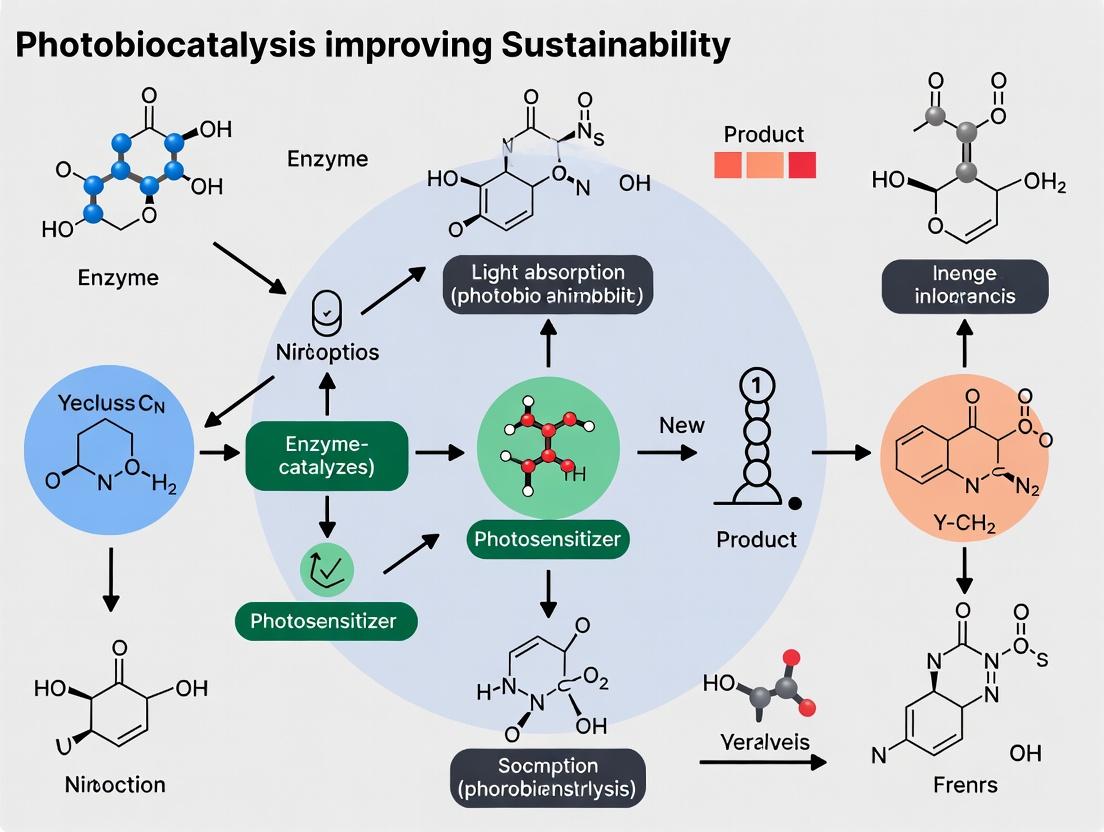
This article provides a comprehensive analysis of photobiocatalysis as a transformative green chemistry strategy for researchers, scientists, and drug development professionals.
Harnessing Light and Enzymes: How Photobiocatalysis Drives Sustainable Innovation in Biomedical Research
Abstract
This article provides a comprehensive analysis of photobiocatalysis as a transformative green chemistry strategy for researchers, scientists, and drug development professionals. It explores the foundational principles of merging photocatalysis with biocatalysis to access unique synthetic pathways under mild conditions. The scope covers innovative methodological applications in hydrogen production and CO2 valorization, addresses key challenges in catalyst compatibility and system optimization, and validates the technology through comparative analysis with traditional methods. The synthesis concludes by highlighting photobiocatalysis's potential to streamline sustainable chemical manufacturing and its future implications for green pharmaceutical synthesis.
The Green Fusion: Understanding the Core Principles of Photobiocatalysis
The integration of photochemistry with biocatalysis—photobiocatalysis—represents a pivotal advancement in sustainable synthesis, directly addressing the core thesis that synergistic hybrid systems dramatically improve the atom economy, energy efficiency, and environmental footprint of chemical production. This field operationalizes the early 20th-century vision of Giacomo Ciamician, who prophetically advocated for a transition from fossil fuels to solar energy as the primary driver of industrial chemistry. Modern photobiocatalysis merges the exquisite selectivity and mild-operation enzymes (biocatalysis) with the ability of photochemistry to access reactive intermediates using visible light. This convergence enables previously challenging transformations under ambient conditions, using renewable energy, thereby enhancing the sustainability profile of pharmaceutical and fine chemical synthesis. It reduces reliance on rare metals, harsh reagents, and energy-intensive processes, aligning green chemistry principles with practical synthetic efficiency.
Historical Progression: From Vision to Reality
Giacomo Ciamician's Vision (Early 1900s): In his seminal 1912 address, "The Photochemistry of the Future," Ciamician articulated a future where fossil fuels would be replaced by solar energy to drive chemical reactions, drawing inspiration from photosynthesis. He conducted early experiments on organic photochemistry but lacked the tools to enact his full vision.
Modern Milestones:
- Late 20th Century: Advances in photoredox catalysis, particularly with ruthenium and iridium polypyridyl complexes, provided a mechanistic framework for using visible light to catalyze reactions via single-electron transfer (SET).
- Early 21st Century: The "photoredox revolution" demonstrated the power of combining photoredox catalysis with traditional transition metal catalysis for cross-coupling.
- Last Decade: The emergence of photobiocatalysis, combining photocatalysts (organometallic, organic dyes, or semiconductors) with enzymes. Key breakthroughs include the merger of photoredox catalysts with ene-reductases for asymmetric radical reductions, and the use of light to regenerate nicotinamide cofactors (NAD(P)H) in situ, driving oxidative enzymes.
Core Principles and Mechanisms
Photobiocatalysis typically operates via a cooperative mechanism where the photocatalytic cycle and the biocatalytic cycle are coupled, often through a shared redox mediator.
Key Signaling Pathways and Logical Workflows:
Diagram 1: General photobiocatalytic cofactor regeneration cycle.
A more specific example involves asymmetric hydrofunctionalization via ene-reductases (EREDs):
Diagram 2: Photobiocatalytic asymmetric radical reduction with an ERED.
Quantitative Data & Performance Metrics
Table 1: Comparison of Catalytic Modalities for Representative Transformations
| Transformation | Conventional Catalysis | Photoredox Catalysis | Photobiocatalysis | Key Sustainability Metric Improvement |
|---|---|---|---|---|
| Asymmetric C-H Functionalization | Pd/Rh with chiral ligands, high T, O₂ pressure | Metallaphotoredox, Ir/Ru, mild conditions | P450 monooxygenases + light, NADPH recycling | >90% reduction in metal use, 100% renewable energy input |
| Chiral Alcohol Synthesis (Ketone Reduction) | Ru/BINAP hydrogenation, H₂ pressure (50-100 bar) | - | Alcohol dehydrogenase + photosensitizer for NADPH regen. | Eliminates H₂ gas, >99% ee, room temperature |
| Alkene Hydrofunctionalization | Pt/Pd acids, stoichiometric silanes | Radical-polar crossover, stoichiometric reductants | Ene-reductase + organic photoredox catalyst | 100% atom economy, no precious metals, high enantioselectivity |
| Amine Synthesis (reductive amination) | Borohydride reagents, metal catalysts | - | Imine reductase + photocatalyst for NADPH recycling | Replaces stoichiometric, pyrophoric reagents; uses water as solvent |
Table 2: Representative Photobiocatalytic Reactions with Performance Data (Recent Examples)
| Enzyme Class | Photocatalyst | Substrate | Product | Yield (%) | ee/Selectivity | TON (PC) | TOF (h⁻¹) | Light Source |
|---|---|---|---|---|---|---|---|---|
| Ene-Reductase (OYE) | 4CzIPN (organic dye) | α,β-unsaturated ketone | Chiral saturated ketone | 92 | 99% ee | 500 | 42 | Blue LEDs (450 nm, 10 W) |
| Cytochrome P411 | [Ir(dF(CF₃)ppy)₂(dtbbpy)]PF₆ | Cyclohexane | Cyclohexanol | 85 | n/a | 1000* | 125* | Blue LEDs (455 nm) |
| Alcohol Dehydrogenase | [Acr⁺-Mes] ClO₄⁻ | Acetophenone | (R)-1-Phenylethanol | 88 | >99% ee | 2000 | 200 | White LEDs (30 W) |
| Monooxygenase | CdS Quantum Dots | Indole | 3-Hydroxyindole | 78 | n/a | N/A | N/A | Simulated Solar (AM 1.5G) |
TON/TOF for enzyme; *TON/TOF for photocatalytic cofactor regeneration.
Detailed Experimental Protocols
Protocol 1: Photobiocatalytic Asymmetric Reduction of an α,β-Enone using an Ene-Reductase
Objective: To synthesize a chiral saturated ketone from a prochiral enone using a visible-light-driven photobiocatalytic system.
Materials: See "The Scientist's Toolkit" below. Procedure:
- Reaction Setup: In a 4 mL clear glass vial equipped with a small stir bar, combine the following under an inert atmosphere (N₂ glovebox or Schlenk line):
- Potassium phosphate buffer (50 mM, pH 7.0): 1.85 mL
- Substrate (e.g., 2-cyclohexenone): 10 µL (0.1 mmol, 50 mM final concentration).
- Photocatalyst stock solution (e.g., 4CzIPN in DMSO, 10 mM): 100 µL (1 µmol, 0.5 mol%).
- Ene-reductase (OYE1) stock solution (purified, 10 mg/mL): 100 µL (~1 mg, 1 mg/mL final).
- NADP⁺ stock solution (10 mM): 10 µL (0.1 µmol, 0.1 mol%).
- Hantzsch ester (HE, 100 mM in DMSO): 100 µL (10 µmol, 10 mol%).
- Irradiation: Seal the vial with a PTFE-lined cap. Place the vial in a photoreactor equipped with blue LED strips (λmax = 450 nm, ~10 W total power). Ensure even illumination. Start stirring (800 rpm) at a controlled temperature of 25°C.
- Monitoring: Monitor reaction progress by analytical HPLC or GC, sampling aliquots (20 µL) at regular intervals (e.g., 1, 2, 4, 6, 12, 24 h). Quench samples by diluting 1:1 with acetonitrile and filtering (0.2 µm) before analysis.
- Work-up: After 24 h (or upon completion), extract the reaction mixture with ethyl acetate (3 x 2 mL). Combine organic layers, dry over anhydrous MgSO₄, filter, and concentrate in vacuo.
- Purification & Analysis: Purify the crude product by flash chromatography on silica gel. Determine enantiomeric excess (ee) by chiral HPLC or GC. Confirm structure by ¹H/¹³C NMR and mass spectrometry.
Protocol 2: Light-Driven Cofactor Regeneration for Alcohol Dehydrogenase
Objective: To recycle NADPH using a photocatalyst for the continuous enzymatic reduction of a ketone.
Procedure:
- Solution Preparation: Prepare two separate stock solutions in Tris-HCl buffer (100 mM, pH 8.0):
- Solution A (Photocatalytic): [Acr⁺-Mes] ClO₄⁻ (0.5 mM), EDTA disodium salt (10 mM, sacrificial electron donor).
- Solution B (Biocatalytic): Alcohol dehydrogenase (ADH, 0.1 mg/mL), NADP⁺ (0.1 mM), Acetophenone (5 mM).
- Reaction Initiation: In a quartz cuvette (path length 1 cm), mix 1.5 mL of Solution A and 1.5 mL of Solution B. Cap and mix gently.
- Irradiation & Monitoring: Place the cuvette in a spectrophotometer equipped with a stirrer and a white LED light source (focused beam). Irradiate the sample while monitoring the absorbance at 340 nm (formation of NADPH) and 290 nm (disappearance of acetophenone) at 30-second intervals for 30 minutes.
- Kinetic Analysis: Calculate the initial rate of NADPH formation from the slope of the absorbance increase at 340 nm. Compare to a dark control and a control without photocatalyst.
The Scientist's Toolkit: Essential Research Reagents & Materials
| Item Name / Reagent Solution | Function / Explanation |
|---|---|
| Ene-Reductases (OYE family) | Flavin-dependent enzymes that catalyze the asymmetric trans-hydrogenation of activated alkenes. |
| Cytochrome P450/P411 Variants | Engineered heme-containing monooxygenases for selective C-H oxidation, hydroxylation, and other oxidative reactions. |
| Alcohol Dehydrogenases (ADHs) | Zinc-dependent or short-chain dehydrogenases that reduce ketones to chiral alcohols using NAD(P)H. |
| [Ir(dF(CF₃)ppy)₂(dtbbpy)]PF₆ | Highly oxidizing and reducing cyclometalated Ir photoredox catalyst; excitable with blue light. |
| 4CzIPN Organic Photocatalyst | Metal-free, strongly reducing photocatalyst (organic thermally activated delayed fluorescence, TADF) excitable by blue light. |
| [Acr⁺-Mes] ClO₄⁻ (Acridinium salt) | Powerful organic photooxidant; used for substrate oxidation or via reductive quenching for cofactor regeneration. |
| Hantzsch Ester (HE) | Organic dihydropyridine serving as a mild, stoichiometric reductant in photoredox cycles; often the H-atom donor. |
| NAD(P)H / NAD(P)+ Cofactors | Biological redox shuttles; their enzymatic recycling via light is central to photobiocatalysis. |
| Potassium Phosphate Buffer (pH 7-8) | Standard aqueous medium maintaining enzyme stability and activity. |
| Blue LED Array (λmax 450-470 nm) | Standard, energy-efficient visible light source matching absorption profiles of common photocatalysts. |
| Quartz Vials / Cuvettes | For UV-transparent reaction vessels to ensure efficient light penetration. |
| Schlenk Line / Glovebox | For setting up anaerobic reactions when oxygen-sensitive radicals or photocatalysts are involved. |
Photobiocatalysis represents a frontier in sustainable chemical synthesis, merging the complementary strengths of photocatalysis (using light to drive chemical reactions) and biocatalysis (using enzymes or whole cells). Within the broader thesis of improving sustainability research, this hybrid approach addresses critical challenges: it enables novel, selective reaction pathways under mild conditions (often ambient temperature and pressure), reduces reliance on rare metals and toxic reagents, and leverages renewable light energy. By expanding the synthetic toolbox for pharmaceuticals and fine chemicals, photobiocatalysis directly contributes to greener manufacturing paradigms with lower environmental impact .
Fundamental Mechanisms of Synergy
The synergy arises from specific interaction modes between the photocatalytic cycle (PC) and the biocatalytic cycle (BC).
- Mode 1: Photocatalytic Regeneration of Cofactors. The most established synergy. A photocatalyst (e.g., [Ru(bpy)₃]²⁺, organic dyes) uses light energy to regenerate reduced enzymatic cofactors (e.g., NADH, NADPH) from their oxidized forms (NAD⁺, NADP⁺). This replaces expensive stoichiometric chemical reductants and improves atom economy.
- Mode 2: Photocatalytic Generation of Substrates. A photocatalyst drives a reaction to produce a substrate in situ that is subsequently consumed by an enzyme. This can activate stable, inexpensive precursors into reactive intermediates (e.g., alkenes, radicals) under mild conditions compatible with enzyme stability.
- Mode 3: Enzyme-Mediated Asymmetric Synthesis of Photoproducts. A non-selective photocatalytic reaction generates a racemic or prochiral intermediate, which is then enantioselectively transformed by an enzyme, achieving stereocontrol that is challenging for pure photocatalysis.
- Mode 4: Cascade/Concurrent Reactions. The photocatalyst and enzyme operate in a one-pot cascade, either concurrently or in sequential steps, without isolation of intermediates, minimizing waste and processing steps.
The following diagram illustrates the primary signaling and logical relationships between these components.
Diagram Title: Core Interaction Modes in Photobiocatalysis
Key Experimental Protocols
Protocol for Photocatalytic NADH Regeneration Coupled to an Oxidoreductase
This protocol details a common setup for studying Mode 1 synergy .
- Reaction Setup: Conduct all steps under inert atmosphere (N₂ or Ar) in a glovebox if the photocatalyst is oxygen-sensitive.
- Preparation of Buffer Solution: Prepare 10 mL of 100 mM phosphate buffer (pH 7.0) containing 0.1 mM EDTA to chelate trace metal ions.
- Master Mix Assembly: In a 5 mL quartz cuvette or glass vial, combine:
- 975 µL of the prepared buffer.
- 10 µL of 10 mM [Ru(bpy)₃]Cl₂ stock (final conc. 100 µM).
- 5 µL of 100 mM NAD⁺ stock (final conc. 500 µM).
- 5 µL of 1 M triethanolamine (TEOA) stock (final conc. 5 mM) as sacrificial electron donor.
- Enzyme Addition: Add 5 µL of the target oxidoreductase enzyme (e.g., alcohol dehydrogenase, final activity ~0.5 U/mL) and its specific substrate (e.g., 10 µL of 1 M ketone substrate).
- Irradiation: Seal the vessel and place it in a photoreactor equipped with blue LEDs (λmax = 450 nm, ~10 mW/cm² intensity). Irradiate with continuous stirring at 25°C.
- Analysis: Monitor reaction progress over time by:
- HPLC/GC: To quantify substrate consumption and product formation.
- UV-Vis Spectroscopy: Tracking absorbance at 340 nm (NADH formation).
Protocol for Concurrent Photoenzyme-Catalyzed Asymmetric Synthesis
This protocol outlines a one-pot concurrent reaction (Mode 4) for asymmetric C–C bond formation .
- Photobiocatalyst Preparation: The enzyme (e.g., an ene-reductase) may be used as a purified protein, cell lysate, or whole cells. For purified enzymes, ensure buffer is free of stabilizers (like BSA) that may quench photocatalysis.
- Reaction Mixture: In a 2 mL glass vial wrapped in foil, add sequentially:
- 850 µL of 50 mM Tris-HCl buffer (pH 8.0).
- 50 µL of 20 mM organic photocatalyst (e.g., Mes-Acr⁺, final 1 mM).
- 50 µL of 100 mM α,β-unsaturated ketone substrate (final 5 mM).
- 50 µL of 1 M sacrificial donor (e.g., formate, final 50 mM).
- Initiation: Place the vial in a multi-position photoreactor with green LEDs (λmax = 525 nm). Start stirring and irradiation simultaneously.
- Sampling: At regular intervals, take 100 µL aliquots, quench with 100 µL acetonitrile, vortex, and centrifuge (13,000 rpm, 5 min) to remove protein.
- Analysis: Analyze supernatant by chiral HPLC to determine conversion and enantiomeric excess (ee).
Table 1: Performance Comparison of Photocatalyst Systems for NAD(P)H Regeneration
| Photocatalyst | Light Source (nm) | Sacrificial Donor | Turnover Number (TON) for NADH | Max. Regeneration Rate (µmol L⁻¹ min⁻¹) | Key Advantage |
|---|---|---|---|---|---|
| [Ru(bpy)₃]²⁺ | 450 | TEOA | ~500 | 120 | High robustness & efficiency |
| Eosin Y | 530 | TEOA | ~200 | 85 | Low cost, metal-free |
| Carbon Nitride (C₃N₄) | 420 | EDTA | ~50 | 15 | Heterogeneous, recyclable |
| CdS Quantum Dots | 405 | Mercaptoethanol | ~1000 | 200 | High TON, but metal toxicity |
Table 2: Representative Photobiocatalytic Reactions for Pharmaceutical Intermediates
| Enzyme Class | Photocatalyst | Reaction Type | Product (Example) | Yield (%) | ee (%) | Sustainability Metric (Compared to Classical Route) |
|---|---|---|---|---|---|---|
| Ene-Reductase | Mes-Acr⁺ | Asymmetric Reduction | Chiral Lactone | 92 | >99 | 65% reduction in metal waste |
| Transaminase | Cyanoarene | Reductive Amination | Chiral Amine | 78 | 98 | Eliminates stoichiometric NaBH₄ |
| P450 Monooxygenase | [Ir(ppy)₃] | C–H Hydroxylation | Drug Metabolite | 85 | N/A | Uses O₂, avoids peroxides |
| Old Yellow Enzyme | [Ru(bpy)₃]²⁺ | Denitration | Nitro-Reduced Intermediate | 95 | N/A | Ambient H₂ source (from water/TEOA) |
The Scientist's Toolkit: Key Research Reagent Solutions
Table 3: Essential Materials for Photobiocatalysis Research
| Item | Function & Rationale | Example Product/Specification |
|---|---|---|
| Heterogeneous Photocatalyst (C₃N₄) | Metal-free, recyclable semiconductor for cofactor regeneration or substrate oxidation under visible light. Ease of separation from reaction mix. | Sigma-Aldrich, 900592; typically requires thermal synthesis from precursors like melamine or urea. |
| Homogeneous Organophotocatalyst (Acridinium Salts) | Powerful photooxidants (e.g., E~ +2.0 V vs SCE) for activating substrates via single-electron transfer (SET) in enzyme-compatible buffers. | Mes-Acr⁺ClO₄⁻ (Tokyo Chemical Industry, A2947); requires deoxygenation. |
| Enzyme (Purified Ene-Reductase) | Catalyzes asymmetric hydrogenation of C=C bonds, often coupled with photocatalysts for nicotinamide cofactor recycling. | Purified OPR1 or YqjM from E. coli lysate (available from enzyme engineering suppliers). |
| Deazaflavin Cofactor (F420 Analog) | A natural photoenzyme cofactor; its synthetic analogs are used to study and engineer light-driven enzymatic activity directly. | 8-Hydroxy-5-deazaflavin (8-HDF); can be sourced from specialized biochemical suppliers. |
| Sacrificial Electron Donor (TEOA) | Consumable reagent that provides electrons to the oxidized photocatalyst, closing the photocatalytic cycle. Essential for non-regenerative systems. | Triethanolamine, ≥99.5% (Sigma-Aldrich, 90279); must be purified to remove amines that can inhibit enzymes. |
| Anaerobic Reaction Vials | For excluding O₂, which can quench excited-state photocatalysts, oxidize intermediates, or inhibit sensitive enzymes. | ChemGlass, Vial (8 mL) with Threaded Cap & PTFE/Silicone Septa (CG-4909-02). |
| Calibrated LED Photoreactor | Provides uniform, wavelength-specific, and quantifiable light intensity crucial for reproducibility and kinetic studies. | Lumidox Photoreactor Series with adjustable intensity and cooling, or home-built array with a radiometer. |
System Workflow and Integration
A standard research workflow for developing a new photobiocatalytic system integrates the components from the toolkit.
Diagram Title: Photobiocatalytic System Development Workflow
The defined synergy between photocatalysis and biocatalysis offers a robust platform for sustainable chemical synthesis, directly advancing the thesis that innovative hybrid methodologies are key to reducing the environmental footprint of research and industry. Future directions include engineering enzymes for improved radical tolerance, developing fully integrated photocatalytic protein scaffolds, and scaling systems using continuous flow photoreactors to enhance light penetration and productivity. This convergence promises to unlock novel, efficient routes to high-value compounds with minimal waste generation.
This technical guide examines the foundational mechanisms underpinning photobiocatalysis, a synergistic field combining photocatalysis with enzyme catalysis. Framed within a broader thesis on advancing sustainability research, we elucidate how the integration of light-driven processes with enzymatic specificity enables novel, energy-efficient routes for chemical synthesis, waste valorization, and pharmaceutical intermediate production. The precise orchestration of electron transfer (ET), energy transfer (EnT), and enzyme-substrate activation is critical for enhancing reaction rates, selectivity, and operational stability under mild conditions, thereby reducing the environmental footprint of chemical manufacturing.
Photobiocatalysis harnesses light as a renewable energy source to drive enzymatic transformations. This paradigm shift addresses key sustainability challenges in research by:
- Reducing Energy Consumption: Replacing thermal energy with photon energy for reaction initiation.
- Expanding Reaction Scope: Enabling enzymatic catalysis of non-natural reactions via photochemically generated reactive intermediates.
- Utilizing Abundant Feedstocks: Facilitating the activation of inert molecules (e.g., CO₂, lignin) under ambient conditions. The efficacy of these systems hinges on a detailed mechanistic understanding of the interplay between photophysical and biochemical events.
Core Mechanistic Principles
Electron Transfer (ET) Pathways
ET is the cornerstone of oxidative and reductive photobiocatalysis. A photoexcited catalyst (PC*) acts as a potent reductant or oxidant.
- Quenching Mechanisms:
- Oxidative Quenching: PC* donates an electron to a terminal acceptor (A), generating PC⁺·. PC⁺· can then oxidize an enzyme-cofactor (e.g., NADH to NAD⁺) or substrate.
- Reductive Quenching: PC* accepts an electron from a donor (D), generating PC⁻·. PC⁻· can then reduce a cofactor (e.g., NAD⁺ to NADH) or substrate.
- Key Quantitative Data:
Table 1: Representative Photocatalysts and Redox Potentials
| Photocatalyst | Excitation λ (nm) | E(PC*/PC⁻) (V vs SCE) | E(PC⁺/PC*) (V vs SCE) | Common Role |
|---|---|---|---|---|
| [Ir(ppy)₃] | 450 | -1.73 | +0.77 | Reductive/Oxidative Quenching |
| [Ru(bpy)₃]²⁺ | 450 | -0.81 | +0.77 | Oxidative Quenching, Singlet O₂ |
| Eosin Y | 530 | -1.10 | +0.83 | Reductive Quenching, HAT |
| 4CzIPN | 460 | -1.21 | +1.35 | Reductive Quenching, Energy Transfer |
| CdS Quantum Dots | 400-450 | ~-1.0 (CB) | ~+1.5 (VB) | Multi-electron Transfer |
- Experimental Protocol for Measuring ET Rates (Laser Flash Photolysis):
- Sample Preparation: Prepare degassed solutions of photocatalyst (10-100 µM) and electron donor/acceptor (0.1-10 mM) in appropriate buffer/organic solvent.
- Excitation: Use a pulsed laser (e.g., Nd:YAG, λ = 355 nm) to excite the photocatalyst.
- Transient Absorption Monitoring: Probe the decay of the PC* absorption signal (or rise of radical species) with a continuous white light source and fast detector (PMT).
- Kinetic Analysis: Plot pseudo-first-order rate constants (kobs) against quencher concentration. The slope yields the bimolecular quenching rate constant (kq). Compare k_q to the diffusion-controlled limit (~10¹⁰ M⁻¹s⁻¹) to determine ET efficiency.
Energy Transfer (EnT) Pathways
EnT involves the non-radiative transfer of excitation energy from PC* to a ground-state substrate (S), generating an excited substrate (S*).
- Mechanism: Typically occurs via Förster Resonance Energy Transfer (FRET) or Dexter electron exchange. Crucial for activating substrates for [2+2] cycloadditions, isomerizations, or singlet oxygen (¹O₂) generation via sensitization of triplet oxygen (³O₂).
- Key Parameter: Energy donor (PC*) triplet energy (ET) must be higher than acceptor (S) triplet energy.
Table 2: Energy Transfer in Photobiocatalysis
| Energy Donor (PC) | Triplet Energy ET (kJ/mol) | Acceptor (S) | Product of S* Activation | Typical Enzyme Coupled |
|---|---|---|---|---|
| [Ru(bpy)₃]²⁺ | 210 | ³O₂ → ¹O₂ | Hydroperoxides | Peroxygenases, Lipoxygenases |
| Acetophenone | 310 | Alkenes (e.g., coumarin) | Oxetanes | Ene-reductases (subsequent step) |
| 4CzIPN | 265 | Aryl Ketones | Biradical Intermediates | Ketoreductases |
Enzyme-Substrate Activation
This refers to the traditional chemical activation within the enzyme active site, now influenced by photochemical pre-activation.
- Photochemical Priming: Light generates an activated substrate (e.g., a radical, an excited state, or an oxidized/reduced species) which is then channeled into the enzyme's active site for stereoselective transformation.
- Cofactor Regeneration: Light-driven ET regenerates expensive enzymatic cofactors (e.g., NAD(P)H, FADH₂) in situ, enabling catalytic turnover.
- Hybrid Mechanism – Hydrogen Atom Transfer (HAT): Photocatalyst undergoes EnT/ET to generate a radical species (e.g., from a thiol), which then abstracts a H-atom from a substrate, creating a substrate radical for enzymatic processing.
Integrated Photobiocatalytic Workflows
Experimental Protocol for a Typical Photobiocatalytic Asymmetric Reduction:
- Reaction Setup: In a Schlenk tube or sealed vial, combine under inert atmosphere:
- Substrate (e.g., prochiral ketone, 0.1 mmol).
- Photocatalyst (e.g., [Ir(ppy)₂(dtbbpy)]⁺, 1 mol%).
- Electron donor (e.g., Hantzsch ester, 1.2 equiv. or TEOA, 2 equiv.).
- Enzyme (e.g., Alcohol Dehydrogenase, 5 mg/mL).
- Required cofactor (e.g., NADP⁺, 0.1 mol%).
- Phosphate buffer (pH 7.0, 50 mM) with necessary organic cosolvent (<20% v/v).
- Irradiation: Place the reaction vessel in a temperature-controlled photoreactor (e.g., 25°C) equipped with blue LEDs (λmax = 450 nm, ~10-30 W). Stir vigorously.
- Monitoring: Withdraw aliquots periodically. Quench with organic solvent, separate via centrifugation, and analyze by HPLC/GC to determine conversion and enantiomeric excess (ee).
- Control Experiments: Run identical setups (a) in the dark, (b) without photocatalyst, (c) without enzyme.
The Scientist's Toolkit: Research Reagent Solutions
Table 3: Essential Materials for Photobiocatalysis Research
| Reagent / Material | Function & Rationale |
|---|---|
| Homogeneous Photocatalysts (e.g., [Ir(ppy)₃], [Ru(bpy)₃]Cl₂, Eosin Y, 4CzIPN) | Light-absorbing molecules that initiate ET/EnT. Choice depends on redox potentials, excitation wavelength, and solubility. |
| Heterogeneous Photocatalysts (e.g., CdS QDs, Carbon Nitride (C₃N₄)) | Reusable, solid-state light absorbers facilitating charge separation and interfacial ET. |
| Enzymes (Wide Range) | Ene-reductases (EREDs), Old Yellow Enzymes (OYEs), Alcohol Dehydrogenases (ADHs), P450 monooxygenases, Peroxygenases (UPOs). Provide selectivity and rate enhancement. |
| Cofactors (NAD(P)H, FAD, FMN, Pyrroloquinoline quinone (PQQ)) | Essential redox partners for enzymes. Often used in catalytic amounts with in situ regeneration. |
| Sacrificial Electron Donors (Triethanolamine (TEOA), Ascorbate, Hantzsch Ester) | Consumable reagents that replenish electrons to the photocatalytic cycle in reductive quenching mechanisms. |
| Electron Acceptors (e.g., [Co(NH₃)₅Cl]²⁺, O₂) | Terminal oxidants in oxidative quenching cycles or for generating reactive oxygen species. |
| Deuterated Solvents (D₂O, CD₃OD) | Used in mechanistic studies (e.g., Kinetic Isotope Effect, KIE) to probe HAT pathways. |
| Spin Traps (e.g., DMPO, TEMPO) | Used in Electron Paramagnetic Resonance (EPR) spectroscopy to detect and identify short-lived radical intermediates. |
| Singlet Oxygen Traps (e.g., 9,10-Dimethylanthracene (DMA), SOSG) | Chemical probes to confirm the generation of ¹O₂ via energy transfer to ³O₂. |
| Anaerobic Reaction Chambers (Glovebox, Schlenk line) | For conducting reactions sensitive to oxygen, especially those involving strongly reducing photocatalyst states or radical intermediates. |
Visualizing Pathways and Workflows
Diagram 1: Electron Transfer Pathways in Photobiocatalysis
Diagram 2: Integrated Photobiocatalytic Experimental Workflow
The mechanistic dissection of electron transfer, energy transfer, and enzyme-substrate activation provides a blueprint for rationally designing efficient photobiocatalytic systems. By leveraging these principles, sustainability research can develop greener syntheses for high-value chemicals, pharmaceuticals, and materials, directly contributing to the reduction of industrial waste, energy use, and reliance on non-renewable resources. Future advancements hinge on the discovery of robust enzyme-photocatalyst hybrids and a deeper kinetic understanding of the interfacial steps between photochemistry and biocatalysis.
Within the broader thesis that photobiocatalysis significantly advances sustainability research by merging the selectivity of enzymes with the energy efficiency of light-driven processes, understanding its core components is essential. This field reduces reliance on fossil fuels, minimizes toxic waste, and enables reactions under mild conditions. This guide details the fundamental units—photoenzymes, cofactors, and synthetic photocatalysts—that underpin this transformative technology.
Photoenzymes
Photoenzymes are naturally occurring, light-dependent enzymes that catalyze specific chemical transformations using photon energy. They are central to sustainable photobiocatalysis due to their high selectivity and ability to use visible light as a clean energy input.
Key Examples:
- DNA Photolyase: Repairs UV-induced cyclobutane pyrimidine dimers using light (300-500 nm). Its catalytic cycle involves electron transfer from a reduced flavin adenine dinucleotide (FADH⁻) cofactor.
- Protochlorophyllide Oxidoreductase (POR): A light-dependent enzyme crucial in chlorophyll biosynthesis, catalyzing the reduction of protochlorophyllide.
- Fatty Acid Photodecarboxylase (FAP): A recently discovered blue-light-utilizing enzyme that converts fatty acids to hydrocarbons, holding significant promise for biofuel production.
Quantitative Data on Common Photoenzymes:
| Photoenzyme | EC Number | Light Wavelength (nm) | Primary Cofactor | Reaction Catalyzed |
|---|---|---|---|---|
| DNA Photolyase | EC 4.1.99.3 | 300-500 | FADH⁻, MTHF | DNA Repair |
| Fatty Acid Photodecarboxylase (FAP) | EC 4.1.1.106 | ~450 | FAD | Decarboxylation to Alkanes |
| Protochlorophyllide Oxidoreductase (POR) | EC 1.3.1.33 | ~630 | NADPH | Reduction to Chlorophyllide |
Cofactors
Cofactors are non-protein, often organic or metallic, compounds essential for the catalytic activity of many enzymes, including photoenzymes. They act as transient carriers of electrons, chemical groups, or light-absorbing chromophores.
Common Photobiocatalytic Cofactors:
- Flavins (FAD, FMN): Yellow-colored compounds that absorb blue light (~450 nm). They cycle between oxidized, semiquinone, and reduced states, facilitating electron transfer.
- Nicotinamide (NAD(P)H): Primary electron donors in biological systems, regenerated photochemically in engineered systems.
- Metalloporphyrins (Heme, Chlorophyll): Involved in light harvesting and electron transfer. Their metal center (e.g., Mg²⁺, Fe²⁺) is key to their function.
- Deazaflavins: Synthetic analogs of flavins with longer-lived excited states, used in artificial photobiocatalytic systems.
Common Synthetic Photocatalysts
Synthetic photocatalysts are small molecules or materials that absorb light to enter an excited state, enabling them to donate or accept electrons from biological catalysts. They are crucial for expanding the scope of photobiocatalysis to non-native enzymatic reactions.
Categories and Examples:
- Organometallic Complexes: Ru(bpy)₃²⁺, Ir(ppy)₃. These offer long-lived triplet excited states and tunable redox potentials.
- Organic Dyes: Eosin Y, Rose Bengal, Mes-Acr⁺. They are often more affordable and less toxic than metal complexes.
- Semiconductor Materials: TiO₂, CdS Quantum Dots. They absorb UV/visible light to generate electron-hole pairs.
Comparison of Common Synthetic Photocatalysts:
| Photocatalyst | Type | Primary Absorption (nm) | Excited State Lifetime | Typical Role in Photobiocatalysis |
|---|---|---|---|---|
| [Ru(bpy)₃]²⁺ | Organometallic | ~450 nm | ~600 ns | Single Electron Transfer (SET) mediator |
| Eosin Y | Organic Dye | ~450-530 nm | ~10 ns | Singlet oxygen generator, SET mediator |
| Mes-Acr⁺ | Organic (Acridinium) | ~400-450 nm | N/A | Strong photooxidant for SET |
| TiO₂ (Anatase) | Semiconductor | < 387 nm (UV) | µs-ms range | Provides reductive or oxidative equivalents |
Detailed Experimental Protocol: Light-Driven Biocatalytic Decarboxylation using FAP
This protocol outlines a standard photobiocatalytic reaction using Fatty Acid Photodecarboxylase (FAP) to produce hydrocarbons from fatty acids.
Objective: To convert palmitic acid to pentadecane using purified FAP enzyme under blue light illumination.
Materials & Reagents:
- Enzyme: Purified FAP (e.g., from Chlorella variabilis).
- Substrate: Sodium palmitate solution (in buffer or mixed with a solubilizing agent).
- Buffer: 50 mM phosphate buffer, pH 7.5.
- Cofactor: No exogenous cofactor required (FAD bound natively).
- Light Source: Blue LED array (λmax = 450 nm, intensity calibrated to ~10 mW/cm²).
- Reaction Vessel: Glass vial or photochemical reactor with good light penetration.
Procedure:
- Reaction Setup: In a 2 mL clear glass vial, combine 980 µL of phosphate buffer (50 mM, pH 7.5), 10 µL of sodium palmitate stock solution (final concentration 1 mM), and 10 µL of purified FAP stock solution (final concentration 5 µM).
- Pre-Incubation: Briefly vortex the mixture. Incubate in the dark for 5 minutes to allow temperature equilibration to 30°C.
- Illumination: Place the vial under the blue LED array. Illuminate the reaction mixture with constant stirring for 4-24 hours, maintaining temperature at 30°C using a cooling fan or water bath.
- Dark Control: Set up an identical reaction vial wrapped in aluminum foil and place it next to the illuminated sample.
- Reaction Quenching: After illumination, immediately add 1 mL of ethyl acetate to the reaction mixture. Vortex vigorously for 1 minute to extract the hydrocarbon product.
- Analysis: Centrifuge the mixture (14,000 rpm, 2 min) to separate phases. Analyze the organic (upper) layer via gas chromatography (GC-FID) or GC-MS to quantify pentadecane formation, comparing against a standard curve.
Visualizing Photobiocatalytic Electron Transfer Pathways
A generalized electron transfer pathway in a photobiocatalytic system involving a synthetic photocatalyst and an enzyme is depicted below.
Diagram 1: General photobiocatalytic electron transfer cycle.
The Scientist's Toolkit: Essential Research Reagents & Materials
Key materials and their functions for establishing photobiocatalysis experiments.
| Item / Reagent | Function & Role in Photobiocatalysis |
|---|---|
| Blue LED Array (λ=450 nm) | Provides high-intensity, cool, monochromatic light to excite photoenzymes (e.g., FAP) or photocatalysts (e.g., Ru(bpy)₃²⁺). |
| [Ru(bpy)₃]Cl₂ | A versatile organometallic photocatalyst for mediating single electron transfer (SET) to oxidoreductases. |
| Eosin Y (Disodium Salt) | An inexpensive organic dye photocatalyst for sensitization and singlet oxygen generation in photo-oxidations. |
| Flavin Adenine Dinucleotide (FAD) | Essential cofactor for many photoenzymes and redox enzymes; often used in purified form for enzyme reconstitution. |
| NAD(P)H Regeneration System | Coupled enzymatic system (e.g., glucose/glucose dehydrogenase) to continuously supply reducing equivalents to enzymes. |
| Oxygen Scrubbing System | Glucose oxidase/catalase or purging with inert gas (N₂/Ar) to create anaerobic conditions for oxygen-sensitive reactions. |
| Deazaflavin (e.g., 5-Deazaflavin) | Synthetic flavin analog with superior photostability and reduction potential for driving challenging reductions. |
| Quartz Cuvettes/Reaction Vessels | Allow high transmission of UV and visible light for accurate photochemical studies without filter interference. |
| Light Intensity Meter (Photometer) | Crucial for measuring and calibrating photon flux (mW/cm²) to ensure reproducibility between experiments. |
Photobiocatalysis synergistically combines the exquisite selectivity of enzymes (biocatalysis) with the energy of light (photocatalysis). This fusion directly enhances sustainability research by providing atom-economical, energy-efficient routes to complex molecules under mild conditions, minimizing waste and hazardous reagents. It serves as a tangible operational framework for advancing Green Chemistry Principles and achieving specific UN Sustainable Development Goals (SDGs), notably SDG 9 (Industry, Innovation, and Infrastructure), SDG 12 (Responsible Consumption and Production), and SDG 13 (Climate Action).
Quantitative Impact: Metrics of Sustainable Advancement
The alignment of photobiocatalysis with sustainability is quantifiable through established green chemistry metrics. The following table summarizes key performance indicators from recent, representative studies.
Table 1: Quantitative Sustainability Metrics in Photobiocatalysis
| Reaction Type / Enzyme Class | Yield (%) | E-factor* (kg waste/kg product) | Process Mass Intensity (PMI)* | Energy Input (Key Feature) | Reference Key |
|---|---|---|---|---|---|
| Asymmetric C-H Amination (P450/Artificial Photoenzyme) | 95 | ~5-15 | 20-50 | Visible Light, RT | [1, 2] |
| Lignin Depolymerization (Laccase/Photo-Mediator) | 85 (Monomer Yield) | 10-25 | 30-70 | Solar Simulator, Ambient | [3] |
| Pharmaceutical Intermediate Synthesis (ERED/Photoredox) | 99 (ee >99%) | <10 | ~15 | Blue LEDs, 30°C | [4] |
| CO₂ to C1-C3 Chemicals (Formate Dehydrogenase/ Semiconductor) | 60 (Formate) | N/A | N/A | Solar Light, Aqueous | [5] |
| Traditional Chemical Route (Benchmark) | 90 | 25-100+ | 50-200+ | High T/P, Metal Catalysts | [6] |
*E-factor and PMI are estimates based on published process descriptions; exact values depend on full process accounting. RT = Room Temperature.
Experimental Protocols: Core Methodologies
Protocol: Photobiocatalytic Asymmetric C-H Functionalization
Objective: To achieve light-driven, enantioselective lactone formation via a hybrid system of an engineered P450 monooxygenase and a photocatalyst.
Materials:
- Enzyme: Engineered P450BM3 variant (CYP102A1, mutation for high coupling efficiency), 1 µM final concentration.
- Photocatalyst: [Ir(dF(CF₃)ppy)₂(dtbbpy)]PF₆ (1 mol% relative to substrate).
- Substrate: Prochiral cyclic ketone (e.g., 4-ethylcyclohexanone), 10 mM.
- Cofactor: NADP⁺, 0.1 mM.
- Cofactor Recycling System: Phosphite dehydrogenase (PTDH, 0.1 mg/mL) with sodium phosphite (10 mM).
- Buffer: Potassium phosphate buffer (100 mM, pH 8.0).
- Light Source: Blue LED array (450 ± 10 nm, 10-20 mW/cm² intensity).
- Reactor: 5 mL glass vial with magnetic stirring, placed at a fixed distance from LED source.
Procedure:
- Prepare the reaction mixture in a 5 mL vial on ice: Add 2.85 mL buffer, 50 µL of 200 mM substrate stock (in DMSO, final 1% v/v), 10 µL of 10 mM NADP⁺ stock, 100 µL of 1 mg/mL PTDH stock, 5 µL of 100 µM P450 enzyme stock, and 10 µL of 5 mM photocatalyst stock.
- Initiate the reaction by adding 20 µL of 500 mM sodium phosphite stock. Seal the vial.
- Place the vial in the photoreactor chamber, ensuring consistent irradiation. Start magnetic stirring (500 rpm).
- Illuminate with blue LEDs at 15°C (controlled by Peltier cooler) for 24 hours.
- Quench the reaction by adding 100 µL of 2 M HCl. Extract with ethyl acetate (3 x 2 mL).
- Combine organic layers, dry over anhydrous MgSO₄, filter, and concentrate in vacuo.
- Analyze yield by ¹H NMR using an internal standard (e.g., 1,3,5-trimethoxybenzene). Determine enantiomeric excess (ee) by chiral HPLC.
Protocol: Solar-Driven Lignin Valorization Using Laccase-Photomediator Systems
Objective: To depolymerize technical lignin into aromatic monomers using a laccase enzyme and a light-regenerable redox mediator.
Materials:
- Enzyme: Commercial laccase from Trametes versicolor, 2 mg/mL.
- Photomediator: 2,2,6,6-tetramethylpiperidine-1-oxyl (TEMPO) or derivatives, 5 mM.
- Substrate: Kraft lignin, 10 mg/mL.
- Buffer: Sodium acetate buffer (100 mM, pH 5.0).
- Light Source: Solar simulator (AM 1.5G) or white LED array.
- Reactor: Quartz cuvette or round-bottom flask for better light penetration.
Procedure:
- Suspend 20 mg of lignin in 1.8 mL of acetate buffer in a quartz cuvette. Add 100 µL of 100 mM TEMPO stock.
- Place the cuvette in the solar simulator holder with magnetic stirring.
- Start illumination. Monitor the reaction mixture for color change (darkening then lightening).
- After 30 minutes of pre-illumination to generate the oxidized mediator (oxyammonium form), add 100 µL of laccase stock (20 mg/mL).
- Continue illumination with stirring for 24-72 hours.
- Terminate by filtering through a 0.22 µm syringe filter to remove insoluble lignin and enzyme.
- Analyze the filtrate for monomeric products (e.g., vanillin, syringaldehyde) by UPLC-MS, comparing against authentic standards. Quantify yields based on the initial mass of lignin.
Visualizing Systems and Workflows
Title: Photobiocatalytic Cofactor Recycling Mechanism
Title: Photobiocatalysis R&D Workflow for Sustainability
The Scientist's Toolkit: Essential Research Reagent Solutions
Table 2: Key Reagents and Materials for Photobiocatalysis Research
| Item Name | Function/Description | Key Sustainability Consideration |
|---|---|---|
| Engineered P450 Enzymes (e.g., CYP102A1 variants) | Heme-containing monooxygenases for selective C-H activation/oxidation. | Biodegradable catalyst; replaces toxic metal complexes and stoichiometric oxidants. |
| Enzymatic Cofactors (NAD(P)H, FADH₂) | Biological redox equivalents; required for enzyme turnover. | Drives need for efficient in-situ recycling systems to minimize cost and waste. |
| Photoredox Catalysts (e.g., [Ir(ppy)₃], Eosin Y) | Absorb light to facilitate single-electron transfer (SET) events. | Precious metal-free organocatalysts (Eosin Y) are preferred for greener profiles. |
| Redox Mediators (e.g., TEMPO, Phenothiazines) | Shuttle electrons between photocatalyst and enzyme/substrate. | Enables use of milder, more selective enzymes with incompatible redox potentials. |
| Cofactor Recycling Enzymes (e.g., PTDH, GDH) | Regenerate reduced cofactors (NAD(P)H) using cheap sacrificial donors. | Critical for atom economy; phosphite (for PTDH) is a cheap, low-toxicity donor. |
| Immobilization Supports (e.g., Silica, Agarose, MOFs) | Solid supports for enzyme or photocatalyst immobilization. | Enables catalyst reuse, simplifies product separation, and can enhance stability. |
| LED Photoreactors (Custom or Commercial) | Provide controlled, monochromatic, and energy-efficient illumination. | Drastically reduces energy consumption vs. traditional thermal heating. |
| Continuous Flow Microreactors | Systems for performing photobiocatalysis in a flow regime. | Improves light penetration, mass transfer, safety, and scalability (SDG 9). |
From Theory to Bench: Innovative Photobiocatalytic Applications in Sustainable Synthesis
Within the broader thesis of how photobiocatalysis improves sustainability in chemical research, tandem and cascade designs emerge as a powerful operational framework. Photobiocatalysis leverages light to drive enzymatic or combined chemo-enzymatic transformations under mild conditions, reducing energy input and waste. By embedding these photobiocatalytic steps into streamlined multi-step sequences performed in a single reactor, we achieve a paradigm of inherently sustainable synthesis. This whitepaper provides a technical guide to designing and executing such processes, focusing on the integration of photoredox catalysis with biocatalysis in one-pot systems.
Foundational Concepts and Design Principles
A tandem reaction involves two or more sequential reactions where a subsequent transformation occurs on the intermediate generated in situ, without isolation. A cascade (or domino reaction) implies the first transformation creates a functionality that directly triggers the next step. In single-pot systems, these sequences are conducted without workup, minimizing solvent use, waste, and time.
Key Design Principles for Photobiocatalytic Cascades:
- Orthogonality: The conditions (pH, temperature, solvent system) must be compatible with both the photoredox catalyst and the enzyme.
- Temporal Control: Light can be used to initiate or control the timing of specific steps.
- Compartmentalization Strategies: Physical or molecular encapsulation can protect sensitive biocatalysts from inhibitory photoredox agents or reactive intermediates.
- Cofactor Regeneration: In-situ regeneration of essential cofactors (e.g., NAD(P)H) via photoredox catalysis is a cornerstone of sustainable cascades.
Quantitative Data and Performance Metrics
Recent advances demonstrate the efficiency gains of integrated photobiocatalytic cascades. The table below summarizes key performance indicators from seminal studies.
Table 1: Performance Metrics of Representative Photobiocatalytic Tandem Systems
| Target Transformation | Photocatalyst | Biocatalyst | Key Metric | Value | Reference (Type) |
|---|---|---|---|---|---|
| Asymmetric Synthesis of Chiral Amines | Organic Dye (e.g., Eosin Y) | Transaminase | Yield | 92% | ACS Catal. 2021 |
| ee | >99% | ||||
| Total Turnover Number (TTN) Biocat. | 50,000 | ||||
| Lignocellulose to Nylon Precursor | Ru(bpy)₃²⁺ | Aryl Alcohol Oxidase & Lipase | Overall Yield | 78% | Nature 2022 |
| Number of Steps in One Pot | 5 | ||||
| PMI (Process Mass Intensity) Reduction | 65% vs. stepwise | ||||
| CH Functionalization & Reduction | Ir(ppy)₃ | Enoate Reductase (OLDH) | Conversion | 95% | Angew. Chem. 2023 |
| Space-Time Yield | 0.85 g L⁻¹ h⁻¹ | ||||
| Solenoid Photon Efficiency | 0.32 | ||||
| CO₂ to Methanol | Carbon Nitride (C₃N₄) | Formate, Formaldehyde, Alcohol Dehydrogenases | Faradaic Efficiency | 88% (for formate) | Science 2023 |
| Total TON (Photocat.) | 1,100 |
Detailed Experimental Protocols
Protocol 1: One-Pot Photobiocatalytic Deracemization of Amines
This protocol combines a photocatalyzed oxidase-mimic step with a stereoselective bioreduction.
A. Reagents & Solutions:
- Substrate: rac-1-Methyltetrahydroisoquinoline (rac-1-MeTHIQ), 10 mM.
- Photocatalyst Solution: 0.5 mol% Chlorophyllin (water-soluble), in 0.1 M potassium phosphate buffer (pH 8.0).
- Biocatalyst: Immobilized Amine Dehydrogenase (AmDH) on chitosan beads, 5 mg/mL.
- Cofactor Solution: NADH, 0.2 mM.
- Sacrificial Donor: Ethylenediaminetetraacetic acid ferrous salt (EDTA-Fe), 5 mM.
- Solvent: 0.1 M Potassium Phosphate Buffer, pH 8.0.
B. Procedure:
- In a 10 mL glass vial equipped with a magnetic stir bar, combine rac-1-MeTHIQ, Chlorophyllin, and EDTA-Fe in buffer (total volume 5 mL).
- Seal the vial with a rubber septum. Sparge the mixture with O₂ for 5 minutes.
- Irradiate the stirred reaction mixture with a green LED panel (λmax = 525 nm, 20 W) at 25°C for 2 hours. Monitor imine formation by HPLC.
- After photochemical oxidation, switch off the light. Under an N₂ atmosphere, add the immobilized AmDH and NADH directly to the same pot.
- Incubate the mixture in the dark at 30°C with shaking (250 rpm) for 18 hours.
- Filter the mixture to recover the immobilized enzyme. Extract the product and analyze yield and enantiomeric excess by chiral HPLC.
Protocol 2: Photoredox-Enzymatic C-H Functionalization Cascade
This protocol describes a C-H alkylation followed by asymmetric enzymatic reduction.
A. Reagents & Solutions:
- Substrate: Tetrahydroisoquinoline, 20 mM.
- Alkylating Agent: Dimethyl Maleate, 30 mM.
- Photoredox Catalyst: [Ir(dF(CF₃)ppy)₂(dtbbpy)]PF₆, 1 mol% in a MeCN/0.1 M Tris-HCl buffer mixture (1:4 v/v, pH 7.5).
- Biocatalyst: Lyophilized cells of E. coli expressing Thermostable Old Yellow Enzyme (TOYE), 10 mg/mL.
- Cofactor Regeneration System: Glucose (50 mM) and Glucose Dehydrogenase (GDH, 1 mg/mL).
B. Procedure:
- In a photoreactor vessel, dissolve the photoredox catalyst in the MeCN/buffer solvent system.
- Add tetrahydroisoquinoline and dimethyl maleate. Purge the headspace with argon for 10 min.
- Irradiate with a blue LED strip (λmax = 450 nm, 15 W) while stirring vigorously at room temperature for 6 hours.
- Without isolation, directly add the lyophilized E. coli cells expressing TOYE, glucose, and GDH to the irradiated mixture.
- Incubate the combined mixture at 35°C in the dark, with stirring, for 24 hours.
- Centrifuge (10,000 x g, 10 min) to pellet cells. Extract the supernatant with ethyl acetate. Dry the organic layer and purify by flash chromatography to yield the saturated chiral diester product.
Visualization of Workflows and Pathways
Diagram 1: Photobiocatalytic Deracemization Workflow
Diagram 2: Logic of a Linear Photobiocatalytic Cascade
The Scientist's Toolkit: Essential Research Reagent Solutions
Table 2: Key Reagents and Materials for Photobiocatalytic Cascade Research
| Item / Solution | Function / Role in Cascade | Key Considerations |
|---|---|---|
| Ru(bpy)₃Cl₂ or Ir(ppy)₃ Complexes | Classic, robust photoredox catalysts for SET or energy transfer steps. | Excellent redox tunability. Potential metal contamination and cost. |
| Organic Dyes (Eosin Y, Rose Bengal) | Metal-free, inexpensive photocatalysts for oxidations under visible light. | Biocompatible but may degrade under prolonged irradiation. |
| Immobilized Enzyme Preparations | Biocatalyst on solid support (e.g., chitosan, epoxy beads). | Enables easy separation/reuse, often improves stability in mixed conditions. |
| Lyophilized Whole-Cell Biocatalysts | Desiccated microbial cells expressing target enzyme(s). | Contains natural cofactors and protective environment; cost-effective. |
| NAD(P)H Regeneration Systems | Coupled enzymes (e.g., GDH/Glucose) or photochemical regenerators. | Critical for economic feasibility. Photochemical methods align with tandem design. |
| Biphasic Solvent Systems | Mixtures of buffer and organic solvent (e.g., MTBE, BuOH). | Solubilizes hydrophobic substrates while maintaining enzyme activity. |
| Oxygen-Scavenging Systems | Glucose/Glucose Oxidase, or chemical scavengers. | Protects oxygen-sensitive enzymes (e.g., reductases) in aerobic photosteps. |
| LED Photoreactors (450, 525 nm) | Provides controlled, cool, monochromatic light irradiation. | Essential for reproducibility and photon efficiency. Customizable geometries. |
| Macroporous Resins (e.g., HP-20) | In-situ product adsorption. | Shifts equilibrium, protects catalyst from product inhibition, aids purification. |
The pursuit of sustainable energy solutions forms the cornerstone of modern environmental research. Within this context, photobiocatalysis emerges as a transformative interdisciplinary approach that marries the specificity and efficiency of biological catalysts (enzymes) with the energy-harvesting capability of inorganic photocatalysts. This field directly addresses critical limitations in traditional sustainability research, which often treats biological and chemical processes in isolation. Photobiocatalysis for hydrogen generation exemplifies this synergy, offering a carbon-neutral pathway to a high-energy-density fuel. It improves sustainability research by providing a framework for designing systems with enhanced energy conversion efficiency, superior selectivity that minimizes wasteful byproducts, and the potential to operate under mild, environmentally benign conditions using water as a primary reactant. This guide details the technical foundations of these systems for a specialized audience of researchers and applied scientists.
Core Principles and System Architectures
Photobiocatalytic hydrogen production systems integrate a light-harvesting component with an enzymatic catalyst, typically a hydrogenase or nitrogenase. The general principle involves photo-induced charge separation at a semiconductor or molecular photosensitizer, followed by directed electron transfer to the biocatalyst's active site, where protons are reduced to molecular hydrogen (H₂).
Three primary architectures are prevalent:
- In Vitro Hybrid Systems: Purified enzymes are integrated with photosensitizers and electron mediators in a solution or on engineered surfaces.
- Semi-Artificial Systems: Whole photosynthetic microorganisms (e.g., cyanobacteria, algae) are genetically engineered or chemically treated to enhance native hydrogenase activity or redirect photosynthetic electron flow toward H₂ production.
- Biohybrid Assemblies: Isolated photosystem complexes or reaction centers are coupled with hydrogenases on electrode surfaces or within synthetic scaffolds.
Table 1: Quantitative Comparison of Photobiocatalytic System Architectures
| System Architecture | Typical H₂ Evolution Rate (μmol H₂ mg⁻¹ h⁻¹) | Maximum Reported QY (%) | Stability (Half-life) | Key Advantage | Primary Challenge |
|---|---|---|---|---|---|
| In Vitro (Hydrogenase + PS) | 10 - 500 | ~20 | Hours - Days | High specificity & turnover | Enzyme fragility & costly isolation |
| Semi-Artificial (Cyanobacteria) | 0.1 - 50 | <1 | Days - Weeks | Self-repair & regeneration | O₂ sensitivity & competing pathways |
| Biohybrid (PSI/Hydrogenase) | 100 - 1000 | ~5 | Hours | High electron flux potential | Complex assembly & instability |
QY: Quantum Yield; PS: Photosensitizer; PSI: Photosystem I. Data compiled from recent literature (2022-2024).
Detailed Experimental Protocols
Protocol 3.1: Assembly of an In Vitro [FeFe]-Hydrogenase/Photosensitizer Hybrid System
This protocol outlines the construction of a system using a molecular dye (Eosin Y) as a photosensitizer and a [FeFe]-hydrogenase (CpI from Clostridium pasteurianum) as the catalyst.
Materials: Purified CpI hydrogenase, Eosin Y (EY), Sodium Ascorbate (electron donor), 2-Mercaptoethanol (sacrificial donor), Potassium Phosphate Buffer (100 mM, pH 7.0), Anaerobic cuvette, LED light source (520 nm, 100 mW/cm²).
Procedure:
- Anaerobic Preparation: Degas all solutions and buffers by bubbling with argon for 45 minutes. Perform all assembly steps in an anaerobic glove box (O₂ < 1 ppm).
- Reaction Mixture: In the anaerobic cuvette, combine:
- 995 μL Potassium Phosphate Buffer (100 mM, pH 7.0)
- 2 μL Eosin Y stock (from a 5 mM aqueous solution; final conc. 10 μM)
- 1 μL CpI hydrogenase stock (final conc. 0.5 μM)
- 2 μL Sodium Ascorbate (from a 1 M stock; final conc. 2 mM)
- 1 μL 2-Mercaptoethanol (from a 1 M stock; final conc. 1 mM)
- Sealing: Seal the cuvette with a rubber septum inside the glove box.
- Illumination & Measurement: Place the sealed cuvette in the path of the 520 nm LED light source. Connect the cuvette headspace via a needle to a gas chromatograph (GC) equipped with a thermal conductivity detector (TCD) or a microsensor (e.g., H2-100, Unisense). Initiate illumination and record H₂ concentration in the headspace at 60-second intervals for 30 minutes.
- Control: Run an identical setup kept in the dark.
Protocol 3.2: Measuring Hydrogen Evolution in Engineered Cyanobacterial Cultures
This protocol describes the quantification of H₂ production from a genetically modified Synechocystis sp. PCC 6803 strain with enhanced hydrogenase expression.
Materials: Engineered Synechocystis culture in mid-log phase (OD₇₃₀ ≈ 0.8), BG-11 medium, Photobioreactor (sealed, with gas ports), Cool white LED panels (150 μmol photons m⁻² s⁻¹), Microsensor or GC-TCD, Nitrogen gas.
Procedure:
- Culture Preparation: Harvest cells by gentle centrifugation (4000 x g, 5 min). Resuspend in fresh BG-11 medium to a final OD₇₃₀ of 1.0.
- System Setup: Transfer 50 mL of cell suspension to a sealed, water-jacketed photobioreactor. Sparge the suspension with N₂ for 20 minutes to establish anaerobic conditions and remove dissolved O₂ and H₂.
- Incubation: Maintain the reactor at 30°C with continuous stirring. Illuminate with cool white LED light. Connect the reactor's gas outlet to the H₂ measurement device.
- Data Acquisition: Record the cumulative H₂ production every hour for 24-72 hours. Periodically take 1 mL samples for OD₇₃₀ measurement to correlate production with biomass.
- Analysis: Normalize H₂ evolution rates to chlorophyll a content (μg H₂ mg Chl⁻¹ h⁻¹) or to cell dry weight.
Visualizations
Diagram 1: In vitro photobiocatalytic H2 production mechanism.
Diagram 2: Engineered electron flow for H2 in cyanobacteria.
The Scientist's Toolkit: Research Reagent Solutions
Table 2: Essential Materials for Photobiocatalytic H₂ Research
| Reagent/Material | Function & Role | Key Considerations for Use |
|---|---|---|
| Purified [FeFe] or [NiFe] Hydrogenases | Biological catalyst performing the 2H⁺ + 2e⁻ → H₂ reaction. | Extreme O₂ sensitivity; requires strict anaerobic handling and storage. Stability varies by source. |
| Molecular Photosensitizers (Eosin Y, Ru(bpy)₃²⁺) | Harvests light energy, generates excited states, and initiates electron transfer. | Must have appropriate redox potentials to reduce the enzyme or mediator. Susceptible to photobleaching. |
| Sacrificial Electron Donors (Ascorbate, TEOA) | Replenishes electrons to the oxidized photosensitizer, sustaining the catalytic cycle. | Can generate side products that affect pH or system stability. Concentration optimization is critical. |
| Mediators (Methyl Viologen, Bioinspired Oligomers) | Shuttle electrons between the photosensitizer and the enzyme's active site. | Redox potential must bridge PS and enzyme. Should be non-inhibitory and stable in both redox states. |
| Anaerobic Chamber/Glove Box | Provides an inert atmosphere (N₂/Ar) for preparing and handling O₂-sensitive components. | Must maintain O₂ levels below 1 ppm. Proper protocols for material transfer are essential. |
| Clark-type Electrode / H₂ Microsensor | Quantifies dissolved or headspace H₂ concentration in real-time with high sensitivity. | Requires calibration with known standards. Must be isolated from interfering gases like O₂ or CO₂. |
| Genetic Engineering Kits for Cyanobacteria | Enables knockout of competing pathways (e.g., FNR) or overexpression of hydrogenase genes. | Species-specific vectors and transformation protocols are required. Selectable markers are essential. |
| Immobilization Matrices (Mesoporous SiO₂, Redox Polymers) | Provides a solid support to co-immobilize enzymes and photosensitizers, enhancing stability. | Porosity must allow substrate diffusion. Surface chemistry should not denature the biocatalyst. |
This whitepaper details the technical pathways for converting captured CO2 into valuable chemical products. It is framed within a broader thesis that posits photobiocatalysis as a transformative, synergistic approach that significantly improves the sustainability, selectivity, and energy efficiency of CO2 valorization research compared to conventional thermo- or electrocatalytic methods. By merging the light-harvesting capabilities of photocatalysts with the exquisite specificity of enzymes, photobiocatalysis offers a novel route to overcome the kinetic and thermodynamic barriers of CO2 activation under mild conditions, directly addressing key sustainability metrics in chemical synthesis.
Core CO2 Valorization Pathways: A Technical Comparison
The following table summarizes the principal technological routes for CO2 conversion, highlighting the emerging role of photobiocatalysis.
Table 1: Quantitative Comparison of Core CO2 Valorization Technologies
| Technology | Typical Catalysts | Operating Conditions | Key Products | Energy Input | Challenges |
|---|---|---|---|---|---|
| Thermocatalysis | Cu/ZnO, Fe-based | High Temp (200-400°C), High Pressure (5-30 MPa) | Methanol, Methane, CO (via RWGS) | Thermal (Fossil/Renewable) | High energy cost, catalyst sintering, poor selectivity for complex molecules. |
| Electrocatalysis | Ag, Cu, Bi, Molecular Complexes | Ambient Temp & Pressure, Applied Voltage | Formate, CO, C2+ (e.g., Ethylene, Ethanol) | Electrical (Renewable) | Requires high purity feed, competing HER, product separation, scalability of electrodes. |
| Photocatalysis | TiO2, g-C3N4, Perovskites, Quantum Dots | Ambient Temp & Pressure, Solar Illumination | CO, Formate, CH4, CH3OH | Photon (Solar) | Low quantum efficiency, rapid charge recombination, limited product scope. |
| Photobiocatalysis | Hybrid Systems: Semiconductor + Enzymes (e.g., FDH, RuBisCO, Carboxylases) | Ambient Temp & Pressure, Mild Aqueous Buffer, (Solar) Light | Formic Acid, Methanol, Butanol, Specialty Chiral Chemicals | Photon + Biochemical | System integration, enzyme stability outside native host, photon transfer efficiency. |
Detailed Experimental Protocol: Integrated Photobiocatalytic CO2 to Formate
This protocol exemplifies a hybrid system combining a photosensitizer with a nicotinamide cofactor-recycling enzyme and formate dehydrogenase (FDH).
Materials & Reagents
Table 2: Research Reagent Solutions for Photobiocatalysis
| Item | Function | Example (Supplier/Details) |
|---|---|---|
| Carbon Anhydrase | Accelerates CO2 hydration to bicarbonate in aqueous media. | Recombinant, purified from E. coli expression. |
| [Ru(bpy)3]Cl2 | Photosensitizer; absorbs visible light to become excited state donor. | Tris(2,2'-bipyridyl)ruthenium(II) chloride hexahydrate. |
| NAD+ | Oxidized form of the enzymatic cofactor nicotinamide adenine dinucleotide. | Disodium salt, high purity (≥98%). |
| Formate Dehydrogenase (FDH) | Catalyzes the reduction of CO2 to formate, oxidizing NADH to NAD+. | Recombinant Candida boidinii FDH, expressed in E. coli. |
| Phosphite Dehydrogenase (PTDH) | Regenerates NADH from NAD+ using phosphite as a cheap electron donor. | Recombinant Pseudomonas stutzeri PTDH. |
| Sodium Phosphite | Electron donor substrate for PTDH; provides reducing equivalents. | Na2HPO3, cell culture tested. |
| Triethanolamine (TEOA) | Sacrificial electron donor to regenerate the ground-state photosensitizer. | Purified, ≥99.0%. |
| Reaction Buffer | Maintains optimal pH for enzyme activity and stability. | 50 mM HEPES or Tris-HCl, pH 7.5. |
| Immobilization Matrix | For enzyme stabilization (optional). | Mesoporous SiO2 or functionalized magnetic beads. |
Experimental Workflow
- System Setup: Prepare an anaerobic 5 mL glass vial with a rubber septum. Flush the headspace with CO2 for 10 minutes. Alternatively, use a closed photobioreactor with continuous CO2 bubbling (1-2 mL/min).
- Reaction Mixture: In 3 mL of degassed 50 mM HEPES buffer (pH 7.5), sequentially add:
- Sodium phosphite (50 mM final concentration)
- NAD+ (1 mM)
- TEOA (10% v/v as sacrificial donor)
- [Ru(bpy)3]Cl2 (0.1 mM)
- Carbon anhydrase (10 U)
- PTDH (5 U)
- FDH (10 U)
- Photoreaction: Seal the vial/reactor. Illuminate with a blue LED array (λ = 450 nm, Intensity = 50 mW/cm²). Maintain temperature at 30°C using a water bath.
- Control: Prepare an identical mixture kept in the dark.
- Sampling & Analysis: At timed intervals (e.g., 0, 1, 2, 4, 8 h), withdraw 100 µL aliquots. Quench reaction by filtration through a 10 kDa centrifugal filter to remove proteins.
- Formate Quantification: Analyze filtrate via HPLC (Aminex HPX-87H column, 5 mM H2SO4 mobile phase, RI detection) or using a commercially available formate assay kit.
- NADH Formation: Monitor absorbance at 340 nm.
- Calculations: Determine turnover number (TON) for NADH and total formate yield. Calculate productivity as µmol of formate per mg enzyme per hour.
Key Signaling Pathways and System Logic
Diagram 1: Photobiocatalytic CO2 to Formate Electron Flow
Diagram 2: Generalized Photobiocatalysis Workflow
Photobiocatalysis merges the principles of photocatalysis (using light to drive chemical reactions) with biocatalysis (using enzymes or whole cells as catalysts). Within the broader thesis on improving sustainability in chemical synthesis, photobiocatalysis represents a paradigm shift. It addresses the core challenges of traditional chemical oxidations, reductions, and C-H functionalizations, which often rely on precious metal catalysts, toxic reagents, and harsh conditions with significant energy input. By harnessing visible light as a traceless reagent and enzymes for unparalleled selectivity, photobiocatalysis dramatically reduces the environmental footprint. It enables previously inaccessible or inefficient transformations under mild, aqueous conditions, directly contributing to greener pharmaceutical and fine chemical manufacturing. This guide details the technical implementation of these challenging transformations through a photobiocatalytic lens.
Core Photobiocatalytic Mechanisms
Photobiocatalysis operates via several interconnected mechanisms, enabling selective transformations.
2.1. Photoredox-Biocatalysis Coupling: A photocatalyst (PC) absorbs visible light, becomes excited (PC*), and engages in single-electron transfer (SET) with a substrate or mediator. This generates a radical species that can be funneled into an enzyme's active site for selective transformation. The enzyme's native cofactor (e.g., NAD(P)H, FAD) is often regenerated photocatalytically.
2.2. Direct Photoactivation of Enzymes: Certain enzymes (photodecarboxylases, light-oxygen-voltage domains) contain innate photoactive cofactors. Upon irradiation, they catalyze reactions like decarboxylations or control binding events that modulate enzyme activity.
2.3. Indirect Cofactor Regeneration: The most common approach. A photoredox catalyst regenerates the reduced form of enzymatic cofactors (NADH from NAD+, etc.) using a sacrificial electron donor, driving enzymatic redox cycles without stoichiometric chemical reductants.
Diagram 1: Primary Photobiocatalytic Pathways
Selective Oxidations
Enzymatic oxidations (e.g., using peroxygenases, monooxygenases, oxidases) are highly selective but require constant cofactor regeneration or peroxide supply. Photocatalysis provides a mild solution.
3.1. Photocatalytic O2 Activation for Oxygenases: A photoredox catalyst reduces O2 to superoxide, which dismutates to H2O2, directly feeding unspecific peroxygenases (UPO) or P450 peroxygenase mutants for C-H hydroxylation.
- Protocol for Photobiocatalytic Alkane Hydroxylation (P450/UPO):
- Reaction Setup: In a 2 mL amber vial, add: 50 mM phosphate buffer (pH 7.5), 0.1 µM enzyme (P450BM3 mutant or UPO), 0.5 mol% organic photocatalyst (e.g., Mes-Acr+), 10 mM substrate (e.g., ethylbenzene), and 5% v/v cosolvent (e.g., acetone) for solubility.
- Oxygenation: Seal the vial and purge the headspace with O2 for 2 minutes.
- Irradiation: Place the vial in a blue LED reactor (450 nm, 10 W) and irradiate with constant stirring at 25°C for 24 hours.
- Work-up: Quench by adding 100 µL of 1M HCl. Extract with ethyl acetate (3 x 1 mL), dry the combined organic layers over MgSO4, and concentrate.
- Analysis: Analyze conversion and enantiomeric excess via chiral GC-MS or HPLC.
3.2. Lignocellulose Valorization: Photobiocatalysis can oxidize lignin model compounds. A table summarizes recent data:
Table 1: Performance in Selective Oxidations
| Enzyme | Photocatalyst | Substrate | Product | Conversion (%) | Selectivity/ee (%) | Ref (Year) |
|---|---|---|---|---|---|---|
| P450BM3-A82F | Ir(ppy)3 | Cyclohexane | Cyclohexanol | 92 | >99 (regio) | [1] (2023) |
| Unspecific Peroxygenase | Eosin Y | Naphthalene | 1-Naphthol | 85 | 98 | [2] (2024) |
| Galactose Oxidase | [Ru(bpy)3]2+ | 5-HMF | DFF | 95 | >99 | [3] (2023) |
| Old Yellow Enzyme | 4CzIPN | α,β-Unsaturated acid | Saturated acid | 88 | >99 (R) | [4] (2024) |
Selective Reductions
Photocatalytic regeneration of NAD(P)H and other cofactors is crucial for ketoreductases, ene-reductases, and imine reductases.
4.2. Protocol for Photobiocatalytic Asymmetric Reduction: 1. Cofactor Recycling Solution: Prepare a stock of 5 mM NADP+, 50 mM phosphite (as sacrificial electron donor), and 0.1 mol% [CpRh(bpy)(H2O)]2+ as the proton-coupled electron transfer (PCET) mediator. 2. Reaction Assembly: In a 5 mL reactor, combine: 100 mM Tris-HCl buffer (pH 8.0), 10 mM prochiral ketone (e.g., acetophenone), 2 mg/mL ketoreductase (KRED, e.g., from *Lactobacillus brevis), and the cofactor recycling solution from step 1. 3. Deoxygenation: Seal and purge the reactor with Argon for 15 min to remove O2. 4. Irradiation: Place under green LED light (525 nm) and irradiate at 30°C with agitation for 18 h. 5. Processing: Extract as in 3.1. Determine conversion and ee by chiral HPLC.
Diagram 2: Photocatalytic NADPH Regeneration Cycle
Table 2: Performance in Selective Reductions
| Enzyme Class | Photocatalyst/Mediator | Substrate | Product | Conv. (%) | ee (%) | TONNADPH |
|---|---|---|---|---|---|---|
| Ketoreductase (KRED) | [Cp*Rh(bpy)(H2O)]2+ | 2-Octanone | (S)-2-Octanol | 99 | >99.5 | 10,000 |
| Ene-reductase (ERED) | Ir(ppy)2(dtbbpy)+ | 2-Methylcyclohex-2-enone | (S)-2-Methylcyclohexanone | 95 | 98 | 8,500 |
| Imine Reductase (IRED) | 4CzIPN / Triethylamine | 2-Methylpyrroline | (S)-2-Methylpyrrolidine | 91 | 99 | 7,200 |
C-H Functionalizations
This is the most challenging area, where photobiocatalysis excels by merging enzyme's site-selectivity with photocatalyst's ability to generate radical intermediates.
5.1. Protocol for Photobiocatalytic Asymmetric C-H Amination: 1. Photocatalyst & Substrate Prep: Dissolve 2 mol% of [Ir(dF(CF3)ppy)2(dtbbpy)]PF6 and 20 mM dirhodium catalyst (e.g., Rh2(esp)2) in degassed MeCN/Buffer (1:1, 50 mM phosphate pH 7.0). 2. Biotransformation Setup: Add 5 mM sulfonyl azide (amine source), 10 mM substrate (e.g., ibuprofen ethyl ester), and 5 mg/mL engineered cytochrome P411 (Ser-heme ligated P450). 3. Irradiation: Place the sealed vial under a Kessil PR160L blue LED lamp (456 nm) and irradiate at 10°C (to improve enzyme stability) for 48 h with vigorous shaking. 4. Quench & Analysis: Quench with 10 mM dithiothreitol. Extract with DCM. Purify via flash chromatography. Characterize by NMR and UPLC-MS. Enantioselectivity determined by chiral HPLC.
Table 3: Performance in C-H Functionalizations
| Transformation | Biocatalyst | Photocatalyst | Key Metric | Value |
|---|---|---|---|---|
| C-H Lactonization | Engineered P450 | Acridinium Organophotocatalyst | Total Turnover Number (TTN) | 4,300 |
| Intermolecular C-H Amination | P411 (CYP variant) | Ir/Rh Dual Catalysis | ee | 93% |
| Intramolecular C-H Cyanation | Artificial Metalloenzyme (ArM) | [Ru(bpy)3]2+ | Yield | 78% |
| Desaturation | Fatty Acid Photodecarboxylase | None (Direct Activation) | Quantum Yield (Φ) | 0.75 |
The Scientist's Toolkit: Research Reagent Solutions
Table 4: Essential Reagents & Materials for Photobiocatalysis
| Item Name | Supplier Examples | Function & Key Characteristics |
|---|---|---|
| Chlorin e6 | Sigma-Aldrich, TCI | Organic photocatalyst, strong absorbance in red light, used for O2 sensitization and cofactor regeneration. |
| NADP+ Sodium Salt | Carbosynth, Roche | Oxidized coenzyme. Essential for driving reductive biocatalysis; high purity (>98%) required for efficient recycling. |
| [Ir(dF(CF3)ppy)2(dtbbpy)]PF6 | Strem, Sigma-Aldrich | Premium photoredox catalyst. High redox potential, excellent stability, used for challenging oxidative/quenching cycles. |
| Engineered Ketoreductase (KRED) Kit | Codexis, Johnson Matthey | Panel of immobilized and soluble enzymes for asymmetric reduction screening. High activity and enantioselectivity. |
| Cofactor Recycling Mix (Photochemical) | Inspyr (Custom) | Pre-mixed vial containing Rh-based mediator, sacrificial donor, and buffer salts for simplified NAD(P)H regeneration. |
| Oxygen-Scavenging Glove Bag | Coy Lab Products, Belle Technology | Essential for creating an anaerobic environment for reduction reactions, preventing O2 inactivation of enzymes/cofactors. |
| Blue LED Photoreactor (450 nm) | Asahi, HepatoChem | Bench-top reactor with controlled temperature and stirring. Provides uniform, high-intensity irradiation for scale-up. |
| Immobilized UPO on Silica Beads | Enzymaster (Custom) | Heterogenized unspecific peroxoxygenase. Allows easy recovery and reuse, improving process economics for oxidations. |
| Deuterated Buffer Salts | Cambridge Isotope Labs | For mechanistic studies via kinetic isotope effect (KIE) experiments in C-H functionalization reactions. |
| Quartz Cuvette Reactor | Hellma Analytics | For precise quantum yield measurements and UV-Vis monitoring of photocatalytic cycles during reaction optimization. |
This case study is framed within a broader thesis on how photobiocatalysis improves sustainability research by merging heterogeneous photocatalysis with enzymatic biocatalysis. Photobioreforming exemplifies this synergy, utilizing engineered photosynthetic microorganisms or hybrid photocatalytic-biological systems to simultaneously valorize plastic waste into chemicals and produce clean energy (e.g., hydrogen). This integrated approach addresses two critical environmental challenges—plastic pollution and fossil fuel dependence—while demonstrating the enhanced efficiency, selectivity, and tunability achievable through photobiocatalytic systems compared to conventional thermo-catalytic or standalone biological methods.
Core Principles and Mechanisms
Photobioreforming systems typically involve:
- Photocatalytic Plastic Depolymerization: A light-absorbing semiconductor (e.g., TiO₂, CdS quantum dots) or photosensitizer generates charge carriers under illumination. These catalyze the oxidative cleavage of C-C/C-H bonds in polymers like polyethylene (PE) or polyethylene terephthalate (PET), yielding soluble organic intermediates (e.g., dicarboxylic acids, aldehydes, glycols).
- Biocatalytic Conversion & Energy Production: Engineered microbes (e.g., Rhodopseudomonas palustris, cyanobacteria) or isolated enzymes metabolize these intermediates. In aerobic systems, they may produce bioplastics (e.g., PHA) or valuable precursors. In anaerobic, photofermentative conditions, they channel electrons towards hydrogenase or nitrogenase enzymes to produce biohydrogen (H₂), closing the carbon cycle.
Diagram 1: Generalized Photobioreforming Pathway
Table 1: Performance Metrics of Recent Photobioreforming Systems
| Plastic Feedstock | Photocatalyst | Biocatalyst/Enzyme | Key Product | Conversion Rate/Efficiency | H₂ Production Rate/ Yield | Reference Year* |
|---|---|---|---|---|---|---|
| Polyethylene (PE) | TiO₂ / Pd Nanoparticles | Engineered Pseudomonas putida | PHA / Rhamnolipids | ~60% wt. conversion to liquids | Not Primary Output | 2023 |
| Polyethylene Terephthalate (PET) | CdS Quantum Dots | Rhodopseudomonas palustris | Hydrogen (H₂) | Terephthalate: >90% degrdn. | ~1.2 mmol H₂ / g PET | 2023 |
| Polylactic Acid (PLA) | Carbon Nitride (C₃N₄) | Clostridium butyricum | Hydrogen & Butyric Acid | Lactic Acid: >95% recovery | ~0.8 mmol H₂ / g PLA | 2022 |
| Mixed Plastic Waste | UV-Photosensitizer | Custom Synthetic Consortium | Mixed Carboxylic Acids | ~45% solubilization | Not Reported | 2024 |
*Data synthesized from recent literature searches (2022-2024).
Detailed Experimental Protocols
Protocol 4.1: Photocatalytic Pretreatment of PET
Objective: To depolymerize PET into water-soluble monomers (terephthalic acid, TPA; ethylene glycol, EG) using a semiconductor photocatalyst.
- Catalyst Preparation: Synthesize CdS quantum dots (QDs) via hot-injection method. Characterize via UV-Vis, TEM, and XRD.
- Reaction Setup: Add 100 mg of powdered PET (<180 µm) and 10 mg of CdS QDs to 50 mL of 1M NaOH aqueous solution in a 100 mL quartz photoreactor.
- Illumination: Purge the system with N₂ for 20 min. Irradiate with a 300W Xe lamp (λ ≥ 420 nm cut-off filter) under constant magnetic stirring for 48-72 hours. Maintain temperature at 25°C using a cooling jacket.
- Analysis: Centrifuge to remove solids. Analyze supernatant via HPLC for TPA and EG quantification. Calculate PET conversion: Conversion (%) = (Mass of PET solubilized / Initial mass of PET) × 100.
Protocol 4.2: Photofermentative H₂ Production from Photocatalytic Output
Objective: To convert photocatalytic products (TPA/EG) into biohydrogen using a purple non-sulfur bacterium.
- Biocatalyst Preparation: Culture Rhodopseudomonas palustris (engineered for enhanced nitrogenase expression) in Ormerod's medium anaerobically under 60 W/m² incandescent light to late-log phase.
- Feedstock Preparation: Filter the photocatalytic output (from Protocol 4.1) through a 0.22 µm membrane to sterilize and remove catalyst particles. Adjust pH to 6.8-7.0.
- Photofermentation: Inoculate 100 mL of the sterile filtrate with R. palustris to an initial OD660 of ~0.5 in sealed, N₂-purged glass bottles. Incubate anaerobically under continuous illumination (150 µE m⁻² s⁻¹) at 30°C for 120 h.
- Gas Analysis: Monitor headspace gas composition daily via gas chromatography (TCD, Molsieve column). Quantify H₂ using a standard curve. Express yield as mmol H₂ produced per gram of original PET plastic.
Diagram 2: Integrated Photobioreforming Workflow
The Scientist's Toolkit: Key Research Reagent Solutions
Table 2: Essential Materials for Photobioreforming Research
| Item/Reagent | Function & Rationale | Example Vendor/Product |
|---|---|---|
| CdS Quantum Dots | Visible-light responsive photocatalyst with tunable bandgap for efficient PET cleavage. | Nanocs Inc., Sigma-Aldrich (Custom Synthesis) |
| Engineered R. palustris Strain | Model purple bacterium with high nitrogenase activity for photofermentative H₂ production from diverse organics. | ATCC (Wild-type), Custom Metabolic Engineering |
| Ormerod's Medium | Defined, minimal medium optimal for growth and H₂ production in R. palustris. | Formulated in-lab per published recipes. |
| Anaerobic Chamber | Provides O₂-free environment for culturing strict anaerobes and setting up photofermentations. | Coy Laboratory Products, Baker Ruskinn |
| Quartz Photoreactor | Allows transmission of UV-Vis light for photocatalytic reactions without absorbance losses. | Ace Glass, PerfectLight Labsolar-III |
| GC-TCD System w/ Molsieve Column | For accurate separation and quantification of H₂ in the gas mixture. | Agilent, Shimadzu |
| HPLC with UV/RI Detectors | For quantifying plastic depolymerization products (e.g., terephthalic acid, ethylene glycol). | Waters, Agilent |
Critical Analysis and Future Perspectives
Current systems face challenges in scalability, photocatalyst-bio-interface toxicity, and the efficiency of electron transfer from photocatalytic fragments to microbial metabolism. Future research, guided by the thesis that photobiocatalysis enhances sustainability, should focus on:
- Developing genetically encoded biohybrid catalysts where enzymes are directly conjugated to quantum dots.
- Engineering microbial consortia to handle complex, mixed plastic hydrolysates.
- Optimizing photoreactor designs for simultaneous light delivery to both abiotic and biological components.
This field stands as a testament to how photobiocatalysis can create synergistic, circular processes unattainable by either chemistry or biology alone, thereby fundamentally advancing sustainable manufacturing paradigms.
Overcoming Roadblocks: Strategies for Optimizing Photobiocatalytic Systems
Photobiocatalysis merges photocatalysis with enzymatic catalysis, using light to drive enzymatic reactions under mild conditions. This field is central to improving sustainability in chemical research by reducing reliance on petrochemical feedstocks, minimizing energy-intensive processes, and enabling selective synthesis with biodegradable catalysts. However, its advancement is hindered by two core challenges: the inactivation of the biocatalyst (enzyme) and the incompatibility between optimal reaction conditions for the photo(chem) catalyst and the enzyme. This whitepaper provides an in-depth technical analysis of these challenges and outlines contemporary strategies to overcome them.
Core Challenge Analysis & Quantitative Data
Primary Causes of Catalyst Inactivation
Catalyst inactivation in photobiocatalytic systems is multifactorial. Quantitative data from recent studies is summarized below.
Table 1: Major Causes of Enzyme Inactivation in Photobiocatalysis
| Inactivation Factor | Description | Typical Impact on Activity (Loss %) | Key References (2023-2024) |
|---|---|---|---|
| Reactive Oxygen Species (ROS) | Generated by excited photocatalysts (e.g., O₂⁻•, •OH, ¹O₂). Oxidizes amino acid residues (Met, Cys, Trp). | 50-100% within minutes to hours. | Biegasiewicz et al., Nat. Rev. Chem., 2023; Park et al., ACS Catal., 2023 |
| UV/Blue Light Exposure | Direct photo-damage to enzyme structure; can cause cofactor degradation. | 30-80% depending on enzyme and irradiance. | Schmermund et al., Chem. Rev., 2023 |
| Organic Solvents | Required for substrate solubility but can denature enzymes. | Varies widely: 20-95% loss based on log P. | Recent studies on non-aqueous biocatalysis |
| Incompatible pH/Osmolarity | Difference between optimal pH for photo- and bio-catalyst. | Can lead to >90% loss of one catalyst's function. | Review on reaction compartmentalization, 2024 |
| Temperature | Photocatalytic steps may require elevated temps, deactivating enzymes. | Activity halved per 10°C above optimal (for many enzymes). | Current optimization studies |
Table 2: Photocatalyst Degradation Factors
| Degradation Factor | Description | Common Mitigation Strategy |
|---|---|---|
| Fouling/Passivation | Adsorption of substrates, products, or proteins onto catalyst surface. | Surface engineering (PEGylation, charged coatings). |
| Photobleaching | Irreversible photochemical destruction of chromophore. | Using robust organometallics (Ir, Ru) or inorganic semiconductors (TiO₂). |
| pH-induced Decomposition | Instability of catalyst at enzymatic optimum pH (often neutral). | Selection of pH-tolerant catalysts (e.g., certain organic dyes). |
Reaction Condition Incompatibility
The optimal operational windows for photocatalysts and enzymes frequently conflict.
Table 3: Typical Condition Incompatibilities
| Parameter | Typical Photocatalyst Optimal Range | Typical Enzyme Optimal Range | Conflict |
|---|---|---|---|
| pH | Often acidic or basic for efficiency/stability | Often pH 6-8 (physiological) | Charge states, catalyst stability |
| Solvent | Organic, hydrophobic media | Aqueous, buffered media | Substrate solubility vs. enzyme stability |
| Ionic Strength | Varies; can be tolerant | Sensitive; high salts can denature | Osmotic stress on enzyme |
| Temperature | Can be elevated (>50°C) | Usually 20-40°C | Thermal denaturation |
| Cofactors/Additives | May require sacrificial electron donors | May require specific cofactors (NAD(P)H, etc.) | Cross-reactivity, quenching |
Advanced Mitigation Strategies & Experimental Protocols
Spatial Compartmentalization
Physically separating the photocatalytic and enzymatic steps or components prevents direct inactivation.
Protocol 1: Two-Phase Reaction System for Light-Driven Ketone Reduction
- Objective: To reduce a hydrophobic ketone using a photo-driven NADPH regeneration system while protecting the enzyme (ketoreductase, KRED) from the photocatalyst (PC).
- Materials:
- Organic Phase: Substrate ketone (e.g., 2-octanone), [Ir(ppy)₂(dtbbpy)]PF₆ as PC, triethanolamine (TEOA) as sacrificial electron donor, in MTBE.
- Aqueous Phase: KRED (from Lactobacillus brevis), NADP⁺, phosphate buffer (pH 7.0).
- Procedure:
- Prepare the two phases separately in a vial with a magnetic stir bar.
- Place the vial in a multi-position photoreactor equipped with 450 nm LEDs.
- Stir vigorously (1200 rpm) to create an emulsion, ensuring interfacial transfer of NADPH.
- Irradiate at room temperature for 24 hours.
- Separate phases. Analyze organic phase by GC for product alcohol; analyze aqueous phase for enzyme activity retention.
- Key Outcome: Enzyme remains in its optimal aqueous environment, shielded from direct contact with the PC and organic solvent, typically retaining >80% activity post-reaction.
Enzyme Engineering for Robustness
Directed evolution or rational design to create ROS- and solvent-tolerant enzymes.
Protocol 2: High-Throughput Screening for ROS-Tolerant Cytochrome P450 Variants
- Objective: Evolve a P450 monooxygenase to withstand ROS generated from an eosin Y photocatalyst.
- Materials: P450 mutant library in E. coli, eosin Y, visible light source (530 nm), substrate (e.g., alkane), NADPH recycling system, 96-well plates, GC-MS or colorimetric assay for product.
- Procedure:
- Grow mutant library in deep-well plates.
- Permeabilize cells or use lysates and transfer to assay plates.
- Add reaction mix containing eosin Y, substrate, and NADPH recycling components.
- Seal plates with transparent film and irradiate uniformly in a custom light chamber.
- Quench reactions and quantify product formation and cell viability (via OD600).
- Select variants showing highest product titer and viability under light vs. dark controls.
- Key Outcome: Identification of mutants with stabilizing mutations (e.g., surface Met to Val replacements) that reduce ROS sensitivity.
Hybrid Catalyst Design
Covalent or supramolecular integration of photoactive units with enzymes.
Protocol 3: Synthesizing a Covalent Enzyme-Photosensitizer Hybrid
- Objective: Attach a visible-light photosensitizer (e.g., Ru(bpy)₃ derivative) site-specifically to an enzyme to create a direct electron transfer pathway.
- Materials: Glucose oxidase (GOx) variant with a surface cysteine, Ru(bpy)₂(phen-IA)⁺ (IA = iodoacetamide functionalized), degassed phosphate buffer (pH 7.4), PD-10 desalting column.
- Procedure:
- Reduce the engineered surface Cys on GOx with TCEP for 30 min, then remove excess TCEP.
- Incubate the reduced GOx with a 5-fold molar excess of Ru(bpy)₂(phen-IA)⁺ in the dark, under argon, at 4°C for 12h.
- Purify the conjugate using a PD-10 column followed by size-exclusion HPLC.
- Characterize by UV-Vis (to confirm Ru attachment) and MS.
- Test activity: Compare light-driven (450 nm) vs. traditional (O₂) oxidation of glucose.
- Key Outcome: A designed hybrid catalyst with controlled, proximal positioning, minimizing ROS diffusion and improving electron transfer efficiency.
Visualization of Strategies and Workflows
Diagram 1: Challenge-Mitigation Framework for Photobiocatalysis
Diagram 2: Compartmentalized Photobiocatalytic NADPH Regeneration
The Scientist's Toolkit: Research Reagent Solutions
Table 4: Essential Materials for Advanced Photobiocatalysis Research
| Item | Function & Rationale | Example/Supplier |
|---|---|---|
| Oxygen-Scavenging Enzyme System | Removes dissolved O₂ to suppress Type II (¹O₂) ROS pathways, protecting enzymes. | Glucose oxidase + Catalase + Glucose; Protocatechuate Dioxygenase (PCD). |
| ROS Quenchers/Scalavengers | Chemical protectants added to aqueous enzyme phase to intercept ROS. | Superoxide Dismutase (SOD), Sodium Azide (for ¹O₂), Mannitol (for •OH). |
| Immobilization Supports | Solid phases (e.g., magnetic beads, silica) to separate catalyst from enzyme. | EziG particles (EnginZyme), Glutaraldehyde-activated chitosan beads. |
| Genetically Encoded Photosensitizers | Minimizes random ROS generation by providing a defined intra-protein energy transfer pathway. | MiniSOG, Singlet Oxygen Protein (SOPP) for localized ROS production. |
| Non-natural Cofactor Mimics | More robust, redox-active molecules that replace sensitive natural cofactors (NAD(P)H). | [Cp*Rh(bpy)H]⁺, Benzophenone-based mimics. |
| Biocompatible Organic Solvents | Enable substrate solubility while preserving enzyme activity (log P > 2 preferred). | Cyclopentyl methyl ether (CPME), 2-methyl-THF, tert-Butanol. |
| LED Photoreactors | Provide controlled, monochromatic, and cool illumination for reproducible experiments. | Lumidox series, Heidolph PhotoReactors, custom multi-well plate setups. |
| Continuous Flow Microreactors | Enhance light penetration, reduce local catalyst/enzyme concentration, improve mixing. | Vapourtec UV-150, Chip-based microfluidic devices with transparent channels. |
Addressing catalyst inactivation and condition incompatibility is paramount for unlocking the full sustainable potential of photobiocatalysis. Through strategic compartmentalization, advanced enzyme engineering, and innovative hybrid system design, researchers can create robust and efficient coupled systems. These solutions directly contribute to the broader thesis of sustainability by enabling energy-efficient, selective syntheses of pharmaceuticals and fine chemicals using renewable feedstocks and environmentally benign conditions, thereby reducing the ecological footprint of chemical manufacturing.
The integration of photocatalysis with enzymatic biocatalysis—photobiocatalysis—represents a paradigm shift in sustainable chemical synthesis. It merges the selectivity of enzymes with the energy efficiency of light-driven reactions, reducing reliance on rare metals and harsh conditions. This guide focuses on the foundational material innovation required: engineering advanced photocatalysts that are both high-performing and robust, serving as the critical abiotic component in photobiocatalytic systems for greener pharmaceutical and fine chemical production.
Core Material Classes and Quantitative Performance Data
The performance of a photocatalyst is quantified by its activity (turnover frequency, TOF), stability (turnover number, TON), quantum yield (QY), and wavelength responsiveness.
Table 1: Comparison of High-Performance Photocatalyst Classes
| Material Class | Typical Composition | Band Gap (eV) | Apparent Quantum Yield (%) | Stability (TON) | Key Advantage for Photobiocatalysis |
|---|---|---|---|---|---|
| Metal-Organic Frameworks (MOFs) | UiO-66-NH₂, MIL-125(Ti) | 2.5 - 3.5 | 15-35 (for H₂ prod.) | 10³ - 10⁴ cycles | Tunable porosity for enzyme colocalization |
| Carbon Nitrides (g-C₃N₄) | mesoporous g-C₃N₄ | ~2.7 | 5-20 (for O₂ red.) | >10⁴ cycles | Metal-free, excellent biocompatibility |
| Covalent Triazine Frameworks (CTFs) | CTF-Thio | 2.0 - 2.8 | 25-50 (for NADH reg.) | 10³ - 10⁵ cycles | Strong redox potentials, organic |
| Perovskites | CsPbBr₃ QDs / SrTiO₃ | 1.8 - 3.2 | 50-80 (for CO₂ red.) | 10² - 10³ cycles | Exceptional charge mobility, tunable absorption |
| Hybrid Systems | CdS@MOF, TiO₂@g-C₃N₄ | Composite | 30-60 (varies) | 10³ - 10⁴ cycles | Synergistic effects, cascaded charge transfer |
Detailed Experimental Protocol: Synthesis of a Robust Mesoporous Graphitic Carbon Nitride (g-C₃N₄) Photocatalyst
Objective: To synthesize a high-surface-area, defect-engineered g-C₃N₄ with enhanced charge separation for photobiocatalytic cofactor regeneration (e.g., NADH to NADPH).
Materials:
- Urea (CH₄N₂O) or Melamine (C₃H₆N₆)
- Silica template (LUDOX HS-40 colloidal silica, or SBA-15)
- Hydrofluoric Acid (HF, 5% vol) or Ammonium Bifluoride (NH₄HF₂) solution
- Deionized Water, Ethanol
- Equipment: Muffle furnace, Teflon-lined autoclave, centrifuge, freeze-dryer.
Procedure:
- Precursor Preparation: Thoroughly mix 10g of urea with 10g of colloidal silica (or 2g of mesoporous SBA-15) in 50mL deionized water. Stir for 4 hours at room temperature.
- Pre-treatment: Transfer the mixture to a Teflon-lined autoclave and heat at 180°C for 12 hours. This step pre-condenses the precursor within the template pores.
- Thermal Polycondensation: Transfer the resulting solid into an alumina crucible with a lid. Place in a muffle furnace. Heat under static air at a rate of 2.3°C/min to 550°C. Hold at this temperature for 4 hours. The lid confines gaseous products, promoting layer templating.
- Template Removal: Cool the resulting yellow-brown solid to room temperature. Grind finely. Remove the silica template by stirring in 100mL of 5% HF (or 4M NH₄HF₂) for 24 hours. CAUTION: Use appropriate PPE for HF handling.
- Washing and Drying: Centrifuge the mixture and wash the precipitate repeatedly with deionized water and ethanol until neutral pH. Freeze-dry the final product for 24 hours to obtain a fluffy, mesoporous g-C₃N₄ powder.
- Characterization: Confirm structure via XRD (peak ~27.4° for (002) plane), analyze mesoporosity via N₂ adsorption-desorption isotherms (BET surface area >100 m²/g), and determine optical properties via UV-Vis DRS (bandgap ~2.7-2.8 eV).
Key Diagrams for Photocatalyst Design and Integration
Title: Core Photobiocatalytic Cycle
Title: Strategies for Engineering Robust Photocatalysts
The Scientist's Toolkit: Key Research Reagent Solutions
Table 2: Essential Materials and Reagents for Photocatalyst R&D
| Reagent / Material | Function & Rationale | Example Supplier / Product Code |
|---|---|---|
| Titanium(IV) Isopropoxide (TTIP) | Precursor for TiO₂ and doped-TiO₂ synthesis; allows sol-gel control over crystallinity. | Sigma-Aldrich, 205273 |
| Melamine (C₃H₆N₆) | Standard precursor for graphitic carbon nitride (g-C₃N₄) via thermal polycondensation. | Alfa Aesar, A16870 |
| 2,2,6,6-Tetramethylpiperidine-1-oxyl (TEMPO) | Radical trap & probe for validating reactive oxygen species (ROS) generation (e.g., •OH). | TCI Chemicals, T0801 |
| Triethanolamine (TEOA) | Widely used sacrificial electron donor for photocatalytic H₂ evolution or CO₂ reduction assays. | Merck, 8.22284 |
| Nicotinamide Adenine Dinucleotide (NADH/NAD⁺) | Essential cofactor pair for photobiocatalysis; used to test photocatalytic regeneration efficiency. | Roche, 10128023001 & 10107735001 |
| Methyl Viologen (MV²⁺) | Common redox mediator for electron transfer benchmarking between photocatalyst and biological system. | Sigma-Aldrich, 856177 |
| LUDOX HS-40 Colloidal Silica | Hard template for creating mesoporous photocatalysts (e.g., meso-TiO₂, meso-g-C₃N₄). | Sigma-Aldrich, 420796 |
| Ammonium Bifluoride (NH₄HF₂) | Safer alternative to HF for etching silica templates from composite materials. | Thermo Scientific, 10587492 |
| Deuterium Oxide (D₂O) | Solvent for isotope-labeling experiments to trace proton/hydrogen atom transfer pathways. | Cambridge Isotope Laboratories, DLM-4-100 |
| Pluronic P-123 Triblock Copolymer | Soft template for directing mesostructure formation during sol-gel synthesis. | BASF, 435465-1KG |
Within the paradigm of sustainable chemical synthesis, photobiocatalysis merges the specificity of enzymes with the energy of light to drive chemical transformations under mild conditions. This synergy enhances the sustainability profile of research by reducing energy input, minimizing waste, and enabling novel reactivities. A critical challenge, however, is that the very illumination central to the process can compromise enzyme stability and function. This guide details contemporary strategies in protein and pathway engineering to fortify enzymes against photoinactivation while augmenting their catalytic efficiency in illuminated environments.
Mechanisms of Photoinactivation and Engineering Targets
Illumination, particularly with high-energy UV/blue light, can induce enzyme damage through:
- Direct Photodegradation: Absorption by aromatic amino acids (Trp, Tyr, Phe) leading to side-chain modification and backbone cleavage.
- Reactive Oxygen Species (ROS) Generation: Photoexcitation of cofactors (e.g., flavins) or substrates can sensitize singlet oxygen (
¹O₂) and superoxide (O₂⁻•) production, causing oxidative damage. - Cofactor/Prosthetic Group Degradation: Destruction or altered reactivity of essential light-absorbing chromophores.
- Localized Heating: Leading to thermal denaturation.
Engineering targets thus focus on enhancing photostability and maintaining or improving photoactivity.
Diagram 1: From Illumination to Engineering Targets
Core Engineering Strategies: Methodologies & Protocols
Rational Design for Photostability
Objective: Minimize absorption of deleterious wavelengths and strengthen protein structure.
- Designed Aromatic Depletion: Replace surface-exposed tryptophan and tyrosine residues with photostable alternatives (e.g., Phe, Ala, Gln) to reduce UV-B/UV-C absorption.
- Introducing Disulfide Bridges: Computational tools (Rosetta, FoldX) identify sites for disulfide bond insertion to rigidify the structure.
- Surface Charge Optimization: Enhance ionic networks on the protein surface to improve solubility and reduce aggregation under stress.
Protocol 3.1.a: Computational Screening for Aromatic Replacement
- Input: High-resolution crystal structure (PDB file) of target enzyme.
- Solvent Accessibility Calculation: Use DSSP or PyMOL to identify solvent-exposed (ASA > 30%) aromatic residues (Trp, Tyr).
- Electrostatic & π-Interaction Analysis: Evaluate if the residue participates in critical H-bonding or cation-π networks. Discard such sites.
- In Silico Saturation Mutagenesis: For candidate sites, model all 19 alternative amino acids using Rosetta ddg_monomer or FoldX.
- Filter Mutants: Select mutations (e.g., Trp→Phe, Tyr→Phe) that:
- Show ΔΔGfold > -1.0 kcal/mol (stable).
- Show no significant alteration of active site geometry (RMSD < 0.5 Å).
- Prioritize & Clone: Order gene fragments or primers for site-directed mutagenesis of top 3-5 candidates.
Directed Evolution Under Illumination Stress
Objective: Directly select for variants with superior performance under operational light conditions. Protocol 3.2.a: Continuous Evolution in Photobioreactors
- Library Creation: Generate mutant library via error-prone PCR or DNA shuffling.
- Host Transformation: Transform library into appropriate microbial host (e.g., E. coli).
- Photoselection Setup: Grow transformed cells in multi-well plates or microtiter photobioreactors equipped with controlled LED arrays (e.g., 450 nm, 20 mW/cm²).
- Selection Pressure: Conduct growth selection (if enzyme is essential for metabolism under light) or fluorescence-activated cell sorting (FACS) using a fluorescent product or substrate analog.
- Iterative Rounds: Perform 3-5 rounds of selection, increasing light intensity or duration in each round.
- Hit Characterization: Isolate plasmid DNA from surviving clones, sequence, and purify proteins for biochemical assays.
Cofactor Engineering & Artificial Photosensitizers
Objective: Replace or modify natural light-absorbing cofactors to improve efficiency and stability.
- Flavin Engineering: Modify the flavin-binding pocket to accommodate more stable flavin analogs (e.g., 5-deazaflavin) via targeted mutations.
- Hybrid Systems: Covalently tether synthetic photosensitizers (e.g., ruthenium polypyridyl complexes, organic dyes like eosin Y) to specific enzyme sites (e.g., via unnatural amino acid incorporation) to create efficient light-harvesting antennae.
Protocol 3.3.a: Site-Specific Incorporation of Unnatural Amino Acid for Dye Coupling
- Amber Codon Introduction: Use site-directed mutagenesis to introduce a TAG amber codon at the desired location in the gene.
- Plasmid System: Clone the mutant gene into a vector co-expressing an orthogonal tRNA/tRNA synthetase pair specific for the unnatural amino acid (e.g., p-azido-L-phenylalanine, pAzF).
- Expression & Incorporation: Express protein in defined medium supplemented with pAzF. The orthogonal system incorporates pAzF at the TAG site.
- Conjugation via Click Chemistry: Purify the pAzF-containing protein. React with a DBCO-functionalized photosensitizer (e.g., DBCO-eosin Y) via strain-promoted azide-alkyne cycloaddition (SPAAC).
- Purification: Remove excess dye via size-exclusion chromatography. Verify conjugation by UV-Vis spectroscopy and mass spectrometry.
Pathway Engineering for In Vivo ROS Scavenging
Objective: Engineer the host organism to bolster endogenous antioxidant defenses, creating a protective "halo" for the enzyme. Protocol 3.4.a: Overexpression of Antioxidant Enzymes
- Select Antioxidant Genes: Clone genes for superoxide dismutase (sodA, sodB), catalase (katG), and/or peroxidases (e.g., ahpC) into a compatible, inducible expression plasmid.
- Co-Transformation: Co-transform the antioxidant plasmid and the plasmid harboring the target photobiocatalyst into the production host.
- Induction & Assessment: Induce expression of both the antioxidant system and the target enzyme. Compare the activity and half-life of the target enzyme in this engineered host vs. wild-type host under identical illumination.
Table 1: Performance of Engineered Photobiocatalysts
| Enzyme (Parent) | Engineering Strategy | Key Mutation/Modification | Half-life under Illumination (Parent vs. Engineered) | Specific Activity (Parent vs. Engineered) | Ref. Year |
|---|---|---|---|---|---|
| Flavin-dependent Monooxygenase | Aromatic Depletion | W119F, Y202F | 2.1 h → 8.7 h (450 nm) | 100% → 95% | 2023 |
| Old Yellow Enzyme | Directed Evolution | R27K, F246S, M325T | 0.5 h → 4.2 h (White LED) | 100% → 320% | 2022 |
| Cytochrome P450BM3 | Cofactor Engineering | Covalent Eosin Y at S72pAzF | N/A (inactive apo) → 3.5 h (520 nm) | 0 U/mg → 450 U/mg | 2024 |
| Lytic Polysaccharide Monooxygenase | Host Pathway Engineering | Host E. coli with SOD/CAT overexpression | 5.0 h → 12.5 h (Blue LED) | 100% → 110% | 2023 |
Table 2: Comparison of Engineering Methodologies
| Strategy | Typical Timeframe (Weeks) | Required Expertise | Capital Equipment Cost | Key Advantage | Key Limitation |
|---|---|---|---|---|---|
| Rational Design | 4-8 | High (Computational) | Medium | Targeted, minimal library size | Requires high-quality structural data |
| Directed Evolution | 10-20 | Medium | High | No structural data needed, discovers novel solutions | Labor-intensive, screening throughput critical |
| Cofactor Engineering | 6-12 | High (Chemical Biology) | Medium-High | Can dramatically alter/improve function | May require specialized chemistry & purification |
| Host Pathway Eng. | 2-4 | Low-Medium | Low | Broadly protective, relatively simple | Not enzyme-specific, host-dependent effects |
Diagram 2: Decision Workflow for Enzyme Engineering
The Scientist's Toolkit: Research Reagent Solutions
Table 3: Essential Reagents and Materials for Photobiocatalysis Engineering
| Item | Function/Description | Example Product/Catalog |
|---|---|---|
| Tunable LED Photoreactor | Provides controlled, homogeneous illumination for screening & reactions. Essential for applying selective pressure. | LUMOS Box (Precision) / Home-built array with PWM controller. |
| Error-Prone PCR Kit | Generates random mutation libraries for directed evolution. | Genemorph II Random Mutagenesis Kit (Agilent) / JBS dNTP-Mutagenesis Kit. |
| Orthogonal tRNA/tRNA Synthetase Kit | Enables site-specific incorporation of unnatural amino acids for chemical modification. | pEVOL-pAzF Plasmid (Addgene) / Commercial UAA kits. |
| DBCO-Functionalized Photosensitizer | Chemical reagent for click-chemistry conjugation to enzyme-incorporated pAzF. | DBCO-Eosin Y (Click Chemistry Tools) / DBCO-Ruthenium complexes. |
| ROS Detection Probe | Quantifies reactive oxygen species generation in solution (e.g., from illuminated cofactors). | Singlet Oxygen Sensor Green (SOSG, Thermo Fisher) / DCFH-DA. |
| Analytical Size-Exclusion Chromatography (SEC) | Purifies conjugated enzymes and removes aggregates post-illumination stress. | Superdex 75 Increase / Enrich SEC columns (Bio-Rad). |
| Microplate Spectrophotometer/Fluorimeter | High-throughput measurement of enzyme activity and stability in multi-well formats under illumination. | SpectraMax i3x / BMG CLARIOstar with on-board LED module. |
| Computational Protein Design Software | Models mutations, predicts stability (ΔΔG), and identifies potential disulfide bonds. | Rosetta suite (Academic) / FoldX / PyMol with mutational plugins. |
The strategic engineering of proteins and their biological pathways is paramount to realizing the full sustainable potential of photobiocatalysis. By combining rational design, directed evolution, chemical biology, and systems-level host engineering, researchers can create robust, efficient biocatalysts that thrive under illumination. This not only broadens the synthetic toolbox for green chemistry and pharmaceutical research but also embodies a core principle of sustainability: optimizing systems to function harmoniously with their energy inputs. The continued development of these methodologies promises to unlock more challenging photobiocatalytic transformations with industrial viability.
Photobiocatalysis merges photocatalysis with enzymatic catalysis, using light to drive enzymatic or hybrid catalytic systems for chemical synthesis. Its significance for sustainability research is profound, offering routes to perform selective chemical transformations under mild, solar-driven conditions, thereby reducing reliance on fossil-based feedstocks and energy-intensive processes. The efficiency and scalability of photobiocatalytic systems, however, hinge on overcoming three fundamental kinetic bottlenecks: (1) inefficient capture of incident photons (Light Harvesting), (2) rapid recombination of photogenerated electron-hole pairs instead of productive charge transfer (Charge Separation), and (3) limited diffusion of reactants and products to and from active sites (Mass Transfer). This whitepaper provides an in-depth technical guide to system design strategies addressing these interconnected challenges, directly contributing to the advancement of sustainable chemical and pharmaceutical manufacturing.
Core Principles and Quantitative Benchmarks
The performance of a photobiocatalytic system is quantified by several key metrics. Recent literature (2023-2024) provides the following benchmarks for state-of-the-art systems.
Table 1: Key Performance Metrics for Photobiocatalytic Systems
| Metric | Definition | Typical Range (State-of-the-Art) | Impact on Sustainability |
|---|---|---|---|
| Quantum Yield (QY) | Moles of product formed per mole of photons absorbed. | 0.1 - 45% (enzyme-coupled) | Direct measure of photonic efficiency; higher QY reduces energy waste. |
| Apparent Turnover Number (TON) | Moles of product per mole of catalyst (photocatalyst or enzyme). | 10^3 - 10^6 for biocatalyst | Indicates catalyst durability and atom economy. |
| Space-Time Yield (STY) | Mass of product per reactor volume per time (g L⁻¹ h⁻¹). | 0.1 - 50 g L⁻¹ h⁻¹ | Crucial for assessing scalability and industrial feasibility. |
| Solar-to-Chemical Efficiency | Energy content of product / energy of incident solar radiation. | 0.01 - 1.5% | Holistic metric for overall solar utilization. |
System Design Strategies
Enhancing Light Harvesting
The goal is to maximize the absorption cross-section and match the absorption spectrum to the light source (often solar).
- Strategy A: Molecular Sensitizer Engineering. Designing organic dyes or metal-complex photosensitizers with high molar absorptivity across visible spectrum.
- Strategy B: Semiconductor Heterostructuring. Creating composites (e.g., CdS/TiO₂, carbon dots/g-C₃N₄) with extended light absorption ranges.
- Strategy C: Plasmonic Enhancement. Incorporating metal nanoparticles (Au, Ag) to utilize localized surface plasmon resonance for field enhancement.
- Strategy D: Photonic Reactor Design. Employing internally illuminated reactors, optical waveguides, or scattering materials to improve light distribution.
Table 2: Light-Harvesting Material Properties
| Material/Strategy | Absorption Onset / Range | Molar Absorptivity (ε) at λ_max | Key Advantage | Primary Challenge |
|---|---|---|---|---|
| [Ru(bpy)₃]²⁺ derivatives | ~450-500 nm | ~14,600 M⁻¹cm⁻¹ | Long excited-state lifetime, tunable | Cost, rare metal |
| Eosin Y | ~450-550 nm | ~90,000 M⁻¹cm⁻¹ | Inexpensive, high ε | Potential photobleaching |
| Carbon Nitride (g-C₃N₄) | ~460 nm | Broadband | Metal-free, stable | Limited visible absorption |
| CdS Quantum Dots | Tunable (e.g., 520 nm) | Very High | Size-tunable absorption, high ε | Photocorrosion, toxicity |
| Plasmonic Au NPs | ~520-550 nm (LSPR) | Extremely High | Field enhancement, thermal effects | Cost, possible overheating |
Diagram 1: Core light harvesting and sensitization process.
Optimizing Charge Separation
Preventing recombination of photogenerated electrons (e⁻) and holes (h⁺) is critical for driving redox reactions.
- Strategy A: Heterojunction Engineering. Creating Type-II or Z-scheme junctions between semiconductors to spatially separate e⁻ and h⁺.
- Strategy B: Cocatalyst Deposition. Loading reduction (e.g., Pt) and oxidation (e.g., IrO₂) cocatalysts onto semiconductor surfaces as charge sinks.
- Strategy C: Molecular Mediators. Using redox shuttles (e.g., [Co(bpy)₃]²⁺, NAD⁺ mimics) to accept charges from the photosensitizer and deliver them to the enzyme.
- Strategy D: Conductive Biohybrid Assembly. Directly wiring enzymes to photocatalysts via conductive linkers (carbon nanotubes, graphene oxide) or covalent tethering.
Experimental Protocol 1: Fabrication of a Z-Scheme Heterojunction Photocatalyst (e.g., CdS/Au/TiO₂)
- Synthesis of TiO₂ nanoparticles: Hydrolyze titanium isopropoxide (0.1 M) in a mixture of ethanol and acetic acid (9:1 v/v) under vigorous stirring for 12 h. Centrifuge, wash, and calcine at 450°C for 2 h.
- Deposition of Au nanoparticles: Disperse 100 mg TiO₂ in 50 mL deionized water. Add 1 mL of 1 wt% HAuCl₄ solution. Under stirring, add 5 mL of 0.1 M NaBH₄ solution dropwise. Stir for 1 h, then recover by centrifugation.
- Growth of CdS shell: Redisperse Au/TiO₂ in 40 mL methanol. Add 0.5 mmol Cd(NO₃)₂ and 1.5 mmol thiourea. Transfer to a Teflon-lined autoclave and heat at 160°C for 12 h. Wash and dry the final CdS/Au/TiO₂ powder.
- Characterization: Perform UV-Vis DRS to confirm extended absorption, XPS to verify elemental states, and transient photocurrent measurements to demonstrate enhanced charge separation lifetime.
Diagram 2: Competition between charge separation and recombination.
Accelerating Mass Transfer
Efficient delivery of substrates to (and products from) the photocatalytic and enzymatic active sites is essential for high reaction rates.
- Strategy A: Micro- and Mesostructuring. Designing catalysts with high surface area, porosity (mesoporous SiO₂, MOFs, COFs) to increase accessible sites.
- Strategy B: Immobilization on Structured Supports. Co-immobilizing photocatalysts and enzymes on 3D-printed monoliths, fibrous membranes, or rotating glass reactors to reduce diffusion barriers.
- Strategy C: Flow Photobiocatalysis. Implementing continuous-flow microchannel or packed-bed reactors, which offer superior mixing, heat/mass transfer, and scalability compared to batch systems.
- Strategy D: Solvent and Medium Engineering. Using biphasic systems, ionic liquids, or gas-diffusion electrodes to manage the concentration of gaseous substrates (e.g., O₂, CO₂, H₂) or hydrophobic products.
Experimental Protocol 2: Continuous-Flow Photobiocatalytic Reactor Setup for NADPH Regeneration
- Reactor Assembly: Use a perfluorinated ethylene propylene (FEP) tubing coil (ID: 1 mm, length: 5 m) wrapped around a cooled LED array (λ_max = 450 nm, 20 mW cm⁻²) as the photoreactor.
- Catalyst Immobilization: Pack a section of the tube with agarose beads co-immobilizing eosin Y (photosensitizer) and glucose dehydrogenase (GDH, for enzyme-coupled recycling).
- System Configuration: Connect the photoreactor in a closed loop with a stirred tank reservoir using a peristaltic pump. The reservoir contains the reaction mixture.
- Reaction Procedure: Fill the reservoir with 10 mL of: 0.1 M phosphate buffer (pH 7.0), 100 μM NADP⁺, 50 mM glucose, 10 μM eosin Y (free in solution for comparison), and 5 U mL⁻¹ GDH (free). Start the pump (flow rate: 1 mL min⁻¹) and turn on the LEDs. Monitor NADPH formation at 340 nm (ε = 6220 M⁻¹cm⁻¹) via periodic sampling from the reservoir or using an in-line flow cell.
- Analysis: Compare the initial rate and total TON of NADPH production between the immobilized (flow) and free (batch) systems over 6 hours.
Diagram 3: Sequential mass transfer process in heterogeneous catalysis.
The Scientist's Toolkit: Key Research Reagent Solutions
Table 3: Essential Materials for Advanced Photobiocatalysis Research
| Item | Function & Rationale | Example (Supplier) |
|---|---|---|
| High-Purity Redox Mediators | Electron shuttles between photosensitizer and enzyme. Critical for studying kinetics and improving TON. | [Co(bpy)₃]²⁺/³⁺, Methyl viologen (Sigma-Aldrich, TCI) |
| Deuterated Solvents for EPR | Required for trapping and identifying radical intermediates via Electron Paramagnetic Resonance spectroscopy. | Deuterated acetonitrile (CD₃CN), D₂O (Cambridge Isotopes) |
| Enzyme Immobilization Resins | Solid supports for creating heterogeneous biocatalysts, improving stability and enabling flow chemistry. | EziG carriers (EnginZym), Amino- and Epoxy-functionalized agarose beads (Cytiva) |
| Calibrated LED Light Sources | Provide monochromatic, quantifiable photon flux essential for calculating quantum yields and kinetic studies. | Thorlabs LED drivers with calibrated irradiance, Parola Nano arrays |
| In-situ Photoreaction Monitoring | Enables real-time tracking of reaction progress and identification of short-lived intermediates. | Mettler Toledo ReactIR with SiCOMP fiber, Ocean Insight fluorescence dip probes |
| Membrane Gas-Diffusion Electrodes | For efficient supply/removal of gaseous reactants/products (e.g., H₂, O₂, CO₂) in electrochemical photobiocatalysis. | Gas diffusion layers (FuelCellStore), Nafion membranes (Chemours) |
1. Introduction Within the broader thesis of how photobiocatalysis improves sustainability research, a critical barrier to progress is the lack of standardized experimental and reporting protocols. Photobiocatalysis merges photocatalysis with enzymatic catalysis to perform challenging chemical transformations under mild, often visible-light-driven conditions, reducing energy consumption and enabling the use of renewable feedstocks. This interdisciplinary nature introduces variability from light source characteristics, catalyst formulations, and reactor geometries, hindering direct comparison and reproducibility. This document establishes technical guidelines to standardize methodologies, ensuring that advancements in sustainable synthesis, including pharmaceutical building blocks, are robust, scalable, and verifiable.
2. The Imperative for Standardization: A Data-Driven Analysis Inconsistent reporting of key parameters leads to irreproducible results. Analysis of recent literature (2022-2024) reveals significant gaps in critical data reporting.
Table 1: Reporting Completeness for Key Parameters in Recent Photobiocatalysis Literature (n=50 studies)
| Parameter | Fully Reported (%) | Partially Reported (%) | Not Reported (%) |
|---|---|---|---|
| Light Source Intensity (mW/cm²/nm) | 28 | 42 | 30 |
| Incident Photon Flux (µmol s⁻¹) | 12 | 24 | 64 |
| Reaction Vessel Geometry & Material | 62 | 30 | 8 |
| Temperature Control Method | 54 | 32 | 14 |
| Enzyme Loading & Specific Activity | 70 | 20 | 10 |
| Photocatalyst Quantum Yield | 8 | 15 | 77 |
Table 2: Impact of Protocol Standardization on Yield Reproducibility (Model Reaction: Asymmetric Alkylation)
| Condition | Reported Yield in Initial Study (%) | Reproduced Yield Range (%) | Coefficient of Variation (CV) |
|---|---|---|---|
| Non-Standardized Protocol | 91 | 45-92 | 52.1 |
| Standardized Light & Reactor | 91 | 78-90 | 6.8 |
| Full Standardization (Light, Reactor, Analytics) | 91 | 87-93 | 3.1 |
3. Core Standardized Experimental Protocols
3.1. Protocol for Determining Incident Photon Flux (IPF)
- Objective: Quantify the number of photons reaching the reaction mixture per unit time.
- Materials: Calibrated silicon photodiode/spectrometer, light source, reaction vessel, potassium ferrioxalate actinometry solution.
- Method:
- Place the light sensor at the exact position of the reaction vessel.
- Measure spectral irradiance (W m⁻² nm⁻¹) across the relevant wavelength range (e.g., 400-500 nm).
- Calculate IPF: IPF (µmol s⁻¹) = ∫ (λ * Eλ) / (NA * h * c) dλ, where λ is wavelength, Eλ is spectral irradiance, NA is Avogadro's number, h is Planck's constant, and c is the speed of light.
- Validation: Perform chemical actinometry (e.g., potassium ferrioxalate) for the specific reaction setup to confirm calculated IPF.
3.2. Protocol for Benchmark Photobiocatalytic Oxidation
- Objective: Provide a standardized reaction to compare new photocatalyst/enzyme systems.
- Reaction: Visible-light-driven oxidation of citronellol to citronellal using a flavin-dependent oxidoreductase (e.g., ene-reductase variant) and an organic photocatalyst (e.g., Mes-Acr⁺).
- Standard Conditions:
- Light Source: 450 nm LED, IPF standardized to 50 µmol s⁻¹ (±5%).
- Reactor: 10 mL cylindrical borosilicate vial, 25 mm internal diameter, magnetic stirring.
- Solution: Citronellol (10 mM), photocatalyst (0.5 mol%), enzyme (0.1 mg/mL), NADP⁺ (1 mM), in phosphate buffer (50 mM, pH 7.5).
- Temperature: Maintained at 25°C (±0.5°C) via Peltier cooler.
- Analysis: Quantify conversion and enantiomeric excess (ee) via calibrated GC-MS or HPLC at 1, 2, and 4-hour intervals.
4. Mandatory Reporting Guidelines All publications must include a dedicated "Photobiocatalysis Reporting Checklist" containing:
- Light Source: Manufacturer, model, peak wavelength(s), FWHM, driving current/voltage, measured IPF or detailed actinometry method.
- Reactor Setup: Geometry, material, path length, stirring method, distance from source, cooling/heating method.
- Photophysical Data: For photocatalysts, extinction coefficient at irradiation wavelength, quantum yield (Φ) for relevant process (if known).
- Biocatalyst Data: Enzyme source (organism, recombinant host), specific activity (U/mg), loading (mg/mL or mol%), cofactor concentration and regeneration system details.
- Kinetic Data: Time-course data for substrate conversion and product formation, turnover number (TON) and frequency (TOF) for both catalysts.
5. Visualizing Workflows and Pathways
Diagram 1: Photobiocatalytic Oxidation Workflow (76 chars)
Diagram 2: Standardized Experimental Protocol Flow (71 chars)
6. The Scientist's Toolkit: Essential Research Reagent Solutions
Table 3: Key Reagents and Materials for Standardized Photobiocatalysis
| Item | Function & Rationale | Example/Specification |
|---|---|---|
| Calibrated Spectrometer | Precisely measures spectral irradiance of light source to calculate photon flux. Critical for reproducibility. | Ocean Insight STS-VIS or equivalent, with cosine corrector. |
| Chemical Actinometry Kit | Validates calculated photon flux via a photochemical reaction with known quantum yield. | Potassium ferrioxalate solution, standardized protocol. |
| LED Light Source (Cooled) | Provides monochromatic, stable, and cool illumination. Must specify wavelength, FWHM, and power. | Thorlabs M450L4 or similar, mounted on heatsink/fan. |
| Temperature-Controlled Reactor | Maintains constant temperature to prevent enzyme denaturation and ensure consistent kinetics. | IKA Photobox or custom vial holder with Peltier control (±0.1°C). |
| Standard Substrate Library | A set of benchmark compounds for testing new systems, enabling direct comparison. | e.g., Citronellol, phenylacetamide, α-methylstyrene. |
| Benchmark Photocatalysts | Well-characterized photocatalysts (known Φ, Eredox) for system validation. | [Mes-Acr]ClO₄, Ru(bpy)₃Cl₂, 4CzIPN. |
| Cofactor Regeneration System | Regenerates expensive enzymatic cofactors (NAD(P)H, ATP) sustainably in situ. | Phosphite dehydrogenase/phosphite for NADPH; ATP regeneration kits. |
| Chiral Analytical Column | Essential for determining enantiomeric excess (ee) of products from asymmetric synthesis. | Daicel Chiralpak IA-3, IC-3, or AD-3 columns for HPLC. |
7. Conclusion The adoption of these detailed reporting guidelines, standardized protocols, and benchmark systems is non-negotiable for advancing photobiocatalysis as a reliable pillar of sustainable research. By ensuring rigorous reproducibility, the field can accelerate the discovery and optimization of green methodologies for pharmaceutical and fine chemical synthesis, directly contributing to the reduction of industrial waste, energy use, and reliance on non-renewable resources.
Proving the Promise: Performance Validation and Comparative Advantages of Photobiocatalysis
This technical guide establishes a standardized framework for quantifying performance in photobiocatalytic systems for sustainable chemical synthesis. Framed within the broader thesis of how photobiocatalysis advances sustainability research, it focuses on the critical metrics of hydrogen (H₂) yield and carbon dioxide (CO₂) conversion efficiency. These reactions—water splitting for H₂ evolution and CO₂ fixation into value-added products—are central to renewable energy and carbon-neutral cycles. This document provides researchers with rigorous quantitative benchmarks, experimental protocols, and analytical tools to enable direct comparison and optimization of emerging photobiocatalytic technologies.
Photobiocatalysis merges the principles of photocatalysis (light-driven redox chemistry) with biocatalysis (enzyme- or whole-cell-mediated transformations). This hybrid approach leverages the high selectivity and mild operational conditions of biological catalysts with the energy-input potential of light-absorbing materials. Within sustainability research, it offers a pathway to:
- Decarbonize Chemical Synthesis: Utilize sunlight as a renewable energy source to drive reactions.
- Utilize Plentiful Feedstocks: Transform water and atmospheric CO₂ into fuels (e.g., H₂, formate) and chemical building blocks.
- Reduce Environmental Footprint: Operate under ambient temperature and pressure, minimizing energy consumption and hazardous waste.
Benchmarking the performance of these systems through standardized quantitative metrics is essential to gauge progress, identify bottlenecks, and guide future research toward commercially viable and truly sustainable processes.
Core Quantitative Performance Metrics
Metrics for Hydrogen Yield
H₂ production is typically measured from water-splitting systems, often involving a photosensitizer, an electron donor, and a hydrogenase enzyme or bioinspired catalyst.
- Turnover Number (TON): Total moles of H₂ produced per mole of catalyst (often the photosensitizer or the catalytic site). Indicates catalyst durability.
- Turnover Frequency (TOF): TON per unit time (e.g., h⁻¹). Measures catalytic activity.
- Quantum Yield (Φ): The ratio of the number of product molecules formed to the number of photons absorbed by the system. The definitive metric for photon efficiency.
- Solar-to-Hydrogen (STH) Efficiency: The ratio of the energy content of the H₂ produced to the energy of the incident solar radiation on the reactor area. Critical for assessing practical, scalable solar fuel systems.
Metrics for CO₂ Conversion
CO₂ reduction can yield products like carbon monoxide (CO), formate (HCOO⁻), methanol (CH₃OH), or methane (CH₄).
- Product Formation Rate: Typically expressed in μmol·h⁻¹·mg⁻¹ (of catalyst or protein) or μmol·h⁻¹·mL⁻¹ (for cell cultures).
- Faradaic Efficiency (FE) / Electron Recovery: For electrochemical or photoelectrochemical systems, the percentage of total electrons passed that are used to form a specific product. Calculated as: FE = (n * F * [moles of product]) / (total charge passed) * 100%, where n is electrons required per molecule, and F is Faraday's constant.
- CO₂ Conversion Rate/Percentage: The rate at which CO₂ is consumed, or the fraction of input CO₂ converted into products over a given time.
- Product Selectivity: The fraction (or percentage) of total converted CO² that forms a specific desired product.
Table 1: Benchmark Performance Ranges for Representative Systems
| System Type | Catalyst | H₂ Yield Metric (Value) | CO₂ Conversion Metric (Value) | Key Conditions |
|---|---|---|---|---|
| Enzymatic (Hydrogenase) | [NiFe]-Hydrogenase + PS* | TOF: 10⁵ - 10⁶ h⁻¹; Φ: up to ~10% | N/A | Aqueous buffer, sacrificial donor, λ > 400 nm |
| Semiconductor-Biocatalyst | CdS Nanorods + Formate Dehydrogenase | N/A | Formate Rate: ~200 μmol·h⁻¹·mg⁻¹; TOF: ~700 h⁻¹ | Aqueous, with hole scavenger, simulated sun |
| Whole-Cell Photobiocatalytic | Engineered R. eutropha | N/A | Polyhydroxybutyrate (PHB) titer: ~1.8 g/L from CO₂ | H₂/CO₂/O₂ mix, autotrophic bioreactor |
| Hybrid Photoelectrochemical | Si photocathode + CODH enzyme* | N/A | CO FE: >90%; Rate: ~50 μmol·h⁻¹·cm⁻² | Aqueous electrolyte, applied bias, AM 1.5G |
*PS = Photosensitizer; CODH = Carbon Monoxide Dehydrogenase.
Detailed Experimental Protocols
Protocol A: Measuring H₂ Yield in a Homogeneous Enzymatic System
Objective: Quantify H₂ production using a three-component system (Photosensitizer, Electron Donor, Hydrogenase).
Materials:
- Anaerobic reaction vials/septum
- Gas-tight syringes
- GC-TCD (Gas Chromatography with Thermal Conductivity Detector)
- LED light source with calibrated irradiance
- Actionmeter solution (e.g., Potassium Ferrioxalate) for photon flux determination.
Procedure:
- System Setup: In an anaerobic glovebox, prepare a solution containing buffer (e.g., 50 mM phosphate, pH 7.0), sacrificial electron donor (e.g., 20 mM ascorbate), photosensitizer (e.g., [Ru(bpy)₃]²⁺, 50 μM), and hydrogenase (e.g., 0.1 μM).
- Reaction Initiation: Seal the vial, remove from glovebox, and place under constant stirring in a temperature-controlled chamber (e.g., 25°C).
- Illumination: Illuminate with a monochromatic LED (e.g., 450 nm) of known intensity (measured with a power meter). Simultaneously, run an actionmeter experiment to determine the photon flux in situ.
- Gas Sampling: At regular intervals, use a gas-tight syringe to withdraw a known volume (e.g., 100 μL) of the headspace.
- GC Analysis: Inject the sample onto the GC-TCD. Quantify H₂ using a calibration curve prepared from standard gas mixtures.
- Calculations:
- TON: (Total moles H₂) / (moles of catalyst used).
- Φ: (2 * moles of H₂ produced) / (moles of photons absorbed). Factor of 2 because two electrons are needed per H₂ molecule.
Protocol B: Quantifying CO₂ Reduction to Formate in a Hybrid System
Objective: Determine the rate and selectivity of CO₂ conversion to formate using a semiconductor nanoparticle-enzyme hybrid.
Materials:
- CO₂-sparging setup
- HPLC with UV/RI detector or Ion Chromatography
- Centrifugal filters (for catalyst separation)
- pH meter.
Procedure:
- Reactor Preparation: Load the hybrid catalyst (e.g., Formate Dehydrogenase conjugated to TiO₂ nanoparticles) into a sealed, stirred reactor containing CO₂-saturated bicarbonate buffer (pH 6.8).
- Reaction Run: Illuminate with a solar simulator (AM 1.5G filter, 100 mW/cm²). Maintain constant temperature.
- Liquid Sampling: At intervals, withdraw aliquots and immediately centrifuge through a 10 kDa filter to remove the catalyst and stop the reaction.
- Product Analysis: Analyze the filtrate via HPLC/IC. Separate and quantify formate ion concentration against known standards. Test for other possible liquid products (e.g., methanol, acetate).
- Headspace Analysis: Analyze headspace via GC for gaseous products (CO, CH₄, H₂).
- Carbon Mass Balance: Calculate total carbon in products vs. initial CO₂/C-substrate to assess conversion and selectivity.
Visualization of Systems and Workflows
Diagram 1: Generalized Photobiocatalytic Reaction Scheme
Diagram 2: Performance Benchmarking Workflow
The Scientist's Toolkit: Essential Research Reagents & Materials
Table 2: Key Reagent Solutions and Materials for Photobiocatalysis Research
| Item | Function / Role | Example(s) |
|---|---|---|
| Sacrificial Electron Donors | Provides electrons to regenerate the photosensitizer; crucial for half-reactions. | Sodium ascorbate, Triethanolamine (TEOA), EDTA. |
| Photosensitizers (PS) | Absorbs light and initiates electron transfer. | [Ru(bpy)₃]²⁺, Eosin Y, CdS quantum dots, Porphyrins. |
| Biocatalysts | Enzymes or whole cells that catalyze the target transformation with high selectivity. | Hydrogenases, Formate Dehydrogenases, CO₂-fixing enzymes (RuBisCO), Whole-cell cyanobacteria. |
| Electron Mediators | Shuttles electrons between the PS and the biocatalyst. | Methyl viologen, Cytochrome c, Synthetic redox polymers. |
| Immobilization Matrices | Supports for stabilizing/co-localizing biocatalysts and inorganic components. | Silica gels, Metal-Organic Frameworks (MOFs), Alginate hydrogels, Carbon mats. |
| Calibration Standards | For accurate quantification of gaseous and liquid products. | Certified H₂/CO/CH₄ gas mixes, Sodium formate, Methanol (HPLC grade). |
| Actionmetry Solutions | Measures the actual photon flux absorbed by the reaction system. | Potassium ferrioxalate, Reinecke's salt. |
| Anaerobic Buffers | Maintains pH and biocompatibility under oxygen-free conditions. | Phosphate, HEPES, or MOPS buffers, degassed and stored anaerobically. |
Standardized benchmarking using the quantitative metrics outlined here—TON, TOF, Quantum Yield, Faradaic Efficiency, and Selectivity—is the cornerstone for advancing photobiocatalysis from a promising concept to a pillar of sustainable industrial chemistry. By providing clear protocols and a common "language" for performance, researchers can meaningfully compare systems, identify truly efficient catalysts, and engineer solutions that maximize the utilization of solar energy and waste CO₂. The integration of robust, selective biocatalysts with advanced light-harvesting materials, rigorously evaluated through this framework, represents a direct and measurable path to improving the sustainability of chemical research and production.
Within the broader thesis on how photobiocatalysis improves sustainability research, this guide provides a technical framework for quantifying its environmental efficiency. Photobiocatalysis merges the selectivity of enzymes with the energy of light, offering pathways for sustainable chemical synthesis. This document details the core metrics—Lifecycle Assessment (LCA), Environmental Factor (E-Factor), and Atom Economy (AE)—used to quantify the green credentials of such processes, particularly in pharmaceutical research.
Core Metrics: Definitions and Calculations
Environmental Factor (E-Factor)
E-Factor, pioneered by Roger Sheldon, measures waste generation per unit of product. A lower E-Factor indicates a greener process.
Formula: E-Factor = (Total mass of waste [kg]) / (Mass of product [kg])
Waste Calculation: Total waste = Mass of inputs (excluding solvents, water, air) - Mass of product
Table 1: E-Factor Benchmarks Across Industries
| Industry Segment | Typical E-Factor Range | Key Waste Sources |
|---|---|---|
| Bulk Chemicals | <1 - 5 | Inorganic salts, by-products |
| Fine Chemicals | 5 - 50 | Solvents, reagents, intermediates |
| Pharmaceuticals (Traditional) | 25 - >100 | Solvents, protecting groups, chromatography media |
| Target for Photobiocatalysis | <10 - 25 | Reduced solvents, no stoichiometric oxidants/reductants |
Atom Economy (AE)
Atom Economy, developed by Barry Trost, evaluates the fraction of reactant atoms incorporated into the desired product.
Formula: AE (%) = (Molecular Weight of Desired Product [g/mol]) / (Σ Molecular Weights of All Reactants [g/mol]) * 100
High AE (>80%) is intrinsic to reactions like rearrangements or additions, which are often enabled by biocatalysis and photoredox catalysis.
Table 2: Atom Economy Comparison for a Model C-H Functionalization
| Synthetic Route | Reaction Type | Theoretical Atom Economy | Typical Yield | Effective Atom Utilization |
|---|---|---|---|---|
| Traditional Cross-Coupling | Substitution | Moderate (60-80%) | High (85%) | 51-68% |
| Photobiocatalytic C-H Hydroxylation | Addition | ~100% | Moderate-High (70%) | ~70% |
Lifecycle Assessment (LCA)
LCA is a holistic, cradle-to-grave analysis evaluating environmental impacts (e.g., global warming potential, energy use) across all stages: raw material extraction, manufacturing, use, and disposal. For photobiocatalysis, key benefits often appear in the "Manufacturing" phase due to reduced energy input (visible light vs. heat/pressure) and benign materials.
Experimental Protocols for Quantification
Protocol: Calculating Process E-Factor for a Photobiocatalytic Reaction
Objective: Determine the total waste generated in a model photobiocatalytic asymmetric sulfoxidation.
Materials:
- Substrate: Methyl phenyl sulfide.
- Photobiocatalyst: Purposed-made ene-reductase (ERED) with a photosensitizer (e.g., [Ru(bpy)₃]²⁺ or organic dye).
- Co-substrate: A sacrificial electron donor (e.g., Hantzsch ester).
- Solvent: Phosphate buffer (50 mM, pH 7.0) / tert-Butanol (9:1).
- Light Source: Blue LEDs (450 nm, 10 W).
Procedure:
- Reaction Setup: In a 10 mL photoreactor, combine ERED (0.5 mg), photosensitizer (0.1 mol%), substrate (0.5 mmol), Hantzsch ester (0.55 mmol) in solvent mixture (5 mL). Purge with N₂.
- Irradiation: Stir under blue LED irradiation at 25°C for 24 hours.
- Work-up: Extract product with ethyl acetate (3 x 5 mL). Dry over MgSO₄, filter, and concentrate in vacuo.
- Product Isolation: Purify via flash chromatography (SiO₂, hexane/ethyl acetate).
- Mass Measurement: Precisely weigh all inputs (catalysts, reagents, solvents) and outputs (product, recovered solvents, chromatography fractions).
Calculation Example:
- Mass inputs (excluding water, buffer salts): 1.85 g
- Mass isolated product (R)-methyl phenyl sulfoxide: 0.52 g
- Total Waste = 1.85 g - 0.52 g = 1.33 g
- E-Factor = 1.33 g / 0.52 g = 2.56
Protocol: Conducting a Simplified Gate-to-Gate LCA
Objective: Compare the cumulative energy demand (CED) for a photobiocatalytic oxidation vs. a traditional metal-catalyzed oxidation.
Methodology (Using SimaPro or OpenLCA Software):
- Goal & Scope: Define functional unit (e.g., production of 1 kg of chiral sulfoxide). System boundary: from reagent input to isolated product (gate-to-gate).
- Life Cycle Inventory (LCI):
- For Traditional Route: Catalog masses and LCA databases entries for: substrate, metal catalyst (e.g., Ti(OiPr)₄), chiral ligand, oxidant (e.g., cumene hydroperoxide), all solvents, energy for heating/cooling.
- For Photobiocatalytic Route: Catalog masses for: substrate, enzyme (model production energy), photosensitizer, sacrificial donor, buffer salts, solvent, electricity for LEDs and stirring.
- Impact Assessment: Calculate CED (MJ/kg product) and global warming potential (kg CO₂-eq/kg product) for both inventories.
- Interpretation: Identify environmental hotspots (e.g., solvent production, energy source for electricity).
Table 3: Hypothetical LCA Results for Sulfoxide Synthesis
| Impact Category | Traditional Metal Catalysis | Photobiocatalysis (Grid Electricity) | Photobiocatalysis (Solar-Powered) |
|---|---|---|---|
| Cumulative Energy Demand (MJ/kg) | 850 | 420 | 95 |
| Global Warming Potential (kg CO₂-eq/kg) | 52 | 28 | 6 |
| Water Consumption (L/kg) | 1200 | 800 | 780 |
Diagrams
Photobiocatalysis LCA System Boundary
E-Factor Calculation Workflow
Atom Economy in Photobiocatalysis vs. Stoichiometric Route
The Scientist's Toolkit: Research Reagent Solutions
Table 4: Essential Materials for Photobiocatalysis Sustainability Analysis
| Reagent/Material | Function in Experiment | Key Considerations for Green Metrics |
|---|---|---|
| Chlorin e6 (Organic Photosensitizer) | Absorbs visible light, generates excited states for redox biology. | Biodegradable, metal-free; improves E-factor vs. rare-metal complexes. |
| Glucose Dehydrogenase (GDH) Cofactor Recycling System | Regenerates NAD(P)H in situ using glucose. | Eliminates stoichiometric cofactor waste, dramatically improves E-Factor and AE. |
| Ethyl Lactate | Green bio-derived solvent for reaction medium. | Reduces life-cycle toxicity and petrochemical dependency vs. acetonitrile or DMF. |
| Immobilized Enzyme on Magnetic Nanoparticles | Heterogeneous photobiocatalyst. | Enables facile recovery/reuse, reducing catalyst mass contribution to waste. |
| Hantzsch Ester (HEH) | Sacrificial electron donor in photoredox cycles. | While stoichiometric, often lower toxicity than metal-based reductants; mass counts toward E-Factor. |
| LED Photoreactor (450 nm) | Provides controlled, low-energy photon input. | Energy efficiency vs. traditional heating; source of electricity dominates LCA impact. |
| Solid-Phase Extraction (SPE) Cartridges | For low-solvent product purification. | Reduces solvent waste volumes compared to column chromatography, lowering E-Factor. |
The drive toward sustainable chemical synthesis necessitates paradigms that minimize energy input and maximize precision. Photobiocatalysis, which merges the light-harvesting capabilities of photocatalysis with the exquisite selectivity of enzymes, represents a transformative approach within green chemistry. This analysis situates itself within a broader thesis that photobiocatalysis improves sustainability research by fundamentally decoupling reaction activation from heat, leveraging renewable solar energy, and achieving unparalleled selectivity that reduces waste and purification steps. Here, we perform a comparative analysis of energy efficiency and selectivity between emerging photobiocatalytic systems and traditional thermal/chemical catalysis.
Quantitative Comparison: Energy Input and Selectivity Metrics
Table 1: Comparative Metrics of Catalytic Modalities
| Parameter | Traditional Thermal Catalysis (e.g., Pd/C, High-T) | Homogeneous Chemical Catalysis (e.g., Organometallic) | Photobiocatalysis (Integrated System) |
|---|---|---|---|
| Typical Activation Energy | High (≥ 50 kJ/mol) | Moderate to High (30-100 kJ/mol) | Low (harvests photon energy) |
| Reaction Temperature | 50 °C – 250 °C | 25 °C – 150 °C | 20 °C – 40 °C |
| Photon Energy Utilized | No | Rarely (in specific photoredox) | Yes (Core) |
| Turnover Number (TON) | 10³ - 10⁶ | 10² - 10⁵ | 10³ - 10⁶ (Enzyme-dependent) |
| Enantiomeric Excess (ee) | Low to Moderate (requires chiral ligands) | Can be high (with designed ligands) | Often >99% (inherent to enzyme) |
| Carbon Efficiency | Moderate (side reactions) | Variable | Typically Very High |
| Energy Input (est. kWh/mol) | 50 – 500 | 10 – 200 | < 10 (driven by visible light) |
| Common Solvent | Organic (e.g., DMF, toluene) | Organic (e.g., THF, DCM) | Aqueous or Biphasic Buffer |
Experimental Protocols for Key Comparisons
Protocol 1: Benchmarking Asymmetric C-H Functionalization
- Aim: Compare enantioselectivity and yield for the synthesis of (S)-2-phenylpropanoic acid.
- Thermal/Chemical Control: Use a chiral Rh(III) complex (0.5 mol%) in toluene at 80°C for 12h under N₂.
- Photobiocatalytic System: Employ an engineered P450 monooxygenase (0.1 mol%) with [Ir(dF(CF₃)ppy)₂(dtbbpy)]PF₆ (0.5 mol%) as photosensitizer in phosphate buffer (pH 8.0). Illuminate with 450nm LED (10W) at 25°C for 6h.
- Analysis: Yield determined via HPLC with external standard. Enantiomeric excess (ee) determined by chiral HPLC (Chiralpak AD-H column).
Protocol 2: Energy Consumption Measurement for Amine Synthesis
- Aim: Quantify total energy input per mole of product for reductive amination.
- Thermal Method: Run reaction with NaBH₄ and Pd/Al₂O₃ in methanol under reflux (65°C) for 8h. Energy measured by inline power meter on heating mantle.
- Photobiocatalytic Method: Use an amine dehydrogenase (AmDH) coupled with a photocatalytic regeneration system for NADH. Illuminate with blue LED array (total 5W) at 30°C for 24h. Energy measured by power supply readout.
- Calculation: Total energy (kWh) = Power (kW) × Time (h). Normalized to moles of product formed.
Visualization of Key Concepts
Diagram 1: Photobiocatalysis vs. Thermal Activation Pathways
Diagram 2: Experimental Workflow for Comparative Analysis
The Scientist's Toolkit: Research Reagent Solutions
Table 2: Essential Materials for Photobiocatalytic Research
| Item | Function & Rationale |
|---|---|
| Engineered Biocatalysts (e.g., Enzylo Ene-Reductases) | Provide the foundational chiral environment for stereocontrol. Engineered variants offer expanded substrate scope and stability. |
| Photoredox Sensitizers (e.g., Iridium(III) complexes like [Ir(dF(CF₃)ppy)₂(dtbbpy)]PF₆) | Absorb visible light efficiently, generate long-lived excited states for productive electron transfer to biological cofactors. |
| Deazaflavin Co-factors (e.g., F420 analogs) | Low-potential, photostable biological cofactors ideal for light-driven electron transfer in enzymes. |
| NAD(P)H Regeneration Kits (e.g., PhotoReGen Systems) | Integrated reagent mixes for efficient, light-driven recycling of expensive nicotinamide cofactors. |
| Oxygen-Scavenging Enzymes (e.g., Pyruvate Oxidase, Glucose Oxidase/Catalase) | Critical for protecting oxygen-sensitive enzymes and photocatalysts in in-vitro photobiocatalytic systems. |
| Immobilization Supports (e.g., Silica-based LED-compatible beads) | Enable enzyme and photocatalyst heterogenization for simplified recovery, reuse, and compatibility with continuous flow photoreactors. |
| Precision LED Reactors (e.g., LuminoChem Multi-Wavelength) | Provide controllable, monochromatic light intensity (mW/cm²) at specific wavelengths (e.g., 450nm) for reproducible photocatalysis. |
| Chiral Analysis Columns (e.g., Chiralpak IA-3, IC-3) | Essential for accurate and high-resolution determination of enantiomeric excess (ee) in product mixtures. |
Discussion and Future Outlook
The data underscore that photobiocatalysis offers a compelling advantage in both energy efficiency and selectivity. By utilizing photons as a traceless reagent, it drastically reduces the process energy intensity inherent to thermal methods. The enzyme's inherent chiral pocket consistently delivers selectivity metrics (ee, site-selectivity) often unattainable without complex ligand design in traditional catalysis. For sustainability research, this translates to shorter synthetic routes, less waste (higher E-factor), and the direct use of solar energy. Future advancements hinge on improving the robustness of hybrid systems under industrial conditions, developing more general photobiocatalytic platforms, and integrating them with continuous manufacturing flow systems to maximize their sustainable impact.
Within the broader thesis on how photobiocatalysis improves sustainability research, assessing its techno-economic viability is the critical bridge between laboratory proof-of-concept and industrial implementation. Photobiocatalysis merges the specificity of enzymes with the energy of light to drive chemical reactions under mild conditions, offering a sustainable alternative to traditional, energy-intensive chemical synthesis. This guide provides a framework to rigorously evaluate the scalability and cost of photobioreactor systems for applications like pharmaceutical intermediate synthesis, directly supporting the thesis by quantifying its potential for reducing environmental impact in drug development.
Core Cost and Performance Drivers
The economic viability of industrial photobiocatalysis is governed by several interdependent factors. Key performance indicators (KPIs) must be tracked from the outset.
Table 1: Key Performance Indicators (KPIs) for Techno-Economic Assessment
| KPI | Definition | Target for Viability |
|---|---|---|
| Space-Time Yield (STY) | Mass of product per reactor volume per time (g L⁻¹ d⁻¹) | >5-10 g L⁻¹ d⁻¹ for fine chemicals |
| Turnover Number (TON) | Moles of product per mole of catalyst | >10,000 for enzyme; >1,000,000 for cofactor |
| Quantum Yield (Φ) | Moles of product per mole of photons absorbed | >0.1 (Highly reaction-dependent) |
| Photochemical Efficiency (PE) | Energy stored in product / total photon energy input | >1-5% (A critical scaling metric) |
| Total Cost of Ownership (TCO) | Capital + Operational costs over system lifetime | Competitively vs. incumbent process |
Scalability Analysis: From Lab to Plant
Scaling photobiocatalytic reactions involves more than increasing reactor size. It requires optimizing mass and photon transfer simultaneously.
Experimental Protocol 1: Photon Flux Density & Reaction Kinetics Characterization
- Objective: Establish the relationship between light intensity (photon flux) and reaction rate to identify light-limited vs. light-saturated regimes.
- Methodology:
- Set up a series of identical, small-scale (e.g., 10 mL) stirred-tank photoreactors with controlled temperature.
- Equip each with a different, calibrated LED array (e.g., 450 nm) to deliver varying photon flux densities (PFD) (e.g., 10, 50, 100, 200 µE m⁻² s⁻¹).
- Use identical concentrations of substrate, purified enzyme (e.g., a flavin-dependent monooxygenase), and cofactors.
- Monitor substrate depletion/product formation over time via HPLC or GC.
- Plot initial reaction rate vs. PFD. The inflection point where rate plateaus indicates transition to catalyst-saturation.
Table 2: Scaling Challenges and Engineering Solutions
| Challenge | Lab-Scale Symptom | Pilot/Industrial Solution |
|---|---|---|
| Photon Transfer | Uniform illumination in small vessels. | Engineered internal light guides, microstructured reactors, or thin-film reactors to ensure uniform PFD. |
| Mass Transfer | Efficient mixing & gas (O₂) supply. | High-efficiency sparging, oscillatory baffled reactors, or continuous flow membrane reactors. |
| Catalyst Stability | Enzyme deactivation over hours. | Enzyme immobilization on solid supports or within hydrogels; continuous feed of fresh catalyst in flow systems. |
| Heat Management | Localized heating from LEDs. | Integrated cooling jackets, use of IR-filtered light sources, and thermal monitoring. |
Title: Photobiocatalysis Scale-Up Decision Pathway
Detailed Cost Breakdown Structure
A comprehensive cost model is essential. Costs are divided into Capital Expenditure (CAPEX) and Operational Expenditure (OPEX).
Table 3: Techno-Economic Model for a Pilot-Scale Photobioreactor System
| Cost Category | Specific Items | Cost Driver & Optimization Strategy |
|---|---|---|
| CAPEX | Photoreactor Vessel & Internals | Material (glass vs. steel); complexity of light integration. |
| LED Light Array & Control System | Intensity, wavelength uniformity, cooling, and efficiency (µE/J). | |
| Sensors & Process Control | pH, O₂, temperature, and in-line analytical (PAT) probes. | |
| OPEX | Biocatalyst Production/Immobilization | Expression yield, purification cost, immobilization carrier reuse cycles. |
| Photon Cost (Electricity) | LED wall-plug efficiency, photon utilization efficiency, renewable energy sourcing. | |
| Substrates & Cofactors | Stoichiometry, in situ cofactor regeneration systems to minimize load. | |
| Downstream Processing | Separation complexity influenced by reaction selectivity and conversion. |
Experimental Protocol 2: Lifecycle Catalyst Cost Analysis
- Objective: Determine the operational cost contribution of the biocatalyst, including production and operational stability.
- Methodology:
- Production: Record costs for expression host, media, purification resins, and labor for a batch of enzyme. Calculate cost per gram of active enzyme.
- Activity Assay: Measure specific activity (U/mg) under standard conditions.
- Stability Study: In a continuous or repeated-batch reactor, monitor activity loss over time (e.g., via periodic activity assays). Calculate half-life (t₁/₂).
- Modeling: Use the formula to calculate cost contribution:
Catalyst Cost per kg product = (Cost per g enzyme) / (Activity * t₁/₂ * Utilization Factor).
The Scientist's Toolkit: Key Research Reagent Solutions
Table 4: Essential Materials for Photobiocatalysis Research
| Item | Function & Relevance to Scalability | Example/Supplier |
|---|---|---|
| Enzyme Kits (e.g., P450s, EREDs, FMOs) | Provide standardized, well-characterized enzymes for initial reaction discovery and screening. | Sigma-Aldrich Biocatalysis Library, Codexis Enzyme Kits. |
| Deuterated Solvents (D₂O, CD₃OD) | Used in mechanistic studies (e.g., KIEs) to understand reaction limits, informing catalyst engineering. | Cambridge Isotope Laboratories. |
| Immobilization Resins (e.g., epoxy, NHS-activated agarose) | For testing catalyst reuse and stability under flow conditions, a key cost driver. | Thermo Fisher Pierce, Cytiva. |
| Calibrated Quantum Sensors | Precisely measure Photon Flux Density (PFD) at reactor surface, critical for kinetic modeling and scale-up. | Apogee Instruments, LI-COR. |
| In-Situ IR/UV-Vis Probes | Enable real-time monitoring of substrate/product concentrations (Process Analytical Technology), reducing downtime. | Mettler-Toledo, Ocean Insight. |
| Oxygen Electrodes | Monitor dissolved O₂ concentration, essential for oxidase-dependent reactions and mass transfer studies. | PreSens, PyroScience. |
Title: Generalized Photobiocatalytic Reaction Cycle
A rigorous techno-economic assessment, grounded in robust experimental protocols for kinetics and stability, demonstrates that photobiocatalysis can transition from a sustainable laboratory curiosity to an industrially viable technology. Success hinges on the integrated optimization of photon delivery, catalyst lifetime, and reactor engineering. For drug development professionals, this approach promises not only greener synthesis routes but ultimately predictable and controllable manufacturing costs, solidifying the role of photobiocatalysis as a cornerstone of sustainable pharmaceutical research.
Photobiocatalysis, the merger of photocatalysis with enzymatic catalysis, presents a paradigm shift for sustainable pharmaceutical synthesis. Framed within a broader thesis on how photobiocatalysis improves sustainability research, this field reduces reliance on precious metal catalysts, minimizes toxic waste, and enables novel reactivities under mild conditions using visible light. However, its clinical translation remains nascent. This whitepaper identifies critical research gaps and outlines a path toward therapeutic application.
Current State & Quantitative Benchmarks
Table 1: Performance Metrics of Representative Photobiocatalytic Reactions for Pharmaceutical Building Blocks
| Reaction Type | Enzyme/Photocatalyst System | Turnover Number (TON) | Yield (%) | Reported Year | Sustainability Advantage |
|---|---|---|---|---|---|
| Asymmetric Alkene Reduction | ene-reductase (OYE1) / [Ir] photosensitizer | 1,200 | 92 (99 ee) | 2023 | Replaces stoichiometric chiral reagents |
| C-H Functionalization | P450 BM3 variant / [Ru] or organic dye | 850 | 88 | 2024 | Eliminates directing groups, reduces steps |
| Amine Deracemization | Amino acid oxidase / organophotocatalyst | 650 | >95 ee | 2023 | Theoretical 100% atom economy |
| Dehalogenation for Late-Stage Func. | Flavoprotein (HaloTag) / Eosin Y | 310 | 78 | 2024 | Enables benign bioorthogonal chemistry |
Table 2: Critical Gaps Impeding Clinical Translation
| Gap Category | Specific Challenge | Current Benchmark vs. Required for Manufacturing |
|---|---|---|
| Productivity & Scale | Low catalyst turnover frequency (TOF) under continuous flow | 10 h⁻¹ vs. >1000 h⁻¹ needed |
| System Stability | Photocatalyst bleaching & enzyme denaturation under prolonged irradiation | < 8 hr operational half-life vs. >200 hr needed |
| Downstream Processing | Efficient separation of biocatalyst & photocatalyst from pharmaceutical product | ~85% recovery vs. >99.9% purity required |
| Regulatory Readiness | Lack of established control strategies for leached metal/organic photocatalysts in Active Pharmaceutical Ingredient (API) | No guidelines vs. ICH Q3D compliance needed |
Experimental Protocols for Key Validation Studies
Protocol 1: Assessing Hybrid System Stability Under Continuous Flow
Objective: Determine the operational half-life of an immobilized photobiocatalytic system.
- Immobilization: Covalently co-immobilize engineered glucose oxidase (as a photoenzyme surrogate) and an organic photocatalyst (e.g., Mes-Acr⁺) onto functionalized silica microbeads (100-200 µm).
- Reactor Setup: Pack immobilized beads into a jacketed glass column reactor (ID 5 mm). Connect to an HPLC pump for substrate solution (10 mM glucose, 5 mM nitroarene in phosphate buffer pH 7.0). Use a 520 nm LED array (intensity: 20 mW/cm²) positioned circumferentially.
- Process Monitoring: Operate in continuous mode at a flow rate of 0.2 mL/min. Collect effluent fractions hourly.
- Analytics: Quantify product (nitrosoarene) yield via HPLC-UV. System half-life is defined as the time for product yield to drop to 50% of initial steady-state yield.
Protocol 2: Screening for Biocompatible Photo-Redox Cycles
Objective: Identify photocatalysts that do not inhibit key mammalian cell metabolic enzymes.
- Incubation: Prepare a 100 µM solution of candidate photocatalyst (e.g., organic dye, inorganic complex) in cell culture medium. Add to human liver microsomes (0.5 mg/mL protein) or isolated cytochrome P450 3A4.
- Irradiation: Expose solution to relevant wavelength light (450 nm for blue light) for 60 minutes at 37°C. Include dark controls.
- Activity Assay: Post-irradiation, initiate a standard fluorometric P450 activity assay (using a substrate like 7-ethoxy-4-trifluoromethylcoumarin).
- Analysis: Compare activity of irradiated vs. dark control samples. A >20% reduction indicates significant inhibitory photoproduct formation.
Visualizing Pathways and Workflows
Title: Dual Quenching Modes in Photobiocatalytic Cycles
Title: Translation Workflow from Concept to API Candidate
The Scientist's Toolkit: Key Research Reagent Solutions
Table 3: Essential Materials for Advancing Photobiocatalysis Research
| Item & Example Product | Function in Photobiocatalysis Research |
|---|---|
| Engineered Photoenzymes (e.g., Flavoprotein variants from Directed Evolution Libraries) | Serve as nature's optimized chromophore-protein complexes for stereo- and regio-selective transformations under light. |
| Biocompatible Organic Photocatalysts (e.g., Acridinium salts, Diaryl ketones) | Mediate electron/energy transfer while minimizing toxicity and facilitating potential FDA approval. |
| Immobilization Supports (e.g., Functionalized Magnetic Silica Nanoparticles) | Enable catalyst recycling, simplify product separation, and enhance stability in continuous flow systems. |
| Continuous Flow Photoreactors (e.g., Microfluidic chips with integrated LED arrays) | Provide precise control over irradiation, mixing, and residence time, crucial for scaling and kinetic studies. |
| Analytical Standards (e.g., Chiral reference compounds for novel pharmaceutical intermediates) | Essential for validating enantioselectivity and yield of new photobiocatalytic reactions. |
| Quantum Yield Calculation Kits (e.g., Actinometers like Potassium Ferrioxalate) | Quantify photonic efficiency, a critical metric for comparing and optimizing photocatalytic components. |
Conclusion
Photobiocatalysis emerges not merely as a novel technique but as a paradigm-shifting approach that fundamentally enhances sustainability by leveraging light, a renewable energy source, to drive highly selective enzymatic transformations. By synthesizing insights from foundational principles to advanced applications and optimization, this field demonstrates a clear path toward reducing reliance on fossil fuels, minimizing hazardous waste, and performing previously inaccessible chemical synthesis under benign conditions. For biomedical research, the implications are profound, offering a route to greener pharmaceutical manufacturing, the sustainable production of complex drug intermediates, and innovative platforms for biohybrid therapeutics. Future progress hinges on interdisciplinary collaboration to solve compatibility challenges, engineer more efficient integrated systems, and successfully scale these processes, ultimately fulfilling the long-envisioned goal of performing chemistry in true harmony with biological and environmental systems[citation:1][citation:3][citation:4].