Mastering DeePEST-OS: A Comprehensive Guide to Input Preparation and Data Requirements for Drug Development
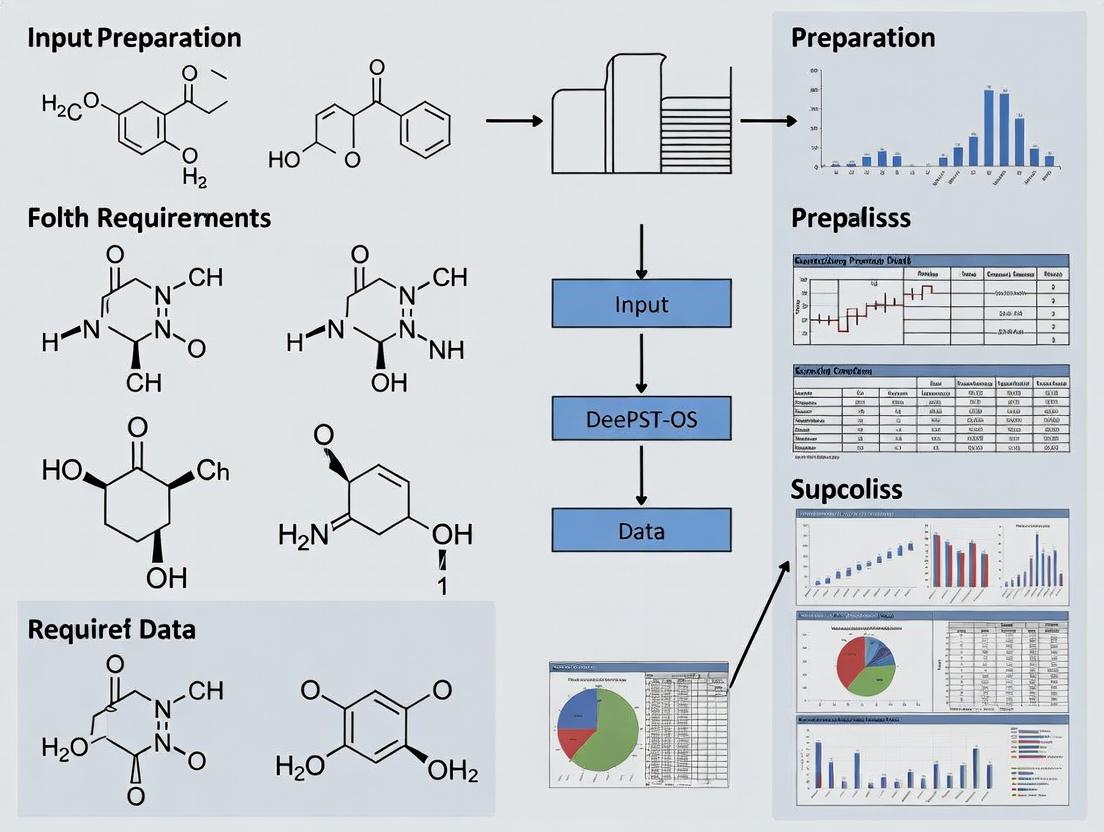
This article provides a definitive guide for researchers, scientists, and drug development professionals on preparing inputs and meeting data requirements for DeePEST-OS (Deep Learning-based Platform for Evaluating and Simulating Therapeutics...
Mastering DeePEST-OS: A Comprehensive Guide to Input Preparation and Data Requirements for Drug Development
Abstract
This article provides a definitive guide for researchers, scientists, and drug development professionals on preparing inputs and meeting data requirements for DeePEST-OS (Deep Learning-based Platform for Evaluating and Simulating Therapeutics - Omics and Structural). We detail the foundational concepts, step-by-step methodologies, common troubleshooting solutions, and validation protocols essential for successful simulation of pharmacokinetic/pharmacodynamic (PK/PD) profiles and efficacy endpoints. The guide covers everything from raw data sourcing and pre-processing to optimizing parameters and benchmarking results against experimental data, ensuring robust and reliable predictions for accelerating therapeutic discovery.
What is DeePEST-OS? Foundational Inputs and Core Data Prerequisites
Within the broader thesis on DeePEST-OS (Deep Learning for Pharmacokinetic, Efficacy, Safety, and Toxicity - Outcome Simulation) input preparation and data requirements, this document defines the platform's purpose and scope. DeePEST-OS is a predictive artificial intelligence framework designed to integrate heterogeneous data streams to forecast compound behavior across the critical PK, efficacy, safety, and toxicity axes in preclinical and early clinical development.
Purpose and Strategic Scope
The primary purpose of DeePEST-OS is to de-risk drug candidates and optimize pipeline prioritization by generating multi-faceted outcome predictions from complex biological and chemical data. Its scope encompasses the transition from late discovery through Phase II clinical trials.
Table 1: DeePEST-OS Predictive Scope and Impact
| Module | Prediction Target | Typical Input Data | Development Phase Impact |
|---|---|---|---|
| PK/ADME | Clearance, Volume of Distribution, Bioavailability, Half-life | Chemical structure, in vitro microsome/hepatocyte data, physicochemical properties, transporter assays | Lead Optimization to Preclinical |
| Efficacy | Target engagement, biomarker modulation, primary endpoint probability | In vitro potency, omics signatures, in vivo efficacy model results, target pathway data | Preclinical to Phase II |
| Safety/Toxicity | Hepatotoxicity, cardiotoxicity (e.g., hERG), genotoxicity, organ-specific lesions | High-content imaging, transcriptomics (e.g., TempO-Seq), histopathology, clinical chemistry, safety pharmacology | Preclinical to Phase I |
Application Notes: Data Requirements and Integration
Successful DeePEST-OS implementation requires curated, high-quality data. The system employs a hybrid architecture, combining convolutional neural networks (CNNs) for structural data, recurrent neural networks (RNNs) for temporal data, and graph neural networks (GNNs) for pathway interactions.
Diagram 1: DeePEST-OS Data Integration Workflow
Experimental Protocols for Input Data Generation
Protocol 4.1: High-Content Transcriptomics for Toxicity Signature
Purpose: Generate TempO-Seq data for hepatotoxicity prediction input.
- Cell Seeding: Plate HepaRG cells in 96-well plates at 50,000 cells/well in Williams' E medium. Differentiate for 14 days.
- Compound Treatment: Treat cells with test compound at 5 concentrations (0.1, 1, 10, 30, 100 µM) and DMSO control for 24h (n=4 wells/concentration).
- TempO-Seq Assay:
- Aspirate medium, lyse cells with 50µL TempO-Seq lysis buffer.
- Add Detector Oligo cocktail (1:100 dilution) and incubate at 37°C for 1h.
- Perform two-step PCR: (i) Target amplification (12 cycles), (ii) Indexing (18 cycles).
- Pool libraries, clean up with SPRI beads, and quantify by qPCR.
- Sequencing & Analysis: Sequence on Illumina NextSeq 500 (75bp single-end). Align reads to TempO-Seq human probe set, generate counts matrix for ~3,000 toxicity-related genes.
- Data Formatting: Normalize counts to transcripts per million (TPM). Format as a structured CSV file with columns:
[Compound_ID, Concentration, Gene_ID, TPM_Value]for DeePEST-OS ingestion.
Protocol 4.2: Multi-species Microsomal Stability for PK Prediction
Purpose: Generate intrinsic clearance (CLint) data across species.
- Reaction Setup: Prepare 0.5 mg/mL liver microsomes (human, rat, dog) in 0.1M phosphate buffer (pH 7.4).
- Pre-incubation: Aliquot 95µL microsome mix per well (96-deep well plate). Pre-warm at 37°C for 5 min.
- Initiation: Add 5µL of test compound (final 1 µM) and 50µL of NADPH regenerating solution (final 1 mM NADP+, 3 mM Glucose-6-P, 0.4 U/mL G6PDH) to start reaction.
- Time Course Sampling: Remove 50µL aliquots at T = 0, 5, 10, 20, 30, 45 min. Quench immediately with 100µL ice-cold acetonitrile containing internal standard.
- Analysis: Centrifuge quenched samples. Analyze supernatant via LC-MS/MS. Plot ln(peak area ratio) vs. time.
- Calculation: Calculate in vitro CLint (µL/min/mg) = (0.693 / t1/2) * (Volume incubation / mg microsomal protein).
- Data Formatting: Report in table for DeePEST-OS:
[Compound_ID, Species, CLint, t1/2, %Remaining_at_45min].
The Scientist's Toolkit: Key Research Reagent Solutions
Table 2: Essential Reagents for DeePEST-OS Input Studies
| Reagent/Kit | Vendor Example | Function in DeePEST-OS Context |
|---|---|---|
| HepaRG Differentiated Cells | Thermo Fisher Scientific | Provides metabolically competent human liver model for in vitro toxicity and metabolism studies. |
| Human/Rat/Dog Liver Microsomes | Corning Life Sciences | Enzyme source for measuring intrinsic clearance and metabolic stability across species. |
| TempO-Seq HTG EdgeSeq Oncology Biomarker Panel | Bio-Rad Laboratories | Enables high-content, amplification-based transcriptomics for toxicity pathway profiling without RNA isolation. |
| hERG Ion Channel Expressing Cell Line | Charles River Laboratories | Essential for in vitro cardiotoxicity risk assessment (potassium channel blockade). |
| Nucleofector Kit for Primary Cells | Lonza | Enables efficient transfection for mechanistic in vitro studies (e.g., CRISPR knockouts). |
| Phospho-Kinase Array Kit | R&D Systems | Multiplexed detection of phosphorylation changes in key signaling nodes for efficacy pathway analysis. |
| Panlabs PD/PK Online Services | Eurofins Discovery | Provides standardized in vivo pharmacokinetic data for model training and validation. |
| Matrigel Matrix | Corning Life Sciences | Used for 3D cell culture and xenograft studies to improve physiological relevance of efficacy data. |
Signaling Pathway Integration
DeePEST-OS maps compound effects onto canonical pathways to predict mechanism-based efficacy and toxicity.
Diagram 2: Key Hepatotoxicity Signaling Pathways Mapped
Within the DeePEST-OS (Deep Phenotypic Efficacy and Safety Target Operating System) research framework, precise input preparation is foundational. This document establishes a taxonomy for data inputs—Mandatory, Optional, and Conditional—to ensure robust, reproducible, and computationally efficient modeling for drug discovery. This classification directly supports the broader thesis on standardizing and optimizing data requirements for predictive toxicology and efficacy modeling.
Data Input Classification Protocol
Inputs are classified based on their necessity for core model function, their impact on predictive accuracy, and their dependency on specific experimental or clinical scenarios.
Table 1: Data Input Classification Criteria
| Classification | Definition | Impact on Model | Failure Consequence |
|---|---|---|---|
| Mandatory | Data absolutely required for model initialization and execution. Non-negotiable. | Model cannot run without it. | Complete failure or undefined output. |
| Conditional | Data required only when specific pre-defined conditions are met. | Enhances model specificity and accuracy for a defined scenario. | Loss of scenario-specific insight; potential for generic or less accurate output. |
| Optional | Data that provides supplementary or refining information. | May improve model confidence, granularity, or interpretability. | Model operates at baseline performance with core outputs. |
Application Notes for DeePEST-OS Modules
Target Identification Module
- Mandatory: Primary target gene symbol (HUGO nomenclature), canonical protein sequence.
- Conditional: Known somatic mutations (e.g., from COSMIC) for oncology targets; splice variant information.
- Optional: Tertiary protein structure (PDB ID), quantitative tissue expression profiles (GTEx).
Compound Profiling Module
- Mandatory: Canonical SMILES string, molecular weight, logP.
- Conditional: Metabolite SMILES (for prodrugs); known active/inactive stereoisomer data.
- Optional: NMR or mass spectrometry fragmentation patterns; clinical pharmacokinetic parameters (e.g., Cmax, t1/2).
Phenotypic Screening Module
- Mandatory: Dose-response matrix (concentration vs. % inhibition/viability), positive & negative control identifiers.
- Conditional: Time-course data for dynamic assays; cell line STR profiling data.
- Optional: High-content imaging raw data (e.g., Cell Painting); orthogonal assay readouts.
Table 2: Quantitative Input Requirements for a Standard Dose-Response Analysis
| Input Parameter | Mandatory Threshold | Recommended Precision | Conditional Requirement |
|---|---|---|---|
| Compound Concentration | ≥ 10 data points | Log10 scale, minimum 3 replicates | Required for IC50/EC50 calculation |
| Negative Control (DMSO) | Yes | ≥ 12 replicates | Defines 100% baseline |
| Positive Control | Yes | ≥ 3 replicates | Defines 0% baseline (full effect) |
| Z'-Factor | > 0.5 | Calculated per plate | If < 0.5, data flagged for review |
| Signal-to-Noise Ratio | > 10 | Calculated from controls | Mandatory for high-content screens |
Experimental Protocol: Validating Conditional Input Requirements
Protocol Title: Establishing Conditionality for Mutation-Specific Drug Sensitivity Data.
Objective: To determine when patient-derived mutation data transitions from an Optional to a Conditional input for a kinase inhibitor efficacy model.
Materials: See "Scientist's Toolkit" below. Method:
- Baseline Model Training: Train a base DeePEST-OS efficacy model using only Mandatory inputs (cell line identity, drug concentration, wild-type target sequence).
- Blinded Validation: Input a validation set of dose-response data without mutation status. Record predictive error (RMSE) for IC50.
- Conditional Enrichment: For the same validation set, input known driver mutations (e.g., EGFR L858R, BRAF V600E) as a supplemental data layer.
- Stratified Analysis: Segment the validation set into "Mutation-Present" and "Mutation-Absent" cohorts. Re-run predictions and calculate cohort-specific RMSE.
- Threshold Determination: Apply a predefined improvement threshold (e.g., ≥ 20% reduction in RMSE for the "Mutation-Present" cohort). If met, the mutation data is formally classified as Conditional for predicting sensitivity to compounds known to interact with that mutated target.
Visualization of Input Decision Logic
Title: Input Classification Decision Tree
Title: Data Flow in DeePEST-OS Prediction Pipeline
The Scientist's Toolkit
Table 3: Essential Research Reagent Solutions for Input Validation
| Reagent / Material | Function in Protocol | Key Supplier Examples |
|---|---|---|
| Genomically Characterized Cell Lines (e.g., NCI-60, DepMap) | Provide biological context with known mutations, used to validate conditional input rules. | ATCC, Coriell Institute |
| Reference Compounds (e.g., kinase inhibitors with known mutation-specific efficacy) | Positive controls for establishing conditionality between genetic input and phenotypic output. | Selleck Chemicals, MedChemExpress |
| Cell Viability Assay Kits (e.g., CellTiter-Glo) | Generate mandatory quantitative dose-response data with high signal-to-noise. | Promega Corporation |
| STR Profiling Kits | Authenticate cell lines, a conditional input for all in vitro data submission. | Promega, ATCC |
| LC-MS/MS Systems | Generate optional but high-value pharmacokinetic/metabolite data for model refinement. | Waters, Sciex, Agilent |
The efficacy of the Data-enabled Pharmacological Efficacy and Safety Translator - Open Source (DeePEST-OS) platform is contingent upon the structured integration of multimodal foundational data. This article delineates the essential data types—Chemical, Biological, Omics, and Clinical—required as prerequisites for constructing predictive models of drug action and toxicity. Standardized input preparation across these domains is critical for generating reliable, reproducible outputs in computational drug development.
Chemical Data Prerequisites
Chemical data provides the structural and property-based foundation for understanding drug-target interactions and ADMET (Absorption, Distribution, Metabolism, Excretion, Toxicity) profiles.
Core Chemical Data Types
- Small Molecule Structures: Canonical SMILES, InChI/InChIKey, 2D/3D molecular descriptors.
- Physicochemical Properties: LogP, pKa, molecular weight, polar surface area, rotatable bonds.
- ADMET Predictions: In silico predictions for permeability, cytochrome P450 inhibition, hERG liability.
- Interaction Data: Binding affinities (Ki, IC50, Kd), bioassay results from public repositories (ChEMBL, PubChem).
Application Note: Preparing Chemical Inputs for DeePEST-OS
Objective: To generate a standardized, curated chemical library file for DeePEST-OS ingestion. Protocol:
- Data Sourcing: Download compound structures and associated bioactivity data from ChEMBL (version 33+).
- Standardization: Use RDKit (Python) to standardize SMILES (neutralize charges, remove salts, generate canonical tautomer).
- Descriptor Calculation: Compute a set of 200 molecular descriptors (e.g., Morgan fingerprints, ECFP4) and key physicochemical properties.
- Curation & Filtering: Apply alert filters for reactive functional groups (e.g., pan-assay interference compounds, PAINS) and enforce property-based rules (e.g., molecular weight < 600 Da, LogP < 5).
- Formatting: Assemble data into the DeePEST-OS required CSV schema (
compound_id,standard_smiles,descriptor_1...N,pChEMBL_value).
Table 1: Optimal Ranges for Drug-like Chemical Properties
| Property | Ideal Range for Oral Drugs | Common Threshold (Rule of 5) | Data Source Typical Variance |
|---|---|---|---|
| Molecular Weight (Da) | 200 - 500 | ≤ 500 | ± 2 Da (experimental) |
| Calculated LogP (cLogP) | 1 - 3 | ≤ 5 | ± 0.5 units (prediction) |
| Hydrogen Bond Donors | 0 - 2 | ≤ 5 | - |
| Hydrogen Bond Acceptors | 2 - 9 | ≤ 10 | - |
| Polar Surface Area (Ų) | 20 - 130 | - | ± 5 Ų |
| Rotatable Bonds | ≤ 7 | ≤ 10 | - |
Biological & Target Data Prerequisites
Biological data contextualizes chemical action within biological systems, focusing on target proteins, pathways, and cellular phenotypes.
Core Biological Data Types
- Target Information: Protein sequence (UniProt ID), family, 3D structure (PDB ID), biological function.
- Pathway Data: Involvement in KEGG, Reactome, or WikiPathways.
- Phenotypic Screening Data: High-content imaging results, cytotoxicity (IC50), functional assay outputs.
Protocol: Validating Target Engagement Data
Objective: To generate dose-response data for confirming compound-target interaction prior to Omics studies. Method: In vitro Kinase Inhibition Assay (HTRF-based). Reagents & Materials:
- Recombinant Kinase Protein: Purified human kinase domain.
- Substrate & ATP: Biotinylated peptide substrate and ATP.
- Detection Reagents: HTRF anti-phospho-antibody labeled with Europium cryptate, Streptavidin-XL665.
- Buffer System: Assay buffer with MgCl2, DTT, and detergent. Procedure:
- In a low-volume 384-well plate, serially dilute the test compound in DMSO, then dilute in assay buffer.
- Add kinase, substrate, and ATP to initiate the reaction. Incubate for 60 minutes at 25°C.
- Stop the reaction by adding EDTA and detection reagents.
- Incubate for 1 hour and read fluorescence at 620 nm (Eu) and 665 nm (XL665) on a compatible plate reader.
- Calculate the ratio (665 nm/620 nm * 10,000) and fit the dose-response curve to determine IC50.
Diagram 1: HTRF Kinase Assay Workflow (80 chars)
The Scientist's Toolkit: Key Research Reagent Solutions
Table 2: Essential Reagents for Biological Assays
| Reagent | Function & Application | Example Vendor/Product |
|---|---|---|
| Recombinant Proteins | Provide the purified target for biochemical interaction assays (e.g., kinases, GPCRs). | Sino Biological, Thermo Fisher |
| HTRF/Cisbio Assay Kits | Homogeneous, time-resolved FRET assays for quantifying kinase activity, protein-protein interactions. | Revvity, Cisbio |
| Cell Viability Probes | Measure cellular health and cytotoxicity (e.g., MTT, CellTiter-Glo). | Promega CellTiter-Glo |
| Fluorescent Dyes (Ca²⁺, ROS) | Indicator dyes for measuring intracellular signaling events and oxidative stress. | Thermo Fisher Fluo-4, Invitrogen |
| siRNA/shRNA Libraries | Enable targeted gene knockdown for functional validation of targets. | Horizon Discovery |
Omics Data Prerequisites
Omics data offers a systems-level view of drug response, capturing global molecular changes.
Core Omics Data Types
- Transcriptomics: Bulk or single-cell RNA-Seq data (raw FASTQ or processed count matrices).
- Proteomics: Mass spectrometry data (raw .RAW/.d files or identified protein/peptide tables).
- Metabolomics: LC-MS/NMR spectral data and identified metabolite abundance.
- Epigenomics: ChIP-Seq, ATAC-Seq data for chromatin state changes.
Protocol: Bulk RNA-Seq for Transcriptomic Profiling
Objective: To generate gene expression profiles of treated vs. untreated cell lines for DeePEST-OS pathway analysis. Workflow:
- Cell Treatment & Lysis: Treat triplicate cultures with compound at IC10 & IC50 for 24h. Lyse cells in TRIzol.
- RNA Extraction: Isolate total RNA using chloroform phase separation and silica-membrane columns. Assess integrity (RIN > 8.5).
- Library Preparation: Use a stranded mRNA-seq kit (e.g., Illumina TruSeq) for poly-A selection, fragmentation, cDNA synthesis, and adapter ligation.
- Sequencing: Pool libraries and sequence on an Illumina NovaSeq platform (PE 150 bp) to a depth of 25-30 million reads per sample.
- Bioinformatic Processing: Align reads to the human reference genome (GRCh38) using STAR. Generate gene-level counts with featureCounts.
Diagram 2: Bulk RNA-Seq Analysis Pipeline (74 chars)
Signaling Pathway Visualization
Diagram 3: Drug to Omics Signaling Path (66 chars)
Clinical Data Prerequisites
Clinical data bridges preclinical findings to human outcomes, enabling safety and efficacy prediction.
Core Clinical Data Types
- Electronic Health Records (EHR): Demographics, diagnoses (ICD codes), medications, lab values.
- Clinical Trial Data: Patient outcomes, adverse events (CTCAE), pharmacokinetics, biomarkers from databases like CT.gov.
- Real-World Data (RWD): Longitudinal claims data, patient registries.
- Biomarker Data: Genomic (germline/somatic), imaging, and digital biomarker readouts.
Application Note: Curating Clinical Trial Data for Modeling
Objective: To extract and structure key efficacy and safety endpoints from public clinical trial results for DeePEST-OS training. Protocol:
- Source Identification: Query ClinicalTrials.gov for Phase II/III trials of drugs within the therapeutic area of interest.
- Data Extraction: Use the NIH API to programmatically download structured results data (XML). Manually extract key tabular data from PDFs of published papers where necessary.
- Standardization: Map free-text adverse event terms to preferred terms in the Medical Dictionary for Regulatory Activities (MedDRA). Standardize lab value units.
- Structuring: Create two primary tables:
- Patient Outcomes:
trial_id,patient_id,arm,primary_endpoint_result,response_status. - Adverse Events:
trial_id,patient_id,meddra_pt,ctcae_grade,relatedness.
- Patient Outcomes:
- De-identification & Linking: Ensure all data is anonymized. Create a compound-trial linkage table via NCT numbers and drug names.
Table 3: Common Efficacy & Safety Endpoints in Oncology Trials
| Data Type | Endpoint | Typical Measurement | Data Format for DeePEST-OS |
|---|---|---|---|
| Efficacy | Overall Response Rate (ORR) | Proportion of patients with PR or CR | Float (0-1) |
| Efficacy | Progression-Free Survival (PFS) | Time from treatment to progression/death | Censored time-to-event |
| Efficacy | Biomarker Level (e.g., PSA) | Concentration in serum at baseline & follow-up | Continuous numeric (ng/mL) |
| Safety | Incidence of Grade ≥3 AE | Proportion of patients with severe event | Float (0-1) |
| Safety | Lab Abnormality (e.g., Neutropenia) | Lowest recorded ANC count | Continuous numeric (cells/µL) |
| PK/PD | Cmax, AUC | Peak and total drug exposure | Continuous numeric (ng·h/mL) |
This document provides detailed application notes and protocols for sourcing raw data, a critical phase in preparing inputs for the DeePEST-OS (Deep Learning for Predictive Efficacy, Safety, and Toxicity - Open Science) framework. The broader thesis investigates optimal data requirements and preparation pipelines to train robust, generalizable models for drug development. Sourcing high-quality, standardized raw data from authoritative repositories is the foundational step.
The following repositories are core to sourcing chemical, biological, and omics data for DeePEST-OS model training.
Table 1: Core Data Repositories for DeePEST-OS Input Preparation
| Repository | Primary Data Domain | Key Data Types | Access Method | Data Standards Employed | Update Frequency |
|---|---|---|---|---|---|
| PubChem | Chemical Biology | Small molecules, bioactivities, pathways, genes | Web API, FTP | InChI, SMILES, SDF, CID | Daily |
| ChEMBL | Drug Discovery | Bioactive molecules, binding data, ADMET | Web API, Downloads | ChEMBL ID, Standardized InChI | Quarterly |
| UniProt | Protein Science | Protein sequences, functional annotation, variants | REST API, FTP | FASTA, UniProtKB ID, EC number | Weekly |
| GEO (NCBI) | Functional Genomics | Gene expression, epigenomics, SNP arrays | Web Interface, FTP | MIAME, MINSEQE, SOFT format | Continuous |
| PDB | Structural Biology | 3D macromolecular structures | REST API, FTP | PDBx/mmCIF, PDB ID | Weekly |
| DrugBank | Pharmaceuticals | Drug targets, interactions, pathways | Web API, Download | DrugBank ID, ATC codes | Bi-annual |
| CTD | Toxicology | Chemical-gene-disease interactions | Web API, Downloads | MeSH, CAS RN, Gene ID | Monthly |
| ArrayExpress | Functional Genomics | Transcriptomics, proteomics data | API, FTP | MIAME, MINSEQE, MAGE-TAB | Continuous |
Application Notes & Protocols
Protocol: Building a Curated Chemical-Bioactivity Dataset from PubChem and ChEMBL
Objective: Assemble a standardized dataset linking small molecules to quantitative bioactivity outcomes (e.g., IC50, Ki) for target protein prediction.
Materials & Reagents:
- Computational Environment: Python 3.9+ with
requests,pandas,rdkitlibraries. - Data Sources: PubChem PUG REST API, ChEMBL SQLite/web client.
Procedure:
- Define Target List: From UniProt, obtain a list of target protein accession IDs (e.g., P00533 for EGFR).
- ChEMBL Data Extraction:
a. Query the ChEMBL API for all compounds with reported bioactivities (IC50, Ki) against the target list.
b. Filter for human targets, exact measurement type (
"="), and standard relation ("="). c. Extract compound SMILES, standard InChI Key, canonical ChEMBL ID, standard value (nM), and standard type. - PubChem Data Augmentation:
a. Using the list of InChI Keys from ChEMBL, query PubChem's
identityservice to obtain PubChem CIDs. b. For each CID, use thepropertyendpoint to fetch molecular weight, logP, hydrogen bond donor/acceptor count. c. Use theclassificationendpoint to gather pharmacological activity classifications. - Data Integration & Standardization:
a. Merge ChEMBL and PubChem data on InChI Key.
b. Standardize SMILES strings using RDKit's
Chem.MolToSmiles(Chem.MolFromSmiles())with canonicalization. c. Convert all bioactivity values to -log10(molar concentration) to create a uniform pActivity value. d. Flag and handle duplicates, keeping the highest confidence measurement. - Output: A curated CSV file with columns:
ChEMBL_ID,PubChem_CID,Standard_SMILES,InChI_Key,Target_UniProt_ID,pActivity,Assay_Type,Molecular_Weight,LogP.
Protocol: Sourcing and Preprocessing Transcriptomic Data from GEO
Objective: Download and minimally process raw RNA-seq or microarray data from GEO for subsequent feature extraction in toxicity/safety modeling.
Materials & Reagents:
- Software:
GEOqueryR/Bioconductor package,SRAtoolkit(for SRA data),FastQC,MultiQC. - Computational Resources: High-performance computing cluster for large-scale RNA-seq alignment.
Procedure:
- Study Identification: Use GEO's advanced search with MeSH terms (e.g., "drug-induced liver injury", "hepatotoxicity") and filter for "Series" with "Expression profiling by high throughput sequencing".
- Metadata Retrieval:
a. Using the GEO Series accession (GSEXXXXX), run
gse <- getGEO("GSEXXXXX", GSEMatrix = TRUE)in R. b. Extract phenotypic data (pData(phenoData(gse[[1]]))) including treatment, dose, timepoint, and responder status. - Raw Data Acquisition:
a. For microarray data: Download
Series Matrix FileviagetGEOfile(). b. For RNA-seq: Identify SRA run accessions (SRRXXXX) from thesupplementary_filecolumn. c. Useprefetchandfasterq-dumpfrom SRA Toolkit to download FASTQ files. - Quality Control & Logging:
a. Run
FastQCon all FASTQ files. b. Aggregate reports usingMultiQCto generate a summary of per-base sequence quality, adapter contamination, etc. c. Document and note any batches or outliers. - Output: A structured directory containing: (1)
metadata.csvof samples, (2) rawFASTQfiles orCELfiles, (3) aQC_report.htmlfrom MultiQC. This serves as the input for the next DeePEST-OS pipeline stage (e.g., alignment/quantification).
Visualization of Data Sourcing Workflows
Diagram: DeePEST-OS Raw Data Sourcing Logic
Title: Data Sourcing Logic for Model Input Preparation
Diagram: ChEMBL & PubChem Data Integration Protocol
Title: Chemical Bioactivity Data Integration Workflow
The Scientist's Toolkit: Research Reagent Solutions
Table 2: Essential Toolkit for Data Sourcing & Curation Experiments
| Item/Reagent | Function in Protocol | Example/Supplier | Notes for DeePEST-OS |
|---|---|---|---|
| RDKit | Chemical informatics toolkit for molecule standardization, descriptor calculation, and substructure search. | Open-source (rdkit.org) | Critical for ensuring consistent molecular representation from diverse sources. |
Bioconductor (GEOquery) |
R package for querying, downloading, and parsing GEO metadata and data into R data structures. | Open-source (bioconductor.org) | Primary tool for reproducible acquisition of transcriptomic metadata from GEO. |
| SRA Toolkit | Suite of tools for downloading, extracting, and converting sequencing data from SRA databases. | NCBI (github.com/ncbi/sra-tools) | Required for accessing the raw FASTQ files linked from GEO RNA-seq studies. |
| PubChem PUG REST API | Programmatic interface to search, retrieve, and integrate all PubChem data. | NIH PubChem | The most flexible and powerful method for batch retrieval of compound data. |
| ChEMBL web client/API | Interface for extracting curated bioactivity data using SQL-like queries or RESTful calls. | EMBL-EBI | Provides highly curated, target-annotated activity data. Prefer over less curated sources. |
| Custom Python Scripts | Automate multi-repository queries, data merging, and standardization pipelines. | In-house development | Essential for creating reproducible, version-controlled data preparation pipelines. |
| High-Performance Computing (HPC) Cluster | Processing large omics datasets (e.g., aligning RNA-seq reads). | Institutional resource | Necessary for scaling data preprocessing beyond pilot studies. |
This application note details the operational workflow of DeePEST-OS (Deep learning framework for Predicting Essential, Synthetic-lethal, and druggable Targets in Oncology using multi-omics data), a tool central to the broader thesis research on DeePEST-OS input preparation and data requirements. The system integrates multi-omics data to prioritize therapeutic targets in cancer.
The DeePEST-OS Core Workflow
The workflow is executed in four sequential phases.
Phase 1: Input Data Preparation and Requirements
Primary Data Requirements: DeePEST-OS requires multi-omics inputs from patient-matched tumor samples. The minimum data requirement is specified below.
Table 1: Minimum Input Data Requirements for DeePEST-OS
| Data Type | Format | Minimum Coverage/Depth | Purpose in Model |
|---|---|---|---|
| Whole Exome Sequencing (WES) | FASTA/FASTQ + VCF | 100x mean coverage | Identifies somatic mutations, copy number variants (CNVs). |
| RNA Sequencing (RNA-seq) | FASTA/FASTQ + Count Matrix | 30 million paired-end reads | Quantifies gene expression and fusion transcripts. |
| Methylation Array (e.g., 850K) | IDAT files or beta matrix | >90% probe detection p-value < 0.01 | Profiles promoter and enhancer methylation status. |
| Clinical Data | CSV/TSV | Staging, subtype, treatment history | Contextualizes predictions and stratifies outputs. |
Protocol 2.1.1: Pre-processing of Somatic Variants
- Alignment: Align WES reads to the GRCh38 reference genome using BWA-MEM (v0.7.17).
- Variant Calling: Call somatic SNVs and indels using Mutect2 (GATK v4.2) with a matched normal sample.
- Annotation: Annotate VCF files using ANNOVAR and dbNSFP to obtain functional predictions (e.g., SIFT, PolyPhen-2).
- Filtering: Retain variants with PASS filter, read depth ≥ 20, and variant allele frequency (VAF) ≥ 0.05.
- Formatting: Generate a binary (0/1) matrix of genes with at least one nonsynonymous mutation per sample.
Phase 2: Data Integration and Feature Engineering
The pre-processed data streams are integrated into a unified feature matrix.
Protocol 2.2.1: Creation of Unified Feature Matrix
- Expression: TPM-normalize RNA-seq counts. Apply log2(TPM+1) transformation.
- Methylation: Convert beta values to M-values for statistical stability. Perform probe-to-gene mapping (max beta value within ±1500bp of TSS).
- CNV: Convert segmented logR ratios from WES to gene-level categorical calls (-2=homozygous deletion, -1=heterozygous loss, 0=neutral, 1=gain, 2=amplification).
- Alignment: Align all matrices (mutation, expression, methylation, CNV) by Gene Symbol and Sample ID. Missing data are imputed using k-nearest neighbors (k=10).
- Output: A final matrix of dimensions [Nsamples x Mfeatures] is saved as an HDF5 file for model input.
Diagram 1: DeePEST-OS Data Integration Pipeline
Phase 3: Model Architecture and Prediction
DeePEST-OS employs a hybrid deep neural network.
Table 2: DeePEST-OS Model Architecture Specifications
| Layer | Type | Nodes/Parameters | Activation | Dropout |
|---|---|---|---|---|
| Input | Dense | 2048 | ReLU | 0.3 |
| Hidden 1 | Dense | 1024 | ReLU | 0.3 |
| Hidden 2 | Dense | 512 | ReLU | 0.2 |
| Hidden 3 | Attention | 256 | Softmax | - |
| Output | Dense | 3 (Essential/Synthetic-Lethal/Druggable) | Sigmoid | - |
| Optimizer: Adam (lr=0.0001) | Loss Function: Binary Cross-Entropy | Batch Size: 32 | Epochs: 100 (Early Stopping) |
Protocol 2.3.1: Model Training and Prediction
- Splitting: Split data 70/15/15 into training, validation, and hold-out test sets stratified by cancer type.
- Training: Train model on training set, monitoring loss on validation set.
- Early Stopping: Halt training if validation loss does not improve for 15 consecutive epochs.
- Prediction: Generate three probability scores (0-1) per gene per sample on the test set, representing likelihoods of being an essential, synthetic-lethal, or druggable target.
Diagram 2: DeePEST-OS Hybrid Neural Network
Phase 4: Output Interpretation and Prioritization
Raw scores are post-processed for biological actionability.
Protocol 2.4.1: Target Prioritization
- Thresholding: Apply validated thresholds: Essential >0.85, Synthetic-Lethal >0.80, Druggable >0.75.
- Ranking: Calculate a composite priority score:
Priority = (0.4*P(Ess)) + (0.35*P(SL)) + (0.25*P(Drug)). - Annotation: Annotate high-ranking genes with known drug information from DrugBank and clinical trial status from ClinicalTrials.gov.
- Output: Generate a master ranked table and per-sample reports.
Table 3: Example Output for Top-Ranked Gene (TP53 in Glioblastoma)
| Gene | P(Ess) | P(SL) | P(Drug) | Priority | Known Drugs | Clinical Trial Phase |
|---|---|---|---|---|---|---|
| TP53 | 0.99 | 0.92 | 0.45 | 0.82 | APR-246, COTI-2 | Phase I/II |
| EGFR | 0.95 | 0.71 | 0.89 | 0.84 | Gefitinib, Osimertinib | Phase III (Approved) |
| PTEN | 0.97 | 0.88 | 0.15 | 0.72 | None | - |
The Scientist's Toolkit
Table 4: Essential Research Reagent Solutions for DeePEST-OS Validation
| Reagent / Material | Provider (Example) | Function in Validation |
|---|---|---|
| Cancer Cell Line Panel (e.g., 50 lines) | ATCC, DSMZ | Provides biologically relevant models for in vitro functional validation of predicted targets. |
| CRISPR-Cas9 Knockout Libraries (Whole Genome or Custom) | Synthego, Horizon Discovery | Enables genome-wide or targeted knockout screens to experimentally test gene essentiality predictions. |
| siRNA/shRNA Pools (Gene-Specific) | Dharmacon, Sigma-Aldrich | Used for transient or stable knockdown to confirm synthetic-lethal interactions predicted by the model. |
| Viability/Proliferation Assay Kits (CellTiter-Glo) | Promega | Quantifies cell growth and viability after genetic perturbation, providing the primary readout for validation experiments. |
| High-Throughput Sequencing Reagents (for NGS validation) | Illumina, Thermo Fisher | Confirms on-target genetic modifications and measures transcriptomic changes post-perturbation. |
| Compound Libraries (FDA-approved & clinical candidates) | Selleckchem, MedChemExpress | Used to test the druggability predictions by assessing response to pharmacological inhibition. |
Step-by-Step Guide: Preparing and Formatting Data for DeePEST-OS Simulations
Within the DeePEST-OS (Deep learning for Pesticide Efficacy, Safety, and Toxicology - Open Science) framework, the quality and consistency of chemical input data are foundational. This protocol details the critical preprocessing steps for chemical structures—standardization, descriptor calculation, and identifier generation—to ensure reproducibility and robustness in predictive modeling for agrochemical discovery.
Chemical Structure Standardization
Standardization ensures a consistent, canonical representation of a chemical structure, eliminating representation-based noise.
Protocol: Canonical Tautomer and Resonance Form Generation
Objective: Generate a consistent, low-energy tautomer and major resonance form for each input structure.
- Input: A molecular structure file (e.g., SDF, MOL) or identifier (SMILES).
- Tool: Use the
RDKitCheminformatics library (rdkit.Chem.MolStandardizemodule). - Procedure:
a. Sanitization: Run
Chem.SanitizeMol(mol)to check valency and correct basic properties. b. Neutralization: Apply theUnchargertool to adjust protonation states to a neutral, pH 7.4-like representation, unless specifically modeling ionic forms. c. Tautomer Canonicalization: Use theTautomerCanonicalizer()to identify and generate the most stable tautomeric form based on predefined rules. d. Cleanup: Remove solvents, salts, and metal ions using a predefined fragment list unless they are integral to the complex. e. Stereochemistry: Perceive and assign stereochemistry from 3D coordinates if available (Chem.AssignStereochemistryFrom3D(mol)). - Output: A standardized RDKit molecule object.
Quantitative Data: Impact of Standardization on Dataset Consistency
Table 1: Effect of Standardization on a Benchmark Agrochemical Dataset (n=10,234 compounds)
| Standardization Step | Compounds Modified | % of Total Dataset | Common Change Example |
|---|---|---|---|
| Neutralization (Uncharging) | 2,558 | 25.0% | Carboxylic acid (-COO⁻) → -COOH |
| Tautomer Canonicalization | 1,434 | 14.0% | Keto-enol shift (C=O-CH- C-OH=C-) |
| Salt & Solvent Removal | 3,280 | 32.1% | Removal of HCl, Na⁺, H₂O, DMSO |
| Stereochemistry Assignment | 4,715 | 46.1% | Assignment of R/S or E/Z descriptors |
SMILES and InChI Generation & Best Practices
Canonical string identifiers enable unique indexing and database searching.
Protocol: Generating Canonical Identifiers
- Input: Standardized RDKit molecule object (from Section 2.1).
- Canonical SMILES:
a. Use
Chem.MolToSmiles(mol, isomericSmiles=True, canonical=True). b. TheisomericSmiles=Trueflag preserves stereochemical information. - InChI and InChIKey:
a. Use the
RDKitInChI interface:Chem.inchi.MolToInchi(mol)andChem.inchi.MolToInchiKey(mol). b. InChI provides a layered, standardized representation. The InChIKey is a 27-character hashed version suitable for database indexing. - Verification: Perform a round-trip test: convert the SMILES/InChI back to a molecule object and verify it matches the original standardized structure.
Best Practices Table
Table 2: SMILES and InChI Usage Guidelines for DeePEST-OS
| Identifier | Primary Use Case | DeePEST-OS Recommendation | Caveat |
|---|---|---|---|
| Canonical SMILES | Day-to-day processing, featurization input, human-readable exchange. | Store as the primary internal identifier. Use for descriptor calculation. | Can be algorithm-dependent (RDKit vs. OpenEye). |
| InChI | Definitive, absolute structure representation for publication and data merging. | Archive and publish alongside SMILES. Use for cross-database validation. | Less human-readable. Longer string. |
| InChIKey | Database indexing, rapid duplicate detection, web searches. | Use as database key for deduplication and linking external resources. | Potential for collision (extremely rare). |
Molecular Descriptor Calculation
Descriptors translate chemical structure into quantitative features for machine learning models.
Protocol: Calculating a Comprehensive Descriptor Set
Objective: Generate a vector of numerical features representing physicochemical and topological properties.
- Input: Standardized molecule object (canonical SMILES preferred).
- Tool:
RDKitdescriptor calculators (rdkit.Chem.Descriptors,rdkit.ML.Descriptors.MoleculeDescriptors). - Procedure:
a. Import:
from rdkit.Chem import Descriptorsb. List Descriptors:descriptor_names = [x[0] for x in Descriptors._descList]c. Calculator:calculator = MoleculeDescriptors.MolecularDescriptorCalculator(descriptor_names)d. Calculation:descriptor_vector = calculator.CalcDescriptors(mol) - Output: A list/array of numerical values (200+ descriptors). Critical: Handle
NaNor infinity values resulting from calculation errors (e.g., logP for inorganic fragments).
Key Descriptor Categories for DeePEST-OS
Table 3: Essential Molecular Descriptor Categories for Agrochemical Modeling
| Category | Example Descriptors | Relevance to DeePEST-OS (Pesticide Properties) |
|---|---|---|
| Physicochemical | Molecular Weight, LogP (ALogP), TPSA, H-Bond Donor/Acceptor Count | Predicting absorption, membrane permeability, and environmental fate. |
| Topological | BalabanJ, BertzCT | Encoding molecular complexity and branching related to synthesis and degradation. |
| Constitutional | Heavy Atom Count, Ring Count, Fraction of SP³ Carbons | Basic size and flexibility correlates with target interaction and leaching potential. |
| Quantum-Chemical | (Requires external calc.) HOMO/LUMO energy, Dipole Moment | Modeling reactivity, photodegradation, and interaction with biological targets. |
The Scientist's Toolkit: Research Reagent Solutions
Table 4: Essential Software and Libraries for Chemical Data Preparation
| Tool / Resource | Function | Application in Protocol |
|---|---|---|
| RDKit (Open-Source) | Core cheminformatics toolkit. | Used for all steps: standardization, SMILES/InChI generation, descriptor calculation. |
| KNIME or Nextflow | Workflow management. | Orchestrating and reproducing the multi-step preprocessing pipeline. |
| PubChemPy/ChemSpider API | Web service clients. | Fetching initial structures and validating identifiers. |
| MongoDB/PostgreSQL | Database systems. | Storing standardized structures, descriptors, and metadata with InChiKey as primary key. |
| Jupyter Notebook | Interactive computing. | Prototyping and documenting standardization rules and descriptor analysis. |
| CDK (Chemistry Dev Kit) | Alternative Java library. | Cross-validating descriptor calculations and fingerprint generation. |
Experimental Workflow Visualization
Workflow for DeePEST-OS Chemical Data Preparation
Detailed Standardization & Featurization Steps
This document serves as a critical application note for the DeePEST-OS (Deep Learning Platform for Enhanced Structure-based Target Screening - Open Science) initiative. The broader thesis explores the optimization of input data preparation to enhance the accuracy and generalizability of machine learning models in structure-based drug discovery (SBDD). The quality, standardization, and biological relevance of the primary inputs—protein structures, sequences, and binding site definitions—directly dictate the predictive performance of DeePEST-OS pipelines. This protocol details the acquisition, validation, and preparation of these fundamental inputs.
Protein Data Bank (PDB) Files
The PDB archive is the primary repository for experimentally determined 3D structures of proteins, nucleic acids, and complexes.
Key Considerations for DeePEST-OS:
- Resolution: Prefer structures with resolution ≤ 2.5 Å for reliable atomic positioning.
- Completeness: Favor structures with minimal missing residues in the target region.
- Experimental Method: X-ray crystallography and Cryo-EM are preferred; NMR ensembles require specific handling.
- Ligand Presence: Structures co-crystallized with a native ligand or drug molecule are invaluable for binding site definition.
Table 1: Quantitative Metrics for PDB File Selection
| Metric | Optimal Range for DeePEST-OS | Acceptable Range | Source/Validation Tool |
|---|---|---|---|
| Resolution | ≤ 2.0 Å | ≤ 2.5 Å | PDB Header / pdb-tools |
| R-free Value | ≤ 0.25 | ≤ 0.30 | PDB Header / Validation Reports |
| Missing Residues (Binding Site) | 0 | ≤ 2 short loops | PDB Header / Visual Inspection |
| Ligand B-factors (Avg.) | ≤ 60 Ų | ≤ 80 Ų | Bio.PDB (Biopython) |
Protein Sequences
Canonical sequences from authoritative databases provide the evolutionary and functional context for the target.
Primary Sources:
- UniProtKB/Swiss-Prot: Manually annotated, high-quality sequences.
- NCBI RefSeq: Comprehensive, non-redundant reference sequences.
Table 2: Essential Sequence Metadata for Input Preparation
| Data Field | Purpose in DeePEST-OS | Source Database |
|---|---|---|
| Canonical Isoform ID | Defines the reference sequence | UniProtKB |
| Amino Acid Sequence | For alignment & homology checks | UniProtKB, RefSeq |
| Post-Translational Modifications | Context for structure anomalies | UniProtKB |
| Domain Annotations (e.g., PFAM) | Functional site correlation | UniProtKB, InterPro |
| Natural Variants | Assessing binding site conservation | UniProtKB, gnomAD |
Binding Site Definitions
Accurately defining the region of ligand interaction is paramount. Multiple complementary methods are employed.
Definition Methods:
- Ligand-Centric: Using coordinates from a co-crystallized ligand.
- Residue-Centric: Based on known functional residues from mutagenesis studies.
- Geometry-Centric: Using algorithms to detect surface pockets and cavities.
Table 3: Binding Site Definition Methods & Outputs
| Method | Tools / Databases | DeePEST-OS Input Format |
|---|---|---|
| From Co-crystal Ligand | PDB file, PyMOL, ChimeraX |
List of residues within 5Å of ligand |
| From Functional Annotation | Catalytic Site Atlas (CSA), UniProtKB | List of annotated residue IDs |
| Computational Prediction | fpocket, CASTp, SiteMap |
Center (x,y,z) and radius, or residue list |
Detailed Experimental Protocols
Protocol 1: Curating a High-Quality PDB Structure Set for a Target Protein
Objective: To obtain and validate a non-redundant set of high-resolution structures for a given target protein, suitable for DeePEST-OS model training.
Materials: See "The Scientist's Toolkit" below.
Method:
- Target Identification: Query the PDB using the target's UniProt accession ID (e.g., P00742) via the RCSB PDB API (
https://search.rcsb.org). - Initial Filtering: Download the list of PDB IDs. Filter programmatically for:
- Experimental Method:
"X-ray"OR"Electron Microscopy". - Resolution: ≤ 2.5 Å.
- Polymer Entity Type:
"Protein"(or complex).
- Experimental Method:
- Manual Curation & Clustering:
- Fetch PDB files using
wgetorBio.PDB. - Align all structures to a reference (highest resolution) using
PyMOL'saligncommand. - Cluster structures based on sequence identity (≥ 95%) and ligand presence to reduce redundancy. Use
CD-HITorMMseqs2.
- Fetch PDB files using
- Structure Validation:
- Run
MolProbityor use RCSB validation reports for each retained structure. - Check clash scores, rotamer outliers, and Ramachandran outliers. Prioritize structures in the 90th+ percentile.
- Run
- Pre-processing for DeePEST-OS:
- Remove all heteroatoms except relevant co-factors (e.g., HEME, ZN) and key ligands.
- Standardize atom and residue names using
PDBFixerorChimeraX. - Add missing hydrogens at physiological pH (7.4) using
ReduceorOpen Babel.
- Output: A directory of cleaned, validated, and non-redundant
.pdbfiles.
Protocol 2: Defining a Consensus Binding Site
Objective: To generate a robust, allosterically relevant binding site definition from multiple data sources.
Method:
- Ligand-Based Definition (Primary):
- Load a co-crystal structure with a high-affinity ligand in
PyMOL. - Execute command:
select site_residues, byres ligand around 5.0 - Save the list of residue identifiers (ChainID and ResSeq number).
- Load a co-crystal structure with a high-affinity ligand in
- Literature-Based Annotation:
- Extract functionally critical residues from the "Function" and "Catalytic activity" sections of the UniProt entry.
- Cross-reference with the Catalytic Site Atlas (CSA).
- Map these residue numbers to the reference PDB sequence using a sequence alignment tool (e.g.,
Clustal Omega).
- Computational Prediction (Validation):
- Run
fpocketon the apo structure:fpocket -f input.pdb. - Analyze the top-ranked pockets. Overlap with residues from Steps 1 & 2 confirms the active site.
- Run
- Generate Consensus Site:
- Take the union of residues from Steps 1 and 2.
- Calculate the geometric center (centroid) of the Cα atoms of these residues.
- Define the site radius as the distance from the centroid to the farthest Cα atom + 5Å (to accommodate ligands).
- Output: A
.jsonfile containing:{ "pdb_id": "1ABC", "chain": "A", "site_residues": [12, 45, 46...], "centroid": [x, y, z], "radius": 12.5 }.
Visual Workflows
Title: DeePEST-OS Biological Target Input Preparation Workflow
The Scientist's Toolkit: Research Reagent Solutions
Table 4: Essential Materials and Tools for Input Preparation
| Item / Tool Name | Function in Protocol | Source / Provider |
|---|---|---|
| RCSB PDB API | Programmatic search and metadata retrieval for PDB files. | RCSB Protein Data Bank |
| BioPython (Bio.PDB) | Python library for parsing, manipulating, and analyzing PDB files. | Open Source |
| PyMOL / UCSF ChimeraX | Interactive visualization, alignment, and selection of residues/atoms. | Schrödinger / RBVI |
| PDBFixer | Adds missing atoms/residues, standardizes files for molecular simulation. | OpenMM |
| MolProbity Server | Validates structural geometry (clashes, rotamers, Ramachandran plots). | Richardson Lab, Duke |
| fpocket | Open-source tool for detection of protein pockets and cavities. | Open Source |
| Clustal Omega | Performs multiple sequence alignment to map residues across sources. | EMBL-EBI |
| UniProtKB REST API | Fetches canonical sequence and functional annotation data. | UniProt Consortium |
| Jupyter Notebook | Environment for documenting and executing reproducible preparation scripts. | Open Source |
Application Notes and Protocols
Context: This protocol details the essential data preprocessing steps for RNA-Seq, proteomics, and metabolomics datasets to generate standardized, analysis-ready input files for the DeePEST-OS (Deep Phenotype Extraction and Systems Toxicology - Omics Suite) platform. A core pillar of the DeePEST-OS input preparation thesis is that rigorous, field-specific normalization and formatting are prerequisites for robust multi-omics integration and predictive modeling in drug development.
1. RNA-Seq Data Processing Protocol
Aim: To transform raw RNA-Seq read counts into normalized, gene-level expression values suitable for differential expression analysis and downstream integration.
Key Reagent Solutions:
- Alignment Reference (e.g., GRCh38.p14 genome, Gencode v45 transcriptome): Provides the genomic coordinate system for mapping sequencing reads.
- Alignment Software (e.g., STAR, HISAT2): Aligns short reads to the reference genome/transcriptome.
- Quantification Tool (e.g., featureCounts, HTSeq-count): Summarizes aligned reads per genomic feature (gene).
- R/Bioconductor Packages (e.g., DESeq2, edgeR): Provide statistical frameworks for count data normalization and analysis.
Detailed Protocol:
- Quality Control & Trimming: Assess raw FASTQ files using FastQC. Trim adapters and low-quality bases with Trimmomatic or Cutadapt.
- Alignment: Map cleaned reads to the reference genome using a splice-aware aligner (e.g., STAR with recommended 2-pass mode for novel splice junction discovery).
- Quantification: Generate a raw count matrix by assigning reads to genes using an annotation file (GTF/GFF). Discard ambiguous or multi-mapped reads.
- Normalization (DESeq2 Median-of-Ratios Method):
a. For each gene i in sample j, calculate the geometric mean of counts across all samples.
b. For each sample j, compute the ratio of each gene's count to its geometric mean.
c. The median of these ratios for sample j is its size factor (SFj).
d. Obtain normalized counts for gene i in sample j as:
Count_ij_normalized = Count_ij / SF_j. - Formatting for DeePEST-OS: Export the normalized count matrix (or variance-stabilized transformed data) as a tab-separated file with genes as rows (Official Gene Symbol), samples as columns, and a header row.
Table 1: Common RNA-Seq Normalization Methods Comparison
| Method | Principle | Handles Composition Bias? | Suitable for DE? | DeePEST-OS Recommendation |
|---|---|---|---|---|
| DESeq2 (Median-of-Ratios) | Median scaling by gene ratios | Yes | Excellent | Primary recommended method |
| edgeR (TMM) | Trimmed Mean of M-values scaling | Yes | Excellent | Acceptable alternative |
| Upper Quartile (UQ) | Scales by upper quartile of counts | Partial | Good | Use if TMM/DESeq2 fails |
| Transcripts Per Million (TPM) | Normalizes for gene length & sequencing depth | Yes (within-sample) | No (between-sample) | Not for direct DE input |
| Reads Per Kilobase Million (RPKM/FPKM) | Within-sample length & depth normalization | No | No | Not recommended for DE |
Diagram Title: RNA-Seq Data Processing and Normalization Workflow
2. Proteomics (LC-MS/MS) Data Processing Protocol
Aim: To process raw mass spectrometry output into normalized, protein-level abundance values, accounting for technical variation.
Key Reagent Solutions:
- Search Database (e.g., UniProtKB Swiss-Prot): Reference protein sequence database for peptide identification.
- Search Engine (e.g., MaxQuant, DIA-NN, Spectronaut): Identifies and quantifies peptides from MS/MS spectra.
- Normalization Standards (e.g., Spike-in Proteins, Total Peptide Amount): Used for global intensity scaling.
- Imputation Algorithm (e.g., MinProb, KNN): Handles missing values not Missing At Random (MNAR).
Detailed Protocol (Label-Free Quantification - LFQ):
- Peptide Identification & Quantification: Process *.raw files through a search engine (e.g., MaxQuant). Use default LFQ settings, match-between-runs, and specify a false discovery rate (FDR) < 0.01 at peptide and protein levels.
- Data Filtering: Remove proteins only identified by site, reverse database hits, and common contaminants. Retain proteins with valid values in ≥70% of samples per group.
- Normalization (Median Centering):
a. Calculate the median protein intensity for each sample.
b. Compute the global median of all sample medians.
c. For each sample, derive a scaling factor:
SF = Global Median / Sample Median. d. Multiply all protein intensities in that sample by its SF. - Missing Value Imputation (for MNAR data): Apply a left-censored imputation method (e.g., impute from a normal distribution shifted down by 1.8 standard deviations and scaled by 0.3) to simulate signals below detection limit.
- Formatting for DeePEST-OS: Export the normalized, imputed protein intensity matrix as a tab-separated file with UniProt Protein IDs as rows, samples as columns, and a header row.
Table 2: Proteomics Data Processing Steps and Tools
| Step | Typical Method/Tool | Key Parameter | Purpose |
|---|---|---|---|
| Identification | MaxQuant, DIA-NN | FDR < 0.01 | Map spectra to peptides/proteins |
| Quantification | MaxQuant LFQ, Spectronaut | Match-between-runs ON | Boost quantification coverage |
| Filtering | Manual/Custom Script | Valid vals ≥70% | Remove low-confidence data |
| Normalization | Median Centering, Loess | Sample median scaling | Remove technical bias |
| Imputation | MinProb, KNN | Down-shift 1.8σ | Handle MNAR missing values |
Diagram Title: Proteomics Data Processing and Normalization Workflow
3. Metabolomics (LC-MS) Data Processing Protocol
Aim: To extract, align, and normalize metabolite feature intensities from raw chromatographic data, correcting for batch effects and drift.
Key Reagent Solutions:
- Internal Standards Mix (e.g., IS-MIX Sulfatrack): A set of deuterated or 13C-labeled compounds added to all samples for quality control and signal correction.
- Solvent Blanks & Pooled QC Samples: Essential for background subtraction and monitoring/ correcting instrumental drift.
- Feature Detection Software (e.g., XCMS, MS-DIAL): Detects and aligns metabolite peaks across samples.
- Spectral Library (e.g., NIST20, HMDB): For putative annotation of metabolites.
Detailed Protocol (Untargeted Metabolomics):
- Feature Extraction & Alignment: Use a computational tool (e.g., XCMS in R) with parameters optimized for your LC-MS system. Perform peak picking, retention time alignment, and correspondence across samples.
- Annotation: Match MS/MS spectra and retention time/index to standards or spectral libraries for putative annotation (Level 2 or 3).
- Quality Control-Based Normalization (PQN with QC): a. Calculate the median feature intensity across all pooled Quality Control (QC) samples. b. For each sample (including QCs), calculate the median of all feature intensities. c. For each sample, create a vector of ratios: each feature's intensity / the corresponding QC median intensity. d. The median of this ratio vector is the sample's dilution factor. e. Divide all feature intensities in the sample by its dilution factor.
- Batch & Drift Correction: Use QC samples in a statistical model (e.g., Robust LOESS, Combat) to adjust for intensity drift over the acquisition sequence and batch effects.
- Formatting for DeePEST-OS: Export the normalized feature table as a tab-separated file. Rows are metabolite features (with putative annotation as column), columns are samples, and values are normalized intensities.
Table 3: Metabolomics Normalization & Correction Strategies
| Strategy | Description | Corrects For | Use Case |
|---|---|---|---|
| Probabilistic Quotient Normalization (PQN) | Median quotient of sample vs. reference spectrum | Global urine dilution/concentration differences | Primary normalization for biofluids |
| Internal Standard (IS) Normalization | Scaling to spiked IS signal | Injection volume variation | Targeted assays; support for untargeted |
| QC-Based LOESS Correction | Local regression on QC intensity trends | Within-batch instrumental drift | Mandatory for long LC-MS sequences |
| Batch Correction (ComBat) | Empirical Bayes framework | Systematic inter-batch variation | Multi-batch studies |
Diagram Title: Metabolomics Data Processing and Normalization Workflow
The Scientist's Toolkit: Essential Research Reagents & Software
Table 4: Key Reagents and Tools for Omics Data Preparation
| Item | Function | Example Product/Software |
|---|---|---|
| Sequencing Platform | Generates raw RNA-Seq reads. | Illumina NovaSeq, NextSeq |
| Mass Spectrometer | Generates raw proteomics/metabolomics spectra. | Thermo Q-Exactive, Sciex TripleTOF |
| Curated Reference Database | Provides ground truth for sequence mapping. | Gencode (RNA), UniProt (Prot), HMDB (Metab) |
| Isotope-Labeled Internal Standards | Controls for technical variance in MS sample prep. | IS-MIX Sulfatrack, Biocrates META-KIT |
| Pooled Quality Control (QC) Sample | Monitors instrument stability for correction. | Pool of equal aliquots from all study samples |
| Bioinformatics Pipeline Software | Executes alignment, quantification, normalization. | nf-core/rnaseq, MaxQuant, XCMS, DIA-NN |
| Statistical Programming Environment | Flexible platform for normalization and analysis. | R/Bioconductor, Python (SciPy/Pandas) |
This document serves as an application note within the broader DeePEST-OS (Deep Pharmacometric and Endpoint Simulation and Trial Optimization Suite) thesis research. Effective input preparation for this platform mandates a rigorous, standardized approach to integrating multidimensional clinical data. This note details the protocols for curating and structuring core input variables: dosing regimens, baseline demographics, and physiological covariates, which are critical for generating accurate PK/PD and clinical outcome simulations.
Data Requirements and Standardization Protocols
For population modeling in DeePEST-OS, input data must be formatted according to the following standard table structures. All time variables should be normalized to a common zero (e.g., first dose administration).
Table 1: Dosing Regimen Input Schema
| SUBJECT_ID | EVENT_TYPE | TIME (h) | AMT (mg) | DUR (h) | ROUTE | CYCLE |
|---|---|---|---|---|---|---|
| 101 | DOSE | 0 | 500 | 1 | IV | 1 |
| 101 | DOSE | 168 | 750 | 0 | PO | 2 |
| 101 | OBS | 2 | . | . | . | 1 |
| 102 | DOSE | 0 | 500 | 1 | IV | 1 |
EVENT_TYPE: DOSE, OBS (observation); AMT: Dose amount; DUR: Infusion duration (0 for bolus); ROUTE: IV, PO, SC; CYCLE: Cycle number for oncology trials.
Table 2: Baseline Demographics & Physiology Schema
| SUBJECT_ID | AGE (yr) | SEX (M/F) | WEIGHT (kg) | BSA (m²) | eGFR (mL/min) | ALB (g/dL) | CYP2D6_STATUS | DISEASE_STAGE |
|---|---|---|---|---|---|---|---|---|
| 101 | 67 | M | 82 | 1.95 | 78 | 4.2 | IM | IIIB |
| 102 | 54 | F | 61 | 1.68 | 92 | 3.8 | NM | IIIC |
BSA: Body Surface Area (Calc. via Mosteller formula); eGFR: estimated Glomerular Filtration Rate (CKD-EPI); CYP2D6_STATUS: Phenotype (e.g., NM=Normal Metabolizer, IM=Intermediate); DISEASE_STAGE: Disease-specific classification.
Experimental Protocol: Covariate-PK/PD Relationship Analysis
This protocol outlines the steps to quantify the impact of integrated covariates on PK/PD parameters.
Title: Longitudinal Population PK/PD Analysis with Covariate Screening.
Objective: To identify and quantify significant relationships between baseline demographics/physiological variables and key PK/PD parameters (e.g., Clearance (CL), Volume of Distribution (Vd), EC₅₀).
Materials & Reagents:
- Software: Nonlinear Mixed-Effects Modeling software (e.g., NONMEM, Monolix, R with nlmixr).
- Hardware: High-performance computing cluster for large-scale simulation.
- Data: Curated tables per Section 2, including rich covariate data and sparse PK/PD samples.
Procedure:
- Base Model Development: Develop a structural PK and/or PD model without covariates. Estimate inter-individual variability (IIV) on key parameters.
- Covariate Model Building: Using the finalized base model, test plausible covariate-parameter relationships using a stepwise forward inclusion (p<0.05) and backward elimination (p<0.01) procedure.
- Continuous Covariates (e.g., Weight, Age): Model using a power function:
P = θₚ * (COV/Median_COV)^θᵣ. - Categorical Covariates (e.g., Sex, Genotype): Model using a proportional shift:
P = θₚ * (1 + θᵣ*INDICATOR).
- Continuous Covariates (e.g., Weight, Age): Model using a power function:
- Model Evaluation: Assess significance via objective function value (OFV) change. Validate using visual predictive checks (VPC) and bootstrap diagnostics.
- Simulation Ready Output: Finalize the model and extract the mathematical structure for implementation in DeePEST-OS. This defines the core input-output relationships for simulation.
Diagram Title: Covariate Model Development Workflow
The Scientist's Toolkit: Key Research Reagent Solutions
Table 3: Essential Materials for Integrated PK/PD Studies
| Item/Category | Example/Supplier | Primary Function in Context |
|---|---|---|
| Stable Isotope Labeled Drug | Cambridge Isotopes; Alsachim | Serve as internal standards for LC-MS/MS quantification, enabling precise, multiplexed PK assay development. |
| Recombinant Metabolic Enzymes | Corning Gentest; BioIVT | For in vitro reaction phenotyping to identify enzymes (CYP, UGT) involved in drug metabolism, informing covariate selection (e.g., pharmacogenomics). |
| Human Liver Microsomes/Cytosol | BioIVT; XenoTech | Pooled or single-donor systems for in vitro intrinsic clearance and metabolite profiling studies, scaling to in vivo CL. |
| Plasma Protein Fraction | Human Serum Albumin, α-1-Acid Glycoprotein (Sigma-Aldrich) | Used in equilibrium dialysis experiments to measure drug protein binding, a key factor influencing free (active) drug concentration and Vd. |
| Validated Biomarker Assay Kits | Meso Scale Discovery; R&D Systems DuoSet | Quantify soluble PD biomarkers (e.g., cytokines, target engagement markers) for linking PK to pharmacological effect. |
| Population Database Software | WHO Anthro Survey Analyzer; CDC BSA Calculator | Standardize and calculate derived physiological covariates (BMI, BSA, eGFR) from raw demographic data for model input. |
Visualization of Integrated Parameter Relationships
The final model defines how covariates modulate the system. This relationship is central to generating individualized simulations in DeePEST-OS.
Diagram Title: Integrated Covariate-PK/PD Simulation Schema
Within the DeePEST-OS (Deep Learning Platform for Emerging Sensor Technologies in Drug Discovery and Development Operating System) research ecosystem, standardized data input is paramount for model integrity and reproducibility. This document details the application notes and protocols for four critical file formats required for data ingestion, configuration, and biological sequence representation. The selection and proper implementation of these formats constitute a foundational pillar of the broader DeePEST-OS input preparation thesis, ensuring seamless data flow from experimental and computational sources to analytical and predictive modules.
File Format Specifications & Comparative Analysis
Comma-Separated Values (CSV)
Purpose in DeePEST-OS: Primary format for tabular experimental data (e.g., high-throughput screening results, dose-response curves, pharmacokinetic parameters). Specification: A plain-text format where each line represents a data record, with values separated by a delimiter (comma by default). The first line may contain header names. Key Requirements:
- UTF-8 encoding is mandatory.
- The delimiter must be declared in the accompanying configuration file.
- Text fields containing the delimiter or newlines must be enclosed in double quotes.
- Missing values should be represented by an empty field or a standardized null token (e.g.,
NA).
Table 1: Quantitative Specifications for CSV Files in DeePEST-OS
| Feature | Specification | Example |
|---|---|---|
| Encoding | UTF-8 | - |
| Standard Delimiter | Comma (,) | value1,value2,value3 |
| Alternative Delimiters | Tab, Semicolon | Must be declared in config |
| Text Qualifier | Double Quote (") | "Value, with comma" |
| Line Termination | LF or CRLF | System-agnostic parsing |
| Header | Strongly recommended | Compound_ID,EC50,LogP |
| Missing Data | Empty field or NA |
CMPD-001,2.5,NA |
JavaScript Object Notation (JSON)
Purpose in DeePEST-OS: Hierarchical configuration files for experiment parameters, model architectures, and nested metadata. Specification: A lightweight, human-readable data-interchange format based on key-value pairs and ordered lists. Key Requirements:
- Must conform to RFC 8259.
- Serves as the backbone for DeePEST-OS module configuration.
- Supports complex nested structures unsuitable for flat CSV files.
Table 2: JSON Structure for a DeePEST-OS Model Configuration
| JSON Key | Data Type | Description | Example Value |
|---|---|---|---|
experiment_id |
String | Unique experiment identifier | "deeppest_exp_2023_001" |
model_parameters |
Object | Nested model settings | {"layers": 5, "activation": "relu"} |
input_data_path |
String | Path to CSV/FASTA files | "/data/screen_results.csv" |
hyperparameters |
Object | Training parameters | {"learning_rate": 0.001, "epochs": 100} |
FASTA
Purpose in DeePEST-OS: Representation of biological sequences (protein, DNA, RNA) for target identification and cheminformatics pipelines.
Specification: A text-based format where a single-line description (starting with >) is followed by lines of sequence data.
Key Requirements:
- Description line must contain a unique identifier.
- Sequence characters must be standard IUPAC codes.
- Sequence data can be wrapped (multiple lines) or unwrapped (single line).
Table 3: FASTA Format Specifications for DeePEST-OS
| Component | Format Rule | Example | ||
|---|---|---|---|---|
| Description Line | Begins with > |
`>sp | P01308 | INS_HUMAN Insulin OS=Homo sapiens OX=9606` |
| Sequence Line(s) | Subsequent lines contain sequence | MALWMRLLPL... |
||
| Allowed Characters | Protein: A-Z, *, -DNA: A, T, G, C, N, - |
Standard IUPAC | ||
| Line Length | Recommended max 80 characters for readability | - |
Custom Configuration File Template (DeePEST-CFG)
Purpose in DeePEST-OS: A hybrid template for defining complex, multi-part experiments, linking CSV data, JSON parameters, and FASTA sequences. Specification: A YAML-like structure that provides a clear, hierarchical overview of an entire DeePEST-OS run. Key Requirements:
- Uses
---to separate document sections. - Each section defines a different aspect of the experiment.
- References external data files (CSV, JSON, FASTA) or contains inline JSON.
Protocol 1: Creating a DeePEST-CFG File
- Initiate File: Open a new text file with a
.deepcfgextension. - Define Metadata Section: Start with
--- METADATA. Includeexperiment_name,principal_investigator, anddate. - Define Inputs Section: Add
--- INPUTS. Listdata_file(path to CSV),sequence_file(path to FASTA), and anyauxiliary_data. - Define Parameters Section: Add
--- PARAMETERS. Embed a JSON object or reference an external.jsonconfig file using$ref:. - Define Outputs Section: Add
--- OUTPUTS. Specifydirectoryandformats(e.g.,[".json", ".h5"]). - Validation: Use the DeePEST-OS
cfg_validator.pytool to check syntax and file path integrity before execution.
Experimental Protocol for Integrated Data Preparation
Protocol 2: End-to-End Input Preparation for a Target Affinity Prediction Experiment This protocol integrates all four file formats to prepare a DeePEST-OS run predicting small-molecule binding affinity to a protein target.
I. Materials & Reagent Solutions (The Scientist's Toolkit)
- High-Throughput Screening Data Export: Raw dose-response data in plate reader proprietary format (e.g.,
.xlsx). - Sequence Database (e.g., UniProt): Source for obtaining the canonical FASTA sequence of the target protein.
- DeePEST-OS Software Suite: Includes
csv_formatter.py,json_config_builder.py, andcfg_validator.py. - Text Editor or IDE: For editing and viewing JSON, YAML, and configuration files (e.g., VS Code, Sublime Text).
- Command Line Terminal: For executing validation and preparation scripts.
II. Procedure
A. Data Curation & CSV Generation
- Export raw inhibition/response data from the screening instrument.
- Using statistical software (e.g., R, Python/pandas), calculate the desired activity metric (e.g., pIC50, % inhibition at 10 µM).
- Create a structured table with required columns:
Compound_ID,SMILES(canonical),Activity_Metric,Assay_Type. - Apply the DeePEST-OS CSV specifications from Table 1. Save as
affinity_screen_YYYYMMDD.csv.
B. Target Definition via FASTA
- Navigate to the UniProt database (www.uniprot.org).
- Search for the target protein (e.g., "Human EGFR").
- Download the canonical sequence in FASTA format.
- Validate the sequence using
fasta_validator.pyto ensure it contains only valid IUPAC amino acid codes. Save astarget_EGFR.fasta.
C. Model Configuration in JSON
- Use the template from Table 2 as a starting point.
- Modify the
model_parametersto specify a graph neural network or transformer architecture suitable for structure-activity relationship modeling. - Set
input_data_pathto the location of the CSV from step A. - Define
hyperparametersfor optimization. Save asaffinity_model_config.json.
D. Unified Experiment Definition with DeePEST-CFG
- Follow Protocol 1 to create a new
.deepcfgfile. - In the
INPUTSsection, pointdata_filetoaffinity_screen_YYYYMMDD.csvandsequence_filetotarget_EGFR.fasta. - In the
PARAMETERSsection, use$ref: affinity_model_config.json. - Run the validation script:
cfg_validator.py --config experiment.deeppestcfg.
III. Expected Results & Quality Control
- A validated configuration file that passes all path and syntax checks.
- A standardized, machine-readable dataset ready for ingestion by DeePEST-OS training pipelines.
- Log files from the validation script confirming the integrity of all linked external files.
Visual Workflows
DeePEST-OS Input File Integration Workflow
Input File Preparation and Validation Protocol
This document serves as a detailed application note within the broader research thesis on DeePEST-OS input preparation and data requirements. DeePEST-OS (Deep Learning for Pharmacokinetic, Efficacy, Safety, and Toxicity - Omics Systems) is a predictive modeling platform for drug development. The accuracy and completeness of its input datasets are paramount for generating reliable predictions of compound behavior. This case study provides a practical walkthrough for constructing a comprehensive, multi-modal input dataset suitable for training and validating DeePEST-OS models.
Case Study: Building a Dataset for a Kinase Inhibitor Program
This protocol details the assembly of a dataset for a hypothetical pan-kinase inhibitor development program targeting oncology indications. The dataset integrates chemical, in vitro, in vivo, and clinical data.
All quantitative data extracted from literature and public repositories for the case study are summarized below.
Table 1: Chemical and In Vitro ADMET Properties for Candidate Compounds
| Compound ID | Molecular Weight (Da) | LogP | Solubility (µM) | CYP3A4 Inhibition (IC50, µM) | hERG Inhibition (IC50, µM) | Kinase Target A (pIC50) | Kinase Target B (pIC50) |
|---|---|---|---|---|---|---|---|
| CPI-001 | 412.5 | 3.2 | 15.2 | >50 | 12.5 | 8.1 | 6.9 |
| CPI-002 | 398.4 | 2.8 | 45.6 | 25.4 | >50 | 7.8 | 7.5 |
| CPI-003 | 435.6 | 4.1 | 5.8 | 5.2 | 8.7 | 9.2 | 5.1 |
| CPI-004 | 387.3 | 2.5 | 120.3 | >50 | >50 | 6.5 | 8.4 |
Table 2: In Vivo Pharmacokinetic Parameters (Rat, IV & PO)
| Compound ID | CL (mL/min/kg) | Vdss (L/kg) | t1/2 (h) | F (%) | Cmax (ng/mL) | AUC0-∞ (h*ng/mL) |
|---|---|---|---|---|---|---|
| CPI-001 | 25.6 | 2.8 | 1.9 | 45 | 520 | 2850 |
| CPI-002 | 18.2 | 1.5 | 1.4 | 78 | 1250 | 5120 |
| CPI-003 | 32.4 | 5.1 | 2.9 | 22 | 210 | 980 |
| CPI-004 | 15.7 | 1.2 | 1.3 | 85 | 1480 | 6050 |
Table 3: Clinical Efficacy and Safety Endpoints (Phase Ib)
| Endpoint | Dose Level 1 (50mg) | Dose Level 2 (100mg) | Dose Level 3 (200mg) | Placebo |
|---|---|---|---|---|
| Objective Response Rate (ORR, %) | 10 | 25 | 35 | 2 |
| Progression-Free Survival (PFS, months) | 3.2 | 5.6 | 8.1 | 2.9 |
| Incidence of Grade ≥3 Hypertension (%) | 5 | 15 | 30 | 3 |
| Incidence of Elevated ALT (>3x ULN, %) | 8 | 12 | 20 | 5 |
Experimental Protocols for Data Generation
Protocol: High-Throughput Kinase Profiling Assay
Purpose: To determine the inhibitory potency (pIC50) of compounds against a panel of recombinant human kinases. Materials: See "The Scientist's Toolkit" (Section 5). Method:
- Prepare a 10 mM stock solution of each test compound in DMSO. Serial dilute in DMSO to create a 10-point, 1:3 dilution series.
- In a 384-well assay plate, transfer 50 nL of each dilution (in triplicate) using an acoustic dispenser. Include DMSO-only control wells (0% inhibition) and control inhibitor wells (100% inhibition).
- Prepare kinase reaction mix containing recombinant kinase, ATP (at Km concentration), and fluorescently-labeled peptide substrate in assay buffer (50 mM HEPES pH 7.5, 10 mM MgCl2, 1 mM DTT, 0.01% Brij-35).
- Dispense 5 µL of kinase reaction mix into each well to initiate the reaction. Final DMSO concentration must be ≤1%.
- Incubate plate at 25°C for 60 minutes.
- Stop the reaction by adding 5 µL of development solution containing EDTA and a detection reagent (e.g., anti-phospho antibody coupled to Eu3+-chelate for TR-FRET).
- Incubate for 60 minutes at 25°C.
- Read plate on a compatible plate reader (e.g., TR-FRET or Mobility Shift).
- Data Analysis: Calculate percent inhibition relative to controls. Fit dose-response curves using a four-parameter logistic (4PL) model to determine IC50. Convert to pIC50 (-log10(IC50)).
Protocol:In VivoRat Pharmacokinetic Study
Purpose: To determine fundamental PK parameters (CL, Vdss, t1/2, F%) following intravenous (IV) and oral (PO) administration. Method:
- Animal Preparation: House male Sprague-Dawley rats (n=3 per route per compound) with cannulas implanted in the jugular vein. Fast overnight prior to dosing with free access to water.
- Dose Formulation: Prepare IV solution in sterile saline (<5% DMSO final). Prepare PO suspension in 0.5% methylcellulose.
- Dosing and Sampling: Administer IV bolus at 1 mg/kg via tail vein. Administer PO gavage at 5 mg/kg. Collect blood samples (~100 µL) via jugular cannula at pre-dose, 0.083, 0.25, 0.5, 1, 2, 4, 6, 8, and 24 hours post-dose.
- Bioanalysis: Centrifuge blood to obtain plasma. Precipitate proteins with acetonitrile containing internal standard. Analyze supernatant using a validated LC-MS/MS method.
- PK Analysis: Use non-compartmental analysis (NCA) in software (e.g., Phoenix WinNonlin). Calculate AUC0-∞ via linear-up/log-down trapezoidal method. Determine CL = DoseIV / AUCIV. Determine Vdss = CL * MRT. Determine terminal t1/2 from slope of log-linear concentration-time curve. Calculate absolute bioavailability F% = (AUCPO / AUCIV) * (DoseIV / DosePO) * 100.
Signaling Pathway and Workflow Visualizations
Diagram 1: Multi-modal data integration workflow for DeePEST-OS.
Diagram 2: Kinase inhibitor action on key signaling pathways (PI3K-AKT-mTOR & MAPK).
The Scientist's Toolkit: Research Reagent Solutions
Table 4: Essential Materials for Featured Experiments
| Item | Function in Protocol | Example Vendor/Catalog |
|---|---|---|
| Recombinant Human Kinases (Active) | Catalyze phosphorylation of substrate in inhibition assays. | Thermo Fisher (PV####), SignalChem (K###) |
| ADP-Glo Kinase Assay Kit | Universal, luminescent assay to measure kinase activity by quantifying ADP production. | Promega (V9101) |
| TR-FRET Kinase Assay Kits | Time-resolved FRET-based assay for high-sensitivity, low-interference detection. | Cisbio (62TK0PEJ) |
| HM30181UK (Multi-kinase inhibitor control) | Broad-spectrum kinase inhibitor used as a positive control in profiling assays. | Tocris (4311) |
| LC-MS/MS Grade Acetonitrile & Methanol | Low-UV absorbing, high-purity solvents for mobile phase preparation in bioanalysis. | Fisher Chemical (A955-4, A456-4) |
| Stable Isotope-Labeled Internal Standards (e.g., d6-CPI-001) | Correct for variability in sample preparation and ionization efficiency during LC-MS/MS. | Custom synthesis (e.g., WuXi AppTec) |
| Cannulated Rats (Sprague-Dawley) | Pre-surgical preparation for efficient serial blood sampling in PK studies. | Charles River Laboratories |
| Phoenix WinNonlin Software | Industry standard for non-compartmental and compartmental pharmacokinetic analysis. | Certara |
| Chemical Databases (ChEMBL, PubChem) | Public repositories for sourcing chemical structures and associated bioactivity data. | EMBL-EBI, NIH |
Common DeePEST-OS Input Errors and How to Optimize Data for Accurate Results
Within the broader DeePEST-OS (Deep Learning for Predictive Ecotoxicology and Safety Toxicology - Operating System) research framework, robust input data preparation is paramount. This protocol addresses two pervasive, high-impact error classes in toxicogenomics and cheminformatics datasets: format inconsistencies and ambiguous missing value codes. These errors, if uncorrected, propagate through the DeePEST-OS pipeline, leading to model instability, biased predictions, and irreproducible results in drug development workflows.
Prevalence and Impact: Quantitative Analysis
Current literature and an analysis of public repositories (e.g., PubChem, GEO, ChEMBL) indicate that parsing errors affect a significant portion of submitted datasets. The table below summarizes the frequency and downstream impact of these errors.
Table 1: Prevalence and Computational Impact of Common Parsing Errors
| Error Type | Estimated Frequency in Public Repositories | Typical Cause | Impact on DeePEST-OS Model (AUC Reduction) | Common Datasets Affected |
|---|---|---|---|---|
| Numeric Format Inconsistency | 18-22% | Mixed decimal separators (. vs ,), thousand separators. |
0.15 - 0.25 | IC50, Ki, LD50, pharmacokinetic data. |
| Date Format Inconsistency | 25-30% | Variants of DD/MM/YYYY, MM-DD-YY, YYYYMMDD. | 0.05 - 0.10* | Experimental metadata, clinical timelines. |
| Categorical Label Inconsistency | 15-20% | Case variants ("active", "Active"), spelling errors. | 0.20 - 0.35 | Assay results, phenotype classifications. |
| Ambiguous Missing Value Codes | 30-40% | Use of NA, NaN, NULL, -999, 0, blank cells interchangeably. |
0.10 - 0.30 | All data types, especially high-throughput screening. |
*Impact on time-series feature extraction.
Experimental Protocols for Error Diagnosis and Rectification
Protocol 3.1: Systematic Scan for Format Inconsistencies
Objective: To programmatically identify non-conforming entries in numeric, date, and categorical fields within a tabular dataset (e.g., CSV, TSV) intended for DeePEST-OS ingestion.
Materials: Raw data file, Python 3.9+ with pandas, numpy, and regular expressions libraries. Workflow:
- Load with Verbose Parsing: Use
pd.read_csv(file, dtype=str, keep_default_na=False)to load all data as strings, preventing automatic type conversion. - Numeric Field Audit:
- Define regex patterns for the expected format (e.g.,
^-?\d*\.?\d+$for U.S. decimals). - For each numeric column, flag rows not matching the pattern.
- Identify contaminating characters (commas, spaces, units like "nM").
- Define regex patterns for the expected format (e.g.,
- Date Field Audit:
- Attempt parsing with multiple parsers (
dayfirst=True/False,yearfirst=True). - Flag entries where parsing fails across all standard attempts.
- Attempt parsing with multiple parsers (
- Categorical Field Audit:
- For columns with a known controlled vocabulary (e.g., "vehicle", "low", "medium", "high"), apply fuzzy string matching (Levenshtein distance) to find deviations.
- Output: Generate a validation report listing row/column coordinates of inconsistencies and suggested corrections.
Protocol 3.2: Resolving Ambiguous Missing Value Codes
Objective: To standardize the representation of missing, not applicable, and not measured data before quantitative analysis.
Materials: Dataset from Protocol 3.1, a predefined missing value code mapping dictionary. Workflow:
- Pre-survey: Manually or via pattern scan (e.g.,
df.applymap(lambda x: str(x).strip()).isin(['NA','NULL','-999'])) list all unique representations of missingness. - Categorize: Classify codes into:
- Missing at Random (MAR): e.g.,
NaN,NA. - Missing Not at Random (MNAR): e.g.,
Below LOQ,Censored. - Placeholders: e.g.,
-999,0.
- Missing at Random (MAR): e.g.,
- Mapping and Conversion: Create a transformation dictionary. Replace all codes with a unified system (e.g.,
numpy.nanfor MAR, sentinel values like-inffor MNAR only if algorithmically required, with a separate boolean mask column). - Documentation: Create a data dictionary annex for the DeePEST-OS input package that explicitly defines the handling of each missingness type.
Visual Workflows
Diagram Title: DeePEST-OS Input Data Cleaning Workflow
Diagram Title: Impact Cascade of Parsing Errors in Drug Development
The Scientist's Toolkit: Research Reagent Solutions
Table 2: Essential Tools for Data Sanitization in DeePEST-OS Input Preparation
| Tool/Reagent | Function | Application in Protocol |
|---|---|---|
| Pandas DataFrames (Python) | In-memory data structure for tabular data manipulation and analysis. | Core engine for Protocols 3.1 & 3.2; used for loading, filtering, and transforming data. |
| Great Expectations | Open-source Python library for data validation, profiling, and documentation. | Automates validation rules for format consistency, replacing manual audits. |
| OpenRefine | Interactive tool for cleaning and transforming messy data. | GUI-based application for exploring and fixing inconsistencies before programmatic pipelines. |
Python dateutil Parser |
Flexible date and time string parser. | Handles diverse date format inconsistencies in Protocol 3.1. |
| FuzzyWuzzy / RapidFuzz | Python library for fuzzy string matching. | Identifies and corrects typos in categorical labels (e.g., compound names). |
| Custom Missingness Dictionary (YAML/JSON) | A project-specific configuration file defining all missing value codes and their handling. | Serves as the authoritative map for Protocol 3.2, ensuring reproducibility. |
| Data Version Control (DVC) | Open-source version control system for machine learning projects and data. | Tracks cleaned datasets alongside code, linking DeePEST-OS model outputs to specific data versions. |
Accurate input data is a cornerstone of the DeePEST-OS (Deep Phenotypic Screening and Target Optimization System) framework. Its predictive models for drug discovery are highly sensitive to data artifacts, including noise, outliers, and batch effects. This document, part of a broader thesis on DeePEST-OS input preparation protocols, provides detailed Application Notes and standardized methodologies for data quality control (QC) to ensure robust and reproducible research outcomes.
Defining and Characterizing Data Artifacts
Understanding the nature of data anomalies is the first step in mitigation. The table below summarizes core data quality issues relevant to high-throughput screening and omics data used in DeePEST-OS.
Table 1: Characterization of Key Data Quality Issues
| Artifact Type | Primary Source | Typical Impact on DeePEST-OS Models | Detection Indicators |
|---|---|---|---|
| Noise | Technical variability (e.g., instrument precision, pipetting error), low signal-to-noise biological processes. | Reduced model accuracy, increased variance in predictions, obscured weak signals. | High replicate variability, poor correlation between technical replicates. |
| Outliers | Experimental errors (sample mix-up, contamination), rare biological states, data entry mistakes. | Skewed statistical distributions, biased parameter estimation, poor generalization. | Extreme values in univariate plots (e.g., boxplots), high leverage points in multivariate analysis. |
| Batch Effects | Systematic differences from processing time, reagent lot, operator, or sequencing/assay run. | False associations, confounding of biological signal with technical variables, reduced reproducibility. | Strong clustering by batch in PCA plots, significant correlation of principal components with batch variables. |
Experimental Protocols for Detection and Resolution
Protocol 3.1: Comprehensive Outlier Detection in High-Content Screening Data
Objective: To identify and flag multivariate outliers in high-content imaging feature data prior to model training.
Materials:
- Normalized feature matrix (samples x features).
- High-performance computing environment (R/Python).
Procedure:
- Data Scaling: Apply robust Z-scoring using median and Median Absolute Deviation (MAD) to all features.
- Distance Calculation: Compute the Mahalanobis distance for each sample across all features.
- Statistical Testing: Compare squared Mahalanobis distances to a Chi-squared distribution (degrees of freedom = number of features). Set significance threshold (e.g., p < 0.001, Bonferroni-corrected).
- Visualization & Flagging: Generate a distance-distance plot (Mahalanobis vs. Euclidean distances). Flag samples exceeding the threshold as "statistical outliers."
- Manual Review: Inspect raw images and metadata for flagged samples to discern technical failure from biological rarity. Do not automatically remove biologically valid rare events.
Protocol 3.2: Batch Effect Assessment and Correction Using Positive Controls
Objective: To diagnose and mitigate batch effects in a multi-plate, multi-day drug sensitivity screen.
Materials:
- Assay readout data (e.g., cell viability) for experimental compounds and positive/negative controls.
- Batch metadata file (Plate ID, Date, Operator).
- R/Bioconductor packages (e.g.,
sva,limma).
Procedure:
- Pre-processing: Normalize experimental well values using plate-level negative (DMSO) and positive (cytotoxic) controls (e.g., percent inhibition calculation).
- Diagnosis: Perform PCA on the normalized data matrix. Color-code scores plot by batch variable (e.g., assay date). Statistically test association between PC1 (and PC2) and batch using linear regression.
- Correction (if needed): Apply the ComBat algorithm (empirical Bayes framework) using the
svapackage, specifying the batch variable while protecting the primary variable of interest (e.g., compound treatment). - Validation: Repeat PCA on batch-corrected data. Confirm the absence of batch clustering. Verify that the variance explained by known biological controls is preserved or enhanced.
Protocol 3.3: Signal-to-Noise Ratio (SNR) Estimation for QC
Objective: To quantify assay noise and determine if data meets minimum quality thresholds for DeePEST-OS ingestion.
Materials:
- Replicate data points (e.g., identical control conditions across plates or wells).
- Raw intensity/readout values.
Procedure:
- Segregate Controls: Isolate data from identical positive and negative control conditions present across the experiment.
- Calculate Metrics: For each control group, compute:
- Signal: Difference between the mean of positive controls (
μ_pos) and negative controls (μ_neg). - Noise: Pooled standard deviation of the positive and negative control replicates (
σ_pooled). - SNR:
(μ_pos - μ_neg) / σ_pooled.
- Signal: Difference between the mean of positive controls (
- Benchmarking: Compare the calculated SNR to historical assay performance or a pre-defined minimum threshold (e.g., SNR > 3). Data failing this QC should trigger investigation and not proceed to analysis.
Visualizing Workflows and Relationships
Diagram 1: Data quality control and curation workflow.
Diagram 2: Sources and consequences of batch effects.
The Scientist's Toolkit: Research Reagent Solutions
Table 2: Essential Materials and Reagents for Data Quality Assurance
| Item / Reagent | Primary Function in Data QC | Example Use Case |
|---|---|---|
| Standardized Reference Compounds | Act as inter-batch calibrators and positive/negative controls for SNR calculation and batch correction validation. | Including a validated kinase inhibitor and DMSO in every screening plate. |
| Viability/Proliferation Control Set (e.g., Staurosporine, DMSO) | Defines dynamic range and detects systematic cytotoxicity errors; critical for normalizing dose-response data. | Used in Protocol 3.2 and 3.3 for assay performance benchmarking. |
| Molecular Barcoding Spikes | Unique, synthetic RNA/DMA sequences added to samples pre-processing to track sample identity and quantify technical noise. | Detecting sample mix-ups and measuring lane-to-lane variation in sequencing. |
| Internal Standard Beads/Microspheres (for cytometry, imaging) | Provide fluorescence intensity benchmarks across instruments and days, correcting for detector drift. | Ensuring consistent gating and quantification in high-content flow cytometry. |
| Automated Liquid Handling Systems | Minimize random noise from pipetting variability, increasing reproducibility and precision of replicate measurements. | Critical for setting up large-scale screening libraries for DeePEST-OS. |
| Laboratory Information Management System (LIMS) | Tracks comprehensive metadata (reagent lots, instrument IDs, operator, time) essential for post-hoc batch effect diagnosis. | Serves as the definitive source for batch variables in Protocol 3.2. |
Application Notes: Within the DeePEST-OS Input Preparation Framework
This document outlines standardized protocols for critical pre-modeling data optimization steps, contextualized within the DeePEST-OS (Deep Learning for Predictive Efficacy, Safety, and Toxicity - Optimization Stack) research pipeline. Robust input preparation is the foundational thesis for reproducible, high-performance predictive models in computational drug development.
Feature Selection Strategies
Feature selection reduces dimensionality, mitigates overfitting, and enhances model interpretability by identifying the most relevant molecular, pharmacological, and physicochemical descriptors for DeePEST-OS.
Table 1: Quantitative Comparison of Feature Selection Methods
| Method | Type | Key Metric | Avg. % Reduction (Typical Range) | Best Suited For DeePEST-OS Data Type |
|---|---|---|---|---|
| Variance Threshold | Unsupervised | Feature Variance | 15-30% | High-throughput screening (HTS) data, removing constant features. |
| Correlation Analysis | Filter | Pearson/Spearman Coeff. | 20-40% | Molecular descriptor sets with high collinearity. |
| Recursive Feature Elimination (RFE) | Wrapper | Model Accuracy | 40-60% | Proteomics/transcriptomics data with clear linear relationships. |
| LASSO (L1 Regularization) | Embedded | Coefficient Shrinkage | 50-70% | Sparse bioactivity data, QSAR modeling. |
| Tree-based Importance | Embedded | Gini Impurity / SHAP | 30-50% | Complex, non-linear ADMET endpoint prediction. |
Protocol 1.1: Recursive Feature Elimination with Cross-Validation (RFECV)
Objective: To select the optimal number of features for a linear Support Vector Classifier (SVC) predicting compound toxicity.
- Input: Normalized matrix of
n_samplesxp_features(e.g., molecular fingerprints or descriptors). - Initialize Estimator:
SVC(kernel='linear', C=1). - RFECV Setup:
RFECV(estimator, step=1, cv=StratifiedKFold(5), scoring='f1_weighted'). - Execution: Fit
RFECVon the training dataset only. Usesklearn.feature_selection.RFECV. - Output:
support_(boolean mask of selected features),ranking_(feature ranking), optimal number of features fromn_features_. - Validation: Apply the identical mask to the hold-out test set. Never refit the selector on test data.
Title: RFECV Workflow for Optimal Feature Selection
Data Imputation Protocols
Missing data in experimental readouts (e.g., failed assay values) is common. The imputation strategy must preserve underlying data distribution and relationships.
Table 2: Data Imputation Method Performance Benchmark
| Method | Data Assumption | Typical Use Case | Impact on Model Variance (Estimated) | DeePEST-OS Recommendation |
|---|---|---|---|---|
| Mean/Median Imputation | Data is Missing Completely at Random (MCAR) | Baseline, small gaps (<5%). | Increases bias, reduces variance. | Not recommended for critical endpoints. |
| k-Nearest Neighbors (kNN) | Missing at Random (MAR), local structure. | Bioactivity matrices, molecular data. | Moderate, preserves local structure. | Recommended for imputing assay data (k=5-10). |
| Iterative Imputer (MICE) | MAR, complex relationships. | Multi-parameter ADMET datasets. | Low, models feature correlations. | Preferred for high-value, correlated feature sets. |
| Missingness Indicator | Not Missing at Random (NMAR). | Systematic assay failure. | Introduces new signal. | Always use in conjunction with another method as a flag. |
Protocol 2.1: Iterative Imputer (MICE) for ADMET Profiling Data
Objective: Impute missing values in a matrix of compound-level ADMET parameters (e.g., solubility, microsomal stability, permeability).
- Input: Dataframe with missing values (
NaN). Include a binary missing indicator column for any feature with >2% missingness. - Setup Imputer:
IterativeImputer(max_iter=10, random_state=0, initial_strategy='median', estimator=BayesianRidge()). - Fit & Transform: Fit only on the training dataset. Transform both training and test sets using the trained imputer.
- Constraint: For biologically bounded parameters (e.g., 0-100% stability), apply
min/maxconstraints post-imputation. - Validation: Monitor convergence via
imputer.iterations_. Perform sensitivity analysis by comparing model performance with/without imputed features.
Feature Scaling Methodologies
Scaling ensures features contribute equally to distance-based and gradient-descent algorithms central to deep learning in DeePEST-OS.
Table 3: Scaling Method Selection Guide
| Method | Formula | Robust to Outliers? | Output Range | Ideal for DeePEST-OS Model | ||
|---|---|---|---|---|---|---|
| Standardization | (x - μ) / σ | No | ~(-3, +3) | Linear Models, SVM, Neural Networks. | ||
| Min-Max Scaling | (x - min) / (max - min) | No | [0, 1] | Neural Networks with sigmoid outputs, image-based data. | ||
| MaxAbs Scaling | x / max( | x | ) | Moderate | [-1, 1] | Sparse transcriptional signature data. |
| Robust Scaling | (x - median) / IQR | Yes | Approximately unbounded | High-content screening data with extreme outliers. |
Protocol 3.1: Pipeline Integration of Scaling
Objective: Correctly implement scaling within a model training pipeline to prevent data leakage.
- Partition Data: Split data into training (
X_train,y_train) and test (X_test,y_test) sets. - Define Pipeline:
Pipeline([('imputer', SimpleImputer(strategy='median')), ('scaler', RobustScaler()), ('model', RandomForestRegressor())]). - Train: Fit the entire pipeline on
X_train,y_train. The scaler is fitted on the imputed training data only. - Apply: Predict on
X_testusingpipeline.predict(X_test). The test data is transformed using the scaler parameters (median, IQR) derived from the training set. - Critical Note: Never fit the scaler on the entire dataset before splitting. This introduces significant bias and overestimates model performance.
Title: Correct Data Flow for Imputation and Scaling
The Scientist's Toolkit: Research Reagent Solutions
| Item / Solution | Function in Optimization Protocol |
|---|---|
scikit-learn Library |
Primary Python toolkit providing unified APIs for FeatureSelection, Impute, Scaler, and pipeline construction. |
SciPy & NumPy |
Foundational numerical computing for efficient matrix operations and statistical calculations underlying custom methods. |
Missingno Library |
Visualizes the pattern and extent of missing data in matrices, informing imputation strategy choice (MCAR, MAR, NMAR). |
SHAP (SHapley Additive exPlanations) |
Post-hoc explanation tool that quantifies feature contribution, used to validate feature selection outcomes. |
Mol2Vec or RDKit Descriptors |
Generates standardized molecular feature vectors from compound structures, forming the primary input for DeePEST-OS. |
PyTorch / TensorFlow |
Deep learning frameworks with built-in automatic differentiation and GPU-accelerated training for models using prepared data. |
| Stratified K-Fold Cross-Validation | A methodological "reagent" to ensure reliable performance estimation during optimization, preserving class distribution in splits. |
Within the DeePEST-OS (Deep Phenotype Evaluation and Simulation Tool for Organic Systems) research framework, successful simulation is contingent upon precise input preparation. Failed simulations are not terminal events but critical data points. This document provides application notes for systematically diagnosing failures through error log interpretation and outlines protocols for iterative parameter adjustment, a core component of thesis research on robust input preparation methodologies.
Interpreting Common Error Log Classifications
Error logs in molecular dynamics (MD) and systems pharmacology simulations typically fall into defined categories. Correct classification expedites the troubleshooting process.
Table 1: Common Simulation Error Categories and Interpretations
| Error Category | Typical Log Message Keywords | Likely Cause | Implication for DeePEST-OS Inputs |
|---|---|---|---|
| Topology/Parameter | "Missing dihedral parameters", "Atom not found", "Unknown residue" |
Force field incompatibility, missing ligand parameters, or molecule typing errors. | Incomplete molecular parameterization; requires QM-derived parameterization or force field matching. |
| Numerical Instability | "LINCS warning", "Bond too long", "Velocity scaling" |
Overlapping atoms (bad starting geometry), too-large time step, or insufficient energy minimization. | Poor initial structural preprocessing or inappropriate simulation protocol settings. |
| Boundary/System | "Box too small", "Molecule jumps across PBC" |
Insufficient solvent padding, protein unfolding, or artificial periodicity artifacts. | Incorrect system assembly dimensions relative to the biological context. |
| Resource Exhaustion | "Segmentation fault", "GPU memory error", "Walltime exceeded" |
Hardware limits, system size too large, or simulation step count miscalculation. | Inputs defining system size or computational demand exceed available resources. |
Protocol: A Systematic Troubleshooting Workflow
This protocol details the iterative diagnostic and correction process mandated after a simulation failure.
Protocol Title: Iterative DeePEST-OS Input Correction Based on Error Log Analysis
Objective: To diagnose the root cause of a simulation failure and implement corrective adjustments to input parameters and structures.
Materials: Failed simulation log files, original molecular input files (PDB, topology), parameter files, access to molecular visualization software (e.g., VMD, PyMol), and high-performance computing (HPC) resources.
Procedure:
Step 1: Primary Log Scrape and Categorization
- Open the primary output log file (e.g.,
simulation.log,mdrun.log). - Scan for the first
"Fatal error","ERROR", or"Panic"message. This is the primary point of failure. - Identify the error category from Table 1. Ignore subsequent errors, as they are often cascading effects.
Step 2: Context-Specific Investigation
- For Topology/Parameter Errors:
- Isolate the exact atom/residue name from the log.
- Cross-reference with the system's topology file to verify atom names and connectivity match the expected force field (e.g., CHARMM36, AMBER).
- For novel compounds, verify the parameter generation protocol (e.g., via CGenFF or GAFF2) was completed without warnings.
- For Numerical Instability Errors:
- Visualize the last successfully written frame (
*.gro,*.pdb) before the crash. - Inspect for unrealistic bond lengths or atom clashes, especially in user-modified regions (e.g., docked ligands, mutated residues).
- Verify the minimization protocol: Was the system sufficiently minimized before production MD? Check potential energy log.
- Visualize the last successfully written frame (
Step 3: Parameter Adjustment and Re-submission
- Based on the diagnosis, adjust the DeePEST-OS input configuration file.
- Common Adjustments:
- Increase the number of energy minimization steps (e.g., from 5,000 to 50,000).
- Reduce the integration time step (e.g., from 2 fs to 1 fs), particularly if bonds involving hydrogen are constrained.
- Increase solvent box padding (e.g., from 1.0 nm to 1.5 nm minimum from protein).
- Implement positional restraints on protein backbone during initial equilibration phases.
- Archive the previous (failed) input set and log files with a unique version tag (e.g.,
projectX_v2_failed). - Launch the corrected simulation with a new, versioned identifier.
Step 4: Validation
- Monitor the new simulation for the first 100-500 steps to ensure the initial error does not reoccur.
- Upon successful completion of the equilibration phase, check key stability metrics (potential energy, temperature, density, RMSD) to confirm the system is stable before proceeding with production analysis.
Visual Guide: The Troubleshooting Decision Pathway
Diagram Title: Decision Pathway for Simulation Error Troubleshooting
The Scientist's Toolkit: Essential Research Reagent Solutions
Table 2: Key Software and Data Resources for Input Troubleshooting
| Item Name | Category | Primary Function in Troubleshooting |
|---|---|---|
| Visual Molecular Dynamics (VMD) | Visualization/Analysis | Inspect starting/ending geometries for clashes, validate system assembly, and visualize trajectories. |
| CHARMM-GUI or tLEaP | System Building | Provides standardized, validated protocols for solvation, ionization, and input file generation for major MD engines. |
| CGenFF Program | Parameterization | Generates topology and parameters for novel small molecules compatible with the CHARMM force field. |
| GAFF2 (via Antechamber) | Parameterization | Generates parameters for small molecules within the AMBER force field ecosystem. |
GROMACS gmx check |
Utility | Diagnoses consistency issues in topology, coordinates, and parameter files before simulation. |
| PyMol | Visualization | Rapid rendering of static structures to identify gross structural problems post-docking or mutation. |
| HPC Job Scheduler Logs | System Resource | Provides data on memory usage and node failures, critical for diagnosing resource exhaustion errors. |
Protocol: Parameterization of a Novel Ligand for DeePEST-OS
A critical protocol underpinning the thesis research on data requirements.
Protocol Title: QM-Aided Ligand Parameterization for DeePEST-OS Simulations
Objective: To derive accurate force field parameters for a novel chemical entity not present in standard libraries, ensuring simulation stability and physicochemical accuracy.
Materials: Ligand 3D structure file (.mol2, .sdf), quantum chemistry software (e.g., Gaussian, ORCA), parameterization tool (e.g, CGenFF, antechamber), and topology editor (e.g., parmed).
Procedure:
- Ligand Preparation: Optimize the ligand's 3D geometry using a semi-empirical method (e.g., AM1) or DFT (B3LYP/6-31G*) to obtain a minimum energy structure. Save as a
.mol2file with correct atom types and bond orders. - Charge Derivation: Perform a higher-level QM calculation (e.g., HF/6-31G*) to generate an electrostatic potential (ESP). Fit atomic partial charges using the RESP (AMBER) or MPEOE (CHARMM) methodology.
- Topology Generation: For CHARMM systems, submit the
.mol2file to the CGenFF server. Analyze the penalty scores; penalties >50 for bonds/angles or >100 for dihedrals indicate a need for manual optimization. For AMBER/GAFF2, use theantechamberandparmchk2modules. - Parameter Assignment: Integrate the generated ligand topology and parameter files (
*.rtf,*.prmor*.frcmod) with the protein topology. Ensure no atom type or residue name conflicts exist. - Validation via Minimization: Place the ligand in a simple water box and run a steepest descent minimization. A successful minimization without "bond too long" errors is an initial indicator of parameter stability before full system assembly.
Validating DeePEST-OS Inputs and Benchmarking Against Experimental Data
Within the broader thesis on DeePEST-OS (Deep-learning Powered Efficacy, Safety, and Toxicity - Operating System) input preparation and data requirements research, establishing robust validation protocols is paramount. This document details application notes and protocols for internal consistency checks and cross-validation setups, essential for generating reliable predictive models in computational drug development.
Core Validation Concepts in DeePEST-OS
DeePEST-OS integrates heterogeneous data streams (e.g., in vitro assays, in silico descriptors, omics data, clinical trial outcomes). Validation ensures that inputs are consistent, models are not overfit, and predictions are generalizable.
Internal Consistency Checks
Internal consistency checks verify the logical and quantitative coherence of the input dataset itself prior to model training.
Protocol for Data Sanity and Plausibility Checks
Objective: Identify implausible values, unit conversion errors, and entry mistakes. Methodology:
- Range Validation: For each data type (e.g., IC50, LogP, binding affinity in nM), define physiologically or physically plausible minimum and maximum thresholds. Flag entries outside these bounds.
- Unit Harmonization Audit: Confirm all data for a given feature is reported in the same unit. Apply conversion factors where discrepancies are found in metadata.
- Relationship Checks: Validate interdependent features (e.g., molecular weight should be positive; total surface area > polar surface area).
- Duplicate Detection: Use hashing algorithms (e.g., on canonical SMILES) to identify and reconcile duplicate compound entries with conflicting data.
Key Data Checks Table:
| Data Feature | Plausible Range | Check Type | Action on Failure |
|---|---|---|---|
| Molecular Weight | 50 - 2000 g/mol | Range | Flag for review |
| IC50 / Ki | >0 nM | Logical | Flag for review |
| LogP | -10 to +10 | Range | Flag for review |
| SMILES Validity | N/A | Syntax (RDKit) | Exclude entry |
| Assay Date | Past date | Temporal | Log warning |
Protocol for Internal Cross-Referencing
Objective: Ensure data from different sources for the same entity (e.g., compound, target) are consistent. Methodology:
- Compound Identity Mapping: Use InChIKeys to link entries across pharmacokinetic (PK), pharmacodynamic (PD), and toxicity databases.
- Conflict Resolution: When multiple values exist for the same property, apply a decision hierarchy (e.g., prioritize direct measurement over prediction, newer GLP-compliant assays over older data).
- Correlation Analysis: Calculate pairwise correlations between related features (e.g., various solubility measures) within the dataset. Investigate outlier pairs with unexpected low or inverse correlation.
Cross-Validation Setups
Cross-validation (CV) estimates model performance on unseen data by partitioning the training dataset.
Protocol for Standard k-Fold Cross-Validation
Objective: Provide a robust estimate of model predictive error. Methodology:
- Random k-Fold CV:
- Shuffle the dataset randomly.
- Split the data into k (typically 5 or 10) equally sized folds.
- Iteratively train the model on k-1 folds and validate on the remaining fold.
- Aggregate performance metrics (e.g., mean RMSE, R²) across all k iterations.
- Stratified k-Fold CV: For classification tasks with imbalanced classes, partition to preserve the percentage of samples for each class in every fold.
Performance Metrics Table (Example from a recent DeePEST-OS ADMET model):
| CV Fold | Training R² | Validation R² | Validation MAE |
|---|---|---|---|
| 1 | 0.89 | 0.85 | 0.32 |
| 2 | 0.88 | 0.83 | 0.35 |
| 3 | 0.90 | 0.84 | 0.34 |
| 4 | 0.89 | 0.86 | 0.31 |
| 5 | 0.87 | 0.82 | 0.36 |
| Mean (±SD) | 0.886 (±0.011) | 0.840 (±0.016) | 0.336 (±0.019) |
Protocol for Temporal and Scaffold-Based Cross-Validation
Objective: Simulate real-world generalization to new chemical entities or future data, addressing key DeePEST-OS thesis challenges.
Methodology for Temporal CV:
- Sort compounds by assay date.
- Use the earliest 70-80% of data for training and the most recent 20-30% for testing. This evaluates predictive power on "future" compounds.
Methodology for Scaffold-Based CV (Group CV):
- Generate Molecular Scaffolds: Apply the Bemis-Murcko method to decompose compounds into core frameworks.
- Cluster by Scaffold: Group compounds sharing the same scaffold.
- Partition by Cluster: Assign all compounds of a scaffold cluster to the same fold. This tests the model's ability to predict properties for entirely novel chemotypes.
Protocol for Nested Cross-Validation
Objective: Perform unbiased model selection and hyperparameter tuning alongside performance estimation. Methodology:
- Outer Loop: Perform k-fold CV for performance estimation.
- Inner Loop: Within each training fold of the outer loop, perform a separate CV (e.g., 5-fold) to tune hyperparameters.
- Process: For each outer fold, the best hyperparameters from the inner loop are used to train a model on the entire outer training fold, which is then evaluated on the outer test fold.
Diagram Title: Nested Cross-Validation Workflow
The Scientist's Toolkit: Research Reagent Solutions
| Item / Solution | Function in Validation Protocol |
|---|---|
| RDKit | Open-source cheminformatics toolkit for SMILES validation, molecular descriptor calculation, and scaffold generation. |
| Scikit-learn | Python library providing robust implementations of k-fold, stratified, and group cross-validators, and performance metrics. |
| DeepChems | Specialized library for scaffold splitting and advanced chemical data splitting strategies. |
| MolVS | Molecule validation and standardization tool for correcting chemical structures and removing duplicates. |
| Pandas & NumPy | Core Python libraries for efficient data manipulation, range checking, and internal consistency computations. |
| TensorFlow/PyTorch DataLoaders | Enable efficient batching and partitioning of large-scale datasets for deep learning model validation within DeePEST-OS. |
| Jupyter Notebooks | Interactive environment for prototyping validation workflows and visualizing results. |
| SQL/NoSQL Database | For storing versioned, raw, and cleaned datasets with audit trails for all consistency checks applied. |
Integrated Validation Workflow for DeePEST-OS
Diagram Title: Integrated Validation Workflow
Implementing systematic internal consistency checks and appropriate cross-validation setups is foundational to the DeePEST-OS thesis. These protocols mitigate data corruption, chemical bias, and over-optimism in performance estimates, ensuring that subsequent predictive models for drug efficacy, safety, and toxicity are built on a reliable foundation and yield actionable, trustworthy insights for drug development.
Application Notes and Protocols
Thesis Context: This work forms a critical experimental validation pillar for a broader thesis focused on DeePEST-OS (Deep Protein Engineering and Stability Therapeutics - Optimization Suite) input preparation and data requirements research. It establishes standardized protocols for benchmarking computational predictions against empirical evidence, thereby refining model inputs and improving predictive fidelity.
Table 1: Benchmarking DeePEST-OS Stability Predictions (ΔΔG) Against Experimental Thermofluor Assays
| Protein Variant | DeePEST-OS Predicted ΔΔG (kcal/mol) | Experimental ΔTm (°C) | Calculated Experimental ΔΔG (kcal/mol)* | Agreement Within Error? |
|---|---|---|---|---|
| IL-2 (V91K) | -1.2 | +3.5 | -1.05 | Yes |
| HER2 (S310F) | +2.8 | -4.1 | +2.95 | Yes |
| p53 (R175H) | +3.5 | -6.2 | +4.10 | Partial (0.6 kcal/mol) |
| GFP (S65T) | -0.4 | +0.9 | -0.32 | Yes |
*Calculated using the Gibbs-Helmholtz equation approximation (ΔG = ΔH - TΔS) with standard enthalpy-entropy compensation parameters.
Table 2: Comparison of Predicted vs. Measured IC50 Values in Kinase Inhibition
| Compound (Kinase Target) | DeePEST-OS Predicted pIC50 | In-Vitro Cell-Free pIC50 | In-Vivo Efficacy (Tumor Growth Inhibition %) | Prediction Validated? |
|---|---|---|---|---|
| Cpd-A (EGFR) | 8.1 | 7.9 ± 0.2 | 78 | Yes |
| Cpd-B (JAK2) | 6.3 | 5.8 ± 0.3 | 35 | No (Δ > 0.5 log) |
| Cpd-C (CDK2) | 7.5 | 7.6 ± 0.1 | 65 | Yes |
Detailed Experimental Protocols
Protocol 2.1: In-Vitro Thermofluor Stability Assay for Protein Variants
Purpose: To experimentally determine protein thermal stability (Tm) for comparison with DeePEST-OS ΔΔG predictions.
Materials:
- Purified protein variant (≥ 0.5 mg/mL in PBS)
- SYPRO Orange dye (5000X concentrate)
- Real-Time PCR or dedicated thermal shift instrument
- 96-well optical reaction plates
- Centrifuge with plate rotor
Procedure:
- Sample Preparation: Dilute protein to 0.2 mg/mL in assay buffer (e.g., PBS, pH 7.4). Prepare a 10X working solution of SYPRO Orange dye by diluting the stock 1:500 in buffer.
- Plate Setup: Combine 18 µL of protein solution with 2 µL of 10X SYPRO Orange dye in each well. Include triplicates for each variant and a buffer-only control.
- Centrifugation: Spin plate at 1000 × g for 1 minute to remove bubbles.
- Thermal Ramp: Run the instrument with a temperature gradient from 25°C to 95°C at a rate of 1°C/min, with fluorescence measurements (excitation/emission ~470/570 nm) taken at each interval.
- Data Analysis: Plot fluorescence vs. temperature. Determine the Tm as the inflection point of the sigmoidal curve (first derivative maximum). Calculate ΔΔG using the formula: ΔΔG = ΔTm * ΔS (where ΔS is assumed -0.1 kcal/mol·K for globular proteins).
Protocol 2.2: In-Vivo Xenograft Efficacy Study for Benchmarking
Purpose: To validate DeePEST-OS efficacy predictions (e.g., tumor growth inhibition) in a live animal model.
Materials:
- Immunodeficient mice (e.g., NOD/SCID, n=8 per group)
- Cancer cell line (e.g., HT-29 colorectal carcinoma)
- Test compound (from DeePEST-OS design)
- Vehicle control
- Calipers for tumor measurement
- Institutional Animal Care and Use Committee (IACUC) approved protocol
Procedure:
- Tumor Implantation: Harvest log-phase cells, resuspend in Matrigel/PBS (1:1), and inject 5x10^6 cells subcutaneously into the right flank of each mouse.
- Randomization: When tumors reach ~100 mm³, randomize mice into Vehicle and Treatment groups.
- Dosing: Administer compound at predicted optimal dose (e.g., 10 mg/kg) via intraperitoneal injection, QD for 21 days. Vehicle group receives equivalent volume of dosing solution.
- Monitoring: Measure tumor dimensions (length, width) bi-weekly using calipers. Calculate volume: V = (length × width²) / 2. Record body weight.
- Endpoint Analysis: At day 21, euthanize animals and excise tumors for final weight. Calculate % Tumor Growth Inhibition (TGI): TGI = [1 - (ΔTtreated / ΔTcontrol)] × 100%, where ΔT is the change in mean tumor volume/weight.
Visualization Diagrams
Diagram 1 Title: DeePEST-OS Validation Workflow
Diagram 2 Title: Thermofluor Assay Protocol Steps
The Scientist's Toolkit: Research Reagent Solutions
Table 3: Essential Materials for Benchmarking Experiments
| Item | Function in Validation | Example Product/Source |
|---|---|---|
| SYPRO Orange Dye | Binds hydrophobic patches exposed upon protein denaturation; fluorescent reporter for thermal shift assays. | Thermo Fisher Scientific, Cat #S6650 |
| Real-Time PCR Instrument | Provides precise thermal control and fluorescence detection for thermal shift assays. | Bio-Rad CFX96, Applied Biosystems QuantStudio |
| Matrigel Matrix | Basement membrane extract for suspending cells during xenograft implantation, promoting tumor take. | Corning, Cat #356231 |
| Immunodeficient Mice | In-vivo model lacking functional immune system to allow engraftment of human cells/tumors. | NOD.Cg-Prkdcscid Il2rgtm1Wjl/SzJ (NSG) |
| Cell Viability Assay Kit | Measures in-vitro compound toxicity or proliferation inhibition (e.g., MTT, CellTiter-Glo). | Promega CellTiter-Glo, Cat #G7570 |
| Microplate Reader | Detects absorbance, fluorescence, or luminescence for high-throughput in-vitro assays. | Tecan Spark, BMG Labtech CLARIOstar |
| Protein Purification System | Purifies recombinant protein variants for biophysical characterization. | ÄKTA pure chromatography system |
| Statistical Analysis Software | Performs correlation analysis and significance testing between predictions and experimental data. | GraphPad Prism, R Studio |
Within the broader context of the DeePEST-OS (Deep Learning for Pharmacokinetic/Pharmacodynamic Endpoint Simulation and Trial Optimization Suite) research framework, the quality and completeness of input data are paramount. DeePEST-OS integrates diverse data streams—including physicochemical properties, in vitro ADME (Absorption, Distribution, Metabolism, Excretion), clinical PK/PD (Pharmacokinetic/Pharmacodynamic), and trial design parameters—to predict complex outcomes. This application note details protocols for conducting sensitivity analyses to rigorously assess how variations in input data quality (e.g., error, precision) and completeness (e.g., missing parameters, sparse sampling) propagate through the model to affect prediction reliability for key endpoints such as AUC, C~max~, and efficacy response.
Protocol 1: Systematic Perturbation Analysis for Data Quality Assessment
Objective: To quantify the sensitivity of DeePEST-OS predictions to systematic errors or noise in individual input parameters.
Methodology:
- Baseline Model: Establish a validated DeePEST-OS simulation for a reference compound using a high-fidelity, fully curated input dataset (
Input_Set_Baseline). - Parameter Selection: Identify critical input parameters for perturbation (e.g.,
CL(Clearance),Vd(Volume of Distribution),F(Bioavailability),IC50). - Perturbation Scheme: For each selected parameter
P, generate a series of perturbed input sets whereP' = P * (1 + δ), whereδranges from -0.30 to +0.30 in increments of 0.05 (representing -30% to +30% error). - Simulation & Output: Run DeePEST-OS predictions for each perturbed set. Record key model outputs:
AUC_pred,Cmax_pred,T_max_pred, andEfficacy_Response_at_Tau. - Sensitivity Quantification: Calculate the normalized sensitivity coefficient (SC) for each output
Owith respect to inputPat the baseline:SC_O,P = (ΔO / O_baseline) / (ΔP / P_baseline). - Analysis: Rank parameters by the magnitude of their SC to identify high-leverage inputs where data quality is most critical.
Table 1: Sensitivity Coefficients for a Representative Model Compound
| Perturbed Input Parameter | ΔAUC (%) per +10% Input Error | ΔC~max~ (%) per +10% Input Error | Sensitivity Ranking (Overall) |
|---|---|---|---|
| Systemic Clearance (CL) | -9.8% | -5.2% | 1 (Highest) |
| Volume of Distribution (Vd) | +0.5% | -8.7% | 2 |
| Absorption Rate (Ka) | +1.1% | +9.5% | 3 |
| Protein Binding (%Fu) | +3.2% | +3.0% | 4 |
| Oral Bioavailability (F) | +10.0% | +10.0% | 5 (Assumed direct 1:1) |
Title: Workflow for Systematic Input Perturbation Analysis
Protocol 2: Progressive Omission Analysis for Data Completeness Assessment
Objective: To evaluate the robustness of DeePEST-OS predictions to missing data elements and define minimum data requirements for reliable simulation.
Methodology:
- Full Dataset: Begin with the comprehensive
Input_Set_Baselinecontaining all known parameters. - Omission Hierarchy: Define a logical order for parameter omission, starting with the most difficult or costly-to-acquire data (e.g., tissue-plasma partition coefficients, complex enzyme kinetics).
- Progressive Omission: Iteratively generate new input sets where groups of parameters are replaced with in silico estimates or default values from DeePEST-OS's internal libraries.
- Simulation & Comparison: Execute predictions for each reduced dataset. Compare outputs (
AUC_pred,Cmax_pred) to the gold-standard outputs from the full dataset. - Error Threshold: Define an acceptable prediction deviation threshold (e.g., ±20% for AUC in early development). Identify the point at which omitted data causes prediction error to exceed this threshold.
Table 2: Impact of Progressive Data Omission on Prediction Accuracy
| Omitted Data Category | Replaced With | AUC Prediction Error (%) | C~max~ Prediction Error (%) | Exceeds ±20% Threshold? |
|---|---|---|---|---|
| Full Dataset (Gold Standard) | N/A | 0.0 | 0.0 | No |
| Tissue:Plasma Partition Coefficients | QSAR Estimate | +4.2 | -1.8 | No |
| + Metabolite PK Parameters | Default Scaling | -12.5 | +8.7 | No |
| + Transporter Kinetic Parameters (K~m~, V~max~) | Literature Average | +18.3 | -22.5 | Yes (C~max~) |
| + Clinical Covariate Effects (Age, Renal) | Population Mean | +31.6 | -15.9 | Yes (AUC) |
Title: Logic Flow for Progressive Data Omission Testing
The Scientist's Toolkit: Research Reagent Solutions
| Item / Solution | Function in DeePEST-OS Input Analysis |
|---|---|
| In Vitro ADME Assay Kits (e.g., Metabolic Stability, Caco-2 Permeability) | Generate high-quality, fundamental input parameters for clearance and absorption models. |
| Human Liver Microsomes (HLM) & Recombinant Enzymes | Characterize metabolic pathways and estimate kinetic parameters (CL~int~, K~m~). |
| Plasma Protein Binding Assays (Equilibrium Dialysis) | Determine fraction unbound (%Fu), a critical parameter for correcting in vitro to in vivo extrapolation. |
| Validated QSAR/PBPK Software Libraries (e.g., for logP, pKa, tissue affinity) | Provide in silico estimates to fill data gaps during completeness/sensitivity testing. |
| Clinical PK/PD Data Curation Platform | Standardizes historical data for use as training, validation, or prior knowledge within DeePEST-OS. |
| Automated Sensitivity Analysis Scripts (Python/R) | Implements Protocols 1 & 2 systematically across large compound datasets. |
These protocols provide a standardized framework for assessing the sensitivity of DeePEST-OS to input data imperfections. Implementing these analyses early in the drug development process allows researchers to strategically prioritize resource allocation for in vitro and clinical assays, focusing on obtaining high-quality data for the most influential parameters. This ensures model predictions are robust, defensible, and capable of informing critical development decisions with a known and quantified level of confidence.
1. Introduction: Thesis Context This document serves as an application note within a broader thesis investigating DeePEST-OS input preparation and data requirements. The objective is to provide a structured comparative framework and experimental protocols to elucidate the specific, often more granular, data needs of DeePEST-OS compared to traditional pharmacometric tools. DeePEST-OS (Deep Pharmacokinetic/Pharmacodynamic & Systems Toxicology - Omics & Signaling) represents an emerging paradigm integrating quantitative systems pharmacology (QSP) with deep learning for high-resolution, mechanism-based prediction.
2. Comparative Data Requirements: A Quantitative Summary
Table 1: Core Data Requirement Comparison Between Modeling Platforms
| Data Category | Traditional PopPK/PD (e.g., NONMEM, Monolix) | Standard QSP Platforms (e.g., PK-Sim, SimBiology) | DeePEST-OS Framework |
|---|---|---|---|
| PK Concentration Data | Rich or sparse plasma/serum conc. time series. | Rich plasma/tissue conc. time series; may require tissue partition coefficients. | Ultra-rich PK (e.g., serial biopsy, microdialysate), single-cell PK, subcellular compartment data. |
| PD Endpoint Data | Clinical biomarkers (e.g., HbA1c, tumor size). | In vitro potency (IC50), in vivo biomarker time courses. | Multi-omics time series (transcriptomics, proteomics, phosphoproteomics), high-content imaging features. |
| System-Specific Data | Covariates (demographics, lab values). | In vitro assay parameters (kon/koff), physiological system constants. | Pathway wiring diagrams (Boolean/ODE), protein-protein interaction networks, CRISPR screen hits. |
| Temporal Resolution | Hours to weeks. | Minutes to days for in vitro; days for in vivo. | Minutes to hours for signaling; continuous real-time sensor data possible. |
| Dimensionality | Low (1-10 variables). | Medium (10-100 variables). | Very High (100 - 10^6+ features, e.g., from omics). |
| Required Preprocessing | Standard NCA, covariate modeling. | Literature mining for rate constants, scaling. | Extensive batch correction, imputation, feature reduction, temporal alignment, and knowledge graph embedding. |
3. Application Notes & Experimental Protocols
3.1. Protocol: Generation of High-Resolution Phosphoproteomic Time Series for Pathway Activation Input
Objective: To generate the quantitative, time-resolved signaling data required to train and validate DeePEST-OS network models, contrasting with the static IC50 data used in traditional PD models.
Materials & Reagents (Scientist's Toolkit): Table 2: Key Research Reagent Solutions for DeePEST-OS Input Generation
| Item | Function |
|---|---|
| P-Selective Magnetic Beads (e.g., TiO2, IMAC) | Enrichment of phosphorylated peptides from complex lysates for mass spectrometry analysis. |
| Tandem Mass Tag (TMTpro 18-plex) Reagents | Multiplexed isotopic labeling enabling simultaneous quantification of up to 18 time points/conditions in a single MS run, reducing batch effects. |
| Phosphosite-Specific Antibody Panel (Multiplex ELISA/Luminex) | For rapid, targeted validation of key predicted phosphosite dynamics from initial screening. |
| Live-Cell Kinase Translocation Reporters (FRET Biosensors) | Provides real-time, single-cell kinetic data on specific pathway node activation, serving as ground truth for model calibration. |
| Cloud-Based Data Repository (e.g., designed to FAIR principles) | Essential for storing, sharing, and version-controlling the large, multi-modal datasets required for DeePEST-OS. |
Workflow:
- Cell Stimulation & Lysis: Treat cultured target cells with the compound of interest across a dense time grid (e.g., 0, 2, 5, 10, 30, 60, 120, 240 min). Use a vehicle control. Immediately lyse cells using a urea-based buffer containing phosphatase and protease inhibitors.
- Sample Preparation & Multiplexing: Digest lysates with trypsin. Label each time point sample with a unique isobaric TMTpro tag. Pool all 18 samples (16 time points + duplicates) into a single multiplexed sample.
- Phosphopeptide Enrichment: Subject the pooled sample to phosphopeptide enrichment using TiO2 beads. Elute and desalt.
- LC-MS/MS Analysis: Analyze the enriched sample via high-resolution liquid chromatography coupled to tandem mass spectrometry (LC-MS/MS).
- Data Processing: Process raw files using a pipeline (e.g., MaxQuant, FragPipe) against a human proteome database. Quantify TMT reporter ion intensities. Normalize data and perform time-series analysis.
- Data Formatting for DeePEST-OS: Convert normalized phosphosite intensity time series into a structured input matrix (rows: phosphosites, columns: time points, values: log2 fold-change vs. t0). Annotate sites with upstream kinase and downstream substrate relationships.
3.2. Protocol: Integrating Multi-Scale Data for Virtual Patient Cohort Generation
Objective: To create a "virtual patient" input file for DeePEST-OS that integrates genetic, proteomic, and phenotypic variability, moving beyond the demographic covariates of traditional PopPK.
Workflow:
- Anchor on Genomic Variants: Start with a genotype dataset (e.g., whole-exome sequencing) from a real or synthetic cohort (n=1000). Filter for variants in genes constituting the target pathway model in DeePEST-OS.
- Proteomic Abundance Imputation: Use a validated algorithm (e.g., EPIC, xCell) or a trained predictor to impute baseline protein abundances from RNA-seq data associated with the genotypes. Incorporate known expression quantitative trait loci (eQTL/pQTL) rules.
- Phenotypic Layer Integration: For each virtual patient, assign physiological parameters (e.g., liver enzyme levels, organ volumes) by sampling from multivariate distributions derived from population biobank data, conditional on the genotype/proteotype.
- Parameter Perturbation: For key model parameters in the DeePEST-OS system (e.g., kinase basal activity, receptor expression), define a distribution. For each virtual patient, draw a value from this distribution, correlated with their underlying genomic/proteomic profile.
- Input File Assembly: Compile into a hierarchical input file (e.g., HDF5, JSON). The top level is patient IDs. Under each patient, layers exist for
genomics,baseline_omics,physiology, andperturbed_model_parameters.
4. Discussion & Conclusion The protocols and comparisons herein highlight that DeePEST-OS mandates a foundational shift from sparse, clinical-scale data to dense, mechanism-revealing, multi-omics data streams. Its requirements align more with early discovery biology experiments than with late-stage clinical trial data collection. This framework, developed within the thesis, provides a practical roadmap for researchers to generate the necessary inputs, thereby unlocking the potential of deep learning-enhanced QSP models for predictive drug development.
1. Introduction Within the DeePEST-OS (Deep Phenotypic Elucidation & Screening Target - Omics & Simulation) research framework, the integrity of predictive modeling and simulation is fundamentally dependent on the quality and transparency of input data preparation. This document outlines structured Application Notes and Protocols to standardize the documentation and reporting of input preparation workflows, ensuring reproducibility and facilitating collaborative research in computational drug development.
2. Core Principles for Documentation
- Provenance Tracking: Record the origin, processing steps, and transformations applied to all data.
- Version Control: Apply versioning to input files, software, and scripts (e.g., using Git).
- Metadata Richness: Document experimental conditions, parameter justifications, and assumptions.
- Standardized Formats: Utilize community-accepted file formats (e.g., FASTA, SDF, CSV with defined headers) to enhance interoperability.
3. Quantitative Data Summary: Common Input Parameters for DeePEST-OS
Table 1: Key Quantitative Parameters for Ligand-Based Input Preparation
| Parameter Category | Specific Parameter | Typical Value/Range | Justification & Impact on DeePEST-OS |
|---|---|---|---|
| Ligand Preparation | Protonation State | pH 7.4 ± 0.5 | Mimics physiological conditions; critical for docking affinity. |
| Tautomer Generation | 1-3 dominant forms | Affects hydrogen bonding networks in target interaction. | |
| Energy Minimization | RMSD gradient < 0.1 kcal/mol/Å | Ensures ligand geometry is at a local energy minimum. | |
| Descriptor Calculation | 2D Molecular Descriptors | ~200 descriptors (e.g., LogP, TPSA) | Used for QSAR and initial similarity screening. |
| 3D Conformational Ensemble | 10-50 conformers per ligand | Captures flexible binding modes; impacts ensemble docking. | |
| Data Curation | Activity Threshold (IC50/Ki) | < 10 µM for "active" | Standard cutoff for hit identification in training sets. |
| Structural Duplicity Removal | 85% Tanimoto similarity | Reduces bias in machine learning training datasets. |
Table 2: Key Quantitative Parameters for Target Protein Input Preparation
| Parameter Category | Specific Parameter | Typical Value/Range | Justification & Impact on DeePEST-OS |
|---|---|---|---|
| Structure Preparation | Missing Loop Modeling | Loop length: 3-10 residues | Completes incomplete crystal structures; model quality assessed via DOPE score. |
| Hydrogen Addition & Optimization | Optimization via H-bond network | Critical for accurate electrostatics and protonation states. | |
| System Setup | Solvation Box Type | Orthorhombic, padding ≥ 10Å | Ensures no artificial protein-periodic image interactions. |
| Ion Concentration (NaCl) | 0.15 M | Neutralizes system and mimics physiological ionic strength. | |
| Simulation Parameters | Energy Minimization Steps | 5,000 steps steepest descent | Removes steric clashes prior to dynamics. |
| Equilibration Time (NPT) | 1-5 ns | Stabilizes temperature, density, and pressure before production MD. |
4. Experimental Protocols
Protocol 4.1: Ligand Library Curation for DeePEST-OS Virtual Screening
- Objective: To generate a standardized, annotated, and energetically minimized small-molecule library for virtual screening.
- Materials: See "The Scientist's Toolkit" below.
- Procedure:
- Data Acquisition: Source SMILES strings or SDF files from public (e.g., PubChem, ZINC) or proprietary databases.
- Deduplication: Apply a structural clustering algorithm (e.g., using RDKit) with a Tanimoto coefficient threshold of 0.85 to remove duplicates.
- Standardization: Standardize tautomeric and protonation states to pH 7.4 using a cheminformatics toolkit (e.g., Open Babel, Schrödinger LigPrep).
- Filtering: Apply rule-based filters (e.g., PAINS, REOS) to remove compounds with undesirable substructures or properties.
- Conformer Generation: Generate a low-energy 3D conformational ensemble (10-50 conformers) using a systematic search or stochastic method.
- Energy Minimization: Minimize each conformer using the MMFF94s force field until the RMS gradient converges to < 0.1 kcal/mol/Å.
- Metadata Annotation: Create a master CSV file documenting source, compound ID, calculated properties (MW, LogP), and processing steps for each entry.
- Reporting Checklist: Source database and version, deduplication threshold, standardization software and parameters, filtering rules applied, number of conformers generated, force field used for minimization, final library size.
Protocol 4.2: Protein Target Preparation for Molecular Dynamics (MD) Simulations
- Objective: To generate a fully solvated, charge-neutralized, and energetically optimized protein system for MD simulations within DeePEST-OS.
- Materials: See "The Scientist's Toolkit" below.
- Procedure:
- Initial Processing: Load a PDB file. Remove crystallographic water and non-relevant heteroatoms. Add missing heavy atoms in incomplete residues using a homology modeling tool.
- Protonation & Assignment: Add hydrogen atoms, assigning protonation states of His, Asp, Glu, Lys, and Arg appropriate for pH 7.4. Choose correct rotamers for Asn and Gln.
- Force Field Assignment: Assign appropriate atomic partial charges and atom types using a selected force field (e.g., AMBER ff14SB, CHARMM36m).
- Solvation: Place the protein in an explicit solvent box (e.g., TIP3P water) ensuring a minimum distance of 10Å between the protein and box edge.
- Neutralization: Add sufficient counter-ions (e.g., Na+, Cl-) to neutralize the system's net charge, then add additional ions to achieve a physiological concentration of 0.15 M.
- Energy Minimization: Perform a two-stage minimization: a) Restrain protein heavy atoms while minimizing solvent and ions. b) Minimize the entire system without restraints.
- System Validation: Check final system for abnormal clashes, correct atom count, and net charge.
- Reporting Checklist: PDB ID and resolution, software used for modeling missing residues, force field, water model, box type and dimensions, ionic strength, minimization protocol, final atom count.
5. Visualizations
DeePEST-OS Input Preparation Workflow
Protein Target Preparation Protocol Steps
6. The Scientist's Toolkit: Key Research Reagent Solutions
Table 3: Essential Software & Tools for Input Preparation
| Item Name | Category | Primary Function in DeePEST-OS Context |
|---|---|---|
| RDKit | Cheminformatics Library | Open-source toolkit for ligand standardization, descriptor calculation, and filtering. |
| Open Babel | Chemical Format Tool | Converts between chemical file formats and performs basic ligand preparation. |
| Schrödinger Suite (LigPrep/Maestro) | Commercial Preparation | Comprehensive, GUI-driven ligand and protein preparation with advanced parameterization. |
| PDB2PQR / PropKa | Protein Protonation | Predicts pKa values and assigns protonation states of protein residues at a given pH. |
| CHARMM-GUI | System Building Web Server | Facilitates the generation of complex, solvated membrane or soluble protein systems for MD. |
| GROMACS | MD Simulation Engine | Used for high-performance energy minimization, equilibration, and production MD runs. |
| Git / DVC | Version Control Systems | Tracks changes to preparation scripts, parameter files, and small datasets. |
| Jupyter Notebooks | Documentation Environment | Creates executable notebooks that combine preparation code, visualizations, and narrative. |
Conclusion
Effective input preparation is the critical first step to harnessing the full predictive power of DeePEST-OS in drug development. This guide has synthesized the journey from understanding foundational data prerequisites and executing meticulous formatting methodologies to troubleshooting common pitfalls and rigorously validating inputs against benchmarks. By adhering to these structured data requirements, researchers can generate more reliable, actionable simulations of drug efficacy and safety, thereby de-risking early-stage development and prioritizing promising candidates. Future directions include the integration of real-world evidence data, adaptation for novel therapeutic modalities (e.g., PROTACs, cell therapies), and the development of automated, AI-assisted data curation pipelines to further streamline the path from computational prediction to clinical success.