Mastering Light-Sensitive Enzymes and Cofactors: A Comprehensive Guide for Biomedical Research and Drug Development
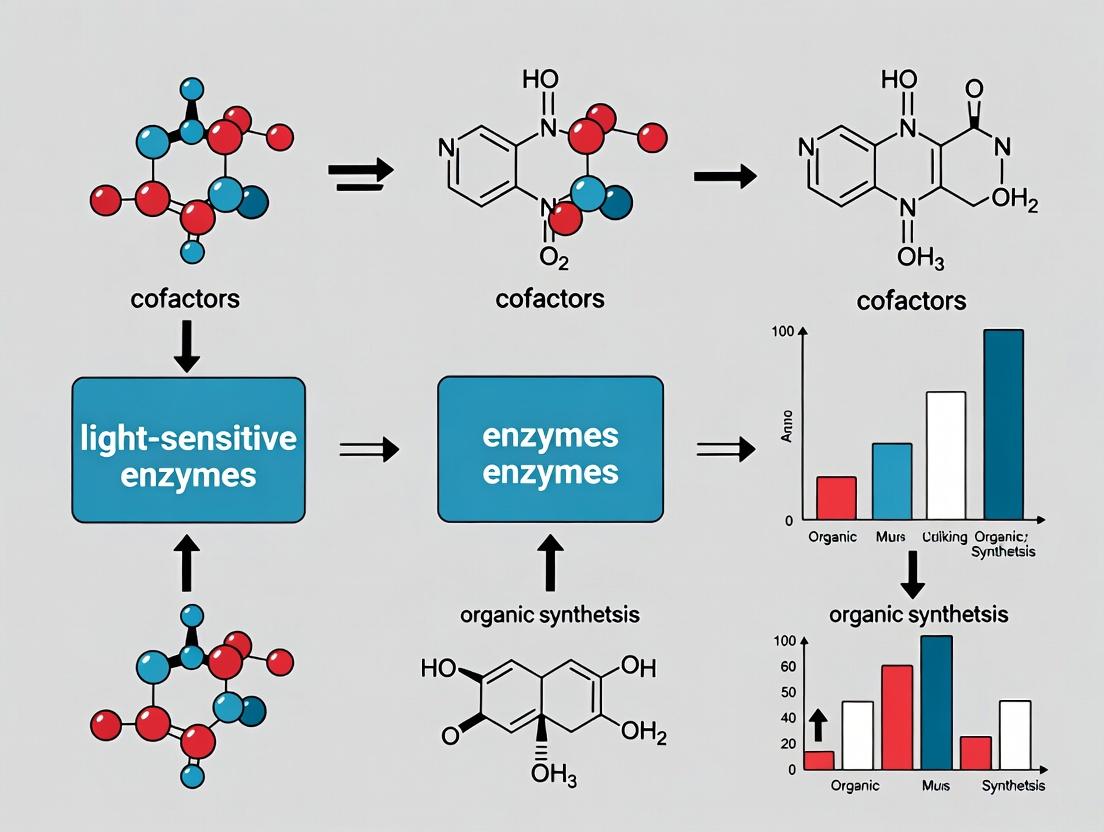
This article provides researchers, scientists, and drug development professionals with a detailed framework for handling light-sensitive enzymes and cofactors.
Mastering Light-Sensitive Enzymes and Cofactors: A Comprehensive Guide for Biomedical Research and Drug Development
Abstract
This article provides researchers, scientists, and drug development professionals with a detailed framework for handling light-sensitive enzymes and cofactors. It spans from foundational principles and molecular mechanisms to advanced methodologies, common troubleshooting strategies, and rigorous validation techniques. Covering optogenetic tools, photoenzymes, photodynamic therapy agents, and related systems, the content synthesizes current research to enable effective experimental design, optimization, and application in biomedical and therapeutic contexts.
Foundations of Photosensitivity: Understanding Light-Sensitive Enzymes and Cofactors
Light-sensitive enzymes and cofactors are biomolecules whose activity, stability, or binding affinity is directly modulated by light. This photoregulation enables precise spatiotemporal control of biochemical processes, a cornerstone of optogenetics and photopharmacology. Their scope extends from natural photoreceptors to engineered systems, impacting fundamental research and therapeutic development.
Table 1: Major Classes of Light-Sensitive Enzymes and Cofactors
| Class | Example | Native/Engineered | Light Trigger (λ) | Key Biological/Research Function |
|---|---|---|---|---|
| Photoreceptor Enzymes | LOV-domain kinases | Native | Blue (~450 nm) | Signal transduction, cell cycle regulation. |
| Cryptochromes | Native | Blue (~450 nm) | Circadian rhythm, magnetoreception. | |
| Rhodopsins (Channelrhodopsin) | Native | Blue (~470 nm) | Ion transport, neuronal depolarization. | |
| Light-Sensitive Cofactors | Flavin (FMN, FAD) | Native | Blue (~450 nm) | Electron transfer, redox sensor in LOV domains. |
| Tetrapyrroles (Biliverdin) | Native | Red/Far-red (600-750 nm) | Chromophore in phytochromes & bacteriophytochromes. | |
| Caged Compounds (e.g., caged ATP) | Engineered | UV (~360 nm) | Precise release of active molecules upon uncaging. | |
| Engineered Systems | Light-Oxygen-Voltage (LOV) fusions | Engineered | Blue (~450 nm) | Light-controlled protein localization, splicing, etc. |
| Dronpa & rsCherry (Photoswitchable FPs) | Engineered | Blue/Yellow, Green/Red | Reversible control of fluorescence for super-resolution. |
Biological Significance and Applications
The biological significance of these molecules is profound. Naturally, they govern circadian rhythms, phototropism, and DNA repair. In research and drug development, they are engineered as precision tools to control cell signaling, gene expression, and neuronal activity with light, offering unmatched temporal and spatial resolution for dissecting disease mechanisms and identifying novel therapeutic targets.
Application Notes and Protocols
Protocol 1: Characterizing a LOV-Domain Kinase's Spectral Response & Activity
Objective: To measure the absorption spectrum and quantify light-dependent kinase activity in vitro.
Research Reagent Solutions:
- Purified LOV-Kinase Protein: Recombinant protein expressed and purified via His-tag affinity chromatography.
- Reaction Buffer (pH 7.4): 50 mM Tris-HCl, 150 mM NaCl, 10 mM MgCl₂, 2 mM DTT. Maintains ionic strength and provides Mg²⁺ cofactor.
- ATP Solution (with [γ-³²P]ATP): Provides radiolabeled phosphate donor for kinetic assay.
- Model Substrate Peptide: A biotinylated peptide derived from the kinase's native target.
- Quenching Solution: 5% Trichloroacetic acid (TCA) with 10 mM ATP. Stops kinase reaction instantly.
- Streptavidin Scintillation Beads: Bind biotinylated substrate for quantification of incorporated ³²P.
Procedure:
- Spectroscopy: Dilute protein to 10 µM in reaction buffer (without DTT for spectral fidelity). Record UV-Vis absorption spectra (300-600 nm) before and after 1-min blue light (450 nm, 5 mW/cm²) illumination using a spectrophotometer.
- Activity Assay: a. Prepare reactions in amber tubes: 10 µL containing 1 µM kinase, 50 µM substrate peptide, 100 µM ATP (with tracer [γ-³²P]ATP). b. Divide into "Light" and "Dark" sets. Illuminate "Light" samples for 2 min with 450 nm LED (5 mW/cm²). Keep "Dark" samples wrapped in foil. c. Incubate all samples at 25°C for 10 minutes. d. Stop reactions with 50 µL ice-cold quenching solution. e. Transfer 50 µL to a filter plate containing streptavidin beads. Wash, then measure bead-bound radioactivity via scintillation counting.
- Data Analysis: Calculate phosphate incorporation (pmol/min/µg). Compare light vs. dark activity.
Protocol 2: Live-Cell Optogenetic Activation Using a Caged Cofactor
Objective: To acutely activate a metalloenzyme by uncaging a required Zn²⁺ cofactor in cultured cells.
Research Reagent Solutions:
- Cell Line: Stably expressing the Zn²⁺-dependent enzyme of interest (e.g., a matrix metalloprotease, MMP).
- Caged Zn²⁺ Compound (e.g., Nitrophenyl EGTA-Zn²⁺): Biologically inert until photolyzed by UV light.
- Fluorogenic Enzyme Substrate: Cell-permeable substrate that becomes fluorescent upon cleavage by the target enzyme.
- Hanks' Balanced Salt Solution (HBSS): For live-cell imaging in physiological buffer.
- UV Light Source (365 nm laser or LED): Calibrated for precise, localized uncaging (e.g., via microscope ROI).
Procedure:
- Cell Preparation: Plate cells in a glass-bottom imaging dish. Incubate until 70% confluent.
- Loading: Incubate cells with 10 µM caged Zn²⁺ and 5 µM fluorogenic substrate in HBSS for 30 min at 37°C in the dark.
- Wash: Gently wash 3x with HBSS to remove extracellular compounds.
- Baseline Imaging: Acquire a fluorescence image (ex/cm appropriate for substrate) to establish baseline activity.
- Uncaging: Illuminate a defined Region Of Interest (ROI) within the sample with a brief pulse (1-5 sec) of 365 nm light (≤5% laser power to minimize phototoxicity).
- Kinetic Imaging: Continuously monitor fluorescence every 30 seconds for 20 minutes. Compare signal increase in the uncaged ROI vs. non-illuminated control regions.
- Analysis: Quantify fluorescence intensity over time. Calculate the initial rate of substrate hydrolysis post-uncaging as a measure of enzyme activation.
Key Signaling Pathways and Workflows
Diagram 1: LOV-Domain Kinase Activation Pathway (76 chars)
Diagram 2: Research Workflow for Light-Sensitive Systems (78 chars)
The Scientist's Toolkit: Essential Research Reagents
Table 2: Key Reagents for Light-Sensitive Biochemistry Research
| Reagent Category | Specific Example | Function in Research |
|---|---|---|
| Photosensitive Proteins | Purified LOV-domain protein (e.g., AsLOV2) | Model system for in vitro biophysical and kinetic studies of light activation. |
| Caged Compounds | Caged ATP (NPE-caged ATP), Caged Calcium (DMNP-EDTA Ca²⁺) | Enables precise, sub-second release of signaling molecules upon UV photolysis. |
| Photochromic Ligands | Azo-switchable enzyme inhibitors (e.g., Azo-BH3) | Allows reversible, light-dependent control of protein-ligand interactions. |
| Fluorogenic Substrates | Fluorogenic peptide (e.g., MCA-labeled) for proteases | Reports on real-time enzyme activity in live cells or solution assays. |
| Photoswitchable Fluorescent Proteins (PSFPs) | Dronpa, rsCherry | Enables super-resolution microscopy (PALM) or tracking of protein pools. |
| Tunable Light Sources | High-power LEDs (365, 450, 590 nm), Laser systems | Provides specific, calibrated wavelengths for reproducible sample illumination. |
| Specialized Buffers | Oxygen-scavenging systems (e.g., PCA/PCD) | Prolongs fluorescence and reduces photodamage in single-molecule imaging. |
Within the broader thesis on handling light-sensitive enzymes and cofactors, this document provides detailed Application Notes and Protocols. A central challenge in this field is the controlled manipulation and study of highly labile biological systems that undergo ultrafast photophysical and photochemical reactions. This requires specialized techniques to capture initial photoreception events, subsequent energy transfer, and the resulting protein conformational changes that define biological function.
Core Photoreception Mechanisms & Quantitative Data
Key Photoreceptor Classes
Photoreception is initiated by specialized chromophores. Recent studies highlight the photophysical properties of these cofactors.
Table 1: Key Photoreceptive Cofactors & Their Properties
| Cofactor/Chromophore | Associated Protein Class | λ_max (nm) | Primary Photoreaction | Quantum Yield (Φ) | Ref. (Year) |
|---|---|---|---|---|---|
| 11-cis Retinal | Rhodopsin (Animal) | ~500 | cis→trans isomerization | ~0.67 | (Lorenz-Fonfria, 2020) |
| Flavin (FMN, FAD) | LOV domains, Cryptochromes | ~450 | Cysteinyl adduct formation, Triplet state | 0.1-0.4 | (Möglich, 2022) |
| Bilin (PCB, PΦB) | Phytochromes, Cyanobacteriochromes | 650-700 (Pr) | Z→E isomerization at C15=C16 | ~0.15 | (Rockwell & Lagarias, 2021) |
| 4-Hydroxycinnamic acid | Photoactive Yellow Protein | 446 | trans→cis isomerization | ~0.35 | (Groot et al., 2023) |
| FAD (fully oxidized) | Cryptochrome | ~450 | Electron transfer, Radical pair formation | - | (Soltani et al., 2021) |
Energy Transfer Metrics
Energy transfer efficiency is critical in photosynthetic complexes and fluorescent protein sensors.
Table 2: Energy Transfer Parameters in Model Systems
| System | Donor | Acceptor | Transfer Mechanism | Efficiency (%) | Distance (Å) | Key Technique |
|---|---|---|---|---|---|---|
| PSII RC | Chlorophyll a | Pheophytin a | Electron Transfer | >95 | ~10 | Femtosecond TA |
| GFP Dimer | GFP (S65T) | GFP (Y66H) | FRET | 45 ± 5 | 35-40 | Time-resolved FLIM |
| Phycobilisome | Phycoerythrin | Allophycocyanin | Excitation Transfer (FRET) | >90 | <50 | Picosecond Spectroscopy |
| LHCII Complex | Chl b | Chl a | Förster Resonance | 80-90 | 10-15 | 2D Electronic Spectroscopy |
Experimental Protocols
Protocol 1: Time-Resolved Absorption Spectroscopy for Photocycle Kinetics
Objective: To resolve the intermediate states and kinetics of a photoreceptor photocycle (e.g., a LOV domain). Thesis Context: Essential for characterizing the primary photo-adduct formation and decay, informing stable handling conditions.
Materials:
- Purified photoreceptor protein in reaction buffer (e.g., 50 mM Tris, 150 mM NaCl, pH 7.5).
- Optical cuvettes (quartz, path length 1-2 mm).
- Time-resolved absorption spectrometer (laser pump, white light continuum probe).
- Data acquisition and global analysis software.
Procedure:
- Sample Preparation: Concentrate protein to an A450 (for flavin) of ~0.5 in a 1 mm path length. Degas sample briefly under argon to minimize oxygen quenching.
- Instrument Setup: Tune pump laser to 450 nm (for flavin). Set probe to a white light continuum (350-750 nm). Define time delays from 1 ns to 1 s using a mechanical delay line or electronic delay generator.
- Data Acquisition: At each delay time, record the differential absorbance (ΔA) spectrum (pump-on minus pump-off). Average 50-100 shots per delay point. Keep sample flowing or stirring to prevent local heating.
- Data Analysis: Perform singular value decomposition (SVD) to identify spectral components. Fit ΔA kinetics at key wavelengths to a sequential or branched kinetic model (e.g., A → B → C) using global analysis.
Protocol 2: Förster Resonance Energy Transfer (FRET) Efficiency Measurement
Objective: To quantify conformational change in a light-sensitive enzyme via FRET between genetically encoded fluorophores. Thesis Context: Allows in vitro and in cellulo monitoring of cofactor-induced conformational shifts.
Materials:
- Constructs of target protein with donor (e.g., mCerulean) and acceptor (e.g., mVenus) fused at strategic positions.
- Purified proteins or transfected cells.
- Spectrofluorometer with polarizers or Fluorescence Lifetime Imaging Microscope (FLIM-FRET system).
- Appropriate buffer or cell culture medium.
Procedure:
- Sample Preparation: Express and purify double-labeled protein. For in vitro work, dilute to ≤0.1 OD at donor excitation peak in a low-fluorescence buffer.
- Spectral Measurement (in vitro): a. Record donor emission spectrum (excite at 433 nm) with acceptor absent (D-only) and present (DA). b. Correct for background and direct acceptor excitation. c. Calculate FRET efficiency (E) using acceptor sensitization: E = 1 - (FDA / FD), where F is the integrated donor fluorescence.
- Lifetime Measurement (preferred, in vitro or in cells): a. Acquire time-correlated single photon counting (TCSPC) decay curve of the donor in D-only and DA samples. b. Fit decay to a multi-exponential model. The amplitude-weighted mean lifetime (τ) is used. c. Calculate efficiency: E = 1 - (τDA / τD).
- Light Activation: Expose sample to actinic light of appropriate wavelength. Repeat measurement to determine change in E, reporting on conformational change.
Protocol 3: Cryo-Electron Microscopy of Light-Sensitive States
Objective: To capture high-resolution structural snapshots of transient conformational states. Thesis Context: Critical for visualizing large-scale conformational changes; requires meticulous light-controlled vitrification.
Materials:
- Purified photoreceptor protein at ≥3 mg/mL.
- UltrAuFoil R1.2/1.3 or Quantifoil grids.
- Vitrobot (or equivalent plunge freezer) with integrated, calibrated LED light source.
- cryo-EM with direct electron detector.
Procedure:
- Grid Preparation: Glow discharge grids for 30 seconds to ensure hydrophilic surface.
- Light Activation Setup: Program Vitrobot to deliver a precise, timed pulse of actinic light (wavelength and intensity calibrated for the photoreceptor) immediately prior to blotting and plunging. Dark control grids are prepared in complete darkness using infrared goggles.
- Vitrification: Apply 3 µL of sample to grid, blot for 3-4 seconds (100% humidity, 4°C), then vitrify in liquid ethane. Repeat for light-activated and dark state grids.
- Data Collection & Processing: Collect movies on a 300 keV cryo-EM. Use patch motion correction and CTF estimation. Perform 2D classification, ab initio reconstruction, and high-resolution 3D refinement in RELION or cryoSPARC. Compare dark and light maps to identify conformational changes.
Visualizations
Short Title: Photoreception to Function Pathway
Short Title: Light Perturbation Experimental Workflow
The Scientist's Toolkit: Research Reagent Solutions
Table 3: Essential Reagents for Light-Sensitive Enzyme Research
| Item | Function & Rationale | Example Product/Catalog |
|---|---|---|
| Anaerobic Cuvettes/Sealants | Protects oxygen-sensitive cofactors (e.g., flavin semiquinones, bilins) during spectral studies. | Hellma Precision Anaerobic Cuvette (110-QS) or Sigma-Aldrich rubber septa. |
| Deuterium/Halogen Light Source | Provides stable, continuous broad-spectrum light for sample illumination or actinic flashes in spectroscopy. | Ocean Insight DH-2000-BAL. |
| Precision-Calibrated LED Arrays | Delivers high-intensity, monochromatic light pulses for precise photoactivation in kinetics or cryo-EM. | Thorlabs M470D3 or CoolLED pE-800. |
| IR Viewing Goggles | Enables safe handling and manipulation of photolabile samples in "dark" conditions. | FJW Optical Find-R-Scope. |
| Oxygen Scavenging System | Removes dissolved O2 to extend triplet state lifetimes and prevent photodamage. | Cocktail: Protocatechuate Dioxygenase (PCD)/Protocatechuic Acid (PCA). |
| Low-Fluorescence Buffers & Media | Minimizes background in sensitive fluorescence (FRET, FLIM) assays. | ThermoFisher Ultrapure buffers; Phenol Red-free cell culture media. |
| Rapid Quench/Freeze Reagents | Traps transient intermediates for EPR, MS, or structural biology. | Syringe-driven mix with liquid N2-cooled isopentane or high-pressure freeze apparatus. |
| Caged Compounds | Enables ultra-fast, synchronous release of substrates or ligands upon photolysis. | Takeda (R&D) Caged ATP (P³-1-(2-Nitrophenyl)ethyl ester). |
Application Notes
The study of light-sensitive enzymes and cofactors bridges fundamental plant biochemistry and cutting-edge bioengineering. The oxygenase activity of Rubisco, a foundational natural system, represents an evolutionary constraint in photosynthesis where O₂ competes with CO₂ at the active site, leading to photorespiration. This inefficiency has driven research into engineering solutions, such as improving Rubisco's specificity or creating photorespiratory bypasses.
Conversely, optogenetic proteins (e.g., channelrhodopsins, LOV domains, phytochromes) exemplify nature's precision in light sensing and signal transduction. These systems are now co-opted as tools for precise spatiotemporal control of cellular processes. The broader thesis context posits that mechanistic insights from natural light-driven reactions (like Rubisco's misstep) inform the design and troubleshooting of engineered optogenetic systems, particularly regarding cofactor binding, reaction kinetics, and environmental sensitivity.
Table 1: Quantitative Comparison of Natural Light-Sensitive Systems
| Parameter | Rubisco (Type I, from Spinach) | Channelrhodopsin-2 (ChR2) | LOV Domain (AsLOV2) |
|---|---|---|---|
| Primary Function | CO₂/O₂ fixation | Cation channel | Conformational switch |
| Cofactor | None (Mg²⁺ essential) | All-trans-retinal | Flavin mononucleotide (FMN) |
| Activation λ (nm) | N/A (not light-activated) | ~470 (blue) | ~450 (blue) |
| Kinetics (τ) | Carboxylation: 1-10 s⁻¹ (turnover) | Channel opening: ~0.5 ms; Closing: ~10 ms | Adduct formation: ~2 µs; Recovery: ~70 s |
| Key Perturbant | [O₂]/[CO₂] ratio | Light intensity/duration | Light intensity/duration |
| Engineered Use | Targets for photosynthetic efficiency | Neuronal stimulation, ion control | Protein dimerization, cargo release |
Experimental Protocols
Protocol 1: Measuring Rubisco Oxygenase ActivityIn Vitro
Objective: Quantify the competitive oxygenase activity of purified Rubisco by measuring the rate of phosphoglycolate production. Materials: Purified Rubisco, 50 mM HEPES-KOH (pH 8.0), 20 mM MgCl₂, 10 mM NaH¹⁴CO₃, 10 mM Ribulose-1,5-bisphosphate (RuBP), O₂-saturated buffer. Procedure:
- Reaction Setup: Prepare two 1 mL reactions in sealed vials containing assay buffer, MgCl₂, and activated Rubisco.
- Gas Control: Purge Reaction A with N₂ for 5 min to lower O₂. Keep Reaction B in O₂-saturated air.
- Initiation: Simultaneously inject RuBP and a trace amount of NaH¹⁴CO₃ into both vials.
- Quenching: Stop reactions after 60 seconds with 100 µL of 6M HCl.
- Analysis: Separate acid-stable products (³P-glycerate from carboxylation) from acid-labile products (¹⁴C-phosphoglycolate from oxygenation) by scintillation counting after degassing. The oxygenase rate is derived from the acid-labile counts. Calculations: Specific activity is expressed as µmol O₂ fixed mg⁻¹ protein min⁻¹.
Protocol 2: Characterizing an Optogenetic LOV DomainIn Vivo
Objective: Assess light-induced cytoplasmic-nuclear shuttling of a protein fused to the AsLOV2 domain. Materials: HEK293T cells, plasmid encoding protein-of-interest (POI)-AsLOV2-NLS-eGFP, transfection reagent, blue LED light source (450 nm, 1 W/m²), live-cell imaging setup. Procedure:
- Transfection: Seed cells on glass-bottom dishes. Transfect with the POI-AsLOV2 construct at 70-80% confluency.
- Dark Adaptation: Incubate transfected cells for 24h, then wrap dishes in foil for 1h prior to imaging to ensure dark state.
- Light Stimulation & Imaging:
- Acquire a baseline fluorescence image (ex. 488 nm) in the dark.
- Expose the entire field or a defined region to continuous blue light via the LED source.
- Capture time-lapse images every 30 seconds for 10 minutes.
- Quantification: Measure mean fluorescence intensity in the nucleus and cytoplasm over time using image analysis software (e.g., ImageJ). Calculate the Nuclear/Cytoplasmic (N/C) ratio. Expected Outcome: In the dark, the NLS is sequestered, causing cytoplasmic localization. Blue light exposure induces conformational unmasking of the NLS, increasing the N/C ratio.
Diagrams
Title: Rubisco's Competitive Oxygenase and Carboxylase Pathways
Title: Thesis Framework Linking Natural Systems to Applications
Title: LOV Domain Photocycle and Activation Mechanism
The Scientist's Toolkit: Key Research Reagent Solutions
| Reagent/Material | Function in Research | Example/Catalog Consideration |
|---|---|---|
| Purified Rubisco | Substrate for in vitro kinetics assays of carboxylase/oxygenase activities. Isolated from spinach or recombinant bacterial systems. | Spinach leaf extract; recombinant R. rubrum Rubisco. |
| ¹⁴C-labeled NaHCO₃ | Radiolabeled tracer to quantify the fate of carbon in Rubisco reactions, distinguishing between carboxylation and oxygenation products. | PerkinElmer NEC003H. |
| RuBP (Ribulose-1,5-bisphosphate) | The 5-carbon substrate for Rubisco. Must be purified and stored at low pH to prevent degradation. | Sigma-Aldrich R0875. |
| All-trans-Retinal | Essential cofactor for channelrhodopsin function. Added to culture medium for reconstitution in heterologous systems. | Sigma-Aldrich R2500. |
| Flavin Mononucleotide (FMN) | The endogenous chromophore for LOV domains and BLUF proteins. May be added exogenously for in vitro studies. | Sigma-Aldrich F2253. |
| Optogenetic Plasmid Kit | Modular vectors for fusing LOV, CRY, or Phytochrome domains to proteins of interest, often with fluorescent reporters. | Addgene kits (e.g., pLOV, pcDNA3.1/ChR2). |
| Programmable LED Array | Provides precise, tunable light stimulation for optogenetic experiments in vitro or in vivo. | CoolLED pE-4000; ThorLabs M470L4. |
| Anaerobic Chamber | Allows manipulation of O₂/CO₂ ratios for studying oxygen-sensitive enzymes like Rubisco without ambient interference. | Coy Laboratory Products. |
Application Notes
The rational design of photoenzymes through the incorporation of non-canonical amino acids (ncAAs) and exogenous photosensitizers represents a frontier in photocatalysis and optopharmacology. This approach enables precise spatial and temporal control over enzymatic activity with light, a critical capability for probing biological mechanisms and developing targeted therapeutics. Within a thesis on light-sensitive enzymes, this technology exemplifies the convergence of genetic code expansion, synthetic chemistry, and photobiology to create novel tools for research and drug development.
Key applications include:
- Optogenetic Control of Signaling Pathways: Engineered photoenzymes (e.g., kinases, GTPases) allow for the light-dependent activation or inhibition of specific nodes within cellular signaling networks, facilitating high-resolution dissection of pathway dynamics.
- Targeted Prodrug Activation: Photoenzymes can be designed to locally convert inert prodrugs into active therapeutics upon illumination, minimizing off-target effects in areas such as oncology.
- Light-Driven Biocatalysis: Incorporating photocatalytic cofactors via ncAAs enables enzymes to catalyze non-natural reactions (e.g., asymmetric synthesis, C-H activation) using visible light as an energy source, expanding the toolbox for green chemistry.
Protocols
Protocol 1: Genetic Incorporation of a Photosensitizer ncAA into a Protein of Interest
Objective: To site-specifically incorporate a photosensitizer-bearing non-canonical amino acid (e.g., 4-benzoyl-L-phenylalanine (Bpa) or a metal-chelating amino acid for Ru(bpy)₃²⁺ complexes) into a target enzyme using a pyrrolysyl-tRNA synthetase/tRNAPyl pair in E. coli.
- Plasmid Design: Clone your gene of interest (GOI) into an expression vector containing an amber (TAG) stop codon at the desired position. Co-transform E. coli with this plasmid and a second plasmid encoding the orthogonal pyrrolysyl-tRNA synthetase/tRNAPyl pair, engineered for your specific photosensitizer-ncAA.
- Culture and Induction: Inoculate 50 mL of auto-induction media containing appropriate antibiotics. At an OD₆₀₀ of ~0.6, add the photosensitizer-ncAA (e.g., 1 mM final concentration from a 100 mM stock in 0.1 M NaOH or DMSO). Induce protein expression with 0.2% L-arabinose (for the synthetase) and 0.5 mM IPTG (for the GOI). Incubate for 16-20 hours at 18°C.
- Purification: Harvest cells by centrifugation (4,000 x g, 20 min). Lyse via sonication in lysis buffer (e.g., 50 mM Tris-HCl, 300 mM NaCl, 20 mM imidazole, pH 8.0). Purify the His-tagged protein via Ni-NTA affinity chromatography, followed by size-exclusion chromatography (SEC) in a photoinert buffer (e.g., 25 mM HEPES, 150 mM KCl, pH 7.4).
- Verification: Confirm ncAA incorporation and photosensitizer loading via:
- MS Analysis: Intact protein mass spectrometry to verify the mass increase corresponding to the ncAA.
- UV-Vis Spectroscopy: Confirm the characteristic absorbance of the incorporated photosensitizer (e.g., ~450 nm for Ru(bpy)₃²⁺).
- Activity Assay: Perform a standard enzymatic activity assay in the dark to establish a baseline.
Protocol 2: In Vitro Conjugation of a Synthetic Photosensitizer to a ncAA Handle
Objective: To covalently attach a synthetic photosensitizer (e.g., fluorescein, rhodamine, or a transition metal complex) to an enzyme containing a bioorthogonal handle installed via ncAA incorporation (e.g., p-azido-L-phenylalanine, AzF).
- Protein Preparation: Express and purify the AzF-containing enzyme following Protocol 1, using AzF instead of the photosensitizer-ncAA.
- Conjugation Reaction: Incubate the purified AzF-protein (50 µM) with a 3-5 fold molar excess of a dibenzocyclooctyne (DBCO)-functionalized photosensitizer in reaction buffer (PBS, pH 7.4) for 2 hours at 4°C in the dark.
- Purification: Remove excess, unreacted photosensitizer using a desalting column or dialysis against photoinert buffer.
- Characterization: Verify conjugation efficiency by analyzing the shift in SEC elution profile, changes in absorbance/fluorescence spectra, and via LC-MS of tryptic digests.
Protocol 3: Light-Dependent Enzyme Activity Assay
Objective: To quantify the light-triggered activation or inhibition of the engineered photoenzyme.
- Setup: Prepare a 96-well plate with assay components: photoenzyme (1 µM), substrate (at Km concentration), and necessary cofactors in activity buffer. Include dark controls (foil-wrapped) and light-only controls (no enzyme).
- Illumination: Illuminate the plate using a calibrated LED array at the sensitizer's optimal wavelength (e.g., 365 nm for Bpa, 450 nm for Ru(bpy)₃²⁺). Control intensity (typically 5-20 mW/cm²) and duration (1-60 s pulses) precisely using a function generator.
- Kinetic Measurement: Immediately monitor product formation continuously for 5-30 minutes using a plate reader. Suitable readouts include fluorescence, absorbance, or luminescence.
- Data Analysis: Calculate initial velocities (Vᵢ) for light-exposed and dark samples. The photomodulation factor is defined as (Vᵢlight / Vᵢdark). Plot activity vs. light dose (intensity × time) to establish a dose-response relationship.
Data Tables
Table 1: Properties of Common Photosensitizers for Enzyme Engineering
| Photosensitizer | λ_max (nm) | Mechanism | Incorporation Method | Key Application |
|---|---|---|---|---|
| 4-Benzoyl-L-phenylalanine (Bpa) | ~365 | Radical generation, Crosslinking | Direct ncAA | Photo-crosslinking, Proximity-triggered inhibition |
| Ruthenium-bipyridine (Ru(bpy)₃²⁺) | ~450 | Single-electron transfer (SET) | ncAA handle + conjugation or direct ncAA | Light-driven redox biocatalysis |
| Fluorescein/ Rhodamine derivatives | ~495/~550 | Singlet oxygen (¹O₂) generation | ncAA handle + conjugation | Photodynamic inactivation, Spatial mapping |
| Methyl-red | ~430 | Photoisomerization | Direct ncAA | Allosteric photo-control of activity |
| Ir(ppy)₃ complexes | ~375, ~460 | Energy/Electron transfer | ncAA handle + conjugation | Triplet-triplet energy transfer, C-H activation |
Table 2: Comparison of Genetic Code Expansion Systems for Photoenzyme Engineering
| Orthogonal System | Common ncAAs for Photo-Control | Typical Host | Efficiency (Yield)* | Key Advantage |
|---|---|---|---|---|
| Methanogen-derived PylRS/tRNAPyl | Bpa, AzF, Metal-chelating AAs | E. coli, Mammalian cells | ++ (1-5 mg/L) | High orthogonality, diverse ncAA library |
| M. jannaschii TyrRS/tRNATyr (amber suppressor) | Bpa, AzF, ONB | E. coli, Yeast | +++ (5-20 mg/L) | Well-established, good efficiency |
| Orthogonal Ribosome | Multiple, simultaneously | E. coli | + (0.1-1 mg/L) | Enables multi-site, distinct ncAA incorporation |
*Representative yields for model proteins; heavily dependent on target protein.
Visualizations
Diagram 1: General Mechanism of a Photoenzyme
Diagram 2: Workflow for Creating a Photoenzyme
The Scientist's Toolkit: Essential Research Reagents & Materials
| Item | Function/Description | Example Vendor/Product |
|---|---|---|
| Amber Stop Codon Plasmid | Expression vector for the target gene with a TAG codon at the desired site. | Addgene (pET系列载体), Twist Bioscience |
| Orthogonal aaRS/tRNA Plasmid | Encodes the engineered aminoacyl-tRNA synthetase and cognate tRNA for ncAA incorporation. | Addgene (PylRS/tRNAPyl variants), custom synthesis |
| Photosensitizer ncAAs | Non-canonical amino acids bearing photoactive moieties (e.g., Bpa, AzF). | Chem-Impex International, Sigma-Aldrich, SiChem |
| DBCO-Photosensitizer | Dibenzocyclooctyne-functionalized dyes or metal complexes for click chemistry conjugation. | Click Chemistry Tools, Lumiprobe, BroadPharm |
| Photo-Inert Buffers | Buffers free of primary amines and with low UV absorbance to prevent side reactions. | HEPES (pH 7.4), Phosphate buffers (avoid Tris during illumination) |
| Calibrated LED Array | Provides precise, monochromatic light for photoactivation at specific wavelengths and intensities. | Thorlabs, Prizmatix, CoolLED |
| Power Meter | Essential for measuring and calibrating light fluence (mW/cm²) at the sample plane. | Thorlabs (PM100D), Ocean Insight |
| Size-Exclusion Columns | For final polishing of photoenzymes and removal of small molecule sensitizers. | Cytiva (HiLoad Superdex), Bio-Rad (Enrich SEC) |
| Single-Cuvette Spectrofluorometer | For detailed characterization of photosensitizer emission/excitation and quenching studies. | Horiba Scientific, Agilent (Cary Eclipse) |
This application note is framed within a thesis investigating the photochemical properties and light-sensitive handling of enzymatic redox cofactors (e.g., FAD, NADPH) and their implications for cellular stress signaling. Understanding the interplay between light-sensitive biomolecules and stress pathways is critical for modeling neurodegenerative disease mechanisms in vitro.
Table 1: Common Quantitative Readouts in Cellular Stress & Neurodegeneration Research
| Analyte / Process | Associated Stress Pathway | Typical Assay Method | Example Change in Model (e.g., Aβ/MPTP treatment) | Notes for Light-Sensitive Work |
|---|---|---|---|---|
| ROS Levels | Oxidative Stress | DCFDA or DHE fluorescence | 150-300% increase vs. control | Fluorogenic probes are highly light-sensitive; require minimized exposure. |
| Caspase-3 Activity | Apoptosis | Fluorometric substrate (DEVD-AMC) | 200% increase vs. control | Assay performed under subdued light to prevent photodegradation of substrate. |
| LC3-II/I Ratio | Autophagy (ER Stress) | Western Blot | Ratio increase from 1 to 3-5 | Primary antibodies for key proteins (p-eIF2α, CHOP) require dark storage. |
| p-eIF2α (Ser51) | Integrated Stress Response (ISR) | ELISA or Western Blot | 2.5-fold increase vs. control | Photoreactive cofactors can upstream modulate ISR; relevant for thesis context. |
| GSH/GSSG Ratio | Redox Balance | Colorimetric/Ellman's Assay | Ratio decrease from 10:1 to 3:1 | Glutathione is light-sensitive; samples must be processed in amber tubes. |
| Seeding-Competent α-Syn | Proteostatic Stress | FRET-based assay (e.g., RT-QuIC) | Lag time reduced by 50% | Thioflavin T dye is photoactive; confocal imaging requires strict controls. |
Experimental Protocols
Protocol 2.1: Assessing ER Stress and the UPR in Neuronal Cells with Light-Sensitive Reagent Considerations
Objective: To measure Unfolded Protein Response (UPR) activation in a cellular model of neurodegeneration (e.g., SH-SY5Y cells treated with Tunicamycin), with specific cautions for handling light-reactive reagents. Materials: See "Research Reagent Solutions" below. Procedure:
- Cell Treatment & Light-Control: Seed cells in opaque-walled or foil-wrapped plates. Induce ER stress with 2µg/mL Tunicamycin for 6h. Perform all subsequent steps under subdued red-light conditions if handling photoreactive compounds (e.g., flavin analogues) per thesis methodology.
- Protein Extraction: Lyse cells in RIPA buffer supplemented with 1x protease/phosphatase inhibitors. Centrifuge at 12,000g for 15min at 4°C. Transfer supernatant to amber tubes.
- Western Blot Analysis:
- Prepare samples with Laemmli buffer without DTT if probing for disulfide-bonded proteins; use TCEP as a more stable alternative.
- Load 20-30µg protein per lane on a 4-12% Bis-Tris gel.
- Transfer to PVDF membrane using low-UV transfer methods.
- Block with 5% BSA in TBST for 1h.
- Probe with primary antibodies (anti-IRE1α, anti-BiP/GRP78, anti-CHOP) diluted in blocking buffer overnight at 4°C in the dark.
- Incubate with HRP-conjugated secondary antibody for 1h at RT.
- Develop using a chemiluminescent substrate, imaging with a CCD system. Do not use film which requires a darkroom.
- Data Analysis: Quantify band intensity relative to loading control (β-Actin).
Protocol 2.2: Live-Cell Imaging of Mitochondrial ROS with Concurrent Redox Cofactor Modulation
Objective: To visualize stress-induced mitochondrial superoxide production in primary neurons while manipulating the photoliable redox environment. Materials: Primary cortical neurons, MitoSOX Red, Hanks' Balanced Salt Solution (HBSS), custom light-labile NADPH precursor (e.g., caged NADPH), 405nm laser uncaging system. Procedure:
- Cell Preparation & Loading: Culture neurons on glass-bottom dishes. Load cells with 5µM MitoSOX Red in pre-warmed HBSS for 20min at 37°C, protected from light.
- Cofactor Modulation & Uncaging: Wash 3x with HBSS. Incubate with the caged NADPH precursor (e.g., 50µM) for 15min. Mount dish on confocal microscope with environmental control.
- Image Acquisition & Stimulation:
- Establish baseline MitoSOX fluorescence (Ex/Em: 510/580nm) with minimal laser power.
- To activate the precursor, perform a focal, brief (2-5 sec) uncaging pulse using a 405nm laser in a defined region of interest (ROI).
- Immediately initiate time-lapse imaging (every 30s for 20min) to monitor MitoSOX signal.
- Induce acute oxidative stress by adding a bolus of rotenone (1µM) after 5min.
- Analysis: Quantify fluorescence intensity over time within the uncaged ROI versus control ROIs. Normalize to baseline.
Diagram: ER Stress & UPR Signaling Pathway
Diagram: Experimental Workflow for Light-Sensitive Stress Studies
The Scientist's Toolkit: Research Reagent Solutions
Table 2: Essential Reagents for Neurodegeneration Stress Studies with Light-Sensitive Considerations
| Reagent / Material | Function in Protocol | Key Consideration for Light-Sensitive Research |
|---|---|---|
| Caged NAD(P)H Analogues (e.g., NPE-caged) | Allows precise, temporal control of redox cofactor delivery via UV photolysis. | Core to thesis. 405nm uncaging must be calibrated to avoid phototoxic stress artifacts. |
| Tunicamycin / Thapsigargin | Classical pharmacological inducers of ER stress. | Prepare fresh stocks in DMSO; store in amber vials at -20°C. |
| MitoSOX Red / DCFDA | Fluorogenic probes for mitochondrial superoxide and general ROS. | Extremely photo-labile. Limit exposure. Include a no-probe control for autofluorescence. |
| H₂DCFDA (Dichloro-dihydro-fluorescein diacetate) | Cell-permeant indicator for broad cellular ROS. | Acetate groups require esterase cleavage; activity varies by cell type. |
| Protease/Phosphatase Inhibitor Cocktails | Preserves post-translational modifications during lysis. | Some components are light-sensitive. Add fresh to lysis buffer. |
| Anti-p-eIF2α (Ser51) Antibody | Key readout for Integrated Stress Response (ISR) activation. | Aliquot upon receipt; avoid freeze-thaw. Perform incubations in the dark. |
| Amber Microcentrifuge Tubes & Foil | Standardized light-protective consumables. | Essential for all steps involving photo-reactive compounds, samples, or probes. |
| Rotenone / Antimycin A | Mitochondrial electron transport chain inhibitors to induce oxidative stress. | Positive controls for mitochondrial ROS. Toxic; use with appropriate waste disposal. |
Practical Protocols and Advanced Applications in Light-Controlled Biology
This application note details protocols for utilizing optogenetic tools, focusing on the cofactor-dependent actuator CofActor, within neuronal culture systems. These procedures are contextualized within a broader research thesis on handling light-sensitive enzymes and cofactors, which aims to overcome limitations of traditional optogenetic actuators (e.g., microbial opsins, plant-derived photoreceptors) by engineering systems responsive to endogenous, biocompatible cofactors like adenosine triphosphate (ATP) or tetrahydrobiopterin (BH4). The ability to precisely control neuronal activity with light, using tools that leverage intrinsic cellular biochemistry, offers transformative potential for basic neuroscience and drug development, enabling high-throughput screening of neuroactive compounds with temporal precision.
The following table summarizes key performance characteristics of the CofActor system and comparable optogenetic tools, as reported in recent literature.
Table 1: Comparison of Optogenetic Actuator Characteristics
| Actuator | Excitation Wavelength (nm) | Cofactor Requirement | Activation Kinetics (τ on) | Deactivation Kinetics (τ off) | Key Application |
|---|---|---|---|---|---|
| CofActor (e.g., ATP-sensitive) | 405-473 (blue) | Endogenous ATP | 50 - 200 ms | 300 - 1000 ms | Modulation of neuronal firing in cultured networks |
| Channelrhodopsin-2 (ChR2) | 470 (blue) | All-trans-retinal (exogenous in most systems) | ~1 ms | ~10 ms | Millisecond-scale neuronal depolarization |
| Halorhodopsin (NpHR) | 589 (yellow) | All-trans-retinal | ~5 ms | ~10 ms | Neuronal silencing via chloride influx |
| BLUF-domain photoreceptor | 450 (blue) | Flavin (FAD, endogenous) | Seconds to minutes | Minutes to hours | Long-term cAMP modulation |
Detailed Experimental Protocols
Protocol 1: Primary Neuronal Culture Preparation for Optogenetics
Objective: To establish a low-background, robust primary neuronal culture amenable to transfection and optogenetic stimulation.
- Materials Dissection & Plating:
- Dissect cortical or hippocampal tissue from E18 rat or mouse embryos in ice-cold, sterile Hibernate-E medium.
- Digest tissue in papain solution (20 U/mL) for 20 min at 37°C.
- Triturate gently to dissociate neurons, then centrifuge (200 x g, 5 min). Resuspend pellet in complete neurobasal medium (NB+ with 2% B-27, 1% GlutaMAX, 1% Penicillin-Streptomycin).
- Plate neurons on poly-D-lysine (0.1 mg/mL) coated dishes or coverslips at a density of 50,000 - 75,000 cells/cm².
- Maintenance: Incubate at 37°C, 5% CO₂. At 3-4 days in vitro (DIV), add 5 µM cytosine β-D-arabinofuranoside (Ara-C) to inhibit glial overgrowth. Perform half-medium changes twice weekly. Cultures are ready for transfection at DIV 5-7.
Protocol 2: Transfection with CofActor Constructs
Objective: To deliver CofActor plasmid DNA into cultured primary neurons. Method: Lipofection
- For each 24-well plate well, prepare two microtubes:
- Tube A: Dilute 0.5 - 1.0 µg of CofActor plasmid (e.g., pCAG-CofActor-mCherry) in 50 µL of plain Neurobasal medium.
- Tube B: Dilute 1 - 2 µL of lipofection reagent (e.g., Lipofectamine 2000) in 50 µL of plain Neurobasal medium. Incubate for 5 min at RT.
- Combine tubes A and B, mix gently, and incubate for 20 min at RT.
- During incubation, replace neuronal culture medium with 400 µL of pre-warmed, fresh complete neurobasal medium.
- Add the 100 µL DNA-lipid complex dropwise to the well. Swirl gently.
- Incubate cells at 37°C, 5% CO₂. Replace medium with conditioned, pre-warmed complete neurobasal medium after 4-6 hours.
- Allow expression for 48-72 hours before experimentation. Validate expression via mCherry fluorescence.
Protocol 3: Calibrated Light Stimulation and Electrophysiological Recording
Objective: To characterize CofActor-mediated neuronal activation using patch-clamp electrophysiology.
- Setup: Conduct experiments in recording chamber perfused with artificial cerebrospinal fluid (aCSF) at 32-34°C. Use a microscope equipped with a CCD camera and a LED light source (e.g., 470 nm, 1-5 mW/mm² intensity at sample).
- Whole-Cell Configuration: Patch neurons expressing CofActor-mCherry in current-clamp mode. Use borosilicate glass pipettes (3-5 MΩ) filled with intracellular solution (e.g., K-gluconate based).
- Light Stimulation Protocol:
- Maintain neuron at resting potential (~ -70 mV).
- Apply light pulses of increasing duration (10, 50, 100, 500, 1000 ms) at a constant intensity (e.g., 2 mW/mm²). Inter-pulse interval ≥ 30 s.
- Apply light pulses of increasing intensity (0.1, 0.5, 1, 2, 5 mW/mm²) at a constant duration (e.g., 100 ms).
- Data Analysis: Measure depolarization amplitude and number of evoked action potentials for each stimulus parameter. Plot input-output curves (Light Intensity/Duration vs. Spike Count).
Visualizations
Diagram Title: CofActor Mechanism: Light, Cofactor, and Activation
Diagram Title: Neuronal CofActor Experiment Workflow
The Scientist's Toolkit: Essential Research Reagents & Materials
Table 2: Key Reagent Solutions for CofActor Neuronal Optogenetics
| Item / Reagent | Function / Purpose | Example Product / Specification |
|---|---|---|
| CofActor Plasmid | DNA vector encoding the light- and cofactor-sensitive actuator, often fused to a fluorescent reporter (e.g., mCherry). | pCAG-CofActor-mCherry (Addgene #xxxxx) |
| Lipofection Reagent | Lipid-based transfection reagent for efficient delivery of plasmid DNA into primary neurons. | Lipofectamine 2000, 3000 |
| Complete Neurobasal Medium | Serum-free, optimized medium for long-term maintenance of primary neurons, minimizing glial growth. | Neurobasal-A, B-27 Supplement, GlutaMAX |
| Poly-D-Lysine | Coating substrate for culture surfaces to promote neuronal adhesion. | 0.1 mg/mL in borate buffer or water. |
| Cytosine β-D-arabinofuranoside (Ara-C) | Antimitotic agent used to suppress proliferation of non-neuronal cells in culture. | Working concentration: 1-5 µM. |
| Artificial Cerebrospinal Fluid (aCSF) | Ionic solution mimicking the extracellular environment of the brain for physiological recordings. | Contains (in mM): 125 NaCl, 2.5 KCl, 2 CaCl₂, 1 MgCl₂, 1.25 NaH₂PO₄, 26 NaHCO₃, 25 Glucose (pH 7.4, bubbled with 95% O₂/5% CO₂). |
| 470 nm LED Light Source | Precise, TTL-controlled illumination system for activating blue-light-sensitive CofActor. | CoolLED pE-4000, or Thorlabs LEDD1B. |
| Patch-Clamp Pipettes | Borosilicate glass capillaries for forming high-resistance seals and whole-cell recordings. | Outer Diameter: 1.5 mm, Inner Diameter: 0.86 mm, with filament. |
Application Notes
Within the broader thesis research on handling light-sensitive enzymes and cofactors, the precise delivery and activation of photosensitizers (PSs) for photodynamic therapy (PDT) present a parallel challenge of controlling light-triggered molecular agents in biological systems. The intrinsic limitations of conventional PSs—poor aqueous solubility, lack of tumor selectivity, and aggregation-caused quenching—directly mirror issues faced with labile photochemical cofactors. Advanced nanocarrier and self-assembly strategies are engineered to overcome these barriers, ensuring the PS reaches its target in a functional, monomeric state, analogous to protecting a light-sensitive enzyme until its precise site of action.
The quantitative efficacy of various delivery platforms, as consolidated from recent literature, is summarized in the tables below.
Table 1: Comparison of Nanocarrier Platforms for PS Delivery
| Nanocarrier Type | Common Materials | Avg. Size (nm) | Typical PS Loading (%) | Key Advantage for PDT | Reference Context |
|---|---|---|---|---|---|
| Polymeric Nanoparticles | PLGA, Chitosan, mPEG-PLGA | 80-150 | 5-15 | Controlled release, high stability | |
| Liposomes | DSPC, Cholesterol, PEG-lipids | 90-120 | 1-10 | Biocompatibility, passive targeting (EPR) | |
| Polymeric Micelles | Pluronic, PEG-PCL, PEG-PLA | 20-50 | 5-20 | High solubilization, small size | |
| Mesoporous Silica NPs | MSNs, surface-modified MSNs | 60-100 | 10-25 | Very high payload, tunable surface | |
| Dendrimers | PAMAM, PPi | 5-15 | 5-10 (<# of molecules) | Precise molecular architecture |
Table 2: Performance Metrics of Select PS Delivery Systems in In Vivo Models
| Delivery System | PS Used | Tumor Model | Light Dose (J/cm²) | Tumor Growth Inhibition (%) vs. Free PS | Key Finding |
|---|---|---|---|---|---|
| Hyaluronic-acid coated PLGA NPs | Chlorin e6 | 4T1 (mice) | 100 | 85 vs. 45 | CD44-targeting enhanced uptake. |
| ROS-responsive micelles | Protoporphyrin IX | A549 (mice) | 150 | 92 vs. 30 | On-demand release in high ROS tumor environment. |
| pH-sensitive liposomes | Temoporfin | SCC-7 (mice) | 50 | 78 vs. 40 | Improved endo/lysosomal escape. |
| Self-assembled Porphyrin-Peptide | Pyropheophorbide-a | U87MG (mice) | 130 | 95 (system only) | In situ assembly retained in tumor. |
Experimental Protocols
Protocol 1: Preparation and Characterization of mPEG-PLGA Nanoparticles Loaded with Chlorin e6 (Ce6) This protocol details the nano-encapsulation of a hydrophobic PS, creating a stable, EPR-effect utilizing delivery vehicle.
Materials:
- mPEG-PLGA copolymer (50:50, 20kDa)
- Chlorin e6 (Ce6)
- Dichloromethane (DCM)
- Polyvinyl alcohol (PVA, 2% w/v)
- Deionized water
- Probe sonicator
- Magnetic stirrer
- Centrifuge and ultracentrifuge
Method:
- Organic Phase: Dissolve 50 mg mPEG-PLGA and 5 mg Ce6 in 5 mL DCM.
- Aqueous Phase: Prepare 20 mL of 2% PVA solution.
- Emulsification: Add the organic phase dropwise to the aqueous phase under vigorous stirring (800 rpm). Probe sonicate the mixture on ice (30% amplitude, 2 min, pulse 5s on/2s off).
- Solvent Evaporation: Stir the resulting oil-in-water emulsion overnight at room temperature to evaporate DCM.
- Purification: Centrifuge the suspension at 12,000 rpm for 15 min to remove large aggregates. Collect the supernatant and ultracentrifuge at 40,000 rpm for 30 min. Wash the pelleted nanoparticles twice with DI water.
- Redispersion: Resuspend the final nanoparticle pellet in 5 mL PBS (pH 7.4) and filter through a 0.45 µm syringe filter. Store at 4°C protected from light.
- Characterization: Determine size and PDI via DLS, surface charge via zeta potential, and loading efficiency by lysing nanoparticles in DMSO and measuring Ce6 absorbance (λ=660nm).
Protocol 2: Evaluation of PDT Efficacy and ROS Generation in 2D Cell Culture This protocol assesses the photocytotoxicity and intracellular ROS generation of a delivered PS, a critical step parallel to testing light-activated enzyme function.
Materials:
- HeLa or other relevant cell line
- PS-loaded nanocarrier (e.g., from Protocol 1)
- ROS probe (e.g., DCFH-DA, 10 µM)
- Cell culture medium (serum-free and complete)
- MTT or Cell Counting Kit-8 (CCK-8)
- LED light source (660 nm for Ce6)
- Microplate reader, fluorescence microscope
Method:
- Cell Seeding: Seed cells in 96-well plates (5x10³ cells/well for MTT, 1x10⁴ for imaging) and incubate for 24h.
- Treatment: Replace medium with serum-free medium containing varying concentrations of free Ce6 or Ce6-nanoparticles. Incubate for 4-6h.
- Washing & Illumination: Wash cells twice with PBS. Add fresh PBS and illuminate plates with 660 nm light (e.g., 20 mW/cm² for 10 min, total dose 12 J/cm²). Include dark controls (no light).
- Viability Assay (MTT): Post-illumination, replace PBS with complete medium. After 24h, add MTT reagent. Incubate for 4h, solubilize formazan crystals with DMSO, and measure absorbance at 570 nm.
- ROS Detection: In parallel plates, after illumination, incubate cells with DCFH-DA (10 µM) for 30 min. Wash and immediately measure fluorescence (Ex/Em: 485/535 nm) or image via fluorescence microscopy.
Visualizations
Title: Limitations of Conventional Photosensitizer Delivery
Title: Mechanism of Targeted PDT via Nanocarriers
The Scientist's Toolkit: Essential Research Reagents & Materials
| Item | Function in PS Delivery/PDT Research |
|---|---|
| PLGA or mPEG-PLGA Copolymer | Biodegradable polymer backbone for forming core-shell nanoparticles, enabling sustained release and "stealth" properties. |
| Cholesterol & DSPC Lipids | Key components of liposomal bilayers to impart stability and control membrane fluidity. |
| PEGylated Lipid (e.g., DSPE-PEG) | Used to create PEG coronas on liposomes or nanoparticles, reducing opsonization and prolonging circulation. |
| Chlorin e6 (Ce6) or Protoporphyrin IX (PpIX) | Common second-generation photosensitizers used as model compounds in delivery system development. |
| DCFH-DA (2',7'-Dichlorodihydrofluorescein diacetate) | Cell-permeable ROS-sensitive fluorescent probe for quantifying intracellular singlet oxygen/ROS generation post-PDT. |
| MTT or CCK-8 Kit | Standard colorimetric assays for quantifying cell viability and photocytotoxicity after PS treatment and illumination. |
| Polyvinyl Alcohol (PVA) | Commonly used as a stabilizer and emulsifying agent in single/double emulsion methods for polymeric NP synthesis. |
| Dichloromethane (DCM) | Organic solvent for dissolving hydrophobic polymers and PS during nanoparticle preparation via emulsion methods. |
| Calcein AM / Propidium Iodide (PI) | Live/dead fluorescent double-stain used in microscopy to visualize PDT-induced cell death (green=live, red=dead). |
| Tumor-Specific Targeting Ligand (e.g., Folic Acid, cRGD peptide) | Conjugated to nanocarrier surface to facilitate active targeting via receptor-mediated endocytosis in cancer cells. |
Application Notes
Bioluminescent optogenetics represents a paradigm shift in the control of cellular signaling, eliminating the need for external physical light delivery. This technique leverages genetically encoded luciferase enzymes, which catalyze the oxidation of a small-molecule substrate (luciferin) to produce photons. This intrinsic luminescence is then used to activate light-sensitive actuator proteins, such as channelrhodopsins or light-oxygen-voltage (LOV) domain-containing proteins. Within the broader thesis on handling light-sensitive enzymes and cofactors, this approach addresses critical challenges of spatial resolution in deep tissues and perturbation-free stimulation in freely behaving animals, as it is entirely chemical and requires no invasive fiber optics.
The core application lies in the ability to achieve cell type-specific and spatially restricted activation of neural circuits, GPCR signaling pathways, or gene expression in vivo. Recent advancements have focused on engineering brighter luciferases, red-shifted luminescence for deeper tissue penetration, and matching emission spectra to the peak activation spectra of optimized opsins. Quantitative parameters of key systems are summarized in Table 1.
Table 1: Quantitative Comparison of Key Bioluminescent Optogenetics Systems
| System Name (Luciferase:Actuator) | Luciferin Substrate | Peak Emission (nm) | Target Actuator | Peak Activation (nm) | Reported Activation Dynamic Range (Fold-Change) | Key Application Context |
|---|---|---|---|---|---|---|
| FLARE (NanoLuc:LOV2) | Furimazine | ~460 | LOV2-ssrA | ~450 | ~5-10 (protein stabilization) | Control of protein degradation in vivo |
| BL-OG (NanoLuc:ChR2) | Furimazine | ~460 | Chrimson | ~590 | Significant spike firing in neurons | Deep brain neuronal stimulation |
| Luminopsin (RLuc:ChR2) | Coelenterazine | ~480 | ChR2 variants | ~470 | Robust spike firing; ~20 Hz sustained | Cortical and spinal cord stimulation |
| GLuc-OPTO (GLuc:β2AR-OPTO) | Coelenterazine | ~490 | Opto-β2AR | ~500 | ~50% of maximum isoproterenol response | Modulation of GPCR signaling |
Detailed Protocols
Protocol 1: In Vitro Validation of Luminescence-Driven Actuator Activation
Objective: To confirm that luciferase-generated luminescence can activate a target opsin (e.g., Chrimson) in cultured cells.
Materials:
- HEK293T cells.
- Plasmid DNA: pNanoLuc-Chrimson fusion or pCMV-NanoLuc + pCMV-Chrimson (separate constructs).
- Transfection reagent (e.g., polyethylenimine, PEI).
- Dulbecco’s Modified Eagle Medium (DMEM), fetal bovine serum (FBS).
- Furimazine substrate (commercially available as Nano-Glo Luciferase Assay Substrate).
- Hanks' Balanced Salt Solution (HBSS).
- Patch-clamp rig or fluorescent calcium indicator (e.g., Cal-520 AM) for functional readout.
Methodology:
- Cell Culture & Transfection: Seed HEK293T cells in a 24-well plate with poly-D-lysine coated coverslips. At 60-70% confluency, co-transfect with 250 ng of NanoLuc-Chrimson fusion plasmid and 250 ng of a reporter plasmid (if applicable) using PEI (1:3 DNA:PEI ratio) in serum-free DMEM. Replace with complete growth medium (DMEM + 10% FBS) after 6 hours.
- Incubation: Culture cells for 48 hours at 37°C, 5% CO₂ to allow robust protein expression.
- Luminescence Stimulation & Imaging: For electrophysiology, perform whole-cell patch-clamp recordings in HBSS. Perfuse cells with 10 µM furimazine in HBSS to initiate luminescence. Record membrane currents in voltage-clamp mode (holding potential -60 mV). For calcium imaging, load cells with 5 µM Cal-520 AM for 30 min prior. Acquire baseline images, then add furimazine (1:100 dilution of Nano-Glo substrate) and monitor fluorescence intensity changes over time.
- Controls: Include cells transfected with NanoLuc alone (no opsin) + furimazine, and opsin alone (no luciferase) + furimazine. A positive control using 590 nm external LED light can validate opsin function.
- Data Analysis: Quantify peak inward current or ΔF/F0 for calcium traces. Compare to controls to confirm luminescence-specific activation.
Protocol 2: In Vivo Neuronal Activation Using a Luminopsin System
Objective: To express a luminopsin construct in mouse brain neurons and evoke neuronal activity via systemic luciferin administration.
Materials:
- Adult C57BL/6J mice.
- AAV9-EF1α-Luminopsin3 (RLuc variant fused to ChR2 variant) viral vector.
- Stereotaxic injection apparatus.
- Coelenterazine h (CTZ) in sterile saline with 5% DMSO.
- EEG/EMG headmount or intracerebral local field potential (LFP) electrodes.
- In vivo luminescence imaging system (IVIS) or fiber photometry system.
Methodology:
- Stereotaxic Surgery: Anesthetize mouse and secure in stereotaxic frame. Inject 500 nL of AAV9-EF1α-Luminopsin3 (~5x10¹² vg/mL) unilaterally into the primary motor cortex (M1; AP: +1.8 mm, ML: -1.8 mm, DV: -1.5 mm from bregma) at 100 nL/min. Retract needle slowly after 5 min.
- Recovery & Expression: Allow 3-4 weeks for robust viral expression.
- In Vivo Stimulation & Recording: Connect the mouse to EEG/LFP recording equipment under brief isoflurane anesthesia, then allow to awaken in a restraining cylinder. Acquire baseline electrophysiology. Inject CTZ (3 mg/kg, i.p.) and record for 30-60 minutes. Monitor for increased spike rates or power in the gamma band (30-80 Hz) on LFP.
- Validation: Correlate electrophysiological events with bioluminescence imaging. Anesthetize a separate cohort of injected mice, administer CTZ, and acquire luminescence images over the skull with the IVIS system (1-5 min exposure) to confirm light production.
- Behavioral Assay: For motor studies, inject CTZ and immediately place mouse in an open field, quantifying locomotor activity.
The Scientist's Toolkit: Research Reagent Solutions
| Item | Function & Explanation |
|---|---|
| Furimazine | Cell-permeant substrate for NanoLuc luciferase. Offers sustained glow-type luminescence (~2 hr half-life) ideal for prolonged activation. |
| Coelenterazine h | Synthetic, enhanced analog of native coelenterazine for Renilla (RLuc) and Gaussia (GLuc) luciferases. Provides high photon flux but faster kinetics. |
| AAV9-EF1α-Luminopsin | Ready-to-use viral vector for in vivo delivery. AAV9 serotype ensures broad neuronal tropism; EF1α promoter drives strong, constitutive expression. |
| Nano-Glo Live Cell Substrate | Commercial, optimized formulation of furimazine for live-cell applications, ensuring consistent luminescence output. |
| Opto-β2AR-OG (OPTO) Construct | A light-sensitive chimeric GPCR actuator. Crucial for bioluminescent control of specific intracellular signaling cascades (e.g., cAMP). |
| Cal-520 AM | High-performance, cell-permeant calcium indicator. Serves as a key functional readout for calcium influx following opsin activation. |
Diagrams
Title: Core Mechanism of Bioluminescent Optogenetics
Title: Standard Experimental Workflow
Title: GLuc-Opto GPCR Signaling Pathway
Application Notes: Context within Light-Sensitive Enzyme Research
The study of light-sensitive enzymes (e.g., photolyases, cryptochromes, and optogenetic tools) and their cofactors (e.g., flavins, deazaflavins, pterins) presents a unique challenge: the very act of observation—fluorescence imaging—can photobleach samples, alter enzymatic states, or degrade sensitive cofactors. Microsphere-mediated imaging offers a solution, enabling super-resolution imaging and signal amplification at lower, less damaging excitation intensities.
Key Applications in this Field:
- Low-Intensity Super-Resolution: Visualizing the sub-cellular localization and dynamics of photolyase-DNA repair complexes without the high-intensity light that triggers unwanted photochemistry or bleaching.
- Cofactor Turnover Imaging: Amplifying weak fluorescence from endogenous enzyme-bound cofactors (FAD, MTHF) to monitor redox state changes and binding events in real time.
- Photostability Enhancement: Microspheres can increase the effective fluorescence signal, allowing for prolonged time-lapse imaging of light-sensitive processes with reduced cumulative photodamage.
- Correlative Imaging: Combining microsphere-amplified widefield fluorescence with subsequent high-resolution techniques (e.g., AFM) on the same sample area to correlate enzyme function with nanostructure.
Experimental Protocols
Protocol 1: Microsphere-Assisted Super-Resolution Imaging of Photolyase Complexes
Objective: Achieve sub-diffraction imaging of GFP-tagged photolyase on UV-damaged DNA in fixed cells using dielectric microspheres.
Materials: (See "Research Reagent Solutions" table) Procedure:
- Sample Preparation: Grow and transfer mammalian (U2OS) cells expressing GFP-Photolyase onto 35mm glass-bottom dishes. Induce localized UV-C damage via a micropore filter.
- Fixation: At desired time points, fix cells with 4% paraformaldehyde in PBS for 15 min at room temperature. Permeabilize with 0.2% Triton X-100 for 10 min.
- Microsphere Dispersion: Sonicate a suspension of 3-5µm diameter TiO₂ or SiO₂ microspheres in ethanol (10% w/v) for 5 min to break aggregates. Pipette 5µL of the suspension onto the sample surface near the region of interest. Allow to air dry partially, leaving a sparse, dispersed layer of microspheres.
- Imaging Setup: Invert the sample dish onto a standard epi-fluorescence microscope. Use a high-NA (≥1.4) oil immersion objective. Locate a microsphere sitting over a cell.
- Data Acquisition: Focus on the sample plane through the microsphere. Acquire images using 488nm excitation at 5-10% of the intensity typically used for confocal GFP imaging (e.g., 5 W/cm² vs. 50 W/cm²). Capture multiple fields of view with different microspheres.
- Image Processing: Use Fourier transform analysis to reconstruct the virtual image. A typical resolution of λ/6 to λ/7 (~70-80nm for green light) can be achieved, compared to the diffraction limit of ~250nm.
Protocol 2: Fluorescence Amplification for Live-Cell Cofactor Imaging
Objective: Amplify the intrinsic fluorescence of flavin adenine dinucleotide (FAD) bound to a cryptochrome enzyme in live yeast cells.
Materials: (See "Research Reagent Solutions" table) Procedure:
- Cell Mounting: Grow yeast cells expressing the cryptochrome of interest to mid-log phase. Concentrate gently by centrifugation and mount in a thin layer between a coverslip and a slab of agarose-based growth medium.
- Microsphere Application: Dust a small quantity of dry polystyrene (PS) or barium titanate glass (BTG) microspheres (5-10µm) onto the top surface of the coverslip.
- Microscopy with Low Phototoxicity: Use a widefield fluorescence microscope with a sensitive sCMOS camera. For FAD imaging, use 450nm excitation. Reduce intensity to 1-2% of standard settings (e.g., 2 W/cm²). Acquire images through areas of the coverslip coated with microspheres and uncoated areas.
- Quantification: Measure the mean fluorescence intensity of the same cell imaged with and without an overlying microsphere. Typical amplification factors range from 4x to 12x, enabling detection of dim cofactor signals.
- Kinetics: Perform time-lapse imaging at low frequency (e.g., every 30 seconds) to monitor FAD fluorescence changes in response to a blue light stimulus, demonstrating reduced photobleaching rates.
Table 1: Performance Comparison of Microsphere Types for Super-Resolution
| Microsphere Material | Diameter (µm) | Refractive Index (n) | Best For | Typical Resolution Achieved | Amplification Factor | Photostability Impact |
|---|---|---|---|---|---|---|
| Silica (SiO₂) | 3 - 10 | ~1.46 | Biomolecule imaging (GFP, dyes) | ~ λ/6 (80 nm) | 3x - 8x | Moderate improvement |
| Titania (TiO₂) | 2 - 5 | ~2.4 | High-refractive index samples | ~ λ/7 (70 nm) | 8x - 15x | Significant improvement |
| Polystyrene (PS) | 5 - 15 | ~1.59 | Live-cell, rapid screening | ~ λ/5 (100 nm) | 4x - 10x | Good improvement |
| Barium Titanate Glass (BTG) | 4 - 8 | ~1.9 - 2.1 | General-purpose amplification | ~ λ/6.5 (75 nm) | 10x - 20x | Excellent improvement |
Table 2: Imaging Parameters for Light-Sensitive Enzymes: Standard vs. Microsphere-Assisted
| Parameter | Standard Confocal/Fluorescence | Microsphere-Assisted | Benefit for Light-Sensitive Samples |
|---|---|---|---|
| Excitation Intensity | 50 - 100 W/cm² | 2 - 10 W/cm² | >80% reduction in photobleaching/photoactivation |
| Typical Exposure Time | 50 - 200 ms | 100 - 500 ms | Longer integration possible due to lower background |
| Effective Resolution | 250 nm (diffraction limit) | 70 - 100 nm | Clear visualization of enzyme clusters/ complexes |
| Signal-to-Noise Ratio (SNR) | Baseline (1x) | 4x - 12x (amplified) | Weak cofactor autofluorescence becomes detectable |
| Max Imaging Duration (Live) | 5-10 min before bleaching | 20-40 min before bleaching | Enables long-term kinetics studies |
Signaling Pathway & Workflow Diagrams
Diagram Title: Microsphere Enhancement of Light-Sensitive Enzyme Imaging Workflow
Diagram Title: Experimental Protocol for Microsphere-Mediated Imaging
The Scientist's Toolkit: Research Reagent Solutions
| Item | Function & Role in Protocol | Example Product/Catalog # |
|---|---|---|
| High-Refractive Index Microspheres | Dielectric lenses that create photonic nanojets for resolution enhancement and signal amplification. | TiO₂ Microspheres, 3µm (Sigma-Aldrich 634662); BTG Microspheres (Biosensing USA Inc.) |
| Glass-Bottom Culture Dishes | Provide optimal optical clarity for high-NA imaging through microspheres. | MatTek P35G-1.5-14-C |
| Low-Autofluorescence Mounting Medium | Preserves sample fluorescence and structure with minimal background for fixed cells. | ProLong Diamond Antifade Mountant (Thermo Fisher P36965) |
| Oxygen Scavenging System | Critical for live-cell imaging; reduces photobleaching of flavin cofactors. | Glucose Oxidase/Catalase System (GOX/CAT) or commercial buffers (e.g., Oxyrase) |
| Sensitive sCMOS Camera | Essential for detecting the faint, amplified signals at low light intensities. | Hamamatsu Orca-Fusion BT, Teledyne Photometrics Prime BSI |
| Precision Microdispenser | For controlled, sparse application of microsphere suspensions. | Drummond Scientific Nanoject III |
| Image Processing Software | For reconstructing virtual super-resolution images from raw microsphere data. | Fiji/ImageJ with custom plugins, or MATLAB/Python scripts. |
Application Notes
Photopharmacology employs molecular photoswitches, like azobenzenes or spiropyrans, to confer light-dependent activity on bioactive molecules. This enables precise, spatiotemporal control over biological function with high spatial and temporal resolution. In enzyme targeting, photoswitchable inhibitors allow for the reversible activation or deactivation of enzymatic activity using specific wavelengths of light. Glycosidases, enzymes that hydrolyze glycosidic bonds, are critical targets in diseases like diabetes, viral infections (e.g., influenza), lysosomal storage disorders, and cancer. Photoswitchable inhibitors for these enzymes offer a powerful tool to dissect their dynamic roles in complex biological processes and pave the way for novel, light-controllable therapeutic strategies.
Core Advantages:
- Spatiotemporal Precision: Enzyme activity can be controlled in specific tissues or organelles without affecting the entire organism.
- Reversibility: The inhibitory effect can be turned on/off repeatedly, allowing dynamic studies of enzyme function over time.
- Dose Control: Light intensity and duration can modulate the effective inhibitor concentration locally.
Key Quantitative Data on Photoswitchable Glycosidase Inhibitors
Table 1: Representative Photoswitchable Glycosidase Inhibitors and Their Properties
| Inhibitor Name / Core Structure | Target Glycosidase | Photoswitch | Active Form (Light Condition) | Inhibition Constant (Ki) Active/Inactive | Switching Wavelengths (nm) | Reference Key Finding |
|---|---|---|---|---|---|---|
| AZGP-1 | β-Glucocerebrosidase (GCase) | Azobenzene | trans (Dark, 450 nm Blue) | 120 nM / >10 µM | 380 nm (cis), 450 nm (trans) | >80-fold activity difference in live cells. |
| Azo-IFG | α-Glucosidase (Yeast) | Azobenzene | cis (365 nm UV) | 48 µM (cis) / 210 µM (trans) | 365 nm (cis), 440 nm (trans) | Demonstrated reversible control of glucose metabolism in yeast. |
| Spiro-DNJ | α-Glucosidase | Spiropyran | Merocyanine (550 nm Green) | 5.2 µM (MC) / >100 µM (SP) | 550 nm (MC), 450 nm (SP) | Visible-light switching, reduced phototoxicity. |
Extended Applications Beyond Glycosidases: The principles developed for glycosidases are directly applicable to other enzyme classes and targets:
- Kinases & Phosphatases: Controlling cell signaling pathways.
- Proteases: Regulating protein degradation and processing.
- Epigenetic Enzymes (HDACs, HMTs): Precise control of gene expression.
- Ion Channels & GPCRs: Optical control of neuronal and cellular communication.
Detailed Experimental Protocols
Protocol 1: In Vitro Photoswitching and Enzyme Kinetics Assay
Objective: To characterize the light-dependent inhibitory potency (Ki) of a photoswitchable compound against a purified glycosidase.
Research Reagent Solutions & Materials: Table 2: Essential Reagents for Kinetic Assays
| Item | Function / Explanation |
|---|---|
| Purified Recombinant Glycosidase | Target enzyme of interest (e.g., β-Glucocerebrosidase). |
| Photoswitchable Inhibitor Stock Solution | Typically in anhydrous DMSO. Protect from ambient light with aluminum foil. |
| Fluorogenic/Glycosidase Substrate (e.g., 4-MU-glycoside) | Enzyme substrate that releases fluorescent product (4-methylumbelliferone) upon hydrolysis. |
| Assay Buffer (e.g., Citrate-Phosphate, pH 5.2) | Optimized buffer for enzyme activity. |
| LED Light Sources (365 nm, 450 nm, 550 nm) | For precise, cool illumination of samples during switching. |
| Microplate Reader with Thermal Control | For kinetic fluorescence measurements. |
| Black 96- or 384-Well Plates | Minimize light cross-talk and signal background. |
Procedure:
- Inhibitor Photoswitching: Prepare a 100 µM solution of the inhibitor in assay buffer. Irradiate the solution for 5 min with the appropriate wavelength LED (e.g., 450 nm to populate trans, 365 nm for cis). Keep control samples in the dark or under alternate light.
- Enzyme Pre-incubation: Mix the irradiated inhibitor solution (at varying concentrations, e.g., 0 nM to 10 µM) with a fixed concentration of the glycosidase in a well of a black microplate. Incubate in the dark or under constant activating light for 15-30 min at 37°C to reach binding equilibrium.
- Reaction Initiation: Start the enzymatic reaction by injecting the fluorogenic substrate (at Km concentration) into each well using the plate reader's injector.
- Kinetic Measurement: Immediately monitor the increase in fluorescence (ex/em ~355/460 nm for 4-MU) every 30 seconds for 30-60 minutes at 37°C.
- Data Analysis: Calculate initial velocities (V0) from the linear phase of fluorescence increase. Plot V0 vs. inhibitor concentration or use nonlinear regression (e.g., competitive inhibition model) in software like GraphPad Prism to determine Ki values for each photostationary state.
- Reversibility Check: Repeat steps 1-4, but switch the light condition of the inhibitor after the initial kinetics measurement and monitor for a change in reaction velocity.
Protocol 2: Cellular Activity Modulation Assay
Objective: To demonstrate light-controlled inhibition of a glycosidase in live cells.
Procedure:
- Cell Culture: Plate appropriate cells (e.g., macrophage cell line for GCase) in a glass-bottom 96-well plate.
- Inhibitor Loading: Incubate cells with a non-cytotoxic concentration (e.g., 1-5 µM) of the photoswitchable inhibitor in serum-free medium for 2-4 hours.
- Photoswitching in Cells: Replace medium with fresh, phenol-free buffer. Illuminate the entire plate or specific wells with the desired wavelength (e.g., 450 nm) for 5-10 min. Maintain control plates in the dark or under alternate light.
- Substrate Delivery: Add a cell-permeable fluorogenic substrate (e.g., C12-NBD-Glucosylceramide for GCase) to the medium.
- Incubation & Imaging: Incubate cells for 1-2 hours under maintained light conditions. Image using a confocal or fluorescence microscope equipped with environmental control. Use a non-switching, competitive inhibitor as a positive control for full inhibition.
- Quantification: Quantify the intracellular fluorescence intensity (proportional to enzyme activity) in the lysosomal compartment using image analysis software (e.g., ImageJ/Fiji). Compare light and dark conditions.
Diagrams and Workflows
Diagram 1: Photoswitchable Inhibitor Mechanism (76 chars)
Diagram 2: In Vitro Kinetics Assay Workflow (55 chars)
Optimizing Performance and Solving Common Challenges in Light-Sensitive Workflows
This application note, framed within a broader thesis on handling light-sensitive enzymes and cofactors, details essential protocols for mitigating photodegradation and thermal instability. Compounds such as flavin mononucleotide (FMN), riboflavin, retinal, and many tetrapyrroles (e.g., heme, bilirubin) are critical in redox biology, optogenetics, and photopharmacology, but are susceptible to degradation by ambient light, leading to experimental artifact and data irreproducibility. These guidelines are paramount for researchers and drug development professionals aiming to preserve biochemical integrity from benchtop to assay.
Quantitative Data on Photodegradation Rates
Recent data underscores the necessity for stringent light control. The following table summarizes first-order degradation rate constants (k) for select compounds under standardized light exposure (5000 lux, cool white LED).
Table 1: Photodegradation Kinetics of Light-Sensitive Bio-Molecules
| Compound | Primary Function | Degradation Rate Constant (k, min⁻¹) | Half-life (t½, min) | Critical Wavelength (nm) |
|---|---|---|---|---|
| Flavin Adenine Dinucleotide (FAD) | Redox cofactor | 0.023 | ~30 | 450 |
| Nicotinamide Adenine Dinucleotide (NADH) | Redox cofactor | 0.015 | ~46 | 340 |
| Retinoic Acid | Signaling molecule | 0.087 | ~8 | 350 |
| Protoporphyrin IX (PPIX) | Photosensitizer | 0.12 | ~6 | 405 |
| Bilirubin | Heme metabolite | 0.21 | ~3 | 450 |
Table 2: Efficacy of Storage Conditions on Cofactor Stability (Activity % Remaining after 7 Days)
| Storage Condition | FAD | NADH | Pyridoxal Phosphate (PLP) |
|---|---|---|---|
| -80°C, Opaque vial, N₂ atmosphere | 99.5% | 99.8% | 99.7% |
| -20°C, Amber vial, air | 98.1% | 95.3% | 97.9% |
| 4°C, Clear vial, air, ambient light | 45.2% | 68.7% | 78.4% |
| RT, Clear vial, air, ambient light | 22.5% | 31.0% | 55.1% |
Experimental Protocols
Protocol 3.1: Standardized Handling for Light-Sensitive Reagents
Objective: To prepare a working solution of a light-sensitive cofactor (e.g., FMN) without significant photodegradation. Materials: FMN solid, ultrapure water (degassed), amber glass vials, argon gas cylinder, low-actinic Eppendorf tubes, amber serological pipettes. Procedure:
- Pre-chill equipment: Place amber vials, pipettes, and water in a 4°C environment for 30 min.
- Create an oxygen-reduced environment: Sparge the ultrapure water with argon for 20 minutes.
- Weighing: In a lab with safelights (red LED, λ >600 nm), quickly weigh the required mass of FMN into an amber vial.
- Dissolution: Immediately add the degassed, chilled water, seal the vial, and invert gently to dissolve.
- Aliquoting: Under safelight, aliquot into pre-labeled, low-actinic microcentrifuge tubes.
- Storage: Flash-freeze aliquots in liquid N₂ and store at -80°C under argon if possible.
Protocol 3.2: Quantifying Photodegradation via Absorption Spectroscopy
Objective: To determine the degradation rate constant (k) for a compound under controlled light exposure. Materials: Spectrophotometer with temperature control, LED light source (calibrated lux meter), compound of interest (e.g., riboflavin), clear and black-wrapped quartz cuvettes. Procedure:
- Baseline measurement: Prepare a 10 µM solution of riboflavin in phosphate buffer. Wrap one cuvette completely in aluminum foil as a dark control. Place the unwrapped experimental cuvette in the spectrophotometer holder.
- Light exposure setup: Position a calibrated 450 nm LED source (5000 lux) at a fixed distance (e.g., 10 cm) from the sample holder.
- Kinetic measurement: Set the spectrophotometer to monitor absorbance at 445 nm (riboflavin's λ_max) every 30 seconds for 60 minutes. Initiate light exposure and start recording.
- Data analysis: Plot ln(At/A0) versus time. The slope of the linear fit is -k (degradation rate constant). Calculate half-life: t½ = ln(2)/k.
Visualizations
Title: Photodegradation Pathway of Light-Sensitive Cofactors
Title: Workflow for Handling Light-Sensitive Reagents
The Scientist's Toolkit: Key Research Reagent Solutions
Table 3: Essential Materials for Light-Sensitive Research
| Item | Function & Rationale |
|---|---|
| Low-Actinic/Amber Laboratory Ware (vials, tubes, pipettes) | Filters out damaging UV/blue light (300-500 nm) during handling and storage. |
| Safelight System (Red LED, λ >600 nm) | Provides illumination in lab spaces for safe manipulation without activating chromophores. |
| Oxygen-Scavenging Additives (e.g., glucose oxidase/catalase system) | Removes dissolved O₂ from solutions to prevent oxidative degradation pathways. |
| Inert Atmosphere Kits (Argon/N₂ purge needles, septum vials) | Creates an O₂-free environment for weighing, dissolution, and long-term storage. |
| Spectrophotometer with Kinetics/Temp Control | Allows for real-time monitoring of degradation under controlled conditions. |
| Calibrated Light Meter (Lux/µW/cm²) | Quantifies ambient light exposure to standardize "dark" conditions across experiments. |
| Cuvette Wraps/Inserts (e.g., black electrical tape, custom foil sheaths) | Converts standard cuvettes into light-protected vessels for kinetic assays. |
| Freezer Alarm & Temperature Loggers | Ensures integrity of cold storage chains, critical for unstable aliquots. |
Within the broader context of research on light-sensitive enzymes and cofactors, precise control of illumination is not merely a technical detail but a fundamental experimental variable. Photoreceptor proteins, optogenetic tools, and photoactivatable drug precursors require specific photon delivery to elicit predictable biological responses. This document provides application notes and detailed protocols for optimizing the three core parameters of illumination—wavelength, intensity, and temporal control—to ensure reproducibility and precision in mechanistic studies and drug development pipelines.
Core Illumination Parameters: Principles and Quantitative Benchmarks
Effective photostimulation hinges on delivering the correct photon flux at the target chromophore. The following table summarizes key quantitative relationships and target values for common light-sensitive systems.
Table 1: Illumination Parameters for Common Light-Sensitive Biological Tools
| System / Target (Example) | Optimal Wavelength (nm) | Typical Intensity Range | Critical Temporal Parameter | Primary Application in Research |
|---|---|---|---|---|
| Channelrhodopsin-2 (ChR2) | 470 ± 20 | 0.1 – 10 mW/mm² | Pulse duration: 1-100 ms | Neuronal depolarization, optogenetics |
| Cryptochrome 2 (CRY2) | 450 ± 15 | 0.5 – 5 µW/mm² | Continuous or pulsed for oligomerization | Protein-protein interaction control |
| LOV-domain proteins | 450 ± 15 | 1 – 100 µW/mm² | Kinetics critical (s to min) | Conformational switching, cargo release |
| Phytochrome B (PIF system) | 650 (activation) 750 (inactivation) | 1 – 50 µW/mm² | Cycling for reversible control | Bidirectional gene expression control |
| Tethered Photocaged ATP (NPE group) | 405 ± 10 | 1 – 20 mW/mm² (pulsed) | Pulse for rapid uncaging (~ms) | Rapid kinetics of ATP-dependent enzymes |
| FMN-based fluorescent proteins | 450-488 (excitation) | Low to avoid bleaching | NA (imaging) | Reporter for redox state / metabolism |
Experimental Protocols
Protocol 2.1: Calibrating Illumination Intensity at the Sample Plane
Objective: To accurately measure and set the photon flux (irradiance) delivered to the biological sample. Materials: Scientific-grade LED or laser source, collimator/lens system, digital power meter with photodiode sensor (e.g., Thorlabs S120VC), calibration slide or well plate, microscope (if applicable). Procedure:
- Setup: Mount the light source to the microscope port or experimental rig. Install all filters and optics intended for the experiment.
- Sensor Placement: Position the photodiode sensor of the power meter at the sample plane. For microscope setups, use a blank calibration slide to position the sensor where cells would be.
- Zero Measurement: Ensure ambient light is minimized. Record the power meter reading with the light source off.
- Measurement: Activate the light source at a low duty cycle (e.g., 1%). Record the power (P) in Watts displayed on the meter.
- Area Calculation: Measure the diameter of the illuminated spot. Calculate the area (A) in mm². For a circular spot: A = π(diameter/2)²*.
- Irradiance Calculation: Compute irradiance (I) as I = P / A, expressed in mW/mm² or µW/mm².
- Attenuation Curve: Repeat measurements across the full range of source intensities or neutral density filter settings. Plot a calibration curve of controller setting vs. measured irradiance.
- Validation: Re-check calibration periodically, especially after changing optical components.
Protocol 2.2: Wavelength-Specific Action Spectrum Determination
Objective: To empirically determine the effective wavelength for activating a novel or poorly characterized light-sensitive enzyme. Materials: Tunable monochromator or set of bandpass-filtered LEDs, calibrated spectrometer, sample containing the photoreceptor, functional assay readout (e.g., electrophysiology, fluorescence reporter, enzymatic activity). Procedure:
- System Characterization: Use the spectrometer to verify the peak wavelength and full-width at half-maximum (FWHM) of each illumination condition.
- Sample Preparation: Prepare identical aliquots of the biological sample (e.g., cells expressing the photoreceptor).
- Isometric Response Protocol: For each wavelength (λ), apply a series of light pulses of increasing intensity. Record the functional response amplitude.
- Threshold Calculation: For each λ, determine the intensity required to elicit a half-maximal response (EC₅₀ or threshold).
- Action Spectrum Plot: Plot the reciprocal of the threshold intensity (sensitivity) against wavelength. The peak of this curve is the optimal activation wavelength.
- Control: Include a no-illumination control and a control with a known chromophore antagonist if available.
Protocol 2.3: Pulsed vs. Continuous Illumination for Temporal Control
Objective: To establish a temporal illumination pattern that maximizes desired output while minimizing phototoxicity and desensitization. Materials: Programmable light source (e.g., Arduino-controlled LED), timer/function generator, live-cell imaging setup with viability stain (e.g., propidium iodide). Procedure:
- Pattern Design: Define test patterns: continuous wave (CW), 10% duty cycle (10 ms on/90 ms off), 50% duty cycle (50 ms on/50 ms off).
- Application: Apply each pattern for a fixed total duration (e.g., 5 minutes) while maintaining the same average irradiance. This requires adjusting peak irradiance inversely with duty cycle.
- Functional Readout: Quantify the biological response (e.g., total enzyme product formed, total Ca²⁺ influx).
- Photodamage Assessment: After illumination, assay for cell viability or reporter of cellular stress (e.g., ROS-sensitive dye).
- Optimization: Choose the temporal pattern that delivers the highest functional response with the lowest photodamage signal. For fast processes, short, high-peak pulses may be optimal; for slow processes, CW may be sufficient.
Signaling Pathway and Workflow Visualizations
Diagram Title: Optimization of Light Parameters Drives Specific Biological Outputs
Diagram Title: Workflow for Optimizing Illumination Parameters
The Scientist's Toolkit: Research Reagent Solutions
Table 2: Essential Materials for Photobiology Experiments
| Item | Function / Rationale | Example Product / Note |
|---|---|---|
| Scientific-grade LEDs | Provide stable, narrow-band illumination with fast switching (<1 µs). Crucial for temporal control. | Prizmatix UHP-FI, Thorlabs Milled LED. |
| Bandpass Filters | Refine emission spectrum, eliminate sidebands, and ensure pure wavelength delivery. | Chroma ET series, Semrock BrightLine. |
| Neutral Density (ND) Filters | Precisely attenuate light intensity without altering wavelength. Enable dose-response studies. | Thorlabs NDF series (circular). |
| Digital Power Meter | Essential for calibrating irradiance at the sample plane. Must be calibrated for relevant λ. | Thorlabs PM100D with S120VC sensor. |
| Programmable Controller | Generates complex temporal patterns (pulses, ramps) for light sources. | Arduino Uno with LED driver shield, TTL pulse generator. |
| Spectrometer | Verifies peak wavelength and spectral profile of light source. | Ocean Insight STS-VIS. |
| Photosensitive Enzyme/Receptor | The biological target of interest. Requires high purity and known concentration. | Recombinant Cry2, purified LOV-domain protein. |
| Chromophore Cofactor | Must be supplemented for some apoproteins (e.g., FMN for LOV domains). | Sigma-Aldrich Flavin Mononucleotide (FMN). |
| Phototoxicity Probe | Cell-permeable dye to assess light-induced cellular stress or death. | Invitrogen CellROX (ROS), Propidium Iodide. |
| Light-Tight Enclosure | Eliminates ambient light contamination for low-intensity experiments. | Custom black box or microscope incubator. |
Application Notes
Directed evolution of photoenzymes, combined with rational cofactor design, represents a frontier in biocatalysis for sustainable synthesis. Within the broader thesis on handling light-sensitive biological systems, this work addresses the core challenge of optimizing enzyme-cofactor synergy for enhanced quantum yield, stability, and non-natural reactivity. These engineered systems enable enantioselective radical reactions driven by visible light, offering greener alternatives to traditional transition-metal photocatalysis in pharmaceutical manufacturing. Key applications include the synthesis of chiral precursors for active pharmaceutical ingredients (APIs) and the functionalization of unactivated C-H bonds under mild conditions.
Experimental Protocols
Protocol 1: High-Throughput Screening for Photoenzyme Activity
- Objective: To identify variants with improved catalytic efficiency (kcat/KM) and enantioselectivity (ee) from a saturation mutagenesis library of a target photoenzyme (e.g., ene-reductase variant for asymmetric hydroalkylation).
- Materials: See "Research Reagent Solutions."
- Procedure:
- Library Construction: Perform site-saturation mutagenesis on selected residues within the cofactor-binding and active-site pocket using a suitable plasmid (e.g., pET-28a(+) with a His-tag). Transform into an expression host (e.g., E. coli BL21(DE3)).
- Microtiter Plate Expression: Inoculate 96-well deep-well plates containing 1 mL LB/Kanamycin per well with single colonies. Grow at 37°C, 220 rpm to OD600 ~0.6-0.8. Induce with 0.1 mM IPTG and add 0.1 mM flavin mononucleotide (FMN) precursor (riboflavin). Incubate at 25°C, 220 rpm for 20h in the dark.
- Cell Lysis & Clarification: Centrifuge plates at 4000 x g, 4°C for 15 min. Resuspend pellets in 200 µL lysis buffer (50 mM Tris-HCl pH 7.5, 150 mM NaCl, 1 mg/mL lysozyme, 0.1% Triton X-100). Incubate 30 min on ice, then centrifuge at 4000 x g, 4°C for 30 min.
- Photoreaction Screening: In a new 96-well optical plate, mix 80 µL of clarified lysate with 20 µL of substrate mix (final concentration: 2 mM substrate, 100 mM sodium phosphate pH 7.0, 10% v/v cosolvent like DMSO if needed). Seal with a clear optically flat seal.
- Irradiation: Place plates in a custom LED array reactor (450 nm, 10 mW/cm² intensity, calibrated with a radiometer). Irradiate under constant agitation at 25°C for 1-2 hours.
- Analysis: Quench reaction by adding 100 µL acetonitrile. Centrifuge. Analyze product formation and enantiomeric excess via UPLC-MS with a chiral stationary phase (e.g., Chiralpak AD-H column). Normalize activity to total protein content (Bradford assay).
Protocol 2: Kinetic Characterization of Evolved Photoenzymes
- Objective: Determine Michaelis-Menten kinetic parameters (KM, kcat) under calibrated light flux.
- Materials: Purified photoenzyme variant, anaerobic cuvette, light source with fiber optic guide and calibrated irradiance.
- Procedure:
- Anaerobic Preparation: Purify His-tagged enzyme via Ni-NTA chromatography under low-light conditions. Perform buffer exchange into 50 mM phosphate buffer (pH 7.0) using a desalting column. Place enzyme solution in a septum-sealed glass vial and degas with argon for 30 min. Prepare substrate solutions similarly.
- Initial Rate Measurements: In an anaerobic quartz cuvette, mix enzyme (final concentration 1 µM) with varying substrate concentrations (0.1-5 x estimated KM). Place cuvette in a spectrophotometer/fluorimeter coupled to a fiber-optic LED (λ=450 nm). Irradiate with precise intensity (e.g., 5 mW/cm²) and measure product formation (via absorbance change or by taking time-points for HPLC analysis) over the initial linear phase (≤10% conversion).
- Data Analysis: Fit initial velocity (v0) versus substrate concentration [S] to the Michaelis-Menten equation: v0 = (kcat * [E] * [S]) / (KM + [S]). Use non-linear regression software (e.g., GraphPad Prism).
Protocol 3: In Vitro Reconstitution with Non-Natural Cofactor Analogues
- Objective: Assess enzyme activity and coupling efficiency with a redesigned flavin cofactor (e.g., 8-CN-FMN).
- Materials: Apo-enzyme (prepared via flavin extraction), synthetic flavin analogue.
- Procedure:
- Apo-enzyme Preparation: Dialyze purified holo-enzyme against 3 x 1L of 2.5 M KBr in 50 mM potassium phosphate, pH 7.0, at 4°C in the dark. Subsequently, dialyze against 3 x 1L of phosphate buffer alone to remove KBr and released flavin. Confirm flavin removal by loss of the characteristic 450 nm absorbance.
- Cofactor Reconstitution: Incubate apo-enzyme (20 µM) with a 1.5-fold molar excess of the non-natural flavin analogue (e.g., 8-CN-FMN) in phosphate buffer for 1h on ice in the dark.
- Activity Assay: Follow Protocol 2 using the reconstituted enzyme. Compare kcat and quantum yield (Φ) to the wild-type holo-enzyme. Quantum yield is calculated as Φ = (rate of product formation) / (rate of photon absorption). Photon flux is determined by chemical actinometry (e.g., using ferrioxalate).
Data Presentation
Table 1: Kinetic Parameters of Directed Evolution Photoenzyme Variants
| Variant | Mutation(s) | KM (Substrate A) (mM) | kcat (s⁻¹) | kcat/KM (M⁻¹s⁻¹) | ee (%) | Relative Quantum Yield (Φ/ΦWT) |
|---|---|---|---|---|---|---|
| WT | - | 1.20 ± 0.10 | 0.15 ± 0.01 | 125 | 75 | 1.00 |
| 5C8 | T37S, L82V | 0.85 ± 0.08 | 0.42 ± 0.03 | 494 | 92 | 1.15 |
| 11G3 | L82M, V143A | 1.50 ± 0.12 | 1.10 ± 0.09 | 733 | 98 | 0.95 |
| 9A12 | T37S, L82M, V143I | 0.70 ± 0.06 | 0.80 ± 0.06 | 1143 | >99 | 1.08 |
Table 2: Performance of Engineered Flavin Cofactors with Apo-Photoenzyme 9A12
| Cofactor Analogue | Modification | Redox Potential (mV) vs. NHE | λmax (nm) | Apparent kcat (s⁻¹) | Coupling Efficiency* (%) | Thermostability (Tm, °C) |
|---|---|---|---|---|---|---|
| Natural FMN | - | -205 | 450 | 0.80 ± 0.06 | 100 | 42.1 ± 0.5 |
| 8-CN-FMN | 8-cyano | -175 | 442 | 1.25 ± 0.10 | 98 | 43.5 ± 0.6 |
| 6-Aza-FMN | N at position 6 | -240 | 435 | 0.30 ± 0.03 | 85 | 40.2 ± 0.7 |
| 5-Deaza-FMN | C at position 5 | -310 | 380 | 0.05 ± 0.01 | 45 | 38.8 ± 0.8 |
*Coupling Efficiency: Percentage of absorbed photons leading to productive catalysis vs. side reactions.
Visualizations
Title: Directed Evolution and Cofactor Screening Workflow
Title: Photoenzyme Catalytic Cycle for Radical Hydroalkylation
The Scientist's Toolkit: Research Reagent Solutions
| Item | Function & Rationale |
|---|---|
| Riboflavin (Vitamin B2) | Precursor for intracellular biosynthesis of flavin mononucleotide (FMN) cofactor during recombinant expression in E. coli. |
| Synthetic Flavin Analogue (e.g., 8-CN-FMN) | Redesigned cofactor with altered redox potential and absorption profile to tune enzyme activity and expand substrate scope. |
| Hantzsch Ester (HE, Dihydropyridine) | Sacrificial electron donor used in photobiocatalytic cycles to regenerate the reduced form of the flavin cofactor. |
| Chemical Actinometer (Potassium Ferrioxalate) | Light-sensitive solution used to calibrate and quantify the exact photon flux (einsteins s⁻¹) of photoreaction setups. |
| Anaerobic Cuvette (Septa-sealed) | Essential for characterizing obligate anaerobic photoenzymes or preventing oxygen-quenching of radical intermediates. |
| Chiral UPLC Column (e.g., Chiralpak IA/IB/IC) | For high-throughput, accurate separation and quantification of enantiomers from screening reactions. |
| Tunable LED Photoreactor | Provides monochromatic, controllable, and uniform light intensity for reproducible photobiocatalysis across scales. |
| Apo-Enzyme Preparation Buffer (2.5 M KBr) | High-ionic-strength solution used to dissociate and extract the native flavin cofactor to create apo-enzyme for cofactor swapping studies. |
Addressing Photodamage and Background Reactions in Sensitive Assays
Within the broader thesis on handling light-sensitive enzymes and cofactors, this application note addresses a critical, often underappreciated source of experimental error: photodamage and subsequent background reactions. Many cofactors (e.g., NADH, FAD, flavoproteins, tetrapyrroles) and modern detection reagents (e.g., fluorescent dyes, luminescent substrates) are inherently photosensitive. Uncontrolled light exposure during sample handling and analysis can lead to reagent degradation, generation of reactive oxygen species (ROS), and increased background signals, compromising data integrity in sensitive biochemical, cell-based, and drug screening assays.
Quantitative Impact of Photodamage
The following table summarizes documented effects of light exposure on common assay components.
Table 1: Documented Effects of Light Exposure on Sensitive Reagents
| Reagent/Assay Type | Light Condition | Key Quantitative Impact | Consequence for Assays |
|---|---|---|---|
| NADH/Fluorescent Dyes (e.g., Resorufin) | Ambient lab light (30 min) | Signal decay up to 40% | Reduced dynamic range, inaccurate enzyme kinetics. |
| Luminescent Assays (Firefly Luciferase) | Direct light (brief exposure) | Signal loss of 20-50% | False negative results in viability/reporter assays. |
| Fluorogenic Substrates (e.g., AMC, FGC) | Microscope LED excitation | Photobleaching rate constants of 0.01–0.1 s⁻¹ | Quantification errors in high-content imaging. |
| Photosensitive Enzymes (e.g., LOX, P450) | UV/Blue light | Activity inhibition up to 70% | Mischaracterization of enzyme kinetics and inhibitor IC₅₀. |
| Background Signal in HRP-based detection | Ambient light during incubation | Background OD increase by 0.2–0.3 | Reduced signal-to-noise ratio, higher false positives. |
Detailed Protocols for Mitigation
Protocol 1: Light-Protected Kinetic Assay for Flavin-Dependent Enzymes
Objective: To measure the kinetic parameters (Km, Vmax) of a flavin-dependent enzyme (e.g., Monoamine Oxidase) while minimizing photodegradation of reduced flavin cofactor (FADH₂).
Materials:
- Purified enzyme.
- Fluorogenic substrate (e.g., Amplex Red for H₂O₂ detection).
- Reaction buffer (appropriate pH).
- Black-walled, clear-bottom 96- or 384-well microplates.
- Aluminum foil or microplate sealers.
- Plate reader with temperature control and injector.
Procedure:
- Pre-preparation in Low Light: Conduct all reagent preparations in a dimmed-light environment. Use amber tubes or wrap tubes in aluminum foil for light-sensitive stocks (substrates, cofactors).
- Plate Setup: Pipette enzyme and buffer into the wells of the black-walled plate. Seal the plate with an aluminum foil-based sealer.
- Pre-incubation: Place the sealed plate in the pre-warmed (e.g., 37°C) plate reader chamber. Allow temperature equilibration for 10 minutes.
- Injection & Reading: Use the plate reader's injector to add the light-sensitive substrate/cofactor mixture from a light-protected syringe. Initiate kinetic readings immediately.
- Data Acquisition: Configure the reader to use minimal necessary light intensity and duration. For endpoint reads, use a single, brief measurement.
Protocol 2: Validating Assay Light Sensitivity
Objective: To empirically determine the light sensitivity of a specific assay system and establish safe handling windows.
Materials:
- Complete assay reagents.
- Transparent and black microplates.
- Controlled light source (e.g., LED at specific wavelength).
- Lux meter.
Procedure:
- Control Group: Perform the assay entirely under standard light conditions (e.g., 500 lux ambient).
- Protected Group: Perform the assay with all reagents and plates protected by foil until the moment of reading.
- Stress Test: Expose a set of assay plates containing only the critical light-sensitive reagent to defined light doses (varying intensity and duration) prior to assay completion.
- Quantify Impact: Compare signal amplitude, background, and Z'-factor between protected and exposed conditions. Determine the maximum permissible light exposure.
Signaling Pathways and Experimental Workflows
Diagram 1: Photodamage Pathway in Assays
Diagram 2: Light Mitigation Workflow
The Scientist's Toolkit: Research Reagent Solutions
Table 2: Essential Materials for Light-Sensitive Assay Work
| Item | Function & Rationale |
|---|---|
| Black-Walled Microplates | Absorb stray light, prevent cross-talk between wells, and protect samples from ambient light during incubation and reading. |
| Amber Vials & Tubes | Filter out high-energy UV/blue light wavelengths that drive photochemical degradation of sensitive compounds. |
| Aluminum Foil & Foil Seals | Inexpensive, complete light barrier for wrapping tubes, covering reservoirs, and sealing microplates during incubations. |
| Plate Reader with Injector | Enables addition of light-sensitive reagents after the plate is positioned in the dark chamber, eliminating pre-read exposure. |
| Lux Meter | Quantifies ambient light intensity in work areas to establish "safe" light-level benchmarks for specific assays. |
| Non-Fluorescent, White Lab Coats | Reduces reflection of light onto open plates or containers compared to colored or patterned clothing. |
| LED Safe Lights | Provides low-level, long-wavelength (e.g., red) illumination for lab work without activating most photo-sensitive reagents. |
| Antioxidant Supplements (e.g., Catalase, Ascorbate) | Quenches ROS generated by incidental light exposure, reducing downstream oxidative damage in cell-based assays. |
Application Notes
Photobiocatalysis merges photocatalysis with enzymatic catalysis, using light to drive enzymatic reactions, often involving light-sensitive enzymes and cofactors. This approach is critical for sustainable pharmaceutical synthesis, enabling challenging chemical transformations under mild conditions. Optimization focuses on maximizing reaction yield and selectivity, which are often limited by competing photochemical pathways, enzyme stability, and inefficient electron transfer.
Core Challenges:
- Enzyme Photoinactivation: High-energy photons or reactive oxygen species can degrade enzyme structure.
- Cofactor Regeneration: Efficient in-situ recycling of photoexcited cofactors (e.g., flavins, NAD(P)H) is required for catalytic turnover.
- Spectral Mismatch: Poor overlap between the light source emission and the catalyst's absorption spectrum.
- Mass Transfer Limitations: In multiphase systems, substrate diffusion to the enzyme active site can be rate-limiting.
Optimization Strategies: Recent case studies highlight multi-parameter approaches:
- Light Engineering: Tunable LEDs to match photocatalyst/enzyme absorption maxima, pulsed illumination to reduce photodamage.
- Protein Engineering: Rational design or directed evolution of enzymes to enhance photostability and alter selectivity.
- System Engineering: Immobilization of enzymes and photocatalysts on scaffolds or within hydrogel matrices to improve stability and facilitate co-localization.
- Mediator Design: Use of optimized redox mediators for efficient inter-particulate electron transfer.
Table 1: Optimization Outcomes in Recent Photobiocatalysis Case Studies
| Enzyme Class | Reaction Type | Key Optimization | Yield Before | Yield After | Selectivity (ee/%) Before | Selectivity After | Citation DOI/Ref |
|---|---|---|---|---|---|---|---|
| Enoate Reductase (OYE) | Asymmetric Alkene Reduction | Immobilization in a Macroporous Silica Gel, Blue LED (450 nm) | 42% | 91% | 95% (R) | >99% (R) | 10.1021/acscatal.2c02145 |
| Flavin-dependent 'Ene'-reductase | Nitroalkene Reduction | Directed Evolution for Enhanced Photoactivity, Mediator (Ru(bpy)₃²⁺) | 35% | 88% | 82% (S) | 96% (S) | 10.1038/s41929-023-00933-4 |
| Cytochrome P450 Monooxygenase | C-H Hydroxylation | Covalent Co-immobilization with photosensitizer (Eosin Y), Green LED (530 nm) | 28% | 76% | 85% (product) | 94% (product) | 10.1002/anie.202300789 |
| Old Yellow Enzyme (OYE1) | asymmetric hydrogenation | Continuous-flow microreactor, optimized residence time & light flux | 65% | 99% | 90% ee | 99% ee | 10.1039/D2RE00275K |
| Fatty Acid Photodecarboxylase (CvFAP) | Decarboxylation to Alkanes | Chimeric fusion with fluorescent protein for antenna effect | 40% | 85% | N/A (chemoselectivity) | 98% (chemoselectivity) | 10.1126/science.abn1385 |
Table 2: Impact of Light Parameters on Yield & Selectivity in a Model Photobioredox Reaction
| Wavelength (nm) | Intensity (mW/cm²) | Duty Cycle (Pulsed) | Reaction Yield (%) | Deactivation By-product (%) | Enzyme Half-life (hours) |
|---|---|---|---|---|---|
| 450 | 10 | Continuous | 78 | 15 | 4.5 |
| 450 | 5 | Continuous | 65 | 8 | 7.0 |
| 450 | 10 | 50% (1s on/1s off) | 85 | 5 | 9.5 |
| 525 | 10 | Continuous | 22 | <2 | >24 |
| 470 | 10 | Continuous | 71 | 12 | 5.0 |
Detailed Experimental Protocols
Protocol 1: Optimization of a Photobiocatalytic Asymmetric Reduction Using Co-immobilized Enzyme-Photosensitizer Beads
Objective: To perform and optimize the light-driven asymmetric reduction of 2-methylmaleimide using an immobilized ene-reductase (ER) and a photosensitizer.
Materials: See "Scientist's Toolkit" below.
Method:
- Preparation of Co-immobilized Beads:
- Dissolve 50 mg of chitosan in 5 mL of 1% (v/v) acetic acid solution. Stir until clear.
- Add 10 mg of purified ER (e.g., YqjM) and 2 mg of Eosin Y disodium salt to the chitosan solution. Mix gently for 30 minutes at 4°C in the dark.
- Using a syringe pump, drip the mixture into 50 mL of a gently stirred precipitation bath (0.1 M NaOH, 20% ethanol). Allow beads to form for 1 hour.
- Collect beads by filtration, wash with 50 mL of 0.1 M phosphate buffer (pH 7.0), and store at 4°C in buffer until use.
Photobiocatalytic Reaction Setup:
- In a 10 mL glass vial equipped with a small stir bar, add: 5 mg of 2-methylmaleimide (substrate), 0.5 mmol of sacrificial electron donor (e.g., formate), and 5 mL of 0.1 M phosphate buffer (pH 7.0).
- Add ~50 mg (wet weight) of the prepared co-immobilized beads to the vial.
- Sparge the reaction mixture with argon for 10 minutes to remove oxygen.
- Seal the vial with a septum.
Illumination and Sampling:
- Place the vial on a magnetic stirrer inside a temperature-controlled chamber (25°C).
- Illuminate with a green LED panel (λ_max = 530 nm, adjust intensity to 5-10 mW/cm² at the vial surface). For pulsed light experiments, use a programmable power supply (e.g., 1 second on, 1 second off).
- At regular intervals (e.g., 0, 15, 30, 60, 120, 180 min), withdraw 100 µL aliquots using a gas-tight syringe.
- Filter aliquots through a 0.22 µm spin filter to remove beads and any particulates.
Analysis:
- Analyze filtrate by HPLC (e.g., C18 column, isocratic 40% acetonitrile in water, UV detection at 254 nm) to determine conversion of 2-methylmaleimide to the reduced product.
- Determine enantiomeric excess (ee) by chiral HPLC or GC.
Protocol 2: Directed Evolution for Enhanced Photostability of a Flavin-Dependent Photobiocatalyst
Objective: To evolve a flavin-dependent 'ene'-reductase for improved activity and stability under continuous blue light illumination.
Materials: Error-prone PCR kit, expression host (E. coli BL21(DE3)), LB-agar plates with antibiotic, model substrate (e.g., (E)-2-methyl-1-nitroprop-1-ene), NADP+, morpholine propanesulfonic acid (MOPS) buffer, spectrophotometer/plate reader equipped with appropriate LEDs.
Method:
- Library Creation:
- Perform error-prone PCR on the gene encoding the target 'ene'-reductase to introduce random mutations.
- Clone the mutated genes into an expression vector and transform into E. coli.
High-Throughput Screening under Illumination:
- Grow transformed colonies in 96-deep-well plates at 37°C until mid-log phase. Induce protein expression with IPTG and incubate overnight at 25°C.
- Centrifuge plates, lyse cells (e.g., via freeze-thaw or lysozyme), and use clarified lysates as enzyme source.
- In a new 96-well assay plate (clear bottom), add to each well: 150 µL of reaction mix (100 mM MOPS pH 7.0, 0.2 mM NADP+, 1 mM substrate, and an appropriate redox mediator like 10 µM [Ru(bpy)₃]Cl₂).
- Place the assay plate on a pre-chilled (20°C) aluminum block inside a customized plate reader/illumination chamber.
- Illuminate the entire plate with blue LEDs (450 nm, 5 mW/cm²). Continuously monitor the depletion of NADPH via its absorbance at 340 nm over 10 minutes.
- Key Control: Include a parallel assay plate kept in the dark.
Hit Selection & Validation:
- Identify clones that show significantly higher initial activity and/or sustained activity over time under illumination compared to the wild-type enzyme.
- Re-test hits in small-scale (mL) reactions (as per Protocol 1) to confirm improved yield and selectivity.
- Sequence improved variants and iterate for subsequent rounds of evolution.
Diagrams
Diagram 1: Photobiocatalysis Pathways & Deactivation
Diagram 2: Photobiocatalyst Optimization Workflow
The Scientist's Toolkit
Table 3: Key Research Reagent Solutions for Photobiocatalysis Optimization
| Item | Function/Benefit | Example (Supplier) |
|---|---|---|
| Tunable LED Illuminators | Provide monochromatic light at adjustable intensities and programmable duty cycles (pulsing) to match absorption spectra and minimize photodamage. | CoolLED pE-300 Series, Thorlabs Solis Series |
| Flavin Adenine Dinucleotide (FAD/FMN) | Essential cofactors for many photobiocatalysts (e.g., Fatty Acid Photodecarboxylase, Light-Oxygen-Voltage domains). Must be kept in dark, cold, anhydrous. | Sigma-Aldrich F6625 (FAD), F2253 (FMN) |
| Synthetic Redox Mediators | Shuttle electrons between the photoexcited sensitizer and the enzyme/cofactor. Crucial for decoupling light and catalytic steps. | Tris(2,2'-bipyridyl)dichlororuthenium(II) ([Ru(bpy)₃]²⁺), 9,10-Diphenylanthracene |
| Oxygen Scavenging Systems | Remove dissolved O₂ to prevent enzyme inactivation and formation of reactive oxygen species (ROS) under illumination. | Glucose Oxidase/Catalase mix, Sodium Dithionite, enzymatic "Prep" systems from Sigma |
| Chitosan or Alginate Beads | Biocompatible, transparent polymers for co-immobilizing enzymes and photosensitizers, enhancing stability and reusability. | Sigma-Aldrich 448877 (Chitosan, medium MW) |
| Spectrum-Validated Cuvettes/Plates | Reaction vessels with known, minimal light absorption/reflection across UV-Vis range for accurate photon delivery measurement. | Hellma Precision Cells (e.g., Type 110-QS), Brand UV-Star microplates |
| Programmable Syringe Pumps | For controlled reagent addition and operation of continuous-flow photobiocatalytic microreactors. | NE-1000 Series (New Era Pump Systems), Chemyx Fusion Series |
| In-situ Photorheology Setup | Measures changes in viscosity (e.g., of enzyme-hydrogel composites) in real-time under illumination. | TA Instruments Discovery Hybrid Rheometer with UV/Vis light coupler |
Validation, Benchmarking, and Comparative Analysis of Photoresponsive Systems
Assay Development for Validating Photoenzyme Activity and Allosteric Control
Within the broader thesis on handling light-sensitive enzymes and cofactors, a central challenge is the quantitative validation of both the primary photochemical activity and the secondary, often allosteric, regulatory mechanisms elicited by light. Photoenzymes, such as Light-Oxygen-Voltage (LOV) domain-containing proteins or photodecarboxylases, require assays that can capture the kinetics of the initial photocycle and subsequent downstream effects on target binding or catalysis. This document provides detailed application notes and protocols for two foundational assays: a direct spectroscopic activity assay and a fluorescence anisotropy-based allosteric control assay.
Key Research Reagent Solutions
| Reagent/Material | Function & Rationale |
|---|---|
| Recombinant Photoenzyme | Purified protein with a chromophore (e.g., flavin mononucleotide for LOV domains). Essential as the primary target for illumination and analysis. |
| Defined Chromophore (e.g., FMN) | For apo-enzyme reconstitution. Ensures uniform photophysical starting conditions. |
| Anaerobic Sealing System | For assays sensitive to oxygen (e.g., involving radical intermediates). Prevents unwanted side reactions. |
| Precision LED Light Source | Provides monochromatic, tunable-intensity illumination at the required activation wavelength (e.g., 450 nm for BLUF/LOV). Critical for reproducible photoactivation. |
| Fluorescently-Labeled Peptide/Effector | A probe for binding studies. Used in fluorescence anisotropy assays to monitor allosteric conformational changes induced by light. |
| Microplate Reader with Injector & Temp Control | Enables kinetic measurements of absorbance/fluorescence before, during, and after illumination under controlled temperature. |
| Black, Flat-Bottom 96-/384-Well Plates | Minimizes light scattering and cross-talk during fluorescence-based binding assays. |
| Quartz Cuvettes | For high-quality UV-Vis spectroscopy with minimal background during direct photocycle analysis. |
Experimental Protocols
Protocol: Direct Spectroscopic Assay for Photocycle Kinetics
Objective: To measure the light-driven formation and dark recovery of the photoenzyme’s signaling state (e.g., cysteinyl-flavin adduct in LOV domains).
Materials:
- Purified photoenzyme (10-50 µM in assay buffer).
- Assay Buffer: 50 mM HEPES, 150 mM NaCl, pH 7.4.
- Precision LED source (450 nm, calibrated for irradiance).
- UV-Vis spectrophotometer with Peltier temperature control and kinetic software.
- Quartz cuvette (1 cm path length).
Procedure:
- Sample Preparation: In subdued light, place 500 µL of photoenzyme solution in a quartz cuvette. Seal with a cap.
- Dark Adaptation: Place the cuvette in the spectrophotometer. Equilibrate to 25°C for 10 minutes.
- Baseline Scan: Record a UV-Vis absorbance spectrum from 300-600 nm.
- Illumination & Kinetic Measurement:
- Set the spectrophotometer to time-drive mode, monitoring absorbance at the specific wavelength for the photo-adduct decay (e.g., 447 nm for LOV dark state, 390 nm for adduct).
- Initiate measurement to collect 30 seconds of dark-state data.
- Rapidly expose the sample to the 450 nm LED light (using a fiber optic guide) for 15-30 seconds while continuing kinetic data acquisition. Observe the rapid absorbance change.
- Stop illumination and continue recording absorbance for 5-30 minutes to monitor the dark recovery phase.
- Data Analysis: Fit the recovery phase to a single or double exponential decay model to determine the dark recovery rate constant (krec).
Quantitative Data Output Example (LOV Domain):
| Parameter | Dark State | Light State (Peak) | Recovery Half-life (t₁/₂) | Rate Constant (k_rec) |
|---|---|---|---|---|
| Absorbance λmax | 447 nm | 390 nm | - | - |
| Sample 1 (WT) | 0.85 ± 0.02 | 0.21 ± 0.01 | 45.2 ± 3.1 s | 0.0153 s⁻¹ |
| Sample 2 (Mutant) | 0.82 ± 0.03 | 0.38 ± 0.02 | 310.5 ± 25.4 s | 0.0022 s⁻¹ |
Protocol: Fluorescence Anisotropy Assay for Light-Induced Allosteric Control
Objective: To quantify the change in binding affinity of a fluorescent effector peptide to the photoenzyme upon illumination, demonstrating allosteric regulation.
Materials:
- Photoenzyme (apo or holo form).
- N-terminally fluorescein-labeled target peptide (F-peptide).
- Black, flat-bottom 384-well plate.
- Plate reader capable of fluorescence polarization/anisotropy with an integrated light source or external illumination module.
Procedure:
- Titration Series Setup (in dim light):
- Prepare a 2X serial dilution of the photoenzyme in assay buffer across a concentration range (e.g., 200 nM to 0.8 nM) in a low-protein-binding microtube.
- In a separate tube, prepare a 2X solution of the F-peptide at a constant concentration well below its expected Kd (typically 2-5 nM).
- Mix equal volumes (e.g., 20 µL) of the enzyme dilution and the F-peptide solution directly in the wells of the 384-well plate. Each well thus contains a constant [F-peptide] and varying [Enzyme]. Include control wells with peptide only (for minimum anisotropy) and peptide with excess unlabeled peptide (for non-specific binding).
- Dark Condition Measurement:
- Seal the plate, incubate in the dark at 25°C for 15 minutes to reach binding equilibrium.
- Read the fluorescence anisotropy (r) for each well using appropriate filters (Ex: 485 nm, Em: 535 nm for fluorescein).
- Light Condition Measurement:
- Illuminate the entire plate with a calibrated 450 nm LED array for 2 minutes.
- Immediately after illumination, perform a second anisotropy read.
- Data Analysis:
- Plot anisotropy (r) vs. log[Enzyme]. Fit the binding isotherm to a quadratic binding equation to determine the apparent dissociation constant (Kd,app) for both dark and light states.
Quantitative Data Output Example:
| Condition | K_d,app (nM) | ΔAnisotropy (max-min) | Hill Coefficient (n) | Interpretation |
|---|---|---|---|---|
| Dark State | 25.4 ± 2.1 | 0.152 ± 0.005 | 1.0 ± 0.1 | Baseline binding affinity. |
| Light State | 6.3 ± 0.8 | 0.158 ± 0.006 | 1.1 ± 0.1 | ~4-fold increased affinity post-illumination, indicating allosteric activation. |
Visualization of Workflows & Pathways
Diagram Title: Integrated Workflow for Photoenzyme Activity & Binding Assays
Diagram Title: Light Signal Transduction to Allosteric Output
In the research of light-sensitive enzymes and cofactors, precise comparative metrics are essential for characterizing performance and guiding drug development. This protocol details the measurement of three critical parameters: Turnover Number (kcat), Quantum Yield (Φ), and Substrate Selectivity (Specificity Constant, kcat/KM). Accurate determination of these metrics under controlled illumination is vital for optimizing enzymatic systems in photobiocatalysis, optogenetics, and photodynamic therapy.
Key Research Reagent Solutions
| Reagent/Material | Function & Rationale |
|---|---|
| Anaerobic Chamber (Glove Box) | Maintains an oxygen-free environment to prevent photodegradation of sensitive cofactors (e.g., flavins, porphyrins) and unwanted oxidative side reactions during light exposure. |
| LED Light Source with Calibrated Irradiance | Provides monochromatic, controllable illumination for precise photokinetic studies. Wavelength is selected based on the enzyme/cofactor's absorption maximum. |
| Integrating Sphere Spectrofluorometer | Essential for accurate absolute quantum yield measurement by capturing all emitted photons, correcting for scattering and re-absorption. |
| Quartz Cuvettes (Stoppered) | Allows transmission of UV/Visible light without absorption. Stoppered versions enable anaerobic measurements when used with septa. |
| Oxygen Scavenging System (e.g., Glucose/Glucose Oxidase/Catalase) | Continuously removes trace oxygen from assay buffers to protect light-sensitive catalytic centers during prolonged experiments. |
| Stopped-Flow Spectrophotometer with LED Drive | Enables rapid mixing and initiation of photoreactions on millisecond timescales for pre-steady-state kinetic analysis. |
Experimental Protocols
Protocol 3.1: Determining Turnover Number (kcat) for a Photoreaction
Objective: Measure the maximum number of substrate molecules converted per enzyme active site per second under saturating substrate and defined light intensity.
Procedure:
- Anaerobic Assay Preparation: Prepare all buffers and substrates inside an anaerobic chamber. Sparge buffers with argon for >30 minutes prior to transfer. Use enzyme stocks with oxygen-scavenging systems.
- Light Source Calibration: Use a photodiode power meter to calibrate the irradiance (mW/cm²) of your LED at the cuvette position. Convert to photon flux (photons s⁻¹ cm⁻²).
- Initial Velocity Measurement: In a quartz cuvette, mix enzyme (at a concentration well below the expected KM) with saturating substrate under anaerobic conditions.
- Initiate Reaction: Expose the mixture to the calibrated light source. Monitor product formation (or substrate loss) spectroscopically (e.g., absorbance, fluorescence) in real-time. Ensure the measurement is linear with time.
- Data Analysis: Plot initial velocity (v0, M s⁻¹) versus enzyme concentration [E]T. The slope of the linear fit is kcat (s⁻¹). Note: Light intensity must be held constant across all trials.
Protocol 3.2: Determining Absolute Quantum Yield (Φ)
Objective: Quantify the efficiency of photon utilization by calculating the ratio of product-forming events to photons absorbed.
Procedure:
- Sample Preparation: Prepare optically dilute samples (Absorbance < 0.1 at excitation wavelength) of the photoenzyme/cofactor in a clear buffer. Prepare a matching reference buffer blank.
- Integrating Sphere Setup: Load sample and reference into the integrating sphere accessory of a spectrophotometer/fluorometer.
- Emission Scan: Excite the sample at the desired wavelength and record the full emission spectrum within the sphere.
- Data Calculation: Use instrument software or the following equation: Φ = (Number of product molecules formed) / (Number of photons absorbed). For photochemical reactions, this is often determined by coupling to a secondary, high-quantum-yield reaction or by actinometry using a chemical actinometer (e.g., ferrioxalate) under identical light conditions to quantify absorbed photons.
Protocol 3.3: Determining Substrate Selectivity (kcat/KM)
Objective: Determine the specificity constant, which reflects catalytic efficiency for a specific substrate under non-saturating, light-limited conditions.
Procedure:
- Varied Substrate Assays: Perform Protocol 3.1 (initial velocity measurement) across a range of substrate concentrations (typically 0.2–5 x KM).
- Michaelis-Menten Analysis: Plot initial velocity (v0) versus substrate concentration [S]. Fit data to the Michaelis-Menten equation: v0 = (kcat[E][S]) / (KM + [S]).
- Calculate Selectivity: From the nonlinear fit, extract kcat and KM. The specificity constant is kcat/KM (M⁻¹s⁻¹). Compare this value across different potential substrates to rank enzyme preference.
Table 1: Comparative Metrics for Model Light-Sensitive Enzymes
| Enzyme / Cofactor System | Turnover Number, kcat (s⁻¹) | Quantum Yield, Φ | Substrate Selectivity, kcat/KM (M⁻¹s⁻¹) | Key Substrate | Light Condition (λ, Intensity) |
|---|---|---|---|---|---|
| Flavin-dependent Photolyase (DNA repair) | 0.1 - 5 | 0.7 - 0.9 (for cyclobutane pyrimidine dimer repair) | ~10⁸ - 10⁹ | Cyclobutane pyrimidine dimer in DNA | 365-400 nm, low flux |
| Channelrhodopsin-2 (Ion channel) | ~10⁴ (ion flux rate) | 0.5 (for channel opening) | N/A (Ion conductance) | H⁺, Na⁺ ions | 470 nm, 1-10 mW/mm² |
| Singlet Oxygen Photosensitizer (e.g., Rose Bengal) | N/A (not enzymatic) | ~0.8 | N/A | Molecular Oxygen (³O₂ → ¹O₂) | 540-570 nm |
| Protochlorophyllide Oxidoreductase (Light-dependent) | ~20 | 0.8 - 1.0 | 1 x 10⁵ | Protochlorophyllide | 630 nm, saturating |
Visualized Workflows & Relationships
Title: Relationship Between Core Photokinetic Metrics
Title: Generalized Workflow for Photokinetic Experiments
Benchmarking Engineered Photoenzymes Against Small-Molecule Photosensitizers
Within the broader thesis on handling light-sensitive enzymes and cofactors, a critical question is whether engineered biocatalysts can surpass traditional synthetic photosensitizers in efficiency, selectivity, and biocompatibility for applied photochemistry. This protocol details a comparative benchmarking framework to evaluate key performance metrics of engineered photoenzymes (e.g., flavin-dependent "photoenzymes" or engineered cytochrome P450s) against classic and emerging small-molecule photosensitizers (e.g., Rose Bengal, Methylene Blue, Ir(ppy)₃, Eosin Y).
The primary application is in photobiocatalysis for asymmetric synthesis and photodynamic therapy (PDT) probe development. Benchmarking focuses on quantitative parameters: catalytic turnover number (TON), enantiomeric excess (ee) for chiral transformations, quantum yield (Φ), photostability, oxygen dependency (Type I vs. II mechanisms), and biocompatibility in cellular models.
Experimental Protocols
Protocol 1: Photochemical Quantum Yield (Φ) Determination
Objective: Quantify the photon efficiency of the catalyst using a chemical actinometer. Materials: Photosensitizer/Photoenzyme solution, potassium ferrioxalate actinometer, 1,10-phenanthroline, sodium acetate buffer, light source with monochromator or defined LED. Procedure:
- Prepare a degassed solution of the catalyst in appropriate buffer/solvent.
- In parallel, prepare and irradiate a potassium ferrioxalate actinometer solution under identical geometric conditions to determine the photon flux (Einstein L⁻¹ s⁻¹).
- Irradiate the catalyst solution alongside the actinometer. For enzymatic reactions, include substrate (e.g., 0.5-5 mM).
- At timed intervals, assay product formation via HPLC/GC or spectrophotometry.
- Calculate Φ = (moles of product formed) / (moles of photons absorbed by the catalyst). Note: For enzymes, report Φ under Michaelis-Menten saturating conditions.
Protocol 2: Photostability & Turnover Number (TON) Measurement
Objective: Assess operational stability and total productivity. Materials: Reaction vessel with septum, oxygen sensor (for aerobic reactions), inert gas (for anaerobic), LED light source. Procedure:
- In a controlled atmosphere (air, O₂, or N₂), initiate reaction with catalyst (0.1-1 mol% for small molecules; 0.001-0.1 mol% for enzymes) and excess substrate.
- Irradiate with constant light intensity (measured by radiometer). Maintain constant temperature.
- Monitor substrate depletion and product formation over time until conversion plateaus or catalyst degrades.
- Calculate TON = (moles of product) / (moles of catalyst). Plot conversion vs. time to infer deactivation kinetics.
- Recover the photoenzyme via filtration (e.g., 10 kDa MWCO) and assay residual activity to confirm irreversible deactivation.
Protocol 3: Mechanistic Oxygen Dependency & Reactive Oxygen Species (ROS) Profiling
Objective: Differentiate between Type I (electron transfer) and Type II (energy transfer to O₂) photo-mechanisms. Materials: ROS-specific probes: Singlet Oxygen Sensor Green (SOSG) for ¹O₂, hydroxyphenyl fluorescein (HPF) for •OH, nitroblue tetrazolium (NBT) for O₂•⁻. Procedure:
- Prepare identical reaction mixtures with catalyst and the respective ROS probe.
- Divide into three sets: (i) irradiate in air, (ii) irradiate under degassed (N₂) conditions, (iii) dark control in air.
- Irradiate with relevant wavelength; monitor probe fluorescence/absorbance increase over time.
- Quantify ROS generation rates relative to a known photosensitizer standard.
- For enzymes, perform in the presence and absence of native substrate to probe substrate-gated ROS generation.
Protocol 4: In Vitro Biocompatibility & Cellular PDT Efficacy
Objective: Benchmark therapeutic potential in a representative cell line (e.g., HeLa). Materials: Cell culture reagents, MTT/XTT assay kit, confocal microscopy setup, intracellular ROS probe (DCFH-DA). Procedure:
- Dark Cytotoxicity: Incubate cells with a concentration range of photosensitizer/photoenzyme (nM-µM) for 24h in the dark. Assess viability via MTT.
- Photocytotoxicity: Repeat incubation, then irradiate cells with a non-cytotoxic light dose (e.g., 5-20 J/cm² at relevant λ). Assess viability 24h post-irradiation.
- Calculate the phototherapeutic index (PI = IC₅₀(dark) / IC₅₀(light)).
- Intracellular ROS Detection: Load treated cells with DCFH-DA, irradiate, and immediately quantify fluorescence by flow cytometry.
- For photoenzymes, confirm intracellular localization using fusion tags (e.g., GFP) via microscopy.
Table 1: Comparative Photophysical & Catalytic Performance
| Parameter | Engineered Photoenzyme (e.g., FV2) | Small-Molecule (e.g., Rose Bengal) | Small-Molecule (e.g., Ir(ppy)₃) |
|---|---|---|---|
| Absorption λ max (nm) | 440-460 (Flavin) | 540-560 | 370-390 |
| Quantum Yield (Φ) | 0.05-0.15* | 0.6-0.8 (¹O₂) | 0.7-0.9 (Triplet) |
| Catalytic TON | 1,000 - 10,000+ | 10 - 200 | 100 - 1,000 |
| Enantiomeric Excess (ee) | >90% (substrate-dependent) | N/A (racemic) | N/A (racemic) |
| Photostability (t₁/₂) | High (protein-protected) | Moderate (photobleaching) | Very High |
| Primary ROS Pathway | Substrate-gated (Type I dominant) | Type II (¹O₂) | Often Type I/II mix |
*Catalytic quantum yield for substrate conversion, not ¹O₂ generation.
Table 2: Biocompatibility & Therapeutic Index (Representative In Vitro Data)
| Catalyst | IC₅₀ (Dark) [µM] | IC₅₀ (Light) [nM] | Phototherapeutic Index (PI) | Intracellular ROS Flux (Relative) |
|---|---|---|---|---|
| Engineered Photodecarboxylase | >100 | 500 - 2000 | ~50-200 | Low/Moderate (Targeted) |
| Methylene Blue | 10 - 50 | 100 - 500 | ~100-500 | High (Diffuse) |
| Eosin Y | >100 | 5000 - 10000 | ~10-20 | Moderate (Membrane-bound) |
The Scientist's Toolkit: Key Research Reagent Solutions
| Item | Function & Brief Explanation |
|---|---|
| Potassium Ferrioxalate Actinometer | Chemical standard for absolute photon flux measurement across UV-vis range. |
| Singlet Oxygen Sensor Green (SOSG) | Selective fluorescent probe for detecting ¹O₂ generation (Type II mechanism). |
| Anaerobic Chamber/Septum Vials | Essential for creating O₂-free environments to study Type I electron transfer pathways. |
| Precision LED Photoreactor | Provides monochromatic, controllable, and reproducible light irradiation for kinetics. |
| Microplate Spectrofluorometer | High-throughput measurement of fluorescence-based assays (ROS, viability, kinetics). |
| Tangential Flow Filtration (TFF) System | For gentle concentration and buffer exchange of light-sensitive photoenzymes. |
| Stabilized Flavin Mononucleotide (FMN) Solution | Precursor/cofactor for reconstituting many engineered flavoprotein photoenzymes. |
| Oxygen-Selective Electrode | Real-time monitoring of dissolved O₂ consumption during photocatalytic cycles. |
| Chiral Stationary Phase HPLC Columns | Critical for evaluating enantioselectivity (ee) of photoenzymatic transformations. |
| Cell-Permeabilizing Agents (e.g., digitonin) | Allows assessment of photoenzyme activity in situ within cellular compartments. |
Visualizations
Title: Photo-Mechanisms: Type I, Type II & Photoenzymatic
Title: Benchmarking Experimental Workflow
This document, framed within a thesis on handling light-sensitive enzymes and cofactors, provides detailed application notes and protocols for evaluating the targeting efficiency of photodynamic therapy (PDT) systems. It focuses on methodologies for quantifying tumor retention and cellular uptake of photosensitizers (PSs), which are critical for therapeutic efficacy and minimizing off-target effects.
Effective PDT requires the selective accumulation of a PS in target tumor tissue and its internalization into cancer cells. This document outlines standardized protocols for in vitro and in vivo assessment of these parameters, crucial for the development of next-generation, targeted PDT systems involving advanced light-activated biomolecules.
Table 1: Comparative Tumor Retention of Selected PhotosensitizersIn Vivo
| Photosensitizer (Class) | Targeting Moiety | Tumor Model | Peak Tumor Accumulation (Time, h) | Tumor-to-Muscle Ratio (T/M) | Key Measurement Method |
|---|---|---|---|---|---|
| Chlorin e6 (Ce6) | None (Free) | Murine 4T1 | 6-8 h | 3.2 ± 0.4 | Fluorescence Imaging |
| Ce6-conjugate | folic acid | Murine 4T1 | 12 h | 8.1 ± 1.2 | Radiolabeling (⁹⁹ᵐTc) |
| Benzoporphyrin (BPD) | Anti-EGFR mAb | Murine A431 | 24 h | 12.5 ± 2.1 | NIRF Imaging |
| Protoporphyrin IX (PpIX) | ALA (prodrug) | Human Xenograft | 4-6 h (post-ALA) | 5.0 ± 0.8 | Chemical Extraction |
| Silicon Phthalocyanine | cRGD peptide | U87MG | 4 h | 10.3 ± 1.5 | HPLC-MS/MS |
Table 2: Cellular Uptake Mechanisms and EfficiencyIn Vitro
| Uptake Pathway | Inhibitor Used | Cell Line | PS Example | Relative Uptake (% of Control) | Key Evidence |
|---|---|---|---|---|---|
| Passive Diffusion | N/A (4°C Incubation) | HeLa | PpIX | 15% at 4°C | Temp. Dependence |
| Receptor-Mediated Endocytosis | Chlorpromazine | MCF-7 | FA-Ce6 | ~40% reduction | Clathrin inhibition |
| Caveolae-Mediated Endo. | Methyl-β-cyclodextrin | SCC-7 | BPD-MA | ~60% reduction | Cholesterol depletion |
| Macropinocytosis | EIPA (Amiloride) | AsPC-1 | Pc 4 | ~50% reduction | Na+/H+ exchange inhibition |
Experimental Protocols
Protocol 3.1:In VitroCellular Uptake and Localization Assay
Objective: To quantify and visualize PS internalization in cultured cancer cells. Materials: See "The Scientist's Toolkit" below. Procedure:
- Cell Seeding: Seed cells (e.g., HeLa, MCF-7) in 24-well plates or glass-bottom dishes at 70% confluence. Incubate overnight.
- PS Administration: Prepare serial dilutions of the PS in serum-free medium. Replace cell medium with PS-containing medium. Incubate (e.g., 37°C, 5% CO₂) for defined periods (1, 2, 4, 8 h). Include controls (4°C, or with endocytic inhibitors).
- Washing: Aspirate PS medium. Wash cells 3x with cold PBS to remove non-internalized PS.
- Quantification (Lysis Method): a. Lyse cells with 200 µL/well of RIPA buffer for 30 min on ice. b. Transfer lysate to a microplate. Measure PS fluorescence (Ex/Em per PS type) using a plate reader. c. Normalize fluorescence to total protein content (BCA assay).
- Visualization (Confocal Microscopy): a. For live-cell imaging, add Hoechst 33342 (nucleus) and LysoTracker Green (lysosomes) to PBS-washed cells. b. Image immediately using a confocal microscope with appropriate filter sets. Generate Z-stacks for co-localization analysis.
Protocol 3.2:Ex VivoBiodistribution and Tumor Retention Quantification
Objective: To measure PS accumulation in tumors and major organs post-systemic administration. Materials: See toolkit. Animal experiments require IACUC approval. Procedure:
- Animal Preparation: Implant tumor cells subcutaneously in mice (e.g., nude mice). Allow tumors to reach ~150-200 mm³.
- PS Administration: Inject PS formulation (e.g., 2 mg/kg) via tail vein. Use n ≥ 5 per time point.
- Tissue Harvest: At predetermined times (e.g., 4, 12, 24, 48 h), euthanize animals. Excise tumors, liver, spleen, kidneys, lungs, heart, skin, and muscle.
- Tissue Processing: Weigh each tissue. Homogenize in PBS or suitable solvent.
- PS Extraction & Quantification: a. For many PSs, add a solvent (e.g., DMSO:MeOH, 1:1) to homogenate, vortex, sonicate, and centrifuge. b. Collect supernatant and measure fluorescence against a standard curve. c. For non-fluorescent PS, use HPLC-MS/MS.
- Data Analysis: Calculate % Injected Dose per Gram of tissue (%ID/g) and Tumor-to-Muscle (T/M) ratios.
Signaling and Workflow Visualizations
Diagram 1: Primary Cellular Uptake Pathways for Photosensitizers
Diagram 2: Workflow for Evaluating Targeting Efficiency in PDT
The Scientist's Toolkit: Research Reagent Solutions
| Item/Category | Specific Example(s) | Function & Rationale |
|---|---|---|
| Model PSs | Chlorin e6 (Ce6), Protoporphyrin IX (PpIX), Benzoporphyrin Derivative (BPD) | Well-characterized benchmarks for validating uptake and retention protocols. |
| Cellular Dyes | Hoechst 33342, LysoTracker Green DND-26, MitoTracker Deep Red | To stain nucleus, lysosomes, and mitochondria for confocal co-localization studies with PS fluorescence. |
| Endocytic Inhibitors | Chlorpromazine HCl (clathrin), Methyl-β-cyclodextrin (caveolae), EIPA (macropinocytosis) | Pharmacological tools to delineate the primary cellular uptake pathway of the PS. |
| Extraction Solvents | DMSO, Methanol, Solvable (PerkinElmer) | Efficient extraction of PS from biological matrices (cells, tissues) for quantitative analysis. |
| Fluorescence Standards | PS-specific fluorophore in known concentrations (in relevant solvent). | Essential for constructing standard curves to convert instrument RFU to absolute concentration. |
| Homogenization Systems | Bead mill homogenizer, ultrasonic tissue disruptor. | For consistent and complete disruption of tumor and organ tissues prior to PS extraction. |
| In Vivo Imaging System (IVIS) | PerkinElmer IVIS Spectrum, Carestream MS FX Pro. | Non-invasive, longitudinal quantification of PS fluorescence biodistribution in live animals. |
| LC-MS/MS Kit | Reverse-phase C18 column, mobile phase (e.g., acetonitrile/water with formic acid). | Gold-standard for sensitive and specific quantification of non-fluorescent or low-fluorescent PS. |
Standardization and Reproducibility in Light-Dependent Experiments
Within the broader thesis on handling light-sensitive enzymes and cofactors, achieving standardization and reproducibility in light-dependent experiments is paramount. These experiments, central to photobiology, optogenetics, and photopharmacology, are inherently vulnerable to variability in light delivery, sample handling, and environmental conditions. This document provides detailed application notes and protocols to mitigate these variables, ensuring robust, repeatable data crucial for research and drug development.
Core Challenges in Light-Dependent Assays
The primary variables impacting reproducibility include light source spectral output and stability, irradiance (power density) uniformity, precise temporal control of illumination, sample geometry, and the handling of light-sensitive reagents. Inconsistencies here lead to significant inter-experimental and inter-laboratory variability.
Key Protocols for Standardization
Protocol 1: Calibration of Light Source and Irradiance
Objective: To quantify and standardize the light dose delivered to a sample. Materials:
- Spectroradiometer or calibrated photodiode sensor
- Light source (LED, laser, lamp with bandpass filter)
- Power supply with constant current output
- Optical bench or rigid setup
- Neutral density filters (optional, for attenuation)
Methodology:
- Warm up the light source for 30 minutes to stabilize output.
- Position the sensor at the precise location of the sample, normal to the light beam.
- Measure the spectral power distribution (W/nm) across the relevant wavelength range.
- Calculate the integrated irradiance (W/m² or mW/cm²) over the action spectrum of the photosensitive agent (e.g., enzyme cofactor absorption peak).
- Record the distance from source to sensor, all filter configurations, and current/voltage settings.
- Create a calibration table (see Table 1). Perform this calibration monthly or upon any change to the optical path.
Protocol 2: Kinetic Assay for Light-Activated Enzyme Activity
Objective: To reproducibly measure the initial velocity of a light-sensitive enzymatic reaction. Materials:
- Purified light-sensitive enzyme (e.g., photolyase, light-oxygen-voltage (LOV) domain-containing enzyme)
- Light-sensitive cofactor (e.g., flavin adenine dinucleotide (FAD), retinal)
- Transparent, flat-bottomed 96- or 384-well assay plate
- Plate reader equipped with programmable, wavelength-specific light-emitting diodes (LEDs)
- Temperature-controlled chamber for plate reader
- Reaction buffer (pre-equilibrated to assay temperature)
Methodology:
- Dark-Adaptation: Prepare all reagents, enzyme, and cofactor solutions under dim red or infrared safelight. Incubate in the dark for 30 minutes to ensure full dark-state recovery.
- Setup: In the dark, dispense substrate and cofactor into plate wells. Initiate the reaction by adding the dark-adapted enzyme using a light-tight injector.
- Illumination & Measurement: Immediately place the plate in the reader. Program the reader to:
- Incubate in the dark for 30 seconds for baseline measurement.
- Illuminate the entire plate with calibrated, specific-wavelength light for a defined duration (e.g., 470 nm, 5 mW/cm² for 60 seconds).
- Monitor the product formation or substrate depletion spectrophotometrically or fluorometrically every 5-10 seconds.
- Controls: Include dark controls (identical setup, zero light exposure) and no-enzyme controls for background subtraction.
- Data Analysis: Calculate initial velocity from the linear portion of the kinetic curve post-illumination onset. Normalize activities to protein concentration.
Data Presentation
Table 1: Light Source Calibration Data for a 470 nm LED Array
| Parameter | Value | Unit | Notes |
|---|---|---|---|
| Peak Wavelength | 470 | nm | Measured at 25°C |
| Spectral Bandwidth (FWHM) | 25 | nm | |
| Irradiance at Sample Plane | 5.0 ± 0.2 | mW/cm² | Mean ± SD, n=10 measurements |
| Uniformity Across Well (CV) | < 5 | % | For a standard 96-well plate |
| Calibration Date | 2023-10-26 | ||
| Next Due Date | 2023-11-26 |
Table 2: Reproducibility Data for Light-Dependent Enzyme Kinetic Assay
| Condition | Initial Velocity (µM/min) | Standard Deviation (µM/min) | Coefficient of Variation (%) | n |
|---|---|---|---|---|
| Full Light (5 mW/cm²) | 12.5 | 0.75 | 6.0 | 12 |
| Low Light (1 mW/cm²) | 3.2 | 0.25 | 7.8 | 12 |
| Dark Control | 0.15 | 0.05 | 33.3 | 12 |
| Inter-Assay (Full Light) | 12.1 | 0.95 | 7.9 | 3 assays |
The Scientist's Toolkit
Table 3: Essential Research Reagent Solutions & Materials
| Item | Function & Importance |
|---|---|
| Spectroradiometer | Precisely measures the spectral power distribution of a light source, essential for calculating photon flux relevant to the cofactor's absorption profile. |
| Calibrated LED Arrays | Provide uniform, wavelength-specific, and programmable illumination with stable output, superior to filtered lamps. |
| Neutral Density (ND) Filters | Precisely attenuate light intensity without shifting wavelength, used for dose-response studies. |
| Black-Walled, Clear-Bottom Assay Plates | Minimize cross-talk between wells during whole-plate illumination in plate readers. |
| Light-Tight Reagent Reservoirs & Tubing | For preparing and transferring light-sensitive enzymes/cofactors without accidental activation. |
| Dithionite (Sodium Hydrosulfite) | Chemical reductant used to confirm flavin-based photocycles by bleaching absorbance in anaerobic conditions. |
| Anaerobic Chamber | For experiments with oxygen-sensitive light states or to prevent photo-oxidation damage. |
Diagrams
Light-Dependent Experiment Workflow
Light-Sensitive Enzyme Photocycle
Conclusion
Effective handling of light-sensitive enzymes and cofactors requires an integrated approach, combining deep mechanistic understanding, robust experimental methods, proactive optimization, and rigorous validation. Advances in optogenetics, photoenzymology, and photodynamic therapy are providing unprecedented spatiotemporal control in research and therapeutic development. Future directions should focus on enhancing biocompatibility and stability for in vivo applications, expanding the chemical diversity of photosensitive groups, and translating these precision tools into clinical diagnostics and treatments for conditions ranging from neurodegenerative diseases to cancer.