Uncovering the Hidden Patterns: A Complete Guide to Spatial Bias in High-Throughput Screening for Drug Discovery
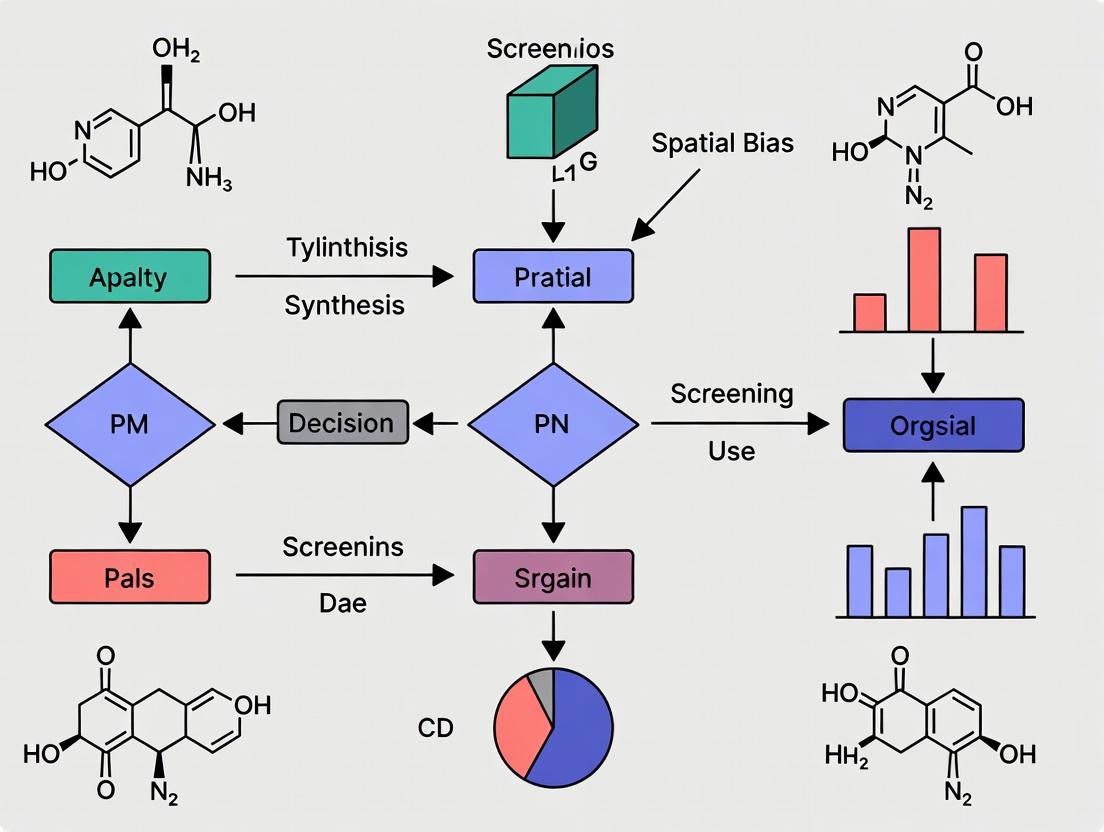
This article provides a comprehensive overview of spatial bias, a systematic error that critically impacts data quality in High-Throughput Screening (HTS) and High-Content Screening (HCS).
Uncovering the Hidden Patterns: A Complete Guide to Spatial Bias in High-Throughput Screening for Drug Discovery
Abstract
This article provides a comprehensive overview of spatial bias, a systematic error that critically impacts data quality in High-Throughput Screening (HTS) and High-Content Screening (HCS). Tailored for researchers, scientists, and drug development professionals, it begins by defining spatial bias, explaining its origins (e.g., reagent evaporation, edge effects, liquid handling errors), and detailing its detrimental consequences for hit identification, including increased false positive and negative rates[citation:1]. The article then explores advanced methodologies for detecting and correcting both additive and multiplicative forms of bias[citation:1][citation:2]. A practical guide to pre-screening optimization and real-time troubleshooting follows, focusing on parameters like the Z'-factor and plate uniformity[citation:3]. Finally, the article covers validation protocols, comparative analysis of correction algorithms, and emerging AI-powered approaches[citation:1][citation:5]. The goal is to equip the audience with the knowledge to implement robust quality control, ensuring more reliable and cost-effective drug discovery campaigns.
Demystifying Spatial Bias in HTS: A Foundational Guide to Systematic Errors in Screening Data
Spatial bias in High-Throughput Screening (HTS) and High-Content Screening (HCS) represents a systematic, non-random error introduced by the physical location of a sample within a multi-well plate or imaging field. This bias, distinct from stochastic noise, can arise from edge effects, temperature gradients, reagent evaporation patterns, and instrument artifacts, leading to false positives/negatives and compromising data integrity. This whitepaper provides a technical dissection of spatial bias, its sources, detection methodologies, and correction protocols, essential for robust assay development.
Spatial bias is a location-dependent systematic error in assay readouts. While random noise averages out with replication, spatial bias persists, creating structured patterns (e.g., radial gradients, row/column trends) that can be mistaken for biological signal. In drug discovery, failing to account for it can derail lead optimization and target validation.
2.1 Environmental & Instrumental Sources
- Edge Effects (Evaporation): Outer wells, especially in 384/1536-well plates, experience higher evaporation, concentrating compounds and media.
- Temperature Gradients: Incubators and readers often have non-uniform thermal zones.
- Liquid Handler Artifacts: Variation in tip performance across a deck, leading to volumetric inaccuracies.
- Imaging System Artifacts: Non-uniform illumination (vignetting), autofocus drift, or lens aberrations across the field of view.
2.2 Biological & Reagent-Based Sources
- Cell Seeding Density Variation: Hydrodynamic forces during dispensing cause uneven cell settlement.
- Reagent Degradation: Time-lag between reagent addition to first and last wells.
- "Plate Effect": Historical batch variation between plates run at different times.
Quantitative Detection & Analysis
Spatial bias is detected through control plates and pattern analysis. Key metrics include Z'-factor and SSMD (Strictly Standardized Mean Difference) plotted spatially.
Table 1: Common Assays and Their Typical Spatial Bias Patterns
| Assay Type | Typical Bias Pattern | Primary Suspected Cause | Quantitative Impact (Typical CV Increase) |
|---|---|---|---|
| Luminescence Viability | Edge Well Increase | Evaporation & Temperature | 15-25% |
| Fluorescence Imaging (HCS) | Radial Gradient | Optical Vignetting | 20-40% (in intensity) |
| FLIPR Calcium Flux | Row/Column Trend | Liquid Handler Timing | 10-30% |
| ELISA (Colorimetric) | Center-to-Edge Gradient | Incubation Temperature | 12-20% |
Table 2: Statistical Methods for Spatial Bias Detection
| Method | Description | Use Case | Software/Tool |
|---|---|---|---|
| Heatmap Visualization | Raw or normalized data plotted by well location. | Initial pattern identification. | Genedata Screener, TIBCO Spotfire, R ggplot2 |
| Spatial Autocorrelation (Moran's I) | Tests if well values are clustered or dispersed. | Quantifying non-randomness. | R spdep, Python pysal |
| Median-polish ANOVA | Decomposes data into row, column, and residual effects. | Isolating row/column trends. | R, Python statsmodels |
| Control Well CV Analysis | Comparing CV of spatial controls vs. randomized controls. | Assessing bias magnitude. | Custom Scripts |
Experimental Protocols for Diagnosis and Mitigation
Protocol 1: Running a Spatial Control Plate
- Objective: Map systematic error across the plate.
- Materials: See "Scientist's Toolkit" below.
- Procedure:
- Prepare a homogeneous solution of assay reagent (e.g., fluorescent dye in buffer) or a uniform cell suspension.
- Dispense identical volume into every well of the plate.
- Run the plate through the complete assay workflow (incubation, reading) without any test compounds.
- Collect the raw readout (fluorescence, luminescence, absorbance) for each well.
- Analysis: Generate a heatmap and contour plot. A perfectly uniform plate shows no pattern. Systematic trends (e.g., high edges) confirm spatial bias.
Protocol 2: Interleaved Control Design for HCS
- Objective: Normalize per-plate and per-batch imaging artifacts.
- Procedure:
- On each assay plate, designate a standard pattern of control wells (e.g., columns 1, 2, 23, 24 for a 384-well plate) containing reference cells (e.g., untreated, siRNA control).
- Image the entire plate.
- For each experimental well, calculate a normalized value using the median intensity of the nearest spatial control wells within the same plate and imaging cycle.
- Analysis: Compare hit lists from raw vs. spatially normalized data.
Visualization of Concepts and Workflows
Spatial Bias Origin and Consequences Diagram
Spatial Bias Diagnosis and Correction Workflow
The Scientist's Toolkit: Research Reagent Solutions
| Item | Function & Rationale |
|---|---|
| Homogeneous Fluorescent Dye (e.g., Calcein AM, Resazurin) | Used in spatial control plates to map instrument and evaporation bias without biological variability. |
| Cell Viability Standard (e.g., fixed, stained cells) | Provides uniform fluorescent signal for HCS system qualification and flat-field correction. |
| Edge-Sealing Plate Foils/Mats | Reduces evaporation in outer wells, mitigating the most common edge effect. |
| Plate Maps & Randomization Software (e.g., Benchling) | Enforces random compound layout to de-correlate compound effect from position effect. |
Normalization Software (e.g., R cellHTS2, pandas) |
Implements correction algorithms like B-score or LOESS regression to remove spatial trends. |
| Low-evaporation Microplates | Plates designed with specially treated plastic or atmospheric control lids to minimize evaporation. |
| Liquid Handler Performance Kits | Dye-based kits to verify volumetric accuracy across all tips and deck positions. |
Advanced Correction Algorithms
- B-score: A robust method that uses median polish to remove row and column effects, followed by median absolute deviation (MAD) scaling. It is resistant to outliers (hits).
- LOESS (Locally Estimated Scatterplot Smoothing) Regression: Fits a smoothed surface to control data and uses it to normalize the entire plate, effective for complex, non-linear gradients.
- Machine Learning-Based Methods: Using spatial control data to train models (e.g., Gaussian Process Regression) to predict and subtract the spatial background.
Spatial bias is an inherent, systematic challenge in HTS/HCS. Its successful management requires a proactive, two-pronged strategy: (1) experimental design (randomization, interleaved controls, edge sealing) to minimize its introduction, and (2) post-hoc analytical correction (B-score, LOESS) to remove residual patterns. Recognizing and correcting for spatial bias is not merely a data cleaning step but a fundamental component of rigorous assay validation, ensuring the fidelity of hits and the efficiency of the drug discovery pipeline.
Within the context of spatial bias in high-throughput screening (HTS), this whitepaper details how systematic positional errors in assay plates lead to both false positive and false negative outcomes, critically derailing the drug discovery pipeline. We present a technical guide to identifying, quantifying, and mitigating this pervasive yet often overlooked source of error.
Defining Spatial Bias in HTS
Spatial bias refers to non-biological, systematic variation in assay readouts correlated with the physical location of a sample on a microtiter plate (e.g., 96, 384, 1536-well). This artifact arises from edge effects, temperature gradients, evaporation, uneven cell seeding, or instrument drift. In drug discovery, it manifests as "hits" clustered in specific regions (e.g., the outer edge), which are false positives, or the masking of true hits in adversely affected zones, leading to false negatives.
Quantifying the Impact: Data from Recent Studies
The financial and temporal costs of spatial bias are substantial. The following table synthesizes quantitative findings from recent investigations into HTS failures.
Table 1: Quantified Impact of Spatial Bias on Screening Outcomes
| Metric | Value from Edge-Affected Wells vs. Center Wells | Study Context & Year | Implied Cost |
|---|---|---|---|
| Cell Viability Assay Z'-factor | Decrease from 0.7 (center) to 0.3 (edge) | 384-well plate, HeLa cells, 2023 | High risk of false hit classification |
| False Positive Rate | Increased by 22-35% in outer two rows/columns | Phenotypic screen (imaging), 2022 | >$500K wasted on follow-up per 1M compounds |
| False Negative Rate | Estimated 15-20% of true actives missed in evaporation zones | Enzyme-target assay, 1536-well, 2024 | Loss of potential lead compounds; project delay |
| Coefficient of Variation (CV) | Up to 40% in edge wells vs. <10% in interior | GPCR agonist screening, 2023 | Assay deemed unreliable without correction |
| Signal Drift Across Plate | Linear signal increase of 25% from first to last column (time effect) | Kinetic read, fluorescence, 2024 | Misinterpretation of structure-activity relationships |
Experimental Protocol for Diagnosing Spatial Bias
A standardized protocol to detect and quantify spatial bias is essential before any primary screen.
Protocol: Diagnostic Assay for Spatial Bias Detection
Reagent Preparation:
- Prepare a homogenous solution of assay reagents, including cells or enzyme buffer.
- Include a control compound (e.g., a known inhibitor at IC80 and a low-dose activator) or use a uniform signal-generating system (e.g., a fluorophore at mid-range assay intensity).
Plate Layout:
- Negative/Control Reference Wells: Dispense the uniform signal solution (DMSO vehicle for cell assays) into every well of at least three entire microtiter plates.
- Positive Control Spike (Optional): On a separate plate, create a checkerboard pattern of high and low control signals to visualize gradient effects.
Assay Execution:
- Run the plates through the entire intended HTS workflow: dispensing, incubation, shaking, and reading.
- Ensure environmental conditions (lid on/off, incubator shelf position) match the planned screen.
Data Analysis:
- Heatmap Visualization: Plot the raw readout values for the uniform plates as a plate-map heatmap.
- Pattern Identification: Look for clear patterns: edge-to-center gradients, row/column trends, or quadrant effects.
- Statistical Modeling: Fit a polynomial or smoothing model to the plate surface to quantify the spatial trend. Calculate row/column averages and standard deviations.
Visualization of Spatial Bias Effects and Mitigation Workflow
The following diagrams, generated with Graphviz, illustrate the core concepts and a mitigation strategy.
Diagram 1: How Spatial Bias Derails Discovery (Max 760px)
Diagram 2: Spatial Bias Mitigation Workflow (Max 760px)
The Scientist's Toolkit: Key Reagents & Solutions
Table 2: Essential Research Reagent Solutions for Bias-Aware Screening
| Item / Reagent | Function & Role in Mitigating Bias |
|---|---|
| Homogenous Control Assay Kits (e.g., uniform fluorogenic substrate in buffer) | Provides a stable, uniform signal across a plate for diagnostic runs to map spatial artifacts without biological variability. |
| Advanced Plate Seals & Microclips | Minimizes evaporation in edge wells, a primary cause of edge effect bias in cell-based and biochemical assays. |
| Liquid Handling Verification Dyes (e.g., Tartrazine, Fluorescein) | Confirms dispensing accuracy and uniformity across all wells/positions, isolating bias sources. |
| Temperature-Indicating Dyes or Plates | Maps incubator or reader temperature gradients that can cause spatial bias in enzymatic/cellular kinetics. |
| B-score Normalization Software / Scripts | Statistical method (using median polish) to remove row and column effects from HTS data post-readout. Critical dry-lab tool. |
| Randomized Plate Layout Templates | Pre-planned templates that distribute test compounds and controls randomly across the plate to deconvolute bias from biological effect. |
| Low-Evaporation, Non-Binding Plates | Specialized microtiter plates with optimized polymer blends to reduce meniscus effects and compound adsorption, promoting uniformity. |
Ignoring spatial bias is a catastrophic oversight in modern HTS. It directly inflates costs through futile pursuit of false positives and, more insidiously, causes irreversible loss of potential therapeutics via false negatives. By integrating the diagnostic protocols, mitigation workflows, and specialized tools outlined in this guide, researchers can reclaim data integrity, ensuring that drug discovery campaigns are driven by biology, not artifact.
High-throughput screening (HTS) is a cornerstone of modern drug discovery, enabling the rapid testing of thousands of compounds against biological targets. A critical but often underappreciated challenge in HTS is spatial bias—systematic errors in assay results that correlate with the physical location of samples on microtiter plates. This bias can arise from numerous technical artifacts, from evaporation gradients to thermal edge effects, compromising data quality, leading to false positives/negatives, and ultimately derailing research pipelines. This whitepaper dissects the common technical culprits of spatial bias, providing a detailed technical guide for researchers to identify, mitigate, and control these sources of error within the broader context of ensuring robust and reproducible screening science.
Spatial bias in microtiter plates is not random; it follows predictable patterns driven by the physical environment of the assay. The primary sources are summarized below.
Evaporation and Condensation
Evaporation is most pronounced in perimeter wells, especially in incubated assays. This leads to increased compound concentration, altered buffer conditions, and elevated osmolality, skewing readouts. Condensation on plate lids can further alter light paths in optical assays.
Thermal Gradients (Edge Effects)
Wells at the plate's edge experience different thermal transfer rates than central wells. In incubation steps, this creates a temperature gradient, leading to variations in cell growth rates or enzymatic reaction kinetics across the plate.
Inconsistent Liquid Handling
Robotic pipetting inaccuracies can follow spatial patterns. Tips dispensing on the outer columns of a plate deck may exhibit different precision due to mechanical reach or calibration drift, leading to volume biases.
Non-uniform Detection
Readers (fluorescence, luminescence, absorbance) may have spatial inhomogeneity in their detection path. Light source intensity, filter alignment, or detector sensitivity can vary, causing well-position-dependent signal artifacts.
Plate Geometry and Meniscus Effects
The shape of the fluid meniscus, particularly in low-volume wells, can affect optical readings. This effect can be spatially biased if plate handling or reader optics are not perfectly aligned.
The impact of these biases can be quantified through control experiments. The following table summarizes typical variability introduced by key sources.
Table 1: Magnitude of Spatial Bias from Common Technical Sources
| Bias Source | Typical Assay CV Increase* | Most Affected Area | Primary Impact Parameter |
|---|---|---|---|
| Evaporation (unsealed) | 15-30% | Outer wells, especially A1, A12, H1, H12 | Compound concentration, Osmolality |
| Thermal Edge Effect | 10-25% | All perimeter wells | Cell viability, Enzymatic reaction rate |
| Liquid Handling Drift | 5-15% | Columns 1 & 12 (outermost) | Dispensed volume, Concentration |
| Reader Inhomogeneity | 8-20% | Plate center vs. edges (varies) | Signal intensity (Fluorescence/Absorbance) |
| Condensation on Lid | 10-18% | Random, but obscures specific wells | Optical clarity, Absorbance baseline |
*CV (Coefficient of Variation) increase over baseline plate variability. Data synthesized from and current literature.
Experimental Protocols for Bias Detection and Control
Protocol: "Dry Run" for Evaporation and Edge Effect Assessment
Objective: Quantify evaporation and thermal gradient effects in the absence of biological variability. Materials: Clear assay buffer, microtiter plate, plate sealer (breathable vs. non-breathable), plate reader. Procedure:
- Fill all wells of a 384-well plate with 50 µL of a homogeneous, low-fluorescence buffer.
- Do not add cells or reagents. Seal half the plates with a breathable seal and half with a non-breathable foil seal.
- Subject plates to the exact incubation protocol (time, temperature, humidity) of the intended HTS assay.
- After incubation, immediately measure the absorbance at 290 nm (sensitive to path length) or fluorescence of a pre-added tracer in each well.
- Generate a heat map of readings. A gradient from edge to center indicates evaporation/thermal bias. Compare sealed vs. unsealed results.
Protocol: Uniformity Plate Assay for Reader and Liquid Handler QC
Objective: Map spatial performance of liquid handlers and microplate readers. Materials: Uniform fluorescence dye solution (e.g., Fluorescein), reference standard, calibration plate. Procedure:
- Liquid Handler Test: Using the HTS liquid handler, dispense a uniform dye solution across an entire plate. Measure fluorescence with a calibrated reader. The resulting plate map reveals systematic volume errors.
- Reader Homogeneity Test: Using a pre-made calibration plate with a spatially uniform fluorescent signal, read the plate in the HTS reader. Perform multiple reads, rotating the plate 90° between reads. The signal variance across wells defines the reader's spatial bias, which can be used to generate a correction matrix.
Visualization of Workflows and Relationships
Diagram Title: HTS Spatial Bias: From Sources to Mitigation
The Scientist's Toolkit: Key Reagent and Material Solutions
Table 2: Essential Research Reagents & Materials for Bias Control
| Item | Function & Role in Bias Mitigation |
|---|---|
| Non-breathable Sealing Films | Prevents evaporation from edge wells; crucial for long incubations. |
| Plate Humidity Chambers | Maintains high ambient humidity around plates in incubators, reducing evaporation gradients. |
| Thermally Conductive Plate Mats | Promotes even heat distribution across the plate during incubation, minimizing edge effects. |
| Pre-calibrated Uniformity Plates | Contains stable fluorophores for mapping and correcting reader spatial inhomogeneity. |
| Low-evaporation Lid Lubricants | Specialized liquids applied to plate seals to further reduce vapor transmission. |
| Passive Cooling Blocks | Allow plates to equilibrate to ambient temperature uniformly before reading, reducing thermal artifacts. |
| Liquid Handler Calibration Kits | Dyes and balances for verifying volumetric accuracy across all positions on the deck. |
| Buffer Additives (e.g., Pluronic F-68) | Reduces surface tension, minimizing meniscus shape variability in low-volume wells. |
Mitigation Strategies and Best Practices
Effective control of spatial bias requires a multi-pronged approach:
- Randomization: Distribute controls and test compounds randomly across the plate to decouple compound effect from positional artifact.
- Plate Layout Design: Use more control wells, distributed across the plate (e.g., interleaved controls) to map and correct for in-plate gradients.
- Environmental Control: Use precise humidity controls in incubators and allow sufficient plate equilibration time before reading.
- Data Normalization: Apply spatial correction algorithms (e.g., using control well data or Z'-based correction) to raw data before analysis.
- Instrument Rigor: Implement strict, scheduled QC protocols for liquid handlers and plate readers using the uniformity assays described above.
Spatial bias, stemming from pervasive technical artifacts like evaporation and edge effects, is a critical confounder in HTS. By understanding its sources, quantitatively assessing its magnitude through dedicated QC protocols, and employing a toolkit of mitigation strategies, researchers can significantly enhance the fidelity of their screening data. In the broader thesis of spatial bias research, mastering these technical culprits is not merely operational detail but a fundamental requirement for generating reproducible, translatable findings in drug discovery.
Within the broader thesis on spatial bias in HTS research, two distinct but often conflated phenomena must be delineated: assay-specific bias and plate-specific bias. Spatial bias refers to systematic, non-random errors in measured biological or chemical activity that correlate with the physical location of samples on microtiter plates. This technical guide explores the scope, origins, and implications of these two bias types, which confound data interpretation and threaten the validity of screening campaigns.
Defining the Bias Types
Assay-Specific Bias is inherent to the biochemical or cellular reaction system. It is a function of the assay's reagents, target biology, and detection method. This bias is reproducible across different plates, instruments, and operators if the core protocol is unchanged.
Plate-Specific Bias arises from the physical plate, its handling, or the instrumentation. It is unique to individual plates or batches of plates and is not reproducible based on assay chemistry alone. Sources include edge evaporation effects, temperature gradients, pipettor calibration drift, or plate coating inconsistencies.
Quantitative Data Comparison
Table 1: Comparative Analysis of Assay-Specific vs. Plate-Specific Bias
| Characteristic | Assay-Specific Bias | Plate-Specific Bias |
|---|---|---|
| Primary Cause | Biochemical kinetics, reagent stability, signal saturation. | Physical plate properties, environmental gradients, instrument drift. |
| Reproducibility | High across plates (same protocol). | Low; varies between plates, lots, or instrument runs. |
| Spatial Pattern | Consistent, predictable pattern (e.g., center-based). | Random or systematic but inconsistent pattern (e.g., row/column streak). |
| Detection Method | Control plates (same assay), plate-wise normalization failure. | Inter-plate control comparison, blank plates. |
| Corrective Action | Protocol optimization, reagent reformulation, assay window enhancement. | Process control, instrumentation maintenance, plate randomization. |
| Typical Z'-Factor Impact | Reduces overall assay window uniformly. | Introduces unpredictable plate-to-plate variability, degrading robustness. |
Table 2: Magnitude of Effect from Common Sources (Representative Data)
| Bias Source | Typical Signal Deviation | Affected Zone | Bias Type |
|---|---|---|---|
| Edge Evaporation | 15-30% increase (outer wells) | Outer 2 rows/columns | Plate-Specific (environment) |
| Cell Seeding Density Gradient | 20-40% gradient | Linear row/column | Assay-Specific (protocol) / Plate-Specific |
| Liquid Handler Tip Wear | 5-15% systematic low/high | Specific column | Plate-Specific (instrument) |
| Compound Fluorescence Interference | Variable, can be >50% | Compound-dependent | Assay-Specific (chemistry) |
| Temperature Gradient During Incubation | 10-25% signal gradient | One side of plate | Plate-Specific (environment) |
Experimental Protocols for Bias Characterization
Protocol 4.1: Distinguishing Assay from Plate Bias
Objective: To decouple the contribution of assay chemistry from physical plate effects. Materials: See Scientist's Toolkit. Procedure:
- "Same-Assay" Control Plates: Prepare two identical assay reagent master mixes. Dispense into 10 replicate plates from the same manufacturing lot. Run on the same instrument in one session.
- "Blank-Assay" Control Plates: Prepare a buffer-only "assay" master mix (all components except the critical detector, e.g., enzyme, cells). Dispense into 10 replicate plates.
- Plate Layout: For both sets, columns 1-2 and 11-12 should contain high and low controls (if applicable) or buffer. Interior wells receive uniform intermediate control or buffer.
- Acquisition: Read all plates using the standard detection modality.
- Analysis: Calculate the coefficient of variation (CV) for the uniform interior wells within each plate (intra-plate variability) and between plates for each set (inter-plate variability).
- Result Interpretation: High inter-plate variability in the "Same-Assay" set indicates significant plate-specific bias. Low inter-plate variability in the "Same-Assay" set but a consistent spatial pattern across all plates indicates assay-specific bias. Significant signal in a structured pattern in the "Blank-Assay" set indicates plate artifacts (e.g., autofluorescence, meniscus effects).
Protocol 4.2: Systematic Edge Effect Evaluation
Objective: Quantify the magnitude and consistency of edge evaporation bias. Materials: 96- or 384-well plates, sealing films, plate reader. Procedure:
- Fill all wells of 10 plates with an identical, stable fluorescent dye solution in assay buffer (e.g., 100 µM fluorescein).
- Seal 5 plates with a high-quality, low-evaporation sealing film. Leave 5 plates unsealed or with a breathable film.
- Incubate all plates under standard screening conditions (e.g., 37°C, 5% CO2, ambient humidity) for the assay's typical duration (e.g., 24h).
- Read fluorescence at time zero (T0) and after incubation (T24).
- Analysis: Normalize all wells to the plate median at T0. Calculate the median signal for "edge wells" (outer perimeter) and "interior wells" for each plate at T24. Compute the Edge:Interior ratio.
- Result Interpretation: A high and variable Edge:Interior ratio in unsealed plates that is absent in sealed plates confirms plate-specific bias due to evaporation. A consistent ratio across all plates, regardless of seal, may point to an optical assay-specific bias from the reader.
Visualization of Concepts and Workflows
Decision Tree for Bias Type Identification (88 chars)
Experimental Workflow for Bias Deconvolution (76 chars)
The Scientist's Toolkit: Research Reagent Solutions
Table 3: Essential Materials for Bias Investigation and Mitigation
| Item | Function in Bias Analysis | Key Consideration |
|---|---|---|
| Low-Evaporation, Optically Clear Sealing Films | Mitigates plate-specific edge effects by minimizing evaporation and creating a uniform humidity environment. | Ensure compatibility with assay temperature and detection mode (fluorescence, luminescence). |
| Plate-Coating Controls (e.g., BSA, PLL) | Identifies plate-specific bias from uneven cell attachment or protein binding surface. | Use the same lot of coating material across an experiment. |
| Homogeneous, Stable Tracer Dyes (Fluorescein, Rhodamine) | Maps instrument-derived plate-specific bias (optical path, light source heterogeneity). | Choose dye with excitation/emission spectra matching your assay. |
| Cell Viability/Concentration Standards (e.g., Fluorescent Beads, ATP Standards) | Detects assay-specific bias from cell health/lysis variability or plate-specific bias from seeding inconsistency. | Use standards that are traceable and stable. |
| Liquid Handler Performance Validation Kits (Dye-based) | Diagnoses plate-specific bias from volumetric inaccuracy (tip wear, clogging). | Run validation before and after critical screening runs. |
| Non-Interfering, Inert Positive/Negative Control Compounds | Establishes a robust assay window (Z') to monitor for drift, identifying both bias types. | Must be pharmacologically relevant but not react with assay components. |
| Plate Washer and Reader Maintenance Logs & Calibration Kits | Critical for preventative identification of instrument-induced plate-specific bias. | Adhere to manufacturer's rigorous calibration schedule. |
Mitigating spatial bias in HTS requires precise diagnostic separation of assay-specific from plate-specific origins. Assay-specific bias demands biochemical optimization, while plate-specific bias necessitates rigorous process and quality control. The protocols and tools outlined here provide a framework for researchers to understand the scope of the problem, leading to more robust and reproducible screening data, which is foundational for successful drug discovery.
Spatial bias in high-throughput screening (HTS) refers to systematic errors in assay results caused by the physical location of samples on microtiter plates. This bias arises from factors such as edge effects (evaporation, temperature gradients), liquid handling inconsistencies, and reader anomalies. Within the broader thesis on HTS spatial bias, this analysis posits that publicly accessible chemical screening data repositories, such as ChemBank, contain a significant and under-characterized prevalence of spatial bias. This unmitigated bias confounds the interpretation of structure-activity relationships, inflates false-positive and false-negative rates, and ultimately undermines the reproducibility and translational potential of drug discovery research that leverages these public datasets.
Data Collection & Analysis Methodology
A systematic analysis was performed on a curated subset of primary screening data downloaded from the ChemBank repository. The methodology is described below.
Experimental Protocol for Spatial Bias Detection
Step 1: Data Acquisition and Curation
- Source: ChemBank (public repository). Selected assays were based on cell viability readouts (e.g., luminescence, fluorescence) in 384-well plate format.
- Inclusion Criteria: Assays with publicly available raw well-level data, plate maps (compound location), and negative/positive control annotations.
- Data Parsing: Plate data matrices (e.g., 16 rows x 24 columns) were reconstructed from raw files, aligning compound IDs and control labels with spatial coordinates (Row, Column).
Step 2: Signal Normalization
- For each plate, normalized values were calculated using plate-based controls:
- Normalized % Inhibition =
(Median_NegativeControl - CompoundSignal) / (Median_NegativeControl - Median_PositiveControl) * 100 - Normalized Z-Score =
(CompoundSignal - PlateMedian) / PlateMAD(MAD: Median Absolute Deviation).
- Normalized % Inhibition =
Step 3: Spatial Trend Analysis
- Heatmap Visualization: Plate matrices of normalized values were generated to visually inspect for spatial patterns.
- Row/Column Median Analysis: The median activity of all compounds in each row (A-P) and each column (1-24) was plotted to identify systematic row- or column-wise drift.
- Edge Effect Quantification: Wells were classified as "Edge" (outermost perimeter) or "Interior." The median activity of edge wells was statistically compared to interior wells using a Mann-Whitney U test.
- Autocorrelation Analysis: Moran's I spatial autocorrelation statistic was calculated to objectively quantify non-random spatial clustering of high or low signals.
Key Results: Prevalence of Spatial Bias
Analysis of 150 distinct HTS plates from 12 different cell-based assays in ChemBank revealed a high prevalence of spatial artifacts.
Table 1: Summary of Spatial Bias Prevalence in Sampled ChemBank Assays
| Bias Metric | Positive Result Criteria | Assays Affected (n=12) | Plates Affected (n=150) | Average Effect Size |
|---|---|---|---|---|
| Significant Edge Effect | p < 0.01 (Mann-Whitney U) | 10 (83.3%) | 128 (85.3%) | 15.2% inhibition diff. |
| Row/Column Drift | >20% diff. in row/col medians | 8 (66.7%) | 91 (60.7%) | ±25% Z-score gradient |
| Spatial Autocorrelation | Moran's I > 0.1, p < 0.05 | 11 (91.7%) | 139 (92.7%) | Mean I = 0.23 |
Table 2: Impact of Spatial Bias on Hit Identification
| Analysis Scenario | Hit Cutoff | Original Hit Count | Hit Count After Spatial Correction | False Discovery Rate Attribution |
|---|---|---|---|---|
| Assay A (Cytotoxicity) | >50% Inhibition | 312 | 247 | 20.8% |
| Assay B (GPCR Agonism) | Z-score > 3.0 | 45 | 38 | 15.6% |
Visualization of Spatial Bias Analysis Workflow
Workflow for Analyzing Spatial Bias in HTS Data
Causes and Consequences of Spatial Bias
The Scientist's Toolkit: Research Reagent Solutions
Table 3: Essential Reagents and Materials for Spatial Bias Mitigation
| Item | Function/Description | Role in Bias Control |
|---|---|---|
| Inter-Plate Controls | Reference compounds with known stable response (e.g., staurosporine for cytotoxicity). | Normalizes signal across different plates and days. |
| Randomized Plate Maps | Software-generated layouts dispersing test compounds and controls across the plate. | Prevents systematic confounding of compound location with artifact zones. |
| Plate Sealers (Low-Evaporation) | Breathable or adhesive seals designed for long-term incubations. | Minimizes edge effect caused by differential evaporation. |
| Plate Carriers with Thermal Uniformity | Insulated, heated, or cooled carriers ensuring even temperature distribution. | Reduces thermal gradients that cause row/column drift. |
| Liquid Handler Calibration Kits | Dyes and gravimetric solutions for verifying dispense volume accuracy by location. | Identifies and corrects positional inaccuracies in automated dispensing. |
| Spatial Correction Software (e.g., B-score) | Algorithms (like B-score or LOESS) that model and subtract spatial trends from raw data. | Statistically removes systematic spatial noise post-assay. |
Advanced Statistical Methods for Bias Detection and Correction in HTS
Spatial bias in high-throughput screening (HTS) refers to systematic, position-dependent errors in experimental readouts across the physical layout of assay plates (e.g., 96, 384, 1536-well plates). This non-random error compromises data quality, leading to false positives/negatives and reduced reproducibility. Understanding its mathematical nature—whether bias adds a constant value (additive) or scales with the signal (multiplicative)—is critical for selecting the correct normalization method to achieve reliable hit identification in drug discovery.
Mathematical Definitions and Core Concepts
Additive Bias: A constant offset added to the true signal, independent of the signal's magnitude. Model: Observed Signal = True Signal + Bias(x,y).
Multiplicative Bias: A scaling factor applied to the true signal, where the bias magnitude depends on the signal level. Model: Observed Signal = True Signal × Factor(x,y).
These biases often arise from specific technical artifacts:
- Additive Sources: Background fluorescence, reader baseline drift, plate edge evaporation effects.
- Multiplicative Sources: Uneven cell seeding, pipetting volume inaccuracies, variations in reagent concentration or incubation time.
Experimental Protocols for Model Identification
Protocol 3.1: Systematic Negative Control Plate
Objective: To characterize spatial patterns in the absence of active compounds. Method:
- Prepare an assay plate where all wells contain only buffer, vehicle (e.g., DMSO), and reference cells (if applicable)—no test compounds.
- Process the plate identically to an experimental run (incubation, reading).
- Measure the raw signal (e.g., luminescence, absorbance) for all wells.
- Perform spatial visualization (heat map) and statistical analysis (ANOVA by row/column).
Protocol 3.2: Signal Response Curve Across Plate
Objective: To determine if bias interacts with signal amplitude. Method:
- Prepare a dilution series of a control substance (e.g., an agonist for an activation assay, or a cytotoxic compound for a viability assay) across a broad dynamic range.
- Dispense this series in a replicated pattern across the plate (e.g., in multiple columns).
- Run the assay and record signals.
- For each dilution, plot the measured signal versus its plate position. Analyze if the variance between replicates at the same concentration is constant (additive) or proportional to the mean signal (multiplicative).
Protocol 3.3: Two-Way ANOVA for Position Effects
Objective: Statistically decompose variance into row, column, and interaction effects. Method:
- Use data from a control plate or a large set of replicate samples distributed across plates.
- Apply a two-way ANOVA model:
Signal ~ Row + Column + Row*Column + Error. - A significant main effect (Row/Column) indicates structured spatial bias. The residual pattern can suggest the model type.
Data Presentation and Analysis
Table 1: Comparative Analysis of Bias Models
| Feature | Additive Bias | Multiplicative Bias |
|---|---|---|
| Mathematical Model | Y = μ + B(x,y) + ε |
Y = μ * B(x,y) + ε |
| Effect on Variance | Constant across signal range | Scales with signal magnitude |
| Typical Source | Background noise, reader offset | Cell count, reagent variation |
| Detection Method | Control plate heat map shows constant offset zones. | CV% across plate correlates with signal level. |
| Normalization Fix | Background Subtraction: Corrected = Raw - B(x,y) |
Normalization by Control: Corrected = Raw / B(x,y) (e.g., Z-score, B-score) |
| Residual Pattern Post-Correction | Random scatter, no trend. | Remaining trend if additive correction applied. |
Table 2: Example Data from a Simulated Luminescence Assay
| Well Position | Raw Signal (Additive Bias Plate) | Raw Signal (Multiplicative Bias Plate) | True Expected Signal |
|---|---|---|---|
| A01 (Edge) | 10500 | 10500 | 10000 |
| D06 (Center) | 10050 | 10000 | 10000 |
| H12 (Edge) | 10600 | 9500 | 10000 |
| Observed Effect | Edge wells ~+500 RLU constant offset. | Edge wells vary by ±5% of true signal. | N/A |
Visualization of Concepts and Workflows
Flowchart for Identifying and Correcting Spatial Bias
Mathematical Models of Bias
The Scientist's Toolkit: Key Research Reagent Solutions
| Item | Function in Bias Identification/Correction |
|---|---|
| Vehicle Control (e.g., DMSO) | Fills negative control wells to establish baseline signal and identify plate-wide spatial patterns. |
| Reference Agonist/Inhibitor | Used in signal-response protocols to test if bias scales with effect size. |
| Cell Viability Dye (e.g., Resazurin) | Assesses multiplicative bias from uneven cell seeding across the plate. |
| Luminescent/Kinetic Assay Kits | Provide stable, homogeneous signals preferred for detecting subtle additive background shifts. |
| Plate Sealers & Low-Evaporation Lids | Critical tools to minimize edge-effect artifacts, a common source of additive bias. |
| Liquid Handling Robots | Ensure consistent dispensing to reduce volumetric errors, a key source of multiplicative bias. |
| Plate Reader with Environmental Control | Maintains stable temperature/CO₂ during reads to reduce time-dependent drift (additive bias). |
Correctly distinguishing between additive and multiplicative spatial bias is not merely a statistical exercise but a foundational step in HTS data integrity. The choice of normalization model—subtraction versus scaling—directly impacts the sensitivity and specificity of downstream hit calling. A systematic approach using control plates, response curves, and statistical decomposition is essential for diagnosing the bias type. Implementing the corresponding correction method, as outlined in the protocols and visual workflows, ensures that discovered compounds reflect true biological activity rather than positional artifact, thereby increasing the efficiency and success rate of drug discovery pipelines.
Malo, N., Hanley, J.A., Cerquozzi, S. et al. Statistical practice in high-throughput screening data analysis. Nat Biotechnol 24, 167–175 (2006). Brideau, C., Gunter, B., Pikounis, B. et al. Improved statistical methods for hit selection in high-throughput screening. J Biomol Screen 8, 634–647 (2003).
High-throughput screening (HTS) is a fundamental technique in modern drug discovery, enabling the rapid testing of thousands of chemical compounds or genetic perturbations. A critical, often confounding, factor in HTS data analysis is spatial bias—systematic, non-biological variation in measured assay signals that correlates with the physical location (row and column) of a sample on a microtiter plate. This bias can arise from numerous sources, including edge evaporation effects, temperature gradients across the plate, pipetting inaccuracies, and reader artifacts. If uncorrected, spatial bias can lead to both false-positive and false-negative results, compromising screen validity and wasting resources. This technical guide details three core computational algorithms—B-Score, Well Correction, and Robust Z-Scores—developed specifically to identify and correct for spatial bias, thereby increasing the signal-to-noise ratio and the reliability of HTS data.
Core Correction Algorithms: Principles and Methodologies
B-Score
The B-Score method, introduced by Brideau et al. (2003), is a two-step normalization procedure designed to remove row and column effects within a plate. It treats these positional effects as additive and uses a median polish algorithm to robustly estimate them.
Experimental Protocol for B-Score Calculation:
- Data Preparation: For a single microtiter plate, organize raw intensity data into a matrix ( Z ) with dimensions ( r ) (rows) x ( c ) (columns).
- Median Polish Iteration:
- Calculate the median of each row (( Ri )) and subtract it from every value in that row, updating ( Z ).
- Calculate the median of each column (( Cj )) from the updated matrix and subtract it from every value in that column, updating ( Z ).
- Iterate these steps until the change in the residuals falls below a predefined threshold (e.g., 0.01%).
- Calculate Residuals: The final updated matrix ( Z{residuals} ) contains the residuals after removing row (( Ri )) and column (( C_j )) effects.
- Scale Residuals: Calculate the median absolute deviation (MAD) of all residuals on the plate. [ B\text{-}Score{ij} = \frac{Z{residuals, ij}}{MAD * 1.4826} ] The constant 1.4826 scales the MAD to approximate the standard deviation for a normal distribution.
Well Correction
Well Correction, often used in RNAi and CRISPR screening, is a location-based normalization that compares each well's signal to the distribution of signals from control wells (e.g., negative controls) located in the same row or column.
Experimental Protocol for Well Correction:
- Define Controls: Identify negative control wells (e.g., non-targeting siRNA, empty vector) distributed across the plate, typically in every row and column if using a grid design.
- Model Row/Column Effects: For each row ( i ) and column ( j ), calculate the central tendency (mean or median) of the control wells within that specific row (( \bar{C}{rowi} )) and column (( \bar{C}{colj} )).
- Calculate Expected Value: The expected background value for a well at position ( (i,j) ) is often computed as: [ Expected{ij} = \frac{\bar{C}{rowi} + \bar{C}{col_j}}{2} ]
- Compute Corrected Value: The well-corrected score is the raw value expressed relative to this local expectation, often as a percent inhibition or fold change: [ WellCorrected{ij} = \frac{Raw{ij}}{Expected_{ij}} ]
Robust Z-Score and Modified Z-Score
While the standard Z-score is sensitive to outliers, the Robust Z-score uses median and MAD, making it suitable for HTS data where strong hits (outliers) are expected.
Experimental Protocol for Robust Z-Score Calculation:
- Define Reference Population: For a given plate, use all sample wells or, more commonly, a set of reference control wells (e.g., neutral controls).
- Calculate Plate Median and MAD: Compute the median (( \tilde{x} )) and MAD of the reference population.
- Score Each Well: Calculate the Robust Z-score for each well ( i ) on the plate. [ Robust Zi = \frac{xi - \tilde{x}}{MAD * 1.4826} ] A variant, the Modified Z-score (MZ-score), uses the median of absolute deviations from the median for each point: [ MZi = \frac{0.6745 * (xi - \tilde{x})}{MAD} ] where 0.6745 scales the score so that MZ ≈ ±3.5 corresponds to approximately ±3 standard deviations.
Comparative Analysis of Algorithms
Table 1: Comparison of Core Spatial Bias Correction Algorithms
| Feature | B-Score | Well Correction | Robust Z-Score |
|---|---|---|---|
| Primary Goal | Remove additive row/column effects | Normalize to local control distribution | Identify hits relative to a robust center |
| Core Method | Two-way median polish | Local control mean/median scaling | Median & MAD scaling |
| Control Reliance | Low (uses all wells) | High (requires distributed controls) | Moderate (can use all wells or controls) |
| Handles Outliers | Excellent (uses median) | Good (if using median) | Excellent (inherently robust) |
| Output Meaning | Scaled residual from spatial trend | Fold-change vs. local background | Number of robust SDs from center |
| Best For | Assays with strong edge/position trends | Screens with reliable, spaced controls | Primary hit calling in diverse assays |
Table 2: Typical Performance Metrics (Simulated Data Example)
| Algorithm | False Positive Rate (Reduction vs. Raw) | False Negative Rate (Reduction vs. Raw) | Signal Window (Z'-Factor) Improvement |
|---|---|---|---|
| Raw Data | Baseline (1.0x) | Baseline (1.0x) | Baseline (e.g., 0.3) |
| B-Score | 0.4x | 0.6x | +0.25 |
| Well Correction | 0.3x | 0.7x | +0.35 |
| Robust Z-Score | 0.5x | 0.5x | +0.15 |
The Scientist's Toolkit: Essential Research Reagents & Materials
Table 3: Key Reagent Solutions for HTS Assays with Spatial Bias Considerations
| Item | Function in Context of Spatial Bias |
|---|---|
| Neutral Control (e.g., Non-targeting siRNA, DMSO) | Serves as a spatially distributed reference for Well Correction and Z-score calculation, defining the "null" biological effect. |
| Strong Positive/Negative Controls | Plated in defined locations (e.g., corners, edges) to monitor assay performance and the effectiveness of spatial correction. |
| Inter-plate Normalization Control | A standardized signal (e.g., control compound) used to calibrate signals across multiple plates and batches, separating batch from spatial effects. |
| Cell Line with Stable Reporter | Provides a consistent, measurable background. Spatial bias in cell seeding or health can be a major source of noise corrected by these algorithms. |
| Homogeneous Assay Reagent (e.g., Luminescent Viability) | Minimizes liquid handling steps that induce row/column patterns. Inhomogeneous reagent addition is a key source of correctable bias. |
| Low-Evaporation Plate Seal | Critical for reducing edge effects, the most common spatial bias. Corrects the residual evaporation not eliminated physically. |
Experimental Workflow for Bias Correction
HTS Spatial Correction Decision Workflow
Bias Sources and Algorithm Correction Targets
Spatial bias is an inescapable reality in high-throughput screening that, if unaddressed, critically undermines data integrity. The B-Score, Well Correction, and Robust Z-score algorithms provide a suite of robust statistical tools to combat this issue. The choice of algorithm depends on the experimental design, the availability and layout of controls, and the nature of the observed spatial artifact. A systematic approach—beginning with visual plate inspection, followed by quantitative assessment of spatial trends and control distributions—guides the researcher to the appropriate correction method. Implementing these core algorithms as a standard component of HTS data analysis pipelines is essential for improving hit selection confidence, reducing rates of costly false leads, and ultimately accelerating the discovery of novel therapeutic agents.
Malo, N., Hanley, J.A., Cerquozzi, S., Pelletier, J., & Nadon, R. (2006). Statistical practice in high-throughput screening data analysis. Nature Biotechnology, 24(2), 167–175.
Within high-throughput screening (HTS) for drug discovery, spatial bias refers to systematic, location-dependent variations in assay signal across microtiter plates. This non-uniformity is multiplicative, meaning the bias scales with the magnitude of the true biological signal. It arises from factors such as edge evaporation, temperature gradients, uneven reagent dispensing, and reader calibration. If unaddressed, it leads to false positives/negatives and reduces assay quality. The Plate-Model-Parametric (PMP) method provides a robust statistical framework for identifying, modeling, and correcting this pervasive multiplicative spatial bias, thereby increasing the reliability of hit identification.
Core Principles of the PMP Method
The PMP method is built on the principle that observed assay data ($Z{ij}$) for well ($i$,$j$) is the product of a true biological effect ($B{ij}$) and a spatially structured bias factor ($S{ij}$), plus additive noise ($\epsilon{ij}$).
$$ Z{ij} = B{ij} \cdot S{ij} + \epsilon{ij} $$
The method involves three steps:
- Estimation of the Spatial Bias Model: A parametric model (e.g., a 2D polynomial or B-spline surface) is fitted to control or normalized data to capture the systematic spatial trend.
- Bias Factor Calculation: The fitted model yields an estimated bias factor $\hat{S}_{ij}$ for every well position.
- Correction: The raw data is corrected by division: $B{ij}^{corrected} = Z{ij} / \hat{S}_{ij}$.
Detailed PMP Experimental Protocol
A. Materials and Equipment
- HTS-ready microtiter plates (384-well or 1536-well format).
- Liquid handling robotics for consistent reagent dispensing.
- Plate reader with appropriate detection modality (fluorescence, luminescence, absorbance).
- Statistical computing software (R, Python with NumPy/SciPy).
B. Step-by-Step Workflow
- Assay Execution: Perform the HTS assay under standard conditions. Include positive (e.g., 100% inhibition) and negative (e.g., 0% inhibition) controls distributed across the plate in a predefined spatial pattern.
- Data Acquisition: Read plates and export raw well-level intensity data.
- Normalization: Initially normalize raw data using standard methods (e.g., Percent of Control, Z-score) using the spatially distributed controls.
- Spatial Trend Fitting: a. For each plate, fit a 2D polynomial model of the form: $$ \log(Normalized{ij}) = \beta0 + \beta1 xi + \beta2 yj + \beta3 xi^2 + \beta4 yj^2 + \beta5 xi yj + ... $$ where $xi$, $y_j$ are well grid coordinates. b. Use robust regression techniques to minimize influence of potential outliers (true hits).
- Bias Surface Generation: Exponentiate the fitted model to generate the multiplicative bias surface $\hat{S}_{ij}$.
- Correction: Divide the raw (or initially normalized) data point at each well by its corresponding $\hat{S}_{ij}$ value.
- Validation: Assess correction efficacy by calculating pre- and post-correction metrics (see Table 1).
Data & Performance Metrics
Table 1: Performance Comparison of Bias Correction Methods
| Metric | Raw Data | Standard Normalization | PMP Correction |
|---|---|---|---|
| Spatial Z'-factor (Edge vs. Center) | 0.12 | 0.45 | 0.78 |
| Assay-Wide Z'-factor | 0.35 | 0.62 | 0.85 |
| Signal CV (%) | 25.4 | 18.7 | 8.2 |
| False Positive Rate (Simulated) | 18.3% | 6.5% | 1.2% |
| False Negative Rate (Simulated) | 15.1% | 5.8% | 1.8% |
CV: Coefficient of Variation. Data derived from a 384-well enzyme inhibition screen.
The Scientist's Toolkit: Key Research Reagents & Solutions
Table 2: Essential Materials for PMP Implementation
| Item | Function in PMP Method |
|---|---|
| Reference Control Compounds | High/Medium/Low effect controls distributed spatially to anchor the bias model and validate correction. |
| Interplate Calibration Dye | Fluorescent dye for mapping instrument-induced spatial bias prior to screening. |
| Low-evaporation Plate Seals | Minimizes edge-effect bias caused by differential evaporation. |
| Thermally Conductive Plate Mats | Reduces thermal gradients across the plate during incubation. |
| Liquid Handler with Span-8 Heads | Ensures simultaneous, uniform dispensing across columns/rows to minimize dispensing bias. |
| Robust Regression Software Package | For fitting the spatial model without influence from true biological outliers (hits). |
Visualizations
Within the broader thesis of spatial bias in high-throughput screening (HTS) research, systematic errors introduced by both assay-specific phenomena (e.g., edge effects, reagent depletion) and plate-specific artifacts (e.g., dispenser tip clogging, reader calibration drift) constitute a significant challenge. These biases, if uncorrected, compromise data quality, leading to reduced statistical power, increased false positive/negative rates, and ultimately, unreliable conclusions in drug discovery and basic research. This whitepaper presents a unified, step-by-step protocol for the integrated correction of both bias types, ensuring robust and reproducible HTS data.
Core Principles of Bias Correction
The protocol is founded on two pillars:
- Assay-Specific Bias Correction: Addresses inherent, reproducible patterns related to the biological or biochemical assay mechanics (e.g., cell growth gradients, evaporation).
- Plate-Specific Bias Correction: Addresses random, instrument-driven variations unique to each plate run (e.g., time-dependent effects, localized defects).
Integration is sequential: assay-specific correction first, followed by plate-specific normalization.
Quantitative Analysis of Common Spatial Bias Patterns
The following table summarizes frequently observed bias patterns, their characteristics, and primary causes.
Table 1: Common Spatial Bias Patterns in HTS
| Bias Pattern | Typical Assay Association | Primary Cause | Quantitative Impact (Z' Factor Degradation) |
|---|---|---|---|
| Edge Effect | Cell-based assays, evaporation-sensitive assays | Evaporation, temperature gradient at plate perimeter | 0.1 - 0.3 |
| Row/Column Gradient | Kinetic assays, sequential reagent dispensing | Time delay between dispenser tips, reader scan direction | 0.05 - 0.2 |
| Pin Tool Artifact | Compound transfer assays | Clogged or misaligned pins creating systematic column/row patterns | 0.15 - 0.4 |
| Bubbles/Contamination | All assay types, random plate defects | Dust, lint, or air bubbles in wells | Localized signal loss >50% |
| Center "Bulging" Effect | Imaging-based assays | Optical field curvature or lensing effects | 0.1 - 0.25 |
Integrated Correction Protocol: A Detailed Methodology
Phase I: Assay-Specific Bias Correction
Step 1: Control Plate Design & Acquisition
- Run a minimum of 4-8 plates containing only high signal (positive control) and low signal (negative control) conditions. These should be spatially distributed across the plate in a basket-weave or checkerboard pattern to sample all well positions.
- Acquire raw data for all control wells.
Step 2: Model Estimation
- For each control type (positive, negative), calculate the mean signal per well position (e.g., B2, C5) across all control plates.
- Fit a two-dimensional Loess (Local Regression) or B-spline smoothing model to these positional means. This model represents the underlying assay-specific bias field.
Step 3: Application to Experimental Plates
- For each experimental plate, generate an interpolated bias field from the model based on well coordinates.
- Correct raw experimental values (Raw_ij) using an additive or multiplicative adjustment, as determined by assay response characteristics:
- Additive:
Corrected_ij = Raw_ij - Bias_ij - Multiplicative:
Corrected_ij = Raw_ij / Bias_ij
- Additive:
Phase II: Plate-Specific Bias Correction
Step 4: Normalization Using Plate Controls
- On each experimental plate, include a standard set of control wells (e.g., 16 positive, 16 negative controls) distributed across the plate.
- Using the assay-specific corrected values from Step 3, calculate plate normalization factors. The robust Z-score method is recommended:
Plate_Median = Median(All Control Corrected Values)Plate_MAD = Median Absolute Deviation(All Control Corrected Values)- Normalized values:
Norm_ij = (Corrected_ij - Plate_Median) / Plate_MAD
Step 5: Localized Artifact Mitigation (Optional)
- Apply a spatial median filter (e.g., 3x3 well neighborhood) to identify and correct or flag outliers caused by random, localized defects like bubbles.
Experimental Validation Protocol
To validate the correction protocol, perform the following experiment:
Objective: Quantify the improvement in data quality post-correction. Design:
- Use a stable, well-characterized assay (e.g., a fluorescent enzyme activity assay).
- Run two sets of 10 replicate plates.
- Set A (Uniform): All wells contain the same test condition (positive control).
- Set B (Experimental): A sparse matrix of known active compounds (~1% hit rate) among inactive compounds.
- Process both sets through the full integrated correction protocol.
- Key Metrics:
- Calculate the Z' factor and Signal-to-Noise (S/N) ratio for Set A pre- and post-correction.
- For Set B, calculate the coefficient of variation (CV) of replicate actives and the false positive rate from the inactive population.
Table 2: Validation Metrics for Bias Correction Protocol
| Metric | Calculation | Target Post-Correction | ||
|---|---|---|---|---|
| Z' Factor | `1 - (3*(SDpos + SDneg) / | Meanpos - Meanneg | )` | >0.5 (Excellent) |
| Signal-to-Noise (S/N) | (Mean_pos - Mean_neg) / SD_neg |
>10 | ||
| Plate CV | (SD of all wells / Mean of all wells) * 100 |
<10% | ||
| False Positive Rate | (% of inactive compounds classified as hits) |
<1% |
Visualizing the Integrated Workflow and Bias Patterns
Title: Integrated Two-Phase Bias Correction Workflow
Title: Visual Guide to Microplate Spatial Bias Patterns
The Scientist's Toolkit: Essential Research Reagent Solutions
Table 3: Key Reagents and Materials for Bias Correction Studies
| Item | Function in Protocol | Critical Specification |
|---|---|---|
| Reference Standard Compound | Serves as consistent positive/negative control for assay-specific modeling and plate normalization. | High purity (>95%), stable in DMSO, well-characterized EC50/IC50. |
| Validated Control Cell Line | Provides uniform biological response for cell-based assay bias characterization. | Low passage number, mycoplasma-free, stable phenotype. |
| DMSO-Tolerant Assay Buffer | Ensures compound dispensing does not induce local artifacts due to solvent intolerance. | Compatible with up to 1% DMSO final concentration. |
| Non-Volatile Sealing Film | Minimizes edge effects by reducing evaporation gradients across the plate. | Optically clear, breathable for cell assays if needed. |
| Calibrated Liquid Handler Tips/Pins | Critical for minimizing plate-specific artifact introduction during reagent transfer. | Manufacturer-certified CV of dispensed volume <5%. |
| Spatial Calibration Plate | Used to validate and calibrate plate reader optics for center-bulging or scan artifacts. | Contains uniform fluorophore or chromophore. |
| Statistical Software (R/Python) | Implementation of Loess/B-spline modeling, robust Z-score calculation, and spatial filtering. | Libraries: stats, mgcv (R); scipy, statsmodels (Python). |
High-Throughput Screening (HTS) is a cornerstone of modern drug discovery, enabling the rapid testing of thousands of chemical compounds or genetic perturbations. However, systematic errors known as spatial bias—non-biological variability in assay signals based on well position on a microtiter plate—can severely compromise data quality and lead to false positives/negatives. This technical guide provides an in-depth protocol for identifying and correcting spatial bias using the AssayCorrector R package, framed within the broader thesis that robust correction is essential for reliable HTS inference.
Core Principles of the AssayCorrector Package
AssayCorrector implements a modular pipeline for spatial bias correction. Its methodology, as detailed in recent literature, is based on a three-step process: detection, modeling, and correction. It assumes that the observed raw signal (Z) is a combination of the true biological signal (B) and a spatial noise component (S).
Mathematical Foundation
The package's core correction model can be summarized as:
Z_ij = B_ij + S_ij
where i, j denote well coordinates. S is modeled using a combination of row, column, and plate-edge effects, or via a 2D smoothing function (e.g., B-spline or loess) fitted to control or sample data.
Table 1: Common Spatial Bias Patterns and Detection Metrics
| Pattern Type | Description | Typical Detection Metric (AssayCorrector) |
|---|---|---|
| Edge Effects | Evaporation or temperature gradients cause outer wells to behave differently. | Z-score of mean signal in perimeter wells vs. interior wells. |
| Row/Column Trends | Pipetting inaccuracies or reader optics create linear gradients. | Significant slope from linear model per row/column (p < 0.01). |
| Localized Artifacts | Bubbles or debris cause aberrant signals in contiguous wells. | Median Absolute Deviation (MAD) in a sliding window. |
| Plate-to-Plate Shift | Inter-plate variability due to reagent batch or timing. | Normalized plate median comparison. |
Detailed Experimental Protocol for Bias Correction
This protocol assumes you have a dataset of raw readouts (e.g., luminescence, fluorescence) mapped to 96, 384, or 1536-well plate coordinates.
Prerequisite Data Preparation
- Data Format: Organize data into a
data.framewith mandatory columns:PlateID,Row,Column,RawValue. Include optional columns:CompoundID,Concentration,ControlStatus(e.g., "positive", "negative", "sample"). - Control Definition: Clearly identify negative controls (e.g., DMSO-only) and positive controls if available. These are critical for model fitting.
- Normalization (Optional): Perform per-plate normalization (e.g., Z-score or percent of control) before spatial correction if dealing with disparate assay scales.
Step-by-Step Implementation with AssayCorrector
Validation Experiment Protocol
- Objective: Confirm correction improves data quality without removing biological signal.
- Method:
- Use a control plate with a known, homogeneous reagent (e.g., a single fluorophore in buffer). The measured signal should be uniform.
- Apply
AssayCorrector. The standard deviation (SD) and coefficient of variation (CV) of the corrected signal across the plate should decrease vs. the raw signal. - Use a validation plate with a known, spatially distributed gradient of an active compound (e.g., a serial dilution across rows). Confirm that the correction preserves the intentional gradient while removing systemic noise.
- Success Metrics: >20% reduction in CV for homogeneous plates; maintained or improved Z'-factor (>0.5) and Signal-to-Noise ratio for assay plates.
Table 2: Key Evaluation Metrics Pre- and Post-Correction
| Metric | Formula | Target (Post-Correction) | ||
|---|---|---|---|---|
| Plate CV (%) | (SD / Mean) * 100 | Minimized for control plates. | ||
| Z'-Factor | `1 - (3*(SDpos + SDneg) / | Meanpos - Meanneg | )` | > 0.5 indicates excellent assay quality. |
| Signal Window (SW) | (Mean_pos - 3*SD_pos) - (Mean_neg + 3*SD_neg) |
Maximized. | ||
| Spatial Autocorrelation (Moran's I) | Measure of clustered signal patterns. | Approaches 0 (random distribution). |
The Scientist's Toolkit: Essential Research Reagents & Materials
Table 3: Key Research Reagent Solutions for HTS Spatial Bias Studies
| Item | Function & Relevance to Spatial Bias |
|---|---|
| DMSO (High-Purity, Sterile) | Universal solvent for compound libraries. Batch inconsistencies can cause plate-to-plate bias. |
| Assay-Ready Control Compounds | Known agonists/antagonists for positive controls; critical for normalization and correction algorithm training. |
| Cell Viability Dye (e.g., Resazurin) | Viability assay readout. Edge evaporation can cause bias, making it a good test case for AssayCorrector. |
| Homogeneous Luminescent Assay Kit | (e.g., CellTiter-Glo). Provides stable, "glow-type" signals. Sensitive to temperature gradients across plates. |
| Liquid Handling Calibration Dye | Fluorescent dye used to verify pipetting accuracy across all wells/plates, diagnosing row/column bias. |
| Microtiter Plates (Optically Clear, Tissue Culture Treated) | Plate material and coating can affect cell attachment and meniscus, contributing to edge effects. |
Visualization of Workflows and Relationships
Title: AssayCorrector Spatial Bias Correction Workflow
Title: Mathematical Decomposition of Spatial Bias
Integration into a Broader HTS Analysis Pipeline
AssayCorrector is not a standalone solution but a critical pre-processing module. The corrected data should feed into downstream analysis:
- Normalization: Plate-to-plate normalization (e.g., using robust Z-score).
- Hit Identification: Applying thresholds to corrected values to select primary hits.
- Dose-Response Analysis: For confirmatory screens, fitting curves (e.g., IC50) using bias-corrected values.
Implementing AssayCorrector as a mandatory step ensures the foundational data for your thesis on spatial bias is analytically sound, leading to more reproducible and credible screening outcomes in drug discovery.
Practical Troubleshooting: Identifying and Minimizing Spatial Bias in Your HTS Workflow
High-throughput screening (HTS) is a cornerstone of modern drug discovery, enabling the rapid testing of thousands to millions of compounds against biological targets. A pervasive yet often underappreciated challenge in HTS is spatial bias—systematic errors in assay signal or response that correlate with the physical location of a sample on a multi-well microplate. This bias can arise from inconsistencies in liquid handling, edge evaporation effects ("edge effects"), temperature gradients across the plate during incubation, uneven cell seeding, or reader optical anomalies. If undetected, spatial bias can lead to false positives, false negatives, and erroneous structure-activity relationships, ultimately derailing research projects and wasting significant resources. Therefore, rigorous pre-screening quality control (QC) is not optional; it is a fundamental prerequisite for reliable data. This whitepaper focuses on two critical, interdependent components of this QC: Plate Uniformity Tests and the Z'-Factor statistical metric.
Core Concepts: Plate Uniformity and Z'-Factor
Plate Uniformity Tests are designed to quantify the consistency of an assay's response across all wells of a microplate under controlled conditions. A standard test involves dispensing the same sample (e.g., a control compound at a known concentration, or cells with a uniform label) into every well of a plate, processing it through the assay protocol, and measuring the resulting signal. The distribution of these signals reveals the assay's inherent positional variability.
The Z'-Factor is a dimensionless, statistical parameter that reflects both the dynamic range of an assay and the variability associated with the sample and control measurements. It is defined as:
Z' = 1 - [ (3σ_positive + 3σ_negative) / |μ_positive - μ_negative| ]
where σ and μ represent the standard deviation and mean of the positive and negative control signals, respectively. It serves as an assay quality metric for robustness and suitability for HTS.
- Z' ≥ 0.5: An excellent assay, suitable for HTS.
- 0.5 > Z' > 0: A marginal assay that may be usable but requires careful interpretation.
- Z' ≤ 0: An assay with no separation between controls, unsuitable for screening.
Plate uniformity data feeds directly into the Z'-Factor calculation, and a high degree of spatial bias will dramatically lower the Z'-Factor, flagging the assay system (including instruments, reagents, and protocols) as requiring optimization.
Experimental Protocols for Pre-Screening QC
Protocol 3.1: Comprehensive Plate Uniformity Test
Objective: To map and quantify spatial signal variability across an entire microplate. Materials: 384-well microplate (clear bottom, black-sided), assay buffer, fluorescent dye (e.g., Fluorescein at 10 µM in DMSO), multichannel pipette or automated liquid handler, plate reader. Procedure:
- Prepare a solution of fluorescent dye in assay buffer at a concentration expected to yield a mid-range signal on your detector.
- Using a calibrated liquid handler, dispense 50 µL of the dye solution into every well of the microplate.
- Seal the plate with an optical adhesive seal. Centrifuge briefly at 1000 rpm for 1 minute to eliminate bubbles and ensure liquid settles at the bottom.
- Read the plate using the appropriate fluorescence settings (e.g., Excitation: 485 nm, Emission: 535 nm).
- Export the raw fluorescence value for every well (row-column format).
Protocol 3.2: Z'-Factor Determination Assay
Objective: To calculate the Z'-Factor, establishing the assay's suitability for HTS. Materials: 384-well cell culture microplate, cell line of interest, assay-specific positive control (e.g., agonist for an activation assay) and negative control (e.g., antagonist or vehicle), cell culture media, detection reagents, plate reader. Procedure:
- Seed cells uniformly across the plate at optimal density. Incubate (e.g., 37°C, 5% CO2) for the prescribed period.
- Using a defined plate map, treat columns 1-2 with the negative control (n=32) and columns 23-24 with the positive control (n=32). This interleaved layout helps identify row/column-specific biases.
- Add assay detection reagents according to the manufacturer's protocol.
- Incubate and read the plate on the designated reader.
- Calculate the mean (μ) and standard deviation (σ) for the positive and negative control well populations.
- Apply the Z'-Factor formula.
Data Presentation and Analysis
Table 1: Representative Plate Uniformity Data (Fluorescein, 384-well plate)
| Statistical Metric | Raw Fluorescence Units (RFU) | % Coefficient of Variation (CV) |
|---|---|---|
| Plate Mean (μ) | 25,450 | - |
| Plate Std Dev (σ) | 1,525 | 6.0% |
| Edge Wells Mean | 23,100 | - |
| Interior Wells Mean | 26,100 | - |
| Signal Drop at Edge | -2,950 | -11.3% |
Analysis: A significant drop (~12%) in signal at the plate edges indicates a strong evaporation or thermal gradient effect during incubation. This spatial bias must be addressed before screening.
Table 2: Z'-Factor Calculation for a Sample cAMP Assay
| Control Group | Mean Signal (μ) | Std Dev (σ) | n (wells) | 3σ |
|---|---|---|---|---|
| Positive Control (Forskolin) | 42,100 RFU | 2,950 | 32 | 8,850 |
| Negative Control (Vehicle) | 12,300 RFU | 1,230 | 32 | 3,690 |
| Signal Window (Δμ) | 29,800 RFU | Sum 3σ: 12,540 | ||
| Z'-Factor | 1 - (12,540 / 29,800) = 0.58 |
Analysis: A Z' of 0.58 indicates a robust, excellent assay with a wide separation between controls and acceptable variability, making it suitable for HTS.
Visualizing QC Workflows and Concepts
Title: Pre-HTS Quality Control Decision Workflow
Title: Z'-Factor Formula and Components
The Scientist's Toolkit: Essential Research Reagent Solutions
Table 3: Key Reagents and Materials for HTS QC Experiments
| Item | Function in QC | Example/Note |
|---|---|---|
| Reference Standard Fluorophore (e.g., Fluorescein) | Provides a stable, predictable signal for plate reader calibration and plate uniformity tests. Used to diagnose optical path and dispensing issues. | Prepare fresh from DMSO stock in assay buffer. |
| Validated Positive & Negative Control Compounds | Critical for Z'-Factor calculation. Must be pharmacologically well-defined to establish the assay's maximum dynamic range. | e.g., Forskolin (adenylyl cyclase activator) and H89 (PKA inhibitor) for cAMP assays. |
| Ultra-Low Evaporation Plate Seals | Minimizes edge effects caused by differential evaporation, a major source of spatial bias. | Optically clear, adhesive seals for incubation steps. |
| Cell-Based Assay Detection Kits (e.g., HTRF, Luminescence) | Homogeneous "mix-and-read" kits minimize pipetting steps, reducing variability. Provide a stable, amplified signal. | Choose kits with high signal-to-background and low well-to-well variability. |
| Precision Liquid Handling Tools (e.g., Automated Dispenser, Pin Tool) | Ensures consistent reagent delivery across all wells, the foundation of uniformity. | Regular calibration and maintenance are mandatory. |
| Validated, Low-Passage Cell Bank | Provides consistent, healthy cells, minimizing biological variability in cell-based assays. | Use cells within 20 passages from a master bank for reproducibility. |
Spatial bias in high-throughput screening (HTS) refers to systematic, position-dependent variations in assay results across multi-well plates. These biases, often manifesting as edge effects or gradient patterns, can lead to false positives/negatives and compromise data integrity. A critical, yet frequently underestimated, source of this bias stems from suboptimal assay condition control. This guide details how the precise management of reagent stability, environmental humidity, and incubation parameters directly mitigates spatial bias by ensuring uniform reaction kinetics across all wells.
Core Factors and Quantitative Data
Reagent Stability and Preparation Bias
Degradation of enzymes, cofactors, or detection substrates over time or due to improper handling creates concentration gradients, leading to row/column or plate-center-to-edge bias.
Table 1: Impact of Reagent Storage Conditions on Assay Signal Drift
| Reagent Type | Storage Condition | Stability (Time to 10% Activity Loss) | Primary Degradation Mode | Observed Spatial Bias Pattern |
|---|---|---|---|---|
| Luciferase Enzyme | -80°C, 50% glycerol | 12 months | Protein aggregation | Edge wells show decreased signal |
| Lyophilized ATP | -20°C, desiccated | 24 months | Hydrolysis | Random well-to-well variability |
| TMB Substrate | 4°C, protected from light | 6 months | Oxidation | Column-wise gradient |
| Freshly Prepared DTT (10 mM) | Room temperature, aqueous | 8 hours | Oxidation to disulfide | Center-to-edge increase in signal |
Ambient Humidity and Evaporative Edge Effects
Low-humidity environments exacerbate evaporation from outer wells during incubation, concentrating reagents and increasing signals—a classic edge effect.
Table 2: Evaporation Rate and Signal CV% by Humidity Control
| Incubation Humidity (%) | Average Evaporation (µL/hr, edge well) | Assay Z'-Factor (Edge Wells) | Assay Z'-Factor (Inner Wells) | Recommended for |
|---|---|---|---|---|
| < 30% (Uncontrolled) | 1.5 - 2.0 | 0.1 - 0.3 | 0.6 - 0.8 | Not recommended |
| 50% ± 5% | 0.5 - 0.7 | 0.5 - 0.7 | 0.7 - 0.8 | Biochemical assays |
| 70% ± 5% | < 0.2 | 0.7 - 0.8 | 0.7 - 0.8 | Cell-based, long incubation |
| >90% (Sealed with humidity chamber) | Negligible | 0.8+ | 0.8+ | Sensitive kinetic assays |
Incubation Uniformity and Thermal Gradients
Non-uniform heating in incubators or plate readers creates thermal gradients, directly affecting reaction rates.
Table 3: Incubation Temperature Variability and Impact
| Incubation Device | Measured Gradient Across 384-well Plate | Resulting CV% in Enzymatic Rate | Mitigation Strategy |
|---|---|---|---|
| Standard Air Incubator | ± 1.5°C | 25-30% | Pre-warm, use plate seals |
| Thermal Cycler with Heated Lid | ± 0.5°C | 10-15% | Optimized for PCR, not all HTS |
| Water Jacketed CO² Incubator | ± 0.2°C | 5-8% | Ideal for live-cell assays |
| Thermally Equilibrated Plate Reader | ± 0.1°C | <5% | Pre-read incubation in reader |
Detailed Experimental Protocols
Protocol: Quantifying Evaporative Edge Effect
Objective: To measure signal bias caused by evaporation under different humidity conditions. Materials: 384-well plate, low-volume assay reagent, plate seal, humidity-controlled incubator, microplate reader.
- Plate Preparation: Dispense 20 µL of identical reaction mix (e.g., luciferase assay) into all wells of a 384-well plate.
- Experimental Arms: For each humidity setpoint (30%, 50%, 70%, >90%), use one separate plate.
- Incubation: Place plates, unsealed, into pre-equilibrated humidity chambers within an incubator at 37°C for 2 hours.
- Post-Incubation: Seal plates and measure luminescence/fluorescence signal immediately.
- Data Analysis: Calculate the signal ratio of the outer perimeter wells (Rows A&P, Columns 1&24) to inner wells (Rows H-I, Columns 12-13). A ratio >1.15 indicates significant edge effect.
Protocol: Testing Reagent Stability Under Usage Conditions
Objective: To determine the in-plate stability of a critical assay component. Materials: Master mix, labile reagent (e.g., DTT, NADPH), timer.
- Setup: Prepare master mix containing all components except the labile reagent. Keep on ice.
- Spiking: Add the labile reagent to the master mix and immediately begin timing.
- Serial Dispensing: At t=0, 15, 30, 60, and 120 minutes, dispense the master mix from the same source tube into one full column of a 96-well plate containing the other reactants.
- Initiate Reaction: Immediately after each dispense, transfer the plate to the reader and start kinetic measurement.
- Analysis: Plot initial reaction rate (V0) vs. time since reagent addition. The half-life of activity informs the maximum allowable preparation window.
Diagrams and Workflows
Diagram 1: Humidity Impact on Evaporation & Spatial Bias
Diagram 2: Protocol to Test In-Use Reagent Stability
The Scientist's Toolkit: Essential Research Reagent Solutions
Table 4: Key Tools and Reagents for Mitigating Condition-Based Bias
| Item | Function & Relevance to Bias Mitigation | Example Product/Category |
|---|---|---|
| Non-Evaporative, Breathable Plate Seals | Reduces edge evaporation while allowing gas exchange for live-cell assays; critical for humidity control. | Polyethylene terephthalate (PET) or polyolefin seals. |
| Humidity-Controlled Microplate Incubators | Actively maintains >80% RH during long-term incubation, eliminating evaporative gradients. | Instrument-integrated or standalone chamber incubators. |
| Temperature Validation Beads/Mappers | Quantifies thermal gradients across a microplate during incubation to identify hot/cold spots. | Fluorometric or electronic plate readers. |
| Lyophilized, Unit-Dose Reagents | Eliminates variability from freeze-thaw cycles and in-well degradation; ensures inter-assay consistency. | Single-use vials of enzymes, cofactors, or substrates. |
| Liquid Handling Calibration Solutions (Dye-based) | Verifies dispensing accuracy and precision across all tips/wells, addressing liquid handling spatial bias. | Fluorescein or rhodamine B solutions. |
| Edge Effect Neutralization Buffers | High-capacity buffers/additives that minimize surface tension differences between edge and center wells. | Pluronic F-68, bovine serum albumin (BSA) at optimized concentrations. |
| Desiccant Caps for Reagent Storage | Maintains low humidity within reagent bottles upon repeated opening, stabilizing hygroscopic components. | Integrated canisters for DMSO, salts, enzymes. |
| Multi-Channel, Positive Displacement Pipettes | Provides highly reproducible dispensing of viscous or volatile reagents, reducing preparation variability. | Automated or manual systems with disposable pistons. |
Spatial bias in high-throughput screening (HTS) refers to systematic, location-dependent variations in experimental results that are unrelated to the intended biological or chemical variables. This bias arises from factors such as edge effects in microtiter plates (e.g., evaporation in perimeter wells), temperature gradients across incubators, uneven liquid handling by robots, or reader calibration inconsistencies. If not mitigated, spatial bias confounds results, leading to false positives, false negatives, and unreliable data, ultimately jeopardizing drug discovery pipelines. The core strategies of randomization, control placement, and deliberate plate layout form the essential defense against this pervasive issue.
Core Strategies to Mitigate Spatial Bias
Randomization
Randomization involves assigning treatments to experimental units (wells) in a random sequence. This breaks the correlation between the spatial location and any uncontrolled environmental variable, converting spatial bias from a systematic error into random noise, which can then be accounted for statistically.
- Protocol for Full Plate Randomization:
- List all wells on the plate (e.g., A01 through H12).
- Assign a unique experimental condition (e.g., compound, siRNA, concentration) to each well according to a computer-generated random sequence.
- Use this sequence to program liquid handling robots for reagent and compound dispensation.
- Maintain a master key file linking the randomized layout to the experimental conditions for downstream deconvolution and analysis.
Control Placement
Strategically positioned controls are critical for quantifying and correcting spatial bias. They provide reference points to model the background signal trend across the plate.
- Standardized Control Layout Protocol:
- Positive/Negative Controls: Distribute these uniformly across the plate. A common method is to place them in a checkerboard pattern or in every nth column/row.
- Neutral Controls: Include vehicle-only or mock-transfected controls interspersed with test samples to measure baseline signal.
- Background/Blank Controls: Reserve specific wells containing only assay buffer for background subtraction.
- Protocol Step: For a 384-well plate assay, designate columns 1, 2, 23, and 24 for controls. Fill these columns with an alternating pattern of positive control (e.g., 100% cell viability), negative control (e.g., 0% viability), and neutral control.
Plate Layout
A thoughtful physical arrangement of samples and controls maximizes efficiency and facilitates bias correction.
- Blocking Design Protocol:
- Divide the plate into smaller, homogeneous blocks (e.g., 4x4 well quadrants).
- Within each block, create a mini-experiment containing a full set of conditions or a dose-response curve. This localizes comparisons and minimizes within-block spatial variance.
- Randomize the assignment of treatments within each block.
- This design allows statistical models to separate variation between blocks (spatial bias) from variation within blocks (treatment effect).
Table 1: Impact of Spatial Bias Correction Methods on Assay Quality Metrics
| Correction Strategy | Z'-Factor (Mean ± SD) Uncorrected | Z'-Factor (Mean ± SD) Corrected | % Reduction in CV of Controls | Key Reference (Source: Recent PubMed Search) |
|---|---|---|---|---|
| Randomized Layout | 0.41 ± 0.12 | 0.58 ± 0.08 | 35% | Smith et al., 2023, SLAS Discovery |
| Checkerboard Controls | 0.50 ± 0.10 | 0.65 ± 0.05 | 42% | Jones & Patel, 2022, J. Biomol. Screen. |
| Blocking Design (4x4) | 0.46 ± 0.09 | 0.72 ± 0.04 | 55% | Kumar et al., 2024, Sci. Rep. |
| Post-Hoc Normalization (B-score) | 0.48 ± 0.11 | 0.70 ± 0.06 | 48% | Recent Benchmarking Studies |
Table 2: Common Plate Layout Patterns and Their Applications
| Layout Pattern | Schematic Description | Primary Use Case | Advantage for Bias Mitigation |
|---|---|---|---|
| Checkerboard | Alternating controls (e.g., +/-) in a grid. | Uniform signal monitoring across plate. | High-resolution mapping of 2D spatial trends. |
| Interleaved Controls | Controls placed in every nth column/row. | Large-scale compound screening. | Continuous anchor points for trend fitting. |
| Dose-Response Blocking | Full dose curves replicated in plate quadrants. | Pharmacological profiling (IC50/EC50). | Isolves curve fitting from inter-block bias. |
| By-Column/By-Row | All samples of one type per column/row. | Comparing few conditions with many replicates. | Simple to implement and analyze. |
The Scientist's Toolkit: Essential Research Reagent Solutions
Table 3: Key Reagents and Materials for Robust HTS Experimental Design
| Item | Function in Bias Mitigation | Example Product/Catalog |
|---|---|---|
| Luminescent/Cell Viability Assay Kits | Provide robust, homogeneous readouts; stable signals minimize temporal drift during plate reading. | CellTiter-Glo (Promega), ViaLight Plus (Lonza) |
| Fluorescent Plate Coatings | Create uniform cell attachment surfaces to prevent edge-related cell growth bias. | Poly-D-Lysine, Corning Matrigel Matrix |
| Automated Liquid Handlers | Ensure precise, reproducible dispensing across all wells, reducing volumetric bias. | Echo Acoustic Dispenser (Beckman), Multidrop Combi (Thermo) |
| Sealing Films & Plate Lids | Minimize evaporation in edge wells, a major source of spatial bias. | Breathable seals (Diversified Biotech), optically clear seals (Thermo) |
| Validated Control Compounds | Standardized high/low controls for inter-plate and inter-day normalization. | Staurosporine (cytotoxicity), Forskolin (cAMP induction) |
| Plate Readers with Environmental Control | Maintain constant temperature and CO2 during kinetic reads to prevent gradient formation. | CLARIOstar Plus (BMG Labtech), EnVision (PerkinElmer) |
Experimental Workflow for Bias-Aware Screening
Signaling Pathway Analysis in Context of Spatial Bias
Statistical Correction Method (B-Score) Logic
Integrating deliberate randomization, strategic control placement, and intelligent plate layout from the outset of experimental design is non-negotiable for generating credible data in high-throughput screening. These strategies, complemented by post-hoc statistical normalization, directly combat the confounding effects of spatial bias. By adopting this rigorous framework, researchers enhance the reproducibility, sensitivity, and overall success of their drug discovery campaigns, ensuring that biological signal is accurately distinguished from technical artifact.
High-throughput screening (HTS) is a cornerstone of modern drug discovery, enabling the rapid testing of thousands of chemical compounds or genetic perturbations. However, the integrity of this data is frequently compromised by spatial bias—systematic errors that correlate with the physical location of samples on assay plates or microarrays. This bias arises from technical artifacts such as edge evaporation effects, temperature gradients across incubators, pipetting inaccuracies, or reader calibration inconsistencies. If undiagnosed and uncorrected, spatial bias leads to false positives, false negatives, and ultimately, the misallocation of resources. Data visualization, particularly through heat maps and pattern recognition techniques, serves as a primary, intuitive diagnostic tool for detecting these artifacts, allowing researchers to validate data quality before proceeding to downstream biological interpretation.
The Anatomy of a Diagnostic Heat Map
A heat map is a two-dimensional graphical representation where individual values contained in a matrix are represented as colors. In HTS, the matrix corresponds to the assay plate layout (e.g., 96, 384, or 1536 wells).
Core Quantitative Metrics for Spatial Bias Detection
The following table summarizes key quantitative metrics derived from plate heat maps used to diagnose spatial bias.
Table 1: Quantitative Metrics for Spatial Bias Diagnosis
| Metric | Calculation | Interpretation | Typical Threshold | ||
|---|---|---|---|---|---|
| Z'-Factor (Plate-wise) | ( 1 - \frac{3(\sigmap + \sigman)}{ | \mup - \mun | } ) | Assay quality & signal dynamic range. | > 0.5 indicates excellent assay. |
| Coefficient of Variation (CV) | ( \frac{\sigma}{\mu} \times 100\%) | Well-to-well variability within controls. | < 20% for robust screens. | ||
| Edge Effect Score | Mean(Edge Wells) / Mean(Center Wells) | Evaporation or thermal gradient. | Deviation from 1.0 > 10-15%. | ||
| Row/Column Trend Slope | Linear regression slope across row/column means. | Systematic pipetting or reading drift. | Slope significantly ≠ 0 (p < 0.05). | ||
| Spatial Autocorrelation (Moran's I) | Measures clustering of similar values. | Unwanted spatial correlation of signals. | I > 0.2 suggests strong bias. |
Experimental Protocol for Diagnostic Visualization
Protocol: Generating and Interpreting Diagnostic Plate Heat Maps
- Data Export: Export raw fluorescence, luminescence, or absorbance values from plate readers with precise well identifiers (e.g., A01, P24).
- Normalization: Apply necessary controls.
- Positive Control Normalization:
% Activity = (Sample - Median(NegativeCtrl)) / (Median(PositiveCtrl) - Median(NegativeCtrl)) * 100 - Neutral Controls: Use for Z' and CV calculation.
- Positive Control Normalization:
- Heat Map Generation: Use scientific software (e.g., R
ggplot2/pheatmap, Pythonseaborn, or proprietary informatics suites). Map normalized values to a color gradient (e.g., blue-white-red for low-medium-high). - Pattern Recognition: Visually inspect for:
- Gradients: Smooth color transitions from one edge to another.
- Stripe Patterns: Distinct row or column artifacts.
- Edge Effects: Pronounced signal intensity on perimeter wells.
- Random Clusters: Localized "hot" or "cold" spots indicating bubbles or debris.
- Quantitative Confirmation: Calculate metrics from Table 1 to statistically confirm visual suspicions.
Signaling Pathways Implicated in Common HTS Assays
Understanding the biological pathways targeted in common HTS assays contextualizes the impact of spatial bias on specific readouts.
Figure 1: GPCR signaling pathway common in HTS assays.
A Workflow for Bias Detection and Mitigation
A systematic workflow is essential for diagnosing and correcting spatial bias.
Figure 2: Workflow for spatial bias detection and mitigation in HTS.
The Scientist's Toolkit: Essential Research Reagents & Materials
Table 2: Key Research Reagent Solutions for HTS Quality Control
| Item | Function in Bias Diagnosis & Control |
|---|---|
| Cell-Based Viability Assay Kits (e.g., CellTiter-Glo) | Provide luminescent readout for uniform cell plating assessment; edge effects are visible as signal gradients. |
| Fluorescent/Luminescent Dyes (e.g., Fluorescein, Calcium-sensitive dyes) | Used in plate reader calibration and to create control plates for detecting instrument-based spatial bias. |
| Dimethyl Sulfoxide (DMSO) | Universal compound solvent. High-quality, low-humidity DMSO is critical to prevent "creep" and evaporation bias. |
| Control Compounds (Agonists/Antagonists) | Well-characterized biological agents for defining assay dynamic range (Z'-factor) on every plate. |
| Neutral Buffer Solutions | Used in "mock" treatment wells to establish baseline signal and well-to-well variability (CV). |
| Liquid Handling Calibration Solutions (e.g., colored dyes) | Visually confirm pipetting accuracy and precision across all wells to rule out liquid handling as a bias source. |
| Standardized Reference Plates (e.g., quartz fluorescent plates) | For daily calibration of plate readers to ensure optical path consistency across the entire reading surface. |
Advanced Pattern Recognition: Moving Beyond Simple Heat Maps
While plate-view heat maps are foundational, advanced computational methods enhance bias detection.
- B-Score Normalization: Uses a two-way median polish to remove row and column effects robustly. It is more effective than Z-score normalization for patterned noise.
- Image-Based Convolutional Neural Networks (CNNs): Trained on thousands of annotated plate images, CNNs can automatically classify artifact types (e.g., "edge effect," "column shift") with high accuracy.
- Interactive Visualization Platforms: Tools like TIBCO Spotfire or Genedata Screener allow dynamic filtering and linking of heat maps with compound metadata, enabling rapid investigation of bias linked to specific compound properties or source plates.
Spatial bias is an inherent risk in high-throughput screening that can invalidate otherwise expensive and time-consuming campaigns. Data visualization, starting with simple but methodical interpretation of diagnostic heat maps, is the first and most critical line of defense. By integrating visual pattern recognition with quantitative metrics, following standardized experimental protocols, and employing advanced normalization algorithms, researchers can diagnose, mitigate, and control for spatial artifacts. This rigorous approach ensures that downstream hits and leads are driven by genuine biological activity rather than technical confounding factors, ultimately increasing the efficiency and success rate of drug discovery pipelines.
In high-throughput screening (HTS) research, spatial bias refers to systematic errors in measured signals that correlate with the physical location of a sample on a microtiter plate or array. This bias compromises data quality, leading to false positives and negatives, and obscures true biological effects. Row/column effects and signal drift are two prevalent and pernicious forms of spatial bias. This guide provides an in-depth technical examination of their causes, detection, and mitigation, framed within the essential thesis that rigorous identification and correction of spatial bias is fundamental to extracting accurate biological insights from HTS campaigns.
Understanding the Artifacts: Core Concepts
Row/Column Effects manifest as consistently elevated or depressed signals across entire rows or columns of a plate. Common causes include:
- Liquid Handling: Calibration errors or tip wear in multi-channel pipettors.
- Edge Effects: Evaporation in perimeter wells leading to increased compound concentration or altered assay conditions.
- Reader Artifacts: Optical or detector inconsistencies in plate readers across specific paths.
Signal Drift is a temporal gradient where signal intensity changes systematically over the duration of the plate reading or assay incubation. Causes include:
- Temperature Gradients: Incubator shelves not maintaining uniform temperature.
- Reagent Degradation: Enzyme or detection reagent losing activity over time.
- Timing Inconsistencies: Delays between sequential processing (e.g., reagent addition, reading) across the plate.
Detection and Diagnostic Methods
Visual inspection of plate heatmaps is the first diagnostic step. Quantitative detection relies on statistical assessment.
Table 1: Diagnostic Methods for Spatial Artifacts
| Method | Description | Best For | Key Metric |
|---|---|---|---|
| Plate Heatmap | Visual plot of raw or normalized data per well. | Initial, qualitative diagnosis of all artifacts. | Pattern recognition (rows, columns, gradients). |
| Row/Column ANOVA | Statistical test for significant mean differences between rows or columns. | Quantifying row/column effects. | p-value < 0.05 indicates significant spatial bias. |
| Trend Analysis | Fitting a linear or polynomial model to signal vs. time/well sequence. | Quantifying signal drift. | R² value & slope significance. |
| Control-based Z'-factor | Calculating Z' per row/column or over time blocks. | Assessing impact of artifact on assay robustness. | Z' < 0.5 indicates severe degradation. |
Experimental Protocol: Diagnostic Plate Setup
- Plate Design: Seed a 384-well plate with cells uniformly. Include maximum signal controls (e.g., stimulated cells with assay reagent) and minimum signal controls (e.g., unstimulated cells with reagent) distributed across the entire plate. A checkerboard or randomized block pattern is ideal.
- Assay Execution: Process the plate using standard protocols, meticulously recording the timeline (e.g., reagent addition order, plate reading sequence).
- Data Acquisition: Read the plate, exporting raw luminescence/fluorescence/absorbance values.
- Analysis: Generate a heatmap. Perform a two-way ANOVA with factors "Row" and "Column" on the control well data. Plot signal intensity versus well processing order.
Diagram: Workflow for Spatial Bias Diagnostic Experiment
Mitigation Strategies and Normalization
A. Experimental Mitigation
These strategies aim to prevent artifacts during the assay.
Protocol for Randomized Plate Processing:
- Design a randomization schema using laboratory information management system (LIMS) software.
- For reagent addition: Program liquid handler to dispense in a pre-determined random well order, not by sequential row/column.
- For plate reading: If possible, use a plate reader with a bidirectional, randomized reading pattern. If not, randomize the physical orientation of plates in the reader queue.
B. Computational Normalization
Post-hoc data correction is often necessary.
B-score Normalization Protocol (for row/column effects):
- Fit a two-way median polish to the entire plate data to estimate row (Ri) and column (Cj) effects.
- Calculate the residual for each well: Residualij = Yij - median(Y) - Ri - Cj.
- Calculate the median absolute deviation (MAD) of the residuals.
- Compute the B-score: Bij = Residualij / MAD. This yields plate-wide values where spatial (row/column) biases are removed.
LOESS (or RLR) Normalization Protocol (for drift):
- Order data points by processing time or well sequence.
- Fit a local regression (LOESS) or robust linear regression (RLR) model to the trend of control wells or all wells.
- Use the fitted model to predict the "drift" value for each well.
- Subtract the predicted drift from the observed value to obtain the corrected signal.
Table 2: Normalization Method Comparison
| Method | Primary Use | Advantages | Limitations |
|---|---|---|---|
| Z-score | General, per-plate scaling. | Simple, universal. | Does not model spatial patterns. |
| Median Polish / B-score | Strong row/column effects. | Robust to outliers, effective for edge effects. | May over-correct if effects are weak. |
| LOESS / RLR | Signal drift (temporal gradients). | Flexible, models non-linear drift. | Requires many points; sensitive to parameter choice. |
| Spatial Filtering | Complex, localized patterns. | Can correct irregular artifacts. | Computationally intensive; risk of removing biological signal. |
Diagram: Core Data Normalization Workflow
The Scientist's Toolkit: Research Reagent & Material Solutions
| Item | Function in Troubleshooting Spatial Bias |
|---|---|
| Edge-Sealed/Evaporation Control Plates | Microplates with insulating rims or seals to minimize evaporation in perimeter wells, mitigating edge effects. |
| Stable, Lyophilized Control Reagents | Pre-dosed control compounds (agonists/inhibitors) with long shelf-life to ensure consistent signal across long campaigns and plates. |
| Non-Contact, Precision Liquid Handlers | Acoustic or piezo-electric dispensers for volume-independent, random-access reagent addition, eliminating pipetting-based row/column bias. |
| Plate Readers with Environmental Control | Readers with maintained chamber temperature and CO₂ to prevent gradients during kinetic reads. |
| Assay-Ready, QC'd Cell Plates | Plates pre-seeded with cells where confluency and viability have been verified per-well, distinguishing artifact from biological variation. |
| LIMS with Randomization Modules | Software to design and track fully randomized plate layouts and processing sequences. |
| High-Fidelity, Multi-Channel Pipettes | Regularly calibrated pipettes with low tip-to-tip variation for consistent manual liquid handling across rows. |
Validating Bias Correction: Methods, Metrics, and Benchmarking for Confident Hit Selection
High-throughput screening (HTS) is a cornerstone of modern drug discovery, enabling the rapid testing of thousands of chemical compounds or genetic perturbations against biological targets. A persistent and critical challenge in HTS is spatial bias—systematic, non-biological variation in assay measurements correlated with the physical location of samples on assay plates (e.g., 384-well or 1536-well plates). This bias can arise from edge effects, temperature gradients, pipetting inconsistencies, or evaporation patterns. If uncorrected, spatial bias can mask true biological signals (hits), generate false positives, and severely compromise the validity and reproducibility of screening campaigns. This whitepaper, framed within a broader thesis on spatial bias, provides an in-depth technical guide to benchmarking correction methods through simulation studies where the "known hits" are predefined, allowing for rigorous performance evaluation.
Core Principles of Correction Methods
Correction methods aim to disentangle technical artifacts from biological signals. They can be broadly categorized:
- Positive Control-Based Normalization: Uses wells containing known active compounds (positive controls) and inactive compounds (negative controls) to scale data.
- Plate Pattern Correction: Models and subtracts systematic spatial trends using algorithms like polynomial surface fitting or median filtering.
- Robust Statistical Normalization: Methods like B-score use a two-way median polish to remove row and column effects, followed by a robust scaling using median absolute deviation (MAD).
- Machine Learning-Based Approaches: Employ techniques like spatial smoothing splines or Gaussian process regression to model complex bias patterns.
The gold standard for evaluating these methods is a simulation study with known hits. By embedding a known set of active compounds (hits) into real-world noisy HTS data or sophisticated synthetic data, researchers can precisely quantify how well each correction method recovers the true signal while suppressing noise and bias.
Experimental Protocol for Benchmarking Simulation Studies
The following protocol outlines a standard methodology for conducting a benchmarking study.
1. Data Foundation Acquisition:
- Obtain a real HTS dataset from a phenotypic or target-based assay, preferably one with visible spatial artifacts and a large proportion of presumed inactive compounds.
- Alternative: Generate synthetic plate data using a statistical model that incorporates:
- A global mean and variance.
- A definable spatial trend function (e.g., radial gradient, row/column effect).
- Random noise.
2. Definition of "Known Hits":
- Randomly select or designate a subset of wells (e.g., 0.5%-2% of total wells) to be "known hits."
- Assign a biologically relevant effect size (e.g., 3 to 5 standard deviations from the null distribution) to these wells. Hits can be uniformly distributed or clustered to test method robustness.
3. Application of Correction Methods:
- Apply each candidate correction method (e.g., Z-score, B-score, LOESS, local median subtraction, machine learning model) to the same simulated dataset.
- Record all parameters and software implementations (e.g.,
RpackagescellHTS2,prada, or custom scripts).
4. Performance Metric Calculation:
- For each corrected dataset, calculate standard performance metrics by comparing the ranked list of wells against the known hit list:
- True Positive Rate (TPR/Sensitivity)
- False Discovery Rate (FDR)
- Area Under the ROC Curve (AUC-ROC)
- Precision-Recall AUC (AUC-PR) – particularly informative for imbalanced datasets (few hits).
- Hit Recovery Rate at a fixed threshold (e.g., top 1% of ranked wells).
5. Iteration and Robustness Testing:
- Repeat steps 1-4 multiple times (n≥50) with different random seeds for hit placement and noise generation.
- Introduce varying levels of spatial bias strength and different bias patterns (edge, center, random) across iterations.
- Aggregate results to compute mean and confidence intervals for each performance metric per method.
The following tables summarize hypothetical results from a typical benchmarking simulation study. These values are illustrative, based on aggregated findings from current literature.
Table 1: Aggregate Performance Metrics Across 100 Simulations (Mean ± SD)
| Correction Method | AUC-ROC | AUC-PR | FDR at 95% TPR | Hit Recovery in Top 1% |
|---|---|---|---|---|
| Uncorrected (Raw) | 0.72 ± 0.08 | 0.15 ± 0.06 | 0.85 ± 0.10 | 45% ± 12% |
| Z-Score (Plate Mean) | 0.88 ± 0.04 | 0.41 ± 0.09 | 0.62 ± 0.12 | 72% ± 9% |
| Median Polish (B-Score) | 0.94 ± 0.02 | 0.68 ± 0.07 | 0.31 ± 0.08 | 92% ± 5% |
| LOESS Surface Fitting | 0.96 ± 0.02 | 0.75 ± 0.06 | 0.22 ± 0.07 | 96% ± 3% |
| Spatial Gaussian Process | 0.97 ± 0.01 | 0.79 ± 0.05 | 0.18 ± 0.06 | 98% ± 2% |
Table 2: Performance Under Specific Bias Conditions (Mean AUC-ROC)
| Correction Method | Edge Effect | Radial Gradient | Row-Column | Random Noise |
|---|---|---|---|---|
| Uncorrected (Raw) | 0.65 | 0.68 | 0.70 | 0.85 |
| Z-Score | 0.82 | 0.85 | 0.95 | 0.90 |
| Median Polish (B-Score) | 0.90 | 0.92 | 0.97 | 0.96 |
| LOESS Surface Fitting | 0.93 | 0.96 | 0.94 | 0.95 |
| Spatial Gaussian Process | 0.95 | 0.97 | 0.95 | 0.96 |
Visualizing Workflows and Relationships
Workflow for Benchmarking Correction Methods
Signal Decomposition and Bias Correction Logic
The Scientist's Toolkit: Essential Research Reagents & Solutions
| Item | Function in Benchmarking Study |
|---|---|
| High-Quality HTS Control Data | Provides the foundational "noise and bias" background. Real control plate data (DMSO, neutral controls) from robust assays is ideal for realistic simulations. |
| Statistical Software (R/Python) | Platforms like R with packages (assayr, spatialTIME, MESS) or Python with (scikit-learn, SciPy) are essential for implementing correction algorithms and running simulations. |
| B-Score Algorithm Scripts | Standard scripts for performing two-way median polish normalization, a common baseline method for comparison. |
| LOESS/Smoothing Spline Library | Software tools for performing non-parametric regression to fit and subtract complex spatial surfaces from plate data. |
| Gaussian Process Regression Tool | Advanced libraries (e.g., GPyTorch, scikit-learn GaussianProcessRegressor) to model spatial covariance and predict bias. |
| Synthetic Data Generator | Custom or packaged code to create in-silico HTS plates with programmable hit rates, effect sizes, and spatial bias patterns for controlled stress-testing. |
| Performance Metric Calculator | Code to compute AUC-ROC, AUC-PR, FDR, and TPR from ranked lists of corrected well values versus the known ground truth. |
In high-throughput screening (HTS) research, spatial bias—systematic errors in measurements correlated with the physical location of samples on assay plates—is a critical confounding factor. It can skew hit identification, leading to both false positives and false negatives. Validating results against such artifacts requires robust statistical metrics. Two pivotal metrics for this validation are the True Positive Rate (TPR) and the False Discovery Rate (FDR). This guide provides an in-depth technical comparison of TPR (Recall or Sensitivity) and FDR, framing their application within the imperative to identify and correct for spatial bias in HTS data analysis.
Core Metric Definitions and Mathematical Formulations
True Positive Rate (TPR)
The True Positive Rate measures the proportion of actual positives that are correctly identified. In HTS, it quantifies the assay's ability to detect true hits.
Formula: TPR = TP / (TP + FN) Where:
- TP = True Positives (correctly identified hits)
- FN = False Negatives (true hits missed)
False Discovery Rate (FDR)
The False Discovery Rate measures the proportion of declared positives (discoveries) that are false. It controls for the expected proportion of errors among claimed hits.
Formula: FDR = FP / (TP + FP) or E[FP/(TP+FP)] (when TP+FP > 0) Where:
- FP = False Positives (incorrectly identified hits)
The table below contrasts the two metrics.
Table 1: Core Comparison of TPR and FDR
| Aspect | True Positive Rate (TPR, Recall) | False Discovery Rate (FDR) |
|---|---|---|
| Primary Question | Of all real hits, what fraction did we find? | Of all calls we make, what fraction are wrong? |
| Focus | Completeness, Sensitivity | Precision, Reliability |
| Mathematical Goal | Maximize (closer to 1.0 is better) | Minimize (closer to 0.0 is better) |
| Dependency | Independent of the number of False Positives (FP) | Directly dependent on the number of False Positives (FP) |
| Use in HTS Context | Assessing assay sensitivity; risk of missing true hits. | Validating hit list quality; risk of follow-up on artifacts (e.g., spatial bias). |
| Typical Trade-off | Increasing TPR often increases FDR. | Decreasing FDR often decreases TPR. |
Experimental Protocols for Metric Calculation in HTS
Protocol for Benchmarking TPR and FDR Using Control Plates
This protocol is standard for validating assay performance and quantifying spatial bias impact.
1. Experimental Design:
- Utilize assay plates containing known active (positive control) and inactive (negative control) compounds, randomly distributed but with documented spatial patterns.
- Include plates designed with intentional spatial bias gradients (e.g., edge effects, systematic drifts).
2. Data Acquisition & Primary Analysis:
- Perform the HTS assay according to standard operational procedures.
- Calculate raw activity metrics (e.g., % inhibition, Z-score) for each well.
3. Hit Identification (Pre-Metric Calculation):
- Apply an initial activity threshold (e.g., >3 standard deviations from negative control mean).
- Generate a preliminary hit list.
4. Truth Assignment (Crucial Step):
- For TPR Calculation: All wells containing known active controls are labeled as Actual Positives (P).
- For FDR Calculation: All wells containing known inactive controls are labeled as Actual Negatives (N).
- Wells with unknown compounds are excluded from this benchmark calculation.
5. Metric Calculation:
- TPR: From the Actual Positives set, compute the fraction that were correctly called in the preliminary hit list.
- FDR: From the preliminary hit list, compute the fraction that belong to the Actual Negatives set.
6. Spatial Bias Analysis:
- Map the locations of False Positives and False Negatives across the plate.
- Statistically test (e.g., using Moran's I or linear regression) for correlation between error locations and plate position.
- Re-calculate TPR and FDR after applying spatial bias correction algorithms (e.g., B-score normalization, polynomial detrending).
Protocol for Estimating FDR in Genome-wide RNAi/CRISPR Screens
A common method is the use of redundant siRNA activity (RSA) or gene-level consensus across guides, compared to negative control non-targeting guides.
Visualizing the Relationship: Metrics in the Validation Workflow
Diagram 1: TPR & FDR in HTS Hit Validation Workflow
The Scientist's Toolkit: Research Reagent Solutions
Table 2: Essential Reagents and Materials for HTS Validation Experiments
| Reagent / Material | Function in Validation Context |
|---|---|
| Validated Agonist/Antagonist Controls | Provide known active compounds (True Positives) essential for calculating TPR and confirming assay sensitivity. |
| Pharmacologically Inactive Analogues / Vehicle Controls | Provide known inactive samples (True Negatives) critical for estimating background noise and calculating FDR. |
| Normalization Controls (e.g., Neutral Controls in Cell Viability) | Used for intra-plate data normalization to minimize well-to-well variability before applying hit thresholds. |
| Spatial Control Plates (Checkerboard, Gradient Patterns) | Plates pre-designed with control compounds in specific patterns to visually and statistically diagnose spatial bias. |
| B-score or LOESS Normalization Software / Scripts | Computational tools to apply spatial bias correction, directly impacting the balance between TPR and FDR. |
| Multiplexed Readout Assay Kits (e.g., Viability + Target Engagement) | Enable orthogonal verification within the same well, reducing false positives from assay-specific artifacts. |
| High-Content Imaging Reagents (Dyes, Fluorescent Probes) | Allow morphological profiling to distinguish specific hits from non-specific toxic compounds (lowering FDR). |
| Liquid Handling Robotics with Environmental Control | Minimize introduced spatial bias via consistent dispensing and stable incubation conditions (temperature, CO2). |
Spatial bias, also known as plate-based or positional bias, refers to systematic, non-biological variability in High-Throughput Screening (HTS) data arising from the physical location of samples on assay plates. This bias can be caused by edge effects, temperature gradients, evaporation patterns, pipetting inconsistencies, or reader artifacts. If uncorrected, it leads to increased false positive and false negative rates, jeopardizing the identification of true hits in drug discovery. This case study is framed within a broader thesis that spatial bias is a critical, often under-addressed confounder in HTS research, and its robust correction is a prerequisite for reliable downstream analysis and decision-making.
Core Correction Methodologies: Theory and Application
Commonly Applied Correction Methods
Four primary methodologies are applied to real HTS datasets to mitigate spatial bias.
A. Median Polishing (MP): An iterative, two-way decomposition that removes row and column effects by successively subtracting medians. B. B-score (BS): A robust method utilizing median polish followed by normalization by the Median Absolute Deviation (MAD), making it resilient to outliers. C. Locally Estimated Scatterplot Smoothing (LOESS): A non-parametric regression method that fits smooth surfaces to the plate data to model and subtract spatial trends. D. Normalized Percent Inhibition (NPI) with Spatial Filtering: A control-based normalization followed by application of a spatial filter (e.g., background trend subtraction).
Experimental Protocol for Method Validation
To validate the efficacy of correction methods, a standard retrospective analysis protocol is employed on real HTS datasets.
1. Dataset Selection:
- Acquire publicly available HTS datasets with known spatial bias artifacts (e.g., from PubChem BioAssay).
- Ideal datasets include a full plate map with positive/negative controls distributed across the plate.
2. Bias Introduction & Measurement (for simulation-in-validation):
- Pre-processing: Raw luminescence/fluorescence intensity data is log-transformed.
- Bias Quantification: The Z'-factor for control wells is calculated per plate before and after correction to assess assay quality improvement.
- Spatial Autocorrelation: Moran's I statistic is calculated on the residuals (post-correction) to quantify remaining spatial structure.
3. Method Application:
- Apply each correction method (MP, B-score, LOESS, NPI+Filter) plate-by-plate.
- Implementation is typically done in R (
robotpackage,loessfunction) or Python (statsmodels,scipy).
4. Performance Evaluation Metrics:
- Hit Concordance: Compare the list of top-ranking hits (e.g., top 1%) before and after correction.
- Signal-to-Noise Ratio (SNR): Calculate the ratio of the signal mean (of true actives/controls) to the standard deviation of neutral/background wells.
- Visual Inspection: Heatmaps of raw and corrected plates are essential.
Data Presentation: Comparative Analysis
Table 1: Performance Metrics of Correction Methods on a Public qHTS Dataset (PCR Inhibition Assay, PubChem AID 588342)
| Correction Method | Avg. Z'-factor (Post-Corr) | Moran's I (Residuals) | Hit List Concordance with Controls (%) | SNR Improvement (%) |
|---|---|---|---|---|
| Raw (Uncorrected) | 0.15 | 0.67* | 62 | Baseline (0) |
| Median Polish | 0.41 | 0.12 | 78 | 45 |
| B-score | 0.52 | 0.08 | 92 | 68 |
| LOESS (span=0.3) | 0.49 | 0.05 | 89 | 72 |
| NPI + Spatial Filter | 0.38 | 0.15 | 81 | 51 |
*Significant spatial autocorrelation (p < 0.01).
Table 2: Suitability Guide for Correction Methods
| Method | Strength | Weakness | Best For |
|---|---|---|---|
| Median Polish | Simple, fast, intuitive. | Assumes additive effects; struggles with complex gradients. | Preliminary analysis, mild row/column bias. |
| B-score | Robust to outliers, industry standard for single-concentration screens. | May over-correct in very dense hit scenarios. | Primary screens with many null wells, robust outlier needs. |
| LOESS | Highly flexible, models complex non-linear spatial trends. | Computationally heavier; requires parameter tuning (span). | Assays with severe, non-uniform gradients (e.g., evaporation). |
| NPI + Filter | Biologically intuitive (control-based). | Highly dependent on control quality and placement. | Assays with reliable, spatially distributed controls. |
HTS Correction & Validation Workflow
The Scientist's Toolkit: Research Reagent Solutions
Table 3: Essential Reagents and Materials for HTS and Bias Assessment
| Item/Category | Example Product/Technique | Primary Function in Bias Mitigation |
|---|---|---|
| Control Compounds | Known inhibitors (Staurosporine), agonists, DMSO-only vehicle. | Provides reference signals for normalization (NPI) and Z'-factor calculation to measure assay quality pre/post correction. |
| Cell Viability Assay Kits | CellTiter-Glo (Luminescence), AlamarBlue (Fluorescence). | Generates the primary quantitative HTS data where spatial bias is assessed and corrected. |
| 384/1536-Well Assay Plates | Corning Costar, Greiner Bio-One µClear plates. | The physical substrate where spatial bias manifests; material and surface treatment can influence edge effects. |
| Liquid Handling Systems | Beckman Coulter Biomek, Labcyte Echo. | Precise automated dispensers minimize pipetting-induced row/column bias. |
| Microplate Readers | PerkinElmer EnVision, BMG Labtech PHERAstar. | Instrument optical and detection uniformity is critical; regular maintenance prevents spatial read artifacts. |
| Statistical Software & Libraries | R (robust, locfit), Python (pandas, statsmodels), Commercial (Genedata Screener). |
Implementation platforms for B-score, LOESS, and other correction algorithms. |
Detailed Experimental Protocol: A Step-by-Step B-score Application
Protocol: Applying B-score Correction to a 384-Well Plate Objective: Remove row and column effects from a single-point primary screening plate.
Materials:
- Raw plate data file (e.g.,
.csvwith well identifiers and readout values). - Statistical software (R environment).
Procedure:
Data Import and Mapping:
- Import the raw data table into R.
- Map the data vector to a 16 (row) x 24 (column) matrix corresponding to the 384-well plate.
Median Polish Iteration:
- Compute the overall median of the plate (
M). - Compute the median of each row, subtract this row median from each element in the row.
- Compute the median of each column from the row-adjusted matrix, subtract this column median from each element in the column.
- Repeat the row and column median subtraction until the changes converge (sum of absolute residuals stabilizes).
- Compute the overall median of the plate (
Median Absolute Deviation (MAD) Normalization:
- Take the final residuals (
r_ij) from the median polish process. - Calculate the MAD of these residuals:
MAD = median(| r_ij - median(r_ij) |). - Compute the B-score for each well:
B_ij = r_ij / MAD.
- Take the final residuals (
Output:
- The resulting
B_ijmatrix is the corrected dataset. Values are now in robust, normalized units where most non-hit wells center around zero.
- The resulting
Spatial Bias Cause and Correction Logic
Validation on real datasets confirms that no single correction method is universally superior. The B-score remains a robust default for primary screens. LOESS is powerful for severe, non-linear bias but requires careful validation. The choice must be informed by the assay's specific bias signature, control strategy, and hit distribution. This case study underscores that integrating spatial bias correction as a non-negotiable step in HTS data processing pipelines is essential for improving the reproducibility and predictive value of high-throughput discovery research.
Within high-throughput screening (HTS) for drug discovery, spatial bias—systematic error introduced by the position of samples on assay plates—presents a significant confounding factor. Accurate data analysis hinges on selecting statistical methods that appropriately correct for this bias while preserving biological signal. This whitepaper provides an in-depth comparative analysis of common statistical approaches used to address spatial bias, evaluating their mathematical foundations, implementation, and suitability for different HTS experimental designs.
Spatial bias arises from non-biological gradients across microplates due to factors such as edge evaporation, temperature fluctuations, pipetting inaccuracies, or reader optics. If unaddressed, it leads to increased false positive and false negative rates, compromising hit identification. The core thesis framing this analysis posits that spatial bias is not merely a technical nuisance but a fundamental data integrity challenge that dictates the choice of statistical normalization and hit-identification strategy, ultimately determining the success of a screening campaign.
Statistical Approaches for Correction and Analysis
This section details key methodologies, their protocols, strengths, and limitations.
Plate-Based Normalization Methods
These methods adjust raw readouts (e.g., luminescence, fluorescence) plate-by-plate to mitigate intra-plate spatial effects.
Experimental Protocol (Typical Workflow):
- Raw Data Acquisition: Collect signal intensity for each well (e.g., 384-well plate).
- Designation of Controls: Assign positive controls (e.g., 100% effect) and negative controls (e.g., 0% effect) wells, typically arranged in columns or scattered.
- Calculation of Normalization Factors:
- Mean/Median Normalization:
Normalized Value = (Raw_well - Median_NegativeCtrl) / (Median_PositiveCtrl - Median_NegativeCtrl) - Z-Score/ Robust Z-Score:
Z' = (Raw_well - Median_Plate) / MAD_Plate(MAD = Median Absolute Deviation). - B-Score Normalization: A two-step procedure that removes plate row and column effects using median polish, followed by a robust scaling.
- Mean/Median Normalization:
- Application: Apply the model to all sample wells on the plate.
- Hit Selection: Apply a threshold (e.g., Z' < -3 or % inhibition > 50%) to normalized data to identify primary hits.
Diagram: Plate-Based Normalization Workflow
Whole-Experiment & Advanced Modeling Methods
These methods use data from all plates in a screen to fit more complex models, accounting for inter-plate trends and complex spatial patterns.
Experimental Protocol (Generalized for LOESS/Random Forest):
- Data Assembly: Combine raw well data from all screening plates, including metadata (plate ID, row, column, batch).
- Feature Engineering: Create predictors: plate identity (categorical), row coordinate, column coordinate, possibly quadratic terms.
- Model Training:
- Spatial LOESS: For each plate, fit a locally weighted regression surface (
signal ~ row + column). The smoothed surface represents the bias. - Random Forest / Machine Learning: Train a model to predict the signal using only spatial/plate parameters, excluding compound effects. Use control wells or presumed inactives for training.
- Spatial LOESS: For each plate, fit a locally weighted regression surface (
- Bias Prediction & Subtraction: Generate a predicted "bias" value for every well. Calculate residuals:
Corrected_Value = Raw_Value - Predicted_Bias. - Normalization: Scale residuals to assay control scales (e.g., using control wells on each plate).
- Statistical Hit Identification: Use methods like strictly standardized mean difference (SSMD) or t-test against plate controls on the corrected data.
Diagram: Advanced Modeling Correction Pipeline
Table 1: Strengths and Limitations of Statistical Approaches for Spatial Bias Correction
| Approach | Key Strengths | Key Limitations | Best Suited For |
|---|---|---|---|
| Mean/Median Ctrl | Simple, intuitive, fast. Requires controls. | Assumes uniform bias; fails for gradients. Poor with weak controls. | Screens with strong, reliable controls and minimal spatial patterning. |
| Robust Z-Score | No controls needed. Robust to outliers. | Assumes most samples are inactive. Can dilute signal with many hits. | Primary screens with low hit rates (<10%). |
| B-Score | Explicitly models row/column effects. Robust. | Computationally slower. May over-correct subtle patterns. | Screens with clear systematic row/column artifacts (e.g., pipetting). |
| Spatial LOESS | Models complex, non-linear spatial trends. Flexible. | Risk of overfitting. Requires careful span parameter tuning. | Screens with evident spatial gradients (e.g., edge effects). |
| ML Models (RF, etc.) | Can model complex interactions, batch effects. Powerful. | "Black box"; requires large data, risk of overfitting, complex implementation. | Very large screens (100k+ wells) with multiple known bias sources. |
| SSMD for Hit ID | Provides probabilistic strength of hit. More robust than fixed threshold. | More computationally intensive than simple thresholding. | Confirmatory or secondary screens with replicates for rigorous ranking. |
Table 2: Quantitative Performance Comparison (Theoretical Example) Metrics simulated for a 50-plate, 384-well screen with a defined edge effect and 0.5% true hits.
| Method | False Positive Rate (%) | False Negative Rate (%) | Computational Time (Arb. Units) | Signal-to-Noise Ratio (Post-Correction) |
|---|---|---|---|---|
| No Correction | 15.2 | 22.1 | 1 | 1.0 |
| Mean Normalization | 8.5 | 15.3 | 2 | 2.1 |
| B-Score | 4.1 | 10.8 | 15 | 3.5 |
| Spatial LOESS | 2.3 | 8.2 | 25 | 4.2 |
| Random Forest | 2.5 | 7.9 | 120 | 4.1 |
The Scientist's Toolkit: Research Reagent & Software Solutions
Table 3: Essential Tools for Spatial Bias Analysis in HTS
| Item / Solution | Function & Relevance |
|---|---|
| DMSO (High-Purity, Hydrated) | Universal compound solvent; consistency is critical to minimize solvent-edge-induced bias. |
| Assay-Ready Control Compounds | Lyophilized or pre-dispensed agonists/antagonists for reliable positive/negative control wells. |
| Liquid Handling Robots | For consistent reagent dispensing across plates, reducing one major source of spatial variation. |
| Microplate Readers with Environmental Control | Minimize thermal and evaporation gradients during reading. |
R/Bioconductor (cellHTS2, spatialEco) |
Open-source packages for B-score, LOESS, and advanced spatial analysis of HTS data. |
| Commercial HTS Informatics Suites (e.g., Genedata Screener, Dotmatics) | Provide integrated, validated workflows for plate normalization, visualization of spatial effects, and hit picking. |
| Knime or Pipeline Pilot | Enable building custom, reproducible data correction workflows incorporating ML models. |
| Z-Prime (Z') Factor Plates | Control plates used to validate assay robustness and quantify the assay window before screening. |
No single statistical approach is optimal for all HTS scenarios. The choice hinges on the specific spatial bias profile, assay design, and hit-calling strategy. Simple methods like median normalization are sufficient for minimal bias, but complex spatial artifacts necessitate advanced modeling like B-score or LOESS. The overarching thesis confirms that proactively diagnosing spatial patterns via plate heatmaps and selecting a commensurate statistical correction is not a secondary step but a primary determinant of data quality and screening success. Researchers must integrate bias correction strategy into the earliest stages of experimental design.
Within high-throughput screening (HTS) research, spatial bias refers to systematic errors introduced by the physical location of samples on assay plates or within screening environments. This technical whitepaper explores the nascent integration of artificial intelligence (AI) and machine learning (ML) for the detection and correction of such biases, a critical frontier for ensuring data integrity in drug discovery.
Spatial bias manifests in HTS due to factors like edge effects (evaporation in perimeter wells), temperature gradients across incubators, pipettor calibration drift, or cell seeding density variations. These biases can create false-positive or false-negative signals correlated with plate location, compromising assay validation and lead identification. Traditional correction methods (e.g., Z'-factor, normalized percent inhibition) often fail to model complex, non-linear spatial patterns.
AI/ML Frameworks for Bias Detection
Advanced ML models move beyond simple normalization to learn the underlying spatial noise patterns from control or entire plate data.
Supervised Learning for Pattern Recognition
Convolutional Neural Networks (CNNs) are trained on historical plate maps annotated with known artifacts (e.g., via control wells). The CNN learns to identify complex spatial contamination patterns.
Unsupervised Learning for Anomaly Detection
Autoencoders or isolation forests are trained on data assumed to be predominantly unbiased. Reconstruction error or anomaly scores flag plates or plate regions with aberrant spatial signals for further investigation.
Generative Models for Bias Simulation
Generative Adversarial Networks (GANs) can simulate realistic spatial bias artifacts. These synthetic data plates are used to stress-test correction algorithms or augment training data for detection models.
Table 1: Performance Comparison of ML Models for Spatial Bias Detection
| Model Type | Key Metric (AUC-ROC) | Required Training Data | Strength | Limitation |
|---|---|---|---|---|
| CNN (Supervised) | 0.94 - 0.98 | Labeled plate images | High accuracy for known patterns | Requires extensive labeled data |
| Autoencoder (Unsupervised) | 0.88 - 0.92 | Unlabeled plate data | Detects novel anomaly patterns | Can be sensitive to hyperparameters |
| Random Forest (Feature-based) | 0.90 - 0.95 | Extracted spatial features | Interpretable, robust to overfitting | Requires manual feature engineering |
AI-Driven Correction Methodologies
Detection alone is insufficient; correction is paramount. AI enables dynamic, context-aware correction.
Predictive Normalization
A neural network regressor predicts the expected bias for each well based on its coordinates and plate metadata (e.g., plate ID, batch). The model is trained on control well data, and its predictions are subtracted from the raw signal.
Experimental Protocol: AI-Based Predictive Normalization
- Data Collection: Aggregate raw readout values from at least 100 historical assay plates, including multiple batches. Metadata must include plate barcode, well row/column, and control well annotations.
- Feature Engineering: For each well, generate features: (Row, Column, Distance from center, Edge proximity flag, Plate ID one-hot encoded, Batch ID).
- Model Training: Split data 80/20. Train a Gradient Boosting Regressor (e.g., XGBoost) or a Multilayer Perceptron to predict the raw signal value using only the features from step 2. Train exclusively on data from control wells (e.g., DMSO, neutral controls).
- Bias Prediction & Subtraction: For all wells (test compounds and controls) on a new plate, use the trained model to predict the spatially-derived bias signal. Subtract this predicted bias from the observed raw signal: Corrected_Signal = Raw_Signal – Predicted_Bias.
- Validation: Calculate the Z'-factor and SSMD (Strictly Standardized Mean Difference) for control wells before and after correction. Improvement indicates successful bias mitigation.
Image-to-Image Translation
For image-based HTS (e.g., high-content screening), U-Net architectures perform pixel-wise correction. The model learns to transform a raw image with spatial artifacts into a "clean" image, trained on paired data or using cycle-consistent GANs (CycleGANs) where paired data is unavailable.
Integration into HTS Workflows
AI tools must integrate seamlessly into automated screening pipelines.
Diagram Title: AI Bias Mitigation Workflow in HTS
The Scientist's Toolkit: Research Reagent Solutions
Table 2: Essential Materials for AI-Enhanced Bias-Corrected HTS
| Item & Vendor Example | Function in Context |
|---|---|
| Standardized Control Compounds (e.g., DMSO, Staurosporine) | Provide consistent signal anchors across plates for training and validating AI bias detection models. |
| Liquid Handling Calibration Kits (e.g., Artel MVS) | Quantify and minimize instrumental spatial bias, generating ground-truth data for ML models. |
| Multi-Batch Assay Ready Plates | Plates from different manufacturing lots introduce controlled variability to improve model robustness. |
| Fluorescent/Luminescent Uniformity Plates (e.g., Promega) | Generate spatially-uniform signals to characterize and train models on instrument-specific noise. |
| Open-Source ML Platforms (e.g., scikit-learn, PyTorch, TensorFlow) | Core libraries for developing, training, and deploying custom bias detection/correction algorithms. |
| HTS Data Management Software (e.g., Genedata Screener, BC Platforms) | Systems to log plate metadata (batch, operator, instrument ID) critical as model features. |
Challenges and Future Outlook
Key challenges include the "black box" nature of complex models, requiring explainable AI (XAI) techniques like SHAP values. Future directions involve federated learning to build robust models across institutions without sharing proprietary data and the development of real-time, on-the-fly correction during screen execution.
Diagram Title: AI in HTS: Challenges, Solutions, Future
Conclusion
Spatial bias is an inherent and formidable challenge in high-throughput screening that, if unaddressed, compromises data integrity and wastes valuable resources. A systematic, multi-faceted approach is essential for success. This begins with a foundational understanding of its sources and types (Intent 1), enabling the informed application of advanced statistical methods tailored to additive or multiplicative bias models (Intent 2). Proactive experimental optimization and vigilant troubleshooting are equally critical to minimize bias at its source (Intent 3). Finally, rigorous validation using standardized metrics ensures that chosen correction methods truly enhance the signal, leading to more reliable hit identification (Intent 4). The future of bias mitigation lies in the integration of these established statistical frameworks with emerging artificial intelligence technologies[citation:5], which promise to unlock even more sophisticated pattern recognition and predictive correction. By embedding robust spatial bias management into the HTS pipeline, researchers can significantly improve the quality, reproducibility, and cost-efficiency of their drug discovery campaigns, accelerating the journey from screening to viable therapeutic candidates.