Unlocking Molecular Interactions: A Comprehensive DFT Guide to Adsorption Mechanisms on Surfaces for Biomedical Research
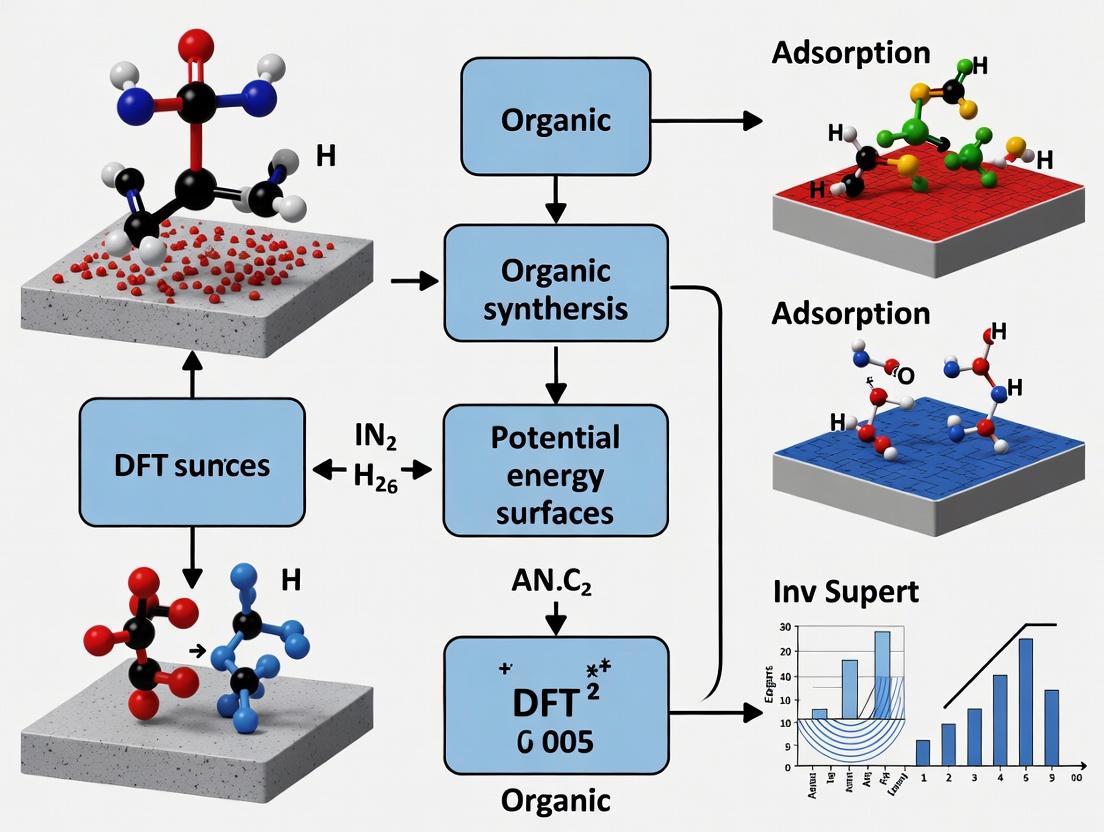
This article provides a detailed, current guide to using Density Functional Theory (DFT) for investigating adsorption mechanisms on material surfaces, tailored for researchers and drug development professionals.
Unlocking Molecular Interactions: A Comprehensive DFT Guide to Adsorption Mechanisms on Surfaces for Biomedical Research
Abstract
This article provides a detailed, current guide to using Density Functional Theory (DFT) for investigating adsorption mechanisms on material surfaces, tailored for researchers and drug development professionals. We begin by establishing the fundamental principles of adsorption physics and DFT's unique capabilities in modeling these quantum-scale interactions. The guide then progresses through practical methodologies, including slab model construction and key computational workflows for analyzing adsorption energy, geometry, and electronic structure. We address common computational challenges and optimization strategies to ensure accuracy and efficiency. Finally, we discuss validation protocols and compare DFT with other computational and experimental techniques. The article concludes by synthesizing how these insights accelerate the rational design of catalysts, sensors, and drug delivery systems, directly impacting biomedical innovation.
The Quantum Foundation: Understanding Adsorption Physics and DFT's Core Principles
Within the framework of Density Functional Theory (DFT) investigations of surface adsorption mechanisms, the precise discrimination between physisorption and chemisorption is foundational. This distinction dictates catalytic activity, sensor sensitivity, drug delivery vehicle design, and the stability of functional coatings. For researchers and drug development professionals, understanding these interactions informs the rational design of materials with tailored surface properties.
Physisorption is characterized by weak, non-covalent interactions (van der Waals, dispersion forces) with low adsorption enthalpies, typically reversible, and often non-specific. Chemisorption involves the formation of strong chemical bonds (covalent or ionic) with significantly higher enthalpies, is usually specific to surface sites, and is often irreversible under mild conditions. DFT simulations are critical for elucidating these mechanisms by calculating adsorption energies, charge transfer, density of states (DOS), and visualizing electron density differences.
Quantitative Data Comparison
Table 1: Key Characteristics of Physisorption vs. Chemisorption
| Parameter | Physisorption | Chemisorption | ||||
|---|---|---|---|---|---|---|
| Binding Energy | < 0.5 eV (≈ 50 kJ/mol) | > 0.5 eV (≈ 50 kJ/mol), often 1-10 eV | ||||
| Interaction Type | Van der Waals, dipole | Covalent, ionic, chemical bond | ||||
| Reversibility | Highly reversible | Often irreversible or requires high energy | ||||
| Temperature Range | Low temperatures (< boiling point of adsorbate) | Can occur at high temperatures | ||||
| Surface Specificity | Non-specific, occurs on any surface | Highly specific to surface geometry & electronic structure | ||||
| Adsorbate Integrity | Molecule remains intact | Molecule may dissociate or significantly distort | ||||
| Typical DFT Functional | Requires dispersion correction (e.g., DFT-D3) | Standard GGA/PBE often sufficient for bond analysis | ||||
| Layer Formation | Multi-layer adsorption possible | Only mono-layer (saturation of active sites) | ||||
| Charge Transfer | Minimal (< 0.1 | e | ) | Significant (often > 0.1 | e | ) |
Experimental Protocols for Surface Adsorption Studies
Protocol 3.1: DFT Calculation of Adsorption Energy
Objective: To computationally determine the strength and nature of adsorption on a material surface.
Surface Model Construction:
- Select the crystal structure of your material (e.g., metal, metal oxide, graphene).
- Use a surface cleavage tool to generate a specific surface orientation (e.g., (111), (100)).
- Create a periodic slab model with sufficient vacuum thickness (≥ 15 Å) to avoid interactions between periodic images.
- Determine the appropriate slab thickness (typically 3-5 atomic layers). Fix the bottom 1-2 layers at their bulk positions.
Geometry Optimization:
- Perform a full relaxation of the clean slab model using a plane-wave DFT code (e.g., VASP, Quantum ESPRESSO).
- Employ a Generalized Gradient Approximation (GGA) functional like PBE.
- For physisorption systems: Apply an empirical dispersion correction (e.g., DFT-D3, vdW-DF).
- Converge forces on all free atoms to < 0.01 eV/Å.
Adsorbate Placement and Optimization:
- Place the adsorbate molecule/atom at various plausible sites (e.g., atop, bridge, hollow) on the relaxed surface.
- Optimize the geometry of the entire system (adsorbate + top layers of slab) using the same computational parameters.
Energy Calculation & Analysis:
- Calculate the total energy of the optimized adsorption system (Eslab+ads), the clean slab (Eslab), and the isolated adsorbate in a vacuum (E_ads).
- Compute the adsorption energy: Eads = Eslab+ads - Eslab - Eads. A more negative value indicates stronger adsorption.
- Perform supplementary analyses: Bader charge analysis for charge transfer, Projected Density of States (PDOS) to identify orbital interactions, and electron density difference plots.
Protocol 3.2: Temperature Programmed Desorption (TPD) Experiment
Objective: To experimentally measure adsorption strength and identify binding states.
Sample Preparation:
- Mount the clean substrate (e.g., single crystal, thin film) in an Ultra-High Vacuum (UHV) chamber (base pressure < 1x10⁻¹⁰ mbar).
- Clean the surface via repeated cycles of sputtering (Ar⁺ ions) and annealing.
Adsorption Dose:
- Expose the clean surface to a known, controlled dose of the adsorbate gas (e.g., CO, H₂, O₂) at a low sample temperature (e.g., 100 K) to ensure adsorption.
Temperature Ramp and Detection:
- Linearly ramp the sample temperature (β = dT/dt, e.g., 2 K/s) using a resistive heater or cryostat.
- Monitor the partial pressure of the desorbing species in real-time using a quadrupole mass spectrometer (QMS) tuned to the adsorbate's primary mass-to-charge ratio (m/z).
Data Analysis:
- Plot desorption rate (QMS signal) vs. sample temperature.
- Physisorbed species desorb at low temperatures (often below room temperature). Chemisorbed species desorb at higher, distinct temperatures.
- Analyze peak temperatures (T_p) and shapes using the Redhead or Chan-Aris-Weinberg equations to estimate activation energies for desorption (approximating adsorption energies).
Visualizations
Title: Computational & Experimental Pathways for Adsorption Analysis
Title: Conceptual Models of Physisorption and Chemisorption
The Scientist's Toolkit: Research Reagent Solutions
Table 2: Essential Computational & Experimental Materials
| Item | Function in Adsorption Studies |
|---|---|
| Plane-Wave DFT Code (VASP, Quantum ESPRESSO) | Performs first-principles electronic structure calculations to model adsorption geometry and energetics. |
| Dispersion Correction Scheme (DFT-D3, vdW-DF) | Empirically accounts for long-range van der Waals forces, critical for accurate physisorption modeling. |
| Bader Charge Analysis Tool | Partitions electron density to quantify net charge transfer between adsorbate and surface. |
| UHV Chamber with Sputter Gun | Provides the ultra-clean environment necessary for preparing and maintaining well-defined material surfaces. |
| Quadrupole Mass Spectrometer (QMS) | Detects and identifies desorbing species during TPD experiments, quantifying desorption rates. |
| Single Crystal Substrates (e.g., Pt(111), TiO₂(110)) | Provide atomically flat, crystalline surfaces with known structure for fundamental adsorption studies. |
| Calibrated Leak Valve & Dosage System | Allows precise, reproducible exposure of the surface to adsorbate gases. |
| High-Purity Gases (e.g., 99.999% CO, O₂, H₂) | Minimize contamination and ensure that the observed adsorption effects are due to the intended species. |
Why DFT? The Quantum Mechanical Framework for Surface Science
Density Functional Theory (DFT) has become the cornerstone computational method for investigating adsorption mechanisms on surfaces. Its central role stems from an optimal balance between accuracy and computational cost, enabling researchers to model complex surface-adsorbate interactions from first principles. Within the broader thesis on adsorption mechanisms, DFT provides the essential quantum mechanical framework to calculate key parameters—such as adsorption energies, geometric configurations, electronic structure changes, and reaction pathways—that are experimentally challenging or impossible to obtain. This application note details the protocols, data interpretation, and practical toolkit for employing DFT in surface science, specifically tailored for research into molecular adsorption relevant to catalysis and drug development.
Core Quantitative Data: Benchmarking DFT for Surface Science
The reliability of DFT hinges on the choice of exchange-correlation functional. The following table summarizes the performance of common functionals for a benchmark set of adsorption energies (in eV) for small molecules (CO, H₂, H₂O) on transition metal surfaces (e.g., Pt(111), Cu(111)), compared to experimental or high-level quantum chemistry reference data.
Table 1: Performance of DFT Functionals for Calculating Adsorption Energies
| Functional Type | Specific Functional | Avg. Absolute Error (eV) | Computational Cost (Rel. to PBE) | Best For |
|---|---|---|---|---|
| GGA | PBE | 0.15 - 0.25 | 1.0 | General structure, phonons, overall trends |
| GGA | RPBE | 0.10 - 0.20 | 1.0 | Improved adsorption energies on metals |
| meta-GGA | SCAN | 0.08 - 0.15 | ~3.0 | Simultaneous accuracy for solids & molecules |
| Hybrid | HSE06 | 0.07 - 0.12 | ~10-100 | Band gaps, localized states |
| DFT+vdW | PBE-D3(BJ) | 0.05 - 0.15 | 1.05 | Systems with dispersion (physisorption) |
| Experimental Reference | -- | -- | -- | Benchmark |
GGA: Generalized Gradient Approximation; vdW: van der Waals corrections.
Table 2: Typical DFT-Calculated Parameters for Adsorption Analysis
| Calculated Property | Typical Value Range | Direct Experimental Analog | Significance for Mechanism |
|---|---|---|---|
| Adsorption Energy (E_ads) | -0.1 to -5.0 eV | Calorimetric data | Strength of surface-bond interaction. |
| Adsorption Height (d) | 1.5 - 3.5 Å | X-ray Standing Wave | Bonding distance, interaction type. |
| Charge Transfer (Δq) | -1.0 to +1.0 e | XPS core-level shifts | Donation/back-donation, oxidation state. |
| Vibrational Frequencies | Shift of 1-50 cm⁻¹ | Infrared/Raman Spectroscopy | Bond weakening/strengthening, site identification. |
| Reaction Barrier (E_a) | 0.3 - 2.0 eV | Temperature-Programmed Reaction | Kinetics of surface processes. |
Detailed Protocol: DFT Workflow for Adsorption Energy Calculation
This protocol outlines the standard workflow for calculating the adsorption energy of a molecule on a crystalline surface.
Protocol 1: Geometry Optimization and Energy Calculation
Objective: To determine the most stable configuration and energy of an adsorbate on a surface slab model.
Materials (Computational):
- Software: VASP, Quantum ESPRESSO, CP2K, or similar DFT code.
- Pseudopotentials: Projector Augmented-Wave (PAW) or norm-conserving potentials.
- Functional: Select based on Table 1 (e.g., PBE-D3 for organic molecule adsorption).
- Computing Resources: High-Performance Computing (HPC) cluster.
Procedure:
Surface Model Construction:
- Obtain the bulk crystal structure of the substrate (e.g., from ICSD).
- Cleave the crystal along the desired Miller indices (e.g., (111)) to create a surface.
- Build a periodic slab model with sufficient thickness (typically 3-5 atomic layers).
- Add a vacuum layer of at least 15 Å perpendicular to the surface to separate periodic images.
System Preparation:
- Fix the coordinates of the bottom 1-2 layers of the slab to mimic the bulk.
- Allow the top 2-3 layers and the adsorbate to relax during optimization.
- Place the adsorbate molecule at various high-symmetry sites (ontop, bridge, hollow) for initial configurations.
DFT Calculation Parameters:
- Set a plane-wave kinetic energy cutoff (e.g., 400-500 eV for VASP).
- Select a k-point mesh for Brillouin zone sampling (e.g., 4x4x1 for a surface slab).
- Set electronic convergence criteria (e.g., energy change < 10⁻⁵ eV).
- Set ionic relaxation criteria (e.g., force on each atom < 0.01 eV/Å).
Sequential Calculations:
- A. Optimize the isolated molecule: Place the molecule in a large periodic box, optimize its geometry, and calculate its total energy (E_molecule).
- B. Optimize the clean slab: Optimize the geometry of the surface slab model and calculate its total energy (E_slab).
- C. Optimize the adsorption system: Optimize the full system (slab + adsorbate) and calculate its total energy (E_slab+adsorbate).
Analysis:
- Calculate the adsorption energy: Eads = Eslab+adsorbate - (Eslab + Emolecule). A more negative value indicates stronger adsorption.
- Analyze the final geometry: Determine adsorption site, bond lengths, and adsorption height.
- Extract electronic structure data (e.g., via Bader charge analysis or Density of States).
Visualization of Workflows and Relationships
Title: DFT Workflow for Adsorption Energy Calculation
Title: Logical Foundation of Density Functional Theory
The Scientist's Toolkit: Essential Research Reagents & Computational Materials
Table 3: Key Computational "Reagents" for DFT Surface Studies
| Item/Category | Specific Example/Format | Function in "Experiment" |
|---|---|---|
| Exchange-Correlation Functional | PBE, RPBE, SCAN, HSE06, B3LYP | Defines the approximation for quantum electron-electron interactions; critical for accuracy. |
| Pseudopotential/PAW Set | Projector Augmented-Wave (PAW) potentials from VASP or PSLibrary. | Represents core electrons, reducing the number of explicit electrons to compute. |
| Surface Slab Model | POSCAR/CIF file with defined vacuum layer. | Periodic computational model of the surface, balancing realism and cost. |
| k-point Grid | Monkhorst-Pack grid (e.g., 4×4×1). | Sampling scheme for the Brillouin zone; crucial for convergence of periodic systems. |
| Dispersion Correction | D3(BJ), D2, vdW-DF2. | Empirical addition to account for van der Waals forces, essential for physisorption. |
| Visualization/Analysis Suite | VESTA, VMD, p4vasp, ASE. | Processes output files to render structures, plot densities, and analyze charge. |
| High-Performance Compute Cluster | CPU/GPU nodes with MPI parallelization. | Provides the necessary computational power to solve the Kohn-Sham equations. |
Within the broader thesis investigating adsorption mechanisms of pharmaceutical compounds on catalytic and biomaterial surfaces, Density Functional Theory (DFT) serves as the computational cornerstone. The accuracy and predictive power of these simulations hinge critically on three interconnected methodological choices: the exchange-correlation functional, the basis set, and k-point sampling for surface Brillouin zone integration. This document provides detailed application notes and protocols for selecting and validating these parameters to ensure reliable adsorption energy calculations, which directly inform drug delivery system design and catalyst optimization.
Key DFT Components: Comparative Analysis & Selection Protocols
Exchange-Correlation (XC) Functionals
The XC functional approximates the quantum mechanical effects of electron exchange and correlation. The choice profoundly impacts calculated adsorption energies, geometric structures, and electronic properties.
Table 1: Common XC Functionals for Adsorption Studies
| Functional Class | Specific Functional | Typical Error in Adsorption Energy (vs. experiment) | Best For | Computational Cost |
|---|---|---|---|---|
| Generalized Gradient Approximation (GGA) | PBE | ±0.2 - 0.5 eV | Structure optimization, physisorption, metal surfaces | Low |
| GGA with Dispersion Correction | PBE-D3(BJ), RPBE-D3 | ±0.1 - 0.3 eV | Systems with van der Waals interactions (e.g., organic molecules on surfaces) | Low-Medium |
| Meta-GGA | SCAN | ±0.1 - 0.25 eV | Mixed bonding character, more accurate bond energies | Medium |
| Hybrid | HSE06 | ±0.1 - 0.2 eV (limited data) | Accurate band gaps, electronic density of states | High |
| van der Waals Density Functional (vdW-DF) | optB88-vdW, rev-vdW-DF2 | ±0.1 - 0.3 eV | Layered materials, molecular adsorption | Medium-High |
Protocol 2.1: Selecting and Validating an XC Functional
- Initial Selection: For molecular adsorption involving dispersion forces (common in drug-surface interactions), begin with a dispersion-corrected GGA like PBE-D3(BJ).
- Benchmarking: If experimental or high-level quantum chemistry (e.g., CCSD(T)) reference data exist for a similar system, calculate adsorption energies for a small test set (3-5 systems) using 2-3 different functionals (e.g., PBE, PBE-D3, SCAN).
- Error Analysis: Compute the Mean Absolute Error (MAE) and Root Mean Square Error (RMSE) against references. Select the functional with the best trade-off between accuracy and cost.
- Systematic Error Assessment: For your main system, perform a sensitivity analysis by comparing key outputs (adsorption energy, bond lengths, charge transfer) across selected functionals. Report this variance in your thesis.
Basis Sets
The basis set is a set of mathematical functions used to describe the electronic wavefunction. Two primary types are used in periodic DFT: plane-waves and localized atomic orbitals.
Table 2: Basis Set Comparison for Periodic Systems
| Basis Type | Common Examples/Parameters | Advantages | Disadvantages | Typical Use Case in Adsorption |
|---|---|---|---|---|
| Plane-Wave | Cutoff Energy (e.g., 400 eV, 500 eV, 600 eV) | Systematic improvability, efficient for periodic systems, simple convergence. | Requires pseudopotentials; less efficient for isolated molecules. | Standard for metals, oxides, periodic slabs. |
| Localized (Atomic Orbitals) | Numerical (e.g., DZP, TZP in SIESTA) Gaussian (e.g., def2-SVP, def2-TZVP in CP2K) | Efficient for large systems, intuitive chemical basis. | More prone to basis set superposition error (BSSE). | Large unit cells, hybrid QM/MM setups, molecular systems. |
Protocol 2.2: Converging the Plane-Wave Basis Set Objective: Determine the kinetic energy cutoff that yields adsorption energies converged within a target tolerance (e.g., 1 meV/atom or 0.01 eV in total energy).
- Build Models: Construct a single, representative adsorption configuration on your surface slab model.
- Initial Calculation: Run a single-point energy calculation for the adsorbed system and its isolated components (clean slab, gas molecule) at a moderate cutoff (e.g., 400 eV for PBE).
- Incremental Increase: Repeat the calculations, increasing the cutoff energy in steps of 50-100 eV (e.g., 450, 500, 550, 600 eV).
- Convergence Check: Plot the total energy of the slab and the adsorption energy versus cutoff. The adsorption energy is considered converged when its change is less than the target tolerance over two successive steps.
- Final Selection: Add a 10-20% safety margin to the converged cutoff value for all subsequent production calculations.
k-point Sampling
k-points sample the reciprocal space of the periodic crystal. Adequate sampling is crucial for accurate integration over the Brillouin zone, especially for metallic systems.
Table 3: k-point Grid Guidelines for Different Surface Types
| Surface Electronic Structure | Example Materials | Recommended Initial k-grid (for slab) | Convergence Parameter |
|---|---|---|---|
| Metal | Pt(111), Au(100) | Dense grid (e.g., 4x4x1 Monkhorst-Pack or Γ-centered) | Adsorption energy change < 0.01 eV |
| Semiconductor | TiO2(110), MoS2 | Moderate grid (e.g., 3x3x1) | Adsorption energy change < 0.01 eV |
| Insulator | SiO2, hexagonal BN | Sparse grid (e.g., 2x2x1 or 1x1x1) | Total energy change < 0.1 meV/atom |
Protocol 2.3: k-point Grid Convergence for a Slab Model
- Generate Grids: For your optimized surface slab model, generate a series of increasingly dense k-point grids (e.g., 2x2x1, 3x3x1, 4x4x1, 5x5x1). Always keep the z-direction sampling as 1 for a slab.
- Single-Point Calculations: Perform a single-point energy calculation for the clean slab and the adsorption system at each k-grid.
- Monitor Convergence: Calculate the adsorption energy ( E{ads} = E{slab+mol} - E{slab} - E{mol} ) for each grid.
- Analysis: Plot ( E{ads} ) versus the inverse of the k-grid density (or the number of k-points). Choose the grid where ( E{ads} ) changes by less than 1 meV upon further densification.
- Special Cases: For molecules with localized states (e.g., organic drugs), ensure the density of states (DOS) is also converged with respect to k-points.
Integrated Computational Workflow for Adsorption Energy Calculation
Title: DFT Adsorption Energy Calculation Workflow
The Scientist's Toolkit: Essential Computational Research Reagents
Table 4: Key Software and Pseudopotential Libraries
| Item Name | Type | Function/Description |
|---|---|---|
| VASP | Software Package | A widely used periodic DFT code employing plane-wave basis sets and pseudopotentials. Industry standard for surface science and adsorption. |
| Quantum ESPRESSO | Software Package | An integrated suite of open-source computer codes for electronic-structure calculations and materials modeling, based on plane-waves. |
| CP2K | Software Package | Uses a mixed Gaussian and plane-wave basis set approach. Highly efficient for large systems and molecular dynamics. |
| Projector Augmented-Wave (PAW) Potentials | Pseudopotential Library | High-accuracy pseudopotentials that reconstruct the correct valence wavefunction near the nucleus. Often the preferred choice in VASP. |
| Ultrasoft Pseudopotentials (USPP) | Pseudopotential Library | Softer potentials allowing for a lower plane-wave cutoff. Common in Quantum ESPRESSO. |
| GBRV Pseudopotential Library | Pseudopotential Library | A high-throughput set of PAW and USPP potentials designed for consistency and accuracy across the periodic table. |
| ASE (Atomic Simulation Environment) | Python Library | A toolkit for setting up, manipulating, running, visualizing, and analyzing atomistic simulations. Essential for workflow automation. |
| VESTA | Visualization Software | A 3D visualization program for structural models, volumetric data, and crystal morphologies. Critical for model building and result analysis. |
| pymatgen | Python Library | A robust materials analysis library useful for generating k-point grids, analyzing densities of states, and managing computational workflows. |
Within Density Functional Theory (DFT) investigations of adsorption mechanisms, surface properties are not merely descriptors but the foundational predictors of interaction strength and specificity. This application note details the protocols for quantifying three pivotal properties—Reactivity, Work Function (Φ), and Active Site Characterization—and their integration into a coherent DFT-to-experiment workflow. The broader thesis posits that a triadic analysis of these properties enables the ab initio design of surfaces for targeted adsorption, relevant to catalysis, sensor development, and drug delivery systems.
Table 1: DFT-Calculated Surface Properties and Correlated Adsorption Energies for Select Systems
| Material & Surface | Work Function, Φ (eV) | d-Band Center (εd), eV (Reactivity Proxy) | Active Site Type | Adsorbate | Calculated E_ads (eV) | Experimental Reference E_ads (eV) |
|---|---|---|---|---|---|---|
| Pt(111) | 5.7 | -2.1 | Top (Pt atom) | CO | -1.45 | -1.35 ± 0.15 |
| Au(111) | 5.3 | -3.8 | Bridge (Au-Au) | O₂ | -0.25 | ~0.1 (Physisorption) |
| TiO₂-Anatase (101) | 6.2 | -4.5 (Ti 3d) | 5-fold Ti⁴⁺ | H₂O | -0.8 | -0.9 ± 0.1 |
| MoS₂ Monolayer (Edge) | 4.9 (Edge-specific) | -0.5 (Mo 4d) | Mo-edge S-vacancy | H₂ | -0.95 | -0.85 ± 0.1 |
| Graphene (pristine) | 4.5 | N/A (π-system) | Hollow (C-ring) | Benzene | -0.6 | -0.65 ± 0.1 |
Experimental Protocols & Application Notes
Protocol 3.1: DFT Workflow for Concurrent Property Calculation
Objective: To compute reactivity descriptors, work function, and identify active sites from a single converged DFT slab calculation.
- Model Construction: Build symmetric slab models (≥4 atomic layers) with >15 Å vacuum. Use a (3x3) or larger surface supercell.
- Calculation Parameters (VASP Example):
- Functional: RPBE-D3(BJ) for adsorption; HSE06 for accurate band alignment.
- Plane-wave cutoff: 500 eV.
- k-point mesh: Γ-centered, density ≥ 30 points/Å⁻¹.
- Convergence: Energy ≤ 10⁻⁵ eV/atom; Forces ≤ 0.02 eV/Å.
- Post-Processing:
- Work Function: Φ = Evac - EFermi. Extract electrostatic potential averaged in vacuum and slab bulk.
- Reactivity (d-band): Project density of states (PDOS) onto surface atom d-orbitals. Calculate d-band center: εd = ∫ E * ρd(E) dE / ∫ ρ_d(E) dE.
- Active Site Mapping: Perform Bader charge analysis or electron localization function (ELF) calculation on clean surface. Follow with probe molecule (e.g., H, CO) adsorption on all symmetry-inequivalent sites.
Protocol 3.2: Validating DFT Work Function with Kelvin Probe Force Microscopy (KPFM)
Objective: To experimentally measure Φ for correlation/validation of DFT values.
- Sample Preparation: Deposit material of interest as a clean, thin film (>100 nm) on a conducting substrate (e.g., Si wafer with Pt adhesion layer). Perform in-situ Ar⁺ sputtering (1 keV, 5 min) and annealing (as required) in UHV.
- KPFM Measurement (UHV, room temp): a. Use a conductive Pt/Ir-coated AFM tip. b. Engage in dual-pass mode: First pass (tap mode) records topography. c. Second pass (lift height ~10 nm) records contact potential difference (CPD) by nullifying electrostatic force via applied DC bias. d. Φsample = Φtip - e * CPD. Calibrate Φ_tip using a freshly cleaved HOPG reference (Φ = 4.48 eV).
- Data Acquisition: Map CPD over 1 µm x 1 µm area. Report average and standard deviation from at least three distinct regions.
Protocol 3.3: Active Site Verification via Temperature-Programmed Desorption (TPD)
Objective: To quantify adsorbate binding strength and site heterogeneity.
- Surface Preparation: Clean single crystal or well-defined thin film in UHV chamber (base pressure < 2x10⁻¹⁰ mbar).
- Adsorption: Expose surface to probe gas (e.g., CO, NH₃) at low temperature (100-120 K) using a calibrated doser. Exposure in Langmuirs (L) to achieve sub-monolayer coverage (~0.2-0.5 ML).
- Desorption Ramp: Isotropically heat the sample at a linear rate (β, e.g., 2 K/s). Monitor desorbing species with a quadrupole mass spectrometer (QMS) tuned to a specific mass-to-charge ratio (m/z).
- Data Analysis: Plot QMS signal vs. temperature. Peak temperatures (T_p) relate to binding energy via the Redhead equation (assuming first-order desorption, pre-factor ν ≈ 10¹³ s⁻¹). Multiple peaks indicate distinct active site populations.
Visualizations
Title: DFT Workflow for Adsorption Prediction from Surface Properties
Title: Key Experimental Techniques for Surface Property Validation
The Scientist's Toolkit: Research Reagent Solutions
Table 2: Essential Materials and Computational Tools for Surface Property Analysis
| Item / Reagent | Function in Surface Analysis |
|---|---|
| VASP, Quantum ESPRESSO, GPAW | DFT software packages for ab initio calculation of electronic structure, work function, and adsorption energies. |
| Bader Charge Analysis Tool | Partitions electron density to calculate atomic charges, crucial for identifying electron-deficient/poor active sites. |
| UHV System (≤10⁻¹⁰ mbar) | Provides an atomically clean environment for surface preparation and characterization (KPFM, TPD, XPS). |
| Pt/Ir-coated AFM Tip | Conductive tip required for Kelvin Probe Force Microscopy (KPFM) to measure contact potential difference. |
| Calibrated Gas Doser (UHV) | Allows precise, reproducible exposure of surfaces to probe molecules (e.g., CO, H₂) for adsorption studies. |
| Quadrupole Mass Spectrometer (QMS) | Detects and identifies desorbing species during Temperature-Programmed Desorption (TPD) experiments. |
| HOPG Reference Sample | Highly Ordered Pyrolytic Graphite with known work function (4.48 eV) for calibration of KPFM tips and other photoemission tools. |
| Single Crystal Surfaces | Well-defined (e.g., Pt(111), Au(100)) substrates serving as benchmarks for both DFT simulations and experimental validation. |
Recent Advances in DFT Accuracy for Weak Interactions (vdW Corrections)
Thesis Context: In the investigation of adsorption mechanisms on surfaces—a cornerstone of catalysis, sensor design, and drug delivery system development—accurate computational modeling is paramount. A persistent challenge in Density Functional Theory (DFT) has been its inherent inability to describe long-range electron correlation effects, leading to the poor description of van der Waals (vdW) or weak interactions. This gap critically undermines the reliability of adsorption energy predictions. Recent methodological advances in vdW corrections have significantly bridged this accuracy gap, enabling more predictive simulations of physisorption, molecular recognition on surfaces, and the interaction of drug-like molecules with biological targets.
Quantitative Comparison of Prominent vdW-Corrected DFT Methods
The following table summarizes key quantitative benchmarks for contemporary vdW-corrected DFT methods, focusing on their performance for weak interaction databases and surface adsorption energies.
Table 1: Benchmark Performance of Selected vdW-DFT Methods
| Method Name | Type | Key Parameters/Functionals | S22 (MAE) [kJ/mol] | S66 (MAE) [kJ/mol] | ADS86 (Adsorption) MAE [meV] | Computational Cost |
|---|---|---|---|---|---|---|
| DFT-D3(BJ) | Empirical Correction | Becke-Johnson damping; paired with base functional (e.g., PBE, B3LYP) | 0.15 | 0.12 | ~25-40 | Low (additive) |
| DFT-D4 | Empirical Correction | Geometry-dependent charge model; newer dispersion coeff. | 0.14 | 0.10 | ~20-35 | Very Low |
| vdW-DF2 | Non-local Functional | revPBE kernel + LDA correlation | 0.40 | N/A | ~50-70 | Moderate |
| optB88-vdW | Non-local Functional | Optimized B88 exchange + non-local correlation | 0.20 | 0.15 | ~20-30 | Moderate-High |
| SCAN+rVV10 | Meta-GGA + NL | Strongly Constrained and Appropriately Normed (SCAN) + rVV10 non-local term | 0.10 | 0.08 | ~15-25 | High |
| PBE0+MBD | Hybrid + Many-Body | PBE0 hybrid functional with Many-Body Dispersion (MBD@rsSCS) | 0.12 | 0.09 | ~10-20 | Very High |
MAE: Mean Absolute Error vs. high-level CCSD(T) reference data. S22/S66: Molecular non-covalent interaction databases. ADS86: Database of adsorption energies on metal surfaces.
Application Notes & Experimental Protocols
Protocol: Calculating Adsorption Energies with DFT-D3 Correction
This protocol is standard for initial screening of molecule-surface physisorption.
Research Reagent Solutions:
- Software: VASP, Quantum ESPRESSO, CP2K, Gaussian.
- Base Functional: PBE or B3LYP. Provides the underlying electronic structure description.
- Dispersion Correction: Grimme's DFT-D3 with Becke-Johnson damping (D3(BJ)). Adds the vdW interaction empirically.
- Pseudopotential/PAW Set: Projector-Augmented Wave (PAW) or norm-conserving pseudopotentials appropriate for all elements in the system.
- Surface Model: Slab model with ≥ 4 atomic layers and > 15 Å vacuum.
Procedure:
- Geometry Optimization of Isolated Adsorbate: Optimize the 3D structure of the free molecule using the chosen DFT-D3 method. Record the total energy (E_adsorbate).
- Surface Slab Preparation: Create and optimize the clean surface slab. Ensure convergence with respect to slab thickness and lateral cell size. Record the total energy (E_slab).
- Adsorption Complex Construction: Place the adsorbate molecule on various high-symmetry sites (atop, bridge, hollow) on one side of the slab. Maintain a minimum initial distance of 2.0 Å from the surface.
- Adsorption Complex Optimization: Optimize the geometry of the full system, allowing the adsorbate and the top 2-3 layers of the slab to relax until forces are < 0.01 eV/Å.
- Energy Calculation & Analysis: Calculate the final single-point energy of the optimized complex (E_complex).
- Adsorption Energy Computation: Compute the adsorption energy: Eads = Ecomplex - (Eslab + Eadsorbate). A more negative value indicates stronger binding.
- BSSE Correction (Recommended): Apply the Counterpoise method to correct for Basis Set Superposition Error (BSSE), especially when using localized basis sets.
Protocol: High-Accuracy Adsorption Studies Using Non-local Functionals (e.g., optB88-vdW)
This protocol is used for higher-accuracy studies where charge redistribution at the interface is critical.
Procedure:
- Initial Guess with DFT-D3: Use the Protocol 2.1 to generate a reasonably optimized adsorption structure as a starting point. This saves computational time.
- Software Setup for Non-local Calculation: Configure the simulation to use a non-local van der Waals functional (e.g., optB88-vdW, rev-vdW-DF2). Note: This often requires a specialized kernel and is more I/O intensive.
- Re-optimization: Re-optimize the adsorption geometry using the non-local functional, keeping the same convergence criteria.
- Electronic Structure Analysis: From the final converged charge density, perform a Bader charge analysis or plot plane-averaged electron density difference (Δρ = ρsystem - ρslab - ρ_adsorbate) to visualize charge transfer and polarization.
- Benchmarking: For a key adsorption configuration, perform a single-point energy calculation using a higher-level method like SCAN+rVV10 or PBE0+MBD to assess the sensitivity of the binding energy to the functional choice.
Visualization of Method Selection and Workflow
Title: vdW-DFT Method Selection Workflow for Adsorption Studies
Title: Evolution of vdW Methods in DFT
The Scientist's Toolkit: Key Research Reagent Solutions
Table 2: Essential Computational Tools for vdW-Corrected Adsorption Studies
| Item (Software/Code) | Function in Research | Typical Use Case in Adsorption |
|---|---|---|
| VASP | Plane-wave DFT code with extensive vdW implementations. | Adsorption on periodic metal/oxide surfaces; uses PAW pseudopotentials. |
| Quantum ESPRESSO | Open-source plane-wave DFT code. | Similar to VASP; community-developed non-local vdW plugins. |
| CP2K | DFT code using mixed Gaussian/plane-wave basis. | Large, complex molecular adsorbates or liquid-solid interfaces. |
| Gaussian/ORCA | Quantum chemistry codes using localized basis sets. | Adsorption on cluster models of surfaces; high-level hybrid-DFT and D3 corrections. |
| ASE (Atomic Simulation Environment) | Python scripting library for atomistic simulations. | Automates workflows (geometry setup, job chaining, analysis) across different DFT codes. |
| Bader Charge Analysis | Tool for partitioning electron density to atoms. | Quantifies charge transfer upon adsorption from DFT charge density. |
| Materials Project/Crystallography Open Database | Repositories of crystal structures. | Source for initial bulk and surface slab structures for the adsorbent. |
From Theory to Practice: A Step-by-Step DFT Workflow for Adsorption Studies
This document provides detailed application notes and protocols for constructing realistic surface models, a foundational step in Density Functional Theory (DFT) investigations of adsorption mechanisms in catalytic and pharmaceutical research. The accurate modeling of surfaces—through slab creation, selection of terminations, and construction of supercells—directly impacts the reliability of calculated adsorption energies, reaction pathways, and catalytic activities. This work supports a broader thesis aiming to establish robust computational workflows for rational drug and catalyst design.
Core Protocols and Methodologies
Protocol 2.1: Slab Model Creation for Metallic and Oxide Surfaces
Objective: To generate a periodic slab model that accurately represents a bulk-terminated surface with minimal computational cost.
Materials & Software: DFT code (VASP, Quantum ESPRESSO), structure visualization tool (VESTA, ASE), crystal structure database (Materials Project, ICSD).
Procedure:
- Bulk Optimization: Obtain the conventional unit cell of the material of interest. Fully relax its lattice constants and internal atomic coordinates using DFT to obtain the equilibrium geometry.
- Surface Orientation & Cleavage: Identify the Miller indices (hkl) of the desired surface plane (e.g., (111) for FCC metals, (110) for rutile TiO₂). Cleave the optimized bulk structure along this plane using a crystal editing tool.
- Slab Thickness Convergence: Create slabs of increasing thickness (N layers, where N = 3, 5, 7, 9...). For each, fix the bottom 2-3 layers to their bulk positions to mimic the underlying crystal, and allow the top 2-3 layers to relax.
- Convergence Test: Calculate the surface energy (γ) for each slab thickness using the formula:
γ = (E_slab - N * E_bulk) / (2 * A)whereE_slabis the total energy of the slab,E_bulkis the energy per atom/formula unit in the bulk,Nis the number of bulk units in the slab, andAis the surface area. The slab is converged whenγchanges by less than 0.01 J/m² with added layers. - Vacuum Layer Addition: Add a vacuum layer of at least 15 Å in the direction perpendicular to the slab (z-axis) to prevent spurious interactions between periodic images of the slab.
Protocol 2.2: Surface Termination Identification and Selection
Objective: To determine and generate all chemically plausible terminations for a given surface.
Procedure:
- Symmetry Analysis: For non-polar surfaces, identify all distinct atomic layers parallel to the surface plane using symmetry operations.
- Polar Surface Assessment: For compounds (e.g., ZnO (0001)), assess if the surface is task: format The generation process has been interrupted. Please continue. The assistant must return only the main content. polar. A surface is polar if it consists of charged planes with a non-zero dipole moment perpendicular to the surface. Such surfaces often reconstruct or adsorb species to stabilize.
- Termination Generation: Create slab models for each unique stacking sequence. For perovskites (e.g., SrTiO₃), common terminations are SrO- and TiO₂-terminated (001) surfaces.
- Stability Ranking: Calculate the surface energy for each termination (see Protocol 2.1, Step 4). The termination with the lowest surface energy is the most stable under vacuum conditions.
- Environment Consideration: Under realistic conditions (e.g., in solution, under gas pressure), surface phase diagrams plotting surface energy as a function of chemical potential (e.g., Δμ_O for oxides) must be constructed to identify the most stable termination.
Protocol 2.3: Supercell Construction for Adsorbate Modeling
Objective: To create a surface supercell of sufficient size to host an adsorbate without significant lateral interactions with its periodic images.
Procedure:
- Initial Cell Sizing: Start with a primitive or (1x1) surface unit cell. Determine the adsorbate's approximate van der Waals diameter.
- Supercell Expansion: Expand the surface cell dimensions (a, b) to create supercells (e.g., (2x2), (3x3), (√3x√3)R30°). The goal is to ensure a minimum distance of 6-8 Å between periodic images of the adsorbate.
- Coverage Calculation: Calculate the corresponding adsorbate coverage (θ) in Monolayers (ML). θ = (number of adsorbates) / (number of surface atoms in the ideal (1x1) cell).
- k-point Adjustment: Re-calculate an appropriate Monkhorst-Pack k-point mesh for the new, larger supercell to maintain a similar k-point density in reciprocal space.
- Convergence Verification: For key adsorption energies (Eads = E(slab+ads) - Eslab - Eads), perform a test using the next-largest supercell size. Energy differences should be converged to within 0.05 eV.
Table 1: Convergence Criteria for Key Surface Model Parameters
| Parameter | Typical Target Value | Rationale |
|---|---|---|
| Slab Thickness | Surface energy change < 0.01 J/m² | Ensures bulk-like interior. |
| Vacuum Thickness | ≥ 15 Å | Reduces slab-slab interaction to < 0.001 eV/atom. |
| k-point Sampling (Surface) | Reciprocal spacing ≤ 0.04 Å⁻¹ | Converges total energy for metals/oxides. |
| Supercell Size | Adsorbate-adsorbate distance ≥ 6 Å | Minimizes lateral interaction artifacts. |
| Force Convergence (Relaxation) | < 0.02 eV/Å | Ensions stable, optimized geometry. |
Table 2: Example Surface Energies and Stable Terminations for Common Materials
| Material | Surface | Termination | Surface Energy (J/m²) [DFT, GGA] | Notes |
|---|---|---|---|---|
| Pt | (111) | FCC stacking | ~1.5 | Most stable metallic surface. |
| α-Al₂O₃ | (0001) | Al-terminated | ~1.6 | Stable under Al-rich conditions. |
| TiO₂ (Rutile) | (110) | Stoichiometric | ~0.5 | Most stable termination. |
| CeO₂ | (111) | Stoichiometric | ~0.8 | Oxygen vacancies significantly reduce γ. |
| SrTiO₃ | (001) | TiO₂-terminated | ~0.9 | More stable than SrO termination in typical O conditions. |
Visualization of Workflows
Title: Workflow for Realistic Surface Model Construction
Title: Supercell Expansion for Adsorbate Isolation
The Scientist's Toolkit: Research Reagent Solutions
Table 3: Essential Computational Tools & Resources for Surface Modeling
| Item/Resource | Category | Function/Brief Explanation |
|---|---|---|
| VASP / Quantum ESPRESSO / CASTEP | DFT Software | Core simulation engines for electronic structure and energy calculation. |
| Materials Project / ICSD | Database | Source of initial crystal structures and reference data. |
| ASE (Atomic Simulation Environment) | Python Library | Toolkit for building, manipulating, and running atomistic simulations. |
| VESTA / Ovito | Visualization Software | For visualizing crystal structures, surfaces, and charge densities. |
| Pymatgen | Python Library | Powerful materials analysis toolkit for generating slabs, analyzing terminations, and creating phase diagrams. |
| High-Performance Computing (HPC) Cluster | Hardware | Essential for performing DFT calculations within reasonable timeframes. |
| SSAdb / NOMAD | Database | Repository for published surface science DFT data; useful for benchmarking. |
Geometry Optimization Protocols for Adsorbate-Surface Systems
Within the broader context of a Density Functional Theory (DFT) investigation of adsorption mechanisms on surfaces, geometry optimization is a foundational computational step. It determines the lowest-energy configuration of an adsorbate on a catalytic or material surface, providing critical insights into binding sites, adsorption energies, and reaction pathways. This document outlines standardized protocols for performing reliable and efficient optimizations.
Key Concepts & Initial System Setup
Before optimization, careful model preparation is required:
- Surface Model: Typically a periodic slab model. The slab must be thick enough to mimic bulk properties underneath, with sufficient vacuum (≥ 15 Å) to prevent spurious interactions between periodic images in the z-direction.
- Adsorbate Placement: Initial positioning based on hypothesized binding sites (e.g., atop, bridge, hollow).
- k-point Sampling: A Monkhorst-Pack grid appropriate for the surface supercell size.
- Convergence Parameters: Energy cut-off for plane-wave basis sets and energy/force convergence criteria must be predefined.
Core Optimization Protocols
The following step-by-step protocols are recommended for robust geometry optimization.
Protocol 3.1: Preliminary Relaxation of the Clean Surface
Objective: Obtain a stable, relaxed surface structure before introducing the adsorbate.
- Build the slab model using bulk-optimized lattice parameters.
- Fix the bottom 1-2 layers of the slab to represent the bulk substrate.
- Allow the top 2-3 layers and any surface reconstructions to relax.
- Convergence Criteria: Set force tolerance to 0.05 eV/Å (or stricter, e.g., 0.01 eV/Å for high accuracy). Energy change per iteration should be below 1e-5 eV/atom.
- Store the fully relaxed slab structure for subsequent adsorption studies.
Protocol 3.2: Adsorbate-System Optimization with Constrained Bottom Layers
Objective: Find the local minimum energy structure for the adsorbate-surface system.
- Place the adsorbate on the pre-relaxed slab from Protocol 3.1.
- Keep the bottom slab layers fixed. Allow the top slab layers and the entire adsorbate to relax without symmetry constraints.
- Employ a quasi-Newton algorithm (e.g., BFGS) for efficient convergence.
- Use a finer force convergence threshold (e.g., 0.02 eV/Å) to ensure precise adsorbate positioning.
- Verify the absence of imaginary frequencies via subsequent frequency calculations to confirm a true minimum.
Protocol 3.3: Variable-Cell Optimization for Significant Surface Reconstruction
Objective: Account for cases where adsorption induces major surface strain or reconstruction.
- Follow Protocol 3.2, but allow the in-plane lattice constants (x, y) of the slab to relax in addition to atomic positions.
- Apply a scalable external stress tensor (often set to zero for constant-pressure optimization).
- This is computationally more expensive and is typically used for small unit cells or when reconstruction is suspected from literature.
Workflow and Decision Pathway
Diagram Title: Decision Pathway for Geometry Optimization Protocol Selection
Essential Computational Parameters & Data
Critical settings that determine accuracy and computational cost are summarized below.
Table 1: Typical Convergence Parameters for Plane-Wave DFT (VASP Example)
| Parameter | Typical Value (Medium) | High-Accuracy Value | Function & Note |
|---|---|---|---|
| ENCUT (Plane-wave cutoff) | 400 - 500 eV | +100 eV from POTCAR | Kinetic energy cutoff. Must be consistent with pseudopotential. |
| EDIFF (Electronic loop) | 1E-5 eV | 1E-6 eV | Stopping criterion for SCF cycle. |
| EDIFFG (Ionic loop) | -0.05 eV/Å | -0.01 eV/Å | Stopping criterion for geometry optimization. Negative value denotes force tolerance. |
| k-points (Monkhorst-Pack) | 3x3x1 (for ~1x1 cm slab) | 5x5x1 or finer | Density for Brillouin zone sampling. Depends on supercell size. |
| ISIF (Cell relaxation flag) | 2 (Atoms only) | 3 (Atoms + shape) | Selects Protocol 3.2 (2) vs. 3.3 (3). |
Table 2: Common Optimization Algorithms & Their Use Cases
| Algorithm (IBRION in VASP) | Principle | Best For | Cautions |
|---|---|---|---|
| Conjugate Gradient (IBRION=2) | Follows conjugate directions. | General purpose, robust for initial rough minimization. | Can be slower near minimum. |
| Quasi-Newton BFGS (IBRION=1) | Builds approximate Hessian. | Efficient convergence near minimum, most common for final optimizations. | Requires accurate initial forces. |
| Damped Molecular Dynamics (IBRION=3) | Velocity damping. | Difficult systems with many shallow minima or steric clashes. | Less efficient for smooth potentials. |
The Scientist's Toolkit: Research Reagent Solutions
This table details essential "computational reagents" for the protocols.
Table 3: Key Research Reagent Solutions for DFT Adsorption Studies
| Item/Software | Function & Explanation |
|---|---|
| VASP, Quantum ESPRESSO, CASTEP | Primary DFT Engine: Software packages that solve the Kohn-Sham equations to compute electron density, energy, and forces for the system. |
| Pseudopotentials/PAW Potentials | Core Electron Approximation: File sets that replace core electrons with an effective potential, drastically reducing computational cost while maintaining valence electron accuracy. |
| Pymatgen, ASE | Python Frameworks: Libraries for scripting, automating workflows, building crystal structures, and analyzing calculation results. Essential for high-throughput studies. |
| VESTA, OVITO | Visualization Software: Used to build initial slab/adsorbate models and visually inspect optimized geometries, bond lengths, and adsorption sites. |
| High-Performance Computing (HPC) Cluster | Computational Infrastructure: Necessary hardware to perform the computationally intensive DFT calculations within a reasonable timeframe. |
Within Density Functional Theory (DFT) investigations of adsorption mechanisms on surfaces, the adsorption energy (Eads) is the central quantitative descriptor. It thermodynamically quantifies the stability of an adsorbate-substrate complex. The fundamental definition is: Eads = E(total) – (E(surface) + E(adsorbate)) where E(total) is the energy of the adsorbed system, E(surface) is the energy of the clean substrate, and E(adsorbate) is the energy of the isolated adsorbate in its reference state (e.g., gas-phase molecule). A more negative E_ads indicates stronger, more favorable adsorption.
Its thermodynamic meaning is directly linked to the enthalpy change (ΔHads) for the adsorption process at 0 K, often approximated as Eads ≈ ΔH_ads. This metric allows for the comparative screening of catalyst materials, prediction of binding sites, and understanding of reaction pathways in heterogeneous catalysis and sensor development.
Protocol: DFT Calculation of Adsorption Energy
Objective: To compute the adsorption energy of a small molecule (e.g., CO) on a transition metal surface (e.g., Pt(111)) using a plane-wave DFT code.
Materials & Computational Setup:
- Software: VASP, Quantum ESPRESSO, or CP2K.
- Hardware: High-Performance Computing (HPC) cluster.
- Pseudopotentials/PAWs: Projector Augmented-Wave (PAW) or norm-conserving pseudopotentials for relevant elements.
- Exchange-Correlation Functional: Select based on accuracy vs. cost (e.g., PBE for general trends, RPBE for adsorption, or hybrid functionals for higher accuracy).
Procedure:
Clean Surface Optimization:
- Build a slab model of the Pt(111) surface with sufficient vacuum (~15 Å) to prevent periodic interactions.
- Fix the bottom 1-2 layers to mimic bulk constraints.
- Relax the geometry until forces on free atoms are < 0.01 eV/Å.
- Record the final total energy, E_(surface).
Isolated Adsorbate Reference Calculation:
- Place a single CO molecule in a large cubic simulation box (~15 Å side length).
- Fully relax its geometry.
- Record the final total energy, E_(CO, gas).
Adsorbed System Optimization:
- Place the CO molecule on a desired site (e.g., atop, bridge, hollow) on the optimized Pt slab.
- Maintain the same slab constraints and computational parameters.
- Relax the entire structure (allowing the adsorbate and top metal layers to move).
- Record the final total energy, E_(total).
Energy Calculation:
- Compute the adsorption energy using: Eads = E(total) – (E(surface) + E(CO, gas))
Critical Considerations:
- Finite Size Effects: Test convergence with respect to slab thickness and surface unit cell size (k-point sampling).
- Van der Waals Corrections: For physisorption or large organic molecules, include dispersion corrections (e.g., DFT-D3).
- Entropic Contributions: For accurate comparison with experiment at finite temperatures, vibrational frequencies must be calculated to obtain Gibbs free energy of adsorption: ΔGads = Eads + ΔZPE – TΔS_vib.
Table 1: Exemplar Adsorption Energies for CO on Various Metal Surfaces (PBE Functional)
| Surface | Adsorption Site | Calculated E_ads (eV) | Relative Stability |
|---|---|---|---|
| Pt(111) | Atop | -1.78 | Most stable for atop bonding |
| Pt(111) | Hollow (fcc) | -1.65 | Less stable than atop |
| Pd(111) | Hollow (fcc) | -1.95 | Stronger binding than Pt |
| Cu(111) | Atop | -0.52 | Weak binding |
| Ni(111) | Hollow (fcc) | -1.88 | Strong binding |
Table 2: Impact of Computational Parameters on Calculated E_ads (CO on Pt(111))
| Parameter | Base Value | Varied Value | Effect on E_ads (Δ, eV) | Recommendation |
|---|---|---|---|---|
| Slab Layers | 3 layers | 4 layers | < ±0.05 | Use ≥ 3 layers with 1-2 fixed |
| Vacuum Size | 12 Å | 18 Å | < ±0.02 | Use ≥ 15 Å |
| k-point mesh | 4x4x1 | 6x6x1 | < ±0.03 | Converge to ±0.01 eV |
| Functional | PBE | RPBE | +0.2 to +0.5 eV | RPBE reduces overbinding |
| vdW Correction | None | DFT-D3(BJ) | More negative by ~0.2 eV | Essential for non-covalent systems |
Workflow and Thermodynamic Relationship Diagram
Diagram 1: DFT Workflow for Adsorption Energy & Thermodynamics
Diagram 2: From E_ads to Thermodynamic Potentials
The Scientist's Toolkit: Key Research Reagent Solutions
Table 3: Essential Computational Materials for DFT Adsorption Studies
| Item/Software | Function/Benefit | Typical Use Case |
|---|---|---|
| VASP | Robust, commercial plane-wave DFT code with extensive materials science capabilities. | High-throughput screening of adsorption on alloys and oxides. |
| Quantum ESPRESSO | Open-source, integrated suite for electronic-structure calculations. | Accessible, customizable workflows for academic research. |
| Atomic Simulation Environment (ASE) | Python framework for setting up, running, and analyzing atomistic simulations. | Building complex surface models, automating workflows, calculating E_ads. |
| PBE Functional | General-purpose GGA functional; provides reasonable trends for chemisorption. | Initial scans and studies where qualitative trends are sufficient. |
| DFT-D3(BJ) Correction | Adds empirical dispersion corrections to account for van der Waals forces. | Studying adsorption of large organic molecules, physisorption systems. |
| VASPKIT / sumo | Post-processing toolkits for efficient data extraction and plotting. | Automating the extraction of energies, densities of states, and plotting. |
| Materials Project / NOMAD | Databases of pre-computed crystalline and molecular properties. | Obtaining reference structures and energies for validation. |
Understanding adsorption mechanisms on catalytic or sensor surfaces requires moving beyond geometric optimization to analyzing electronic interactions. Within Density Functional Theory (DFT) investigations, three complementary techniques form the cornerstone of electronic structure analysis: Projected Density of States (PDOS), Charge Density Difference (CDD), and Bader Analysis. This protocol details their application for deciphering charge transfer, orbital hybridization, and bond formation during adsorption processes relevant to heterogeneous catalysis and drug-surface interactions.
Core Analytical Protocols
Protocol for Projected Density of States (PDOS) Analysis
Objective: To decompose the total electronic density of states into contributions from specific atoms, atomic orbitals (s, p, d), or groups, identifying adsorption-induced shifts in energy levels and orbital hybridization.
Materials & Software:
- DFT simulation package (e.g., VASP, Quantum ESPRESSO, CASTEP).
- Post-processing code (e.g., VASPkit, p4vasp, Lobster for orbital projection).
- Visualization software (e.g., Grace, Matplotlib, Origin).
Methodology:
- Converged Calculations: Ensure fully relaxed geometries for the clean surface and the adsorption system.
- DOS Calculation: Perform a static, non-self-consistent field (non-SCF) calculation on the relaxed structures using a fine k-point mesh (e.g., 15×15×1 for surfaces) and a high energy cutoff. Set
LORBIT = 11(VASP) or equivalent flags to project onto atoms and orbitals. - Data Extraction: Use post-processing tools to extract the PDOS for relevant atoms: the adsorbate, specific surface atoms involved in bonding (e.g., metal active site), and analogous atoms in the clean surface.
- Analysis: Plot the PDOS for comparison. Key indicators of bonding:
- Peak Alignment: New peaks at similar energies in the adsorbate and surface atom PDOS indicate orbital hybridization.
- Energy Shift: Shifts in the d-band center (for metals) or adsorbate states relative to the Fermi level.
- Peak Intensity Change: Changes in the number of states available at given energies.
Data Interpretation Table: PDOS Signatures of Adsorption
| PDOS Feature | Physical Interpretation | Implication for Adsorption |
|---|---|---|
| New overlapping peaks below Fermi level | Formation of bonding states | Strong chemisorption, covalent bond formation |
| Shift of surface d-band center downwards | Stabilization of metal d-states | Generally correlates with weaker adsorption (early transition metals) |
| Shift of adsorbate state towards Fermi level | Donation of electron density from adsorbate to surface | Typical for CO on metals (5σ donation) |
| Appearance of peaks above Fermi level | Formation of anti-bonding states | Occupancy affects bond strength; can lead to scaling relations |
Protocol for Charge Density Difference (CDD) Calculation
Objective: To visualize the spatial redistribution of electrons upon adsorption, highlighting regions of electron accumulation and depletion.
Methodology:
- Component Calculations: Perform three separate static single-point calculations with identical cell parameters and k-point meshes:
- The total adsorption system (ADS: surface + adsorbate).
- The clean surface (SUR) with the adsorbate removed.
- The isolated adsorbate (AD) in the same vacuum orientation.
- Charge Density Generation: Extract the total charge density (e.g.,
CHGCARfiles in VASP) from each calculation. - Difference Calculation: Compute the CDD (Δρ) using the formula:
Δρ = ρ(ADS) – ρ(SUR) – ρ(AD)
This can be done using scripts (e.g.,
chgdiff.py) or built-in post-processing tools. - Visualization: Plot Δρ in a 2D plane cutting through the adsorption site or as a 3D isosurface. Use consistent isosurface levels (e.g., ±0.005 e/ų). Convention: Yellow/red for electron accumulation (Δρ > 0); cyan/blue for depletion (Δρ < 0).
Diagram: Workflow for Charge Density Difference Analysis
Workflow for Charge Density Difference Calculation
Protocol for Bader Charge Analysis
Objective: To quantitatively partition the total electron density into atomic basins, providing numerical estimates of charge transfer between adsorbate and surface.
Methodology:
- Prerequisite: A high-quality charge density file from the converged adsorption system (e.g.,
AECCAR0+AECCAR2from VASP for all-electron density). - Run Bader Analysis: Use the Henkelman group's
badercode or integrated post-processors.- Command example:
bader CHGCAR -ref CHGCAR_sum(whereCHGCAR_sumis the sum of core+valence densities).
- Command example:
- Parse Output: The
ACF.datfile contains the final charge on each atom. TheBCF.datfile identifies bader volumes. - Reference State: Perform identical Bader analysis on the isolated, relaxed adsorbate and surface atoms. The net charge transfer is: ΔQ(atom) = Q(atom in system) – Q(isolated atom).
- Tabulation: Create a table for key atoms.
Quantitative Data Table: Example Bader Charge Results for CO on Pt(111)
| Atom / Fragment | Charge in Isolated State ( | e | ) | Charge in Adsorption System ( | e | ) | Net Charge Transfer (ΔQ in | e | ) |
|---|---|---|---|---|---|---|---|---|---|
| C (in CO) | +1.25 | +1.45 | +0.20 | ||||||
| O (in CO) | -1.25 | -1.30 | -0.05 | ||||||
| CO Molecule | 0.00 | +0.15 | +0.15 (Donation) | ||||||
| Pt (top site) | +0.10 | +0.05 | -0.05 | ||||||
| Nearest 3 Pt atoms | +0.30 | +0.22 | -0.08 |
Note: Positive ΔQ indicates loss of electrons; negative indicates gain. Data is illustrative.
The Scientist's Toolkit: Essential Research Reagents & Software
| Item/Category | Function in Analysis | Example/Note |
|---|---|---|
| DFT Code | Engine for solving Kohn-Sham equations to obtain wavefunctions and charge density. | VASP, Quantum ESPRESSO, CASTEP, Gaussian. |
| Pseudopotential/PAW Library | Defines core-valence interaction, critical for accurate electron density. | PAW potentials (VASP), UPF (QE), ONCV. Choose appropriate functional match. |
| Post-Processing Suite | Extracts, processes, and visualizes raw DFT data. | VASPkit, p4vasp, Lobster, Bader code, VESTA/OVITO. |
| Visualization Software | Generates publication-quality 2D/3D plots of PDOS, CDD, structures. | Matplotlib (Python), Origin, Grace, VMD, Jmol. |
| High-Performance Computing (HPC) | Provides computational resources for large-scale DFT calculations. | Local clusters, national supercomputing centers, cloud-based HPC. |
Integrated Analysis & Reporting
Correlate findings from all three methods to build a complete picture. For instance, Bader analysis quantifies the net charge donated from CO to Pt (e.g., +0.15 e). PDOS reveals this is due to hybridization between the CO 5σ orbital and Pt d-states just below the Fermi level. CDD visually confirms electron depletion (blue) around C and accumulation (yellow) in the interfacial region, illustrating the covalent component of the bond.
Diagram: Relationship Between Analysis Techniques
Interplay of Electronic Structure Analysis Methods
This application note is framed within a broader doctoral thesis investigating adsorption mechanisms on surfaces using Density Functional Theory (DFT). The research aims to establish a computational-experimental pipeline for rationalizing and predicting the adsorption behavior of drug molecules on metallic and metal-oxide nanoparticle carriers, a critical factor in drug delivery system design.
Key Research Reagent Solutions
The following table details essential materials and computational tools used in this field.
| Item Name | Type | Function/Brief Explanation |
|---|---|---|
| Gold Nanoparticles (AuNPs) | Nanoparticle Carrier | Inert, biocompatible, easily functionalized model system for studying physisorption and chemisorption. |
| Doxorubicin (DOX) | Model Drug Molecule | A common anthracycline chemotherapeutic; used as a benchmark for studying adsorption via intercalation and electrostatic interactions. |
| Polyethylene Glycol (PEG) | Surface Ligand | Used to functionalize NP surfaces, modifying hydrophilicity and adsorption kinetics; a common stealth agent. |
| Gaussian 16 / VASP | DFT Software Package | Performs electronic structure calculations to determine adsorption energies, charge transfer, and geometric optimization. |
| GROMACS | Molecular Dynamics (MD) Software | Simulates the dynamic adsorption process in explicit solvent, complementing static DFT data. |
| Pseudopotentials & Basis Sets | Computational Parameter | Essential for DFT calculations (e.g., PAW for VASP, def2-SVP for Gaussian) to describe core and valence electron interactions. |
| Phosphate Buffered Saline (PBS) | Buffer Solution | Provides a physiologically relevant ionic medium for experimental validation of adsorption isotherms. |
Table 1: DFT-Calculated Adsorption Energies (E_ads) for Drug Molecules on Model Surfaces.
| Drug Molecule | Nanoparticle Surface | DFT Functional | E_ads (eV) | Preferred Adsorption Site | Key Interaction Type |
|---|---|---|---|---|---|
| Doxorubicin | Au(111) | PBE-D3 | -1.45 | Top (above Au atom) | Physisorption (van der Waals) |
| Cisplatin | TiO2(101) (Anatase) | HSE06 | -2.83 | Bridge (between Ti atoms) | Chemisorption (Coordination) |
| Ibuprofen | Fe3O4(001) (Magnetite) | PBE+U | -0.92 | Hollow (near O atom) | Electrostatic / H-bonding |
| Gemcitabine | SiO2 (Amorphous Model) | B3LYP-D3 | -0.78 | Surface Silanol Group | Hydrogen Bonding |
Table 2: Experimental vs. DFT-Predicted Loading Capacity (LC).
| System (Drug@NP) | Experimental LC (mg/g) | Predicted LC from DFT/MD (mg/g) | Deviation (%) | Primary Validation Technique |
|---|---|---|---|---|
| DOX@PEG-AuNP | 155 ± 12 | 142 | -8.4% | UV-Vis Spectroscopy |
| Cisplatin@TiO2 NP | 89 ± 7 | 95 | +6.7% | Inductively Coupled Plasma Mass Spectrometry (ICP-MS) |
Detailed Experimental Protocols
Protocol 4.1: DFT Workflow for Adsorption Energy Calculation
Objective: To compute the binding energy of a drug molecule on a nanoparticle surface slab model.
- Surface Model Construction:
- Cleave a bulk crystal structure (e.g., from ICSD) to create a periodic slab model of the desired surface (e.g., Au(111)).
- Ensure slab thickness ≥ 3 atomic layers. Add a vacuum layer of ≥ 15 Å in the z-direction to prevent spurious interactions.
- Geometry Optimization:
- Optimize the isolated drug molecule and the clean surface slab separately.
- Parameters: Use PBE-D3 functional with a plane-wave cutoff of 500 eV (VASP) or B3LYP-D3/def2-SVP (Gaussian). Force convergence < 0.01 eV/Å.
- Adsorption Configuration Sampling:
- Place the drug molecule in multiple plausible orientations (top, bridge, hollow, multiple rotations) on the surface.
- Adsorbate-System Optimization:
- Fully optimize all configurations, allowing the top 1-2 layers of the slab and the drug to relax.
- Energy Calculation:
- Calculate the total energy of the optimized adsorbate-system (Etotal), the clean slab (Eslab), and the isolated drug (E_drug).
- Compute adsorption energy: Eads = Etotal – (Eslab + Edrug). More negative values indicate stronger binding.
Protocol 4.2: Experimental Validation via Adsorption Isotherm
Objective: To determine the loading capacity and affinity of a drug on nanoparticles experimentally.
- NP Dispersion: Disperse 5 mg of functionalized nanoparticles in 5 mL of PBS (pH 7.4) using sonication.
- Drug Incubation: Prepare a series of 2 mL microcentrifuge tubes. To each, add a fixed volume of NP dispersion (e.g., 1 mL) and varying concentrations of drug solution (0-200 µM). Adjust total volume with PBS.
- Equilibration: Agitate tubes on a thermomixer (37°C, 500 rpm) for 24 hours.
- Separation: Centrifuge tubes at 20,000 x g for 30 minutes to pellet NPs. Carefully collect the supernatant.
- Quantification: Measure the drug concentration in the supernatant using UV-Vis spectroscopy at the drug's λ_max (e.g., 480 nm for DOX). Construct a standard curve with known drug concentrations.
- Data Analysis: Calculate adsorbed drug amount: qe = (Ci – Ce) * V / m, where Ci/e are initial/equilibrium concentrations, V is volume, m is NP mass. Fit data to Langmuir or Freundlich isotherm models.
Visualization of Workflows and Mechanisms
Title: Computational-Experimental Feedback Loop
Title: Drug-Nanoparticle Adsorption Interaction Map
Navigating Computational Challenges: Optimization and Error Mitigation in DFT Adsorption
Within Density Functional Theory (DFT) investigations of adsorption mechanisms on surfaces, the reliability of computed energies and properties is fundamentally dependent on the convergence of key computational parameters. Two of the most critical parameters are the plane-wave basis set energy cutoff and the k-point mesh density for Brillouin zone sampling. Inaccurate convergence leads to systematic errors that can misrepresent adsorption energies, diffusion barriers, and electronic structures, invalidating comparisons between different adsorption configurations or systems. This document provides detailed application notes and protocols for robust convergence testing, framed specifically for surface adsorption studies, to help researchers achieve the optimal balance between numerical accuracy and computational tractability.
Core Principles of Convergence Testing
For adsorption energy calculations, the total energy must be converged with respect to both the plane-wave cutoff energy (Ecut) and the k-point mesh. The adsorption energy ΔEads is defined as:
ΔEads = Esurface+adsorbate - (Esurface + Eadsorbate)
where each term on the right must be individually converged. The error in ΔEads propagates from the errors in these three large total energies. Therefore, the convergence threshold for individual total energies must be stricter than the desired accuracy for ΔEads.
Quantitative Data & Benchmarks
The following tables summarize generalized convergence data for common systems in surface adsorption studies. Specific values depend on the pseudopotential, software, and element types (e.g., transition metals require higher cutoffs).
Table 1: Typical Convergence Ranges for Plane-Wave Cutoff Energy
| System Type | Typical Element(s) | Soft Pseudopotential Range (eV) | Hard/Precision Pseudopotential Range (eV) | Target Energy Convergence (meV/atom) |
|---|---|---|---|---|
| Light Elements (C, H, O) | Graphene, Polymers | 400 - 500 | 700 - 900 | < 1 |
| Transition Metal Oxides | TiO2, Fe2O3 | 450 - 550 | 800 - 1000 | < 2 |
| Transition Metal Surfaces | Pt, Pd, Au, Fe | 500 - 600 | 850 - 1100 | < 2 |
| Hybrid Systems (Metal-Org.) | MOFs, Molecules on Metals | Use highest req. of components | Use highest req. of components | < 1 |
Table 2: Typical K-point Mesh Densities for Surface Calculations
| Surface Supercell Size | Example System | Gamma-point only? | Recommended Monkhorst-Pack Mesh | Approximate K-point Density (Å) |
|---|---|---|---|---|
| Large (> 20 Å lateral) | Molecule on stepped surface | Often sufficient | 1 × 1 × 1 | - |
| Medium (10-20 Å lateral) | (2×2) or (3×3) slab | No | 3 × 3 × 1 | 0.3 - 0.5 |
| Small (< 10 Å lateral) | (1×1) slab | No | 5 × 5 × 1 or higher | 0.6 - 1.0 |
| Metallic Systems | Pt(111) | Never | ≥ 7 × 7 × 1 | > 1.0 |
Table 3: Impact on Computed Adsorption Energies
| Parameter | Under-converged Effect on ΔEads | Typical Error Range if Poorly Converged |
|---|---|---|
| Cutoff Energy (Ecut) | Systematic shift; can be ± for different system components | 50 - 500 meV |
| K-point Mesh | Oscillatory convergence; especially critical for metals | 20 - 200 meV |
Experimental Protocols
Protocol 4.1: Sequential Convergence Testing Workflow
This protocol describes the step-by-step procedure to establish converged parameters for a new surface-adsorbate system.
Step 1: System Preparation
- Construct the most computationally demanding component of your study (usually the largest surface supercell with an adsorbate).
- Perform initial geometry relaxation with moderate parameters (e.g., 500 eV cutoff, Gamma-point for large cells, or 3×3×1 for smaller cells) to obtain a reasonable starting structure.
Step 2: Plane-Wave Cutoff Energy Convergence
- Fix the ionic positions and the k-point mesh (use a moderate mesh, e.g., 3×3×1).
- Calculate the total energy of the surface+adsorbate system across a series of increasing Ecut values (e.g., 400, 450, 500, 550, 600, 650 eV). Use consistent pseudopotentials.
- Plot total energy vs. Ecut. The energy will asymptotically approach a constant value.
- Identify the cutoff where the energy change per atom is less than your target (e.g., 1 meV/atom). This is your converged Ecut.
- Critical Step: Repeat this procedure for the bare surface slab and the isolated adsorbate molecule (in a large box) individually. The final working cutoff is the maximum Ecut required among all three components.
Step 3: K-point Mesh Convergence
- Fix the ionic positions and use the converged Ecut from Step 2.
- Calculate the total energy of the surface+adsorbate system across a series of denser k-point meshes (e.g., 1×1×1, 2×2×1, 3×3×1, 4×4×1, 5×5×1).
- Plot total energy vs. the number of k-points or the k-point spacing.
- Identify the mesh where the energy change is less than your target (e.g., 1 meV/atom). For metals, also monitor the Fermi surface smearing.
- Critical Step: Repeat for the bare surface slab. The final mesh is the one sufficient for the most sensitive component (usually the slab).
Step 4: Final Validation
- Perform a single-point energy calculation for the three key systems (surface+adsorbate, surface, adsorbate) using the finalized (Ecut, k-point) parameters.
- Calculate ΔEads. Perform a sensitivity check by recalculating with slightly lower parameters (e.g., -50 eV, -1 k-point density). The change in ΔEads should be negligible (< 10-20 meV) for your research question.
Protocol 4.2: Efficient Protocol for Series of Related Systems
- Perform the full convergence test (Protocol 4.1) on the most demanding system in your planned series (largest cell, most complex adsorbate, most metallic character).
- Apply the resulting conservative parameters to all subsequent calculations on related, smaller systems. This ensures consistency and avoids hidden errors.
Visualization of Workflows
Diagram Title: Convergence Testing Protocol
Diagram Title: Convergence Hierarchy & Error Propagation
The Scientist's Toolkit: Research Reagent Solutions
Table 4: Essential Computational "Reagents" for Convergence Testing
| Item/Category | Function & Description | Example/Note |
|---|---|---|
| Pseudopotential (PP) Library | Defines the interaction between valence electrons and ion cores. Choice dictates required E_cut. | Projector Augmented-Wave (PAW) potentials from VASP or PSP libraries (US, NC) for Quantum ESPRESSO. Always use the same type/library across a study. |
| Plane-Wave Basis Set | The set of plane waves used to expand the electronic wavefunctions, controlled by E_cut. | Defined by the cutoff energy. Higher E_cut = larger basis set = more accuracy & cost. |
| K-point Sampling Scheme | Method for sampling the Brillouin zone. Determines integration over electronic states. | Monkhorst-Pack is standard. Gamma-centered for cells with no inversion symmetry. |
| Fermi Surface Smearing | Technique to improve convergence for metals by populating bands near the Fermi level. | Methfessel-Paxton or Gaussian smearing. The width (σ) must be tested and reported. |
| Convergence Threshold Scripts | Automated scripts to run series of calculations and parse energy outputs. | Python/Bash scripts to loop over E_cut and k-point values, extracting total energies for plotting. |
| High-Performance Computing (HPC) Core Hours | The fundamental computational resource. Convergence tests consume significant hours. | Budget for ~20-50% of total project hours for systematic testing and validation. |
| Reference System Data | Published, well-converged parameters for a similar material/system. | Provides a sensible starting point for testing ranges (e.g., known E_cut for Pt from literature). |
Density Functional Theory (DFT) simulations of adsorbates on surfaces are central to modern catalysis and materials science. A rigorous investigation of adsorption energies, reaction pathways, and electronic properties requires careful handling of three persistent computational challenges: proper treatment of spin polarization for systems with unpaired electrons, correction of artificial electrostatic interactions from periodic boundary conditions (dipole corrections), and achieving robust Self-Consistent Field (SCF) convergence. This document provides application notes and detailed protocols to address these pitfalls, ensuring reliable and reproducible results for adsorption mechanism studies.
Spin Polarization in Surface-Adsorbate Systems
Application Notes
Spin polarization is critical when the system possesses a net magnetic moment (e.g., transition metal surfaces, radicals like O, OH, CH3*). Incorrect handling leads to erroneous adsorption energies, incorrect electronic structure, and false ground state predictions.
Table 1: Impact of Spin Polarization on Adsorption Energy (ΔE_ads) of O* on Fe(110)
| Functional | Spin-Polarized ΔE_ads (eV) | Non-Spin-Polarized ΔE_ads (eV) | Error (eV) |
|---|---|---|---|
| PBE | -4.52 | -3.98 | 0.54 |
| RPBE | -4.31 | -3.81 | 0.50 |
| BEEF-vdW | -4.78 | -4.22 | 0.56 |
Experimental Protocol: Spin Initialization and Convergence
- System Preparation: Build your slab model with the adsorbate.
- Magnetic Moment Estimation:
- For transition metal slabs, set initial atomic magnetic moments based on bulk or clean surface calculations (e.g., ~2.7 µB for Fe, ~0.6 µB for Ni).
- For radical adsorbates, set an initial moment (e.g., 1 µB for O, 1 µB for OH).
- INCAR Parameters (VASP):
- Calculation & Validation:
- Run the simulation. Monitor the final magnetic moments on each atom (
OUTCAR). - Confirm the total magnetization converges to a stable, physically reasonable value.
- Always compare total energy to a non-spin-polarized run (ISPIN=1) to verify the spin-polarized state is lower in energy.
- Run the simulation. Monitor the final magnetic moments on each atom (
Diagram Title: Spin Polarization Convergence Workflow
Dipole Corrections for Charged and Asymmetric Slabs
Application Notes
Periodic boundary conditions create artificial dipoles across the slab if charge density is asymmetric along the surface normal (z-direction). This is common with adsorbates, molecular dissociation, or uneven slab terminations. A dipole correction compensates for this, crucial for accurate adsorption energies and work functions.
Table 2: Effect of Dipole Correction on Adsorption Energy of CO* on Pt(111) Slab
| Slab Thickness (Layers) | ΔE_ads without Dipole Corr. (eV) | ΔE_ads with Dipole Corr. (eV) | Work Function Shift (eV) |
|---|---|---|---|
| 3 | -1.85 | -1.71 | 0.18 |
| 4 | -1.79 | -1.73 | 0.09 |
| 5 | -1.75 | -1.74 | 0.03 |
Experimental Protocol: Implementing Dipole Correction
- Model Setup: Use a symmetric slab if possible (identical termination on both sides). For unavoidable asymmetry (e.g., one-sided adsorption on a thick slab), apply the correction.
- VASP INCAR Settings:
- Placement: Position the slab centrally in the vacuum layer. The
DIPOLcoordinate should be near the center of the vacuum region in the direction of correction. - Convergence Test: Always test the vacuum layer thickness with the dipole correction enabled. Energy differences should converge with vacuum size.
Diagram Title: Dipole Problem and Correction
Strategies for SCF Convergence in Challenging Systems
Application Notes
Metallic systems, systems with mixed states, or poorly initialized charges can cause SCF cycles to oscillate or diverge. Robust convergence is essential for energy and force accuracy.
Table 3: SCF Convergence Parameters for Different System Types
| System Type | ALGO | SMARTS (eV) | AMIX | BMIX | Recommended Additional Steps |
|---|---|---|---|---|---|
| Metallic Surface | All | 0.2 | 0.05 | 1.0 | Pre-converge with coarse k-grid |
| Insulating Adsorbate/Slab | Normal | 0.01 | 0.2 | 0.5 | Use LREAL=.FALSE. |
| Difficult Radical | All | 0.1 | 0.1 | 0.8 | ICHARG=1 (read CHGCAR), TIME=0.5 |
| Default/General | Fast | 0.1 | 0.4 | 1.0 | - |
Experimental Protocol: Systematic SCF Troubleshooting
- Initialization: Start from a pre-converged charge density (
ICHARG=1) of a similar system or a superposition of atomic charges. - Mixing Parameters: For difficult cases, use
ALGO=All. ReduceAMIX(mixing parameter) andBMIX(Kerker parameter) to 0.01-0.05 to dampen oscillations. For metals, a smallBMIX(~0.001) can help. - Smearing: Use appropriate smearing (
ISMEAR) and width (SIGMA). For metals,ISMEAR=1or2withSIGMA=0.2. For insulators,ISMEAR=0(Gaussian) with a smallSIGMA=0.05. - Stepwise Protocol:
- Step 1: Run with coarse k-mesh and
ALGO=Fast,ISMEAR=2,SIGMA=0.2. - Step 2: Use the resulting
WAVECARandCHGCARas start for a finer k-mesh. - Step 3: If oscillations persist, switch to
ALGO=Allwith damped mixing (AMIX=0.05,BMIX=0.5). Consider increasingNELMDL(number of non-scf steps at start).
- Step 1: Run with coarse k-mesh and
- Advanced: As a last resort, use the
TIMEparameter to slow down the electronic minimization (TIME=0.5).
Diagram Title: SCF Convergence Troubleshooting Steps
The Scientist's Toolkit: Research Reagent Solutions
Table 4: Essential Computational Materials & Software for DFT Adsorption Studies
| Item/Reagent | Function/Benefit | Example/Note |
|---|---|---|
| DFT Code | Core simulation engine. | VASP, Quantum ESPRESSO, CP2K, GPAW. |
| Pseudopotential Library | Defines electron-ion interaction. | PAW (VASP), USPP, NCPP. Choose consistent set. |
| High-Performance Computing (HPC) Cluster | Provides necessary parallel processing power. | Essential for >1000 atoms or high-throughput. |
| Structure Visualizer | Model building and analysis. | VESTA, OVITO, Jmol. |
| Automated Workflow Manager | Ensures reproducibility and batch processing. | AiiDA, ASE, custodian. |
| Post-Processing Scripts | Extracts energies, charges, densities. | Python with ASE, pymatgen, custom bash scripts. |
| Reference Database | For validation and benchmarking. | Materials Project, NOMAD, CCcbDB. |
| Convergence Test Templates | Protocol definitions for parameters. | Pre-defined sets for k-grid, cutoff, slab thickness. |
Density Functional Theory (DFT) is the cornerstone computational method for investigating adsorption mechanisms on surfaces, a critical theme in modern catalysis, sensor development, and drug delivery systems. The accuracy of these investigations hinges critically on the choice of the exchange-correlation (XC) functional. This document provides application notes and protocols for selecting between Generalized Gradient Approximation (GGA), Meta-GGA, and Hybrid functionals when modeling interactions on organic (e.g., graphene, self-assembled monolayers) and metallic (e.g., Pt, Au, Cu) surfaces. The selection directly impacts predicted adsorption energies, electronic structure, reaction pathways, and van der Waals interaction description.
Functional Performance: Quantitative Comparison
Table 1: Benchmark Performance of XC Functionals for Surface Adsorption
| Functional Class | Example Functionals | Typical Error in Adsorption Energy (eV) | Description of Non-Covalent Forces | Computational Cost (Relative to GGA) | Best For Surface Type |
|---|---|---|---|---|---|
| GGA | PBE, RPBE | 0.2 - 0.5 (often underbinding) | Poor; requires explicit dispersion correction (e.g., D3, vdW-DF2) | 1x (Baseline) | Metallic surfaces (with dispersion correction); initial structural screening. |
| Meta-GGA | SCAN, B97M-rV | 0.1 - 0.3 | Good; SCAN includes medium-range correlation. Better than GGA. | 1.5x - 3x | Systems with mixed covalent/van der Waals bonds; layered materials. |
| Hybrid | HSE06, PBE0 | 0.1 - 0.25 (for band gaps, electronic structure) | Poor; requires explicit dispersion correction. | 10x - 100x | Organic semiconductors on metals; systems where accurate band alignment is critical. |
| Hybrid+MBD | PBE0-D3(BJ), HSE06+MBD | ~0.1 - 0.15 | Excellent with advanced corrections (e.g., MBD, D4). | 10x - 100x+ | Final accuracy for physisorption; molecular adsorption on metals/insulators. |
Table 2: Protocol Selection Guide Based on Surface and Adsorbate
| Target System | Primary Goal | Recommended Functional | Key Consideration & Protocol Reference |
|---|---|---|---|
| Small Molecule on Dense Metal (e.g., CO on Pt(111)) | Adsorption Site & Energy | PBE-D3(BJ) | Use GGA+dispersion for efficiency. Test fcc vs. hcp vs. top sites. (See Protocol 3.1) |
| Aromatic Molecule on Metal (e.g., Benzene on Cu) | Accurate Physisorption Energy | SCAN or PBE0+MBD | Meta-GGA (SCAN) offers good balance. Hybrid+MBD for benchmark. |
| Organic Molecule on Organic Surface (e.g., Drug on Graphene) | Stacking & Dispersion Forces | PBE-D3(BJ) or B97M-V | Dispersion correction is non-negotiable. B97M-V is a highly parameterized meta-GGA. |
| Adsorption with Charge Transfer (e.g., TCNQ on Au) | Electronic Structure, Work Function | HSE06 | Hybrids improve band gap of adsorbate and interface states. (See Protocol 3.2) |
Detailed Experimental Protocols
Protocol 3.1: GGA-Based Workflow for Molecular Adsorption on a Metallic Surface
Objective: Determine the most stable adsorption configuration and energy for a small molecule (e.g., H2, CO, H2O) on a close-packed metal surface.
Materials & Computational Setup:
- Software: VASP, Quantum ESPRESSO, or CP2K.
- Pseudopotentials: Projector Augmented-Wave (PAW) or norm-conserving, consistent with functional.
- Metal Slab: Create a p(4x4) or p(3x3) supercell with 4-5 atomic layers. Fix bottom 2 layers.
- Vacuum: ≥ 15 Å in the z-direction.
- k-point mesh: Use a Gamma-centered grid with spacing ~0.04 Å⁻¹ (e.g., 4x4x1 for p(4x4)).
- Energy Cutoff: 100-200% higher than the pseudopotential's default.
- Convergence Criteria: Energy ≤ 10⁻⁵ eV, Forces ≤ 0.01 eV/Å.
Procedure:
- Bulk Optimization: Optimize the metal's lattice constant using the chosen GGA (e.g., PBE).
- Clean Slab Relaxation: Relax the clean slab model. Calculate the surface energy to ensure stability.
- Adsorbate Sampling: Place the molecule in multiple high-symmetry sites (e.g., atop, bridge, hollow) and orientations.
- Constrained Relaxation: For each configuration, relax all adsorbate atoms and the top 2-3 metal layers.
- Energy Calculation: Calculate the total energy of each relaxed system (Eslab+ads), the clean slab (Eslab), and the isolated molecule (E_ads).
- Adsorption Energy: Compute Eads = Eslab+ads - (Eslab + Eads). Apply dispersion correction (e.g., D3) post-calculation if needed.
- Vibrational Analysis (Optional): Perform frequency calculations on the lowest-energy structure to confirm a minimum and compute vibrational spectra.
Protocol 3.2: Hybrid Functional Protocol for Interface Electronic Structure
Objective: Analyze the density of states (DOS), band alignment, and charge redistribution at an organic/metallic interface.
Materials & Computational Setup:
- Follow Protocol 3.1 setup, but with adjustments:
- Functional: HSE06 (typically 25% exact exchange, screening parameter μ=0.2 Å⁻¹).
- k-point mesh: Can be reduced due to cost (e.g., 3x3x1).
- Computational Resource: High-performance computing cluster required.
Procedure:
- GGA Pre-Optimization: Use the PBE-D3(BJ) protocol (3.1) to find the optimal adsorption geometry. This step is critical for cost reduction.
- Single-Point Hybrid Calculation: Using the pre-optimized geometry, perform a single-point energy calculation with HSE06. Use a denser k-point mesh if possible.
- DOS & PDOS Calculation: Compute the total and projected density of states for the combined system, the separate slab, and the separate molecule.
- Band Alignment Analysis: Align DOS plots via the core levels of a subsurface metal atom (unchanged by adsorption) or via the vacuum level from a electrostatic potential averaging.
- Charge Density Difference: Calculate Δρ = ρ(slab+ads) - ρ(slab) - ρ(ads). Plot isosurfaces to visualize charge accumulation/depletion.
Visualizations
Title: DFT Functional Selection Workflow for Surface Adsorption
Title: Relative Binding Energy Trends by Functional Class
The Scientist's Toolkit: Research Reagent Solutions
Table 3: Essential Computational "Reagents" for Surface Adsorption DFT
| Item (Software/Code) | Primary Function | Key Consideration for Surface Studies |
|---|---|---|
| VASP | All-electron PAW method; robust for periodic solids and surfaces. | Excellent for metals and hybrids. Well-optimized for HSE06. Commercial license required. |
| Quantum ESPRESSO | Plane-wave pseudopotential code. Open-source. | Strong community support for NEB calculations (barriers). Good for large organic systems. |
| CP2K | Uses Gaussian and plane waves (GPW). Open-source. | Excellent for large, complex organic surfaces and molecular dynamics. |
| GPAW | Grid-based projector augmented-wave. Open-source. | Efficient real-space grid. Good for large, non-periodic adsorbates. |
| DS-PAW | Integrated in Device Studio; user-friendly GUI for setup. | Good for rapid workflow setup and visualization, especially for 2D materials. |
| Dispersion Corrections (DFT-D3, D4, MBD) | Add non-local van der Waals forces to GGA/Meta/Hybrids. | Mandatory for organic surfaces. MBD is state-of-the-art but more costly. |
| VESTA/VMD/OVITO | Visualization of structures, charge densities, and differential plots. | Critical for analyzing adsorption geometry and electron redistribution. |
Within a broader thesis on the Density Functional Theory (DFT) investigation of adsorption mechanisms on surfaces, accurately modeling the solvent environment is critical. Solvation can drastically alter adsorption energies, reaction pathways, and electronic properties. This document details application notes and protocols for two primary strategies: implicit solvation models and explicit solvent modeling, providing a framework for integrating these approaches into surface adsorption studies.
Core Strategies: Application Notes
Implicit Solvation Models
Implicit models treat the solvent as a continuous, homogeneous dielectric medium characterized by its dielectric constant. This efficiently screens electrostatic interactions.
Key Quantitative Data:
Table 1: Common Implicit Solvation Models and Parameters
| Model (Code Implementation) | Dielectric Constant (ε) Typical Range | Cavity Definition | Key Strengths for Adsorption Studies | Key Limitations |
|---|---|---|---|---|
| SMD (VASP, Gaussian) | User-defined (e.g., 78.4 for H₂O) | Electron density isodurface | Good for neutral & charged species; parametrized for broad chemistries | Cannot model specific H-bonding; surface-solvent structure lost |
| C-PCM (Quantum ESPRESSO) | User-defined | Van der Waals radii | Robust for charged systems; widely available | Less accurate for neutral molecules near surfaces |
| VASPsol (VASP) | User-defined | Free energy minimization | Designed for periodic surfaces; includes nonlinear dielectric effects | Computationally heavier than other implicit models |
Explicit Solvent Models
Explicit models involve placing discrete solvent molecules (e.g., 20-100 H₂O molecules) around the adsorbate and surface, allowing for specific interactions like hydrogen bonding.
Key Quantitative Data:
Table 2: Comparison of Explicit Solvent Simulation Protocols
| Protocol Type | System Size (Molecules) | Typical DFT Level | Sampling Method | Required Compute Time (Relative) | Primary Use Case in Adsorption |
|---|---|---|---|---|---|
| Static Clustering | 5 - 50 | GGA-PBE (with dispersion) | Manual or MD-based configuration search | Low (1-10x) | Identifying stable solvent-adsorbate clusters |
| AIMD (Ab Initio MD) | 50 - 200 | GGA-PBE (often with dispersion) | Finite-temperature DFT-MD (NVT/NVE) | Very High (100-1000x) | Probing dynamic effects, entropy, and solvent reorganization |
| Hybrid QM/MM | 1000+ (QM region: 20-50) | GGA-PBE (QM) + Force Field (MM) | MD with QM region update | High (50-200x) | Studying long-range solvent effects on large surface models |
Detailed Experimental Protocols
Protocol 3.1: Implicit Solvation Setup for Adsorption Energy Calculation in VASP using VASPsol
Objective: To calculate the adsorption energy of a molecule on a metal surface in aqueous solution using an implicit solvation model.
Materials & Software: VASP 6+, VASPsol module, POSCAR file for surface + adsorbate.
Procedure:
- Geometry Optimization in Vacuum: Fully relax the adsorbate-surface system in vacuum. Use standard PBE-D3 settings. Confirm convergence. Record total energy: E_system_vac.
- Optimize Isolated Components: Optimize the isolated molecule in a large box and the clean surface slab. Record energies: E_molecule_vac and E_slab_vac.
- VASPsol Input Preparation: In the
INCARfile, set the relevant solvation parameters: - Single-Point Solvation Correction: Using the vacuum-optimized geometry from Step 1, perform a single-point energy calculation with
LSOL=.TRUE.. Record the solvated total energy: E_system_sol. - Calculate Solvated Adsorption Energy: Compute the adsorption energy as: ΔEads,sol = [Esystemsol - (Eslabvac + Emoleculevac)] + [ (Eslabvac - Eslabvac) + (Emoleculevac - Emoleculevac) ] *Note: This simplifies to ΔEads,sol = Esystemsol - (Eslabvac + Emoleculevac), as the solvation energy of the bare slab and isolated molecule are neglected in this common approximation. For higher accuracy, repeat steps 3-4 for the bare slab and isolated molecule to obtain their solvation energies.*
Protocol 3.2: Building and Sampling an Explicit Solvent Layer for a Surface in Quantum ESPRESSO
Objective: To create and equilibrate a water/surface interface for subsequent static or AIMD simulation.
Materials & Software: Quantum ESPRESSO, packmol, force field for water (e.g., SPC/E), classical MD engine (e.g., GROMACS or LAMMPS).
Procedure:
- Prepare Vacuum Surface: Create a
pw.xinput for the dry surface slab with sufficient vacuum (e.g., 30 Å) in the z-direction. Optimize geometry. - Generate Initial Solvent Configuration: Use
packmolto insert pre-equilibrated water molecules into the vacuum region above the surface, respecting a minimum distance from surface atoms. Examplepackmol.inpsnippet: - Classical Force Field Equilibration: Import the combined structure into a classical MD package. Define the surface atoms as frozen (or use a suitable force field). Run NVT and NPT equilibration (e.g., 1 ns) at 300K to density the water and establish the interface.
- Snapshot Extraction: Extract several equilibrated snapshots (e.g., every 100 ps) as starting points for DFT calculations.
- DFT Energy Evaluation: Import a snapshot into Quantum ESPRESSO. Use
pw.xwith appropriate settings (PBE-D, moderate plane-wave cutoff) to perform geometry optimization of the adsorbate and first solvent shell while keeping the surface and outer solvent fixed or partially constrained.
Visualization of Method Selection and Workflow
Title: Decision Workflow for Solvation Model Selection in Adsorption DFT
Title: Explicit Solvent Sampling Protocol for Adsorption Energy
The Scientist's Toolkit: Essential Research Reagents & Computational Materials
Table 3: Key Computational Tools and Resources for Solvation Modeling
| Item/Category | Specific Examples | Function/Explanation in Adsorption Context |
|---|---|---|
| DFT Software with Solvation | VASP (+VASPsol), Quantum ESPRESSO (+environ), Gaussian, CP2K | Core simulation engines. Must support implicit solvation keywords or efficient plane-wave/pseudopotential AIMD for explicit solvent. |
| Force Field Libraries | INTERFACE Force Field, OPLS-AA, SPC/E, TIP3P/TIP4P water models | Used for classical MD equilibration of explicit solvent layers before QM simulation. Crucial for generating realistic solvent configurations. |
| System Building & Packing | Packmol, ASE (Atomic Simulation Environment), VMD | Tools to insert solvent molecules into simulation boxes around the adsorbate/surface complex, creating initial structures. |
| Molecular Dynamics Engines | GROMACS, LAMMPS, NAMD | Perform the classical force field equilibration of the solvent environment (NVT, NPT ensembles) to pre-optimize configurations for costly DFT. |
| Analysis & Visualization | VMD, OVITO, Python (Matplotlib, MDAnalysis) | Critical for analyzing radial distribution functions (RDFs), density profiles, hydrogen-bond networks, and visualizing the solvent structure at the interface. |
| Dispersion Correction | D3(BJ), D3(0), vdW-DF functionals | Semi-empirical corrections to account for van der Waals forces, which are essential for describing physisorption and solvent-surface dispersion interactions. |
High-Throughput Screening and Workflow Automation for Efficient Discovery
This application note details protocols for high-throughput screening (HTS) and workflow automation applied to the discovery and characterization of molecules for surface adsorption studies. The methodologies are framed within a broader Density Functional Theory (DFT) investigation thesis aimed at elucidating adsorption mechanisms on catalytic or sensor surfaces. The integration of experimental HTS with computational DFT validation creates a closed-loop discovery pipeline, accelerating the identification of high-affinity adsorbates and informing precise theoretical models.
Application Notes: Integrating Experimental HTS with DFT Validation
Note 1: Primary Screening for Surface Binding Affinity A microarray-based platform enables parallel testing of thousands of candidate molecules (e.g., organic ligands, small molecules) for binding to a target surface (e.g., metal oxide, graphene). Fluorescent tagging of candidates allows for rapid quantification of adsorption strength via fluorescence intensity measurements post-wash. Hits from this primary screen are prioritized for secondary validation based on signal-to-noise ratio thresholds.
Note 2: Secondary Validation via Automated Surface Plasmon Resonance (SPR) Primary hits undergo kinetic analysis using an automated SPR system. This provides quantitative data on association (ka) and dissociation (kd) rates, yielding the equilibrium binding constant (KD). Automation enables unattended analysis of 96-384 samples, ensuring reproducibility and generating robust datasets for DFT correlation.
Note 3: DFT-Informed Hit Triaging and Prioritization Quantitative binding data from SPR is used to calibrate and validate DFT computational models. The experimentally derived KD values are correlated with calculated adsorption energies (ΔEads). Molecules where theory and experiment align are considered high-confidence leads. Discrepancies inform refinements in the DFT parameters (e.g., van der Waals corrections, solvation models).
Note 4: Automated Sample Preparation for Characterization For confirmed hits, automated liquid handlers prepare samples for subsequent characterization techniques critical for DFT input, such as X-ray Photoelectron Spectroscopy (XPS) for elemental composition and oxidation state, or Atomic Force Microscopy (AFM) for topographic data. This ensures consistent sample quality for reliable computational modeling.
Experimental Protocols
Protocol 1: High-Throughput Fluorescent Microarray Screening for Adsorption
Objective: To rapidly identify molecules from a library that adsorb to a functionalized target surface.
Materials: See "The Scientist's Toolkit" below. Procedure:
- Surface Functionalization: Coat a glass microarray slide with the target material (e.g., sputter-coat 50nm of gold, or deposit graphene oxide via Langmuir-Blodgett technique).
- Spotting: Using a non-contact piezoelectric arrayer, spot nanoliter volumes of each candidate molecule from the library (pre-conjugated with a Cy5 fluorescent tag) onto discrete locations on the surface. Include control spots (buffer only, non-binding fluorescent compound).
- Incubation and Binding: Place the spotted array in a humidified chamber at 25°C for 60 minutes to allow adsorption.
- Washing: Automatically wash the array three times in a wash buffer (e.g., PBS with 0.05% Tween-20) for 5 minutes per wash using a slide stainer to remove unbound molecules.
- Scanning and Analysis: Dry the array and scan with a microarray scanner at 635 nm excitation. Quantify fluorescence intensity (F.I.) for each spot using image analysis software.
- Hit Identification: Normalize F.I. to background control spots. Define a hit as any compound yielding a signal ≥ 5 standard deviations above the mean of the negative control spots.
Protocol 2: Automated Surface Plasmon Resonance (SPR) Kinetics
Objective: To determine the kinetic binding parameters of primary hits to the target surface.
Procedure:
- Sensor Chip Preparation: Mount a sensor chip coated with the target surface (e.g., gold, TiO2) in the SPR instrument.
- System Equilibration: Prime the automated fluidic system with running buffer (e.g., HEPES buffered saline) at a flow rate of 30 µL/min until a stable baseline is achieved.
- Automated Run Programming: Program the autosampler method to sequentially inject each analyte (primary hit, serially diluted in running buffer from 0.1 to 10 µM) over the sensor surface for 180 seconds (association phase), followed by running buffer for 300 seconds (dissociation phase).
- Regeneration: Inject a 30-second pulse of regeneration solution (e.g., 10 mM Glycine-HCl, pH 2.0) to remove bound analyte.
- Data Processing: Use the instrument's software to subtract reference cell data and buffer blank injections.
- Kinetic Analysis: Fit the resulting sensorgrams globally to a 1:1 Langmuir binding model to calculate ka, kd, and KD (KD = kd/ka).
Protocol 3: Sample Preparation for Post-Adsorption XPS Analysis
Objective: To generate uniform samples of adsorbed molecules for surface composition analysis.
Procedure:
- Automated Adsorption: Using a liquid handler, dispense 100 µL of a 10 µM solution of the confirmed hit molecule onto multiple, identical target surface substrates (e.g., 1cm x 1cm silicon wafers with coating) in a 96-well plate format.
- Incubation: Incubate the plate at 25°C for 120 minutes.
- Automated Washing: Aspirate the solution and wash each substrate three times with 200 µL of deionized water using the liquid handler.
- Drying: Transfer the substrates under nitrogen stream in an automated drying station.
- Mounting: Automatically place dried substrates into a standardized XPS sample holder cartridge for analysis.
Data Presentation
Table 1: Representative HTS Primary Screen Data (Top 5 Hits)
| Compound ID | Fluorescence Intensity (a.u.) | Background (a.u.) | Signal-to-Background Ratio | Hit Status (Y/N) |
|---|---|---|---|---|
| Ctrl_Neg | 155 ± 12 | 155 ± 12 | 1.0 | N |
| Ctrl_Pos | 12580 ± 450 | 155 ± 12 | 81.2 | Y |
| MOL_2247 | 9500 ± 620 | 155 ± 12 | 61.3 | Y |
| MOL_3198 | 8200 ± 510 | 155 ± 12 | 52.9 | Y |
| MOL_4412 | 7800 ± 430 | 155 ± 12 | 50.3 | Y |
| MOL_0873 | 7100 ± 380 | 155 ± 12 | 45.8 | Y |
| MOL_5561 | 600 ± 55 | 155 ± 12 | 3.9 | N |
Table 2: SPR Binding Kinetics of Confirmed Hits
| Compound ID | ka (1/Ms) | kd (1/s) | KD (nM) | DFT ΔEads (eV) | Correlation |
|---|---|---|---|---|---|
| MOL_2247 | 2.5 x 10⁵ | 1.8 x 10⁻³ | 7.2 ± 0.9 | -0.71 | Strong |
| MOL_3198 | 1.9 x 10⁵ | 2.4 x 10⁻³ | 12.6 ± 1.5 | -0.68 | Strong |
| MOL_4412 | 3.1 x 10⁵ | 5.0 x 10⁻³ | 16.1 ± 2.1 | -0.65 | Moderate |
| MOL_0873 | 8.7 x 10⁴ | 3.2 x 10⁻³ | 36.8 ± 4.3 | -0.55 | Moderate |
Mandatory Visualization
Title: Integrated HTS and DFT Workflow for Adsorption Discovery
Title: Automated SPR Kinetic Analysis Protocol
The Scientist's Toolkit
Table 3: Key Research Reagent Solutions & Materials
| Item | Function in HTS/Automation for Adsorption Studies |
|---|---|
| Functionalized Microarray Slides (e.g., Gold-coated, Graphene Oxide-coated) | Provide a uniform, high-surface-area substrate for parallel binding assays of thousands of compounds. |
| Fluorescent Dye Conjugates (e.g., Cy5-NHS ester) | Chemically tag candidate molecules for detection in high-throughput fluorescent screening. |
| SPR Sensor Chips (e.g., Carboxymethylated dextran on gold, Bare metal oxide) | Immobilization-ready surfaces for real-time, label-free kinetic analysis of adsorption. |
| Automated Liquid Handling System (e.g., Hamilton STAR, Tecan Fluent) | Precisely dispenses nanoliter-to-microliter volumes for assay setup, dilution series, and sample prep for characterization. |
| Microarray Spotter (Non-contact piezoelectric) | Deposits compound libraries onto microarray slides with high spatial precision and minimal reagent use. |
| Regeneration Buffers (e.g., Glycine-HCl pH 2.0-3.0, SDS) | Removes strongly bound analytes from SPR sensor surfaces without damaging the chip, allowing re-use. |
| Standardized XPS/AFM Sample Holders | Enable automated transfer and loading of prepared samples into surface analysis instruments. |
| DFT Software & Computational Cluster (e.g., VASP, Quantum ESPRESSO) | Performs first-principles calculations of adsorption energies and electronic structures to validate and guide experiments. |
Benchmarking and Bridging Scales: Validating DFT Against Experiment and Other Methods
Within the context of a thesis investigating adsorption mechanisms on surfaces using Density Functional Theory (DFT), validation against empirical data is paramount. This document outlines protocols and application notes for comparing DFT-derived predictions with key experimental techniques: X-ray Photoelectron Spectroscopy (XPS), Temperature-Programmed Desorption (TPD), and Calorimetry. These comparisons are critical for verifying calculated adsorption energies, binding configurations, electronic structure changes, and surface coverage.
Table 1: Key Parameters for Cross-Validation Between DFT and Experiment
| Parameter | DFT Output | Experimental Technique | Direct Comparison Metric |
|---|---|---|---|
| Adsorption Energy | ΔE_ads (eV/kJ mol⁻¹) | Calorimetry (Heat of Adsorption) | Energy per molecule (eV or kJ mol⁻¹) |
| Binding Configuration | Adsorption Site, Bond Lengths | XPS (Chemical Shift), IR | Core-level BE Shift, Vibrational Modes |
| Electronic Structure | DOS, PDOS, Bader Charge | XPS (Valence Band, Core Level) | Binding Energy, Peak Shape/Position |
| Desorption Kinetics | Activation Energy for Desorption (E_des) | TPD (Peak Temperature T_p) | E_des via Redhead or A-Factor Analysis |
| Coverage Dependence | Energy vs. Coverage Plots | Calorimetry, TPD Uptake | Trend in ΔHads or Tp shift with θ |
Table 2: Typical Agreement Ranges and Discrepancy Sources
| Validation Pair | Expected Agreement | Common Sources of Discrepancy |
|---|---|---|
| DFT vs. Calorimetry | ±10-15 kJ mol⁻¹ | DFT: Functional error, vdW, solvation. Expt: Surface heterogeneity, defect sites. |
| DFT vs. XPS | ±0.2-0.5 eV BE Shift | DFT: Core-hole relaxation, final-state effects. Expt: Charging, calibration, satellite features. |
| DFT vs. TPD | ±10-20% in E_des | DFT: Barrier accuracy, prefactor estimation. Expt: Heating rate, readsorption, mass transport. |
Detailed Experimental Protocols
Protocol 3.1: X-ray Photoelectron Spectroscopy (XPS) for Adsorbate Characterization
Purpose: To measure the elemental composition, chemical state, and electronic structure of adsorbates on surfaces, providing direct comparison to DFT-calculated core-level shifts and densities of states.
Materials:
- Ultra-High Vacuum (UHV) chamber (base pressure < 1×10⁻⁹ mbar).
- Monochromatic Al Kα X-ray source (1486.6 eV) or synchrotron source.
- Hemispherical electron energy analyzer.
- Sample holder with heating/cooling capabilities.
- Single-crystal or well-defined model surface.
Procedure:
- Sample Preparation: Clean the single-crystal surface in UHV via repeated cycles of Ar⁺ sputtering (1-2 keV, 15 min) and annealing (to near melting point).
- Surface Check: Acquire a wide-scan survey spectrum to confirm surface cleanliness (absence of C 1s, O 1s contaminant peaks).
- Adsorbate Dosing: Expose the clean surface to a precise dose of the adsorbate gas (e.g., CO, H₂, organic molecule) using a calibrated doser at a specified sample temperature.
- Data Acquisition:
- Acquire high-resolution spectra of relevant core levels (e.g., C 1s, N 1s, O 1s, relevant metal peaks) with pass energy of 10-50 eV for optimal resolution.
- Take a reference spectrum from the clean surface under identical conditions.
- For valence band studies, acquire spectra with higher sensitivity.
- Data Processing:
- Apply a linear or Shirley background subtraction.
- Calibrate spectra using a known peak (e.g., Au 4f₇/₂ at 84.0 eV for supported samples, or substrate Fermi edge).
- For chemical shift analysis, perform curve fitting using mixed Gaussian-Lorentzian functions.
- Comparison to DFT: Compare experimental binding energy shifts to DFT-calculated shifts, typically using the ΔSCF (Self-Consistent Field) method or initial-state approximations with a core-hole pseudopotential.
Protocol 3.2: Temperature-Programmed Desorption (TPD)
Purpose: To determine the binding strength (desorption energy), surface coverage, and adsorption kinetics of molecules on surfaces.
Materials:
- UHV chamber equipped with a quadrupole mass spectrometer (QMS).
- Sample holder with direct heating (e.g., electron bombardment, resistive) and liquid N₂ cooling.
- Precision temperature controller and programmer (linear heating rate β).
- Calibrated gas doser.
Procedure:
- Surface Preparation: Clean the surface as per Protocol 3.1.
- Adsorption: Expose the surface to the adsorbate at a specific temperature (often 100 K for physisorption, or RT for chemisorption) to achieve the desired coverage. Note the exposure in Langmuirs (L).
- Thermal Desorption:
- Isolate the sample from the doser and position it in front of the QMS.
- Set the QMS to the mass/charge (m/z) ratio of the primary desorption fragment.
- Initiate a linear temperature ramp (β, typically 1-10 K/s) from the adsorption temperature to a high temperature (e.g., 800-1000 K).
- Record the partial pressure of the selected m/z as a function of sample temperature.
- Data Analysis:
- Peak Temperature (Tp): Identify the temperature at which the desorption rate is maximum.
- Desorption Energy (Edes): Estimate using the Redhead equation:
E_des / (RT_p) = ln(νT_p / β) - 3.64, assuming a typical prefactor ν (10¹³ s⁻¹). For more accuracy, perform analysis using varying heating rates. - Coverage Determination: Integrate the TPD area and calibrate against a known saturation coverage (e.g., from LEED or STM).
- Comparison to DFT: Compare experimental Edes and Tp trends (with coverage) to DFT-calculated adsorption energies and, ideally, computed activation barriers for desorption.
Protocol 3.3: Single-Crystal Adsorption Calorimetry
Purpose: To measure the heat of adsorption directly and quantitatively as a function of coverage.
Materials:
- Single-crystal adsorption microcalorimeter in UHV.
- Pulsed, calibrated molecular beam doser.
- Sensitive heat detector (e.g., pyroelectric polymer, thermopile) behind the single-crystal sample.
- Fast data acquisition system.
Procedure:
- Calibration: Calibrate the heat detector's response using a known heat pulse from a laser or resistor.
- Surface Preparation: Clean the single-crystal sample as in Protocol 3.1 and mount it in thermal contact with the detector.
- Adsorption Measurement:
- Establish a constant sample temperature (often 300 K or 100 K).
- Fire a short, defined pulse of gas from the molecular beam onto the sample surface.
- Record the resulting temperature spike (ΔT) of the sample due to the heat released (ΔH_ads) upon adsorption of the gas pulse.
- Simultaneously, use a QMS to measure the sticking probability to determine the number of molecules adsorbed from the pulse.
- Data Processing: Calculate the integral heat per pulse. Divide by the number of adsorbed molecules to obtain the differential heat of adsorption at that specific coverage.
- Coverage Ramp: Repeat the pulse measurement many times to build a curve of differential heat of adsorption versus adsorbate coverage.
- Comparison to DFT: Directly compare the differential heat curve with DFT-calculated adsorption energies as a function of coverage, considering zero-point energy and thermal corrections to enthalpy.
Visualizations
Title: XPS and DFT Cross-Validation Workflow
Title: Linking TPD Peaks to DFT Energies
The Scientist's Toolkit
Table 3: Key Research Reagent Solutions & Materials
| Item | Function in Validation | Key Considerations |
|---|---|---|
| Well-Defined Single Crystal (e.g., Pt(111), Cu(110)) | Provides a model surface with known structure for both DFT (perfect slab) and experiment. | Crystallographic orientation, surface cleanliness (UHV preparation). |
| High-Purity Gases & Vapors (e.g., CO, H₂, H₂O, organic precursors) | Adsorbates for controlled dosing in TPD, Calorimetry, XPS. | Purity (>99.99%), careful handling of air/moisture-sensitive compounds. |
| Calibrated Microcapillary Array Doser | Delivers precise, reproducible gas exposures in UHV experiments (Langmuirs). | Calibration against known pressure rise or ion gauge sensitivity. |
| Reference Materials for XPS (e.g., Au foil, Cu foil) | Essential for binding energy scale calibration of the spectrometer. | Sputter clean before use. Common standards: Au 4f7/2 (84.0 eV), Cu 2p3/2 (932.67 eV). |
| Pyroelectric Heat Sensor (Virus Film) | Core component in single-crystal calorimetry for measuring minuscule heat pulses. | Sensitivity calibration using a known energy source (e.g., laser diode). |
| DFT Software Suite (VASP, Quantum ESPRESSO, GPAW) | Performs electronic structure calculations to predict adsorption properties. | Choice of functional (e.g., RPBE, PBE-D3), pseudopotentials, slab model size. |
| Core-Hole Pseudopotential | Enables more accurate DFT calculation of XPS core-level shifts (ΔSCF method). | Specific to the element and edge being calculated (e.g., O 1s). |
This application note provides a practical guide for selecting computational methods within a broader Density Functional Theory (DFT) investigation of molecular adsorption mechanisms on catalytic or sensor surfaces. The choice between high-accuracy electronic structure methods (DFT), classical force fields (FF), and modern machine learning potentials (MLP) critically impacts the feasibility, cost, and reliability of simulating adsorption dynamics, binding energies, and long-timescale surface processes.
Quantitative Comparison of Methods
Table 1: Performance Trade-offs for Surface Adsorption Studies
| Metric | Density Functional Theory (DFT) | Classical Force Fields (FF) | Machine Learning Potentials (MLP) |
|---|---|---|---|
| Typical System Size | 50 - 500 atoms | 10,000 - 1,000,000+ atoms | 1,000 - 100,000 atoms |
| Typical Timescale | ps - tens of ns | ns - ms | ns - μs |
| Relative Speed | 1x (baseline) | 10^3 - 10^6 x faster | 10^2 - 10^4 x faster |
| Accuracy (Binding Energy) | High (~5-20 kJ/mol error) | Low-Poor (system-dependent) | Near-DFT (3-10 kJ/mol error) |
| Chemical Transferability | High (first principles) | Low (parametrized for specific systems) | Medium (depends on training data diversity) |
| Software Examples | VASP, Quantum ESPRESSO, CP2K | LAMMPS, GROMACS, AMBER | AMPTorch, DeepMD-kit, SchNetPack |
| Primary Hardware | HPC CPUs/GPUs | Workstation to HPC CPUs/GPUs | HPC GPUs (for training), CPUs/GPUs (inference) |
| Key Limitation | Computational cost scales steeply with size. | Cannot model bond breaking/formation or electronic effects. | Requires extensive training data; extrapolation risk. |
Table 2: Recommended Use Cases in Adsorption Research
| Research Goal | Recommended Method | Rationale |
|---|---|---|
| Precise Adsorption Energy & Geometry | DFT | Gold standard for electronic structure and accuracy. |
| High-Throughput Screening of Adsorbates | DFT (with high-throughput frameworks) or MLP (if trained) | Balance of accuracy and speed for many configurations. |
| Long-Timescale Diffusion on Surface | MLP or FF (if reliable FF exists) | DFT is prohibitively expensive for required timescales. |
| Large-Scale Physisorption (e.g., on MOFs) | FF (with validated parameters) | System size too large for DFT/MLP; physisorption well-described by FF. |
| Reactive Adsorption / Bond Dissociation | DFT or ab initio MD | Force fields fail; MLPs risky unless trained on reactive pathways. |
| Solvent-Surface Interaction Dynamics | MLP (trained on DFT solvated data) or hybrid QM/MM | Pure DFT too costly for explicit solvent box; FF may lack accuracy. |
Detailed Methodologies & Protocols
Protocol 3.1: Generating a Training Dataset for an MLP of Molecule-on-Surface Adsorption
Objective: To create a robust dataset for training an MLP that can reproduce DFT-level accuracy for adsorption energies and dynamics.
Materials: DFT software (VASP/CP2K), MLP framework (e.g., DeePMD-kit), high-performance computing cluster.
Procedure:
- System Definition: Define the pristine surface slab (e.g., Pt(111), TiO2(101)) and adsorbate molecule(s) (e.g., CO, H2O, drug fragment).
- DFT Sampling:
- Perform ab initio molecular dynamics (AIMD) at relevant temperatures (e.g., 300 K) for 10-20 ps to sample thermal configurations.
- Use "snapshotting" to extract 1000-5000 distinct atomic configurations (atomic positions and species).
- Supplement with targeted static calculations: vary adsorbate height, lateral position, and orientation over the surface unit cell in a grid.
- Include key transition states and metastable states identified via nudged elastic band (NEB) calculations.
- DFT Single-Point Calculations: For each saved configuration, perform a converged DFT calculation to obtain the total energy, atomic forces, and (optionally) stress tensors.
- Data Curation: Assemble data into a standardized format (e.g.,
.extxyz). Shuffle and split into training (80%), validation (10%), and test (10%) sets. The validation set monitors for overfitting during training. - Training & Validation: Train the MLP (e.g., Deep Potential model) on the training set. Monitor the loss function on the validation set. The test set provides a final, unbiased accuracy metric (e.g., RMSE of forces < 0.1 eV/Å).
Protocol 3.2: Hybrid FF/MLP/DFT Workflow for Long-Time Adsorption Dynamics
Objective: To simulate the diffusion and ensemble behavior of adsorbates over microseconds.
Materials: Trained MLP from Protocol 3.1, LAMMPS or analogous MD engine with MLP interface.
Procedure:
- Model Preparation: Construct a large-scale surface model (e.g., 10x10 unit cell slab) with multiple adsorbate molecules at a coverage of interest.
- Equilibration: Run canonical (NVT) MLP-MD at the target temperature (e.g., 300 K) using a Langevin thermostat for 1-10 ns to equilibrate the system.
- Production Run: Switch to microcanonical (NVE) or NVT ensemble and run an extended simulation (100 ns - 1 µs). Trajectories are saved at regular intervals.
- Analysis:
- Mean Squared Displacement (MSD): Calculate to obtain diffusion coefficients.
- Radial Distribution Functions (RDF): Analyze adsorbate-surface and adsorbate-adsorbate ordering.
- Free Energy Profile: Use metadynamics or umbrella sampling (biasing with collective variables like adsorbate xy-position) to reconstruct the free energy landscape.
- DFT Validation: Select ~50-100 key snapshots from the MLP-MD trajectory (e.g., suspected low-energy configurations, transition states). Perform single-point DFT calculations to verify the MLP's energy ranking and correct any systematic drifts.
Visualizations
Title: Method Selection Workflow for Adsorption Simulations
Title: Iterative MLP Development Cycle for Adsorption
The Scientist's Toolkit: Key Research Reagent Solutions
Table 3: Essential Computational Tools for Adsorption Energy Landscapes
| Item / Software | Category | Primary Function in Adsorption Research |
|---|---|---|
| VASP / Quantum ESPRESSO | DFT Code | Perform first-principles electronic structure calculations to obtain accurate adsorption energies, electronic densities, and generate training data. |
| LAMMPS | Molecular Dynamics Engine | Perform high-performance classical or MLP-driven MD simulations for large systems and long timescales. Highly extensible. |
| DeePMD-kit / AMPTorch | MLP Framework | Train and deploy deep learning-based interatomic potentials that approximate DFT accuracy at MD speed. |
| ASE (Atomic Simulation Environment) | Python Library | Scripting, automation, and interoperability between different DFT, MD, and MLP codes. Essential for workflows. |
| CP2K | DFT/MD Code | Perform AIMD with Gaussian plane-wave methods, efficient for hybrid QM/MM setups for solvated surfaces. |
| GPAW | DFT Code | Efficient projector-augmented wave code; can be integrated with machine learning libraries. |
| OVITO | Visualization & Analysis | Visualize atomic trajectories, compute diffusion MSD, RDF, and other post-processing metrics. |
| pymatgen | Python Library | Analyze crystal structures, generate surface slabs, and manage computational materials data. |
| PLUMED | Enhanced Sampling Plugin | Perform metadynamics, umbrella sampling, etc., to compute free energy landscapes for adsorption/desorption. |
Within the broader thesis investigating adsorption mechanisms of pharmaceutical compounds on catalytic or biomaterial surfaces, standard Density Functional Theory (DFT) often proves insufficient. It underestimates the strong on-site Coulomb interactions in transition metal oxide substrates, fails to describe van der Waals forces crucial for physisorption, and cannot access realistic time- and temperature-dependent dynamics of the adsorption process. This application note details the complementary use of DFT+U, classical Molecular Dynamics (MD), and Ab Initio Molecular Dynamics (AIMD) to overcome these limitations, providing a multi-scale protocol for accurate adsorption energy calculations, pathway analysis, and dynamical characterization.
Quantitative Comparison of Methods
Table 1: Comparison of Computational Methods for Adsorption Studies.
| Method | Key Principle | Typical System Size | Time Scale | Strengths for Adsorption | Key Limitations |
|---|---|---|---|---|---|
| Standard DFT (GGA/PBE) | Kohn-Sham equations; approximate XC functional. | 50-200 atoms | Static (0 K) | Efficient; good geometries & chemisorption trends. | Underestimates band gaps; poor for correlated electrons & vdW forces. |
| DFT+U | DFT + Hubbard U correction for localized d/f electrons. | 50-200 atoms | Static (0 K) | Corrects for electron correlation in TM oxides; accurate redox states. | U value is empirical; does not address vdW or dynamics. |
| Classical MD | Newton's laws with pre-defined force fields. | 10^4 - 10^6 atoms | ns - µs | Captures dynamics, solvation, and large-scale reorganization. | Accuracy depends entirely on force field parameterization. |
| Ab Initio MD (AIMD) | Finite-T MD with forces from electronic structure (DFT). | 50-300 atoms | 10-100 ps | Accurate bond breaking/forming; explicit electrons at finite T. | Extremely computationally expensive; limited time/length scales. |
Application Notes & Protocols
DFT+U for Accurate Substrate Electronic Structure
Application Note: Use DFT+U when the adsorbent surface contains transition metals (e.g., Fe, Co, Ni) or rare-earth elements, as in hematite (α-Fe₂O₃) or ceria (CeO₂) nanoparticles, which are common in drug delivery systems. Standard DFT incorrectly delocalizes these electrons, leading to erroneous surface stability and adsorption energies.
Protocol: Determining the Hubbard U Parameter
- Structure Selection: Obtain a bulk unit cell of your substrate material (e.g., CeO₂).
- Standard DFT Relaxation: Fully relax the cell geometry using standard PBE functional.
- U Value Scan: Perform a series of static calculations for the bulk material over a range of U values (e.g., 2 eV to 8 eV for Ce 4f electrons).
- Property Benchmarking: For each U, compute a chosen physical property:
- Approach A (Electronic): Calculate the band gap. Compare to the experimental optical or electronic band gap.
- Approach B (Energetic): Calculate the formation energy of a relevant defect (e.g., oxygen vacancy in CeO₂). Compare to high-level computational or experimental data.
- U Selection: Choose the U value that yields the most accurate benchmark property. Document this value for all subsequent surface adsorption calculations.
AIMD for Finite-Temperature Adsorption Dynamics
Application Note: Employ AIMD to study the spontaneous adsorption event, precursor state formation, or surface diffusion at operational temperatures. This reveals entropic contributions and kinetic barriers not accessible in static calculations.
Protocol: Simulating Adsorbate Binding with AIMD
- System Preparation:
- Build a surface slab model (e.g., 3x2 TiO₂ (110) surface) with >15 Å vacuum.
- Place the adsorbate molecule (e.g., ibuprofen) 3-5 Å above the surface in a plausible orientation.
- Optional: Add explicit solvent molecules (≈30 H₂O) for a liquid-solid interface.
- Initialization & Equilibration:
- Use a preceding standard DFT calculation to pre-optimize the geometry.
- Initialize velocities from a Maxwell-Boltzmann distribution at the target temperature (e.g., 310 K for physiological conditions).
- Run a short (2-5 ps) AIMD simulation in the NVT ensemble (using a Nosé–Hoover thermostat) to equilibrate the system.
- Production Run & Analysis:
- Switch to the NVE ensemble (microcanonical) for a 10-30 ps production run to sample realistic dynamics.
- Monitor: (a) Distance between adsorbate's key functional group and surface site; (b) Radial Distribution Function (RDF) between adsorbate and surface/solvent atoms; (c) Evolution of adsorption energy along the trajectory.
Integrated Workflow for Adsorption Mechanism Study
Title: Multiscale DFT Workflow for Adsorption
The Scientist's Toolkit: Key Research Reagents & Materials
Table 2: Essential Computational "Reagents" for Advanced Adsorption Studies.
| Item / Software Solution | Function in Protocol | Example / Note |
|---|---|---|
| DFT+U Code (VASP, Quantum ESPRESSO) | Performs electron correlation correction. | VASP's LDAUU parameters; Hubbard_U in QE. |
| AIMD Engine (CP2K, VASP MD, NWChem) | Integrates Newton's dynamics with DFT forces. | CP2K is efficient for large aqueous systems. |
| Classical Force Field (GAFF, OPLS, CHARMM) | Parameterizes organic molecules for MD. | GAFF used for most drug-like molecules. |
| Van der Waals Correction (DFT-D3, vdW-DF2) | Accounts for dispersion forces in DFT. | Grimme's DFT-D3 is widely used and robust. |
| Thermostat (Nosé–Hoover, Langevin) | Controls temperature in MD/AIMD simulations. | Essential for NVT ensemble equilibration. |
| Trajectory Analysis Tool (VMD, MDAnalysis) | Visualizes and analyzes MD/AIMD trajectories. | Critical for calculating RDFs, distances, etc. |
| High-Performance Computing (HPC) Cluster | Provides necessary CPU/GPU resources. | AIMD requires 100s-1000s of cores for days. |
Benchmark Datasets and Best Practices for Reproducible Computational Surface Science
This article, framed within a broader thesis on Density Functional Theory (DFT) investigation of adsorption mechanisms on surfaces, outlines essential benchmark datasets and standardized protocols. The goal is to enhance the reproducibility, comparability, and reliability of computational surface science studies, which are critical for applications in catalysis, sensor design, and drug development where molecule-surface interactions are fundamental.
Benchmark Datasets for Validation
The following table summarizes key, publicly available datasets curated for validating computational surface science methodologies, particularly DFT calculations of adsorption energies and surface structures.
Table 1: Core Benchmark Datasets for Computational Surface Science
| Dataset Name | Primary Focus | Key Metrics Provided | Source/Repository | Last Updated |
|---|---|---|---|---|
| CatApp Database | Adsorption energies of small molecules on transition metal surfaces. | ΔEads, surface geometries, DFT settings. | CATAPP | 2023 |
| NOMAD Encyclopedia | Diverse materials data including surfaces & adsorption. | Formation energies, electronic structures, computational inputs/outputs. | NOMAD Repository | 2024 |
| Materials Project | Bulk and surface energies for a wide range of materials. | Surface energies, relaxed slab structures, Pourbaix diagrams. | Materials Project | 2024 |
| CCCBDB (NIST) | Experimentally derived vibrational frequencies & thermochemistry. | Vibrational frequencies, bond energies for gas-phase validation. | NIST CCCBDB | 2023 |
| Benchmarking GW and BSE | Quasiparticle energies for 2D materials and surfaces. | Band gaps, band structures from many-body perturbation theory. | MSE Website | 2022 |
Detailed Experimental Protocols for DFT Adsorption Studies
Protocol 3.1: Workflow for Reproducible Adsorption Energy Calculation
This protocol details the steps for calculating the adsorption energy of a molecule on a crystalline surface using DFT, from system setup to analysis.
A. System Preparation & Slab Model Construction
- Bulk Optimization: Obtain the bulk crystal structure from a database (e.g., Materials Project, ICSD). Fully optimize its lattice constants using a chosen DFT functional (e.g., RPBE) and a plane-wave kinetic energy cutoff of 520 eV. Convergence criteria: forces < 0.01 eV/Å, energy change < 1e-5 eV.
- Surface Cleavage: Identify the Miller indices of the target surface (e.g., fcc Pt(111)). Use a cleaving tool (e.g., ASE's
surfacemodule) to generate a slab. - Slab Parameterization: Create a slab with a minimum thickness of 4 atomic layers. Include a vacuum layer of at least 15 Å in the z-direction to separate periodic images. Use a p(4x4) or larger lateral supercell to minimize adsorbate-adsorbate interactions.
- Symmetry and Termination: Ensure the slab is symmetric (dipole correction applied in z-direction). For non-stoichiometric surfaces, check for the most stable termination based on surface energy.
B. Computational Details & Convergence
- DFT Functional Selection: For adsorption on metals, use the GGA-PBE or RPBE functional. For systems with strong correlation, consider a Hubbard U correction (GGA+U) or the SCAN meta-GGA functional. Justify choice.
- k-point Sampling: Use a Monkhorst-Pack k-point grid. Convergence test: Increase k-point density until the total energy changes by < 1 meV/atom. For a p(4x4) metal surface slab, a 4x4x1 grid is typically a starting point.
- Van der Waals Correction: For physisorption or larger organic molecules, apply a dispersion correction (e.g., D3-BJ method by Grimme).
- Electronic Minimization: Use the blocked Davidson algorithm. Convergence criterion: energy change < 1e-6 eV.
- Geometry Relaxation: Fix the bottom two layers of the slab at their bulk positions. Relax all other atoms (adsorbate and top slab layers) until residual forces are < 0.03 eV/Å.
C. Adsorption Energy Calculation
- Energy Components: Calculate the total energy of the optimized adsorbate-surface system (Eslab+ads), the clean slab (Eslab), and the isolated gas-phase molecule (Egas).
- Formula: Apply the formula: ΔEads = Eslab+ads - Eslab - Egas. A more negative value indicates stronger adsorption.
- Zero-Point Energy (ZPE) Correction (Optional but Recommended): Perform vibrational frequency analysis on the adsorbed molecule (fixing the slab) and the free molecule to calculate ZPE. Corrected adsorption energy: ΔEads,ZPE = ΔEads + ΔZPE, where ΔZPE = ZPEslab+ads - ZPEgas.
D. Data Reporting & Metadata Report all parameters in the published work or supplementary information: DFT code and version, functional, dispersion correction, pseudopotentials, cutoff energy, k-point grid, slab dimensions (layers, vacuum), convergence criteria, and the final energies used in the adsorption energy formula.
Diagram Title: Reproducible DFT Adsorption Study Workflow
Protocol 3.2: Protocol for Benchmarking Against Reference Data
This protocol describes how to validate a computational setup using a public benchmark dataset.
- Dataset Selection: Select a relevant benchmark dataset (e.g., from Table 1). Download the reference structures (clean slab, adsorbed system) and the reported adsorption energies.
- Input File Reproduction: Reproduce the computational parameters exactly as specified in the dataset's metadata (functional, pseudopotential, k-points, etc.).
- Calculation Execution: Run the single-point energy calculations (or full relaxations if starting structures differ) using the reproduced inputs.
- Error Metrics Calculation: Calculate the Mean Absolute Error (MAE) and Root Mean Square Error (RMSE) between your computed adsorption energies and the reference values.
- MAE = (1/N) * Σ|ΔEcalc,i - ΔEref,i|
- RMSE = sqrt[(1/N) * Σ(ΔEcalc,i - ΔEref,i)²]
- Acceptance Criterion: A well-converged, reproducible setup should achieve an MAE < 0.1 eV for chemical adsorption on a standard dataset like CatApp. Document any deviations and their justifications.
Best Practices for Reproducibility
- FAIR Data: Ensure all inputs and outputs are Findable, Accessible, Interoperable, and Reusable. Use repositories like NOMAD, Zenodo, or IoChem-BD.
- Version Control: Use Git for scripts, input generators, and analysis codes.
- Computational Environment: Use containerization (Docker, Singularity) or environment files (Conda
environment.yml) to capture exact software dependencies. - Comprehensive Reporting: Adhere to community checklists (e.g., SMART-SI) for reporting surface science simulations.
The Scientist's Toolkit: Essential Research Reagent Solutions
Table 2: Key Software & Computational Tools for Reproducible Surface Science
| Item Name | Category | Function/Brief Explanation | Example/Version |
|---|---|---|---|
| VASP | DFT Code | Widely used electronic structure code for periodic systems; core engine for energy/force calculations. | v6.4.1 |
| Quantum ESPRESSO | DFT Code | Open-source suite for DFT modeling using plane waves and pseudopotentials. | v7.2 |
| ASE (Atomic Simulation Environment) | Python Library | Scripting interface for setting up, running, and analyzing atomistic simulations; essential for workflow automation. | v3.22.1 |
| pymatgen | Python Library | Robust library for materials analysis, including generation of surface slabs and integration with major databases. | v2023.12.18 |
| GPAW | DFT Code | Real-space and plane-wave DFT code with strong ASE integration and linear-scaling capabilities. | v23.9.0 |
| Phonopy | Analysis Tool | Calculates phonon properties and thermodynamic quantities from force constants; crucial for ZPE corrections. | v2.19.0 |
| Bader Analysis | Analysis Tool | Charges partitioning scheme to calculate atomic charges in materials from electron density. | v1.04 |
| Jupyter Notebooks | Environment | Interactive computational environment for documenting, sharing, and executing analysis workflows. | v7.0.6 |
| NOMAD Parser | Data Curation | Automatically extracts metadata and raw data from major DFT code outputs for FAIR archiving. | Oasis v2024 |
Application Notes
This document outlines the application of a multi-scale modeling framework to investigate molecular adsorption on catalytic and biosensing surfaces, directly supporting a broader thesis on DFT investigation of adsorption mechanisms. The approach integrates quantum-scale electronic structure calculations with atomistic and coarse-grained dynamics to predict macroscopic observables like adsorption isotherms, binding affinities, and selectivity.
1. Multi-scale Workflow Protocol The hierarchical workflow connects four distinct scales:
- Scale I (Quantum): Density Functional Theory (DFT) calculations provide fundamental electronic parameters.
- Scale II (Atomistic): Molecular Dynamics (MD) simulations using DFT-derived force fields model surface dynamics.
- Scale III (Mesoscale): Coarse-Grained (CG) or Kinetic Monte Carlo (kMC) simulations capture long-timescale processes.
- Scale IV (Macroscopic): Statistical thermodynamic models yield bulk properties.
Table 1: Quantitative Data Transfer Between Modeling Scales
| Source Scale & Method | Output Data (Quantitative) | Target Scale & Method | Transferred Parameter |
|---|---|---|---|
| Scale I: DFT (e.g., VASP, Quantum ESPRESSO) | Adsorption Energy: -1.45 eV; Partial Charges (Hirshfeld): O: -0.32 e, C: +0.18 e; Vibrational Frequencies: ν(C-O): 1450 cm⁻¹ | Scale II: MD | Parameterized force field terms for bonded/non-bonded interactions. |
| Scale II: MD (e.g., GROMACS, LAMMPS) | Mean Square Displacement (MSD); Radial Distribution Function g(r) peak at 3.7 Å; Residence Time: 150 ps | Scale III: CG/kMC | Diffusion coefficients (D ≈ 2.5e-9 m²/s); Transition state energies for kMC rates. |
| Scale III: kMC (e.g., KMOS) | Surface Coverage (θ) vs. Pressure: θ=0.5 at P=10 kPa; Turnover Frequency (TOF): 5.2 s⁻¹ | Scale IV: Macro Model | Fitted parameters for Langmuir (K_L=0.12 kPa⁻¹) or more complex isotherm models. |
2. Detailed Experimental & Computational Protocols
Protocol 2.1: DFT Calculation for Force Field Derivation
- Objective: Obtain precise adsorption geometry and electronic structure for a probe molecule (e.g., CO, H₂O, drug fragment) on a metal oxide surface (e.g., TiO₂(110), SiO₂).
- Software: VASP/Quantum ESPRE SSO.
- Steps:
- Surface Construction: Build a periodic slab model (≥ 4 atomic layers, ≥ 15 Å vacuum).
- Geometry Optimization: Use PBE-D3 functional. Converge forces to < 0.01 eV/Å.
- Single-Point Energy: Calculate adsorption energy: Eads = E(surface+mol) - Esurface - Emol.
- Electronic Analysis: Perform Bader or Hirshfeld population analysis to derive atomic partial charges.
- Vibrational Analysis: Perform finite-difference Hessian calculation on the adsorbed molecule to obtain spring constants for bond/angle terms in the force field.
Protocol 2.2: Force Field Parameterization and Validation MD
- Objective: Create a DFT-validated classical force field for large-scale MD.
- Software: Python scripts (e.g.,
molmod), LAMMPS. - Steps:
- Parameter Fitting: Fit Lennard-Jones (ε, σ) and Buckingham potentials to match DFT-calculated interaction energy curves.
- Charge Assignment: Assign DFT-derived partial charges to atoms.
- Validation Simulation: Run NVT ensemble simulation (300 K, 1 fs timestep) of the adsorbed molecule.
- Validation Metric: Compare MD-averaged bond lengths/angles and adsorption energy with original DFT data (deviation < 5%).
Protocol 2.3: Kinetic Monte Carlo Simulation for Coverage Dynamics
- Objective: Simulate adsorption/desorption kinetics over long timescales and varying pressure.
- Software: Custom kMC code or KMOS.
- Steps:
- Process Catalogue: Define events (e.g., adsorption, desorption, surface diffusion) and their lattice sites.
- Rate Assignment: Calculate rates using Transition State Theory: k = (kBT/h) exp(-ΔE/kBT). Use DFT (ΔE_ads) and MD (diffusion barrier) for activation energies (ΔE).
- Simulation Loop: Use the Gillespie algorithm. Select events proportional to their rate, update time, update surface configuration.
- Output: Track surface coverage (θ) as a function of simulated pressure and time.
3. Visualization: Multi-scale Modeling Workflow
Title: Multi-scale Modeling Workflow from Quantum to Macro
4. The Scientist's Toolkit: Key Research Reagent Solutions
Table 2: Essential Computational Tools & Resources
| Item (Software/Resource) | Function in Multi-scale Adsorption Modeling |
|---|---|
| VASP / Quantum ESPRESSO | Performs first-principles DFT calculations to obtain accurate adsorption energies, electronic structures, and vibrational spectra at the quantum scale. |
| CP2K | Enables hybrid DFT/MD simulations, useful for reactive force field development and modeling dynamical processes at the QM/MM interface. |
| LAMMPS / GROMACS | High-performance MD engines for running classical atomistic simulations using force fields parameterized from DFT data. |
| Plumed | Plugin for MD codes to perform enhanced sampling (e.g., metadynamics) to calculate free energy profiles for adsorption/desorption. |
| KMOS | Framework for constructing and running lattice-based kMC simulations, automating the event-loop algorithm for mesoscale kinetics. |
| IOData / MDAnalysis | Python libraries for parsing, analyzing, and converting computational chemistry data between different scales and software formats. |
| Jupyter Notebooks | Interactive environment for prototyping analysis scripts, visualizing interim results, and ensuring reproducibility across scales. |
| Materials Project / NOMAD | Databases for validating computed surface energies and accessing pre-computed DFT data for initial system setup. |
Conclusion
Mastering DFT for adsorption analysis provides an unparalleled atomic-scale lens into molecular interactions at surfaces, a capability central to advancing biomedical materials. This guide has charted a path from foundational quantum principles through robust methodological workflows, essential troubleshooting, and rigorous validation. The synthesis of these intents empowers researchers to reliably predict and engineer surface interactions for targeted applications, such as designing high-affinity drug carriers, selective biosensors, and efficient catalytic therapeutics. Future directions lie in the seamless integration of advanced DFT with machine learning for accelerated discovery and the tighter coupling of simulation with in situ experimental characterization. By bridging the quantum and mesoscopic scales, DFT-driven insights will continue to be a cornerstone in the rational design of next-generation biomedical interfaces and nanotechnologies.