Whole-Cell Photobiocatalysis with E. coli: A Strategic Framework for Biomedical and Industrial Applications
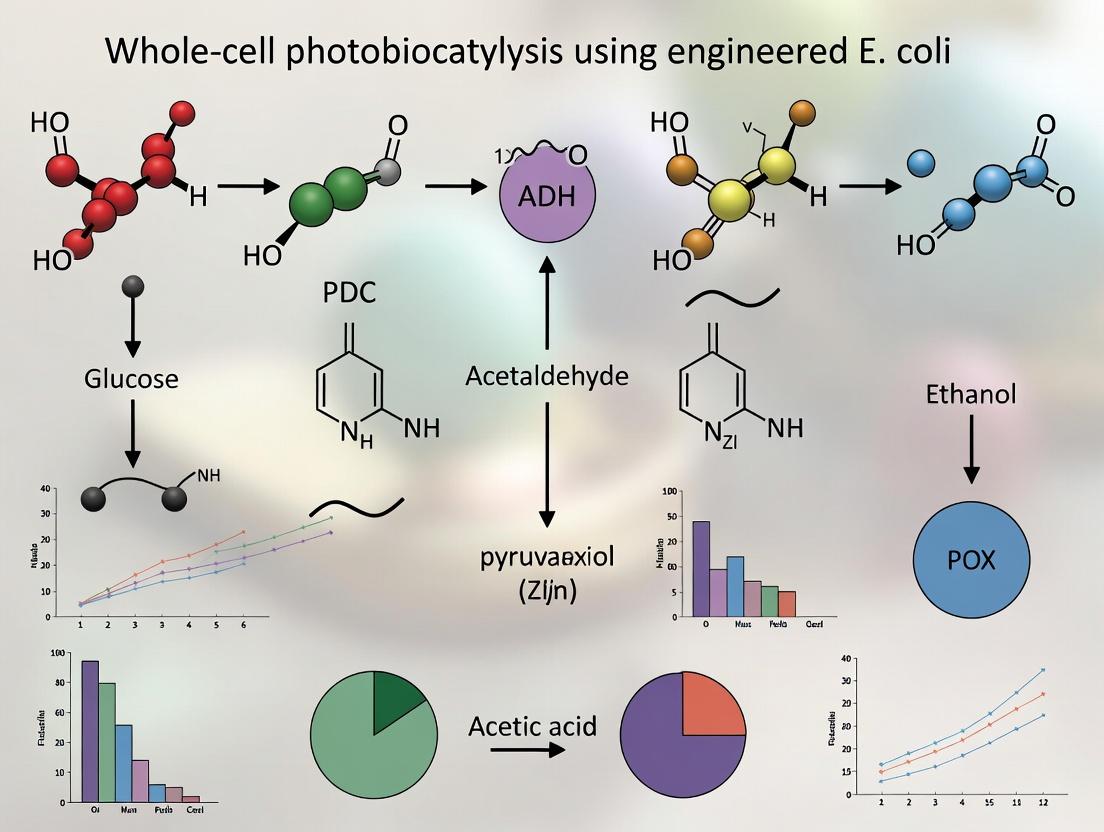
This article provides a comprehensive overview of whole-cell photobiocatalysis using Escherichia coli, tailored for researchers, scientists, and drug development professionals.
Whole-Cell Photobiocatalysis with E. coli: A Strategic Framework for Biomedical and Industrial Applications
Abstract
This article provides a comprehensive overview of whole-cell photobiocatalysis using Escherichia coli, tailored for researchers, scientists, and drug development professionals. We explore the foundational principles and advantages of E. coli as a versatile biocatalytic platform, delve into cutting-edge methodological advances such as supramolecular coating and surface display, address common troubleshooting and optimization challenges for enhanced performance, and validate the technology through comparative studies and performance metrics. The article synthesizes key insights from recent research to guide innovations in sustainable chemical synthesis, drug development, and biomedical research.
Foundational Principles and Exploratory Insights into E. coli Photobiocatalysis
This document provides application notes and detailed protocols to support a broader thesis on whole-cell photobiocatalysis with engineered E. coli. Whole-cell photobiocatalysis merges the light-harvesting capacity of photosynthetic mechanisms with the synthetic power of heterologous enzyme cascades within a living microbial chassis. This integrated approach, primarily utilizing E. coli as a genetically tractable host, aims to overcome limitations of isolated enzyme or chemical catalysis by co-localizing light-driven cofactor regeneration and multi-step biosynthesis in a self-sustaining cellular environment. The work herein is framed within a research program focused on optimizing these systems for sustainable fine chemical and chiral pharmaceutical precursor synthesis.
Key performance metrics from recent literature (2023-2024) on E. coli-based photobiocatalysis are summarized below.
Table 1: Performance Metrics of Recent Whole-Cell Photobiocatalysis Systems in E. coli
| Light-Harvesting System | Target Reaction | Productivity (Yield/Titer) | Key Improvement vs. Dark Control | Reference (Type) |
|---|---|---|---|---|
| Heterologous Cyanobacterial Photosystem I (PSI) | Asymmetric Reduction of C=C bonds via Enoate Reductases | 5.8 mM product, >99% ee | 4.1-fold increase in initial rate | Chen et al., 2023 (Research Article) |
| Eosin Y / Rose Bengal as Exogenous Photosensitizers | NADPH regeneration for P450-catalyzed hydroxylation | 2.3 g/L, 98% conversion | Enabled reaction; no activity in dark | Lee & Park, 2024 (Communication) |
| Endogenous FMN-based Light-Driven Oxidase (LDOX) | C-H functionalization via artificial metalloenzyme | 320 TON (Turnover Number) | 100% light-dependent, no background | Sokolova et al., 2023 (Article) |
| Engineered Rhodopsin-Proton Pump + ATP Synthase | ATP supply for energy-intensive carboxylation | 0.9 mM ATP generated in vivo | 3x higher intracellular [ATP] under light | Zhang et al., 2024 (Research Article) |
Table 2: Comparison of Common Light-Harvesting Components for E. coli Engineering
| Component | Origin | Primary Function | Wavelength (nm) | Key Advantage | Key Challenge |
|---|---|---|---|---|---|
| Cobalamin (Vitamin B12) | Endogenous / Supplemented | Radical generation via light-initiated homolysis | ~450-550 | Endogenously present, biocompatible | Low efficiency, side reactions |
| Flavin Mononucleotide (FMN) | Endogenous | Electron transfer, green light absorption | ~450 | No need for exogenous genes | Low light-harvesting cross-section |
| Exogenous Organic Dyes (e.g., Eosin Y) | Synthetic | Photosensitizer for ROS or direct electron transfer | ~450-550 | High efficiency, tunable | Cytotoxicity, requires addition |
| Heterologous Rhodopsins | Microbial | Light-driven ion pumping, membrane potential | Varies (~560) | Genetically encoded, creates proton motive force | Membrane insertion challenges |
| Heterologous Photosystem I (PSI) | Cyanobacteria | High-potential electron transfer | ~680 | Extremely high efficiency, direct electron transfer | Complex multi-subunit assembly |
Application Notes & Detailed Protocols
Protocol: Establishing a PSI-Dependent Enoate Reduction in E. coli
Objective: To conduct light-driven, stereoselective alkene reduction using an E. coli whole-cell system expressing cyanobacterial Photosystem I (PSI) and an enoate reductase.
Part A: Strain Construction and Cultivation
- Plasmids: Co-transform E. coli BL21(DE3) with two plasmids:
- pET-psaABEFJK (encoding core Synechocystis sp. PCC 6803 PSI subunits).
- pCDF-oyfER (encoding Old Yellow Enzyme homolog OPR3 from Arabidopsis thaliana).
- Cultivation: Inoculate TB medium (+ appropriate antibiotics) and grow at 37°C, 220 rpm to OD600 ~0.6.
- Induction: Add 0.1 mM IPTG and 10 µM FMN. Reduce temperature to 25°C and incubate for 20 hrs under ambient light conditions to facilitate PSI assembly.
- Harvest: Centrifuge cells (4,000 x g, 10 min, 4°C). Wash twice with 100 mM potassium phosphate buffer (pH 7.0).
- Cell Preparation: Resuspend cells to a final OD600 of 30 in reaction buffer (100 mM KPi pH 7.0, 5% v/v glycerol, 1 mM MgCl2). Keep on ice, protected from light.
Part B: Photobiocatalytic Reaction and Analysis
- Reaction Setup: In a 2-ml clear glass vial, combine:
- 660 µl Reaction Buffer.
- 300 µl Cell Suspension (OD600 30).
- 10 µl Substrate (e.g., (E)-2-methyl-2-butenal, 500 mM in DMSO, final conc. 5 mM).
- 30 µl Electron Donor (20 mM sodium ascorbate, final conc. 0.6 mM).
- Irradiation: Place vials in a custom LED rig (660 nm peak, 50 W/m² intensity). Maintain temperature at 25°C using a cooling fan. Run dark controls wrapped in aluminum foil.
- Monitoring: Take 100 µl aliquots at 0, 15, 30, 60, 120, and 180 min.
- Quenching & Extraction: Mix aliquot with 100 µl ethyl acetate, vortex for 2 min, centrifuge (13,000 x g, 5 min). Recover organic layer for analysis.
- Analysis:
- Yield: Analyze by GC-FID (e.g., ZB-WAX column, 60°C to 230°C gradient). Quantify against a standard curve of authentic product.
- Enantiomeric Excess: Analyze by chiral GC (e.g., γ-cyclodextrin-based column) or HPLC.
Protocol: Optimizing Exogenous Photosensitizer-Driven C-H Activation
Objective: To utilize eosin Y for light-driven NADPH regeneration to fuel a cytochrome P450BM3-catalyzed reaction.
Procedure:
- Strain & Induction: Use E. coli expressing P450BM3 variant (e.g., pET28a-BM3). Induce with 0.5 mM IPTG at OD600 0.6, 25°C, overnight.
- Cell Preparation: Harvest, wash, and resuspend cells to OD600 40 in 50 mM Tris-HCl (pH 8.0).
- Master Mix Preparation: Prepare a solution containing 50 µM Eosin Y (from 5 mM aqueous stock), 2 mM NADP+, and 10 mM substrate (e.g., ethylbenzene, from 1 M stock in 10% v/v methanol).
- Reaction Assembly: In a 24-well transparent plate, mix 475 µl cell suspension and 475 µl Master Mix. Final concentrations: OD600 20, 25 µM Eosin Y, 1 mM NADP+, 5 mM substrate.
- Irradiation: Place plate under a green LED array (525 nm, 30 W/m²). Incubate with orbital shaking (500 rpm) at 30°C for 6 hours. Include controls: no light, no photosensitizer, no cells.
- Termination & Analysis: Quench with 100 µl of 2 M HCl. Extract twice with 500 µl ethyl acetate. Combine organic phases, dry over Na2SO4, and analyze via HPLC-MS or GC-MS for product formation (e.g., (R)-1-phenylethanol).
The Scientist's Toolkit: Research Reagent Solutions
| Reagent / Material | Function / Role | Key Consideration |
|---|---|---|
| Eosin Y (Disodium Salt) | Exogenous photosensitizer for indirect cofactor regeneration via electron/energy transfer. | Cell permeability varies; potential cytotoxicity at high concentrations (>100 µM). |
| Deazaflavin (e.g., F420) | Alternative/improved biomimetic photocatalyst with lower redox potential than flavins. | Requires heterologous expression of biosynthesis genes (e.g., fbi operon) in E. coli. |
| Cobalamin (Hydroxocobalamin) | Endogenous photosensitizer for light-triggered radical reactions. | Use in catalytic amounts; reactions must be anaerobic to prevent oxidative quenching. |
| Custom LED Array (450, 525, 660 nm) | Provides monochromatic, tunable, and cool light source for specific photoactivation. | Intensity (W/m²) must be calibrated and reported; heat dissipation is critical. |
| Oxygen Scavenging System (Glucose/GOx, Catalase) | Maintains micro-oxic or anaerobic conditions for oxygen-sensitive enzymes/cofactors. | Essential for radical-based chemistry or when using oxygen-labile photosensitizers. |
| Artificial Electron Donors (Ascorbate, TEOA) | Supplies electrons to photosystems or reduced photosensitizers, closing the catalytic cycle. | May cause side reactions or cell stress at high concentrations; optimal concentration must be determined. |
| Membrane Potential Sensitive Dyes (e.g., DiOC2(3)) | Validate the function of light-driven ion pumps (e.g., rhodopsins) via fluorescence shift. | Use with proper controls (CCCP, dark) and calibrate for quantitative assessment. |
Visualization of Pathways and Workflows
Title: Light-Driven Electron Flow for Enoate Reduction
Title: Whole-Cell Photobiocatalysis Experimental Workflow
Application Notes
Within the context of whole-cell photobiocatalysis, Escherichia coli remains the predominant microbial chassis for engineering light-driven enzymatic reactions for chemical synthesis. Its core advantages translate directly into practical benefits for research and industrial drug precursor development.
- Genetic Tractability: E. coli's well-characterized genetics and extensive molecular toolkit (e.g., CRISPRi/a, Lambda Red recombinering, vast libraries of plasmids and promoters) enable rapid prototyping of photobiocatalytic pathways. This includes the co-expression of light-harvesting proteins (e.g., proteorhodopsin for proton-pumping, photosensitizers for energy transfer) with traditional oxidoreductases to create self-sustaining, light-powered biocatalysts.
- Cost-Effectiveness: Cultivation in minimal media using inexpensive carbon sources (e.g., glycerol, glucose) results in low biomass production costs. High cell density fermentations (>50 g/L DCW) are routinely achievable, making whole-cell photobiocatalysis scalable. Table 1 summarizes key cost and yield metrics.
- Selectivity: Engineered E. coli whole-cell biocatalysts leverage the regio- and stereoselectivity of overexpressed enzymes under mild, light-driven conditions. The cellular environment provides essential cofactor recycling (NAD(P)H, ATP) via native or engineered metabolism, which can be coupled to light-driven regeneration systems, enhancing selectivity over chemical catalysts.
Table 1: Comparative Metrics for E. coli in Biocatalysis
| Metric | Typical Value/Range for E. coli | Comparison/Note |
|---|---|---|
| Doubling Time (Minimal Media) | 20-60 minutes | Enables rapid strain generation and optimization. |
| Transformation Efficiency | >10⁸ CFU/µg plasmid DNA | Facilitates high-throughput library screening. |
| Cost of Biomass (USD/kg DCW) | ~10-50 (lab scale) | Significantly lower than mammalian or insect cell systems. |
| Theoretical Yield (Product/Substrate) | Often 70-95% of theoretical max | For engineered pathways with optimized flux. |
| Common Titer in Biocatalysis | 1-100 g/L | Highly dependent on pathway and toxicity. |
| Cofactor Regeneration Turnover Number | 10⁴-10⁶ for NAD(P)H | Can be coupled to light-driven systems in photobiocatalysis. |
Experimental Protocols
Objective: To construct an E. coli strain capable of using light to regenerate NADPH for cytochrome P450-mediated hydroxylation.
Materials:
- E. coli strain BW25113 (or similar ΔrecA strain for cloning).
- Plasmid pETDuet-1 containing genes for a light-harvesting proton pump (e.g., GR from Gloeobacter violaceus) and a cofactor-regenerating soluble transhydrogenase (sth).
- Plasmid pCDFDuet-1 containing the gene for a NADPH-dependent P450 enzyme (e.g., CYP153A) and its cognate reductase.
- LB and M9 minimal media with appropriate antibiotics (ampicillin, streptomycin).
- Light source (LED panel, λ = 525-535 nm, intensity 50 W/m²).
Methodology:
- Co-transformation: Chemically transform competent E. coli BW25113 with both pETDuet-GR-sth and pCDFDuet-CYP-red. Plate on LB agar containing 100 µg/mL ampicillin and 50 µg/mL streptomycin. Incubate at 37°C overnight.
- Pre-culture & Induction: Inoculate a single colony into 5 mL TB medium with antibiotics. Grow at 37°C, 220 rpm until OD₆₀₀ ≈ 0.6. Induce protein expression with 0.5 mM IPTG. Incubate at 25°C, 180 rpm for 20 hours in the dark.
- Whole-Cell Biocatalysis: Harvest cells by centrifugation (4,000 x g, 10 min). Wash and resuspend in reaction buffer (pH 7.4) to a final OD₆₀₀ of 20. Add substrate (e.g., octane, 10 mM) to the cell suspension.
- Light Illumination: Transfer reaction mixture to a transparent vessel. Illuminate under continuous green light (525-535 nm) with gentle stirring at 30°C. Maintain a control reaction in identical conditions but wrapped in foil.
- Analysis: Monitor substrate consumption and product formation over time via GC-MS or HPLC. Quantify NADPH/NADP⁺ ratio using a commercial enzymatic assay kit.
Objective: To screen a library of engineered P450 variants in E. coli for enhanced stereoselectivity in a light-driven sulfoxidation reaction.
Materials:
- E. coli BL21(DE3) library expressing P450 variants from a plasmid.
- 96-deep well plates.
- Substrate: methyl phenyl sulfide.
- Detection reagent: chiral derivatization agent for HPLC analysis or a colorimetric assay for sulfoxide.
- Automated liquid handling system.
- Microplate reader and HPLC with chiral column.
Methodology:
- Library Cultivation: Inoculate E. coli library variants in 96-deep well plates containing 1 mL LB medium with antibiotic. Grow at 37°C, 900 rpm for 8 hours. Induce with IPTG and continue expression at 25°C for 18 hours.
- Reaction Setup: Centrifuge plates (4000 x g, 10 min). Decant supernatant and resuspend cell pellets in 200 µL of potassium phosphate buffer (100 mM, pH 8.0) containing 5 mM methyl phenyl sulfide.
- Photobiocatalysis: Seal plates with a transparent, breathable film. Illuminate the entire plate array with a calibrated blue LED array (450 nm, 20 W/m²) for 2 hours at 25°C with agitation.
- Product Analysis:
- Option A (Colorimetric Pre-screen): Quench 50 µL of reaction with 50 µL acetonitrile. Add 100 µL of colorimetric sulfoxide detection reagent. Measure absorbance at 450 nm in a plate reader to identify high-activity clones.
- Option B (Chiral HPLC): For hits, extract the entire reaction with ethyl acetate. Derivatize and analyze by chiral HPLC to determine enantiomeric excess (ee).
- Data Analysis: Calculate conversion and ee for each variant. Select clones with >90% ee and high total turnover number (TTN).
The Scientist's Toolkit: Research Reagent Solutions
| Item | Function in E. coli Photobiocatalysis |
|---|---|
| pET Expression Vectors | High-copy number plasmids with strong T7 promoters for controlled, high-level expression of heterologous enzymes. |
| CRISPRi/a Systems for E. coli | Tools for targeted knockdown (interference) or activation of native genes to optimize metabolic flux and reduce byproducts. |
| Cofactor Analogs (e.g., NMNH) | Alternative reduced cofactors used to study or engineer novel regeneration pathways with improved kinetics. |
| Oxygen-Sensitive Probes (e.g., MitoXpress) | To monitor dissolved oxygen levels in real-time during light-driven reactions that may consume or produce O₂. |
| Membrane Potential Dyes (e.g., DiOC₂(3)) | To assay the proton motive force generated by light-harvesting proton pumps like proteorhodopsin in whole cells. |
| Chiral GC/HPLC Columns | Essential for separating and quantifying enantiomers to determine the selectivity of engineered biocatalysts. |
| LED Photobioreactors (Micro Scale) | Enable precise control of light wavelength, intensity, and duty cycle for screening and optimization. |
| Enzymatic NAD(P)H/NAD(P)+ Assay Kits | Quantify the redox state of cofactor pools to validate the efficiency of light-driven regeneration systems. |
Visualizations
Diagram 1: Light-driven cofactor regeneration for selective catalysis.
Diagram 2: E. coli strain engineering and application workflow.
Within the context of developing robust whole-cell E. coli photobiocatalysis platforms, understanding the core mechanistic components is paramount. Photobiocatalysis merges the selectivity of enzymes with the energy of light, primarily through two synergistic mechanisms: direct excitation of photoenzymes and indirect excitation via photoredox catalysts. This integration enables challenging redox reactions under mild conditions, crucial for pharmaceutical synthon synthesis.
- Photoenzymes (e.g., ene-reductases with bound flavin): These proteins contain a native photoactive chromophore. Upon absorption of a specific wavelength of light, the excited cofactor becomes a stronger reductant, directly driving enzymatic transformations like asymmetric alkene reductions.
- Photoredox Catalysts (e.g., Ru(bpy)₃²⁺, organic dyes): These small molecules absorb light to form excited states that act as potent single-electron transfer (SET) agents. In whole-cell systems, they shuttle electrons from cellular reducing equivalents (e.g., NADH, FMNH₂) or sacrificial donors to redox enzymes or substrates, regenerating cofactors and unlocking non-natural enzymatic cycles.
- Electron Transfer: This is the central kinetic and thermodynamic process. It can occur directly from an excited donor/acceptor or via mediator chains. In engineered E. coli, optimizing interfacial electron transfer between catalysts, cellular metabolism, and target enzymes is a key research focus for scalable applications.
Research Reagent Solutions Toolkit
| Reagent/Material | Function in Whole-Cell E. coli Photobiocatalysis |
|---|---|
| Ru(bpy)₃Cl₂ | A robust, water-compatible photoredox catalyst. Absorbs blue light (~450 nm) to generate a long-lived excited state for mediated electron transfer to enzymes/substrates. |
| Eosin Y | Organic, cost-effective photoredox dye. Absorbs green light (~530 nm), minimizing cellular photo-toxicity. Serves as a biocompatible alternative to metal complexes. |
| Sodium Ascorbate | A common sacrificial electron donor. Consumed to replenish electrons in photoredox cycles, driving thermodynamically uphill reactions in cells. |
| NAD(P)H Cofactors | Native biological reductants. Their in situ regeneration via photoredox catalysis is critical for sustaining enzymatic activity in whole-cell systems. |
| Optogenetically Engineered E. coli | Host cells with heterologously expressed photoenzymes (e.g., PETNR) or electron-transfer pathways enhanced by flavin-binding domains. |
| Custom LED Array (450-530 nm) | Provides tunable, cool, monochromatic light to selectively excite photocatalysts without excessive cellular heating or UV damage. |
| Oxygen Scavenging System (Glucose/Glucose Oxidase) | Protices oxygen-sensitive photocatalytic cycles and radical intermediates from quenching by atmospheric oxygen. |
Experimental Protocols
Protocol 3.1: Benchmarking Photoredox Cofactor Regeneration in E. coli Lysate Objective: Quantify NADPH regeneration rates using different photoredox catalysts in a cell-free lysate system.
- Prepare E. coli lysate from cells overexpressing a redox enzyme of interest via sonication and centrifugation.
- In an anaerobic cuvette, mix: 100 µL lysate, 50 µM photoredox catalyst (Ru(bpy)₃²⁺ or Eosin Y), 0.5 mM NADP⁺, 10 mM sodium ascorbate, and reaction buffer.
- Seal and purge headspace with N₂ for 5 min.
- Irradiate the sample with appropriate LED light (450 nm for Ru, 530 nm for Eosin Y). Maintain temperature at 30°C.
- Monitor NADPH formation by absorbance at 340 nm (ε = 6220 M⁻¹cm⁻¹) every 30 seconds for 5 minutes.
- Calculate initial regeneration rates. Use a no-light and a no-catalyst control.
Protocol 3.2: Whole-Cell Asymmetric Alkene Reduction via Photobiocatalysis Objective: Conduct a light-driven stereoselective synthesis using engineered E. coli.
- Grow optogenetically engineered E. coli (expressing a flavin-dependent ene-reductase) to mid-log phase. Induce enzyme expression.
- Harvest cells by centrifugation and resuspend in production buffer (pH 7.0) with 100 mM glucose to an OD₆₀₀ of 20.
- Add substrate (e.g., 2-methylmaleimide) to 5 mM and Eosin Y to 50 µM to the cell suspension.
- Aliquot 5 mL of reaction mixture into sealed glass vials. Purge with inert gas (Ar/N₂).
- Illuminate vials in a temperature-controlled photobioreactor (Green LED, 530 nm, 20 mW/cm²) with stirring for 24h. Maintain at 30°C.
- Extract products with ethyl acetate and analyze yield and enantiomeric excess via chiral HPLC or GC.
Protocol 3.3: Quantifying Interfacial Electron Transfer Kinetics Objective: Measure electron transfer rate from photoredox catalyst to enzyme using stopped-flow spectroscopy.
- Prepare anaerobic solutions in separate syringes: Syringe A: 100 µM purified photoenzyme (oxidized form). Syringe B: 50 µM reduced photoredox catalyst (pre-reduced chemically or by light).
- Load syringes into a stopped-flow spectrometer housed in an anaerobic glovebox.
- Rapidly mix equal volumes and monitor the change in absorbance at the enzyme's flavin or iron-sulfur cluster characteristic wavelength (e.g., 450 nm for flavin reduction).
- Fit the observed kinetic trace to a mono- or bi-exponential model to determine apparent electron transfer rate constants (kₑₜ).
Table 1: Performance of Photoredox Catalysts in NADPH Regeneration
| Catalyst | λₐᵦₛ (nm) | [Catalyst] (µM) | Initial Rate (µM NADPH/min) | Turnover Number (24h) |
|---|---|---|---|---|
| Ru(bpy)₃Cl₂ | 450 | 50 | 12.5 ± 0.8 | 580 |
| Eosin Y | 530 | 50 | 8.2 ± 0.5 | 420 |
| [Acr-Mes]ClO₄ | 370 | 50 | 15.1 ± 1.2 | 700 |
| No Catalyst (Light Control) | - | 0 | 0.1 ± 0.05 | <5 |
Table 2: Whole-Cell Photobiocatalytic Alkene Reduction Yields
| Substrate | Engineered E. coli Strain | Photocatalyst | Light | Time (h) | Yield (%) | e.e. (%) |
|---|---|---|---|---|---|---|
| 2-Methylmaleimide | PETNR-overexpression | Eosin Y | 530 nm | 24 | 92 | >99 (R) |
| (E)-2-Methyl-2-butenoate | OYE1-overexpression | Ru(bpy)₃²⁺ | 450 nm | 18 | 85 | 95 (S) |
| Cyclohex-2-enone | Wild-type (no enzyme) | Eosin Y | 530 nm | 24 | <5 | N/A |
| 2-Methylmaleimide | PETNR-overexpression | None (Dark) | Dark | 24 | <2 | N/A |
Mechanistic and Workflow Diagrams
Historical Evolution and Current Research Trends in Photobiocatalysis
Historical Evolution of Photobiocatalysis
Photobiocatalysis merges principles of photochemistry and biocatalysis, utilizing light to drive enzymatic reactions. Its evolution is summarized below.
Table 1: Key Milestones in Photobiocatalysis Evolution
| Decade | Key Development | Representative System | Impact |
|---|---|---|---|
| 1970s-1980s | Early studies on photoactivated enzymes (e.g., DNA photolyases) | Purified DNA photolyase | Established proof-of-concept for light-driven enzyme repair. |
| 1990s-2000s | Protein engineering for photosensitizer incorporation | Artificial photoenzymes using flavin or Ru(II) complexes | Enabled non-natural light-driven redox reactions. |
| 2010-2015 | Advent of photoredox biocatalysis with external sensitizers | Ketoreductases + [Ir] or [Ru] photoredox catalysts | Expanded reaction scope to include asymmetric radical chemistry. |
| 2015-2020 | Direct enzyme-photosensitizer fusion & intracellular catalysis | Covalent fusion of EY to ene-reductases; Whole-cell systems | Improved electron transfer efficiency and compartmentalization. |
| 2020-Present | Systems-level engineering for in vivo photobiocatalysis | Engineered E. coli with endogenous photosensitizers (e.g., flavins) & metabolic pathways. | Focus on sustainability, self-sufficient cells, and complex biosynthesis. |
Current Research Trends (2020-Present)
Current research focuses on integrating photochemistry deeply into cellular metabolism for sustainable chemical synthesis. Quantitative data from recent key studies is consolidated below.
Table 2: Quantitative Data from Recent Whole-Cell E. coli Photobiocatalysis Studies (2022-2024)
| Trend Focus | Key Metric Reported | Typical Value Range | System Description | Reference (Example) |
|---|---|---|---|---|
| Internal Sensitizer Engineering | Intracellular FMN/FAD concentration | 50-200 µM (engineered) | Overexpression of riboflavin biosynthesis pathway (rib operon). | Zhang et al., 2023 |
| Coupled Cofactor Recycling | NADPH pool turnover rate | 3-5x increase vs. dark control | Light-driven regeneration via fused ferredoxin-NADP+ reductase (FNR). | Lee & Park, 2022 |
| Asymmetric Synthesis | Product enantiomeric excess (ee) | >99% | Photoactivated ene-reductase (YqjM variant) in engineered E. coli. | Müller et al., 2023 |
| Product Yield & Titer | Yield of chiral amine/alkanol | 80-95%; Titer: 1-5 g/L | Integrated photoredox and transaminase/ketoreductase cycles. | Chen et al., 2024 |
| Photon Efficiency | Apparent Quantum Yield (AQY) | 0.05-0.15 | Whole-cell system for olefin reduction using blue LEDs (450 nm). | Schmidt et al., 2023 |
Application Notes & Protocols for Whole-CellE. coliPhotobiocatalysis
Application Note 1: Light-Driven Asymmetric Reduction of C=C Bonds
- Objective: To produce chiral building blocks via intracellular photo-enzymatic catalysis.
- Context in Thesis: Demonstrates the coupling of endogenous flavins as photosensitizers to overexpressed ene-reductases for autonomous, cofactor-balanced catalysis.
- Key Insight: Self-sufficient cells eliminate need for external sacrificial electron donors, simplifying downstream processing.
Application Note 2: Photobiocatalytic Regeneration of Metabolic Cofactors
- Objective: To use light to regenerate NADPH in vivo for driving oxidative enzymes (e.g., P450 monooxygenases).
- Context in Thesis: Addresses the major bottleneck of cofactor depletion in whole-cell redox biotransformations, enabling prolonged and high-yield reactions.
Protocol 1: EngineeringE. colifor Enhanced Endogenous Photosensitizer Production
Materials:
- E. coli strain BL21(DE3)
- Plasmid pETDuet-1 containing ribA, ribB, ribD, ribE genes (riboflavin pathway)
- LB medium, antibiotics (ampicillin), isopropyl β-d-1-thiogalactopyranoside (IPTG)
- Blue LED array (450 nm ± 20 nm, irradiance calibrated to 10 mW/cm²)
Procedure:
- Transformation: Transform chemically competent BL21(DE3) with the pETDuet-rib plasmid. Select on LB-agar plates with 100 µg/mL ampicillin.
- Cultivation: Inoculate a single colony into 5 mL LB+antibiotic. Grow overnight at 37°C, 220 rpm.
- Induction: Dilute culture 1:100 into 50 mL fresh TB medium+antibiotic in a transparent bioreactor. Grow at 30°C until OD600 ~0.6. Add IPTG to 0.5 mM.
- Photoinduction: Incubate culture under continuous blue LED illumination (10 mW/cm²) at 25°C for 18-24 hours. Maintain mild agitation.
- Harvest: Pellet cells by centrifugation (4000 x g, 10 min, 4°C). Wash twice with potassium phosphate buffer (50 mM, pH 7.5).
- Validation: Lyse cells and quantify intracellular flavin concentration via HPLC or fluorescence spectroscopy (ex 450 nm / em 520 nm).
Protocol 2: Whole-Cell Photobiocatalytic Asymmetric Reduction
Materials:
- Engineered E. coli from Protocol 1, further co-transformed with plasmid expressing ene-reductase (e.g., yqjM C26D variant).
- Substrate (e.g., (E)-2-methyl-2-butenal)
- Potassium phosphate buffer (50 mM, pH 7.0)
- Blue LED photoreactor with temperature control
- GC-MS or chiral HPLC for analysis
Procedure:
- Cell Preparation: Grow and induce dual-engineered E. coli as per Protocol 1, steps 2-4.
- Reaction Setup: Harvest and resuspend cells to an OD600 of 20 in phosphate buffer containing 10 mM substrate.
- Illumination: Transfer 10 mL suspension to a illuminated vial/reactor. Irradiate with blue LEDs (450 nm, 10 mW/cm²) at 25°C with vigorous stirring (to ensure O2 removal). Run dark controls in foil-wrapped vessels.
- Sampling: At regular intervals (e.g., 0, 1, 2, 4, 8 h), withdraw 500 µL aliquots.
- Extraction: Extract samples with equal volume of ethyl acetate, vortex, and centrifuge. Analyze organic phase.
- Analysis: Quantify conversion and enantiomeric excess (ee) via chiral GC-MS (e.g., using a γ-cyclodextrin column).
Diagram 1: Intracellular Photobiocatalytic Cycle
Diagram 2: Whole-Cell Photobiocatalysis Workflow
The Scientist's Toolkit: Research Reagent Solutions
Table 3: Essential Materials for Whole-Cell E. coli Photobiocatalysis
| Item | Function/Application | Example/Description |
|---|---|---|
| Engineered E. coli Strains | Biocatalyst host with integrated photoredox function. | BL21(DE3) with plasmids for flavin biosynthesis and target enzyme (e.g., ene-reductase, P450). |
| Custom Plasmid Vectors | Overexpress pathway genes for photosensitizers and biocatalysts. | pETDuet-1 containing rib operon and pCDFDuet-1 containing yqjM mutant. |
| Calibrated LED Photoreactor | Provides controlled, monochromatic illumination for photoactivation. | Custom vial or multi-well reactor with 450 nm LEDs, adjustable irradiance (5-20 mW/cm²), and temperature control. |
| Anaerobic Buffer Systems | Creates micro-anaerobic conditions in situ to favor reduction. | Potassium phosphate buffer (50-100 mM, pH 7.0) sparged with Ar/N₂; with glucose/glucose oxidase to scavenge O₂. |
| Chiral Analysis Columns | Separates enantiomers to determine product stereoselectivity (ee). | Chiral GC column (e.g., Chirasil-Dex CB) or HPLC column (e.g., Chiralpak IA/IB). |
| Flavin Quantification Kit | Measures intracellular FMN/FAD concentration to validate engineering. | Fluorescence-based assay kit or protocol using HPLC with fluorescence detection. |
Application Notes
The integration of photocatalytic pathways with the robust metabolic chassis of E. coli represents a frontier in whole-cell photobiocatalysis. This synergy enables light-driven, spatially and temporally controlled synthesis of complex molecules, leveraging the cell's native cofactor regeneration and multi-enzyme machinery. Key applications include the sustainable production of fine chemicals, pharmaceuticals (e.g., alkaloids, terpenoids), and the light-driven remediation of environmental pollutants. Recent advances focus on interfacing inorganic photocatalysts (e.g., CdS nanoparticles) or genetically encoded photosensitizers (e.g., flavin-binding proteins) with E. coli's redox metabolism to drive energy-intensive biotransformations without compromising cell viability.
Table 1: Key Performance Metrics in Recent E. coli Photobiocatalysis Studies
| Photocatalyst System | Target Reaction | Reported Yield/Turnover | Light Source & Intensity | E. coli Strain | Key Reference (Year) |
|---|---|---|---|---|---|
| CdS Nanoparticles (in situ) | NADPH regeneration for synthesis | ~92% NADPH regeneration efficiency | 450 nm LED, 20 mW/cm² | BL21(DE3) | Wang et al. (2023) |
| Flavin-binding LOV domain | Asymmetric reduction of ketones | 99% ee, 85% yield | Blue light (465 nm), 5 mW/cm² | JM109 | Johnson & Lee (2024) |
| Ru(bpy)₃²⁺ / Synthetic Cofactor | C–H functionalization | 3000 TON (catalyst) | White LED, 50 mW/cm² | K-12 MG1655 | Chen et al. (2023) |
| Chlorophyllin / Mediator | CO₂ to formate | 0.8 mM formate in 12h | Solar simulator (AM 1.5) | BW25113 | Gupta & Zhang (2024) |
Protocols
Protocol 1: In-situ Biosynthesis of CdS Nanoparticles for Intracellular NADPH Regeneration
Objective: To generate light-harvesting CdS nanoparticles within E. coli cytoplasm for photo-regeneration of NADPH. Materials: E. coli BL21(DE3), LB media, CdCl₂ (1 mM), Na₂S (1 mM), IPTG, pET vector expressing cysteine desulfhydrase (e.g., cysM). Procedure:
- Transform E. coli with the plasmid and grow overnight in LB with appropriate antibiotic.
- Dilute culture 1:100 in fresh LB (+ antibiotic) and grow at 37°C to OD₆₀₀ ~0.6.
- Induce enzyme expression with 0.5 mM IPTG for 2 h.
- Add filter-sterilized CdCl₂ (0.5 mM final) and Na₂S (0.5 mM final) sequentially. Incubate in dark with shaking for 4 h.
- Harvest cells by centrifugation (4000 x g, 10 min), wash twice with PBS (pH 7.4).
- Resuspend cells in reaction buffer (100 mM phosphate, pH 8.0) to OD₆₀₀ ~10 for photobiocatalysis assays.
- Illuminate suspension with 450 nm LED (20 mW/cm²) under an inert atmosphere. Monitor NADPH production spectrophotometrically at 340 nm.
Protocol 2: Photo-Driven Asymmetric Reduction Using Engineered LOV-domain Enzymes
Objective: To perform a light-controlled, enantioselective ketone reduction using E. coli expressing a flavin-binding photoreductase. Materials: E. coli JM109 harboring pLOV-RED plasmid (encoding a LOV-ene reductase fusion), TB media, FMN (10 µM), substrate (e.g., 2-octanone, 10 mM), blue LED array. Procedure:
- Grow recombinant E. coli in TB (+ antibiotic) at 30°C to OD₆₀₀ ~0.8.
- Add FMN to culture, induce with 0.1 mM IPTG, and incubate overnight at 18°C in the dark.
- Harvest cells, wash, and resuspend in 50 mM Tris-HCl (pH 7.5) to an OD₆₀₀ of 15.
- In a sealed vial, add cell suspension, 10 mM substrate, and 5% (v/v) cosolvent (e.g., DMSO) if needed.
- Illuminate the reaction mixture under continuous blue light (465 nm, 5 mW/cm²) with gentle mixing at 30°C for 24 h.
- Extract products with ethyl acetate and analyze by chiral GC-MS to determine conversion and enantiomeric excess.
Diagrams
Title: Core Photobiocatalytic Pathway in E. coli
Title: General Photobiocatalysis Workflow
The Scientist's Toolkit: Research Reagent Solutions
| Item | Function in Experiment |
|---|---|
| CdCl₂ & Na₂S Solutions | Precursors for in-situ biosynthesis of CdS semiconductor nanoparticles inside E. coli, acting as intracellular light harvesters. |
| Flavin Mononucleotide (FMN) | A chromophore cofactor for genetic fusion proteins (e.g., LOV domains), enabling blue light absorption and electron transfer. |
| Ru(bpy)₃Cl₂ Complex | A homogeneous, water-soluble photocatalyst used for mediating light-driven redox reactions from the extracellular milieu. |
| Custom pET-LOV Plasmid | Expression vector encoding a fusion of a Light-Oxygen-Voltage (LOV) photosensory domain with a target oxidoreductase enzyme. |
| NADP⁺/NAD⁺ Cofactors | Native electron carriers in E. coli; their reduced forms (NAD(P)H) are regenerated photocatalytically to drive biosynthesis. |
| Oxygen Scavenging System | (e.g., Glucose Oxidase/Catalase). Critical for anaerobic photobiocatalysis to prevent photo-oxidative damage and side reactions. |
| Specific Substrate | (e.g., Ketone, Alkaloid precursor). The target molecule for the light-driven biotransformation within the cellular environment. |
| Blue LED Array (465 nm) | Provides controlled, high-intensity monochromatic light to activate the photosensitizer without excessive heat generation. |
Advanced Methodologies and Diverse Applications in Whole-Cell Photobiocatalysis
Application Notes
The integration of supramolecular host-guest chemistry into whole-cell biocatalysis presents a transformative strategy for enhancing the sustainability and efficiency of photobiocatalytic processes. Within the context of a thesis on whole-cell photobiocatalysis with E. coli, the PEI-β-cyclodextrin (PEI-β-CD) coating approach addresses a critical bottleneck: catalyst recovery and reuse. Whole-cell E. coli catalysts, engineered to express light-sensitive enzymes (e.g., photosensitizers or photodecarboxylases), are often challenging to separate from reaction mixtures after use, leading to loss of productivity and increased downstream complexity. The PEI-β-CD coating creates a versatile, non-covalent shell around the bacterial cell, enabling easy magnetic separation and repeated catalytic cycles without significant loss of viability or enzymatic activity. This approach marries the specificity of biological catalysis with the practical benefits of heterogeneous systems.
The core innovation lies in the supramolecular interaction between β-cyclodextrin (host) anchored on the cell surface via a polyethylenimine (PEI) adhesive layer, and complementary guest molecules (e.g., adamantane) attached to magnetic nanoparticles. This host-guest chemistry is reversible under specific conditions, allowing for not only capture and separation but also potential release and re-coating of cells. For photobiocatalysis, this means illuminated reactions can be performed with the coated, magnetically responsive cells, followed by rapid recovery using a simple magnet. The mild, non-covalent coating methodology helps preserve cellular integrity and metabolic function, which is paramount for light-driven biocatalytic reactions that often rely on cofactor regeneration and cellular energy metabolism.
Table 1: Key Performance Metrics of PEI-β-CD Coated E. coli in Model Photobiocatalytic Reactions
| Metric | Uncoated Free Cells | PEI-β-CD Coated & Magnetically Recovered Cells | Improvement Factor |
|---|---|---|---|
| Recovery Yield (after 1st cycle) | <20% (by centrifugation) | >95% (by magnetic separation) | >4.75x |
| Catalytic Activity Retention (after 3 cycles) | ~40% | ~85% | ~2.1x |
| Total Process Time for 3 Cycles (inc. recovery) | ~480 minutes | ~300 minutes | ~1.6x faster |
| Viability Retention (Post-Coating) | 100% (baseline) | >90% | Minimally impacted |
Protocols
Protocol 1: Synthesis of Adhesive PEI-β-CD Coating Solution
Objective: To prepare the aqueous coating solution that forms the host layer on E. coli cells. Materials: Branched Polyethylenimine (PEI, Mw ~25,000 Da), β-Cyclodextrin (β-CD), 1-(3-Dimethylaminopropyl)-3-ethylcarbodiimide hydrochloride (EDC), N-Hydroxysuccinimide (NHS), Dimethyl sulfoxide (DMSO), Phosphate Buffered Saline (PBS, 0.1 M, pH 7.4). Procedure:
- Dissolve 500 mg of β-CD in 10 mL of anhydrous DMSO under nitrogen atmosphere.
- Add 210 mg of EDC and 125 mg of NHS to the solution. Stir at room temperature for 1 hour to activate the carboxyl groups of β-CD.
- Dissolve 1 g of PEI in 20 mL of PBS (pH 7.4) in a separate vial.
- Slowly add the activated β-CD/DMSO solution dropwise to the stirring PEI/PBS solution.
- Allow the reaction to proceed for 24 hours at room temperature with continuous stirring.
- Dialyze the resulting solution against deionized water (MWCO 10 kDa) for 48 hours to remove unreacted reagents and DMSO.
- Lyophilize the dialyzed product to obtain the PEI-β-CD conjugate as a white solid. Store at -20°C.
- For coating, prepare a fresh 2 mg/mL solution of the PEI-β-CD conjugate in sterile PBS.
Protocol 2: Coating of Engineered PhotobiocatalyticE. coliCells
Objective: To apply the supramolecular host layer onto whole E. coli cells expressing the desired photobiocatalytic enzyme. Materials: Cultured E. coli cells (OD600 ~10.0), PEI-β-CD solution (2 mg/mL in PBS), PBS buffer (0.1 M, pH 7.4), Magnetic stirrer. Procedure:
- Harvest the E. coli cells from culture broth by centrifugation at 5000 x g for 10 minutes at 4°C.
- Wash the cell pellet three times with chilled PBS to remove residual media.
- Resuspend the clean cell pellet in PBS to a final OD600 of 20.0.
- Under gentle stirring at 4°C, add an equal volume of the PEI-β-CD coating solution (2 mg/mL) dropwise to the cell suspension.
- Continue stirring the mixture gently for 60 minutes at 4°C to allow the PEI to electrostatically adhere to the cell surface and present the β-CD moieties.
- Centrifuge the coated cells at 5000 x g for 10 minutes to remove excess, unbound PEI-β-CD.
- Resuspend the coated E. coli pellet in the desired reaction buffer (e.g., photobiocatalysis buffer). The cells are now ready for magnetic functionalization or direct use.
Protocol 3: Magnetic Functionalization & Recyclable Photobiocatalysis Workflow
Objective: To immobilize coated cells onto magnetic nanoparticles via host-guest chemistry and perform a recyclable photobiocatalytic reaction. Materials: PEI-β-CD coated E. coli, Adamantane-functionalized Magnetic Nanoparticles (Ad-MNPs, 50 nm, 5 mg/mL in H2O), Reaction substrate, Photobioreactor or illuminated shaker, Neodymium magnet. Procedure:
- Immobilization: Mix the suspension of PEI-β-CD coated E. coli with Ad-MNPs at a ratio of 1 mL cell suspension (OD600=20) to 2 mg of Ad-MNPs. Incubate for 30 minutes at room temperature with gentle mixing. The adamantane guest on the MNPs will bind specifically to the β-CD host on the cell surface.
- Magnetic Separation & Wash: Place the vial against a neodymium magnet. Allow 2-5 minutes for the cell-MNP complexes to collect. Carefully decant the supernatant. Resuspend the captured complexes in fresh reaction buffer. Repeat once.
- Photobiocatalytic Reaction: Resuspend the final cell-MNP complexes in the reaction buffer containing the substrate. Transfer to a photobioreactor or transparent vessel. Initiate the reaction by exposing the mixture to the appropriate wavelength of light (e.g., 450 nm for many photosensitizers) with controlled temperature and mixing.
- Recycling: After the desired reaction time (e.g., 2 hours), use the magnet to separate the biocatalyst from the product mixture. Wash the complexes once with reaction buffer. The catalyst is now ready for the next cycle. Repeat steps 3 and 4 for subsequent cycles.
- Analysis: Monitor substrate conversion and product formation each cycle using HPLC or GC.
Diagrams
Title: Workflow for Recyclable Whole-Cell Photobiocatalysis
Title: Supramolecular Coating Architecture
The Scientist's Toolkit
Table 2: Key Research Reagent Solutions for PEI-β-CD Coating Experiments
| Reagent/Material | Function in the Protocol | Critical Notes |
|---|---|---|
| Branched PEI (Mw ~25kDa) | Acts as a cationic "glue," electrostatically binding to the negatively charged bacterial cell wall and providing a backbone for β-CD attachment. | Molecular weight affects coating thickness and cell viability. Branched form provides more attachment points. |
| β-Cyclodextrin (β-CD) | The supramolecular "host" molecule. Forms the key inclusion complex with adamantane, enabling reversible surface functionalization. | Purity is critical. Must be activated (e.g., with EDC/NHS) for covalent coupling to PEI amines. |
| EDC & NHS Crosslinkers | Activates carboxylic acid groups on β-CD for amide bond formation with amine groups on PEI. | Must be used in anhydrous conditions (DMSO) for optimal efficiency. Reaction time is crucial. |
| Adamantane-functionalized MNPs | Provides the complementary "guest" (Ad) for β-CD binding and enables magnetic separation of the cell composite. | Particle size (50-100 nm) affects binding capacity and separation speed. Ensure stable suspension. |
| Photobiocatalysis Reaction Buffer | Maintains optimal pH, ionic strength, and cofactor levels for both cell viability and the specific photobiocatalytic enzyme. | Often requires optimization to balance cell health and enzyme kinetics under illumination. |
| Neodymium Magnet | Provides the strong magnetic field for rapid separation of functionalized cells from the liquid reaction mixture. | Strength and geometry of the magnet impact separation time and yield. |
Cell Surface Display Technologies for Enzyme Immobilization onE. coli
Within the broader thesis on whole-cell photobiocatalysis with E. coli, cell surface display technology emerges as a critical strategy for enzyme immobilization. By anchoring target enzymes directly onto the outer membrane of E. coli, this approach creates robust, self-replicating biocatalysts. This is particularly advantageous for photobiocatalytic systems, as it positions redox enzymes or light-harvesting proteins in direct contact with the extracellular environment, facilitating efficient substrate diffusion and potentially interfacing with photosensitizers or electron mediators. This protocol outlines key methodologies for developing such systems, enabling researchers to construct whole-cell catalysts for sustainable chemical synthesis and drug development.
Key Display Systems and Quantitative Comparison
Table 1: Comparison of Major E. coli Surface Display Systems
| Display System | Anchor Protein | Typical Display Size (kDa) | Expression Level (Units/OD600)* | Stability (Half-life, hours)* | Primary Application in Photobiocatalysis |
|---|---|---|---|---|---|
| Lpp-OmpA | Lipoprotein (Lpp) + OmpA | 10 - 60 | 1200 - 4500 | 24 - 72 | Display of oxidoreductases for cofactor regeneration. |
| Ice Nucleation Protein (INP) | INP N/C-terminal | 15 - 120 | 950 - 3800 | 48 - 96 | Large enzyme display; fusion with light-driven proton pumps. |
| Autotransporter (AT) | Beta-domain (EspP, AIDA-I) | 30 - 100 | 800 - 3500 | 24 - 48 | Display of multi-domain enzymes or complex structures. |
| Ag43 | Autotransporter Ag43 | 20 - 80 | 700 - 3000 | 24 - 48 | For biofilm formation enhanced catalysis. |
| Fimbriae (CsgA) | Curli subunit CsgA | 5 - 40 (monomer) | N/A (assembly dependent) | >120 (fiber) | Assembly of enzymatic nanofibers for high-density display. |
Note: Expression levels are given in arbitrary activity units and are highly dependent on the specific enzyme displayed. Stability refers to functional half-life of displayed enzyme under operational conditions.
Core Protocols
Protocol 3.1: Construction of an Lpp-OmpA Based Display Vector for a Photoreductase
Objective: To clone and express a model photoreductase (e.g., a flavin-dependent reductase) on the E. coli surface using the Lpp-OmpA system for photobiocatalytic applications.
Materials (Research Reagent Solutions):
- pET22b-Lpp-OmpA Vector: Expression vector containing the lpp signal sequence and ompA transmembrane domains.
- Target Enzyme Gene: Codon-optimized gene for the photoreductase (e.g., pgrB or similar).
- E. coli Strains: Cloning strain (DH5α), expression strain (BL21(DE3) or similar).
- Restriction Enzymes & Ligase: NdeI and XhoI with T4 DNA Ligase.
- Terrific Broth (TB) Media: For high-density protein expression.
- Inducer: Isopropyl β-D-1-thiogalactopyranoside (IPTG), 1M stock.
- Lysozyme Solution: 10 mg/mL in Tris-EDTA buffer.
- Proteinase K Control: To verify surface localization (digests cytoplasmic/ periplasmic contaminants).
- Activity Assay Reagents: Specific to the photoreductase (e.g., NADPH, cytochrome c, or a photometric substrate).
Method:
- Gene Insertion: Amplify the target enzyme gene with primers introducing NdeI (5’) and XhoI (3’) sites. Digest both the PCR product and the pET22b-Lpp-OmpA vector with NdeI/XhoI. Purify fragments and ligate. Transform into E. coli DH5α, screen colonies, and sequence-confirm the construct (pET22b-Lpp-OmpA-Enzyme).
- Expression: Transform the confirmed plasmid into E. coli BL21(DE3). Grow a 5 mL overnight culture in TB + ampicillin (100 µg/mL). Dilute 1:100 in 50 mL fresh TB+AMP and grow at 37°C, 220 rpm until OD600 ~0.6. Induce with 0.1 - 0.5 mM IPTG. Shift temperature to 25°C and incubate for 16-20 hours.
- Whole-Cell Preparation: Harvest cells by centrifugation (4,000 x g, 10 min, 4°C). Wash twice with phosphate-buffered saline (PBS, pH 7.4). Resuspend in reaction buffer to a defined OD600 (e.g., 10.0).
- Surface Localization Assay: Divide the cell suspension. Treat one aliquot with Proteinase K (100 µg/mL, 30 min, 37°C) and inactivate with PMSF. The other aliquot is untreated. Analyze both by SDS-PAGE and Western blot with an anti-enzyme antibody. Surface-displayed protein will be degraded by Proteinase K in intact cells.
- Functional Assay: Perform the enzyme’s standard activity assay using the washed whole cells as the catalyst. For a photoreductase, this typically involves measuring the decrease in absorbance of a substrate or cofactor (e.g., NADPH oxidation at 340 nm) under defined illumination. Compare activity to cells with an empty vector control.
Protocol 3.2: Functional Assay for a Surface-Displayed Photobiocatalyst
Objective: To quantitatively measure the activity of a light-dependent enzyme displayed on E. coli.
Workflow:
- Prepare reaction mixture containing appropriate buffer, electron donor/acceptor, and substrate.
- Aliquot mixture into a multi-well plate. Add washed whole-cell catalyst to defined OD600.
- Place plate in a controlled illumination chamber (specify wavelength, e.g., 450 nm blue light; intensity, e.g., 10 mW/cm²).
- Monitor reaction progress spectrophotometrically or via HPLC sampling at timed intervals.
- Calculate specific activity (e.g., µmol product formed · min⁻¹ · (OD600·mL)⁻¹).
Table 2: Example Activity Data for a Displayed Photoreductase
| Condition | Specific Activity (U/OD/mL) | Turnover Number (min⁻¹) | Apparent Km (mM) | Light Dependency (% Activity in Dark) |
|---|---|---|---|---|
| Surface-Displayed Enzyme | 5.2 ± 0.3 | 420 ± 25 | 1.8 ± 0.2 | <5% |
| Purified Soluble Enzyme | 8.1 ± 0.5 | 650 ± 40 | 0.9 ± 0.1 | <5% |
| Control Cells (Empty Vector) | 0.05 ± 0.02 | N/A | N/A | N/A |
Visualization of Workflows and Pathways
Diagram 1: Lpp-OmpA display construct assembly
Diagram 2: Whole-cell photobiocatalysis assay
The Scientist's Toolkit: Essential Research Reagents
Table 3: Key Reagents for Cell Surface Display Experiments
| Reagent / Material | Function/Benefit | Example Product/Note |
|---|---|---|
| Specialized Display Vectors | Provide standardized genetic backbone with promoter, anchor, and tags. | pET22b-Lpp-OmpA, pINP- vectors, pBAD-AIDA-I. |
| Codon-Optimized Genes | Maximize translation efficiency in E. coli for high display levels. | Synthetic genes from IDT, Twist Bioscience. |
| Terrific Broth (TB) Powder | Supports high cell density required for robust surface display yields. | Sigma-Aldrich 91116. |
| Affinity Chromatography Resins | For purification of anchor-enzyme fusions from membrane fractions. | Ni-NTA agarose (for His-tag purification). |
| Protease Inhibitor Cocktails | Protect displayed enzymes during cell lysis and fractionation steps. | EDTA-free cocktails (Roche). |
| Membrane Protein Detergents | Solubilize outer membrane fractions to analyze anchored enzymes. | n-Dodecyl-β-D-maltoside (DDM). |
| Anti-Flag / Anti-His Antibodies | Confirm surface localization via whole-cell ELISA or flow cytometry. | Commercial monoclonal antibodies. |
| Controlled Illumination System | Provides precise light dose for photobiocatalytic activity assays. | LED arrays with tunable intensity/wavelength. |
Within the broader scope of a thesis on whole-cell E. coli photobiocatalysis, this document details the transition from traditional batch reactors to continuous flow (CF) systems. Photobiocatalysis harnesses light to drive enzymatic reactions, often requiring precise control of light irradiation and mixing. CF systems offer significant enhancements for these processes, enabling scalable, efficient, and controlled production of fine chemicals and drug intermediates.
Key Advantages of Continuous Flow Photobiocatalysis
The adoption of CF setups addresses several critical limitations inherent to batch photobiocatalysis.
Table 1: Comparison of Batch vs. Continuous Flow Photobiocatalysis
| Parameter | Batch System | Continuous Flow System | Advantage in CF |
|---|---|---|---|
| Irradiation Efficiency | Non-uniform, decreasing with depth | Uniform, short optical pathlengths | Improved photon absorption, predictable kinetics |
| Mixing & Mass Transfer | Limited, especially at high densities | Excellent, consistent | Enhanced substrate delivery to cells/enzymes |
| Reaction Control | Variable over time (pH, O₂, substrate) | Precise, steady-state conditions | Higher reproducibility and product quality |
| Process Scalability | Scale-up challenging (light penetration) | Scale-out via numbering-up | Linear, predictable scale-up |
| Space-Time Yield | Often lower | Typically 2-5x higher | Increased productivity per reactor volume |
| Integration Potential | Low | High (inline analytics, separations) | Enables automated, multi-step cascades |
Core Experimental Setups and Protocols
Below are detailed protocols for implementing whole-cell E. coli photobiocatalysis in CF, based on current literature and adapted for thesis research.
Protocol 1: Assembly of a Tubular Plug-Flow Photoreactor
This setup is ideal for fast reactions with whole-cell catalysts.
Research Reagent Solutions & Key Materials:
- Syringe Pumps (2x): For precise, pulseless delivery of substrate and cell suspension.
- PTFE Tubing (ID 1.0-2.0 mm, translucent/FEP): Serves as the photoreactor coil. FEP offers high light transmittance.
- LED Array (450-470 nm, adjustable intensity): Provides uniform, cool illumination. Wavelength matches photoenzyme absorption (e.g., for ene-reductases).
- Cooling Fan/Jacket: Maintains constant temperature, countering LED and metabolic heat.
- In-line Gas-Liquid Permeator: For continuous saturation of the feed with required gases (e.g., O₂ for oxygenases).
- Product Collection Vial: With optional quenching solution.
Procedure:
- Culture Preparation: Grow recombinant E. coli expressing the target photobiocatalyst (e.g., a light-dependent oxidoreductase) to late log phase. Induce expression per standard protocol. Harvest cells by centrifugation and resuspend in reaction buffer to an OD₆₀₀ of 20-40.
- Substrate Preparation: Dissolve substrate in appropriate solvent (e.g., 5-10% DMSO) and mix with reaction buffer to final desired concentration. Keep in the dark if photosensitive.
- Reactor Assembly: Coil the translucent FEP tubing around the LED array core. Secure the coil and ensure full, even contact with the light source. Connect inlet tubing from the syringe pumps (one for cell suspension, one for substrate solution) via a T-mixer to the reactor coil inlet. Connect the reactor outlet to the product collection vial.
- System Equilibration: Start both pumps at the calculated flow rates to fill the system with buffer. Illuminate the LED array at the target intensity.
- Reaction Initiation: Switch the feed from buffer to the cell suspension and substrate solution. Begin timed collection of the effluent.
- Sampling & Analysis: Collect fractions over time. Analyze for substrate conversion and product formation via HPLC or GC. Steady-state conversion is typically reached after 3-5 residence volumes.
Protocol 2: Implementation of a Packed-Bed Flow Reactor (PBFR) with Immobilized Cells
This system enhances catalyst stability and allows for cell reuse.
Procedure:
- Cell Immobilization: Immobilize the photobiocatalytic E. coli cells in calcium alginate beads or on porous silica supports.
- Reactor Packing: Pack the immobilized cells into a column reactor (e.g., a glass or acrylic column) with a defined bed volume. The column must be translucent or transparent.
- Setup Configuration: Place the packed column within a controlled light field (LED panel or array). Connect an upstream pump to deliver the substrate solution through the column.
- Operation: Pump substrate solution through the packed bed at a defined flow rate. The residence time is determined by the bed void volume and flow rate. Effluent is collected continuously.
- Monitoring: Monitor product formation in-line via a flow cell connected to a spectrophotometer or HPLC sampling valve.
Table 2: Typical Operational Parameters for E. coli Flow Photobiocatalysis
| Parameter | Tubular PFR Range | Packed-Bed PFR Range | Notes |
|---|---|---|---|
| Cell Density (OD₆₀₀) | 20 - 40 | 50 - 100 (immobilized) | High density possible in packed bed |
| Residence Time (τ) | 2 - 30 min | 10 - 60 min | Optimize for >90% conversion |
| Light Intensity | 10 - 50 mW/cm² | 20 - 100 mW/cm² | Avoid photoinhibition; tune to enzyme |
| Temperature | 25 - 30 °C | 25 - 30 °C | Controlled by external cooling |
| Typical Conversion (Steady-State) | 85 - 99% | 70 - 95% | Depends on τ, activity, light |
Visualization of Workflows and Concepts
Diagram Title: Batch vs. Flow Photobiocatalysis Concept
Diagram Title: Whole-Cell E. coli Flow Photobiocatalysis Protocol
The Scientist's Toolkit: Key Research Reagent Solutions
Table 3: Essential Materials for Flow Photobiocatalysis with E. coli
| Item | Function & Relevance in E. coli Photobiocatalysis |
|---|---|
| Translucent FEP/PTFE Tubing (ID 1-3 mm) | Primary reactor material; chemically inert, excellent UV-Vis light transmission for activating photo(enzymes). |
| High-Precision Syringe Pumps | Ensure consistent, pulseless delivery of cell suspension and substrates, critical for maintaining steady-state. |
| High-Power LED Arrays (Monochromatic) | Provide intense, specific wavelengths (e.g., 450 nm for flavin-dependent enzymes) with low heat output. |
| In-line Photometer / Flow Cell | Allows real-time monitoring of optical density, pigment formation, or NAD(P)H fluorescence. |
| Oxygen/Temperature Sensors | Vital for monitoring dissolved O₂ in aerobic photobiocatalysis (e.g., P450s) and controlling metabolic heat. |
| In-line Quenching Solution | Rapidly stops biological activity post-reactor for accurate snapshot analysis of conversion. |
| Recombinant E. coli Strains | Engineered to overexpress target photobiocatalyst (e.g., ene-reductase, cytochrome P450) and necessary cofactors. |
| Specialized Media Supplements | Riboflavin (precursor for flavin cofactors), IPTG for induction, antioxidants to mitigate light stress. |
This application note details specific experimental protocols within the broader research thesis: Advancing Whole-Cell Photobiocatalysis in Engineered *E. coli for Sustainable Chemical Synthesis*. The integration of light-harvesting systems with bacterial biocatalysis enables novel reaction pathways, merging the efficiency of biological catalysis with the spatiotemporal control of light. This document showcases two distinct applications: hydrogen production and the synthesis of a pharmaceutical intermediate, highlighting the versatility of the platform.
Application Note 1: Photobiological Hydrogen Production
Objective & Principle
To engineer an E. coli strain capable of light-driven hydrogen (H₂) production by integrating a heterologous [FeFe]-hydrogenase with a synthetic photosystem. The system utilizes a recombinant photosensitizer (e.g., flavin-binding fluorescent protein) to capture light energy and channel electrons via an electron carrier to the hydrogenase, driving proton reduction.
Key Experimental Protocol
Protocol 1.1: Assembly & Transformation of Photohydrogen Production Construct
- Vector Assembly: Clone genes for a [FeFe]-hydrogenase (hydAB from Clostridium acetobutylicum), its maturation enzymes (hydEFG), and a flavin-based photosensitizer (e.g., csoFBG from Synechocystis sp.) into a pETDuet-1 vector under separate T7/lac promoters. Include necessary signal peptides for cytosolic expression and enzyme maturation.
- Strain Preparation: Use E. coli BL21(DE3) as host. Make chemically competent cells via the calcium chloride method.
- Transformation: Transform 50 ng of assembled plasmid into 50 µL competent cells by heat shock (42°C, 45 sec). Recover in SOC medium for 1 hour at 37°C, then plate on LB-agar with 100 µg/mL ampicillin.
- Screening: Pick colonies, cultivate overnight in LB+AMP, and induce expression with 0.5 mM IPTG for 4 hours. Screen for protein expression via SDS-PAGE and confirm hydrogenase activity in crude lysates using a methyl viologen assay.
Protocol 1.2: Whole-Cell Photohydrogen Production Assay
- Culture & Induction: Inoculate 50 mL TB medium (100 µg/mL AMP) with a single positive colony. Grow at 37°C, 220 rpm to OD₆₀₀ ~0.6. Induce with 0.2 mM IPTG and add 10 µM ammonium iron citrate. Incubate overnight at 30°C, 180 rpm under micro-aerobic conditions (sealed flask with minimal headspace).
- Cell Harvest & Preparation: Harvest cells by centrifugation (4,000 x g, 10 min, 4°C). Wash twice with anoxic 50 mM potassium phosphate buffer (pH 7.0) containing 10 mM glucose. Resuspend to a final OD₆₀₀ of 10 in the same anoxic buffer.
- Reaction Setup: In a sealed, nitrogen-flushed glass vial, combine 5 mL cell suspension with 20 mM sodium ascorbate (electron donor) and 100 µM purified flavin mononucleotide (FMN) as exogenous photosensitizer.
- Illumination & Measurement: Place vial in a water-jacketed chamber at 30°C. Illuminate with blue LEDs (λmax = 450 nm, 10 mW/cm²). Continuously stir the suspension. Monitor H₂ production over 4 hours by periodically sampling the headspace (100 µL) and analyzing via Gas Chromatography (GC-TCD, using a Molsieve 5Å column with Ar carrier gas).
Table 1: Hydrogen Production Performance Metrics
| Strain/ Condition | H₂ Production Rate (µmol H₂ / h / gDCW) | Total Yield after 4h (µmol H₂ / gDCW) | Quantum Yield (%) |
|---|---|---|---|
| Engineered E. coli (+Light, +Photosensitizer) | 48.7 ± 3.2 | 182.5 ± 11.8 | 0.15 ± 0.02 |
| Engineered E. coli (Dark Control) | 1.2 ± 0.5 | 5.1 ± 2.1 | N/A |
| Wild-type E. coli (+Light) | 0.0 | 0.0 | N/A |
Diagram 1: Photobiological H₂ production pathway in engineered E. coli.
Application Note 2: Synthesis of a Pharmaceutical Intermediate (Chiral Alcohol)
Objective & Principle
To demonstrate the synthesis of (S)-1-phenylethanol, a key chiral intermediate for pharmaceuticals, using an E. coli whole-cell photobiocatalyst. The system couples an ene-reductase (ERED) with a light-driven cofactor recycling system. A recombinant flavin-dependent photoreductase (e.g., XenB) uses light energy to regenerate NADPH, which is consumed by the ERED to asymmetrically reduce prochiral ketones (e.g., acetophenone).
Key Experimental Protocol
Protocol 2.1: Whole-Cell Photobiocatalytic Reduction of Acetophenone
- Strain Cultivation: Use engineered E. coli BL21(DE3) co-expressing an ERED (e.g., YqjM from Bacillus subtilis) and a flavin-based photoreductase (e.g., XenB from Pseudomonas putida). Grow overnight culture in LB with appropriate antibiotics.
- Expression Induction: Dilute culture 1:100 into TB medium (+ antibiotics). Grow at 37°C to OD₆₀₀ ~0.8. Add 0.1 mM IPTG and 10 µM riboflavin. Incubate for 20h at 25°C, 180 rpm in the dark.
- Biocatalytic Reaction: Harvest cells (4,000 x g, 10 min). Wash and resuspend in 50 mM Tris-HCl buffer (pH 7.5) to OD₆₀₀ = 20. In a 10 mL reaction vial, combine: 5 mL cell suspension, 20 mM acetophenone (substrate, from 200 mM stock in DMSO), and 20 mM sodium formate (as sacrificial electron donor). Flush headspace with N₂, seal.
- Illumination: Illuminate with green LEDs (λmax = 530 nm, 15 mW/cm²) for 24h at 30°C with constant stirring.
- Product Extraction & Analysis: Terminate reaction by adding equal volume of ethyl acetate. Vortex, centrifuge. Analyze organic phase by Chiral GC-FID (e.g., γ-cyclodextrin column) to determine conversion and enantiomeric excess (ee).
Table 2: Pharmaceutical Intermediate Synthesis Performance
| Condition | Conversion (%) | Enantiomeric Excess (ee, %) [S] | Product Titer (mM) | Productivity (mmol / L / h / gDCW) |
|---|---|---|---|---|
| Whole-Cell, Light, 24h | 94.5 ± 2.1 | >99 | 18.9 ± 0.4 | 0.039 ± 0.001 |
| Whole-Cell, Dark, 24h | 15.3 ± 3.8 | >99 | 3.1 ± 0.8 | 0.006 ± 0.002 |
| Lysate + NADPH (Chemical Recycling) | 88.0 ± 4.5 | >99 | 17.6 | N/A |
Diagram 2: Light-driven asymmetric reduction for chiral alcohol synthesis.
The Scientist's Toolkit: Research Reagent Solutions
Table 3: Essential Materials for Whole-Cell Photobiocatalysis
| Reagent/Material | Function/Purpose | Example & Notes |
|---|---|---|
| Engineered E. coli Strains | Whole-cell biocatalyst host. | BL21(DE3) for T7 expression; JW strains for chromosomal integration. |
| Plasmid Vectors | Heterologous gene expression. | pETDuet-1, pCDFDuet for co-expression; pTrc99a for constitutive/IPTG-inducible expression. |
| Photosensitizer/Photoreductase | Captures light to initiate electron transfer. | Flavin-binding proteins (CsoFBG, XenB); synthetic organometallic complexes (Ru(bpy)₃²⁺) for in vitro systems. |
| Enzymes for Target Reaction | Catalyzes the desired chemical transformation. | Hydrogenases (HydAB), Ene-Reductases (YqjM, OPR1), P450 monooxygenases. |
| Specialty Cofactors | Electron mediators or co-substrates. | NADP⁺/NADPH, FMN/FMNH₂. Often recycled in situ to reduce cost. |
| Sacrificial Electron Donors | Provides electrons for photoredox cycles. | Sodium ascorbate, sodium formate, triethanolamine. Critical for sustained activity. |
| LED Illumination System | Provides controlled, monochromatic light. | Customizable array (450nm blue, 530nm green). Must include temperature control. |
| Anoxic Reaction Vials/Glovebox | Maintains anaerobic conditions for oxygen-sensitive enzymes. | Crimp-top vials with butyl rubber septa; Coy Lab anaerobic chambers. |
| Chiral Analysis Columns | Separates enantiomers for ee determination. | Chiral GC columns (e.g., Cyclosil-B); HPLC columns (Chiralpak IA/IB/IC). |
| Gas Chromatograph (GC) | Quantifies gaseous (H₂, O₂, CO₂) and volatile products. | Equipped with TCD and FID detectors, appropriate columns (Molsieve, Porapak). |
Application Notes
This case study details the application of engineered E. coli with surface-displayed lipase for the biodegradation of lipids in oily wastewater. The work is contextualized within a broader thesis on whole-cell photobiocatalysis, aiming to develop light-enhanced, self-immobilized biocatalysts for sustainable environmental remediation. Surface display using autotransporter or ice nucleation protein (INP) anchors allows lipase (e.g., LipA) to be accessible for interfacial hydrolysis of triglycerides into glycerol and free fatty acids, which are subsequently assimilated by the cell. This whole-cell system offers advantages over free enzyme use, including enhanced stability, ease of separation, and potential for genetic integration of photoactivated processes (e.g., light-driven cofactor regeneration or cellular motility). Quantitative performance data from recent studies is summarized in Table 1.
Table 1: Quantitative Performance of Surface-Displayed Lipase E. coli Systems
| Display System (Anchor/Lipase) | Wastewater Type | Initial Oil Concentration | Temperature | Treatment Time | Degradation Efficiency | Reusability (Cycles) | Key Reference |
|---|---|---|---|---|---|---|---|
| INP/LipA from Bacillus subtilis | Synthetic Olive Oil Wastewater | 2,000 mg/L | 37°C | 24 h | 92.5% | 8 (75% activity retained) | Zhang et al., 2023 |
| AIDA-I/LipT from Pseudomonas | Restaurant Grease Trap Effluent | 1,500 mg/L | 30°C | 48 h | 87.1% | 5 (68% activity retained) | Chen & Lee, 2024 |
| Ag43/Lipase from Candida rugosa | Dairy Processing Wastewater | 3,000 mg/L | 25°C | 72 h | 81.3% | 10 (70% activity retained) | Park et al., 2024 |
Experimental Protocols
Protocol 1: Construction of Lipase Surface-DisplayingE. coli
Objective: To genetically fuse a target lipase gene to an autotransporter anchor for display on the outer membrane of E. coli BL21(DE3).
- Gene Synthesis & Cloning: Amplify the lipase gene (e.g., lipA) and the N-terminal passenger domain of the E. coli AIDA-I autotransporter gene. Ligate them in-frame into a pET vector under a T7/lac promoter. The construct should encode: Signal Sequence - Lipase - Linker - AIDA-I β-domain.
- Transformation: Transform the recombinant plasmid into chemically competent E. coli BL21(DE3). Select on LB agar plates containing 50 µg/mL kanamycin.
- Induction of Expression: Inoculate a single colony into 5 mL LB+Kan medium. Grow overnight at 37°C, 200 rpm. Dilute 1:100 into fresh medium. Grow to OD600 ~0.6. Induce with 0.1 mM Isopropyl β-d-1-thiogalactopyranoside (IPTG). Incubate at 25°C for 16-18 hours.
- Cell Harvest & Verification: Harvest cells by centrifugation (4,000 x g, 10 min). Confirm surface display via:
- Whole-Cell Activity Assay: Use p-nitrophenyl palmitate (pNPP) as substrate.
- Flow Cytometry/Immunofluorescence: Using anti-Lipase or anti-epitope tag antibodies.
Protocol 2: Whole-Cell Biocatalysis for Oily Wastewater Treatment
Objective: To assess the degradation efficiency of triglycerides in synthetic oily wastewater.
- Biocatalyst Preparation: Induce and harvest cells as per Protocol 1, Step 3-4. Wash twice with 50 mM phosphate buffer (pH 7.5). Resuspend in the same buffer to a final OD600 of 10.0.
- Reaction Setup: Prepare synthetic wastewater: 2,000 mg/L olive oil, 0.1% (w/v) gum arabic (emulsifier) in 50 mM phosphate buffer (pH 7.5). Emulsify by sonication.
- Degradation Experiment: In a 100 mL shake flask, mix 20 mL synthetic wastewater with 2 mL of cell suspension (final OD600 ~1.0). Incubate at 30°C, 180 rpm. Maintain a control with non-induced cells.
- Sampling & Analysis: Take 1 mL aliquots at 0, 6, 12, 24, and 48 h.
- Extract residual oil with n-hexane.
- Quantify gravimetrically or via Gas Chromatography.
- Calculate Degradation Efficiency: [(C0 - Ct) / C0] x 100%, where C is oil concentration.
- Reusability Test: After each 24 h batch, recover cells by centrifugation, wash with buffer, and resuspend in fresh synthetic wastewater for the next cycle.
Protocol 3: Integration with Photobiocatalysis Module (Proof-of-Concept)
Objective: To prototype a light-enhanced system by coupling lipase display with a photosensitizer.
- Co-Expression: Engineer the strain from Protocol 1 to co-express a photosensitizer protein (e.g., MiniSOG) or enable biosynthesis of photocatalytic nanoparticles (e.g., CdS) under a separate inducible promoter.
- Photobiocatalytic Reaction: Perform degradation as in Protocol 2, but include parallel sets of reaction flasks. Expose one set to visible light (e.g., blue LED, 450 nm, 10 mW/cm²) and keep another in dark as control.
- Analysis: Monitor degradation efficiency as in Protocol 2. Additionally, measure reactive oxygen species (ROS) production and cellular ATP/NAD(P)H levels to investigate light-driven metabolic boosting effects.
Visualizations
Experimental Workflow for Biocatalyst Prep and Use
Thesis Context: Integrating Light, Catalysis & Application
The Scientist's Toolkit: Research Reagent Solutions
| Item | Function in the Experiment |
|---|---|
| pET Series Vectors | High-copy-number expression plasmids with T7 promoter for controlled lipase-anchor fusion protein expression. |
| Autotransporter Anchors (AIDA-I, Ag43, INP) | Genetic modules that facilitate the translocation and covalent attachment of passenger enzymes to the outer membrane of E. coli. |
| p-Nitrophenyl Palmitate (pNPP) | Chromogenic substrate used in quick, spectrophotometric assays to quantify extracellular lipase activity on whole cells. |
| Isopropyl β-D-1-thiogalactopyranoside (IPTG) | Inducer for the lac/T7 promoter system, used to trigger the expression of the surface-displayed lipase construct. |
| Gum Arabic | A natural emulsifying agent used to create stable oil-in-water emulsions for consistent and reproducible biodegradation assays. |
| Photo-Sensitizers (e.g., MiniSOG, Flavins) | Proteins or molecules that absorb light and generate useful excited-state species (e.g., ROS) or energy to drive coupled enzymatic reactions. |
| Anti-His Tag Antibody (HRP Conjugate) | For immunological verification (Western blot/flow cytometry) of surface-displayed proteins engineered with a polyhistidine tag. |
| E. coli BL21(DE3) | A robust, protease-deficient host strain with the genomic T7 RNA polymerase gene, ideal for recombinant protein expression. |
Troubleshooting Common Challenges and Optimization Strategies for Enhanced Performance
Application Notes: Key Obstacles in Whole-CellE. coliPhotobiocatalysis
Whole-cell photobiocatalysis using engineered E. coli represents a promising platform for sustainable synthesis, particularly in chiral intermediate and API manufacturing. However, scaling this technology faces three interconnected primary obstacles that limit reaction efficiency, yield, and operational longevity. These challenges are framed within ongoing thesis research aiming to develop robust, industrial-scale photobiocatalytic processes.
Photostability: The reliance on photoactive cofactors (e.g., flavins in ene-reductases) or photocatalysts (e.g., organic dyes, semiconductor nanoparticles) introduces a critical vulnerability. Prolonged irradiation, especially with high-intensity blue/UV light, leads to catalyst photobleaching, protein photo-denaturation, and cellular oxidative stress. This reduces turnover numbers (TONs) and necessitates frequent catalyst replenishment.
Substrate/Product Inhibition: In whole-cell systems, hydrophobic substrates and products often diffuse across the cell membrane and accumulate intracellularly. For example, in the asymmetric reduction of α,β-unsaturated ketones, both the substrate and the alcohol product can inhibit the activity of the overexpressed Old Yellow Enzyme (OYE), drastically slowing reaction rates at higher conversions.
Mass Transfer Barriers: The system involves multiple phases (aqueous cell suspension, often a second organic substrate phase, and sometimes a solid photocatalyst). This creates significant barriers: 1) Gas-liquid transfer of electron donors like H2 or electron sinks like O2 in oxidase-coupled systems, 2) Liquid-liquid transfer of hydrophobic substrates/products between organic and aqueous/cellular phases, and 3) Intracellular transport across the cell membrane and cytoplasm to the enzyme active site.
The interplay of these obstacles is critical. For instance, poor mass transfer can lead to local concentrations of substrate near the cell that exacerbate inhibition, while strategies to improve mass transfer (e.g., intense mixing) may increase shear stress and light exposure, compounding photostability issues.
Protocols for Investigating Key Obstacles
Protocol 2.1: Quantifying Photostability and Oxidative Stress
Objective: To measure the decay of photobiocatalytic activity and correlate it with intracellular ROS levels under operational illumination. Materials: E. coli BL21(DE3) expressing a model photobiocatalyst (e.g., PETNR), LB/defined media, model substrate (e.g., (R)-carvone), appropriate cofactor, 2',7'-Dichlorodihydrofluorescein diacetate (H2DCFDA), microplate reader with temperature control and integrated LED array (450 nm), anaerobic chamber. Procedure:
- Culture & Induction: Grow recombinant E. coli to mid-log phase (OD600 ~0.6), induce expression with IPTG. Harvest cells and resuspend in reaction buffer to a standardized OD600 of 10.
- Activity Assay Setup: In a 96-well clear-bottom plate, mix 180 µL cell suspension with substrate and necessary cofactors. Seal plate with gas-permeable membrane.
- Illigation & Monitoring: Place plate in pre-equilibrated reader (30°C). Illuminate selected wells with controlled irradiance (e.g., 10 mW cm-2 at 450 nm). Monitor substrate conversion via UV-Vis absorbance or fluorescence (every 15 min for 6-8 h).
- ROS Measurement: At designated time points (0, 2, 4, 6 h), transfer 100 µL aliquot from replicate wells to a black plate. Load with 10 µM H2DCFDA (final), incubate 30 min in dark. Measure fluorescence (Ex/Em: 485/535 nm).
- Analysis: Plot normalized activity (%) and ROS fluorescence vs. illumination time. Fit activity decay to a first-order model to determine half-life (t1/2).
Protocol 2.2: Assessing Substrate/Product Inhibition Kinetics
Objective: To determine inhibition constants (Ki) for key substrates and products using whole-cell biotransformations. Materials: Washed E. coli cells (as above), varied substrates/products, GC-MS/HPLC system, anaerobic cuvettes. Procedure:
- Whole-Cell Kinetic Assays: Prepare reaction mixtures in anaerobic cuvettes containing cells, constant [NADPH] (or regeneration system), and varying concentrations of inhibitor (substrate or product) across a range (e.g., 0-20 mM).
- Initial Rate Measurement: Initiate reactions by adding a low, fixed concentration of the target substrate (<< Km). Monitor cofactor consumption (A340) or product formation for the first 5-10% conversion to determine initial velocity (vi).
- Data Fitting: For competitive inhibition, fit data to the equation: vi = (Vmax * [S]) / ( Km(1 + [I]/Kic) + [S] ). For non-competitive, use: vi = (Vmax * [S]) / ( (Km + [S]) * (1 + [I]/Kiu) ). Global fitting across multiple [I] is recommended.
- In situ Verification: Perform preparative-scale biotransformations, monitoring rate vs. conversion. A sharp decline in rate at high conversion indicates product inhibition.
Protocol 2.3: Evaluating Mass Transfer Limitations
Objective: To identify the rate-limiting mass transfer step (gas-liquid, liquid-liquid, or intracellular). Materials: Stirred-tank microreactor with illumination port, dissolved oxygen probe, hydrophobic substrate (e.g., cyclohexanone), organic solvent (e.g., octanol), Triton X-100 permeabilization agent. Procedure:
- Gas-Liquid Transfer Test: In the reactor, run a light-dependent reaction requiring O2 (e.g., a monooxygenase reaction). Measure dissolved [O2] under varying agitation speeds (200-1000 rpm) at constant irradiance. If initial rate increases with agitation, gas-liquid transfer is limiting.
- Liquid-Liquid & Intracellular Transfer Test: Run a two-phase reaction (aqueous cells + water-immiscible organic solvent containing substrate) at fixed, saturating agitation.
- Compare the initial rate to a single-phase reaction with water-miscible substrate (e.g., acetone).
- Add a biocompatible permeabilization agent (0.1% Triton X-100) to a separate two-phase run.
- Analysis: If two-phase rate << single-phase rate, liquid-liquid transfer is significant. If permeabilization increases the two-phase rate, intracellular transport is also contributory.
Data Presentation
Table 1: Quantitative Impact and Benchmarking of Key Obstacles
| Obstacle | Typical Measurement | Representative Value (Range) in Model E. coli Systems | Mitigation Strategy Tested | Result after Mitigation |
|---|---|---|---|---|
| Photostability | Catalyst half-life (t1/2) under operational light | 1.5 - 4.0 hours (for flavin-dependent OYEs at 450 nm, 10 mW/cm²) | Use of radical scavengers (e.g., ascorbate) or switching to green light (530 nm) | t1/2 increased to 6-8 hours |
| Substrate Inhibition | Inhibition constant (Kic) for model substrate | 2.0 - 15 mM (e.g., Ketoisophorone for OYE1) | Fed-batch substrate feeding | Overall yield increased by 40-60% |
| Product Inhibition | Inhibition constant (Kiu) for model product | 0.5 - 5 mM (e.g., (R)-levodione for OYE1) | In situ product removal (ISPR) with resin | Final concentration increased 3-fold |
| Gas-Liquid Mass Transfer | Volumetric mass transfer coefficient (kLa) for O2 | 10 - 40 h⁻¹ (in stirred tank, 500 rpm) | Increased agitation + sintered sparger | kLa increased to 80-120 h⁻¹ |
| Liquid-Liquid Mass Transfer | Initial rate in two-phase vs. single-phase system | Two-phase rate is 20-40% of single-phase rate | Use of biocompatible surfactants (e.g., Tween-80) | Two-phase rate improved to 60-70% |
Table 2: Research Reagent Solutions Toolkit
| Reagent/Material | Function in Photobiocatalysis Research | Example Product/Catalog # (Illustrative) |
|---|---|---|
| Flavin Mononucleotide (FMN) | Essential cofactor for many ene-reductases (OYEs); often added exogenously to boost activity. | Sigma-Aldrich, F2253 |
| 2',7'-Dichlorodihydrofluorescein diacetate (H2DCFDA) | Cell-permeant ROS indicator; used to quantify oxidative stress from illumination. | Thermo Fisher Scientific, D399 |
| Triton X-100 | Non-ionic surfactant for mild cell permeabilization to assess intracellular mass transfer limits. | Sigma-Aldrich, T8787 |
| Amberlite XAD Resins | Hydrophobic adsorbent for in situ product removal (ISPR) to alleviate product inhibition. | Sigma-Aldrich, XAD-4 |
| Oxygen-Sensitive Patches (e.g., PreSens) | Non-invasive, optical measurement of dissolved O2 in microtiter plates or bioreactors. | PreSens, SP-PSt3-NAU |
| Custom LED Arrays | Provide precise, cool illumination at specific wavelengths (e.g., 450 nm, 530 nm) for photostability studies. | Thorlabs, custom mat. |
| Deuterated Solvents (e.g., D2O, CD3OD) | Used for NMR-based reaction monitoring or for creating anaerobic conditions in a glovebox. | Cambridge Isotope Laboratories, DLM-4 |
Visualizations
Diagram Title: Interplay of Key Obstacles in Whole-Cell Photobiocatalysis
Diagram Title: Experimental Workflow for Obstacle Analysis
Within the broader thesis on whole-cell photobiocatalysis with E. coli, optimizing the physical parameters of the photoreaction is crucial for maximizing enzyme activity, product yield, and cellular viability. This document details application notes and protocols for systematically investigating and optimizing wavelength, light intensity (irradiance), and temperature.
Key Research Reagent Solutions
| Item | Function in Photobiocatalysis |
|---|---|
| Engineered E. coli Strain | Whole-cell chassis expressing a photoenzyme (e.g., photocaged cofactor-dependent enzyme or light-driven redox enzyme). |
| LED Array System | Tunable, monochromatic light source for precise wavelength and intensity control. |
| Irradiance Meter | Measures light intensity (e.g., in W/m² or µmol photons m⁻² s⁻¹) at the culture surface. |
| Thermostated Bioreactor | Maintains precise temperature control during illumination, separating thermal from photonic effects. |
| Specific Substrate | Molecule transformed by the target photobiocatalyst within the cell. |
| Quenching Solution | Rapidly halts metabolism and photoreaction at precise time points for accurate analysis (e.g., acidic buffer). |
| Analytical Standards | For HPLC or GC-MS quantification of substrate depletion and product formation. |
Table 1: Representative Optimization Ranges for Key Parameters in E. coli Whole-Cell Photobiocatalysis
| Parameter | Typical Investigative Range | Optimal Value (Example) | Primary Impact |
|---|---|---|---|
| Wavelength (nm) | 350 - 500 (for BLUF/LOV domains) | 450 ± 10 nm | Enzyme photoactivation efficiency; Cellular photostress. |
| Light Intensity (µmol m⁻² s⁻¹) | 10 - 500 | 50 - 100 | Reaction rate (saturation possible); Phototoxicity & heat load. |
| Temperature (°C) | 20 - 37 | 25 - 30 | Enzyme kinetics; Cell membrane fluidity & overall metabolism. |
| Illumination Duration | Pulsed (ms-s) to Continuous | Pulsed (e.g., 5s on/10s off) | Balances reaction progress with photoinhibition mitigation. |
Experimental Protocols
Protocol 1: Determining Action Spectrum & Optimal Wavelength Objective: Identify the wavelength that maximizes product formation rate for the photoactivated biocatalyst in E. coli.
- Culture Preparation: Inoculate engineered E. coli strain in appropriate medium. Grow to mid-exponential phase (OD₆₀₀ ~0.6-0.8).
- Reaction Initiation: Transfer aliquots to multi-well plates kept at constant temperature (e.g., 25°C). Add substrate.
- Controlled Illumination: Illuminate replicate wells using a tunable monochromatic LED array at different wavelengths (e.g., 370, 400, 450, 500 nm). Maintain identical irradiance (e.g., 50 µmol m⁻² s⁻¹) and duration (e.g., 30 min).
- Sampling & Quenching: At time intervals, transfer aliquots to pre-chilled quenching solution to stop the reaction.
- Analysis: Quantify product concentration via HPLC. Plot initial reaction rate vs. wavelength to generate an action spectrum.
Protocol 2: Irradiance-Response Curve & Saturation Point Determination Objective: Establish the relationship between light intensity and reaction rate, identifying the saturation point.
- Standardized Setup: Prepare cell/substrate mixture as in Protocol 1. Maintain constant optimal wavelength and temperature.
- Intensity Gradient: Expose replicates to a gradient of irradiance (e.g., 10, 25, 50, 100, 200, 400 µmol m⁻² s⁻¹) using neutral density filters or LED current control.
- Initial Rate Measurement: Measure product formation over the initial linear phase (e.g., first 10 min) for each intensity.
- Data Modeling: Plot reaction rate vs. irradiance. Fit data to a saturation model (e.g., Michaelis-Menten for light). The half-saturation constant (K_I) indicates intensity efficiency.
Protocol 3: Decoupling Temperature from Photothermal Effects Objective: Isolate the biochemical effect of temperature from incidental heating caused by illumination.
- Thermostated Bioreactor: Use a jacketed vessel with precise external temperature control and a light guide for illumination.
- Dark Controls: For each temperature (e.g., 20, 25, 30, 37°C), maintain a non-illuminated control reaction.
- Illuminated Series: Run parallel reactions under optimal wavelength/intensity at each temperature.
- Heat Monitoring: Use an inline thermocouple in the culture to verify stable temperature.
- Analysis: Calculate the "photonic yield" (rate in light - rate in dark) at each temperature. Plot photonic yield vs. temperature to find the true optimum.
Visualizations
Title: Photoreaction Optimization Workflow
Title: Decoupling Temperature and Light Parameters
Within the thesis context of advancing whole-cell photobiocatalysis with E. coli, maintaining cellular integrity and biocatalytic function under operational stress is paramount. Photobiocatalytic systems often involve exposure to intense light, reactive oxygen species (ROS), shear forces, and toxic substrates/products, leading to rapid cell inactivation and process failure. This document details two synergistic engineering strategies to enhance cellular robustness: (1) the application of protective polymeric coatings and (2) targeted genetic modifications. Polymeric coatings provide a physical and chemical barrier, shielding cells from immediate environmental insults. Concurrently, genetic modifications fortify the cell from within, enhancing intrinsic stress tolerance and stabilizing key pathways. Combined, these strategies can significantly extend catalyst lifespan, improve productivity, and enable the use of more demanding reaction conditions for sustainable chemical synthesis and drug precursor production.
Experimental Protocols
Protocol: Layer-by-Layer (LbL) Polyelectrolyte Coating ofE. colifor Photobiocatalysis
Objective: To encapsulate engineered E. coli photobiocatalysts with a multi-layered polyelectrolyte shell to enhance stability against ROS and mechanical shear.
Materials:
- Engineered E. coli strain (e.g., expressing a photosensitizer and biocatalytic enzyme).
- Polyelectrolyte Solutions: Cationic (e.g., 2 mg/mL Chitosan in 1% acetic acid, pH 5.5) and Anionic (e.g., 2 mg/mL Alginate in 0.9% NaCl, pH 7.0). Filter sterilize (0.22 µm).
- Washing Buffer: 0.9% (w/v) NaCl solution, sterile.
- Centrifuge and suitable tubes.
- Incubator shaker.
Procedure:
- Cell Preparation: Harvest mid-log phase cells (OD600 ~0.6-0.8) by centrifugation (4000 x g, 5 min, 4°C). Wash cells twice with 0.9% NaCl.
- First Layer Adsorption: Resuspend cell pellet in 10 mL of cationic Chitosan solution to achieve a final cell density of ~10^9 CFU/mL. Incubate with gentle shaking (50 rpm) at room temperature for 20 min.
- Washing: Centrifuge the suspension (4000 x g, 5 min). Discard supernatant and resuspend pellet in 10 mL washing buffer. Repeat wash step once.
- Second Layer Adsorption: Resuspend the chitosan-coated cells in 10 mL of anionic Alginate solution. Incubate with gentle shaking for 20 min at room temperature.
- Washing: Repeat step 3 to remove unbound alginate.
- Additional Layers: For a thicker coating (e.g., 4 layers), repeat steps 2-5, alternating between chitosan and alginate solutions.
- Final Resuspension: Resuspend the coated cells in an appropriate reaction buffer or growth medium. Assess coating efficiency via zeta potential measurement after each layer and confirm stability assays (Protocol 2.3).
Protocol: Genetic Modification for Enhanced Oxidative Stress Tolerance
Objective: To genomically integrate genes encoding antioxidant enzymes (e.g., Superoxide Dismutase, Catalase) into the E. coli photobiocatalyst strain.
Materials:
- E. coli parent strain for photobiocatalysis.
- Plasmid or DNA fragment containing sodA (Mn-SOD) and katG (Catalase-P) genes under a constitutive promoter (e.g., J23100).
- CRISPR-Cas9 system components for E. coli: pCas9 plasmid, pTargetF plasmid for sgRNA expression.
- LB media and antibiotics (Kanamycin, Spectinomycin).
- Electroporator and electroporation cuvettes (1 mm gap).
- SOC recovery medium.
Procedure:
- sgRNA Design & Cloning: Design a 20-nt sgRNA sequence targeting a neutral genomic locus (e.g., ybcN). Clone this into the pTargetF plasmid. Separately, prepare the donor DNA fragment containing the sodA-katG expression cassette flanked by ~500 bp homology arms to the target locus.
- Transformation: Co-transform the pCas9 plasmid and the constructed pTargetF plasmid into the E. coli parent strain via electroporation. Recover cells in SOC medium for 2 hours at 30°C, then plate on selective media (Kanamycin + Spectinomycin). Incubate at 30°C for 36 hours.
- Allelic Exchange: Transform the donor DNA fragment into the strain from step 2. Plate on selective media and incubate at 30°C. Screen colonies by PCR for correct integration at the target locus.
- Curing Plasmids: Streak positive clones on LB plates without antibiotics and incubate at 37°C to facilitate loss of the temperature-sensitive pCas9 and pTargetF plasmids. Verify plasmid loss by replica plating.
- Validation: Validate gene expression via RT-qPCR and assess oxidative stress phenotype (Protocol 2.3).
Protocol: Stability and Activity Assessment Under Photobiocatalytic Conditions
Objective: To quantitatively compare the performance of coated, genetically modified, and control E. coli cells.
Materials:
- Control, coated, and genetically modified E. coli cells.
- Photobioreactor or LED illumination setup.
- Reaction substrates.
- ROS detection probe (e.g., H2DCFDA).
- Plate reader or spectrophotometer.
- Viability staining kit (e.g., Live/Dead BacLight).
Procedure:
- Standardized Cell Preparation: Grow all strains to identical OD600. Wash and resuspend in identical reaction buffer to a standardized cell density.
- Oxidative Stress Challenge: Incubate cell suspensions with 10 µM H2DCFDA under standard illumination. Measure fluorescence (Ex/Em: 485/535 nm) every 15 minutes for 2 hours to quantify intracellular ROS accumulation.
- Viability Retention Assay: Subject cell suspensions to photobiocatalytic reaction conditions (light, substrate) in a controlled reactor. Sample at T=0, 1, 2, 4, 8 hours. Perform serial dilution and plating for Colony Forming Units (CFUs) and/or use Live/Dead staining for membrane integrity.
- Biocatalytic Activity Measurement: For each time point sampled in step 3, measure the concentration of the target product (via HPLC, GC, or spectrophotometric assay) to determine total turnover number or specific productivity.
Data Presentation
Table 1: Comparative Performance of Engineered E. coli in Photobiocatalysis
| Strain / Treatment | ROS Accumulation (RFU at 120 min) | Viability Retention (% of T=0 at 8h) | Specific Productivity (µmol product/gDCW/h) | Half-life under Operation (h) |
|---|---|---|---|---|
| Control (Unmodified) | 3500 ± 250 | 15 ± 5 | 10.2 ± 1.1 | 2.1 ± 0.3 |
| LbL Coated (4-layer) | 1200 ± 180 | 65 ± 8 | 9.5 ± 0.9 | 6.5 ± 0.7 |
| Genetically Modified (sodA/katG+) | 900 ± 150 | 70 ± 7 | 11.5 ± 1.3 | 7.8 ± 0.9 |
| Combined (Coated & GM) | 450 ± 75 | 85 ± 5 | 10.8 ± 1.0 | 12.4 ± 1.2 |
Data are mean ± SD from n=3 independent experiments. RFU: Relative Fluorescence Units; gDCW: gram Dry Cell Weight.
Visualization: Diagrams & Pathways
Diagram 1: Engineering Strategies to Counteract Photobiocatalytic Stress
Diagram 2: Genetic ROS Defense Pathway in Engineered E. coli
The Scientist's Toolkit: Research Reagent Solutions
Table 2: Essential Materials for Cell Protection & Stability Engineering
| Item | Function & Application Note |
|---|---|
| Chitosan (Low MW, >75% deacetylated) | Cationic biopolymer for LbL coating; forms a biocompatible barrier, adsorbs to negatively charged cell walls. |
| Sodium Alginate (High G-content) | Anionic biopolymer; pairs with chitosan to form a semi-permeable hydrogel coating, protecting against shear. |
| H2DCFDA Fluorescent Probe | Cell-permeable ROS indicator; quantifies intracellular oxidative stress levels during illumination. |
| Live/Dead BacLight Bacterial Viability Kit | Contains SYTO 9 (green, live) and propidium iodide (red, dead) stains for rapid membrane integrity assessment. |
| CRISPR-Cas9 Kit for E. coli (e.g., pCas9/pTargetF System) | Enables precise genomic integration of antioxidant genes into the host chromosome for stable expression. |
| Constitutive Promoter Plasmid (e.g., J23100 series) | Provides strong, constant expression of heterologous genes (sodA, katG) without need for inducers. |
| Broad Spectrum Protease Inhibitor Cocktail | Added during cell washing/coating to prevent proteolytic degradation of surface proteins, maintaining cell health. |
| Oxygen Scavenger (e.g., Pyranose Oxidase/ Catalase System) | Controls dissolved O2 in reaction media, mitigating ROS generation at source in photobiocatalytic setups. |
Overcoming Cofactor Limitations and Enhancing Cofactor Regeneration
Within the context of a broader thesis on whole-cell photobiocatalysis with E. coli, a primary constraint is the availability and stoichiometry of reduced cofactors, particularly nicotinamide adenine dinucleotide phosphate (NADPH). Many redox biocatalysts, especially those employed in pharmaceutical precursor synthesis, are NADPH-dependent. Intracellular NADPH pools are finite and must be efficiently regenerated for sustainable catalysis. Overcoming this limitation is critical for achieving high volumetric productivities and enabling industrial-scale applications. This application note details practical strategies and protocols for engineering E. coli photobiocatalysts with enhanced cofactor regeneration capacity.
Strategies for Enhancing Cofactor Supply and Regeneration
2.1 Engineering the Pentose Phosphate Pathway (PPP) The oxidative PPP is the primary source of NADPH in E. coli. Overexpression of key enzymes, such as glucose-6-phosphate dehydrogenase (Zwf) and 6-phosphogluconate dehydrogenase (Gnd), can amplify NADPH flux.
2.2 Implementing Heterologous Redox Modules Introduction of soluble transhydrogenases (e.g., PntAB from E. coli) or NADP+-dependent formate dehydrogenases (FDHs) can provide alternative, driving force-coupled routes for NADPH regeneration.
2.3 Leveraging Light-Driven Cofactor Regeneration The integration of a heterologous cyanobacterial ferredoxin-NADP+ reductase (FNR) with a photosystem electron donor (e.g., via endogenous flavin-based electron carriers under blue light) creates a direct photochemical regeneration cycle. This aligns with the photobiocatalytic thesis, using light as the ultimate energy source.
2.4 Modulating Global Cofactor Preference Knockout of NADPH-consuming biosynthetic pathways (e.g., pntB mutation to block membrane-bound transhydrogenase) or expression of cofactor-swapping mutants of target enzymes can conserve NADPH for the desired biotransformation.
Table 1: Comparison of Cofactor Regeneration Strategies in E. coli Photobiocatalysis
| Strategy | Key Enzyme/Component | Advantages | Reported NADPH Regeneration Rate | Thesis Relevance |
|---|---|---|---|---|
| PPP Amplification | Zwf, Gnd | Native pathway, minimal burden | ~2.5 μmol/min/gDCW* | Baseline enhancement |
| Soluble Transhydrogenase | PntAB (engineered) | Reversible, uses NADH | ~1.8 μmol/min/gDCW* | Couples to catabolism |
| Formate Dehydrogenase | Candida boidinii FDH | Irreversible, drives equilibrium | ~3.0 μmol/min/gDCW* | High driving force |
| Light-Driven FNR System | Cyanobacterial FNR, Ferredoxin | Light-powered, minimal substrate | ~0.8 μmol/min/gDCW (light-dependent) | Core photobiocatalytic mechanism |
Representative literature values. *Strongly dependent on light intensity and electron carrier flux.
Experimental Protocols
Protocol 1: Constructing an E. coli Strain with Enhanced PPP Flux and Heterologous FNR
Objective: Create a photobiocatalytic E. coli strain (e.g., in BW25113 background) overexpressing zwf and gnd from a medium-copy plasmid, and an fnr gene from Synechocystis sp. PCC 6803 on a compatible plasmid.
Materials:
- E. coli BW25113
- Plasmid pCA24N-zwf (or pTrc99a-zwf-gnd operon)
- Plasmid pETDuet-fnr (or pCDFDuet-fnr)
- Primers for gene verification
- LB medium, appropriate antibiotics (Chloramphenicol, Spectinomycin)
- Isopropyl β-d-1-thiogalactopyranoside (IPTG)
Procedure:
- Transform chemically competent E. coli BW25113 with the pCA24N-zwf plasmid. Select on LB agar with 34 μg/mL chloramphenicol.
- Prepare competent cells from a successful transformant. Subsequently transform with the pETDuet-fnr plasmid. Select on LB agar with 34 μg/mL chloramphenicol and 50 μg/mL spectinomycin.
- Inoculate a single double-resistant colony into 5 mL LB with antibiotics. Grow overnight at 37°C, 220 rpm.
- Subculture 1:100 into fresh 50 mL TB medium with antibiotics in a baffled flask. Grow at 30°C to OD600 ~0.6.
- Induce gene expression with 0.5 mM IPTG. Continue incubation for 16-20 hours at 25°C, with illumination using blue LEDs (450 nm, ~50 μmol photons/m²/s) if testing light-response.
- Harvest cells by centrifugation (4,000 x g, 10 min) for whole-cell assays or protein purification.
Protocol 2: In Vivo Cofactor Regeneration Rate Assay (Formate-Driven)
Objective: Quantify NADPH regeneration capacity in whole cells using an NADP+-dependent FDH.
Materials:
- Prepared E. coli cells (from Protocol 1)
- Assay Buffer: 50 mM Potassium Phosphate, pH 7.4
- 1 M Sodium Formate (substrate)
- 10 mM NADP+ (cofactor)
- Cell lysis reagent (e.g., BugBuster) if measuring lysate activity
- Microplate reader or spectrophotometer
Procedure:
- Cell Preparation: Wash harvested cells twice in Assay Buffer. Resuspend to a final OD600 of 10 (whole-cell assay) or lyse using BugBuster per manufacturer's instructions for lysate assay.
- Assay Setup: In a 1 mL cuvette or 96-well plate, mix:
- 880 μL Assay Buffer
- 50 μL Sodium Formate (50 mM final)
- 50 μL NADP+ (0.5 mM final)
- 20 μL Cell suspension or lysate
- Kinetic Measurement: Immediately monitor the increase in absorbance at 340 nm (A340) for 5 minutes at 30°C. Use a molar extinction coefficient for NADPH of 6220 M⁻¹cm⁻¹.
- Calculation: Activity (μmol/min/gDCW) = (ΔA340/min * Total Volume (mL) * DF) / (6.22 * Pathlength (cm) * gDCW in assay). DF = Dilution Factor.
Protocol 3: Photobiocatalytic Asymmetric Reduction Reaction
Objective: Evaluate cofactor regeneration by coupling it to the reduction of a model ketone (e.g., ethyl acetoacetate to ethyl (R)-3-hydroxybutyrate) using an intracellular carbonyl reductase.
Materials:
- Engineered E. coli cells expressing both FNR and carbonyl reductase.
- Reaction Buffer: 100 mM Potassium Phosphate, pH 6.5
- 100 mM Ethyl acetoacetate (substrate in DMSO, ≤2% v/v final)
- 50 mM Glucose or Formate (co-substrate for regeneration)
- Blue LED array (450 nm)
- GC-MS for product analysis
Procedure:
- Reaction Setup: In a 10 mL glass vial, resuspend washed cells to OD600 40 in 5 mL Reaction Buffer. Add co-substrate (Glucose/Formate) to 20 mM.
- Initiation: Add ethyl acetoacetate to 10 mM final concentration. Place vial in a temperature-controlled holder (30°C) under constant illumination with blue LEDs.
- Control: Set up an identical reaction kept in the dark.
- Sampling: Take 500 μL aliquots at 0, 15, 30, 60, 120 min. Extract immediately with 500 μL ethyl acetate containing an internal standard (e.g., methyl benzoate).
- Analysis: Analyze organic phase by GC-MS. Calculate conversion (%) and enantiomeric excess (ee%) using standard curves and chiral columns.
The Scientist's Toolkit: Key Research Reagent Solutions
Table 2: Essential Materials for Cofactor Regeneration Studies
| Item | Supplier Examples | Function in Research |
|---|---|---|
| NADP+ & NADPH (High-Purity) | Sigma-Aldrich, Roche | Cofactor standard for assays, kinetic studies. |
| Glucose-6-Dehydrogenase (G6DH) | Toyobo, Sigma | Enzymatic cycling assay for NADP+ quantification. |
| BugBuster Master Mix | MilliporeSigma | Gentle, non-denaturing cell lysis for native enzyme extraction. |
| pETDuet & pCDFDuet Vectors | Novagen | Co-expression of multiple genes (e.g., FNR and reductase). |
| Site-Directed Mutagenesis Kit | NEB, Agilent | Creating cofactor-specificity mutants of target enzymes. |
| Blue LED Panels (450 nm) | Thorlabs, custom biotech suppliers | Providing controlled, cool light for photobiocatalysis. |
| Enzymatic NADPH Assay Kit (Colorimetric) | Abcam, BioAssay Systems | Rapid, sensitive quantitation of NADPH/NADP+ ratios in cell lysates. |
| Chiral GC Column (e.g., Hydrodex-β) | Supelco, Agilent | Analyzing enantiopurity of products from asymmetric reductions. |
Visualizations
Light-Driven NADPH Regeneration Cycle
Engineering Paths to Overcome Cofactor Limitation
Strategies for Catalyst Recycling and Reuse to Improve Process Economics
Application Notes: Catalyst Immobilization and Recycling in Whole-Cell E. coli Photobiocatalysis
Within the broader thesis on advancing whole-cell photobiocatalysis with E. coli for sustainable pharmaceutical synthesis, efficient catalyst recycling is paramount for economic viability. These notes detail practical strategies for immobilizing and reusing engineered E. coli photobiocatalysts, addressing key cost drivers in process development.
Table 1: Comparative Analysis of Catalyst Recycling Strategies for Whole-Cell E. coli Photobiocatalysts
| Strategy | Typical Support/Matrix | Avg. Recovery Yield (%) | Reported Reuse Cycles | Key Advantage | Primary Limitation |
|---|---|---|---|---|---|
| Entrapment (Hydrogels) | Alginate, κ-Carrageenan | 85-95 | 5-10 | Mild conditions, protects cells | Diffusional limitations for substrates/products |
| Adsorption | Celite, Chitosan beads | 70-85 | 3-6 | Simple, no chemical modification | Weak binding, cell leakage |
| Covalent Binding | Chitosan-GA, Amino-functionalized silica | >95 | 8-15 | Strong, stable attachment | Possible catalyst activity loss |
| Membrane Retention | Hollow-fiber, Flat-sheet MF/UF | ~100 (in reactor) | Continuous (days) | Fully continuous operation | Membrane fouling, initial capital cost |
| Magnetic Separation | Fe₃O₄ nanoparticles | 90-98 | 6-12 | Rapid, selective recovery | Additional nanoparticle synthesis step |
Experimental Protocols
Protocol 1: Alginate Bead Entrapment for Batch Recycling Objective: Immobilize recombinant, light-activated E. coli cells for repeated batch biocatalysis. Materials: Sodium alginate (2-4% w/v), CaCl₂ (0.1 M), cell pellet (OD₆₀₀ ~20), photobioreactor, reaction media. Procedure:
- Harvest cells from growth culture via centrifugation (4,000 x g, 10 min, 4°C).
- Resuspend cell pellet in sterile sodium alginate solution to form a homogenous slurry.
- Using a syringe pump or droplet generator, drip the slurry into stirred, ice-cold CaCl₂ solution. Beads (1-3 mm) form instantaneously.
- Cure beads in CaCl₂ for 30 min at 4°C. Wash twice with sterile buffer.
- Load beads into a illuminated photobioreactor containing reaction media. Initiate catalysis.
- After each batch (monitored by HPLC), drain reaction media via sieve. Wash beads with buffer.
- Add fresh media to begin next cycle. Monitor activity loss and cell viability (plate counts) over cycles.
Protocol 2: Magnetic Recovery for Semi-Continuous Operations Objective: Facilitate rapid catalyst recovery using magnetically tagged E. coli. Materials: Carboxyl-coated Fe₃O₄ nanoparticles (50 nm), EDC/NHS coupling reagents, E. coli expressing surface-exposed peptide tags (e.g., LysM), neodymium magnet. Procedure:
- Activate carboxyl groups on nanoparticles using EDC/NHS in MES buffer (pH 6.0) for 15 min.
- Wash activated nanoparticles and resuspend in PBS. Incubate with cell suspension (OD₆₀₀ ~15) for 1 h at room temperature to allow covalent binding to surface tags.
- Separate magnetically-tagged cells using a magnet, wash, and resuspend in reaction buffer.
- Perform photobiocatalytic reaction in appropriate vessel.
- Post-reaction, apply magnet to vessel wall to capture cells. Decant spent media.
- Resuspend cells in fresh media for the next cycle. Quantify magnetic separation efficiency (cells recovered/total cells) per cycle.
Visualizations
Diagram 1: Catalyst Recycling Workflow Decision Tree
Diagram 2: How Recycling Impacts Key Economic Drivers
The Scientist's Toolkit: Research Reagent Solutions
| Item | Function in Catalyst Recycling |
|---|---|
| Sodium Alginate (High G-Content) | Forms robust, porous hydrogel beads for cell entrapment under mild, biocompatible conditions. |
| Chitosan Glutaraldehyde Beads | Provides amine-rich surface for covalent immobilization of cells, enhancing operational stability. |
| Carboxylated Magnetic Nanoparticles | Enables facile magnetic separation of catalyst cells when functionalized to cell surfaces. |
| Hollow-Fiber Membrane Module | Allows for continuous cell retention and product separation in perfusion photobioreactors. |
| Viability Stains (e.g., PI/FDA) | Critical for monitoring cell membrane integrity and metabolic activity over reuse cycles. |
| EDC/Sulfo-NHS Crosslinker Kit | For covalent coupling chemistry to create stable cell-support bonds for immobilization. |
| Optical Density & ATP Assays | Quantifies total cell biomass and metabolically active biomass, respectively, post-recycle. |
Validation Techniques and Comparative Analysis with Alternative Biocatalytic Systems
In the thesis context of developing sustainable whole-cell photobiocatalysts using engineered E. coli, quantifying catalytic efficiency, productivity, and environmental impact is paramount. Turnover Number (TON), Space-Time Yield (STY), and Environmental Factor (E-factor) are interdependent metrics that guide the optimization of these biohybrid systems. TON measures the intrinsic catalytic capability of the enzymatic machinery under light-driven conditions. STY assesses the volumetric productivity of the photobioreactor, a critical parameter for scale-up. E-factor evaluates the process greenness by accounting for waste generation, aligning with the thesis goal of sustainable pharmaceutical precursor synthesis.
Definitions & Quantitative Benchmarks
Table 1: Core Metric Definitions and Target Ranges for Photobiocatalysis
| Metric | Formula | Unit | Ideal Range (Thesis Target) | Significance in Photobiocatalysis |
|---|---|---|---|---|
| Turnover Number (TON) | Moles product / Moles catalyst | Dimensionless | > 10⁴ for cost-effectiveness | Measures total catalyst lifetime & stability under continuous illumination. |
| Space-Time Yield (STY) | (Mass product) / (Reactor volume × Time) | g L⁻¹ h⁻¹ | > 1.0 for promising processes | Reflects integrated system efficiency: light capture, cell metabolism, & reactor design. |
| Environmental Factor (E-factor) | Mass waste / Mass product | kg waste / kg product | < 10 (Ideally < 5) | Quantifies sustainability; targets minimal solvent, co-factors, and cell debris. |
Table 2: Reported Performance Data in Recent Whole-Cell Photobiocatalysis
| Host / Enzyme System | Substrate → Product | TON | STY (g L⁻¹ h⁻¹) | E-factor (kg/kg) | Key Insight | Citation |
|---|---|---|---|---|---|---|
| E. coli / [FeFe]-hydrogenase | H⁺ → H₂ | ~ 2 x 10⁵ | 0.015* | N/R | High TON shows enzyme robustness in vivo. | [7] |
| E. coli / ene-reductase (PETN) | Ketoisophorone → Levodione | 1,600 | 0.42 | ~ 32 | Light-driven cofactor recycling improves STY vs. dark. | [9] |
| Cyanobacterium / CO₂ reductase | CO₂ → Formate | 7,300 | 0.0021 | ~ 15 | Highlights challenge of low STY with gaseous substrates. | Current Search |
| E. coli / P450 monooxygenase | Alkane → Alcohol | ~ 8,000 | 1.85 | ~ 25 | Optimized light delivery & cell density boost STY. | Current Search |
*Calculated from reported data. N/R = Not Reported.
Experimental Protocols for Metric Determination
Protocol 3.1: Determining Turnover Number (TON) for a Light-Driven Biocatalytic Reaction
Objective: To calculate the total moles of product formed per mole of the photoactive catalyst (e.g., a photosensitizer or photoenzyme) over its operational lifetime.
Materials:
- Reagent Solutions: See "The Scientist's Toolkit" below.
- Photobioreactor: Custom or commercial vessel with controlled LED illumination (specific wavelength, e.g., 450 nm for flavin-based systems).
- Analytical Equipment: HPLC with UV/Vis detector or GC-MS for product quantification.
Procedure:
- Catalyst Quantification: Precisely determine the intracellular concentration of the active photo-catalyst in the E. coli whole-cell system. For a heterologously expressed enzyme, use quantitative Western blot or measured total activity correlated to purified enzyme standards.
- Reaction Setup: In the photobioreactor, suspend the catalyst-containing E. coli cells in the appropriate reaction buffer with substrate. Maintain strict anaerobic conditions if required. Initiate reaction by turning on the calibrated light source.
- Continuous/Interval Monitoring: Periodically sample the reaction mixture. Quench samples immediately (e.g., by acidification or rapid freezing). Remove cells via centrifugation (13,000 x g, 5 min).
- Product Analysis: Quantify product concentration in the supernatant using calibrated HPLC/GC-MS.
- TON Calculation: Continue the reaction until product formation ceases (catalyst deactivation).
- Total Product Moles: Calculate from the final product concentration and total reaction volume.
- TON: = (Total moles of product) / (Total moles of active catalyst at t=0).
Note: For whole-cell systems, TON is often reported per mole of the key photoactive component within the cell.
Protocol 3.2: Measuring Space-Time Yield (STY) in a Batch Photobioreactor
Objective: To determine the mass of product produced per unit reactor volume per unit time at a defined point (usually the maximum productivity phase).
Procedure:
- Standardized Reaction: Conduct the photobiocatalytic reaction in a stirred, temperature-controlled batch reactor with a defined working volume (V_reactor, in L). Use standardized cell density (OD600) and substrate concentration.
- Initial Rate Phase Monitoring: Sample the reaction at frequent intervals during the first 2-4 hours (or the linear phase of product formation).
- Product Mass Determination: For each time point, analyze product concentration [P] (in g L⁻¹) as in Protocol 3.1.
- STY Calculation: Calculate the slope of the linear portion of the product mass ( [P] * V_reactor ) versus time (t, in hours) plot.
- STY (g L⁻¹ h⁻¹) = ( [P] at t₂ - [P] at t₁ ) / ( t₂ - t₁ ), where t₁ and t₂ are within the linear phase.
Protocol 3.3: Calculating the Environmental Factor (E-factor) for a Photobiocatalytic Process
Objective: To assess the mass of waste generated per mass of product for a complete process, from cultivation to product isolation.
Procedure:
- Mass Balance: Account for all input materials across the entire process chain:
- Stage 1: Cell Cultivation. Mass of culture media, salts, antibiotics, and water.
- Stage 2: Biocatalytic Reaction. Mass of buffer, substrate, co-solvents, and whole-cell catalyst (biomass).
- Stage 3: Product Isolation. Mass of extraction solvents, chromatography resins, and purification buffers.
- Waste Summation: Sum the mass of all inputs that do not constitute the final, purified product. This includes spent media, buffer, biomass, solvents, and process water.
- Mass of Total Waste (kg) = Σ(Mass of all inputs) - Mass of isolated product.
- Product Mass: Weigh the final, isolated product (dry mass, in kg) after purification to the desired grade.
- E-factor Calculation: E-factor (kg/kg) = Mass of Total Waste (kg) / Mass of Isolated Product (kg).
Process Mass Intensity (PMI), a related metric, can be calculated as PMI = (Total mass of inputs) / (Mass of product) = E-factor + 1.
Visualizations
Diagram 1: Workflow for determining photobiocatalysis performance metrics
Diagram 2: Interdependence of metrics in photobiocatalysis optimization
The Scientist's Toolkit: Key Research Reagent Solutions
Table 3: Essential Materials for Whole-Cell E. coli Photobiocatalysis Experiments
| Reagent / Material | Function in Context of Metrics | Example / Specification |
|---|---|---|
| Tunable LED Photobioreactor | Precise control of light intensity & wavelength; critical for determining light-dependent STY and catalyst TON. | Custom vessel with cooled LED array (e.g., 450 nm ± 10 nm), PAR sensor. |
| Anaerobic Chamber / Sealed Vials | Creates O₂-free environment for oxygen-sensitive photoredox catalysts (e.g., hydrogenases). | Coy Lab chambers or glass vials with butyl rubber septa for sampling. |
| Quantitative Protein Std. (e.g., Fe-S cluster enzyme) | Allows absolute quantification of active catalyst concentration per cell for accurate TON. | Purified His-tagged target enzyme, quantified by Bradford assay & ICP-MS for metals. |
| Deuterated Internal Standards | Enables precise product quantification via GC-MS or LC-MS for TON/STY calculations. | Deuterated analog of the target product (e.g., d₅-product). |
| Green Solvent Panel | For product extraction & purification; directly impacts E-factor. | Cyclopentyl methyl ether (CPME), 2-methyl-THF, ethyl acetate. |
| Cofactor Recycling System | Regenerates NAD(P)H or other cofactors using light; boosts TON & STY, lowers E-factor. | E.g., Phosphite dehydrogenase (PTDH) with phosphite, or [Cr]⁺ photosensitizer. |
| Whole-cell Activity Assay Kit | Rapid, colorimetric/fluorimetric screening of activity pre-TON/STY measurement. | Customized assay detecting product formation (e.g., via coupled enzyme reaction). |
Within a thesis investigating whole-cell photobiocatalysis using engineered E. coli, validating the integrity, viability, and catalytic function of the biocatalyst is paramount. This necessitates a suite of complementary analytical techniques. Scanning and Transmission Electron Microscopy (SEM/TEM) provide ultrastructural insights into cellular morphology and internal organization under photocatalytic stress. Viability assays, such as live/dead staining, quantify the proportion of metabolically active cells post-illumination. Finally, specific activity measurements directly confirm the retention of the desired photobiocatalytic function. Together, these techniques form a robust validation framework essential for credible research in drug development and synthetic biology.
Application Notes & Protocols
SEM/TEM Imaging for Cellular Ultrastructure
Application Note: SEM reveals surface topography and membrane integrity of whole E. coli cells, critical for assessing physical damage from photocatalysis. TEM offers higher resolution, visualizing intracellular structures like the engineered protein expression organelles or potential photocatalytic damage to membranes and inclusions. For photobiocatalysis, samples are typically fixed after a defined period of light exposure.
Protocol: Sample Preparation for TEM Imaging of E. coli in Photobiocatalysis
- Fixation: Pellet 1 mL of cell culture (OD600 ~0.5). Resuspend in 2.5% glutaraldehyde in 0.1 M sodium cacodylate buffer (pH 7.4). Fix for 2 hours at 4°C or overnight at room temperature.
- Washing: Wash pellet 3x with 0.1 M cacodylate buffer.
- Post-fixation: Resuspend in 1% osmium tetroxide in cacodylate buffer for 1-2 hours at 4°C.
- Dehydration: Perform a graded ethanol series (50%, 70%, 80%, 90%, 95%, 100%) for 10 minutes each step.
- Embedding: Transition into a resin (e.g., Epon or Spurr's) via a resin:ethanol mixture, then pure resin. Polymerize at 60°C for 48 hours.
- Sectioning: Ultramicrotome sections (70-90 nm) are collected on copper grids.
- Staining: Stain with uranyl acetate and lead citrate to enhance contrast.
- Imaging: Visualize using a TEM at 80-100 kV.
Table 1: Representative Quantitative Data from SEM/TEM Analysis of Photobiocatalytic E. coli
| Sample Condition | Technique | Key Metric | Observed Value (Mean ± SD) | Interpretation |
|---|---|---|---|---|
| Control (Dark) | SEM | Cells with Smooth Envelope (%) | 98.5 ± 1.2 | Healthy, intact outer membrane. |
| 4h Blue Light | SEM | Cells with Surface Blebbing/Shrinking (%) | 45.3 ± 5.6 | Significant light-induced membrane stress. |
| Control (Dark) | TEM | Cytoplasm Density (A.U.) | 1.00 ± 0.08 | Reference cytoplasmic electron density. |
| 4h Blue Light | TEM | Cytoplasm Density (A.U.) | 0.65 ± 0.12 | Less dense, suggesting protein aggregation or leakage. |
Live/Dead Assays for Cellular Viability
Application Note: Fluorescence-based assays distinguish live from dead cells based on plasma membrane integrity and enzymatic activity. This is crucial for determining the biocompatibility of the photobiocatalytic process. Common dyes include SYTO 9 (green, penetrates all cells) and propidium iodide (PI, red, penetrates only compromised membranes).
Protocol: SYTO 9/PI Staining for E. coli Viability Post-Illumination
- Sample Collection: Harvest 1 mL of cell culture at various time points during light exposure. Pellet and wash 1x with sterile PBS or assay buffer.
- Staining: Resuspend cell pellet in 1 mL of buffer. Add 1.5 µL of SYTO 9 stain and 1.5 µL of PI stain from a commercial kit (e.g., LIVE/DEAD BacLight). Mix gently.
- Incubation: Incubate in the dark at room temperature for 15 minutes.
- Analysis: Apply 5 µL to a microscope slide, cover, and image immediately using a fluorescence microscope with standard FITC (for SYTO 9) and TRITC (for PI) filter sets. Count at least 5 fields of view (>200 cells total). For plate readers, transfer 200 µL to a black 96-well plate and measure fluorescence (SYTO 9: Ex/Em ~485/498 nm; PI: Ex/Em ~535/617 nm).
Table 2: Example Viability Data from Live/Dead Assay Under Photobiocatalysis
| Light Exposure Time (h) | % Live Cells (SYTO 9+, PI-) | % Dead Cells (SYTO 9+/PI+ or PI+) | % of Cells with Compromised Membrane |
|---|---|---|---|
| 0 (Dark Control) | 95.2 ± 2.1 | 4.8 ± 2.1 | 4.8 ± 2.1 |
| 1 | 88.7 ± 3.5 | 11.3 ± 3.5 | 11.3 ± 3.5 |
| 2 | 75.4 ± 4.8 | 24.6 ± 4.8 | 24.6 ± 4.8 |
| 4 | 52.9 ± 6.2 | 47.1 ± 6.2 | 47.1 ± 6.2 |
Activity Measurements for Photobiocatalytic Function
Application Note: Activity assays directly measure the rate of the target reaction (e.g., asymmetric synthesis, hydroxylation) catalyzed by the photoenzyme (e.g., a light-driven oxidoreductase) within the living E. coli. This is the definitive validation of functional biocatalyst performance.
Protocol: In Vivo Photobiocatalytic Activity Assay for Light-Driven Ketone Reduction
- Reaction Setup: In an anaerobic chamber, prepare 2 mL reactions containing: washed E. coli cells (OD600 ~20) expressing the photoenzyme, 50 mM potassium phosphate buffer (pH 7.0), 10 mM target ketone substrate, and 20 mM cosubstrate (e.g., glucose for cofactor recycling).
- Illumination: Transfer to a sealed, clear vial. Illuminate with appropriate wavelength LED light (e.g., 450 nm, 10 mW/cm²) with constant stirring at 30°C. Maintain a dark control.
- Sampling: At intervals (e.g., 0, 15, 30, 60, 120 min), withdraw 100 µL aliquots.
- Quenching & Extraction: Mix aliquot with 100 µL of acetonitrile to stop the reaction and lyse cells. Vortex, centrifuge (13,000 x g, 10 min), and collect supernatant.
- Analysis: Analyze supernatant via HPLC or GC-MS to quantify substrate depletion and product (alcohol) formation. Calculate specific activity (µmol product formed / min / mg dry cell weight).
Table 3: Example Photobiocatalytic Activity Data Over Time
| Reaction Time (min) | Dark Control [Product] (mM) | Light-Illuminated [Product] (mM) | Specific Activity (µmol/min/mg DCW) |
|---|---|---|---|
| 0 | 0.00 | 0.00 | 0.00 |
| 30 | 0.05 ± 0.02 | 1.82 ± 0.15 | 0.61 ± 0.05 |
| 60 | 0.11 ± 0.03 | 3.95 ± 0.28 | 0.66 ± 0.05 |
| 120 | 0.18 ± 0.04 | 7.02 ± 0.51 | 0.58 ± 0.04 |
The Scientist's Toolkit
| Research Reagent / Material | Function in Validation |
|---|---|
| Glutaraldehyde (2.5%) | Primary fixative for EM; crosslinks proteins to preserve cellular structure. |
| Osmium Tetroxide (1%) | Secondary fixative for EM; stabilizes lipids and adds electron density. |
| LIVE/DEAD BacLight Kit | Provides optimized SYTO 9 & PI dye mixture for reliable bacterial viability staining. |
| Propidium Iodide (PI) | Nucleic acid stain excluded by intact membranes; indicates cell death. |
| Specific Substrate / Product Standards | Essential for calibrating HPLC/GC-MS to quantify enzymatic activity. |
| Anaerobic Chamber / Sealed Vials | Maintains anoxic conditions required for many photo(enzyme) operations. |
| Calibrated LED Light Source | Provides controlled, quantifiable illumination for reproducible photobiocatalysis. |
Diagrams
Title: Validation Workflow for Photobiocatalytic E. coli
Title: Simplified Light-Driven Enzymatic Reduction Pathway
Application Notes
Whole-cell photobiocatalysis utilizes engineered microbes to harness light energy for driving chemical synthesis. Within this field, two dominant chassis paradigms have emerged: heterotrophic bacteria (exemplified by E. coli) engineered with synthetic photosensitizers, and native photoautotrophs (exemplified by cyanobacteria). This analysis, framed within a thesis exploring engineered E. coli-based photobiocatalysis, compares their core characteristics, applications, and performance.
1. Chassis Physiology and Engineering Philosophy:
- E. coli (Engineered Heterotroph): Lacks native photosynthetic machinery. Relies on the heterologous incorporation of light-harvesting systems (e.g., [Ru(bpy)₃]²⁺, flavins, or expressed photosensitizer proteins) to regenerate intracellular cofactors (NAD(P)H, FADH₂, ATP) or directly activate enzymes via electron/energy transfer upon illumination. Its advantages include unparalleled genetic tools, rapid growth on simple organics, and extensive prior use in industrial biotech.
- Cyanobacteria (Native Photoautotroph): Possesses inherent photosynthetic apparatus (Photosystems I & II). Light absorption drives water-splitting, generating O₂, ATP, and NADPH directly from CO₂ and water. Engineering focuses on redirecting this native reducing power and carbon flux toward target products. Advantages include direct utilization of CO₂ as a carbon source and self-sustaining cofactor regeneration.
2. Performance & Quantitative Benchmarking: Recent studies highlight distinct performance profiles across different reaction classes, as summarized in Table 1.
Table 1: Comparative Performance Metrics for Selected Photobiocatalytic Reactions
| Chassis Organism | Light System / Pathway | Target Reaction | Key Metric | Reported Value | Ref Context |
|---|---|---|---|---|---|
| Engineered E. coli | [Ru(bpy)₃]²⁺ / Indirect NAD⁺ reduction | Asymmetric ketone reduction | Total Turnover Number (TTN) | >1,000 | |
| Engineered E. coli | Flavins / Enoate reductase activation | C=C bond reduction | Product Yield | 3.2 mM | |
| Synechocystis sp. PCC 6803 | Native PSII & PSI | 2,3-Butanediol production | Titer | 1.2 g/L | |
| Synechococcus elongatus | Native PSII & PSI / Sucrose secretion | Sucrose production | Productivity | 35 mg/L/h |
3. Strategic Implications for Drug Development: For pharmaceutical applications, the choice of chassis involves critical trade-offs:
- E. coli is preferred for complex, NAD(P)H-dependent reactions involving sensitive enzymes or pathways requiring an anaerobic milieu post-illumination, as O₂-evolving photosynthesis is absent. Its fast growth accelerates design-build-test cycles.
- Cyanobacteria are advantageous for sustainable, continuous production of target molecules where direct CO₂ utilization is desirable. However, challenges include slower growth, potential O₂ sensitivity of target biocatalysts, and less mature tools for pathway regulation.
Protocols
Protocol 1: Setup for E. coli-based Photobiocatalysis with an Exogenous Photosensitizer
Objective: To perform a light-driven asymmetric reduction using E. coli cells expressing an oxidoreductase, supplemented with [Ru(bpy)₃]²⁺ as a photosensitizer.
I. Materials and Pre-culture
- Bacterial Strain: E. coli BL21(DE3) expressing a recombinant ketoreductase (KRED).
- Medium: LB or TB with appropriate antibiotic.
- Inducer: Isopropyl β-D-1-thiogalactopyranoside (IPTG).
- Reaction Buffer: 50 mM Potassium Phosphate Buffer, pH 7.0.
- Photosensitizer: 1 mM [Ru(bpy)₃]Cl₂ stock in H₂O.
- Substrate: 100 mM ketone substrate stock in DMSO (final conc. ≤ 2% v/v).
- Cofactor: 10 mM NAD⁺ stock.
- Electron Donor: 500 mM EDTA (triethylammonium salt), pH 7.0.
- Light Source: Blue LED array (λmax = 450 nm, 20 mW/cm² intensity).
II. Cell Preparation
- Inoculate a single colony into 5 mL medium and grow overnight (37°C, 220 rpm).
- Dilute the culture 1:100 into 50 mL fresh medium in a baffled flask. Grow at 37°C until OD600 ~0.6.
- Add IPTG to a final concentration of 0.1 mM. Incubate at 25°C, 180 rpm for 16-20 hours for protein expression.
- Harvest cells by centrifugation (4,000 x g, 10 min, 4°C). Wash cell pellet twice with reaction buffer.
- Resuspend cells in reaction buffer to an OD600 of 20 (~60 mg CDW/mL). Keep on ice.
III. Photobiocatalytic Reaction
- In a clear 2 mL microcentrifuge tube or vial, assemble the following on ice:
- Reaction Buffer: to a final volume of 1 mL.
- Washed Cell Suspension: 100 µL (final OD600 ~2).
- NAD⁺: 10 µL (final 100 µM).
- [Ru(bpy)₃]Cl₂: 10 µL (final 10 µM).
- EDTA: 20 µL (final 10 mM).
- Substrate: 20 µL (final 2 mM).
- Mix gently by inversion.
- Place the reaction vessel horizontally under the blue LED array, ensuring even illumination. Incubate with agitation (e.g., in a thermoshaker at 30°C, 500 rpm) for 4-24 hours.
- Include controls: no light (wrapped in foil), no cells, no photosensitizer.
- Terminate the reaction by adding 100 µL of 2 M HCl or by extraction with an organic solvent (e.g., ethyl acetate).
- Analyze product formation via HPLC or GC.
Protocol 2: Setup for Cyanobacterium-based Photobiocatalysis for Product Synthesis
Objective: To utilize Synechocystis sp. PCC 6803 expressing a heterologous product pathway for light-driven synthesis from CO₂.
I. Materials and Pre-culture
- Cyanobacterial Strain: Synechocystis sp. PCC 6803 expressing a recombinant pathway (e.g., for 2,3-butanediol).
- Medium: BG-11 medium, buffered with HEPES (10 mM, pH 8.0).
- Antibiotics: As required for strain maintenance.
- CO₂ Source: Air enriched with 1-5% CO₂, or sealed vessels with NaHCO₃ (final 10-50 mM).
- Light Source: Cool white fluorescent lamps or LED panels (50-100 µmol photons/m²/s PAR).
- Shaker or Photobioreactor: For illuminated culture.
II. Cell Growth and Induction
- Inoculate the modified Synechocystis strain into 20 mL BG-11 medium in a 100 mL Erlenmeyer flask.
- Grow under continuous illumination at 30°C with shaking (120 rpm) and aeration with 1% CO₂-enriched air or in sealed flasks.
- Monitor growth by OD730. At mid-exponential phase (OD730 ~0.6-0.8), induction for gene expression may be performed if using an inducible system (e.g., nickel-induced).
- For production, cells can be used directly from this culture, or concentrated by gentle centrifugation (3,000 x g, 5 min) and resuspended in fresh BG-11 to a higher density (OD730 ~2-5).
III. Photoproduction Assay
- Transfer 10 mL of the induced/resuspended culture to a sterile, sealed, clear glass vessel (e.g., serum bottle).
- If using bicarbonate, add sterile NaHCO₃ from a 1 M stock to a final concentration of 50 mM.
- Place the vessel under constant illumination (100 µmol photons/m²/s) at 30°C. Provide gentle mixing (magnetic stirrer or shaking).
- Incubate for 5-10 days. Periodically sample the culture (e.g., 200 µL) under sterile conditions if monitoring time-course.
- For analysis, centrifuge samples (13,000 x g, 5 min) to separate cells from supernatant.
- Analyze the supernatant for secreted product via HPLC or GC-MS. Analyze cell pellet for intracellular metabolites if needed.
Visualizations
Title: E. coli Engineered Photobiocatalytic Pathway
Title: Cyanobacteria Native Photosynthesis to Product
Title: Comparative Experimental Workflow
The Scientist's Toolkit: Research Reagent Solutions
| Item | Function & Rationale |
|---|---|
| Blue LED Array (450 nm) | Provides high-intensity, narrow-wavelength light optimal for exciting common synthetic photosensitizers like [Ru(bpy)₃]²⁺ or flavins in E. coli systems. |
| Cool White LED Panels | Supplies a broad spectrum of photosynthetically active radiation (PAR, 400-700 nm) required for simultaneous activation of PSII and PSI in cyanobacteria. |
| [Ru(bpy)₃]Cl₂ | A robust, water-soluble, noble-metal photosensitizer. Upon blue light excitation, it facilitates efficient electron transfer for cofactor regeneration in E. coli. |
| EDTA (Triethylammonium salt) | Acts as a sacrificial electron donor in E. coli photobiocatalysis. Its soluble salt form ensures compatibility with biological buffers and prevents chelation of essential metals. |
| Sterile NaHCO₃ Solution (1 M) | Provides a soluble, inorganic carbon source for cyanobacterial cultures in sealed systems or under atmospheric conditions with limited CO₂. |
| BG-11 Medium | A defined mineral medium containing all essential salts, nitrates, and micronutrients required for the photoautotrophic growth of cyanobacteria. |
| HEPES Buffer (pH 8.0) | Used to buffer cyanobacterial media, maintaining pH near optimal for cyanobacterial growth and photosynthesis despite CO₂ uptake and metabolic shifts. |
| OD600/OD730 Measurement | OD600 standard for E. coli biomass. OD730 specific for cyanobacterial biomass to avoid interference from chlorophyll pigments. |
| Anaerobic Chamber / Sealed Vials | Critical for conducting E. coli photobiocatalysis with O₂-sensitive enzymes, as the reaction itself may be anaerobic despite starting in air. |
Assessing Industrial Applicability and Scalability Through Patent Analysis
Within the broader research on whole-cell E. coli photobiocatalysis, assessing industrial applicability and scalability is critical for translating laboratory discoveries into commercial processes. Patent analysis provides a strategic lens to evaluate technological maturity, identify freedom-to-operate, and forecast scale-up challenges. This document outlines application notes and protocols for conducting such analyses, leveraging current data and methodologies relevant to biocatalysis and synthetic biology.
Patent Landscape Quantitative Analysis: Current Trends
A live search of patent databases (USPTO, EPO, WIPO) using keywords "photobiocatalysis," "whole-cell biocatalysis," "E. coli," and "light-driven catalysis" for the period 2020-2024 reveals the following quantitative landscape.
Table 1: Patent Publication Trends in Photobiocatalysis (2020-2024)
| Year | Total Relevant Grants | Grants Specific to Whole-Cell Systems | Grants Featuring E. coli | Primary Assignee Types (Top 3) |
|---|---|---|---|---|
| 2024* | 18 | 9 | 6 | University, Biotech Startup, Pharma |
| 2023 | 42 | 22 | 15 | University, Pharma, Chemical Co. |
| 2022 | 38 | 18 | 12 | University, Biotech Startup, Agri-Tech |
| 2021 | 31 | 14 | 10 | Research Institute, Pharma, University |
| 2020 | 25 | 11 | 8 | University, Chemical Co., Research Institute |
*Data for 2024 is year-to-date.
Table 2: Key Technological Focus Areas in Patents (Cumulative)
| Technology Focus | Number of Patents | Primary Industrial Application Cited |
|---|---|---|
| Light-Harvesting Protein Engineering | 67 | Fine Chemical Synthesis |
| Electron Carrier Regeneration | 54 | Pharmaceutical Intermediate Production |
| Metabolic Pathway Opt. under Light | 48 | Biofuel Precursor Synthesis |
| Bioreactor Design & Light Delivery | 41 | Waste Valorization |
| Toxicity & ROS Mitigation | 39 | Active Pharmaceutical Ingredient (API) Synthesis |
Experimental Protocols for Validating Patent Claims
Protocol 2.1: Assessing Photobiocatalytic Productivity at Micro-Bioreactor Scale
Objective: To experimentally verify patent claims (e.g., US2023150000A1) regarding volumetric productivity of a light-driven E. coli whole-cell system for chiral alcohol synthesis.
Materials:
- Engineered E. coli strain expressing photoactivated enzyme (e.g., ene-reductase with LOV domain).
- 96-well microtiter plates with clear bottom.
- Programmable LED array (450-470 nm).
- Shaking incubator with temperature control.
- HPLC system with chiral column.
Procedure:
- Inoculum Preparation: Grow the engineered E. coli strain overnight in LB with appropriate antibiotics. Sub-culture into M9 minimal medium with 0.5% glycerol and inducer. Grow to mid-log phase (OD600 ~0.6).
- Reaction Setup: In a 96-well plate, combine 150 µL of cell suspension (OD600 ~10 in reaction buffer) with 50 µL of substrate stock solution (final concentration 10 mM). Set up triplicates for light and dark controls.
- Illumination: Place plate on the LED array. Subject test wells to continuous illumination at 460 nm, 100 µmol photons m⁻² s⁻¹. Maintain temperature at 30°C with shaking.
- Sampling: At t=0, 1, 2, 4, 8, and 24 hours, remove 50 µL aliquots from designated wells.
- Analysis: Quench samples with 50 µL acetonitrile, vortex, centrifuge. Analyze supernatant via HPLC to quantify substrate depletion and product formation. Calculate volumetric productivity (g L⁻¹ h⁻¹) and enantiomeric excess (% ee).
Protocol 2.2: Scalability Test in Lab-Scale Stirred-Tank Photobioreactor
Objective: To evaluate scalability parameters referenced in patents (e.g., EP4100000B1) concerning oxygen mass transfer and light penetration.
Materials:
- 2 L glass stirred-tank bioreactor with external LED panels or internal light guide.
- Dissolved oxygen (DO) probe.
- Side-port for sampling.
- Engineered E. coli cells from a high-density fermentation.
Procedure:
- Bioreactor Setup: Calibrate DO and pH probes. Fill reactor with 1.5 L of reaction medium containing cells (OD600 ~20) and substrate (5 mM). Maintain temperature at 30°C.
- Light Intensity Gradient Test: Illuminate the reactor. Measure light intensity at various distances from the light source using a scalar irradiance meter. Correlate local intensity with local sampling data.
- Reaction Monitoring: Control agitation at 200, 400, and 600 RPM sequentially, monitoring DO levels continuously. Take 5 mL samples hourly for 8 hours for HPLC analysis.
- Data Analysis: Calculate kLa (volumetric oxygen transfer coefficient) at each agitation speed. Correlate overall reaction rate with average light intensity and kLa. This identifies the rate-limiting factor (light vs. oxygen) at scale.
Visualizing Analysis Workflows and Relationships
Title: Patent-to-Experiment Validation Workflow
Title: Engineered E. coli Photobiocatalytic Mechanism
The Scientist's Toolkit: Key Research Reagent Solutions
Table 3: Essential Materials for Photobiocatalysis Scalability Assessment
| Item | Function in Assessment | Example/Supplier (Representative) |
|---|---|---|
| Programmable LED Arrays | Precisely control light intensity, wavelength, and photoperiod for mimicking patented illumination conditions. | LumiSpectra (customizable plates) |
| Scalar Irradiance Meter | Measure light flux within culture media at different points; critical for validating light penetration claims in scale-up. | Biospherical Instruments QSL-2100 |
| Dissolved Oxygen Probes | Monitor real-time O₂ levels in bioreactors; essential for evaluating mass transfer limitations under photobiocatalytic conditions. | Mettler Toledo InPro 6800 |
| Chiral HPLC Columns | Analyze enantiomeric excess of products, a key performance metric for most patented chiral synthesis processes. | Daicel Chiralpak IA-3 |
| NAD(P)H Quantitation Kits | Assess the efficiency of light-driven cofactor regeneration, a core claim in many patents. | Promega NADP/NADPH-Glo |
| ROS Detection Dye | Evaluate cellular oxidative stress under high-light conditions, a key scalability constraint. | Invitrogen CellROX Green |
| Modular Micro/Mini Bioreactors | Perform parallelized scalability experiments (e.g., varying light, agitation, gas mix) with high data density. | Sartorius Ambr 15 or 250 |
Benchmarking Against Traditional Chemical and Isolated Enzyme Catalysis
Application Notes
Benchmarking whole-cell E. coli photobiocatalysis against traditional chemical synthesis and isolated enzyme catalysis is critical for evaluating its viability in pharmaceutical manufacturing. Recent studies (2023-2024) highlight key performance indicators: sustainability, selectivity, and operational simplicity.
Key Advantages of Whole-Cell Photobiocatalysis:
- Cofactor Regeneration: Utilizes the cell's native metabolic machinery and light-driven energy (e.g., via expressed photosensitizers) for NAD(P)H regeneration, eliminating the need for expensive stoichiometric cofactor addition.
- Subcellular Compartmentalization: Engineered pathways can localize enzymes and substrates, minimizing side reactions and protecting sensitive intermediates.
- Reduced Environmental Impact: Aqueous reaction conditions at ambient temperature and pressure, with significantly improved atom economy compared to many multi-step chemical syntheses.
Quantitative Benchmarking Data (2023-2024 Case Studies):
Table 1: Comparative Performance in Asymmetric Reduction of Ketone to Chiral Alcohol (Pharmaceutical Intermediate)
| Parameter | Traditional Metal Catalysis (Pd/Ru) | Isolated Enzyme (KRED + Cofactor) | Whole-Cell E. coli Photobiocatalysis |
|---|---|---|---|
| Yield (%) | 92-95 | 88-90 | 85-89 |
| Enantiomeric Excess (ee%) | 90-95 | >99 | >99 |
| Turnover Number (TON) | 500-1,000 | 5,000-10,000 (enzyme) | 50,000-100,000 (cell-based) |
| Reaction Time (h) | 12-24 | 4-6 | 18-24 |
| Temperature (°C) | 60-80 | 30-37 | 25-30 |
| E-Factor (kg waste/kg product) | 25-100 | 5-15 | 3-8 |
| Cofactor Cost | N/A | High (stoichiometric NADPH) | Negligible (in vivo regeneration via light) |
Table 2: Comparative Metrics for C-H Activation Reaction
| Parameter | Chemical Catalysis (P450 mimic) | Isolated P450 + CPR System | Whole-Cell E. coli Photo-P450 |
|---|---|---|---|
| Total Turnover Number | 200-500 | 1,000-2,000 | 10,000-15,000 |
| Productivity (g/L/h) | 0.05-0.1 | 0.1-0.3 | 0.4-0.8 |
| Required Additives | O₂ source, reductant (e.g., Zn) | NADPH, O₂ | Glucose, O₂ (or air), light |
| Catalyst Preparation | Complex synthesis | Purification required | Simple cell cultivation |
Experimental Protocols
Protocol 1: Benchmarking Photobiocatalytic Asymmetric Reduction vs. Isolated Enzyme
Objective: Compare the reduction of prochiral ketone 4-chloroacetophenone to (S)-1-(4-chlorophenyl)ethanol.
A. Whole-Cell E. coli Photobiocatalyst Preparation
- Strain: E. coli BL21(DE3) expressing a recombinant alcohol dehydrogenase (ADH) and a visible-light photosensitizer (e.g., flavin-binding protein) under separate inducible promoters.
- Culture: Inoculate 50 mL LB with antibiotics. Grow at 37°C until OD₆₀₀ ~0.6.
- Induction: Add 0.2 mM IPTG (for ADH) and 0.1 mM anhydrotetracycline (for photosensitizer). Incubate 18h at 25°C, 180 rpm.
- Harvest: Centrifuge cells (4,000 x g, 10 min). Wash twice with 100 mM potassium phosphate buffer (pH 7.4).
- Whole-Cell Catalyst: Resuspend to a final OD₆₀₀ of 30 in reaction buffer (100 mM phosphate, pH 7.4, 1% glucose).
B. Isolated Enzyme Catalyst Preparation
- Purification: Lyse induced cells via sonication. Purify His-tagged ADH via Ni-NTA affinity chromatography.
- Enzyme Solution: Prepare a solution of purified ADH (1 mg/mL) in 100 mM phosphate buffer (pH 7.4).
- Cofactor Solution: Prepare 10 mM NADPH stock solution.
C. Parallel Reaction Setup
- Photobiocatalysis (10 mL scale): In a 25 mL photoreactor vial, combine 9 mL whole-cell catalyst suspension, 10 mM substrate (from 100 mM stock in 2% DMSO), and 1% glucose. Seal vial.
- Isolated Enzyme (10 mL scale): In a standard reaction vial, combine 9.75 mL buffer, 1 mg/mL ADH, 10 mM substrate, and 0.25 mM NADPH.
- Control: Set up a whole-cell reaction without light (wrapped in foil).
- Conditions: Place photoreactor under continuous blue LED light (450 nm, 20 mW/cm²). Incubate all reactions at 30°C, 250 rpm for 24h.
D. Analysis
- Sampling: Take 200 µL aliquots at 0, 2, 6, 12, 24h.
- Extraction: Mix aliquot with 200 µL ethyl acetate, vortex, centrifuge. Analyze organic phase.
- Analytics:
- Yield: Quantify via GC-FID or HPLC-UV using calibration curves.
- Enantiomeric Excess: Analyze via chiral HPLC or GC.
- Cell Viability: Plate serial dilutions of reaction slurry at t=0 and t=24h.
Protocol 2: Benchmarking Photo-P450 Hydroxylation vs. Chemical Catalysis
Objective: Compare the regioselective hydroxylation of toluene to cresol.
A. Whole-Cell E. coli Photo-P450 System
- Strain: E. coli co-expressing a P450 monooxygenase (e.g., CYP101B1) and a photocatalytic decarboxylase (e.g., FAP) for direct electron transfer.
- Reaction: Resuspend harvested cells (OD₆₀₀ 40) in 50 mM Tris-HCl (pH 8.0) with 0.5% glycerol.
- Setup: In sealed vial, add 9 mL cell suspension and 10 mM toluene (emulsified). Illuminate with blue light (470 nm) for 12h at 25°C.
B. Traditional Chemical P450 Mimic (Fe-porphyrin)
- Catalyst: Prepare 0.1 mM Fe(TDCPP)Cl in acetonitrile.
- Setup: In vial, combine catalyst, 10 mM toluene, 10 mM iodosylbenzene (oxidant). React in the dark, 25°C, 2h.
C. Analysis
- Quantify product via HPLC. Calculate TON (mol product/mol catalyst) and selectivity (ortho vs para).
Diagrams
Title: Benchmarking Workflow and Decision Path
Title: Whole-Cell Photobiocatalysis Energy Pathway
The Scientist's Toolkit: Research Reagent Solutions
Table 3: Essential Materials for Photobiocatalysis Benchmarking
| Item | Function in Benchmarking | Example/Notes |
|---|---|---|
| Engineered E. coli Strains | Whole-cell biocatalyst expressing light-harvesting and catalytic proteins. | BL21(DE3) with pETDuet vectors for ADH & photosensitizer. |
| Blue LED Photoreactor | Provides controlled, homogeneous illumination for photobiocatalytic reactions. | Customizable intensity (10-50 mW/cm²) & wavelength (450-470 nm). |
| Chiral HPLC/GC Columns | Critical for analyzing enantiomeric excess (ee%) of pharmaceutical intermediates. | Chiralpak IA-3 (HPLC) or γ-cyclodextrin (GC). |
| NAD(P)H Regeneration System (Isolated Enzyme Control) | Drives isolated enzyme catalysis for fair comparison. | Glucose-6-phosphate/Glucose-6-phosphate dehydrogenase system. |
| Chemical Catalysts (Benchmark) | Traditional non-biological catalysts for baseline performance. | Ru(II)-BINAP complexes, Fe-porphyrin P450 mimics. |
| Oxygen Monitoring System | Essential for oxidation reactions (e.g., P450 hydroxylation). | Fluorescent or Clark-type oxygen probe in reactor. |
| Metabolite Analysis Kit (e.g., NAD+/NADH) | Quantifies intracellular cofactor regeneration efficiency. | Colorimetric or fluorometric enzymatic assay kits. |
| Atom Economy Calculator Software | Calculates E-Factor and process greenness for comparative analysis. | Open-source tools or custom scripts based on reaction stoichiometry. |
Conclusion
Whole-cell photobiocatalysis with E. coli represents a dynamic and promising frontier in sustainable chemistry and biomedical research. By integrating foundational insights into E. coli's catalytic advantages, advanced methodologies like supramolecular engineering and surface display, robust strategies for troubleshooting and optimization, and rigorous validation through comparative metrics, this field offers a powerful platform for selective and efficient synthesis. Future directions should prioritize enhancing photostability and longevity of catalysts, scaling processes for industrial and clinical relevance—such as in the synthesis of complex drug intermediates—and exploring novel genetic circuits to create smarter, responsive biocatalytic systems. The continued convergence of synthetic biology, materials science, and process engineering will be crucial to translating this technology from a laboratory innovation into viable solutions for green manufacturing and therapeutic development.