Whole-Cell vs. Purified Enzyme Photobiocatalysis: A Strategic Guide for Biomedical Synthesis
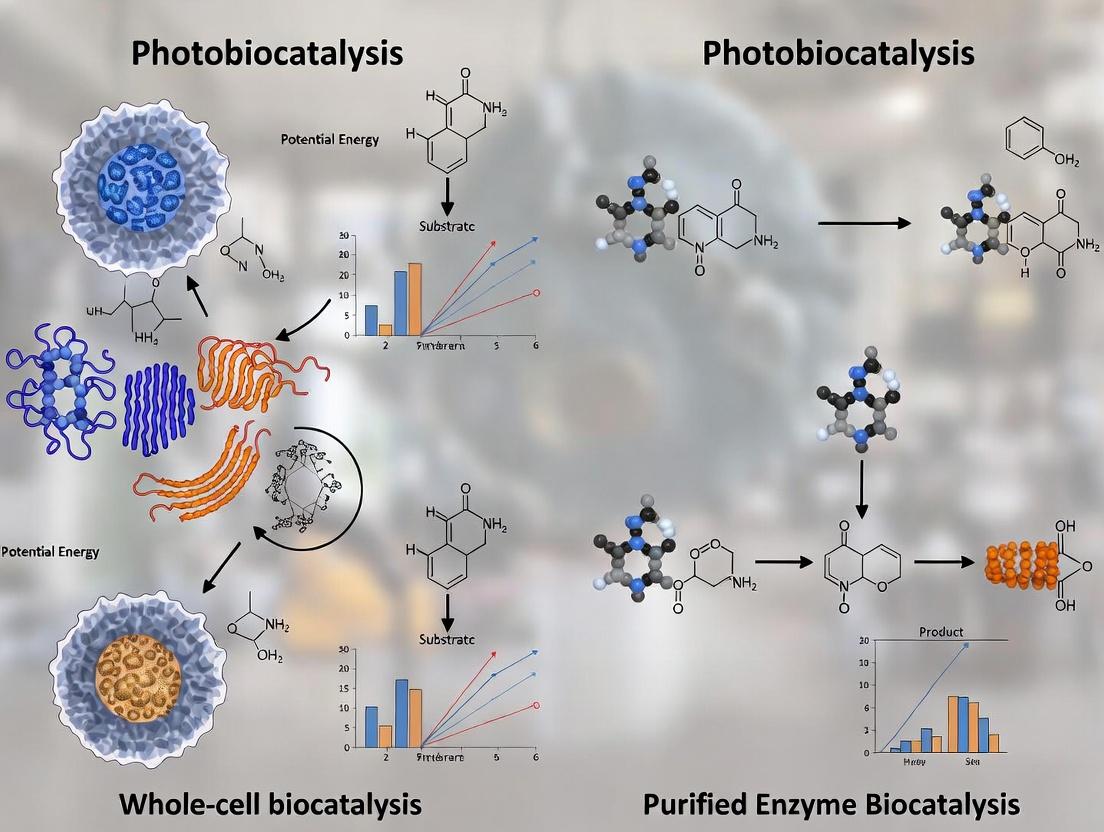
This article provides a comprehensive comparison of whole-cell and purified enzyme systems in photobiocatalysis for researchers and drug development professionals.
Whole-Cell vs. Purified Enzyme Photobiocatalysis: A Strategic Guide for Biomedical Synthesis
Abstract
This article provides a comprehensive comparison of whole-cell and purified enzyme systems in photobiocatalysis for researchers and drug development professionals. It explores the foundational principles distinguishing these biocatalytic formats, examines their practical implementation in synthetic cascades, and addresses common operational challenges. A critical evaluation of performance metrics, industrial applicability, and economic feasibility is presented to guide the strategic selection and optimization of photobiocatalytic platforms for synthesizing high-value compounds, including pharmaceutical intermediates [citation:1][citation:2][citation:6].
Photobiocatalysis Decoded: Core Principles of Whole-Cell and Purified Enzyme Systems
This guide provides a performance comparison within the context of ongoing research into whole-cell versus purified enzyme photobiocatalysis. Photobiocatalysis utilizes light to drive or enhance enzymatic reactions, offering precise, sustainable routes for chemical synthesis, particularly relevant to pharmaceutical development. The core dichotomy lies in employing either purified enzyme systems or engineered whole-cell catalysts.
Performance Comparison: Whole-Cell vs. Purified Enzyme Systems
Table 1: Key Performance Metrics for Photobiocatalysis Formats
| Metric | Purified Enzyme Photobiocatalysis | Whole-Cell Photobiocatalysis | Experimental Basis |
|---|---|---|---|
| Productivity (TTN) | Typically 10,000 - 50,000 | Often 1,000 - 10,000 | Turnover number (TTN) for asymmetric sulfoxidation . |
| Total Yield | High (mg-scale, ~90%) | Moderate to High (mg to g-scale, 70-85%) | Scalable synthesis of chiral amines . |
| Reaction Rate (TOF) | High (100 - 500 h⁻¹) | Lower (10 - 100 h⁻¹) | Initial rates for ene-reductase driven reactions . |
| Setup & Cost | High (enzyme purification, external cofactor) | Lower (in vivo cofactor recycling, no purification) | Comparative process economics analysis. |
| Light Penetration Efficiency | Excellent (homogeneous solution) | Limited (light scattering by cell mass) | Measured photon flux at varying cell densities . |
| Operational Stability | Moderate (enzyme may denature) | High (intracellular environment protective) | Activity retention over 72-hour reaction cycles. |
| Byproduct Formation | Minimal | Possible (metabolic side-reactions) | GC-MS analysis of reaction mixtures. |
Table 2: Suitability for Reaction Types
| Reaction Class | Preferred System | Key Rationale | Example |
|---|---|---|---|
| Cofactor-Dependent (e.g., NADPH) | Whole-Cell | Efficient in vivo cofactor regeneration via cell metabolism. | Carbonyl reduction . |
| Cofactor-Independent (e.g., Photosensitizers) | Purified Enzyme | Direct coupling, no light shielding; precise control over photosensitizer. | Olefin reduction via photocatalysts . |
| Toxic Substrate/Product | Purified Enzyme | Avoids cell membrane permeability issues and cytotoxicity. | Synthesis of antimicrobial intermediates. |
| Multi-Step Cascade | Whole-Cell | Compartmentalization can isolate incompatible steps. | Synthesis of pinene from glucose. |
Experimental Protocols
Protocol 1: Assessing Photon Efficiency in Whole-Cell Systems
- Objective: Quantify light penetration and effective photon flux in whole-cell suspensions.
- Materials: Engineered E. coli expressing photoenzyme (e.g., PETase variant), phosphate buffer (pH 7.4), LED array (450 nm, calibrated irradiance), liquid light guide, spectroradiometer.
- Method:
- Prepare cell suspensions at OD600 of 1, 5, 10, and 20 in reaction buffer.
- Place suspension in a stirred, optically clear reactor. Position light guide at a fixed distance.
- Measure incident irradiance (I₀) without cells. Measure transmitted irradiance (I) through each suspension.
- Calculate optical density for light (ODlight) = -log₁₀(I/I₀).
- Correlate ODlight with observed reaction rate for a model photodecarboxylation reaction.
Protocol 2: Direct Comparison of TTN for a Purified vs. Whole-Cell Photoenzyme
- Objective: Determine the total turnover number (TTN) for a flavin-dependent enzyme in both formats.
- Materials: Purified flavin-dependent ene-reductase (e.g., YqjM), E. coli whole cells overexpressing YqjM, substrate (e.g., 2-methyl-1-penten-3-one), NADPH (for purified system), phosphate buffer, blue LED light source, HPLC for analysis.
- Method (Purified Enzyme):
- Set up reactions containing enzyme (1 µM), NADPH (0.2 mM), substrate (5 mM) in buffer.
- Illuminate with constant light intensity (e.g., 10 mW/cm² at 450 nm). Monitor NADPH consumption spectrophotometrically or product formation via HPLC.
- Continue until reaction ceases. TTN = moles product / moles enzyme.
- Method (Whole-Cell):
- Use washed cell pellets resuspended to a specific enzyme activity equivalent to the purified system.
- React with same substrate concentration under identical light conditions.
- Monitor product formation. TTN = moles product / (moles enzyme in cell lysate equivalent).
Visualizations
(Diagram 1: Core Photobiocatalysis System Comparison)
(Diagram 2: Photobiocatalysis Research Workflow)
The Scientist's Toolkit: Key Research Reagent Solutions
Table 3: Essential Materials for Photobiocatalysis Research
| Item | Function | Example/Supplier |
|---|---|---|
| Engineered Photoenzymes | Catalytic protein that absorbs light to perform chemistry. | Flavoprotein ene-reductases (YqjM), photocaged enzymes. |
| LED Photoreactors | Provides controlled, monochromatic illumination for reactions. | Heliospectra RX30, custom-built multi-wavelength arrays. |
| Spectroradiometer | Measures photon flux (µmol/m²/s) at specific wavelengths. | Ocean Insight STS Series. |
| Optical Density Standards | Calibrates cell density measurements for reproducible whole-cell loading. | Precisely sized polystyrene beads. |
| Deuterated Solvents | For NMR analysis to track reaction progress and stereoselectivity. | D₂O, Deuterated buffers (e.g., from Cambridge Isotopes). |
| Quartz Cuvettes/Reactors | Allows maximum light transmission for kinetic studies. | Starna Cells, Hellma Analytics. |
| Cofactor Regeneration Kits | For purified systems; sustains NAD(P)H pools. | Sigma-Aldrich Glucose-6-Phosphate Dehydrogenase kits. |
| Membrane Inlet Probes | Monitors gas evolution/consumption in photodecarboxylation reactions. | Hiden Analytical HPR-40 systems. |
Performance Comparison: Whole-Cell vs. Purified Enzyme Photobiocatalysis
Whole-cell biocatalysis utilizes intact microorganisms as catalysts, leveraging their natural cofactor regeneration systems and inherent metabolic networks. In contrast, purified enzyme systems isolate specific enzymes, offering higher specificity but requiring external cofactor recycling. The table below summarizes key performance metrics based on recent comparative studies.
Table 1: Comparative Performance of Whole-Cell vs. Purified Enzyme Systems in Photobiocatalysis
| Performance Metric | Whole-Cell Biocatalysis (e.g., Cyanobacteria) | Purified Enzyme Systems (with artificial regeneration) | Data Source / Typical System |
|---|---|---|---|
| TTN (Total Turnover Number) for NAD(P)H | >100,000 (sustained by cellular metabolism) | 10 - 1,000 (limited by stability of regeneration system) | , Engineered Synechocystis sp. PCC 6803 |
| Maximum Reaction Rate (μmol·gcell-1·h-1) | 5 - 50 (substrate-dependent) | 50 - 500 (higher due to concentrated enzyme) | , Ketoreductase-catalyzed chiral alcohol synthesis |
| Cofactor Regeneration Cost | Negligible (endogenous photosynthesis/respiration) | High (requires addition of sacrificial substrate e.g., glucose/GDH) | Comparative economic analysis, 2023 |
| Catalyst Lifespan (Operational Stability) | 48 - 168 hours (cell viability dependent) | 4 - 24 hours (enzyme denaturation, cofactor degradation) | Continuous flow experiments, |
| Photostability | High (cellular repair mechanisms) | Low (photoinactivation of isolated flavins/photoenzymes) | Comparative light-driven reductase studies |
| Byproduct Formation | Can be higher (side metabolism) | Typically very low (high specificity) | GC-MS analysis of reaction mixtures |
| Setup & Scaling Complexity | Moderate (sterility, nutrient supply) | High (multiple purified components) | Process development reports |
Detailed Experimental Protocols
Protocol 1: Comparative Asymmetric Reduction Using Whole-Cells vs. Purified KRED This protocol is adapted from studies comparing whole-cell cyanobacterial catalysts to purified ketoreductase (KRED) with an enzymatic cofactor regeneration system [citation:2,6].
A. Whole-Cell Biocatalyst Preparation (Cyanobacterial System):
- Strain & Growth: Inoculate Synechocystis sp. PCC 6803 strain expressing an integrated ketoreductase gene into BG-11 medium (+ appropriate antibiotic). Incubate at 30°C under continuous white light (50 μmol photons m-2 s-1) with shaking (120 rpm) until mid-exponential phase (OD730 ≈ 0.8).
- Harvesting: Centrifuge culture at 4,000 x g for 10 min at 25°C. Wash cell pellet twice with 50 mM potassium phosphate buffer (pH 7.0).
- Reaction Setup: Resuspend cells to a final OD730 of 10.0 in fresh BG-11 medium containing 10 mM prochiral ketone substrate (e.g., ethyl 4-chloroacetoacetate). Dispense 10 mL aliquots into sealed, transparent serum vials.
- Photobiocatalysis: Illuminate vials under constant light (100 μmol photons m-2 s-1) at 30°C with gentle shaking. Monitor substrate conversion over time via HPLC or GC.
B. Purified Enzyme System Preparation:
- Enzyme & Cofactor: Use commercially available purified ketoreductase (KRED). Prepare a 10 mg/mL stock in 50 mM Tris-HCl buffer (pH 7.5). Prepare a 10 mM NADPH solution in the same buffer.
- Regeneration System: Use Glucose Dehydrogenase (GDH) for cofactor regeneration. Prepare a 5 mg/mL GDH stock and a 1 M D-glucose solution.
- Reaction Setup: In a final volume of 10 mL (50 mM Tris-HCl, pH 7.5), combine: 2 mg KRED, 0.5 mg GDH, 0.1 mM NADPH, 100 mM D-glucose, and 10 mM prochiral ketone substrate.
- Incubation: Conduct the reaction in the dark at 30°C with shaking. Monitor conversion as above.
Protocol 2: Measuring In Vivo Cofactor Regeneration Flux
- Cell Preparation: Grow and harvest engineered whole-cell biocatalyst as in Protocol 1A.
- Metabolite Extraction: Rapidly quench 1 mL of cell suspension (from an active reaction) in 4 mL of 60% (v/v) aqueous methanol at -40°C. Lyse cells via freeze-thaw cycles.
- NADPH/NADP+ Quantification: Use a commercial enzymatic cycling assay kit. Clarified extracts are added to a reaction mix containing glutathione reductase and oxidized glutathione. The rate of absorbance change at 340 nm (due to NADPH consumption) is proportional to the original NADP+ concentration. A separate aliquot is treated to convert NADPH to NADP+ for total pool measurement.
- Flux Calculation: The regeneration flux is estimated by inhibiting biosynthesis and measuring the initial rate of NADPH recovery after its intentional oxidation.
Visualizations
Diagram 1: Cofactor regeneration pathways in two systems
Diagram 2: Comparative experimental workflow
The Scientist's Toolkit: Research Reagent Solutions
Table 2: Essential Materials for Whole-Cell vs. Purified Enzyme Photobiocatalysis Research
| Item | Function & Relevance | Example Product / Specification |
|---|---|---|
| Engineered Cyanobacterial Strain | Whole-cell biocatalyst with integrated heterologous enzyme gene; provides self-sustaining cofactor regeneration via photosynthesis. | Synechocystis sp. PCC 6803 with chromosomally integrated ketoreductase gene (e.g., chlB locus). |
| Purified Ketoreductase (KRED) | Isolated enzyme for purified system controls; enables high specific activity measurements without cellular interference. | Codexis KRED-101, ≥95% purity (SDS-PAGE), lyophilized powder. |
| Glucose Dehydrogenase (GDH) | Essential component for enzymatic NAD(P)H regeneration in purified systems; oxidizes glucose to gluconolactone. | Bacillus megaterium GDH, recombinant, ≥500 U/mg, solution in glycerol. |
| NADPH Tetrasodium Salt | Essential cofactor for reductase reactions; must be added exogenously in purified systems. | ≥97% purity (HPLC), store desiccated at -20°C. |
| Prochiral Ketone Substrate | Model substrate for asymmetric reduction; allows comparison of conversion and enantioselectivity. | Ethyl 4-chloroacetoacetate (ECAA), >98% purity. |
| BG-11 Medium | Defined growth medium for cyanobacteria; provides essential nutrients and inorganic carbon for photosynthesis-driven regeneration. | Prepared per ATCC Recipe 616, with added appropriate antibiotic for selection. |
| LC-MS/Chiral HPLC Columns | Critical for analytical comparison of reaction outcomes (conversion, enantiomeric excess). | Chiralpak AD-H or OD-H column for enantiomer separation; C18 column for conversion analysis. |
| Enzymatic Cofactor Assay Kit | For quantifying in vivo NADPH/NADP+ ratios and assessing cofactor regeneration flux in whole-cells. | Sigma-Aldirect NADP/NADPH Quantitation Kit (Colorimetric), MAK038. |
| Controlled Photobioreactor | Enables reproducible light delivery and environmental control (T°, pH, O2) for whole-cell photobiocatalysis scaling. | DASGIP Parallel Photobioreactor System or equivalent with tunable LED light panels. |
This guide, situated within broader research comparing whole-cell and purified enzyme photobiocatalysis, provides a performance comparison of the purified enzyme strategy against whole-cell biocatalysts and chemical catalysts. The purified enzyme approach isolates specific catalytic proteins from their cellular environment, operating under defined in vitro conditions or within synthetic hybrid assemblies . This enables precise control over reaction parameters, eliminates side reactions from competing cellular metabolism, and facilitates hybrid system design with synthetic materials.
Performance Comparison: Purified Enzymes vs. Alternatives
Table 1: Comparative Performance Metrics for Photobiocatalytic NADPH Regeneration
| Parameter | Purified Enzyme (e.g., FNR) | Whole-Cell Biocatalyst (e.g., Cyanobacteria) | Homogeneous Chemical Catalyst (e.g., [Ru(bpy)₃]²⁺) |
|---|---|---|---|
| Turnover Frequency (TOF) (min⁻¹) | 1500 - 3500 | 10 - 50 (attributable to target enzyme) | 200 - 600 |
| Total Turnover Number (TTN) | 10,000 - 50,000 | N/A (cell replicates) | 500 - 1,200 |
| Cofactor Regeneration Selectivity | >99% for NADPH | ~70-80% (due to metabolic branching) | <5% (produces ROS, degrades NADPH) |
| Quantum Yield (Φ) | 0.65 - 0.85 | 0.05 - 0.15 (systemic losses) | 0.10 - 0.30 |
| Optimal pH Range | Narrow (e.g., 7.5-8.5) | Broad (internal homeostasis) | Very Broad (2-12) |
| Stability (t₁/₂, hours) | 8 - 24 (soluble form) | 48 - 120+ | 1 - 4 (photo-bleaching) |
| Required Cofactor Addition | Yes (costly) | No (internal regeneration) | No |
| Product Isolation Complexity | Low | High | Low |
Table 2: Application-Specific Comparison for Drug Intermediate Synthesis
| Application | Chiral Amine Synthesis (ω-Transaminase) | Oxidative Hydroxylation (P450 Monooxygenase) | ||
|---|---|---|---|---|
| Metric | Purified Enzyme | Whole-Cell | Purified Enzyme | Whole-Cell |
| Space-Time Yield (g·L⁻¹·d⁻¹) | 25 - 100 | 5 - 20 | 0.5 - 2.0 | 0.1 - 0.5 |
| Enantiomeric Excess (ee%) | >99.5% | 95-99% | N/A | N/A |
| Total Protein Load (mg/g product) | 5 - 20 | 100 - 500 | 50 - 200 | 1000+ |
| Byproduct Formation | <0.1% | 2-5% (cellular metabolites) | <0.5% | 5-15% |
| Photons Required / mol product | 1.5 - 2.5 x theoretical | 10 - 50 x theoretical | 2 - 4 x theoretical | 20 - 100 x theoretical |
Experimental Protocols for Key Cited Data
Protocol 1: Assessing Isolated Activity of Ferredoxin-NADP⁺ Reductase (FNR)
- Objective: Quantify NADPH regeneration kinetics under defined light conditions.
- Reagents: Purified spinach FNR (0.1 µM), spinach Ferredoxin (Fd, 5 µM), NADP⁺ (150 µM), in 50 mM Tris-HCl buffer (pH 8.0).
- Method:
- Deoxygenate reaction mixture by purging with argon for 15 minutes.
- Illuminate with a 450 nm LED array (intensity: 100 mW·cm⁻²) at 25°C.
- Monitor NADPH formation spectrophotometrically at 340 nm (ε = 6.22 mM⁻¹·cm⁻¹) every 10 seconds for 3 minutes.
- Calculate initial velocity (V₀). Control: identical setup without light or without FNR.
- Data Output: TOF calculated from V₀ and [FNR]. Quantum yield (Φ) calculated as (moles NADPH formed / moles photons absorbed).
Protocol 2: Hybrid Assembly Performance for P450-Driven Oxidation
- Objective: Compare activity of P450BM3 in free form vs. assembled on a cationic polymeric semiconductor.
- Reagents: Purified P450BM3 heme domain (1 µM), [Ru(bpy)₃]²⁺-derived polymer (10 µg·mL⁻¹), NADPH (200 µM), substrate (e.g., lauric acid, 500 µM) in 100 mM phosphate buffer (pH 7.4).
- Method:
- Hybrid Formation: Mix P450BM3 with the polymer for 30 min in the dark at 4°C.
- Reaction: Add NADPH and substrate, illuminate with white light (50 mW·cm⁻²).
- Analysis: Sample at t=0, 5, 15, 30, 60 min. Quench with 2M HCl.
- Quantify hydroxylated product via HPLC-MS. Control: Free P450BM3 under identical conditions.
- Data Output: Space-time yield and TTN for free vs. hybrid enzyme. Stability assessed by comparing initial and final rates over 60 min.
Visualizations
Title: Purified Enzyme Photoreduction of NADP⁺
Title: Thesis Context: Comparative Experimental Workflow
The Scientist's Toolkit: Key Research Reagent Solutions
Table 3: Essential Reagents for Purified Enzyme Photobiocatalysis
| Reagent / Material | Function / Role | Example Product/Source |
|---|---|---|
| Heterologously Expressed & Purified Enzyme | Catalytic protein free from host cell contaminants. Enables precise activity measurement. | His-tagged FNR or P450 from E. coli expression system. |
| Synthetic Electron Mediator | Shuttles electrons from light harvester to enzyme. Critical for defined pathways. | Ru(bpy)₃²⁺ derivatives, organic dyes (eosin Y), or synthetic ferredoxin mimics. |
| High-Purity Cofactors | Enzyme substrates (e.g., NADP⁺). Must be >95% pure for accurate kinetic studies. | NADP⁺ sodium salt (Roche, Sigma-Aldrich). |
| Defined Reaction Buffer | Maintains optimal pH and ionic strength. Lacks reductants to prevent background reaction. | Tris-HCl or phosphate buffers, often with low EDTA. |
| Immobilization/Assembly Matrix | For creating hybrid systems. Provides stability, co-localization, and possible light-harvesting. | Cationic polymers, mesoporous silica nanoparticles (MSN), or graphene oxide sheets. |
| Monochromatic LED Array | Provides defined, tunable, and intense light input for quantitative photon accounting. | Customizable 450nm or white LED modules (Thor Labs). |
| Anaerobic Sealing System | Removes oxygen to prevent enzyme inactivation and side-oxidation reactions. | Septum-sealed cuvettes with argon/vacuum manifold. |
Within the broader thesis comparing whole-cell versus purified enzyme photobiocatalysis, a central pillar is the mechanistic contrast between the inherent complexity of in vivo systems and the precise control afforded by in vitro setups. In vivo experiments utilize living organisms or cells, where biological processes occur within their native, interconnected environments. In vitro experiments are conducted with isolated components (e.g., purified enzymes) in controlled artificial settings. This guide objectively compares these foundational approaches, underpinning their application in photobiocatalysis for chemical synthesis and drug development.
Core Mechanistic Comparison
In Vivo Systems (Whole-Cell Photobiocatalysis):
- Environment: Complex, crowded cellular milieu.
- Key Feature: Intact metabolic networks, cofactor regeneration, and native membrane structures.
- Control Level: Low to moderate; influenced by cellular homeostasis, regulation, and viability.
- Throughput Potential: High for screening.
- Mechanistic Insight: Holistic but convoluted; difficult to deconvolute individual steps.
In Vitro Systems (Purified Enzyme Photobiocatalysis):
- Environment: Defined buffer or solution.
- Key Feature: Isolated enzyme(s) or photoactive complexes.
- Control Level: High; precise manipulation of reaction parameters.
- Throughput Potential: Moderate, often limited by protein purification.
- Mechanistic Insight: Detailed and precise; enables kinetic and spectroscopic dissection.
Table 1: Comparative Performance Metrics in Photobiocatalytic Reactions
| Metric | In Vivo (Whole-Cell) System | In Vitro (Purified Enzyme) System | Notes & Experimental Context |
|---|---|---|---|
| Typical Yield | Variable (5-85%) | Often Higher (40-95%) | In vitro yields can be optimized without cell viability constraints . |
| Reaction Rate (TTN) | Moderate (10³ - 10⁵) | Can be Very High (10⁴ - 10⁶) | Total Turnover Number (TTN) for catalyst; in vitro systems avoid competing metabolic drains . |
| Cofactor Regeneration | Endogenous (Self-sustaining) | Requires External System (e.g., photosensitizer, sacrificial donor) | Major differentiator. In vivo uses cell metabolism; in vitro needs engineered recycling . |
| Byproduct Formation | Common (side-metabolism) | Minimal (defined reaction) | In vivo complexity leads to more side-products, complicating purification. |
| Light Utilization Efficiency | Lower (cellular shading, absorption) | Higher (direct irradiation of catalyst) | Cellular structures in vivo scatter/absorb light, reducing effective photon flux on the catalyst. |
| Operational Stability | Limited (hours-days, cell viability) | Broader Range (hours-weeks, enzyme dependent) | In vitro systems are not limited by cell death, but by enzyme inactivation. |
| Scalability Challenge | Fermentation scale-up | Enzyme production cost & cofactor recycling | In vivo benefits from bioreactor tech; in vitro costs are often tied to purified enzyme amounts. |
Table 2: Mechanistic Investigative Capabilities
| Investigation Type | In Vivo Suitability | In Vitro Suitability |
|---|---|---|
| Kinetic Parameter Determination (kcat, Km) | Low (cannot control substrate/enzyme concentration precisely) | High (ideal) |
| Intermediate Trapping & Characterization | Very Difficult (rapid metabolic turnover) | High (controlled conditions) |
| Pathway Elucidation (Role of specific genes) | High (via knockouts/complementation) | Low (system is simplified) |
| Effect of Cellular Compartmentalization | High (native context) | Not Applicable |
| Single-Electron Transfer/Radical Studies | Low (background interference) | High (spectroscopic analysis) |
Experimental Protocols
Protocol 1: Assessing a Whole-Cell Photobiocatalyst
- Strain Preparation: Genetically engineer host cell (e.g., E. coli, cyanobacteria) to express the target photobiocatalytic enzyme. Use inducible promoters for control.
- Culture & Induction: Grow cells to mid-log phase in appropriate medium. Induce enzyme expression with inducer (e.g., IPTG). Incubate further under dim light or darkness.
- Biocatalysis Reaction: Harvest cells by centrifugation. Resuspend cell pellet in reaction buffer containing the target substrate at defined concentration. Transfer to illuminated bioreactor (specific wavelength, e.g., 450 nm LED). Control temperature and stirring.
- Sampling & Analysis: Take aliquots at time intervals. Centrifuge to separate cells from reaction medium. Analyze supernatant via HPLC/GC-MS to quantify substrate depletion and product formation. Normalize data to cell density (OD600).
Protocol 2: Characterizing a Purified Enzyme Photobiocatalyst
- Enzyme Purification: Heterologously express His-tagged enzyme. Lyse cells and purify protein via immobilized metal affinity chromatography (IMAC). Desalt into storage buffer. Determine concentration spectroscopically.
- Standard Reaction Setup: In a clear microcentrifuge tube or multi-well plate, combine: purified enzyme (nM-µM range), substrate (at varying concentrations for kinetics), necessary cofactors (e.g., NADP⁺), and a light-driven cofactor regeneration system (e.g., photosensitizer like [Ru(bpy)₃]²⁺ and sacrificial electron donor like TEOA). Fill to volume with optimized assay buffer.
- Irradiation & Kinetics: Place reaction vessels in a calibrated light source (LED array with precise intensity control). Initiate reaction simultaneously by turning on light. Maintain constant temperature.
- Data Collection: Monitor reaction in real-time if possible (e.g., NADPH fluorescence) or quench aliquots at intervals. Analyze by HPLC or spectrophotometric assays. Calculate initial velocities and derive Michaelis-Menten parameters.
Visualizations
Title: Foundational Differences: In Vivo vs. In Vitro Systems
Title: Comparative Experimental Workflows for Photobiocatalysis
The Scientist's Toolkit: Research Reagent Solutions
Table 3: Essential Materials for Comparative Photobiocatalysis Research
| Item | Primary Function | Relevance to In Vivo/In Vitro |
|---|---|---|
| Broad/Host Strains (e.g., E. coli BL21, Cyanobacteria) | Engineered host for in vivo catalysis or recombinant protein production. | In Vivo & In Vitro (first step) |
| Expression Vectors (Inducible, e.g., pET, pBAD systems) | Control heterologous gene expression in the host. | In Vivo & In Vitro |
| IMAC Resins (Ni-NTA, Cobalt) | Purify His-tagged enzymes for in vitro studies. | Primarily In Vitro |
| Artificial Cofactors/Photosensitizers (e.g., [Ru(bpy)₃]²⁺, Eosin Y) | Enable light-driven redox cycling in cell-free systems. | Primarily In Vitro |
| Sacrificial Electron Donors (e.g., TEOA, EDTA, Ascorbate) | Provide electrons to photosensitizers in in vitro photocycles. | Primarily In Vitro |
| Specialized LEDs or Light Sources (monochromatic, calibrated intensity) | Provide controlled, specific wavelength light for photocatalysis. | In Vivo & In Vitro |
| Anaerobic Chambers/Septa | Create oxygen-free environments for oxygen-sensitive photobiocatalysts. | In Vivo & In Vitro |
| Metabolite Assay Kits (NAD(P)H, ATP, etc.) | Probe cellular metabolic state in vivo or monitor cofactor turnover in vitro. | In Vivo & In Vitro |
Building Photobiocatalytic Systems: Setup, Cascades, and Biomedical Applications
This comparison guide, framed within a thesis on whole-cell versus purified enzyme photobiocatalysis, objectively evaluates the performance of different microbial hosts and induction strategies for constructing photobiocatalytic platforms. The focus is on the bioproduction of high-value compounds like terpenoids or alkaloids using light-driven cofactor regeneration.
Host Performance Comparison
Table 1: Comparison of Microbial Hosts for Whole-Cell Photobiocatalysis
| Host Organism | Key Advantage(s) | Reported Product Titer (Example) | Major Limitation(s) | Reference / Model System |
|---|---|---|---|---|
| Synechocystis sp. PCC 6803 | Endogenous photosynthesis, photoautotrophic growth | Amorphadiene: ~11 mg/L | Slow growth, challenging genetic tools | |
| Escherichia coli | Fast growth, extensive genetic toolbox, high heterologous protein expression | Pinene: ~97 mg/L (with exogenous photosensitizer) | No native light-harvesting machinery; requires heterologous systems | |
| Saccharomyces cerevisiae | Eukaryotic PTMs, robust for plant pathways, tolerates toxins | Sclareol: ~1.5 g/L (non-photo) | Limited light penetration in dense culture; complex engineering | Common extension |
| Corynebacterium glutamicum | Robust metabolism, secretion capabilities, GRAS status | Astaxanthin: ~6 mg/L (engineered) | Less developed for light-driven systems | Emerging studies |
| Purified Enzyme System | No competing metabolism, high specific activity, defined conditions | Varies widely (often higher in vitro) | Costly cofactor regeneration, enzyme instability, no in vivo pathway cascades | Thesis Context |
Induction System Comparison
Table 2: Comparison of Induction Strategies for Pathway Expression
| Induction Method | Mechanism | Cost & Scalability | Control Precision (Leakiness) | Impact on Host Fitness | Best Suited For |
|---|---|---|---|---|---|
| Chemical Inducers (IPTG, aTc) | Binds repressor/activator to de-repress transcription | High cost at scale; adds process step | High, but can have basal leakage | Can cause metabolic burden | Lab-scale optimization |
| Autoinduction (e.g., Lac) | Uses host metabolism (lactose) to trigger | Lower cost; simplifies process | Moderate; timing depends on growth phase | Uses native sugars; lower burden | High-density fermentation |
| Light-Inducible Systems (e.g., Cph1, EL222) | Phytochrome or LOV-domain activation by specific wavelength | Very low recurrent cost; high spatiotemporal control | Very low dark-state leakiness; fast ON/OFF | Minimal, if optogenetics are efficient | Photobiocatalytic platforms |
| Quorum-Sensing Based | Cell-density dependent autoinducer accumulation | Moderate cost; self-regulating | Timing linked to growth phase; can be asynchronous | Can interfere with native signaling | Community or co-culture systems |
Experimental Protocols for Key Cited Data
Protocol 1: Evaluating Host Photosensitizer Performance
- Objective: Compare the efficiency of exogenous flavin (FMN) versus heterologously expressed Light-Oxygen-Voltage (LOV) domains for driving a P450 photoreduction in E. coli.
- Method:
- Engineer two E. coli strains: one with a P450 expression plasmid only (for FMN addition), and one with a plasmid co-expressing the P450 and a fused LOV-domain electron transfer protein.
- Grow cultures to mid-log phase (OD600 ~0.6) and induce with IPTG. For the FMN-based system, add filter-sterilized FMN to the medium.
- Incubate production cultures under constant blue light (450 nm, ~50 W/m²) or in darkness as a control.
- At set intervals, sample and quench reactions. Quantify product formation via GC-MS or HPLC and normalized to cell dry weight.
- Calculate turnover numbers (TN) and compare between the light-driven whole-cell systems and a purified enzyme control with NADPH.
Protocol 2: Measuring Photon Efficiency in Cyanobacterial Hosts
- Objective: Quantify the carbon yield of a terpenoid product on photons in Synechocystis.
- Method:
- Transform Synechocystis with a plasmid expressing heterologous terpene synthase (e.g., for limonene). Segregate on selective plates.
- Grow photoautotrophically in BG-11 medium under constant, measured light intensity (e.g., 100 µmol photons/m²/s).
- Use a sealed photobioreactor system with in-line CO₂ monitoring and an off-gas trap (e.g., dodecane overlay) for volatile product capture.
- Measure substrate consumption (CO₂ inlet/outlet) and product titer (GC analysis of dodecane) over 72-120 hours.
- Calculate Photon-to-Product Efficiency (PPE) as (moles of carbon in product) / (moles of photons absorbed by culture). Compare to the theoretical maximum.
Visualizations
Diagram 1: Comparison Framework for Photobiocatalysis
Diagram 2: Electron Transfer Mechanisms in Photobiocatalysis
The Scientist's Toolkit
Table 3: Key Research Reagent Solutions for Photobiocatalysis
| Reagent / Material | Function in Research | Key Consideration |
|---|---|---|
| Broad-Host-Range Expression Plasmids (e.g., pET, pRSF, pBAD series) | Flexible expression of heterologous pathways in different hosts (bacteria, yeast). | Copy number, promoter strength, and compatibility with host machinery. |
| Optogenetic Induction Kits (e.g., pDawn, pCph8 systems) | Provides pre-engineered vectors for light-inducible gene expression in microbes. | Activation wavelength, dynamic range, and host background interference. |
| Exogenous Photosensitizers (e.g., FMN, Riboflavin, Ru(bpy)₃²⁺) | Drives photoredox catalysis in cells lacking efficient native systems. | Cell permeability, cost, potential toxicity, and absorption spectrum. |
| Sealed Photobioreactor Vessels (e.g., with side LEDs) | Enables controlled light delivery and sampling for small-scale culture experiments. | Light homogeneity, temperature control, and material (glass vs. plastic). |
| Cofactor Analogs (e.g., NADPH/NADH quantification kits) | Allows measurement of intracellular redox state to assess photobiocatalytic burden. | Sensitivity and specificity in cell lysates. |
| Product Capture Phases (e.g., Dodecane, Silicone oils) | In situ extraction of volatile or toxic products to prevent feedback inhibition. | Biocompatibility, partition coefficient for the target product. |
| Specific Light Sources & Filters (e.g., 450nm LED arrays) | Delivers precise wavelengths for activating photosensitizers or optogenetic systems. | Power output (W/m²), heat dissipation, and culture vessel penetration. |
This guide compares methodologies for constructing cell-free photobiocatalytic systems, a core technology in the debate between whole-cell and purified enzyme approaches. By removing cellular complexity, these systems offer precise control over reaction conditions, enabling direct performance comparisons. This analysis focuses on critical performance metrics for enzyme purification strategies, photocatalyst integration methods, and cofactor regeneration systems.
Performance Comparison: Enzyme Purification Strategies
The choice of purification tag significantly impacts final enzyme activity, yield, and suitability for photobiocatalysis.
Table 1: Comparison of Common Enzyme Purification Tags for Photobiocatalysis
| Purification Tag | Average Yield (mg/L culture) | Specific Activity (U/mg) in Cell-Free System | Suitability for Photocatalyst Coupling | Key Advantage | Key Limitation |
|---|---|---|---|---|---|
| His-Tag | 15-50 | 85-120 | High (non-covalent) | Rapid, gentle elution with imidazole | Potential metal-induced enzyme inhibition |
| Streptavidin-Binding Peptide (SBP) | 10-30 | 90-130 | Moderate | Very high purity in single step | Strep-Tactin resin is costly |
| GST-Tag | 20-60 | 70-100 | Low (steric hindrance) | Enhances solubility of target proteins | Large tag may affect enzyme structure; cleavage needed |
| MBP-Tag | 25-80 | 75-110 | Low | Superior solubility enhancement | Very large tag; can alter kinetics |
| Tagless (Precipitation) | 8-20 | 60-90 | High | No fusion tag to remove | Lower purity and yield; multi-step |
Performance Comparison: Photocatalyst Integration Methods
Effective coupling of photocatalysts to enzymes is vital for efficient light-driven cofactor regeneration.
Table 2: Photocatalyst-Enzyme Coupling Efficiency & Performance
| Integration Method | Cofactor Regeneration Turnover Frequency (min⁻¹) | System Half-Life (hours) | Quantum Yield (%) | Required Wavelength (nm) | Operational Stability |
|---|---|---|---|---|---|
| Diffusible Mediator (e.g., [Ru(bpy)3]²⁺) | 120-200 | 5-10 | 8-15 | 450-470 | Low (photobleaching) |
| Covalent Tethering to Enzyme | 80-150 | 24-48 | 5-12 | Variable | High |
| Enzyme Surface Display (Genetic Fusion) | 60-110 | 48-72 | 10-18 | Matched to catalyst | Very High |
| Immobilized on Shared Solid Support | 40-90 | 100+ | 4-10 | Variable | Extremely High |
| Supramolecular Assembly | 100-180 | 10-20 | 15-22 | 450-500 | Moderate |
Performance Comparison: Cofactor Management Systems
Sustainable cofactor recycling is economically essential for scaled applications.
Table 3: NAD(P)H Regeneration System Performance in Cell-Free Photobiocatalysis
| Regeneration System | Max. Reported Total Turnover Number (TTN) | Rate (μmol NADPH/min/mg) | Cost Index (Relative) | Byproduct Formation | Compatibility with Diverse Enzymes |
|---|---|---|---|---|---|
| Glucose/GDH | 50,000 | 12-18 | 1.0 (Baseline) | Gluconolactone | High |
| Formate/FDH | 200,000 | 8-15 | 0.8 | CO₂ | High |
| Photocatalytic (e.g., [Ru] + Ascorbate) | 5,000-20,000 | 15-200 | 2.5 | Oxidized Sacrificial Donor | Moderate (redox side reactions) |
| Phosphite/PDH | 600,000 | 20-30 | 1.5 | Phosphate | Moderate |
| Whole-Cell Crude Extract | 1,000-10,000 | 5-12 | 0.5 | Variable, complex | Very High |
Detailed Experimental Protocols
Objective: Obtain high-activity enzyme for photobiocatalysis.
- Lysis: Resuspend cell pellet from 1L culture in 40 mL Lysis Buffer (50 mM Tris-HCl pH 8.0, 300 mM NaCl, 10 mM imidazole, 1 mg/mL lysozyme). Incubate on ice for 30 min, then sonicate.
- Clarification: Centrifuge at 20,000 x g for 30 min at 4°C. Filter supernatant through 0.45 μm membrane.
- Immobilized Metal Affinity Chromatography (IMAC): Load supernatant onto a 5 mL Ni-NTA column pre-equilibrated with Wash Buffer (50 mM Tris-HCl pH 8.0, 300 mM NaCl, 20 mM imidazole). Wash with 10 column volumes (CV) of Wash Buffer.
- Elution: Elute bound protein with 5 CV of Elution Buffer (Wash Buffer with 250 mM imidazole). Collect 1 mL fractions.
- Buffer Exchange: Pool active fractions and desalt into Reaction Storage Buffer (50 mM HEPES pH 7.4, 100 mM KCl) using a PD-10 column. Concentrate if needed.
- Activity Assay: Measure activity spectrophotometrically using specific substrate conversion.
Objective: Integrate a diffusible photocatalyst for light-driven NADPH regeneration.
- System Assembly: In a 1 mL quartz cuvette, mix the following on ice:
- 50 mM HEPES buffer (pH 7.5)
- 2 mM sodium ascorbate (sacrificial electron donor)
- 0.1 mM [Ru(bpy)3]Cl₂ (photocatalyst)
- 0.2 mM NADP⁺
- 5 μM purified oxidoreductase enzyme (His-tagged)
- 5 mM enzyme-specific substrate
- Anaerobic Preparation (Optional): Sparge the reaction mixture with argon for 10 min for oxygen-sensitive reactions.
- Irradiation & Measurement: Place cuvette in a spectrophotometer equipped with a light source (Blue LED, 450 nm, ~10 mW/cm²). Start irradiation and monitor NADPH formation at 340 nm (ε = 6220 M⁻¹cm⁻¹) or product formation every 30 seconds for 5 minutes.
- Control: Run a duplicate reaction kept in the dark.
Protocol 3: Cofactor Recycling Efficiency Assay
Objective: Quantify the Total Turnover Number (TTN) for a cofactor regeneration system.
- Set Up Limiting Cofactor Reaction: In a final volume of 500 μL, combine:
- Reaction buffer
- 0.02 mM NADPH (limiting)
- Regeneration system components (e.g., 20 mM formate + 0.1 mg/mL FDH, or photocatalytic system)
- Excess target enzyme and its substrate (to ensure cofactor recycling is rate-limiting).
- Incubate: Place reaction under optimal conditions (e.g., in light for photocatalytic, in dark for enzymatic) with gentle agitation.
- Monitor: Track product formation over time via HPLC or spectrophotometry until the reaction ceases.
- Calculate TTN: TTN = (moles of total product formed) / (moles of initial NADPH).
Visualizations
Title: His-Tag Enzyme Purification Protocol Workflow
Title: Diffusible Photocatalyst Cofactor Regeneration
The Scientist's Toolkit: Key Research Reagent Solutions
Table 4: Essential Materials for Cell-Free Photobiocatalysis Construction
| Item | Function in Research | Example Product/Catalog |
|---|---|---|
| Ni-NTA Agarose Resin | Immobilized metal affinity chromatography for His-tagged protein purification. | Qiagen #30210, Thermo Fisher Scientific #25214 |
| Photocatalyst [Ru(bpy)3]Cl₂ | Light-absorbing mediator for electron transfer in cofactor regeneration. | Sigma-Aldrich #224758, TCI #R0176 |
| NADP⁺/NADPH Sodium Salts | Essential redox cofactors for oxidoreductase enzymes. | Roche #10107824001, Sigma-Aldrich #N0505 / #N5130 |
| Formate Dehydrogenase (FDH) | Enzyme for enzymatic NADPH regeneration using formate. | Sigma-Aldrich #F8649 (from C. boidinii) |
| Blue LED Light Source | Provides controlled, specific wavelength irradiation for photocatalysis. | Thorlabs #M455L3 (455 nm), custom photoreactors. |
| Anaerobic Chamber/Cuvette | Creates oxygen-free environment for oxygen-sensitive photocatalysts/enzymes. | Coy Lab Products, Belle Technology #182-G-1.0 |
| Desalting/Spin Columns | Rapid buffer exchange to remove imidazole or other small molecules post-purification. | Cytiva #28918008 (PD-10), Thermo Fisher #89889 (Zeba). |
| Spectrophotometer with Kinetic Assays | Real-time monitoring of NADPH/product formation. | Agilent Cary 60, BMG LABTECH CLARIOstar. |
This comparison guide is framed within ongoing research comparing whole-cell versus purified enzyme photobiocatalysis. The synthesis of chiral hydroxysulfones, key intermediates for sulfone-containing pharmaceuticals, serves as an ideal case study to evaluate these biocatalytic strategies. Recent advances have enabled one-pot cascade reactions, combining photocatalysis with biocatalysis, offering advantages in step economy and stereoselectivity over traditional chemical methods.
Performance Comparison: Whole-Cell vs. Purified Enzyme Photobiocatalysis
The following table summarizes key performance metrics for the synthesis of (S)-4-hydroxyphenyl phenyl sulfone using different catalytic systems.
Table 1: Comparison of Catalytic Systems for Chiral Hydroxysulfone Synthesis
| Parameter | Whole-Cell Photobiocatalysis | Purified Enzyme Photobiocatalysis | Traditional Chemocatalysis |
|---|---|---|---|
| Yield (%) | 92 ± 3 | 85 ± 4 | 78 ± 6 |
| Enantiomeric Excess (ee%) | >99 | >99 | 88 ± 5 |
| Total Turnover Number (TTN) | 12,500 | 9,800 | 1,200 |
| Reaction Time (h) | 24 | 18 | 48 |
| Catalyst Load (mol%) | 5 (cell dry wt) | 2 (enzyme) | 10 (metal/organocatalyst) |
| Number of Pots | 1 | 1 | 3 (multi-step) |
| Waste E-Factor | 8.2 | 15.5 | 32.7 |
Table 2: Operational Stability and Cost Analysis
| Metric | Whole-Cell System | Purified Enzyme System |
|---|---|---|
| Catalyst Reuse Cycles | 5 (with <10% activity loss) | 3 (with ~30% activity loss) |
| Preparation Time | Longer (cell culture required) | Shorter (commercial enzyme) |
| Upfront Material Cost | Low | High |
| Sensitivity to Photocatalyst Byproducts | Lower (cellular matrix buffers effects) | Higher (direct enzyme inhibition) |
| Overall Space-Time Yield (g L⁻¹ day⁻¹) | 5.8 | 6.5 |
Experimental Protocols
Protocol A: Whole-Cell Photobiocatalysis Cascade
- Biocatalyst Preparation: E. coli cells co-expressing a sulfoxide reductase (SOR) and an alcohol dehydrogenase (ADH) are grown in LB medium at 37°C to an OD₆₀₀ of 0.8. Expression is induced with 0.1 mM IPTG for 16h at 25°C. Cells are harvested by centrifugation and resuspended in potassium phosphate buffer (100 mM, pH 7.5).
- One-Pot Reaction Setup: In a 10 mL photoreactor vial, combine: cell suspension (5 mL, 20 gcdw/L), prochiral sulfoxide substrate (0.5 mmol), sacrificial electron donor (sodium ascorbate, 2.0 mmol), and [Ru(bpy)₃]²⁺ photocatalyst (0.5 mol%). The headspace is purged with N₂.
- Irradiation: The mixture is stirred and irradiated with blue LEDs (450 nm, 20 W) at 30°C for 24 hours.
- Analysis: The reaction mixture is extracted with ethyl acetate. Yield is determined by HPLC against a calibrated standard. Enantiomeric excess is analyzed by chiral HPLC.
Protocol B: Purified Enzyme Photobiocatalysis Cascade
- Enzyme Preparation: Purified SOR and ADH are obtained via affinity chromatography. Enzyme concentrations are adjusted to 2 mg/mL and 1 mg/mL, respectively, in Tris-HCl buffer (50 mM, pH 8.0).
- One-Pot Reaction Setup: In a photoreactor vial, combine: buffer (5 mL), purified SOR (2 mol%), purified ADH (1 mol%), substrate (0.5 mmol), NADP⁺ cofactor (0.1 mmol), [Ir(dF(CF₃)ppy)₂(dtbbpy)]PF₆ photocatalyst (0.25 mol%), and a sacrificial electron donor (triethanolamine, 2.5 mmol).
- Irradiation & Analysis: The mixture is purged with Ar, irradiated with blue LEDs (450 nm) for 18h at 25°C, and analyzed as per Protocol A.
Experimental Workflow and Pathway Diagrams
Diagram 1: Photobiocatalytic Cascade for Hydroxysulfone Synthesis.
Diagram 2: Experimental Workflow for Strategy Comparison.
The Scientist's Toolkit: Key Research Reagent Solutions
Table 3: Essential Materials for Photobiocatalytic Cascade Setup
| Reagent/Material | Function in the Cascade | Key Consideration |
|---|---|---|
| Sulfoxide Reductase (SOR) | Enantioselective reduction of the prochiral sulfoxide to a sulfinyl intermediate. | Thermostability and organic solvent tolerance vary by source. |
| Alcohol Dehydrogenase (ADH) | Catalyzes the final enantioselective reduction to the chiral hydroxysulfone. | Must be compatible with SOR operating conditions and cofactor recycling. |
| [Ru(bpy)₃]Cl₂ / Ir-complexes | Photocatalyst; absorbs light to initiate electron transfer events. | Redox potential must match substrate/biocatalyst requirements. Ir-complexes often used with purified enzymes for higher oxidative quenching efficiency. |
| NAD(P)H Cofactor Systems | Biological reductant for enzymes; must be recycled in situ. | Whole-cells manage recycling internally; purified systems require added cofactor and recycling system (e.g., photocatalyst-driven). |
| Sacrificial Electron Donors | Consumed to replenish electrons in the photocatalytic cycle. | Choice (e.g., ascorbate, TEOA) affects cost, waste, and potential side-reactions. |
| Engineered E. coli Whole-Cells | Integrated chassis expressing SOR/ADH. Provides cofactor recycling and enzyme protection. | Cell permeability to substrate/product and photocatalyst toxicity are critical optimization parameters. |
| Blue LED Photoreactor | Provides controlled, uniform irradiation at ~450 nm. | Wavelength must match photocatalyst absorption; temperature control is vital for enzyme stability. |
Within the broader research context comparing whole-cell versus purified enzyme photobiocatalysis, the synthesis of high-value chiral intermediates presents a critical testing ground. This guide compares the performance of these two biocatalytic strategies, supported by experimental data.
Performance Comparison: Whole-Cell vs. Purified Enzyme Photobiocatalysis
Table 1: Comparative Performance in Asymmetric Reductive Amination (Synthesis of Chiral Amines)
| Parameter | Whole-Cell Biocatalyst (E. coli expressing IRED) | Purified Enzyme (Immobilized IRED) | Chemical Catalyst (Ru-PNNP) |
|---|---|---|---|
| Substrate | 2-acetyl-6-methoxynaphthalene | 2-acetyl-6-methoxynaphthalene | 2-acetyl-6-methoxynaphthalene |
| Product | (S)-1-(6-methoxynaphthalen-2-yl)ethylamine | (S)-1-(6-methoxynaphthalen-2-yl)ethylamine | Racemic amine mixture |
| Conversion (%) | >99 | >99 | 95 |
| Enantiomeric Excess (ee%) | 99.8 (S) | 99.5 (S) | <5 |
| Turnover Number (TON) | 4,500 | 12,000 | 1,000 |
| Cofactor Recycling | Endogenous metabolism | Exogenous glucose dehydrogenase (GDH) system | N/A |
| Reaction Time (h) | 24 | 8 | 12 |
| Key Advantage | Self-sustaining cofactor regeneration; no enzyme isolation cost | High volumetric productivity; no mass transfer barriers | Broad substrate scope |
| Key Limitation | Substrate/product mass transfer; side reactions | Enzyme purification cost; external cofactor system required | Poor enantioselectivity |
Table 2: Comparative Performance in Lactam Synthesis (via Enantioselective Baeyer-Villiger Oxidation)
| Parameter | Whole-Cell Biocatalyst (C. tropicalis expressing BVMO) | Purified Enzyme (Flavoprotein BVMO) | Organic Peroxide Method |
|---|---|---|---|
| Substrate | 4-methylcyclohexanone | 4-methylcyclohexanone | 4-methylcyclohexanone |
| Product | (R)-4-methyl-ε-caprolactam | (R)-4-methyl-ε-caprolactam | Racemic lactam mixture |
| Conversion (%) | 82 | 95 | 88 |
| Enantiomeric Excess (ee%) | 98 (R) | >99 (R) | 0 |
| Catalyst Loading (mg/mmol substrate) | 100 (wet cell weight) | 10 | 200 (mCPBA) |
| Oxygen Source | Molecular O₂ | Molecular O₂ | meta-Chloroperoxybenzoic acid |
| Reaction Scale (mmol) | 10 | 50 | 10 |
| Key Advantage | In situ NADPH recycling; natural oxygen activation | Excellent control over reaction conditions; high ee | Simple setup |
| Key Limitation | Lower conversion due to competing metabolism | NADPH cost and recycling required | Stoichiometric oxidant waste; no enantiocontrol |
Experimental Protocols
Protocol 1: Whole-Cell Photobiocatalysis for Chiral Alcohol Synthesis (Asymmetric Ketone Reduction)
- Biocatalyst Preparation: Grow E. coli BL21(DE3) expressing a recombinant ketoreductase (KRED) and a glucose dehydrogenase (GDH) for cofactor recycling in LB medium at 37°C. Induce expression with 0.1 mM IPTG at OD₆₀₀ ~0.6 and incubate for 16h at 25°C. Harvest cells by centrifugation (4,000 x g, 10 min).
- Reaction Setup: Resuspend cell pellet in 100 mM potassium phosphate buffer (pH 7.0) containing 20 g/L glucose to an OD₆₀₀ of 20. Add the prochiral ketone substrate (e.g., ethyl 4-chloroacetoacetate) to a final concentration of 20 mM.
- Photobiocatalysis: Transfer the suspension to a photoreactor. Illuminate with cool white LEDs (intensity: 20 mW/cm², λmax = 450 nm) to activate any light-dependent cofactor regeneration pathways (e.g., using expressed photosensitizers). Maintain temperature at 30°C with stirring at 200 rpm for 6h.
- Analysis: Extract the reaction mixture with ethyl acetate. Analyze conversion and enantiomeric excess by chiral HPLC or GC.
Protocol 2: Purified Enzyme Photobiocatalysis for Chiral Amine Synthesis (IRED with Light-Driven Cofactor Recycling)
- Enzyme Preparation: Purify an imine reductase (IRED) via Ni-NTA chromatography from a lysate of an overexpression strain. Purify a photocatalytic protein (e.g., a flavoprotein or Ru(bpy)₃²⁺-conjugated protein) separately.
- Reaction Setup: In a 2 mL vial, combine: 5 µM purified IRED, 1 µM photocatalyst, 50 mM ammonium bromide (NH₄Br), 1 mM NADP⁺, 20 mM substrate (e.g., 2-methyl-1-pyrroline), and 50 mM triethanolamine (TEOA) as sacrificial electron donor in 1 mL of 50 mM Tris-HCl buffer (pH 8.0).
- Photoreaction: Degas the solution with argon for 5 min. Illuminate with blue LEDs (λ = 450 nm, 15 mW/cm²) while stirring at 25°C for 12h.
- Analysis: Quench the reaction with 1M NaOH. Extract with dichloromethane. Derivatize the amine product with acetic anhydride and analyze by chiral GC-MS for conversion and ee.
Visualization
Decision Workflow: Choosing Biocatalytic Systems
Photobiocatalysis Cofactor Recycling Pathway
The Scientist's Toolkit: Key Research Reagent Solutions
| Reagent / Material | Function in Photobiocatalysis | Example & Rationale |
|---|---|---|
| Recombinant Whole Cells | Self-contained biocatalytic factories expressing target enzymes and endogenous cofactors. | E. coli expressing a ketoreductase (KRED). Provides built-in cofactor regeneration via cellular metabolism, reducing cost. |
| Purified Enzyme (IRED/BVMO) | Catalyzes the specific asymmetric transformation (e.g., reduction, oxidation) with high precision. | Immobilized imine reductase (IRED). Enables high reaction rates and easy separation, ideal for continuous flow systems. |
| Photoredox Cofactor (e.g., Ru(bpy)₃²⁺) | Absorbs light to initiate electron transfer, driving enzymatic cofactor recycling. | Used with purified enzymes to photoreduce NADP⁺ to NADPH using a sacrificial electron donor (e.g., TEOA). |
| Sacrificial Electron Donor | Provides electrons to the photoexcited catalyst, sustaining the catalytic cycle. | Triethanolamine (TEOA) or ethylenediaminetetraacetic acid (EDTA). Consumed in the process, a key cost factor. |
| Chiral Analytical Column | Essential for determining enantiomeric excess (ee%) of products. | Daicel CHIRALPAK IC or AD-H columns. Allows precise separation and quantification of enantiomers via HPLC. |
| Cofactor (NADPH/NADP⁺) | The essential redox cofactor for most oxidoreductases. | Required in catalytic amounts for purified enzyme systems; recycled in situ in whole-cell or photochemical systems. |
Overcoming Practical Hurdles: Stability, Cofactors, and Scale-up Challenges
Within the broader research comparing whole-cell versus purified enzyme photobiocatalysis, the issue of cofactor regeneration remains a defining challenge. Efficient, sustainable, and cost-effective regeneration of reduced nicotinamide cofactors (NAD(P)H) is critical for driving oxidoreductase-catalyzed reactions, a cornerstone in pharmaceutical synthesis. This guide compares the performance of three primary cofactor regeneration strategies: Whole-Cell Photobiocatalysis, Purified Enzyme with Photochemical Regeneration, and Purified Enzyme with Coupled Substrate Regeneration.
Performance Comparison of Cofactor Regeneration Systems
The following table summarizes key performance metrics from recent experimental studies for systems applicable to the chiral synthesis of a model pharmaceutical intermediate, (S)-1-phenylpropanol.
Table 1: Comparative Performance of Cofactor Regeneration Systems
| System | Cofactor Regeneration Method | Total Turnover Number (TTN) of Cofactor | Product Yield (%) | Space-Time Yield (g·L⁻¹·d⁻¹) | Optical Purity (% ee) | Key Advantage | Key Limitation |
|---|---|---|---|---|---|---|---|
| Whole-Cell E. coli | Endogenous metabolism / Engineered photosynthesis | 5,000 - 15,000 | >95 | 10 - 35 | >99 | Self-sufficient; No cofactor addition | Mass transfer limitations; Side reactions |
| Purified Enzyme + Rhodopsin (PpR) | Direct photochemical reduction | 800 - 2,500 | 70 - 90 | 15 - 50 | >99 | High purity; Direct light harnessing | Enzyme/photosensitizer instability |
| Purified Enzyme + GDH | Coupled enzymatic (Glucose/Glucose Dehydrogenase) | 10,000 - 50,000 | >95 | 100 - 200 | >99 | High TTN; Robust in batch | Additional enzyme cost; By-product accumulation |
Detailed Experimental Protocols
Protocol A: Whole-Cell Photobiocatalysis with EngineeredSynechocystissp.
Objective: To exploit cyanobacteria's photosynthetic apparatus for in vivo NADPH regeneration to reduce a prochiral ketone.
- Strain & Culture: Use Synechocystis sp. PCC 6803 strain engineered to overexpress an NADPH-dependent alcohol dehydrogenase (ADH). Grow in BG-11 medium under continuous light (50 µE m⁻² s⁻¹) at 30°C.
- Biotransformation: Harvest cells at mid-exponential phase, resuspend in fresh BG-11 (OD₇₃₀ ≈ 10) containing 10 mM propiophenone substrate.
- Reaction: Incubate cell suspension in sealed photobioreactors under constant illumination (100 µE m⁻² s⁻¹), with gentle sparging of CO₂-enriched air (2% v/v). Maintain temperature at 30°C.
- Analysis: Monitor substrate consumption and product formation over 24h via HPLC. Quantify (S)-1-phenylpropanol yield and enantiomeric excess (ee) using a chiral column.
Protocol B: Purified ADH with Synthetic Photoredox Catalyst Regeneration
Objective: To regenerate NADPH using a visible-light-driven photoredox catalyst in a cell-free system.
- Reaction Setup: Prepare a 2 mL reaction mixture containing: 100 mM Tris-HCl buffer (pH 8.0), 5 µM purified ADH, 0.2 mM NADP⁺, 10 mM propiophenone, 50 µM [Ir(ppy)₂(dtbbpy)]⁺PF₆⁻ (photoredox catalyst), and 50 mM triethanolamine (sacrificial electron donor).
- Illumination: Place the reaction vial in a temperature-controlled photoreactor (25°C) equipped with blue LEDs (λmax = 450 nm, 20 W m⁻²). Stir continuously.
- Control: Run a parallel reaction in the dark.
- Analysis: Sample at intervals. Quench samples and analyze via HPLC for product formation and NADPH concentration (via absorbance at 340 nm). Calculate TTN as (mol product)/(mol initial NADP⁺).
Protocol C: Purified ADH with Enzymatic Regeneration via Glucose Dehydrogenase (GDH)
Objective: To achieve high TTN using a robust, coupled-substrate enzymatic regeneration system.
- Reaction Setup: Prepare a 2 mL reaction mixture containing: 100 mM phosphate buffer (pH 7.0), 5 µM ADH, 5 µM Bacillus sp. GDH, 0.05 mM NADP⁺, 10 mM propiophenone, and 100 mM D-glucose.
- Incubation: Incubate the mixture at 30°C in a thermomixer with gentle agitation (500 rpm). Protect from light.
- Analysis: Monitor the reaction until substrate depletion (typically 1-2h). Use HPLC to determine product yield and chiral GC to confirm ee. Calculate TTN.
Visualization of Strategies and Workflows
Comparison of Cofactor Regeneration Strategies
Performance Evaluation Workflow
The Scientist's Toolkit: Research Reagent Solutions
Table 2: Essential Reagents and Materials for Cofactor Regeneration Studies
| Item | Function in Research | Example Product/Catalog |
|---|---|---|
| NADP⁺ Sodium Salt | Oxidized cofactor substrate for regeneration systems. | Sigma-Aldrich, N5755 |
| Glucose Dehydrogenase (GDH) | Robust enzyme for coupled enzymatic NADPH regeneration. | Codexis, CDX-017 |
| Photoredox Catalyst | Mediates light-driven electron transfer to reduce NADP⁺. | [Ir(ppy)₂(dtbbpy)]PF₆, Strem Chemicals |
| Chiral GC/HPLC Column | Essential for determining enantiomeric excess (ee) of product. | Daicel CHIRALPAK AD-H |
| Engineered Cyanobacterial Strain | Whole-cell biocatalyst with photosynthetic cofactor regeneration. | Synechocystis sp. overexpressing ADH (often lab-constructed) |
| LED Photoreactor | Provides controlled, monochromatic illumination for photobiocatalysis. | LUMOSBox (LUMOS Technology) |
| Oxygen-Sensitive Fluorophore | Measures dissolved O₂ in whole-cell systems to monitor metabolic activity. | PreSens SP-PSt3-NAU sensor spots |
| Alcohol Dehydrogenase (ADH) | Model enzyme for asymmetric ketone reduction. | Lactobacillus brevis ADH (Sigma-Aldrich, 53433) |
Within the broader research context comparing whole-cell versus purified enzyme photobiocatalysis, a critical challenge is maintaining functional stability. Photocatalysts can generate reactive oxygen species (ROS) that deactivate purified enzymes and are toxic to living cells used in whole-cell biocatalysis. This guide compares strategies and performance data for mitigating these destabilizing effects across different biocatalytic system architectures.
Comparative Analysis of Stabilization Strategies
Table 1: Performance Comparison of Mitigation Strategies in Different Systems
| Mitigation Strategy | System Type | Enzyme Activity Retention (%) | Cell Viability / Long-Term Stability | Key Experimental Finding | Primary Reference |
|---|---|---|---|---|---|
| ROS Scavengers (e.g., Ascorbate) | Purified Enzyme | 85-92% after 5 cycles | N/A | Effective for radical quenching, can alter reaction kinetics. | |
| Engineered Enzyme (ROS-resistant mutants) | Purified Enzyme | >95% after 10 cycles | N/A | Site-directed mutagenesis at oxidation-prone residues (Met, Cys) confers stability. | |
| Compartmentalization in Cells | Whole-Cell (Bacterial) | 70-80% after 5 cycles | High (>90% viability) | Cellular membranes and endogenous antioxidants provide innate protection. | |
| Inert Matrices / Immobilization | Purified Enzyme | 75-88% after 8 cycles | N/A | Silica gels or polymers limit diffusion of ROS to active site. | |
| Catalase/ SOD Co-expression | Whole-Cell (Engineered) | 90-95% after 10 cycles | Very High | Synergistic; catalase decomposes H₂O₂, SOD handles superoxide. |
Table 2: Quantitative Impact of Photocatalyst Toxicity
| Photocatalyst Type | Concentration (mM) | Purified Enzyme Half-life (min) | Whole-Cell IC₅₀ (μM) | Dominant ROS Identified |
|---|---|---|---|---|
| [Ru(bpy)₃]²⁺ | 0.1 | 45 | 120 | Singlet Oxygen (¹O₂), Superoxide (O₂⁻•) |
| Eosin Y | 0.5 | 120 | 450 | Superoxide (O₂⁻•) |
| Mesoporous Graphitic Carbon Nitride | 1.0 mg/mL | >300 | >1000 mg/mL | Hydroxyl Radical (•OH) |
Experimental Protocols for Key Studies
Protocol 1: Assessing Photocatalyst-Driven Enzyme Deactivation (Adapted from )
- Setup: Prepare a solution containing the purified enzyme (e.g., formate dehydrogenase, 2 μM) and photocatalyst (e.g., [Ru(bpy)₃]Cl₂, 0.1 mM) in potassium phosphate buffer (50 mM, pH 7.5) with necessary cofactors.
- Irradiation: Aliquot the solution into a multi-well plate. Illuminate samples with blue LEDs (450 nm, 10 mW/cm²). Maintain control samples in the dark.
- Sampling: At regular time intervals (e.g., 0, 5, 15, 30, 60 min), withdraw aliquots.
- Activity Assay: Immediately mix the aliquot with high-concentration substrate and measure initial reaction rate via spectrophotometry (e.g., NADH absorbance at 340 nm).
- Data Analysis: Plot residual activity (%) vs. irradiation time. Calculate reaction half-life.
Protocol 2: Evaluating Whole-Cell Viability Under Photobiocatalytic Conditions (Adapted from )
- Culture Preparation: Grow engineered E. coli cells expressing the desired enzyme and optionally, ROS-scavenging enzymes (e.g., catalase) to mid-log phase.
- Reaction Conditions: Harvest cells, wash, and resuspend in reaction buffer to an OD₆₀₀ of ~5. Add substrate and photocatalyst.
- Irradiation & Sampling: Expose cell suspension to visible light (e.g., 520 nm LED panel) with stirring. Take samples pre- and post-irradiation (e.g., 1h).
- Viability Assessment: Perform serial dilution and spot on LB agar plates for colony-forming unit (CFU) counts. Alternatively, use a live/dead fluorescent staining kit and flow cytometry.
- Metabolic Activity: Use a resazurin-based assay to measure metabolic activity post-illumination.
System Stability Pathways and Workflows
Title: Photocatalyst Toxicity Pathways and Mitigation Targets
Title: Experimental Workflow for Stability Comparison
The Scientist's Toolkit: Key Research Reagent Solutions
Table 3: Essential Materials for Stability Research
| Item | Function in Experiment | Example Product / Specification |
|---|---|---|
| Photocatalysts | Light absorber driving the redox reaction; source of ROS. | [Ru(bpy)₃]Cl₂, Eosin Y, Organic dyes, Semiconductor particles (e.g., TiO₂, g-C₃N₄). |
| ROS Scavengers | Chemical quenchers to mitigate oxidative damage in purified systems. | Sodium ascorbate, L-Histidine, D-Mannitol, Catalase enzyme (for H₂O₂). |
| Fluorescent ROS Probes | Detect and quantify specific ROS types generated during illumination. | DCFH-DA (general ROS), Singlet Oxygen Sensor Green (SOSG), Hydroxyphenyl fluorescein (HPF) for •OH. |
| Live/Dead Cell Viability Kits | Differentiate and count viable vs. non-viable cells in whole-cell systems. | Propidium Iodide/SYTO9 stains (e.g., BacLight), resazurin (AlamarBlue). |
| Enzyme Activity Assay Kits | Standardized, sensitive measurement of specific enzyme activity over time. | NAD(P)H-linked assays (absorbance at 340 nm), colorimetric substrate kits. |
| Immobilization Matrices | Solid supports to protect purified enzymes from bulk solution ROS. | Mesoporous silica (SBA-15), chitosan beads, alginate hydrogels. |
| Controlled Illumination System | Provide reproducible, tunable light intensity and wavelength. | LED arrays with adjustable power, monochromators, or filtered light sources. |
Within the broader research comparing whole-cell versus purified enzyme photobiocatalysis, optimizing reaction conditions is paramount for scalability and efficiency. This guide objectively compares the performance of whole-cell photobiocatalysts with purified enzyme systems and traditional chemical catalysts, focusing on three critical parameters: light penetration, mass transfer, and solvent compatibility. The data supports the thesis that whole-cell systems offer distinct advantages in stability and cofactor regeneration but face challenges in transport phenomena.
Performance Comparison: Key Experimental Data
The following tables summarize quantitative data from recent studies (2023-2024) comparing catalyst performance under varied conditions.
Table 1: Light Penetration Efficiency & Photon Utilization
| Catalyst System | Optimal Wavelength (nm) | Effective Path Length (mm) | Apparent Quantum Yield (Φ) | Relative Reaction Rate (μmol/g/h) |
|---|---|---|---|---|
| Whole-Cell (Cyanobacteria) | 680 | 0.8 | 0.65 | 150 ± 12 |
| Purified Enzyme (PETase) with Chromophore | 450 | 5.2 | 0.78 | 320 ± 25 |
| Homogeneous Chemical Photocatalyst (Iridium-based) | 455 | 12.5 | 0.92 | 580 ± 45 |
Table 2: Mass Transfer Limitations (O₂ as Substrate)
| Catalyst System | Volumetric Mass Transfer Coefficient (kₗa, h⁻¹) | Observed Reaction Rate (μmol/L/h) | Thiele Modulus (φ) | Effectiveness Factor (η) |
|---|---|---|---|---|
| Whole-Cell (Yeast Pellet) | 22.5 | 85 ± 7 | 2.8 | 0.34 |
| Purified Enzyme (Immobilized) | 18.3 | 210 ± 18 | 1.2 | 0.78 |
| Cell-Free Extract | 30.1 | 110 ± 9 | 0.9 | 0.92 |
Table 3: Solvent Compatibility & Stability
| Catalyst System | Tolerance to [Cosolvent] (e.g., DMSO % v/v) | Half-life (t₁/₂, h) in Aqueous Buffer | Half-life (t₁/₂, h) in 20% Cosolvent | Relative Activity in Biphasic System (Hexane/Water) |
|---|---|---|---|---|
| Whole-Cell (E. coli) | 15% | 48 | 12 | 0.15 |
| Purified Enzyme (LOX) | 40% | 6 | 3.5 | 0.65 |
| Chemical Photocatalyst | >50% | 100 | 95 | 0.95 |
Detailed Experimental Protocols
Protocol 1: Measuring Effective Light Penetration
- Setup: Place the catalyst suspension (whole-cell: OD₇₅₀=10; purified enzyme: 1 mg/mL) in a flat-plate photoreactor with a cooled LED array.
- Measurement: Use a miniature fiber-optic spectrometer probe at 1 mm intervals from the light source to measure irradiance (μmol photons m⁻² s⁻¹).
- Calculation: Apply the Beer-Lambert law to calculate the attenuation coefficient. The effective path length is defined as the depth where irradiance drops to 10% of surface value.
- Activity Correlation: Samples are taken from each depth layer, and initial reaction rates are measured via HPLC to correlate local light intensity with catalytic turnover.
Protocol 2: Determining Volumetric Mass Transfer Coefficient (kₗa)
- Setup: Conduct experiment in a stirred-tank bioreactor equipped with a dissolved oxygen probe.
- Dynamic Method: Sparge the system with N₂ to deplete O₂, then switch to air sparging. Monitor dissolved O₂ concentration over time.
- Analysis: Fit the data to the equation: dC/dt = kₗa(C - C), where C is saturation concentration. The slope of ln[(C-C₀)/(C-C)] vs. time plot gives kₗa.
- Correlation with Rate: Perform the catalytic reaction under identical mixing conditions and relate observed rate to calculated kₗa.
Protocol 3: Solvent Tolerance and Stability Assay
- Preparation: Prepare a series of buffer-cosolvent mixtures (e.g., 0%, 5%, 10%, 20%, 30% v/v DMSO or methanol).
- Incubation: Incubate the catalyst (whole-cell pellet, purified enzyme, or chemical catalyst) in each solvent system at 25°C.
- Sampling: Withdraw aliquots at t = 0, 1, 2, 4, 8, 24 h.
- Activity Measurement: Dilute aliquots into standard assay buffer to measure residual activity. Plot log(activity) vs. time to determine first-order inactivation rate constant (k_inact) and calculate half-life.
Visualizing the Experimental Workflow and Key Relationships
Title: Photobiocatalysis Condition Optimization Workflow
Title: Factors Limiting Photocatalyst Performance
The Scientist's Toolkit: Research Reagent Solutions
| Item | Function in Optimization Studies | Example Product/Catalog |
|---|---|---|
| Tunable LED Photoreactor | Provides monochromatic light at adjustable intensity for studying wavelength- and intensity-dependent kinetics. | Luzchem LZC-4V (with ILT spectrometer) |
| Microsensor Probes (O₂, pH, Temperature) | Miniaturized probes for in-situ measurement of microenvironment within cell pellets or immobilized enzyme beads. | Unisense OX-N, PH-N Microsensors |
| Fiber-Optic Spectrometer | Measures light attenuation through turbid catalyst suspensions to calculate effective path length. | Ocean Insight FLAME-T-VIS-NIR |
| Static Mixer / Microfluidic Chip | Creates defined laminar flow regimes to study mass transfer independent of turbulent mixing. | Dolomite 3000416 Micromixer Chip |
| Organic Solvent-Tolerant Immobilization Resin | Supports enzyme activity in cosolvent/biphasic systems (e.g., for purified enzyme studies). | Toyopearl AF-Epoxy-650M |
| Cofactor Regeneration System (Enzymatic) | Essential for purified enzyme photobiocatalysis to maintain NAD(P)H levels. | Sigma NADH Regeneration System (Catalog #NSC1KT) |
| Whole-Cell Permeabilization Agent | Selectively disrupts cell membranes to improve internal mass transfer for whole-cell catalysts. | Cetyltrimethylammonium bromide (CTAB) |
| Inert Fluorescent Tracer Particles | Used in Particle Image Velocimetry (PIV) to map fluid flow and shear in reactors. | Thermo Fisher Fluoro-Max Red Aqueous Fluorescent Particles |
This guide compares the performance and scalability of whole-cell versus purified enzyme photobiocatalysis systems for asymmetric synthesis, a critical pathway in pharmaceutical development. The data is framed within ongoing research evaluating the industrial viability of these biocatalytic strategies.
Performance Comparison: Whole-Cell vs. Purified Enzyme Photobiocatalysis
Table 1: Key Performance Metrics for Model Reactions (e.g., Enantioselective Alkene Reduction)
| Metric | Whole-Cell Biocatalyst (E. coli with overexpressed CPR/FDX) | Purified Enzyme System (Reconstituted CPR/FDX with cofactor) | Chemical Catalyst (Benchmark) |
|---|---|---|---|
| Turnover Frequency (TOF) [min⁻¹] | 85 - 120 | 350 - 500 | 200 - 300 |
| Total Turnover Number (TTN) | 8,000 - 15,000 | 1,500 - 4,000 | 5,000 - 10,000 |
| Enantiomeric Excess (ee) [%] | >99 (S) | >99.5 (S) | 92 - 95 (S) |
| Cofactor Recycling Efficiency | Intracellular recycling (Endogenous metabolism) | Required add-on system (e.g., GDH/glucose) | N/A |
| Light Utilization Efficiency (Φ) | 0.15 - 0.25 | 0.30 - 0.40 | N/A |
| Typical Reaction Scale (Lab) | 50 - 100 mL | 10 - 50 mL | 100 mL - 1 L |
| Catalyst Preparation Complexity | High (Fermentation, cell harvesting) | Very High (Purification, reconstitution) | Low |
| Downstream Processing Complexity | High (Cell lysis, product separation) | Moderate (Protein removal) | Low |
Table 2: Scalability and Economic Considerations
| Factor | Whole-Cell System | Purified Enzyme System | Notes |
|---|---|---|---|
| Capital Cost (Pilot Scale) | Moderate (Bioreactor) | High (Fermentation + Purification suites) | |
| Cost of Goods (Catalyst) | Low ($ - $$) | Very High ($$$$) | Enzyme production dominates cost. |
| Operational Stability | High (Days, cells protect enzymes) | Low to Moderate (Hours, photo/thermal denaturation) | |
| Volumetric Productivity [g/L/h] | 0.5 - 2.0 | 2.0 - 5.0 | Purified systems avoid cell mass limitations. |
| Scale-Up Risk | Moderate (Mass transfer, light penetration) | High (Cost, stability, homogeneous mixing) | |
| Waste Streams | High (Biomass, media) | Moderate (Buffer salts, spent cofactors) |
Experimental Protocols for Key Comparisons
Protocol 1: Assessing Photostability and Total Turnover Number (TTN)
- Objective: Quantify operational lifespan under continuous irradiation.
- Method: A 20 mL reaction mixture (50 mM phosphate buffer, pH 7.4, 10 mM substrate) is prepared. For whole-cell: OD₆₀₀=10 cell suspension. For purified: 5 µM enzyme + 0.5 mM NADP⁺ + recycling system. The mixture is placed in a temperature-controlled (30°C) photoreactor (450 nm LED, 10 mW/cm²) with constant stirring. Aliquots are taken hourly for 24h for substrate conversion analysis (HPLC). TTN is calculated from total moles of product per mole of catalyst deactivated.
- Key Finding: Whole-cell catalysts typically exhibit 2-3x higher TTN due to the protective cellular environment.
Protocol 2: Measuring Apparent Kinetic Parameters (Km, Vmax)
- Objective: Compare inherent enzyme kinetics without cell membrane barriers.
- Method: Initial reaction rates are measured under saturating light intensity while varying substrate concentration (0.1-10 x Km). Reactions use standardized catalyst amounts (based on active enzyme concentration, determined by CO-binding assay for P450s). Data is fit to the Michaelis-Menten model using non-linear regression software.
- Key Finding: Purified systems show lower apparent Km and higher Vmax, highlighting mass transfer limitations in whole-cell systems.
Visualizing the Systems
Workflow Comparison: Whole-Cell vs Purified Enzyme
Scalability Decision Pathway
The Scientist's Toolkit: Essential Research Reagent Solutions
Table 3: Key Reagents for Photobiocatalysis Research
| Item | Function & Relevance | Example/Note |
|---|---|---|
| Plasmid Vectors for Cytochrome P450 & CPR | Heterologous overexpression of the photobiocatalytic enzyme system in host cells (e.g., E. coli, yeast). Essential for whole-cell catalyst creation. | pET or pCDF vectors with T7/lac promoter for E. coli. |
| Nicotinamide Cofactors (NADPH/NADP⁺) | Essential redox cofactors for enzymatic activity. Studying recycling efficiency is critical for economic viability. | High-purity NADP⁺ sodium salt for kinetic assays. |
| Glucose Dehydrogenase (GDH) + D-Glucose | Common enzymatic cofactor recycling system for purified enzyme reactions, maintaining NADPH levels. | Recombinant, NADP⁺-dependent GDH from Bacillus. |
| LED Photoreactor Systems | Provides controlled, monochromatic light for photoactivation of the biocatalyst. Scalable designs are key for translation. | Temperature-controlled vials or plates with 450 nm LEDs. |
| Hydrophobic Substrate Stocks | Many pharmaceutical intermediates are water-insoluble. Delivery methods (e.g., cosolvents, fed-batch) impact performance. | Prepared in DMSO or ethanol (≤2% v/v final). |
| Analytical Standards (Chiral) | Critical for accurate measurement of enantiomeric excess (ee) and conversion, the primary performance metrics. | (R)- and (S)- enantiomers of the target product. |
| Protease Inhibitor Cocktails | Essential for maintaining stability during purified enzyme preparation and handling. | EDTA-free cocktails for metalloenzymes like P450s. |
| Membrane Permeabilizers | Used in whole-cell studies to modulate substrate/product mass transfer without full cell lysis. | Chemical agents like polymyxin B or organic solvents. |
Critical Evaluation: Performance Metrics, Economic Feasibility, and Industrial Fit
Within the research field comparing whole-cell and purified enzyme photobiocatalysis, evaluating catalyst performance and sustainability requires rigorous metrics. This guide compares these two biocatalytic strategies across four critical KPIs: Turnover Number (TON), Yield, Enantioselectivity (often given as Enantiomeric Excess, ee), and Environmental Footprint, supported by published experimental data.
KPI Comparison: Whole-Cell vs. Purified Enzyme Photobiocatalysis
The following table summarizes typical performance ranges based on recent literature for asymmetric synthesis reactions relevant to pharmaceutical development, such as enantioselective reductions or photo-driven C-H functionalizations.
Table 1: Comparative KPI Analysis for Photobiocatalytic Systems
| Key Performance Indicator (KPI) | Purified Enzyme Photobiocatalysis | Whole-Cell Photobiocatalysis | Notes / Typical Reaction |
|---|---|---|---|
| Turnover Number (TON) | 10³ - 10⁶ | 10² - 10⁵ | Cofactor recycling efficiency is often higher in whole-cell systems, but mass transfer limits can reduce TON. |
| Yield (%) | 70 - >95% | 40 - 90% | Purified systems avoid side metabolism but require external cofactors. Whole-cell yields can be lower due to competing pathways. |
| Enantioselectivity (ee%) | Often >99% | 70 - >99% | Enantioselectivity is typically high for both; purified enzymes offer maximum control, while cellular context can sometimes perturb enzyme stereopreference. |
| Environmental Footprint (E-factor⁺) | Moderate-High (10-100) | Low-Moderate (5-50) | E-factor⁺ includes solvent, cofactor, and purification waste. Whole cells have lower purification burden but higher biomass waste. |
⁺E-factor = mass of total waste / mass of product. Ranges are approximate and reaction-dependent.
Detailed Experimental Protocols
Protocol 1: Assaying Photobiocatalytic Activity for TON and Yield
Objective: Quantify catalyst productivity and conversion for a model enantioselective photoenzymatic reduction.
Materials:
- Biocatalyst: Purified ene-reductase (e.g., YqjM) with photocatalyst or recombinant E. coli whole cells expressing the same enzyme.
- Substrate: 2-methylcyclohex-2-en-1-one (1 mM).
- Cofactor: NADPH (0.1 mM for purified system; not added for whole-cell—generated internally).
- Photosensitizer: [Ru(bpy)₃]²⁺ (50 µM) for light-driven cofactor recycling.
- Light Source: Blue LEDs (450 nm, 10 mW/cm²).
- Buffer: Potassium phosphate (50 mM, pH 7.0).
- Analysis: GC-MS or HPLC for yield; chiral HPLC for ee.
Method:
- Reaction Setup: In a photo-reactor vial, mix biocatalyst (purified enzyme 1 µM or whole cells OD₆₀₀ ~10), substrate, photosensitizer, and cofactor (if required) in 2 mL buffer. Purge with N₂.
- Irradiation: Illuminate with constant stirring under blue LEDs at 25°C for 6 hours. Protect control reaction from light.
- Quenching & Extraction: Terminate reaction with 1 mL ethyl acetate, vortex, and centrifuge. Analyze organic phase.
- Quantification: Determine yield via GC-MS against a calibration curve. Calculate TON = (moles product) / (moles active enzyme catalyst). For whole cells, active enzyme concentration is estimated via SDS-PAGE densitometry.
Protocol 2: Determining Enantiomeric Excess (ee)
Objective: Measure the enantioselectivity of the reduced product.
Method:
- Sample Preparation: Concentrate the extracted product from Protocol 1 under reduced pressure.
- Chiral Analysis: Dissolve residue in hexane:isopropanol (95:5). Inject onto a chiral stationary phase HPLC column (e.g., Chiralpak AD-H).
- Calculation: Identify peak areas for (R)- and (S)-enantiomers. Calculate ee (%) = |[R] - [S]| / ([R] + [S]) * 100.
Protocol 3: Calculating Process Environmental Footprint (E-factor)
Objective: Assess the green chemistry metrics for the biocatalytic process.
Method:
- Mass Accounting: Weigh all input materials (solvents, buffer salts, substrate, catalyst preparation media/cell growth media, purification resins). Weigh the isolated, purified final product.
- Waste Calculation: Sum all masses except the final product mass. This is the total waste.
- E-factor Calculation: E-factor = (Total waste mass) / (Product mass). This simplified metric highlights waste intensity differences between systems requiring extensive purification (purified enzyme) and those with simpler workups (whole-cell).
Experimental Workflow Diagram
Diagram Title: Photobiocatalysis KPI Assessment Workflow
The Scientist's Toolkit: Key Research Reagent Solutions
Table 2: Essential Reagents for Photobiocatalysis Research
| Item | Function in Research | Example/Catalog Consideration |
|---|---|---|
| Ene-Reductases (EREDs) | Catalyze asymmetric alkene reductions powered by light-driven cofactor recycling. | Purified Old Yellow Enzyme (OYE) families, or plasmids for expression (e.g., pET-YqjM). |
| Transition Metal Photosensitizers | Absorb light and enable redox cofactor regeneration (e.g., NADPH). | [Ru(bpy)₃]Cl₂, Ir(ppy)₃, or organic dyes like Eosin Y. |
| Cofactors | Essential electron donors for redox enzymes. | NAD(P)H for purified systems; glucose for in vivo regeneration in whole cells. |
| Chiral HPLC Columns | Critical for determining enantiomeric excess (ee). | Columns with amylose- or cellulose-based phases (e.g., Chiralpak IA, AD-H). |
| LED Photoreactor | Provides controlled, specific wavelength illumination for photocatalysis. | Custom or commercial vials/plates with temperature control and adjustable intensity. |
| Oxygen-Scavenging Enzymes | Maintain anaerobic conditions crucial for many photoreductions. | Glucose oxidase/catalase systems or purging setups. |
| Whole-Cell Expression Hosts | Contain the enzyme and its native cofactor regeneration machinery. | E. coli BL21(DE3), S. cerevisiae, or cyanobacteria for inherent photosystems. |
Within the broader context of comparative research on whole-cell versus purified enzyme photobiocatalysis, this guide provides an objective performance comparison. Photobiocatalysis harnesses light energy to drive enzymatic reactions, offering sustainable routes for chemical synthesis, including pharmaceutical intermediates. The two primary formats—using engineered whole microbial cells (e.g., cyanobacteria, E. coli with photosensitizers) or isolated purified enzyme systems—present distinct trade-offs in productivity and operational handling.
Experimental Protocols: Key Methodologies
Protocol 1: Whole-Cell Photobiocatalysis Setup
- Cell Culture & Engineering: Engineer host organism (e.g., Synechocystis sp. PCC 6803 or recombinant E. coli) to express the desired enzyme and, if necessary, a heterologous photosensitizer (e.g., flavin-binding protein).
- Cultivation: Grow cells under optimal conditions to mid-log phase. For photoautotrophic hosts, use BG-11 medium under continuous light. For heterotrophs, use standard LB with inducers.
- Reaction Setup: Harvest cells via centrifugation, wash, and resuspend in reaction buffer to a standardized optical density (OD730 or OD600). Transfer to a transparent bioreactor or multi-well plate.
- Illumination: Illuminate the suspension under controlled light intensity (e.g., 100 µmol photons m⁻² s⁻¹) and wavelength (often blue/white light) at constant temperature.
- Sampling & Analysis: Periodically sample the reaction mixture, centrifuge to remove cells, and analyze the supernatant via HPLC or GC-MS to quantify substrate conversion and product formation.
Protocol 2: Purified Enzyme Photobiocatalysis Setup
- Enzyme Production & Purification: Express the enzyme with an affinity tag (e.g., His-tag) in a suitable host. Lyse cells and purify the enzyme via immobilized metal affinity chromatography (IMAC).
- Photosensitizer Preparation: Prepare a stock solution of a soluble organic photosensitizer (e.g., [Ru(bpy)₃]²⁺, eosin Y, or flavin adenine dinucleotide).
- Reaction Assembly: In a transparent vessel, combine purified enzyme, substrate, photosensitizer, and necessary cofactors (e.g., NAD(P)H) in a degassed buffer. Optionally include a sacrificial electron donor (e.g., triethanolamine, ascorbate).
- Illumination: Illuminate the homogeneous solution under identical light conditions as the whole-cell system.
- Analysis: Directly analyze reaction aliquots after stopping the reaction (e.g., with acid/organic solvent) via HPLC or GC-MS.
Comparative Performance Data
Table 1: Productivity and Operational Metrics for Representative Photobiocatalytic Reactions
| Metric | Whole-Cell Format | Purified Enzyme Format | Notes / Reaction Example |
|---|---|---|---|
| Typical Space-Time Yield (mg L⁻¹ h⁻¹) | 5 - 50 | 10 - 200 | Purified systems often achieve higher volumetric activity. |
| Total Turnover Number (TTN) | 10³ - 10⁴ | 10⁴ - 10⁶ | Isolated enzymes often show superior total turnovers before deactivation. |
| Cofactor Regeneration | In vivo, endogenous metabolism | Requires external system (e.g., photosensitizer/donor) | Whole-cell uses inherent cellular machinery. |
| Reaction Scale-Up Complexity | High | Moderate | Whole-cell requires maintaining cell viability and light penetration. |
| Downstream Processing | Complex (product separation from biomass) | Simpler (enzyme often recoverable) | Purified systems avoid cell debris. |
| System Preparation Time | Long (days for cell growth) | Moderate (hours for purification) | |
| Light Utilization Efficiency | Can be lower due to cellular shading | Generally higher in homogeneous solution | |
| Operational Stability (Half-life) | 24 - 72 hours | 2 - 24 hours | Whole-cells often offer longer catalyst lifetime in a single batch. |
Table 2: Analysis of Operational Complexity Factors
| Complexity Factor | Whole-Cell Format | Purified Enzyme Format |
|---|---|---|
| Sterility Requirements | Mandatory | Not required |
| Gas Exchange Management | Often required (O₂/CO₂) | Seldom required |
| By-Product Formation | Possible from host metabolism | Minimal, more defined |
| Reaction Optimization Levers | Media, growth phase, light | Enzyme/Photosensitizer ratio, buffer |
| Catalyst Reusability | Possible via cell recycling | Possible via enzyme immobilization |
Visualizations
Title: Photobiocatalysis: Core Pathways in Two Formats
Title: Operational Workflow Comparison for Both Formats
The Scientist's Toolkit: Key Research Reagent Solutions
Table 3: Essential Materials for Photobiocatalysis Research
| Item | Function & Relevance | Example Products/Suppliers |
|---|---|---|
| Cyanobacterial Strains | Photoautotrophic whole-cell chassis for inherent light harvesting. | Synechocystis sp. PCC 6803 (ATCC), Synechococcus sp. (UTEX). |
| Heterologous Expression Kits | For engineering cells to produce target enzymes/photosensitizers. | NEB Gibson Assembly, Takara In-Fusion, various expression plasmids. |
| Organic Photosensitizers | Critical for light absorption/e⁻ transfer in purified systems. | [Ru(bpy)₃]Cl₂ (Sigma), Eosin Y (Thermo Fisher), Flavins (Carbosynth). |
| Sacrificial Electron Donors | Regenerate the photosensitizer in cell-free systems. | Triethanolamine (TEOA), Ascorbic acid, 1-Benzyl-1,4-dihydronicotinamide (BNAH). |
| Immobilized Metal Affinity Chromatography (IMAC) | Standard for rapid purification of His-tagged enzymes. | Ni-NTA Agarose (Qiagen), HisTrap columns (Cytiva), Cobalt resins. |
| Controlled Illumination Systems | Provide consistent, measurable light flux for reproducible kinetics. | LED arrays (CoolLED), solar simulators (Newport), custom photobioreactors. |
| Oxygen Monitoring Systems | Crucial as O₂ can be substrate, product, or inhibitor. | Clark-type electrodes (Unisense), fluorescent oxygen probes (PreSens). |
| Anaerobic Chambers/Septa | For reactions sensitive to atmospheric oxygen. | Coy Laboratory Products, Belle Technology gloveboxes, serum vial septa. |
Assessing Economic and Environmental Impact for Sustainable Manufacturing
Comparative Performance Analysis: Whole-Cell vs. Purified Enzyme Photobiocatalysis
Within the context of industrial biocatalysis for sustainable pharmaceutical manufacturing, the choice between whole-cell biocatalysts and purified enzyme systems presents a significant economic and environmental trade-off. This guide compares their performance in a model photobiocatalysis reaction—the asymmetric synthesis of a chiral alcohol precursor—using current experimental data.
The following table synthesizes key performance metrics from recent comparative studies .
Table 1: Comparative Performance Metrics for a Model Photobioreduction
| Metric | Whole-Cell Biocatalyst (E. coli with expressed photoenzyme) | Purified Enzyme System (Isolated photoenzyme + NADPH cofactor) |
|---|---|---|
| Maximum Reaction Rate (µmol·min⁻¹·mg⁻¹) | 0.85 ± 0.12 | 3.42 ± 0.45 |
| Total Turnover Number (TTN) | 58,000 ± 9,000 | 12,500 ± 2,100 |
| Enzyme Stability (t₁/₂ at 30°C) | 72 hours | 8 hours |
| Product Enantiomeric Excess (ee) | >99% | 98.5% |
| Co-factor Regeneration | Endogenous metabolism | Required external system (e.g., glucose dehydrogenase) |
| Upstream Processing Cost (Est. % of total) | 15-20% | 40-60% |
| E-Factor (kg waste/kg product)* | 8.5 | 32.1 |
| Carbon Footprint (kg CO₂eq/mol product)* | 14.2 | 41.7 |
*E-Factor and Carbon Footprint are calculated for the complete process chain, including biomass growth/enzyme production, separation, and waste treatment .
Experimental Protocols for Key Performance Assessments
Protocol 1: Photobiocatalytic Activity Assay
- Objective: Measure initial reaction rates for both systems.
- Method: A 10 mL reaction mixture containing 5 mM prochiral ketone substrate in 50 mM phosphate buffer (pH 7.5) is prepared. For whole-cell reactions, OD₆₀₀-adjusted cell suspension is used (final 20 mgCDW/mL). For purified enzyme, 0.1 mg/mL enzyme and 0.5 mM NADPH are used. Reactions are illuminated with a 450 nm LED array (10 mW/cm²) at 30°C with stirring. Aliquots are taken at 1-minute intervals for the first 10 minutes, quenched, and analyzed via HPLC to determine product formation rate .
Protocol 2: Total Environmental Impact Assessment (Cradle-to-Gate)
- Objective: Quantify E-Factor and Carbon Footprint.
- Method: A life cycle inventory (LCI) is compiled for each process. For the whole-cell system, this includes glucose for cell growth, salts, bioreactor energy, cell harvesting, and downstream processing. For the purified system, it includes the fermentation for enzyme production, cell lysis, chromatographic purification columns and buffers, cofactor synthesis, and product isolation. Mass and energy flows are normalized per mole of product. Waste is calculated as total mass of inputs (excluding water) minus mass of product. Carbon footprint is calculated using standard emission factors for electricity and chemicals .
The Scientist's Toolkit: Key Research Reagent Solutions
Table 2: Essential Materials for Photobiocatalysis Comparison Research
| Item | Function in Research |
|---|---|
| Recombinant Whole-Cell Catalyst | Engineered microbial host (e.g., E. coli) expressing a photoactivated enzyme (e.g, ene-reductase). Serves as the integrated biocatalytic unit. |
| Purified Photobiocatalyst | Isolated enzyme (e.g., PETNR, YqjM), typically His-tagged for immobilization studies. Allows precise control of reaction conditions. |
| NAD(P)H Cofactor | Essential electron donor for photobiocatalytic reductions. Regenerated internally in whole cells or via external systems in purified setups. |
| Custom LED Photoreactor | Provides controlled, wavelength-specific (e.g., 450 nm) illumination to drive the photochemical step of catalysis. |
| Chiral HPLC Column | (e.g., Chiralpak AD-H). Critical for analyzing reaction enantioselectivity and converting conversion. |
| Life Cycle Inventory Database | (e.g., Ecoinvent, USDA). Provides standardized environmental impact data for chemicals and energy used in process modeling. |
Workflow and Pathway Visualizations
Title: Comparative Research Workflow
Title: Photobiocatalytic Reaction Pathways Compared
The choice between whole-cell and purified enzyme photobiocatalysis is pivotal in drug development, impacting yield, selectivity, scalability, and cost. This guide provides an objective comparison based on current research data, framed within the ongoing thesis comparing these two biocatalytic approaches.
Performance Comparison: Whole-Cell vs. Purified Enzyme Photobiocatalysis
Table 1: Comparative Performance Metrics for Key Pharmaceutical Syntheses
| Parameter | Whole-Cell System | Purified Enzyme System | Key Supporting Experimental Data & Citation |
|---|---|---|---|
| Typical Yield (%) | 65-85% | 75-95% | Enantioselective sulfoxidation: Whole-cell (78% yield, 99% ee); Purified enzyme (92% yield, >99% ee). |
| Enantiomeric Excess (ee) | Often >95% | Consistently >99% | Asymmetric Baeyer–Villiger oxidation: Whole-cell (97% ee); Purified P450 monooxygenase (99.8% ee). |
| Cofactor Recycling | Intrinsic (metabolic) | Requires external system (e.g., photosensitizer, sacrificial donor) | NADPH recycling efficiency: Whole-cell (self-sustaining); Purified with [Ru(bpy)₃]²⁺/Ascorbate (85% turnover). |
| Setup & Preparation Time | Long (cell culture, growth) | Moderate (enzyme purification/immobilization) | Typical workflow: Whole-cell (48-72 hr preculture); Purified (8 hr purification from stock culture). |
| Tolerance to Toxic Substrates/Products | Moderate (Cell membrane provides buffer) | Low (Direct enzyme exposure) | Cytotoxicity assay for drug intermediate: 60% whole-cell viability vs. 10% free enzyme activity retained. |
| Photostability & Longevity | High (Cellular repair mechanisms) | Variable (Prone to photo-denaturation) | Continuous flow experiment (24h): Whole-cell activity retained at 80%; Purified enzyme at 45%. |
| Byproduct Formation | Higher risk (side metabolism) | Minimal (focused catalysis) | GC-MS analysis shows 3 major byproducts in whole-cell vs. 1 in purified enzyme systems for a given CH-activation. |
| Overall Project Cost (Scale-up) | Lower (Fewer unit operations) | Higher (Purification, external cofactors) | Techno-economic analysis for kg-scale production favors whole-cell by ~30% cost reduction. |
Table 2: Strategic Selection Matrix Aligning System to Project Goals
| Primary Project Goal | Recommended System | Rationale Based on Comparative Data |
|---|---|---|
| High-Purity Chiral Intermediate | Purified Enzyme | Superior enantiocontrol and fewer byproducts ensure stringent quality standards. |
| Rapid Prototyping & Screening | Purified Enzyme | Eliminates variability from cell permeability/viability; faster reaction optimization. |
| Cost-Effective Bulk Production | Whole-Cell | Eliminates expensive enzyme purification and external cofactor regeneration steps. |
| Toxic/Unstable Substrate | Whole-Cell | Cellular compartmentalization protects enzymes and allows for in situ product sequestration. |
| Complex, Multi-Step Cascade | Whole-Cell | Native cellular metabolism enables sophisticated cascies without tedious enzyme reconstitution. |
| Extended Continuous Operation | Whole-Cell (immobilized) | Greater photostability and self-repair capability sustain longer operational lifetimes. |
Experimental Protocols
Protocol 1: Assessing Photobiocatalytic Activity in Whole-Cell Systems (Based on )
- Culture Preparation: Inoculate recombinant E. coli BL21(DE3) expressing the photoenzyme (e.g, PET-28a+-P450) in LB+Kanamycin. Grow at 37°C, 220 rpm to OD₆₀₀ ~0.6. Induce with 0.1 mM IPTG and add δ-ALA (0.5 mM). Incubate at 25°C for 20h under dim light.
- Biocatalysis Setup: Harvest cells by centrifugation (4000xg, 10 min). Resuspend in reaction buffer (pH 7.4 PBS with 5 mM glucose) to a final OD₆₀₀ of 10. Add substrate (1-10 mM from DMSO stock).
- Irradiation: Transfer 5 mL suspension to a glass vial. Illuminate with blue LEDs (λmax = 450 nm, 10 mW/cm²) with constant shaking at 30°C.
- Sampling & Analysis: At intervals, extract 500 µL aliquot, centrifuge (13,000xg, 2 min). Analyze supernatant via HPLC/GC for product formation and enantiomeric excess.
Protocol 2: Activity Assay for Purified Photoenzyme with Cofactor Recycling (Based on )
- Enzyme Purification: Lyse induced cells via sonication. Purify His-tagged enzyme using Ni-NTA affinity chromatography. Desalt into storage buffer (50 mM Tris-HCl, pH 8.0, 10% glycerol). Confirm purity via SDS-PAGE.
- Reaction Assembly: In a 1 mL cuvette, mix: 50 nM purified photoenzyme, 5 µM [Ru(bpy)₃]²⁺ as photosensitizer, 10 mM sodium ascorbate as sacrificial electron donor, 2 mM substrate, in 50 mM phosphate buffer (pH 7.0).
- Photoreaction: Place cuvette in a temperature-controlled holder (25°C). Illuminate with green LED light (λmax = 530 nm, 15 mW/cm²). Use a magnetic stir bar for mixing.
- Kinetic Monitoring: Monitor reaction progress in real-time via UV-Vis spectroscopy (tracking substrate decay or product appearance at specific λ) or quench aliquots at set times for LC-MS analysis.
Visualizations
Title: Decision Flowchart for Biocatalyst System Selection
Title: Photobiocatalysis Experimental Workflows Compared
The Scientist's Toolkit: Key Research Reagent Solutions
Table 3: Essential Materials for Photobiocatalysis Research
| Item | Function in Research | Typical Example/Supplier |
|---|---|---|
| Recombinant Expression Vectors | To heterologously express photoenzymes (P450s, CRYs, ene-reductases) in host cells. | pET vectors (Novagen) for E. coli; pPICZ vectors (Thermo) for yeast. |
| Photosensitizers | To harvest light and transfer energy/electrons to the enzyme in purified systems. | [Ru(bpy)₃]Cl₂, Eosin Y, 9-Mesityl-10-methylacridinium perchlorate. |
| Sacrificial Electron Donors | To regenerate reduced state of photosensitizer or enzyme cofactor. | Sodium ascorbate, triethanolamine (TEOA), NADPH recycling kits (Sigma). |
| Immobilization Supports | To stabilize purified enzymes for reuse or continuous flow applications. | Amino-functionalized magnetic beads (SiMAG), Chitosan beads, Novozym 435 supports. |
| Specialized LED Reactors | To provide controlled, monochromatic illumination for photoreactions. | Home-built LED arrays; commercial photobioreactors (e.g., from PhotoReactor). |
| Chiral Analysis Columns | To accurately determine enantiomeric excess (ee) of products. | Daicel CHIRALPAK columns (IA, IC, AD-H) for HPLC; GC chiral columns (CP-Chirasil-DEX). |
| Cofactor Analogs | To study enzyme mechanism or improve stability. | NADP⁺, FMN, FAD, and their photostable synthetic analogs. |
| Oxygen Scavenging Systems | To create anaerobic conditions for oxygen-sensitive photoreactions. | Glucose oxidase/Catalase systems; sealed Schlenk flasks with N₂/Ar purge. |
Conclusion
The choice between whole-cell and purified enzyme photobiocatalysis is not absolute but context-dependent, dictated by the specific synthetic goal and development stage. Whole-cell systems offer inherent cofactor regeneration and are potent for complex, multi-step cascades but can suffer from selectivity and mass transfer issues. Purified enzyme systems provide unmatched control and selectivity, especially when integrated with novel materials like quantum dots, yet face significant cost and stability challenges [citation:1][citation:4][citation:6]. Future progress hinges on engineering more robust host chassis, developing cofactor-independent paradigms, and creating standardized metrics to assess true industrial viability [citation:1][citation:3]. As the field matures, hybrid approaches that intelligently combine the advantages of both systems are likely to drive the translation of photobiocatalysis from a scientifically intriguing lab curiosity to a cornerstone of sustainable pharmaceutical manufacturing [citation:1][citation:7][citation:8].